F U L L P A P E R
Open Access
Adhering grains and surface features on
two Itokawa particles
E. Dobric
ă
1*and R. C. Ogliore
2Abstract
We investigated the surface texture and chemical compositions of two ~40-μm particles returned from the surface regolith of asteroid Itokawa (RB-DQ04-0062 and RB-DQ04-0091) by the Japan Aerospace Exploration Agency’s Hayabusa mission. We identified splash melts, surface blistering, and many small adhering particles. Seven focused ion beam sections were extracted from both Itokawa particles, targeting one splash melt and ten adhering particles to investigate their composition and provenance and the role of micrometeoroid impacts on Itokawa’s surface. Based on the particle’s structure, mineralogy, and interface between the adhering particle and host grain, we identified lithic fragments and particles deposited by impact. These have morphologies and compositions consistent with impact-generated deposits: two have morphologies and compositions that are consistent with impact-generated silica glass, and one was a Ni-free, metallic Fe, and S-rich assemblage that was likely generated by vapor recondensation during a micrometeoroid impact. This study shows that, even though its regolith is young, micrometeoroid impacts have altered the regolith of asteroid Itokawa.
Keywords:Asteroid, Micrometeoroid, Regolith, Space weathering
Introduction
Analyses of returned samples provide the opportunity to overcome the constraints imposed by remote-sensing and in situ studies of bodies in our solar system (Gaffey et al. 1989). Recently, the Hayabusa mission collected surface regolith samples (unconsolidated surface deposits) from the S-type near-Earth asteroid 25143 Itokawa and returned them to Earth for laboratory study. More than 1500 particles were identified, ranging in size from 3 to 180μm (Nakamura et al. 2011). Mineralogical and oxygen isotope analyses revealed that the composition of the par-ticles is consistent with LL5-6 chondrite composition (Nakamura et al. 2011; Yurimoto et al. 2011; Nakashima et al. 2013). The return of the Hayabusa samples has pro-vided us the strongest evidence that the most common meteorites in our collections, the ordinary chondrites, are derived from the S-type asteroids (Nakamura et al. 2011; Thompson et al. 2014). The Hayabusa samples are the second extraterrestrial regolith, after the lunar samples, which can give us information about surface modification
processes on airless bodies such as energetic particle irradiation and micrometeoroid impacts. The resulting op-tical, physical, and chemical effects of these processes are collectively known as space weathering (Clark et al. 2002; Thompson et al. 2014). Understanding space weathering on asteroids can connect remote-sensing observations with laboratory studies and can lead to a better under-standing of the evolution of asteroid soils (e.g. Clark et al. 2002). Micrometeoroid impacts, which are the most im-portant agents of space weathering on the Moon, cause melting, vaporization, and recondensation of the target and projectile (Thompson et al. 2014). Microcraters, shock lamellae, and splash features that were formed by micrometeoroid impacts have been found on the surfaces of regolith grains from Itokawa, although previous studies concluded that they are rare compared to these features found on lunar regolith (Nakamura 2012). Solar wind pro-duced radiation-damaged rims on the surfaces of Itokawa particles, first found in the lunar soil (Keller and McKay 1997), imply that space weathering due to solar-wind ir-radiation is also significant on asteroids (Noguchi et al. 2014; Thompson et al. 2014). Small circular surface bubbles or“blisters”on Itokawa particles provide evidence of solar-wind irradiation (Matsumoto et al. 2014) on
* Correspondence:[email protected]
1Department of Earth and Planetary Sciences MSC03-2040, 1 University of
New Mexico, Albuquerque, NM 87131-0001, USA
Full list of author information is available at the end of the article
that resulted in the formation of regolith (Langenhorst et al. 2014). We analyzed the surfaces of two Itokawa par-ticles using high-resolution techniques to investigate the nature of solar-wind blisters, splash-melt residues, and small adhering particles and the role of micrometeoroid impacts. The goal of this study is to characterize and understand the formation of surface microstructures and adhering particles. We assess whether the adhering parti-cles are contamination from the laboratory or spacecraft, debris from a foreign impactor (micrometeoroid), debris from the target (Itokawa), or lithic fragments resulting from fracturing of regolith particles.
Samples and methods
Two Itokawa particles: RB-DQ04-0062 (which we named “Naoko”) and RB-DQ04-0091 (which we named “Mizuki”) were allocated by Japan Aerospace Exploration Agency (JAXA). The particles were transferred from their JAXA shipping containers to an aluminum scan-ning electron microscopy (SEM) stub coated in Post-It note glue using a Sutter micromanipulator and a tung-sten needle. We used a Hitachi S-4800 field emission scanning electron microscope at the University of Hawaii’s Biological Electron Microscope Facility to do preliminary imaging of both surfaces of the Hayabusa particles. We used a low accelerating voltage (2 kV) to have the highest sensitivity to surface features. Considering that even low-kV secondary electron microscopy has surface sensitivity and spatial resolution that is limited by the physics of the interactions between the incident electron beam and the sample, we used a helium ion microscope (HIM) for more detailed observations of the particles’surfaces (Ward et al. 2007). The helium ion microscope can provide images with higher spatial resolution and more surface-specific imaging than a traditional SEM (Ward et al. 2007). We used a Zeiss helium ion microscope (HIM) at the Pacific Northwest National Laboratory. This microscope has a primary He+beam of 30 kV, a small beam size (<0.1 nm), excellent spatial resolution (<0.4 nm), and extreme surface sensitivity, making it ideally suited for imaging small, shal-low surface features. The samples were first imaged in the HIM without any conductive coating, but charging de-graded the image quality significantly. We then coated the
because the adhering particles were well attached to the host particles. A platinum protective layer (2μm in thick-ness and 2μm in width) was deposited using the ion beam on top of the region of interest to avoid ion beam damage during the FIB sample preparation. Each section was transferred to Cu TEM grids with an Omniprobe 200 mi-cromanipulator. The final ion milling of the 2-μm thick section to electron transparency was carried out with the sample attached to the Cu TEM grid. Ion beam conditions for the final thinning stages varied from 5–30 kV with a current of 10 pA–5 nA.
Each FIB-TEM specimen was studied using a variety of TEM techniques at the University of New Mexico, includ-ing bright-field TEM imaginclud-ing, high-angle annular dark-field scanning transmission electron microscopy (HAADF-STEM), and energy-dispersive X-ray spectroscopy (EDS) analyses. All imaging and analyses were carried out at 200 kV on JEOL 2010F FEGTEM/Scanning TEM equipped with a GATAN GIF 2000 system. In situ energy dispersive X-ray analyses were obtained using an Oxford ISIS 200 EDS system, with an Oxford Pentafet ultrathin window EDS detector. The Cliff-Lorimer thin-film approximation was used for quantification of EDS data using theoretically determined k-factors.
Results and discussion
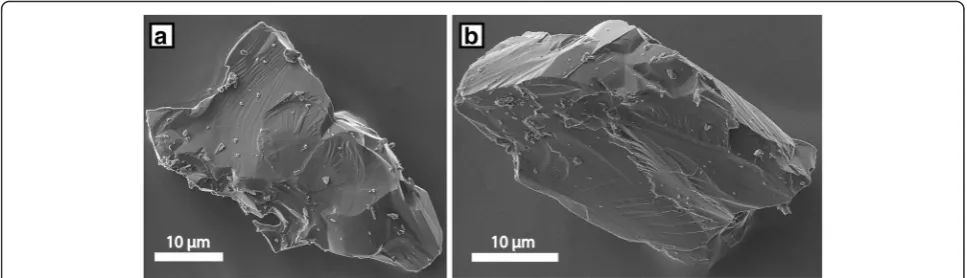
The Itokawa particles analyzed in this study (RB-DQ04-0062—Naoko and RB-DQ04-0091—Mizuki) are both irregular, angular grains with the longest dimen-sion ~40 μm in length (Fig. 1). We identified only FeO-rich olivine (~Fa25) in the main mass of Naoko
(Fig. 1a). In the particle Mizuki (Fig. 1b), we identified plagioclase (An0-18Ab75-95, no exsolution or twinning),
Al2O3-rich silica glass (22 wt.% Al2O3and 78 wt.% SiO2,
the Al/Si ratio is consistent with feldspar), and FeO-rich olivine (~Fa25).
The surface features and adhering particles we investi-gated are described in detail below. Similar features are described together, followed by our interpretation of their origin.
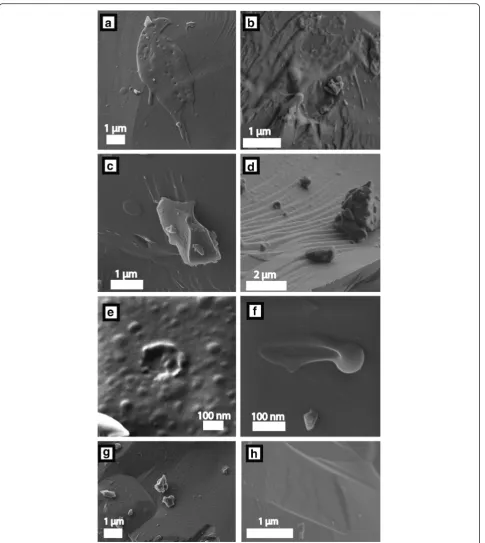
Splash melt: We identified two large splash melt features. One is a thin melt, ~4 μm in diameter, on Mizuki (Fig. 2b). The largest splash melt we observed is slightly thicker, is irregular in shape (~7 μm in length and ~2.5μm in width), and sits on top of a FeO-rich oliv-ine (Fa25) on Naoko (Fig. 2a). The surface of this splash
melt is vesicular. The surface of the olivine beneath the splash melt contains no blisters compared to the adjacent areas (Fig. 5b, lumps at the boundary between the platinum protective layer and the olivine grain). No Fe-rich nanoparticle-bearing rims were identified; however, the FIB section was too thick (150–200 nm) for high-resolution im-aging. Several adhering particles (up to 0.5μm in size) are observed on top of this splash melt. The splash melt in the FIB section is about 3.5μm in length and the thickness var-ies between 65 nm and 175 nm. It is composed of a glassy, vesicular, SiO2-rich material with variable chemical
com-position (Fig. 5). Figure 6 shows the chemical comcom-position of the splash melt and the adhering particle. The adhering particle on top of the splash melt (Fig. 5) is SiO2-rich
amorphous material (74 wt.% SiO2) containing significant
amounts of Al2O3 (23.8 wt.% Al2O3) and CaO (2.2 wt.%
CaO). The splash melt containsvariable amounts of CaO (0.9–8.7 wt.%), Al2O3(0–3.4 wt.%), MgO (28.6–38.3 wt.%),
and FeO (15.8–22.9 wt.%) (Figs. 5 and 6), and shows a spatial gradient in chemical composition between the host grain (Fig. 6, diamonds with no Al2O3 and CaO) and the
top of the splash melt (Fig. 6, diamonds with high Al2O3
and CaO). This indicates that the splash melt cooled slowly enough for its chemical composition to equilibrate some-what with the host olivine grain.
Additionally, we identified smaller splash melt fea-tures. Small circular or ellipsoidal melt deposits deco-rated the surfaces of both Itokawa particles (Fig. 2c, left of the adhering particles ~650 nm in length). A
ring-droplet melt feature about 200 nm in size was also ob-served (Fig. 2f ).
Other surface features: On the surfaces of both Itokawa particles, we also observed fracturing, abrasion-like fea-tures, and blisters (Fig. 2). Olivine on the host grain shows common conchoidal fracturing (Figs. 1a and 2d). One abrasion-like feature was identified on the surface of Mizuki at the base of an adhering particle of Ca-phosphate (1.1 × 2.4 μm in size, Figs. 2c and 4d). The underlying albite is harder than the Ca-phosphate, so it is likely that this feature formed when the Ca-phosphate was partially molten (likely ejecta from a micrometeoroid im-pact), and left trails of melt behind as it landed on the plagioclase and slid to a stop.
We identified severe surface blistering on some faces (Fig. 2e, g), and moderate blistering or no blistering at all (Fig. 3f) on others. They are heterogeneously distributed across the surface: a highly blistered area could be found adjacent to a non-blistered area. We observed blistering covering areas of a conchoidal fracture (Figs. 2d and 3d), implying that the area was exposed to the solar wind for thousands of years after the fracture. The average diam-eter of an individual blister is about 30 nm and they vary in size by a factor of ~2. In highly blistered areas, we occa-sionally observed open/burst blisters (Fig. 2e).
No unambiguous impact craters were identified during this study. Crater-like features were observed only in heavily blistered regions, and are likely burst blisters resulting from solar-wind irradiation of >1019 ions/cm2 (Kaletta 1980).
Two of the FIB sections contain amorphous rims (Figs. 4e and 5). The thickness of the amorphous rims varies between 60 nm and 200 nm. However, no Fe-rich nanoparticle-bearing rims were identified at the surface of the two Itokawa particles because the FIB sections were too thick (150–200 nm) for high-resolution imaging.
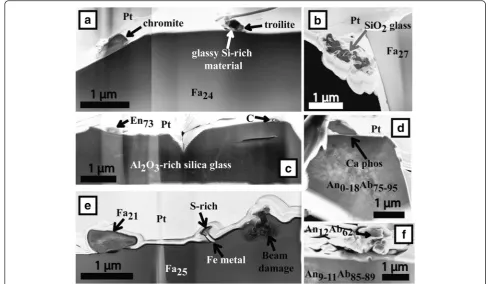
Impact residue: One adhering particle is composed of FeO-rich olivine (~Fa21, Fig. 4e) and shows fractures as
well as a discernible gap between itself and its Fa25olivine
host grain. The deformation features were probably produced by shock when this olivine grain was excavated from Itokawa during a micrometeoroid impact, consider-ing that olivine easily deforms by dislocation glide (Langenhorst 2002).
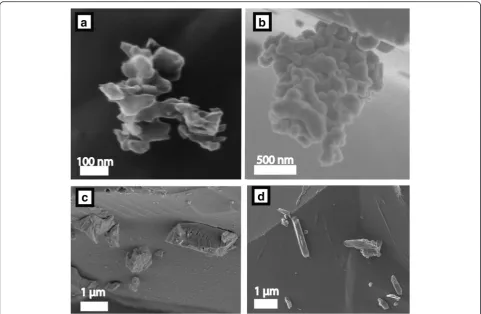
Two porous adhering particles (with diameters of 500 nm and 1.5μm) were analyzed by TEM (Fig. 3a, b). The morphologies of both particles are similar to a con-glomerate of loosely bound melt droplets. The larger particle is composed of only amorphous SiO2 (Figs. 4b
and 3b). The smaller particle is made of glassy SiO2with
variable amounts of FeO and MgO (Figs. 4e, 3a; Table 1). The region between the host grain and adhering grain likely suffered damage from the He ion beam.
About 1μm from the smaller SiO2porous grain is an
elongated Fe metal grain with <0.5 wt.% Ni, capped with an amorphous S-rich material (Fig. 4e). The lack of Ni in this grain excludes the possibility that this grain is na-tive kamacite, since Itokawa kamacite contains ~4 wt.% Ni (Nakamura et al. 2011).
We propose that the two porous SiO2grains and
me-tallic Fe particle are impact residue. They formed when a micrometeoroid impacted Itokawa, striking a region of Fe-bearing silicates and sulfides. The vapor plume from the impact, made primarily of atoms from the target, was mostly lost to space due to the low escape velocity of Itokawa (~0.2 m/s). We suggest that some of the vapor recondensed, first into Ni-free metallic Fe, then the silicon and oxygen into amorphous silica with a droplet-like texture.
Loosely attached local regolith: Plagioclase (An12Ab62,
Fig. 4f ) was found sitting on top of plagioclase of similar composition, with a discernible gap between the
adhering grains and the host grains. A polymineralic grain of troilite (100 × 135 nm in size) and a glassy SiO2
-rich material (190 × 200 nm in size; with 60 wt.% SiO2,
17.4 wt.% Al2O3, 11.9 wt.% MgO, and 9.4 wt.% FeO) was
found loosely attached to the host Fa25host grain.
Ensta-tite and an amorphous C-rich grain (En73, Fig. 4c) were
also found loosely attached to their host.
All of these loosely attached regolith grains are con-sistent with the mineralogy of Itokawa and LL4-6 chon-drites. We conclude that these grains came into contact with their host grains during regolith gardening and at-tached via van der Waals forces.
Lithic fragments: We identified an elongated chromite grain with 8.5 wt.% Al2O3(Figs. 3b and 4a) that has no
discernible gap between the adhering grain and host olivine (Fa25). We suggest that this adhering grain is
likely a lithic fragment that was uncovered during gar-dening and fracturing of surface regolith (this happened relatively recently because of the lack of solar-wind blistering on the host olivine grain). The ~8.5 wt.% Al2O3 in the chromite is close to the 6.35 wt.% Al2O3
found in other chromites from Itokawa (Nakamura et al. 2011).
Conclusions
In this study, we explored the texture and the chemical compositions of the surface features and adhering parti-cles on the surfaces of the two Itokawa partiparti-cles (RB-DQ04-0062—Naoko and RB-DQ04-0091—Mizuki). A previous study by Nakamura (2012) showed that the sur-faces of Hayabusa particles are shaped primarily by frac-tures, and adhering particles are mostly fragments of larger grains from Itokawa, with a smaller component of melt-splash glass and rounded silica-rich droplets. Our study supports previous suggestions that Hayabusa grains are highly fractured, indicative of active regolith gardening on Itokawa (Langenhorst et al. 2014). Using
the high-resolution techniques of helium ion microscopy and TEM, we have shed insight onto the smallest surface features of the host grains as well as splash melt and the variable origin of the adhering particles.
The high variability in blistering on these particles, the scarcity of regions with a large number of burst blisters, and the observation that blistered regions can be sepa-rated from non-blistered regions by fractures implies that Itokawa regolith particles are fracturing on time-scales similar to blister formation. Circular blisters form from a He fluence of about 1018/cm2 (Assonov et al. 1998), which is about thousands of years of solar wind He at 1 AU. Previous studies suggest that the regolith in
Fig. 5Scanning helium ion microscope secondary electron image of a splash melt (a) in which we made the focused ion beam section (FIB;a white line) shown on the right (b darkfield scanning transmission electron microscopy image). The splash melt is found on top of a FeOrich olivine grain (Fa25, Fa -fayalite). The surface of this splash melt is vesicular. Thewhite dashed lineoutlines the splash melt
Fig. 4Dark-field scanning transmission electron microscopy (STEM) images of the focused ion beam sections showing the mineralogy and the relationship between different types of adhering particles identified and the Itokawa particles (a, e - Naoko, RB-DQ04-0062; b-d, f - Mizuki, RB-DQ04-0091).
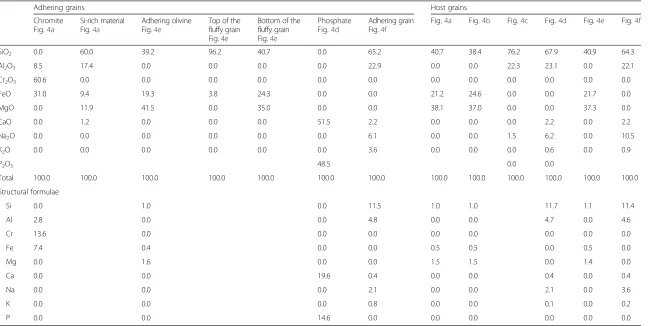
Table 1Major and minor element compositions of adhering and host grains (oxide wt.%) obtained by energy dispersive X-ray spectroscopy (EDS)
Adhering grains Host grains
Chromite Fig.4a
Si-rich material Fig.4a
Adhering olivine Fig.4e
Top of the fluffy grain Fig.4e
Bottom of the fluffy grain Fig.4e
Phosphate Fig.4d
Adhering grain Fig.4f
Fig.4a Fig.4b Fig.4c Fig.4d Fig.4e Fig.4f
SiO2 0.0 60.0 39.2 96.2 40.7 0.0 65.2 40.7 38.4 76.2 67.9 40.9 64.3
Al2O3 8.5 17.4 0.0 0.0 0.0 0.0 22.9 0.0 0.0 22.3 23.1 0.0 22.1
Cr2O3 60.6 0.0 0.0 0.0 0.0 0.0 0.0 0.0 0.0 0.0 0.0 0.0 0.0
FeO 31.0 9.4 19.3 3.8 24.3 0.0 0.0 21.2 24.6 0.0 0.0 21.7 0.0
MgO 0.0 11.9 41.5 0.0 35.0 0.0 0.0 38.1 37.0 0.0 0.0 37.3 0.0
CaO 0.0 1.2 0.0 0.0 0.0 51.5 2.2 0.0 0.0 0.0 2.2 0.0 2.2
Na2O 0.0 0.0 0.0 0.0 0.0 0.0 6.1 0.0 0.0 1.5 6.2 0.0 10.5
K2O 0.0 0.0 0.0 0.0 0.0 0.0 3.6 0.0 0.0 0.0 0.6 0.0 0.9
P2O5 48.5 0.0 0.0
Total 100.0 100.0 100.0 100.0 100.0 100.0 100.0 100.0 100.0 100.0 100.0 100.0 100.0
Structural formulae
Si 0.0 1.0 0.0 11.5 1.0 1.0 11.7 1.1 11.4
Al 2.8 0.0 0.0 4.8 0.0 0.0 4.7 0.0 4.6
Cr 13.6 0.0 0.0 0.0 0.0 0.0 0.0 0.0 0.0
Fe 7.4 0.4 0.0 0.0 0.5 0.5 0.0 0.5 0.0
Mg 0.0 1.6 0.0 0.0 1.5 1.5 0.0 1.4 0.0
Ca 0.0 0.0 19.6 0.4 0.0 0.0 0.4 0.0 0.4
Na 0.0 0.0 0.0 2.1 0.0 0.0 2.1 0.0 3.6
K 0.0 0.0 0.0 0.8 0.0 0.0 0.1 0.0 0.2
P 0.0 0.0 14.6 0.0 0.0 0.0 0.0 0.0 0.0
Olivine-the structural formula was calculated on the basis of 4 oxygen. Chromite and plagioclase-the structural formula was calculated on the basis of 32 oxygen. Phosphate-the structural formula was calculated on the basis of 56 oxygen
Earth,
Planets
and
Space
(2016) 68:21
Page
7
of
the Muses-C region on Itokawa was relatively stable at millimeter to centimeter-depths for the last ~105 years (e.g., Berger and Keller 2015). However, this does not preclude the movement and fracturing of grains in the uppermost ~100 μm of regolith that is required by our observations. The dynamics of the upper regolith could be driven by micrometeoroid impact or electrostatic repulsion between particles (Lee 1996; Hartzell and Scheeres 2013).
We found several splash-melt features on the two Hayabusa particles, including two large features more than a few micrometers in size. The presence of splash
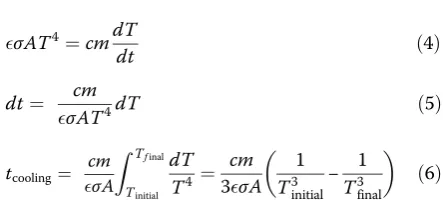
melt on blister-free surfaces indicates that at least some of the splash melts have been deposited within the last few thousand years. With a statistical survey of the de-gree of blistering and presence of splash melts, it would be possible to roughly estimate the micrometeoroid flux on Itokawa over the last several thousand years. The splash melt features are relatively thin and scarce com-pared to even immature lunar soil regolith grains of similar size, which are usually covered with thick, beaded splash melt (Fig. 7). One of the splash melts had a chemical composition distinct from the grain it was lying on, with significant mixing between the melt and the host grain. Using the Stefan-Boltzmann law (see equations below), we calculate that the time for a 2 μm olivine grain (about the volume of our largest splash-melt) to cool fromTinitial=3000 °C to Tfinal=1700 °C to
be about 200 μs. A grain ejected at 10 km/s will travel about 2 m in this time.
where ϵ is the emissivity, σ is the Stefan-Boltzmann
constant, A is the surface area,T is the temperature in
Kelvin. Additionally:
dE¼cmdT ð2Þ
wherecis the specific heat capacity,mis the mass.
dE
Phosphate 1 × 0.4μm Yes Likely ejecta from a micrometeoroid
impact
Fig.4e
(left grain)
RB-DQ04-0062 (Naoko)
Olivine (Fa21) 900 × 340 nm Yes Planar crystallographic deformation features
~300 nm in length Yes Lack of Ni in the Fe metal grain
Fig.4e
(right grain)
RB-DQ04-0062 (Naoko)
Glassy SiO2with variable amounts of FeO and MgO (see Table1)
~340 nm in length Yes Porous grain. Beam damage at the contact with the host grain
Fig.4f RB-DQ04-0091 (Mizuki)
Plagioclase (An12Ab62) 1.5 × 1μm No Itokawa-like material
σAT4¼cmdT
So, the splash melts we see on the Hayabusa particles could have been excavated from, at most, 2 m away. Grains that appear to have been partially molten when they impacted, such as the ~1.5 μm grain in Fig. 2c, came from close to this limit (in this case, 3 m). The splash melts and partially molten adhering particles can be used to probe the composition of regolith a few me-ters away from the host grain. Both the splash melt in Fig. 2a and adhering grain with melt streaks in Fig. 2c have composition consistent with Itokawa but inconsist-ent with their immediate host grain, implying that it could have been transported from meters away.
Nakamura (2012) stated that the adhering particles are fragments of larger grains on Itokawa’s surface, and that they are probably formed by impacts. With our detailed FIB-TEM analyses of several of these adhering grains on the two Hayabusa particles, we are able to test this hypoth-esis and differentiate between adhering grains that are and are not the direct result of impacts.
Some of the impact-generated material on Itokawa will be lost to space due to the asteroid’s low surface gravity. However, impact residue that is ejected with a large enough component of its velocity towards another face of the aster-oid can travel a long distance and remain on Itokawa. This distance can be much greater than the size of the crater generated by the impact, which were observed to be centimeter-sized on Itokawa (Miyamoto et al. 2007). So, it is not surprising that we observed abundant
impact-generated material on these Hayabusa particles but no vious impact craters. The 200 nm and smaller craters ob-served by Nakamura (2012) are mysterious as they require 10–20 nm impactors (beta meteoroids) accelerated to very high velocities, which is impossible to do by radiation pressure.
The other adhering grains we identified as impact residue showed evidence of their formation. A shocked olivine grain is relatively intact, and is consistent with the grain it is sitting on (but again, no impact crater was found, so it must have been transported from at least 50 μm away). The SiO2amorphous grains with melt-droplet texture, and
nearby Ni-free metallic Fe imply that these condensed from vaporized Fe-bearing silicate. Sub-micron metallic Fe, like the particle we observed, can have an effect on the spectral darkening of Itokawa (Lucey and Riner 2011).
The loosely attached local regolith and lithic fragments we observed are likely the result of regolith gardening (fracturing and movement of small surface grains) on Itokawa, as also evidenced by the highly variable solar-wind blistering.
We did not identify any grains that were of definitively non-Itokawa like composition. This is also not surprising considering the ratio of the excavated crater volume to the projectile volume is ~1000.
The typical contaminants described so far among the Itokawa particles are metallic Al, tin oxide, quartz parti-cles, and probably carbonaceous particles (Noguchi et al. 2014; Uesugi et al. 2014). Only one of the ten adhering grains we analyzed was possibly contamination, the C-rich grain shown on the right of Fig. 4c.
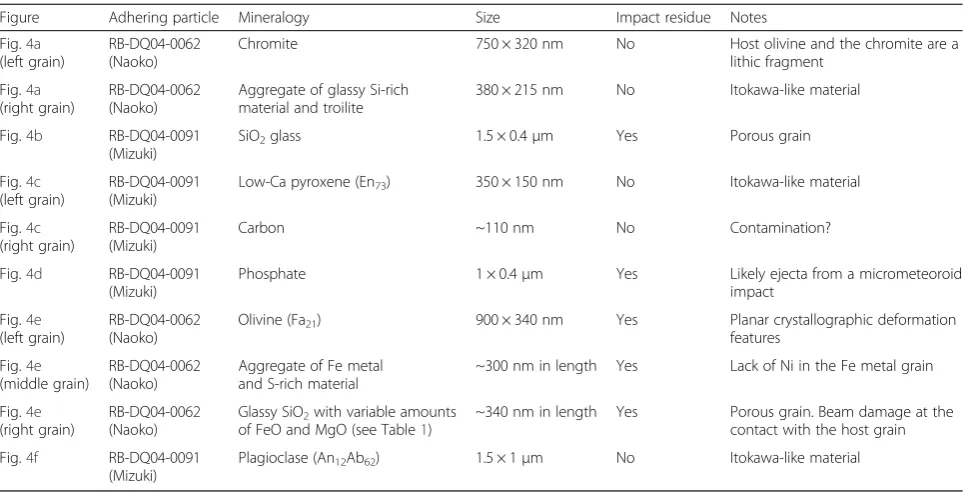
Half of the adhering grains (five of ten) we measured in detail were clearly the direct result of micrometeoroid impacts (Tables 1 and 2). We could not make this dis-tinction without removing the adhering grains by FIB and analyzing them by TEM. These five impact-created adhering grains, along with the splash melt features we see, tell us that the very outer surface of Itokawa regolith was significantly modified by micrometeoroid impacts.
Abbreviations
EDS:energy-dispersive X-ray spectroscopy; FEG: field emission gun; FIB: focused ion beam; HAADF-STEM: high-angle annular dark-field scanning transmission electron microscopy; HIM: helium ion microscope;
SEM: scanning electron microscope; TEM: transmission electron microscope.
Competing interests
The authors declare that they have no competing interests.
Authors’contributions
ED contributed to the FIB/TEM observations. RO acquired the HIM images. The manuscript was prepared by ED and RO. All authors read and approved the final manuscript.
Acknowledgements
We thank the editor and two anonymous reviewers for their insightful and constructive comments that helped to improve this manuscript. This work was funded by NNX14AF24G to R. C. Ogliore and by NNX11AK51G to A. J. Brearley. The helium ion microscopy was performed using the Environmental Fig. 7Secondary electron image of a section of a ~30μm Apollo 16
References
Assonov SS, Biryukov AY, Kashkarov LL, Nevzorov VN, Semenova AS and Shukolyukov YA(1998) Vesiculation in silicate grains of Luna-16 soil. (abstract #1635). 29th Lunar and Planetary Science Conference Berger EL and Keller LP (2015) Space weathering of Itokawa particles:
implications for regolith evolution. (abstract #2351). 46th Lunar and Planetary Science Conference
Clark BE, Hapke B, Pieters C, Britt D (2002) Asteroid space weathering and regolith evolution. In: Bottke W, Cellino A, Paolicchi P, Binzel RP (eds) Asteroids III. The University of Arizona Press, Tucson, Arizona, pp 585–599 Gaffey MJ, Bell JF, Cruikshank DP, Gehrels T, Matthews MS (1989) Reflectance
spectroscopy and asteroid surface mineralogy. In: Binzel RP, Gehrels T, Matthews MS (eds) Asteroids II. The University of Arizona Press, Tucson, Arizona, pp 98–127
Hartzell CM, Scheeres DJ (2013) Dynamics of levitating dust particles near asteroids and the Moon. J Geophys Res (Planets) 118:116–125
Hirata N, Barnouin-Jha OS, Honda C, Nakamura R, Miyamoto H, Sasaki S, Demura H, Nakamura AM, Michikami T, Gaskell RW, Saito J (2009) A survey of possible impact structures on 25143 Itokawa. Icarus 200:486–502
Kaletta D (1980) Light element implantations in metals. Radiat Eff 47:237–251 Keller LP, McKay DS (1997) The nature and origin of rims on lunar soil grains.
Geochim Cosmochim Acta 61:2331–2341
Langenhorst F (2002) Shock metamorphism of some minerals: basic introduction and microstructural observations. Bulletin of the Czech Geological Survey 77: 265–282
Langenhorst F, Harries D, Pollok K, van Aken PA (2014) Mineralogy and defect microstructure of an olivine-dominated Itokawa dust particle: evidence for shock metamorphism, collisional fragmentation, and LL chondrite origin. Earth Planets Space 66:118
Lee P (1996) Dust levitation on asteroids. Icarus 124:181–194
Lucey PG, Riner MA (2011) The optical effects of small iron particles that darken but do not redden: evidence of intense space weathering on Mercury. Icarus 212:451–462
Matsumoto T, Tsuchiyama A, Miyake A., Noguchi T, Nakamura T, Nakamura M, Matsuno J, Shimada A, Uesugi K and Nakano T (2014) Surface
micromorphologies of regolith particles from asteroid Itokawa and its implication to space weathering. (abstract 5130). 77th Meeting of the Meteoritical Society
Miyamoto H, Yano H, Scheeres DJ, Abe S, Barnouin-Jha O, Cheng AF, Demura H, Gaskell RW, Hirata N, Ishiguro M, Michikami T, Nakamura AM, Nakamura R, Saito J, Sasaki S (2007) Regolith migration and sorting on asteroid Itokawa. Science 316:1011
Nakamura E (2012) Space environment of an asteroid preserved on micrograins returned by the Hayabusa spacecraft. Proc Natl Acad Sci 109:624–E629 Nakamura T, Noguchi T, Tanaka M, Zolensky ME, Kimura M, Tsuchiyama A, Nakato A,
Ogami T, Ishida H, Uesugi M, Yada T, Shirai K, Fujimura A, Okazaki R, Sandford SA, Ishibashi Y, Abe M, Okada T, Ueno M, Mukai T, Yoshikawa M, Kawaguchi J (2011) Itokawa dust particles: a direct link between S-type asteroids and ordinary chondrites. Science 333:1113–1116
Nakashima D, Kita NT, Ushikubo T, Noguchi T, Nakamura T, Valley JW (2013) Oxygen three-isotope ratios of silicate particles returned from asteroid Itokawa by the Hayabusa spacecraft: a strong link with equilibrated LL chondrites. Earth Planet Sci Lett 379:127–136
Noguchi T, Kimura M, Hashimoto T, Konno M, Nakamura T, Zolensky ME, Okazaki R, Tanaka M, Tsuchiyama A, Nakato A, Ogami T, Ishida H, Sagae R, Tsujimoto S,
Okazaki R, Park C, Sakamoto N, Seto Y, Takei M, Tsuchiyama A, Uesugi M, Wakaki S, Yada T, Yamamoto K, Yoshikawa M, Zolensky ME (2011) Oxygen isotopic compositions of asteroidal materials returned from itokawa by the Hayabusa mission. Science 333:1116–1119
Submit your manuscript to a
journal and benefi t from:
7Convenient online submission
7Rigorous peer review
7Immediate publication on acceptance
7Open access: articles freely available online
7High visibility within the fi eld
7Retaining the copyright to your article