ABSTRACT
SOORMA, JYOTI. Teacher Concerns and Attitudes During the Adoption Phase of One-to-One Computing in Early College High Schools. (Under the direction of Dr. Ellen S. Vasu, Dr. Kevin M. Oliver, Dr. Tuere A. Bowles.)
Ubiquitous computing has opened new opportunities for teaching and learning, and is transforming school learning environments. The popularity of one-to-one computing has been increasing rapidly, with more and more schools adopting this initiative. However, studies on past one-to-one initiatives have raised concerns over the proper adoption of technology into classrooms. To ensure successful implementation of a change generating initiative like one-to-one computing, schools should ensure buy-in and readiness of the stakeholders, especially the teachers. Understanding the teacher’s beliefs and attitudes towards technology, and addressing the teacher concerns is a critical step in ensuring the successful implementation of technology integration.
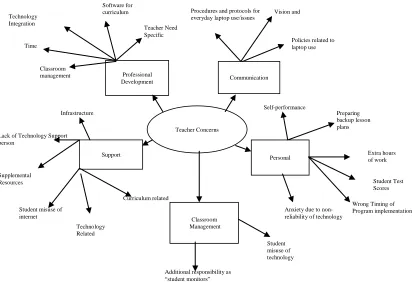
among them. Also, a number of teacher concerns surfaced related to hardware and software support, professional development, classroom management, communication, and personal anxieties.
Teacher Concerns and Attitudes During the Adoption Phase of One-to-One Computing in Early College High Schools
by Jyoti Soorma
A thesis submitted to the Graduate Faculty of North Carolina State University
in partial fulfillment of the requirements for the degree of
Master of Science
Instructional Technology
Raleigh, North Carolina 2008
APPROVED BY:
_______________________________ ______________________________ Dr. Ellen S Vasu Dr. Tuere A Bowles
Committee Co-Chair
DEDICATION
BIOGRAPHY
Jyoti Soorma, the daughter of Prem Inder Soorma and Pramod Soorma was born in New Delhi, India. Her mother is a school teacher, and father is a retired Army officer. She completed her Bachelors of Arts in 1998 from Delhi University, and then went on to do her Masters in Business Administration (in Human Resources) from Symbiosis Institute of Management Studies, Pune, India. After completing her MBA, she worked for four years in Human Resources for companies like Tata Finance Ltd. and Kodak.
ACKNOWLEDGMENTS
I thank God for his grace, strength and guidance during my two years of Masters program, and for giving me wonderful professors, who guided and helped me throughout my program.
I would like to extend my deepest gratitude to my advisor, Dr. Kevin Oliver for his invaluable advice, patience and guidance, without which this milestone would not have been reached. I thank him for the amount of time he spent on providing me with detailed
feedbacks, and for challenging me to improve the quality of my work. I have learned a lot from him. Dr. Oliver’s expertise and commitment to excellence are a great inspiration for
me.
I would also like to thank Dr. Ellen Vasu, my committee-co chair, for her generosity, and support during my entire Masters program, and also for encouraging me to take up the thesis work. I am also indebted to her for her valuable insights and suggestions.
Dr. Tuere Bowles’s passion for qualitative research has been very inspiring. I would
like to sincerely thank her for serving on my advisory committee and for her time and invaluable guidance.
I would also like to thank my International Community Church family for their constant prayers, love and encouragement.
The support of my family and friends was absolutely invaluable during the research and writing process. I’m not sure I would have made it through without the love and support
Vikram, and his wife Ritika. My friend, Pooja Chilukuri for her constant encouragement and always being there when I needed her!
TABLE OF CONTENTS
LIST OF TABLES……….…. ix
LIST OF FIGURES……… x
CHAPTER 1: INTRODUCTION……….. 1
Theoretical Framework……….. 6
Problem Statement……….…. 8
Purpose of the Study……….. 9
Significance of the Study……… 10
Limitations……….. 10
Key Terms Defined………. 11
CHAPTER 2: REVIEW OF LITERATURE……….. 14
Teacher Concerns and the Concerns Based Adoption Model (CBAM)………. 15
Teacher Attitudes……… 24
Teacher Beliefs………... 27
Barriers to Technology Integration………. 37
CHAPTER 3: DESIGN AND METHODOLOGY………. 40
Design of Study………... 41
Sampling………... 44
Data Analysis……….… 51
Pilot Study Findings……….. 57
Validity and Reliability………. 60
Researcher Subjectivities……….. 62
Chapter Summary……….. 63
CHAPTER 4: FINDINGS………. 61
Research Question 1: What Prior Experiences do the Teachers Bring to One-to-One Computing………... 68
Research Question 2: What are the Teachers’ Beliefs, Attitudes and Concerns Towards One-to One computing?………. 71
Research Question 3: What Support do the Teachers Need During the Adoption Phase of the Computing Initiative?……… 77
Summary of Findings……….… 83
CHAPTER 5: CONCLUSIONS, DISCUSSION, IMPLICATIONS AND RECOMMENDATIONS……….. 85
Limitations……….…. 97
Implications for Practice………. 98
Recommendations for Future Research……….…. 100
APPENDICES………. 117
Appendix A: Recruitment Letter………. 118
Appendix B: Informed Consent Form for Research………... 120
Appendix C: Demographic Form……… 122
Appendix D: Teacher Interview Guide………... 124
LIST OF TABLES
Table 1: Time Line for the Research Process………. 40
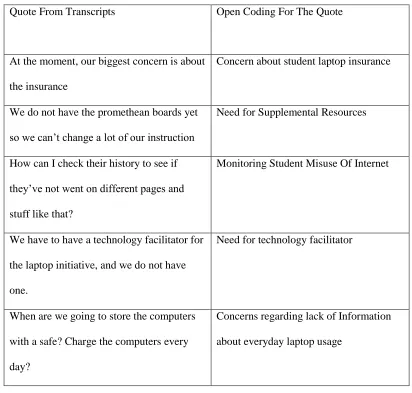
Table 2: Example of Open Coding from Interview Transcript……… 54
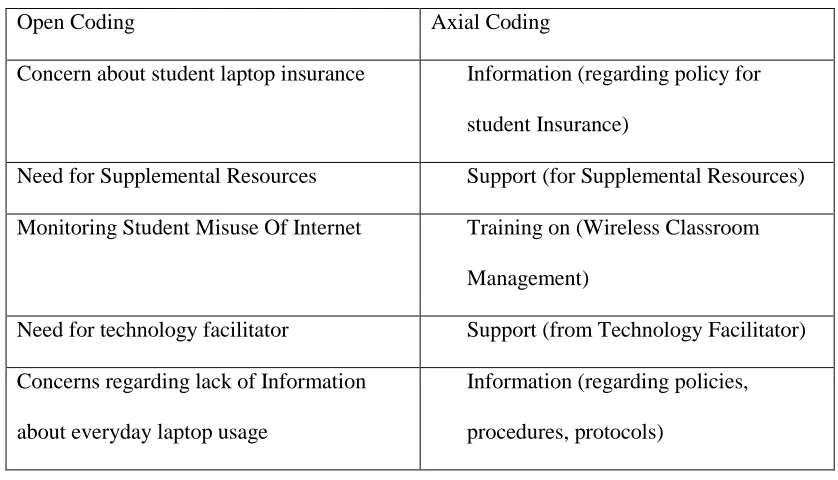
Table 3: Example of Axial Coding from Open Codes……… 55
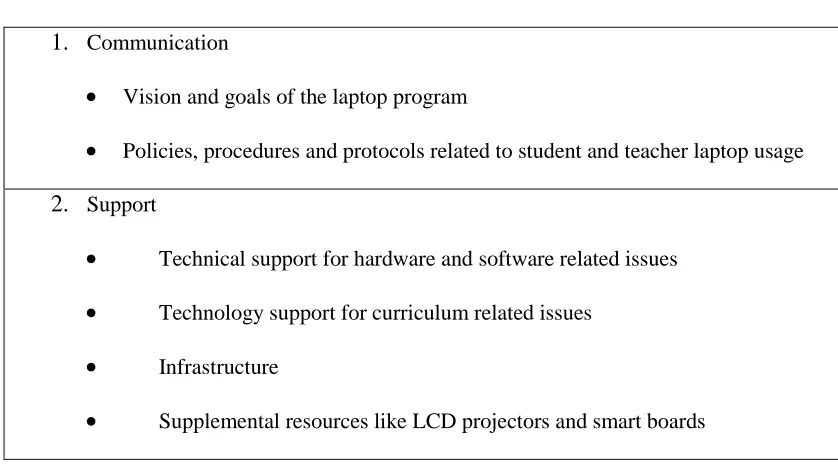
Table 4: Example of categorizing from Axial Codes………. 56
Table 5: Example of memo from Analysis of Categories……… 56
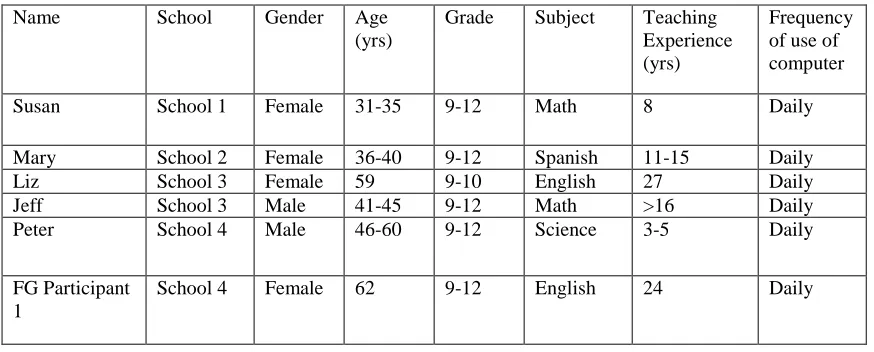
Table 6: Profile of the Research Participants………... 65
Table 7: Example of Stages of Teacher Concerns Identified………... .
LIST OF FIGURES
Figure 1: Categories that Emerged from the Pilot Study Analysis……… 59
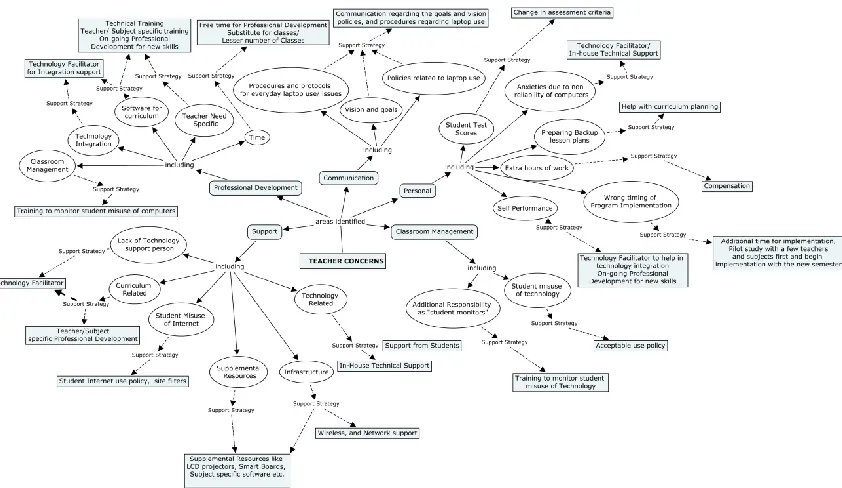
Figure 2: Teacher Concerns……… 77
Figure 3: Support Strategies Recommended by Study Participants for Teacher
Concerns Identified………. 82
Figure 4: Alignment of Participant Recommendations for Support Strategies with
CHAPTER 1 INTRODUCTION
Modern technologies such as laptops, the Internet, and sophisticated computer based software present new opportunities for teaching and learning (Brill & Galloway, 2007; Boling, 2003; Poland, la Velle & Nichol, 2003; Resnick, 1995, 1998). Early research has shown that providing students with ubiquitous access to wirelessly connected computers has the potential to transform learning environments and improve student-learning outcomes (Roschelle, Penuel, & Abrahamson, 2004). Although much of the research on laptop programs is still ongoing, current evidence and findings from laptop program evaluations report several positive outcomes. These outcomes include increased student engagement (Russell, Bebell, Cowan & Corbelli, 2003; MEPRI, 2003; Rockman et al., 1998), decreased disciplinary problems (Baldwin, 1999, MEPRI, 2003), increased use of computers for writing, analysis and research (Cromwell, 1999; Baldwin, 1999; Guignon, 1998; Russell, Bebell, & Higgins, 2004), a movement toward student-centered classrooms (Rockman et al., 1998), and teachers‘ perceived increase in students‘ academic performance (GMSP, 2004). Some studies have also reported that students increased their organizational skills with laptop computers (Lowther et al., 2001; Zucker & McGhee, 2005).
implementation of laptop programs, school boards and policy-makers are evaluating the impact on teaching and student learning. Though different schools may implement one-to-one learning for various reasons, the fundamental aim is improving student achievement, advancing digital equity, enhancing teaching and learning, strengthening economic development (Penuel, 2005).
The earliest one-to-one initiatives in the U.S. began appearing in the mid-1990s, and the most visible sponsored initiative at that time was Microsoft‘s Anytime, Anywhere
Learning program (Rockman et al, 1998). Maine has sponsored the largest laptop initiative providing computers and wireless Internet access to all students in seventh and eight grades. Students and teachers in Maine reported positive impacts on student engagement and
learning (Polster, 2003). Indiana, Michigan, New Hampshire, New Mexico, Texas, and Vermont are also experimenting with state-supported laptop initiatives, as are many
individual school districts throughout the United States, including Henrico County, Virginia, the largest district-funded laptop program in the United States (Bonifaz & Zucker, 2004). Early research as well as the limited, yet positive evaluations of these past one-to-one
programs as those in Maine and Henrico County, suggests that one-to-one computing is well worth considering.
A recent one laptop program has been initiated In North Carolina. This one-to-one initiative targets seven of North Carolina‘s Early College High Schools. The Early
college or two years of university credit toward a four-year degree by the time they graduate from high school. The one-to-one initiative in North Carolina Early College High Schools has been initiated with an aim to make North Carolina competitive in the global marketplace, and to help its schools to utilize the latest technology tools and methods for 21st-century teaching and learning (New Schools Project, 2008). This initiative aims to do more than just putting technology in the classroom; it aims to help students achieve success in a global world with a curriculum designed to meet the needs of future-ready students (NC 1:1 Learning Collaborative, 2008).
Despite continued interest in and excitement about one-to-one computing, few research studies fully address the impacts on teaching and learning in these intensive
computing environments (Bebell, 2005). Various examples in the past have shown that while technology is being made available to schools, a critical issue is emerging about how
technology is or is not being used in the teaching and learning process. This becomes
direct goal, remain ‗skill and practice‘ software, or traditional computer-sided instruction
(Becker, 2000).
Many reasons have been offered as an explanation for the low levels of technology integration in classrooms. Handal (2004) proposed two factors, which are the lack of
teachers‘ supporting beliefs and traditional teaching practices. Handal stated that significant
number of teachers do not support the principle that technology is a powerful tool for teaching and learning, and that teachers‘ instructional beliefs act as a filter through which
teachers make instructional decisions in class rather than relying on their own pedagogical knowledge or curriculum guidelines. Cuban (1993, p.53) suggested, ―the knowledge, beliefs,
and attitudes that teachers have shaped what they choose to do in their classrooms and explain the core of instructional practices that have endured over time‖ (p. 256). Also, teachers‘ beliefs and practices evolve along a continuum of technology integration that
gradually leads to increasingly effective instructional practices (Dwyer, Ringstaff, and Sandholtz, 1991), and the movement from the entryphase to invention(technology-intensive environments) requires time and ongoing support. It is very improbable that teachers can amend their own instructional practice if their beliefs on teaching and learning remain
unexamined. Therefore, teachers‘ instructional beliefs need to be confronted and re-appraised
in terms of their beliefs and principles underpinning an innovation; otherwise, changes will be only cosmetic of the original innovation goals, as has happened in the past with a large number of large-scale innovations (Burkhardt, Fraser, & Ridgway, 1990).
into the classroom curriculum, and be able to incorporate the new teaching methods enabled by technology (CEO Forum, 2000; U.S. Department of Education, 2000). Moreover, it has been seen that teachers are motivated to use technology when they have a clear
understanding of how it will improve their teaching and students‘ learning (Albion & Ertmer,
2002).
Ertmer, Addison, Lane, Ross, and Woods (1999), carried out a study to examine barriers to technology implementation. The authors concluded that there are two barriers: first order barriers (external) and second order barriers (internal). The first order barriers include concerns about hardware and software, administrative support, and insufficient time to prepare instructional tasks. The second order barriers refer to teacher‘s beliefs and
attitudes towards implementation of technology in education. Further, Hall & Hord (1987) postulated that individual teachers have different kinds of concerns about their involvement with a curriculum at different times. According to Hall's model, teacher's concerns about an innovation progress through different Stages of Concern (SoC), and a teacher may
experience several ―stages of concern‖ concurrently, but there are differential degrees of
intensity. Moreover, research on one-to-one laptop programs have indicated that the reason many of the professional development programs are found to be irrelevant is because they are not targeted toward teachers' specific ―stages of concern‖ (Loucks & Hall, 1977).
Teachers are thus crucial to implementing technology integration and new methods of teaching. Without teacher buy-in, the learning environment does not change (Hewlett
Packard, Intel Corporation, Microsoft, 2005). It is therefore imperative that teacher‘ beliefs, attitudes, and concerns are gauged to understand their preparedness before implementing the one-to-one initiative. The schools therefore cannot afford to undervalue the teacher‘s beliefs and concerns; rather, there is a pressing need to examine the interacting factors of teachers‘
beliefs about computing, how these beliefs are shaped, and in turn, influence technology-integration practices in the context of actual classroom activities.
Theoretical Framework
The concerns based adoption model (CBAM) provides a theoretical framework for understanding the beliefs, attitudes, and concerns of teachers during the implementation phase of one-to-one computing. The Concerns Based Adoption Model (Hall, George, & Rutherford, 1979; Hall & Hord, 1987, 2001) is a participant-based change model that has been widely accepted in educational research, especially in studying the adoption of educational innovations. CBAM is an appropriate model for gauging the technological change for teachers as it maintains a participant-based focus on understanding an individual‘s attitudes, perceptions, thoughts, and considerations toward using a new innovation (Adams, 2002; Ansah & Johnson, 2003; Casey, 2000; Casey, Harris & Rakes, 2004; Dobbs, 2004; Gershner & Snider, 2001; Gwele, 1997; Lienert, Sherrill, & Myers, 2001; Newhouse, 2001; Signer, Hall & Upton, 2000; Todd, 1993).
Hord, 1987, 2001). Acknowledging concerns and providing appropriate support can help resolve concerns and facilitate change. By alleviating the concerns of one stage or phase, educators can motivate individuals to move to a higher level of implementation, whereas by discounting the concerns of teachers, one may only intensify their concerns. Further, the reason many of the professional development programs are found to be irrelevant are because they are not targeted toward their specific ―Stages of Concern‖ (Loucks & Hall, 1977).
Understanding the concerns of teachers thus helps schools to determine direction for professional development, and design interventions for effective innovation, adoption, and implementation. It also provides information for planning support services. The generative aspect of the CBAM promotes the facilitation of change through the recognition and validation of teachers' concerns about technology integration. CBAM thus asserts that concerns are legitimate, and personalized interventions will help reduce the obstacles in a change process.
Individual teachers will have differing thoughts, feelings, attitudes, and perceptions, framed as ―concerns‖ by Hall and Hord (1987, 2001) about the adoption of technology in
classrooms. Thus, it is useful for administrators and educators in the Early College High Schools to have a picture of teachers‘ concerns, both before and during the implementation
interviewing teachers to understand what their beliefs, attitudes, and concerns about one-to-one computing are at various levels.
Problem Statement
Research has not kept up with the rapid expansion of the one-to-one initiatives or with their breadth (Penuel, 2005). In spite of the growing popularity of one-to-one computing, studies have suggested that technology has not been adequately adopted in schools (Maddux, LaMont Johnson, & Willis, 1997; Mann, 2000; Newhouse, 1998). Though previous studies have also shown consistently that teachers need time to become comfortable with the machines (Sandholtz, Ringstaff, & Dwyer, 1997, Shiengold & Hadley, 1990), little scholarly literature is available that examines the impacts on teaching and learning in these intensive computing environments (Schacter, 1999; Russell, Bebell, & Higgins, 2004). Much of the available research on laptop computing are quantitative studies about topics like hardware access and management, professional development for teachers, and impact on students. Few researchers have carried out a study on the teachers, who are the main change agents, to understand how they experience a laptop computing initiative. Recent large-scale survey research on factors relating to computer and Internet use have shed light on important trends (Becker, 2000), but studies utilizing interpretive methods are needed to understand the process of change. Though there have been studies that revealed teacher beliefs about
teaching and learning both affect initial levels of adoption and evolve when they begin to use computers (Collins, 1991; Cuban, 1986, 2001; Dwyer, Ringstaff, & Sandwltz, 1991),
integration shows that teachers need assistance in learning to use computers as tools for teaching (Schwab & Foa, 2001), and that sustained group professional development can improve chances for meaningful and lasting integration (Blumenfeld et al., 1991), but the ideal level of training for different purposes and contexts remain elusive (Burns & Polman, 2006). Thus, there is a need for a qualitative study to understand in detail how teachers experience the adoption of a one-to-one computing initiative, and the factors (beliefs, attitudes, and concerns) that may impact the successful implementation of the computing program.
Purpose of the Study
The purpose of this study is to understand the beliefs, attitudes, and concerns of teachers in Early College High Schools towards one-to-one computing, and the use of computers in classrooms during the adoption phase of the one-to-one computing initiative. The study will provide the opportunity to thoroughly investigate the phenomena of teachers‘
adoption of technology, particularly in the Early College High School environment, and describe what actually takes place, from the teachers‘ descriptions of their personal
experiences of integrating technology into their classroom. The main research questions that guide the study are:
1. What prior experiences do the teachers bring to one-to-one computing?
2. What are the teachers‘ beliefs, attitudes, and concerns towards one-to one computing? 3. What support do the teachers need during the adoption phase of the computing
Significance of the Study
By collecting qualitative data from teachers about how they perceive technology, and their concerns regarding implementation of technology in classrooms, it is intended that this data may be utilized by decision-makers for the purpose of better evaluating their school laptop programs. The findings of this research would also be useful for professional development that will take into consideration the factors that influence teacher beliefs, attitudes, and concerns, and also the coping strategies for the same. The data could be used to inform planning and implementation of teacher training, and support initiatives, and also be used as baseline data for future professional development endeavors of Early College High School. Also, a qualitative methodology emphasizes the value of individual experiences and views, as encountered in real-life situations. This type of investigation is useful in
educational initiatives, as many issues concern the quality of the lived experience of individuals, which cannot be reduced to numerical values using statistical analysis.
Limitations
Key Terms Defined One-to-One Computing
By definition, one-to-one learning involves one student, one computer, one
interactive, personalized learning experience in a wireless environment with anytime access to the Internet. The students have access to computers 24/7 (24 hours per day, 7 days per week), anytime anywhere.
Penuel (2006) came up with three core features common to a wide variety of
initiatives as defining characteristics of one-to-one computing in the classroom: (1) providing students with use of portable laptop computers loaded with contemporary productivity
software (e.g., word processing tools and spreadsheet tools), (2) enabling students to access the Internet through schools‘ wireless networks, and (3) a focus on using laptops to help
complete academic tasks such as homework assignments, tests, and presentations. Early College High Schools
In this study, Early College High Schools are the schools modeled on the work of the ―New Schools Project‖ where a small high school is co-located on a community college
campus with students taking both traditional high school and community college courses. In the Early College High Schools, students earn a high school diploma and an associate‘s
Beliefs
Beliefs are ―psychologically held understandings, premises or propositions about the world that are felt to be true‖ (Richardson, 1996, p. 103). Calderhead (1996), and Richardson
(1996) define belief as premises or suppositions about something that are felt to be true. Specifically, teachers‘ beliefs may include their educational beliefs about teaching and
learning (i.e., pedagogical beliefs), and their beliefs about technology (Ertmer, 2005; Windschitl & Sahl, 2002). Beliefs are mainly cognitive and are typically expressed with the phrase ―I believe.‖ In this study, teachers may have their own definitions of beliefs, which
will be incorporated, acknowledging that there may be a wide diversity of understandings of the construct.
Attitudes
According to Simpson, Koballa, Oliver, and Crawley (1994), attitudes can be defined as specific feelings that indicate whether a person likes or dislikes something. In the context of technology integration, teacher attitudes toward technology may be conceptualized as teachers liking or disliking the use of technology.
Concerns
Concerns can be described as the feelings, thoughts, and reactions individuals develop in regard to a new program or innovation that is relevant to their daily job (Hord et al., 1998).
Professional Development
CHAPTER 2
REVIEW OF LITERATURE
An important step in the research process is to review the thinking and research relevant to the topic at hand. The task of locating, reading, synthesizing, and writing a review of the literature provides the researcher with a foundation from which to explore further (Merriam, 1998). According to Merriam (1998, p.49), the purpose of a literature review conducted prior to a research study is to:
Provide a foundation for building knowledge. No research problem in the social sciences exists alone as an area of human endeavor. There is always some related literature, and it is this literature that is reviewed to form the ―pedigree‖ of the problem. In order to add to knowledge in a field, you must have a thorough understanding of the major theoretical points of view and the major research investigations relevant to the topic.
The literature contributing to current knowledge regarding teacher beliefs, attitudes, and concerns towards one-to-one computing initiatives is multifaceted in nature. This chapter will look at current literature with respect to teacher beliefs, attitudes, and concerns towards teaching and learning with technology in one-to-one computing initiatives. This chapter will also review findings from past one-to-one laptop initiatives like The Maine Learning
Technology Initiative, Technology Immersion Pilot (TIP) in Texas public schools, The Berkshire Wireless Learning Initiative (BWLI), and the study conducted by Penuel (2006) and his team for Apple Computer Inc., which was a synthesis of all research studies
one-to-one initiatives unfold under different kinds of circumstances. The theoretical
framework of this study is based on the Concerns Based Adoption Model (Hall, George, & Rutherford, 1979; Hall & Hord, 1987, 2001), which focuses on the process of change
experienced by teachers attempting to implement new curriculum materials and instructional practices (Anderson, 1997). The literature review is organized into four main sections: Teacher Concerns and the Concerns Based Adoption Model, Teacher Attitudes, Teacher Beliefs, and the Barriers to Technology Integration.
Teacher Concerns and the Concerns Based Adoption Model (CBAM) Concerns can be described as the feelings, thoughts, and reactions individuals develop in regard to a new program or innovation that is relevant to their daily job (Hord et al., 1998).The study of concerns has attracted a great deal of interest in recent decades as a result of the presumed link between the successful implementation of educational change and reform, and the level and type of individual concerns. Concerns exert a powerful influence on the implementation of reforms and determine the type of assistance that teachers may need in the adoption process.
The concept of concerns, and the associated theoretical framework, dates back to the pioneering work of Fuller. Fuller (1969) put forward a classification of teachers‘ concerns consisting of four developmental stages; namely, ―Awareness‖, ―Self‖, ―Task‖, and ―Impact‖
concerns. ―Awareness-stage‖ describes a person who either isn‘t aware of the change being proposed or doesn‘t want to learn about it. ―Self‖ concerns relate to the teachers‘ own
worries about their ability to perform in the school environment, while ―Task‖ stage is linked
the large number of students in the class and the lack of resources. Finally, ―Impact‖ concerns refer to the teachers‘ apprehension concerning student outcomes, Fuller‘s
framework has provided the basis for subsequent studies of the nature of teacher concerns, some of which have focused on concerns regarding the adoption of educational innovations and reforms.
The concerns based adoption model (CBAM), which is a change and diffusion model provides the theoretical framework for understanding the beliefs, attitudes, and concerns of teachers during the implementation phase of one-to-one computing in this study. The Concerns Based Adoption Model (Hall, George, & Rutherford, 1979; Hall & Hord, 1987, 2001) is a participant-based change model that has been widely accepted in educational research, especially in studying the adoption of technology innovations. CBAM seems an appropriate model for gauging the technological change for teachers as it maintains a
participant-based focus on understanding an individual‘s attitudes, perceptions, thoughts, and considerations toward using a new innovation (Adams, 2002; Ansah & Johnson, 2003; Casey, 2000; Casey, Harris & Rakes, 2004; Dobbs, 2004; Gershner & Snider, 2001; Gwele, 1997; Lienert, Sherrill, & Myers, 2001; Newhouse, 2001; Signer, Hall & Upton, 2000; Todd, 1993).
Ergermeier, 1992). The central underlying assumption of CBAM asserts that an important factor in any change process is the people involved, as an organization cannot change until the individuals within it change (Hall & Hord, 1987, 2001). The CBAM model recognizes that concerns are critical to the understanding of personal change, and therefore the
importance of the individual in change by assessing the concerns profile of an individual. Acknowledging concerns and providing appropriate support can help resolve concerns and facilitate change. By alleviating the concerns of one stage or phase, educators can motivate individuals to move to a higher level of implementation, where as by discounting the concerns of teachers, one may only intensify their concerns. The generative aspect of the CBAM is intended to promote the facilitation of change through the recognition and
validation of teacher‘s concerns about the educational innovation. Conceptually, this model
asserts that concerns are legitimate, and that personalized interventions will help reduce the obstacles in a change process. The CBAM model is based on the following assumptions about change (Hall & Hord, 2001):
1. Change is a process and not an event.
2. There are significant differences in what is entailed in development and implementation of an innovation.
3. An organization does not change until the individuals within it change.
4. Innovations come in different sizes. Innovations can be products or processes, and can be single innovations or more.
6. Although both a top-down and bottom-up change can work, a horizontal perspective is best.
7. Administrator leadership is essential to long-term change success. 8. Mandates can work.
9. The school is the primary unit of change. 10. Facilitating change is a team effort.
11. Appropriate interventions reduce the challenges of change. 12. The context of the school influences the process of change.
The CBAM includes three key tools used to collect relevant data: Stages of Concerns (SoC), Levels of Use (LoU), and Innovation Configurations (IC). The most important tool in the model is the SoC questionnaire, which is used to measure teachers‘ concerns about an innovation they are expected to implement (Hall and Hord, 2001). The Stages of Concern (SoC) describes "how teachers or others perceive an innovation and how they feel about it" (Hall & Hord, 1987, p. 13). The Levels of Use (LoU) identify "what a teacher is doing or not doing in relation to the innovation" (Hall & Hord, 1987, p. 13). It is the sequence that users pass through as they gain in confidence and skill in using an innovation resulting in higher levels of use from non-use to institutionalization. The Innovation Configuration (IC) "focuses on describing the operational forms an innovation can take" (Hall & Hord, 1987, p. 14). While the SoC and LoU deal generically with the change process from the
The Concerns-Based Adoption thus shows how the individuals most affected by change react to the implementation of these innovations (Hord et al., 1998). The CBAM is a conceptual framework for change that recognizes that people evolve in the kinds of questions that they ask and in their use of the innovation over time. This framework treats change as a process, not an event, recognizes that change is highly personal, and that innovations entail development in both feelings and skill levels. The concerns-based approach requires that change facilitators understand how their clients perceive change and then adjust what they do accordingly. The central focus of this approach is to understand clients‘ needs so professional
development activities can respond to where clients are in the change process.
CBAM has been identified as a tool to investigate the integration of technology because of its thorough research history into educational change. Its focus on both the
and provides ways to assess different stages of concerns, which have major implications for professional development. It points out the importance of attending to where people are and addressing the questions they are asking when they are asking them. Often, schools get to the how-to-do-it before addressing self-concerns. Schools focus on student learning even before teachers are comfortable with the materials and strategies. Thus the kinds and content of professional development opportunities can be informed by ongoing monitoring of the concerns of teachers. Also, this model suggests the importance of paying attention to
implementation for several years, because it takes at least three years for early concerns to be resolved and later ones to emerge (Loucks-Horsley, 1996).
From the past one-to-one laptop programs, it has been seen that most of the teacher concerns revolved around technical problems and the lack of, or limited technical support; many teachers experienced trouble staying connected to the network, and sometimes the computers functioned slowly due to the amount of traffic online at any one time (The Maine Learning Technology Initiative, 2003). Readily available technical support is also a critical must-have for laptop programs to succeed. Teachers quoted examples like computers would ―freeze‖ at times, forcing students and teachers to restart their computers, and causing loss of
student files. A variety of other technical glitches occurred due to compatibility problems with batteries, and existing peripheral equipment (i.e., printers and projectors).
Need for support was also felt in terms of peripheral equipment and supplies that enable teachers to take full advantage of the possible uses of the laptops (The Maine
laptops into their existing curriculum. Programs in which teachers report a high degree of reliability for laptops often have both within-building technical support staff devoted to helping with the program and ready access to outside vendors for major problems. For
example, ensuring that all students‘ laptops are working makes it less likely that teachers will
have to develop two sets of assignments—one for students with laptops and another for students without laptops. Being able to count on the reliability of the school‘s wireless
network was also another critical factor, since students often use their laptops to access resources available on the web (Apple Computers, 2005)
Students have played an important role in providing the first line of technical support in several laptop programs. In Maine, for example, student ―iTeams‖ exist in many schools to
help troubleshoot routine problems with machines (Apple Computers, 2005). Teachers in Maine report that they often turn to students for help with technical problems when they arise in class. In other, smaller scale laptop programs, students play a similar role in providing technical support, both informally and formally as part of the program design.
In addition to the technical concerns, teachers reported the need for more time and professional development, which included time to explore and learn how to use the technology, and professional development activities designed to help them integrate the technology more extensively in their curriculum development and instruction. The evaluation studies confirm the value that teachers place on professional development related to the integration of technology in teaching. The MLTI report makes an observation that in the initial phase, because many teachers were in the initial stages of learning to use the
All teachers from novice to the advanced perceived the computing initiative as a challenge, and, teachers viewed the first year of adoption as only the first steps in a long process of technology integration. Teachers felt challenged to spend twice as much time outside school to research, learn, and study computer software, and particularly finding resources, which are trustworthy and easy to use. To address this concern, content specialists were assigned to help teachers in Maine, with finding digital resources and integrating technology into specific content areas. Some programs also assigned staff (either internal to the school or external) to help teachers on an as-needed basis with technology integration. Professional development was targeted to help teachers become more ―student-centered‖ in their teaching were found especially effective in transforming instruction in laptop classrooms. A third form of professional development, informal help from colleagues within the school, was also found to have a great impact in ensuring implementation success. A number of researchers reported that they observed teachers helping each other with technology problems or engaging in joint curriculum planning, and some even reported that teachers prefer this form of professional development above others. Most teachers responded that they preferred informal training.
Similar to this, other researchers have found that projects that increase technology capacity incrementally were more successful than those that involve an intensive influx of new technology tools. Lastly, the evaluation also concluded that teachers have difficulty with instructional changes that are ―too distant‖ from the status quo (Zhao, Pugh, Sheldon, & Byers, 2002).
Similar to MLTI and TIP, the initial evaluation of the Berkshire Wireless Learning Initiative (BWLI) also reported inequities in teachers‘ access to supplemental technology
tools such as non-availability of LCD projectors, which was originally proposed for all BWLI seventh grade classrooms (Bebell & Russell, 2006). Teacher‘s responses regarding access to technology initially ranged from ―somewhat difficult‖ to ―very difficult,‖ on an
average. Teachers initially found it difficult to having all their students use computers in class. Though, after five months of 1:1 computing teachers reported the largest relative improvement for these scenarios whereby having some or all of their students use computers in class was reported to be between ―somewhat easy‖ to ―very easy.‖ Based on the teacher
results, it was seen that access to technology increased substantially for the majority of BWLI teacher respondents in the first six month, which probably resulted in increase in the number of technology products available within teachers‘ schools and classrooms, and also increased the percentage of teachers reporting ―ease of access‖ to the common educational
educational philosophy) played by professional development. BWLI evaluated the teachers on one goal of the state technology plan, which was to increase the familiarity and mastery of the Massachusetts Technology Standards for both students and teachers across the state. It was seen that even after five months into the implementation, only fifty three percent of responding teachers reported familiarity with the MA PreK-12 Instructional Technology Standards. Finally, a major concern also was with teachers‘ perceived pressures to improve students‘ scores on the TAKS, making many teachers reluctant to try new and untested
instructional methods and materials in the first year. Many were overwhelmed by the complexity of teaching with technology.
Teacher Attitudes
The urgency of integrating computers into the curriculum cannot be overemphasized. Many researchers have found a positive correlation between attitudes and the use of
technology in the classroom. Simpson et al. (1994) define attitudes as specific feelings that indicate whether a person likes or dislikes something. In the context of this study, teacher attitudes toward technology may be conceptualized as teachers liking or disliking the use of technology. In a review of the literature on how attitudes affect the use of technology in education, Lawton and Gerschner (1982) reported that the successful use of computers in the classroom is dependent on the teachers' attitudes toward computers. Teachers‘ comfort, or anxiety related to computers determine teachers‘ positive or negative attitudes towards using
computers in the classroom, therefore development of teachers' positive attitudes towards computers is considered to be a key factor in fostering computer integration and the
in any educational initiative. Teachers are the ones to lead the schools to integrate computer technology to classrooms, and it is important for them to feel comfortable in using the technology because if they feel uncomfortable they will not use it and will not integrate it in classrooms.
Studies have shown that although teachers are equipped with knowledge and skills in using computers, the success of implementing the new curriculum with information
technology in education depends greatly upon the attitudes of the teachers and their willingness to embrace such technology. Teachers are often resistant to using computer technology in the classroom; so changing teachers' attitudes is a key factor in fostering computer integration (Marcinkiewicz, 1993, 1994). As stated by Wong (2002), technical knowledge and skills is not enough, a teacher must also have the right attitudes towards technology. This is important because it has been found that teachers‘ attitudes toward
technology have a marked influence on their readiness to utilize technology in their teaching strategies (Office of Technology Assessment, 1988).
Also, experiences with technology planning highlight the observation that teacher attitudes toward technology and technology integration seriously impact the success of professional development programs (Albion, 1999; Ross, Hogaboam-Gray, & Hannay, 1999). Thus, positive attitudes toward technology integration enhance learning to use technologies in teaching and learning; negative attitudes constrain it. This does not
Rainer (1992) found that participants with negative computer attitudes were less skilled in computer use and were therefore less likely to accept and adapt to technology than those with positive attitudes. They concluded that changing individuals‘ negative attitudes is essential
for increasing their computer skills.
While the study of teachers‘ attitudes is in itself important, a more significant challenge is to identify the factors that influence attitudes. There are factors that can influence teacher‘s attitudes towards technology. Gressard & Loyd (1985) established that perceptions of the potential usefulness of computers could influence an individual‘s attitudes
toward computers. Loyd and Gressard (1986) showed that positive attitudes toward
computers are positively correlated with teachers' experiences. With familiarity, anxieties and fears tend to decrease and confidence increases. Summers (1990) stated that one of the most common reasons for teachers' negative attitudes toward technology is the lack of knowledge and experience in this area. The amount of confidence a teacher possesses in using
technology may greatly influence his/her effective implementation in the classroom. If teachers have confidence in using the technology, they will possess positive attitudes, which may greatly influence their teaching and learning process. However, if teachers are reluctant to use computers, then changing teachers‘ attitudes could possibly be one way of overcoming
this problem. Thus, the successful use and application of computers in the educational system may very much be related to, and dependent upon, the teachers‘ attitudes toward instructional technology.
Technology Immersion Pilot First Year Results (2006) report that teacher readiness and receptivity were among major factors that affected technology integration. Teacher attitudes, understanding of immersion, technology knowledge and skills, and propensity toward technology use varied substantially by classroom and school. Teachers were at different stages of readiness for immersion and their receptivity varied. Varying abilities and attitudes were seen to be factors that made many teachers reluctant to try new and untested
instructional methods and materials in the first year.
Whereas for the Maine Learning Technology Initiative, the initial evaluations reported that teachers modeled positive attitudes toward learning and teaching with
technology. A major attitude shift in teachers was observed about accepting help from both staff and students in their buildings. Teachers from both pilot and non-pilot schools described how their role in the classroom had shifted as a result of laptop use. They characterized this shift as moving away from the role of ―keeper of the knowledge‖ to one of ―learner‖ within a ―community of learners‖ in the classroom (Fairman, 2004). Moreover, by acknowledging students‘ skills and accepting help from students, teachers were demonstrating an attitude of
respect toward students.
Teacher Beliefs
similar observation that it is not a problem of resources, but a struggle over core values. Cuban (1993) also stated that the knowledge, beliefs, and attitudes that teachers have shape what they choose to do in their classrooms and explains the core of instructional practices that have endured over time. The low degree of success in many educational reforms has been seen as a major reason why teachers‘ instructional beliefs need to be considered (Fullan,
1993). It has been argued that teacher beliefs have a strong impact on teaching and learning (Handal, Bobis, & Grimison, 2001; Lovat & Smith, 1995). Teachers‘ instructional beliefs
reflect personal theories of knowledge and knowing, and have been seen to influence teachers‘ curriculum decisions. According to Lovat and Smith (1995), teacher beliefs act as mental models driving teachers‘ practice and processing of new information. These
instructional beliefs seem to act as mediators between curriculum goals and their actual implementation since teachers are to make curricular decisions based on their own affective and cognitive schemes.
laptops with students more often than teachers who believe that there are simply not enough high-quality materials available.
Lovat & Smith (1995) conceptualized teachers‘ beliefs as a set of assumptions that teachers hold on various educational processes such as curriculum, schooling, students, teaching and learning, and knowledge. The term teachers‘ belief has been used to represent
teachers‘ conceptions, practical knowledge, personal knowledge, and experiential
knowledge" (Anderson & Bird, 199; Marland, 1994; Pajares, 1992). For this study, teachers‘
beliefs include their educational beliefs about teaching and learning (i.e., pedagogical beliefs), and their beliefs about technology (Ertmer, 2005; Windschitl & Sahl, 2002). Pajares (1992, p. 327) stated, ―little will have been accomplished if research into educational beliefs fails to provide insights into the relationship between beliefs . . . and teacher practices, teacher knowledge, and student outcomes." Furthermore, ―when beliefs are
clearly conceptualized, when their key assumptions are examined, when precise meanings are consistently understood and when specific belief constructs are properly assessed, they can be the single most important construct in educational research‖ (p. 329). While previous researchers have documented the influence of teachers‘ pedagogical beliefs on classroom
practices related to teaching mathematics (Vacc & Bright, 1999), science (Czerniak &
Lumpe, 1996), history (Wilson & Wineburg, 1988), and literacy (Fang, 1996), Ertmer (2005) sought to examine relationship between teachers‘ pedagogical beliefs and their technology
practices.
using technology in ways advocated in the literature. According to Ertmer, a great deal of empirical evidence has established the significance of beliefs for understanding teacher behavior. For example, Kagan (1992, p. 66) stated, ―Empirical studies have yielded quite consistent findings: A teacher‘s beliefs tend to be associated with a congruent style of
teaching that is often evident across different classes and grade levels." In fact, given that the knowledge base of teaching consists of few, if any, indisputable ―truths,‖ Kagan postulated, ―most of a teacher‘s professional knowledge can be regarded more accurately as a belief‖ (p.
73).
In an earlier study, Ertmer et al. (2001) reported that teacher‘ visions for, or beliefs
about, classroom technology use did not always match their classroom practices: Despite the fact that most of the teachers described themselves as having constructivist philosophies, they implemented technology in ways that might best be described as representing a mixed approach, at times engaging their students in authentic, project-based work, but at other times asking them to complete tutorials, practice skills, and learn isolated facts. Teachers‘
beliefs are the cause. Ertmer (2005) gives an example to illustrate why it is important understand teacher beliefs and to determine which belief exactly influences which action: Although teachers may express the belief that technology is best used for high-level problem-solving activities, their day-to-day uses may include a large number of drill-and-practice applications, because they hold a more central belief that teachers are responsible for
assuring that their students learn foundational, or prerequisite, skills. The problem, then, lies in sorting through these apparent contradictions to determine which beliefs, exactly, are influencing which actions. Nespor (1987) postulated that the potential power of beliefs as an influence on behavior is inherently related to the nature of beliefs. He further stated that belief systems, unlike knowledge systems, do not require group consensus, and thus may be quite idiosyncratic. This may explain why two teachers who knowthe same things about technology might believe different things about its use (e.g., one seeing it as a blessing; the other as a curse).
Based on the reported relationship between teachers‘ beliefs and their implementation
experiences, and (c) social-cultural influences. Ertmer suggested that ―if beliefs are formed through personal experience, then changes in beliefs might also be facilitated through
experience‖ (p.32). Guskey (1986) argued that change in beliefs follows, rather than precedes
practice, and that by helping teachers adopt new practices that are successful, the associated beliefs will also change. According to Nespor (1987), instructional change is not a matter of completely abandoning beliefs, but of gradually replacing them with more relevant beliefs, which Dwyer, Ringstaff, and Sandholtz (1990) suggested are shaped by personal experiences in an ―altered‖ context. Second, the power of vicarious experiences for building teacher
confidence and competence is supported by both the self-efficacy literature and the literature on technology professional development (Bandura, 1997; Downes, 1993; Handler, 1993). Vicarious experiences are considered to be a powerful learning tool because observing similar others serves both informational and motivational functions (Schunk, 2000). That is, models cannot only provide information about how to enact specific classroom strategies; they can also increase observers‘ confidence for generating the same behaviors. Third, according to Becker and Riel (1999), teachers‘ practices and beliefs are continually shaped
by their ongoing experiences as teachers, by the values and opinions expressed by those around them, and by the expectations of influential others, all of which are transmitted through formal and informal norms, rules, and procedures. Putnam and Borko (2000) noted that teachers‘ practice is more likely to change as they participate in professional
Case studies of teachers in laptop programs have shown that teachers‘ beliefs about
students, the potential role of technology in learning, and the availability of high-quality digital content influence the degree to which they use laptops with students, and that there is evidence that particular program designs and factors affecting teacher attitudes and beliefs influence a program‘s implementation and success (Penuel, 2005). As for technology integration in classrooms, researchers have found that it is dependent on teacher‘s beliefs,
and the affect it has on how and why they adopt new content, programs, and ways of teaching (Cuban, 1993; Fullan, 2001). Although most teachers today are quick to recognize the importance of using technology in their classrooms (Roblyer, 1993), numerous barriers can block implementation efforts. These barriers range from personal fears (What will I do if the technology fails and my lesson can't proceed? How will I gain the confidence I need?) to technical and logistical issues (How does this software package work? Where or when should I use computers?) to organizational and pedagogical concerns (How can I ensure that
students obtain adequate computer time without missing other important content? How do I weave computers into current curricular demands?). Although teachers may not face all of these barriers, the literature suggests that any one of these barriers alone can significantly impede meaningful classroom use (Hadley & Sheingold, 1993; Hannafin & Savenye, 1993; Hativa & Lesgold, 1996). Schools therefore cannot undervalue teacher‘s beliefs; rather, there
Findings from past one-to-one laptop programs have indicated that teachers have different beliefs about learning and teaching, and the use of laptops in classrooms. From the MLTI report, it can be inferred that the teachers who rated themselves as advanced or expert laptop users indicated a more frequent use of the laptop for instructional purposes than did those who rated themselves as novice, beginner, or intermediateusers. Such evidence reinforce the idea that the process of incorporating the laptops into daily practice is
developmental, and implementation and expertise will, in all likelihood increase as teachers become more comfortable with the technology. Other observations were that teachers who believe that students are capable of completing complex assignments on their own or in collaboration with peers may be more likely to assign extended projects that require laptop use and to allow students to choose the topics for their own research projects. Teachers who view technology as a tool with a wide variety of potential applications are more likely to use laptops often with students. Also, those teachers who believe that there are adequate software and Internet-based resources available to help teach their particular content area may use laptops with students more often than teachers who believe that there are simply not enough high-quality materials available. Many of the teachers reported that their expectations of what their students could do changed after seeing how skilled students were with using multimedia tools, and they then began assigning more complex and challenging work to students
teachers indicated the need for more time and professional development, which included time to explore and learn how to use the technology. Teachers believed that if they were given more time to explore and learn about technology, they would be in a better position to integrate technology effectively in their classrooms.
Another major finding from the Maine report mentions many changes that took place in classrooms at different levels. Teachers believed that ubiquitous computing brought about changes in the relationships between teachers and students and teachers and teachers. The introduction of one-to-one wireless computing in middle school classrooms in Maine put students into the role of ―teacher‖ and teachers into the role of ―learner‖ with regard to the knowledge of computer technology. Students‘ role as ―teachers‖ of technology generally
took two forms: students helping/teaching other students in the classroom, and students helping/teaching teachers. Teachers from both pilot and non-pilot schools described how their role in the classroom had shifted as a result of laptop use. Teachers believed their relationship with students was becoming more ―reciprocal‖ since the introduction of the
laptops.
Even in TIP, the preliminary evaluation report stated that the greatest barriers to implementation involved people (Shapley et al., 2006). Teachers were at different stages of readiness for immersion and their receptivity varied. It was found that decisions about how and the frequency of laptop usage for teaching and learning depended on each teacher‘s
middle schools viewed themselves as less proficient, used technology significantly less often, and expressed lower level of support for technology integration. Responses from classroom observations and fieldwork also suggest that in the initial stages of implementation, most teachers maintained their existing pedagogical practices. Teachers typically had students use laptops to do the same kinds of activities they previously had completed with paper and pencil, such as completing worksheets, typing vocabulary words and definitions, or reviewing for multiple-choice tests. This finding is consistent with research showing that teachers progress through developmental stages while learning to create technology-infused classroom environments. Many teachers at immersed campuses appeared to be at the
―adoption‖or ―adaptation‖ phases, as they were using technology to support traditional
instruction or integrating new technology into traditional classroom practice (Apple Computer Inc., 1995). Teachers at immersed campuses also received a wealth of digital resources as part of their immersion packages. It was seen that in the first year, most of the teachers participated in professional development aimed at increasing their familiarity with the resources, but they seldom used the new digital products, and were seen to maintain previous methods of teaching.
In the initial evaluation report by Bebell & Russel (2006), it was observed that the BWLI teachers overall believed that technology can play a positive role for teaching and learning. Majorities of the BWLI respondents also report quite positive beliefs towards technology in both pre and post survey administrations. After five months into the
beliefs of the BWLI project goals and aims. Furthermore, teachers reported actively
participating in a wide variety of BWLI-related professional development opportunities and appeared largely satisfied with those offerings. It was found that decisions about how and the frequency of laptop usage for teaching and learning depended on each teacher‘s readiness
and preference.
Barriers to Technology Integration
Ertmer, Addison, Lane, Ross, and Woods (1999),conducted research to examine the barriers to technology integration by interviewing and observing primary teachers, to gain insights into teachers' interpretations of how these different barriers affect ongoing efforts to make technology "work" in their individual classrooms. ‗Technology integration‘ is a
common term in the educational technology community that represents the multiple ways that technology can be used to support educational goals and activities. Integration of
technology into classroom instruction may include either teacher or student use of computers. Technology integration often also refers to administrative uses of technology to develop curriculum, communicate with educational stakeholders, and analyze data related to student academic achievement. Technology integration is achieved when the use of technology is routine and transparent, and when a child or a teacher doesn‘t stop to think that he or she is
using a computer or researching via the internet (George Lucas Foundation, 2004).The authors classified these barriers into the first-order (incremental, institutional) and second-order (fundamental, personal) barriers that hinder teachers' technology integration efforts.
instructional tasks. The term first-order barriers refer to those obstacles that are extrinsic to teachers. Typically, these barriers are described in terms of the types of resources (e.g., equipment, time, training, support) that are either missing or inadequately provided in teachers' implementation environments (Means & Olson, 1997). Second order barriers (internal) refer to teachers‘ instructional beliefs and attitudes towards the implementation of
technology in education and established classroom practices. According to the authors, the effect of many external barriers can be ameliorated by providing adequate training and by confronting teachers‘ beliefs.
Barriers that interfere with or impede fundamental change are referred to as second-order (Brickner, 1995). These barriers are typically rooted in teachers' underlying beliefs about teaching and learning and may not be immediately apparent to others or even to the teachers themselves (Kerr, 1996). Studies have suggests that second-order barriers are common among today's teachers (Hannafin & Savenye, 1993; Kerr, 1996; Riedl, 1995). Moreover, these barriers are often thought to cause more difficulties than first-order barriers (Dede, 1998; Fisher et al., 1996). This may be because they are less tangible than first-order barriers but also because they are more personal and more deeply ingrained. Ertmer et. al. in their study, also concluded that internal barriers were determinant in achieving higher levels of use of technology and argued that resistance to implement technology were still there even when external barriers were removed.
reasons for wanting more computers may point to different goals and beliefs. Thus, by examining teachers' reasons for feeling frustrated, it can be understood how their goals for technology use, as well as their beliefs about the role of technology in the curriculum, may shape perceptions of, and responses to, first-order barriers. Changes in the classroom will not be very effective till teachers adopt more positive beliefs about technology. Therefore, if educators are to achieve fundamental, or second order changes in classroom teaching
practices, they need to examine teachers themselves and the beliefs they hold about teaching, learning, and technology. As Marcinkiewicz (1993, p. 234) noted, ―Full integration of
CHAPTER 3
DESIGN AND METHODOLOGY
The purpose of this study is to understand the beliefs, attitudes, and concerns of teachers in Early College High schools towards one-to-one computing, during the implementation phase of the computing initiative. The study is guided by the following research questions:
1. What prior experiences do the teachers bring to one-to-one computing?
2. What are the teachers‘ beliefs, attitudes, and concerns towards one-to one computing? 3. What support do the teachers need during the adoption phase of the computing initiative?
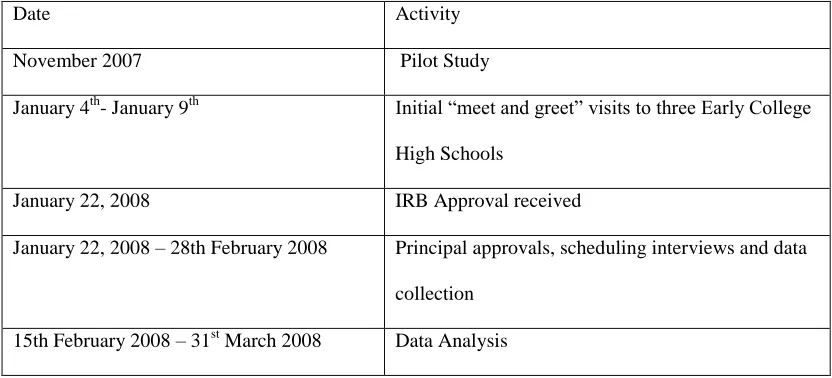
This chapter explains the rationale for selecting a qualitative design, and describes the sample as well as the methods for data collection and analysis. Finally, this chapter will discuss validity and reliability and reflect on the effects of researcher bias on the study. The following table describes the research time line:
Table 1: Time Line for the Research Process
Date Activity
November 2007 Pilot Study
January 4th- January 9th Initial ―meet and greet‖ visits to three Early College
High Schools
January 22, 2008 IRB Approval received
January 22, 2008 – 28th February 2008 Principal approvals, scheduling interviews and data
collection
Design of Study
This study is based on interpretive qualitative inquiry (Merriam, 1998) seeking to understand the beliefs, attitudes, and concerns of teachers during the implementation phase of one-to-one computing initiative. The Qualitative research method was selected as the
appropriate methodology for this study as it allows studying a phenomenon with depth and in detail (Patton, 2002). Qualitative research is guided by a set of assumptions intended to address the process and purpose of conducting research (Merriam, 1998). The key
philosophical assumption as stated by Merriam and Simpson (2000) is, ―the view that reality is constructed by individuals in interaction with their social worlds‖ (p. 97). As stated by
Merriam & Simpson (1995), overall purposes of qualitative research are to achieve an understanding of how people make sense of their lives, to delineate the process (rather than outcome or product) of meaning making, and to describe how people interpret what they experience.
There are additional characteristics of qualitative research as stated by Merriam (1998). First, qualitative research is primarily an inductive research strategy. Qualitative research may be an appropriate strategy to use if there is little known about the problem as stated by Merriam and Simpson (1995, p.99):
perspective, resulting in an interpretation, description, or explanation of the phenomenon.
Next, the researcher is the primary instrument for data collection and analysis. Guba and Lincoln (1981) point out that in addition to responsiveness and adaptability, the
researcher as primary instrument is also able to: consider the total context of the phenomenon rather than a particular segment; immediately process data as it is being collected, leading, if necessary to refining data collection procedures; clarify and summarize material, checking with respondents for accuracy of interpretation; and explore atypical or idiosyncratic responses (Merriam & Simpson, 1995).
Another characteristic of qualitative research is that it usually involves fieldwork. The researcher physically goes to the people, setting, site, or institution in order to observe
behavior in its natural setting. Fieldwork involves becoming intimately involved with the study. Finally, qualitative research assumes that a richly descriptive end product will be produced by the researcher through detailed writings and rich imagery, supported by the use of the participants‘ own words and data found in documents, videotapes, and in other sources
(Merriam, 1998).
need assistance in learning to use computers as tools for teaching (Schwab & Foa, 2001), and that sustained group professional development can improve chances for meaningful and lasting integration (Blumenfeld et al., 1991), but the ideal level of training for different purposes and contexts remains elusive (Burns & Polman, 2006). Hence, there is need for more conclusive data on the implementation process of a computing initiative.
Unlike quantitative research, which posits that one objective reality exists and that reality is quantifiable and measurable (Crotty, 1998), the qualitative research paradigm allows researchers to inductively explore socially constructed meanings, not constraining them to fit within a predetermined set of categories of analysis (Patton, 2002). A qualitative methodology is thus appropriate since little is known about this phenomenon (Merriam & Simpson, 2000), and a qualitative study allows for rich descriptions of social phenomena (Merriam, 1998; Patton, 2002). This study therefore adopts a basic interpretive study, which is used to "discover and understand a phenomenon, a process, or the perspectives and worldviews of the people involved" (Merriam, 1998, p. 11). Qualitative researchers conducting a basic interpretive study are interested in 1) how people interpret their
Sampling
Sampling is defined by Merriam (1998) as the selection of a research site, time, people, and events in field research. According to Le Compte and Preissle (1993) sampling has to do with representation of individuals and subsets making up the population group from which results can be generalized. For this study, a criterion based sample selection was used to select the site, and a voluntary or convenience sample was used to select the participants. The approach to selection of the site was guided by the purpose of the study, and the selection of participants was entirely dependant on limitations of time and teacher availability.
Site Selection
A criterion-based sample selection approach was employed to select the site for this study. The criterion based selection requires the researcher to ―create a list of the attributes essential‖ to the study, and then ―proceed to find or locate a unit matching the list‖
(LeCompte & Preissle, 1993, p.70). The logic of criterion-based sampling is to review and study all cases that meet some pre-determined criterion of importance (Patton, 2002). The criteria used to select the site include the Early College High Schools that have been
Site Characteristics
The selected Early College High Schools are part of the North Carolina one-to-one laptop initiative, and they also form part of the New Schools Project. Participants were spread across four Early College High Schools in North Carolina. Three of these schools opened in Fall 2005, and one school opened in Fall 2006. Though unique in their own ways, these schools share certain characteristics and values in common. The goal of this program is to promote academic excellence and provide an opportunity for outstanding minority
students with significant financial need to attend the college of their choice without the financial burden that can often prevent many highly qualified young people from pursuing a college education.
As part of the Early College High School design, these schools are located on community college campuses. The schools and colleges share resources and facilities and also coordinate schedules and calendars. They also co-design a four or five-year academic path for all students to provide, at no cost to the student, the opportunity to complete a high school diploma and an Associate‘s Degree or two years of transferable college credits. Such