Human Identification with Finger Veins Using
Repeated Line Tracking, Even Gabor and
Automatic Trimap Generation Algorithms
Prabjot kaur*, Mr. Prince Verma#
*Research Student, Dept of Computer Science,CTIEMT #Assistant Professor, Dept of Computer Science, CTIEMT
Abstract---Finger vein is a unique physiological biometric which is used for identification of individuals based on the physical characteristics and parameters of the vein patterns in the human body. This technology is at present in use or development for a wide range of applications, which includes credit card authentication [1], security in automobile, employee time and tracking attendance [1], computer and network authentication, security at end points and automated teller machines [1]. In this paper, different level of techniques are discussed and analyzed i.e., Repeated Line Tracking, Gabor Filter, Automatic Trimap generation and Graph Matching a comparatively evaluate them with more popular score-level fusion approaches to ascertain their effectiveness in this proposed system. The basic principle, different feature extraction techniques and performance measuring are analyzed. Mostly the existing work is functionally described and compared in three parts (i.e. Finger vein acquired image, pre-processing and feature extraction).
Keywords---Finger vein, Gabor Filter, Repeated line Tracking and Automatic Trimap Generation Algorithm.
INTRODUCTION
Image processing is a method to convert an image into
digital form and perform some operations on it, in order to get an enhanced image or to extract some useful information from it. It is a type of signal dispensation in which input is image, like video frame or photograph and output may be image or characteristics associated with that image. Usually Image Processing system includes treating images as two dimensional signals while applying already set signal processing methods to them. Image Processing forms core research area within engineering and computer science disciplines too. Image processing basically includes the following three steps:
• Importing the image with optical scanner or by digital photography.
• Analyzing and manipulating the image which includes data compression and image enhancement and spotting patterns that are not to human eyes like satellite photographs.
• Output is the last stage in which result can be altered image or report that is based on image analysis.
Finger vein is a unique physiological biometric for
identifying individuals based on the physical characteristics and attributes of the vein patterns in the
human finger [5]. It is a fairly recent technological advance in the field of biometrics that is being applied to different fields such as medical [5], financial, law enforcement facilities and other applications where high levels of security or privacy is very vital. And this technology is very impressive because it requires only small and relatively cheap single-chip design, and has an identification process that is contact-less and of higher accuracy when compared with other identification biometrics like fingerprint, iris, facial and others. This higher accuracy rate of finger vein is not unconnected with the fact that finger vein patterns are virtually impossible to forge thus it has become one of the fastest growing new biometric technology that is quickly finding its way from research labs to commercial development. Historically, R&D at Hitachi of Japan (1997-2000) discovered that finger vein pattern recognition was a viable biometric for personal authentication technology and by 2000-2005 were the first to commercialize the technology into different product forms, such as ATMs. Their research reports false acceptance rate (FAR) of as low as 0.0001 % and false reject rate (FRR) of 0.1%. Today 70% of major financial institutions in Japan are using finger vein authentication. Finger vein based biometric system has several benefits when compared with other hands based on the biometric methods.
Figure 1: Hitachi of Japan history of research & development on finger-vein recognition Technology
problems, the finger vein images are not always clear. Therefore, segmentation errors can occur during the feature extraction process due to the low qualities of finger vein images.
Why we use finger vein?: Traditional Biometric
authentication system will be provided by using passwords or Personal Identification Numbers (PINs), which are easy to implement but is vulnerable to the risk of exposure and being forgotten. Biometrics, which uses human physic-logical or behavioral features for personal identification which has attracted more and more attention and is becoming one of the most popular and promising alternatives to the traditional password or PIN based authentication techniques. As we step ahead into the new millennium, identity thefts and Internet scams are becoming increasingly common. More and more governments and institutions are now using this technology to safeguard their airports, hospitals, prisons and other sensitive areas. In this era, it is imperative that we continuously upgrade our security systems, and the use of biometrics is a step towards the security upgrade that we continuously require.
Repeated line tracking: The repeated line tracking method
gives a promising result in finger-vein identification: The idea is to trace the veins in the image by chosen directions according to predefined probability in the horizontal and vertical orientations [1], and the starting seed is randomly selected; the whole process is repeatedly done for a certain number of times, as its name suggests.The repeated line tracking method gives a promising result in finger-vein identification: The idea is to trace the veins in the image by chosen directions according to predefined probability in the horizontal and vertical orientations [1], and the starting seed is randomly selected; the whole process is repeatedly done for a certain number of times.
Even Gabor Filter: A Gabor filter is a linear filter whose
impulse response is defined by a Gaussian function multiplied by a harmonic function. Because of (Convolution theorem) the multiplication-convolution property, the Fourier transform of a Gabor filter's impulse response is the convolution of the Fourier transform of the Gaussian function and Fourier transform of the harmonic function. The Gabor Filters have received considerable attention because the characteristics of certain cells in the visual cortex of some mammals can be approximated by using the Gabor filters. These filters have been shown to posses optimal localization properties in both frequency and spatial domain. And thus are well suited for texture segmentation problems. The Gabor filters have been used in many applications also like, such as texture segmentation, edge detection, retina identification etc. A Gabor filter can be viewed as a sinusoidal plane of particular frequency and orientation [1], modulated by a Gaussian envelope.
G(x, y) = s(x, y) g(x, y)
Where g(x, y) is 2D Gaussian envelope and (x, y) is complex sinusoid
, = − 2 ° + °
, = 1
2 −
1
2 +
ₓAnd characterize the spatial extent and bandwidth of along the respective axes, and are the shifting frequency parameters in the frequency domain. Using , as the mother wavelet, the Gabor wavelets, and a class of self-similar functions can be obtained by appropriate dilations and rotations of , through:
, , = ′, ′ ,
Where ′= + = + ,
′ = + ,
a>1, θ=n /0, m=1…Sn=1…0. indicates the number of orientations [1], S the number of scales in the multi resolution decomposition and a is the scaling factor between different scales.
Automatic Trimap Generation: The Automatic Trimap
Generation is used to achieve good segmentation performance for low quality images of finger-vein. Assuming that F(x, y) and B(x, y) respectively represent a foreground image and a background image, an restored finger-vein image R^(x, y) can be modelled as
R^(x, y) = F(x, y) α(x, y) +B(x, y) (1 – α(x, y)); Where α(x, y) is the pixel’s foreground opacity. For convenience, R^ (x, y), F(x, y), B(x, y) and α(x, y) are respectively represented by R^, F, B and a in the following. In nature, the problem described in Equation is ill-posed since F, B and α are all unknown. However, given the Trimap, α can be estimated accordingly based on Equation.
PREVIOUS WORK
Ajay Kumar et al. [2] proposed a method for Human
Jinfeng Yang et al. [3] proposed Finger-vein network
enhancement and segmentation. In this paper an emerging biometric recognition based on human finger-vein patterns has received considerable attention. Due to light attenuation in imaging finger tissues, the finger-vein imagery is often seriously degraded. This makes network-based finger-vein feature representation greatly difficult in practice. In order to obtain perfect finger-vein networks, in this paper, he proposes a novel scheme for venous region enhancement and finger-vein network segmentation. First, a method aimed at scattering removal, directional filtering and false vein information suppression is put forward to effectively enhance finger vein images. Then, to achieve the high-fidelity extraction of finger-vein networks in an automated manner, matting based segmentation approach is presented considering the variations of veins in intensity and diameter. Extensive experiments are finally conducted to validate the proposed method.
Pengfei Yu et al. [3] proposed a method Fingerprint Image
Pre-processing Based on Whole-Hand Image Captured by Digital Camera. In this paper they present some fingerprint image pre-processing approaches based on a whole-hand
image captured by digital camera. The pre-processing methods include key point location, finger image segmentation and fingerprint region extraction. Firstly, the key points including fingertips and valley points, which are called key points, are located from the hand contour image. Secondly, the middle finger is cropped from the hand image based on the information of the key points' positions and the knuckle's texture near the finger root. Finally, the fingerprint is extracted from the middle finger through the first knuckle's texture. Because of the low resolution of the fingerprint images, linear projection methods such as Principle Component Analysis (PCA) and Linear Discriminant Analysis (LDA) are used for fingerprint feature extraction. Experimental results on a database of 86 hands (10 impressions per hand) show that these approaches are effective.
PROPOSED APPROACH
The block diagram of the proposed system is shown in Figure 2.
Yes
Figure 2: Flowchart for Proposed work Finger Imaging
(Near infrared light)
Database
Vein pattern matching
Unlock device Image pre-processing
Image Binarization
Vein ROI
Extraction Enhancement Image Image Edge
Detection
Feature Extraction Automatic
Trimap Generation User Finger
Reject
BRIEF EXPLANATION OF PROPOSED WORK First step: The fingers presented for the identification of
subjects are simultaneously exposed to a CCD camera and an infrared camera, as illustrated from the device of our imaging device and we acquire input image.
Second step: After acquiring finger vein image we do
reprocessing of an input image which includes;
1) Binarization = we convert grey scale image to black
and white ie in a binarized form 1 and 0.
2) Edge detection=we detect the edges of a finger vein
image using soble edge detector so that we extract finger vein area properly.
3) Vein ROI=ROI(REGION OF INTEREST) is used to
acquire important region of interest of a finger vein image, with which less time is consumed and unwanted area is excluded.
4) Image enhancement = it is used to improve the
quality of finger vein image .it improves the color contrast, brightness and moreover reduces noise presence in an image.
Third step: in this step segmentation of finger vein is done
by using Automatic Trimap Generation, which separates the foreground part, background part and blended region of finger vein image.
Fourth step: in this step we do feature extraction of
finger vein image by using Repeated Line Tracking and even Gabor in combined form.
Fifth step: in last step we match input image with the
database images using two techniques.
1) SURF (speed up robust feature)
2) Cross validation and graph matching
If an image matches, the device will unlock, otherwise not.
RESULTS
A starting GUI was created to perform all the five operations that is browse input image, process input image, create database, process database and match. While matching the processed image with stored image four parameters are calculated that is its PSNR value, FAR and GAR and its Accuracy.
Figure 3: Receiver Operating Characteristic-Finger Vein between GAR and FAR
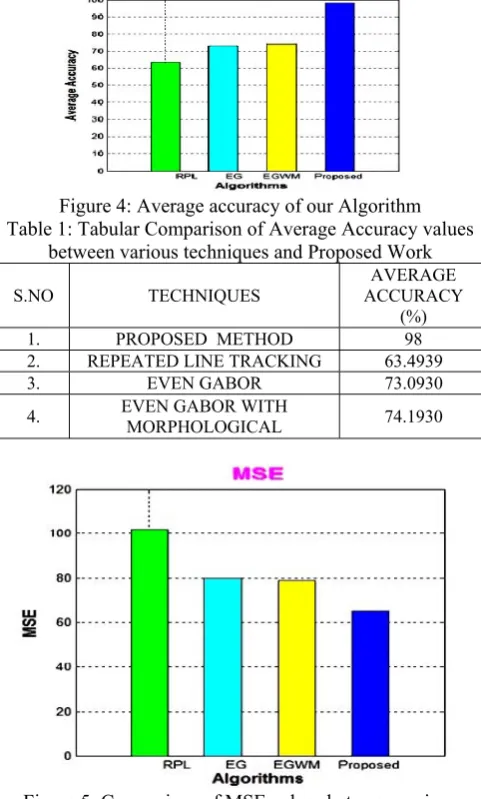
Figure 4: Average accuracy of our Algorithm Table 1: Tabular Comparison of Average Accuracy values
between various techniques and Proposed Work
S.NO TECHNIQUES
AVERAGE ACCURACY
(%)
1. PROPOSED METHOD 98
2. REPEATED LINE TRACKING 63.4939
3. EVEN GABOR 73.0930
4. EVEN GABOR WITH MORPHOLOGICAL 74.1930
Figure 5: Comparison of MSE values between various techniques and Our Algorithm
Table 2: Tabular Comparison of MSE values between various techniques and Proposed Work
S.NO Techniques MSE
IMAGE 1 IMAGE 2 IMAGE 3
1. Proposed method 58.1635 73.1461 47.1090
2. Repeated line tracking 109.5521 85.5150 99.2069
3. Even Gabor 73.1255 88.1081 62.0710
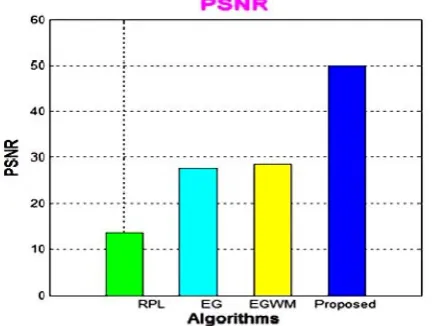
Figure 6:Comparison of PSNR values between various techniques and Our Algorithm
Table 3: Tabular Comparison of PSNR values between various techniques and Proposed Work
S.NO TECHNIQUES PSNR
IMAGE 1 IMAGE 2 IMAGE 3
1. Proposed method 49.4486 50.3102 51.8057
2. Repeated line tracking 14.3200 15.3997 13.0426
3. Even GABOR 28.3240 29.4037 27.0466
4.
Even GABOR with Morphological
29.2820 30.3617 28.0026
CONCLUSION
As Finger vein identification uses the unique patterns of finger veins images to identify individuals at a high level of accuracy and security. The credibility of the finger vein authentication is higher. In past there is work done by Repeated Line Tracking approach and Even Gabor filter approach individually but the combination of these two approaches with Automatic Trimap filter is not done before. In this work, systematically develop a new approach for the finger vein feature extraction using Repeated Line tracking after the segmentation of finger vein pattern by using Automatic Trimap Generation. The result comes for GAR and the FAR after comparing with the individual technique is more accurate. The GAR and FAR output for individual Repeated Line Tracking approach, Even Gabor and Even Gabor with morphological operations after many results is very low but the combination of Repeated Line Tracking and Gabor Filter with automatic Trimap generation method increase the results accuracy to very high, which shows that the combination of these two method gives much better results as compared to the individual use of these methods. Using this algorithm the PSNR values also increases as compared with literature which provide high quality of work.
REFERENCES
[1]Prabjot Kaur et al., “Comparative Study on Human Identification for Finger Vein Images” International Journal of Latest Scientific Research and Technology 1(2), pp. 37-40 ISSN: 2348-9464, July – 2014.
[2] Ajay Kumar & Yingbo Zhou, “Human Identification Using Finger Images” Published by IEEE Transactions on Image Processing, vol. 21, pp. 2228-2244, April 2012.
[3] Jinfeng Yang & Yihua Shi“Finger Vein Based Enhancement and Segmentation”Published by Springer in 2013.
[4] Vanathi G, Nigarihaa R, Umea Maheswari G & Sjuthi R Real Time Recognition System Using Finger Vein” Published by IJAEEE ,vol 2 Issue 4 ,ISSN :2278-8948, july 2013.
[5] Wenming Yang, Qing Rao, Qingmin Liao “Personal Identification For Single Sample Using Finger Vein Location and Direction Coding” Published by IEEE Transactions on Hand Based Biometrics , International Conference ,pp.1-6, 2011.
[6] Jinfeng Yang and Xu Li “Efficient finger Vein Localization and recognition” Published by IEEE Transactions on Pattern Recognition, International Conference, pp.1148-1151, ISSN: 1051-4651 , 2010.
[7] Qin Bin Pan Jian-fei Cao Guang-zhong & Du Ge-guo “The Anti Spoofing Study of Vein Identification System” Published by IEEE Transactions on Computational Intelligence and Security ,International Conference ,vol 2,pp.357-350, 2009
[8] Yang JF, Yang JL, Shi YH “Finger-vein segmentation Based on multi-channel even-symmetric Gabor filters” Published by IEEE Transactions on intelligent computing and intelligent systems, International conference ,vol 4.pp.500-503,2009.
[9] David Mulyono & Horng Shi Jinn “A Study of Finger Vein Biometric for Personal Identification” Published by IEEE Transactions on Biometrics and Security Technologies, pp. 1-8, 2008
[10] Naoto Miura, Akio Nagasaka, Takafumi Miyatake “Extraction of Finger-Vein Patterns Using Maximum Curvature Points in Image Profiles” Published by IAPR Conference on Machine Vision Applications, Tsukuba Science City, Japan,2005. [11] Naoto Miura, Akio Nagasaka, Takafumi Miyatake “Feature
Extraction of Finger-Vein Patterns Based on Repeated Line Tracking and its Application to Personal Identification” Published by Springer on Machine Vision and Applications, Volume 15, Issue 4, pp 194-203, October 2004.
[12] C. Yam, M. Nixon, and J. Carter, “Gait Recognition by Walking and Running: A Model-Based Approach” Proc. Asia Conf. Computer Vision, pp. 1-6, 2002.
[13] E. C. Lee and K. R. Park, “Restoration method of Skin scattering blurred vein image for finger vein Recognition,” Electron. Lett. vol.45, no. 21, pp. 1074–1076, Oct. 2009.
[14] Z. Zhang, S. Ma, and X. Han, “Multiscale feature Extraction of finger vein patterns based on curvelets and Local interconnection structure neural network,” in Proc. ICPR, Hong Kong, 2006, pp. 145–148.
[15] N. Miura, A. Nagasaka, and T. Miyatake, “Feature Extraction of finger vein patterns based on repeated line Tracking and its application to personal identification,”Mach. Vis. Appl., vol. 15, no. 4, pp. 194– 203, Oct. 2004.
[16] N. Miura, A. Nagasaka, and T. Miyatake, “Extraction of finger-vein patterns using maximum curvature points in image profiles,” in Proc.IAPR Conf. Mach. Vis. Appl., Tsukuba Science City, Japan, pp. 347–350, May 2005,.
[17] A.K. Jain, Y. Chen, and M. Demirkus, “Pores and ridges: High resolution fingerprint matching using level 3 features,” IEEE Trans. Pattern Anal. Mach. Intell., vol. 29, no. 1, pp. 15–27, Jan. 2007.