DETERMINANTS OF KNOWLEDGE SHARING INTENTION IN E-LEARNING
SEYED ALI HOSSEINI
DETERMINANTS OF KNOWLEDGE SHARING INTENTION IN E-LEARNING
SEYED ALI HOSSEINI
A thesis submitted in fulfilment of the requirements for the award of the degree of
Doctor of Philosophy
International Business School Universiti Teknologi Malaysia
iii
DEDICATION
This work is dedicated to my wife, Masoumeh, who always encouraged me to study and to my two children, Mohammad Hossein and Fatemeh Hosna. You made tremendous sacrifices during my doctorate studies, which made it possible for me to complete this difficult and long journey. The accomplishment of my Doctorate degree is a task that I would not be able to complete without your support and understanding. You provided the encouragement necessary for me to overcome the challenges and finish this thesis.
iv
ACKNOWLEDGEMENT
First and foremost I’m offering my thanks and appreciation to my God for taking
care of me and guiding me in my life and all throughout this long research process. This research journey would have been very tough, almost impossible without the encouragement and assistance of many people. I would like to thank my supervisor, Assoc. Prof. Dr. Wan Khairuzzaman Bin Wan Ismail. I am very delighted and appreciative of the patience of my wife Masoumeh and my son Mohammad Hossein and my daughter Fatemeh Hosna for supporting me throughout these years of doctoral research. I wish to thank my beloved mother, my father for their prayers, support and encouragement. I am also immensely grateful to the authorities of the OUM especially Prof. Dr. Mansor Fadzil (senior vice president of OUM) who showed great interest in my research and facilitated my access to their students and facilitators for data collection; and I also appreciate all respondents who made this study possible and who honestly and patiently shared their time and information with me.
Special thanks to all the individuals who provided support and friendship throughout my study.
v
ABSTRACT
Knowledge resides within a human being and it is hard to be shared to others. With the proliferation of information and communication technologies, and virtual communities in education, there is an expanded opportunity for the public to be involved in knowledge sharing. However, reluctance to share is one of the main impediments of knowledge sharing. The aim of this thesis is to develop an integrative understanding of the determinants supporting or inhibiting students' knowledge sharing intention in E-learning system. Data were gathered from 583 students who are studying with the E-learning system in Open University Malaysia (OUM) using online questionnaire survey. Semi-structured interviews were constructed with 10 participants who are facilitators in E-learning system of OUM as the case study to achieve comprehensible knowledge sharing and understandable intention. The analysis of quantitative data was made using structural equation modeling (SEM) technique and LISREL. Four individual factors namely trust, perceived ease of use, perceive usefulness, educational compatibility as well as four social environment factors such as a friend’s influence, superior influence, self-efficiency, and
vii
TABLE OF CONTENTS
CHAPTER TITLE PAGE
DECLARATION ii
DEDICATION iii
ACKNOWLEDGEMENT iv
ABSTRACT v
ABSTRAK vi
TABLE OF CONTENTS vii
LIST OF TABLES xiii
LIST OF FIGURES xv
LIST OF ABBEVIATIONS xviii
LIST OF APPENDIX xix
1 INTRODUCTION 1
1.1 Background of the Research 2
1.2 The Statement of the Problem 3
1.3 Gap in Research 5
1.4 Research Questions 7
1.5 Research Objectives 8
1.6 Research Hypotheses 8
1.7 Overview of Open University Malaysia (OUM) 9
1.8 Significant of the Study 11
1.9 Operational Definitions 12
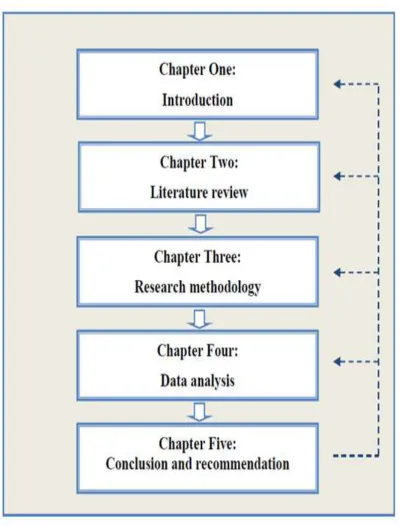
1.10 Thesis structure 16
2 REVIEW OF THE LITERATURE 19
viii
2.2 E-learning (EL) 20
2.3 E-learning system 21
2.4 Collaborative EL system Tools 23
2.5 Asynchronous and synchronous learning 25
2.6 The connotation of knowledge 26
2.7 Knowledge in EL Systems 27
2.8 Knowledge Management (KM 28
2.9 Knowledge management in e-learning context 29
2.10 Knowledge Sharing (KS) 32
2.11 Importance of knowledge sharing 33
2.12 The connotation of KS in EL system 34
2.13 Knowledge sharing in E-learning system 35
2.14 Knowledge sharing enablers in EL system 36
2.14.1 People as KS enabler 36
2.14.2 Interactive environment as KS enabler 37
2.14.3 El platforms and Open Educational Resources (OER) as KS enabler 39
2.15 Determinants of knowledge sharing intention 41
2.16 Why and how to share? 45
2.17 Theory of Planned Behaviour (TPB) 47
2.17.1 The Decomposed Theory of Planned Behaviour 48
2.17.2 Intention to share knowledge 49
2.17.3 Attitude towards behaviour 49
2.17.4 Educational Compatibility (EC) 50
2.17.5 Subjective Norm (SN) 50
2.17.6 Superiors’ influence (SI) and Friends’ influence 51
2.17.7 Perceived Behavioural Control (PBC) 51
2.17.8 Self-Efficacy (SE) 52
2.17.9 Facilitating Conditions (FC) 52
2.18 Social Cognitive Theory (SCT) 56
2.19 The SCT and DTPB Justified Theories 58
2.20 Hypotheses 63
2.21 Summary 71
3 METHODOLOGY 72
ix
3.2 Research Methodology (RM) 72
3.3 Research Operational Framework 74
3.4 Research Philosophy 75
3.5 Research Design 75
3.6 Case Study Method 76
3.7 The Selected Case Study 78
3.8 Open University Malaysia (OUM) 79
3.9 Approach of delivery 79
3.10 Research Method 80
3.11 Instrument Development 81
3.11.1 Interview 81
3.11.2 Questionnaire 83
3.11.2.1 Instrument Plan 83
3.11.2.2 Construct Measures 84
3.11.2.3 Demographic Information 89
3.11.2.4 Pre-Test of the questionnaire 89
3.11.2.5 The Operation phase 90
3.12 Sampling 91
3.12.1 Sample and Population 91
3.12.2 The Sampling Structure 91
3.12.3 The Sampling Method 92
3.13 Data Analysis Methods 93
3.13.1 Structural Equation Modelling (SEM) 94
3.13.2 The Validity and Reliability of the study 95
3.14 Summary 95
4 DATA COLLECTION AND ANALYSIS 97
4.1 Introduction 97
4.2 Questionnaire design and data collection 98
4.3 Quantitative Analysis 98
4.3.1 Analysis of Demographics and Respondents 100
4.3.1.1 Gender 100
4.3.1.2 Age 101
4.3.1.3 Level of Education 102
x
4.3.1.5 Duration of engagement in E-learning 104
4.3.1.6 The EL arrangements experience of the EL system 104
4.3.1.7 Place of accessing the computer 105
4.3.1.8 Experience of using EL types 106
4.3.1.9 The reason for choosing to use the EL 107
4.3.1.10 Education part-time or full-time 108
4.3.2 Descriptive statistic of the questions and variables 111
4.3.2.1 Descriptive statistic of variables 113
4.3.3 Construct Analysis 113
4.3.3.1 Trust 114
4.3.3.2 Perceived ease of use (PEOU) 114
4.3.3.3 Perceived usefulness (PU) 114
4.3.3.4 Educational compatibility (COM) 115
4.3.3.5 Friends’ Influence (FI) 115
4.3.3.6 Superiors’ Influence (SI) 116
4.3.3.7 Self-Efficacy (SE) 116
4.3.3.8 Facility Conditions (FC) 116
4.3.3.9 Attitude towards KS (AI) 117
4.3.3.10 Subjective Norm (SN) 117
4.3.3.11 Perceived Behavioural Control (PBC) 118
4.3.3.12 Intention to KS (IS) 118
4.4 Analytical statistic 121
4.4.1 Structural Equation Modelling (SEM) 121
4.4.2 The Measurement Model Analysis 122
4.4.2.1 Introduction to analysis of Confirming Factor (CF) 122
4.4.2.2 Confirmatory Factor analysis 123
4.4.2.3 Internal Consistency 127
4.4.3 Criminate validity 127
4.4.3.1 Discriminate validity 129
4.4.4 To analyse structural model 132
4.4.5 Results and Discussion of LISREL Analysis 134
4.4.5.1 First hypothesis 134
4.4.5.2 Second hypothesis 136
xi
4.4.5.4 H5 hypothesis 139
4.4.5.5 H6 hypothesis 141
4.4.5.6 H7 hypothesis 143
4.4.5.7 H8 hypothesis 145
4.4.5.8 H4 main hypothesis 148
4.4.5.9 H10 hypothesis 150
4.4.5.10 H11 hypothesis 152
4.4.5.11 H12 hypothesis 154
4.4.5.12 H13 hypothesis 157
4.4.5.13 H9 hypothesis 159
4.5 Qualitative Analysis 162
4.5.1 Participant Information 162
4.5.2 Qualitative Results 163
4.6 Triangulation of Findings 174
5 DISCUSSION AND CONCLUSIONS 177
5.1 Introduction 177
5.2 Evaluation of Research Questions and Hypotheses 178
5.2.1 Individual motivational factors 179
5.2.1.1 Trust 180
5.2.1.2 Perceived Ease of Use (PEOU) 180
5.2.1.3 Perceived Usefulness (PU) 181
5.2.1.4 Educational Compatibility 182
5.2.2 Social environment motivational factors 183
5.2.2.1 Friends’ Influence (FI) 184
5.2.2.2 Superiors’ Influence (SI) 185
5.2.2.3 Self-Efficacy (SE) 186
5.2.2.4 Facility Conditions (FC) 187
5.2.3 Attitude towards KS 188
5.2.4 Subjective Norm (SN) 189
5.2.5 Perceived Behavioural Control (PBC) 189
5.3 Hypothesis Testing Results 190
5.4 Discussion of Conclusions 194
5.4.1 Overview of the Findings 194
5.4.2 Contribution 194
xii
5.4.4 Recommendations of the research 196
5.4.5 Restrictions of the study 197
5.4.6 Recommendations for Further Study 199
5.4.7 Conclusions 200
xiii
LIST OF TABLES
TABLE NO. TITLE PAGE
2.1 Dimension of knowledge in e-learning 27
2.2 Dimension of factors affecting knowledge sharing 43
2.3 Review of prior studies relative to decomposed TPB model 54
3.1 Operational Framework 74
3.2 Prior studies based on case study method 78
3.3 Total OUM undergraduate enrolment in 2009 and 2010 79
3.4 Total OUM postgraduate enrolment in 2009 and 2010 79
3.5 OUM cumulative enrolment from 2001–2010 80
3.6 The interview questions 83
3.7 The Construct Measures based on research questions and research objectives 85
3.8 Research questions and research objectives 88
3.9 Reliability Analysis of the Survey Instrument Dimensions 90
4.1 The learning centers that collected questionnaires 99
4.2 ANOVA on Mean Scores on variables 109
4.3 Descriptive statistic of the questions 111
4.4 Descriptive statistic of variables 113
4.5 Descriptive Statistics for questions 119
4.6 Model fit index 125
4.7 Reliability Analysis of the Survey Instrument Dimensions 127
4.8 Average variance executed (AVE) of the research dimension 128
4.9 Unity Coefficients of the Dimensions of the Model 130
4.10 Fornell and Larcker’s chart for discriminate Validity 131
4.11 The fit model indexes 133
4.12 Route Statistical Results 133
xiv
4.14 Model fit indexes for the Second hypothesis 137 4.15 Model fit indexes for the Third hypothesis 138 4.16 The model of the Fourth (Ha1) hypothesis with t-value coefficients 140 4.17 Model fit indexes in the Fifth (Ha1) hypothesis 142 4.18 The model of the Sixth (Ha3) hypothesis with t-value coefficients 144 4.19 The model of the Seventh (Ha4) hypothesis 146
4.20 The fit model of the Ha hypothesis 149
4.21 The model of the Eighth (Hb1) hypotheses with t-value 151 4.22 The model of Ninth (Hb2) hypothesis with t-value coefficients 153 4.23 The Tenth (Hb3) hypothesis model with t-value coefficient 155 4.24 The model of the Eleventh (Hb4) hypothesis with t-value coefficient 158 4.25 Matrix of Triangulating Outcomes across the Instruments of Data
Collection 175
xv
LIST OF FIGURES
FIGURE NO. TITLE PAGE
1.1 Organization of Thesis 18
2.1 Types of EL system 23
2.2 The Nonaka and Takeuchi (1995) model 31
2.3 Theory of planned behavior (TPB) 47
2.4 Theory of Planned Behavior decomposed by Taylor and Todd (1995) 53
2.5 The Social Cognitive Theory (SCT) 57
2.6 Bergsma and Ferris (2011) research model 62
2.7 Research model based on DTPB and SCT 63
2.8 Research model with hypothesis 70
3.1 Research methodology implemented for this study 73
3.2 Saunders’ Onion Model 76
4.1 The Breakdown of Participants (Gender) 101
4.2 The Breakdown of Participants by Age 101
4.3 The Breakdown of Participants (Level of Education) 102
4.4 The Breakdown of Participants (Average level of Education of friends or members in EL) 103
4.5 The Breakdown of Participants (Engagement time period) 104
4.6 The Breakdown of Participants (EL arrangements) 105
4.7 The Breakdown of Participants (Place of accessing the Computer and Internet) 106
4.8 The Breakdown of Participants (Experience of using EL types) 107
4.9 The Breakdown of Participants (The reason for choosing to use The EL system) 108
4.10 The Breakdown of Participants (full-time or part-time study) 109
xvi
4.12 T-value coefficients to analyses significance of the questions 126 4.13 The First hypothesis with standardized coefficient loading 135 4.14 The first hypothesis with suggestions for modifications model 135 4.15 The first hypothesis modification model 136 4.16 The Second hypothesis model with standardized coefficient loading 137 4.17 The Third hypothesis model with standardized coefficient loading 138 4.18 The H5 hypothesis model with Standardized
coefficients loading 139
4.19 The H5 hypothesis with suggestions for
modifications model 140
4.20 The H5 hypothesis modification model 140 4.21 The H6 hypothesis model with standardized coefficients
Loading 141
4.22 The H6 hypothesis model with the suggested route for
modifications model 142 4.23 The H6 hypothesis modification model 143 4.24 The H7 hypothesis model with standardized
coefficients loading 144
4.25 The H7 hypothesis model with the suggested route for
modifications model 145
4.26 The H7 hypothesis modification model 145 4.27 The H8 hypothesis model with standardized
coefficients loading 146
4.28 The H8 hypothesis model with the Suggested route, with
modifications model 147
4.29 The H8 hypothesis modification model 147 4.30 The H4 hypothesis model with standardized coefficients loading 148 4.31 The H4 hypothesis model with t-value coefficient Indexes 149 4.32 The H4 hypothesis model with the suggested route for the
modifications model 150
4.33 The H4 hypothesis modification model 150
4.34 The H10 hypothesis model with standardized
coefficients loading 151
4.35 The H11 hypothesis model with standardized
coefficient loading 152
xvii
modifications model 153
4.37 The H11 hypothesis modification model 154 4.38 The H12 hypothesis model with Standardized
coefficient loading 155
4.39 The H12 hypothesis model with the suggested routes for
Modifications model 156
4.40 The H12 hypothesis modification model 156 4.41 The H13 hypothesis model with Standardized coefficient loading
157 4.42 The H13 hypothesis model with the suggested route for
modifications model 158
4.43 The H13 hypothesis modification model 159
4.44 The H9 hypothesis modification model 160
xviii
LIST OF ABBEVIATIONS
EL - Electronic learning KM - Knowledge management KS
- Knowledge sharing
TPB - Theory of Planned Behavior
DTPB - Decomposed Theory of Planned Behaviour SCT - Social cognitive theory
HEs - Higher education system PEOU - Perceived Ease of Use PU - Perceived usefulness SN - Subjective norm
PBC - Perceived behavioral control IS - Information system
IT -
- Information technology
ICT - Information communication technology SE
-
- Self-Efficacy
LMS - Learning management system CMS - Content management system
LCMS - Learning content management system SCORM - Sharable content object reference model ADL - Advanced distributed learning
SPSS LISREL
- Statistical package for social science Linear structural relations
AGFI - Adjusted goodness-of-fit index WWW - World wide web
HEs - Higher education system
SEM - Structural equation modelling
VLE - Virtual learning environment
RMSEA - Root-Mean-Square Error of Approximation
NNFI - Non-normed fit index
CFI - Comparative fit index
IFI - Incremental fit index
GFI - Goodness of fit index
TAM - Technology acceptance model
KSI - Knowledge sharing intention
FC - Facility conditions
FI - Friend’s influence
SI - Superior’s influence
xix
LIST OF APPENDIX
APPENDIX TITLE PAGE
A Research Interview Questions 232
B The Survey Questionnaire 233
C Verification form in order to conduct research 239
D Permission to conduct research at OUM 240
E List of students’ emails 241
F The link of Online questionnaire 242
CHAPTER 1
INTRODUCTION
There are significant benefits for academic and higher education institutions that expand their activities to manage knowledge to achieve the learning goals (Kidwell et al., 2000). Davenport and Klahr (1998) believed that higher education institutions can expand and encourage different ideas through KS behavior among students to help them improve their knowledge, skills and abilities. Thus, the higher education institutions have created a high sense of shared knowledge to be recognized as high esteem institutions within society (Keyes, 2008).
Recent decades have seen an important increase in the use of ICT (Information Communication Technology) within the learning process by HEs (Higher Education systems). Not only Higher Education institutions but also the world’s economy and industry (Maldonado et al., 2009) have come to rely very much on ICT. Much research has been done in universities and academic institutions on computer-based learning and internet-based learning that has beenclosely engaged with knowledge management systems and their processes such as storing and sharing knowledge (Wolf et al., 2011; Chen et al., 2009). Numerous universities and HEs have distributed the new learning method based on students’ desires particularly for web-based learning or e-learning (Artino, 2010).
2
1.1 Background of the Research
In recent years, a number of studies directed to the National Centre for Education Statistics of the U.S. Department of Education and worldwide have stated a continually growing number of instructive organizations proposing and planning to offer EL in the future years (Snyder and Dillow, 2012). As Radford (2012) stated about 4.3 million undergraduate scholars, or 20% of wholly undergraduates, acquired at least one EL course. Around 0.8 million, or 4%, of all undergraduates took their entire program via EL.
This growth in the number of students contributing in EL is due to the easiness and convenience that the Internet makes for communication.Lately, usage of the EL method has sustained to growth at an important amount of between 10% to 15% annual at universities and HE institutions (RocSearch, 2003). The record the progress of EL at HEs all over the world is very high (Littlejohn et al., 2008; Shee and Wang, 2008; Anastasiades et al., 2008). Universities have quickly extended their EL system offerings to provide almost $4 million. Allen and Seaman (2008) showed that 60% of principal colleges direct EL critically and considerably to strategic locations and more than 50% of these were persuaded to accept the EL system by observing the students’ learning performance and
experiences (Allen and Seaman, 2008).
In Malaysia, under the Vision 2020, Malay needs to grow the civilization in becoming an informed and educated civilization. Furthermore, with the increasing price of traditional education system, knowledge and technology explosion, Malaysia has observed EL as a approach for providing learning and training chances (Abdul Rahman, 1996). EL programmes has previously been in place on a modest scale in Malaysian universities of HE such as Sekolah Professional dan Pendidikan Lanjutan (SPACE) in Universiti Teknologi Malaysia (UTM), Pendidikan Jarak Jauh in Institute Technology Mara (ITM), Pusat Pendidikan JarakJauh in Universiti Kebangsaan Malaysia (UKM), Institute of Distance Education and Learning (IDEAL) in Universiti Putra Malaysia (UPM) and Pusat Pendidikan Jarak Jauhin Universiti Sains Malaysia (USM), especially MyVLE in Open University Malaysia (OUM). Each university has its own extension programme (Abu Mansor, 1998).
3
consensual, knowledge is discussed between a group of individuals to achieve a common goals and experiences. Since knowledge is currently the main valuable object, institutions are looking for creating the system which gather individuals’ knowledge for expanding and sharing between members in the environment (Jones, 2007; Ruuska, 2005; Bartol et al., 2009). So, Collison and Cook (2004) claimed that the in learning environment,
knowledge-sharing behavior has been created and extended among organizational members to achieve an effective learning.
The structure of EL system confirmed using through constructivist theories of learning and behavior (Prawat, 1996), and assists in the learning process by increasing KS behavior in the learning environment (Honebein, 1996; Wilson, 1996). EL tools have great potential in creating, sharing and reusing knowledge (Murugaboopathi et al., 2012). Pragmatic research implies increases via virtual education in terms of collaborative virtual learning (Zhang et al., 2007), EL systems in society (Conrad, 2005), and asynchronous learning (Mazzolini and Maddison, 2007). It is often argued that the usage of communication technologies will develop a student’s contribution and interaction compared with traditional learning in a learning environment (Haythornthwaite, 2002). An individual can contribute to creating the data and knowledge repositories by adding his/her content and experiences and encouraging sharing with others in an internet based learning environment (Gharakhani and Mousakhani, 2012). In order to learn better, EL systems and communication technologies can increase interactive activities, and participation methods, and they can positively influence the provision of education (Kapur and Kinzer, 2007). By using several tools of technology, the level of the students who share knowledge and its subsequent influence on individual behaviors can be measured (Fischer and Mandl, 2005). Then, restricting EL system objectives and planning facilities that face the procedure necessities of the knowledge student community as necessities required by structural knowledge procedures and sharing are imperative (Ruey-Shun and Chin-Hsiao, 2007).
1.2 The Statement of the Problem
4
2009; Lin et al., 2009; Alavi and Leidner, 2001; Mitchell et al., 2008; Nonaka and Takeuchi, 1995; Nonaka, 1994). The capability and willingness of people to participate in KS is a significant design issue for institutions (Hsu et al., 2007; Lam and Lambermont-Ford, 2010; Ajmal et al., 2009; Guzman, 2009; Nonaka and Takeuchi, 1995). Consequently, one of the important concerns for diverse HEs is how to motivate and encourage students’ KS behaviour among student communities (Hanisch et al., 2009; Hsu
et al., 2007; Nonaka, 1994; Cribb and Hartomo, 2002).
Despite the student increase in EL, Solis (2010) commented that nearly 70% of on-line learning communities are not willing to involve in sharing their knowledge with others. Researchers have shown that the sharing of knowledge between students is critical for learning systems because knowledge is achieved not only at the personal stage, but also at the group stage via interactions between individuals (Hernández et al., 2007; Koretsky et al., 2008; Beauchamp and Kennewell, 2010). Chiu et al. (2006) believed that the most important problem in predicating on-line learning communities is this lack of willingness to share knowledge in the on-line communities. Thus, it is significant to understand why persons choose to share or not to share knowledge with friends and other team students when this option is available to them. It is also important to identify what determinants could motivate and encourage KS intention between students.
The biggest challenge of academic principals is to find the Determinants that could encourage students to use the sharing option in the system (Wahlroos, 2010). Therefore, it is necessary to recognize the Determinants in order to encourage students in performing and sharing their knowledge and experiences in the learning environment (Ma, 2009; Ellis et al., 2003; Liu, 2008). It is essential to examine and to have a better understanding of Determinants of students’ on-line KS intention.
Consequently, by recognizing the influencing factors and improving them, it will be possible to answer the question “How could an EL system motivates students to share knowledge with others as individuals and as a member of a group?” and by improving the
5
Five arguments should be renowned when talking around virtual learning and KS.First, students might not incessantly be willing to be involved in KS (Fisher and Fisher, 1998), and definitely might be unwilling to share their knowledge in any environment (Kelloway and Barling, 2000). Second, in spite of the virtual applications being an “encouraging” mechanism for creating “powerful EL student groups” (Brown,
1999), for KSI to occur, a team or people should be willing to participate in behaviors that facilitate it (Rosen et al., 2007). Third, while the definitive objective of cooperation is tocreate knowledge, collaboration and interaction do not continuously consequence in KS (Fischer and Mandl, 2005; Jeong and Chi, 2007). Persons might not constantly be willing to involve in KS (Fisher and Fisher, 1998), and even personnel might be unwilling to share theirknowledge in EL environment with others (Kelloway and Barling, 2000).
Fourth, though the Internet is apromising” instrument for generating “influential online learning communities” (Brown, 1999), for KSI to happen, studentsshould be willing to involve in KSI that assist it (Rosen, Furst, and Blackburn, 2007). For instance, KS might fail tohappen when persons believe that their knowledge does not have value (Haldin-Herrgard, 2000), or when they may perceive it as highly valuable and be reluctant to share it with others, oronly share it selectively (Leidner, 1999). Fifth, EL students’ individual determinants and environmental factors might affect their KSI. Therefore, KS may not constantly occur as anticipated, and this challenge supports the reasoning for reviewingdeterminants that contribute to KSI in EL system.
1.3 Gap in Research
6
for their KS intention(Chen et al., 2009; Cheng et al., 2009). Furthermore, most past research is mainly devoted to the educational division but has not focused on students’ KS behaviour or intention (Kim and Ju, 2008; Chen et al., 2009).
Kalinga (2008) believed that motivating students to share resources is a main challenge in the EL system as a KM system and this issue should be resolved; therefore, there is considerable research on the KS process in a learning environment (Hassandoust and Perumal, 2011; Jin Tan, 2009). Nonetheless, there has been only limited investigations of why members of an organization or on-line community would be interested or otherwise in sharing their knowledge, and studies specialising in an on-line learning environment are particularly limited (Park and Choi, 2009; Liu, 2008; Hills and Overton, 2010).
Thus, there are some studies that have investigated the different Determinants with various classifications affecting KS behaviour in organizations and on-line communities (Aliakbar et al., 2012; Ardichvili et al., 2003; Han and Anantatmula, 2007; Lin, 2007; Riege, 2005), but most have referred to organizational context (Jo and Joo, 2011; Marjani, 2012) and a few have addressed KS intention in an on-line learning context or virtual communities as social environment (Kong et al., 2009; Sharratt and Usoro, 2003; Carr and Chambers, 2006). For instance, some research classifies the determinants into organizational and individual (Brown et al., 2006; Bock et al., 2005; Nita, 2008; Stewart, 2008; Connelly and Kelloway, 2003; Lin, 2007), external and internal (Aliakbar et al., 2012), and technological and individual (Liaw and Huang, 2007), and environmental factors (Glanz et al., 2005) that encourage or discourage KS between students leading to improvements in understanding, learning, performance and success.
According to suggestions for future research from on-line KS researchers, the one of most important issues is to survey and classify the Determinants that can influence students’ KS intention to enhance the better understanding of the students’ behaviour
within the learning environment (Ma, 2009; Wahlroos, 2010). For example, Chong et al. (2013) commented that “it will be valuable for other investigators to pursue an understanding of the individual variables that affect KS behaviour between learning communities”. They believed that future research should expand the literature review to
7
systems, computer networks, and social networks (Alboaie and Buraga, 2009; Bhuiyan et al., 2010), while relatively little has been conducted regarding the trust factor in EL systems.
Furthermore, as in previous research, there are some problems regarding three aspects of this research (Nor Ashmiza, 2012): (1) There is a lack of KS research in the area of HE; (2) There is a lack of research on students’ behavior in an EL system as an on-line environment; (3) There is a lack of determinants in order to share knowledge using an
EL system. Thus, there are three main areas in this research: (1)The identification of KS enablers in the EL environment (i.e. people, interactive environment, and applications); (2) the investigation of a collaborative EL system; and (3) identification of the Determinants that influence KS intention based on suitable theories relating to the behaviour and learning context, such as TPB, DTPB, SCT and combination of all these theories.Educators need to have sufficient information about the many determinants contributing toEL students’ knowledge sharing intention in in order to be better able todesign instructional environments that will encourage knowledge sharing in EL.
1.4 Research Questions(RQ)
According to the statement of the research problem explained before, the research questions have developed the following questions:
1. Does attitude toward knowledge sharing affect knowledge sharing intention among students in an EL system?
2. Do subjective norms influence the knowledge sharing intention among students in an EL system?
3. Does perceived behavioural control affect the knowledge sharing intention in an EL system?
4. Do individual determinants i.e. trust perceived ease of use, perceived usefulness and educational compatibility affect attitudes toward knowledge sharing?
8
1.5 Research Objectives (RO)
The purpose of the research is to discover the relationship between the Determinants of KS intention in an EL system. In connection to this, the other research purpose is to achieve the following objectives:
1. To explore how attitude toward knowledge sharing such as individual determinants
effect on knowledge sharing intention in an EL system.
2. To discover how the subjective norms influence on knowledge sharing intention in an EL system.
3. To explore how the perceived behavioural control affects knowledge sharing intention in an EL system1.
4. To identify the individual determinants i.e. trust, perceived ease of use, perceived usefulness and educational compatibility that affect attitude toward knowledge sharing.
5. To determine the social environment determinants i.e. friends’ influence, superiors ‘influence, and self-efficacy, and facility conditions that affect knowledge sharing
intention.
1.6 Research Hypotheses
The questions and objectives of the current study can be further studied through the following hypotheses:
H1. The students’ attitude toward knowledge sharing has a positive effect on the intention to share knowledge in an EL system.
H2. Subjective norm has a positive effect on the intention to share knowledge in an EL system.
H3. Perceived behaviour control has a positive effect on the intention to share knowledge in an EL system.
H4. The individual factors have a positive effect on the students’ attitude towards sharing knowledge.
9
H6. The perceived ease of use has a positive effect on the students' attitude toward KS in an EL system.
H7. The perceived usefulness has a positive effect on the students’ attitude toward KS in an EL system.
H8. The educational compatibility has a positive effect on the students’ attitude toward KS in an EL system.
H9: The social environment factors have a positive influence on intention to share knowledge.
H10. Friends’ influence has a positive effect on the students’ SN in and EL system. H11. The superior's influence has a positive effect on the students’ SN in EL system. H12. Self-efficacy has a positive effect on the perceived behavioural control in an EL system.
H13. The facility conditions have a positive effect on the perceived behavioural control.
1.7 Overview of Open University Malaysia (OUM)
Open University Malaysia (OUM) was created on 10 August 2000 as Malaysia’s seventh private university and was the first to operate through open and distance learning (ODL). It is owned by an association of the country’s eleven government universities.
Constructed on the philosophy that learning must be flexible and democratic, OUM has concentrated on constructing an affordable and accessible corridor to HEs, while placing emphasis on flexible admittance requests, a student-friendly HEs, and a blended form of instruction that mixes diverse styles of learning. Each of these features is planned to meet the different requirements of its students and is supported by a state-of-the-art ICT structure. As an ODL association, OUM directs HE courses through a blended pedagogical method that mixes virtual learning, traditional lectures and self-directed learning.
Virtual learning practices are planned in an on-line interface, frequently via OUM’s learning management system (LMS) that is known as MyVLE. This feature is
10
learning to foster a culture of lifelong learning. In this new EL model, OUM has focused on improving the EL environment to create interfaces and multimedia that customize students’ requirements and can maximise their learning experience and for continuous
evaluation and more personalised content. OUM needs to determine just how this EL system, together with the corresponding materials and technology, is being perceived and used by its learners.
Therefore, this study chose OUM University as case study because firstly, EL management system (myLMS) which is inside established has extended inclusive recognition and acceptance between the local and international associations of HEs. Several of the local public academes institutions have bought and utilized myLMS. secondly, There are some asynchronous and synchronous features as interaction technologies in OUM’s MyVLE method for involving students and teachers in an EL
11
1.8 Significant of the Study
The current research creates empirical and theoretical contributions. The conclusions have empirical consequences for on-line KS in an EL system. The examination of the practical research of EL shows that a few studies have been funded to increase KS by behavioural mechanisms (Chen et al., 2009), such as the requirement of students to use the interactive connections between students in EL systems. Previous research has concentrated on gaps in interaction due to the lack of physicality or wave signals compared with face-to-face communication (Kamarul, 2012; Oye et al., 2011). Nevertheless, current, practical research indicates that the web is an intermediate instrument that encourages the quick construction of neighbouring connections that support the above period, and even promote involvement in the global geography.
As research into the requirement to provide and preserve connections relative to on-line KS develops, it is significant to explain the conclusions regarding the empirical approaches used. Thus, the purpose of this study was to extend a reliable and valid instrument for the easy evaluation, throughout the system development procedure, of the assessment of students’ behaviour of the amount to which an EL system empowers them
to establish and support relationships in that environment. The conclusions of the current research also provide important understandings for students to establish and support the interactions and to encourage KS behaviour in EL system. In sum, some mechanisms can facilitate and encourage KS behaviour by accomplishing the requirement of students to promote participation in an EL system.
Prior EL and KS research has concentrated on the influence of technical determinants on the adoption and continue behaviour of EL and KS, and a have rarely explored the classification of the determinants influencing the promotion and encouragement offered to students regarding participation in EL activities (Bibi Alajmi, 2008; Kamarul, 2012). The present research surveys the individual and social environmental determinants to encourage interactions and to predict KS behaviour accomplishment and students’ willingness to help and contribute in an EL system.
This research focuses on the EL system’s improvement by extending the best
12
students and on-line KS behaviour (Katunzi, 2011). A further aim is to supply the research results to EL system managers and the presidents of universities to explain the individual, social and environmental determinants which influence students’ KS intention.
1.9 Operational Definitions
The current research supports improving understanding of two major subjects: knowledge sharing intention and e-learning systems. In this research, these concepts have a specific definition. Thus, the following interpretation of terms was used throughout the current research.
E-learning (EL)
Comprehension of EL can be recognized by use of computer and internet technology as it is based on electronic and learning technologies, such as computers, the internet-based materials and courses, school and broad area networks that can improve the learning process, and knowledge development and sharing in a learning environment (Qwaider, 2011). In this study, EL refers to learning through the learning systems based on a virtual environment that comprises a learning management system, a content management system, and other applications which are able to interact and facilitate the learning process between students and teachers in an academic program.
E-learning system
An EL system is fundamentally a network enabling the transmission of experiences, skill, and knowledge. An EL system manages all the learning process and materials that students and instructors require in learning process through standard applications (Yilmaz, 2012). In this study, ‘EL system’ refers to the EL applications that are used in Open University Malaysia (OUM) known by on-line facilitators and students as MyVLE.
Knowledge sharing (KS)
Numerous key features of the KS definition can be recognized. First, it refers to interactions between individuals. Second, the use of the term “on-line” implies a
13
definite background (Ma, 2009). KS in this research is associated with the transfer and exchange of knowledge, courses, and learning experiences among learners in the EL system. Determinantsof KSI also includes the motivations that improve and encourage KS in the learning procedure and environment.
Knowledge sharing Intention (KSI)
Intention is an indication of a person's readiness to perform a given behavior, and it is considered to be the immediate antecedent of behavior (Ajzen, 1991). Regarding the TPB the link between intentions and real behaviour are Determinants that express how inflexible individuals regarding willingness to demonstrate a behaviour. TPB claims that behavioural intention is a significantly powerful forecaster of behaviour; then, an individual performs the action they intended to perform (Pavlou and Fygenson, 2006; Chen et al., 2009). Intention to share in this research refers to students’ readiness to share courses and experiences through an EL system.
Subjective Norm (SN)
Subjective norm is the perceived social pressure to engage or not to engage in a behavior(Ajzen, 1991). The main SN function is the individuals’ perception, and that is created by social normative forces being the actual behaviour, or based on classmates’, friends’, teachers’ and superiors’ opinions, which are believed to produce a real behaviour
(Ajzen and Fishbein, 1980). This research focuses on the perception of classmates as friend's influence and facilitators and lectures as superior'sinfluence that influences the sharing of knowledge intention in EL system.
Perceived Behavioural Control (PBC)
PBC includes some features that affect the KS intention in producing the actual behaviour in terms of individual’s abilities, accessibility, skills, and feelings; also it is supposed that
PBC is recognized by the whole complex of accessible control beliefs (Ajzen, 1991). In this research, PBC is associated with electronic materials, accessibility to an EL system, and a technical support system as facility conditions, and self-efficacy in the use of an EL system.
Attitude towards knowledge sharing (AT)
Attitude toward a behavior is the degree to which performance of the behavior is positively or
14
towards KS includes values and behavioural beliefs (Bock et al., 2005). It refers to the students’ point of view and beliefs regarding KS.
Individual factors
Individual factors refer to personal factors such as Trust (Gefen and Straub, 2004; Cohen, Prusak, 2001; Fukuyama, 1995; Chiu et al., 2006) Perceived ease of use (Arbaugh, 2002; Karahanna, Straub and Chervany, 1999; Davis et al., 1989) Perceived usefulness (Arbaugh and Duray, 2002) Educational compatibility (Almahamid and Abu Rub, 2011). Because knowledge sharing behavior is regarded as an individualistic behavior (Bock and Kim, 2002), it is important to understand how the individual attitudinal and behavioral intention may have a differential impact on students’ knowledge sharing intentions.
Social environment factors
Environment refers to the factors that can affect a person’s behavior. There are social and
physical environments. Social environment include family members, friends and
colleagues. Physical environment is the size of a room, the ambient temperature or the
availability of certain foods. Environment and situation provide the framework for
understanding behavior (Parraga, 1990). The major social environment factors are:
Friend’s influences (Lee, 2006; Chiu et al., 2006), Superior's influences (Noe, 2010),
Facility conditions (Chennamaneni, 2006; Hsu, 2008; Lehner and Haas, 2010; Song, 2009; Smuts et al., 2011), Self-efficacy (Lin et al., 2009; Wasko and Faraj, 2005; Lin, 2007; Chen et al., 2009).
Trust
Trust will be improved if there is KS intention in the on-line group (Keyes, 2008; Ridings et al., 2002). Kankanhalli et al. (2005) treat trust as a contextual factor and posit that the degree of trust has an impact on collaborative efficiency in the organization. Trust is the “expectancy of individuals that their efforts will be reciprocated and not exploited by other individuals” (Hertel et al., 2004). The importance of high level of trust between
15
Educational Compatibility (EC)
Rogers (1995) demonstrated the compatibility equally “the degree to which the innovation
is supposed as constant with the current values, former experiences, and desires of the probable adopter”. In the current research, educational compatibility refers to how students’ values and experiences adapt to the system features as well as students’
continual enjoyment of learning the system.
Perceived Ease of Use (PEOU)
PEOU is viewed as the degree to which the person perceives that using the objective system will be easy psychologically and physically (Davis, 1993). In the current study, the PEOU is defined as the ease of sharing with others by sharing applications in the EL system.
Perceived Usefulness (PU)
PU is demonstrated as the amount to which a individual perceives that using the objective system will improve their effort performance (Davis, 1993). In this research, PU refers to improved learning performance, educational grades, and self-evaluation by KS in the EL system.
Self-Efficacy (SE)
Self-efficacy indicates the degree of an individual’s confidence to perform and to coordinate the knowledge and activities in daily educational tasks as required to obtain knowledge, experiences, and successful performance in the EL system environment.
Facility Conditions (FC)
Thompson et al. (1991) utilized the facilitating conditions (FC) in their Model of PC Operation as the first definition of FC. FC is features that enable someone to achieve a goal with less effort: “Provision of support for users of PCs may be one type of facilitating condition that can influence system utilization” (Thompson et al., 1991). The need to have
16
1.10 Thesis structure
This study was designed based on five distinct chapters that complete the research process. Chapter one has investigated the key thoughts that are essential for each part of the study. The basic principles of this research clarified the most essential determinants that help to encourage and motivate the KS intention between students’ in an EL system. The question is, “How can students be encouraged to use on-line KS behaviour in an EL
system successfully through identifying and enhancing the Determinants of KSI?” The outline and the context of the problem and the purpose, the extent, and the importance of this research have been offered in Chapter One. In this chapter, the gaps in knowledge are shown, including the lack of sufficient research in this area, the existing high rate of drop out EL systems, and the significance of students’ unwillingness to participate and share
experiences and knowledge within an EL system.
Chapter 2 gives a short review of the many areas related to the study of KS intention in an EL system. Chapter Two is separated by the connotations of EL, EL systems, knowledge, and KS and its determinants, such as the individual and social environment determinants which influence the intention of KS between students in an EL system. Then, the suitable theoretical models, such as DTPB and SCT are argued. A theoretical exploration of the intention of persons to share knowledge is also discussed by offering a conceptual model underlying the study illustrating the link between Determinants, attitude towards KS, subjective norms (SN), PBC, and intention to KS that construct the foundation of the current study. Lastly, hypotheses regarding the planned conceptual model are considered.
17
18
202
REFERENCES
Abou-Zeid, E. (2008). Knowledge Management and Business Strategies: Theoretical Frameworks and Empirical Research Premier Reference Source Series. Idea Group Inc (IGI).
Abu Mansor, N. N., Mirhasani, S., Saidi, M. I. (2012). Investigating possible contributors towards “Organizational Trust” in effective “Virtual Team” collaboration context.
The 2012 International Conference on Asia Pacific Business Innovation and Technology Management.
Abu Mansor, N. N., Kathiravlu, S., Ramayah, T., Idris, N. (2013). Why Organizational Culture Drives Knowledge Sharing? International Conference on Innovation, Management and Technology Research, Malaysia, 22 – 23 September, 2013.
Abzari, M., ShaemiBarzaki, A. and Abbasi, R. (2012). KS Behaviour: Organizational Reputation or Losing Organizational Power. International Journal of Business and Social Science, 17(2).
Addison, Y. S. Su, Stephen, J. H., Yang Wu-Yuin, H. and Zhang, J. (2010). A Web 2. 0-based collaborative annotation system for enhancing KS in collaborative learning environments. Computers and Education, 55(2): 752-766.
Adela, S. and Lau, M. (2011). Hospital-Based Nurses’ Perceptions of the Adoption of Web 2. 0 Tools for KS, Learning, Social Interaction and the Production of Collective Intelligence. Journal of Medical Internet Research are provided here courtesy of Gunther Eysenbach. 13(4), 25-29.
Adèr, H. J. and Hand , D. (2008). Advising on Research Methods: a Consultant’s Companion. Johannes van Kessel Publ. 16(6), 956-982.
Ahmadi, M., Beiginia, A. R., Besheli, A. S. and Esfand iari, M. (2011). Assessing the Mobile Banking Adoption Based on the Decomposed Theory of Planned Behaviour. European Journal of Economics, Finance and Administrative Sciences, 28.
203
Ajmal, M. M., Kekäle, T. and Takala, J. (2009). “Cultural impacts on knowledge management and learning in project-based firms”, VINE: The journal of information and knowledge management systems, 139(4), 339-352.
Ajzen, I. (1985). From intentions to actions: A theory of planned Behaviour. In J. Kuhi and J. Beckmann (Eds. ): Action—control: From cognition to Behaviour (11-39). Heidelberg: Springer.
Ajzen, I. (1991). The Theory of Planned Behaviour. Organizational Behaviour and Human decision Processes, 50(1), 179-211.
Ajzen, I. (2001). Nature and Operation of Attitudes. Annual Review of Psychology, 52, 27-58.
Ajzen, I., and Fishbein, M. (1980). Understanding attitudes and predicting social Behaviour. Prentice Hall, Englewood Cliffs, NJ, 1980.
Akhavan, P., Jafari, M. and Fathian, M. (2006). Critical success factors of knowledge management systems: a multi-case analysis. European Business Review, 18(2), 97– 113.
Alavi, M., and Leidner, D. (1999). Knowledge Management Systems: Emerging Views and Practices from the Field, ” Communications of the AIS 5(1).
Alavi, M. and Leidner, D. E. (2001). Review: Knowledge management and knowledge management systems: Conceptual foundations and research Issues. Management Information Systems Quarterly, 25(1), 107–136.
Alboaie, L. and Buraga, S. C. (2009). Trust and Reputation in e-Health Systems. International Conference on Advancements of Medicine and Health Care through Technology, IFMBE Proceedings, Volume 26, 43-48.
Alhady, S. M., Hilmie, M. Z. S., Alawi Idris, A. S. and NorAzlina, A. Z. Z. (2011). KS Behaviour and Individual Factors: A Relationship study in the I-Class Environment. 2011. International Conference on Management and Artificial Intelligence. IPEDR, 6.
Aliakbar, E., Rosman, M. and Nik Hasnaa, N. (2012). Determinants of KS Behaviour. International Conference on Economics, Business and Marketing Management. IPEDR, 29.
Allee, V. (2000). The value evolution. Journal of Intellectual Capital, 1(1), 17-32.
204
Alzahrani, M. E. and Goodwin, R. D. (2012). Towards a UTAUT-based Model for the Study of E-Government Citizen Acceptance in Saudi Arabia. World Academy of Science, Engineering and Technology, 64.
Anastasiades, P. S., Vitalaki, E. and Gertzakis, N., (2008). Collaborative learning activities at a distance via interactive videoconferencing in elementary schools: Parents’ attitudes. Computers and Education, 50, 1527-1539.
And rew, E. and Hichang, C. (2012). What Makes an MMORPG Leader? A Social Cognitive Theory-Based Approach to Understanding the Formation of Leadership Capabilities in Massively Multiplayer On-line Role-Playing Games. Journal for Computer Game Culture, 6 (1), 25-37.
Anuwar Ali and Ramli Bahroom (2008). Integrated e-learning at Open University Malaysia. Public Sector ICT Management Review, 2(2), 33-39.
Arbaugh, J. B., and Duray, R. (2002). Technological and structural characteristics, student learning and satisfaction with web-based courses: An exploratory study of two MBA programs. Management Learning, 33, 231-247.
Arbaugh, J. B. and Benbunan-Fich, R. (2006). An investigation of epistemological and social dimensions of teaching in on-line learning environments. Academy of Management Learning and Education, 5(4), 435-447.
Ardichvili, A., Page, V., and Wentling, T. (2003). Motivation and Barriers to Participation in Virtual Knowledge-Sharing Communities of Practice. Journal of Knowledge Management, 7(1), 64-77.
Argote, L. and Ingram, P. (2000). Knowledge transfer: A basis for competitive advantage in firms. Organizational Behaviour and Human Decision Processes, 82, 150-169. Aarmitage, C. J., and Conner, M. (2001). "Efficacy of the TPB: a meta-analytics review.
British journal of social psychology, 40, 471-499.
Artail, H. A. (2006). Application of KM measures to the impact of a specialized groupware system on corporate productivity and operations. Information and Management, 43, 551–564.
Artino, A. R. (2010). On-line or face-to-face learning? Exploring the personal factors that predict students ‘choice of instructional format. The Internet and Higher Education,
1(3), 185.
Awad, E. M., and Ghaziril, H. M. (2004). Knowledge Management, New Jersey: Pearson Education.
205
Baker, R. K. and White, K. M. (2010). Predicting adolescents’ use of social networking sites from an extended theory of planned Behaviour perspective. Computers in Human Behaviour, 26, 1591-1597.
Bakker, M., Leenders, R. T. A. J., Gabbay, S. M., Kratzer, J. and Engelen, Jo M. L. (2006) “Is trust really social capital? Knowledge sharing in product development projects. ” The Learning Organization, 13 (6), 594-607.
Banbersta, M. (2010). The Success Factors of the Social Network Sites “Twitter”. Integrated Communication Management Minor Marketing Communication, Utrecht University Dutch.
Band ura, A. (1986). Social foundations of thought and action: A social cognitive theory. Englewood Cliffs, NJ: Prentice- Hall, Inc.
Band ura, A. (1989). Human agency in social cognitive theory. American Psychologist, 44, 1175-1184.
Band ura, A. (1997). Self-Efficacy: Toward a unifying theory of Behavioural change. Psychological Review, 84, 191-215.
Bartol, K. M., Liu, W., Zeng, X. Q. and Wu, K. L. (2009). Social Exchange and KS among Knowledge Workers: The Moderating Role of Perceived Job Security. Management and Organization Review, 5(2), 223-240.
Bartol, K. M. and Srivastava, A. (2002). Encouraging KS: the role of organizational reward systems. Journal of Leadership and Organizational Studies, 9(1), 64-76. Beauchamp, G. and Kennewell, S. (2010). Interactivity in the classroom and its impact on
learning. Computers and Education, 54, 759-766.
Benjamin Martz, J. W. and Shepherd, M. M. (2003). Testing for the Transfer of Tacit Knowledge: Making a Case for Implicit Learning Decision Sciences. Journal of Innovative Education, 1(1), 41-56.
Bentler, P. M. (1983). Some contributions to efficient statistics in structural models: Specification and estimation of moment structures. Psychometrical, 48, 493-517. Bergsma, L. J., Fullerton, R., * King, B., and Peters, J. (2011). A Review of the Public
Behavioral Health Care System in Rural Arizona. Tucson, AZ: Rural Health Office, 1-40.
Berger, Ida. (1993). A Framework for Understanding the Relationship between Environmental Attitudes and Consumer Behaviours, Marketing Theory and Application, 4, 157-163.
206
Nutrition, edited by V. R. Reedy, R. R. Watson and C. R. Martin, 3391-3411. Berlin, Germany: Springer Sciences Business Media.
Bernard, H. R. (2002). Research Methods in Anthropology: Qualitative and Quantitative Methods(3rd ed. ). Walnut Creek, California: Altamira Press.
Bhuiyan, T. ; Josang, S. and Xu, Y. (2010). Trust and Reputation Management in Web- based Social Network, In: Web Intelligence and Intelligent Agents. 85-5.
Bibi Alajmi, (2008). Understanding Knowledge-Sharing Behavior: A Theoretical Framework. Doctoral Program in Communication, Information and Library Science and Media Studies. Rutgers—the State University of New Jersey, 6-14.
Bock, G. -W. and Kim, Y. G. (2002). Breaking the Myths of Rewards: An Exploratory Study of Attitudes about knowledge sharing. Information Resource Management Journal, 15(2), 14-21.
Bock, G. -W., Zmud, R. W., Kim, Y. G. and Lee, J. N. (2005). Behavioural intention formation in KS: Examining the roles of extrinsic motivators, social-psychological forces, and organizational climate. MIS Quarterly, 29(1), 87-111.
Bowley, R. C. (2009). "A comparative case study: Examining the organizational use of social networking sites, " Master, Department of Public Relations, The University of Waikato, Hamilton.
Bransford, J. D. A. L. Brown, and Cocking, R. R., eds. (2000). How People Learn. Washington, D. C., National Academy Press.
Brophy, J. (1999). Toward a model of the value aspects of motivation in education: Developing appreciation for particular learning domains and activities. Educational Psychologist, 34(2), 75-85.
Brown, A. and Johnson, J. (2007). Five Advantages of Using a Learning Management System [http://www. Microburst learning. com].
Brown, S. A. and Venkatesh, V. (2005). Model of adoption of technology in households: a baseline model test and extension incorporating household life cycle. MIS Quarterly, 29(3), 399-426.
Brown, S. A., Dennis, A. R. and Gant, D. B. (2006). Understanding the Factors Influencing the Value of Person-to-Person KS. Paper presented at the International Conference on System Sciences (HICSS-39), Hawaii.
Brown, T. A. (2006). Confirmatory Factor Analysis for Applied Research: The Guilford Press.
207
Canali, C., Garcia, J. D., and Lancellotti, R. (2008). "Impact of social networking services on the performance and scalability of web server infrastructures, " in Seventh IEEE International Symposium on Network Computing and Applications, Cambridge, 160-167.
Casimir, G., Ng, Y. N. K., and Cheng, C. L. P. (2012). Using IT to share knowledge and the TRA. Journal of Knowledge Management, 16(3), 461–479.
Carr, N., and Chambers, D. P. (2006). Teacher professional learning in an online community: The experiences of the National Quality Schooling Framework Pilot Project. Technology, Pedagogy and Education, 15(2), 143 - 157.
Chang, M. K. (1998). Predicting Unethical Behavior: a Comparison of the Theory of Reasoned Action and the Theory of Planned Behavior. Journal of Business Ethics, 17(16), 1825-1834.
Chang, S. C. and Tung, F. C. (2008). An empirical investigation of students’ Behavioural intentions to use the on-line learning course websites. British Journal of Educational Technology, 39(1), 71-83.
Chang, T. C. and Chuang, S. H. (2011). Performance implications of knowledge management processes: Examining the role of infrastructure capability and business strategy. Expert systems with application, 38, 6170-6178.
Chao, C. Y., Hwu, S. L., Chang, C. C. (2011). Supporting interaction among participants of on-line learning using the KS concept. The Turkish On-line Journal of Educational Technology – October 2011, 10(4).
Chau, P. Y. K. (1997). Reexamining a model for evaluating information center success using a structural equation modeling approach. Decision Science, 28, 309–334. Chen, C. J., Hung, S. W. (2010). To give or to receive? Factors influencing members’ KS
and community promotion in professional virtual communities. Information and Management, 47(4), 226–236.
Chen, I. Y. L., Chen, N. -S., and Kinshuk, (2009). Examining the factors influencing participants' KS behaviour in virtual learning communities. Educational Technology and Society, 12(1), 134-148.
Chen, N. S., Lin, K. M. and Kinshuk, (2008). Analysing users’ satisfaction with E-learning using a negative critical incidents approach. Innovations in Education and Teaching International, 45(2): 115–126.
208
Cheng, M. Y., Ho, J, S. Y, and Lau, P. M. (2009). Knowledge Sharing in Academic Institutions: a Study of Multimedia University Malaysia. Electronic Journal of Knowledge Management 7(3), 313 – 324.
Cheng, B., Wang, M., Bolanle A. and Olaniran, N. S. (2012). The effects of organizational learning environment factors on E-learning acceptance. Computers and Education, 58, 885–899.
Chennamaneni, A. (2006). Determinants of KS Behaviours: Developing and Testing an Integrated Theoretical Model. The University Of Texas, Arlington.
Cheon, J., Lee, S., Crooks, S. M. and Song, J. (2012). An investigation of mobile learning readiness in higher education based on the theory of planned behavior. Computers and Education, 59(3), 1054–1064.
Chiu, C. M., Hsu, M. H. and Wang, E. T. G. (2006). Understanding KS in virtual communities: An integration of social capital and social cognitive theories. Decision Support Systems 42, 1872–1888.
Chong, C. W., Teh, P. L. and Tan, B. C. (2013). “Knowledge sharing among Malaysian universities’ students: do personality traits, class room and technological factors
matter? ”Educational Studies. (ISSN 0305-5698).
Chowdhury, S. (2005). The role of affect-and cognition-based trust in complex knowledge sharing. Journal of Managerial issues, 310-326.
Chow, W. S., and Chan, L. S. (2008). Social network, social trust and shared goals in organizational knowledge sharing. Information and Management, 45(7), 458-465. Chu, J. C. (2010). How family support and Internet SE influence the effects of E-learning
among higher aged adults – Analyzes of gender and age differences. Computers and Education, 55, 255-264.
Clark, J. (2002). A product review of WebCT. Internet and Higher Education, 5, 79–82. Collison, V. and Cook, T. F. (2004). Learning to share, sharing to learn. fostering
organizational learning through teachers’ dissemination of knowledge. Journal of
educational Administration. 42(3): 312–332. Conference, Provo, UT.
Connelly, C. E. and Kelloway, E. K. (2003). Predictors of employees’ perceptions of KS cultures. Leadership and Organization Development Journal, 24(5), 294-301. Conner, M. and Armitage, C. J. (1998). Extending the theory of planned Behaviour: A
review and avenues for further research. Journal of Applied Social Psychology, 28, 1429–1464.
209
Coppola, N., S. R. Hiltz, and N. Rotter, (2002). “Becoming a virtual professor: Pedagogical roles and asynchronous learning networks, ” J. Manag. Inform. Syst., 18, 169–189.
Constant, D., Kiesler, S., and Sproull, L. (1994). What’s mine is ours, or is it? A study of attitudes about information sharing. Information Systems Research, 5(4), 400–421. Creswell, J. (2012). Educational research: Planning, conducting, and evaluating
quantitative and qualitative research (4thed. ). Upper Saddle River, NJ: Pearson Education.
Cribb, J. and Hartomo, T. S. (2002). Sharing Knowledge: A Guide to Effective Science Communication. Collingwood, Australia: Csiro Publishing.
Cronbach, L. J. (1951). Coefficient alpha and the internal structure of tests. Psychometrical. 16, 297-334.
Cummings, J. N. (2004). Work Groups, Structural Diversity, and Knowledge Sharing in a Global Organization. Management Science, 50(3), 352–364.
Currie, G., Waring, J. and Finn, R. (2008). The Limits of Knowledge Management for UK Public Services Modernization: The Case of Patient Safety and Service Quality. Public Administration, 86(2): 363-385.
Cyr, S., and Choo, C. W. (2010). The individual and social dynamics of knowledge sharing: an exploratory study. Journal of Documentation, 66(6), 824–846.
Damodaran, L. and Olphert, W. (2000). Barriers and facilitators to the use of knowledge management systems. Behaviour and Information Technology, 19(6): 405−413. Davenport, T. and Klahr, P. (1998). Managing customer support knowledge”, California,
Management Review, 40(3): 195-208.
Davenport, T. H. and Prusak, L. (1998). Working Knowledge: How Organizations Manage What They Know. Boston: Harvard Business School Press.
Davidson, P. and Rowe, J. (2009). Systematizing Knowledge Management in Projects. International Journal of Managing Projects in Business, 2(4), 561 - 576.
Davis F., Bagozzi, R., and Warshaw, P. (1989) User acceptance of computer technology a comparison of two theoretical models. Management Science, 35
(8) 982- 1003.
Davis, F. (1993). User acceptance of Information Technology: System Characteristics, User Perceptions and Behavioural Impacts. International Journal of Man-Machine Studies, 38(3), 475-487.
Davis, F. D. (1989). Perceived usefulness, perceived ease of use, and user acceptance of information technology. MIS Quarterly, 13 (3), 319-339.