RAY, THOMAS BOYD. Exploring Happiness of Participants in Middle Class Express: A Q Methodological Study. (Under the direction of Dr. James Bartlett).
This study implemented Q Methodology to explore how participants in a government sponsored, voluntary goal pursuit program, for clients of Wake County Human Services in North Carolina program titled Middle Class Express, view happiness. Happiness is a subjective
construct and ideal for the use of Q Methodology. The P-set for this study, program participants (n = 21) completed a global happiness scale, responded to open-ended questions, and conducted a Q sort on a Q set of 50 items. The concourse on happiness was developed by using literature, interviews, and program print materials. Principal Components Analysis with the R software package was used to extract four unique viewpoints. Of the 21 sorts, 18 significantly loaded on the four factors. Each factor provided a unique viewpoint of happiness as well as a unique perspective of goal orientation. The four viewpoints that emerged were Happy outlook and positive relationships, Finding peace and moving forward from the inside out, Working hard on my own, and Healthy, wealthy, and self-sufficient. The study concluded that individuals with the Working hard on my own viewpoint were significantly less happy than the other three. Each viewpoint had a unique perspective on goal pursuit. Future studies should implement Q
by
Thomas Boyd Ray
A dissertation submitted to the Graduate Faculty of North Carolina State University
in partial fulfillment of the requirements for the degree of
Doctor of Philosophy
Educational Research and Policy Analysis
Raleigh, North Carolina 2018
APPROVED BY:
_______________________________ _______________________________ Dr. James Bartlett Dr. Michelle Bartlett
Committee Chair
DEDICATION
BIOGRAPHY
Thomas Boyd Ray was born and reared in the Appalachian Mountains of West Virginia. Without a clear career plan, Thomas graduated from The University of Tennessee at Chattanooga with a B.A. in Humanities and fell into the field of education. He returned home to West Virginia where he taught middle school math and high school speech at the small Christian school he had attended for the majority of his elementary and secondary schooling. During this time back in West Virginia, Thomas pursued and completed his Master of Arts in Secondary Education with a concentration in Mathematics from Marshall University in Huntington, West Virginia. Shortly after graduation Thomas moved his family to Angier, North Carolina, where he taught at Fuquay-Varina High School in southern Wake County and served as a youth pastor in his local church. During his time at Fuquay-Varina High School, Thomas fell in love with the afterschool program concept. In 2006, Thomas left the regular classroom to manage afterschool programs across Wake County with Wake County Human Services 4-H Youth Development and shifted his school system focus to teaching long-term suspended students in an online environment. In 2011, Thomas was offered a position as Senior Director of Educational Programming at the Alice Aycock Poe Center for Health Education, a statewide serving nonprofit in Raleigh, North Carolina. Thomas accepted the position and decreased his work with Wake County Human Services to part-time, where he is today.
ACKNOWLEDGMENTS
There are many individuals without whose support I would not have been able to
accomplish this goal pursuit of more than a decade. My children have been and continue to be an encouragement and much needed distraction at times. My “Old Bramble” Home Group has held
me accountable with their regular check-ins, encouraging words, and prayer.
I have to thank Ann Godwin for teaching me so much about working with people. Short of my career on the book field in summertime door-to-door sales, I have learned more from Ann than just about anyone else in my professional career.
Vielka Maria Gabriel is the thinly-stretched, pulled in every direction linchpin that holds the Middle Class Express together. She literally made this study possible. I will never be able to thank her enough for her excitement and encouragement through this process as well as her tireless dedication to the people of Wake County. And I am compelled to mention Ramon Rojano, the initiator of the Middle Class Express.
I thank my colleagues at the Poe Center and 4-H Youth Development for their encouragement. I thank Sarah Williver for reading this monstrous document and providing thoughtful feedback. I thank my family and friends who have encouraged me through this journey.
I thank Dr. James Bartlett, my committee chair, for his guidance in a new process and his calm reassurance. I thank my committee members: Dr. Diane Chapman, Dr. Brad Mehlenbacher, and Dr. Michelle Bartlett. Your encouragement and feedback on this study was most helpful.
TABLE OF CONTENTS
LIST OF TABLES ... viii
LIST OF FIGURES ... ix
Chapter 1: Introduction ... 1
Background ... 2
Nature of the Problem ... 4
Problem Statement ... 6
Purpose of the Study ... 7
Theories and Theoretical Frameworks... 7
Set Point Theory. ... 8
Trait Theory. ... 9
Self Determination Theory. ... 10
Goal theories. ... 10
Conceptual Referent Theory ... 11
Components of happiness model. ... 11
Sustainable happiness model. ... 12
Conceptual Framework ... 13
Research Questions ... 14
Significance of the Study ... 15
Overview of Research Method ... 17
Concourse development, Q sample, and Q sort ... 17
Factor analysis and interpretation ... 18
Limitations and Delimitations ... 18
Limitations. ... 18
Delimitations. ... 18
Definitions... 19
Happiness ... 19
Hedonism or hedonia ... 20
Hedonic adaptation ... 20
Eudaimonia ... 20
Utilitarianism ... 20
Subjective well-being... 21
Positive affect... 21
Negative affect ... 21
Middle Class Express ... 21
Human Capital Development ... 22
Chapter Summary ... 22
Chapter 2: Literature Review ... 24
Literature Background and Context ... 24
Goals and Sustained Increases in Happiness ... 25
Autonomous and adaptable. ... 25
Needs oriented. ... 26
Hard work required. ... 27
Set Point Theory ... 27
Neurotransmitters and hormones. ... 28
Brain region activation. ... 29
Happiness circuitry ... 30
Happiness Influencers ... 31
Relationships ... 31
Income and wealth ... 34
Goals ... 35
Inspiration ... 36
Purpose ... 37
Autonomy ... 38
Gratitude ... 39
Dignity ... 40
Stability ... 42
Health ... 43
Attitude ... 44
Spirituality... 45
Happiness and Government ... 46
Happiness and Q Methodology ... 47
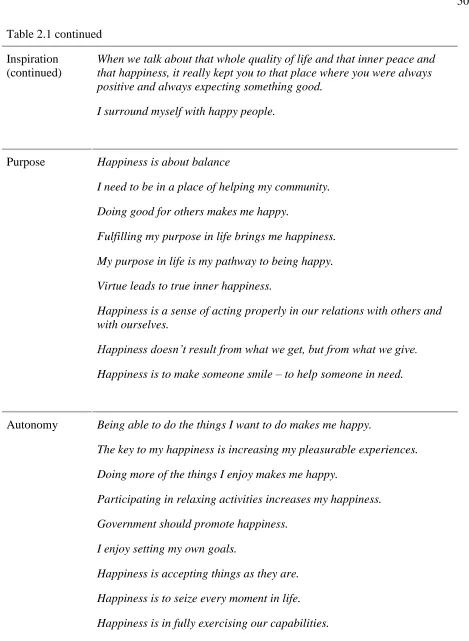
Developing a Happiness Concourse ... 48
Literature Search Strategy... 53
Chapter Summary ... 54
Chapter Three: Methodology ... 56
Introduction ... 56
Brief History of Q Methodology... 56
Rationale for Q Methodology ... 57
Research Design... 58
Concourse theory and concourse development... 59
Scholarly literature and popular media ... 60
Archived interviews, focus groups, and program literature ... 61
Sampling ... 62
Q set or sample... 62
P set or sample ... 63
Data Collection ... 65
Pre-sort questionnaire ... 65
The Q sort ... 66
Post-sorting information and interview ... 69
Data Analysis ... 69
From Q sorts to factors ... 70
From factors to factor arrays ... 70
From factor arrays to factor interpretations ... 71
Consensus items ... 72
Distinguishing items ... 73
Validity and Reliability ... 73
Subjectivity Statement ... 73
Ethical Issues ... 75
Chapter Summary ... 76
Chapter Four: Findings ... 78
Introduction ... 78
Demographics ... 79
Correlation Matrix, and Eigenvalues ... 81
Principal Components Factor Extraction ... 85
Factor Interpretation... 91
Presentation of Factor 1: Happy outlook and positive relationships ... 98
Presentation of Factor 2: Finding peace and moving forward from the inside out... 104
Presentation of Factor 3: Working hard on my own ... 109
Presentation of Factor 4: Healthy, wealthy and self-sufficient ... 115
Consensus Statements ... 119
Chapter Summary ... 121
Chapter Five: Discussion and Implications ... 123
Conclusions ... 123
Finding 1 ... 124
Finding 2 ... 124
Finding 3 ... 127
Finding 4 ... 137
Connections to the Theoretical Framework ... 145
Limitations ... 146
Implications for Government Programs ... 147
Implications for Policy Makers ... 149
Implications for Educators and Organizations ... 150
Implications for Researchers... 150
Recommendations for Future Study ... 150
Recommendations for Future Q Studies ... 151
Chapter Summary ... 152
References ... 154
Appendices ... 180
Appendix 1…Verbatim instructions to participants ... 181
Appendix 2…Pre-sort questionnaire... 184
Appendix 3…Blank card sorting chart ... 186
Appendix 4…Q sort sample (concourse) ... 187
Appendix 5…Partial concourse development list with notes on sourcing ... 190
Appendix 6…Informed consent form for card sorting activity ... 196
LIST OF TABLES
Table 2.1 Themes and relevant concourse statements ... 48
Table 4.1 Participant demographic characteristics ... 80
Table 4.2 Correlation matrix between sorts ... 81
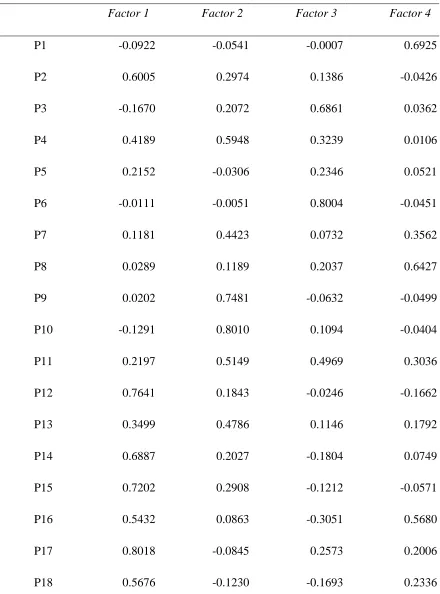
Table 4.3 Unrotated seven factor matrix for Q sorts... 85
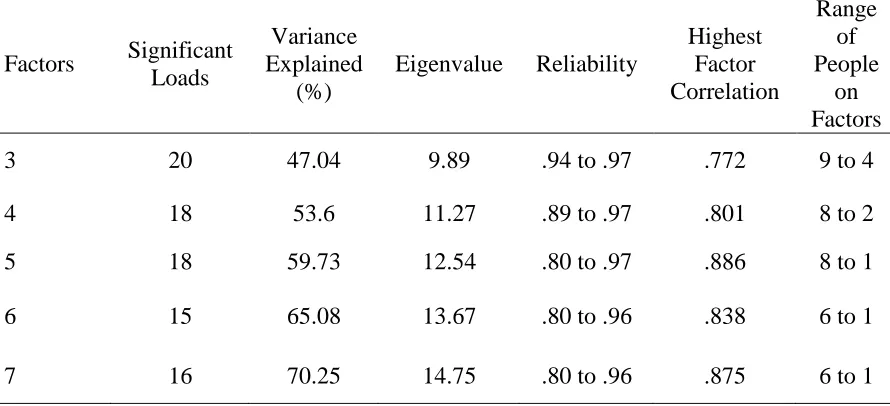
Table 4.4 Factor solutions, Arranged by Factor... 86
Table 4.5 Four factor solution for Middle Class Express participant viewpoint on happiness ... 87
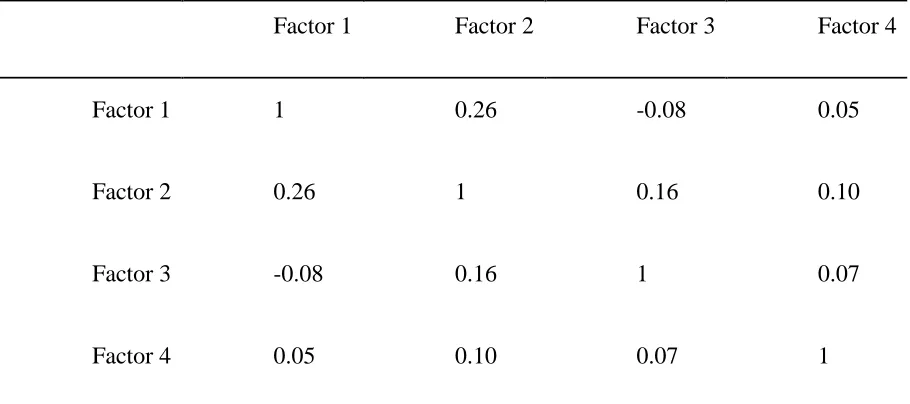
Table 4.6 Correlations between factor z-scores ... 88
Table 4.7 Flagged factor loadings for a four factor solution ... 89
Table 4.8 Factor characteristics for four factor solution ... 90
Table 4.9 Z-scores for each statement by factor ... 91
Table 4.10 Factor arrays for four study factors ... 93
Table 4.11 Factor interpretation crib sheet for Factor 1 ... 100
Table 4.12 Distinguishing statements for Factor 1 ... 102
Table 4.13 Factor interpretation crib sheet for Factor 2 ... 106
Table 4.14 Distinguishing statements for Factor 2 ... 108
Table 4.15 Factor interpretation crib sheet for Factor 3 ... 111
Table 4.16 Distinguishing statements for Factor 3 ... 114
Table 4.17 Factor interpretation crib sheet for Factor 4 ... 117
Table 4.18 Distinguishing statements for Factor 4 ... 119
Table 5.1 Factor characteristics ... 127
Table 5.2 Distinguishing statements ... 128
Table 5.3 Highest ranking statements ... 132
Table 5.4 Lowest ranking statements ... 135
Table 5.5 Goal-specific item rankings with z-score and happiness score by factor ... 137
Table 5.6 Factor 1 participant statements about goals ... 138
Table 5.7 Factor 2 participant statements about goals ... 139
Table 5.8 Factor 3 participant statements about goals ... 140
Table 5.9 Factor 4 participant statements about goals ... 141
Table 5.10 Chi-Square tests for extracted factor gender differences on happiness score ... 142
Table 5.11 Descriptive statistics for global happiness scores by factor ... 142
Table 5.12 Analysis of Variance results ... 143
LIST OF FIGURES
Figure 1.1 Components of happiness model for Middle Class Express ... 12
Figure 1.2 Conceptual framework for exploring happiness in participants ... 14
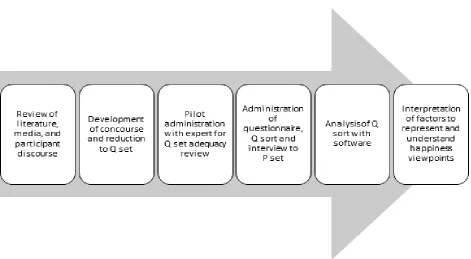
Figure 3.1 Research design for Q study to represent and understand Middle Class Express Participants’ viewpoints on happiness ... 59
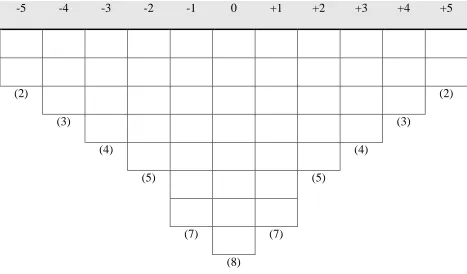
Figure 3.2 Representative near-normal distribution for a 50-item Q set with an 11-point scale ... 68
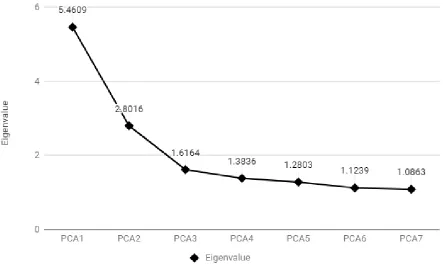
Figure 4.1 Scree test for the study data showing seven principal components ... 83
Figure 4.2 Factor array or factor-exemplifying Q sort for Factor 1 ... 99
Figure 4.3 Factor array or factor-exemplifying Q sort for Factor 2 ... 105
Figure 4.4 Factor array or factor-exemplifying Q sort for Factor 3 ... 110
Figure 4.5 Factor array or factor-exemplifying Q sort for Factor 4 ... 116
Chapter One: Introduction
Pop culture in the USA is obsessed with happiness (O’Brien, 2013). A search conducted for “happy” in the Internet Movie Database (IMDb.com) returned hundreds of titles going back as far as 1933. Bobby McFerrin’s “Don’t Worry, Be Happy” hit number one on Billboard in the fall of 1989, and the 2014 number one hit by Pharrell Williams was “Happy”. TED Talks, books,
movies, music, websites, coaches, events, and magazines are dedicated to the pursuit of happiness (Fabian, 2015; Gregoire, 2014). Promotion of the concept of pursuing something called happiness is evident throughout our culture, and not without reason.
The pursuit of happiness is embedded in our American way of life and is provided as a right in our founding documents, begging the question as to what role government should play in facilitating that pursuit (Bao & Lyubomirsky, 2014). The role of government will be considered later in the significance of this study. Happiness as an object of discussion has emerged
throughout our recorded history dating back thousands of years. In ancient Hebrew texts, a state of happiness referred to as “blessed” is promised to those who pursue a life of righteousness
(Bible, Psalm 1:1). Greek philosophers sought to bring definition to the concept providing the categories of hedonia, presence of pleasure and absence of pain, and eudaimonia, virtuously fulfilling one’s true meaning or purpose. The scientific research on happiness is increasing as
Diener, Lucas, & Oishi (2016) estimate the number of new scientific articles on subjective well-being to have grown from about 130 per year in 1980 to almost 15,000 annually in 2014
Background
In order to provide a background for the study, a broad foundation, context of the scholarly literature, and a description of the specific audience follow.
Broad foundation. At the international level, national happiness is an emerging policy concern as countries like the Kingdom of Bhutan seek to increase happiness among their people. Starkly contrasted to economic prosperity as measured by Gross Domestic Product (GDP), where some surmise that economic equality requires the taking from some and redistributing to others, happiness seemingly will not require the lessening of the happiness of some in order to increase the happiness of others. According to the 2016 update of the United Nations’ World
Happiness Report, while the nation of Bhutan remains in the middle of the pack at 84 of 157 countries, it has emerged as number one in terms of equity as measured by the smallest standard deviation (1.294 compared to 3 in the three most unequal countries of South Sudan, Sierra Leone, and Liberia) on international happiness surveys. The United States, by comparison, ranks number 13 of the 157 based on its mean happiness score of 7.104. Number one Denmark has a mean score of 7.562 and number 157 Burundi a mean score of 2.905. The United States realized a decrease in mean happiness of 0.261 between 2005 – 2007 scores and 2015 scores. In terms of equity, the happiness gap in the United States is increasing. Compared to Bhutan’s standard
deviation of 1.294, the United States has a standard deviation of 2.066 (an increase of 0.142 from 2005 – 2011 measures) and ranks 85 of 157 (Helliwell et al, 2016).
multiple facets of subjective well-being as our national policies shift from decades of reacting to societal woes including poverty, crime, heart disease, mental illness, and suicide to a paradigm of prevention through a built environment that encourage healthy lifestyles, pro-social
communities, positive mental health, and entrepreneurship.
Context of scholarly literature. With the exponential increase in the scholarly literature on happiness has come an emerging set of lenses through which to view the phenomenon. These lenses include theories and models (Keseber & Diener, 2008; Lyubomirsky, Sheldon, &
Schkade, 2005) along with scales and indexes for collecting data (Lyubomirsky & Lepper, 1999).
While research has been conducted on happiness for decades, only recently have diverse theories and models been espoused and empirically tested. This research has resulted in theories such as self-determination theory, telic theories related to goals, conceptual referent theory, and happiness set point theory.
The research dedicated to goal setting and subjective well-being is deeply rooted in basic human needs as described in field of psychology including autonomy, achievement, intimacy, and altruism (Conrad, Doering, Rief, & Exner, 2010; Sheldon, Abad, Ferguson, Gunz, Houser-Marko, Nichols, & Lyubomirsky, 2010; Miquelon & Vallerand, 2006). In order for goals to increase subjective well-being, or happiness, the goals need to be tied to those needs and be attainable (Guillen-Royo & Kasser, 2015; Conrad et al, 2010).
(Flavin, Pacek, & Radcliff, 2014; Boarini, Comola, de Keulenaer, Manchin, & Smith, 2013) including government-sponsored training for the unemployed (Andersen, 2008).
Specific audience. In addition to my doctoral committee members who have invested in my personal academic pursuit of happiness and goal pursuit, this study is aimed to provide valuable program information for my professional colleagues and the elected officials who champion the Human Capital Development efforts within Wake County, North Carolina. Nature of the Problem
While the emerging shift toward happiness as a policy focus seems to be inevitable, universal agreement that happiness is the ultimate goal of government does not exist. In fact, differing views on the roles of government related to individual and aggregate happiness exist. Furthermore, if indeed individual or aggregate happiness is the role of government, what are policy makers to do?
Happiness is the chief end of good government. Happiness for the people as the
responsibility of government is not a new concept. Thomas Jefferson (1809) wrote of happiness, “The care of human life and happiness, and not their destruction, is the first and only legitimate objective of good government”. Aristotle says that government should exist to allow citizens to
experience the good life (Eudaimonia) in his Politics (Duncan, 2010). According to Jeremy Bentham, who is best known for his utilitarian approach, in An Introduction to the Principles of Morals and Legislation, “A measure of government … may be said to be conformable to or
dictated by the principle of utility, when … the tendency which is has to augment and the
Happiness should not be a governmental objective. Others argue against individual or aggregate happiness as the role of government. Kant argues that happiness is not an appropriate guide for moral reasoning as it is too self-regarding (Duncan, 2010). Veenhoven (2004)
highlights other objections such as applying a principle of happiness to policy decisions requires that we “know what happiness is and that we can predict the consequences of behavioral
alternatives on it” and that we should instead focus on more “seasoned virtues, such as ‘justice’ and ‘equality’” (p. 2).
Veenhoven (2004) outlines moral objections as well including: mere pleasure is not a valuable end; happiness spoils; happiness fosters irresponsible consumerism and reduced
sensitivity to the suffering of others; advancing happiness justifies amoral means such as genetic manipulation, mind-control, and dictatorship (p. 2).
Duncan (2010) recites the objection that utilitarian happiness policies promote the happiness of the majority at the expense of the minority, “in a way that violates understandings
of human rights or moral principles” (p. 171). In a footnote, he describes that the Kingdom of Bhutan, known for its Gross National Happiness policy, “rescinded citizenship from, and then
expelled, its Nepalese-Hindi minority – about 100,000 people – who continue to languish in refugee camps” (p. 171).
A research-based balanced approach. While real-world policy examples such as the Kingdom of Bhutan exist, those policies are not based on the empirical research of happiness. In reality, Veenhoven (2004) tells us “that economic growth will add to average happiness in poor nations, but not in rich countries; … happiness can be improved by combating corruption, even in the least corrupt countries; … happiness is also related to social participation; …being
embedded in primary networks appears to be crucial to happiness; …good health is an important requirement and that mental health is more critical to happiness than physical health; …
happiness is strongly linked to psychological autonomy; … the happy are more acceptant of
pleasure, … and they are more likely to endorse social values such as solidarity, tolerance, and love; … the happy tend to be less materialistic” (p. 10 – 11).
Public policy has long substituted the economic measures of Gross National Product or Gross Domestic Product as a measure of the welfare and happiness of the people. Research tells us that such economic measures may actually be a really poor way of getting at the overall welfare or well-being of the citizenry (Weijers and Jarden, 2013). By considering policies that get at the underlying, research-informed factors that actually promote well-being, policy makers may be able to advance “good government”.
Problem Statement
happiness or well-being of their constituents, a clear understanding of what happiness means for the individual and community continues to elude said policy makers.
Purpose of the Study
The purpose of this study is to explore the happiness of individuals who are engaged in a government-sponsored, formalized goal pursuit program. The study will describe demographic characteristics of participants in the Middle Class Express program. The study will explore participant perspectives on the phenomenon of happiness and identify a number of
viewpoints. Unique and distinguishing concourse items will be identified for each
viewpoint. Concourse items that are a consensus among viewpoints will be identified. This Q Methodological study will explore the relationships between participant perceptions of her or his goal pursuit (successful or unsuccessful), sense of concordance with personal purpose,
attainment of circumstantial goals (housing, job, transportation, etc.), and overall subjective well-being. Elected officials and governmental employees will better understand the diverse
perspectives the meaning of happiness to individuals currently engaged in the program and consider how program goals align with elements that matter to the participant. An extensive literature review demonstrated a lack of Q Methodological research related to perspectives on happiness or viewpoints on goal progress. Likewise, there exists a void in research on the subjective well-being of participants engaged in government-sponsored, goal pursuit programs. Theories and Theoretical Frameworks
happiness will be presented. Finally, a model that combines elements of the theories considered will be presented.
Set Point Theory. Set Point Theory posits that each individual has a baseline or set point of happiness that can be affected only temporarily with changes in circumstances, the infusion of major events, or engagement in happiness inducing behaviors. That is, while the level of
happiness for an individual may decrease or increase for some brief period of time, eventually the individual will return to his or her baseline. According to Set Point theorists like Lykken and Tellegen (1996) a component of this happiness baseline consists of traits (see section on Trait Theory) and is largely determined by genetics.
More recent research has challenged the Set Point Theory assumption of the temporary influence of life events. For example, Moor & deGraaf (2015) analyzed the European Values Study (2008) which interviews of 1500 randomly sampled individuals from each of 47 European countries and contains data about the age at which respondents experienced the death of a father, mother, or child and measures of subjective well-being. They concluded that people who lost their father, mother, or child are more likely to feel unhappy than people without the experience and that the loss of subjective well-being does not recover over time. Other “events such as divorce, death of a spouse, unemployment, and disability are associated with lasting changes in subjective well-being” (Lucas, 2007). Fujita & Diener (2005) reviewed data from 17 years of a large national study from Germany and found that almost 9% of the sample changed an average of 3 or more points on a 10-point scale from the first five years to the last five years (p. 158). Heady (2010; 2008) suggests that long term changes in subjective well-being could be partly predictable based on the personality traits of extraversion and neuroticism (See Trait Theory below) and choice of life goals (See Sustainable Happiness Model below).
Trait Theory. Trait theory purports that personality traits significantly contribute to subjective well-being. According to the McCrae and John (1992), personality traits can be explained by a five dimensional model. The two dominant dimensions are Extraversion and Neuroticism. Neuroticism (represented as N in trait literature) “represents individual differences
in the tendency to experience distress, and in the cognitive and behavioral styles that follow from this tendency. High N scorers experience chronic negative affects and are prone to the
development of a variety of psychiatric disorders” (Watson & Clark, 1994; Zonderman, Stone, &
Clark, 1997). Agreeableness (A) includes “characteristics such as altruism, nurturance, caring,
and emotional support at one end of the dimension, and hostility, indifference to others, self-centeredness, spitefulness, and jealousy at the other” (Digman, 1990). Conscientiousness (C) is a
dimension that organizes and directs behavior. Finally, Openness (O) to experience includes aspects of intellect. Those rated low on O are described as “judges in conventional terms” and favors conservative values” while those rated high on the dimension have “a high degree of intellectual capacity” and “enjoy aesthetic impressions”.
Self Determination Theory. Originally proffered by Ryan and Deci (2000) as a motivational theory based on intrinsic interest and enjoyability, Self Determination Theory (SDT) has developed toward encompassing a formal theory of eudaimonia with foci on intrinsic and extrinsic (ultimately focused on some intrinsic human value) life goals, basic human needs (autonomy, competence, relatedness) related to psychological wellness, reflection and awareness and human agency or volition (Ryan et al, 2008). SDT proponents promote eudaimonia as “a
way of living that is focused on what is intrinsically worthwhile to human beings”. Huta and Ryan (2010) have empirically supported the hypothesis that persons pursuing eudaimonic goals will result in a more enduring sense of subjective well-being compared to those pursuing hedonic activities.
successful goal attainment tends to provide a short-term increase in subjective well-being, individuals typically return to their baseline (Bao & Lyubomirsky, 2014).
Conceptual Referent Theory. According to Rojas & Vittersø (2010) “Conceptual Referent Theory (CRT) states that people hold different conceptions for what a happy life is, and that these conceptions play a role in the resources that are relevant for having a happy life. The theory is also important to understand the manner in which people behave in their pursuit of happiness” (p. 104). Based on her research, Rojas (2005) developed a typology for eight
conceptual referents for happiness: stoicism, virtue, enjoyment, carpe diem, satisfaction, utopian, tranquility, and fulfillment.
Rojas & Vittersø (2010) empirically demonstrated aggregate diversity in conceptual referents for students in Norway, South Africa, and Cuba. While national referents will not necessarily be relevant for this study, CRT relates to SDT in terms of the autonomous determination of personal goals.
Components of happiness model. Based on the tenets of Self Determination Theory, Conceptual Referent Theory, and The Sustainable Happiness Model, encouraging individuals to mindfully self-determine short-term and long-term goals in line with their values and personality while concurrently maintaining an infrastructure that nurtures ongoing goal progress may
provide sustainable improvements to individual subjective well-being. Policies, programs, and practices that are implemented at the governmental or institutional level are more likely to be funded and sustained over time. Individuals who are engaged in such a program model will be able to carefully self-assess and identify areas for personal growth in line with their
psychological and physical needs. Organizational provision of coaching, inspiration, and
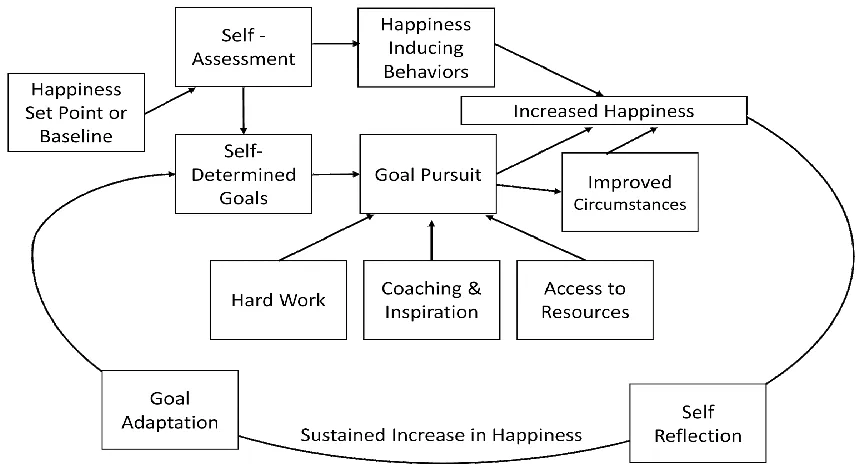
time. Inclusion of stipulations promoting individual work and effort at reasonable levels may also contribute to sustained goal progress. This activity-based construct framed around goal pursuit can result in sustainable increases in individual assessments of happiness (See Figure 1)
Figure 1.1. Components of happiness model for Middle Class Express.
As seen above (Figure 1.1), reflective self-assessment leads to autonomous goals aligned with individual’s perceived needs. Goal pursuit provides an initial boost in happiness. Hard work
and regular self-reflection on goal progress are coupled with external supports of coaching, inspiration, and resource access to perpetually feed continued goal progress, goal revision and sustained increases in happiness above the genetically-determined set point.
heritability accounted for as much as 80% of individual subjective well-being. Furthermore, based on the concept of hedonic adaptation, following a circumstantial change that promotes a boost in subjective well-being most individuals return to their happiness baseline level in the long-term. Lyubomirsky’s Sustainable Happiness Model considers individual genetically determined set point, current circumstances, and current intentional activities. She focuses on intentional activities as a means of sustaining increases in subjective well-being (positive affect or emotion + life satisfaction – negative affect or emotion). Based on her model and empirical findings, “data suggest that effort and hard work offer the most promising route to happiness”
(Sheldon & Lyubomirsky, 2006) - specifically, effort and hard work toward self-determined, need-satisfying goals that are in line with the individual’s values (Sheldon, Abad, Ferguson, Gunz, Houser-Marko, Nichols, & Lyubomirsky, 2010). Heady (2008) confirms that in addition to personality traits of extraversion, neuroticism and internal locus of control, that choice of life goals can provide a sustainable increase in happiness.
Conceptual Framework
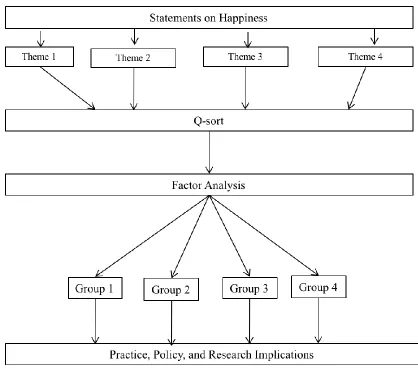
Figure 1.2. Conceptual framework for exploring happiness in participants.
Research Questions
The study has one overarching research question that seeks to identify the viewpoints toward happiness as perceived by the participants. Specifically, the study seeks to answer the following three questions:
Question 1: What are the viewpoints that emerge toward the concept of happiness and why?
Question 3: Is there a relationship among participant self-perceptions of subjective well-being, goal pursuit, and goal acquisition and participant viewpoint on happiness?
Significance of the Study
Building upon multiple local and cross-cultural studies related to the role of government in individual and aggregate happiness (Helliwell et al, 2016; Spruk, & Kešeljević, 2015; Binder,
2014; Downie, Koestner, & Chua, 2007) and exploring the influence of a particular government-sponsored goal pursuit program on participant happiness, this study will provide policy makers additional information for setting policy priorities. As multiple community voices vie for the ears of our policy makers and the public dollars they steward, often times the most influential voices receive the most attention. Individuals with limited resources are forced to dedicate their time to putting food on the table and keeping a roof over their heads relegating them to voicing opinions at the dinner table or workplace rather than to their elected officials. Like anyone else, policy makers’ information is limited to what they are provided by the vocal or what they are
able to uncover in their own investigations. This study will provide a voice to individuals who are government assistance program clients engaged in a goal-pursuit program under the auspices of the Wake County Commissioners’ Human Capital Development priority.
Human Services staff members who have been implementing human capital development programming for nearly ten years consistently seek to improve the programs and services
If indeed promotion of happiness is a role of the government, perhaps similar studies could be conducted for individuals engaged in other government welfare programs to determine the relative influences on participant happiness orientation while in the program. Policy makers could potentially shift from economic initiatives to those that encompass more aspects actually associated with the facets of happiness.
If indeed the findings demonstrate that this type of program is beneficial to individual participants and potentially to society, then policy makers may want to consider realigning funding toward programs that are providing the better outcomes. Additionally, implications exist for educators and our education policy makers in terms of establishing a goal pursuit framework in the classroom.
Potentially more individuals will be encouraged to become enrolled in formalized goal-pursuit programs. Aspects of the program under study could be examined to determine which program aspects are most effective and warrant replication.
Components of subjective well-being are closely associated with overall life satisfaction as well as job satisfaction providing implications for the workplace. Providing a workplace environment conducive to developing and progressing toward personally aligned goals may improve motivation and productivity in the workplace.
Finally, although Q Methodology is known for its application to studying subjective phenomena, a dearth of research exists where Q Methodology has been applied to the study of subjective well being or happiness. This study will add to the body of research as a Q
Overview of Research Method
Appearing first in a letter to the journal Nature in 1935, Q methodology was the concept of William Stephenson. At its inception, Q methodology was an innovative adaptation of Charles Spearman’s factor analysis, commonly denoted by R, which includes all methods of a general type that “employ tests or traits as variables and operate using a sample of persons” (Watts &
Stenner, 2012). Q considers humans as the variables rather than the subjects, as each individual human has its own unique set of viewpoints, beliefs, or constructs on any subjective
phenomenon. The adaptation from R to Q involves the inversion of the matrix of subjects and variables that are first standardized prior to analysis. The result is a method that defines and understands “each individual completely, and hence as a whole” rather than a focus on “specific
bits of people - variables, traits, abilities and so on” as in R methodology where “once this dissection had taken place no effective means had been found ‘to put the person together again’”
(Stephenson, 1936b, p. 202; Watts & Stenner, 2012, p. 12)
The Q Sort is the main activity whereby the researcher gains an understanding of the viewpoint of the participant who is a part of the P Sample or set of sorters. Each human subject will sort the reduced set of statements from most unimportant to most important for them as related to the subjective phenomenon being studied. The statements are sorted on a grid that mimics a normal distribution. Each finished sort is stored as a snapshot of that individual’s viewpoint on the phenomenon. Once all members of the P Sample complete the sorting activity, the viewpoints are analyzed (McKeown & Thomas, 2013; Watts & Stenner, 2012; .
Factor analysis and interpretation. A by-person factor analysis is conducted on the gathered Q sorts. Software specifically designed for analysis of Q data yields groupings or distinguishable viewpoints, beliefs, or constructs on the subjective phenomenon being studied is used. Consensus items and distinguishing items are utilized to gain an understanding and interpretation of the various viewpoints, beliefs, or constructs. More on the statistical methods will be discussed in Chapter Three.
Limitations and Delimitations
Limitations. The nature of the subjective phenomenon of happiness explored in this study does not provide room for generalization to the population. Perhaps an intrinsic weakness of studies conducted on subjective matters is the reliance on self-report in a moment in time setting. This research only addresses viewpoints, beliefs, and constructs of adults who are in a government-sponsored goal pursuit program. It is not cross-cultural. It is not seeking
correlations, rather to explore the subjective perspectives of participants regarding their happiness and goal pursuit.
Delimitations. This study is focused on participants in a particular
an urban setting with the county population recently topping 1 million. Individuals who are participating in this program do so voluntarily. While multiple goal-setting programs exist, this one is unique in that participants are already engaged with the government entity in some way. Definitions
The objective of this study is not necessarily to bring further clarity to the definition of happiness; however, several definitions that get at the diverse concepts related to happiness along with definitions of terms and programs that will be necessary for the reader to understand the context of the proposed study will be provided.
Happiness. According to Lyubomirsky (2001), “By most accounts [happiness] includes the experience of joy, contentment, or positive well-being, combined with a sense that one’s life is good, meaningful, and worthwhile” (p. 239). Nettle (2005) broadly describes happiness as a slippery concept family where all the members have something in common with others, but not necessarily the same commonality across all members (2005). Veenhoven (2004) outlines four qualities of life (livability of the environment, life-ability of the person, utility of life, and satisfaction with life) and four kinds of satisfaction (pleasures, part-satisfaction or enduring satisfaction with part of life, top-experience or passing satisfaction with life as a whole, and life satisfaction or enduring satisfaction with life as a whole). He summarizes that happiness is the “overall satisfaction with your life as a whole” (p. 5-6). In contrast, Delle Fave, Brdar, Wissing,
Araujo, Castro Solano, Freire, T, & Nakamura (2016) developed an international, lay-sourced definition of happiness that promotes a sense of inner harmony as the primary component of the phenomenon. Inner harmony is empirically described as “a balanced and positive connectedness perceived among the various facets of the self”. The secondary component of happiness,
Hedonism or hedonia. Dating back to the Greek philosophers, the concept of hedonia is described as presence of pleasurable experience concurrent with the absence of painful
experience (Huta & Waterman, 2014; Deci & Ryan, 2008). “Hedonism is a way of life, characterized by openness to pleasurable experience”(Veenhoven, 2003, p. 1).
Hedonic adaptation. Hedonic adaptation is the process whereby an individual returns the baseline levels of happiness or subjective well-being following a temporary increase or decrease in the level of happiness or subjective well-being because of some change in
circumstances. The term is related to Set Point Theory and suggests that although an event or happiness-inducing behavior may temporarily create a change in subjective well-being, the individual only enjoys that change for some period of time after which the new circumstance or behavior becomes the new normal for the individual and the level of happiness reverts to the baseline (Lucas, 2007).
Eudaimonia. Often considered in contrast to hedonism, eudaimonia is concerned with a virtuous fulfillment of an individual’s purpose. Aristotle (translated, 1999) posited eudaimonia
as the chief human good that results in a complete human life. Reason, moderation, and excellence are characteristics of an individual who is living according to eudaimonia (Huta & Waterman, 2014; Deci & Ryan, 2008; Ryan, Huta, & Deci, 2008). Popular jargon includes well-being and human flourishing to describe this concept.
Subjective being. Diener, Suh, Lucas, and Smith (1998) define subjective well-being as a broad field of study with multiple components covering aspects from emotional responses to satisfaction with various domains of life. More succinctly, subjective well-being has been defined as the sum of life satisfaction and positive affect or emotions less negative affect or emotion. Binder (2014) describes subjective well-being as an individual’s aggregate judgment of their own well being – a measure of human flourishing (p. 1199).
Positive affect. Positive affect refers to the “extent to which a person feels enthusiastic, active, and alert” and exists on a scale from high to low. Someone with high positive affect has
high levels of enthusiasm, high levels of concentration, and energetic, whereas someone with low positive affect is “characterized by sadness and lethargy” (Watson, Clark, & Tellegen, 1988,
p. 1063).
Negative affect. Not to be confused with low positive affect, high negative affect is associated with mood states of anger, contempt, disgust, guilt, fear, and nervousness. It is a “general dimension of subjective distress and unpleasant engagement”. Someone with low
example, health, employment, attitude and mindset, formal education, spirituality, etc.) followed by setting personal goals related to the domains. In collaboration with the life coach, individuals identify strategies and resources to make progress toward their goals. Monthly coaching sessions provide an opportunity to discuss successes and challenges. Monthly inspirational sessions provide peer and staff support. According to the wakegov.com website (Middle Class Express, 2015),
The Middle Class Express was established in Wake County Human Services in 2008. The Middle Class Express (MCE) is an innovative approach to help citizens of Wake County make progress toward economic and social self-sufficiency that ensures access to employment, educational and financial development opportunities, and other health and human service resources. This approach provides participants Life Coaching and Life Planning to achieve a Middle Class lifestyle in 5 years. It concentrates on strategies to help individuals and families fulfill their life goals as they gain new skills and knowledge that moves them closer to the fulfillment of their life plan.
Human Capital Development. Human Capital Development (HCD) has been listed as a priority for Wake County Commissioners since 2011 and remains embedded within revised priorities. The concept of human capital development speaks to building capacity in individuals in terms of skills and abilities. By promoting HCD as a priority, the Commissioners are engaging staff in finding ways to build capacity toward encouraging self-sufficiency (Human Services Board, 2015).
Chapter Summary
This chapter provided an overview of the background of the cultural and political
understanding the happiness of Wake County citizens who are engaged in a government
sponsored program with a self-stated purpose of improving the economic well-being of program participants, namely The Middle Class Express, was presented. The problem statement was presented followed by the purpose statement for the research at hand. A survey of the theories related to subjective well-being was presented. The conceptual framework for the Q
Chapter Two: Literature Review
The literature review will provide background and context for the study to include the brain science associated with happiness as well as a review of scholarly research relating goals, sustained increases in happiness, and the role of government in developing policies aimed at promoting individual and corporate well-being. Research applications of Q Methodology will be considered. A detailed description of the literature sourced for concourse development will be offered. Finally, an overview of the literature search process will be provided.
Literature Background and Context
Happiness literature has exploded over the past several decades (Helliwell, Huang, & Wang, 2016) and continues to provide an increasingly deeper understanding of the phenomenon of happiness including the factors that contribute to happiness, including: a
genetically-determined set point (Lykken and Tellegen, 1996), happiness-increasing interventions (Emmons & McCullough, 2003), successfully pursuing autonomous, intrinsic, attainable life goals (more on this later; Klug & Maier, 2015; Guillen-Royo & Kasser, 2015; Steca et al, 2015; Farquharson, & MacLeod, 2014; Anic & Toncic, 2013; MacLeod, Coates, & Hetherton, 2008), counting one’s blessings (Kruse, Chancellor, Ruberton, & Lyubomirsky, 2014), and acts of kindness (Layous, Nelson, Oberle, Schonert-Reichl, & Lyubomirsky, 2012).
In contrast, often sought-after changes in circumstance (car, house, getting married, moving to a sunnier location, etc.) may produce a momentary boost in subjective well-being, but wears off soon after. This concept is referred to as hedonic adaptation. In actuality, even the more altruistic happiness-increasing interventions only provide a limited boost (Bao &
actions to increase and then sustain increased levels of subjective well-being. Bao &
Lyubomirsky (2013) suggest that by pursuing positive emotions (including gratitude), enacting happiness-inducing activities (such as performing acts of kindness), and maintaining a variety of those activities, one can maintain an increase in happiness. Literature directly related to those activities along with other happiness themes will be reviewed in the upcoming section on the development of the happiness concourse.
Goals and Sustained Increases in Happiness
While the concept of a genetically predetermined set point for happiness has been demonstrated empirically (Lykken & Tellegen, 1996), the genetics tell only part of the
story. Multiple factors influence and individual’s well-being including: individual determinants (personality, self-esteem, extraversion, neuroticism; Caunt, Franklin, Brodaty, & Brodaty, 2013), demographics (age, cohabitation, gender; Binder, 2014; Binder & Broekel, 2012; Nettle, 2005; Lyubomirsky et al, 2005), social values (Caunt et al, 2013), health, mental health, social
relationships, unemployment, income, social satisfaction, social status (Binder, 2014; Binder & Broekel, 2012), and gratitude (Kruse et al, 2014; Emmons & McCullough, 2003).
While all of these factors are shown to increase happiness, hedonic adaptation seems to thwart the longevity of these strategies. However, with some appropriate goals and hard work increases in subjective well-being can be maintained over time (Bao & Lyubomirsky, 2014; Lyubomirsky et al, 2011; Lyubomirsky, Sheldon, & Schkade, D., 2005). Heady (2008) goes so far as to say that the right kind of goals may actually move the set point for individuals.
Autonomous and adaptable. While goal setting has been linked to increases in
Hortop, Wrosch, & Gagné, 2013; Sheldon et al, 2010) and adaptable (Hill, Jackson, Roberts, Lapsley, & Brandenberger, 2011). A sense of control – an internal versus external locus, if you will – is also an important factor in goal setting and progress on happiness (Hortop et al,
2013). The sense of autonomy is equated with self-determination and indicates that the goal setter is making the decisions about what goal domains to prioritize and what goals to set within those domains. Autonomous goal setting must be combined with a perception of personal
control for increased happiness. In other words, if someone else selects the goal or the individual perceives that external forces will determine goal success or progress then increased happiness will not result (Hortop et al, 2013; Sheldon et al, 2010). This sense of control also leads to goal modification. Goals must be adaptable (MacLeod et al, 2008). Hill et al (2011) found that among a group of young people who were able to set and then modify goals, subjective well being was increased over time.
which he refers to as Non-zero sum goals, contribute to improved subjective well-being. In a study of 3553 respondents to a panel study who reported levels of life satisfaction and life goals in 1990, 1995, and 2004, Heady found that over that period a non-trivial minority of respondents recorded substantial changes in their set point, and those changes are explicable partly in terms of personality and life goals.
Hard work required. Attainable, autonomous, and intrinsic goals go nowhere without hard work. Goal progress is key to increased subjective well-being, and hard work helps make that happen. In the Middle Class Express, “sweat equity” is required for program participant equivalent to 40 hours per week. Hard work has been long espoused as an enviable character trait (Dent, Higgins, & Wharff, 2005). Focused effort towards goals is associated with goal pursuit, sense of control (Klug & Maier, 2015; Sheldon & Houser-Marko, 2001), and increased sense of well-being (Lyubomirsky et al, 2011).
Set Point Theory
Set Point Theory posits that individuals are predisposed to a certain level of happiness through (1) heredity and (2) unique experiences within their environment (Lykken & Tellegen, 1996). While the measures of variability in subjective well-being due to baseline or set point cited in literature seems to be in dispute (Lykken & Tellegen, 1996; Heady, 2008; Heady, 2010), perhaps in part is a misunderstanding of the claim of Lykken and Tellegen (1996). Citations of Lykken’s and Tellegen’s (include citations here) claim of baseline contribution to overall
range of variability for set point or the “stable component of well-being” and that from their
longitudinal research data on twins, about 80% of that stable component can be accounted for by genetics. Further, the best estimate for the overall variance due to heritability of happiness from their data was about 48%. They further conclude that the other 20% of variance in the stable component must be accounted for by unshared environmental effects (p. 188). In other words, the stable component is a foundation, not the summation of subjective well-being.
The Brain Science of Happiness
Neurotransmitters and hormones. Psychologists have for decades understood that chemicals in the brain known as neurotransmitters: dopamine (Ashby & Isen, 1999), serotonin (Mitchell & Phillips, 2007), norepinefirne (Harrison, Morgan, & Critchley, 2010), endorphin (Rokade, 2011), and melatonin (Farhud & Tahavorgar, 2013). These neurotransmitters are in part responsible for mood and in particular have looked to synthetic drugs to address potential
chemical imbalances in the human brain related to psychological disorders. “A few studies pointed to the role of cortisol and adrenaline (adrenal gland) and oxytocin (pituitary gland)”
(Farhud, Malmir, & Khanahmadi, 2014).
As the complex science of genetic studies delves into the science of happiness, at least two genes studied (5-HTTLPR and MAO-A) are suggested to have direct influences on
happiness (Farhud et al., 2014). 5-HTTLPR codes “serotonin transporters (5-HTT or SERT) that are placed in the cell wall and reabsorb the neurotransmitter serotonin from the synaptic cleft”
activity. Individuals with the high activity “allele have a high risk to commit severe recidivistic impulsive violent crimes after exposure to heavy drinking and childhood physical abuse” (Tikkanen, Ducci, Goldman, Holi, Lindberg, Tiihonen, and Virkkunen, 2010), while in women the low expression allele predicts higher self-reported happiness (Chen, Pine, Ernst, Gorodetsky, Kasen, Gordon, Goldman, and Cohen, 2013).
Brain region activation. More recent research utilizing brain imagery technologies has allowed researchers to explore brain regions that are activated during episodes of laboratory generated emotional states. “The emotion circuitry of the brain is complex, involving primarily
structures in the prefrontal cortex, amygdala, hippocampus, anterior cingulate cortex, and insular cortex. These structures normally work together to process and generate emotional information and emotional behaviour. Research has particularly focused on the prefrontal cortex which, unlike most other brain regions involved in emotion processing, shows asymmetric activation in relation to positive and negative emotions” (Huppert, 2009, p. 4).
Damasio, Grabowski, Bechara, Damasio, Ponto, Parvizi, and Hichwa (2000) found that recalled or re-experienced personal life episodes marked by happiness “increased activation in the right posterior cingulate and [secondary somatosensory cortex] (SII), and sadness decreased activation in these areas” (p. 1050). Additionally, they found that the dorsal midbrain showed an activation trend in happiness. Both sadness and happiness created activity in anterior and
posterior cingulate cortex.
The role of the amygdala has been shown as key in processing the emotions of others. Dyck, Loughead, Kellermann, Boers, and Gur (2011) measured responses in 30 subjects (16 female) suggesting “the central role of the amygdala may not be restricted to the perception of
The “amygdala contributes to negative affective experience by increasing perceptual sensitivity for negative stimuli” (Barrett, Bliss-Moreau, Duncan, Rauch, and Wright, 2007). Damasio et al.
(2000), however, found no significant activity in the amygdala for any states of emotion tested. On the other hand, Damasio et al. (2000) also found activation in “right orbitofrontal cortex, left basal forebrain, right hypothalamus and left midbrain” as well as a decrease of activity in right
dorsolateral prefrontal cortex (p. 1053). The amygdala may actually play more of a role in happiness as it becomes deactivated. “The more the amygdala is deactivated, the more pronounced is the feeling of Happiness” (Chemali et al, 2008).
Happiness circuitry. Chemali et al. (2008) have summarized the literature in a conceptual model of the circuitry of happiness as follows:
We propose in the figure a neural circuitry model of happiness based on the literature review performed. The “feeling” of happiness is processed in a bilateral neural circuit with feedback loops connecting 3 neural centers: the cingulate gyrus, the amygdala and the ventral striatum. The cingulate gyrus receives signals from external and internal stimuli through the inferior temporal gyrus and serves as a link to the circle of Papez for processing of emotions. The hypothalamus also relays information to the cingulate gyrus after integrating neural signals from the basal temporal cortex, somatosensory cortex, prefrontal cortex and the nucleus accumbens. The amygdala indirectly regulates positive emotions such as happiness by an actual downregulation of negative emotions. The neural signals transmitted from the cingulate gyrus and the ventral striatum to the amygdala are inhibitory. The more the amygdala is deactivated, the more pronounced is the feeling of Happiness. The ventral striatum controls the “inner feeling” of implicit
reward and satisfaction. It has direct feedback to the cingulate gyrus and an indirect feedback through the nucleus accumbens and the hypothalamus. All three centers activate other areas in the brain responsible of the autonomic and physiologic manifestation of happiness—one of which but certainly not exclusively is laughter, manifested by an activation of the motor cortex, the periacqueductal gray and the cranial nerves. The same goes to say about the inferior temporal gyrus that can activate the same pathway of laughter.
Happiness Influencers
Relationships. Through more than two decades of research exploring subjective well-being, relationships consistently rise to the top of the list of influencers with strong correlations (Bradburn, 1969; Diener & Oishi, 2005; Diener and Seligman, 2004; Caunt, Franklin, Brodaty, & Brodaty, 2013; Lehmann, Tuinman, Braeken, Vingerhoets, Sanderman, & Hagedoorn, 2015). In other words, close relationships are essential to well-being (Diener and Oishi, 2005). Caunt et al. (2013) found that 95% of participants (n = 201) in their personal Recipe for Happiness study listed some form of social relationships as a key ingredient to their happiness, listed more
frequently than any other component. The next highest listed ingredient was circumstances (such as marital status, religion, sufficient wealth, employment, and health, 83.1%) followed by
Positive social relationships come in many forms including family, friends, partners, and community (Caunt et al., 2013; Diener and Seligman, 2002; Diener and Oishi, 2005; Stack & Eshlemann, 1998).
Of some controversy has been the interpretation of study results regarding the marriage relationship in particular. Diener, Suh, Lucas, and Smith (1999), Dolan & Peasgood (2008), Haring-Hidore, Stock, Okun, Witter (1985) and Veenhoven (1994) all show married respondents consistently reporting being happier and more satisfied with their lives than non-married
respondents (Wadsworth, 2015). Frey (2004) poses the question “Does marriage cause people to be happier, or are happy people more likely to get married?” (pp. 7 - 8). Based on their
conclusions, the answer may be “yes” to both questions. In a study with 21,809 observations of
1,991 people in Germany between 1984 and 2000, as marriage approached for individuals, levels of happiness increased and peaked at marriage, then, in contrast, afterward those levels decreased below baseline, after taking respondent’s sex, age, education level, parenthood, household
income, household size, relation to the head of household, labor market status, place of residence and citizenship into account (p. 9). This finding aligns with other research that found the
concluded that marriage accounted for 3.4 times the variance in happiness as cohabitation (Stack & Eshleman, 1998).
The issue of social support in relationships is proffered as one potential explanation for the difference in overall well-being between married or partnered and single individuals (Barrett, 1999) amongst a host of other potential benefits associated with marriage (positive societal perception (Morris, DePaulo, Hertel, & Taylor, 2008; Conley & Collins, 2002; DePaulo & Morris, 2005), social advantage (Morris, Sinclair, & DePaulo, 2007; Bellas, 1992; Antonovics & Town, 2004), increased household income (Stutzer & Frey, 2006; Chun & Lee, 2001; Korenman & Neumark, 1991; Loh, 1996), better physical and psychological health (Burman & Margolin, 1992; Ross, Mirowsky, Goldsteen, 1990; Waite & Gallagher, 2000), and social status (Fussell & Furstenberg, 2005; Cherlin, 2009).
Unfortunately, the effects of relationships on subjective well-being can be negative as well as positive. In other words, just as positive social relationships promote happiness, negative social relationships promote unhappiness. In fact, negative aspects or interactions in
relationships seem to have more of an influence on well-being than do the positive aspects or interactions (Diener & Oishi, 2005; Rozin & Royzman, 2001). Gottman (1994) suggested that a ratio of five or six positive interactions to every one negative interaction is necessary for a marriage to be considered satisfying. Hawkins and Booth (2005) suggest that being married can have a detrimental impact on well-being if couples are unhappy. Fredrickson and Losada (2004) extended the Gottman ratio to overall well-being and found a ratio of 2.9 to one or better was needed to flourish (Diener & Oishi, 2005).
happiness and the fewest signs of depression were their strong ties to friends and family and commitment to spending time with them” (2002).
Income and wealth. As stated from the introduction of this study, economic indicators have long been associated with well-being. Diener et al. (1993) found a positive and strong correlation (.50) with life satisfaction across 39 nations and again Diener, Diener, and Diener (1995) found the same result across 55 nations. Indeed, some level of economic resources are necessary to provide for basic needs, and according to Mohanty (2014) the level to which income is indispensable may account for a portion of the relationship between income and happiness (Easterlin, 2001; Frey & Stutzer, 2002; Oswald, 1997; Pouwels, Siegers & Vlasblom, 2008). However, research indicates that within a nation, “even when extremely wealthy individuals are examined, the effects of income are small” (Clark and Oswald, 1994). And “increases in income
are not inevitably associated with increases in well-being” (Diener, Suh, Lucas, and Smith, 1999, p. 287). Diener, Sandvik, Seidlitz, and Diener (1993) “found no differences in hedonic level between groups of people who had gone up or down at least one half of a standard deviation in income over a 10-year period.” Further, “the effects of income are not always positive”. Thoits and Hannan (1979) found that increased income often led to increased levels of distress. National level income changes are not necessarily reflected in SWB scores. (Diener, Suh, Lucas, and Smith, 1999, p. 288). Diener, Suh, Lucas and Smith (1999) conclude, “The data do not support a
strong causal path from income to SWB, and more complex models are required to explain all of the results. Wealthy people are only somewhat happier than poor people in rich nations, whereas wealthy nations appear much happier than poor ones.
complex pattern” (p. 288). As long as basic needs are met, wealth does not seem to have an
influence on happiness. Those with materialistic goals (Sirgy, 1998) to accumulate or increase income valued more highly than other goals tend to be less satisfied with their life as a whole (-.32), fun (-.34), and friends (-.31) (all p < .01). Envy was positively correlated with
materialism (.47, p <.001), and a significant and negative relationship was demonstrated between materialism and self-esteem (-.12, p < 0.05) (Richins and Dawson, 1992, p. 313). In a
longitudinal study, Nickerson, Schwarz, Diener, and Kahneman (2003) found that goals focused on financial success were related to negative consequences for domains concerned with
relationships with other people and income-producing activities. Satisfactions in those domains “were among the strongest predictors of overall life satisfaction in this sample of well-educated respondents in their late 30s” (p. 531). Individuals with stronger financial goals were had lower overall life satisfaction than those with weaker financial goal. In particular, “the stronger the goal for financial success, the lower the satisfaction with family life, regardless of household income”
(p. 535).
In summary, individuals who are challenged in meeting their basic human needs will likely find that an increased income to help them meet those needs will improve their happiness. Perhaps even beyond that, income to support some basic luxuries that make life more
manageable may also improve their happiness. Expecting much gain beyond that would not be supported by the research.
provide no benefit in terms of subjective well-being. Happiness changes only occur for self-selected participants (Lyubomirsky et al., 2009). Participants who are actively engaged in the goal selection and larger effects existed for participants who were informed of the study context and had access to researchers (Seligman, Steen, Park, & Peterson, 2005). In addition to being self-selected or autonomous, goals should be self-concordant or intrinsic (Sheldon, 2004;
Sheldon & Kasser, 1998), that is they are aligned with the core of the individual. Goals should be adaptable (MacLeod et al, 2008; Hill et al., 2011). Need-relevant goals promote sustained
increase in happiness as long as they are achieved in a study of 181 participants. Contrasted with other types of goals, failure to achieve need-relevant goals evidenced lower well-being (Sheldon, Abad, Ferguson, Gunz, Houser-Marko, Nichols, & Lyubomirsky, 2010).
Inspiration. “To breathe into, to be filled, to inflame - these are the meanings of the Latin inspirare, which seems a likely etymological origin for ‘inspiration’” (Hart, 1998, p. 7). In the conclusion of Hart’s (1998) qualitative study with 22 participants regarding the components or process of inspiration, he offers a definition of inspiration as “a specific epistemic process that
provides psychological and spiritual sustenance and is characterized by a remembrance or recognition of some knowledge or perspective valuable in the social or psychological context given. The acquisition or awareness of knowledge takes the form of an expansion of
understanding that involves an intimate relationship or a transcendence of conventional subject-object distinction with some idea, subject-object, or person. As such, inspiration describes a nonrational, postreflective event of knowing that can be cultivated but not willed” (1994, p. 32).
Thrash & Elliot (2003) found that inspiration is positively related to positive affect and unrelated to negative affect. According to Thrash, Elliot, Maruskin, & Cassidy (2010)
approach motivation.” Transcendence connotes the individual becomes aware of a possibility
that may have not previously been understood, or may not have been understood in the same concrete way yielding new insight. Evocation implies that something inside the individual is awoken by the inspirational experience. And finally, the individual is motivated to some kind of action toward the new goal, idea, or vision.
In addition to the three core characteristics, Thrash’s Component Model has two components: being inspired by and being inspired to. In this model, one can be inspired by the qualities in a pre-existing person or object that one then seeks to emulate, one can be inspired by
some seminal idea that one seeks to bring to fruition, or one can be inspired by some well-formed idea.
In a study of 221 undergraduates, Thrash, Elliot, Maruskin, & Cassidy (2010) found significant and positive relationships between inspiration and positive affect (0.44, p < 0.001) and between inspiration and subjective well-being (0.34, p < 0.001). In a study of 139
undergraduates over three months, Thrash et al. (2010) found that inspiration predicted positive well-being (0.34, p = 0.006) after three months, while controlling for initial well-being variables, social desirability biases, and the Big Five traits. Relevant to goal pursuit and pressing on, Thrash et al. (2010) suggested that inspired actions involve efficiency and productivity at high levels.
Purpose. Inherent in the concept of eudaimonia is one’s intrinsic purpose. According to Kashdan and McKnight (2009) “purpose can be characterized as a central, self-organizing aim.” Further, “as a life aim, a purpose generates continual goals and targets for efforts to be devoted” (p. 303). In Aghabai’s study with 474 Iranian university students, purpose in life has a significant
hope (.55) (2016). Specific to the influence of purpose on life satisfaction, purpose exploration, defined as the act of “re-thinking, sorting through, and trying out various roles and life plans”
(Kroger & Marcia, 2011) was found to be associated with increased life satisfaction for youth as compared to adults (Cotton Bronk, Hill, Lapsley, Talib, & Finch, 2009).
Sumner, Burrow, and Hill (2015) in a study of 850 “emerging adults” (Mage = 19.96)
subdivided the components of purpose and found that the purpose component of purpose exploration had a negative correlation with life satisfaction (-0.17, p<.01) when controlling for purpose commitment, defined as “the degree of personal investment the individual expressed in a
course of action or belief (Kroger & Marcia, 2011, pp. 33-34), while the component purpose commitment had a positive correlation with life satisfaction (0.55, p<.01).
In a study of 1,746 adults ratings of life satisfaction for their past, present, and future, Burrow, Sumner, & Ong (2014) found that purpose in life buffered against negative affect for those who perceived a negative change in their life satisfaction over time, while at the same time, those with perceived negative change in life satisfaction overall reported significantly lower levels of purpose in life.
Autonomy. Self Determination Theory (Ryan and Deci, 2000) indicates autonomy, along with relatedness and connectedness, is a basic human need (Chirkov, Ryan, & Willness, 2005). Ryan and Deci (2006) dance around a definition of autonomy focusing on its etymological meaning of self-governance and contrasting it with its opposite, heteronomy as “regulation from outside the phenomenal self, by forces experienced as alien or pressuring, be they inner impulses or demands, or external contingencies of reward and punishment” and distinguish it from