Scholarship at UWindsor
Scholarship at UWindsor
Electronic Theses and Dissertations Theses, Dissertations, and Major Papers
2012
Study of the Viscometric and Volumetric Properties of
Study of the Viscometric and Volumetric Properties of
Multicomponent Regular Liquid Systems at Different Temperature
Multicomponent Regular Liquid Systems at Different Temperature
Levels
Levels
Nidal Hussein University of Windsor
Follow this and additional works at: https://scholar.uwindsor.ca/etd
Recommended Citation Recommended Citation
Hussein, Nidal, "Study of the Viscometric and Volumetric Properties of Multicomponent Regular Liquid Systems at Different Temperature Levels" (2012). Electronic Theses and Dissertations. 8028.
https://scholar.uwindsor.ca/etd/8028
This online database contains the full-text of PhD dissertations and Masters’ theses of University of Windsor students from 1954 forward. These documents are made available for personal study and research purposes only, in accordance with the Canadian Copyright Act and the Creative Commons license—CC BY-NC-ND (Attribution, Non-Commercial, No Derivative Works). Under this license, works must always be attributed to the copyright holder (original author), cannot be used for any commercial purposes, and may not be altered. Any other use would require the permission of the copyright holder. Students may inquire about withdrawing their dissertation and/or thesis from this database. For additional inquiries, please contact the repository administrator via email
Multicomponent Regular Liquid Systems at Different Temperature
Levels
By
Nidal Hussein
A Dissertation
Submitted to the Faculty of Graduate Studies
through the Environmental Engineering Program
in Partial Fulfillment of the Requirements for
the Degree of Doctor of Philosophy at the
University of Windsor
Windsor, Ontario, Canada
2012
1*1
Published Heritage Branch
395 Wellington Street OttawaONK1A0N4 Canada
Direction du
Patrimoine de I'edition
395, rue Wellington Ottawa ON K1A 0N4 Canada
Your file Votre reference ISBN: 978-0-494-82885-4 Our file Notre r6f6rence ISBN: 978-0-494-82885-4
NOTICE: AVIS:
The author has granted a
non-exclusive license allowing Library and Archives Canada to reproduce, publish, archive, preserve, conserve, communicate to the public by
telecommunication or on the Internet, loan, distribute and sell theses
worldwide, for commercial or non-commercial purposes, in microform, paper, electronic and/or any other formats.
L'auteur a accorde une licence non exclusive permettant a la Bibliotheque et Archives Canada de reproduire, publier, archiver, sauvegarder, conserver, transmettre au public par telecommunication ou par I'lnternet, preter, distribuer et vendre des theses partout dans le monde, a des fins commerciales ou autres, sur support microforme, papier, electronique et/ou autres formats.
The author retains copyright ownership and moral rights in this thesis. Neither the thesis nor substantial extracts from it may be printed or otherwise reproduced without the author's permission.
L'auteur conserve la propriete du droit d'auteur et des droits moraux qui protege cette these. Ni la these ni des extraits substantiels de celle-ci ne doivent etre imprimes ou autrement
reproduits sans son autorisation.
In compliance with the Canadian Privacy Act some supporting forms may have been removed from this thesis.
Conformement a la loi canadienne sur la protection de la vie privee, quelques formulaires secondaires ont ete enleves de cette these.
While these forms may be included in the document page count, their removal does not represent any loss of content from the thesis.
Bien que ces formulaires aient inclus dans la pagination, il n'y aura aucun contenu manquant.
1+1
A u t h o r ' s Declaration of Originality
I hereby certify that I am the sole author of this thesis and that no part of this thesis has been
published or submitted for publication.
I certify that, to the best of my knowledge, my thesis does not infringe upon anyone's copyright
nor violate any proprietary rights and that any ideas, techniques, quotations, or any other material
from the work of other people included in my thesis, published or otherwise, are fully
acknowledged in accordance with the standard referencing practices. Furthermore, to the extent
that I have included copyrighted material that surpasses the bounds of fair dealing within the
meaning of the Canada Copyright Act, I certify that I have obtained a written permission from
the copyright owner(s) to include such material(s) in my thesis and have included copies of such
copyright clearances to my appendix.
I declare that this is a true copy of my thesis, including any final revisions, as approved by my
thesis committee and the Graduate Studies office, and that this thesis has not been submitted for
ABSTRACT
The densities and viscosities of the following quinary system: Chlorobenzene, p-xylene, octane,
ethylbenzene, and 1-hexanol and all its quaternary, ternary and binary subsystems were
experimentally measured over the entire composition range at 293.15, 298.15, 308.15, and
313.15 K.
The sets of data obtained were employed, along with other data reported in the literature, to test
the predictive capabilities of some of the most widely accepted and used models available from
the literature.
The predictive capabilities of the following models were tested: the generalized McAllister
three-body interaction model, the pseudo-binary McAllister model, the GC-UNIMOD model, the
generalized corresponding states principle (GCSP) model, the Artificial Neural Network (ANN),
and the Allan and Teja correlation.
The models testing results show that the generalized McAllister three-body interaction model
DEDICATION
This work is dedicated to my wife Amira, my sons, and to my parents for their endless love,
ACKNOWLEDGEMENTS
First and foremost, I thank Allah for endowing me health and knowledge to complete this work.
I would like to express my sincere gratitude to my advisor, Professor Abdul-Fattah A. Asfour,
and co-advisor, Dr. Ahmed Tawfik for their encouragement, guidance and for sharing their
expertise and enthusiasm with me right from the beginning of this work. I will forever be
indebted to them.
I would also like to take this chance to express my deep thanks to my wife, Amira. Without her
encouragement, support, and understanding this work would have been much harder to achieve if
not impossible. I would like also to thank my two beautiful sons, Mohamad and Ahmad for
making my life happier during the last few years.
Completing this work and obtaining this degree have been the dream of parents, making their
dream come true was always a motivation to complete this work, I just hope that this will make
them happy. My deepest appreciation and thanks also go to my sister and brothers for their
unlimited support and belief in my abilities. Also, I would like to thank all my great friends, and
classmates from school, Jordan University of Science and Technology, University of Twente,
and the University of Windsor.
Last but not least, I would like to thank all the good people in the Chemical Control Centre and
the lab more enjoyable. Special thanks are due to Bill Middleton for all the technical help he
TABLE OF CONTENTS
ABSTRACT iv DEDICATION v ACKNOWLEDGEMENTS vi
LIST OF TABLES ix LIST OF FIGURES xxiii CHAPTER 1 INTRODUCTION 1
1.1 General 1 1.2 Objectives 5 1.3 Contributions and Significance 8
CHAPTER 2 REVIEW OF THE PERTINENT LITERATURE 9
2.1 General 9 2.2 The Generalized McAllister Three-Body Interaction Model 13
2.2.1 Reaction Rate Theory 13 2.2.2 The McAllister model 17 2.2.3 Extended McAllister's model for ternary mixtures 22
2.2.4 The Asfour et al. (1991) parameters-prediction technique 23
2.2.5 Nhaesi and Asfour (1998) extended method 30 2.2.6 The generalized McAllister three-body model 30
2.3 The Pseudo-Binary McAllister Model 34 2.4 The Generalized Corresponding States Principle (GCSP) Model 36
2.5.1 Caoetal. (1992) viscosity model 41
2.5.2 "Viscosity-Thermodynamic" model (UNIMOD) 42
2.5.3 The Group Contribution (GC)-UNIMOD Model 43
2.5.4 The Nhaesi et al. (2005) parameters-prediction method 45
2.6 The Allan and Teja Correlation 46
2.7 Artificial Neural Network (ANN) 48
2.7.1 History of ANN 49
2.7.2 Network structure 51
2.7.3 Types of activation functions 52
2.7.4 Design and operation of an ANN 54
2.7.5 Application 56
2.7.6 Applications in predicting viscosity and other physical properties 58
CHAPTER 3 EXPERIMENTAL EQUIPMENT AND PROCEDURES 60
3.1 General 60
3.2 Chemicals and Purity Verification 60
3.3 Preparation of Solutions 62
3.4 Experimental Measurements 63
3.5 Density Measurement 63
3.5.1 Equipments and principle of operation 63
3.5.2 Procedures 65
3.5.3 Density Meter Calibration 66
3.6 Viscosity Measurement 66
3.6.2 Procedure 69
3.6.3 Viscometer Calibration 71
CHAPTER 4 EXPERIMENTAL RESULTS 74
4.1 Density Meter Calibration Results 74
4.2 Viscometer Calibration Results 77
4.3 The Densities and Viscosities of the Pure Components 84
4.4 Binary Systems Results 84
4.5 Ternary Systems Results 127
4.6 Quaternary Systems Results 127
4.7 Quinary Systems Results 127
CHAPTER 5 DISCUSSION 160
5.1 Testing the predictive capabilities of the generalized McAllister three-body interaction
model 161
5.2 Testing the predictive capabilities of the pseudo-binary McAllister model 169
5.3 Testing the predictive capabilities of the generalized corresponding states principle
(GCSP) model 174
5.4 Testing the predictive capabilities of the GC-UNIMOD model 182
5.5 Testing the predictive capability of the Allan and Tej a correlation 182
5.6 Testing the predictive capabilities of the ANN technique 196
5.6.1 ANN Selection and Design 196
5.6.2 ANN and Multicomponents Liquid Mixtures 197
5.6.3 ANN and the Present Multicomponents Regular Liquid Mixtures 208
CHAPTER 6 CONCLUSIONS AND RECOMMENDATIONS 238
6.1 Conclusions 238
6.2 Recommendations 239
Nomenclature 241
REFERENCES 245
APPENDIX A Excess Volume of Investigated Systems 259
APPENDIX B Raw Data of Viscosity and Density Measurements 286
APPENDIX C Estimated Experimental Error 290
LIST OF TABLES
Table 1.1: Systems Investigated in the Present Study 7
Table 3.1: Purity Verification of Pure Chemicals Used in Present Study Using Gas
Chromatography 61
Table 4.1: Calibration Data for the Density Meter 75
Table 4.2: Calculated Values of Density Meter's Constants 78
Table 4.3: Calibration Data for the Viscometer 79
Table 4.4: Pure Components Properties and their Comparison with their Corresponding
Literature Values at Different Temperatures 85
Table 4.5: Densities and Viscosities of the Binary System: Chlorobenzene (1) + p-Xylene (2)
87
Table 4.6: Densities and Viscosities of the Binary System: Chlorobenzene (1) + Octane (2) ...91
Table 4.7: Densities and Viscosities of the Binary System: Chlorobenzene (1) +Ethylbenzene
(2) 95
Table 4.8: Densities and Viscosities of the Binary System: Chlorobenzene (1) + 1-Hexanol (2)
99
Table 4.9: Densities and Viscosities of the Binary System: p-Xylene (1) + Octane (2) 103
Table 4.10: Densities and Viscosities of the Binary System: p-Xylene (1) + Ethylbenzene (2)
107
Table 4.11: Densities and Viscosities of the Binary System: p-Xylene (1) + 1-Hexanol (2) ....111
Table 4.12: Densities and Viscosities of the Binary System: Octane (1) + Ethylbenzene (2) ...115
Table 4.14: Densities and Viscosities of the Binary System: Ethylbenzene (1) + 1-Hexanol (2)
123
Table 4.15: Densities and Viscosities of the Ternary System: Chlorobenzene (1) + p-Xylene (2),
+ Octane (3) 128
Table 4.16: Densities and Viscosities of the Ternary System: Chlorobenzene (1), Octane (2), and
Ethylbenzene (3) 130
Table 4.17: Densities and Viscosities of the Ternary System: Chlorobenzene (1), p-Xylene (2),
and Ethylbenzene (3) 132
Table 4.18: Densities and Viscosities of the Ternary System: Chlorobenzene (1), Octane (2), and
1-Hexanol (3) 134
Table 4.19: Densities and Viscosities of the Ternary System: Chlorobenzene (1), Ethylbenzene
(2), and 1-Hexanol (3) 136
Table 4.20: Densities and Viscosities of the Ternary System: Chlorobenzene (1), p-Xylene (2),
and 1-Hexanol (3) 138
Table 4.21: Densities and Viscosities of the Ternary System: p-Xylene (1), Octane (2), and
Ethylbenzene (3) 140
Table 4.22: Densities and Viscosities of the Ternary System: p-Xylene (1) Ethylbenzene (2), and
1-Hexanol (3) 142
Table 4.23: Densities and Viscosities of the Ternary System: p-Xylene (1) Octane (2), and
1-Hexanol(3) 144
Table 4.24: Densities and Viscosities of the Ternary System: Octane (1), Ethylbenzene (2), and
Table 4.25: Densities and Viscosities of the Quaternary System: Chlorobenzene (1), p-Xylene
(2), Octane (3) and Ethylbenzene (4) 148
Table 4.26: Densities and Viscosities of the Quaternary System: p-Xylene (1), Octane (2),
Ethylbenzene (3) and l-Hexanol(4) 150
Table 4.27: Densities and Viscosities of the Quaternary System: Chlorobenzene (1), Octane (2),
Ethylbenzene (3) and 1-Hexanol (4) 152
Table 4.28: Densities and Viscosities of the Quaternary System: Chlorobenzene (1), p-Xylene
(2), Ethylbenzene (3) and 1-Hexanol (4) 154
Table 4.29: Densities and Viscosities of the Quaternary System: Chlorobenzene (1), p-Xylene
(2), Octane (3) and 1-Hexanol (4) 156
Table 4.30: Densities and Viscosities of the Quinary System: Chlorobenzene (1), p-Xylene (2),
Octane (3), Ethylbenzene (4) and 1-Hexanol (5) 158
Table 5.1: Physical Properties of the Pure Components Used in Kinematic Viscosity Prediction
by the Generalized McAllister Model 162
Table 5.2: Results of Testing the Generalized McAllister Three-Body Interaction Model Using
the Experimental Viscosity Data on Binary Systems 163
Table 5.3: Results of Testing the Generalized McAllister Three-Body Interaction Model Using
the Experimental Viscosity Data on Ternary Systems 165
Table 5.4: Results of Testing the Generalized McAllister Three-Body Interaction Model Using
the Experimental Viscosity Data on Quaternary and Quinary Systems 167
Table 5.5: Results of Testing the Psuedo-Binary McAllister Model Using the Experimental
Table 5.6: Results of Testing the Psuedo-Binary McAllister Model Using the Experimental
Viscosity Data on Quaternary and Quinary Systems 172
Table 5.7: Physical Properties of the Pure Components Used in Kinematic Viscosity Prediction
by the Generalized Corresponding States Principle (GCSP) Model 175
Table 5.8: Results of Testing the GCSP Model Using the Experimental Viscosity Data on Binary
Systems 176
Table 5.9: Results of Testing the GCSP Model Using the Experimental Viscosity Data on
Ternary Systems 178
Table 5.10: Results of Testing the GCSP Model Using the Experimental Viscosity Data on
Quaternary and Quinary Systems 180
Table 5.11: Number of Groups in Pure Components 183
Table 5.12: Results of Testing the GC UNIMOD Model Using the Experimental Viscosity Data
on Binary Systems 184
Table 5.13: Results of Testing the GC UNIMOD Model Using the Experimental Viscosity Data
on Ternary Systems 186
Table 5.14: Results of Testing the GC-UNIMOD Model Using the Experimental Viscosity Data
on Quaternary and Quinary Systems 188
Table 5.15: Results of Testing the Allan and Teja Model Using the Experimental Viscosity Data
on Binary Systems 190
Table 5.16: Results of Testing the Allan and Teja Model Using the Experimental Viscosity Data
on Ternary Systems 192
Table 5.17: Results of Testing the Allan and Teja Model Using the Experimental Viscosity Data
Table 5.18: The Different Combination Possibilities of the Ternary Mixtures of A, B, and C
When Modular Binary Neural Networks are Used for the Kinematic Viscosity
Prediction 199
Table 5.19: The Different Combination Possibilities of the Quaternary Mixtures of A, B, C, and
D when the Modular Binary Neural Networks are Used for Kinematic Viscosity
Prediction 202
Table 5.20: The n-Alkanes Data Used in Training and Testing the n-Alkanes Binary Network
Used for Kinematic Viscosity Prediction 205
Table 5.21: The 1-Alkanols Data Used in Training and Testing the 1-Alkanols Binary Network
Used for Kinematic Viscosity Prediction 206
Table 5.22: Summary of the Overall %AAD Values Obtained from Testing the Three Binary
Networks 207
Table 5.23: Results of Testing the ANN Technique Using the Literature Viscosity Data of
Ternary Systems (TS) of n-alkanes 209
Table 5.24: Results of Testing the ANN Technique Using the Literature Viscosity Data of the
Ternary Systems (TS) of 1 -Alkanols 210
Table 5.25: Results of Testing the Regular ANN using the Collected Experimental Viscosity
Data of the Binary Systems 216
Table 5.26: Results of Testing the Regular 1-Hexanol ANN Using the Collected Experimental
Viscosity Data of the Binary Systems 217
Table 5.27: Results of Testing the Regular Non 1-Hexanol ANN Using the Collected
Table 5.28: Results of Testing the Regular ANNs Using the Collected Experimental Viscosity
Data of the Ternary Systems 220
Table 5.29: Results of Testing the Regular ANNs Using the Collected Experimental Viscosity
Data of the Quaternary System: Chlorobenzene-pXylene-Octane- Ethylbenzene
222
Table 5.30: Results of Testing the Regular ANNs Using the Collected Experimental Viscosity
Data of the Quaternary System: p-Xylene + Octane +-Ethylbenzene + 1-Hexanol
223
Table 5.31: Results of Testing the Regular ANNs Using the Collected Experimental Viscosity
Data of Quaternary System: Chlorobenzene + Octane + Ethylbenzene + 1-Hexanol
224
Table 5.32: Results of Testing the Regular ANNs Using the Collected Experimental Viscosity
Data of Quaternary System: Chlorobenzene + pXylene + Ethylbenzene + 1-Hexanol
225
Table 5.33: Results of Testing the Regular ANNs Using the Present Experimental Viscosity Data
of Quaternary System: Chlorobenzene + p-Xylene + Octane + 1-Hexanol in Terms of
%AADofl-alkanols 226
Table 5.34: Results of Testing the Regular ANNs Using the Present Experimental Viscosity Data
on Quinary Systems in Terms of % AAD 227
Table 5.35: Overall Comparison of the Predictive Capabilities of the Tested Viscosity Model
229
Table A.l: Raw Data of Viscosity and Density Measurements for the Binary System:
Table A.2: Raw Data of Viscosity and Density Measurements for the Binary System:
Chlorobenzene (1) + Octane (2) 261
Table A.3: Raw Data of Viscosity and Density Measurements for the Binary System:
Chlorobenzene (1) +Ethylbenzene (2) 262
Table A.4: Raw Data of Viscosity and Density Measurements for the Binary System:
Chlorobenzene (1) + 1 -Hexanol (2) 263
Table A.5: Raw Data of Viscosity and Density Measurements for the Binary System: p-Xylene
(1) +Octane (2) 264
Table A.6: Raw Data of Viscosity and Density Measurements for the Binary System: p-Xylene
(1) + Ethylbenzene (2) 265
Table A.7: Raw Data of Viscosity and Density Measurements for the Binary System: p-Xylene
(1) and 1-Hexanol (2) 266
Table A. 8: Raw Data of Viscosity and Density Measurements for the Binary System: Octane (1)
+ Ethylbenzene (2) 267
Table A.9: Raw Data of Viscosity and Density Measurements for the Binary System: Octane (1)
+ 1 -Hexanol (2) 268
Table A. 10: Raw Data of Viscosity and Density Measurements for the Binary System:
Ethylbenzene (1)+1-Hexanol (2) 269
Table A.l 1: Raw Data of Viscosity and Density Measurements for the Ternary System:
Chlorobenzene (1) + p-Xylene (2), + Octane (3) 270
Table A. 12: Raw Data of Viscosity and Density Measurements for the Ternary System:
Table A. 13: Raw Data of Viscosity and Density Measurements for the Ternary System:
Chlorobenzene (1), p-Xylene (2), and Ethylbenzene (3) 272
Table A.14: Raw Data of Viscosity and Density Measurements for the Ternary System:
Chlorobenzene (1), Octane (2), and l-Hexanol(3) 273
Table A. 15: Raw Data of Viscosity and Density Measurements for the Ternary System:
Chlorobenzene (1), Ethylbenzene (2), and 1-Hexanol (3) 274
Table A. 16: Raw Data of Viscosity and Density Measurements for the Ternary System:
Chlorobenzene (1), p-Xylene (2), and 1-Hexanol (3) 275
Table A. 17: Raw Data of Viscosity and Density Measurements for the Ternary System: p-Xylene
(1), Octane (2), and Ethylbenzene (3) 276
Table A. 18: Raw Data of Viscosity and Density Measurements for the Ternary System: p-Xylene
(1) Ethylbenzene (2), and 1-Hexanol (3) 277
Table A. 19: Raw Data of Viscosity and Density Measurements for the Ternary System: p-Xylene
(1) Octane (2), and 1-Hexanol (3) 278
Table A.20: Raw Data of Viscosity and Density Measurements for the Ternary System: Octane
(1), Ethylbenzene (2), and 1-Hexanol (3) 279
Table A.21: Raw Data of Viscosity and Density Measurements for the Quaternary System:
Chlorobenzene (1), p-Xylene (2), Octane (3) and Ethylbenzene (4) 280
Table A.22: Raw Data of Viscosity and Density Measurements for the Quaternary System:
p-Xylene(l), Octane (2), Ethylbenzene (3) and 1-Hexanol (4) 281
Table A.23: Raw Data of Viscosity and Density Measurements for the Quaternary System:
Table A.24: Raw Data of Viscosity and Density Measurements for the Quaternary System:
Chlorobenzene (1), p-Xylene (2), Ethylbenzene (3) and 1-Hexanol (4) 283
Table A.25: Raw Data of Viscosity and Density Measurements for the Quaternary System:
Chlorobenzene (1), p-Xylene (2), Octane (3) and 1-Hexanol (4) 284
Table A.26: Raw Data of Viscosity and Density Measurements for the Quinary System:
Chlorobenzene (1), p-Xylene (2), Octane (3), Ethylbenzene (4) and 1-Hexanol (5)
285
Table B.l: The Maximum Predicted Error in the Measurement of the Kinematic Viscosity for
each Viscometer 289
Table C.l: Excess Volume of the Binary System: Chlorobenzene (1) + p-Xylene (2) 291
Table C.2: Excess Volume of the Binary System: Chlorobenzene (1) + Octane (2) 292
Table A.3: Excess Volume of the Binary System: Chlorobenzene (1) +Ethylbenzene (2) ...293
Table C.4: Excess Volume of the Binary System: Chlorobenzene (1) + 1-Hexanol (2) 294
Table C.5: Excess Volume of the Binary System: p-Xylene (1) + Octane (2) 295
Table C.6: Excess Volume of the Binary System: p-Xylene (1) + Ethylbenzene (2) 296
Table CA.7: Excess Volume of the Binary System: p-Xylene (1) and 1-Hexanol (2) 297
Table C.8: Excess Volume of the Binary System: Octane (1) + Ethylbenzene (2) 298
Table C.9: Excess Volume of the Binary System: Octane (1) + 1-Hexanol (2) 299
Table CIO: Excess Volume of the Binary System: Ethylbenzene (1) + 1-Hexanol (2) 300
Table C.l 1: Excess Volume of the Ternary System: Chlorobenzene (1) + p-Xylene (2), + Octane
(3) 301
Table C.12: Excess Volume of the Ternary System: Chlorobenzene (1), Octane (2), and
Table C.13: Excess Volume of the Ternary System: Chlorobenzene (1), p-Xylene (2), and
Ethylbenzene (3) 303
Table C.14: Excess Volume of the Ternary System: Chlorobenzene (1), Octane (2), and
1-Hexanol(3) 304
Table C.15: Excess Volume of the Ternary System: Chlorobenzene (1), Ethylbenzene (2), and
1-Hexanol(3) 305
Table C.16: Excess Volume of the Ternary System: Chlorobenzene (1), p-Xylene (2), and
1-Hexanol(3) 306
Table C.17: Excess Volume of the Ternary System: p-Xylene (1), Octane (2), and Ethylbenzene
(3) 307
Table C.18: Excess Volume of the Ternary System: p-Xylene (1) Ethylbenzene (2), and
1-Hexanol(3) 308
Table C.19: Excess Volume of the Ternary System: p-Xylene (1) Octane (2), and 1-Hexanol (3)
309
Table C.20: Excess Volume of the Ternary System: Octane (1), Ethylbenzene (2), and 1-Hexanol
(3) 310
Table C.21: Excess Volume of the Quaternary System: Chlorobenzene (1), p-Xylene (2), Octane
(3) and Ethylbenzene (4) 311
Table C.22: Excess Volume of the Quaternary System: p-Xylene (1), Octane (2), Ethylbenzene
(3) and 1-Hexanol (4) 312
Table C.23: Excess Volume of the Quaternary System: Chlorobenzene (1), Octane (2),
Table C.24: Excess Volume of the Quaternary System: Chlorobenzene (1), p-Xylene (2),
Ethylbenzene (3) and 1-Hexanol (4) 314
Table C.25: Excess Volume of the Quaternary System: Chlorobenzene (1), p-Xylene (2), Octane
(3) and 1-Hexanol (4) 315
Table C.26: Excess Volume of the Quinary System: Chlorobenzene (1), p-Xylene (2), Octane
LIST OF FIGURES
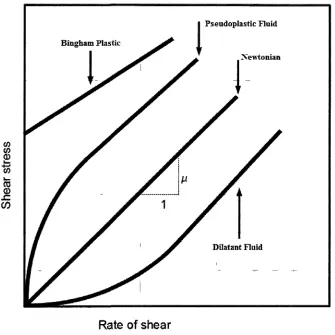
Figure 1.1: Newtonian and non-Newtonian Fluids 2
Figure 2.1: The Eyring's Model of Liquid Viscosity 15
Figure 2.2: Possible Types of Interactions Among the Molecules of Binary System 19
Figure 2.3: Variation of the lumped term N12( N12 Nl)-l/3 versus the absolutr temperature
inverse [Asfour et al. (1991)] 26
Figure 2.4: Variation of the lumped term N12( N12 Nl)-l/3 versus the term
[(N2-N1)2(N12N2)-1/3] Asfour et al. (1991) 29
Figure 2.5: The representation of 2-methyl-lpropanol based on the group contribution principle
40
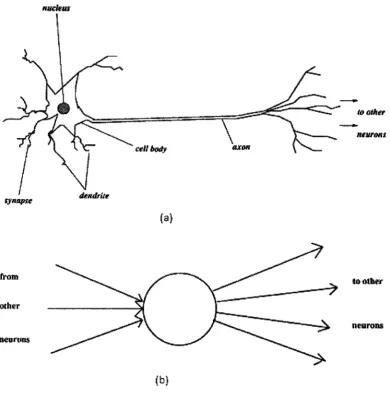
Figure 2.6: (a) Schematic diagram of real neuron (b) Schematic diagram of artificial neuron
50
Figure 2.7: A representation of an artificial neuron 53
Figure 2.8: the different types of activation functions 55
Figure 3.1: Pictorial view of the Anton-Paar density meter and the temperature controlled
chamber 68
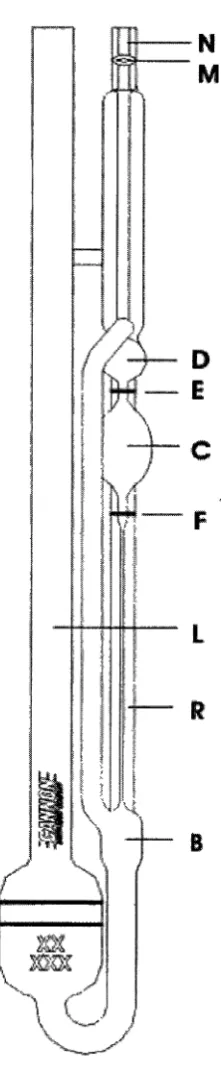
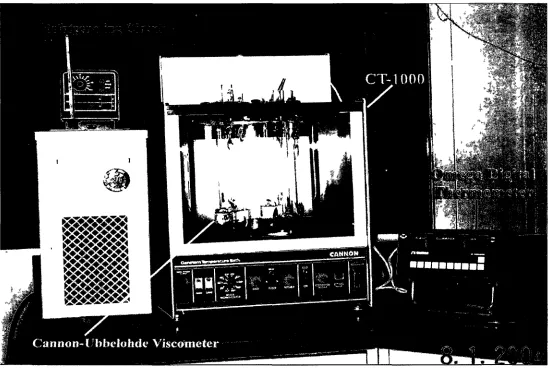
Figure 3.2: The Cannon-Ubbelohde viscometer 72
Figure 3.3: The experimental set up used for viscosity measurements 73
Figure 5.1: Predictive capabilities of the tested viscosity models for binary systems 230
Figure 5.2: Predictive capabilities of the tested viscosity models for Ternary systems 231
Figure 5.3: Predictive capabilities of the tested viscosity models for quaternary systems .... 233
Figure 5.4: Predictive capabilities of the tested viscosity models for quinary systems .... 234
CHAPTER 1
INTRODUCTION
1.1 General
Different fluids have different physical and chemical properties that determine the proper ways
to handle, store, use, process, and transport them. One of the important and common processes
encountered in real life and industrial applications is fluid transport. For these applications it is
important to know the fluid's ability to flow or in other words the fluid's resistance to flow.
Fluids in general are qualitatively described as either thin or thick fluids. Thin fluids are those
less resistant to flow and thick fluids are more resistant to flow.
A fluid in laminar flow can be viewed as if it is moving in layers. If an external shear stress is
applied to one layer of a confined fluid it will move at a certain velocity. As a result, the adjacent
layer will move at a lower velocity. This results in the development of a velocity gradient
(sometimes referred to as the rate of shear) within the fluid that is related to the shear stress. With
the help of a simple relation, Newton's law of viscosity, defines a fluid's viscosity as the
proportionality constant that relates shear stress (xxy) to the developed velocity gradient (dvx/dy).
The following equation is the mathematical representation of Newton's law of viscosity:
Fluids that obey Newton's law are designated as Newtonian fluids. Fluids for which the shear
stress is related to the velocity gradient by a more complicated relationship than Newton's law of
viscosity are known as non-Newtonian fluids and are classified on the basis of the relationship
between the shear stress and the velocity gradient. Figure 1.1 shows the different behaviours of
Newtonian and non-Newtonian fluids in terms of the relation between the shear rate (velocity
gradient) and the shear stress.
Rate of shear
Scientists and engineers use the value of the physical property of viscosity to precisely describe a
fluid's internal resistance to flow under shear stress. It is important to know a fluid's viscosity in
order to estimate the energy needed to overcome such a resistance in a flow system. Flow
systems are extensively employed in engineering applications, especially in heat exchangers as
well as in mass transfer processes.
A fluid's viscosity is a function of temperature. In the case of liquids, the viscosity decreases as
the temperature increases, whereas in the case of gases, at low density, the viscosity increases
with temperature. The difference in the temperature effect on viscosity between gases and liquids
was explained by Bird et al. 1960 as follows: "in gases (in which the molecules travel long
distances between collisions) the momentum is transported primarily by the molecules in free
flight, whereas in liquids (in which the molecules travel only very short distances between
collisions) the principal mechanism for momentum transfer is the actual colliding of the
molecules."
For the case of liquid mixtures, composition is another parameter that significantly affects the
molecular interaction within the liquid, thus, changing the fluid's resistance to flow.
In light of the above, it is clear that the impact of the previously mentioned parameters on liquid
mixtures' viscosity comes from its impact on the intra molecular forces within the fluid. Thus its
impact on the liquid structure. As a result, it is assumed that the knowledge of the dependence of
viscosity on temperature, composition, and other parameters may provide a better understanding
theory will provide a valuable tool to scientists and engineers that enables them to accurately
predict the physical properties of different liquid mixtures' combinations at different conditions
without the need to perform costly and time consuming experiments. This has motivated many
researchers to investigate the dependence of viscosity of liquid mixtures on composition. Those
efforts have resulted in developing different models which can be classified into two categories;
viz., correlative and predictive models.
The correlative models contain adjustable parameters that can be determined using
experimentally measured values of viscosity. Predictive models can predict the dependence of
viscosity on composition and would require the knowledge of some molecular parameters and/or
properties of the pure components constituting the mixture being investigated.
Amongst the viscosity models available in the literature, five widely used and accepted viscosity
models have been considered in the present study. The predictive capabilities of those models
will be tested. The models selected are: the generalized McAllister three-body interaction model,
the pseudo-binary McAllister, the GC-UNIMOD model, the generalized corresponding states
principle (GCSP) model, and the Allan and Teja correlation. The first four models are predictive
whereas the Allan Teja model is correlative. In addition, a model based on the Artificial Neural
Network (ANN) has been developed and is tested in the present study in terms of its ability to
predict the viscosity of liquid mixtures of different compositions using the viscosity values of
The previously mentioned models predict either the absolute viscosity or the kinematic viscosity.
The kinematic viscosity is related to the absolute viscosity by the following equation:
v = ^ (1.2)
P
where v = kinematic viscosity, \i = absolute viscosity, and p = density. Therefore, in order to
investigate the predictive capabilities of the above-mentioned models, the kinematic
viscosity-density or absolute viscosity-viscosity-density data must be available.
1.2 Objectives
Contrary to popular belief, reliable data on viscosities and densities of multi-component liquid
mixtures are not readily available in the literature. Although sets of data on binary systems have
been published, ternary, quaternary, and quinary systems' data are scarcely available. The
present study is part of an ongoing research program that aims at measuring and reporting data of
multi-component liquid systems at different temperature levels. The objectives of the present
study can be summarized as follows:
To measure the densities and kinematic viscosities over the entire composition range and at
293.15, 298.15, 308.15, and 313.15 K of the quinary system: chlorobenzene, p-xylene, octane,
ethylbenzene, and 1-hexanol and all its quaternary, ternary and binary sub-systems. The
Table 1.1: Systems Investigated in the Present Study
System No.
1
2
3
4
5
6
7
8
9
10
11
12
13
14
15
16
17
18
19
20
(i) Binary Systems
Chlorobenzene - p-Xylene
Chlorobenzene - Octane
Chlorobenzene - Ethylbenzene
Chlorobenzene - 1 -Hexanol
p-Xylene - Octane
p-Xylene - Ethylbenzene
p-Xylene - 1-Hexanol
Octane - Ethylbenzene
Octane - 1-Hexanol
Ethylbenzene - 1 -Hexanol
(ii) Ternary Systems
Chlorobenzene - p-Xylene - Octane
Chlorobenzene - Octane - Ethylbenzene
Chlorobenzene - p-Xylene - Ethylbenzene
Chlorobenzene - Octane - 1-Hexanol
Chlorobenzene - Ethylbenzene - 1-Hexanol
Chlorobenzene - p-Xylene - 1-Hexanol
p-Xylene - Octane - Ethylbenzene
p-Xylene - Ethylbenzene - 1-Hexanol
p-Xylene - Octane - 1 -Hexanol
Table 1.2 (Cont'd.): Systems Investigated in the Present Study
System No.
(iii) Quaternary Systems
Chlorobenzene - p-Xylene - Octane - Ethylbenzene
p-Xylene - Octane - Ethylbenzene - 1 -Hexanol
Chlorobenzene - Octane - Ethylbenzene - 1-Hexanol
Chlorobenzene - p-Xylene - Ethylbenzene - 1 -Hexanol
Chlorobenzene - p-Xylene - Octane - 1-Hexanol
(iv) Quinary Systems
2. To test the predictive capability of the various viscosity models reported in the literature
using the data reported in this study.
3. To develop an Artificial Neural Network(s) to predict the kinematic viscosities of the
different types of multi-components liquid mixtures.
4. To test the predictive capability of the developed Artificial Neural Network(s) using the
data reported in this study and data obtained from the literature.
1.3 Contributions and Significance
The present study makes a significant contribution to the literature by providing researchers,
scientists, and design engineers with reliable experimental values of the densities and viscosities
of pure compounds as well as density and viscosity composition data, over the entire
composition range, at different temperatures for the quinary system investigated and all its
quaternary, ternary, and binary sub-systems. Such data are needed for many engineering
applications that include flow systems and design of equipment.
In addition, the development of Artificial Neural Network(s) to predict the kinematic viscosities
of different types of multi-component liquid mixtures and testing their predictive capabilities in
order to provide scientists and engineers with powerful tools that enable them to predict the
dependence of viscosity on composition in multi-component liquid systems. Furthermore, the
predictive capabilities of the already existing viscosity models in the literature were critically
tested and discussed. This would enable scientists and engineers to select the best model for their
CHAPTER 2
REVIEW OF THE PERTINENT LITERATURE
2.1 General
Modeling of materials' physical properties is of great importance to scientists and engineers. It
eliminates the need to perform time consuming and costly experimental measurements to
estimate their values when needed. Predicting flow properties of pure liquids and liquid mixtures
has been a research focus for engineers from different areas.
These flow properties are needed in a host of applications that require transportation of liquids
from their place of existence to the place of need or utilization. These types of applications
include, but are not limited to, the design of heat exchange systems, mass transfer and separation
processes, and transportation of raw materials and products from one place to another. Important
applications also include mass diffusivity and thermal conductivity estimation of liquids where
flow properties are used as independent parameters. Additionally, a better understanding of
fluids' flow properties is likely to provide a better insight into the structure of liquids.
In order to overcome fluids resistance to flow, a pressure difference is typically induced to allow
the fluids to flow. Consequently, the design of pumping systems is required to induce the
pressure difference. The flow resistance is quantatively expressed in terms of viscosity. It is
important for design engineers to have a tool that enables them to accurately estimate viscosities,
when experimental values are not readily available, for the proper sizing of pumps that provide
For pure liquids, viscosity is temperature sensitive, whereas in liquid mixtures, in addition to
temperature dependence, mixture's composition affects the mixture's viscosity. Those
independent variables influence the inter-molecular interaction forces and as a result causes
changes to liquid's structure that consequently leads to changes in a mixture's viscosity.
Several researchers have examined the relationship between viscosity and the aforementioned
independent variables. Their efforts have resulted in several models that quantify such a
relationship. The general formula for those viscosity models for liquid mixtures with n
components has the following form:
l^m =f(T,x],x2,...,xn_],(i1,|^2,...,nn,C1,C2,...) (2.1)
where \xm: mixture's viscosity,
x j: the mole fraction of component i,
u i: the viscosity of pure component i, (i = 1, 2, ...., n).
Ci, C2, ...,etc. are model constants that depend on the type of investigated system.
As per the classification of Monnery et al. (1995) liquid mixtures' viscosity models are divided
into two groups. They are either empirical models or semi-theoretical models. A model is
classified as empirical if it requires fitting of experimental data to estimate the values of some
semi-theoretical models, the relations are based on the principles of popular liquid theories but the
models' constants are adjustable and evaluated using experimental data.
The latter type of models is also divided into two subgroups viz., correlative and predictive
according to the basis on which the values of the model's constants were estimated. The model is
classified as predictive if the physical properties and/or molecular parameters of the pure
components constituting the mixture are used to evaluate the model constants. Otherwise, the
model is classified as correlative if it only uses experimental data to evaluate the model
constants.
Unlike gases where theoretical models are reliably based on the kinetic theory of gases,
theoretical description of liquids (and dense gases) is much more complicated. This is due to the
nature of the intermolecular forces, which consist of the short range (repulsion and hydrogen
bonding), wide range (electrostatic), and long range (attraction) effects [Mehrotra et al. 1996].
However, there have been several attempts to develop theoretical models for pure liquids' and
mixtures' viscosity. The main theoretical frameworks used in developing such models are either
the reaction rate theory, group contribution concept, or the corresponding states principle.
The present work is a continuation of an experimental research program at our laboratory that
aims at providing reliable experimental values of viscosity-composition and density-composition
data of pure liquids and mixtures of different types of liquids. Additionally, the measured values
are used to test the predictive capabilities of different selected empirical and semi-theoretical
The experimental viscosity data collected in the present study have been employed in testing the
predictive capabilities of the following models:
1. The generalized McAllister three-body interaction model (Nhaesi and Asfour 2000a).
2. The pseudo-binary McAllister model based on the reaction rate theory (Nhasei and
Asfour 2000b).
3. The GC-UNIMOD model, based on group contribution theory (Cao et al. 1993b).
4. The generalized corresponding states model (GCSP) model, based on corresponding
states principle (Teja and Rice 1981).
5. The Allan and Teja correlation (Allan and Teja 1991).
In addition to these models, the present study investigates the use of the artificial neural network
(ANN), which has attracted the attention of several researchers, in predicting the mixture
viscosity. The main difference between the work reported herein and the earlier work reported by
other investigators is that in the present work, the network was trained by using some of the data
on binary systems, then the trained network was employed to predict the viscosities of the
multi-component systems.
Other investigators employed some of their data to train the network then used the train network
to predict the viscosities of the same type of system; i.e., part of the binary system data were used
to train the network and the rest of the binary data were used in testing the network for binary
The first four models and the model based on the artificial neural network are predictive
semi-theoretical models, whereas the Allan Teja model is classified as a correlative model. A detailed
description of the foregoing models, their respective theoretical framework, and their
development are now in order.
2.2 The Generalized McAllister Three-Body Interaction Model
McAllister (1960) reported a model based on the reaction rate theory. McAllister's model started
as a correlative model for binary mixtures. Asfour et al. (1991) could successfully transform the
model from a correlative equation to a predictive model for the case of binary n-alkanes liquid
systems. Nhaesi and Asfour (2000a) developed and reported a generalized form of the
McAllister model which could be used for multi-component regular and w-alkane liquid
solutions. The following section reviews the theoretical basis of the original McAllister model
and the development of the generalized predictive version of the model.
2.2.1 Reaction rate theory and Eyring's equation of viscosity
The reaction rate theory is applied to liquids as suggested by Eyring (1936) and Ewell and
Eyring (1937) to describe the viscous flow of liquids. It visualizes the liquid as a group of
adjacent molecules in equilibrium positions with "dissolved" holes or vacant sites between them.
Each molecule is bonded to other molecules by different types of bonds. The total energy of
bonding is the resultant of the different bonding forces between the molecule and other
neighbouring molecules. Molecules that are able to break the bonds can jump into the dissolved
Figure 2.1a shows a schematic representation of the fluid layers as visualized by Eyring and
coworkers. It is assumed that the fluid layers are separated by a distance A,i and that the average
area available per molecule is A/2X3.
When applied to liquids, the reaction rate theory deals with viscous flow in the same fashion as a
chemical reaction. In their analogy, Eyring assumed that under shear stress, the movement of a
single molecule in one layer of the liquid requires the availability of a vacant site. The molecule
must also have sufficient energy to cross a potential energy barrier A*Go (Figure 2.1b) and
complete the "jump" from one equilibrium position to another neighbouring vacant site,
"dissolved hole". This move is analogous to an elementary step in chemical reactions.
Molecular motion can occur in both directions, forward and backward. For static liquids without
any external force acting on the liquid, molecular movement (or jumping) is caused by thermal
activation at the same rate in opposite directions and does not result in a net flow. Consider a
liquid where a shear force, f, is applied to the liquid in the forward direction, the mechanical
work done by the force is used to provide the molecules with sufficient energy to rise above the
energy barrier. This mechanical work is equal to fA-2^-3 (A/2) and is used to bring the molecule to
the top of the peak. Then, the gained energy is given off as heat by the traveling molecule as it
I
. 3 1 —
$
(4
(b)
As a result of the work done by the shear force, the energy barrier decreases for the forward
jumping by the value of the performed work. On the contrary, it increases by the same magnitude
for the backward jumping. Consequently, a net flow in the forward direction occurs.
The final form of the viscosity equation suggested by Eyring is:
\x = ^ exp( 2.) (2.2)
A^A/jA k l
where k is Boltzman constant and h is Plank's constant.
Two assumptions are made. The first one is that \~%i and the second one is that the term X\ X2 X?,
represents the average volume per molecule, or the effective volume of the molecule, Vo, which
is given by the following equation:
V0= Vm/ N
(2.3)
where Vm is the molar volume and N is Avogadro's number.
Therefore, combining the last two assumptions with the previous equation gives the following
formula:
where A*G is the activation energy of viscous flow per mole, and R is the universal gas constant.
Equation (2.4) is known as Eyring's equation of viscosity. There is another form of the same
equation that is written in terms of the kinematic viscosity. That form is written as
v = exp( ) (2.5) M RT
where M is the molecular weight.
2.2.2 The McAllister model
McAllister (1960) developed a model for the calculation of the dependence of viscosity on
composition of liquid binary mixtures. The model is based on Eyring's reaction rate theory.
McAllister (1960) used Eyring's viscosity equation (equation 2.5) to develop a new viscosity
model for binary liquid mixtures of two components viz., type 1 and type 2. For such a mixture,
if a molecule of type 1 jumps to a neighbouring vacant site by crossing an energy barrier, it may
interact with molecules of type 1 or 2 or both depending on the local concentrations of
neighbouring components' type.
According to McAllister, this interaction is assumed to be a three-body interaction. McAllister
stated that this assumption is valid for the cases where the difference in the molecular sizes of the
two types of molecules is relatively small. He suggested that the molecular diameter ratio must
be less than 1.5 for this assumption to be valid. For molecules with a higher diameter ratio, a
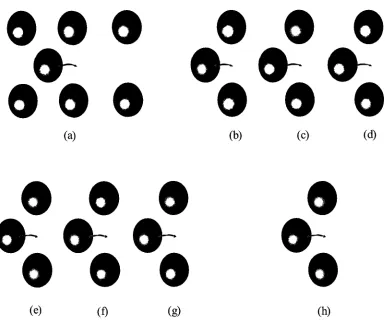
For the three-body interaction assumption, there are six possible types of interactions. These
types are: 1-1-1, 2-2-2, 1-2-1, 2-1-2, 1-1-2, and 1-2-2. Figure 2.2 depicts the different types of
interaction.
McAllister made the following major assumptions when developing his model for binary
mixtures:
The activation free energies of viscous flow are assumed to be additive quantities.
The probability of occurrence of different types of interactions is only proportional to the mole
fractions of the mixture's components.
Therefore, the activation free energy of the mixture, A*G, is given by;
A
*
G= Z Zi>
l X jx
kA*G
1 J k(2.6)
,=i J =i k=i
where x„ x,, Xk are the mole fractions of the components constituting the mixture.
In addition, the following assumptions were made to simplify the relationship and reduce the
number of unknowns in equation (2.6):
9 9 9 9 9 9
9~~ 9~~ 9~ 9~
9 9 9 9 9 9
(a) (b) (c) (d)
9 9 9
9^ 9~ 9r
9 9 9
9
^P~*
9
(e) (f) (g) (h)
A * G2 I 2= A * G1 2 2= A * G2 1 (2.8)
Substituting equations (2.7) and (2.8) into the expanded form of equation (2.6) yields,
A*G = x^A*G1 + 3x12x2A*G12 + 3x,x21A*G21 +x32A*G2 (2.9)
For a binary mixture, equation (2.4) is written in terms of kinematic viscosity, v, as follows:
v =
i^
e x p (^)
( 2.
1 0)
M„ RT
where Mm is the molecular weight of the mixture. For a binary mixture Mm is assumed to be
equal to (xiMi+x2M2).
Substituting for A*G from equation (2.9) into equation (2.10); one gets
hN ,x?A*G,+3x?x,A*G1 2+3x,x2 !A*G2 1+x2 iA*G2 N / 0 1 1,
v = exp(—! —- — - - ) (2.11)
M„ RT m
hN AG
v i = exp( 4 (2.12)
1 M, RT V '
and for pure components of type 2
hN i G 2,
v2 = e xP(——) (2.13)
2 M, RT V ;
For interaction of type 1-2
hN ,A*G12,
' • ' - ^ r " * - ^
(114)where Mi2 is given by
Mn= l- 2- (2.15)
whereas, for interaction of type 21
v.-|W^>
2 M , + M ,
M2, = 2- L (2.17)
Taking the natural logarithms of equations (2.10) through (2.16) and rearranging, one obtains
equation (2.18) which represents the final and common form of the McAllister three-body
interaction model.
Inv = x^nv, +3x2lxjnvn +3xjX2^nv21 + x\inv2
- M x , +x2M2 /M,) + 3x?x2fa(2 + M 3 2 / M l) ( 2 > 1 8 )
+3x
lX^n(
1 + 2 M 2 / M l) + x
3XM
2/M,)
where vn and V21 are adjustable parameters which can be determined using experimental
kinematic viscosity-composition data.
This model is considered one of the best correlative techniques for the viscosity of binary liquid
mixtures (Reid et al. 1987).
2.2.3 Extended McAllister's model for ternary liquid mixtures
As stated earlier, McAllister's three-body model is applicable for binary liquid mixtures. Three
years after the work of McAllister was published, Chandramouli and Laddha (1963) developed
and reported a new version of McAllister's three-body model that can be used for ternary liquid
In addition to the binary interaction parameters, ternary interaction parameters were introduced.
The final form of the extended McAllister's three-body model is given by the following
equation:
£nv = xjVnVj +x2£nv2 + x3^nv3 +3xfx2^nv12 +3xfx3^nv13
+ 3x2x/nv2 1 +3x2x3^nv2 3 +3x3x,^nv3 1 +3x3x2£nv3 2
+ 6x1x2x3^nv123 - . f t i ^ M j + x2M2 + x3M3) + xf^nMj
+ x ^ n M2 + x3^ n M3 + 3 x f x2l n (2 M' +Ml )
„ 2 n 2 M , + M3 x „ 2 a , 2 M2+ M . N
+ 3xf x3£n( l- - ) + 3 x2x / n ( - L)
, n 2M2+1VL „ 2 , 2 M , + M , N
+ 3 x2x A ( 1_ L) + 3 x2x / n ( 3_ L )
„ 2 . . 2 M3+ M2. . . , M , + M2+ M3.
+ 3x3x2£n( 3- 2-) + 6x1x2x3^n(—l- 2- 3-)
(2.19)
where: V12, V21, V13, V31, V23, and V32 are binary interaction parameters, and V123 is the ternary
interaction parameter.
The values of the binary and ternary interaction parameters are determined by fitting
2.2.4 The Asfour et al. (1991) parameter- prediction method
As indicated earlier herein, Reid et al. (1987) considered the McAllister model to be one of the
best correlative techniques for the viscosity of binary liquid mixtures. But being correlative is a
significant disadvantage of this model. Its correlative nature calls for the need to carry out both
time consuming and costly experiments in order to estimate the values of the adjustable
parameters.
This major drawback was overcome by Asfour and co-workers. They were able to develop a
technique that converts the McAllister model from a correlative model into a predictive model.
Asfour et al. (1991) introduced a modification to the McAllister model that uses the molecular
parameters and the viscosities of pure components to predict the values of the interaction
parameters in McAllister's model for binary n-alkane liquid mixtures.
For the n-alkane liquid mixtures, Asfour et al. (1991) started with the assumption that the binary
interaction parameters in the McAllister model, v n and V21, are related to the mixture's pure
components kinematic viscosities as follows:
v1 2o c (V l 2v2), / 3 (2.20)
Dividing equation (2.20) by equation (2.21) results in the following relationship between the two
adjustable parameters:
V2 1 =V1 2
(
v
/ 312. (2.22)
In addition to that, Asfour et al. (1991) plotted the lumped term vn( vi2 V2)"1/3 versus the inverse
of the absolute temperature using data of several n-alkane binary mixtures. Those mixtures are:
hexane heptane, hexane octane, heptane octane, heptane decane, tetradecane
-hexadecane, and octane - decane. The experimental data were taken from Cooper (1988). They
were selected to satisfy the condition of having the differences in number of carbon numbers to
be less than or equal to 3. They assumed that this condition justify the use of McAllister
three-body interaction model.
The resulting plot showed a straight line with a slope of zero as shown in Figure 2.3. This has led
i - l
l . U O
1.04
1.02
i nn
m
— •
•——
n
"
•
D
•*
?
•
O
•
A
0
1
•
- — ^ ^ s >
D
•
6
1
3.15 325 335
(1/T)xl0* K
13.45
-1/3-Figure 2.3: Variation of the Lumped Term vi2( vi2 Vi)" Versus the Absolute
Temperature Inverse [Asfour et al. (1991)].
A Hexane (A) - Heptane (B)
o Heptane (A) - Octane (B)
• Tetradecane (A) - Hexadecane (B)
0 Hexane (A) - Octane (B)
• Heptane (A) - Decane (B)
Moreover, Asfour et al. (1991) plotted the lumped term V12 ( Vi2 vi)"1/3 that was proven to be
temperature independent verses another lumped term [(N2-Ni)2/(Ni2N2)1/3], where the Ni and
N2 are the number of carbon atoms per molecule of components 1 and 2, respectively.
Components 1 and 2 constitute the liquid mixture. They used experimental data of the same
n-alkane binary mixtures they previously used to make the plot shown in Figure 2.3.
The plot as shown in Figure 2.4 resulted in a straight line with a slope that suggests a linear
relationship between the two lumped terms. Using the least-squares technique, Asfour et al.
(1991) obtained the following equation:
Vl2 - 1 + 0.044 (^2 2 ™l£ (2.23)
(v2v2), / 3 (N?N2y
Therefore, with the help of equation (2.22) and (2.23) the values of the adjustable parameters V12,
and V21 in the McAllister model could be estimated using only the physical properties of the
pure components constituting the liquid mixture. The significance of this work is in transforming
the McAllister three-body interaction model from a correlative to a predictive model and
consequently extending its usefulness and practicality.
As stated earlier, the Asfour et al. (1991) work was based on McAllister three-body interaction
model that is assumed to be applicable where the differences in carbon numbers of the
components composing the mixture are less than or equal 3. For other n-alkane binary liquid
1.06
9
1,04
1.02
LOO
0,00
<N2-Ni)2(Ni2N2)"l/3
1.20
1/3
Figure 2.4: Variation of the Lumped Term vi2( vi vi)" Versus the Term
[(N2-Ni)2(Ni2N2)"1/3]. Asfour et al. (1991).
A Hexane (A) - Heptane (B)
o Heptane (A) - Octane (B)
• Tetradecane (A) - Hexadecane (B)
0 Hexane (A) - Octane (B)
• Heptane (A) - Decane (B)
developed another equation that is based on the McAllister four-body interaction model. They
suggested the following equation for calculating the quaternary interaction adjustable parameter,
1122 _ i ,= 1 + 0 0 3 ^ n m ^ ' 2 N]>) (2 24)
Furthermore, Asfour et al. (1991) suggested two equations to calculate the other quaternary
interaction adjustable parameters, vuu andv1222, in terms of the first parameter, v]122, estimated
from equation (2.24). The two equations are as follow:
V1112 — V1 1 2 2
V2 2 2 1 ~~ V1 1 2 2
( V/4 12. vv. y
( V/4 v2
vvi y
(2.25)
(2.26)
In spite of the good improvement that Asfour et al. (1991) have brought to the McAllister model,
their technique was only applicable to binary liquid n-alkanes mixtures. In subsequent work,
Nhaesi and Asfour (1998) used a similar approach to extend the technique to binary regular
liquid mixtures. They introduced a different definition than that introduced earlier by Allan and
Teja (1991) for the effective carbon number, which made it much easier and much less
cumbersome to calculate and apply. This enabled Nahesi and Asfour (1998) to estimate the
effective carbon number (ECN) for regular liquid components from the value of the kinematic
viscosity of the component at 308.15 K. They suggested the following relationship:
where A= - 1.943 and B = 0.193, and [email protected] is the kinematic viscosity, in cSt, of the pure
regular component at 308.15 K.
The value of the kinematic viscosity at 308.15 K is substituted into equation (2.27) in order to
obtain the ECN of the compound of interest.
2.2.5 Nhaesi and Asfour (1998) extended method
Nhaesi and Asfour (1998) introduced an equation analogous to that developed for n-alkanes for
predicting the binary interaction parameters for regular mixtures using the ECN instead of the
number of carbon atoms in the case of n-alkanes. The new equation is given by,
2V'2 ... = 0.8735 + 0.0715 ( E C N z 2 E C N») 3 (2.28) (v,2v2)1/3 (ECN2ECN2)1/3
Equation (2.22) is used to predict the value of V21.
2.2.6 The generalized McAllister three-body model
The next major improvement to the McAllister three-body interaction model was introduced by
Nhaesi and Asfour (2000a). They developed a new generalized technique to predict the
In developing their model they started with the assumption that the free activation energies for
viscous flow are additive. Therefore, the free activation energy of the mixture, AGm, is given by
AGm = J>?AG, +3± Jx,2xJAG1J +6XZI>1xJxkAG1 J k (2.29)
1=1 1=1 j = l 1=1 j = l k = l
where n is the number of components constituting the mixture.
In addition, they assumed that the activation energies depend only on the type of components
involved not their order. They proposed the following equations:
AGy,= AGUJ= AGy
AGJIJ=AG1JJ=AGJ1
The starting point of the model is McAllister's viscosity equation that is written for a liquid
mixture as,
hN AG
v , = — e x p ( :-) (2.30)
1 M, RT
vm = exp( —) (2.31)
where k is Boltzman constant, h is Plank's constant, R is the universal gas constant, and
N is Avogadro's number.
The subscript m in equation (2.31) refers to the mixture and the subscript i refers to pure
component i. vm is the kinematic viscosity of the mixture, M is the molecular weight. The
average molecular weight of the mixture, Mm, is calculated using the following mixing rule:
Mm=2;x1MI (2.32)
where M, is the molecular weight of pure component i.
For a binary interaction of type ij
hN AG,,
v =—-exp(—-2.) (2.33) •I = C AR
1J My RT
where M,j is
2 M , + M ,
M„= '- i- (2.34)
hN A Gk
v„k = e xP ( —) (2.35)
J M1Jk RT V '
where Myk is
M , + M . + M ,
Ml j k= — f—± (2.36)
By incorporating equations (2.30) through (2.35) into equation (2.29) one obtains,
n o n n 2
! n vm= X xfln(v.M.) + 3 I E xfx/n(v..M..)
m • 1 i * i • i • 1 ! j y y"
i = i 1 = 1 j = i J J J
n n n (2.37)
i * j * k
The number of binary interaction parameters, N2, and ternary interaction parameters, N3 in
equation (2.37) are calculated using the following two equations:
n!
N, = (2.38) 2!(n-2)!
n!
N3 = (2.39)
3 3!(n-3)!
The concept of effective carbon number (ECN) is employed for the pure regular liquid
components. Nhaesi and Asfour (1998) suggested the use of equation (2.27) to determine the
numerical value of the effective carbon number of regular liquid components and equation (2.28)
for predicting the values of the adjustable parameters of type ij. The values of the other binary
interaction parameters, Nhaesi and Asfour (2000a) developed the following equation to predict
the ternary interaction parameters for n-alkanes:
v K (N - N ">
•JK _ n nn/i 1 i n m i / ; ' 7v k x ,i / 2
= 0.9941 + 0.03167^-^ ^ - (2.40)
2.3 The Psg«rfo-Binarv McAllister Model
The second model that will be tested in this study is the pseudo-binary McAllister model. This
modification utilizes the pseudo-binary concept that was introduced by Wu and Asfour (1992)
with the generalized McAllister model reported by Nhaesi and Asfour (2000).
In the "pseudo-binary" model, a multi-component liquid mixture of n components is treated as a
binary mixture of component 1 and a "pseudo-component" that represents the remaining
components of the mixture (2, 3, 4,.., n). The reduction of the number of components in
multi-component liquid mixture to two multi-components significantly reduces the complexity of
calculations and leads to dramatic reduction in calculation time by requiring fewer calculation
steps.
Wu and Asfour (1992) introduced the pseudo-binary concept and utilized it in modifying the
generalized corresponding states principle (GCSP), which will be discussed later in this chapter.
Nhaesi and Asfour (2000b) incorporated the pseudo-binary model into the generalized
McAllister three-body interaction model which led to the development of the pseudo-binary
McAllister model for predicting the viscosities of n-alkane liquid mixtures.
In addition, they used the effective carbon number, ECN, concept explained earlier to extend the
regular liquid mixtures. For the regular pure components, the ECN is calculated using equation
(2.27). For the "pseudo-component, Nhaesi and Asfour (2000a) suggested the use of the
following mixing rule to determine its ECN in terms of the those for the pure components
constituting the "pseudo-component:
(ECN^^XXECN), (2.41)
i=2
The kinematic viscosity of the "pseudo-component is calculated with the help of the following
equation:
lnv2. =fjXl(£nv1) (2.42)
1=2
The molecular weight of the "pseudo-component is calculated using the following equation:
^nM
2.=5]X
I(^nM
I) (2.43)
1=2
The term Xj in equations (2.41) through (2.43) represents the normalized mole-fraction of
component i in the "pseudo-component. This quantity is calculated using the following
X , = V - (2-44)
i=2
For regular mixtures, the numerical values of (ECN)i, Mi, and vi for the "pseudo-component
obtained from equations (2.41) through (2.43) are substituted into equations (2.28) and (2.22) for
regular mixtures in order to predict the McAllister's binary interaction parameters, V\i and vn.
The same procedure is followed when using this technique for n-alkanes but the components'
carbon numbers are used instead of the ECN in the calculations.
2.4 The Generalized Corresponding States Principle (GCSP) Model
The third model that will be tested in this study is the Generalized Corresponding States
Principle (GCSP) viscosity model. The original corresponding states principle (CSP) is based on
the reduction of variables by using critical properties; e.g., critical pressure, volume and
temperature to calculate a new dimensionless reduced parameters. The reduced parameters
represent the ratios of the independent variable to the corresponding critical condition.
The corresponding states principle is based on the assumption that different fluids at the same
reduced conditions of temperature, pressure, and/or volume have the same reduced physical
properties.
Taj a and Rice (1981) utilized the corresponding states principle and used it to develop a new
generalized corresponding states principle (GCSP). Their model was based on the liquid's
critical volume.
In 1986, Taj a and Thurner suggested another form of the Taj a and Rice model in that it is based
on the critical pressure to avoid the effect of the relatively high experimental uncertainties
commonly associated with the measurement of critical volumes and suggested the use of the
following equation for viscosity prediction:
M l ^ ) = Mn£>
rl+ J
2_
(° J
r l[ ^ ( ^ )
r 2- ^ ( ^ )
r l] (2.45)
where rl and r2 refer to two non-spherical fluids, \i is the absolute viscosity, co is the acentric
factor of the non-spherical fluid, and ^ is an adjustable parameter obtained from the critical
properties of the fluid and is given by the following equation:
y _ p - 2 / 3Tl / 6M- l / 2
S-^c 1c M (2.46)
where Pc, Tc , and M in equation (2.46) are the critical pressure, temperature, and molecular
weight, respectively.
In order to apply equation (2.45) to liquid mixtures, Taja and Thurner (1986) recommended the
use of a group of mixing rules that were suggested earlier by Wong et al. (1984) to determine the
pseudo-critical properties and parameters of the liquid mixture. Wong et al. (1984) mixing rules