BOLES, SUSIE BAKER. Examining the Relationship between Student Perceptions of Online Instructor Teaching and Social Presence through Introductory Video Characteristics. (Under the direction of Dr. Deniz Eseryel).
This study sought to examine students’ perceptions of online instructors’ teaching and social presence based solely on short, asynchronous introductory videos. The second aim of this study was to examine student expectations of online instructor qualities and introductions to online courses. Through a quantitative research design, this study explored the relationship between student perceptions of teaching and social presence and types of instructor introductory videos, which include varying degrees of instructor physical and verbal presence and common video production styles. The research process consisted of surveying students’ expectations and their responses to sets of videos which vary in these characteristics. Participants include 195 undergraduate and graduate students during fall semester 2018. The data analysis includes descriptive statistics, chi-squared analyses, and multiple linear regression. This study found that certain student characteristics such as university status, age, gender, English as a primary
language, and field of study are significantly related to student expectations for online instructors and preferred introduction media formats, and certain video characteristics (active body
language, a student-oriented script, professional editing, interview production style) may predict a higher student perception of social presence, as measured by the Widmeyer and Loy warm/cold scale, as compared to a video in which an instructor delivers a course-oriented script and uses passive body language.
by
Susie Baker Boles
A dissertation submitted to the Graduate Faculty of North Carolina State University
in partial fulfillment of the requirements for the degree of
Doctor of Philosophy
Curriculum and Instruction
Raleigh, North Carolina 2018
APPROVED BY:
_______________________________ _______________________________ Dr. Deniz Eseryel Dr. Timothy Drake
Chair of Advisory Committee
DEDICATION
I dedicate this labor of love to all students who choose online education in order to
BIOGRAPHY
Susie Boles is an academic professional with an insatiable thirst for learning and a deeply-rooted joy in aiding others’ learning.
Susie began her career in sales education at Colonial Life Insurance, Inc., where she developed an abiding love of online education and purposeful learning. Currently an
instructional designer at UNC-Greensboro, Susie Boles thrives on supporting professors develop engaging, effective online learning environments and explore the possibilities of teaching online. She has developed numerous online courses for undergraduate and graduate students in the areas of dance, nanoscience, social justice, peace and conflict studies, kinesiology, music, teacher education, and other disciplines.
Susie enjoys running, singing for the Lord, travel, reading and reviewing fiction books, and going out on Lake Murray with her family in South Carolina, her home state. She also enjoys eating copious amounts of buttered popcorn while watching the latest movies with her husband David. David and Susie own a petite chihuahua-mix rescue named Puddin, who weighs all of 3.5 pounds. Recently she and David have welcomed a daughter, Susan Jubilee, to their family, and they delight in watching her grow and explore the world around her.
ACKNOWLEDGMENTS
“Commit your work to the Lord, and your plans will be established.” – Proverbs 16:3 “If you want to go fast, go alone. If you want to go far, go together.” – African proverb
I would like to thank the community around me who has helped to make this journey possible! Learning to be a mother while completing a PhD and working full-time is sometimes like running a marathon without training in a foreign country (something I have also done, and so I can vouch for the accuracy of the comparison).
I would like to first and foremost acknowledge the continual support of my beloved parents, Ralph and Susan Baker. Your faith in the Lord, love for each other, endless generosity, unfailing encouragement, and out-of-the-box solutions have spurred me on beyond what I thought possible. You have given me perspective and the ability to achieve my dreams. Even if I still am terrible at directions and fashion, attended Chapel Hill and now N.C. State, and may or may not be 100% sure if our house has a chimney, you have shown me what I can do well and how to harness it to serve God and others.
Second, thank you to all of who you have encouraged me as a new mother. Without the peace of mind that baby Susan Jubilee is growing well, eating well, and sleeping well, I could not have forged ahead with my PhD. Your wisdom got me through the gauntlet of uncertainty.
To my committee: Thank you for your flexibility and patient guidance. You resolved barriers rather than creating them. You stepped out of your comfort zone to let me pursue a topic I’m passionate about and deadlines which bordered on unrealistic.
To my colleagues at Colonial Life Insurance, Co. and UNCG Online: Thank you for teaching me what you know and taking me under your wing. Each project we do matters. I would not be where I am without you.
To Sumama: Thank you for your love and your many, many questions; I too hope to always have your endless curiosity and courage. If you find any typos in this dissertation,
because I know you will read this as you read my undergraduate thesis, please just don’t tell me. To Aunt Mary: My wonderful, giving Aunt Mary! Thank you for loving me and
encouraging me by sharing newspaper and Facebook articles on everything from mouthwatering recipes to sassy weather forecasts, by hosting holidays that mean so much to all of us, and caring to listen when I call you out of the blue.
To my siblings Ralph, Russell, and Virginia: Thanks for trying to keep me normal. I love you each more than words can say. Let’s go on a vacation soon, please.
To Puddin, our chihuahua mix: Please stop pooping in the house. Also, thanks for your unconditional love and snuggles, walking buddy.
To Susan Jubilee: May you find the joy in learning as I have, and honor God in all you do. You are a treasure to us, simply by being who you are.
However big, however small / Let me be part of it all / Share your dreams with me / You may be right, you may be wrong / But say that you'll bring me along.
TABLE OF CONTENTS
LIST OF TABLES ...v
LIST OF FIGURES ... vii
DEDICATION ... ii
BIOGRAPHY ... iii
ACKNOWLEDGMENTS ... iv
CHAPTER ONE: INTRODUCTION ... 1
Background ... 1
Purpose of this study ... 11
Research Questions ... 12
Significance of the Study ... 12
CHAPTER TWO: LITERATURE REVIEW ... 14
Conclusion and Gaps ... 27
CHAPTER THREE: RESEARCH METHOD ... 34
Purpose of the Study ... 34
Research Questions ... 34
Research Design ... 36
Population and Sample ... 36
Instrumentation ... 37
Data Collection ... 44
Data Analysis ... 45
Reliability and Validity ... 51
Delimitations ... 51
CHAPTER FOUR: RESULTS ... 54
Sample Description ... 54
Research Questions and Hypotheses ... 56
Multiple Linear Regression Assumptions ... 96
Other Analyses ... 115
Qualitative data ... 121
CHAPTER FIVE: DISCUSSION ... 124
Discussion and interpretation of findings ... 125
Limitations of the study ... 133
Conclusions ... 137
REFERENCES ... 150
Appendix A: CoI Teaching Presence Survey Subscale ... 160
Appendix B: Survey and Consent Form ... 161
Appendix C: Mehrabian’s (1969) Criteria for Scoring Nonverbal Behaviors ... 261
Appendix D: Scripts ... 263
Appendix E: YouTube Video Playlist ... 268
Appendix F: Descriptive Statistics ... 269
Appendix G: Research Question 1 Related Results Tables ... 270
Appendix H: Research Question 2 Related Results Tables ... 285
LIST OF TABLES
Table 1 Summary of research findings related to educational videos ... 29
Table 2 Videos and Variables ... 40
Table 3 Qualtrics Video Display Counts and Actual Response Case Count ... 45
Table 4 Cronbach’s alpha for TP1, TP2, and SP Scales ... 51
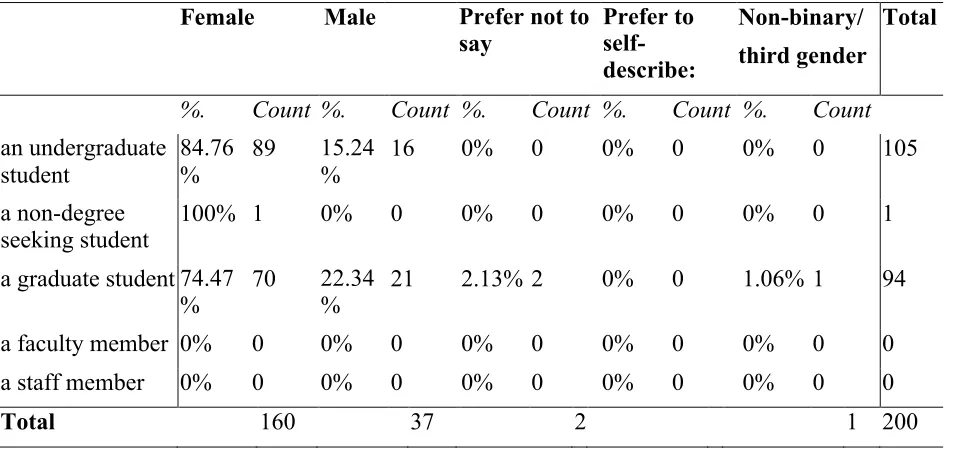
Table 5 Intersection of Respondents’ Gender and University Status Percentages and Counts ... 54
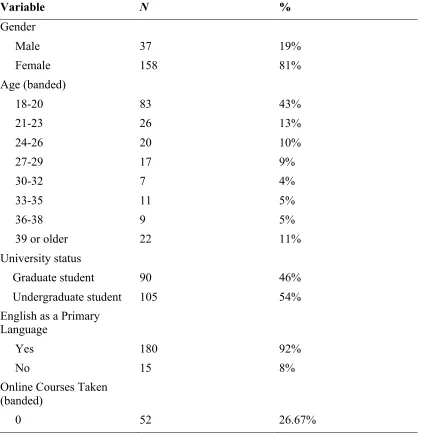
Table 6 Responses Used in Statistical Analyses: Gender, Age, University Status, English-Speaking, Online Courses Taken, and Field of Study ... 55
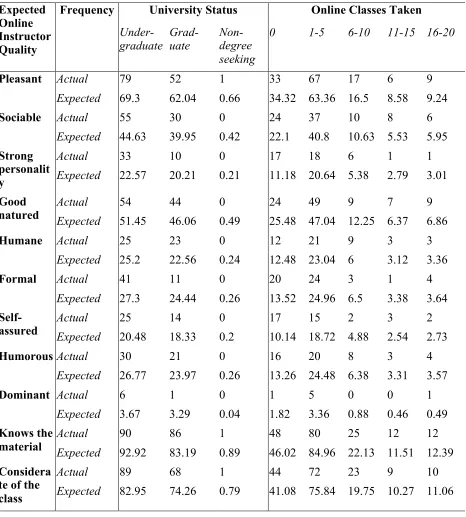
Table 7 Responses to the multiple-answer survey question, “Which Qualities Do You Expect of an Online Instructor?” ... 60
Table 8 Cross-tabs of Expected Online Instructor Qualities and University Status and Online Classes Taken ... 62
Table 9 Cross-tabs of Expected Online Instructor Qualities and Gender and Age ... 63
Table 10 Cross-tabs of Expected Online Instructor Qualities and English as a Primary Language ... 65
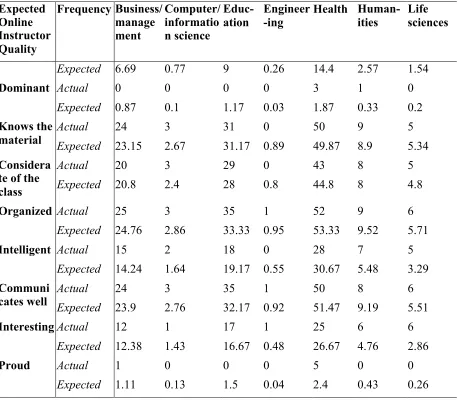
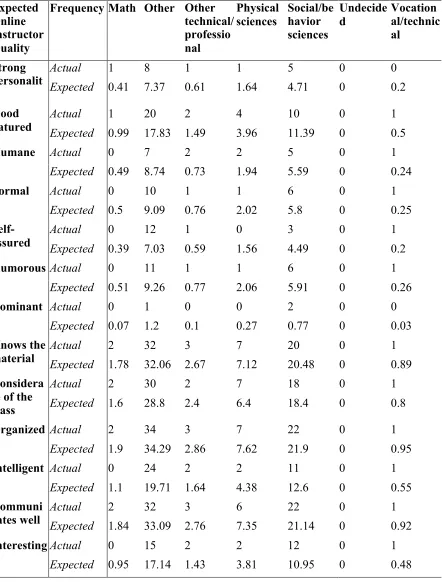
Table 11 Cross-tabs of Expected Online Instructor Qualities and Field of Study A-L ... 66
Table 12 Cross-tabs of Expected Online Instructor Qualities and Field of Study M-Z ... 67
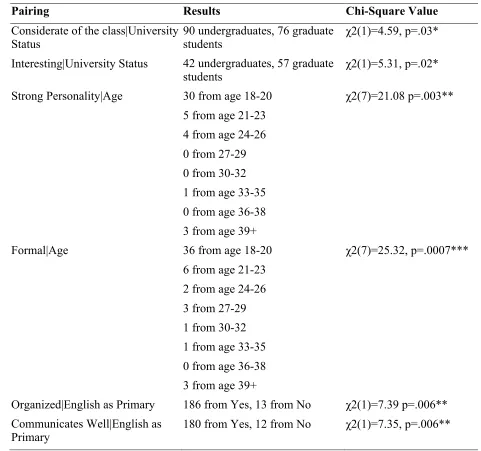
Table 13 Results for Significant Chi-Square Pairings Between Student Characteristics and Expected Online Instructor Qualities ... 69
Table 14 Overall responses to the multiple-answer survey question, “Which form(s) of instructor introduction to an online course do you prefer?” ... 73
Table 15 Cross-tabs of Preferred Introduction Formats and University Status and Online Classes Taken ... 75
Table 16 Cross-tabs of Preferred Introduction Formats and Gender and Age ... 78
Table 17 Cross-tabs of Preferred Introduction Formats and English as a Primary Language ... 82
Table 18 Cross-tabs of Preferred Introduction Formats and Field of Study A-L ... 84
Table 20 Significant Chi-Squared Analyses Between Student Characteristics and
Preferred Introduction Formats ... 90
Table 21 Differences in the mean TP1, TP2, and SP scores per video ... 93
Table 22 Residuals of OLS, Dependent Variable = Teaching Presence 1 ... 101
Table 23 Results of OLS, Dependent Variable = Teaching Presence 1 ... 102
Table 24 Residuals of OLS, Dependent Variable = Teaching Presence 2 ... 106
Table 25 Results of OLS, Dependent Variable = Teaching Presence 2 ... 106
Table 26 Residuals of OLS, Dependent Variable = Social Presence ... 111
Table 27 Results of OLS, Dependent Variable = Social Presence ... 112
Table 28 “Not able to determine from the video” response counts by video, ordered from greatest to least ... 116
Table 29 “Not able to determine from the video” responses by instructor characteristic, ordered from greatest to least ... 117
Table 30 Correlations between Teaching Presence 1 (TP1), Teaching Presence 2 (TP2), and Social Presence (SP) by Video ... 118
Table 31 “Interested in Taking a Course with This Instructor” Response Correlation with Overall Teaching and Social Presence Scores by Video ... 119
Table 32 “Comfortable Asking This Instructor a Question” Response Correlation with Overall Teaching and Social Presence Scores by Video ... 120
Table 33 “Cares About Your Learning” Response Correlation with Overall Teaching and Social Presence Scores by Video ... 121
Table 34 Sample in Detail by Gender and University Status ... 269
Table 35 Chi-Squared Statistics Between Student Expectations of Online Instructor Qualities and Student Characteristics ... 270
Table 36 Expected Online Instructor Qualities Breakout by Gender ... 275
Table 37 Expected Online Instructor Qualities Breakout by Age ... 276
Table 38 Expected Online Instructor Qualities Breakout by University Status ... 277
Table 39 Expected Online Instructor Qualities Breakout by English as a Primary Language ... 278
Table 41 Expected Online Instructor Qualities Breakout by Online Courses Taken ... 281
Table 42 Chi-Squared Statistics for Preferred Introduction Format and Student Characteristics ... 285
Table 43 Overall Responses to Preferred Formats ... 287
Table 44 Preferred Formats Breakout by University Status ... 288
Table 45 Preferred Formats Breakout by Online Classes Taken ... 290
Table 46 Preferred Format Breakout by Gender ... 304
Table 47 Preferred Format Responses Breakout by English as a Primary Language ... 308
Table 48 Preferred Format Breakout by Age ... 310
Table 49 Preferred Format by Field of Study ... 318
LIST OF FIGURES
Figure 1 Hansch’s video’s affordances for online learning. ... 7
Figure 2 Elements of an Educational Experience. Garrison, Anderson, & Archer, 1999, p. 88... 15
Figure 3 Horizonal bar chart of responses to the multiple-answer survey question, “Which Qualities Do You Expect of an Online Instructor?” ... 61
Figure 4 Responses to the multiple-answer survey question, “Which form(s) of instructor introduction to an online course do you prefer?” ... 74
Figure 5 Scatterplots showing linear relationship between independent variables and dependent variables TP1, TP2, and SP. ... 97
Figure 6 Histograms of TP1, TP2, and SP showing normal, slightly right skewed distributions. ... 98
Figure 7 Scatterplot of residuals versus predicted values with the regression line. ... 99
Figure 8 Residuals vs Fitted for Regression Equation 1: TP1. ... 104
Figure 9 Residuals vs Fitted for Regression Equation 2: TP2. ... 109
CHAPTER ONE: INTRODUCTION
As an instructional designer at a university, professors often ask, “I’d like to create an introductory video; how should I make one? Do students expect a video?” The question of how to initiate the instructor’s presence in an online course is a perennial one, and thus began my interest in investigating relevant research to introductory videos and examining student expectations and perceptions of introductory videos to online courses.
Background
Growth in Online Learning
Online courses are continually evolving, as new tools emerge for instructors and students to communicate. Scholars and practitioners in this field of online education are exploring which course designs and virtual tools are most effective for learning and teaching. Students’ needs and expectations are changing, as online education becomes more accessible and attracts a wider variety of students. The question of whether online education is as effective as face-to-face, traditional classroom educational models has largely been put to rest, with a swell of studies stating there are “no significant differences” (Baker, 2010, p. 2). Now the question is which pedagogical and technological strategies are most effective for students and instructors involved in online learning.
Online education represents a substantial portion of higher education and is growing. According to the Digital Learning Compass: Distance Education Enrollment Report 2017, 29.7% of all higher education students are taking at least one online course (Allen, I.E. & Seaman, J., 2017, p. 4). This number has steadily risen from 25.9% in 2012 (Allen, I.E. & Seaman, J., 2017, p. 4). This growth is of particular interest in an era when higher education at large has
courses may be offered synchronously, in which students and instructors meet virtually at the same time, or asynchronously, in which students and instructors interact at different times with one another and the course material.
One reason for this growth may be students’ attraction to online learning’s flexibility and convenience: students can participate from wherever they are, without the constraint of meeting in person. Indeed, such flexibility and convenience are primary factors in many students’ motivation to enroll in online courses as opposed to residential courses (Pastore &
Carr-Chellman, 2009; Griffiths & Graham, 2009). Yet, the same benefit of convenience and flexibility can become a drawback: without intentionally designing for the instructor’s presence and peer-to-peer interaction, online courses can be prone to a lack of personal connection with the
instructor and peer students. Students and instructors are separated by geographical distance and time, and thus intentional opportunities for interaction must be built into the course and
communicated. This absence of direct contact leads to a sense of isolation, which can lead to withdrawal from the online course or program, failure to reach out when assistance is needed, and low motivation, and studies have shown the rate of dropout in online courses is higher than face-to-face courses (Croft, Dalton, & Grant, 2015; Ali & Smith, 2010; Rovai, 2002).
Online learning refers to a web-based learning environment which may be accessed on an Internet-enabled device, whether it be a computer, tablet, phone, or other equipment. In a typical face-to-face classroom, the instructor is physically present and teaches students through a
The Changing Role of the Online Instructor in Creating Teaching and Social Presence Unfortunately, many instructors teaching online for the first time may assume their presence can be developed online using the same techniques they used in the classroom. Conrad (2004) interviewed instructors who taught graduate courses online for the first time before and after their online teaching experience. A primary theme from these interviews was instructors’ concern over teaching in a medium without visual cues to and from their students: the loss of the ability to appear authentic and credible due to the absence of physical presence and the loss of the students’ body language and facial expressions in response to teaching (Conrad, 2004, p. 35). In their interviews, these instructors expressed a lack of awareness of how to build community and their presence online, and many other instructors may struggle with the same challenge. Often new online instructors exhibit little awareness of the role of community in online learning environments (Sieber, 2005, p. 329).
interaction occur in the online classroom: interaction with content and other people (p. 22). He categorizes the roles of an online instructor into pedagogical, social, managerial, and technical tasks, which all interrelate: “Creating a friendly, social environment in which learning is promoted is also essential for successful moderating” (Berge, 1995, p. 23).
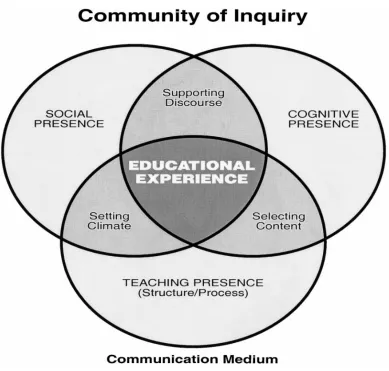
This environment carries meaningful benefits for students: a sense of social presence can predict improved course retention and final grades in online courses (Liu, Gomez, & Yen, 2009) and lead to engagement, which many studies have shown to increase student achievement, likelihood of graduation, and satisfaction (Oblinger, 2014, p. 14). In Garrison, Anderson, and Archer’s (1999) Community of Inquiry model, the learning experience depends upon the integration of social presence, cognitive presence, and teaching presence.
Either in person or online, teaching presence is a critical element for learning. However, the role of the online instructor requires different knowledge, skills, and attitudes than the face-to-face classroom instructor role, and the online instructor may have different technologies to leverage, such as multimedia.
Multimedia in Online Courses as a Means of Building Teaching and Social Presence Online courses frequently feature video as a primary media. Hansch, Hillers,
what he or she would present in a classroom. However, other types of videos are popular as well, such as a video of animated equations with the instructor’s voice as disembodied audio
discussing what is being shown.
One popular method for initiating the instructor’s presence in a course is representing oneself through video, which is a form of multimedia. Multimedia technology competence is one area which online teaching may require more so than face-to-face teaching. Bigatel, Ragan, Kennan, May, & Redmond (2012) surveyed professors, adjuncts, instructors, administrators, lecturers, staff, instructional designers, and other individuals with experience related to online teaching to determine which are considered the most important teaching behaviors associated with successful online teaching; the results led to the creation of a list of seven competences for online teaching success (p. 64). Multimedia technology is one of the seven competencies considered requisite for online teaching success. The authors conducted an exploratory factor analysis and verified the reliability of this competency by calculating Cronbach’s alpha at 0.84. The two statements comprising this competency were “The instructor uses a variety of
multimedia technologies to achieve course objectives” and “The instructor uses multimedia technologies that are appropriate for the learning activities” (Bigatel, Ragan, Kennan, May, & Redmond, 2012, p. 66).
incorporates audio and/or video, such as podcasts and synchronous meeting software, was identified in 22 comments as a good way to build connections with instructors” (Joyner, Fuller, Holzweiss, Henderson, & Young, 2014, p. 440).
Griffiths and Graham (2009) piloted a study comparing students in two versions of the same class: a face-to-face version and an online version in which the instructor presented the face-to-face topics, assignment feedback, discussion replies, and assignment instructions via recorded video and students responded by creating their own asynchronous videos (p. 65). The instructor found that asynchronous video communications between he and the students did establish social presence and instructor immediacy (p. 73). Griffiths and Graham (2009) also reported finding “...a result of using the asynchronous video communications is that the
instructor-student relationship seems to have been stronger” (p. 73). Overall the student ratings scores for the online course section were much higher than the face-to-face version, which was above average (p. 74). The promising results of their study and call for additional research specifically focused upon asynchronous video in online courses underscore the need to examine the most effective uses of asynchronous video in establishing online community.
Videos: Pedagogical rationale and financial investment
There are at least two primary factors to consider when pondering whether to create or include videos in an online course: the pedagogical value of video and the financial investment in video development.
Video, like other media, should be chosen for use when it is the best tool to achieve the desired instructional objective and learning strategy (Williams, 1998, p. 1447). The pedagogical reasons for video’s inclusion should influence the decisions made during its development.
heard from interviewees that video is the most resource-intensive part of the MOOC production process (p. 3). The authors caution that expensive production techniques are frequently chosen, even in the absence of any scientific evidence of an association between production value and learning outcomes (p. 14). Hollands and Tirthali (2014) estimated the cost to shoot and edit a single hour of high-quality video to be $4,300. Yet many free to low-budget options for creating video exist: learning management systems such as Canvas include their own video recording tool, Windows computers offer free screen-recording tools, online websites such as Jing and Screencast-o-Matic offer free screen-recording, YouTube Live offers free video streaming and recording, and countless smartphone applications exist to allow for video recording and sharing online.
Are these costs justified? What purposes are videos in online courses serving? Hansch (2015) provides a series of affordances for video in online learning (p. 12).
More broadly, video developed for online courses is created for one of at least three types of value for an educational context according to Koumi (2006); he describes these as cognitive, experiential, and nurturing (Koumi, 2006). The cognitive purpose is meant to aid in learning, the experience purpose is meant to allow students to see someone else’s experience they may not otherwise experience, and the nurturing purpose is meant to motivate students and connect them emotionally. For any of the types of videos below, the videos may be pre-recorded, also known as asynchronous, or synchronous, in which students view the video as it is being recorded.
Instructional videos. The majority of research on video in online courses has focused on instructional videos, i.e. videos meant for lectures, demonstrations, and other cognitive purposes. Recent research has begun to examine which elements make compelling instructional video (Hibbert, 2014; Salazar, 2010), which elements students perceive as influencing their learning (Muller, 2008), and which types of videos are often produced (Hansch, 2015). Williams (1998) summarizes and lists previous research findings which guide the use of multimedia in
instruction, including the use of text in videos, ideal lengths, dramatization, editing, camera techniques, and other considerations, and Ibrahim (2012) offers models for designing
instructional video according to cognitive theory of multimedia learning. Copious research exists on this particular type of video.
Course introduction video. Another type of introductory video is the course
introduction video. A course introduction video is meant to orient students to the structure of a course, its policies, its navigation, and other functional and technical logistics.
chats, or discussion boards as alternatives to video clips or interactive bios (p. 54). Regardless of the format, the intent is to establish an online presence at the start of the course.
The inclusion of an instructor introductory video is rapidly becoming a point of parity in online courses. Quality Matters, a nationally-recognized nonprofit organization which is tasked with defining and maintaining quality assurance in online learning, specifically mentions the inclusion of an instructor introduction video in its standards for online courses. Such a video satisfies Quality Matters standard 1.7: “The self-introduction by the instructor is appropriate and is available online” (Standards from the Quality Matters Higher Education Rubric, 5th Edition). Although the standard does not require the format of the introduction to be a video, it asks that the introduction be available electronically in the event students miss a synchronous or face-to-face introduction, and this leads many instructors to choose to create video or text. The
helpful to students from all backgrounds” (Quality Matters Higher Education Rubric, 5th Edition, 2011, p. 2).
Unlike instructional videos occurring within the course, the primary intent of the instructor introductory video is to create connection between the instructor and students and initiate the instructor’s teaching and social presence (Salazar, 2010; Jones, Naugle, & Kolloff, 2008). In Hansch’s (2015) series of affordances described earlier, this type of video would fall into the categories of building rapport, telling stories, and motivating learners. To accomplish these purposes, many of these videos tend to describe the instructor’s background, interest in this subject area, and to welcome the students. It can be used to gain students’ attention, ignite or reaffirm their interest in the course, and share expectations for the instructor and student roles. Instructors may wish to emphasize elements of their background to establish credibility or provide personal details to develop rapport and a sense of approachability. Using Koumi’s (2006) framework of three types of value for videos in educational contexts, the instructor introduction video may belong best to the nurturing value, as it is often intended to “stimulate appetite to learn” and “alleviate isolation of the distance learner by showing the teacher or fellow students” (p. 4). As such, this type of video has a distinctly different purpose from the course introduction video and instructional videos.
Statement of the Problem
Video is a commonly used format in the growing realm of online education, and it has nearly become taken for granted as a tool for pedagogy and building instructor presence. Yet, scholars still have much to uncover with student expectations and perceptions of the
effectiveness of varying types of video, so instructors can maximize their use of this medium. In particular, there is a paucity of research on the purpose, development, and evaluation of
instructor introduction videos.
Van Merriënboer (2001) lamented that little is known about the optimal combination of audio, screen texts, and illustrations in images or video (Koumi, 2006, p. 194). Researchers have since conducted a bevy of surveys on multimedia in online learning, but the instructor
introductory video often has not been separated out. After their pilot examining asynchronous video in online classes, Griffiths and Graham (2009) recommend that the asynchronous video communications be further tested and studied in other contexts (p. 74).
This study was needed to address the questions left unanswered by previous literature, namely how teaching and social presence can be initiated by the instructor introductory video and which characteristics of introductory videos optimize students’ perceptions of teaching and social presence.
Purpose of this study
adequate understanding of how students are perceiving their instructor through instructor introductory videos, a vital opportunity to initiate instructor presence may be squandered.
This study expands the current understanding of teaching and social presence in online courses by homing in on introductory videos as a particularly ripe moment to engage students and cultivate presence from the beginning of the online course. Through quantitative analysis of students’ expectations of course introductions and their perceptions of instructors through introductory videos, this study sought to identify which characteristics of the introductory video contribute positively to students’ sense of teaching and social presence.
Research Questions
This study addresses the following research questions:
1. Which characteristics of students are related to their expectations of online instructors’ qualities?
2. Which characteristics of students are related to their preferences regarding online course video introductions?
3. Which characteristics of online course video introductions are associated with students’ perceptions of the teaching and social presence of the instructor?
Significance of the Study
Thus, instructor introductory videos are a common strategy for enhancing teaching and social presence, which are key for student engagement and indirectly, learning. Observation of the influence of characteristics of these types of videos upon students’ perceptions of their instructors’ teaching and social presence can yield meaningful academic and practical benefits.
contribute to understanding of teaching and social presence’s role in learning and how teaching and social presence are initiated in an online course.
CHAPTER TWO: LITERATURE REVIEW
The effects of the characteristics of an instructor introductory video upon students’ perceptions of their online instructor’s teaching and social presence is not yet fully understood. However, preceding literature related to this topic provides enlightening context and necessary insight upon which to build this study. The following literature review is organized by providing a brief review of studies related to the framework for teaching and social presence, leveraging educational multimedia for enhancing presence, and finally characteristics of videos which pertain to student perceptions. This review attempts to identify gaps in the knowledge of characteristics of videos especially so as to unveil the need for variables of focus for this study and future studies.
Additionally, this review is intentionally comprised of primarily empirical studies.
Certainly insightful a priori literature exists and may provide useful ideation of further directions to pursue for study in this area, but the decision to limit the review to a posteriori studies was made to share what is currently known and has been tested.
Framework for Teaching and Social Presence
Figure 2. Elements of an Educational Experience. Garrison, Anderson, & Archer, 1999, p. 88.
An extensive body of literature elaborating on this framework exists both for face-to-face and online courses. As a brief primer, the three types of presence are interrelated. Cognitive presence, as described originally by the authors, is “the extent to which the participants in any particular configuration of a community of inquiry are able to construct meaning through sustained communication” (Garrison, Anderson, & Archer, 1999, p. 89).
processes for the purpose of realizing personally meaningful and educationally worthwhile learning outcomes” (Anderson, Rourke, Garrison, & Archer, 2001). Ling (2007) states that teaching presence in an online learning environment is “regarded as main responsibility of the teacher” (p. 155). This statement is controversial; each element of the model is vital for an ideal online learning environment. Regardless of the hierarchy of the types of presence, the instructor is responsible for initiating each of these types of presence, and the students are expected to participate in response.
The next type of presence, social presence, is defined by the authors as “the ability of participants in the Community of Inquiry to project their personal characteristics into the community, thereby presenting themselves to the other participants as ‘real people’” (Garrison, Anderson, & Archer, 1999, p. 89).
Campbell and Cleveland (2005) contribute a much-needed perspective on the CoI model: the students’ view. They conclude that students’ emotion is an integral, indispensable ingredient for learning processes (Campbell & Cleveland, 2005, p. 1). As such, examining how emotion from instructors is managed and expressed through the instructor introductory video will be a point of interest.
Where and how does the instructor introductory video fit into this framework? This dissertation takes the position that the instructor introductory video, with its dual purpose of setting the climate for personally meaningful learning outcomes and initiating the social community, fits into the space between social presence and teaching presence.
with online student learning, cognition, motivation (Baker, 2010). Some studies have observed the social presence does not significantly predict student satisfaction (Leong, 2011; Joo, Lim, & Kim, 2001), and yet other studies have shown students rate affective social presence most highly among desirable faculty behaviors (Meyer, Bruwelheide, & Poulin, 2009). The literature is immensely varied on the correlation between social presence and various student outcomes. As Pollard, Minor, and Swanson (2014) succinctly note, “A need for an examination of instructor social presence still exists” (p. 2).
Part of the variation is due to the lack of agreement on how to operationalize social presence. The CoI survey subscale questions pertaining to social presence addresses only the students’ perception of his or her own role and peers; it is the position of this dissertation that the subscale does not adequately address the role of the instructor. Other researchers have called for improved operationalization of the social presence construct (Kreijns, Van Acker, & Vermeulen, 2014). A main driver for reviewing how social presence can be measured is that it may actually be two constructs rather than one. Short et al. (1976) is credited with being the first to define social presence, and these authors bifurcated social presence into two: “the degree of salience of the other person in the interaction and the consequent salience of the interpersonal relationship” (p. 65). Similarly, Swan and Shih (2005) distinguished between student social presence and instructor social presence as separate, though related, constructs; this study is primarily
concerned with instructor social presence. Rovai (2002) developed a scale to measure students’ sense of classroom community, and yet this scale primarily covers the second definition of social presence, which is the interpersonal relationships.
supported by Short et al. (1976)’s argument that media attributes affect the degree of social presence (p. 65).
As such, a method to examine social presence quantitatively is needed for this study. This study relies upon the scale used by Widmeyer and Loy (1988), which will be incorporated to serve as a method to operationalize social presence by examining students’ perceptions of the warm/cold effect. The warm/cold effect has relevance to the students’ perception of social presence, as Kelley (1950) found students who perceived instructors with a central quality he called “warmth” to rank these instructors more highly with other positive attributes.
Leveraging Multimedia for Teaching and Social Presence
As established in the Introduction, leveraging multimedia to enhance teaching and social presence is clearly a common method in online courses. Evaluating the effectiveness of the use of video for these purposes is less clear. A variety of frameworks and guidelines have emerged in the literature in recent years in an attempt to define and standardize the use of video in online courses, though much more work needs to be done.
Evaluating video effectiveness should vary by type of video. Student evaluations of videos may be misleading, as students may struggle to differentiate between engagement and learning (Hansch, 2015; Muller, Bewes, Sharma, & Reimann, 2008). Koumi (2014) provides a
screenwriting framework of micro-level design principles for pedagogically effective video design. Others have taken more functional approaches for evaluation, such as analyzing video analytics such as views, play-through rate, and downloads (Hibbert, 2014).
subscale based on the Community of Inquiry model’s teaching presence, his study revealed that the introductory video had a significant impact upon only the facilitation component of teaching presence (p. 95). Social presence was not evaluated in the scope of the research design of that particular study and thus remains to be seen whether the introductory video has a significant effect in that area, which this study partially addresses. Other studies have approached this question in other ways; for example, Motteram & Forrester (2005) at Manchester University in the U.K. conducted a qualitative study and found that it “facilitated the distance void between tutors and peers” (p. 285).
It is reasonable to conclude that evaluating video effectiveness cannot be a one-size-fits-all; rather, the approach for evaluation should be tied to the purpose of the videos. With respect to the instructor introductory video, the evaluation should connect to the purported intent of the video, which is to introduce the instructor in such a way as to initiate social presence, and thus the survey for this study states questions in a manner consistent with the purpose of the video. Student viewing behavior varies by video purpose. Analyzing the instructor introductory video and questioning the relevance of what studies have found to be true about other types of video is warranted when one considers that students engage differently with different types of videos. Guo, Kim, & Rubin (2014) examined lecture videos and tutorials and found that student viewing behavior varied according to the purpose and intent of the video; for example, students watch 2-3 minutes of a tutorial then return to re-watch tutorials. For lectures they tend to watch the lecture once through. The authors recommend that instructors use different production
of instructor introduction videos is more continuous and a one-time experience, given that students likely watch the video at the start of the course then proceed with their course activities, and no assessments typically ask them to revisit the instructor introduction video.
Characteristics of Video Pertaining to Student Perceptions
A review of extant literature on empirical studies which identify characteristics of video in online courses which may influence student perceptions of their instructors and courses resulted in three primary categories emerging: instructor physical presence, instructor verbal presence, and video production style and quality. As aforementioned, the intent of this review is to identify empirical studies as much as possible and outline what is known about characteristics of videos affecting student perceptions.
Another core construct which supports the relevance of studies related to instructor physical and verbal presence in videos is the theory of instructor immediacy. First introduced in 1969 by Mehrabian, the concept of immediacy refers to a set of measures relating to a
communicator’s attitude towards his or her audience, and Mehrabian provides criteria for scoring categories of movement, facial expression, and verbalization (p. 204). This theory of affective learning expresses that instructor verbal and nonverbal behaviors positively predict online student attitudes and instructional outcomes (Rodríguez, Plax, & Kearney, 2009; Richardson & Swan, 2003; Rovai, 2000). The inherent goal of this theory in regards to distance learning is to humanize the online learning experience (Ducharme, 2013, p. 37; Richardson & Swan, 2003). Jones, Kolloff, and Kolloff (2008) found that using video in online learning is not only important for enhancing the level of teaching presence but also for establishing teacher immediacy. These two constructs have linkages in face-to-face and online learning contexts.
As such, the first two dimensions of characteristics of instructor introductory videos align with this theory of instructor immediacy.
Physical presence
The following studies are grouped together because they pertain to the instructor’s physical presence within video.
stimulus person posing as a guest lecturer” (Widmeyer & Loy, 1988, p. 120). This warm stimulus in both studies was operationalized by informing subjects the lecturer was a warm person prior to even meeting or seeing the person. This study examines this construct in another way, which is to have the instructor on video engage in warm behaviors, such as smiling and gesturing.
Mehrabian (1969) provides a detailed summary of nonverbal behaviors based on previous experiments. He categorizes them into scoring criteria for immediacy cues, movements, facial expressions, and verbalizations (p. 204, 206). See Appendix for full scoring criteria, which was useful to me in setting up the videos embedded within the survey for this study.
Appearance, especially attractiveness, is a complex aspect of instructor physical presence. Lombardo and Tocci (1979) asked students to rate photos of instructors according to warmth, sensitivity, ability to communicate, knowledge of subject matter, and superiority. They found students attribute more positive characteristics to instructors based on perceived
attractiveness and whether the subject taught is perceived to be more feminine or masculine. Additionally, Lombardo & Tocci (1979) found that “unattractive instructors were thought to be harder working their their [sic] attractive counterparts (F=5.26, p<.05)” (p.494). Both male and female subjects were found to be biased towards more attractive instructors. Also, the subjects rated the attractive individuals as more superior instructors, more sensitive, warmer, and better communicators (Lombardo & Tocci, 1979, p. 495). To attempt to account for this bias, the videos created for the purpose of this study featured the same instructor.
incorporating more instructor immediacy practices, such as smiles, head nods, use of inclusive language, and eye contact, educators can improve student motivation which indirectly improves learning (Christensen & Menzel, 1998; Christophel, 1990).
Verbal presence
The following studies are grouped together because they pertain to the instructor’s verbal presence within video.
The dimension of instructor verbal presence presents countless directions to explore. Researchers have identified verbal phrases, tones, and even specific statements which affect student engagement. The element of voice can have a profound impact upon students’ perceptions of instructors’ teaching presence, especially when audio is used in delivering feedback (Ice, Curtis, Phillips, & Wells, 2007; Belfer & Morgan, 2005). Hackman and Walker (1990) combined a nonverbal and verbal immediacy scale to assess immediacy as they
investigated the effects of system design and social presence through teacher immediacy on learning and satisfaction in a televised classroom. They operationalized instructor verbal immediacy behaviors such as “using personal examples, asking questions, using humor, initiating discussion” and found the use of these can strongly affect student learning and satisfaction positively (Hackman & Walker, 1990, p. 200).
Student-oriented, empathetic language has also been an area of interest for researchers in this area. Ducharme (2013) gives guidelines for building online community, facilitating
instruction, and humanizing the online course. This type of language was described as
“The use of positive, nonaggressive humor has been associated with a more interesting and relaxed learning environment, higher instructor evaluations, greater perceived motivation to learn, and enjoyment of the course” “the use of negative or aggressive humor aimed at students has been associated with many of the opposite outcomes, including a more anxious and uncomfortable learning environment, lower evaluations of instructors, increased student distraction, and less enjoyment of class” (p. 137)
This is supported by earlier correlational research by Wanzer & Frymier (1999), who found a positive association between instructors’ humor orientation and student perceptions of affecting learning and learning behaviors. Again, as the focus of this study is on student perceptions, the use of humor in the video scripts may likely have relevance in identifying characteristics of instructor introductory videos which are associated with student perceptions of instructor presence.
approximately 200 words and is spoken over approximately 1.5 minutes in order for the speech rate will be held as constant as possible.
Video production
The following studies are grouped together because they pertain to the way the video was planned and developed.
Video production style is defined as “the main method of visual organization that is employed to realize a video’s goals and achieve specific results when the video is viewed.” (Hansch, 2015, p. 20).
As aforementioned, there is a multitude of production styles for videos used in
educational contexts. Hansch (2015) provides a typology of video production styles. Importantly, Hansch emphasizes that production style is independent of production value, which is good news for instructors with challenged budgets. Hansch (2015) states, “…we encourage an approach that makes use of existing resources and prioritizes learning and pedagogy over glossy, high
production value videos” (p. 12). The author does state, however, that students do state they prefer high production value.
The purpose of videos ought to inform the production style, as different production styles evoke differing affordances (Hansch, 2015). What is the ideal production style for instructor introductory videos to enhance teaching and social presence, or is there a singular ideal approach? Many videos may also incorporate multiple production styles within one video, though the majority exhibit a dominant style.
Researchers have called specifically for a closer look at video production styles’ influence upon student perception:
presence if further research interventions went beyond the standard “talking- head” approach in shooting video clips. Further intervention may use video in a way that better reflects real instructional settings (e.g., video that shows the instructor in the entomology laboratory or in the office) and personalities of the instructors.” (Lazarevic, 2011, p. 155-156)
As yet another gap, the question remains as to how to evaluate whether the choice of video production style was most effective for the purpose of the video. How might this
Length
Length, or duration, is another key characteristic of video format when observing student perception and behavior. The majority of studies have found an average viewing time of three to four minutes to have influenced instructional design and strategic production and resulted in highest engagement (Hibbert, 2014; Guo, Kim, & Rubin, 2014). Longer videos can certainly be created, but the prevailing recommendation is to edit those videos into smaller clips. Guo, Kim, and Rubin (2014) speculate that shorter videos tend to be more carefully planned and thus present more high-quality instructional content, but they state that they do not have data available to confirm this hypothesis (p. 4). It remains to be seen whether particular populations of students vary in their ideal length of engagement, whether other types of video differ in this engagement period, and whether techniques such as insertion of interactive activities would increase this engagement time; this is yet another gap.
In light of these conclusions regarding length, this study presents participants with introductory videos all less than three minutes.
Conclusion and Gaps
In conclusion, the brief literature review scaffolds the way for this study by providing a primer on social presence, how multimedia has been used to develop and enhance social presence in online courses, and three dimensions of the relevant characteristics of the
introductory video. The trend in the literature seems to be a focus on instructional videos more so than course introduction videos or instructor introduction videos; this is unsurprising as
• If students’ emotion is a central factor in learning processes according to the CoI model, how are instructors’ emotions best expressed and managed, especially through the instructor introductory video?
• To what degree does the instructor introductory video set the climate for social presence within a course?
• Does seeing the instructor within a video result in students’ increased perception of instructor immediacy?
• Does a more expressive approach, using smiling and gesturing and other body language associated with warmth result in students’ increased perception of the instructor’s social presence?
• Do personal anecdotes or empathetic language result in students’ increased perception of the instructor’s social presence?
• Why is the length of video engagement hovering around three to four minutes, and does this differ by production style or purpose of video or by student population
characteristics?
• How can instructor introductory videos be evaluated in terms of effectiveness? What would standards for this type of video entail?
effective use of video in online learning to develop and enhance social presence; this study merely highlights core literature to advance understanding of key characteristics of interest.
As other scholars and practitioners contribute together to the understanding of this vital area, further theories and guidelines will emerge to aid educators in adapting evidence-based practices to their own circumstances efficiently and effectively. As Hansch (2015) concluded, “Finally, we should encourage the sharing of experiences amongst practitioners in this field, especially with regards to creative approaches to video production and use, such as lightweight production techniques, or synchronous co-watching” (p. 15).
The following table is a summary of research findings related to educational videos as described earlier in this chapter.
Table 1. Summary of research findings related to educational videos.
Relevance Study Finding
Evaluating
educational videos
Koumi (2014) Screenwriting framework of micro-level principles for pedagogically effective video design
Evaluating
educational videos
Table 2. Summary of research findings related to educational videos (continued).
Relevance Study Finding
Social and teaching purpose of video in online courses
Lowenthal & Parscal (2008); Jones, Naugle, & Kolloff (2008)
Viewed video through the CoI model
Social and teaching purpose of video in online courses
Lazarevic (2011) Studied the role of video announcements in online instruction in forming students’ perceptions of teaching presence;
revealed video had a significant impact upon only the facilitation component of teaching presence
Social and teaching purpose of video in online courses
Motteram & Forrester (2005)
Qualitative study found video facilitated distance voice between tutors and peers
Social and teaching purpose of video in online courses
Guo, Kim, & Rubin (2014)
Examined lecture videos and tutorials and found student viewing behavior varies according to purpose and intent of video
Social and teaching purpose of video in online courses
Jones, Kolloff, & Kolloff (2008)
Table 1. Summary of research findings related to educational videos (continued).
Relevance Study Finding
Physical techniques for increasing student engagement through video
Kelley (1950) Student subjects rated interactions with warm stimulus person posing as guest lecturer in-person higher than cold stimulus – “warm/cold effect” Physical techniques
for increasing student engagement through video
Widmeyer & Loy (1988)
Student subjects rated teaching ability higher for warm stimulus person posing as guest lecturer in-person
Biases Lombardo & Tocci (1979)
Students rated unattractive instructors as harder working and attractive instructors as more warm, sensitive, able to
communicate, knowledgeable, and superior
Physical techniques for increasing student engagement through video
Jones, Naugle, & Kolloff (2008); Russo & Campbell (2004)
Student engagement declines without body language, facial expressions, and other physical cues in online
Table 1. Summary of research findings related to educational videos (continued).
Relevance Study Finding
Physical techniques for increasing student engagement through video Christensen & Menzel (1998); Christophel (1990)
Educators can improve student motivation through teacher immediacy practices such as smiles, nods, inclusive language, and eye contact. Verbal techniques for increasing student engagement through video Ice, Curtis, Phillips, & Wells (2007); Belfer & Morgan (2005)
Voice can significantly impact students’ perceptions of instructor teaching presence, especially when delivering feedback.
Verbal techniques for increasing student engagement through video Hackman & Walker (1990)
Combined nonverbal and verbal immediacy scale to assess immediacy in televised class and found using personal examples, asking questions, using humor, and initiating discussion can affect student learning and satisfaction.
Verbal techniques for increasing student engagement through video
Table 1. Summary of research findings related to educational videos (continued).
Relevance Study Finding
Verbal techniques for increasing student engagement through video
Banas, Dunbar, Rodriguez & Liu (2011); Wanzer & Frymier (1990)
Use of positive, nonaggressive humor can result in higher instructor evaluations and student perceptions of learning
Verbal techniques for increasing student engagement through video
Guo, Kim, & Rubin (2014)
Students engage more with videos where instructors speak more quickly, such as 187 words per minute. Speaking rate does affect attention retention.
Production style Hansch (2015) Video production style typology presented for how video can be used in educational environments. Insights include that the purpose of videos should inform the
production style, and style is independent of value.
Production style Hibbert (2014); Guo, Kim, & Rubin (2014)
CHAPTER THREE: RESEARCH METHOD
This chapter presents the methods used within the study. I will reiterate the purpose and research questions, describe the research design and population, outline the methods used for sampling, describe the instrumentation, the procedures for data collection and analysis, and the reliability and validity considerations.
Purpose of the Study
The main purpose of this study was to examine the association between student
characteristics and their expectations of online instructors and introductions, and the association between selected characteristics of an introductory video from the physical, verbal, and video production dimensions and students’ perceptions of the instructor’s teaching and social presence.
Research Questions Three research questions were posed:
1. Which characteristics of students are related to their expectations of online instructors’ qualities?
2. Which characteristics of students are related to their preferences regarding online course video introductions?
3. Which characteristics of online course video introductions are associated with students’ perceptions of the teaching and social presence of the instructor?
Research Hypotheses For Question 1:
courses, gender type, age, university status, English as a first language status, or major field of study.
Prediction: Students with more experience with online courses will expect different instructor qualities than students with less experience with online courses. Other student characteristics will have non-significant results.
For Question 2:
Null Hypothesis: There will be no significant differences in students’ preferences of online course video introductions associated with the student characteristic of experience with online courses, experience with online courses, gender type, age, university status, English as a first language status, or major field of study.
Prediction: Students with more experience with online courses will expect different online course video introduction qualities than students with less experience with online courses. Other student characteristics will have non-significant results.
For Question 3:
Null Hypothesis: There will be no significant differences in students’ perceptions of online instructors’ teaching and social presence associated with online course video introduction characteristics.
instructor will result in more positive perceptions of instructor knowledgeability and self-assurance. Online course video introductions with the instructor speaking to students in a more casual, relaxed style will result in the most positive perceptions of teaching presence in terms of good-naturedness, sociability, and pleasantness, and possibly higher rankings of interest. Online course video introductions with the instructor in a studio environment will result in higher rankings of instructor formality.
Research Design
This study used a quantitative design, which involved collecting data from participants through an online survey. After reading the description of the study and its potential benefits and rights, students first indicated their informed consent on the online consent form. If students gave consent, the next page of the survey presented questions about the student’s background and then the sets of videos and follow-up questions. If participants did not give consent or responded that they were not a student, the survey concluded by redirecting to the final page.
Population and Sample
The focus of this study is on higher education. Therefore the sampled population included students enrolled in higher education online courses either as undergraduate students, graduate students, or non-degree seeking students. This sample was distributed to multiple universities, including UNC-Greensboro, NC State University, the University of Mississippi, Auburn University, High Point University, Hodges University, Clemson University, the University of Alabama-Birmingham, and other institutions, through email, word-of-mouth, and social media.
courses taken, English as a primary language, and university status as an undergraduate or graduate student are influential factors in expectations for instructor qualities and preferences for online introduction formats. As such, a broad variety of students is preferred.
The videos were closed captioned in order to aid students with auditory impairments. It is not a requirement for students to be enrolled in online courses presently or in the past. They must have an Internet-enabled device and Internet access.
It is expected to have over 60 participants for the study. More respondents are of course welcome, as the larger the sample size the more stable and reliable the results will be. My goal was to include participants who represent a variety of fields of study, age, gender, and experience with online courses. Findings from this population might not be generalizable to the student population across the U.S. The sample was limited to the volunteers. No financial compensation was provided as part of this study.
Instrumentation
Certain demographic pre-survey questions are taken from the National Center for Education Statistics’ The National Postsecondary Student Aid Study (NPSAS), which examines the characteristics of students in postsecondary education.
To measure students’ perception of teaching presence, I used a portion of the
Teaching Presence Survey, one of the three subscales of the Community of Inquiry. This survey was developed, tested, and validated by Ben Arbaugh, Marti Cleveland-Innes, Sebastian Diaz, D. Randy Garrison, Phil Ice, Jennifer Richardson, Peter Shea, and Karen Swan, to quantify the Community of Inquiry model. The CoI survey in its entirety assesses teaching presence, social presence, and cognitive presence, as students self-report their perspective. The survey includes 34 questions, each on a five-point Likert scale. This study relied upon the CoI Teaching Presence subscale, specifically in the area of design and organization, which includes four questions and two questions from facilitation. These questions were selected as they can be measured at the start of the course when the introductory video is shown, whereas the other questions refer to interactions which necessarily would occur during a course, such as providing feedback. The six questions are listed below:
• The instructor clearly communicated important course topics. • The instructor clearly communicated important course goals.
• The instructor provided clear instructions on how to participate in course learning activities.
• The instructor clearly communicated important due dates/time frames for learning activities.
• Instructor actions reinforced the development of a sense of community among course participants.
To assess students’ sense of their instructor’s social presence, with a focus on the warm/cold effect, I have selected items from the same scale used by Widmeyer and Loy (1988) which was modified from Kelley’s (1950) original study on this effect. This scale evaluates students’ perceptions of personality and teaching ability. As discussed earlier, Widmeyer and Loy (1988) replicated Kelley’s 1950 study, and their results confirmed that “warm/cold
manipulation influences perceptions of a stimulus person's teaching ability” (p. 120). In sharing the implications of these findings, Widmeyer and Loy (1988) state “Student ratings of professors can lead to student expectations for these instructors” (p. 120). As such, this study examines whether there is a significant relationship between students’ perceptions of instructors as warm or cold and their expectations of instructors.
Independent and Dependent Variables. The variables within this study include the eight video approaches as independent variables, described in detail within this section. The dependent variables include two measures of teaching presence and one measure of social presence. These variables will be generated based on the means of student responses to Likert-scale type questions following each video.
fictitious course, so as to hold constant the student bias towards various disciplines and course levels. As referenced in the literature review, students can exhibit biases towards instructors based on gender and association of gender with certain disciplines. By having the same instructor and same discipline for all of the videos for this study, these factors should not introduce further bias between videos other than by subject.
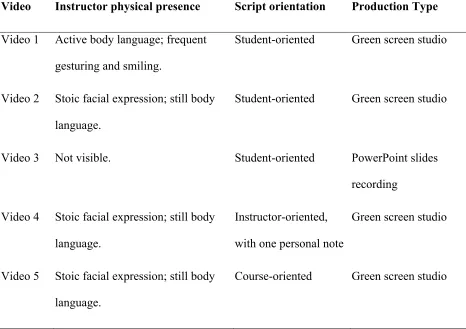
The videos will vary according to the three dimensions of variables of interest (instructor physical presence, instructor verbal presence, and video quality). There are eight videos in total. The following table describes each video and how it differs from the others in the instructor’s level of physical presence, to whom the script is oriented, and the production type.
Table 2. Videos and Variables.
Video Instructor physical presence Script orientation Production Type Video 1 Active body language; frequent
gesturing and smiling.
Student-oriented Green screen studio
Video 2 Stoic facial expression; still body language.
Student-oriented Green screen studio
Video 3 Not visible. Student-oriented PowerPoint slides recording
Video 4 Stoic facial expression; still body language.
Instructor-oriented, with one personal note
Green screen studio
Video 5 Stoic facial expression; still body language.
Table 2. Videos and Variables (continued).
Video Instructor physical presence Script orientation Production Type Video 6 Relaxed. Smiling but mostly still
body language.
Course-oriented, with one personal note
Green screen studio
Video 7 Relaxed. Smiling but mostly still body language.
Course-oriented, with one personal note
Talking head, residential setting Video 8 Relaxed. Smiling but mostly still
body language.
Course-oriented, with one personal note
Conversation style with two individuals, green screen studio
Video Set #1: Instructor Physical Presence
Constants: All using same script, all shot in a professional studio
(1) video with instructor visible and using active body language, including noticeable gestures and frequent smiles.
(2) video with instructor visible but remaining very still and stoic. (3) video with no instructor visible.
In the first set of videos, the videos vary by the first dimension: instructor physical presence. The videos use the same script and are all shot and edited professionally in a studio.
In the second video, the instructor is again physically visible on-screen from the torso to the head, including the arms. In this video, the instructor stands still and remains stoic, abstaining from smiling or gesturing any more than minimally.
In the third video, the instructor is not physically visible on-screen. His voice can be heard as text appears on-screen to reinforce the key points of his narration.
Video Set #2: Instructor Verbal Presence
Constants: Instructor is visible, standing still and remaining stoic, all edited professionally.
(4) instructor using instructor-oriented language, emphasizing his professional accomplishments and relevant experiences.
(5) instructor using course-oriented language, using no personal examples nor empathetic language, only straightforward factual statements regarding the course.
In the second set of videos, the dimension of instructor verbal presence is the variable of focus. Each video has the same instructor physically visible. The instructor makes eye contact but is physically still and facially stoic in all videos. In this set, the script varies (See Appendix for scripts).
In the first set of videos video, the instructor used empathetic language to convey a sense of caring for the students. Repeatedly the instructor stated he cares about the students and their learning, and he orients the script to focus on the students’ interests and motivations. He emphasizes the value of this course to the students.