ABSTRACT
BROWN, MATTHEW ISAAC. Evaluating Termination Methods of Four Winter Annual Leguminous Cover Crops for Optimizing Nitrogen Synchrony. (Under the direction of Dr. Julie Grossman).
In agroecosystems, synchronizing availability of legume nitrogen (N) to cash crop need is essential to efficiently utilize cover crops as a fertility source. Winter annual legume cover crop termination can be achieved through both tillage and non-tillage methods. However, the chosen approach may affect legume decomposition rate and consequent N mineralization by impacting availability to decomposer soil microorganisms. We predict that termination method in combination with biomass nitrogen content will govern rates of mineralization. Our objective is to evaluate various legume species and termination methods to determine nitrogen release rates in corn following winter annual legumes. In this study, four leguminous winter cover crop species, Austrian winter pea, hairy vetch, and balansa and crimson clovers, were terminated using a roller-crimper, flail mower, disk, or an herbicide. Bi-weekly inorganic soil tests and Plant Root Simulator ion resin probes were used to measure plant available NO3- and NH4+. Cover crop biomass, total carbon, and total nitrogen were measured for each species prior to termination. Mineralized nitrogen was most available from Austrian winter pea and hairy vetch across all termination methods at six to ten weeks after kill. Disked hairy vetch contributed the greatest plant available nitrogen amongst all 16 combinations. Biomass contributions of cover crops ranged from 2.4 Mg ha-1 to 9.7 Mg ha-1 in crimson clover and balansa clover, respectively. Crimson clover, Austrian winter pea, and hairy vetch averaged greater than 7 Mg ha-1 over three years. Balansa clover
Evaluating Termination Methods of Four Winter Annual Leguminous Cover Crops for Optimizing Nitrogen Synchrony
by
Matthew Isaac Brown
A thesis submitted to the Graduate Faculty of North Carolina State University
in partial fulfillment of the requirements for the Degree of
Master of Science
Soil Science
Raleigh, North Carolina 2013
APPROVED BY:
_______________________________ ______________________________
Julie Grossman S. Chris Reberg-Horton
DEDICATION
BIOGRAPHY
ACKNOWLEDGMENTS
I would like to thank the following people for all their help and support with this project. Without them, this would have never been possible:
Julie Grossman Chris Reberg-Horton
Wei Shi Dan Israel Consuelo Arellano
Sarah Seehaver Suzanne Fleishman
Greg Wilson Robert Walters NCDA Station Staff
NCSU EATS Lab Brenda Vaness
TABLE OF CONTENTS
LIST OF TABLES ... vii
LIST OF FIGURES ... viii
Review of the Literature: Evaluating nitrogen synchrony termination methods of leguminous cover crops for optimizing nitrogen synchrony ... 1
Introduction ... 1
Nitrogen in Agriculture ... 2
Biological Nitrogen Fixation (BNF) ... 3
Cover Crops ... 4
Legume Decomposition... 6
Legume Cover Crop Termination ... 10
Agronomy of Organic Corn ... 11
Conclusion ... 13
References ... 14
Evaluating Termination Methods of Leguminous Cover Crops for Optimizing Corn Nitrogen Synchrony ... 22
Introduction ... 22
Materials and Methods ... 25
Site Descriptions ... 25
Cultural Practices ... 25
Cover Crop Planting ... 25
Cover Crop Termination and Corn Planting... 27
Sampling and Analysis ... 28
Biomass Sampling ... 28
Inorganic Nitrogen ... 29
Ion Resin Probes ... 30
Corn Plant Total N Analysis ... 30
SPAD Meter ... 31
Corn Yields ... 31
Treatment Structure and Experimental Design ... 32
Statistical Analysis ... 32
Results ... 33
Cover Crop Biomass, Nitrogen Content, and C:N Ratio... 33
PRS Probe Nitrogen ... 34
KIN 2012 ... 35
Inorganic Soil Nitrogen ... 36
KIN 2011 ... 36
KIN 2012 ... 37
CEFS 2012 ... 38
Agronomy ... 39
Grain Yields ... 39
Discussion ... 41
Conclusion ... 47
References ... 49
Appendices... 53
LIST OF TABLES
Table 2.1 Cover crop attributes by site year ... 54
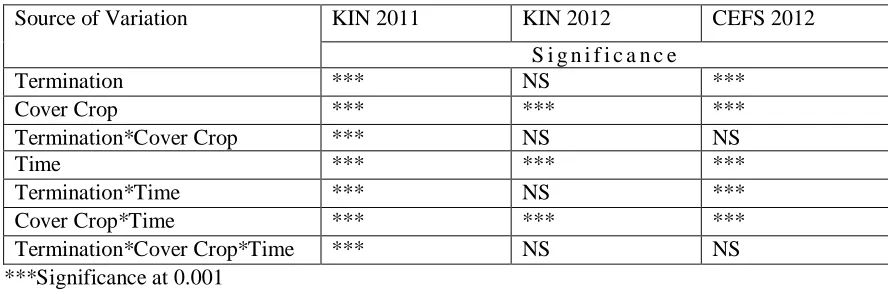
Table 2.2 Analysis of variance for soil nitrogen as measured by PRS Probes ... 55
Table 2.3 Analysis of variance for inorganic soil nitrogen ... 56
Table 2.4 Analysis of variance for total corn grain yield ... 57
Table 2.5 Grain yields among cover crops by termination treatments (Mg ha-1) ... 58
Table 2.6 Correlation values for SPAD and Grain Yields ... 58
Table 2.7 Schedule of field operations ... 59
Table 2.8 Schedule of soil sampling ... 60
LIST OF FIGURES
Figure 2.1 Kinston 2011 Soil N as measured by PRS probe adsorbable N flux in Austrian winter pea (A) and hairy vetch (C). Figure B & C is soil N as measure by KCl extraction in Austrian winter pea
(B) and hairy vetch (D)... 62
Figure 2.2 Kinston 2012 Soil N as measured by PRS probe adsorbable N flux in Austrian winter pea (A) and hairy vetch (B). Figure (C) is soil N as measure by KCl extraction ... 63
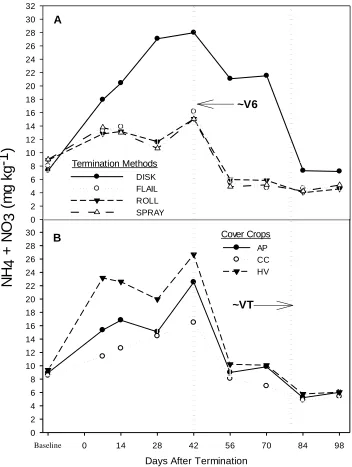
Figure 2.3 CEFS 2012 Soil N as measured by (A), (B) KCl extraction ... 64
Figure 2.4 Kinston 2011 Grain yields by termination method ... 65
Figure 2.5 Grain Yield (Mg ha-1) ... 66
CHAPTER 1
Review of the Literature: Evaluating nitrogen synchrony termination methods of leguminous cover crops for optimizing nitrogen synchrony.
INTRODUCTION
spring termination of winter annual legume cover crops and the effects on plant available nitrogen. This literature review will outline the importance of biologically fixed nitrogen to organic and conventional agroecosystems, the current role of leguminous cover crops in organic systems, and the process of managed decomposition of legume cover crops to optimize nitrogen availability and subsequent uptake by organic crops. The current chapter provides background for this research into cover crops and how termination techniques influence the availability of nitrogen to corn, presented in chapter two.
Nitrogen in Agriculture
Nitrogen is one of the most yield-limiting nutrients in agricultural systems worldwide and is applied annually to compensate for crop removal and natural losses (Brady, et al., 2010, Leigh, 2004). Statistics from 2009 show that synthetic nitrogen fertilizer accounted for approximately 105 Mg applied to agricultural land globally (FAO, 2012), the greatest percentage by weight amongst any other crop nutrient applied.
technology with the intention to control solubility. State extension services have recommended split applications of synthetics to better meet crop needs, while federal programs promote the use of riparian buffers and artificial wetlands to biologically scrub runoff. Despite the growing awareness and action, levels of nitrate found in rivers like the Mississippi have not decreased as evidenced by the annual appearance of dead zones in the Gulf of Mexico. These events show that large N losses are still occurring (David, et al., 2010, Sprague, et al., 2009).
One management approach that requires a rethinking of nitrogen application is that of organic agriculture. Most certification programs, including the EU and USDA-NOP, prohibit organic producers from using any synthetic form of nitrogen (Canali, 2004). Available alternatives to synthetic nitrogen include legume cover crops, composted materials, and animal waste (Drinkwater, et al., 2007, Galloway, et al., 2004, Gaskell, et al., 2007, Smil, 2001). However the challenge of synchronizing nitrogen availability with the needs of cash crops in a timely manner is made often difficult when confronted with multiple options, none of which are perfectly controlled or predictable (Cassman, et al., 2002, Drinkwater, et al., 2007, Raun, et al., 1999).
Biological Nitrogen Fixation (BNF)
range of other important biomolecules. Though gaseous nitrogen is found in abundance as 78.084% of Earth’s atmosphere, this pool is largely inaccessible to most organisms because
they lack a metabolic pathway for adsorption.
There are only a few distinct natural pathways through which nitrogen becomes biologically available, with the greatest proportion contributed globally by biological nitrogen fixation (BNF), accounting for as much as 170 Mt year -1 (Smil, 2002). Rhizobia are soil-dwelling N-fixing bacteria capable of BNF through a symbiotic association with leguminous plants. Di-nitrogen gas is absorbed through soil pores into the anaerobic interior of root nodules housing the rhizobia, where it is converted to ammonium using the enzyme
nitrogenase. Upon completion of the reaction, the ammonium is assimilated into organic
molecules provided by the plant. Amides, amines, and ureides are all examples of these compounds (Postgate, 1998, Stacey, et al., 1992).
Cover Crops
In general cover crops are a biological means to build better soils by adding organic matter; reducing nitrogen losses; preventing soil erosion through leaf interception; and suppressing weeds (Lenzi et al., 2009; Rhoton et al., 2002; Laloy and Bielders, 2010; Sarrantonio, 1994). Despite these benefits, lack of production knowledge, as well as increased labor costs, limit legume cover crop use in many crop rotations.
water budgets (Wilke and Snapp, 2008). Various cover crop species are appropriate for different seasons and soil types, with least a dozen species for every climate in the U.S. Cover crop varieties have been successfully bred to work well within given climatic niches, producing sufficient growth without conflicting with cash crop planting or harvest windows (Clark, et al., 2007, Griffin, et al., 2000, Scharf, et al., 2002). For example, varieties of hairy vetch (Vicia villosa) ‘Auburn Early Cover’ and ‘Auburn Sunrise’, a crimson clover
(Trifolium incarnatum), are examples that hold great potential for reaching peak nitrogen and
biomass at a time fitting well within a southeastern and mid-Atlantic US typical cropping sequence (Bowen et al., 1988; Sarrantonio, 1991; Parr et al., 2011; Wagger et al., 1998; Ranells and Wagger, 1992). Termination should be timed to simultaneously yield the greatest N, but also arrest any potential weediness of a cover crop. In legume cover crops, biomass N has been shown to peak with seed filling, however it is during flowering that a plant becomes most vulnerable to termination (Ashford, et al., 2003).
demonstrated that even slight changes in water availability also affect biological N2 transformations, with drought tolerance varying across genotypes (Goergen, et al., 2009, Sinclair, et al., 2000). As BNF is a costly process for legumes, soils with adequate soil mineral nitrogen present will stimulate legumes to conserve energy resources by not hosting rhizobia, where elevated levels of soil nitrates can negatively affect plant nodulation and nodule function (Day, et al., 1989, Herridge, et al., 1990).
Legume Decomposition
Decomposition is the breakdown of complex organic materials into smaller biomolecule components, beginning upon death of an organism. Decomposition is driven by complex and interactive biologic systems, physical settings, and chemical reactions. The majority of decomposition occurs in the upper eight centimeters in the soil profile due to this being the location of greatest abundance of both dead material and the proximity of soil microorganisms. These microbes consume the myriad compounds complexed in fresh and decomposing substrates, deassembling once synthesized components of a plant or any living things into biologically obtainable nutrients (Gaillard, et al., 1999). The full suite of microorganisms and their associated biogeochemical processes are governed principally by the physical environment; the quality and quantity of the substrate; and properties of the present decomposer population characteristics (Honeycutt, 1999, Paul, 2007, Swift, et al., 1979).
on management and soil conditions (Cook, et al., 2010, Crews, et al., 2005, Smukler, et al., 2008, Thorup-Kristensen, et al., 2010). Environmental conditions such as changes in soil moisture, temperature, mineralogy, pH, and/or anaerobiosis will exert influence on decomposition kinetics (Hillel, 1998) and microbial communities (Andersson, et al., 2001, Linn, et al., 1984, Stotzky, 1986). Decomposition has been observed to be strongly influenced by soil moisture, where after five days without moisture and residue incorporation to a depth of 5 cm, decomposer activity can cease after 11 days without additional moisture (Coppens, et al., 2007). Further supporting the important role of moisture in decomposition are observations such as two-fold reductions in decomposition rate in biomass bags placed on the soil surface of soils at field capacity when compared to those placed on dry soil (permanent wilting point) (Cadisch, et al., 1997). Along with soil moisture, soil pH between 8-9 can also accelerate decomposition processes as seen with liming, while in low pH soils, decomposition processes are slower to initiate (Oades, 1988).
decompose more slowly than cytoplasmic materials in part due to a higher concentration of lignin (Kassim, et al., 1981). Lignin is a complex organic biopolymer with unique hydrophobic properties that make it extremely resistant to decomposition across a range of ecosystems (Fox, 1990; Marinari et al., 2010; Vahdat et al., 2011; Wagger et al., 1998; Kleber and Johnson, 2010). Lignin can comprise between 10-30% of biomass carbon, while more easily degraded carbohydrates like cellulose, hemicellulose, sugar and starch account for between 30-75% (Coyne, 1999). Other compounds in plant biomass that may negatively impact decomposition rates include pectins, tannins, waxes, etc. (Coyne, 1999).
Sanchez, 1990). Taylor et al. found the same phenomenon in temperate climates, where the C:N ratio accounted for more than 86% of the variation in the decay rates of different types of leaf litter with lignin being the immobilizing carbon compound (Taylor, et al., 1989).
Soil nitrogen mineralization potential can be measured using a variety of methods. These include anaerobic and aerobic incubations (Shelton, et al., 1997), hot and cold extractable inorganic N, Kjeldahl N, and ‘super-sinks’ such as resin probes and calcium
Legume Cover Crop Termination
Current methods for cover crop termination in both organic and conventional systems include tillage- and conservation tillage-based techniques. Common tillage implements such as a disk or plough are used to simultaneously cultivate soil while incorporating a cover crop, insuring the cover crop dies prior to planting the cash crop. Conservation tillage methods include no till and strip tilling, where only a small strip is cultivated for seed bed preparation, leaving the remaining soil undisturbed. In no till systems, herbicides, flail mowing, and an implement called the roller crimper have all been shown to successfully terminate a standing cover crop (Ashford, et al., 2003, Lawley, et al., 2011, Parr, et al., 2011, Snapp, et al., 2005). No till techniques are adopted in part to save money on fuel as well as take advantage of a wide array of benefits related to improvements in overall soil condition (Mulvaney, et al., 2010, Teasdale, et al., 2012, Triplett, et al., 2008). Some of these benefits include mitigating large soil moisture oscillations throughout the year (Schwartz, et al., 2010), increasing soil carbon and nitrogen internal cycling (Franzluebbers, et al., 1995, Rhoton, et al., 2002), and decreasing weed pressure (Derksen, et al., 2002, Teasdale, et al., 2012).
1994, Malhi, et al., 2007, Mulvaney, et al., 2010). Tillage introduces air and surface debris to the soil profile by breaking apart aggregates that previously protected labile organic matter and by introducing a flush of new biomass and oxygen to support microbial activity. Decomposing microorganisms will then mobilize newly available nitrogen through enzymatic activity preferentially and only if the needs of the burgeoning microbial population do not outstrip the supply coming from the additional substrate (Findeling, et al., 2007). For these reasons it is critical that cover crop termination approach is considered in order to avoid losses through potential immobilization, leaching, or denitrification processes (Drinkwater, et al., 2007). Certified organic farmers are required by the NOP to improve the physical, chemical, and biological condition of soil and to minimize soil erosion (7 § 205.203 NOP, USDA). These goals may be met by carefully selecting tillage and cultivation practices that maintain or manage nutrients and soil fertility.
Agronomy of Organic Corn
law), refining the synchrony of N availability with N uptake, it is critical to integrate growth demands of corn over time (Scharf, et al., 2002). By doing so, the maximum benefits of legume cover crops planted prior to cash crops are recovered, and N losses decreased (Andraski, et al., 2000, Kumar, et al., 2002).
Corn growth can be measured using the Leaf Collar Method, which is divided into vegetative stages starting with V1-V20, followed by vegetative tassel (VT). Within the first six stages of vegetative growth (V1-V6), N uptake increases relatively slowly, attributed to the accumulation of biomass and juvenile root development. By V6, the primary ear shoot tissue develops and the initiation of potential kernels commences (Stevens, et al., 1986). From V6 through VT, rows of potential kernels grow to produce a non-pollinated ear while N uptake and accumulation increases exponentially. When the corn plant reaches maximum biomass accumulation and the tassel has emerged completely for anthesis, reproductive development stages R1-R6 commence and are measured using established indicators of kernel development (Ritchie, et al., 1986). The potential size of an ear is measured by the number of kernel rows around the ear and number of kernels per row. The final number of kernels per row is strongly correlated with genetics in combination with soil moisture and nutrient conditions.
conventionally fertilized counterparts, suggesting that synchrony between plant uptake and available N may be a strong limiting factor. As soil microbes are able to compete with crop plants for available N mineralized from decomposing residues, microbes may out-compete corn and thus suppress growth and yields. Long term planning, crop rotations, and tillage modifications will all help to increase soil mineral nitrogen and have a positive effect on synchrony, internal nutrient cycling, and potentially avoid immobilization (Cavigelli, et al., 2008, Rhoton, et al., 2002, Schomberg, et al., 2011).
CONCLUSION
REFERENCES
Andersson, S. and S.I. Nilsson. 2001. Influence of pH and temperature on microbial activity, substrate availability of soil-solution bacteria and leaching of dissolved organic carbon in a mor humus. Soil Biology and Biochemistry 33: 1181-1191.
Andraski, T.W., L.G. Bundy and K.R. Brye. 2000. Crop Management and Corn Nitrogen Rate Effects on Nitrate Leaching. J. Environ. Qual. 29: 1095-1103.
Ashford, D.L. and D.W. Reeves. 2003. Use of a mechanical roller-crimper as an alternative kill method for cover crops. American Journal of Alternative Agriculture 18: 37-45.
Badgley, C., J. Moghtader, E. Quintero, E. Zakem, M. Chappell, K. Aviles-Vazquez, A. Samulon and I. Perfecto. 2007. Organic agriculture and the global food supply. Renewable Agriculture and Food Systems: 86-108.
Baggs, E.M., C.A. Watson and R.M. Rees. 2000. The fate of nitrogen from incorporated cover crop and green manure residues. Nutrient Cycling in Agroecosystems 56: 153-163. Bair, K.E., J.R. Davenport and R.G. Stevens. 2008. Release of available nitrogen after incorporation of a legume cover crop in concord grape. Hortscience 43: 875-880.
Balesdent, J., C. Chenu and M. Balabane. 2000. Relationship of soil organic matter dynamics to physical protection and tillage. Soil and Tillage Research 53: 215-230.
Brady, N.C. and R.R. Weil. 2010. Elements of the nature and properties of soils. 3rd ed. Pearson Prentice Hall, Upper Saddle River, N.J.
Burger, M. and L.E. Jackson. 2003. Microbial immobilization of ammonium and nitrate in relation to ammonification and nitrification rates in organic and conventional cropping systems. Soil Biology & Biochemistry 35: 29-36.
Cadisch, G. and K.E. Giller. 1997. Driven by nature : plant litter quality and decompositionCAB International, Wallingford, Oxon, UK.
Cahill, S., D. Osmond, R. Weisz and R. Heiniger. 2010. Evaluation of Alternative Nitrogen Fertilizers for Corn and Winter Wheat Production. Agron. J. 102: 1226-1236.
Cassman, K.G., A. Dobermann and D.T. Walters. 2002. Agroecosystems, Nitrogen-use Efficiency, and Nitrogen Management. AMBIO: A Journal of the Human Environment 31: 132-140.
Cavigelli, M., J. Teasdale and A. Conklin. 2008. Long-term agronomic performance of organic and conventional field crops in the mid-Atlantic region. Agronomy Journal: 785-794. Clark, A. and SARE. 2007. Managing cover crops profitably. 3rd ed. SARE, College Park, MD.
Cook, J.C., R.S. Gallagher, J.P. Kaye, J. Lynch and B. Bradley. 2010. Optimizing Vetch Nitrogen Production and Corn Nitrogen Accumulation under No-Till Management. Agronomy Journal 102: 1491-1499.
Coppens, F., P. Garnier, A. Findeling, R. Merckx and S. Recous. 2007. Decomposition of mulched versus incorporated crop residues: Modelling with PASTIS clarifies interactions between residue quality and location. Soil Biology & Biochemistry 39: 2339-2350.
Coyne, M.S. 1999. Soil microbiology : an exploratory approach.Delmar, Albany, N.Y. Crews, T. and M. Peoples. 2004. Legume versus fertilizer sources of nitrogen: ecological tradeoffs and human needs. Agriculture Ecosystems & Environment: 279-297.
Crews, T. and M. Peoples. 2005. Can the synchrony of nitrogen supply and crop demand be improved in legume and fertilizer-based agroecosystems? A review. Nutrient Cycling in Agroecosystems: 101-120.
David, M.B., L.E. Drinkwater and G.F. McLsaac. 2010. Sources of Nitrate Yields in the Mississippi River Basin. Journal of Environmental Quality 39: 1657-1667.
Day, D.A., B.J. Carroll, A.C. Delves and P.M. Gresshoff. 1989. Relationship between autoregulation and nitrate inhibition of nodulation in soybeans. Physiologia Plantarum 75: 37-42.
de Vries, D.A. and N.H. Afgan, editor. 1975. Heat and Mass Transfer in the Biosphere. Scripta Book Company, Washington, D.C.
Di, H.J. and K.C. Cameron. 2002. Nitrate leaching in temperate agroecosystems: sources, factors and mitigating strategies. Nutrient Cycling in Agroecosystems 64: 237-256.
Drinkwater, L.E. and S.S. Snapp. 2007. Nutrients in agroecosystems: Rethinking the management paradigm. Advances in Agronomy, Vol 92. p. 163-+.
Drinkwater, L.E. and S.S. Snapp. 2007. Nutrients in agroecosystems: rethinking the management paradigm. Advances in Agronomy 92: 163-186.
FAO. 2012. United Nations, Rome.
Fekete, I., Z. Kotroczó, C. Varga, R. Hargitai, K. Townsend, G. Csányi and G. Várbiró. 2012. Variability of Organic Matter Inputs Affects Soil Moisture and Soil Biological Parameters in a European Detritus Manipulation Experiment. Ecosystems 15: 792-803. Findeling, A., P. Garnier, F. Coppens, F. Lafolie and S. Recous. 2007. Modelling water, carbon and nitrogen dynamics in soil covered with decomposing mulch. European Journal of Soil Science 58: 196-206.
Franzluebbers, A.J., F.M. Hons and D.A. Zuberer. 1995. Tillage and Crop Effects on Seasonal Soil Carbon and Nitrogen Dynamics. Soil Sci. Soc. Am. J. 59: 1618-1624.
Gaillard, V., C. Chenu, S. Recous and G. Richard. 1999. Carbon, nitrogen and microbial gradients induced by plant residues decomposing in soil. European Journal of Soil Science 50: 567-578.
Galloway, J.N., F.J. Dentener, D.G. Capone, E.W. Boyer, R.W. Howarth, S.P. Seitzinger, G.P. Asner, C.C. Cleveland, P.A. Green, E.A. Holland, D.M. Karl, A.F. Michaels, J.H. Porter, A.R. Townsend and C.J. Vörösmarty. 2004. Nitrogen Cycles: Past, Present, and Future. Biogeochemistry 70: 153-226.
Gaskell, M. and R. Smith. 2007. Nitrogen sources for organic vegetable crops. Horttechnology: 431-441.
Goergen, E., R. Blank and J.C. Chambers. 2009. Effects of water and nitrogen availability on nitrogen contribution by the legume, Lupinus argenteus Pursh [electronic resource]. Appl. Soil Ecol. 42: 200-208.
Hatfield, J.L. and B.A. Stewart. 1994. Crops residue managementLewis Publishers, Boca Raton.
Havlin, J. 2005. Soil fertility and fertilizers : an introduction to nutrient management. 7th ed. Pearson Prentice Hall, Upper Saddle River, N.J.
Herridge, D., M. Peoples and R. Boddey. 2008. Global inputs of biological nitrogen fixation in agricultural systems. Plant and Soil 311: 1-18.
Herridge, D.F., F.J. Bergersen and M.B. Peoples. 1990. Measurement of Nitrogen Fixation by Soybean in the Field Using the Ureide and Natural 15N Abundance Methods. Plant Physiology 93: 708-716.
Hillel, D. 1998. Environmental soil physicsAcademic Press, San Diego, CA.
Holland, E.A. and D.C. Coleman. 1987. Litter Placement Effects on Microbial and Organic Matter Dynamics in an Agroecosystem. Ecology 68: 425-433.
Honeycutt, C.W. 1999. Nitrogen mineralization from soil organic matter and crop residues: Field validation of laboratory predictions. Soil Science Society of America Journal 63: 134-141.
Hu, S., N.J. Grunwald, A.H.C. vanBruggen, G.R. Gamble, L.E. Drinkwater, C. Shennan and M.W. Demment. 1997. Short-term effects of cover crop incorporation on soil carbon pools and nitrogen availability. Soil Science Society of America Journal 61: 901-911.
Kassim, G., J.P. Martin and K. Haider. 1981. Incorporation of a Wide Variety of Organic Substrate Carbons into Soil Biomass as Estimated by the Fumigation Procedure. Soil Sci. Soc. Am. J. 45: 1106-1112.
Keeney, D.R.a.D.W.N., editor. 1982. Nitrogen-inorganic forms. 2nd ed. ed. Methods of soil analysis. Part 2. ASA and SSSA, Madison, WI.
Kumar, K. and K.M. Goh. 2002. Management practices of antecedent leguminous and non- leguminous crop residues in relation to winter wheat yields, nitrogen uptake, soil nitrogen mineralization and simple nitrogen balance. European Journal of Agronomy 16: 295-308. Lawley, Y.E., R.R. Weil and J.R. Teasdale. 2011. Forage Radish Cover Crop Suppresses Winter Annual Weeds In Fall And Before Corn Planting. Agron. J. 103: 137-144.
Linn, D.M. and J.W. Doran. 1984. Aerobic and Anaerobic Microbial Populations in No-till and Plowed Soils1. Soil Sci. Soc. Am. J. 48: 794-799.
Lockeretz, W., G. Shearer and D.H. Kohl. 1981. Organic Farming in the Corn Belt. Science 211: 540-547.
Malhi, S.S., A.M. Johnston, H. Loeppky, C.L. Vera, H.J. Beckie and P.M.S. Bandara. 2007. Immediate effects of time and method of alfalfa termination on soil mineral nitrogen, moisture, weed control, and seed yield, quality, and nitrogen uptake. Journal of Plant Nutrition 30: 1059-1081.
McSwiney, C.P., S.S. Snapp and L.E. Gentry. 2010. Use of N immobilization to tighten the N cycle in conventional agroecosystems. Ecological Applications 20: 648-662.
Mitchell, R., R. Harrison, K. Russell and J. Webb. 2000. The effect of crop residue incorporation date on soil inorganic nitrogen, nitrate leaching and nitrogen mineralization. Biology and Fertility of Soils: 294-301.
Mulvaney, M.J., C.W. Wood, K.S. Balkcom, D.A. Shannon and J.M. Kemble. 2010. Carbon and Nitrogen Mineralization and Persistence of Organic Residues under Conservation and Conventional Tillage. Agronomy Journal 102: 1425-1433.
Nieder, R., D. Benbi and H. Scherer. 2011. Fixation and defixation of ammonium in soils: a review. Biology and Fertility of Soils 47: 1-14.
Oades, J. 1988. The retention of organic matter in soils. Biogeochemistry 5: 35-70.
Parr, M., J.M. Grossman, S.C. Reberg-Horton, C. Brinton and C. Crozier. 2011. Nitrogen Delivery From Legume Cover Crops In No-till Organic Corn Production. Agron. J. 103: 1578-1590.
Paul, E.A. 2007. Soil microbiology, ecology, and biochemistry. 3rd ed. Academic Press, Amsterdam ; Boston.
Pimentel, D., P. Hepperly, J. Hanson, D. Douds and R. Seidel. 2005. Environmental, Energetic, and Economic Comparisons of Organic and Conventional Farming Systems. Bioscience 55: 573-582.
Raun, W.R. and G.V. Johnson. 1999. Improving Nitrogen Use Efficiency For Cereal Production. Agron. J. 91: 357-363.
Rhoton, F.E., M.J. Shipitalo and D.L. Lindbo. 2002. Runoff and soil loss from midwestern and southeastern US silt loam soils as affected by tillage practice and soil organic matter content. Soil and Tillage Research 66: 1-11.
Ritchie, S.W., J.J. Hanway, G.O. Benson and Iowa State University. Cooperative Extension Service. 1986. How a corn plant develops. Rev. Feb. 1982. ed. Iowa State University of Science and Technology, Cooperative Extension Service, Ames, Iowa.
Scharf, P.C., W.J. Wiebold and J.A. Lory. 2002. Corn yield response to nitrogen fertilizer timing and deficiency level. Agronomy Journal 94: 435-441.
Schomberg, H., D. Endale, M. Jenkins and D. Fisher. 2011. Nutrient source and tillage influences on nitrogen availability in a Southern Piedmont corn cropping system. Biology and Fertility of Soils 47: 823-831.
Schomberg, H.H., S. Wietholter, T.S. Griffin, D.W. Reeves, M.L. Cabrera, D.S. Fisher, D.M. Endale, J.M. Novak, K.S. Balkcom, R.L. Raper, N.R. Kitchen, M.A. Locke, K.N. Potter, R.C. Schwartz, C.C. Truman and D.D. Tyler. 2009. Assessing Indices For Predicting Potential Nitrogen Mineralization In Soils Under Different Management Systems. Soil Sci. Soc. Am. J. 73: 1575-1586.
Schwartz, R.C., R.L. Baumhardt and S.R. Evett. 2010. Tillage effects on soil water redistribution and bare soil evaporation throughout a season. Soil and Tillage Research 110: 221-229.
Shelton, D.R., A.M. Sadeghi, G.W. McCarty and A.R. Isensee. 1997. A soil core method for estimating N-mineralization and denitrification during cover crop decomposition. Soil Science 162: 510-517.
Sinclair, T.R., L.C. Purcell, V. Vadez, R. Serraj, C.A. King and R. Nelson. 2000. Identification of Soybean Genotypes with N2 Fixation Tolerance to Water Deficits Mention of a trademark or proprietary product does not constitute a guarantee or warranty of the product by the USDA and does not imply approval or the exclusion of other products that may also be suitable. Crop Sci. 40: 1803-1809.
Smil, V. 2002. The earth's biosphere : evolution, dynamics, and change MIT Press, Cambridge, Mass.
Smukler, S.M., L.E. Jackson, L. Murphree, R. Yokota, S.T. Koike and R.F. Smith. 2008. Transition to large-scale organic vegetable production in the Salinas Valley, California. Agriculture Ecosystems & Environment 126: 168-188.
Snapp, S.S. and H. Borden. 2005. Enhanced nitrogen mineralization in mowed or glyphosate treated cover crops compared to direct incorporation. Plant and Soil 270: 101-112.
Sprague, L.A., D.F. Mueller, G.E. Schwarz and D.L. Lorenz. 2009. Nutrient Trends in Streams and Rivers of the United States, 1993-2003. US Geological Survey Investigations Report 2008-5202: 196.
Stacey, G.S., R.H. Burris and H.J. Evans. 1992. Biological nitrogen fixationChapman & Hall, New York.
Stevens, S.J., E.J. Stevens, K.W. Lee, A.D. Flowerday and C.O. Gardner. 1986. Organogenesis of the Staminate and Pistillate Inflorescences of Pop and Dent Corns: Relationship to Leaf Stages1. Crop Sci. 26: 712-718.
Stotzky, G. 1986. Influence of Soil Mineral Colloids on Metabolic Processes, Growth, Adhesion, and Ecology of Microbes and Viruses1. Interactions of Soil Minerals with Natural Organics and Microbes sssaspecialpubl: 305-428.
Swift, M.J., O.W. Heal and J.M. Anderson. 1979. Decomposition in terrestrial ecosystems.University of California Press, Berkeley.
Taylor, B.R., D. Parkinson and W.F.J. Parsons. 1989. Nitrogen and lignin content as predictors of litter decay rates - a microcosm test Ecology 70: 97-104.
Teasdale, J.R., S.B. Mirsky, J.T. Spargo, M.A. Cavigelli and J.E. Maul. 2012. Reduced-tillage Organic Corn Production In A Hairy Vetch Cover Crop. Agron. J. 104: 621-628. Teasdale, J.R. and C.L. Mohler. 1993. Light Transmittance, Soil Temperature, and Soil Moisture under Residue of Hairy Vetch and Rye. Agron. J. 85: 673-680.
Thorup-Kristensen, K. and D.B. Dresboll. 2010. Incorporation time of nitrogen catch crops influences the N effect for the succeeding crop. Soil Use and Management 26: 27-35.
in any form or by any means, electronic or mechanical, including photocopying, recording, or any information storage and retrieval system, without permission in writing from the publisher. Agron. J. 100: S-153-S-165.
Vitousek, P.M., R. Naylor, T. Crews, M.B. David, L.E. Drinkwater, E. Holland, P.J. Johnes, J. Katzenberger, L.A. Martinelli, P.A. Matson, G. Nziguheba, D. Ojima, C.A. Palm, G.P. Robertson, P.A. Sanchez, A.R. Townsend and F.S. Zhang. 2009. Nutrient Imbalances in Agricultural Development. Science 324: 1519-1520.
CHAPTER 2
Evaluating Termination Methods of Leguminous Cover Crops for Optimizing Corn Nitrogen Synchrony.
INTRODUCTION
Plant available nitrogen is often a key limiting factor in agroecosystems, affecting crop growth and ultimately yield. Farmers counteract losses incurred through harvest, denitrification, and leaching with careful management of tillage and timing of fertility inputs. In particular, certified organic farmers face federal limitations regarding available fertility options. Synthetic fertilizers are restricted by the USDA National Organic Program (USDA-NOP), while animal manure and by-products such as blood, feather and bone meals are acceptable sources of fertility. Repeated applications of animal manure may present cumulative challenges, however, particularly related to over-application of phosphorus, as well as copper and zinc accumulation in some soils, which in large enough plant-available pools can limit plant growth (Mantovi, et al., 2003, Novak, et al., 2004). Raw manure is subject to narrow application time frames set by the USDA-NOP (USDA, 2012), creating further challenges. Winter annual leguminous cover crops provide an alternative to manure, providing some or most of the required nitrogen in productive agroecosystems (Smil 2001; Leigh 2004).
potentially adequate N contributions for corn growth in North Carolina (Parr, et al., 2011). In this study, Austrian winter pea (Pisum sativum subsp. arvense), hairy vetch (Vicia villosa, var. ‘AU Early Cover’), and crimson clover (Trifolium incarnatum, var. ‘Dixie’) were found
to contribute 208 kg ha-1, 204 kg ha-1, and 163 kg ha-1, respectively, agreeing with earlier research performed in Maryland (Holderbaum, et al., 1990). These three cover crops can be incorporated into a cash crop rotation in the Piedmont and Coastal Plain of North Carolina without major disruption to traditional cash crop planting times.
In tillage systems, chisel and moldboard plows as well as discs are commonly used to incorporate a cover crop terminated by a mower, where no-tillage systems utilize herbicides or terminate cover crops mechanically with a roller crimper, or flail mower with no incorporation. Organic farmers are required by the National Organic Program standards to “select and implement tillage and cultivation practices that maintain or improve the physical, chemical, and biological condition of soil and minimize soil erosion” as stated in 7 § 205.203
(USDA, 2012), which effectively encourages low-tillage or no-till systems even if not a mainstream practice yet. No-till termination methods for organic producers present management challenges with regards to weed control, as tillage is the primary weed management tool in such systems. Tillage is therefore more frequently used in organic systems than in conventional systems for this purpose (Rasmussen, et al., 1995). The tractor mounted roller crimper, which rolls down the cover crop and crimps the shoots while leaving the roots undisturbed, may be an effective no-till tool for both nutrient and weed management through creation of a thick surface mulch that limits weed germination, provided adequate N is made available to the subsequent crop (Davis, 2010).
combination with biomass nitrogen content will govern mineralization, therefore termination treatments that place residue deeper in the soil profile, increase the rate of N availability relative to those that leave a surface residue.
MATERIALS AND METHODS
Site Descriptions
This study was conducted in 2011 and 2012 at the Caswell Research Station (KIN) in Kinston, North Carolina and 2012 at the Center for Environmental Farming Systems (CEFS) in Goldsboro, North Carolina. Kinston is located at 36o16’N, 77o37’W, 14 meters above sea level, on the central coastal plain; CEFS is 40 km west of KIN, at 35o38’N, 78o04’W, 24 meters above sea level. The KIN 2011 field was a Johns Sandy Loam (fine loamy over sandy or skeletal, siliceous, thermic Aquic Hapludults) and KIN 2012 a Portsmouth Loam (fine loamy fluviomarine deposits over sandy skeletal fluviomarine, mixed, thermic Typic Umbraquult). CEFS 2012 was a Wickham Loamy Sand (fine loamy, mixed, thermic Typic Hapludult). Annual precipitation averages 124 cm in the region. Temperatures range from 11o C to 23o C.
Cultural Practices Cover Crop Planting
On October 12, 2011 and October 17, 2012, crimson clover (CC) (Trifolium
incarnatum, var. ‘Dixie’), hairy vetch (HV) (Vicia villosa, var. ‘AU Early Cover’), Austrian
winter pea (AP) (Pisum sativum subsp. arvense), and balansa clover (BC) (Trifolium
CEFS, but not BC. A 1000 Series Drill Planter (Hege Equipment, Colwich, KN) was used at both sites. Individual plots measured 3 m by 15 m at KIN 2011, 6.1 m by 15.2 m at KIN 2012, and 6 .1 m by 13.7 m at CEFS 2012.
Both a positive and negative control were implemented at KIN, while only a negative control was used at CEFS due to restrictions on conventional fertilizer usage in the certified organic research plots. The positive control at KIN received an application of 30% urea ammonium nitrate (UAN) while the negative control received zero nitrogen inputs. All controls were not seeded and were maintained vegetation-free until corn planting. At CEFS, BurnOut II (St Gabriel Organics, Orange, VA), an organic herbicide was utilized instead of glyphosate (Round Up Weather Max, Monsanto, St. Louis, MO) used at KIN for plot maintenance.
Planting was performed at densities chosen by averaging seed distributor recommended rates, comprehensive literature review, and informal regional farmer conversations. At all three site years, crimson clover was planted at 4 kg ha-1, hairy vetch at 4.6 kg ha-1, Austrian winter pea at 16.6 kg ha-1, and balansa clover at 4 kg ha-1. Seed that had not been pre-inoculated was done so with commercially available peat-based inoculants. For Austrian winter pea and hairy vetch, N-Dure inoculant (INTX Microbials, Kentland, IN) was used. R/WR (Nitragin, Milwaukee, WI) was used for crimson clover, while the balansa clover arrived pre-coated.
potassium on September 15th, 2010. On January 4th, 2011, manganese sulfate formulated for a 0.28 kg ha-1 foliar application was applied across all the winter cover crop treatments due to a deficiency observed by station management. Prior to site year KIN 2012, lime was applied at a rate of 2,242 kg ha-1 on October 4, 2011. All applications were based on recommendations made by the NCDA Soil Analysis Lab with the intended crop to be field corn.
Cover Crop Termination and Corn Planting
The KIN cover crops were terminated on April 26th, 2011 and April 19th, 2012. The four termination treatments were disk, flail, roll, and spray. Disk included flail-mowing of the cover crop using a 4.6 meter John Deer Model 163 mower (Moline IL), followed by several passes with a 4.3 meter disk (John Deere Model 215, Moline, IL) to incorporate residues to approximately 15 cm. The flail treatment utilized the 4.6 meter flail mower (John Deer Model 163, Moline IL) with no incorporation, and the roll treatment a 3.1 meter rear-mount roller-crimper (I &J Manufacturing, Gap, PA). The spray treatment terminated cover crops through herbicide application of 48.8% Round Up Weather Max, 2.33 L ha-1 spray rate with an 80/20 non-ionic surfactant added at .95 L per 378.6 L of tank solution (Monsanto, St. Louis, MO).
Gabriel Organics, Orange, VA). For tillage a 3.65 meter disc (John Deere Model 225, Moline, IL) was passed several times through each plot to an average depth of 15 cm.
Field corn (‘N631’, Doebler’s Pennsylvania Hybrids, Jersey Shore, PA) was planted
across all three site years, in eight rows, at 76 cm spacing, with population densities of 82,000 seeds ha-1, on May 12th 2011 (KIN 2011), May 1, 2012 (KIN 2012), and May 18th and 25th, 2012 (CEFS 2012) with a John Deere 7200 MaxEmerge 2 Drawn Four Row Conservation Planter (John Deere, Moline, IL). Planting on all fields was performed in the same direction so as to minimize hair-pinning of seeds and optimize seed to soil contact among both till and no-till kill treatments. Planter settings for debris clearing, downward seed pressure, and closure completeness were set to optimally plant across tillage regimes.
At KIN positive control plots were sprayed with liquid UAN calculated to deliver 168 kg ha-1 on April 10th, 2011 and April 25th, 2012, prior to corn planting. The negative control plots in all three site years received zero nitrogen inputs and were maintained vegetation free with herbicide from the time of cover crop planting until two weeks prior to corn planting at all sites.
SAMPLING AND ANALYSIS
Biomass Sampling
(Mid-Pines Small Grains Lab, NCSU, Raleigh, NC) until a constant weight was achieved and ground using a Wiley Mill (Thomas Scientific, Swedesboro, NJ) to pass through a 2 mm sieve. Ground samples were then submitted to the Environmental and Agricultural Testing Services Lab (NCSU, Raleigh, NC) for analysis of total elemental carbon and nitrogen using a Perkin Elmer 2400 CHNS/O Elemental Analyzer (Waltham, MA).
Inorganic Nitrogen
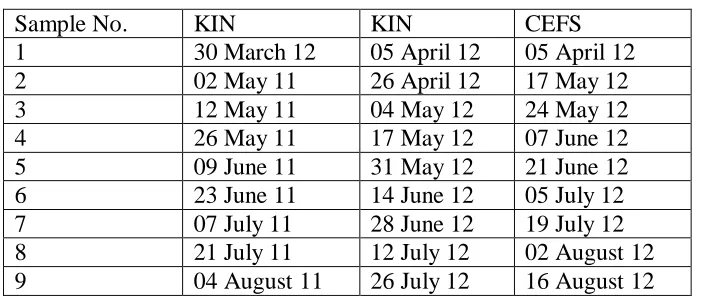
For all plots, a composite sample was created by removing surface residue and compositing twelve soil cores (AMS, American Falls, IN) taken from 0-15 cm deep. Samples were taken across 10 time points in 2011 at KIN, starting with a baseline taken March 31st, then seven days after terminating the cover crop on May 2, then every 14 days through Aug 4th. The baseline samples from KIN 2011 were found to have abnormally high ammonia values, possibly due to contamination, and were excluded from this study.
There were nine sampling points at KIN and CEFS in 2012 using the same baseline, seven day, 14 day scheduling routine as in 2011. The KIN 2012 baseline samples were taken April 5th, followed by the first sampling April 26th and ending July 26th. At CEFS 2012, baseline samples were taken April 5th, sampling commenced May 17, ending August 16th.
Whatman #42 paper (Kent, UK) into scintillation vials and frozen until N analysis could be performed. Soil KCl extracts were analyzed for ammonia using the sodium salicylate-based method and the cadmium reduction method for nitrate using a Flow Injection Analysis Autoanalyzer (Lachat Omnion 8000, Hach Company, Loveland, CO).
Ion Resin Probes
To measure plant available soil nitrogen, ion resin exchange Plant Root Simulator probes (Western Ag, Saskatoon, Canada) were exchanged at two week intervals over the course of two site years at KIN for a total of seven adsorption intervals starting on May 12, 2011 and May 5th, 2012. The third sampling interval during KIN 2012 was pushed back 14 days due to probe shortage. Four anion and four cation probes were buried in all of the experimental plots containing Austrian winter pea and hairy vetch, as well as the positive and negative controls, in flailed and disked treatments to represent a till and no-till system. When integrated with soil water content, ion resin probes are designed to provide a measurement of ammonia and nitrate flux for the period deployed in the soil on a known surface area (Qian, et al., 1992).
Corn Plant Total N Analysis
this took place on July 7, 2011 and July 12, 2012, and at CEFS on July 7th, 2012. Three ear leaves were removed from plants in the center two data rows at a minimum distance of two meters from the plot perimeter. All corn plant biomass was dried, ground, and analyzed in a manner identical to the cover crop biomass.
SPAD Meter
During the VT stage, corn leaf chlorophyll readings were taken at all sites with a Minolta Single Photon Avalanche Diode (SPAD) 502 meter (Konica Minolta, Ramsey, NJ). Sampling was conducted over two hours for two days on July 7th and 8th, 2011, and July 12th and 13th, 2012 at Kinston from 10:00 am to 12:00 pm to standardize light variation. At CEFS SPAD was measured on July 5th, 2012 from 10:00 am to 12:30 pm. Five randomly chosen plants bearing ears from the two center rows had three readings apiece taken midway up the ear leaf avoiding venation. The fifteen readings were averaged for each experimental plot.
Corn Yields
monitor (Farmex Moisture Master Grain Analyzer, Farmex Electronics, Streetsboro, OH). Once kernels achieved <15% moisture content by weight, cobs were shelled and yield data measured for each plot. Yields were adjusted in the final analysis to 15.5% moisture content.
TREATMENT STRUCTURE AND EXPERIMENTAL DESIGN
Experimental design was a split plot randomized complete block design with the main unit factor being termination, and the sub-unit factor cover crop species. Four termination levels were applied across four cover crop treatments (Till, Flail, Roll and Spray) and two controls among four repetitions. Three cover crops and one control were used at CEFS.
Statistical Analysis
Statistical analyses were performed with SAS version 9.2 (SAS Institute, Cary, NC). Cover crop, total N and C:N of the biomass, PRS Probe N, inorganic N, and grain yield data were analyzed using the mixed procedure for analysis of variance. Termination, Cover Crop and their interaction were considered fixed-effects. Analysis of Repeated Measures in the Mixed Procedure were performed on all inorganic N and PRS probe N data where time was considered a repeated measure, utilized due to its best fit for covariance structures. Nesting was implemented for PRS probe N data due to imbalanced observations. Square root transformations prior to analysis were performed in inorganic N and PRS probe N, corn biomass N at V6 and VT, and total corn grain yield. Stand counts from 12.2 meter sections in KIN 2011 and 24.4 meter sections in KIN and CEFS 2012 were was used to normalize stand density across all experimental plots.
A 1st Order Taylor Expansion was used to derive standard error for least squares mean in the original scale. (Jørgensen, et al., 1998).
A partial correlation between SPAD and yield was calculated by running a MANOVA with SPAD and yield as dependent variables in the Mixed Procedure to evaluate SPAD values as a predictor of yield, after controlling for the experimental factors (block, termination method, and cover crop effects). This more conservative approach takes into consideration the wide variances within the data.
RESULTS
Cover Crop Biomass, Nitrogen Content, and C:N Ratio
Biomass production across all three site years, with the exception of balansa clover, contributed more than 5.8 Mg ha-1, with amounts as great as 9.7 Mg ha-1 accumulated by crimson clover (Table 2.1). Total biomass N was found to be as low as 40.4 kg ha-1 in balansa clover to all site-year high of 288.5 kg ha-1 in crimson clover (Table 2.1). Excluding balansa clover’s rather limited N production, hairy vetch, crimson clover, and Austrian
production in this year (6.4 Mg ha-1) did not outperform hairy vetch (6.5 Mg ha-1), or Austrian winter pea (6.1 Mg ha-1), it accumulated significantly less biomass N (110.25 kg ha-1) than the other two cover crops (p < 0.05). At CEFS 2012, a different trend emerges for biomass and biomass N production. Instead of a disparity from those two factors as was seen in crimson clover in both KIN 2011 and KIN 2012, crimson clover and hairy vetch accumulated similarly substantial amounts of biomass of 9.7 Mg ha-1 and 8.8 kg ha-1 respectively, while their biomass N (263.6 kg ha-1 and 288.4 kg ha-1, respectively) remained the greatest out of the three cover crops (p < 0.05). This trend indicates the possibility of higher N-fixation rates or greater N accumulation per unit of biomass in hairy vetch and Austrian winter pea.
Ratios of C:N for cover crop species remained fairly consistent within species among the site years(Table 2.1). Hairy vetch and Austrian winter pea C:N ranged from 12.9:1 – 15.8:1, while crimson clover and balansa clover C:N ratios were higher, ranging from 16.1:1 – 24.9:1. Total lignin varied among the site years and no clear trend was observed among
species, with hairy vetch ranging from 12.4% to 20.2%; crimson clover ranging from 8.7% to 13.9%; Austrian winter pea ranging from 10.7% to 15.5%; and balansa clover with values ranging from 9.2% to 14.6%. Lignin was not statistically analyzed.
PRS Probe Nitrogen
adsorbable N, defined here as N flux, during KIN 2011 and 2012 site years (Table 2.2). Among all legume species, nitrogen flux was greatest from hairy vetch residues for both site years at 14 (927.3 µg N 10 cm-2 14 days-1 in KIN 2011) and 42 (894.4 µg N 10 cm-2 14 days -1
in KIN 2012) days after termination (Figures 2.1C and 2.2B). KIN 2011
Among the two cover crops, hairy vetch was more affected by termination approach than was Austrian winter pea, as indicated by separation of termination approaches at each measured time point (Figure 2.1 and 2.2). Termination method only made a significant impact on differences of N flux from Austrian winter pea at 28 days after termination, when N flux from disked cover crops was greater than all other treatments (Figure 2.1A) (p < 0.05). At 56d after cover crop termination, N flux declined sharply in both legume species, then increased slightly at 70 days, but not to levels observed at 42 days. For both legume species, disking of cover crops contributed more to N flux than other termination methods for the first 28 days following termination, and then again at 70 days after termination. However, during the interim two sample dates, 42 and 56 days after termination, rolled surpassed the N contributed from disked treatments, with values of 927.3 µg N 10 cm-2 14 days-1 and 390.8 µg N 10 cm-2 14 days-1, respectively.
KIN 2012
after termination. Disking and flail mowing of both legume species produced the greatest N flux at 14 days after termination, with values ranging from 711 to 750.2 µg N 10 cm-2 14 days-1 in Austrian winter pea and 798.3 to 894.4 µg N 10 cm-2 14 days-1 in hairy vetch. After this period, flux in the disked treatment decreased after 14d, while flail-mowed Austrian winter pea had the greatest N flux until 28 days after termination (688.0 µg N 10 cm-2 14 days-1) (p < 0.05). In hairy vetch, by Day 28, the N flux under disk and flail termination approaches were indistinguishable from other termination methods (636.0 µg N 10 cm-2 14 days-1 and 486.2 µg N 10 cm-2 14 days-1, respectively).
Inorganic Soil Nitrogen
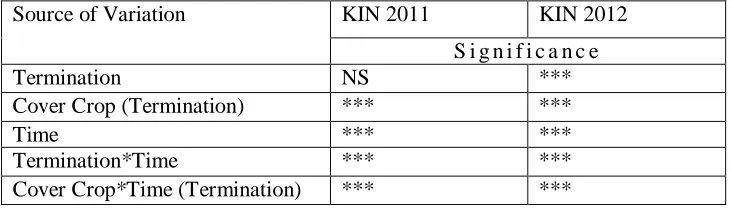
KIN 2011 was the only site year to have a significant three way interaction between
termination*cover crop*time (Table 2.3). The two-way interaction of Cover crop*time were
significant at KIN and CEFS 2012 (p < 0.001). Additionally, termination*time was only significant at CEFS 2012 (p < 0.001), providing evidence that cover crops, termination, and time across all three site years had a measured impact on soil inorganic N, defined here as soil N.
KIN 2011
Austrian winter pea increased over the greatest number of time points under flail and roll from the first observation until peaking 56 days after termination (24.9 mg kg-1 and 17.3 mg kg-1, respectively). When Austrian winter pea was terminated by disking, soil N also peaked at 56 days after termination, with values similar to that of flailed pea, 23.4 mg kg-1.
Hairy vetch soil N data for Kinston 2011 is presented in Figure 2.1D. Seven days after hairy vetch termination, flail mowed treatments showed greater available soil N than all other termination methods. At 28 days after termination, flail mowed treatments reached their maximum soil N of 17.0 mg kg-1, statistically equivalent to that of soil N under disked treatments at that same time-point, 20.9 mg kg-1. At 42 days after termination, available N had decreased for disk, flail, and spray. Available N in soil under rolled treatments, however, continued to increase up until this point, with a maximum of 14.1 mg kg-1 reached. Disking peaked two weeks later at 56 days after termination (24.2 mg kg-1), a significantly greater soil N than all other termination methods but achieving the same temporal peak when compared to Austrian winter pea.
KIN 2012
balansa and crimson clover increase soil N, resulting in soil N values that were statistically indistinguishable among cover crop species for the remainder of the experiment. Overall Austrian winter pea and hairy vetch contributed greater available N to soil than observed in balansa clover and crimson clover. Peak N occurred under hairy vetch and Austrian winter pea seven days after termination with 6.7 mg kg-1 and 7.2 mg kg-1, again, higher than other cover crop treatments across the entire site year.
CEFS 2012
Among the four termination methods at CEFS, disking contributed the greatest amount of soil N over the entire experiment period (Figure 2.3A). Prior to termination, the disked treatment baseline had 1.7 mg kg-1 less total soil N than the sprayed and rolled treatment, enough to be significant (p < 0.05). Soil N peaked across all termination approaches 42 days after termination, with 28.0 mg kg-1 observed in disked plots, one and half times greater than all others. The flail, roll, and till methods peaked at 16.2, 15.0, and 15.0 mg kg-1 respectively and did not vary significantly from each other during the monitoring period.
crimson clover. Crimson clover soil N increases until day 42, peaking at 16.5 mg kg-1, significantly lower than the other two species. At 56 days of decomposition, soil N in all three cover crop treatments returns similar to baseline levels, and sometimes below, becoming indistinguishable from each other.
Agronomy Grain Yields
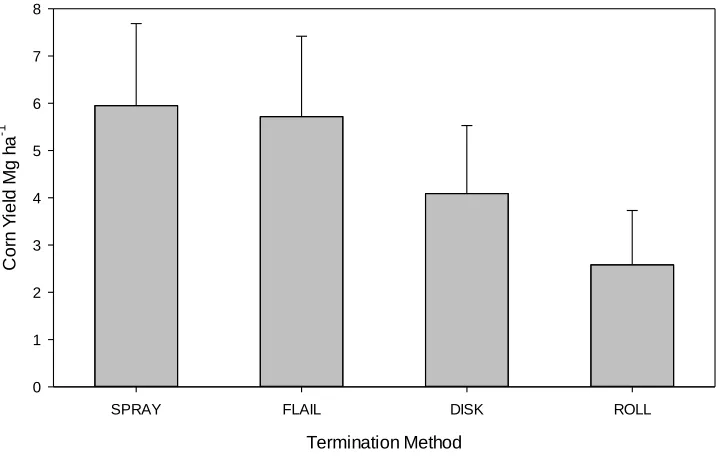
All site years demonstrated a significant two-way interaction between cover crop * termination (p < 0.001), with the exception of KIN 2011 (Table 2.4). Termination method in Kinston 2011 was a greater driver in predicting corn yield than cover crop species (Figure 2.4). Among the termination methods, spray and flail produced the greatest corn yields of 5.95 Mg ha-1 and 5.71 Mg ha-1 that year, respectively, while disked treatments yielded somewhat less but not that much greater than the roll treatment. (p > 0.05; Figure 2.4).
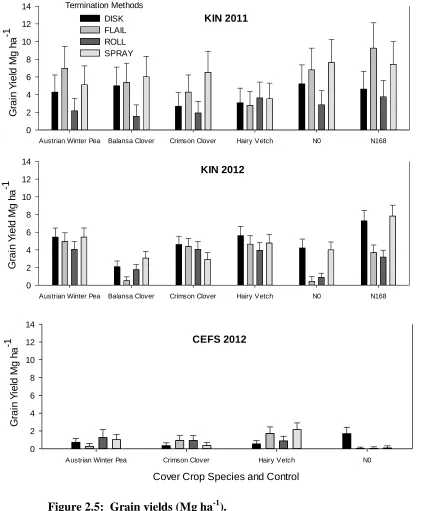
pea and hairy vetch when terminated with a disk (5.44 and 5.61 Mg ha-1, respectively). Austrian winter pea terminated via spraying also returned nominally greater yields at a mean of 5.45 Mg ha-1.
Yields at CEFS 2012 were exceptionally low for this experiment with a mean of 0.93 Mg ha-1, across all species by treatment combinations excluding the control, falling well below the North Carolina average 9 Mg ha-1 (NCSU, 2012). Differences in yield among all cover crop species and termination method combinations were statistically indistinguishable, with the exception of disked hairy vetch, which had lower yields than sprayed and rolled vetch. When no cover crop biomass N was applied (N0), disked treatments produced greater yields (1.69 Mg ha-1), than flailed rolled or sprayed treatments (Table 2.5; p<0.05). Peak yields of 2.2 Mg ha-1 were observed under hairy vetch terminated by the organic herbicide, but fell as low as 0.3 Mg ha-1 in Austrian winter pea terminated by the flail mower (Table 2.5 & Figure 2.5). In Austrian winter pea and crimson clover, no differences were observed across all termination treatments. The opposite is true within hairy vetch, where spray and flail methods had a positive effect on yields over yields observed in treatments terminated with disk and roll.
negative control and balansa clover yielded the least. At CEFS 2012, where there is no positive control, corn growing in soils that had previously been cover cropped had significantly greater biomass N than the negative control. Austrian W Based on the outcomes of regression analysis performed on SPAD values and grain yields, SPAD values were within those found in the North Carolina Coastal plain (Table 2.6) ( R. Heiniger, personal conversation, 2012)
DISCUSSION
This study showed that amongst termination treatments, disking of biomass most rapidly increases plant available nitrogen found in the soil, above all other termination treatments. Flail mowing also demonstrated a rapid increase in N availability but only slightly different overall from the roller crimper and herbicide termination treatments. Unlike the other three methods, the disking treatment both chopped and incorporated residue to a minimum of 15 cm into the soil profile. Earlier work by Holland and Coleman as well as Ambus and Jensen found similarly increased rates of decomposition when incorporating plant residues as compared to leaving residues on the surface (Ambus, et al., 1997, Holland, et al., 1987).
the results of previous decomposition studies that have shown the greatest rates of decomposition to occur within ten days to four weeks after termination (Cherr, et al., 2006, Wagger, 1989, Wilson, et al., 1986).
Increases in biomass production due to a longer growing season, when coupled with biomass N content, did not appear to have a strong relationship to C:N ratio. The highest ratio of 25:1 was measured in crimson clover growing at Kinston 2012, the site with the shortest growing period of all three site years. This runs counter to increases in C:N ratios that occur when plant growth is allowed to continue, as observed by both Parr and Wagger (Parr, et al., 2011, Wagger, et al., 1998). Ratios of C:N for other species fell below 20:1 for all site years, with no observation of net N immobilization. If greater than 25:1, net immobilization would have been a large possibility, slowing decomposition and subsequent N availability (Kuo, et al., 1997, Sall, et al., 2007). Trinsoutrot et al came to similar conclusions after decomposing 47 different types of plant residues in controlled environments (Trinsoutrot, et al., 2000).
differences (Bair, et al., 2008). In the findings of Parr et al (2013), probe N flux peak occurred two weeks after extracted soil N peak, whereas the opposite trend emerged in our study. At Kinston 2011, measurements of soil N through extraction among termination treatments generally showed an earlier response to disking in accumulation of nitrogen than probe N. Based on the kinetics and movement of nitrogen mineralized from an organic form into an adsorbable inorganic form, the methodologies will most likely be inconsistent, with Kinston 2012 providing an ideal example. As such, KIN 2011 began as a cool wet spring becoming extremely dry 56 days after termination, whereas KIN 2012 had more consistent precipitation throughout about 84 days after termination. This suggests that variation in soil type and climatic conditions such as those encountered in this experiment, may present inorganic nitrogen extractions to better reflect measurement of point-in-time measurement of soil N than PRS probes.
from cover crops on plant available nitrogen in soil was measured in the corn tissue biomass N. Corn grown in the cover crop treatments had greater biomass N than the positive and negative control for two of the site years. In ideal agronomic conditions, nitrogen availability can explain 70-81% of resulting yield, but weeds are also a factor, explaining a considerable portion of around 25% of yield variability (Cavigelli, et al., 2008, Kuo, et al., 2000). On the N supply side, levels from 0.5 to 6 kg ha-1 N day-1 of fertigated nitrogen have produced competitive yields by essentially ‘spoon feeding’ nitrogen to sweet corn. This method also
reduced potential nitrogen losses as summarized by Bar-Yosef (Bar-Yosef, 1999).
It may be that other factors not quantified in this study impacted yields. In Kinston, from June 15 until July 20, 2011 only four precipitation events of two centimeters each occurred. As a result, corn at this site appeared drought and heat stressed. Nitrogen uptake by corn would have likely been impacted, as would have grain filling (Dou, et al., 1995). Prior to harvest, on August 27, 2011, Hurricane Irene made landfall about 120 km east of Kinston, NC with wind speed averaged 140 km hr-1, impacting a number of the mature plants through lodging and shredding by high winds, which encouraged disease and ultimately impacted total grain yield. Yet soil inorganic N and N flux measurements in KIN 2011 were greater than in 2012, specifically during the period between V6 and VT, possibly offering a protective advantage that year over KIN 2012, when soil N and probe N was relatively lower, but precipitation more consistent.
amaranth (Amaranthus palmeri) appeared to impose a great deal of competition to the corn in many plots. At CEFS, a slightly different population emerged, and where some plots were almost covered by Palmer amaranth (Amaranthus palmeri), rye grass (Lolium perenne), Johnson grass (Sorghum halepense), or curly dock (Rumex crispus). Curly dock in particular, with low-spreading leaves, presented a formidable challenge to stand establishment in mid-May. Possibly as a result, the average yield across all treatments was 0.8 Mg ha-1 at CEFS, far below 7.2 Mg ha-1, the 2012 state average. There is growing evidence of weed control using cover crop mulches and residues as discussed by Reberg-Horton et al (2012). Given sufficient biomass production and resulting thick surface mulches, hairy vetch when evaluated alone and with different cover crops can successfully check weed growth (Cook, et al., 2010, Decker, et al., 1994, McVay, et al., 1989, Mitchell, et al., 1977). If sufficient moisture has accumulated in the root zone prior to termination, resulting weed control and moisture retention through use of surface mulches may produce improved yields.
yields, however this result was not observed in the roller-crimper termination (Schwartz, et al., 2010).
CONCLUSION
This research shows that biomass from all four winter annual legumes had a measurable impact on soil N after termination, increasing N that is available to corn for the first four to ten weeks after termination. Termination method also made a considerable difference in how cover crops affected soil N released over the observation period. When terminating cover crops with a disk, the observed peak soil nitrogen ranged from 42-56 days after cover crop termination. Measurements of soil inorganic N and N flux as measured through PRS probes were inconsistent with each other for both Kinston 2011 and 2012, however similar patterns emerged among termination treatments. Measuring nitrogen mineralizing from a decomposing cover crop presents many challenges due to the dynamic nature of nitrogen kinetics in the biological and chemical systems driven by biotic and abiotic factors (Schimel, et al., 2004, Schomberg, et al., 2009).
placed on decomposition and subsequent movements of nitrogen, water will be an increasingly limiting factor and also the greatest challenge to control. Hairy vetch and Austrian winter pea clearly provide a viable alternative source to synthetic nitrogen for cash crops.
REFERENCES
Ambus, P. and E. Jensen. 1997. Nitrogen mineralization and denitrification as influenced by crop residue particle size. Plant and Soil 197: 261-270.
Bair, K.E., J.R. Davenport and R.G. Stevens. 2008. Release of available nitrogen after incorporation of a legume cover crop in concord grape. Hortscience 43: 875-880.
Bar-Yosef, B. 1999. Advances in fertigation. In: D. L. Sparks, editor Advances in Agronomy, Vol 65. p. 1-77.
Burger, M. and L.E. Jackson. 2003. Microbial immobilization of ammonium and nitrate in relation to ammonification and nitrification rates in organic and conventional cropping systems. Soil Biology & Biochemistry 35: 29-36.
Cavigelli, M., J. Teasdale and A. Conklin. 2008. Long-term agronomic performance of organic and conventional field crops in the mid-Atlantic region. Agronomy Journal: 785-794. Cherr, C.M., J.M.S. Scholberg and R. McSorley. 2006. Green Manure as Nitrogen Source for Sweet Corn in a Warm–Temperate Environment Florida Agric. Exp. Stn. Journal Series no. R-10703. Agron. J. 98: 1173-1180.
Cook, J.C., R.S. Gallagher, J.P. Kaye, J. Lynch and B. Bradley. 2010. Optimizing Vetch Nitrogen Production and Corn Nitrogen Accumulation under No-Till Management. Agronomy Journal 102: 1491-1499.
Crews, T. and M. Peoples. 2004. Legume versus fertilizer sources of nitrogen: ecological tradeoffs and human needs. Agriculture Ecosystems & Environment: 279-297.
Davis, A.S. 2010. Cover-Crop Roller–Crimper Contributes to Weed Management in No-Till Soybean. Weed Science 58: 300-309.
Decker, A.M., A.J. Clark, J.J. Meisinger, F.R. Mulford and M.S. McIntosh. 1994. Legume Cover Crop Contributions to No-Tillage Corn Production. Agron. J. 86: 126-135.
Dou, Z., R.H. Fox and J.D. Toth. 1995. Seasonal soil nitrate dynamics in corn as affected by tillage and nitrogen source. Soil Science Society of America Journal 59: 858-864.