IJEDR1602040
International Journal of Engineering Development and Research (www.ijedr.org)230
Challenges and development prospects of Artificial
Ventilation Systems Application in Afar Region,
Ethiopia
1Elias Jigar, 2Bizuayehu Bogale 1Lecturer, 2Lecturer
1Department of Environmental Science 1Adigrat University, Adigrat, Ethiopia
________________________________________________________________________________________________________
Abstract - Due to hot weather situation of Afar region the air conditioner with cooling is more applicable in ensuring the thermal comfort needed. Familiarity with the Artificial Ventilation Systems (AVS) is essential to diagnose its social, economic and environmental problems and recommend strategies for redemption. This research discusses the challenges, complains and opportunities for Artificial Ventilation Systems application towards buildings of living rooms and offices in Afar regional state. In this study purposive sample surveys of 120 buildings were undertaken in Assaiyta, Logia and Samara. Air conditioning (AC) unit with R-22 operating refrigerant which is not environmentally friendly were dominantly used in all selected sites. Among the AC types, the split type is the dominant types of air conditioning units followed by window type. In Assaiyta and Logia Towns fan forced ventilation type and natural ventilation is extensively used than air conditioning this could be due to the high initial cost of AC and its power supply (electricity). Among the Occupants complains for their Artificial Ventilation Systems, the noise level coming out of the system was the highest. It could be due to the equipment age, lose fittings and improper maintenance of units. According to major respondents the maintenance of Artificial Ventilation Systems is carried out once in two years or not at all. This illustrates a poor maintenance policy. The presence of odor due to cigarette smoking and close proximity to toilets were an indicator of Indoor Air Quality problem. Financial limitation, unavailability, unaffordable, lack of awareness and energy source for the operating of environmentally friendly Air conditioner were challenges of the majority respondents in the three selected sites of Afar region. Solar energy potential, the presence of more NGOs, and higher institution were some of the opportunities to exploit the maximum benefits of Artificial Ventilation Systems for improving the living and working condition of occupants in the region.
Key words - Artificial Ventilation Systems, Complains, Refrigerated air conditioner, Indoor Air Quality
________________________________________________________________________________________________________
I.INTRODUCTION
Ventilation is considered to be the functional requirement of any buildings so as to provide a suitable atmospheric condition for living and working. Thus, ventilation is the process of changing or replacing air in any space to provide high indoor air quality (i.e. to control temperature, replenish oxygen, or remove moisture, odors, smoke, heat, dust, airborne bacteria, and carbon dioxide) and includes both the exchange of air to the outside as well as circulation of air within the building. This also made by natural means, natural with mechanical assistance (fan) or wholly artificial [1, 2].
Natural ventilation is common method for ventilation in tropical region. It is the ventilation of a building occurs when the air in a space is changed with outside air without the use of a fan or other mechanical system [7].
Air-conditioning is a process that simultaneously conditions air; distributes it combined with the outdoor air to the conditioned space; and at the same time controls and maintains the required space’s temperature, humidity, air movement, air cleanliness for the health and comfort of the occupants [1]. Air-conditioning system includes all its components which are adopted to preserve and maintain the health, comfort and convenience of the occupants in institutional, commercial, and residential buildings [4]. The air conditioning system can be classified according to their principles of operation, building and so on. Therefore based on their basic principles of operation an air conditioning system can be classified as refrigerated and evaporative.
The refrigerated air conditioning system is used the Freon gas as a refrigerant. Refrigerant HCFC-22 is mostly used in building comfort cooling. It is to be phased out for use in new equipment by 2010 and completely discontinued by 2020. Thus, R410A and R407C have emerged as the leading HFC alternatives to replace HCFC-22 in many applications [5]. But, to replace this refrigerant by the new alternative require high cost.
The evaporative air conditioning system is also known as swamp or desert coolers and range in size from portable units suitable for single rooms to massive installations. This system used water as a refrigerant.
In order to enhance the comfort and well being of the occupants, extreme hot and dry weather indoor environments have been controlled with Artificial Ventilation Systems [1]. The Artificial Ventilation Systems are no more a luxury but are becoming an integral and a necessary part of all types of facilities, including residential, commercial, institutional or industrial, to maintain acceptable indoor environment[3].
IJEDR1602040
International Journal of Engineering Development and Research (www.ijedr.org)231
in all the cases where a satisfactory standard of ventilation with respect to air quantity, quality or controllability cannot be obtained by natural means or natural ventilation supported by fan [2, 3]. The new coming technology, non compressor air conditioning or evaporative air conditioning system which sometimes called desert cooler are also recommended than conventional types in conditioning or cooling the same dwelling room with better initial cost investment and less power consumptions [6].The questions therefore are: What are the challenges and opportunities of Artificial Ventilation Systems in the region? What is the operating system of the air conditioner? How frequently does the artificial Ventilation system needs maintenance? And what are the complains for the existing Artificial Ventilation System?
Specifically, the study was designed to:
‒ To examine the utilization and challenges of Artificial Ventilation System application ‒ To identify factors that affect space comfort of Artificial Ventilation System application
‒ To find out opportunities and recommend strategies for maximum benefit of Artificial Ventilation System in the region
II.MATERIAL AND METHODS
Study Area Description
The study was conducted in three town of Afar regional state that consists of five administrative zones. A zone is a part of a regional state comprising different districts, twenty nine weredas (districts) and twenty eight towns. The study area is located in zone one and includes Asaita, Logia and Samara. The main criteria used to select the above study areas were: Population density, their distance from the geographical and administrative centre for Afar region and the types of artificial ventilation available
Data Collection
Primary data has been studied through questionnaire survey. A Questionnaire for building occupants was developed and administered. This Questionnaire was administered with the aim of acquiring information on the following aspects:
‒ To seek general information like age, occupation, duration of stay in the building, and period of occupation of that particular space.
‒ To provide information regarding the type, selection criteria, duration of usage per year of these systems, the frequency of maintenance of these units, the concern and complains for the installed systems.
‒ Their perception of work place environment such as temperature, relative humidity, noise and odor
Hence the questionnaire was divided into different sections including general information, existing situation of Artificial Ventilation Systems, complains and work place environment the result from this questionnaire survey have been used to quantify the comfort complaints.
Conducting the survey
The occupants of the selected buildings were introduced to the objectives of the study and its importance for the work environment. Their concerns were personally responded to and they where ensured that their identity will not be exposed. The researcher explained the academic nature of the research and that the data will be used solely for the stated purpose. Apart from this, it was communicated to them that the study would come up with recommendations to improve their working environment, and were encouraged to participate in the study by filling in the questionnaires that were available in English.
Response to survey
Most of the occupants appreciated the objectives of the study and came forward to provide their feedback by filling in the questionnaire. The researcher preferred to get them filled in his presence so that if the occupants have any concern it can be clarified instantly. However in some buildings the questionnaires were collected the following day or the day after because of the busy schedule of occupants.
Sampling Technique
A survey has been carried out in three selected towns of Afar region and a total of 40 respondents were interviewed in each Town using Purposive sampling method.
Data Analysis
In this phase, all collected information and data which was gathered in previous phase using different methodologies were analyzed. Descriptive statistics were applied to analyze percentage, arithmetic mean, and graphic presentations. Qualitative analyses were applied to analyze information obtained from focus group discussions.
III.RESULT AND DISCUSSION
General Information
The occupants were asked to provide general information about themselves and the working space. They were asked questions like their age, occupation or profession, their duration of stay per day in that particular space under investigation, and the period of occupation of that space.
IJEDR1602040
International Journal of Engineering Development and Research (www.ijedr.org)232
people [9].Almost 43 percent of the surveyed occupants in the investigated buildings were in the age group of 20 to 30 years, and about 38 percent were in the age group of 31 to 40 years. Only 0.4 percent crossed the age of 60 years.The surveyed occupants were asked to indicate the time duration they spend in those spaces. The longer they stay the more reliable is their response as they can comment on what they have experienced in that space. About 65 percent of the surveyed occupants spend more than eight hours in that working environment, and about 29 percent spend between 6 to 8 hours. None spend less than 4 hours, with only a few (about 5 percent) spending about 4 to 6 hours. This information gives credibility to the collected data as these occupants spend a reasonable amount of time the space under investigation.69 percent of the surveyed occupants suggested that they were working in those environments for more than a year. Another 19 percent indicated of occupying those spaces between 6 months to one year. And only 6 percent had occupied for less than 3 months. Again this data increases the reliability of responses of the occupants as a majority of them have been working in their environments for more than one year.
Use of Artificial Ventilation Systems
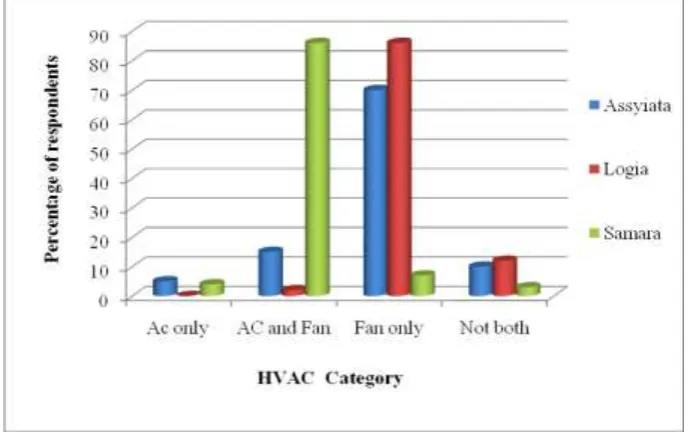
The occupants of selected sites keep the temperatures of the space by using AC only, AC and fan, fan only and natural means(not both). This category also made based on the valuable information gathered and observed from the construction dwelling room at house hold level to the complex residential and commercial buildings. Interestingly, respondents that used mechanical mechanism or artificial system for their thermal comfort are obtained as shown in figure 1.
Figure 1. Artificial Ventilation Systems use of the three selected sites of Afar region
As we can see from figure 4.1 use of AC(Figure 2 split type AC and Figure 3 window type AC)and Fan within the room is common in Samara town where as use of Fan only within the room is dominant in Assyiata and Logia. The reasons for not using more ACs in residential areas could be the initial cost of AC and its power supply (electricity). Therefore private sectors, GOs and
NGOs has to play a great role in transferring Solar energy based environmentally friendly ACs to the community.
Figure 2: Split type AC Figure 3: Window type AC
Selection of Artificial Ventilation Systems
IJEDR1602040
International Journal of Engineering Development and Research (www.ijedr.org)233
Figure 4: Criteria for selection of the Artificial Ventilation SystemsAs it can be seen from figure 4, about 54 percent of the selection criterion is appropriateness for the weather condition of the region. This criterion is taken as their prime concern in all the study areas. Availability in the market is the next important criteria with about 20 percent of respondents specifying it. Around 12 percent of the respondents have pointed out that the energy conservation is the main criteria for the selection of Artificial Ventilation Systems. About 10 percent of them have price. Only about 4 percent of them have indoor air quality criteria for selection.
Operating system of Air conditioner
In all study areas, it is observed that the operating systems of Air conditioner are refrigerated operating system. The refrigerant used in the study areas are R-12 and R-22. Refrigerant HCFC-22 (R-22) is mostly used in building comfort cooling but it is to be phased out for use in new equipment by 2010 and completely discontinued by 2020. Thus, Technology shift to eco-friendly operating systems such as evaporative system and refrigerants (R410A and R407C) have emerged indispensable as the leading HFC alternatives to replace HCFC-22 in many applications. But, to replace this refrigerant by the new alternative require high cost. Knowledge of respondents on the impact of refrigerant on environment and reasons for not using evaporative type and eco-friendly refrigerants are discussed below.
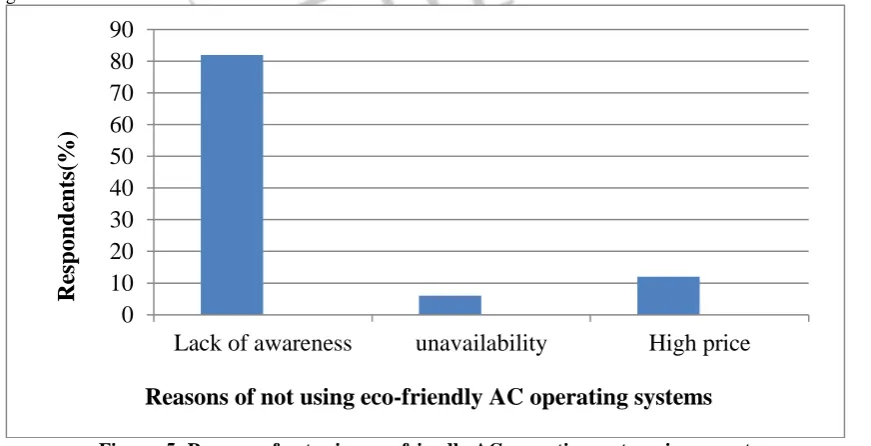
Figure 5: Reasons of not using eco-friendly AC operating systems in percent
As it can be illustrated on figure 5 the use of the eco-friendly AC operating systems in the study areas highly depend on their level of awareness to some extent its availability and price. Majority of the respondents lack awareness or knowledge on the impact of
0
10
20
30
40
50
60
p
er
ce
n
tage
of
r
esp
on
d
en
ts
Selection criteria of HVACs
0
10
20
30
40
50
60
70
80
90
Lack of awareness
unavailability
High price
Re
sp
on
d
en
ts(
%
)
IJEDR1602040
International Journal of Engineering Development and Research (www.ijedr.org)234
refrigerated on environment hence requires intensive training moreover market intervention such as provision of eco-friendly AC operating systems is recommended.Duration of Usage of Artificial Ventilation System units
Duration of usage of Artificial Ventilation Systems per year decide the performance and goodness of air quality inside buildings. Artificial Ventilation Systems can affect IAQ in two ways, that is, they could be the source of contamination due to dirt and moisture buildup caused by improper maintenance or equipment age, or could be the pathway through which the contaminants enter the space.
The occupants of buildings were asked to provide information regarding the duration of usage of these systems per year. About 30 percent of the respondents have indicated that Artificial Ventilation Systems are operational for the whole year (year round air conditioning).
Another 70 percent of the surveyed occupants have reported that these systems are employed for about nine months per year. Since the climate condition in the region is generally hot for at least six months and the remaining period is usually comfortable, some of these buildings attempt to conserve energy by keeping their systems off for this season. Some of the occupants were ignorant regarding the number of months for which the Artificial Ventilation Systems is operational.
Air conditioner and its maintenance frequency
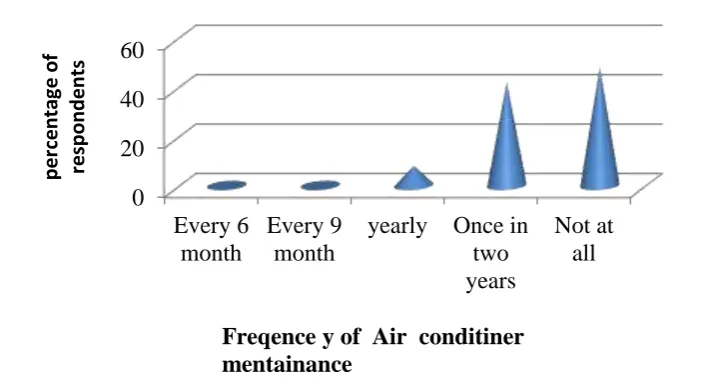
The frequencies of maintenance decide the performance and goodness of air quality inside buildings. The occupants of buildings were asked to provide information regarding the frequency of maintenance of these units as shown in figure 6
Figure 6: Response of respondents for Frequency of Air conditioner maintenance
As it can be seen from figure 6, almost 48 percent of the surveyed occupants have indicated that the maintenance of these systems is carried out once in two years, and about 42 percent have reported not at all. Around 8 percent of the occupants have indicated that it is conducted yearly. This illustrates a poor maintenance policy in these buildings, which could be responsible for the reported dissatisfaction with the environmental parameters.
Generally maintenance conducted with these frequencies is not reasonable and not practical; however it is better to carry it out every six months.
Challenges and complains for HVAC systems
The surveyed occupants were requested to identify the specific complaints pertaining to the air-conditioning systems. Figure 4.8 illustrates the occupants complains for their Artificial Ventilation Systems in the three investigated sites (Logia, Samara and Assiayta).
0
20
40
60
Every 6
month
Every 9
month
yearly
Once in
two
years
Not at
all
p
e
rc
en
ta
ge
o
f
re
sp
o
n
d
en
ts
IJEDR1602040
International Journal of Engineering Development and Research (www.ijedr.org)235
Figure 7: Occupants complains for their HVAC systems in the three investigated sitesWhen asked complaints regarding their Artificial Ventilation Systems, a high percentage of occupants reported that their systems are too noisy. The occupants have the highest percentage of dissatisfaction related to this complaint in the three investigated sites (Logia, Samara and Assiayta). As it can be seen from figure 7, the noise level coming out of the Artificial Ventilation Systems is high. It could be due to the equipment age, lose fittings and improper maintenance of units as per the response of the respondents and professional point of view.
Another complaint that was evident in by occupants was either excessive hot or cold as shown in figure 7. It could be due to poor maintenance practices and the condition of air-conditioning equipment and inadequate operational practices. It was observed in new Air Conditioner that there is no sound pollution and the occupants are acoustically comfortable.
Other problems like bad smell and too much air are well within 15 percent in all these buildings. The importance of Artificial Ventilation Systems could be understood with the fact that these systems are responsible for about 60 percent of the building generated IAQ problems and has the potential to resolve up to 80 percent of the problems [8].Many IAQ investigators have suggested that a few corrective strategies for these systems would improve the existing conditions.
Proper Artificial Ventilation Systems maintenance is decisive to better occupants Artificial Ventilation Systems complaint. The lack of trained maintenance personnel or an unsound maintenance policy is detrimental to the Artificial Ventilation Systems performance and can increase the risk of creating sources of contamination within these systems.
Dirty blocked screens of air handlers, malfunctioning humidifiers, dirty filters, high pressure drops, blocked ducts, dirty diffusers, etc. are all indications of poor maintenance program.
Financial limitation, unavailability, unaffordable, lack of awareness and energy source for the operating of environmentally friendly Air conditioner were challenges of the majority respondents in the three selected sites of Afar region.
Factors affecting space comfort
As we understood from occupant’s interview and our visit, majorly the space comfort is affected by the type buildings and the environment where it installed. The effect of building type on the space comfort is more professional, so it needs to be considered by the experts as a factor during its design.
Therefore, the occupants were asked to identify the levels of comfort or discomfort with regards to the environmental parameters. These parameters include the temperature, relative humidity, noise level, and odor inside these spaces. This is the indicators of the goodness of any environmental and helps in assessing the general conditions of the building.
Noise level
Figure 8: Noise level perception Noisy
20%
Too
noisy
16%
Quite
IJEDR1602040
International Journal of Engineering Development and Research (www.ijedr.org)236
As it can be seen from figure 8, around 64 percent of the surveyed occupants have revealed that they are acoustically comfortable in their environments. However about 20 percent have suggested the conditions are noisy and also about 16 percent claiming it to be too noisy.HVAC systems are a major source of noise inside buildings as they create and transmit sound via ducts. The response to sound is not only physiological but also psychological and depends on the state of attitude of the listener, which can vary. Hence, the effect of noise is often unpredictable [9].
The other reason for uncomfortable noise could be the improper installation or/and maintenance of HVAC system. Sound sources in HVAC systems are numerous, such as the reciprocating and rotating equipment (like fans, motors, pumps), air and fluid noises (flowing through ductwork, piping systems, grilles, diffusers), excitation of surface (friction, movement of mechanical linkages), etc.
Odor
The presence of odor in any space is an indicator of IAQ problem. The odor could be due to cigarette smoking, car exhaust, sewage gas, furniture, musty smell and body odors. The common complaints due to the presence of odor include headaches, dizziness, tiredness, respiratory problems, skin irritation, coughing, sneezing and eye, nose and throat irritation.
The response of surveyed occupants regarding their perception of odor is given in figure 9. As it can be seen from figure 9, a total of about 52 percent of surveyed occupants in all of buildings do not observe any abnormal odor in their spaces. It shows their satisfaction in terms of odor.
Figure 9: Odor perception of respondents
As can be seen in Figure 9, the occupants are the most satisfied with about 52 percent showing satisfaction with the odor level in their workspaces. However 48 percent of occupants are unsatisfied with their environment. Intensity is a quantitative aspect of descriptive analysis, stating the degree to which a characteristic odor is presence of odor, and about 35 percent have reported the presence of strong odor in buildings. It has to be noted, however, that all persons exposed to a given odor are not likely to agree whether the odor is acceptable or unacceptable. It rather depends on a complex combination of associations and is not a characteristic of odor itself [9].
Moreover, the occupants were also asked to identify the possible causes for the presence of odor in their surroundings. Thus 36 percent of the total surveyed occupants have linked the presence of odor to the cigarette smoking in their work areas. This is a serious problem as the smoke is circulated and re-circulated in all parts of the building via the HVAC systems. Around 16 percent of the occupants have indicated that the odor is because of the close proximity to toilets. This is serious in spaces where there are either non-existent or insufficient exhaust fans in toilets, which compels the air from toilets to mix with the return air and thus circulates into the whole buildings. Others have associated it with other sources like body odor, building material, etc.
The surveyed occupants were asked whether they are habituated to tobacco smoking. Thus 56 percent of the total respondents reported themselves to be smokers whereas 44 percent non smokers. This is an alarming figure as the hazards of inhaling mainstream smoke that is inhaled by smokers and side stream smoke that is produced at the burning end of tobacco products are well documented in literature.
Even if a small percentage of smokers smoke inside the conditioned spaces, the particles of tobacco smoke remain airborne for hours after smoking stops. Moreover, the smoke contains over 3800 chemical compounds, many of which are irritates, carcinogens, mutagens, and taratogens [10].
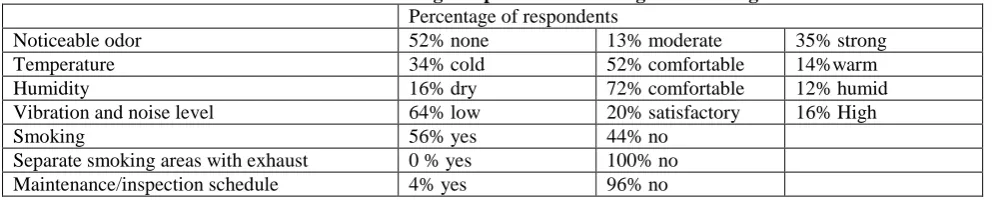
The occupants were also asked to comment on whether smoking in their work environment bothers them or not. As a result, 62 percent of respondents opined that it does irritate them. However about 38 percent are not bothered by others smoking in their vicinity. These are probably the smokers themselves who have no reservation for smoking inside enclosures. As stated earlier, the purpose of walkthrough inspection is to get a better understanding of the extent of the problem and to identify its possible causes. The following table illustrates the percentage of respondents towards some activities and complains for Artificial Ventilation System.
Table 1: Walkthrough inspections in investigated buildings Percentage of respondents
Noticeable odor 52% none 13% moderate 35% strong
Temperature 34% cold 52% comfortable 14%warm
Humidity 16% dry 72% comfortable 12% humid
Vibration and noise level 64% low 20% satisfactory 16% High
Smoking 56% yes 44% no
Separate smoking areas with exhaust 0 % yes 100% no
Maintenance/inspection schedule 4% yes 96% no
Strong
35%
Moder
ate
13%
None
IJEDR1602040
International Journal of Engineering Development and Research (www.ijedr.org)237
Controls are operational 68% yes 32% no
Condition of filter 24% Excellent 30% good 46% bad
Filter location 32% before 68% after
Frequency of cleaning 0% 2month 0% 3month 20% 6-12 month
80% no
IV.CONCLUSION AND RECOMMENDATION
Conclusions
The longer they stay the more reliable is their response as they can comment on what they have experienced in that space. About 65 percent of the surveyed occupants spend more than eight hours in that working environment. This information gives credibility to the collected data as these occupants spend a reasonable amount of time the space under investigation.69 percent of the surveyed occupants were working in those environments for more than a year. Again this data increases the reliability of responses of the occupants as a majority of them have been working in their environments for more than one year.
Use of AC and Fan within the room is common in Samara town where as use of Fan only within the room is dominant in Assyiata and Logia. The reasons for not using more ACs in residential areas could be the initial cost of AC and its power supply (electricity). Therefore private sectors, GOs and NGOs has to play a great role in transferring Solar energy based environmentally friendly ACs to the community.
Familiarity with the types of AC systems is essential to diagnose social, economical and environmental problems and recommend strategies for redemption.
Thus split type air conditioner is dominant next to fan forced ventilation type and the R-22 refrigerant type is dominant in all selected sites. The most important criteria for selection of these Artificial Ventilation System are the suitability for the weather conditions.
The operating systems of Air conditioner are refrigerated operating system. The refrigerant used in the study areas are R-12 and R-22. Refrigerant HCFC-22 (R-22) is mostly used in building comfort cooling but it is to be phased out for use.Therefore, due to the effect of this refrigerant used by an available conventional air conditioner, the air conditioning type of its operating refrigerant environmental friendly is recommended.
The use of the eco-friendly AC operating systems in the study areas highly depend on their level of awareness, to some extent the availability and price of the operating system. Majority of the respondents lack awareness or knowledge on the impact of refrigerated on environment hence requires intensive training moreover market intervention such as provision of eco-friendly AC operating systems is recommended.
70 percent of the surveyed occupants have reported that Artificial Ventilation System are employed for about nine months per year. Some occupants attempt to conserve energy by keeping their systems off for comfortable season. According to major respondents the maintenance of Artificial Ventilation System is carried out once in two years or not
at all. This illustrates a poor maintenance policy in these buildings
Among the Occupants complains for their Artificial Ventilation System, the noise level coming out of the Artificial Ventilation System was the highest. It could be due to the equipment age, lose fittings and improper maintenance of units As we understood from occupant’s interview and our visit, majorly the space comfort is affected by the type buildings
and the environment where it installed.
The presence of odor due to cigarette smoking and close proximity to toilets were an indicator of IAQ problem.
Recommendations
R-22 refrigerant type is the dominant refrigerant type air conditioner in all selected sites which is not environmentally friendly worldwide. Hence Evaporative type air conditioner or desert cooler is highly recommendable because of its operating refrigerant is air and water, it is environmentally safe and energy consumption is low and therefore easily supplied by clean energy like solar which is very plentiful in selected site and Afar region in general.
Adequate inspection/maintenance schedule should be adopted for all the Artificial Ventilation System equipment and systems to ensure proper performance.
A separate maintenance department for Artificial Ventilation System operation and maintenance should be assigned. The pollutant source should be identified and controlled in order to improve the IAQ in any building.
Smoking has been identified as the major common source of contaminant hence “no smoking policy” should be strictly adopted and implemented, or separate smoking areas need to be created with local exhaust.
There should be exhaust systems to all toilets, kitchens and other contaminant generating areas. All exhaust fans should be operational.
Privet sectors, Government and NGOs should play a great role towards dissemination of environmentally friendly and solar based Artificial Ventilation System to improve living and working environmental condition in the Afar region in particular and mitigate the environmental impact of conventional Artificial Ventilation System in general.
Proper Artificial Ventilation System maintenance is decisive to better occupants Artificial Ventilation System complaint. The lack of trained maintenance personnel or an unsound maintenance policy is detrimental to the Artificial Ventilation System performance and can increase the risk of creating sources of contamination within these systems.
IJEDR1602040
International Journal of Engineering Development and Research (www.ijedr.org)238
Financial limitation, unavailability, unaffordable, lack of awareness and energy source for the operating ofenvironmentally friendly Air conditioner were challenges of the majority respondents in the three selected sites of Afar region.
Solar energy potential, the presence of more NGOs,and higher institution like Samara University were some of the opportunities for improving the living and working condition of occupants in the region.
V.ACKNOWLEDGEMENTS
The authors gratefully acknowledge Samara University for the financial support
VI.REFERENCE
[1] s.p. Arora, Dr.s.p. Bindra, A text book of building construction including Engineering materials, for engineering students, fifth edition, 2005, pp.21.1-21.15
[2] M. H. Sherman, ASHRAE’s First Residential Ventilation Standard, LBNL-54331
[3] Teklay W/abzgi, design of energy efficient buildings for hot areas of Ethiopia with respect to air conditioning, Addis Ababa University, 2004
[4] Frederick S. Merritt and Jonathan T. Ricketts, Building design and construction handbook, 6th edition, 2000 [5] Barbara H. Minor, DuPont Fluoroproducts, Refrigerants R-410a and R-407c, Technical Information, 2005
[6] Bizuayehu Bogale and Abiy Alemayehu, “Optimal Design of a Standalone Photovoltaic Power Supply System for Air Conditioning Application at Samara University as an Alternative to Diesel Generator Source,” STAR Journal, ISSN: 2226-7522, 2012
[7] Tommy Kleiven, Natural Ventilation in Buildings Architectural: concepts, consequences and possibilities, Norwegian University of Science and Technology, 2003
[8] Hansen,S.J.(1991).Managing Indoor Air Quality,The Fairmount Press.Inc.,Lilburn.
[9] ASHRAE Handbook (1997). Foundamentals,American Society of Heating.Refrigerating and Air-Conditioning Engineers,Inc.,Atlanta,Georgia.