Western University Western University
Scholarship@Western
Scholarship@Western
Electronic Thesis and Dissertation Repository
7-6-2016 12:00 AM
Human Resource Management Practices and Performance: A
Human Resource Management Practices and Performance: A
General Systems Perspective
General Systems Perspective
Duckjung Shin
The University of Western Ontario
Supervisor Alison M. Konrad
The University of Western Ontario Graduate Program in Business
A thesis submitted in partial fulfillment of the requirements for the degree in Doctor of Philosophy
© Duckjung Shin 2016
Follow this and additional works at: https://ir.lib.uwo.ca/etd
Part of the Human Resources Management Commons
Recommended Citation Recommended Citation
Shin, Duckjung, "Human Resource Management Practices and Performance: A General Systems Perspective" (2016). Electronic Thesis and Dissertation Repository. 3883.
https://ir.lib.uwo.ca/etd/3883
This Dissertation/Thesis is brought to you for free and open access by Scholarship@Western. It has been accepted for inclusion in Electronic Thesis and Dissertation Repository by an authorized administrator of
i
Abstract
This thesis consists of three essays on strategic human resource management (SHRM)
based on general systems theory. The first essay introduces a systems perspective on SHRM, the
second essay applies the feedback concept, and the third essay considers implementing human
resource management (HRM) practices as adaptive systems. The three essays suggest that
general systems theory extends the SHRM literature by considering antecedents, processes, and
consequences of HRM in modern organizations.
In the first essay, I review the SHRM literature and identify four traditions in SHRM
studies (economic, psychological, sociological, and critical perspectives). I propose a systems
perspective on SHRM as an effort to provide an integrative framework for the field. The
framework based on general systems theory also directs research efforts to focus on
under-studied areas in SHRM. I further identify fundamental principles, or grand propositions, in the
HRM systems perspective, as a potential basis for evaluating the HRM systems perspective in
future studies.
In the second essay, causality between HRM practices and organizational performance is
examined. Previous researchers have questioned whether the association between high
performance work systems (HPWS) and organizational performance indicates causality. This
study takes a general systems theory approach to explain why performance could affect HPWS
as well as the reverse. The causal associations between HPWS and performance are tested using
a large longitudinal dataset with three time points. Past HPWS positively contributes to later
ii
reciprocal relationship suggests that SHRM theories need to be extended by considering
productivity as an antecedent to as well as an outcome of HRM investment.
The third essay investigates the longitudinal relationship between HPWS and
productivity over a six-year period. This study suggests that the implementation of HRM
practices is an adaptive process. Latent growth modeling analyses reveal that the intercept of
HRM practices positively affects the slope of productivity. Continuous increases in HRM
investments are not necessary to maintain productivity gains, and the data also did not support
the pernicious “Red Queen” effect whereby continuous improvements in productivity required
continuous increases in HRM investments. Establishment size and age moderate these effects in
theoretically important ways.
Keywords: Human resource management (HRM), human resources (HR), strategic human
resource management (SHRM), general systems theory, management practices, adaptive process,
iii
Co-Authorship Statement
I hereby declare that this thesis contains some material that is a result of joint
collaboration. Three essays were co-authored with Dr. Alison M. Konrad. Dr. Konrad as a
supervisor contributed throughout the research process by editing and revising the complete
drafts. As the first author, I took the lead on initiating and developing the projects and am fully
responsible for every aspect of the papers, including research questions, literature review,
research design, data analysis, and discussion. I also note that the second essay was published
Online First in the Journal of Management co-authored with Dr. Konrad. An earlier version of
the manuscript appeared in the proceedings of Administrative Sciences Association of Canada
(ASAC) 2012 conference. With the above exception, I certify that this dissertation is fully a
product of my own work.
Essay 2 – Status: published Online First
Shin, D., & Konrad, A. M. (in press). The causality between HPWS and organizational
iv
Epigraph
(Translated by the author) Change is Yin and Yang transformation. Yin and Yang are
two "Qi"s. One Ying and one Yang are one "Tai". Because the two can be changed into one, it
is mysterious. The mystery is not separate from change. The two are the cause of endless
production after production and change after change. That is the mystery of "Tai Qi." – Seo,
v
Dedication
vi
Acknowledgments
I am exceedingly thankful to everyone who has encouraged and supported me during my
time at Ivey Business School. First and foremost, I would like to thank my advisor, Dr. Alison
M. Konrad, for her excellent guidance and incredible support. From the beginning, Alison has
been a wonderful mentor and exceptional collaborator. She offered me many opportunities to
develop my skills and confidence with her continued support and encouragement. She has been
an outstanding example all along as an academic researcher for me to follow.
I extend my sincere thanks to the thesis supervisory and examination committees –
Professors Ann C. Frost, W. Glenn Rowe, Ann C. Peng, Linda Schweitzer, Johanna Weststar, for
their time and insights. Also, I would like to acknowledge support from the Ivey Organizational
Behaivour faculty and fellow doctoral students. Professors Lynn Imai, Andreas Schotter, Paul
Beamish, and Dominic Lim are very deserving of thanks for their tremendous support and
advice. I acknowledge the generous scholarship by Mr. and Mrs. Brock as well. My sincere
gratitude also goes to Professor Hae-Deok Song, my previous supervisor in South Korea.
The Statistics Canada Research Data Center at the University of Western Ontario
provided data used in this dissertation. I extend my gratitude to RDC analysts Orsolya Gyorgy
and Ashley Calhoun. I would also like to thank former analysts Dr. Bradley A. Corbett and
Nathalie Metzer for their kindness towards me.
I cannot overstate the importance of my family. My one true love, Jihyung Ryu, has been
vii
been possible without her enormous support and sacrifice. I would also like to express my
sincere gratitude to my parents and parents-in-law. My brother, Ducksang, and my sister,
You-Kyung, have provided me tremendous inspiration to knuckle down and follow my dreams. I also
honor the memory of my grandmother, Keum-Sun Kim, who passed away during the time when
viii
Table of Contents
Abstract ... i
Co-Authorship Statement ... iii
Epigraph ... iv
Dedication ... v
Acknowledgments ... vi
List of Tables ... xi
List of Figures ... xii
List of Appendices ... xiii
CHAPTER 1.
INTRODUCTION ... 1
REFERENCES ... 3
CHAPTER 2.
REVISITING
THEORETICAL
PERSPECTIVES
FOR
STRATEGIC HUMAN RESOURCE MANAGEMENT: TOWARD AN
INTEGRATIVE FRAMEWORK ... 4
INTRODUCTION ... 4
THEORETICAL PERSPECTIVES IN SHRM... 8
A SYSTEMS PERSPECTIVE ON HRM ... 14
Consistencies in HRM Systems ... 14
Theoretical Contributions of a General Systems Approach to SHRM ... 16
Key Contents for SHRM Theory Using a General Systems Approach ... 19
SHRM System Processes ... 26
SHRM SYSTEM PRINCIPLES ... 28
IMPLICATIONS ... 37
Theoretical Implications ... 37
ix
Practical Implications ... 38
CONCLUSION ... 39
REFERENCES ... 40
CHAPTER 3.
CAUSALITY BETWEEN HIGH-PERFORMANCE WORK
SYSTEMS AND ORGANIZATIONAL PERFORMANCE ...54
INTRODUCTION ... 54
BACKGROUND AND HYPOTHESES ... 56
General Systems Theory and Causality ... 57
Impact of HPWS on Firm Performance ... 59
Impact of Performance on Implementation of HPWS ... 64
METHOD ... 70
Sample ... 70
Measures ... 71
Analysis ... 73
RESULTS... 74
Additional Analyses ... 75
DISCUSSION ... 77
LIMITATIONS AND FUTURE RESEARCH DIRECTIONS ... 81
CONCLUSIONS ... 84
REFERENCES ... 86
CHAPTER 4.
HUMAN RESOURCE MANAGEMENT AS AN ADAPTIVE
SYSTEM:
LONGITUDINAL
RELATIONSHIPS
BETWEEN
HIGH-PERFORMANCE WORK SYSTEMS AND HIGH-PERFORMANCE ...99
INTRODUCTION ... 99
THEORETICAL FOUNDATION ... 103
RESEARCH HYPOTHESES ... 107
x
Effect of the Productivity Levels on the Growth of HPWS ... 109
The Slope of HPWS on the Slope of Productivity ... 110
Organizational Life Cycle Contingencies on the Associations between HPWS and Productivity ... 112
RESEARCH METHOD ... 116
Sample ... 116
Measures ... 117
Analysis ... 118
FINDINGS ... 120
DISCUSSION ... 121
Implications for Theory ... 124
PRACTICAL IMPLICATIONS ... 128
LIMITATIONS ... 130
CONCLUSIONS ... 131
REFERENCES ... 133
CHAPTER 5.
GENERAL DISCUSSION AND CONCLUSION ...149
CONTRIBUTIONS ... 149
LIMITATIONS AND DIRECTIONS FOR FUTURE RESEARCH ... 152
CONCLUSION ... 153
REFERENCES ... 154
APPENDICES ...155
xi
List of Tables
Table 2-1 Theoretical Perspectives in SHRM ... 48
Table 2-2 Theoretical Contributions of a General Systems Approach to SHRM... 49
Table 2-3 Key Contents and Processes for SHRM ... 50
Table 2-4 Human Resource Management Systems Principles ... 51
Table 2-5 Causal Associations ... 52
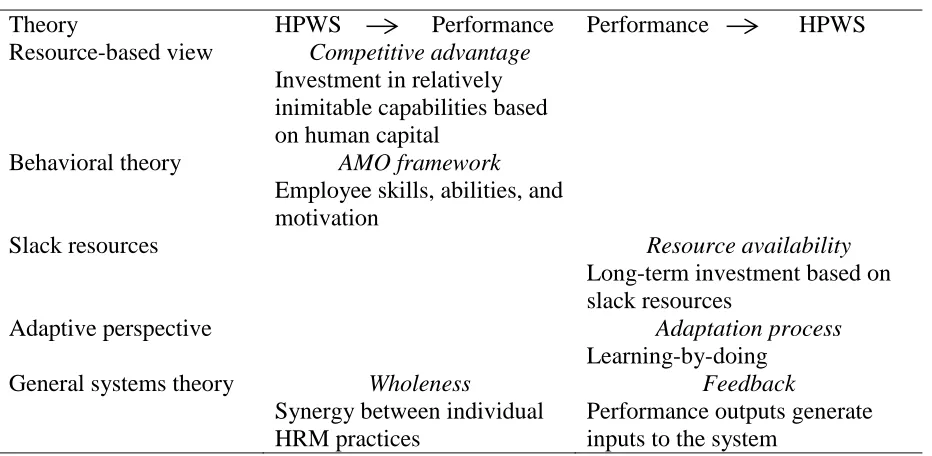
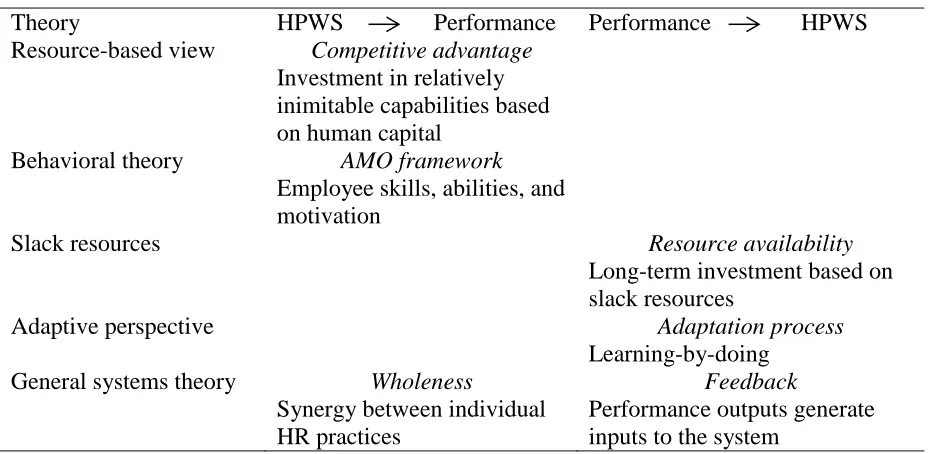
Table 3-1 Theoretical Foundations ... 94
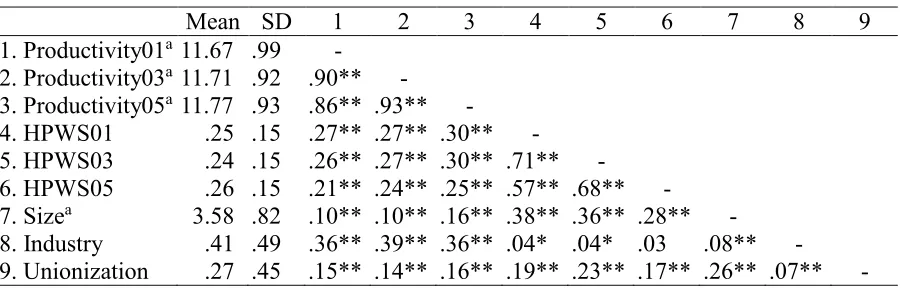
Table 3-2 Correlation Matrix ... 95
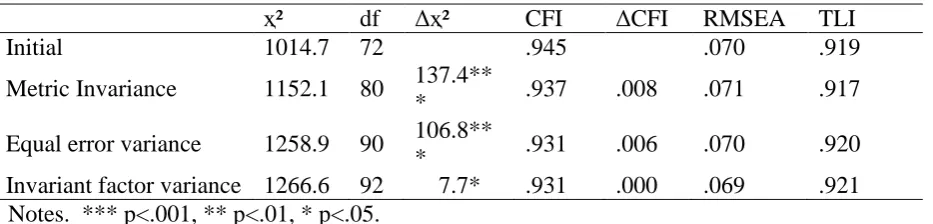
Table 3-3 Tests of Measurement Invariance ... 96
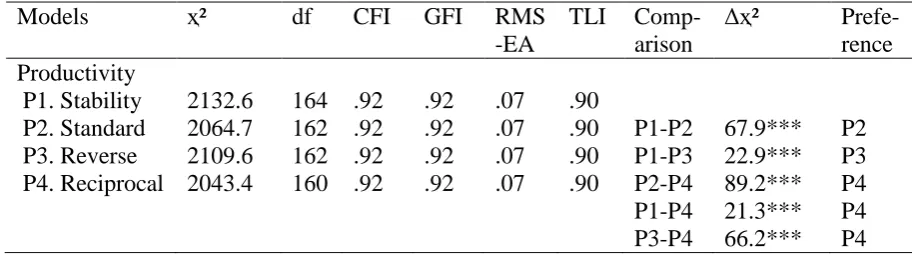
Table 3-4 Fit Statistics for Nested Causal Models... 97
Table 4-1 Theoretical Foundations ... 141
Table 4-2 Means, Standard Deviations, and Correlations ... 142
xii
List of Figures
Figure 2-1 Typology of Human Resource Management System Theories... 53
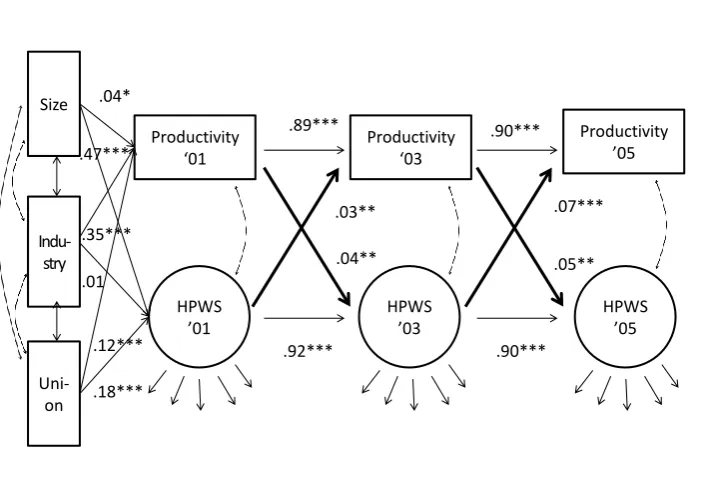
Figure 3-1 Cross-lagged SEM Results Testing the Causal Relationships between HPWS and Productivity ... 98
Figure 4-1 HPWS as Adaptive Systems ... 144
Figure 4-2 Research Model ... 145
Figure 4-3 Early/Small vs. Mature/Large Organizations ... 146
Figure 4-4 Confirmatory Factor Analysis for the HPWS ... 147
xiii
List of Appendices
Appendix A The HPWS Measure Used in Essay 2 ... 155
Appendix B Cross-Lagged SEM Results for Component HPWS Practices ... 156
CHAPTER 1.
INTRODUCTION
This thesis consists of three essays on strategic human resource management (SHRM).
Particularly, I present three essays utilizing general systems theory as a theoretical framework for
SHRM. The first essay introduces the general systems perspective to SHRM conceptually. In
the second essay, I examine the causal association between high-performance work systems
(HPWS) and organizational performance. In the third essay, I investigate the longitudinal
relationship between HPWS and organizational performance over a six-year period.
In Chapter 2, I present the first essay, entitled “Revisiting Theoretical Perspectives for
Strategic Human Resource Management: Toward an Integrative Framework.” In this paper, I
conduct a literature review on SHRM theories, and introduce a general systems theory as an
integrative framework for SHRM. Despite the development of SHRM, the literature still
requires a strong and integrated framework that incorporates existing theoretical perspectives.
The framework based on general systems theory provides an alternative perspective to integrate
different approaches to SHRM. General systems theory provides a rationale as to why HRM
works as a system and also provides directions for future studies.
In Chapter 3, I present the second essay, entitled “Causality between High-Performance
Work Systems and Organizational Performance.” This study introduces general systems theory
as a framework to consider the possible impact of feedback from the outcomes of the HRM
process. Theories in SHRM have treated HR practices as closed systems, considering HR
systems as an input and organizational performance as an output (Wright & McMahan, 1992).
General systems theory stresses that outputs are re-input to a system, which leads to maintenance
2
as a consequence of HR practices. As the general systems theory perspective suggests a virtuous
cycle between HRM practices and performance, the first essay examines a positive effect of
HRM practices on organizational performance at a later time point and a positive effect of
performance on later HRM practices.
In Chapter 4, I present the third essay, entitled “Human Resource Management as an
Adaptive System: Longitudinal Relationships between High-Performance Work Systems and
Performance.” This study investigates the longitudinal relationship between HPWS and
productivity over a six-year period. Based on general systems theory, this study suggests that
implementation of HPWS is an adaptive process. The general systems theory approach explains
how HRM systems can provide sustained competitive advantage for organizations. In order to
examine the systemic evolutionary process in implementing HPWS over time, a longitudinal
data analysis is applied to investigate HPWS as an adaptive system. This study contributes to the
HR literature by introducing an alternative perspective in which HR needs to be understood as an
adaptation process as well as top-down implementation at will.
While the field of HRM has suffered from its lack of compelling meta-theory (Butler,
Ferris, & Napier, 1991; Fleetwood & Hesketh, 2008), the application of general systems theory
provides an integrative theoretical lens integrating each stream of research in the SHRM field.
This dissertation suggests that general systems theory extends the SHRM literature by providing
3
REFERENCES
Butler, J. E., Ferris, G. R., & Napier, N. K. (1991). Strategy and human resources management. Cincinnati, OH: South-Western Publishing Company.
Fleetwood, S., & Hesketh, A. (2008). Theorising under-theorisation in research on the HRM-performance link. Personnel Review, 37(2), 126-144.
Katz, D., & Kahn, R. L. (1966). The social psychology of organizations. Oxford, UK: Wiley.
4
CHAPTER 2.
REVISITING THEORETICAL PERSPECTIVES
FOR STRATEGIC HUMAN RESOURCE
MANAGEMENT: TOWARD AN INTEGRATIVE
FRAMEWORK
INTRODUCTION
Scholars in the field of strategic human resource management (SHRM) have argued that
advanced HRM practices enhance organizational effectiveness (Pfeffer, 1998; Wright &
McMahan, 1992). For decades, researchers have reported the positive association between
certain HRM practices and organizational outcomes (Combs, Liu, Hall, & Ketchen, 2006; Jiang,
Lepak, Hu, & Baer, 2012). Researchers have also reported conditions upon which the
effectiveness of HRM practices depends (e.g., Datta, Guthrie, & Wright, 2005; Delery & Doty,
1996; Rabl, Jayasinghe, Gerhart, & Kühlmann, 2014) and the mechanisms linking HRM
practices to organizational outcomes (e.g., Aryee, Walumbwa, Seidu, & Otaye, 2012; Liao,
Toya, Lepak, & Hong, 2009; Patel, Messersmith, & Lepak, 2013).
Although SHRM researchers have accumulated empirical work on the effectiveness of
HRM practices, the field of SHRM suffers from the under-theorization issue (Fleetwood &
Hesketh, 2006; Guest, 1997). For example, Fleetwood and Hesketh (2008) argued that
“theoretical underpinnings will not emerge and develop simply by doing more, and/or better,
empirical work,” (p. 127). According to them, this under-theorization is not due to lack of
5
science, SHRM has borrowed from other fields such as economics, psychology, and sociology in
advancing the literature theoretically (e.g., Jackson, Schuler, & Jiang, 2014; Wright &
McMahan, 1992). However, the problem of borrowing theories from related fields resulted in
disconnects in SHRM theorizing and such disconnection hinders further development of SHRM
theories (Way & Johnson, 2005). While each stream of research has limited their interests in
specific dimension of HRM processes, it is important to see the whole picture because the
efficiency of systems depends upon the most weak part that has potential to disrupt the whole
system (Goldratt, 1990).
While researchers have borrowed theories from related fields, SHRM has not sufficiently
evolved into an integrated discipline. Theoretical perspectives used in the SHRM literature
remains heterogeneous, and researchers have selected one out of many theories in explaining the
HRM-performance link (Kaufman, 2010). For example, Fleetwood and Hesketh (2008) listed 49
different theoretical predictions used in SHRM studies. Even though researchers have adopted
various theoretical perspectives, very few studies are theory-driven (Boselie, Dietz, & Boon,
2005). While most studies have not sufficiently involved in developing a theory, the SHRM
literature is still limited in explaining how and why HRM is related to performance (Wright &
Haggerty, 2005). After reviewing papers on the SHRM literature, Fleetwood and Hesketh
(2008) found that most studies are empirically driven without sufficiently delivering reasons.
They argue that the so-called black box metaphor reveals the lack of theoretical explanations in
explaining the HRM and performance relationship. In sum, the current theoretical approach is
largely eclectic (i.e., different theories are applied in explaining different aspect of HRM
implementation) (Boselie, Dietz, & Boon, 2005). The lack of integrative approach retards the
6
Departing from the current eclectic paradigm, this study suggests that SHRM can be
understood as an integrative framework, applying a meta-theoretical perspective. For example,
SHRM researchers have been silent about evolutionary processes of HRM. Questions remain
how HRM practices are implemented and integrated over time, why some organizations have not
adopted advanced HRM practices while researchers have repeatedly reported positive
associations between the advanced HRM practices and organizational performance, how HRM
practices can contribute to organizational growth, how HRM outcomes influence future decisions
on HRM practices, and how external environments influence HRM decisions. This paper takes
a general systems approach combining different perspectives to develop an integrative
theoretical overview for the SHRM field. Some researchers have noted general systems theory
as having potential for developing theory in the SHRM field (e.g., Fleetwood & Hesketh, 2008;
Jackson & Schuler, 1995; Jackson, et al., 2014; Wright & McMahan, 1992), but the systems
perspective has not been fully embraced in the SHRM literature. For example, system concepts
in the field of SHRM have been largely limited to external consistency (i.e., alignment of HRM
practices to business strategies) and internal consistency (i.e., interaction among individual HRM
practices) (Wright & Snell, 1998). The systems perspective on SHRM can go beyond the current
utilization of systems concepts in SHRM studies. The general systems approach can be utilized
as a meta-theoretical framework that offers an integrative theoretical foundation for SHRM
(Fleetwood & Hesketh, 2006, 2008). According to Boulding (1956), “General Systems Theory
is the skeleton of science in the sense that it aims to provide a framework or structure of systems
on which to hang the flesh and blood of particular disciplines and particular subject matters in an
7
A systems perspective on SHRM includes a process-oriented approach as well as a
content-based approach. Researchers have identified contents in SHRM such as which
individual HRM practices should be included in HRM bundles, key stakeholders who shape
HRM contexts, and desirable organizational outcomes that can be influenced by HRM (e.g., Way
& Johnson, 2005). SHRM researchers have increasingly recognized the importance of the
implementation process and how HRM practices are enacted by line managers and employees in
an organization (Arthur, Herdman, & Yang, in press; Gondo & Amis, 2013; Sanders, Shipton, &
Gomes, 2014). According to the systems perspective, system elements and system processes are
not separated, but rather, tightly interlocked (Luhmann, 1995). As such, this paper proposes
SHRM system dynamics that include both SHRM system elements and SHRM system processes.
SHRM system elements are key components of HRM systems such as recruitment, training, and
compensation. These SHRM system elements interact with key stakeholders of SHRM systems,
including the external environment, internal environment, employees, etc. SHRM system
processes refer to the implementation of HRM practices in an organization through repetitive
cycles of input, throughput, output, and re-input.
The SHRM field can be further advanced by undertaking scholarly debates on its core
assumptions. In this paper, we provide fundamental principles, or grand propositions, of the
systems perspective on SHRM. Explicitly stating principles can be beneficial for advancing
theoretical arguments and empirical testing in future studies (Kozlowski & Klein, 2000). HRM
systems principles provide directions for developing explanations in SHRM and set common
ground upon which theory is questioned and advanced. Researchers can rely on HRM systems
principles to evaluate strengths and weaknesses of the proposed systems perspective on SHRM
8
The purpose of this study is to provide a framework to integrate the different approaches
to SHRM extant in the literature by proposing a general systems framework for SHRM. The
systems framework contains system elements identifying key contents for SHRM theory and
system processes indicating factors affecting SHRM implementation. In addition, fundamental
underlying assumptions in a systemic perspective on SHRM, or SHRM systems principles, are
introduced in the hope that future studies will embrace a systems perspective on SHRM theory.
THEORETICAL PERSPECTIVES IN SHRM
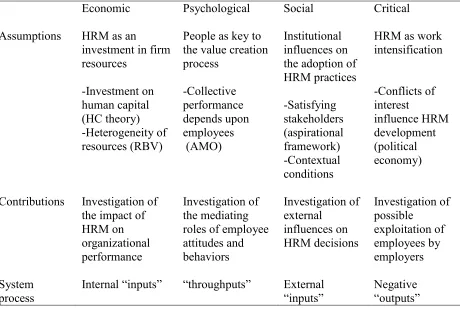
SHRM studies have developed theoretical explanations borrowing from economics,
psychology, sociology, and critical management (Wright & McMahan, 1992). Each stream of
research is based upon different assumptions and has contributed to the literature in different
ways (Table 2-1).
The economic approach to SHRM includes human capital theory, transaction cost
economics, agency theory, the resource-based view of the firm (RBV), etc. The economic
tradition stresses the role of HRM practices in contributing to organizational performance.
Researchers have focused on strategic human capital inputs or rational resource allocation
decisions (Greenwood, 2013; Watson, 2004). For example, the RBV, which is one of the most
impactful theories in SHRM, suggests that the HRM system creates organizational value because
competitors cannot easily copy its complexities, complementarities, and interdependencies as
compared to the ability to copy individual HRM practices (Wright, Dunford, & Snell, 2001).
Consequently, most studies under the economic tradition have examined the effects of HRM
practices on organizational outcomes (Wright & Boswell, 2002). Particularly, the economic
9
market value of the firm’s stock over the book value of its assets), return on assets, and return on
equity. As such, the economic tradition has been largely stockholder-oriented. For example, the
economic tradition stresses that developing employee skills and knowledge is based on
cost-benefit analysis, or return on investment such that marginal revenues should equal marginal costs
(Kaufman, 2015). Despite this focus on financial performance, organizational performance is a
multi-dimensional construct (Way & Johnson, 2005); therefore, the contributions of SHRM to
organizational outcomes need to include non-financial outcomes such as employee dispute,
creativity, and learning.
The economic tradition also typically posits a causal effect from HRM practices to
organizational outcomes. However, according to Wright et al. (2005), most research designs
used are post-predictive (i.e., performance is measured up to the point of the survey when current
HRM practices are assessed) to test the effects of HRM on organizational outcomes. Therefore,
empirical findings actually support reverse causality (i.e., performance predicts the adoption of
HRM practices). As such, advancing understanding of the impact of HRM requires
methodological controls to rule out the possibility of reverse causality. Reverse causality also
suggests the intriguing possibility that theory needs to consider the influence of organizational
outcomes on implementation of HRM systems. For example, firm performance predicts future
investment in HRM practices by providing evidence that past investments have paid off as well
as slack resources to cover further HRM costs (Shin & Konrad, in press).
The psychological approach to SHRM includes a behavioral perspective, expectancy
theory, the job characteristics model, the ability-motivation-opportunity (AMO) framework, etc.
The behavioral perspective, grounded in psychology, stresses the role of employee perception
10
fundamental assumption in the behavioral perspective is that SHRM elicits desirable employee
behaviors, which are beneficial for organizations (Liao, 2005; Wright & Snell, 1998). For
example, researchers have proposed that HRM practices contribute to organizational outcomes
by enhancing employee AMO (Jiang, Lepak, Hu, et al., 2012).
While the role of employees has been understood as recipients of strategic decisions,
employees are also potential change agents who initiate and implement new processes. As
Gondo and Amis (2013) emphasize, participants range from active to passive to resistant in
implementing HRM practices. Consistent with this point, recent attempts to differentiate SHRM
practices such as high-performance work systems (HPWS) as experienced by employees from
HPWS as intentionally implemented by firms help to explain employee psychological
experiences as a key mechanism linking HPWS to organizational outcomes (Aryee, et al., 2012;
Choi, 2014; Liao, et al., 2009; Piening, Baluch, & Ridder, 2014). Accumulated tacit knowledge
of employees in using HPWS can increase productivity (Nelson & Winter, 1982; Nonaka &
Takeuchi, 1995), and employees’ shared perceptions of HPWS can strengthen the linkage
between HPWS and productivity. In addition, some researchers suggest that systems of HRM
practices perform better than individual practices because an internally consistent set of practices
delivers a strong and clear message to employees regarding the firm’s HRM philosophy, which
increases employee commitment if employees perceive that HPWS (i.e., high-road HRM
systems) are adopted (Bowen & Ostroff, 2004). At the core of such a configurational
perspective lies the holistic principle (Delery & Doty, 1996; Marler, 2012), which is one of key
principles of general systems theory.
The sociological approach considers the impact of institutional contexts on the adoption
11
dynamics, arguing that firms build their HRM practices to fit rules and structures that are part of
the institutional contexts in which they operate (Boon, Paauwe, Boselie, & Den Hartog, 2009;
Paauwe, 2004). For example, Paauwe and Boselie (2003) argued that the presence of
professional HRM departments leads to the development of systems that fit “normative” views
of HRM practices. In this view, organizations adopt HRM practices developed by leaders in the
profession as best practices without questioning their validity or applicability. In the institutional
view, uncertainty regarding the performance effects of management practices drives firms to
mimic the HRM practices of industry leaders.
Relatively few studies have adopted institutionalism as a theoretical rationale in SHRM
studies (Wright & Haggerty, 2005). For instance, Tannenbaum and Dupuree-Bruno (1994)
found that public scrutiny was positively associated with the development of innovative HRM
practices. Datta, Guthrie, and Wright (2005) reported that industry characteristics, such as
industry capital intensity, growth, and differentiation, affect adoption levels of HRM practices.
Despite the ability of the sociological approach to recognize the influence of external
environments, these environments are largely perceived as givens. There has been limited
empirical investigation focused on how HRM practices interact with environments and evolve
with such interactions, but fit of HRM systems to environments can be critical. For example,
Rabl et al. (2014) reported that the effect size of HPWS on performance was dependent on
national culture. In addition, while researchers have reported globalization results in
standardization of HRM practices across countries by adopting US-style “best practices” (e.g.,
Pudelko & Harzing, 2007), foreign organizations may decouple the enacted day-to-day
operations in their countries from the global best practices. While recent work recognizes that
12
in press; Gondo & Amis, 2013; Oliver, 1991), future research can investigate how SHRM
evolves under institutional pressures.
According to Greenwood (2013), the mainstream SHRM literature has focused on
rational decision making while ignoring the socio-political aspects of HRM (Greenwood, 2013).
The functionalistic approach taken by mainstream SHRM theorizing has focused upon how firms
can fully utilize human resources. Functionalism assumes that management and employees have
a common interest, underestimating organizational politics and the breadth of values held by
employees (Guest, 1990). The critical perspective recognizes politics in an organization, power
and inequality issues, and agency problems (Watson, 2004). A critical approach to SHRM
argues that the management-centered tradition of SHRM studies neglects the underlying conflict
between management and employees (Watson, 2004). “A critical perspective started developing
- broadly rooted in labour process analysis or Marxist political views – which viewed HR ideas
(such as competitive advantage, empowerment and trust) as rhetoric designed to mask the reality
of centralisation of power and control” (Greenwood, 2013, p. 358). While most HRM
researchers regard the adoption of an advanced set of SHRM practices as a “win-win situation for employers and employees” because it gives employees an opportunity to be involved in
decision making and to build skills (Meyer, Jackson, & Maltin, 2008, p. 38), critics argue that
increased participation leads to worker exploitation and increases work intensity and resulting
strain. For example, Graham (1995) pointed out that teamwork is used as a stronger control
system that intensifies work. Similarly, Godard (2004) argued that organizations achieve better
performance by exploiting employee labor through increased surveillance and control under
13
Application of a critical approach to HRM has implications for the other three
approaches. Critics of HRM argue that “HRM considers management to be the primary actor in
the employment relationship, responsible for designing and implementing the appropriate HRM practices to produce gains for both employees and employers”(Janssens & Steyaert, 2009, p.
115). The critical approach suggests that the psychological approach to HRM needs to consider
negative employee responses to the implementation of HRM practices. For example, questions
remain regarding how to address employees’ negative emotional experiences in implementing
new HRM practices and their resistance to such changes. As the Lewin’s (1951) change model
suggests, HRM managers need to “unfreeze” employee beliefs first to make employees accept
desirable changes. Leaders’ impatience with strategic achievement can exaggerate the situations
by exerting excessive control over employees and ignoring implementation processes (Conger,
1990). For example, Fust and Cable (2008) found that employee resistance diminished with
increased quality of leader-member relations.
Further, the economic tradition has stressed financial performance, and financial
performance has been the key dependent variable for SHRM research. Therefore, researchers
have neglected factors such as dignity at work, stressors and strains as outcomes of HRM
systems. Finally, the critical perspective suggests the need to include possible negative social
consequences of adopting HRM practices (e.g., spillover of work stress from work
intensification under HPWS to the family environment) and negative social influences of SHRM
adaptation (e.g., the impact of differentiated incomes and benefits among employee groups on
social inequality in wealth and health) as a relevant agenda in research. While SHRM studies
limit their scope to organizational phenomena, management practices have to be understood in
14
addition, a critical approach to SHRM suggests that employee behaviors and attitudes need to be
understood in consideration of different socio-political contexts (Watson, 2004).
The four approaches shown in Table 2-1 contribute to the development of the SHRM
field; however, each is largely separate from the others, indicating that the field could benefit
from an integration of theoretical lenses. Despite the development of SHRM theory, the
literature still requires a strong and integrated framework that incorporates SHRM inputs,
processes, outputs, and multiple stakeholders (Jackson, et al., 2014; Way & Johnson, 2005).
Without an integrated framework, predictions based on specific theories are difficult to provide
to practitioners and researchers. In this sense, an approach based on general systems theory
offers potential value as it pursues an integrative perspective (i.e., understanding the whole rather
than sub-functions).
A SYSTEMS PERSPECTIVE ON HRM
Consistencies in HRM Systems
The term system is widely applied in all fields of science, and it commonly appears in
the SHRM literature. For example, SHRM researchers have used terms such as
high-performance work systems, high-involvement work systems, and high-commitment worksystems
to describe an advanced set of HRM practices. However, explanations for why SHRM works as
a system are largely limited to internal and external consistency. Although SHRM researchers
have suggested that HRM needs to be considered as a system, such consideration has been
15
First, researchers point out that HRM systems require internal consistency among HRM
practices. They argue that “a group of separate but interconnected human resource (HR)
practices [are] designed to enhance employees’ skills and effort” (Takeuchi, Lepak, Wang, &
Takeuchi, 2007, p. 1069). As such, SHRM systems consist of a set of individual HRM practices,
including employment security, selective hiring, extensive training, compensation contingent on
performance, reduced status distinctions, and information sharing (Pfeffer, 1998). Further,
SHRM systems can contribute to organizational performance better than individual practices
because of the synergetic associations among individual practices. Meta-analytic findings
support the proposition that the association between SHRM systems and performance is stronger
than that between individual HRM practices and performance (Combs, et al., 2006).
Second, researchers also argue that SHRM, as a system, requires external consistency.
External consistency suggests that effective HRM must fit with other organizational factors,
including business strategies (Schuler & Jackson, 1987). Thus, a firm is required to create
optimal HRM practices to meet its strategic choices. Arthur (1992) reported that a specific set of
HRM practices matches a specific business strategy. Similarly, Bae and Lawler (2000) found
that firms were more likely to have high-involvement HRM under differentiation strategies. Batt
(2000) found that service firms are likely to use high involvement systems only for employees
serving high value-added customers. All of these studies indicate the strategic design of HRM
systems to fit the business strategy of the firm to maximize profitability (Lepak & Snell, 1999).
Although the notions of internal and external consistency have advanced understanding
of HRM as a system, using the term “system” in SHRM studies can be merely an academic
fashion rather than a true alternative perspective unless a theoretical perspective on SHRM
16
works as a system, it is necessary to rely on the systems literature. In addition, the application of
systems theory has the potential to overcome criticism regarding the lack of an integrative
perspective on HRM.
Theoretical Contributions of a General Systems Approach to SHRM
Application of general systems theory to SHRM studies can be beneficial in
incorporating various theoretical perspectives from different disciplines. According to Katz and
Kahn (1966), systems theory attempts to integrate macro sociological approaches and micro
psychological approaches to organizations by considering their dependency on larger
environmental contexts as well as their micro energic input-throughput-output processes. Thus,
applying systems theory to HRM studies integrates disjointed theoretical perspectives into a
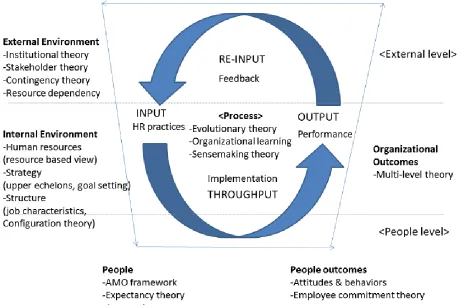
single framework (see Figure 2-1). In addition, the systemic framework clarifies missing
elements in the SHRM literature. Thus, general systems theory (Von Bertalanffy, 1968) can be
used to extend current understandings of SHRM systems (see Table 2-2).
Evolution vs. diffusion. The framework proposes an evolutionary perspective (i.e.,
building practices) as well as a diffusionist approach (i.e., buying practices). Both perspectives
are consistent with a general systems theory approach. The evolutionary perspective appears in
the repetitive input-throughput-output-feedback cycles of the framework, while diffusionism is
depicted by the influences of external environment in Figure 2-1.
According to the diffusionist perspective, HRM practices are spread from one
organization to another. Organizations enhance performance by adopting best practices and their
attentions should be focused on external markets which provide new practices. In this approach,
17
has been the dominant framework in SHRM, influenced by the early universal or “best practices”
view articulated by Pfeffer (1994) and continued with the ongoing discussion of which practices
should be considered as a part of HPWS (Becker & Gerhart, 1996; Combs, et al., 2006). While
diffusionism has been the dominant framework in SHRM, it is limited in its ability to explain
why and how HRM can create competitive advantage for firms because organizations can easily
buy best practices on the market. By comparison, the evolutionist perspective is aligned with the
resource based view of the firm as both perspectives stress an organization’s unique path toward
achieving competitive advantage. Given that most SHRM studies have been based on
cross-sectional data, evolutionism has not been much adopted as a relevant perspective for
understanding HRM implementation. However, as more studies use longitudinal data,
researchers will be better able to make and test predictions about SHRM adoption based on the
evolutionist perspective. Thus, once HRM practices are adopted, organizations experience
situated implementation of the abstract practices over time.
Macro vs. micro. According to Luhmann (2003), systems theory is different from both
macro-oriented and micro-oriented conceptual approaches. Macro-oriented sociological
perspectives with the Parsons’s theory at their core, stress sociological determinants of
organizational structures (e.g., Hsu, Marsh & Mannari, 1983). However, this approach has been
commonly criticized for treating organizational environments as overly deterministic (Bakken &
Hernes, 2003). By comparison, Weick’s (1979; Weick, Sutcliffe, & Obstfeld, 2005) social
psychological view of organizations is fundamentally different from the Parsonian perspective
and emphasizes the sense-making processes of actors as the micro-level building blocks of
organizations. According to Luhmann (2003), in the general systems approach, organizations
18
previous actions influence new actions in the future. Hence, in contrast to environmental
determinism, organizational evolution is viewed in systems theory as contingent on interpretation
of the organizational context. In contrast to Weickien sense-making which is grounded in the actor’s micro psychological experience, systems theory references organizational evolution at
organizational level not the actor’s level (Bakken & Hernes, 2003). Hence, systems theory
argues that organizations evolve as a result of a series of actions and decisions taken by groups
of actors positioned within a set of organizational functions and processes, each of whom is
responding to events in their differentiated subsets of internal and external environments. Hence,
the structures and processes resulting from prior actions and decisions provide key factors in the
context influencing future actions and decisions (Bakken & Hernes, 2003). In these ways,
systems theory takes an integrative approach combining macro and micro elements as
determinants of organizational evolution.
System elements vs. system process. Figure 2-1 contains the key elements of a SHRM
system, specifically, the input-throughput-output-feedback loop, the external and internal
environments of that process, the people as interpretors and enactors of that process, and the
individual and organizational-level outcomes of that process. Importantly, SHRM system
elements and processes are not separated, but rather, are depicted as distinct aspects of an
integrated system. In system theory, particularly Luhmann’s autopoietic theory, process and
structure are interlocked: “Structure has elements of process, just as process has elements of
structure (Luhmann, 1995,: 340). Moreover, they are both prerequisites for one another. Process
leads to structure, just as structure leads to process. The intermeshing is more than mere
interaction; process and structure presuppose one another.” (Bakken & Hernes, 2003, p. 67). In
19
evaluation, and compensation practices create a structural context within which the recruitment,
selection, training, evaluation, or rewarding of any particular employee or set of employees
occurs. Practice implementation is determined by the perceptions and interpretations of the
actors involved in the process at any given point in time, resulting in process variation despite
structural consistency. Furthermore, informal processes that actors notice as recurring and judge
as adding value may become formally codified as changes to the relevant set of structures.
Importantly, system elements drive organizational evolution as actors’ judgments of the quality
of inputs and the efficiency and outcomes of various throughput processes influence process
implementation and change.
Key Contents for SHRM Theory Using a General Systems Approach
This paper identifies key contents and processes for SHRM theory based on general
systems theory (see Table 2-3). Key contents for SHRM theory include external environment,
internal environment, people, employee outcomes, organizational outcomes. Processes for
SHRM theory considers implementation of HRM practices as a recursive and whole process of
input, throughput, output, and re-input.
Firstly, the general systems approach assumes that the SHRM system is open to the
external environment (see upper left in Figure 2-1). Consistent with this view, SHRM
researchers have long recognized the influence of external environments on SHRM systems and
their effectiveness for attaining organizational outcomes. For example, Schuler, Jackson, and
Tarique (2010) identified several external stakeholder groups with the potential to influence the
SHRM system, including society, investors (shareholders), strategic partners (suppliers, unions
20
external environment is critical for organizational survival (Meyer & Rowan, 1977), and a
number of the practices associated with SHRM are thought to garner legitimacy for the
organizations that adopt them (Kalev, Dobbin, & Kelly, 2006; Konrad & Linnehan, 1995). In
terms of HRM, social forces on management include pressures to provide minimum wages,
equal employment opportunities, workplace education, job security, etc.
Also aligned with the notion that SHRM systems are open to the environment, the
contingency perspective argues that HRM practices need to be aligned with institutional context,
business strategy, structure, and people in order to support the achievement of organizational
goals (Balkin & Gomez-Mejia, 1987; Schuler & Jackson, 1987). Contingency factors
determining the structuring of SHRM systems include business life cycles, firm sizes,
technological innovation, industry, and so forth (Balkin & Gomez-Mejia, 1987). For example,
Datta et al. (2005) reported that the association between HPWS and productivity is stronger
under low capital intensity, high industrial growth, and high product differentiation. Although
few studies have examined the impact of external environments on SHRM systems, the
environmental context is generally perceived as a given. Therefore, the systems perspective’s
emphasis on studying changes in HRM practices and interactions between these practices and
environments has the potential to add value to theorizing in the SHRM field (Wright &
McMahan, 1992).
Researchers can advance SHRM theory by adopting the open systems concept,
introduced in general systems theory (Katz & Kahn, 1966). Most SHRM studies take a closed
systems perspective by limiting their scope to the study of within-organization variables. Similar
to the way living organisms require the inflow of energy from their surroundings, organizations
21
inflows of resources from the environment, organizations can maintain and strengthen their
throughput processes to overcome movement toward entropy or disorder (Kast & Rosenzweig,
1972). Furthermore, organizational actors determine the use of resource inflows through a
process of feedback interpretation and group or even inter-group decision-making. As such,
organizations do not passively respond to environments, but actively interact with and respond to
environmental influences to avoid entropy. The implication for research is that general systems
theory requires the study of external environments using longitudinal data analyses in order to
assess the impact of environmental feedback on structural maintenance and change (Shin &
Konrad, in press).
Although organizations need to be open to environments to avoid entropy, organizational
researchers have argued that they function as operationally closed systems (Luhmann, 2003;
Seidl & Becker, 2006). While current SHRM studies assume organizations are relatively
automatic systems that mechanically respond to external environments, Luhmann’s (1990)
autopoietic system, or a system that internally produces and reproduces itself under external
influences, suggests a more complex change process that fundamentally happens inside a system.
Specifically, the organizational decision-makers responding to resource inflows and other
feedback from the environment function within a system that is sheltered from direct
environmental influences. Given these complexities, the internal process of responding to
external environments to maintain or modify the SHRM system remains to be explored further in
future studies (Gondo & Amis, 2013).
Internal environment consists of elements within an organization (see middle left in
Figure 2-1) and includes business strategy, organizational structure, and internal human
22
theoretical SHRM frameworks, namely the RBV (Barney, 1991). The RBV shifted the focus of
strategy research beyond analyzing external environments (e.g., competitive advantage model;
(Porter, 1985)) toward factors internal to the firm to explain competitive success. The SHRM
field utilizes the RBV to emphasize the potential of firm human capital and people management
systems to create an internal resource that is valuable, scarce, and difficult for competitors to
copy (Wright & McMahan, 1992). Reflecting this insight, internal environment in Figure 2-1
indicates that the distinctive combination of organizational human capital, business strategy, and
organizational structure as a key element affecting the quality of inputs, the efficiency of
throughputs, the competitiveness of outputs, and the resulting feedback from the external
environment.
While employees might be perceived as an internal environmental element, the people
factor is separated from internal environment in our framework (see the bottom left in Figure
2-1) to reflect the distinction between organizational-level inputs and people-level inputs
(McMahan & Harris, 2012). At the organizational level, human capital reflects both the level of
capabilities held by differentiated sets of employees and the potential for combining the various
sets of employee capabilities to create value for the firm. Furthermore, successful leveraging of
organizational human capital requires strategic design of staffing and people management
structures to generate ongoing processes of interaction that create value. But once launched by
top management teams, the success of the combination of organizational human capital and the
set of SHRM practices depends on implementation at the level of line managers and employees
(Bos‐Nehles, Van Riemsdijk, & Kees Looise, 2013; Guest & Bos-Nehles, 2013). For this
23
employee ability, motivation, and opportunity (AMO), employee perceptions and interpretations
of the SHRM system, and employee impact on system implementation and maintenance.
The change management literature has stressed the importance of employee acceptance
and resistance in accepting new initiatives. For example, Lewin’s (1951) classic three-phase
model of change (unfreezing, changing, and refreezing) provides insights on HRM
implementation; management can provide sufficient psychological safety to reduce employee
resistance (Baer & Frese, 2003), adopt a learning approach to encourage employees accepting
certain sets of desirable behaviors (Edmonson, 1999), and make the changed behaviors
normative and routine (Piderit, 2000). Employee acceptance of and resistance to HRM practices
have not been much considered in the SHRM literature, but a limited number of studies have
differentiated employee-experienced HRM from organizational-level HRM. For example, Liao
et al. (2009) found significant differences between managers’ intended implementation of HPWS
and employees’ perceptions of HPWS. Aryee et al. (2012) reported that employee-experienced
HPWS partially mediated the relationship between manager-reported HPWS and performance
outcomes, and Choi (2014) documented that employee-reported HPWS was a stronger predictor
of firm financial performance than manager-reported HPWS. These recent findings show that
organizational-level inputs can be successful if they are effectively transferred to the employee
level. In addition, according to Gondo and Amis (2013), practice adoption requires both
acceptance and implementation by the targeted employees. Thus, employees are likely to
respond to HPWS once they perceive the values of HPWS. As recent studies suggest the
multi-level nature of HPWS implementation (e.g., Elorza, Harris, Aritzeta, & Balluerka, 2016; Pak &
Kim, in press; Shen, in press), people level enactment is separated from organizational level
24
employee perception in using HRM practices, future studies should explore how employees
implement day-to-day operations of such practices.
While the systems perspective supports the importance of the employee level of analysis
for the performance impact of SHRM, some studies have reported contributions of SHRM
practices to employee-level outcomes, including attitudes (e.g., job satisfaction, psychological
empowerment, and commitment) and behaviors (e.g., individual service performance,
organizational citizenship behaviors, and turnover intentions) (Kehoe & Wright, 2013; Liao, et
al., 2009; Takeuchi, Chen, & Lepak, 2009) (see people outcomes at the bottom right in Figure
2-1). Firstly, if employees are the key mediators that link SHRM to organizational outcomes, more
studies of employee-level outcomes are necessary to enhance understanding of the extent and
conditions under which employees are attracted to and motivated by SHRM and therefore are
willing to implement, maintain, and extend SHRM systems. Secondly, while most studies have
reported positive employee-level outcomes, negative outcomes are also expected. For example,
a critical perspective on SHRM argues that positive contributions of HRM to organizational
outcomes is likely achieved through work intensification and tight control over employee
behaviors (Godard & Delaney, 2000). Thirdly, general systems theory suggests that systems
may atrophy without ongoing inputs, such as employee effort. Just as organizational outputs
serve as feedback affecting inputs to the organization, actor-level outcomes serve as feedback to
affect key actor-level inputs, such as work effort and organizational citizenship behaviors critical
to system effectiveness. Supporting this view, Sumelius et al. (2014) found that employee
perceptions of SHRM systems were affected by their performance appraisals. Future research is
needed on the impact of people outcomes on employee engagement in SHRM implementation,
25
Performance at multiple levels is also an area to be studied further. If employees are key
mechanisms linking HRM to organizational outcomes, employee level outcomes must be related
to organizational level outcomes, as depicted in the link from employee outcomes to
organizational outcomes in Figure 2-1. While HRM researchers have identified the
multi-dimensionality of organizational performance (e.g., Combs, et al., 2006; Guest, 1997; Singh,
Darwish, Costa, & Anderson, 2012), the multi-level aspect of performance has received
relatively limited empirical attention. Some researchers have aggregated individual-level
outcomes to the organizational level as a mediator that links HRM practices to organizational
outcomes (e.g., Aryee, et al., 2012; Gong, Law, Chang, & Xin, 2009). However, explanations on
the process by which individual-level outcomes emerge into the higher system level are still
limited. Explanations can be adopted from multi-level theory (Kozlowski & Klein, 2000), which
stems from general systems theory. According to general systems theory, characteristics of a
higher order system are grounded in interactions among its sub-systems. Individual performance
does not automatically produce organizational performance, rather individual outcomes result in
organizational outcomes through interactions among individuals. For example, interactions
among individuals can strengthen team dynamics, thereby enhancing unit level performance
(Evans & Davis, 2005). Thus, general systems theory suggests the importance of social
architecture together with human capital in enhancing organizational performance. In addition,
multi-level performance implies a performance alignment issue within SHRM. While SHRM
researchers have connected internal consistency to HRM practices and external consistency to
strategy, performance alignment across levels (e.g., individual, team, business unit, and firm) is
26 SHRM System Processes
SHRM system processes are depicted as repetitive cycles of input, throughput, output,
and re-input inside the box in Figure 2-1. In Luhmann’s social systems theory, organizations are
autopoietic systems which are based on recursive operations, or repeated processes based on
their previous states (Seidl & Becker, 2006). Rather than analyzing a system through an
input-output linkage, the assumption of recursivity emphasizes that organizations exist through their
own reproduction. In this view, a practice evolves through repetitive cycles of operations.
While researchers have largely neglected the path from output to re-input in SHRM studies,
according to general systems theory, organizational outcomes generate inputs into the
organization (see the link from output to input in Figure 2-1). Only with sufficient resource
inflows can organizations build and sustain their internal throughput processes (Kast &
Rosenzweig, 1972) such as by strengthening or expanding the SHRM system (Shin & Konrad, in
press). Feedback implies the necessity of slack resources driving further investment as proposed
in the behavioral theory of a firm (Cyert & March, 1963). As such, strong organizational
performance based on HPWS supports further development of these systems (Shin & Konrad, in
press). According to Wright and Snell (1991, p. 211), “in order to engage in strategic human
resource management, the HR system must provide outcomes (i.e., performance) which enable
the organization to implement its strategy”. Therefore, the link from performance to SHRM
systems has theoretical importance as well as methodological implications.
The feedback loop within the general systems approach also suggests that SHRM systems
are implemented through an adaptive process (Miner, 1994). Organizations incrementally adapt
HRM systems as they accumulate knowledge of and gain experience with these practices.
27
HRM practices to fit their goals and structures. This ongoing process of feedback generating
re-input suggests that researchers must understand SHRM implementation as an adaptive process.
Such evolutionary (Nelson & Winter, 1982) or organizational learning processes (Levitt &
March, 1988; Nonaka & Takeuchi, 1995) have received little attention in SHRM studies.
According to the evolutionary perspective, organizational implementation is largely affected by
the experiences of an organization. The link from output to input in Figure 2-1 also depicts the
importance of day-to-day operations among lower level employees as well as strategic decisions
from the top management team. While the SHRM literature focuses on strategic decisions at a
certain point made by top management teams (e.g., Arthur, et al., in press), researchers have
implicitly assumed top-down decision making at will. Path dependence in the evolutionary
perspective suggests that decisions about SHRM are on-going rather than one time top-down
propositions.
Considering the evolutionary process, HRM practices are not only affected by top
management teams, but are also implemented by line managers and employees who actually
perform these practices on a daily basis. Once introduced by upper-level decision makers, HRM
practices evolve through a learning-by-doing process at the level of line managers and
employees who must enact abstract practices by integrating them into day-to-day operations
within local contexts (Gondo & Amis, 2013). The effectiveness of HRM systems is determined
not only by the practices themselves, but also by the “day-to-day experiences of employees and
the behavior of line managers” (Gratton & Truss, 2003, p. 75). In this sense, the implementation
of SHRM systems can be understood as organizational routines that show both long-term
consistency and change over time as a result of on-going variation, selection, and retention of
28
Furthermore, HRM systems should be understood as a whole process of
input-throughput-output-re-input (see the whole picture rather than parts in Figure 2-1). Each part of
this process cannot sufficiently explain the strengths and weaknesses of SHRM systems. SHRM
research, having been focused upon demonstrating the potential to create value for the firm, has
focused little attention on weaknesses. But, as the theory of constraints argues (Goldratt, 1990),
the efficiency of systems depends upon their weaknesses which have the potential to disrupt the
whole. To avoid flaws and bottlenecks in a system, awareness of the SHRM system in its
entirety is critical.
SHRM SYSTEM PRINCIPLES
General systems theory provides not only a rationale for why HRM works as a system,
but also guidance for future studies. It is not possible to draw a complete list of research
propositions from general systems theory because of its extensiveness (Kast & Rosenzweig,
1972). However, to provide broad possible applications of this theory for SHRM research, we
introduced management system principles that were modified from Kast and Rosenzweig (1972)
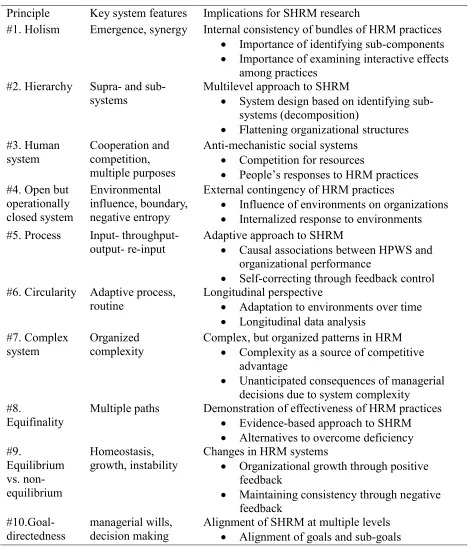
(see Table 2-4). System principles here refer to foundational assumptions of a systems
perspective, or grand propositions, upon which to base more specific research questions. The
proposed principles can be used to grasp the knowledge structure of SHRM systems and
communicate the underlying assumptions within the SHRM literature.
The first SHRM systems principle is the value of a holistic perspective. Researchers
have suggested that SHRM practices work as a bundle rather than individually. General systems
theory notes the importance of “wholeness” where elements of a system work in total rather than
29
emergence of new properties at the supra-system level, which cannot be reduced to its parts.
Such an irreducible feature has several implications for HRM systems.
The first principle concerns the notion that identification of components can lead to a
better understanding of possible interactions with and constitutions of a system. Management
can initiate changes to a system by carefully selecting components. Additionally, components
themselves can be systems that require further investigation of each sub-component. However,
manipulation of components must be conducted with an understanding of the whole system;
otherwise, management would suffer side effects of component implementation. For example,
extensive training in general skills together with low compensation can result in a high turnover
rate because trained employees can seek high-paying jobs elsewhere. Second, wholeness
delivers the non-summative nature of interdependent components. Summation of individual
HRM practices does not fully depict the emergent property at the SHRM systems level, as these
systems have distinct characteristics that cannot be explained by an aggregation of individual
HRM practices. As such, a holistic perspective has methodological implications and requires
examining theoretically-important interactions among sets of HRM practices.
The second systems principle is the hierarchical embeddedness of a system. According
to general systems theory, every system is fundamentally a multi-level system, or a supra-system
consisting of its sub-systems. Boulding (1956) identified hierarchical levels of systems as
follows. The first level of a system is the framework, which is related to describing static
structures such as the anatomy of an animal or the structure of the solar system. The second
level is clockwork, which examines simple dynamic systems where movement of the parts is
predetermined by governing rules similar to the mechanistic motions of levers and pulleys. The
30
An example of this level is a heating system of which one adjusts the temperature to avoid
becoming “too cold” or “too hot.” The fourth level is the cell, or self-maintaining systems. This
level considers self-reproduction through metabolism of ingestion, digestion, and excretion
processes.
Identifying a hierarchy of systems can help researchers build theoretical and empirical
knowledge at each level. For the SHRM field, the overall organizational chart and design might
be considered the organization’s framework, while the set of formalized policies might be
considered the clockwork. The SHRM thermostat consists of feedback mechanisms providing
information on the attitudes and perceptions of employees as well as productivity or efficiency of
the production process. The cells of the SHRM system consist of organizational units such as
divisions, units within divisions, and teams within units. Organizational units maintain their
functions by obtaining, transforming, and producing resources. The functioning of each level of
the system impacts the others as well as the health of the system as a whole. For example, while
SHRM studies have implicitly considered employee involvement as a key mechanism,
multi-level research design and theory allow researchers to gain a better understanding of this
throughput mechanism.
The third principle suggests that HRM systems are human systems. This principle
delivers the anti-mechanistic nature of HRM systems. General systems theory can be applied to
material and material systems; however, organizations as social systems are
non-materialistic. Human systems suggest that organizations are coalitions of stakeholders working
to achieve a set of goals that are difficult to achieve without the division of labor. However, the
question arises regarding how to divide labor and resources. According to resource dependency