Available Online atwww.ijcsmc.com
International Journal of Computer Science and Mobile Computing
A Monthly Journal of Computer Science and Information Technology
ISSN 2320–088X
IMPACT FACTOR: 6.199
IJCSMC, Vol. 8, Issue. 9, September 2019, pg.161 – 166
Hostel Automation System
Mr. A.Aswar
1; Mr. A.Ganesan
2; Dr. V.Kavitha
3; Mr. V.Karthicksabri
41,2,3&4
PG & Research Department of Computer Applications, Hindusthan College of Arts and Science, India
1
[email protected]; 3 [email protected]
Abstract— This project deals with integrating the activities of the College Hostel into a comprehensive IT enabled Campus. There are 1200 students staying in a hostel pursuing various degrees in an institution. The activity for allocating the rooms for each student and maintaining the changes in rooms is a tedious task when operated manually. So to overcome the difficulty the integrated hostel automation system is proposed. In this project each student detail, College detail, Department details, Hostel building blocks details and room allocation details are get performed. The development process is done using the .Net Technology as Development Frame work and SQL Server as Back End Database Server.
Keywords— Room allotment, Registration process, Portability
I. INTRODUCTION
File design sits at the technical kernel of the software engineering process and is applied regardless of the development paradigm and area of application. Design is the first step in the development phase for any engineered product or system. The designer’s goal is to produce a model or representation of an entity that will later be built. Beginning, once system requirement have been specified and analyzed, system design is the first of the three technical activities -design, code and test that is required to build and verify software.
The importance can be stated with a single word “Quality”. Design is the place where quality is fostered in software development. Design provides us with representations of software that can assess for quality. Design is the only way that we can accurately translate a Student’s view into a finished software product or system. Software design serves as a foundation for all the software engineering steps that follow. Without a strong design we risk building an unstable system – one that will be difficult to test, one whose quality cannot be assessed until the last stage.
During design, progressive refinement of data structure, program structure, and procedural details are developed reviewed and documented. System design can be viewed from either technical or project management perspective. From the technical point of view, design is comprised of four activities – architectural design, data structure design, interface design and procedural design.
Existing System and Disadvantages
More human power
More strength and strain of manual labour needed
Repetition of same procedure.
Low security
Data redundancy
Difficulty to handle
Difficulty to update data
Record keeping is difficult
Proposed System
This project Implemented Hostel Maintenance System it is design for maintain detail of hostel and hostel students who are staying in college hostel. This project contain the detail of the student who are all staying in the college hostel and full detail of the student name, address, age, Department, Parents details and some other detail like health condition of the student who are all stay in the hostel. The project contain hostel detail like the number of room the hostel contain and how many rooms are fill by the students and how many of them free.
Advantages of Proposed System
1. Unique id to student.
2. Personal detail collection of students, parents / guardians. 3. Whole module has been managed by the admin only.
II. METHODOLOGY
The project "Hostel Management System" is divided into several modules. That name of the modules are explained respectively.
Modules:
1. Students Module.
2. Hostel Detail management. 3. Room Allotment Module
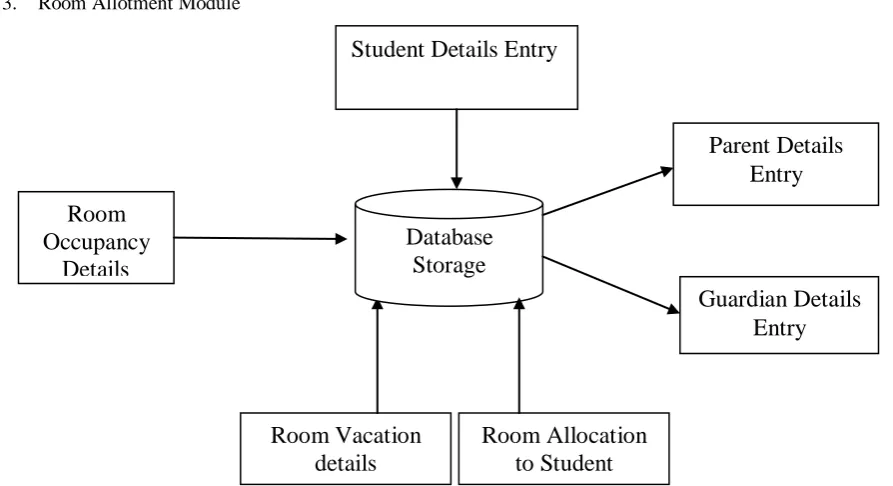
Fig 1 Data Flow Diagram of Hostel Management System
Modules Description of Hostel Management System
Student Module
In this module the students can fill the student application form after the full completion of the application the student will get a unique hostel id allocated by the system. STUDENT MODULE This module is
Room
Occupancy
Details
Parent Details
Entry
Student Details Entry
Room Vacation
details
Guardian Details
Entry
Database
Storage
used to store student details i.e. information like profile details, contact information, educational details etc. Users can search according different criteria such as name, course, room number etc.
Hostel Detail management
In the above module, filled application form that should be made system entry by the hostel manager and he will get a unique id. Using that the hostel manager can fill the detail of the hostel. This hostel detail management contain the no of rooms available in the hostel, the no of student staying in hostel, no of rooms are free. This module also always monitor by the admin daily.
Room Allotment Module
This deals with allocation of room to students according to education details, section or course. Rooms will be allocated to students and an ID will be generated for it. It will display details students staying in the room or rooms. When a student leaves the room after the semester, the left date will be also saved.
III.INPUT &OUTPUT DESIGN
INPUT DESIGN
Input design is a part of overall system design. The main objective during the input design is as given below:
To produce a cost-effective method of input.
To achieve the highest possible level of accuracy.
To ensure that the input is acceptable and understood by the user.
The main input stages can be listed as below:
Data recording
Data transcription
Data conversion
Data verification
Data control
Data transmission
Data validation
Data correction
It is necessary to determine the various types of inputs. Inputs can be categorized as follows:
External inputs, which are prime inputs for the system.
Internal inputs, which are user communications with the system.
Operational, which are computer department’s communications to the system?
Interactive, which are inputs entered during a dialogue.
At this stage choice has to be made about the input media. To conclude about the input media consideration has to be given to;
Type of input
Flexibility of format
Speed
Accuracy
Verification methods
Rejection rates
Ease of correction
Storage and handling requirements
Security
Easy to use
Portability
Keeping in view the above description of the input types and input media, it can be said that most of the inputs are of the form of internal and interactive. As
OUTPUT DESIGN
Outputs from computer systems are required primarily to communicate the results of processing to users. They are also used to provide a permanent copy of the results for later consultation. The various types of outputs in general are:
External Outputs, whose destination is outside the organization.
Internal Outputs whose destination is within organization.
User’s main interface with the computer.
Operational outputs whose use is purely with in the computer department.
Interface outputs, which involve the user in communicating directly. The outputs should be defined in terms of the following points:
Type of the output
Content of the output
Format of the output
Location of the output
Frequency of the output
Volume of the output
Sequence of the output
It is not always desirable to print or display data as it is held on a computer. It should be decided as which form of the output is the most suitable. In the next stage it is to be decided that which medium is the most appropriate for the output. The main considerations when deciding about the output media are:
The suitability for the device to the particular application.
The need for a hard copy.
The response time required.
The location of the users
The software and hardware available.
Keeping in view the above description the project is to have outputs mainly coming under the category of internal outputs. The main outputs desired according to the requirement specification are:
The outputs were needed to be generated as a hot copy and as well as queries to be viewed on the screen. Keeping in view these outputs, the format for the output is taken from the outputs, which are currently being obtained after manual processing. The standard printer is to be used as output media for hard copies.
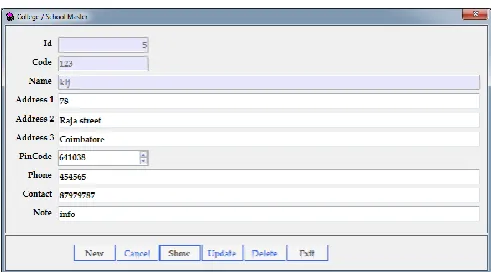
Fig 2 Input Design of Hostel Automation System
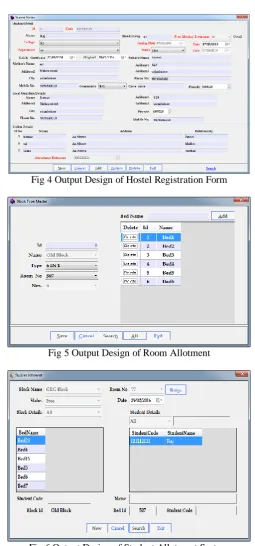
Fig 4 Output Design of Hostel Registration Form
Fig 5 Output Design of Room Allotment
Fig 6 Output Design of Student Allotment System
In the above said input and output form designs of the figures explain about the home page of hostel automation system, registration process school or college, room allocation and student allotment system for a concern room.
IV.CONCLUSION
usually used in this context. This particular project deals with the problems on managing a hostel and avoids the problems which occur when carried manually. Identification of the drawbacks of the existing system leads to the designing of computerized system that will be compatible to the existing system with the system which is more user friendly and more GUI oriented.
R
EFERENCES
1. Steven Holzner, “Visual Basic .Net Programming “ Black Book - Dream Tech Press, New Delhi 2. www.microsoft.com
3. VB.NET in 21 DAYS