i
EFFECTS OF MAINSTREAMING LEARNERS WITH COMMUNICATION DISABILITY AND THEIR EFFECTS ON EDUCATIONAL PERFORMANCE
IN PUBLIC PRIMARY SCHOOLS IN KERICHO COUNTY, KENYA
PAUL KIPKORIR MUTAI E83/20598/2010
A THESIS SUBMITTED IN PARTIAL FULFILLMENT OF THE REQUIREMENTS FOR AN AWARD OF A DOCTOR OF PHILOSOPHY
DEGREE IN THE DEPARTMENT OF SPECIAL EDUCATION OF, KENYATTA UNIVERSITY
ii
DECLARATION
iii
DEDICATION
To my loving grandmother Roda, who through her encouragement, gave me the strength to keep the candle burning even during my weakest moments. My father Daniel and my mother Esther whose foresight in education and constant encouragement have brought me to this level of education and to my beloved wife Everlyne and our loving children Joyce, Patrick, Carolyne and Bryne for their unending moral support and encouragement.
iv
ACKNOWLEDGEMENTS
I wish to express my sincere appreciation to all individuals whose contribution made the completion of this thesis possible. First and foremost, my appreciation and gratitude go to my supervisors, Professor Geoffrey K. Karugu and Dr. Beatrice Bunyasi Awori for the scholarly guidance, assistance, tireless devotions and encouragement throughout the course of my studies. My special thanks go to my lecturers in the department of special Education at Kenyatta University; their Encouragement particularly to the chairperson Dr. Nelly Otube for the moral constant reminds and encouragement. Also to Professor Eunice Alade who encouraged me through email messages on the progress of my study, my special thanks goes to the learners and teachers in the schools where I conducted my study. They were sincere and very supportive.
v
TABLE OF CONTENTS
DECLARATION ... ii
DEDICATION ... iii
ACKNOWLEDGEMENTS ... iv
TABLE OF CONTENTS ... v
LIST OF TABLES ... ix
LIST OF FIGURES ... x
ABSTRACT ... xi
CHAPTER ONE: INTRODUCTION ... 1
1.0 Introduction ... 1
1.1 Background to the Study ... 1
1.2 Statement of the Problem ... 9
1.3 Purpose of the Study ... 10
1.4 Objectives of the Study ... 10
1.5 Research Questions ... 10
1.6 Research Hypothesis ... 11
1.7 Significance of the Study ... 11
1.8 Limitations and Delimitations of the Study ... 12
1.8.1 Limitations of the Study ... 12
1.8.2 Delimitations of the Study ... 13
1.9 Assumptions of the Study ... 13
1.10 Theoretical Framework of the Study ... 13
1.11: Conceptual Framework of the Study ... 16
vi
CHAPTER TWO: LITERATURE REVIEW ... 19
2.0 Introduction ... 19
2.1 Types of Communication Disability ... 19
2.1.1 Speech Disability ... 19
2.1.2 Language Disability ... 20
2.1.3 Hearing Disability ... 20
2.2 Severity of Communication Disability ... 30
2.3 Onset of Communication Disability ... 31
2.4 School Policies on Mainstream Education ... 33
2.5 Teachers’ Attitudes towards Learners with Communication Disability ... 36
2.6 Intervention Strategies used to Support Learners with CD ... 44
2.6.1 Learner-Centred Strategy ... 47
2.6.2 Cooperative Strategy ... 48
2.6.3 Cubing Strategy ... 52
2.6.4 Scaffolding Strategy ... 53
2.6.5 Repetition Strategy ... 54
2.6.6 Teaching to a Flexible Curriculum ... 54
2.6.7 Inclusive Pedagogy Strategy ... 56
2.6.8 Differentiation Strategy ... 58
2.6.9 Differentiated Assessment Strategy ... 61
2.6.10 Multi-Level Teaching Strategy ... 61
2.6.11 Collaboration among Teachers ... 64
2.7 Communication Disability and their Effects on Educational Performance ... 65
2.8 Summary of the Literature Review ... 69
CHAPTER THREE: RESEARCH METHODOLOGY ... 72
vii
3.1 Research Design ... 72
3.2 Study Area ... 73
3.3 Target Population ... 73
3.4. Sampling Technique and Sampling Size ... 74
3.4.1. Sampling Technique ... 74
3.4.2 Sample Size ... 74
3.5 Variables of the Study ... 75
3.6 Data Collection Instruments ... 76
3.6.1 Questionnaires ... 76
3.6.2 Document Analysis ... 76
3.7 Validity and Reliability of Research Instruments ... 76
3.7.1 Validity of Research Instruments ... 76
3.7.2 Reliability of Research Instruments ... 77
3.8 Data Analysis ... 78
3.9 Logistical and Ethical Considerations ... 78
CHAPTER FOUR: DATA ANALYSIS, PRESENTATION, INTERPRETATION AND DISCUSSION ... 80
4.0. Introduction ... 80
4.1 Demographic information of the Respondents ... 80
4.1.1 Learners’ Gender ... 81
4.1.2 Learners’ Age ... 81
4.1.3 Professional Qualification of the Teachers and the Head Teachers ... 82
4.2 Mainstreaming Learners with Communication Disability ... 84
4.2.1 Learners with Communication Disability in Mainstream Schools ... 84
viii
4.2.3 Attitudes towards Learners with CD ... 92
4.2.4 Intervention Strategies ... 96
4.2.5 The Effects of Mainstreaming Learners with CD on their Educational ... 103
Performance ... 103
CHAPTER FIVE: SUMMARY, RECCOMENDATIONS AND CONCLUSION ... 106
5.0 Introduction ... 106
5.1 Summary of Findings ... 106
5.2 Conclusion ... 108
5.3 Recommendations ... 108
5.3.1 Policy ... 108
5.3.2 Practice ... 109
5.3.3 Further Research ... 109
REFERENCES ... 110
Appendix I: Appendix I:Informed Consent For Learners with CD’s Parents…….. 114
Appendix II: Questionnaire for Class 3 Learners with CD ... 114
Appendix III: Questionnaire for Class 3 Teachers ... 115
Appendix IV: Questionnaire for Headteachers ... 117
Appendix V: Research Permit ... 119
ix
LIST OF TABLES
Table 1.1: Number of SNE Children Assessed between the Years 2007-2014 ... 8
Table 4.1: School Policy ... 90
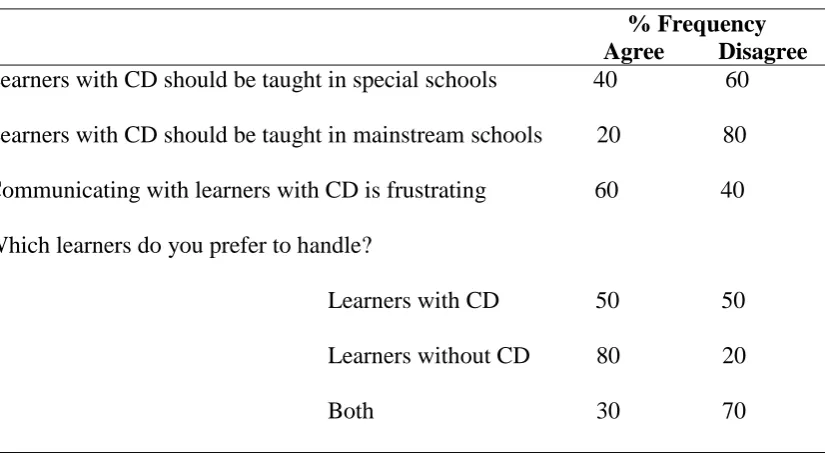
Table 4.2: Teachers’ Attitude ... 93
Table 4.3: Learners’ Means Score for the Year 2017 ... 103
x
LIST OF FIGURES
Figure 1.1: Conceptualization of the effect of CD learners on educational
performance ... 17
Figure 4.1: Learners’ Gender ... 81
Figure 4.2: Learners’ Age ... 81
Figure 4.3: Teachers’ and Head Teachers’ Ages in Years ... 82
Figure 4.4: Professional Qualification of the Teachers and Head Teachers ... 83
Figure 4.5: Types of Communication Disability ... 85
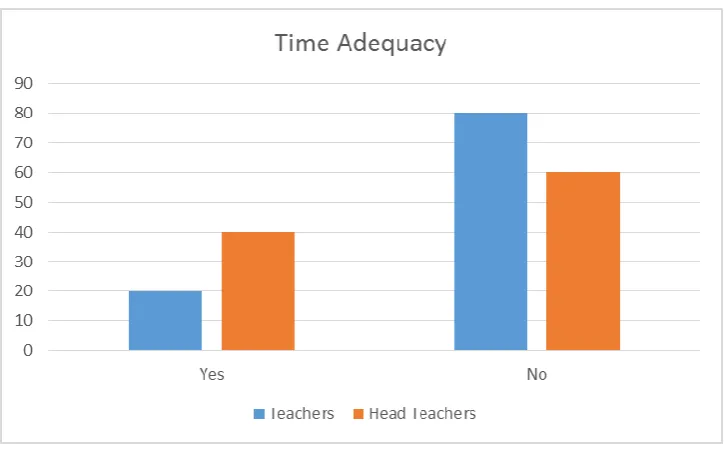
Figure 4.6: Time Adequacy in Adapting Mainstream Curriculum of Learners with CD ... 86
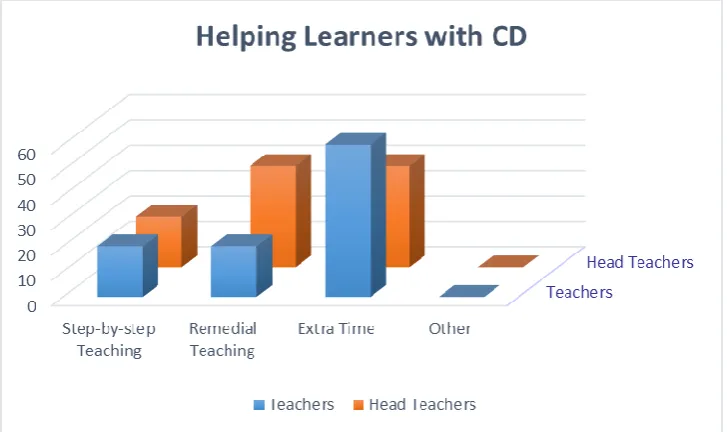
Figure 4.7: Way of Helping Learners with CD ... 87
Figure 4.8: Learners with CD being given Extra Classes after Lessons ... 88
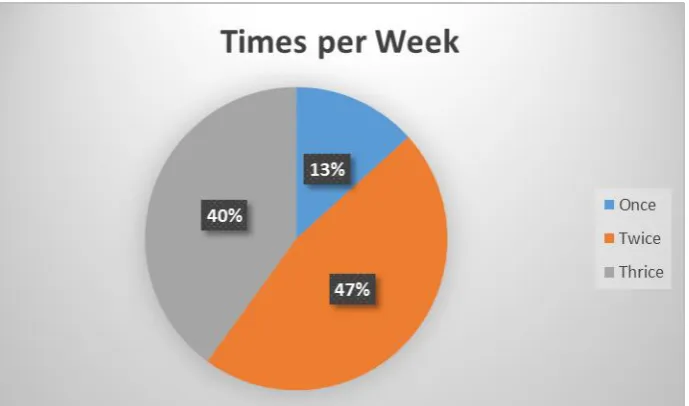
Figure 4.9: Number of Times Learners with CD being given Extra Time ... 89
Figure 4.10: Head Teachers’ Opinion on Teachers Attitude towards Learners with CD ... 95
Figure 4.11: Teaching Aids Provided by the School for Learners with CD ... 96
Figure 4.12: Head Teachers’ Rating of the Teaching and Learning Resources... 97
Figure 4.13: Most Preferred Teaching Method ... 98
Figure 4.14: Strategies Teachers Employed ... 99
Figure 4.15: Head Teachers Ratings of the Teaching Methods ... 101
Figure 4.16: Head Teachers’ Opinions of the Teaching Methods ... 102
xi ABSTRACT
1
CHAPTER ONE INTRODUCTION 1.0 Introduction
This chapter introduces: background to the study, statement of the problem, purpose of the study, objectives of the study, research questions, research hypothesis, significant of the study, limitations and delimitations of the study, assumptions of the study, theoretical and conceptual frame work of the study and operational definition of terms.
1.1 Background to the Study
A communication disability (CD) is an impairment in the ability to receive, send, process, and comprehend concepts or verbal, nonverbal and graphic symbol systems. A communication disability may be evident in the processes of hearing, language, and/or speech. A communication disability may range in severity from mild to profound. It may be developmental or acquired. Individuals may demonstrate one or any combination of communication disabilities. A communication disability may result in a primary disability or it may be secondary to other disabilities (American Speech-Language-Hearing Association, 1993).
2
education teacher, the teacher assistant and possibly parental or community volunteers. The most popular mainstreaming method seems to be a co-teaching model. “Co-teaching may be defined as the partnership of a general education teacher and a special education teacher or another specialist for the purpose of jointly delivering instruction to a diverse group of students, including those with communication disabilities or other special needs, in a general education setting, and in a way that flexibly and deliberately meets their learning needs” (Friend, Cook, Chamberlain, & Shamberger, 2010, cited in (Lamport et al., 2012).
Mainstreaming learners has brought about a new challenge for teachers. A typical class may consists of learners with CD of various categories like speech disability, language disability, hearing disability, central auditory processing disability and many more. With such a diverse combination, classroom management, along with focusing on delivering a differentiated instruction that targets each learner individually in the classroom has made a regular education teacher’s job beyond difficult. Because the education systems are calling for schools to improve special education, school systems are turning learners with CD in the mainstream setting, (Lamport et al., 2012). However, the communication disability and its effect on educational performance of learners in mainstream primary schools in Kenya has not been adequately studied in order to establish learners’ difficulties so as to arrest the situation.
3
broader view of CD. The article by Wylie et al. (2013) outlines an agenda for CD in response to the World Report on disability. An understanding of the numbers of learners with CD and their circumstances can help improve services and remove communication disabling barriers (World Health Organization, 2013). Data on learners with CD are needed in both developed and developing countries since the current estimates are derived primarily from developed countries and from the well-served communities within those countries, (World Health Organization, 2013).
The need for data on CD presents a number of challenges as varying definitions have been used to identify children (Law, Boyle, Harris, Harkness, & Nye, 1998), with different cut-off points being used on CD assessments. For instance, learners with specific language impairment (SLI) most studies have used a wide range of different measures and criteria, from a single assessment, such as receptive vocabulary. Bishop and Edmundson (1987cited in Sue Roulstone, 2013) identified children as speech and language impaired if any of scores on six speech and language assessment fell more than two standard deviations (SD) below the mean and if more than one score fell below 1 SD below the mean. On the other hand, (Conti‐ Ramsden, Botting, & Knox, 2001) also use six different assessments, this time to differentiate children with and without ongoing language impairment; they use a cut-off point of 1 SD the mean on any of the six assessments. (McLeod, McAllister, McCormack, & Harrison, 2014) further note that studies of prevalence have used different definitions and different informants.
4
significant difficulties in functioning, (World Health Organization, 2013). Though there is a lack of accurate data in this field, the estimated number of learners with disabilities between 0 and 18 years old ranges between 93 million and 150 million, with roughly 5.1% of all children aged 014 years (93 million) living with a moderate or severe disability and 0.7%, or 13 million children, living with a severe disability, (World Health Organization, 2013). According to UNICEF, more than 80% of children with disabilities live in developing countries and have little or no access to appropriate services.
Gathering accurate data on CD, especially among learners, has been challenging due to the lack of disability-focused questions in national surveys (such as census), but also cultural conceptions of what constitutes impairment and disabilities. Most of these learners have little or no access to education, and if they do manage to go school, are often amongst the most marginalized and excluded of all groups, and this exclusion can be compounded by gender, age and ethnicity, as well as where the child lives (World Health Organization, 2013).
5
applicable to individual needs of learners (A. Engelbrecht, Swanepoel, Nel, & Hugo, 2013). This task is complicated by numerous challenges, such as, learners that come communication disability and language barriers (Braccialli et al., 2016). In a diverse classroom teachers also need to deal with differing learning styles and ability levels of CD learners.
Classes with a large number of learners often present disciplinary problems exacerbated by learners with CD which frequently lead to educators lacking the motivation to implement adaptive strategies in considering each learner’s individual learning needs (Engelbrecht et al., 2013). Many teachers are not adequately qualified to cope with the diversity of learning needs and the barriers to learning that occur as a result of these CDs. It is especially important that foundation phase teachers are adequately trained to deal with a variety of CDs to learning because of the impact of learners’ developmental age in this phase (Engelbrecht & Van Deventer, 2013). This requires that teachers’ are able to implement different and appropriate teaching strategies (Davis & Florian, 2004 cited in (Wahl, 2017).
6
cited in (Wahl, 2017). One of the objectives of this study was to evaluate intervention strategies used to support learners with CD in mainstreamed public primary schools in Kericho County, in order to inform inclusive classroom training and practices for a broader audience.
7
8
Table 1.1: Number of SNE Children Assessed between the Years 2007-2014
YEAR SEX M.C V.I H.I P.C C.P L.
D
EPH EBD C. D
M/C Other TOTAL
2007 Boys 12 20 12 8 5 2 2 1 22 0 0 84
Girls 11 21 5 3 3 0 2 1 23 0 0 69
2008 Boys 9 8 2 8 2 2 0 0 21 0 0 42
Girls 12 5 9 6 1 3 0 0 20 0 0 46 2009 Boys 9 12 10 2 7 6 0 1 23 0 0 60
Girls 9 18 8 4 7 0 0 0 19 0 0 55 2010 Boys 12 6 13 7 02 3 1 0 23 0 0 57
Girls 12 7 8 12 06 0 0 0 22 0 0 57 2011 Boys 17 4 10 5 0 3 0 1 26 5 0 61
Girls 13 8 18 11 2 2 0 2 25 1 0 72
2012 Boys 27 7 6 6 4 3 1 0 20 7 0 71
Girls 17 0 6 4 3 2 0 0 22 6 0 50 2013 Boys 18 6 9 6 0 2 0 10 19 2 4 66
Girls 11 1 5 4 4 2 0 0 18 1 4 40
2014 Boys 10 8 5 6 3 1 0 0 27 0 0 40
Girls 6 2 1 5 0 0 0 0 26 0 0 20
Source: Kericho Educational, Assessment and Resource Centre, 2014. KEY
M.C- Mentally Challenged H.I- Hearing Impairment C.P- Cerebral Palsy EPH- Epilepsy V.I- Visual Important P.C- Physically challenged L.D- Learning
Difficulties, C.D- Communication Difficulties and M/C- Multiply challenged
9 1.2 Statement of the Problem
As examinations continue to be the primary indicator to measure learner’s performance, emphasis has been placed on the benefits of education in mainstreamed schools for learners with disabilities. Many studies have shown both the academic and social benefits of the mainstream environment on learners with CD. Baker, Wang, and Walberg (1994) in Robinson (2012), cite evidence that "learners with disabilities educated in mainstreamed classes do better academically and socially than comparable learners with CD in non-mainstreamed settings". For instance, deaf schools all over Kenya have performed below average in national examinations and when ranked with other public hearing schools, they are among the bottom last with mean scores as low as 131 out of a possible 500. In the year 2015 KCPE national examination, Kuja School for the deaf, Maseno School for the deaf and Mumias school for the deaf attained mean scores of 151,131 and 155 respectively and were ranked last in their respective counties, (MoE, 2015).
10 1.3 Purpose of the Study
The purpose of this study was to establish the effects of mainstreaming learners with communication disability and their effects on educational performance in public primary schools in Kericho County, Kenya.
1.4 Objectives of the Study
i. To find out how learners with communication disability are mainstreamed in public primary schools.
ii. To find out school’s policies on mainstreamed learners’ with communication disability in public primary schools.
iii. To establish the teachers’ attitudes towards mainstreamed learners with communication disability in public primary schools.
iv. To evaluate intervention strategies used to support learners with communication disability in public primary schools.
v. To determine the effect of mainstreaming learners with communication disabilities on educational performance in public primary schools.
1.5 Research Questions
In order to answer the research objectives (i), (ii), (iii) and (iv) above, the following questions in relation to communication disability and their effect on educational performance were utilized for the qualitative study:
i. How learners with communication disability are mainstreamed in public primary schools?
11
iii. What are the teachers’ attitudes towards mainstreamed learners with communication disability in public primary schools?
iv. What intervention strategies are used to support learners with communication disability in public primary schools?
v. What are the effects of mainstreaming learners with communication disability on educational performance in public primary schools?
1.6 Research Hypothesis
In order to respond to the research objectives (v) above, the following research null hypothesis was tested for the quantitative study:
Ho: There is no statistical significant effect of learners with CD on educational performance in mainstream public primary schools.
1.7 Significance of the Study
An understanding of the nature of learning problems among public primary school learners with CDs would be helpful in developing pre-referral interventions, making appropriate referrals as well as identifying effective accommodations and intervention strategies. It is hoped, therefore, that the findings of this study are important to a number of stakeholders such as policy makers and planners generate appropriate policy measures, thus leading to appropriate corrective measures.
12
results of the findings in the education and training so as to prepare teachers with relevant skills to manage communication disorders in Kenyan schools. Ultimately, the findings of this study would have implications on national examinations, which should be tailored to meet the needs of learners with communication disorders. Finally, it is anticipated that the findings of this study provides basic data on CDs in mainstream primary schools in Kenya.
1.8 Limitations and Delimitations of the Study 1.8.1 Limitations of the Study
The study was limited to CDs among a cohort of mainstream public primary school learners in Kericho County. Therefore, given that Kericho County, is just one county among the forty seven counties in Kenya, its findings may not necessarily be generalized to the rest of the country. The study was limited by the fact that it was not possible to control some intervening variables for example, variation in the capacity of the teachers due to experience and training. Some have more work experience and can handle the incidences of CDs better than others and therefore generalization of findings to all schools needs to be considered based on this possible diversity.
13 1.8.2 Delimitations of the Study
This study was conducted in mainstreamed public primary school, located in Kericho County. Despite the fact that there are many mainstream schools in Kenya, this study focused on selected schools in Kericho County because the region is geographically vast, yet the experiences within this target population are similar to those of learners with CD in this region as well as other areas of Kenya. Despite the fact that there are learners with CD whose educational performance is lower than average, this study focused on the educational performance of learners with CD because of their disability which compounds the challenges they face in accessing education unlike other learners without CDs. Also this was an area of interest due to the cultural and societal stereotypes held against learners with CD in the region.
1.9 Assumptions of the Study
The study was carried out on the basis of the following assumptions: 1. That all respondents would cooperate and provide reliable responses.
2. That all learners to be selected for the study were homogenous in terms of teaching time and syllabuses.
3. That there were learners with communication disorders in mainstream primary schools in Kericho County.
1.10 Theoretical Framework of the Study
14
often times are potential barriers for learners with CD, they can develop low self-esteem issues which hinder them socially.
“These learners with CD, due to their histories of repeated failure at school, are likely to feel as though academic outcomes are beyond their control, thus perceiving themselves as less competent than their peers” (Ntshangase, Mdikana, & Cronk, 2008, cited in Lamport, 2012). It is important that academic content and social skills are addressed within the classroom.
15
When included in the mainstream classroom, learners with CD have the opportunity to see their peers working habits, and they can model those habits and behaviors to reflect their own. This insight ties into the Freudian theory of identification through observation of learned behavior from the peers around them. Bandura and Walter, who were two other researchers who expanded on the exploration of Sigmund Freud’s identification concept of identification through modeling, realized that new behavior can be attained by observation; for example, when a learner with CD sees a peer being praised for their hard work, s/he learns to try that behavior in hopes of pleasing the teacher and being praised also (Miller, 2011). This plays an important role, where learners with CD can watch the correct behavior and model that desired performance. Communication disability learners frequently perform at a poor or insufficient educational level, struggle with reading, have difficulty understanding and expressing language, misunderstand social cues, avoid attending school, show poor judgment, and have difficulty with tests. Communication skills are at the heart of life's experience, particularly for learners who are developing language critical to cognitive development and learning. Reading, writing, gesturing, listening, and speaking are all forms of language – a code we learn to use in order to communicate ideas (American Speech-Language-Hearing Association, 2005). In this regard, learning takes place through the process of communication. The ability to participate in active and interactive communication with peers and adults in the educational setting is essential for a learner to succeed in school.
16
other. The theory assumes that when two persons or groups interact, they become part of each other’s environment. This means that school learning occurs as a result of interactions of learners and parents, learners and teachers, children and peers, and children and school environment. The theory further holds that performance in school learning is traceable to gender stereotype as it relates to the learners. This may be explained on the ground that family and school interactions may influence the child’s performance in school. Based on the assumption of the theory, the social learning theory stipulates that academic dysfunction sometimes arises from gender stereotype and location of the student. This theory has a link with the present study as it has highlighted a link between academic achievement and the students’ gender stereotype. The theory will therefore serve as a guide to identify the elements of students’ gender stereotype that may influence both academic performance and self-concept with regard to teaching and learning in primary schools. The social learning initiated by Bandura (1977) argues that learning is a product of the individual and the environment. This implies that the interaction between a learner and the learning environment determines, to a certain extent, the performance of the student in a given school subject. The environments include both the school environment and the home environment, and other factors that are within the environment such as stereotypic view, gender, location, and individual’s self-concept.
1.11: Conceptual Framework of the Study
17
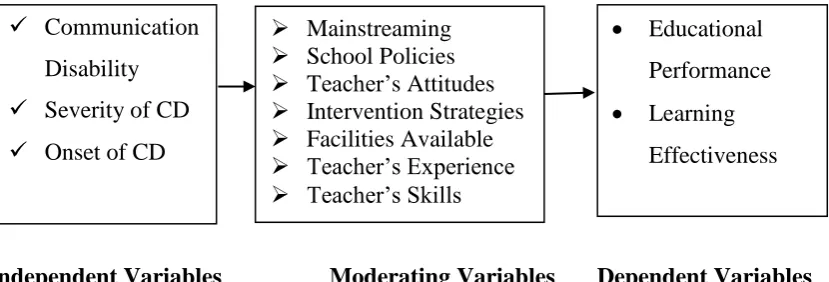
variable that is educational performance was conceptualized as learning effectiveness and educational performance. The frame indicates that the relationship between the variables is moderated by mainstreaming, school policies, teacher’s attitudes, intervention strategies, facilities available, Teacher’s Experience and Teacher’s Skills as shown in the figure below.
Independent Variables Moderating Variables Dependent Variables Figure 1.1: Conceptualization of the effect of CD learners on educational performance
This conceptual framework clearly indicates that prior knowledge influences both conceptual growth and conceptual change in learners. With conceptual growth, learners add to their existing knowledge, and with conceptual change, learners correct misconceptions or errors in existing knowledge. Facilitating conceptual growth or change requires first obtaining a baseline level of learners with CD’s knowledge prior to the start of each unit through formative assessment. Therefore, the educational performance of the learner with CD in mainstreamed schools improves only through social interactions with other learners without CD as advocated by Albert Bandura in his social interaction theory. The study conceptualizes that teachers’ receptivity of learners with CDs; intervention strategies towards learners with CD; teachers’ attitudes toward CD and school policies on learners with CD affects educational performance.
Communication Disability Severity of CD Onset of CD
Mainstreaming School Policies Teacher’s Attitudes Intervention Strategies Facilities Available Teacher’s Experience Teacher’s Skills
Educational Performance
18 1.12: Operational Definitions of Terms
The list below contains the operational definition of key terms that were used throughout the study.
Attitude: Chambers and Forlin (2010) define attitude as a learned, evaluative response about an object or an issue or a cumulative result of personal beliefs.
Communication Disability: disorders that deviate from the community standards clearly enough that interferes with the transmission of messages, stands out as being unusually different or produces negative feelings within the communicator (Duff, 2004).
Mainstream education: to ordinary schools where learners require minimal support (Landsberg, 2011a).
19
CHAPTER TWO LITERATURE REVIEW 2.0 Introduction
This chapter presents a review of literature related to the objectives of the study. The chapter covered literature on past studies on communication disability (CD), communication disabilities among primary school children in Kenya. The chapter also reviewed literature on mainstreaming learners communication disability, the school’s policies on mainstreamed learners’ with communication disability, teachers’ attitudes towards mainstreamed learners with communication disability, intervention strategies used to support learners with communication disability in public primary schools and the effect of mainstreaming learners with communication disorders on educational performance.
2.1 Types of Communication Disability
American Speech-Language-Hearing Association, ASLHS (1993), classified communication disability into speech disability, language disability and hearing disability.
2.1.1 Speech Disability
20
secondary mannerisms. A voice disability is characterized by the abnormal production and/or absences of vocal quality, pitch, loudness, resonance, and/or duration, which is inappropriate for an individual's age and/or sex (ASLHS, 1993).
2.1.2 Language Disability
A language disability is impaired comprehension and/or use of spoken, written and/or other symbol systems. Newmonic, (2016) defined language disability either an acquired or developmental disability that is identified by deficits in comprehension, production and use of language. The disorder may involve; the form of language (phonology, morphology, and syntax), the content of language (semantics), and/or the function of language in communication (pragmatics) in any combination. Form of Language disability include; phonology in which the sound system of a language and the rules that govern the sound combinations; morphology is the system that governs the structure of words and the construction of word forms and syntax is the system governing the order and combination of words to form sentences, and the relationships among the elements within a sentence. Content of language disability known as semantics is the system that governs the meanings of words and sentences and function of language disability; pragmatics which is the system that combines the above language components in functional and socially appropriate communication, ASLHS (1993).
2.1.3 Hearing Disability
21
classified according to difficulties in detection, recognition, discrimination, comprehension, and perception of auditory information, ASLHS (1993). CD learners with hearing impairment may be described as deaf or hard of hearing. Deaf is defined as a hearing disorder that limits an individual's aural/oral communication performance to the extent that the primary sensory input for communication may be other than the auditory channel. Hard of hearing is a hearing disorder, whether fluctuating or permanent, which adversely affects a learner's ability to communicate. The hard-of-hearing learner relies on the auditory channel as the primary sensory input for communication.
Packer (2015) reported that hearing is critical to speech and language development, communication and learning. Hearing loss causes delays in development of speech and language, and those delays then lead to learning problems, often resulting in poor school performance. Unfortunately, since poor academic performance is often accompanied by inattention and sometimes poor behavior, learners with hearing loss are often misidentified as having learning disabilities such as ADD and ADHD.
22
Sahajanand School for the Deaf was randomly selected as a representative population of the 12 Deaf schools spread across 6 counties in the coast province. The study found that negative community and societal attitudes towards the deaf influence their achievement in Education, the present curriculum does not cater for all learners with Special Educational Needs in terms of coverage of curriculum content and that the few available teachers are not very familiar and fluent in using Kenyan Sign Language. Most of the schools offering special education to learners lack adequate teaching and learning resources.
Teachers in Kenyan schools for the learners with disabilities lack adequate resources to design classroom experiences that can help deaf learners understand the content being taught. In addition, the teaching and learning materials meant to be used in deaf schools are unavailable or inadequate and the few available ones are not adapted to suit the deaf learners. Large scale studies on school effectiveness have pointed out the importance of teaching and learning resources deaf learners’ achievement. Fuller & Clarke, (1994) researched on studied school effectiveness in developing countries that adjusted learners’ achievements for their family background and found quite consistent school effects related to availability of textbooks and other accompanying reading materials. Various studies have showed a significant positive relation between learner’s achievement in academics and school inputs.
23
on the academic achievement of learners. Much literature in developing countries suggests that the most important and cost effective input is the textbook and other pedagogical learning materials (Fuller and Clarke, 1994).
Mwanyuma (2016) while citing Sumner, (1985) asserted that instructional materials such as diagrams, pictures, graphs and flow charts are very essential in the teaching and learning process and more so to a deaf learner as they reduce language and reading demands. This is because visual methods of teaching and learning create a more lasting experience and relate most readily to other sensory experiences. Instructional materials accomplish 83% of what is learnt through sight activating students in the learning process. They make the learning become very interesting even to dull and hyperactive students.
24
Education Plan (IEP). The IEP is a written statement for every learner with a disability that states the present level of achievement, annual goals, short-term instructional objectives special educational services needed and relevant date and evaluation procedures. Once developed, an IEP is signed by parents as well as educational and other personnel present or involved in its development.
25
According to the ASHA, learners who have mild to moderate hearing loss but do not get intervention services are very likely to be behind their hearing peers by anywhere from one to four grade levels. And for those with more severe hearing loss, intervention services are even more crucial; those who do not receive intervention usually do not progress beyond the third grade level. The reasons behind this education gap are certainly not a question of intelligence; just because a learner has hearing loss doesn’t mean he is any less capable of doing well in school than his hearing peers. Sometimes the classroom environment itself doesn’t support a child with hearing loss; A busy teacher who has many learners to tend to, or a teacher with a poor understanding of hearing loss, often is unable to alter his teaching style or keep a learner’s hearing loss in mind while teaching a lesson or assigning homework.
26
segment and decode acoustic stimuli using phonological, semantic, syntactic, and pragmatic knowledge; and attach meaning to a stream of acoustic signals through use of linguistic and nonlinguistic contexts (ASHA, 1993).
Internationally and locally, learners with CDs, were historically segregated in special schools or not afforded education at all. This situation was due to medical model thinking that focused on the extent of individual impairments and associated deficits, rather than on the interrelating factors comprising a disability as described in the International Classification of Functioning, (World Health Organization, 2001). The World Health Organization states that using an ICF framework can help one to “understand the interaction between educational environments and the participation of learners with disabilities” (WHO, 2013).
27
In 21st century, the majority of learners with CD disabilities are in mainstreamed schools. In New South Wales (NSW) are making a significant contribution to the education of learners with CD and other learning difficulties. Data from the 2015 Nationally Consistent Collection of Data (NCCD) on learners with CD show that nationally, the number of learners with special educational needs in independent schools is consistent with the sector’s enrolment share of 14%. NSW public schools, most learners with CD attend either a regular class in a regular school, a support class in a regular school or a support class in a school for specific purpose. In 2015, about 80% of learners with disability were enrolled in regular classes. The remaining 20% were mainly enrolled in support classes with a small proportion – about 5% – attending special schools. Mainstreaming approach to educating learners with communication disabilities began in Scandinavian countries in the late 20th century and has gradually become the norm in most countries, framed by various international agreements, programs and declarations and national laws, mainly developed since the 1981 United Nations International Year of Disabled Persons, (Schools, n.d.).
28
personnel who handle them are not skilled enough and also lack the requisite training to handle them competently.
Over-enrolment in schools has led to poor integration of learner disabilities in mainstream schools in Njoro sub-county. It has also led to over-stretched facilities, inadequate specialized personnel, overcrowding in schools and diminished community support. This situation therefore requires psychological intervention strategies, which are insufficient in Njoro (Njoro Sub-County Education Office, 2013). According to Woolery and Bailey (2003), children with learning disabilities perform poorly in schools, develop low self-esteem, and become disenfranchised when their needs are not met.
A study by Gargiulo (2006) showed that such learners suffer challenges which may affect their reading, listening writing, spelling and computation abilities. Those with communication disabilities experience problems when reading, talking and writing. Learners with physical, psychological and neuron-skeletal impairment and other special needs encounter difficulty in accessing education resources and facilities. It is also a fact that the adolescent disabled suffer frustrations, loneliness, withdrawal and embarrassment due to undue pressure to perform by parents, teachers, peers, siblings and the society at large (Turnbull, Wehmeyer & Shogren, 2013).
29
20 teachers. Interviews were conducted among five (5) education officers in the sub-county. He found that most of the teachers in the Sub-County were not professionally trained to handle learners with disabilities. The findings further established that the few specialized teachers are overstretched, poorly remunerated and unevenly distributed, and hence are not able to meet the needs of these learners. The study shows that out of the 20 class teachers contacted, only 6 (30%) were trained to handle learners with special needs in seminars and at certificate level while (70%) were not. The pedagogical approaches they use are usually rigid and fail to capture the needs of learners with disability in the Kenyan inclusive primary schools. Hence, the pupils’ special needs that cause psychosocial challenges in the Sub County primary schools were unmet and therefore called for urgent attention. It follows that the teachers are not in a position to mount counseling intervention strategies that could alleviate the challenges.
30
uneven progress in five areas: staff training and development, school structures, support services, assistive technology and community awareness. The study identified improved access to mainstream classrooms and growing awareness among stakeholders as emerging good practice. However, serious challenges remain regarding teacher training, exclusionary practices, the lack of specialized support services and misguided policies.
2.2 Severity of Communication Disability
Communicating confidently is a cornerstone of a positive self-image, and we recognize that severe communication disability is an example of a phrase that will be interpreted differently in different contexts. In the field of speech-language pathology, severity ratings are based upon clinical judgment rather than an absolute numeric standard or severity rating scale such as those used in ranking the level of intellectual disability. The focus was on the small but significant minority of learners with CD who have such severe disabilities that they either cannot communicate via speech or are at risk to have significant limitations in this area, Hollar, (2012).
31
require AAC for several years. Both of these children will have traditional articulation therapy as a component of their intervention plan, and they must also be supported by strategies that address the broader picture of communication, Hollar, (2012).
2.3 Onset of Communication Disability
A history of adversity in childhood has been associated with an earlier age of onset of bipolar disorder. This has most consistently been demonstrated for a history of physical or sexual abuse which is often accompanied by verbal abuse, but the isolated effect of verbal abuse itself has not previously been well delineated (1–4). Those with a history of childhood adversity have not only an earlier age of onset, but also a more difficult course of bipolar disorder (4–7), and more associated medical comorbidities (Leverich GS, McElroy SL, Suppes T et al. 2002 cited in Post et al., 2015).
Many speech problems are developmental rather than physiological, and as such they respond to remedial instruction. Language experiences are central to a young child’s development. In the past, learners with communication disabilities were routinely removed from the regular class for individual speech and language therapy. This is still the case in severe instances, but the trend is toward keeping the learner in the mainstream as much as possible. In order to accomplish this goal, teamwork among the teacher, speech and language therapist, audiologist, and parents is essential. Speech improvement and correction are blended into the regular classroom curriculum and the learner’s natural environment, Gaur, (2003).
32
and in association with other types of childhood adversity. Leverich et al. in Post et al., (2015) found that, compared to those without a history of physical and sexual abuse, those with such a history had an earlier onset of bipolar illness, an increased number of Axis I, II, and III comorbid disability, including drug and alcohol abuse, faster cycling frequencies, a higher rate of suicide attempts, and more psychosocial stressors occurring before the first and most recent affective episode. The retrospectively reported associations of early abuse with a more difficult prior course of illness were validated by clinician prospective ratings of a more severe course after network entry during naturalistic treatment and follow up. However, the statistical significance of these effects and others may have been underestimated because of the unexamined occurrence of verbal abuse in a substantial percentage of the comparison group with no physical or sexual abuse.
33 2.4 School Policies on Mainstream Education
Self-representation is advocated as essential by the disability rights movement (Swartz, 2014). Shah, (2007) challenged all educationists to listen and provide an opportunity for learners with disabilities to take an active part in the education process, including informing practice. Sparkes and Hall (2007) did a study on the quality of life of learners with cerebral palsy and concluded that there is a need for more studies that included the views of learners with cerebral palsy themselves. By 2011, (Rosenbaum & Gorter, 2012) continued to highlight that there was still not enough known about what intervention learners with cerebral palsy themselves and their parents really value. Swartz, Van Der Merwe, Buckland, & McDougall, (2012) from South Africa reiterated that we should seek the valuable information that can only be obtained by listening to learners with communication disability themselves. Reflections of learners with cerebral palsy on what factors facilitated their mainstream education at an ordinary school will complement the more widely reported barriers to education, from the perspectives of teachers and/or parents and in other countries. A focus on the facilitating factors as reported by those with disabilities in Cape Town themselves, was anticipated to shed valuable insider knowledge on support strategies that can facilitate successful mainstream education for learners with communication disabilities in the future.
34
support. The nationally consistent data collection is founded on this legislation and the standards (Schools, n.d.).
Kenya’s policy on CD has created a brain-drain of the few specialized teachers due to poor remuneration and stereotyped community attitudes. According to Craig, Kraft and Duplessis (1998), effective teachers are highly committed, caring about learners’ welfare and therefore need a supportive working environment to maintain these positive attitudes. The Kenyan constitution (2010) article 43, section 1(f) and article 54 section 1(b) asserts that all learners with CD, have a right of receiving quality and relevant education.
35
two: 2012–2013) was undertaken at the outset to develop an understanding of how the implementation of the policy guidelines has progressed over a period of several years.
Engelbrecht et al., (2016)found during phase one of their study that teachers viewed the transformation of their school since 2008 into a full-service school as being in its ‘baby shoes’ and that they were not implementing the guidelines as described in the document published in 2005: ‘ ... because they (the government) have not given us a specific time when we absolutely have to accommodate learners with CD in the mainstream ... we wait for them to tell us’. As a result learners with disabilities were placed in separate classrooms and described in medical deficit terms: ‘... I feel that those children are expected to cope under normal circumstances but they are not normal ...’ Teachers from the mainstream classrooms also described themselves as not qualified due to the fact that they were initially trained to work in general classrooms and not trained to mainstream learners with CD in their classrooms. They therefore preferred to rather refer learners with CD to what they regarded as well-qualified health professionals for support and placement in separate ELSEN classes.
36
drawn from urban, semi-urban, and rural settings, respectively. A total of 18 purposively sampled ECD teachers made up of 11 females and seven males, one per participating institution, participated in the current study. The study found that all teachers (18) revealed that they strategically taught learners with CD using paired gestures with speech to ensure inclusive pedagogy since most of them lack functional language. Teachers also used concrete language to eliminate abstract concepts as learners with CD misunderstand abstract language. Consistent with the content and activities of their lesson plans, most participants (16) and typically developing learners were observed using several strategies to support communication of learners with CD. These included clear, simple, precise, and concise language, and familiar, concrete, and specific words used daily. Participants paced their speech according to the abilities of individual learners to afford them time for processing information. Participants also used social interaction– oriented activities including pair work, group work, whole-class assignments, and games to support communication, thereby including learners with CD in mainstream classrooms.
37
teacher and disruptive for other students. Teacher attitudes towards CD have been identified as a critical factor in determining how well schools support learners with CD. Positive teacher attitudes are associated with better academic and social outcomes for learners with CD (Schools, n.d.).
The role of teachers is seen as critical in the success of mainstream classroom practice through their attitudes and actions (Florian & Graham, 2014).Teachers serve as role models with whom CD learners identify and this influence determines the degree of willingness to comply with what is expected of them in the classroom (Polat, 2011). According to the General Teaching Council for England (2008), teachers’ ability to promote CD learners’ learning is affected by their beliefs which can be enhanced positively through better understanding and more knowledge. The council believes that teachers’ disposition is important in order to promote positive beliefs in their CD learners as well as responding constructively to their mistakes. With appropriate training, teachers can be skilled with strategies in which to gain more positive dispositions. Teachers need to accept that all learners have the capacity to learn and it is their responsibility to enhance this learning by any means at their disposal (Florian & Graham, 2014).
38
researchers have expressed the need to understand educators’ concerns and address them to ensure that educators remain optimistic to include students with a disability (Forlin and Chambers 2011; Woodcock, Hemmings, & Kay, 2012 cited in Round, Subban, & Sharma, (2016).
It is evident that the variables cited as concerning to teachers by Larrivee and Cook (1979 cited in Round et al. 2016) in their early study on ‘mainstreaming’ are still relevant today. These researchers identified three variables that impacted teacher attitudes and concerns in regard to mainstreaming. These were academic concerns – the possible negative educational consequences of segregating learners with CD; administrative concerns – issues of support; and pedagogical concerns – issues about the training and experience necessary to educate learners with CD.
39
Acknowledging social justice should be a first priority for teachers to enact mainstreaming in a classroom (Nel & Grosser, 2016). Furthermore, Rodrigues (2009) feel that teachers need to develop a research attitude by continuously looking for more appropriate teaching strategies and experientially applying this in the classroom. Active participation by all learners should constantly be encouraged by teachers by exercising creativity and imagination. It is also important to have a resilient attitude by rather focusing on the learners achieving learning outcomes than emphasizing own teaching successes (Florian & Graham, 2014). Teachers who allow for reflection to integrate and modify their skills base to fit specific situations find it easier to develop new strategies (Barret & Green, 2009).
In mainstreamed classroom, teachers need to demonstrate an approach towards CD learners that demonstrates understanding, empathy and nurturing of CD learners who experience difficulties to learning by applying an appropriate assortment of teaching strategies that allow all learners to experience success (Florian & Graham, 2014). A negative teacher mind-set and attitude can be a major barrier to the implementation of mainstreamed education when they believe that the presence of those requiring additional support will hold back the progress of the rest of the class (Wilde & Avramides, 2011; Daniels, 2010; Hodkinson, 2010; Ainscow & Miles, 2008; Forlin & Lian, 2008 cited in Wahl, 2017). At the same time, a lack of adequate support does not help to improve teachers’ attitudes towards mainstreamed education (Hodkinson, 2010).
40
learners and the ‘rest of the class’. As a result, many teachers do not feel that all learners can be accommodated in the mainstream, with particular reference to learners with behavioural problems and others that are neuro-typical, such as autism. In research done by (Ainscow & Miles, 2008) teachers felt that a mainstreamed classroom would mean they could not treat everyone equally, as some CD learners would need considerably more attention than others.
Naraian, (2011) suggests that to promote positive attitudes in learners towards those with CD teachers would have to create a classroom culture where learners can take powerful stances against oppression and recognize their own ability to change others’ thinking. Harnessing parents and the community as resources to change attitudes are also considered vital as often barriers to learning are rooted within the family and community environment (Nel et al., 2012).
According to Stronge, Ward, & Grant, (2011) personal qualities that contribute to teacher efficiency within an mainstreamed education include: caring; social interaction with learners; positive attitude towards their profession; fairness and respect towards learners; and instilling enthusiasm and motivation in learners by utilizing methods such as peer feedback and reflective practices. Teachers that uphold mainstreamed justice in the classroom view CD learners as competent and ensure that they have opportunities to demonstrate their abilities (Higgins et al., 2009).
41
encourage dialogue among all learners, despite their differences, as well as between CD learners and the teacher (Landsberg, Krüger, & Nel, 2005). When CD learners are taught to be compassionate and to see things from another’s perspective it will foster respect and result in learners who will function rationally in a democratic society (Polat, 2011). In this manner the teacher serves as role model and CD learners who identify with their teachers are more inclined to accept their teaching. Garrett et al. (2009) declare that a caring classroom and strong interpersonal relationships create a functional environment. A mainstreamed classroom with a positive social climate will therefore have teachers who exercise authority without too much rigidity, make learning fun, and are able to establish positive, caring interpersonal relationships.
A communication disability learner’s responses are often elicited according to how the teacher presents a lesson. Creating a relationship of trust during a lesson presentation helps both teacher and CD learner to develop a positive perspective towards one another and the learning process. This requires expectations to be conveyed honestly to all learners in the mainstreamed class according to Naraian (2011). Communication disability learners need to trust in a system that will meet their individual needs and motivates striving to achieve to the best of their ability.
42
further study, attending workshops, initiate scholastic and community projects and research methods and strategies that can be applied in their profession to advance mainstreamed education (Landsberg, 2011a). This also includes utilizing the media such as the internet and teacher education websites. As (Bornman & Donohue, 2013) assert it is ultimately up to the teacher to be willing to commit to making the mainstreamed environment a successful experience for all learners.
Forming collaborative partnerships with colleagues, parents and other professionals (such as health professionals) is an essential tool to effect mainstreamed education (Nel, 2013). Collaboration and interrelationships between role players in education fosters accountability through a collective, problem-solving and supportive environment. Professionals and parents can help identify barriers to learning and assist the teacher to develop strategies to address these needs. In addition, knowledge is honed and materials shared through collaboration among teachers.
43
and that having these teaching and learning strategies combined enhances the process of learning for the learners with disabilities. Findings from the study also show that schools were less equipped with teaching and learning resources for use with learners with CDs and this definitely influences their academic performance. The study has also shown that though teachers accepted learners with CDs in their schools, most (64.1%) found it challenging to handle learners with CDs due to lack of training in SNE.
Murungi, (2017), while citing Agbenyegu (2006) states several regular education teachers who feel that they are not competent to work with learners with disabilities in mainstream classes exhibit anger, frustration, and negative attitudes to mainstreaming as they belief it facilitate poor academic educational performance (Gary 1997; Tiegerman-farber, 1998 cited in Murungi, 2017). These teachers’ attitude exhibits their strong opposition toward learners with CD in a mainstream classes and rather supports them to be segregated in existing special schools. These teachers sighted their incompetence in teaching/handing learners with CDs in a mainstream classroom. Yet other teachers expressed panic and worry that they are unskilled to teach learners with CDs in a mainstream classroom sighting it to facilitating poor educational performance in their schools.
44
school teachers regarding NIHL. A survey was conducted. In order to cover the population of interest, the sampled schools in Pretoria were clustered into urban, semi-urban and rural areas. The study found that majority of the teachers included in this study were aware of NIHL and its effects on educational performance. They, however, lack the necessary resources and knowledge to effectively use this information. Most (67.5%) of the teachers indicated that they have never been exposed to learners with NIHL in a school setting. It was also found that the majority (84%) of the schools included in the study do not implement hearing screening and conservation programmes. Although the sample size was limited, the results correlate with other research in this field indicating a need for planning and implementation of hearing conservation programmes in schools, including training of teachers in order for these programmes to be effective.
2.6 Intervention Strategies used to Support Learners with CD
45
It is therefore, important to use a variety of teaching strategies, methods and teaching styles within the education system to accommodate the diverse learning needs that can originate from the aforementioned. Appropriate planning for a teaching strategy can help identify the different teaching methods to enable teachers to develop or adapt activities in order to ensure all learners understand the content (Donald et al., 2010). Differentiation in all aspects of teaching should be considered to accommodate all learners. This should be incorporated when planning lessons, developing assessment and for designing a variety of classroom activities. Group work and peer teaching are also considered effective teaching strategies.
Besides taking into consideration different ways of learning, learners with CD’s developmental levels and types of intelligence, research has also shown that issues such as personality traits, socioeconomic background, experience and the environment in which learners with CD function impact on their learning (UNICEF, 2010). Taking this into account teachers need to choose topics that relate to the learners experiences and encourage participation and involvement. Collaborating with colleagues enhance learning environments through effective classroom management, tested teaching and curriculum adaptation strategies, and sharing of resources (Ainscow & Miles, 2008). In addition, collaborating with parents is an effective teaching strategy that serves to motivate learners.
46
and family variables are also important influences. Given the different circumstances of each learner with CD in the mainstreamed classroom, there is no one-size-fits-all approach that will work for all learners – the critical ingredient of effective special education is an individualized approach. All teachers need to be well prepared for a diverse range of learners, flexible in their preparedness to respond to individual differences and equipped to use a variety of teaching practices and techniques that they can adapt to promote learning for individual learners.
For all learners, teacher quality is without doubt the greatest in-school influence on outcomes. The most effective teachers are recognizable by their capacity to use a range of teaching strategies appropriate to individual learners with CD, their knowledge of assessment and how to use it to remediate and extend them and their ability to build positive relationships with them and manage the classroom environment. Effective teachers also set high expectations for all students to succeed, collaborate with colleagues and engage in continuing professional development. These skills are especially important in teaching learners with CD (Florian & Black-Hawkins, 2011).
47
disorder as a result of demand from schools. There is also recognition that the NCCD requires teachers to have a clear understanding of the educational needs of all their students (Schools, n.d.).
Particular deficiencies of teacher preparation highlighted in recent reports are training in explicit instruction and phonics, which are acknowledged to be important strategies for the early literacy development for many learners with CD, and the development of good classroom management skills, with techniques and strategies for dealing with challenging behaviours. It is unrealistic to expect that graduate teachers can be prepared for all the special educational needs they will encounter in the classroom, hence the need for continuing professional development opportunities to fill the gaps and to keep up to date with more recent evidence and experience. Effective teaching methods engage learners with subject matter through active learner participation, demonstration or memorization, often determined by the ability of the learner and the subject matter to be taught (Donald et al., 2010).
2.6.1 Learner-Centred Strategy
48
The teacher as a mediator of knowledge first ensures that learners have prior knowledge to be able to connect with new knowledge. Experiences need to be provided by the teacher that allows the learners to identify with their own knowledge and incorporate this with their learning in the classroom. Teachers provide scope for learners to explore and test their learning in a variety of ways, including multisensory experiences. Learning is facilitated through experimentation and by posing open-ended questions to further learners’ thought processes. The teacher also serves as temporary support or to bridge the learning process and guide learners onto the next step (Warin et al., 2011). In addition, learners are offered the freedom to apply their own ideas and discuss concepts freely with others (Monyai, 2006).
Learner-centred teaching focuses on the active process of learning, thus encouraging learners to take responsibility for their own learning, leading to increased motivation and confidence (Blumberg, 2008). The direction and purpose of the lesson is also determined in the process with strategies such as active presentations, investigation, projects, brainstorming and field excursions (Nieman, 2006). Since communication and collaborative skills are encouraged in this approach, learners become more interested in learning because they participate actively. In this approach can be used more appropriately to encourage communication, while active engagement in the LOLT enhances language skills (Monyai, 2006).
2.6.2 Cooperative Strategy
49
divided among group members and roles are specifically assigned (Landsberg et al., 2005). According to Karpov (2003), cooperation involves social skills that include trust, communication, support and conflict resolution as education advancement takes place through group members’ encouragement and acceptance of each other’s efforts. In a cooperative learning activity the task of the teacher is to explain the group assignment so that it is fully understood by all members of the group. This also serves to foster mutual respect at all times among learners as well as between teachers and learners (Nel & Grosser, 2016). According to Grosser (2014), cognitive conflict occurs in group discussions which enhances intellectual development, while emotional development is also nurtured through group support in the process of learning to work with and respect diversity. Since the group is accountable for achieving tasks each learner is to be held responsible, necessitating active involvement of all members (Karpov, 2003). Reflection on the success of individual members as well as the group’s contributions is also regarded as a vital constituent of cooperative learning (Grosser, 2014). Cooperative learning can be a key element in multi-level teaching where lessons should be planned to accommodate all levels of learning in the mainstreamed classroom situation.
50
the outcome of the activity. This can be done by asking open-ended questions with less emphasis on correct answers but rather ensuring participation by all learners. It is suggested by Donald et al. (2011) that groups could be varied with long-term tasks that can take weeks to complete or activities that last the duration of a class lesson. It is also important that groups are heterogeneous and often rotated to stimulate cognitive conflict and active engagement, promote social development, encourage respect for gender and diversity and refine proficiency in the LOLT (Donald et al., 2010). The teacher should at all times promote constructive social interaction through support and praise for the individual as well as the efforts of the group as a whole. This helps to highlight the importance of each member’s contributions while removing any feelings of inadequacy by certain learners (Donald et al., 2011).