JOURNRL OF
IMNGE NIPNNGEMEN~
Published bimonthly-January, March, May,July, September, November-by the Society for Range Management 2120 South Birch Street Denver, Colorado 80222 Copyright @ 1973 by the Society for Range Management
TABLE OF CONTENTS:
Vol. 26, No. 5, September 1973
ARTICLES
Managing Editor
312
316
320
322 FRANCIS T. COLBERT
2120 South Birch Street Denver, Colo. 80222 Editor
ELBERT H. REID
326
330
624 South Shields Street Fort Collins, Colo. 80521 Book Review Editor
331
336 DONALD N. HYDER
Agricultural Research Service Colorado State University Fort Collins, Colo. 80521
340
Copy Editor 345
PATRICIA G. SMITH 2120 South Birch Street Denver, Colo. 80222
349
Editorial Board 352
1971-73
C. KENNETH PEARSE, Laguna Hills, Calif. SYLVESTER SMOLIAK, Lethbridge, Albta. ELVIS R. BEATY, Athens, Ga.
DON DWY ER, Logan, Utah 1972-74
355
360 LOWELL K. HALLS, Nacogdoches, Tex.
ROBERT L. ROSS, Bozeman, Mont. G. W. TOMANEK, Hays, Kan. HENRY A. WRIGHT, Lubbock, Tex. 1973-75
365
369
DWIGHT R. CABLE, Tucson, Ariz. JOHN P. WORKMAN, Logan, Utah RUSSELL J. LORENZ, Mandan, N.D. LEWIS L. YARLETT, Portland, Ore.
372
INDIVIDUAL SUBSCRIPTION is by membership in the Society for Range Management.
LIBRARY or other INSTITUTIONAL SUBSCRIP- TIONS, on a calendar year basis, are $15.00 postpaid to all countries. Payments from outside the United States should be remitted in US dollars by international money order or draft on a New York bank. CHANGE OF ADDRESS notices should be sent to the Managing Editor, 2120 S. Birch St., Denver, CO 80222, no later than the first day of the month of issue. Copies lost due to a change of address cannot be replaced unless adequate notice is given. To assure uninterrupted ser- vice, provide your local postmaster with a Change of Address Order (POD Form 3575). indicating thereon to guarantee forwarding postage for second-class mail. BUSINESS CORRESPONDENCE, concerning subscrip- tions, advertising, reprints, back issues, and related matters, should be addressed to the Managing Editor, 2120 S. Birch St., Denver, CO 80222.
TECHNICAL NOTES
376 A Method for the Collection and Transport of Native Grasses from the Field to the Glasshouse by R. D. B. Whalley and Ray W. Brown
377 Development, Testing, and Evaluation of the Deep Furrow Drill-Arm Assembly for the Rangeland Drill by Jerry E. Asher and Richard E. Eckert, Jr.
379 Chemical Fertilization of Fourwing Saltbush by Stephen E. Williams and George A. 0 ‘Connor
380 Ungulate Diets in the Lower Grand Canyon by R. M. Hansen and P. S. Martin
MANAGEMENT NOTES
382 Spot Treatment for Gambel Oak Control by John F. Vallentine and Dewayne Schwendiman
383 Musk Thistle (Carduus nutans): An Undesirable Range Plant by A. C. Hull, Jr., and John 0. Evans
VIEWPOINT
385 Grazing Systems: A Least Cost Alternative to Proper Management of the Public Lands by Glen D. Fulcher
EDITORIAL CORRESPONDENCE, concerning manu- scripts or other editorial matters, should be addressed to the Editor, 624 S. Shields St., Fort Collins, CO 80521. INSTRUCTIONS FOR AUTHORS appear each year in the March issue; copies of these instructions are available from the editor.
SECOND CLASS POSTAGE paid at Denver, Colorado.
BOOK REVIEWS
388 Natural Ecosystems (Clapham); Proceedings, Tall Timbers Conference on Ecological Animal Control by Habitat Management and Proceedings, Annual Tall Timbers Fire Ecology Conference (Tall Timbers Research Station).
COVER: Long Meadow Ranch, Arizona. (Photo by Matt Culley, Prescott, Arizona.) Status and Outlook for Range in the New Politics by John R. McGuire The Work of FAO in Range Management by Roald A. Peterson
Qanats in the Old World: Horizontal Wells in the New by C. Kenneth Pearse
30 Years of Vegetal Change Following Burning of Sagebrush-Grass Range by Roy 0. Harniss and Robert B. Murray
Effects of Fire on an Ashe Juniper Community by Robert L. Wink and Henry A. Wright
Water Repellency of Soils under Burned Sagebrush by Mohamed S. A. Salih, Faisal Kh. Taha, and Gene F. Payne
Fire in Medium Fuels of West Texas by Alan L. Heirman and Henry A. Wright
Phenology and Forage Production of Cool Season Grasses in the Southern Plains by J. L. Schuster and Ricardo C. de Leon Garcia
Developmental Morphology of Blue Grama and Sand Bluestem by Phillip L. Sims, Robert K. Lang’at, and D. N. Hyder
Relationship of Range Quality to Range Condition in the Chilcotin Region, British Columbia by Dennis A. Demarchi
Use of a Crested Wheatgrass Seeding by Black-tailed Jackrabbits by Mark Westoby and Frederic H. Wagner
Control of Rocky Mountain Iris and Vegetation Response on Mountain Meadows by Richard E. Eckert, Jr., Allen D. Bruner, Gerard J. Klomp, and Frederick F. Peterson
Factors Causing Losses during the Establishment of Surface-sown Pastures by M. H. Campbell and F. G. Swain
Foliar-applied Urea and Ammonium Nitrate Fertilizers on Shortgrass Range by W. R. Houston and D. H. van der Sluijs
Growth Rate of Mixed Prairie in Response to Nitrogen and Phosphorus Fertilization by Russell J. Lorenz and George A. Rogler
Factors Affecting Mesquite Control with Tordon 225 Mixture by Ronald E. Sosebee, B. E. Dahl, and John P. Goen
Status
and Outlook
for Range
in the New
Politics
Highlight: Continued need is predicted for livestock grazing from the nation S forests and ranges. However, more considera- tion muff be given to desires of people for all the goods and services range provides. This is the new politics of range man- agement and development. Program goals musf consider en- hancing the environment while planning more efficient use of the range for livestock production.
The theme “Rangeland Resources and Politics” is timely. The role that range can and should play in a changing,
environmentally-awakened society needs more discussion. It
needs exposure to the forum of the Society for Range
Management and beyond its membershippexposure that it can sponsor.
I would like to start by explaining a couple of terms. By the term new politics is meant the various new institutional arrangements made in recent years to deal with questions of public policy. There are new laws, such as the Nationai Environmental Policy Act. There are new court decisions, particularly relating to standing to sue. There are new government organizations, such as the Regional Commissions. And there are shifts of political emphasis, particularly from the rural areas to the cities.
In the term rangeland, I include, as the Society for Range Management does, natural grasslands, savannas, shrublands, most deserts, tundra, alpine communities, coastal marshes, and wet meadows.
The Society for Range Management is concerned about “.
understanding range ecosystems, whose resources include
tangible products and intangible values.” Thus, we share a common concern about natural systems and understanding of how systems operate and how their components interrelate. The Society for Range Management recognizes (and I quote from its Benchmarks: a statement
of concepts
and positions), <‘ that intelligent use of range resouces must be based oneconomic and social decisions compatible with the capabilities of the biological system.” With this we certainly agree. It is the titeraction of the resource with politics that I want to discuss.
The author is chief. Forest Service. U.S. DeDartment of Aericulture.
Washington, DC.
The paper was presented at the 26th Annual Meeting Of the society r-or Range Management, Boise, Idaho, February 5,1973.
General Outlook
Incxased numbers of people and their activities and
consumption are causing increased demands for goods and
services. Although population projections recently have been lowered due to sharp declines in fertility and birth expecta- tions, demographers say that zero population growth is still some years away. By 1980 our population may rise to between 222 and 231 million, about 8 to 13% over 1970. Higher levels of spendable income contribute to the increasing demand for goods and services.
Consumption of industrial wood in the United States (i.e., all products except fuelwood), increased 70% to a level of 13 billion cubic feet between 1940 and 1971, and our studies indicate further increases~to nearly 23 billion cubic feet by the year 2000, assuming 1970 price levels. We also expect
higher demands for wildland recreation. Recent estimates
indicate that between 30 and 40 million people now camp, compared to about 11 million in 1960. Camping, however, may be approaching a temporary saturation. Increased hunt- tig, off-road recreation vehicle use, skiing-all important
outdoor recreational activities-are projected. Water flow
requirement from the nation’s wildlands also is projected to ticrease significantly in the years ahead. Needs for energy are ticreasing, particularly for production of electricity and for gas and other fossil fuels.
I offer these observations because I believe we can
titelligently consider range only in the context of society’s needs and desires. We must be prepared to consider the need for trade-offs among the many resources of the nation’s forest and range ecosystems, as society’s needs and opportunities to meet those needs change.
the Environmental Protection Agency, and the states belong- ing to the old West Regional Commission are now taking a look at this situation.
Possible trade-offs between range grazing and alternative sources of energy for livestock production also need to be understood. In many places, range is the most efficient source of livestock forage. Cropland may often compete economi- cally, but always with a greater expenditure of energy. As fuels become scarce and their total environmental costs are assessed, range may be called on to produce far more forage than now.
Allocating Range Use
These and similar national issues are of concern to all of us who must evaluate prospective levels of land and resource use in relation to public need. For example:
National Forest grazing has been in strong demand for the 68 years there has been a Forest Service. Ranchers and farmers have grazed their livestock either seasonally or year-long upon grazing allotments under paid term permit. We considered the need of the grazier for the grass and environment of the range. He contributes substantively to meat production, and from his
operation derives income which helps turn the economic
wheels of his local or regional area. A principal factor limiting
the number of permitted livestock has been the grazing
capacity, even though research has yielded many ways favoring increased livestock use.
Stocking of National Forest ranges was too heavy in the early years, especially during World War I when increased grazing was allowed to help meet national needs for meat and fiber. Since then, adjustments have been made to bring the grazing load back into line with the capability of the land for sustained production. We were not always as successful as we
wanted to be in balancing livestock use with resource
capability. There was competition for range in some areas, but
essentially it was competition between two groups of
herbivores-livestock and big game.
As population increased over the years and public needs and customs changed, new pressures began to affect the range. Increasingly the public has made use of the range. No longer is
the problem simply one of allocating grazing among the
ranchers and farmers who want to graze livestock. The
problem now is to allocate range among a host of uses, including off-road vehicle travel and wild horse grazing.
Not only are there new demands for the resource, but there are also stiffer requirements for its management.
Public land administrators in the past were ruled by an ethic of conservation-a land ethic-that called for protecting the soil while the resource was being used for the public good. But today they must also manage for environmental quality, and this includes more values-esthetics, scenery, solitude, to name but a few. This intensified public interest has resulted in such new legislation as the National Environmental Policy Act of 1969.
This new political climate affects not only livestock grazing on the National Forests but also the management of timber, wildlife, recreation, watersheds, wilderness, minerals, and the rest. It requires the development and evaluation of a broad range of land use alternatives and program mixes. It requires public involvement in planning and decisionmaking. Citizen expressions of environmental, social, and economic concern today influence more than ever the development and adminis- tration of public policies. The citizen, the legislator, the court, the public land manager are involved together as never before.
The Political Process and Range
The federal budgetary process is a good example of this process. In the Forest Service we maintain long-range plans for production ot specitic resource outputs. Each year the Forest
Service requests the manpower and funds to attain the
specified goals.
The Federal Budget, submitted annually to the Congress, presents a proposed level of federal spending that the President believes would best meet national goals of all kinds. The proposed budget for the fiscal year 1974 to begin July 1, 1973, was presented to the Congress on January 29, 1973.
In preparing this budget, each program of each agency was evaluated in relation to the contributions it could make toward achievement of national goals. Dollars were appor-
tioned among the various programs in accordance with
national priorities and within the total budget ceiling. Trade- offs were considered at each level of the budget review to cut and fit dollar levels to the size of the total outlay.
In the formation of the budget, Welfare competes with Foreign Assistance; Defense with Transportation; Agriculture with Housing; and so on.
Guiding construction of the President’s budget are policy and other direction spelled out in the law. The Congress acts upon each element of the President’s budget and also cuts and fits it according to its judgment. Interest groups normally voice’ their needs through the Congress.
Once the Congress is satisfied with the budget, it authorizes
expenditure of agreed-upon monies and appropriates these
funds through the legislative process. Thus, budgetmaking is essentially a political process. Throughout the process the citizen can and does make his opinions and needs known to both the legislative and executive branches.
Some Forest Service Concerns
In developing the annual budget, we must answer several key questions. How much of the Forest Service dollar should be used for range grazing purposes in the National Forest
System? How much, if any, in support of non-federal
forest-range grazing via our State and Private Forestry effort? And, how much for research on pressing problems.
Once the goals and funding decisions are made for range programs, we must search out the more productive National
Ferrd Sphm hairrd bids
Fig. 1. Livestock grazing and AUM production on US forests and ranges in 1970 (48 states).
Forest System range areas where costs of maintenance and development are reasonable. At the same time, we must give specific attention to range areas with special social and environmental problems. Our objective is to use the public funds among all areas in such a way that the range programs will contribute more efficiently toward the nation’s overall goals.
National Range
We predict a continued high demand over the next 10 to 20 years for forest-range grazing. Our projections suggest an
increase of 20% between 1970 and 1980 and SO% between
1970 and the year 2000.
There are 1.2 billion acres of forest and rangeland in the 48 conterminous states. Of this area, 835 million acres at present are being grazed by livestock during part or all of each year (Fig. 1). Some 265 million acts of this is in public ownership, principally under jurisdiction of the Forest Service and the Bureau of Land Management.
The 835 million acres of forest and range being grazed are producing 213 million animal unit months (AUMs) of grazing annually. This is the equivalent of supplying the year-long forage requirements for about 17 million cows. The public lands comprise 32% of the area grazed and provide 14% of the animal unit months of grazing.
In the face of changing technology of beef production and apparent untapped productivity of pasture forage and other feed production sources, it might appear that forest-range may not be “needed” for livestock production. No doubt it is possible that other feeds and feed sources have the potential to provide the feed now supplied by grazing the forest-range. However, we believe that forest-range lands can compete as they do now in providing the additional feeder cattle needed in the next 10 to 20 years if range co?Ss do not increase relative to costs of other feed sources. Forest-range also can continue to support domestic production of lambs and wool. There are other indicators that suggest continued high demand over the next 10 to 20 years for use of the nation’s forest and range lands for livestock grazing. Historically, cattle
and sheep have been the principal marketable outputs of
forest-range lands. The most consistent feature of the historic role of the forest-range has been its use as a low-cost feed source. Furthermore, many rural economies are substantially dependent on production of livestock from forest and range.
Increasing the production of range livestock may help
strengthen these local or regional economies.
We estimate that the range resource of the United States has a reasonable potential to produce 566 million animal unit months annually or the equivalent of providing the yearlong forage requirements of 47 million cows. Coincidentally, this is
one projection of the size of the total beef cow herd in 1980. However, our demand projections indicate that it is not likely that all of this capacity could be developed 01 used. Range grazing would not be a competitive sauce of energy for livestock production above about 320 million AUM’s. Other
forage and feed sowces would meet those higher needs.
Furthermore, achieving the higher capacity level of 566
million AUM’s would involve some significant tradeoffs. Although about one-fourth of the total range, public and private, is estimated to be in poor condition, significant progress has been made in correcting the errors of past overgrazing. In addition, significant improvement of environ-
mental quality together with wood growth can come from
better management of forested areas for livestock, using existing technology. We have estimated that about 72 million acres of eastern forests are being improperly grazed at an estimated cost of mope than 800 million cubic feet of wood growth annually. Associated environmental values also are being degraded by this grazing use. Disturbingly, this kind of use continues when we have the technology and experience to maintain grazing without these losses (Fig. 2).
Some of the most significant range management work, in my opinion, is that of the grassroots organizations comprised of local landowners. Working with their local county and state governments and through cooperative efforts of their colleges and universities, they are establishing needed range improve- ments and implementing intensive range management.
The rancher, the economist, and the ecologist are rolling up their sleeves and demonstrating in their rural community that here is where the science and art of range management gets down to business. Some tremendous gains already have been made. The momentum for quality management at the grass- roots, where it should be, is in many cases setting the pace for public agency range development programs.
This response may be the greatest testimony that people who make their living from the land are also deeply concerned and capable of maintaining its quality.
Conclusion
The need will continue for livestock grazing on the nation’s forest and range lands and range grazing can be carried out while at the same time achieving improvements in environ- mental quality. That grazing can remain a legitimate and important use of public lands.
The new politics does not change this situation. What it does change is the way in which plans and decisions are made.
No longer can we assume that we are dealing with an
he Work
of FAO
in Range
Management
ROALD A. PETERSON
Highlight: The central aim of making better use and preventing deterioration of rangelands in developing countries depends primarily upon improving the management of these lands. This in fum calls for vastly increased investments in research and development. Significant progress has been made in creating a wider appreciation of the grazing ESOUK~, increasing technical competence, and improving knowledge of the resource. Less progress has been made in developing organizations competent to manage grazing lands. However, experience to dote has clearly shown the imporrance and feasibility of more coordinated and comprehensive approaches to overcome this obstacle. As effective organizations me built. the opportunities and incentives for investment in range research and development should sharply increase.
Almost one-half of the earth’s land surface is used for grazing, and the great
bulk of animal feed comes from such
lands in developing countries. Manage- ment levels are generally totally inade- quate. If management is to be improved, the current low level of investments in research and development will need to be increased very substantially.
The consequences of the neglect of rangelands are too well known to need elaboration. This applies particularly to the arid and semiarid lands (Peterson,
1970). The considerable unexploited
potential for rangeland improvement and increased production is also widely appre-
ciated. What needs to be more fully
appreciated is that in much of the devel- oping world the growth of the human population is bound to acutely accentu- ate the pressures on rangeland-both
through increased animal numbers and
lands more and more exclusively for food crops and high value crops will increase, despite the wider use of higher yielding varieties. Intensive forage production on
arable lands will be more and more
limited to fattening out young stock and to milk production. Rangelands will be of crucial importance for providing cheap
feed for breeding stock. The growing
demand for livestock products (one of the few agricultural products for which the likelihood of surplus is not a worry) cannot but add to the pressures on the rangelands. This growing demand and the increasing monetary value of livestock, however, also has its positive effect in
making more evident the economic
importance of rangelands which, in turn, should help governments to see the need for an appropriate policy for research and development. It is within this context that I would like to discuss FAO’s work in range management.
FAO’s Goals
In order to help create conditions which would further a more appropriate policy of investment in rangeland re- search and development, FAO’s program over the years has been very largely concerned with:
1) Creating general awareness within each country of the importance and particular role of natural grazing lands and their link with other agricultural production,
2) Furthering technical competence at the national level,
3) Increasing knowledge of the grazing
resources and developing ap-
proaches for practical transforma-
tion of management, taking into
account the prevailing ecological,
cultural, and economic circum-
stance, and
4) Assisting member countries in cre- ating organizations able to help bring about the needed modifica- tions in current range practices.
FAO’s Activities
Accordingly, FAO’s activities, espe- cially during the last decade, have concen- trated on field programs to provide advice and to supplement the efforts of govern- ments to provide practical in-service and advanced training as well as to identify problems and evolve programs adapted to local conditions. Field work has empha- sized applied research, survey, and range improvement along with pilot programs
to work out practical application of
proven practices. Special consideration has been given to close coordination with
work on planted pastures and animal
production. This has included a number of projects with universities. At the same
time FAO has, in collaboration with
other institutions and organizations, placed great emphasis on improving yields of crops to meet basic food needs and to reduce the need for further extension of cropping into marginal lands that can best serve for grazing.
FAO field projects, for the most part, are financed by the United Nations Devel- opment Program. These are based upon approved requests made by member gov-
ernments. Approval is frequently pre-
ceded by feasibility studies. Financing normally includes cost of foreign special- ists, fellowships for national counterparts for study abroad, and the equipment needed to carry out the project effec-
tively. Government contributions may
include counterpart staff, land, buildings, animals, and locally produced materials. More recently some cooperative activities with bilateral agencies such as US AID have opened up possibilities for more
comprehensive and better coordinated
programs and more consistent follow-up. Assistance in range management has increasingly been provided as a compo- nent of integrated projects including spe- cialists in animal production, economics, water development, extension, and other pertinent fields, including sociology, as it has become increasingly clear that solu- tions must take into account complex interrelated systems.
During the last decade some 35 coun- tries in which range grazing is of major importance have received technical assis- tance. These include 8 in Latin America, 9 in the Near East, 11 in Africa, and the rest in Southern Europe and Asia, includ- ing Mongolia. Individual projects usually run for a period of four or five years. However, countries may request continu- ation of assistance over a longer period. A number of countries have availed them- selves of this opportunity-and it is in these countries that the most evident progress has been made. Some few coun- tries, of which Kenya is an outstanding example, have concentrated both multi- lateral and bilateral assistance on range
management and livestock production
with exceptional results. Kenya has also integrated training, research, survey, ex- tension, and development activities into a national range management organization.
At the present time FAO has some 30
field officers working primarily with
range management and a similar number working on various facets of pasture production. In addition to on-the-job training, some 72 fellowships for ad- vanced studies in range and pasture have been granted during the last decade.
Approximately one-half have been in
range management.
In addition to the field program, FAO’s activities include the organization of meetings to further intercountry activi- ties and exchange of experience, training courses, and studies designed to lay the basis for the more systematic develop- ment of range and livestock resources.
The latter has included a survey of
livestock production (including range and pasture aspects) in the Near East coun- tries and studies of individual countries
(FAO, 1972; Blydenstein, 1971). Range
handbooks have been aimed at the prob- lems of particular countries or ecological
regions (e.g. Allred, 1968). Other
accounts of FAO’s work in range manage- ment and the problems encountered have been given in a number of publications (Pearse, 1966; Peterson, 1964 and 1968; Blydenstein, 1972; Norris, 1972).
Assessing Accomplishments and Some Future Needs
In assessing accomplishments to date in terms of the objectives mentioned
earlier, one can make the following
observations:
I j General Awareness of Rangelands
General awareness of the importance of rangelands has increased. In virtually all countries a considerable number of people appreciate the significance of the natural grazing lands. However, the criti- cal role of rangelands in livestock produc- tion and their vulnerability to degrada- tion is still not sufficiently understood by many countries and funding agencies to lead to the policy changes and action required to cope with the problem. The growing awareness of the environment and creation of the Environment Fund by the United Nations, following the Stock- holm Conference in 1972, has helped to focus attention on land (including range) deterioration. Nevertheless, there is a
continuing need for broadening under-
standing of rangelands. In this the Society
for Range Management can continue to
play an increasingly important role. In addition to the day-to-day work of
creating awareness through projects,
meetings, etc., there is need for concerted action on a global scale. This could be
furthered by a world-wide meeting on
range deterioration. Such a meeting
would bring together the best knowledge available on the current situation, identi-
fy the more critical areas, and make concrete proposals for effective action. FAO would be prepared to organize such a meeting if the necessary financial sup- port could be found.
2) Technical Competence at the National
level
Most countries in which range grazing is important now have a nucleus, however small, of rather well-trained technical people working in research, teaching, or development. This is, I believe, the most significant advance that has been made over the past few years. However, no country has the number of range special- ists needed to cope with the multitude of problems they face. Training therefore needs continuous emphasis. This need is
widely appreciated by member
countries-but available finances limit the rate of progress. This is an area in which the Society for Range Management could play a particularly effective role, as could
universities which offer education in
range science through fellowships, special courses, and interchange of staff.
It is also essential to increase effective-
ness of existing staff, for example
through better communication among the technical people in countries with com-
mon problems and through cooperative
research programs to improve the quality, efficiency, and wider use of research results. In this approach it would be highly desirable to tie in expertise in
developed countries-including expertise
in grassland modelling-to help orient the
research more meaningfully, especially
toward management problems. FAO is
placing increasing stress on this coopera- tive approach to research.
3) Improved Knowledge of the Resources
The emphasis which FAO and some other organizations have placed on re-
source evaluation has been of funda-
mental importance in helping to create an orientation of research and development more appropriate to the local ecological,
cultural, and economic environment.
Both nationwide studies to provide a
general assessment and detailed integrated surveys have been carried out. This work,
however, needs more emphasis at both
nationwide and field survey level. FAO intends to develop a model based on the study of several nations, which any coun- try could use to assess its grazing re- sources at the national level. Very consid- erable experience on different types of
integrated surveys is available. Some
American universities have already taken a special interest in certain countries and
in survey methodology. A cooperative
effort in this important work would be welcomed by FAO.
4) Building a Range Management Organization
The long and difficult struggle that the
pioneers of range management in the
United States went through in developing
organizations reasonably effective for
coping with range problems is well
known. Age-old, tradition-bound, pastoral systems in most developing countries, poor communications, a shortage of fi- nancial and human resources, political instability, lack of centralization of responsibility for rangelands, and other factors inevitably make building an effec- tive range management and research orga- nization even more difficult. It is not surprising, therefore, that hardly more than half a dozen developing countries have made reasonable advances in this direction. This lack of organization not only limits the possibility of a significant impact on management practices, but it also inhibits other subsidiary activities, such as the inclusion of range science in the university curricula, because of the limited opportunities for employment. This is a matter which concerns not only tiember countries but also international, and probably national, financing agencies, as well as FAO.
Faster progress might come through a
more coordinated and comprehensive
approach among assistance agencies com- bining various types and sources of aid toward a continuous goal. The feasibility
of such collaboration has been well
proved in Kenya, where an FAO/UNDP project has provided survey, research, and extension guidance for the development of a national Range Management Division
(FAO, 197 1). At the same time the
project has given technical support for a World Bank project for ranch develop-
ment, while US AID has provided a
professor for training of Kenya staff. US AID has also helped in the development of the northern part of the country.
Additionally, another FAO/UNDP proj-
ect has been carrying out research and
demonstration on feeding to increase
animal production and permit earlier
removal of young stock from the range. The Dutch Government is providing assis- tance in grass breeding, and Norwegian Aid is financing a project for the collect- ing and screening of native forage plants. All these programs add up to a compre- hensive whole that is bound to have a highly significant impact on the country’s economy.
In this connection it is worth noting that research, survey, training, and other activities are hardly justified unless they are aimed at assisting development. Thus, FAO and UNDP have put great emphasis on linking these types of activities as closely as possible to development prob-
lems and to encourage investment
follow-up in the application of results. This means that the field experts, and
JOURNAL OF RANGE MANAGEMENT 26(5), September 1973
especially the project managers, need to know not only their field of specializa- tion but have a clear understanding of the
dynamics of development so that they
can direct their work toward weak links in the chain of development.
Conclusion
The effort to make the most effective use of biological resources for food pro- duction, particularly for the production of high quality protein, is the basic long-term problem in agriculture. Range management has a key role in this overall effort-both to increase and to stabilize yields from natural grazing lands. The prevailing awareness of the importance of animal protein and the human environ- ment creates opportunities which did not exist in the past. At the same time the
accumulated knowledge and recently
developed expertise in emerging nations provide essential building blocks. What is
needed is a concerted action by all
concerned to build on these circum-
stances to help emerging countries devel- op organizations which can carry out well
formulated range development policy.
This in turn will help open the way to greater investments for research and de- velopment or rangelands.
Literature Cited
Allred, B. W. 1968. Range management training
handbook for Saudi Arabia. PL:PFC/4. FAO, Rome.
Blydenstein, John. 197 1. Recursos forrajeros de Venezuela. AGP:PFC/19. FAO, Rome. 18 p. Blydenstein, John. 1972. Developing range
management in Latin America. J. Range Manage. 25 :7-9.
FAO. 1971. Range Management Division of the Ministry of Agriculture, Kenya. Interim Report. AGP:SF/KEN 11. Rome, Italy. 41 P*
FAO, 1972. Near East regional study. Animal husbandry, production and health, fodder production and range management in the Near East and FAO’s policies and plans for promoting the Animal Industry. FAO, Rome - Cairo. 3 12 p.
Norris, J. J. 1972. Future range management: problems and solutions. Int. Silver Anniv. Symp. Proc. Dep. of Range Sci., Texas A and M Univ., 20-21 March 1972, College Station, Texas, p. 38-39.
Pearse, C. K. 1966. Expanding horizons in worldwide range management. J. Range Manage. 19:336-340.
Peterson, R. A. 1964. Improving technical assistance in range management in develop- ing countries. J. Range Manage. 17:306-309. Peterson, R. A. 1968. Range management activ-
ities of the Food and Agriculture Organiza- tion of the United Nations. Annals of Arid Zone, 7(2): 150-162.
Peterson, R. A. 1970. Land utilization in non-irrigated areas. In Arid lands in transi- tion. Amer. Ass. for the Advance. of Sci., p. 435-449.
Qanats
in the Old World:
Horizontal
Wells
in the New
C. KENNETH PEARSE
Highlight: Horizontal wells make me of the principle of the qonat developed in Persia about 2,500 years ago and still widely used there and in other arid regions of the world. The driven horizontal well offers several important advantages over the hand dug qnnot especially for livestock watering places.
Horizontal wells as a source of live- stock water are a recent development in the southwestern United States (W&hat and Freeman, 1973). They should have an important place on arid and semiarid ranges throughout the western part of North America and elsewhere.
The basic concept of the horizontal well or qanat originated in Persia some 2,500 years ago. The expansion of the Persian Empire, beginning in the fifth centruy B.C., carried the idea from the Indus to the Nile and into Afganistan and China. Then the Islamic conquest extended the qanat to Cyprus, West Africa, Spain, and the Canary Islands. Similar structures are found in Mexico, Peru, and Chile, perhaps brought by the Spaniards, but perhaps an independent discovery by pre-Columbian New World people.
The author is a consultant, 634-D *“enida
Sevilh, IAguna “ilk, Ca*if”rnia.
Manuscript received December 1, ,972.
Numerous publications have described the origin, development, spread, construe- tion, and use of “qanats,” “karez,” “fog garas,” or “galerias” as they are variously
called in different parts of the old and new worlds. These have been well sum- marized by English (1968).
In Persia qanats made possible and served as the basis for agricultural and livestock development and even now con-
stitute the most important SO”IC~ of
water supply for most rural as well as metropolitan areas in modern Iran. From one third to one half of the irrigated area of the country is watered by qanats, and most of the major cities rely on qanats for domestic water.
Fig. 4. Schemtic cross section of nlluvtilfon showi,,g consrructtin of o rypicdqonot
qanats extend for only a few kilometers qanats is more than 300 meters.
but the length of many exceeds ten Qanats are expensive to build. Skilled
kilometers and s”me exceed SO kilo- workers are required and the work is
meters. The depth of the mother well is hazardous. The average cost is probably usually at least 50 meters and in some more than $10,000 per kilometer, but
where much sand is encountered and
lining is necessary much greater expendi- tures are made. Annual maintenance is also expensive, and extensive repairs are
frequently made necessary by floods,
earthquakes, and other major disasters. Another serious drawback of qanats is their inefficient use and waste of water. Although they do not seriously lower the water table, the flow is more “I less constant throughout the year, and during
the nonirrigating season tremendous
quantities of water go unused,
Deep wells are being driven through- out the area where qanats have been
important. Cost of development and
maintenance are less and the rate of withdrawal can be controlled. However, deep wells almost always significantly lower the water table, and this can and does have serious social, economic, and political repercussions. The cost of pump- ing, which is nil in the case of qanats, is considerable.
Horizontal wells as described by
Welchert and Freeman (1973) seem to
offer opportunities to “ve~come the
shortcomings and to retain the advantages
of qanats. There are doubtless many
situations throughout arid and semiarid regions where driven horizontal wells arc adapted. Their location will be somewhat limited by the terrain and the nature of the water table, and the horizontal drill- ing method of construction may make it impractical to achieve the lengths as well as water yields of hand dug qanats. These limitations should have little effect on their value for livestock water. Stockmen and land administering agencies should give serious consideration to making more use of them.
Literature Cited
English, Paul Ward. 1968. The origin and spread of qanats in the Old World. Proc. Amer. Philosophical Sot. 112; 170-181.
Welchert, W. T., and Barry N. Freeman. 1973.
Horizontal wells. I. Range Manage.
X:253-260.
To assure uninterrupted receipt of the
MOVING?
Journal send your new address as SO”” as possibleof
Range Managemenf, pleaseCLYDE ROBIN
to SRM, 2120 S. Birch St., Denver, CO80222.
NATIVE SEEDS
30 Years of Vegetal
Change
Following
Burning
of Sagebrush-Grass
Range
ROY 0. HARNISS AND ROBERT B. MURRAY
Highlight: A sagebrush-grass range was burned according to plan in 1936. Long-term results show that sagebrush yields have increased while most other important shrub, grass, and forb yields have decreased. Evaluation by subspecies of sage- brush was helpful in interpreting sagebrush behavior. The return of sagebrush shows the need for planning sagebrush control on a continuing basis for maximum forage qualities.
from the four classes into which the study plots had been grouped. We found that by 1966 the differences among the burned plots were negligible, consequently, we combined yield data from the three burned classes in making our analysis. Moreover, Blaisdell’s analysis was based on data taken from 268 plots, but we resampled only 93 plots in our analysis because a portion of the burn had been sprayed with 2,4-D in 1961.
Fire has been responsible for improving or damaging lands
dominated by sagebrush (Artemisia tridentata). Haphazard
burning and improper grazing practices after burning have resulted in serious deterioration of vegetation and soil; however, planned burning of sagebrush-grass range followed by good grazing practices has resulted in marked improvement of forage yields and availability (Pickford, 1932; Hanson, 1939; Pechanec et al., 1954).
Before treatment the herbage production naturally differs between burned and unburned areas and from year to year. To account for these inherent variations, we used relative instead of absolute values. The relative value was calculated in two steps:
During August 1936, 640 acres of sagebrush-grass range on the Upper Snake River Plains in Clark County near Dubois, Ida., were burned according to plan. Blaisdell (1953) discussed the ecological changes in vegetation and soil on this range 12 years after burning. The purpose of this paper is to report on important vegetation changes that have occurred since 1948. In doing so, it is necessary that we also report on some of the changes that have occurred since data were collected before burning in 1936.
1) A preliminary value (V) was computed for the air-dry production (P) of a species for each year (y):
Vy = Py on burned/Py on unburned
2) The final relative value (R V) was then computed for each species each year (1937, 1939, 1948, and 1966):
RVy =(vY/vYl936)x 100
200
1
Methods and Procedures
Four hundred permanent 100 ft2 weight-estimate plots
(Pechanec and Pickford, 1937) were located on a grid pattern before the burn in 1936. After the burn, the range was given complete protection for one full year. Since then, sheep have grazed this range in the spring and fall, at a rate of about 2
acres per sheep month, except for 1948 and 1966, when
grazing was limited to the fall months only.
The plots were separated into classes-unburned and lightly, moderately, and heavily burned. Weight-estimate data were collected on all species before the burn in 1936, as well as after the burn in 1937, 1939, 1948, and 1966. In addition, big sagebrush plants were counted in 1948 and 1966.
Blaisdell’s (1953) analysis was based on differences in yields
+, I ,
1936 37 39 46
YEAR 66
Fig. 1. Trends of species classes on a planned burn near Dubois, Ida.,
1936-1966. Values on burned plots are adjusted for the natural variation between years.
The authors are associate range scientists, Intermountain Forest and
Range Experiment Station, Forest Service, U.S. Department of Agricul-
ture, Ogden, Utah.
They are stationed at Intermountain Forest and Range Experiment
Station, Dubois and Boise, Ida., respectively.
They appreciate the contributions of early workers on this study;
Joseph F. Pechanec, James P. Blaisdell, William A. Laycock, and,
especially, Henry A. Wright, who developed the study plan and who
collected the 1966 data. They also express appreciation for the support
and cooperation of the Agricultural Research Service on sagebrush
burning at the U.S. Sheep Experiment Station, Dubois, Ida.
Manuscript received October 24, 1972.
I. ,
1936 37 39 46 66
YEAR
Fig. 2. Trends of important grass species on a planned burn near
Dubois, Ida., 1936-1966. Values are adjusted for the natural varia- tion (a) between burned and unburned plots and (b) between years.
322 JOURNAL OF RANGE MANAGEMENT 26(5), September 1973
Table 1. Comparison of annual herbage production (lb/acre, airdry) on unburned (UB) and burned (B) areas for 5 selected years following burning during 1936.
1936 1937 1939 1948 1966
Species UB B UB B UB B UB B UB B
Shrubs
Big sagebrush
(Artemisia tridentata ssp. vaseyana) Rabbitbrush
(Chryso thamnus viscidiflorus) Hor sebr ush
(Te tradymia uznescens)
Other shrubs Total
Grasses
Thickspike wheatgrass-plains reedgrass (Agropyron dusystachyum- CMamagrostis nwn tanensis) Bluebunch wheatgrass
(Agropyron spicatum) Idaho fescue
(Festucu idahoensis) Bluegrasses
(Poa secunda and P. nevadensis) 0 ther grasses
Total
Forbs
Perennial forbs Annual forbs Total
Total vegetation
187 178 398 2 358 3 611 22 334 286
14 43 18 26 14 70 11 92 9 10
12 33 12 10 8 38 8 70 8 36
1 2 1 0 0 0 2 1 10 6
214 256 429 38 380 111 632 185 361 338
87 63 117 81 175 249 90 179 152 92
18 32 30 29 32 106 8 36 13 15
6 6 23 3 51 17 37 29 6 5
7 10 12 12 33 39 58 88 8 15
13 23 26 14 44 37 19 32 23 17
131 134 208 139 335 448 212 364 202 144
9 17 32 35 41 85 70 142 66 72
19 26 1 1 1 1 26 2 2 1
28 43 33 36 42 86 96 144 68 73
373 433 670 213 757 645 940 693 631 555
The first step is an attempt to account for the year-to-year fluctuation in vegetation yield by using the unburned-yield data each year as an expression of the variation resulting from different precipitation and temperature patterns. The second step adjusts the data so that species originate from a common base.
since 1936 on both burned and unburned plots. However,
lupine yields were higher on the heavily burned plots,
especially in 1948 and 1966. The increase in the number of forb species probably is related to this area’s history of use. Before 1936, the area was used as lambing range, which resulted in heavy utilization of forbs, and possibly, a decrease
Results
The trends shown for the period 1936 to 1948, which are based on our analysis, are similar to those reported by Blaisdell (1953), even though we used only 93 plots (Figs. 1 to 3). These trends show only the general direction of change and do not show peak production years or rates of change.
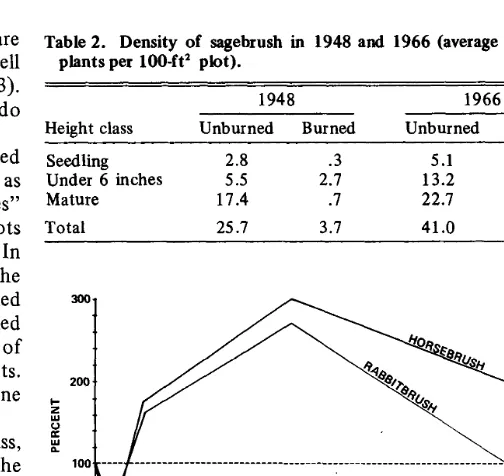
Table 2. Density of sagebrush in 1948 and 1966 (average number of plants per lOO-ft’ plot).
Height class
1948 1966
Unburned Burned Unburned Burned
Many trends reported by Blaisdell following planned
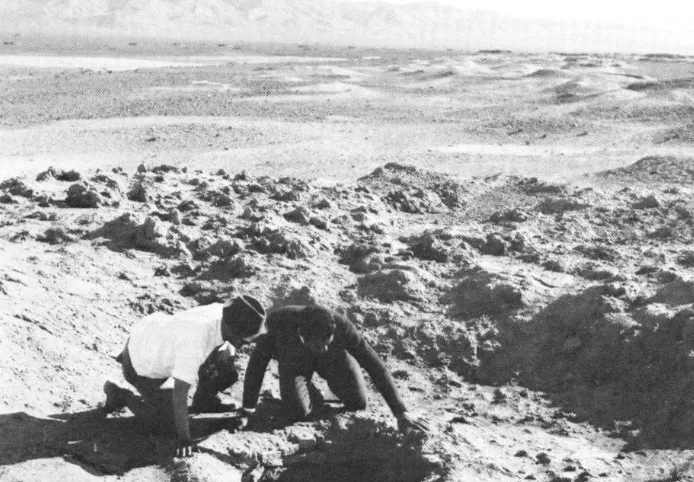
burning were reversed during the period 1948 to 1966, as shown in Figures 1 to 3 and Table 1. Yields of “total grasses” and “total forbs” were higher in 1948 on the burned plots than on the unburned plots, but lower in 1966 (Fig. 1). In contrast, the “total shrub” yield was lower in 1948 on the burned plots, but nearly similar on the burned and unburned plots in 1966. In 1966, “total vegetation” yield on the burned plots appeared to be slightly lower than the preburn yield of 1936 when compared to the yield from the unburned plots. Figure 4 shows pictorially some changes that occurred on one of the burned plots from 1936 to 1966.
Seedling 2.8 .3 5.1 1.2
Under 6 inches 5.5 2.7 13.2 23.9
Mature 17.4 .7 22.7 9.2
Total 25.7 3.7 41.0 34.3
300.
Yields of the most abundant grasses-thickspike wheatgrass, plains reedgrass, and bluebunch wheatgrass-were lower on the burned plots in 1966 than in 1948, but similar to the yields of these species before the burn in 1936 (Fig. 2).’ Yields of Idaho fescue and bluegrass were similar in 1966 and 1936.
200 ., 5 ,, ti . a L .’
The number of forb species as well as their yields increased
’ For scientific names, see Table 1. Also, yields of thickspike wheat-
grass and plains reedgrass were grouped to allow rapid field identifi- cation.
1936 i7 3b 4i3 6k YEAR
Fig. 3. Trend of important shrub species on a planned burn area near Dubois, Ida., 1936-1966. Values are adjusted for the natural varlirtion (a) between burned and unburned plots and (b) between years.
in the number of species. Since 1936, moderate grazing use later in the season probably contributed to the increased numbers and yields of forb species.
In 1966, sagebrush yields were about the same on the burned and unburned plots, although in 1948 these yields were much lower on the burned plots than they were on the
unburned plots (Fig. 3). Conversely, in 1948, yields of
rabbitbrush and horsebrush were much higher on the burned plots than on the unburned plots; this shows the stimulating
I.(. -; c
effects of burning. However, in 1966, the yield of rabbitbrush was lower than in 194X on the burned plots. The yield of horsebrush was also lower on the burned plots in 1966 (nearly
similar to the preburn yield) than m 1948. In 1936,
that allowed the invasion of a thick sagebrush stand.
The recovery of sagebrush is reflected by the increase in the average number of plants per plot. In 1948, the average number of sagebrush plants on the burned plots (3.7) was only about 14% of the average number of plants on the unburned plots (25.7). By 1966, the average number of plants on the burned plots (34.3) had increased to about 83% of the average number of plants on the unburned plots (41 .O).
As shown in Table 2, the unburned plots had the highest number of mature sagebrush plants in both 1948 and 1966. The burned plots had the highest number of plants in the “under 6-inch” class, especially in 1966. These differences indicate that the plant community is not climax on the burned plots.
Discussion
Vegetation trends through 1966 show the overwhelmingly dominant role of big sagebrush on this sagebrush-grass range near Dubois, Ida. Almost all important species of shrubs, grasses, and forbs decreased in yield from 1948 to 1966 as the big sagebrush recovered its dominance after the burn.
The ability of the sagebrush to reinvade the vigorous grass
stand that became dominant following the burn was not
unexpected; however, the magnitude of the reinvasion was
surprising. Frischknecht (1968) indicated that in wet years sagebrush will invade grazed or ungrazed stands of crested wheatgrass (Agropyron cristatum). Similarly, Johnsen (1962)
reported that one-seed juniper (Juniperus monosperma) has
invaded dense grass stands. These reports indicate that during
wet years the competition for moisture may be reduced
enough to allow sagebrush and juniper to become established. However, Beetle (1960) suggested (a) grasses may kill sage- brush seedlings by shading them and (b) drought reduces the grasses, thus permitting sagebrush to become established.
Once established, sagebrush must compete directly for soil
moisture and nutrients with most other species in the
community. Apparently, sagebrush must also use soil water and nutrients that are not utilized or are not available to these other species, because maximum vegetation yields result when sagebrush is present (Fig. 1, Table 1). Other studies have shown similar results (Blaisdell, 1949, 1953; Mueggler and Blaisdell, 1958). Our observations indicate sagebrush root depths are deeper than grasses’ on mature stands; thus, sagebrush would have access to soil water and nutrients unavailable to grasses.
The climax vegetation of the Snake River Plains had been pictured as a grassland by Weaver and Clements (1938). More recently, however, it has been pictured as a vigorous stand of perennial grasses and forbs interspersed with sagebrush and
miscellaneous shrubs (Pechanec, 194 1; Daubenmire, 1952;
Blaisdell, 1953). Tisdale et al. (1969) concluded that the sagebrush type or various successional types cover nearly the
same geographic areas that they did before they were
extensively grazed by livestock. The recent recognition of sagebrush subspecies (Beetle, 1960; Beetle and Young, 1965) within the Artemisia tridentata complex has led to more intensive examination of habitat types that are separated by the subspecies of sagebrush (Tisdale et al., 1969; Winward, 1970; Marchand, 1964).
The sagebrush on the Dubois study site is within the
Artemisia tridentata subspecies vaseyana habitat type. In his study of the taxonomy and ecology of big sagebrush, Winward (1970) found (a) the vaseyana subspecies tended to become
dense on both sprayed and burned areas, and (b) control of sagebrush is desirable to insure forage production and better animal distribution. He suggested that the need for sagebrush control should be evaluated by subspecies and/or by habitat
type*
Our findings support Winward’s (1970) views for evaluating sagebrush by subspecies. From observation, sagebrush in the
vaseyana habitat type sometimes reinvades an area immedi- ately following a burn; so control benefits do not always exist as long as they have on the 1936 burn. The length of time between control measures depends on grazing practices and the undefined weather variables that favor sagebrush seedling survival and establishment. Seed production before control may also be a factor in rate of reinvasion.
Apparently, sagebrush control measures should be applied before the community climax because our findings with regard to plant size showed that the community is not climax on the burned plots.
Although our studies showed that good grazing manage- ment will not prevent sagebrush reinvasion, Pechanec et al. (1954) showed that heavy grazing and haphazard burning will accelerate such reinvasion, as well as soil erosion and loss of desirable forage plants. The reestablishment of sagebrush to the detriment of forage and livestock qualities indicates the need for planning sagebrush control measures on a continuing basis, at least in the Artemisia tridentata subspecies vaseyana habitat type.
Literature Cited
Beetle, A. A. 1960. A study of sagebrush. The section Tridentatae of Artemisiu. Wyo. Agr. Exp. Sta. Bull. 368. 83 p.
Beetle, A. A., and A. Young. 1965. A third subspecies in the Artemisia tridenfata complex. Rhodara 67:405406.
Blaisdell, James P. 1949. Competition between sagebrush seedlings and reseeded grasses. Ecology 30:5 12-5 19.
B&dell, James P. 1953. Ecological effects of planned burning of sagebrush-grass range on the Upper Snake River Plains. U. S. Den. Agr. Tech. Bull. 1075. 39 D.
Daub&mire, R. F. 1952. Pla& geography of Idaho. In Flora of Idaho by R. J. Davis. Dubuque, Iowa: Wm. C. Brown Co. 827 p. Frischknecht, Neil C. 1968. Grazing intensities and systems on crested
wheatgrass in central Utah: response of vegetation and cattle. U.S. Dep. Agr. Tech. Bull. 1388. 47 p.
Hanson, H. C. 1939. Improvement of sagebrush range in Colorado. Colo. Agr. Exp. Sta. Bull. 356. 12 p.
Johnsen, T. N., Jr. 1962. One-seed juniper invasion of northern Arizona grasslands. Ecol. Monogr. 32: 187-207.
Marchand, L. A. 1964. An ecological study of sagebrush in interior British Columbia. M.S. Thesis. Univ. Idaho, Moscow. 116 p. Mueggler, Walter F., and James P. Blaisdell. 1958. Effects on associated
species of burning, rotobeating, spraying, and railing sagebrush. J. Range Manage. 11:61-66.
Pechanec, J. F. 1941. Range problems of the sagebrush-grass type. Utah Juniper 12:4-7.
Pechanec, J. F., and G. D. Pickford. 1937. A weight estimate method for the determination of range or pasture productions. J. Amer. Sot. Agron. 29: 894-904.
Pechanec, Joseph F., George Stewart, and James P. Blaisdell. 1954. Sagebrush burning-good and bad. U.S. Dep. Agr. Farmers’ Bull.
148. 34 p.
Pickford, G. D. 1932. The influence of continued heavy grazing and of promiscuous burning on spring-fall ranges in Utah. Ecology 13:159-171.
Tisdale, E. W., M. Hironaka, and M. A. Fosberg. 1969. The sagebrush region in Idaho, a problem in resource management. Univ. Idaho Agr. Exp. Sta. Bull. 5 12. 14 p.
Weaver, J. E., and F. E. Clements. 1938. Plant ecology.
New York:
McGraw-Hill Book Co., Inc. 601 p.
Winward, A. H. 1970. Taxonomic and ecological relationships of the big sagebrush complex in Idaho. Ph.D. Thesis, Univ. Idaho, Moscow. 80 p.