A REVIEW ON ARTIFICIAL BLOOD: A SOURCE WE NEED
KRISHNA VENI R, BRINDHA DEVI P*, IVO ROMAULD S
Department of Bio-Engineering, School of Engineering, Vels University, Chennai - 600 117, Tamil Nadu, India. Email: [email protected]
Received: 6 April 2017, Revised and Accepted: 9 June 2017 ABSTRACT
Blood is a liquid tissue, in which abundant chemical factors and millions of different cells are dissolved. It is one of the most demanding sources in clinical and medical aspects. The issues and cost of human blood collection and storage directed this procedure toward the use of alternative blood. Thus, came an invention of artificial blood and blood substitutes. These alternative blood or blood substitute is a substance which is made to play as a substitute of erythrocytes. Thus, the main objective is to replace the normal human blood with artificial blood substitutes in the place of blood transfusion during surgeries and organ transfusion. Two major and focused blood substitutes in pharmaceutical aspects are perfluorocarbons and hemoglobin-based oxygen carriers (HBOC’s). Among these HBOCs vaguely resemble normal human blood. These blood substitutes are to allow flow through the blood stream to carry the oxygen and supply it to heart and other parts of the blood. They are used to fill the lost fluid volume. They are also called as plastic blood with iron atom as the base. They are found to serve as a good oxygen carrier. The results showed by these products are discussed, and they proved that they can act as a blood substitute and also they can reach the human tissue easier than erythrocytes and can control oxygen directly. However, these artificial blood products are being processed in research laboratories for good outcome. Their important functions are oxygen carrying capacity and to replace the lost blood volume in the human body. Their special features are survivability over a wider range of temperatures, eliminating cross matching, cost efficient, pathogen free, long shelf life, minimal side effects. Thus, artificial blood products are really a good alternative source which we need for replacing normal human blood.
Keywords: Artificial blood, Blood transfusion, Plastic blood, Perfluorocarbons, Hemoglobin-based oxygen carriers, Cross matching, Shelf life.
INTRODUCTION
The main aim of this concept is to find a source which can replace a human blood. Blood is a fluid which is pumped into the body by the pumping action of the heart and through blood vessels, they are circulated to all over the parts of the body. From the inhaled air, the arterial blood carries oxygen with the help of lungs, and the cells produce the waste product Co2 of this whole process or metabolism is carried by the venous to the lungs to get exhaled [6]. The questioning of why to replace a human blood is to be answered as, in present, the value of blood has increased and it has become one of the most demandable sources. In practice of surgeries and other procedures like organ transfusion, one can lose their body blood volume, thus the time of need for blood arises. In our country, the receptor’s level is much more increasing than donor’s level. If in case of donated blood, the patients should face the following complications such as same blood group and pathogen-free blood should be screened to check whether the blood is free from infectious diseases. The normal method of blood transfusion is mostly suggested, but it cannot meet the need of demanded blood all the time [20].
Blood transfusion and iron chelation therapy have improved the quality of life and life span to an age of around 30 years, but frequent blood transfusions cause progressive iron overload, which is a major clinical complication of the treatment [16]. Iron overload can result in multiple progressive organ damages grouped together under a condition called hemosiderosis [17]. Hence, it is to be noticed that an artificial product could replace the human blood and that is called as blood substitute (or) artificial blood [6].
BLOOD TRANSFUSION
Blood transfusion is a technique where the blood is transmitted from one person to other. It is also defined as injecting the blood and blood products
to one’s circulation. This is one of the widely used methods in various medical and clinical fields to replace the lost components in the blood. Thus, in proceeding the artificial blood products on to the blood stream, the blood transfusion method is analyzed. Many trials were conducted with different blood samples, to find the common effect of treatment effect using meta-analysis [19,23]. To considered different average percentage of donors which would not support the motivator goodness of fit test were used [24]. Furthermore, using blood plasma, platelets, and frozen blood, a supply chain mechanism has been invented for the supply of blood products [21]. During the blood transfusion of hospitalized patients, the implementation of restrive method strategies has proved to have the capability to decrease the severe health-care infections [22]. Blood transfusion not only has improved the lifespan but also frequent transfusions will lead to a major clinical complication in the treatment [18].
ARTIFICIAL BLOOD
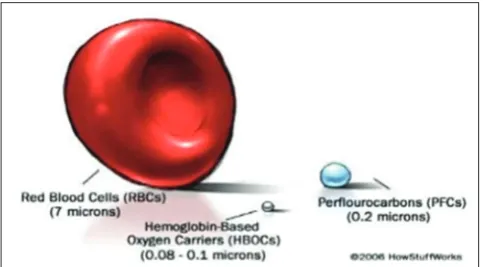
Artificial blood is a substance made to function as a substitute of blood and also for the oxygen transfer throughout the body. They are also called as blood substitutes and artificial oxygen carriers [3]. They can perform the main functions such as oxygen carrying and expanding the blood volume. The main aim of artificial blood is to provide alternative way for blood transfusion. They are smaller in size around 0.08-0.2 µ [6]. They can be in microsize, macrosize, and also in nanosize this comes under cellular dimensions. An unlimited types of material bounded to a single structure called as artificial cells. Thus, these are also called as nanomedicine [15]. The shape and size of the blood substitutes were compared with red blood cells (RBCs) and the figure is depicted in Fig. 1.
Need for artificial blood
Due to shortage in blood supply, the minimum stock of blood a country needs is 1% of its total population. In India, the total blood collection © 2017 The Authors. Published by Innovare Academic Sciences Pvt Ltd. This is an open access article under the CC BY license (http://creativecommons. org/licenses/by/4. 0/) DOI: http://dx.doi.org/10.22159/ajpcr.2017.v10i9.18960
recorded is 4 million units. In the case of 10% million requirements, it can only meet the need of 40% units. The recent reports say that the blood donation has increased from 4.4 million units to 9.3 million units. During blood transfusion from one person to another, there is a chance of transmission of chronic and infectious diseases like HIV, Hep B, Hep C, etc., and other blood-borne diseases which can be prevented/ stopped by the use of artificial blood. Mistransfusion can also occur due to error. The cost for collecting the blood, followed by the screening process, then storing it with all requirements, and administration is quite high for normal blood transfusion process [7].
Ideal artificial blood
Artificial blood has increased availability that would replace the demand of donated blood. It has most promising oxygen carrying capacity [11] equaling that of biological blood. It has the ability of volume expansion of blood inside the body. It is universal compatibility (elimination of cross matching). They are pathogen free and have minimal side effects. Ability to survive[2]. The two most promising artificial blood products are perfluorocarbons (PFC’s) and hemoglobin (Hb)-based oxygen carriers (HBOC’s).
PFCs
To modify human or animal, Hb is one of the ways to create a blood substitute and thus helps to solve the problem of lack of blood replacement; another way is to use materials better than Hb. Thus, fluorocarbon chemicals were invented to replace the function of Hb [6]. PFC’s are linear cyclic hydrocarbons of low molecular weight. In liquid fluorocarbons, hydrogen ions have been replaced by fluorine since they are neutral chemical compounds. They are sufficiently better solvents for carbon dioxide and oxygen to maintain the respiration process in animals, colorless, stable at high temperatures also, odorless, partially soluble, and entering weakly into chemical reactions.
PFC’s are able to release and carry a high volume of oxygen to tissue, and the volume of physically dissolved gas which relies on the solubility coefficient of the PFC’s utilized and is proportional to the gas partial pressure. This situation leads to increasing oxygen concentration in the air inspired by the patient due to several folds of increase in O2 concentration in the emulsion of the PFC. The release of O2 to tissues is greatly enhanced, and extraction rates and ratios are a lot higher with PFCs because of weak interaction between O2 molecules, to compare with 25-30% of Hb PFC is able to reach 90% oxygen of its carrying [8]. The structure of PFC is depicted in Fig. 2.
Generations of PFCs
The different generations of PFCs along with its example are given in Table 1.
Perfluorocarbon emulsions
Fluorocarbon emulsion is usually well-tolerated emulsions. They often cause a fail in arterial blood pressure at the beginning of perfusion.
Some of the emulsifiers are used for this process including lipids, bovine albumin (cow) and polyols, for example, a mixture of polyoxypropylene and polyoxethylene and also Plulronic F68. By the use of mechanical energy or ultrasound, the emulsions are produce. For ensuring easy flow through the capillary vascular system, the greater importance should be given to the selection of right degree of dispersion, gas diffusion capacity for obtaining the viscosity and also the time retention of the fluorocarbon in the circulation [4]. The structure and composition of perfluorocarbon emulsion are depicted in Fig. 3.
Composition of PFC-based blood substitute
The PFC-based blood substitutes can be prepared by the following materials, and the materials are listed in Table 2.
Advantages of PFCs
The advantage of PFC’s is they do not interact with oxygen and they also allow easy transportation of the oxygen to the human body. The supply of oxygen in plasma level has increased, and the level in plasma has increased. The physical parameters such as pH and temperature are minimized in blood circulation which makes the PFC’s the better alternative for the blood [5].
Benefits of PFCs
The benefits of PFC’s than biological blood are it can be stored for more than 1 year in a normal room temperature and the initial checking of blood grouping is not neccesary. This blood can even penetrate into small capillaries with ease allowing hem to bypass arterial blockages and deliver the oxygen to the most needed areas. This ease of blood flow is possible because of their size when compared with RBCs. It also has its effects on chemotherapy of radiation in tumor treatment for cancer patients [5].
Disadvantages of PFCs
PFC’s must be prepared as emulsions since they cannot remain in aqueous phase for a longer period of time. To ensure oxygenation of tissues, the patients must breathe at a linear rate because PFCs absorb oxygen passively. High requirement of fraction of inspired oxygen is needed [2]. Platelets count in the blood will be reduced and it causes flu-like symptoms. Adverse effects of PFC’s may also cause if there is an intake of continuous doses. It will also lead to impaired neutrophil function and cause allergic reactions [8].
HBOCs
Hb an obvious candidate for blood substitute that has a number of desirable features. The carrier has the ability to carry oxygen and
Table 1: Generations of PFCs
S. No Generation Examples
1 1st generation Fluosol-DA™
2 2nd generation Oxyfluor™
Oxygent™
3 3rd generation Perftoran™
is countless of non-antigen complexes of erythrocyte membrane. According to molecular stability improvements techniques, there are four groups of Hb cells: Surface-modified Hb - the molecule-linked Hb - polymerized Hb - the Hb liposomal capsule. HBOC’s has half-life of 18-24 hrs, which are sufficient for use in acute care. Moreover, they can be maintained at a temperature of 4°C for a period of 1-2 years. HBOC has less oxygen affinity than normal human blood [1]. The structure and linking of HBOC’s are depicted in Fig. 4.
Conventionally, it is recommended that for <600 ml of blood, plasma expanders should be used. For 600-1200 ml, RBCs products are essential, and blood plasma derivatives or products such as low platelets or whole blood transfusion are critical. Blood substitutes should be used as a suggestion, and complementary transfer of autologous or homologous should be used in combination with the protein.
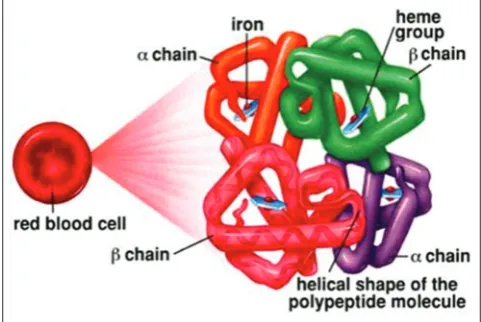
Hb is considered as the tetramer and is linked with 2-α and 2-β
polypeptide chains with iron heme group at the center of the molecule. Hb’s, as having an excellent source of blood substitute, thus it allows heme bonds to have high oxygen affinity [10].
Stabilization of stroma-free Hb
The initial step toward clinical study with free Hb resulted in nephrotoxicity. Nephrotoxicity is a toxic symptom occurred in kidney,
and it is poisonous. The Hb used was found to have bacterial endotoxins as well as erythrocyte membrane stromal lipids.
To get rid of these problems, stoma-free Hbs were developed. Stroma-free Hb has too short intravascular half-life because of tetrameric
Hb (2-α and 2-β) dissociated into (alpha beta) dimmers. These were
excreted in the urine after the filtration process of the kidney. During the purification process, the 2,3-diphosphoglycerate (DPG) is lost thus this stroma-free Hb has too high oxygen affinity. Hence, there is a need of stabilization of the Hb [7]. The structure of exact stabilization of Hb is depicted in Fig. 5.
In the above, Fig. 5 shows that there is a tetrameric stabilization
taking place by intramolecular cross linking between the 2-α (or) 2-β. After the conjugation process with the help of polyethylene
glycol, the Hb’s molecular weight can be effectively increased. The polyfunctional cross-linking agents may produce polymerized Hb. Moreover, the liposomes can also be formed by encapsulating the Hb [7].
Intramolecular cross linking
The main aim of intramolecular modification is to cross-link the 2-α or 2-β subunits. And also to stabilize the association of the 2-α or 2-β
dimers because the alpha or beta dimers are relatively stable [13]. The intramolecular cross linking of Hb is shown in Fig. 6.
3,5-dibromosalicylfumarate and nor-2-formylpyridoxal 5-phosphate are used as a support matric for cross-linking process. The oxygen affinity of Hb is reduced during cross linking, and also it prevents tetramer dissociation. Too high oxygen affinity of stroma-free Hb
Fig. 2: The structure of perfluorocarbon (Mohan Krishna et al.,
2011)
Fig. 3: Structure of perfluorocarbon emulsion (Tao and Ghoroghchian., 2014)
Fig. 4: Structure of hemoglobin-based molecules
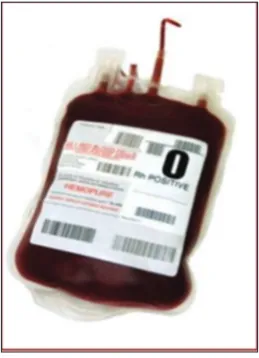
can be fixed by the addition of DPG analogs such as pyridoxal-5’-phosphate. To deliver more oxygen to the tissue, the more DPG is need in the cell. The less DPG, the less oxygen delivered to tissues. Pridoxylated stroma-free Hb has nearly normal oxygen affinity, for example, Hemopure™ [3].
Polymerized Hb
Hb oligomers are formed in the polymerization of Hb. Thus, the size of the molecules is increased by intermolecular cross linking. By the use of dialdehydes, such as glutaraldehyde and glycolaldehyde, multiple Hb proteins are linked together in this process [3].
The polymerization of Hb and its structure is depicted in Fig. 7.
Conjugated Hb
The process of conjugating Hb is also called as binding of Hb. To increase its overall size, the Hb is conjugated into a biocompatible polymer like as polysaccharid. To increase the molecule’s size, multiple polyethylene glycol chains were added to Hb protein, in specific case of pegylation. The conjugated tetramers from free tetramers are shown in Fig. 8. Once pegylated, the molecule size increases from 3 nm to 15 nm. To protect the molecule from renal excretion, conjugation of Hb with PEG takes place. The intravascular circulation time of HBOC can be increased by conjugating the Hb with macromolecules [3,14], for example, Hemospan™.
Hb vesicles (hemoglobin encapsulated vesicles)
The encapsulation process takes place when the Hb is based on the idea of recreating the original and natural properties of RBC in the absence of blood group antigens. The structure of Hb vesicle is depicted in Fig. 9. The hemosome is often referred to as encapsulated Hb. The encapsulation process involves encapsulating the Hb within lipid vesicles in the solution of phospholipids. The better diffusion of O2 and Co2 can be done by lipid membrane [3].
Recombinant Hb
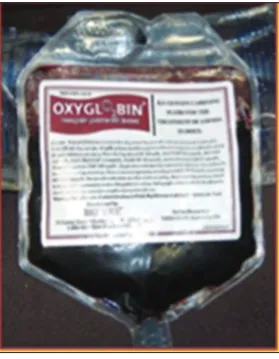
From the microorganism, like Escherichia coli specially modified Hb may be produced, with the help of advance ADNA technology. Using an expression vector containing two mutant human globin genes, recombinant human Hb was produced in E. coli. One was fused alpha globins, and the other was a low oxygen affinity mutant. These products recombinant Hb are advanced to clinical trials, but it was completely stopped due to vasoconstriction and other harmful effects [3]. Some of the examples are depicted in Figs. 10 and 11.
The characteristics comparision between RBCs and oxygen therapeutics is given in Table 3.
The current status about the development process of HBOCs is given in Table 4.
Example of HBOCs polyheme
It is formed by extracting Hb from RBCs, and the Hb is mixed into an electrolyte solution after being associated into tetramer. It is compatible with all blood types, and it has a shelf life of approximately 12 months.
Advantages of HBOCs
They are available in larger quantities and can be sterilized by pasteurization process. It can be stored for long durations. Without typing or cross matching, it can be administered rapidly. They have many military applications also [7,25].
Fig. 6: Structure of intramolecular cross linking (Mohankrishna
et al., 2011)
Fig. 7: Structure of polymerized hemoglobin. (Betts and Whittet, 1962)
Fig. 8: Structure of conjugated hemoglobin (Mohankrishna et al., 2011 and Shalini., 2012)
Fig. 9: Structure of hemoglobin vesicles (Shalini et al., 2012)
Benefits of HBOCs
It is faster and good at O2 distribution. It has long shelf life. There is no refrigeration needed. It is universally compatible to all receptors. It is one of the ready to use substances. After injection, it immediately offloads oxygen [3].
Disadvantages of Hb-based oxygen carriers
They have not found to be safe in humans. It has reduced circulation half-life. It mainly releases the free radicals into the body. It disturbs certain physiological structures, especially the gastrointestinal tract [7].
Adverse effects of Hb-based oxygen carriers
It causes renal effects, neurotoxicity, platelet aggregation, antigenicity, pancreatic, and liver enzyme elevation. They also result in gastrointestinal side effects, vasoactivity/hypertension, nephrotoxicity, coagulopathy, and immune suppression [7].
Promising techniques Stem cells
Stem cells are capable of propagating and differentiating to multiple lineages which give rise to a range of many specialized cells [26].
Recent scientific community has started to experiment the chance of producing an alternative source of transfusable blood using stem cells. Using hematopoietic stem cells, Giarratana et al. have performed a study to describe a production of mature human blood cells in large scale (ex vivo). This represents the first directed step in this innovation. The content and morphology of the normal blood cells are moreover the same as in the blood cells produced in culture. The founders of this study also proved that these produced RBCs nearly have normal shelf life or lifespan when compared with normal RBC.
The major difficulty in this procedure is the cost of production of RBCs. Then, again the introduction of complex three-step method in the production of cells would have make the blood cells unit too expensive. However, this is the first study to demonstrate the possibility in large-scale production of closely related RBC which almost resemble normal RBCs [2].
Biodegradable micelles
Formation of amphiphilic block copolymers by encapsulation of recombinant or polymerized Hb into the micellar is used to enhance the circulation. The diameter of this system is usually between 30 and 100 nm. The similar hydrophobic Hb protein can be able to solubilized by the hydrophobic core of the micelle polymer, whereas the steric barrier for protein absorption is provided by water-soluble corona (which is usually polyethylene glycol), and the reticuloendothelial system (RES) provides protection from clearance [2].
Advantages of artificial blood
There is no fear of infection. It can be kept at normal room temperature and can be stored for the period of more than 1 year. Patients in trauma and other severe situations require rapid treatment. The armed services in medical care would get benefit from the artificial blood. The immediate and sudden supply of full capacity oxygen transport can be allowed by artificial blood. It is an alternative source for the patients who refuse blood transmission for cultural or religious reasons. Currently, the transfused blood is much more cost effective. This may change if the manufacturing becomes refined the cost of the artificial blood may fall [5].
FUTURE PERSPECTIVES
In future, the extension in research should create an artificial blood which with more and more minimal differences from biological blood Fig. 11: Oxyglobin
Table 3: Comparision of biopure’s oxygen therapeutics and RBC’s
Characteristics Biopure’s oxygen therapeutics RBC’s
Storage Room temperature (20°C–30°C) Refrigerated
Shelf life 36 months 42 days
Preparation Ready to use Testing, typing, and cross matching
Compatibility Universal Type specific
Effectiveness Immediate oxygen delivery Depend on length of storage
Purity Processed to remove infectious agents Tested and screened for infectious agents
Raw material Bovine hemoglobin Human blood
Cost 600–800 125–425
RBC’s: Red blood cells
Table 4: Current development status of HBOC’s
Product type Product name Developer Source and/or technology Status
Cross-linked Hb HemAssist™ Optro (rHb)™
Baxter (USA)
Som atogen (USA) αα cross-linked human HbRecombinant Hb DiscontinuedDiscontinued
Polymerized Hb PolyHeme™
Hemopure™ Northfield lab (USA)Biopure (USA) Glutaraldehyde, pyridoxal human HbGlutaraldehyde bovine Hb DiscontinuedApproved
Conjugated Hb Hemospan™
PEG-Hb™ PHP™
Sangart (USA) Enzon (USA) Apex (USA)
Maleimide PEG - human Hb PEG conjugated bovine Hb
Polyoxyethylene - conjugated human Hb
and adverse effects. Since some blood substitutes still suffer from certain kind of limitations. Most HBOCs can no more last than 20-30 hrs. Thus, these are called as short-term blood transfusion. Thus, in future, longer lasting products which can run over a body for a longer time should be produced, and this development will have a wider range of application. Currently, some of the companies are working on it, these are curious questions that have to be answered for the companies who really interested to spend on research and production.There are many challenges in this aspect, but going through it will surely give this world a pride of science and technology. It will lead to a source to help and save our human kind.
CONCLUSIONS
Blood supply demand was increasing as compared to blood donation in all over the world. Thus, artificial blood will be ultimately useful to meet this demand. They can fulfill the receptor’s blood volume until they receive it from the donor or the option of blood transfusion is not acceptable. Thus, new oxygen carriers are now invented to act and serve as normal blood. Both inversement and intelligence are needed to develop the process. If the research and development process of artificial blood or blood substitutes has increased in their range sure, the world will get an unbeatable source to save human.
1. Keyhanian SH, Ebrahimifard M, Zandi M. Investigation on artificial blood or substitute blood replace the natural blood. Iran J Ped Hematol Oncol 2014;4(2):72-7.
2. Anilkumar D, Sudarshan P, Ragavan K, Niranjan Babu M. A review of artificial blood. Int J Pharm Chem Biol Sci 2015;5(2):477-80. 3. Mohankrishna L, Balammal G, Aruna G. A review on arrtificial blood.
Int J Biopharm 2011;2(2):80-8.
4. Sharma A, Arora S, Grewal P, Dhillon V, Kumar V. Recent innovations in delivery of artificial blood substitute: A review. Int J Appl Pharm 2011;3(2):1-5.
5. Neelam S, Semwal BC, Krishna M, Ruqsana K, Shravan P. Artificial blood: A tool for survaival of human. Int Res J Pharm 2012;3(5):119-23. 6. Phadke NM, Phadtare DG, Saudagar RB. Artificial blood: A life saving
tool. World J Pharm Pharm Sci 2014;3(8):2146-55.
7. Patel DM. Artificial Blood. Available From: https://www.slideshare. net. [Last accessed on 2015 Feb 11]..
8. Sarkar S. Artificial blood. Indian Soc Crit Care Med 2008;12(3):140-4. 9. Mozafari M, Ramedani A, Yazdanpanah A. Artificial blood – A game
changer for future medicine. J Blood Disord Transfus 2015;6(5):1-2. 10. Varnado CL, Mollan TL, Birukou I, Smith BJ, Henderson DP, Olson JS.
Development of recombinant hemoglobin-based oxygen carriers. Antioxid Redox Signal 2013;18(17):2314-28.
11. Henkel-Honke T, Oleck M. Artificial oxygen carriers: A current review. AANA J 2007;75(3):205-11.
12. Likhitha D, Shankar M, Kavya Lalitha S, Supriya T, Niranjan Babu M. Blood substituents an overview. Acta Biomed Sci 2016;3(4):187-92. 13. Moradi S, Jahanian-Najafabadi A, Roudkenar MH. Artificial blood
substitutes: First steps on the long route to clinical utility. Clin Med Insights Blood Disord 2016;9:33-41.
14. Sharma AR, Arora S, Grewal P, Dhillon V, Kumar V. Recent innovations in delivery of artificial blood substitute: A review. Int J Appl Pharm 2011;3(2):1-5.
15. Chang TM. From artificial red blood cells, oxygen carriers, and oxygen therapeutics to artificial cells, nanomedicine, and beyond. Artif Cells Blood Substit Immobil Biotechnol 2012;40(3):197-9.
16. Telfer PT, Warburton F, Christou S, Hadjigavriel M, Sitarou M, Kolnagou A, et al. Improved survival in thalassemia major patients on switching from desferrioxamine to combined chelation therapy with desferrioxamine and deferiprone. Haematologica 2009;94(12):1777-8. 17. Abdulzahra MS, Al-Hakeim HK, Ridha MM. Study of the effect of
iron overload on the function of endocrine glands in male thalassemia patients. Asian J Transfus Sci 2011;5(2):127-31.
18. Salih MK, Mosawy WF. Evaluation some consequences of thalassemia major in splenectomized and non-splenectomized Iraqi patients. Int J Pharm Pharm Sci 2013;5:385-8.
19. Holst LB, Petersen MW, Haase N, Perner A, Wetterslev J. Restrictive versus liberal transfusion strategy for red blood cell transfusion: Systematic review of randomised trials with meta-analysis and trial sequential analysis. BMJ 2015;350:h1354.
20. Bennett-Guerrero E, Zhao Y, O’Brien SM, Ferguson TB Jr., Peterson ED, Gammie JS, et al. Variation in use of blood transfusion in coronary artery bypass graft surgery. JAMA 2010;304(14):1568-75. 21. Belien J, Force H. Supply chain management of blood products:
A literature review. Eur J Oper Res 2012;217(1):1-6.
22. Rohde JM, Dimcheff DE, Blumberg N, Saint S, Langa KM, Kuhn L,
et al. Health care-associated infection after red blood cell transfusion: A systematic review and meta-analysis. JAMA 2014;311(13):1317-26. 23. Goodnough LT, Levy JH, Murphy MF. Concepts of blood transfusion in
adults. Lancet 2013;381(9880):1845-54.
24. Bednall TC, Bove LL. Donating blood: A meta-analytic review of self-reported motivators and deterrents. Transfus Med Rev 2011;25(4):317-34.
25. Carson JL, Carless PA, Hébert PC. Outcomes using lower vs. higher hemoglobin thresholds for red blood cell transfusion. JAMA 2013;309(1):83-4.
26. Gaurav B, Arvind G, Hemlata G, Kapil A. Periodontal regeneration by stem cells therapy. Int J Pharm Pharm Sci 2012;4:421-5.