
Western University Western University
Scholarship@Western
Scholarship@Western
Electronic Thesis and Dissertation Repository
4-29-2014 12:00 AM
Physical Sulphate Attack on Concrete
Physical Sulphate Attack on Concrete
Ahmed Ramadan Suleiman The University of Western Ontario
Supervisor Moncef Nehdi
The University of Western Ontario
Graduate Program in Civil and Environmental Engineering
A thesis submitted in partial fulfillment of the requirements for the degree in Master of Engineering Science
© Ahmed Ramadan Suleiman 2014
Follow this and additional works at: https://ir.lib.uwo.ca/etd
Part of the Civil Engineering Commons, and the Structural Engineering Commons
Recommended Citation Recommended Citation
Suleiman, Ahmed Ramadan, "Physical Sulphate Attack on Concrete" (2014). Electronic Thesis and Dissertation Repository. 2058.
https://ir.lib.uwo.ca/etd/2058
This Dissertation/Thesis is brought to you for free and open access by Scholarship@Western. It has been accepted for inclusion in Electronic Thesis and Dissertation Repository by an authorized administrator of
(Thesis format: Integrated Article)
by
Ahmed Ramadan Suleiman
Graduate Program in Engineering
Department of Civil and Environmental Engineering
A thesis submitted in partial fulfillment of the requirements for the degree of
Master of Science
The School of Graduate and Postdoctoral Studies Western University
London, Ontario, Canada
ii
ABSTRACT
Field experience with concrete exposed to sulphates has often shown that concrete can
suffer from surface scaling above the ground level caused by physical sulphate attack.
This type of attack has been ignored and, in some instances, confused with chemical
sulphate attack. In addition, current standards that evaluate the performance of concrete
under sulphate attack, only deal with the chemical aspects of sulphate attack. This lack of
information has led to confusion and contradictory views regarding the mechanisms of
concrete deterioration due to physical sulphate attack.
In the current thesis, the performance of concrete exposed to environments prone
to physical sulphate attack was investigated. The effects of mineral additives, water-to
binder (w/b) ratio, along with various curing conditions on the performance of concrete
exposed to physical sulphate attack was studied. In addition, the effectiveness of different
surface treatment materials in mitigating physical sulphate attack on concrete was
explored.
Results show that concrete can experience dual sulphate attack. The lower
immersed portion can suffer from chemical sulphate attack, while the upper portion can
be vulnerable to physical attack. Lowering the w/b ratio and moist-curing the concrete
reduced surface scaling above the solution level since the volume of pores was decreased.
Although partial replacement of cement with pozzolans also decreased the pore volume,
surface scaling increased due to the increased proportion of small diameter pores and the
associated growth of capillary suction and surface area for evaporation.
Epoxy- and silane-based surface treatment materials were found to be adequate for
protecting both cured and non-cured concrete exposed to physical sulphate attack.
However, it was found that adequate curing of the concrete before coating is important to
eliminate the separation of the surface treatment based on bitumen and to enhance the
resistance of concrete to physical sulphate attack. Using a water-based solid acrylic
polymer resin did not provide adequate protection of concrete against physical sulphate
attack.
Keywords: Surface; Physical; Sulphate attack; Capillary; Pore; Structure; Treatment;
iii
Co-Authorship Statement
This thesis has been prepared in accordance with the regulation of integrated-article
format stipulated by the Faculty of Graduate Studies at Western University. Substantial
parts of this thesis have been submitted for publication to peer-reviewed technical
journals. All experimental work, data analysis, and writing of the initial versions of
publications listed below were carried out by the candidate. The research advisor and any
other co-author provided guidance and supervision, and helped in the development of the
final versions of publications:
1-Suleiman, A. R., Soliman, A., and Nehdi, M. “Investigation of concrete exposed to dual sulphate attack.” Cement and Concrete Research, Under review.
2- Suleiman, A. R., Soliman, A., and Nehdi, M. “Effect of surface treatment materials on durability of concrete exposed to physical sulphate attack.”, ACI Materials Journal, Under review.
iv
To: My Beloved Mother Naima,
My Father Ramadan,
v
ACKNOWLEDGMENTS
I am deeply grateful to my supervisor Professor Moncef Nehdi, for his guidance, advice,
and encouragement. I thank him for all the constructive feedback provided not just during
my work, but also in my entire period of MESc study.
I would like to acknowledge the Ministry of High Education in Libya for
providing financial support through my study. Also, I would like to thank both BASF and
Lafarge companies for providing necessary materials for the experiments.
Special thanks to Dr. Ahmed Soliman for his help; he provided valuable
discussions and information, and cooperation during my work.
I would like to thank Mr. Wilbert Logan for his help, support, and valuable
suggestions during my experimental work.
I thank all the staff in the Department of Civil and Environmental Engineering for
providing support through the period of my study and research work.
Finally, I would like to thank my parents, my brother and sisters, for their love,
patience, understanding and support over the years. All my achievements would not have
vi
TABLE OF CONTENTS
ABSTRACT ... ii
Co-Authorship Statement ... iii
ACKNOWLEDGMENTS ... v
TABLE OF CONTENTS ... vi
LIST OF TABLES ... ix
LIST OF FIGURES ... xii
CHAPTER ONE ... 1
1 INTRODUCTION ... 1
1.1 Background ... 1
1.2 Research Objectives ... 3
1.3 Original Contributions ... 4
1.4 Thesis Structure ... 4
1.5 References ... 6
CHAPTER TWO ... 9
2 LITERATURE REVIEW ... 9
2.1 Introduction ... 9
2.2 Sources of Sulphates ... 10
2.3 Mechanisms of Physical Sulphate Attack ... 10
2.4 Solid Volume Change Theory ... 10
2.5 Salt Hydration Distress Theory ... 11
2.6 Salt Crystallization Theory ... 11
2.7 Previous Field Investigations ... 12
2.8 Previous Laboratory Studies on Physical Sulphate Attack ... 14
2.8.1 Effect of w/c Ratio ... 15
2.8.2 Effect of Pozzolanic Minerals... 15
2.8.3 Exposure Conditions ... 17
vii
2.10Standards and Specifications for Concrete Exposed to Sulphate Attack ... 21
2.11References ... 24
CHAPTER THREE ... 27
3 PERFORMANCE OF CONCRETE EXPOSED TO DUAL SULPHATE ATTACK ... 27
3.1 Introduction ... 27
3.2 Need for Research ... 28
3.3 Experimental Program ... 28
3.3.1 Materials and Specimen Preparation ... 28
3.3.2 Curing Conditions ... 28
3.3.3 Environmental Exposure Conditions... 29
3.3.4 Mercury Intrusion Porosimetry (MIP) ... 30
3.3.5 Concrete Mechanical Properties ... 31
3.3.6 SEM, EDX, and XRD Analysis ... 31
3.4 Results and Discussion ... 32
3.5 Conclusions ... 40
3.6 References ... 41
CHAPTER FOUR ... 43
4 EFFECT OF PORE STRUCTURE ON CONCRETE DETERIORATION BY PHYSICAL SULPHATE ATTACK ... 43
4.1 Introduction ... 43
4.2 Need for Research ... 43
4.3 Experimental Program ... 44
4.3.1Materials and Specimen Preparation ... 44
4.3.2Curing Conditions ... 44
4.3.3Environmental Exposure Conditions ... 45
4.3.4Mercury Intrusion Porosimetry (MIP) ... 45
4.3.5Mass Loss ... 46
4.4 Results and Discussion ... 47
4.4.1.1Effect of w/b ratio ... 55
viii
4.4.1.3Effect of Pozzolanic Minerals ... 55
4.5 Conclusions ... 58
4.6 References ... 59
CHAPTER FIVE ... 61
5 EFFECT OF SURFACE TREATMENT ON DURABILITY OF CONCRETE EXPOSED TO PHSYICAL SULPHATE ATTACK... 61
5.1 Introduction ... 61
5.2 Need for Research ... 61
5.3 Experimental Program ... 62
5.3.1Visual Inspection ... 66
5.4 Experimental Results ... 66
5.4.1Discussion ... 77
5.5 Conclusions ... 80
5.6 References ... 82
CHAPTER SIX ... 86
6 EFFECT OF SUPPLEMENTARY CEMENTITIOUS MATERIALS ON DURABILITY OF CONCRETE EXPOSED TO PHYSICAL SULPHATE ATTACK ... 86
6.1 Introduction ... 86
6.2 Experimental Program ... 87
6.2.1Materials and Specimen Preparation ... 87
6.2.2Environmental Exposure Conditions ... 88
6.3 Results and Discussion ... 88
6.4 Conclusions ... 97
6.5 References ... 98
CHAPTER SEVEN ... 101
7 CONCLUSIONS AND RECOMMENDATIONS ... 101
7.1 Summary and Conclusions ... 101
7.2 Recommendations for Future Work ... 103
APPENDIX A ... 104
ix
LIST OF TABLES
Table 2.1: Previous lab investigations on concrete exposed to physical sodium sulphate attack .. 16
Table 2.2: Requirements for concrete subjected to sulphate attack ... 23
Table 3.1: Physical and chemical properties of various binders ... 29
Table 3.2: Physical and chemical properties of fine and coarse aggregates ... 30
Table 3.3: Proportion of tested concrete mixture ... 30
Table 4.1: Mixture design for tested concrete ... 44
Table 4.2: Average pore size and total intrusion volume for the tested concrete ... 54
Table 5.1: Proportions of tested concrete mixtures ... 62
Table 5.2: Visual rating system for the degraded concrete (Adapted from Malhotra et al., 1987). (Reproduced with permission from the American Concrete Institute) ... 66
Table 6.1: Proportions of tested concrete mixtures. ... 87
Table 6.2 shows the average pore size and mercury intrusion for the concrete specimens ... 96
z Table A.1 : MIP for concrete made with OPC, w/b = 0.60 non-cured specimen ... 104
Table A.2 : MIP for concrete made with 25% fly Ash, w/b = 0.60 non-cured specimen ... 105
Table A.3:MIP for concrete made with 8% silica fume, w/b = 0.60 non-cured specimen ... 106
Table A.4: MIP for concrete made with 8% metakaolin w/b = 0.60 non-cured specimen ... 107
Table A.5: MIP for concrete made with HS, w/b = 0.60 non-cured specimen ... 108
Table A.6 :MIP for concrete made with OPC w/b = 0.60 cured specimen ... 109
Table A.7: MIP for concrete made with 25% fly Ash w/b = 0.60 cured specimen ... 110
Table A.8: MIP for concrete made with 8% silica fume, w/b = 0.60 cured specimen ... 111
x
Table A.10 : MIP for HS w/b = 0.60 cured specimen ... 113
Table A. 11 : MIP for OPC w/b = 0.45 non-cured specimen ... 114
Table A.12 MIP for 8% fly Ash w/b = 0.45 non-cured specimen... 115
Table A.13 MIP for 8% silica fume w/b = 0.45 non-cured specimen ... 116
Table A.14 MIP for 8% metakaolin w/b = 0.45 non-cured specimen ... 117
Table A.15 MIP for HS w/b = 0.45 non-cured specimen ... 118
Table A. 16 MIP for OPC w/b = 0.30 non-cured specimen ... 119
Table A. 17 MIP for 25% fly Ash w/b = 0.30 non-cured specimen ... 120
Table A. 18 MIP for 8% silica fume w/b = 0.30 non-cured specimen ... 121
Table A. 19 MIP for 8% metakaolin w/b = 0.30 non-cured specimen ... 122
Table A. 20 MIP for HS w/b = 0.30 non-cured specimen ... 123
Table B.1:Mass loss of concrete cylinders made with w/b = 0.60 non-curedError! Bookmark not defined. Table B.2:Mass loss of concrete cylinders made with w/b = 0.45 non-cured .... Error! Bookmark not defined. Table B.3: Mass loss of concrete cylinders made with w/b = 0.60 non-cured .... Error! Bookmark not defined. Table B.4:Mass loss of concrete cylinders made with w/b = 0.45 non-cured. ... Error! Bookmark not defined. Table B.5 :Mass loss of concrete cylinders made with w/b = 0.60 non-cured. .. Error! Bookmark not defined. Table B.6:Mass loss of concrete cylinders made with w/b = 0.45 cured. .... Error! Bookmark not defined. Table B.7 : Compressive strength of concrete w/b = 0.60 (28dyas) ... 124
Table B.8 :Compressive strength of concrete w/b = 0.60 (90dyas) ... 124
xi
Table B.10 :Compressive strength of concrete w/b = 0.45 (28dyas) ... 125
Table B.11 :Compressive strength of concrete w/b = 0.45 (90dyas) ... 125
Table B.12 Compressive strength of concrete w/b = 0.45 (180dyas) ... 125
Table B.13 :Compressive strength of concrete w/b = 0.30 (28dyas) ... 126
Table B.14 :Compressive strength of concrete made with w/b = 0.30 (90dyas) ... 126
xii
LIST OF FIGURES
Figure 2.1: Schematic of capillary rise and concrete degradation in a foundation in contact with
ground water that contains sodium sulphate. ... 12
Figure 2.2: Concrete damage in field exposure to salt crystallization (Yoshida et al., 2010). ... 14
Figure 2.3: Salt efflorescence of concrete cylinders partially immersed in a sodium sulphate
solution (Nehdi and Hayek, 2005). ... 15
Figure 2.4: Crystal precipitating in a pore with radius rp in the subflorescence zone: (a) pore is
cylindrical; (b) crystal grows in a large pore with small entries (Scherer, 2004). ... 20
Figure 3.1: Illustration of MIP test apparatus. ... 31
Figure 3.2: Illustration of SEM test apparatus. ... 32
Figure 3.3: Concrete cylinders made with w/b = 0.60 after six months of physical sulphate
exposure: (a) concrete made with OPC; (b) OPC + 25% fly ash; (c) OPC + 8% metakaolin; (d)
OPC + 8% silica fume; and (e) concrete with HS. ... 33
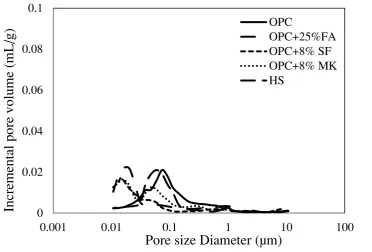
Figure 3.4: MIP results for different concrete mixtures before exposure to physical sulphate
attack. ... 34
Figure 3.5: Illustration of testing procedure: (a) compressive strength, and (b) modulus of
elasticity. ... 35
Figure 3.6: Compressive strength for concrete mixtures made with w/b = 0.60. ... 36
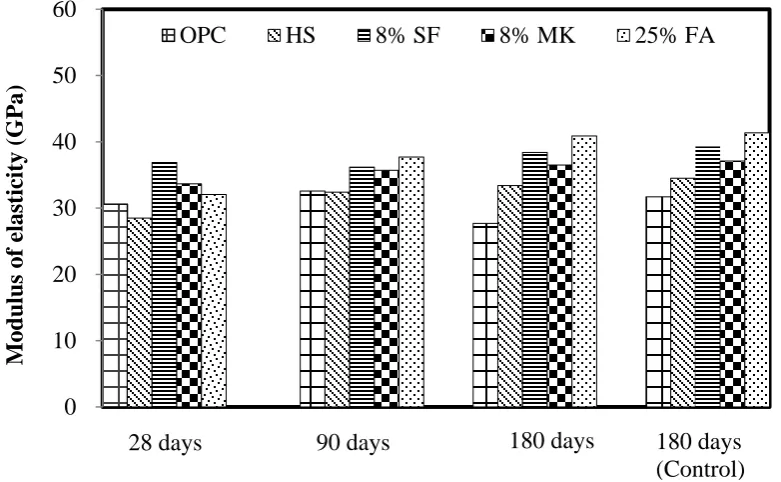
Figure 3.7: Modulus of elasticity for concrete mixtures made with w/b = 0.60. ... 36
Figure 3.8: XRD results of concrete above the solution level: (a) concrete with OPC; (b) OPC
+25% fly ash; (c) OPC + 8% silica fume; (d) OPC + 8% metakaolin; and (e) concrete with HS.
[A: Albite, D: Dolomite, Q: Quartz, P: Portlandite, M: Monosulfate, C: Calcite, Th: Thenardite].
... 38
Figure 3.9: SEM and XRD analysis showing thenardite above the solution level. ... 39
Figure 3.10: SEM and XRD analysis showing formation of gypsum and ettringite in the portion
of concrete immersed in the sulphate solution. ... 39
xiii
Figure 4.2: Non-cured concrete cylinders made with w/b = 0.60 after six months of physical
sulphate exposure: (a) concrete made with OPC; (b) OPC + 25% FA; (c) OPC + 8% SF; (d) OPC
+ 8% MK; and (e) concrete with HS. ... 48
Figure 4.3: Bottom surface of concrete cylinders with w/b = 0.60 immersed in sodium sulphate
solution for 6 months: (a) concrete made with OPC; (b) OPC + 25% FA; (c) OPC + 8% SF; (d)
OPC + 8% MK; and (e) concrete with HS. ... 49
Figure 4.4: Non-cured concrete cylinders made with w/b = 0.45 after six months of physical
sulphate exposure: (a) concrete made with OPC; (b) OPC + 25 % FA; (c) OPC + 8 % SF; (d) OPC
+ 8% MK; and (e) concrete with HS. ... 50
Figure 4.5: Non-cured concrete cylinders made with w/b = 0.30 after six months of physical
sulphate exposure: (a) concrete with OPC; (b) OPC + 25% FA; (c) OPC + 8% SF; (d) OPC + 8%
MK; and (e) concrete with HS. ... 51
Figure 4.6: Effect of curing on physical sulphate attack of concrete made with OPC +25% FA at
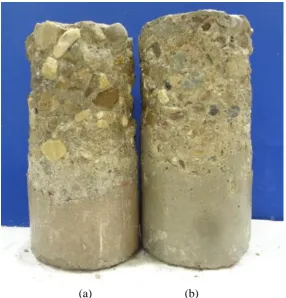
w/b = 0.60: (a) non-cured specimen; and (b) specimen moist cured for 28 days. ... 52
Figure 4.7: MIP results for concrete mixtures made with w/b = 0.60 before exposure to physical
sulphate attack.
Figure 4.8: MIP results for concrete mixtures made with w/b = 0.45 before exposure to physical
sulphate attack. ... 53
Figure 4.9: MIP results for concrete mixtures made with w/b = 0.30 before exposure to physical
sulphate attack ... 54
Figure 4.10: Mass loss for non-cured concrete cylinders made with w/b = 0.60 ... 56
Figure 4.11: Mass loss for non-cured concrete cylinders made with w/b = 0.45. ... 57
Figure 5.1: Schematic illustration of concrete surface pores and protection mechanism provided
by various surface treatment materials: (a) non-coated concrete; (b) concrete surface coated with
acrylic sealer; (c) concrete surface coated with epoxy or bitumen that provides an impervious
membrane; and (d) concrete coated with silane water repellent. ... 64
Figure 5.2: SEM images for surface of: (a) non-coated concrete; (b) concrete coated with epoxy;
(c) coated with acrylic; (d) coated with bitumen; and (e) coated with silane. ... 65
Figure 5.3: MIP test results for concrete specimens before coating and exposure to physical
xiv
Figure 5.4: Damage of the acrylic layer of coated non-cured concrete made with w/b = 0.60 after
two months of physical sulphate exposure. ... 69
Figure 5.5: Non-cured concrete cylinders made with w/b = 0.60 after 6 months of physical sulphate exposure: (a) non-coated and coated with; (b) silane (water-repellent); (c) acrylic solution (curing and sealer); (d) epoxy (membrane); and (e) bitumen (membrane). ... 70
Figure 5.6: Cured cylinders made with w/b = 0.60 after 6 months of physical sulphate exposure (a) non-coated and coated with; (b) silane (water-repellent); (c) acrylic solution (curing and sealer); (d) epoxy (membrane); and (e) bitumen ( membrane). ... 71
Figure 5.7: Non-cured concrete cylinders made with w/b = 0.45 after 6 months of exposure (a) Non-coated, and coated with; (b) silane (water-repellent); (c) acrylic solution (curing and sealer); (d) epoxy (membrane); and (e) bitumen ( membrane). ... 72
Figure 5.8: Cured concrete cylinders made with w/b = 0.45 after 6 months of physical sulphate exposure: (a) Non-coated and coated with; (b) silane (water-repellent); (c) acrylic solution (curing and sealer); (d) epoxy (membrane); and (e) bitumen (membrane). ... 73
Figure 5.9: Mass loss of non-cured concrete cylinders made with w/b = 0.60. ... 74
Figure 5.10: Mass loss of cured concrete cylinders made with w/b = 0.60. ... 75
Figure 5.11: Mass loss of non-cured concrete cylinders made with w/b = 0.45. ... 75
Figure 5.12: Mass loss of cured concrete cylinders made with w/b = 0.45. ... 76
Figure 5.13: SEM and XRD analysis showing thenardite above the solution level. ... 77
Figure 6.1: Salt crystallisation for concrete made with: (a) OPC; (b) OPC + 5% FA; (c) OPC + 10% FA; (d) OPC + 15% FA; and (e) OPC + 20% FA. ... 88
Figure 6.2: Salt crystallisation for concrete made with: (a) OPC; (b) OPC + 5% MK; (c) OPC + 10% MK; (d) OPC + 15% MK; and (e) OPC + 20% MK. ... 89
Figure 6.3: Salt crystallisation for concrete made with: (a) OPC; (b) OPC + 5% SF; (c) OPC + 10% SF; (d) OPC + 15% SF; and (e) OPC + 20% SF. ... 89
Figure 6.4: Damage due to salt crystallisation for concrete made with: (a) OPC; (b) OPC + 5% FA; (c) OPC + 10% FA; (d) OPC + 15% FA; and (e) OPC + 20% FA. ... 90
xv
Figure 6.6: Damage due to salt crystallisation for concrete made with: (a) OPC; (b) OPC + 5%
SF; (c) OPC + 10% SF; (d) OPC + 15% SF; and (e) OPC + 20% SF. ... 91
Figure 6.7: Mass loss for concrete cylinders (cement partially replaced with FA). ... 92
Figure 6.8: Mass loss for concrete cylinders (cement partially replaced with MK). ... 92
Figure 6.9: Mass loss for concrete cylinders (cement partially replaced with SF). ... 93
Figure 6.10: MIP results for concrete mixtures before exposure to physical sulphate attack (OPC and OPC + FA). ... 95
Figure 6.11: MIP results for concrete mixtures before exposure to physical sulphate attack (OPC and OPC + MK). ... 95
xvi NOTATIONS
ASTM American Society for Testing and Materials
ACI American Concrete Institute
C Existing solute concentration
CS The saturation concentration
CSA Canadian Standards Association
dV Increase of crystal volume
EN European Standards
ESEM Environmental Scanning Electron Microscopy
FA Fly Ash
HS High Sulphate resistance cement
E CL
k Curvature of the crystal end (hemispherical)
Curvature of the cylindrical side
Mi Initial mass of the cylinder
MIP Mercury intrusion porosimtry
Mt Mass of the cylinder at time
OPC Ordinary Portland Cement
P Pressure exerted by growing crystals
Pl Pressure in the liquid
PS Pressure in the solid (in atmospheres)
QE Solubility product
xvii
R Gas constant
re Radius of the pore small entries
RH Relative Humidity
rl Radius of the large pore
rp Radius of the pore
rs Radius of the small pore
SF Silica Fume
T` Absolute temperature
(t) Time
VS Molar volume of solid salt
XRD X-Ray Diffraction
δ Solution film thickness between the crystal and the pore wall
σ Interfacial tension between the crystal face and its saturated solution
σdA The increase of crystal surface area
Mi Initial mass of cylinder
Chapter One 1
CHAPTER ONE
1
INTRODUCTION
1.1 Background
Since the 19th century, stone deterioration in historical monuments due to salt
crystallization has been a subject of investigation (Goudie and Viles, 1997). Several
studies have investigated the related deterioration mechanisms and how such a
problem can be mitigated, since it is considered as a major threat to historical
monuments and building stones.
However, concrete deterioration due to salt crystallization, or the so called
physical sulphate attack on concrete, has been ignored and confused in some
occasions with chemical sulphate attack (Haynes et al., 1996; Haynes et al., 2008;
Mehta, 2000). According to Scherer (2004), concrete can be vulnerable to damage
when salt crystals grow from a supersaturated solution in its pores. This process was
described as physical attack on concrete since, unlike chemical sulphate attack, it does
not involve any chemical interaction between the sulphate ions and the concrete
hydration products (Haynes et al., 1996).
Moreover, the consequences of physical sulphate attack are different from
those of chemical sulphate attack since it leads to surface degradation similar to that
caused by cycles of freezing and thawing, while chemical sulphate attack results in
expansion and cracks due to the formation of ettringite (Ca6Al2(SO4)3(OH)12·26H2O)
and gypsum (CaSO4·2H2O) (Mehta, 2000). Using the “sulphate attack” terminology
in-situ to describe concrete deterioration due to sulphates may lead to confusion
between physical and chemical attack (Haynes et al., 1996).
Field experience regarding concrete exposed to sulphates has shown that
concrete often suffers from surface scaling caused by physical sulphate attack, which
soil (exposed to chemical sulphate attack) has mostly been found in intact condition
(Yoshida et al., 2010; Stark, 1989; Irassar et al., 1995). The damaging process
involves capillary rise and evaporation of ground water containing sulphates at the
above ground concrete surface, resulting in crystal growth in concrete pores and
damage (Irassar et al., 1995; Haynes et al., 1996).
Nevertheless, current standards that evaluate the performance of concrete
under sulphate attack, such as ASTM C1012 (Standard Test Method for Length
Change of Hydraulic-Cement Mortars Exposed to a Sulphate Solution), only cover the
chemical aspects of sulphate attack and ignore physical attack, since it evaluates the
concrete performance when it is fully immersed in a sulphate solution (Aye and
Oguchi, 2011; Santhanam et al., 2001). This may serve to more confusion in
assessing the deterioration of concrete due to sulphates under field exposure.
Previous studies have shown that adding pozzolanic minerals to concrete had
significantly improved its durability under chemical sulphate attack (Al-Amoudi,
2002; Hooton, 1993; Al-Akhras, 2006; Nehdi and Hayek, 2005). Indeed, pozzolanic
minerals reduce the porosity in concrete and consume calcium hydroxide, which is a
cement hydration product that is vulnerable to chemical sulphate attack. Moreover,
reducing the w/c ratio improves the concrete durability to sulphate exposure since it
decreases the volume of voids in the hydrated cementitous matrix and limits sulphates
penetration into concrete (Mehta and Monteiro, 2006).
However, the general lack of information in the open literature and limitations
of current standards regarding physical sulphate attack on concrete have led to
contradictory views. For instance, some researchers have suggested that low w/c ratio
concrete with fine pores may become more vulnerable to damage by physical sulphate
attack since the small pores can be disrupted before the larger pores by salt crystal
growth (Hime, 2003; Haynes and Bassuoni, 2011). Conversely, other experimental
studies have shown that lowering the w/c ratio of concrete exposed to physical
sulphate attack enhanced its durability (Yoshida et al., 2010; Hartell et al., 2011).
Furthermore, Aye and Oguchi (2011) reported higher surface scaling damage
in blended cement mortars having small pore sizes than that for the control plain
Chapter One 3
the w/c ratio and pozzolanic minerals in concrete exposed to physical sulphate attack
is still controversial.
Regarding the performance of stones under physical salt attack, several
studies have shown that the vulnerability of stones to damage depends on their pore
structure (Angeli et al., 2008; Scherer, 2004; Buj and Gisbert, 2010). For instance,
stones that include high percentages of micro-pores connected with larger pores are
the most vulnerable to damage by salt crystallization (Wellman and Wilson, 1965;
Angeli et al., 2008; Navarro and Doehne, 1999). The presence of micro-pores
increases the capillary rise and the surface area of the evaporation, leading to high
supersaturation of the pore solution and subsequent damage (Navarro and Doehne,
1999). Hence, pore connectivity seems to be an important factor for the deterioration
of stones due to physical salt attack.
Buj and Gisbert (2010) tested fifteen samples of stones that are similar to
those commonly used in the cultural and architectural heritage. They found that stones
with low porosity and high amount of small pores with low connectivity are less
vulnerable to damage than stones with high porosity and higher average pore radius.
Thus, the previous suggestion regarding the poor performance of concrete with low
w/c ratio under physical sulphate attack is questionable.
1.2 Research Objectives
Despite the current knowledge and specifications on concrete deterioration due to
sulphate attack, there is only limited information and studies regarding the damage of
concrete due to physical sulphate attack. According to Haynes et al. (2008), in certain
environmental conditions, physical sulphate attack can cause serious damage to
concrete. This was reported in several field investigations for concrete structures in
partial contact with sulphates. For instance, in southern California, Novak and
Colville (1989) investigated the causes of damage in concrete floor slabs of 20-30
year-old homes located on sulphate rich soil. They proposed that damage was mainly
due to salt crystallization since none of the chemical sulphate products such as
ettringite and gypsum were identified, yet salt minerals such as thenardite (Na2SO4)
Another field study by Stark (1989) showed extensive damage that was
limited to the upper portions of concrete beam specimens half embedded in sulphate
rich soil, whereas the portion embedded in soil was found in intact condition. Similar
cases of deterioration were reported in other places including the Arabian Gulf region,
Japan, and Australia (Al-Amoudi, 2002; Yoshida et al., 2010; Hime et al., 2001).
Since there is lack of information on the behaviour of concrete under physical
sulphate attack in the open literature, the main scope of the present thesis is to
investigate the effects of various parameters that influence the performance of
concrete exposed to physical sulphate attack.
1.3 Original Contributions
This research investigates the behaviour of concrete exposed to environments prone to
physical sulphate attack. It explores several factors that could improve the durability
design of concrete in sulphate laden environments. Specific original contributions of
the current thesis include:
1- Studying the effects of the concrete pore structure on the durability of concrete
under physical sulphate attack, since previous studies have shown that the
vulnerability of stones exposed to salt weathering depended on their pore structure.
2- Evaluating the effectiveness of coating the concrete surface with different types of
treatment materials when exposed to physical sulphate attack, since the durability of
coated concrete has been mainly studied under chemical sulphate attack.
3- Investigating the impact of using supplementary cementing materials in concrete
exposed to physical sulphate attack since previous studies have shown that using
supplementary cementing materials can improve the overall performance of concrete,
particularly under chemical sulphate attack.
1.4 Thesis Structure
The present thesis has been structured and organized according to the guidelines of
the Faculty of Graduate Studies at Western University. It includes seven chapters that
Chapter One 5
Chapter two provides a state-of-art review of the existing knowledge on
concrete deterioration due to physical sulphate attack. Previous field and laboratory
investigations have been reviewed and discussed. In addition, previous theories
regarding crystallization within porous materials have been briefly presented.
Chapters three and four focus on the behaviour of concrete partially immersed
in sulphate solutions and exposed to cyclic temperature and relative humidity. The
mechanisms of damage above and below the solution level have been investigated. In
addition, several factors that affect the concrete pore structure including mineral
additives, w/b ratio along with various curing conditions have been examined under
physical sulphate attack.
Chapter five explores the effects of using different types of surface treatment
materials that may mitigate the surface deterioration of concrete due to physical
sulphate attack. Different types of commercially available surface treatment materials
have been evaluated under environments prone to physical sulphate attack.
Chapter six examines the effects of using different types and percentages of
supplementary commentating materials on concrete partially immersed in a sulphate
solution.
Finally, general and specific conclusions drawn from the research study along
1.5 References
Al-Amoudi, O. S. B., (2002), “Attack on plain and blended cement exposed to
aggressive sulfate environment”, Cement and Concrete Composites, Vol. 24,
No. 3, pp. 305-316.
Al-Akhras, N. M., (2006), “Durability of metakaolin concrete to sulfate attack”
Cement and Concrete Research, Vol. 36, No. 9, pp. 1727-1734.
Angeli, M., Benavente, D., Bigas, J., Menendez, B., Hebert, R., David, C., (2008),
“Modification of the porous network by salt crystallization in experimentally weathered sedimentary stones”, Materials and Structures, Vol. 41, No. 6, pp.
1091-1108.
ASTM C1012 (2012), “Standard Test Method for Length Change of
Hydraulic-Cement Mortars Exposed to a Sulfate Solution”, American Society for Testing
and Materials, West Conshohocken, PA.
Aye, T., Oguchi, C. T., (2011), “Resistance of plain and blended cement mortars exposed to severe sulfate attacks”, Construction and Building Materials, Vol.
25, No. 6, pp. 2988-2996.
Buj, O., and Gisbert, J., (2010), “Influence of pore morphology on the durability of
sedimentary building stones from Aragon (Spain) subjected to standard salt
decay tests”, Environment Health Sicence,Vol. 61, No. 7, pp. 1327-1336.
Flatt, R. J., (2002), “Salt damage in porous materials: how high supersaturations are generated”, Journal of Crystal Growth, Vol. 242, No. 3-4, pp. 435-454.
Goudie, A., and Viles, H., (1997), Salt Weathering Hazards, John Wiley & Sons,
England, 241 p.
Hartell, J. A., Boyd, A. J., and Ferraro, C. C., (2011), “Sulfate attack on concrete: Effect of partial immersion”, Journal of Materials in Civil Engineering, Vol. 23,
No. 5, pp. 572-579.
Chapter One 7
Haynes, H., O’Neill, R., Neff, M. and Mehta, P. K. (2008), “Salt weathering distress
on concrete exposed to sodium sulfate environment”, ACI Materials Journal,
Vol. 105, No. 1, pp. 35-43.
Haynes, H., and Bassuoni, M. T., (2011), “Physical salt attack on concrete”, Concrete
International, Vol. 33, No. 11, pp. 38– 42.
Hime, W. G., (2003), “Chemists should be studying chemical attack on concrete”,
Concrete International, Vol. 25, No. 4, pp. 82-84.
Hooton, R. D. (1993) “ Influence of silica fume replacement of cement on physical
properties and resistance of sulfate attack, freezing and thawing, and
alkali-silica reactivity” ,ACI Materials Journal, Vol. 90, No. 2, pp. 143-151.
Irassar, E. F., Di Maio, A., and Batic, O. R., (1995), “Sulfate attack on concrete with
mineral admixtures”, Cement and Concrete Research, Vol. 26, No. 1, pp.
113-123.
Mehta, P. K., (2000), “Sulfate attack on concrete: Separating myths from reality”,
Concrete International, Vol. 22, No. 8, pp. 57-61.
Mehta, P. K., and Monteiro, P. J. M., (2006), “Concrete microstructure, properties, and materials”, The McGraw-Hill, Third edition, 659 p.
Navarroa, C. R., and Doehnea, E., (1999), “Salt weathering: Influence of evaporation
rate, supersaturation, and crystallization pattern”, Earth Surface Processes and
Landforms, Vol. 24, No. 3, pp. 191-209.
Nehdi, M., and Hayek, M., (2005), “Behavior of blended cement mortars exposed to sulfate solutions cycling in relative humidity”, Cement and Concrete Research,
Vol. 35, No. 4, pp. 731-742.
Novak, G. K., and Colville, A. A., (1989), “Efflorescent mineral assemblages
associated with cracked and degraded residential concrete foundations in
southern California”, Cement and Concrete Research, Vol. 19, No. 1, pp. 1-6.
Santhanam, M., Cohen, MD., Olek, J., (2001), “Sulfate attack research – whither
Scherer, G. W., (2004), “Stress from crystallization of salt”, Cement and Concrete
Research, Vol. 34, No. 9, pp.1613– 1624.
Stark, D., (1989), “Durability of concrete in sulfate-rich soils”, Research and
Development Bulletin, Portland Cement Association, Vol. RD097.
Thaulow, N., Sahu, S., (2004), “Mechanism of concrete deterioration due to salt crystallization”, Materials Characterization, Vol. 53, No. 2-4, pp. 123-127.
Yoshida, N., Matsunami, Y., Nagayama, M., and Sakai, E., (2010), “Salt weathering
in residential concrete foundation exposed to sulfate-bearing ground”, Journal
Chapter Two 9
CHAPTER TWO
2
LITERATURE REVIEW
2.1 Introduction
Chemical sulphate attack on concrete structures has been considered as the
predominant deterioration mechanism of concrete exposed to sulphate rich
environments. However, under certain environmental conditions, concrete was found
to suffer mainly from physical sulphate attack, which was generally ignored in the
literature. This lack of information has led to contradictory views and confusion
regarding the deterioration of concrete due to physical sulphate attack. According to
Mehta (2000), cases of concrete damage due to physical sulphate attack have been
confused with chemical sulphate attack. For instance, for the case of concrete
damaged by salt weathering, a number of researchers supported the separation of
physical sulphate attack from chemical attack. They argued that salt weathering is a
purely physical phenomenon, which has the same appearance as surface scaling
caused by cycles of freezing and thawing (Haynes et al., 1996; Mehta; 2000).
Moreover, the consequences of physical sulphate attack are different from
those of chemical attack (Neville, 2004). Physical attack mainly induces surface
scaling in the concrete above the ground level, while chemical sulphate attack
generally involves chemical interactions between the sulphate ions and the cement
paste components, leading to loss of adhesion of the cement hydration products and
formation of ettringite, gypsum, and/or softening due to the formation of thaumasite
(Mehta, 2000). Conversely, Skalny et al. (2000; and 2002) suggested that complete
separation of physical and chemical sulphate attack is probably a wrong assumption
and serves to more confusion. They also criticized the idea of characterizing the
repeated expansion and contraction by the term physical. Hence, they suggested that
the main process is hydration and dehydration of sodium sulphate, similar to ettringite
In this chapter, a state-of-the-art review of the existing knowledge on concrete
deterioration due to physical sulphate attack is presented. Previous field and
laboratory investigations regarding the deterioration of concrete due to physical
sulphate attack are also highlighted.
2.2 Sources of Sulphates
According to Skalny et al. (2002), there is more than one source of salt weathering or
sulphate attack on concrete structures. These include sulphates from natural sources
that are either present in soils or dissolved in ground water. For instance, sulphates
those originate from agricultural waste-water are chemically aggressive (e.g.
ammonium sulphates that enter the ground-water after it had been used as fertilizer)
(Skalny et al., 2002). The coal and metallurgical industry are considered to be another
source of sulphates (Skalny et al., 2002). Also, atmospheric pollution may lead to
increased sulphate concentration in the soil and ground-water (Skalny et al., 2002;
Goudie and Viles, 1997).
2.3 Mechanisms of Physical Sulphate Attack
There is more than one theory proposed to identify the mechanism of concrete
deterioration due to physical sulphate attack: (1) Solid volume change, (2) Salt
hydration distress, and (3) Crystallization pressure (Thaulow and Sahu, 2004).
2.4 Solid Volume Change Theory
This theory proposes that concrete damage is a result of an increase in the salt
volume. For instance, sodium sulphate can increase by 314% in volume when
anhydrous sodium sulphate (Na2SO4, thenardite) transforms to the hydrous form
(Na2SO4.10H2O, mirabilite) as shown in Equations 2.1 and 2.2 (Scherer, 2004,
Thaulow and Sahu, 2004, and Skalny et al., 2002). When it occurs, this process leads
to fatigue and loss of cohesiveness of the cement paste within a concrete matrix
(Skalny et al., 2002).
→ (2.1)
Solution Evaporation Solid
↔ (2.2)
Chapter Two 11
Even though this mechanism seems to be the most accepted theory of concrete
damage due to salt crystallization, it ignores the volume of the water in the net
calculations (Thaulow and Sahu, 2004). When the volume of water is included in the
net volume calculations, the total solid volume decreases (Thaulow and Sahu, 2004).
In addition, thenardite does not continually absorb water since it hydrates and expands
(Scherer, 2004). Moreover, this theory does not explain the scaling of concrete due to
other salts that do not have anhydrous forms (Thaulow and Sahu, 2004).
2.5 Salt Hydration Distress Theory
The salt hydration distress theory defines the deterioration mechanism of concrete
exposed to physical salt attack as a result of pressure generated against the concrete
pore walls due to the salt hydration process. This mechanism occurs when the
concrete surface is exposed to cyclic relative humidity, or when a portion of the
concrete is wet while an immediate adjacent portion is relatively dry (Hime et al.,
2001). Thus, salt undergoes solid-state hydration. However, formation of hydrous or
anhydrous salt cannot occur just only by moisture absorbing and hydration (Thaulow
and Sahu, 2004). In other words, the salt does not undergo solid-state hydration.
Instead, through solution hydration occurs as thenardite dissolves and generates a
highly supersaturated solution with respect to mirabilite, which exerts crystallization
pressure on the concrete pore walls (Thaulow and Sahu, 2004, Tsui, et al. 2004,
Folliard and Sandberg, 1994).
2.6 Salt Crystallization Theory
According to Thaulow and Sahu (2004), the salt crystallization pressure theory is the
actual mechanism of concrete damage due to salt weathering. In this theory, salt
crystals can grow from a supersaturated solution and exert sufficient pressure against
the concrete pore walls, thus disrupting the cementitous matrix (Scherer, 2004;
Thaulow and Sahu, 2004; Flatt, 2002; Tsui, et al. 2004). The process of damage due
to salt crystallization is illustrated in Figure 2.1.
The supersaturation of a solution depends on several factors including the
nature of the salt, the rate of the solution supply, and evaporation (Scherer, 2004). For
high supersaturation degree through thenardite dissolution and evaporation (Scherer,
2004; Flatt, 2002; Tsui, et al. 2004; Thaulow and Sahu, 2004). Previous study by
Scherer (2004) showed damage of stone specimens at the evaporation surface where
the sodium sulphate concentration increased and precipitated in the subflorescence
zone. In this zone, crystals can grow below the surface of a porous material when the
evaporation rate is higher than the rate of water supply by capillary action, thus
leading to damage. Such behaviour was observed by Irassar et al. (1995) and Stark
(1989) where damage was only confined to the drying surface of the concrete partially
immersed in sodium sulphate.
Figure 2.1: Schematic of capillary rise and concrete degradation in a foundation in contact with ground water that contains sodium sulphate.
2.7 Previous Field Investigations
Several previous field investigations have reported concrete deterioration due to
physical sulphate attack. For instance, in southern California, Novak and Colville,
(1989) investigated the cause of damage in concrete floor slabs of 20-30 year-old
homes located on sulphate rich soil using X-Ray diffraction analysis. Salt minerals
such as thenardite (Na2SO4) and mirabilite (Na2SO4.10H2O) were found within the
cracks. However, none of the chemical sulphate products such as ettringite and
Chapter Two 13
damage was primarily salt crystallization since none of the chemical sulphate
products such as ettringite and gypsum were identified.
In 1989, a field study was conducted by the Portland Cement Association
(Stark, 1989) to investigate the performance of concrete beam specimens partially
embedded in sulphate rich soil and exposed to cyclic wetting and drying for five
years. Extensive damage was only limited to the upper portions of the concrete beam
specimens half embedded in the sulphate rich soil, whereas the embedded portion was
found in intact condition. In addition, the damage escalated in the beam specimens
that were made with a high w/c and when pozzolanic additives such as fly ash and
slag were included in the concrete mixtures. Since the investigation was only based on
visual inspection of the deteriorated beams, it was concluded that the damage was due
to salt crystallization in concrete pores above the ground level.
Similar results were obtained by Irassar et al., (1995) who monitored the
performance of concrete cylinders partially buried in a soil containing 1% of sodium
sulphate for five years. The performance of concrete was assessed according to
several factors including visual inspection, compressive strength, modulus of
elasticity, and X-Ray Diffraction (XRD). It was observed that the damage was only
limited to the above ground portion of concrete, while the portion buried into the soil
was found in intact condition. In addition, they found that using pozzolanic minerals
in the concrete mixtures escalated the damage in the upper portion, while it improved
the performance of the buried portion into the sulphate soil. Their compressive
strength results indicated that the core of the concrete cylinders was in intact
condition and the damage was limited to the concrete surface since the compressive
strength increased in all cylinders. This outcome supports that the damage was mainly
on the surface and caused by the physical sulphate attack.
Recently in Japan, an extensive field investigation was conducted by Yoshida
et al., (2010) to evaluate the deterioration of residential building foundations
constructed on a sulphate-rich soil and experiencing surface scaling above the ground
level. Figure 2.2 shows cases of concrete foundation surface scaling above the ground
level. It was reported that the damage started several months from the beginning of
the construction to about fifteen years. Core samples were extracted from concrete
fluorescence), DSC (differential scanning calorimetry), and EPMA (electron probe
micro analyzing). In this work, analysis of results did not detect minerals such as
ettringite and gypsum in the above ground concrete. Instead, sodium sulphate crystals
were found.
Similar cases of deterioration were reported in other areas including the
Arabian Gulf region and Australia (Al-Amoudi, 2002; Hime et al., 2001). However,
in the literature, only limited studies have focused on physical sulphate attack since
chemical sulphate attack was the main interest (Haynes, 2008; Aye and Oguchi,
2011).
Figure 2.2: Concrete damage in field exposure to salt crystallization (Yoshida et al., 2010).
2.8 Previous Laboratory Studies on Physical Sulphate
Attack
For decades, chemical sulphate attack on concrete was the main research interest,
while physical sulphate attack has received little attention (Haynes, 2008; Aye and
Oguchi, 2011). It is only recently that researchers started to focus on the performance
of concrete under physical sulphate attack. However, there are contradictory views in
the existing literature regarding concrete deterioration due to physical sulphate attack.
Table 2.1 summarizes previous lab studies on different concrete mixtures exposed to
Chapter Two 15
2.8.1 Effect of w/c Ratio
Previous studies have suggested that concrete with low w/c ratio is more vulnerable to
damage by physical sulphate attack since lowering the w/c ratio reduces the pore size
diameter, which can behave similar to rocks with fine pores (Hime, 2003). However,
a laboratory investigation by Folliard and Sandberg (1994) showed that concrete
made with w/c = 0.30 had better performance than concrete made with w/c = 0.50
under an environment prone to physical sulphate attack. Yet, a study by Nehdi and
Hayek (2005) showed that concrete mortars with an intermediate w/c = 0.45 had an
extensive efflorescence formation compared with w/c = 0.30 and w/c = 0.60 as shown
in Figure 2.3. Therefore, more research is needed to investigate the main role of the
w/c in concrete exposed to physical sulphate attack.
Figure 2.3: Salt efflorescence of concrete cylinders partially immersed in a sodium sulphate solution (Nehdi and Hayek, 2005).
2.8.2 Effect of Pozzolanic Minerals
Previous studies have shown that using pozzolanic minerals in cement mortar had
significantly improved its durability under chemical sulphate attack (Al-Amoudi,
2002; Hooton, 1993; Al-Akhras, 2006; Nehdi and Hayek, 2005) since pozzolanic
minerals reduce porosity and consume calcium hydroxide which is vulnerable to
chemical sulphate attack. However, recent studies have shown that adding pozzolanic
minerals to concrete mixtures exposed to physical sulphate attack escalated damage.
For example, a study by Aye and Oguchi (2011) showed poor performance of blended
cement mortars compared with that of plain cement mortars exposed to environments
Table 2.1:Previous lab investigations on concrete exposed to physical sodium sulphate attack
Authors Concrete Matrix Environment condition
Folliard and Sandberg,
1994
Concrete samples with w/c = 0.50 and 0.30
1-completely immeresed and subjected to rapid
cooling from 30o to 5o C 2-Partially soaked and temperature was
maintained at 25o C 3-Partially soaked and subjected to temperature
cycling between 30 and 5oC
4-Fully immersed at 25o C and then dried until a
constant weight at 1100 C
5-Fully immersed at 35o C and then dried until a
constant weight at 1100 C
Nehdi and Hayek, 2005
Cement mortars having different w/c (0.30, 0.45, and 0.60) and binders (OPC, OPC + 8% silica fume, OPC + 25% class F fly ash, or OPC + 25% blast furnace slag
Partially immersed and exposed to cycled relative humidity consisting of consecutive sequences of 24 hours at RH > 95% followed by 24 hours at RH of 32 ± 3%
Haynes et
al., 2008
Concrete specimens made with Type II Portland cement and w/c = 0.65
Partially immersed and exposed to five
environmental conditions
a) 40 °C and 74% RH then 40 °C and 31% RH b) Cycled between 20 °C and 82% RH and 20
°C and 54% RH then 20 °C and 82% RH c) Cycled between 20 °C and 82% RH and 20 °C
and 54% RH d) 20 °C and 54% RH then between 20 °C and
82% RH and 20 °C and 32% RH e) Cycled between 20 °C and 82% RH and 40 °C
and 74% RH then between 20 °C and 82% RH and 40 °C at 31% RH
Hartell et al.,
2011
Concrete specimens made with Type II Portland cement and w/c = 0.40, 0.55, and 0.70
Stored in the laboratory under ambient conditions
Aye and Oguchi, 2011
Cement mortars with w/c = 0.45 and binders (OPC, sulphate resisting cement, OPC + 8% silica fume, OPC + 8%
diatomaceous earth, and OPC + 25% fly ash)
a)-continuous full immersion at 20 °C
b)-full immersion in sulphate solution at 20 °C
for 94 h, oven drying at 50 °C for72 h, and
cooling in air at 20°C for 2 h for one week cycle c) - partial immersion at 20 °C
Chapter Two 17
2.8.3 Exposure Conditions
According to Thaulow and Sahu (2004), the most common salt found on scaled
concrete surfaces exposed to environments prone to physical sulphate attack is
sodium sulphate. Previous studies by Aye and Oguchi (2011) and Haynes et al.,
(2008) showed high surface scaling when concrete was partially immersed in 5%
sodium sulphate compared with exposure to other salts such as magnesium sulphate,
soudium carbonate, and soudium chloride under the same expousre conditions (i.e
exposure temperature, humidity, and salt concentration). However, the degree of
degredation of concrete exposed to soudium sulphate mainly depends on the condition
of the surrounding environment (i.e. RH and temperature).
Previous study by Folliard and Sandberg (1994) investigated the performance
of concrete exposed to sodium sulphate under five ambient conditions. They found
that concrete specimens deteriorated more readily when completely soaked in sodium
sulphate and then exposed to cycles of rapid cooling from 30 °C (86 °F) to 5 °C
(41 °F), which supports mirabilite formation. Another study by Haynes et al., (2008)
found that the most destructive damage occurred when concrete was exposed to an
environment that supports the transition between thenardite and mirabilite rather than
other environments that only support thenardite or mirabilite precipitation. Concrete
specimens were partially immersed in sodium sulphate and exposed to cycling
environmental conditions that changed biweekly between 20 °C (68 °F) at 82%
relative humidity and 40 °C (104 °F) at 74% relative humidity for 406 days, and then
exposed to 20 °C at 82% relative humidity and 40 °C (104 °F) at 31% relative
humidity in bi-weekly cycles.
Similar observation was made by Aye and Oguchi (2011) when they examined
mortar specimens under four different exposure conditions of sodium sulphate (i.e.
continuous full immersion at constant temperature, full immersion under cyclic
wetting and drying, continuous partial immersion at constant temperature, and partial
immersion under cyclic wetting and drying). Extensive damage occurred when
specimens were partially immersed and exposed to cyclic wetting and drying.
Similar observation was made by Aye and Oguchi (2011) when they examined
(i.e. continuous full immersion at constant temperature, full immersion under cyclic
wetting and drying, continuous partial immersion at constant temperature, and partial
immersion under cyclic wetting and drying). Extensive damage occurred when
specimens were partially immersed and exposed to cyclic wetting and drying.
In all previous cases, supersaturation was achieved leading to salt growth and
damage. However, in the Folliard and Sandberg (1994) case, supersaturation of the
sodium sulphate can be reached when the surrounding temperature dropped quickly
from 30 oC (86 oF) to 5 oC (41 oF), leading to subsequent crystallisation of mirabilite,
which generates pressure higher than the concrete tensile strength.
2.9 Theoretical Models of Crystallization Pressure
Several assumptions and theoretical models have been proposed to explain damage
due to salt crystallization pressure. For instance, the mechanism of growth and
dissolution of crystals was earlier discussed by Correns, (1949). Equation 2.3 was
proposed to calculate the pressure exerted by growing crystals,
(
)
(2.3)Where P is the pressure exerted by growing crystals,
R is the gas constant,
T` is the absolute temperature,
VS is the molar volume of solid salt,
C is the existing solute concentration,
CS is the saturation concentration.
A thermodynamic model was later developed to calculate salt crystallization
pressure by (Wellman and Wilson, 1965) based on the assumption that the chemical
free energy of solid increases with its surface. Therefore, larger crystals in the large
pores will grow at the expense of the smaller crystals in small pores in a system
having crystals in equilibrium with a saturated solution. The work required to extend
the surface is equal to the work required during crystal growth on one face of the
Chapter Two 19
( ) (2.4)
Where Pi is the pressure in the liquid,
PSis the pressure in the solid,
dV is the increase of crystal volume,
σdA is the increase of crystal surface area.
Wellman and Wilson (1968) also introduced the following Equation 2.5
which estimates the crystallisation pressure in large pores:
( ) (2.5)
Where rlis the radius of the large pore,
rs is the radius of the small pore,
σ is the interfacial tension between the crystal face and its saturated solution.
According to Wellman and Wilson (1965), the vulnerability of rocks to
damage due to salt weathering depends on their pore structure. For instance, rocks
that contain large pores connected by micro-pores are more venerable to damage.
When a rock or a porous material is exposed to evaporation and its large and small
pores are filled by a saturated salt solution, salt crystals will grow in the large pores at
the expense of the smaller crystals in the small pores. This process will continue till
damage occurs or (Pl-PS)/σ becomes greater than dA/dV (Wellman and Wilson, 1965).
The damage depends on the size of the small pores and the interfacial tension between
the crystal face and its saturated solution compared with the strength of the rock
(Wellman and Wilson, 1965).
Scherer (2004) discussed the thermodynamics of crystallization within porous
materials and the kinetic factors that affect stress development including capillary
rise, evaporation, cement hydration, and cyclic drying and wetting. According to
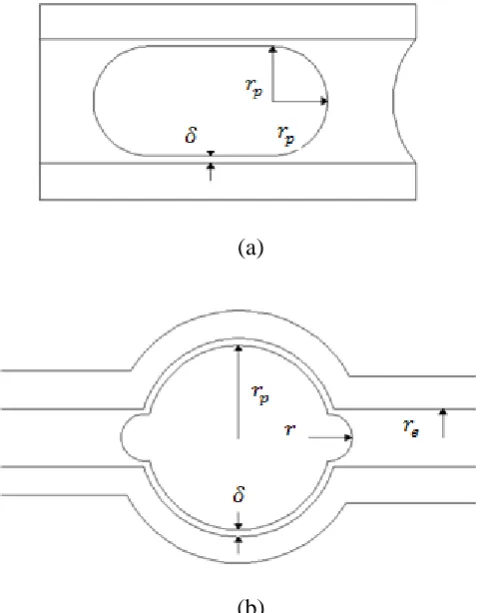
Scherer (2004), when a crystal precipitates in a cylindrical pore as shown in the
Figure 2.4, the end of the crystal is hemispherical with a curvature given in Equation
2.6,whereas the cylindrical side has a curvature expressed in Equation 2.7. However,
becomes almost zero and the crystallisation pressure is determined by the curvature of
the crystal in the pore entries.
( ) (2.6)
( ) (2.7)
Where δ is the solution film thickness between the crystal and the pore wall,
rp is the radius of the pore,
re is the Radius of the pore small entries.
(a)
(b)
Figure 2.4: Crystal precipitating in a pore with radius rp in the subflorescence zone:
(a) pore is cylindrical; (b) crystal grows in a large pore with small entries (Scherer,
Chapter Two 21
The subjected pressure from the pore wall on any other part of the crystal with
curvature S CL
k is given by Equation 2.8, which considers the exerted crystallisation
pressure on the pore wall (Scherer, 2004):
( ) (2.8)
Where Pw is the crystallisation pressure,
E CL
k is the curvature of the crystal end,
S CL
k is the curvature of the cylindrical side,
R is the gas constant,
T is the absolute temperature,
QEis the solubility product,
QS is the lower solubility product.
2.10 Standards and Specifications for Concrete Exposed to
Sulphate Attack
Standards and specifications can offer guidelines for engineers to select appropriate
materials and adequate construction operation processes. Regarding concrete exposed
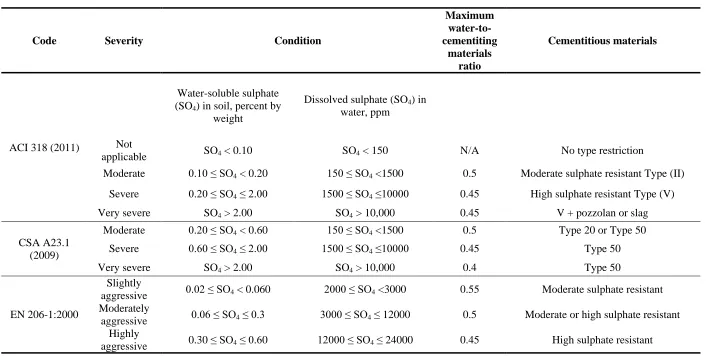
to sulphate attack, current standards and specifications such as ACI 318 (2011), CSA
A23.1 (2009), and EN-206-1(2000) shown in Table 2.2, classify the severity of
exposure based on the sulphate concentration in the ground water or soil and provide
guidelines to select appropriate cementitious materials in concrete mixtures.
In addition, standard experiments such as ASTM C1012 and CSA A3004-C8
can be used to measure the expansion of concrete due to chemical reactions between
the sulphate ions and the cement components. However, the reliability of the current
standards and specifications has been criticized and questioned since it ignores the
important parameters and factors that affect the performance of concrete in sulphate
rich soil (Cohen and Mather, 1991; Skalny et a.l, 2002; Mehta, 1992).
According to Hooton (2008) current standard tests that evaluate the resistance
of concrete to sulphate attack ignore the capillary rise or evaporative transport of
penetrability of sulphates can occur (Hooton, 2008). Change in temperature and
relative humidity can lead to salt crystallization, which can cause degradation and
scaling of the concrete surface. This typically occurs in foundations, slabs and
partially embedded structures in sulphate rich soils, especially in dry weather and
coastal areas. Currently, there is no standardized test that can address the concrete
degradation due to physical sulphate attack. Hence, more research is required to
establish specifications and standardized tests that can evaluate all aspects of sulphate
23 Table 2.2: Requirements for concrete subjected to sulphate attack
Code Severity Condition
Maximum water-to-cementiting
materials ratio
Cementitious materials
ACI 318 (2011)
Water-soluble sulphate
(SO4) in soil, percent by
weight
Dissolved sulphate (SO4) in
water, ppm
Not
applicable SO4 < 0.10 SO4 < 150 N/A No type restriction
Moderate 0.10 ≤ SO4 < 0.20 150 ≤ SO4 <1500 0.5 Moderate sulphate resistant Type (II)
Severe 0.20 ≤ SO4 ≤ 2.00 1500 ≤ SO4 ≤10000 0.45 High sulphate resistant Type (V)
Very severe SO4 > 2.00 SO4 > 10,000 0.45 V + pozzolan or slag
CSA A23.1 (2009)
Moderate 0.20 ≤ SO4 < 0.60 150 ≤ SO4 <1500 0.5 Type 20 or Type 50
Severe 0.60 ≤ SO4 ≤ 2.00 1500 ≤ SO4 ≤10000 0.45 Type 50
Very severe SO4 > 2.00 SO4 > 10,000 0.4 Type 50
EN 206-1:2000
Slightly
aggressive 0.02 ≤ SO4 < 0.060 2000 ≤ SO4 <3000 0.55 Moderate sulphate resistant
Moderately
aggressive 0.06 ≤ SO4 ≤ 0.3 3000 ≤ SO4 ≤ 12000 0.5 Moderate or high sulphate resistant
Highly
2.11 References
Al-Amoudi, O. S. B., (2002), “Attack on plain and blended cement exposed to
aggressive sulfate environment”, Cement and Concrete Composites, Vol. 24,
No. 3, pp. 305-316.
Al-Akhras, N. M., (2006), “Durability of metakaolin concrete to sulfate attack”
Cement and Concrete Research, Vol. 36, No. 9, pp. 1727-1734.
Aye, T., Oguchi, C. T., (2011), “Resistance of plain and blended cement mortars
exposed to severe sulfate attacks”, Construction and Building Materials, Vol.
25, No. 6, pp. 2988-2996.
Flatt, R. J., (2002), “Salt damage in porous materials: how high supersaturations are generated”, Journal of Crystal Growth, Vol. 242, No. 3-4, pp. 435-454.
Goudie, A., and Viles, H., (1997), “Salt weathering hazards”, John Wiley & Sons,
England, 241 p.
Hartell, J. A., Boyd, A. J., and Ferraro, C. C., (2011), “Sulfate attack on concrete: Effect of partial immersion”, Journal of Materials in Civil Engineering, Vol. 23,
No. 5, pp. 572-579.
Haynes, H., O’Neill, R., and Mehta, P. K. (1996), “Concrete deterioration from physical attack by salts”, Concrete International, Vol. 18, No. 1, pp. 63-68.
Haynes, H., O’Neill, R., Neff, M. and Mehta, P.K. (2008), “Salt weathering distress
on concrete exposed to sodium sulfate environment”, ACI Materials Journal,
Vol. 105, No. 1, pp. 35-43.
Haynes, H., O’Neill, R., Neff, M. and Mehta, P.K. (2010), “Salt weathering of concrete by sodium carbonate and soduim chloride”, ACI Materials Journal,
Vol. 107, No. 3, pp. 258-266.
Haynes, H., and Bassuoni, M. T., (2011), “Physical salt attack on concrete”, Concrete





![Printed educational messages aimed at family practitioners fail to increase retinal screening among their patients with diabetes: a pragmatic cluster randomized controlled trial [ISRCTN72772651]](data:image/gif;base64,R0lGODlhAQABAIAAAP///wAAACH5BAEAAAAALAAAAAABAAEAAAICRAEAOw==)