A
A
S
S
e
e
c
c
u
u
r
r
i
i
t
t
y
y
p
p
a
a
r
r
a
a
m
m
e
e
t
t
e
e
r
r
b
b
a
a
s
s
e
e
d
d
E
E
v
v
a
a
l
l
u
u
a
a
t
t
i
i
o
o
n
n
f
f
o
o
r
r
E
E
f
f
f
f
e
e
c
c
t
t
i
i
v
v
e
e
S
S
e
e
r
r
v
v
i
i
c
c
e
e
A
A
l
l
l
l
o
o
c
c
a
a
t
t
i
i
o
o
n
n
i
i
n
n
D
D
i
i
s
s
t
t
r
r
i
i
b
b
u
u
t
t
e
e
d
d
C
C
l
l
o
o
u
u
d
d
E
E
n
n
v
v
i
i
r
r
o
o
n
n
m
m
e
e
n
n
t
t
Kanchan Kumari
1, Dr. Ankit Kumar
21
Research Scholar, Department of Computer Science,
Baba Mast Nath University, Asthal Bohar, Rohtak,(India)
2
Assistant Professor, Department of Computer Science,
Baba Mast Nath University, Rohtak(India)
ABSTRACT
Thecloud environment provides the distribution of available services and resources to public and private users.
This increased load and security environments increases the security leaks that can affects the distribution
reliability. In this research work, a prior computation method is provided to compute the security capability of
cloud system before allocating the services to the user. The proposed model is defined as the intermediate layer
between the users and the servers to achieve higher degree of reliability. In this model, the evaluation is
performed between the security features under availability and requirement constraints. As the effective services
are allocated to the user the reliability of the service execution in cloud environment is improved. The paper has
presented the middle layer architecture to satisfy the users based on the security requirements and to reduce the
security lapses exist in the distributed environment.
Keywords: Availability, Distributed Cloud Environment, Requirement Analysis, Service Allocation,
Security Lapses.
I.INTRODUCTION
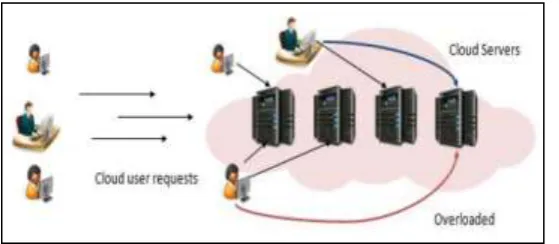
Figure 1 : Service Allocation in Unmanaged Environment
Figure 1 showing the unmanaged allocation of the services to users in distributed cloud environment. The figure shows that the multiple users generate the request in the environment. As the request is allocated to best service provider, it can be overloaded and the performance of that server can be decreased. There is the requirement of some specific load balancing and service distribution algorithm to achieve the balanced service allocation. The load balancing in cloud server not also improves the service distribution but provide the low cost and faster execution. The application scaling, minimizing the traffic, load balancing and routing of the traffic. Various scenarios and algorithms are provided at cloud servers and middle layer architecture to distribute the requests in cloud environment in equalized form. In this paper, an effective cloud service allocation algorithm is provided under the consideration of security and load aspects.
In this paper, the securities lapses exist in the cloud environment are handled at the time of cloud service allocation. The proposed system is defined as the intermediate layer that analyzes the security requirements of users and observes the security features of cloud server. Based on the evaluation, the cloud service is allocated to the user. The load, availability and security features are analyzed while allocating the cloud. In this section, the cloud system is described respective to unequalized load situation. In section II, the work provided by the earlier researchers is discussed for cloud service allocation. In section III , the description of proposed model is provided. In section IV, the conclusion of this work is provided.
II.RELATED WORK
and micro cloud environment. The relationship between the users and service providers was characterized by the author. The design and distribution behaviour was explored by the author with quality feature specification. Author[3] has defined a work on energy based distributed environment and data center. The design of grid and cloud based environments was discussed by the author with resource distribution and scalability vector. The performance impact was observed with service deployment in robust cloud environment. The metrics and the architectural strength of service distribution was discussed b y the author. Ye et al.[4] has defined a work to reduce the execution time by defining the workflow analysis based cloud scheduling. The model was addressed under multi-objective specifications, concerns and methods. The weight specific decisions were addressed by the author to analyze the specific criteria and constraints. The parameter based evaluation was discussed by the author to improve the service distribution in cloud environment. Author[5] has improved the resource utilization by characterizing the process of architecture level service distribution. The group specific neighbor and weight evaluation was provided by the author for request distribution. The usage specific evaluation was defined by the author to generate the pattern weight and to improve the resource utilization. Author[6] has defined the provisioning method to reduce the computation cost for process execution within deadline. The resource allocation method was defined by the author using task prioritization. The service provisioning method was defined to achieve multi-task adaptation in the robust cloud environment.
Author [12] has used the rule specific evaluation on moving average formulation applied on memory, bandwidth and processing capabilities. The quantization method was defined to reduce the wait time and to improve the capabilities of resource distribution in cloud environment. The rule adaptive dynamic evaluation was analyzed by the author to improve the resource sharing. Author[13] has provided a constraint, parameter based optimization method for effective resource allocation. The cost, delay and deadline consideration was taken by the author to achieve better utilization of available resources. The energy and cost effective evaluation was provided by the author to improve the effectiveness of resource distribution in hybrid cloud environment. Author[14] used the game theory based scheduling method to achieve better and energy effective distribution of services in cloud environment. The task distribution and energy specific mathematical formulation was defined to improve the measures of service allocation. The configuration level adaptation and architectural improvement was also achieved by the author. Author[15] has observed the computational cost with resource specific parameter to achieve the effective gain in distributed cloud environment. The limited time and cost evaluation was considered as key parameter for service allocation in cloud environment. Author[15] has defined the Min-Min algorithm with clustering behaviour to improve the heuristic behaviour of resource execution in distributed cloud environment. The performance criteria based evaluation was provided by the author. The power efficiency evaluation was defined to improve the service allocation and effective execution in cloud environment. Author [16] has defined a multi-objective scheduling method to reduce the time and cost in service execution in cloud environment. The VM provisioning based data dependency and cloud system realization was achieved by the author. Author[17] has defined a directed acyclic graph (DAG) method for multi-feature evaluation in distributed cloud environment. The budget controlled modeling and service allocation process was defined by the author.
III.RESEARCH METHODOLOGY
In this paper, a security lapses covered effective method is provided for effective service allocation in cloud environment. The parameter effective analysis is performed by the middle layer to map the user security requirements to the security features within available cloud services. This evaluation is done under the security, availability and reliability features. The parameters considered at this stage with their role to handle the security lapses are shown in figure 2.
Figure 2: Parameters for handle Security Lapses Deadline Specification Availability/Reliability
and Load Lapses
Memory Requirement Management Issue Storage and Data
Figure 2 shows the user side requirements and its map to the characteristics of the cloud server. The deadline consideration is defined at the user end to identify the need of the user to execute the service. If the cloud server is having some failure issue or some chances of non-availability, then it cannot be allocated to the cloud server which is having a hard deadline. If the user request is having a soft deadline or no-deadline situation, then it can be allocated to server which can delay the user requests. This kind of mapping increases the reliability while executing the user task at the server end. The memory requirement is another parameter considered when loading the tasks at server side. The servers are defined with storage capabilities. The number of parallel tasks that can be loaded to the memory decides the acceptability of the cloud server. If the user request is having high memory requirement, then it will be loaded to the cloud server with maximum available memory. Whereas, the smaller tasks can be kept in the queue and can be executed by any server as any of the executing task finish. The security requirements are the major factor defined by the client as the request performed. The type of request itself can define the security requirement. Such as the account information, money transactions or the bank related services requires more security, whereas the game, news specific services does not require the security. In such case, while allocating the cloud server, the security requirements are checked and the server with data and communication security will be allocated to the request that demands for it. By these observed mapping, the security lapses can be resolved at the earlier end and the overall cloud system security can be improved. The work flow of cloud service allocation with security lapses consideration is provided in figure 3.
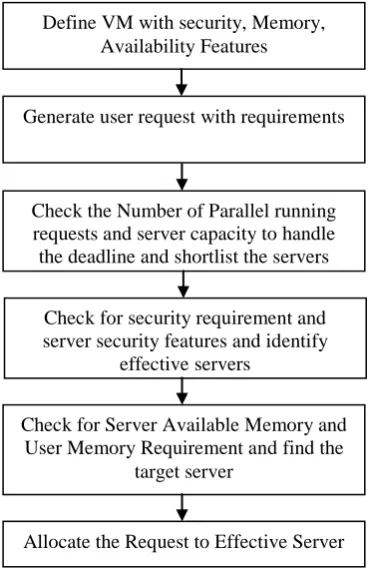
Figure 3 : Flow of Security Effective Service Allocation
Figure 3 has provided the work flow of task considered for effective service allocation in the cloud environment. All the requirement features are prioritized and compared to the available servers respective to their
Define VM with security, Memory, Availability Features
Generate user request with requirements
Check the Number of Parallel running requests and server capacity to handle the deadline and shortlist the servers
Check for security requirement and server security features and identify
effective servers
Check for Server Available Memory and User Memory Requirement and find the
target server
requirements. With each requirement map, the VMs are shortlisted and after applying the feature map, the effective server is identified. The figure shows that the model is applied on a configured cloud environment. At the first level, the server side analysis is performed for the number of executing requests and the capacity. This load vector consideration is effective to identify the reliability strength of the cloud server. If server is capable to handle another request under availability and deadline consideration, then the VM will be shortlisted as the effective service provider. In second phase, the security requirements of users are checked on the security features of the service provider. At this phase, the request level services can be identified the server itself or by the middle layer architecture to perform effective mapping of user requests on the cloud server. After obtaining the security requirements, the comparison on the security features of all the VMs is done to perform effective mapping. In the final stage, the memory specific check is performed to identify the servers that can hold the user request. The memory requirement of user request is analyzed at this stage for loading the request to effective virtual machine. After applying these three checks, the security and reliability effective VMs are shortlisted, now the request can be loaded to any of such virtual machine.
The method and parameters defined in this section identified that the model is able to handle the security lapses at the earlier stage and able to provide effective cloud service execution.
IV.CONCLUSION/FUTURE WORK
In this paper, an effective cloud service allocation environment is defined to handle the security lapses exist in the distributed environment. The cloud system is defined with M cloud servers with integrated security capabilities and load capacity. As the requests are accepted, the user requests are analyzed based on security requirements. The proposed middle layer architecture, allocated the cloud servers to the user requests based on the security requirements. This kind of security driven mapping reduces the security lapses in the cloud system and improves the cloud system reliability.
REFERENCES
[1] Alireza Souri, Nima Jafari Navimipour, Amir Masoud Rahmani, Formal verification approaches and standards in the cloud computing: A comprehensive and systematic review, Computer Standards & Interfaces, Available online 2 December 2017
[2] Blesson Varghese, Rajkumar Buyya, Next generation cloud computing: New trends and research directions, In Future Generation Computer Systems, Volume 79, Part 3, 2018, Pages 849-861
[3] Muhammad Zakarya, Lee Gillam, Energy efficient computing, clusters, grids and clouds: A taxonomy and survey, In Sustainable Computing: Informatics and Systems, Volume 14, 2017, Pages 13-33
[4] Xin Ye, Sihao Liu, Yanli Yin, Yaochu Jin, User-oriented many-objective cloud workflow scheduling based on an improved knee point driven evolutionary algorithm, In Knowledge-Based Systems, Volume 135, 2017, Pages 113-124
[6] Vahid Arabnejad, Kris Bubendorfer, Bryan Ng, Scheduling deadline constrained scientific workflows on dynamically provisioned cloud resources, In Future Generation Computer Systems, Volume 75, 2017, Pages 348-364
[7] Xuezhi Zeng, Saurabh Kumar Garg, Zhenyu Wen, Peter Strazdins, Albert Y. Zomaya, Rajiv Ranjan, Cost efficient scheduling of MapReduce applications on public clouds, In Journal of Computational Science, 2017
[8] Georgia Koutsandria, Emmanouil Skevakis, Amir A. Sayegh, Polychronis Koutsakis, Can everybody be happy in the cloud? Delay, profit and energy-efficient scheduling for cloud services, In Journal of Parallel and Distributed Computing, Volume 96, 2016, Pages 202-217
[9] Sucha Smanchat, Kanchana Viriyapant, Taxonomies of workflow scheduling problem and techniques in the cloud, In Future Generation Computer Systems, Volume 52, 2015, Pages 1-12
[10] Fu Xiong, Cang Yeliang, Zhu Lipeng, Hu Bin, Deng Song, Wang Dong, Deadline based scheduling for data-intensive applications in clouds, In The Journal of China Universities of Posts and Telecommunications, Volume 23, Issue 6, 2016, Pages 8-15
[11] Junwu Zhu, Heng Song, Yi Jiang, Bin Li, On complex tasks scheduling scheme in cloud market based on coalition formation, In Computers & Electrical Engineering, Volume 58, 2017, Pages 465-476
[12] Priya V, C. Nelson Kennedy Babu, Moving average fuzzy resource scheduling for virtualized cloud data services, In Computer Standards & Interfaces, Volume 50, 2017, Pages 251-257
[13] Mohammad Masdari, Sima ValiKardan, Zahra Shahi, Sonay Imani Azar, Towards workflow scheduling in cloud computing: A comprehensive analysis, In Journal of Network and Computer Applications, Volume 66, 2016, Pages 64-82
[14] Jiachen Yang, Bin Jiang, Zhihan Lv, Kim-Kwang Raymond Choo, A task scheduling algorithm considering game theory designed for energy management in cloud computing, In Future Generation Computer Systems, 2017
[15] Thiago A.L. Genez, Luiz F. Bittencourt, Edmundo R.M. Madeira, Time-discretization for speeding-up scheduling of deadline-constrained workflows in clouds, In Future Generation Computer Systems, 2017 [16] Weiwei Lin, Weiqi Wang, Wentai Wu, Xiongwen Pang, Bo Liu, Ying Zhang, A heuristic task scheduling
algorithm based on server power efficiency model in cloud environments, In Sustainable Computing: Informatics and Systems, 2017