International Journal of Nanomedicine
Dove
press
O r I g I N a l r e s e a r c h
open access to scientific and medical research
Open access Full Text article
Journal name: International Journal of Nanomedicine Journal Designation: Original Research
Year: 2014 Volume: 9
Running head verso: Salunke et al
Running head recto: P. zeylanica-mediated synthesis of NPs and antibiofilm activity DOI: http://dx.doi.org/10.2147/IJN.S59834
Rapid efficient synthesis and characterization
of silver, gold, and bimetallic nanoparticles from
the medicinal plant
Plumbago zeylanica
and their
application in biofilm control
Correspondence: Balu A Chopade Department of Microbiology, University of Pune, Ganeshkhind, Pune-411007, Maharashtra, India
Tel +91 20 2569 0643 Fax +91 20 2569 0087 email [email protected] Gayatri R Salunke1
Sougata Ghosh1
RJ Santosh Kumar2
Samiksha Khade1
Priya Vashisth3
Trupti Kale4
Snehal Chopade5
Vikas Pruthi3
Gopal Kundu4
Jayesh R Bellare6
Balu A Chopade1,5 1Institute of Bioinformatics
and Biotechnology, University of Pune, 2National Chemical
Laboratory, Pune, 3Department
of Biotechnology, Indian Institute of Technology, Roorkee, 4National
centre for cell science, Pune University Complex, 5Department
of Microbiology, University of Pune, Pune, 6Department of Chemical
engineering, Indian Institute of Technology Bombay, Powai, Mumbai, India
Background: Nanoparticles (NPs) have gained significance in medical fields due to their high surface-area-to-volume ratio. In this study, we synthesized NPs from a medicinally important plant – Plumbago zeylanica.
Materials and methods: Aqueous root extract of P. zeylanica (PZRE) was analyzed for the presence of flavonoids, sugars, and organic acids using high-performance thin-layer chroma-tography (HPTLC), gas chromachroma-tography-time of flight-mass spectrometry (GC-TOF-MS), and biochemical methods. The silver NPs (AgNPs), gold NPs (AuNPs), and bimetallic NPs (AgAuNPs) were synthesized from root extract and characterized using ultraviolet-visible spectra, X-ray diffraction (XRD), energy-dispersive spectrometry (EDS), transmission electron microscopy (TEM), and dynamic light scattering (DLS). The effects of these NPs on Acinetobacter baumannii, Staphylococcus aureus, and Escherichia coli biofilms were studied using quantitative biofilm inhibition and disruption assays, as well as using fluorescence, scanning electron microscopy, and atomic force microscopy.
Results: PZRE showed the presence of phenolics, such as plumbagin, and flavonoids, in addition to citric acid, sucrose, glucose, fructose, and starch, using HPTLC, GC-TOF-MS, and quantitative analysis. Bioreduction of silver nitrate (AgNO3) and chloroauric acid (HAuCl4) were confirmed at absorbances of 440 nm (AgNPs), 570 nm (AuNPs), and 540 nm (AgAuNPs), respectively.
The maximum rate of synthesis at 50°C was achieved with 5 mM AgNO3 within 4.5 hours
for AgNPs; and with 0.7 mM HAuCl4 within 5 hours for AuNPs. The synthesis of AgAuNPs,
which completed within 90 minutes with 0.7 mM AgNO3 and HAuCl4, was found to be the fastest. Fourier-transform infrared spectroscopy confirmed bioreduction, while EDS and XRD patterns confirmed purity and the crystalline nature of the NPs, respectively. TEM micrographs and DLS showed about 60 nm monodispersed Ag nanospheres, 20–30 nm Au nanospheres adhering to form Au nanotriangles, and about 90 nm hexagonal blunt-ended AgAuNPs. These NPs also showed antimicrobial and antibiofilm activity against E. coli, A. baumannii, S. aureus, and a mixed culture of A. baumannii and S. aureus. AgNPs inhibited biofilm in the range of 96%–99% and AgAuNPs from 93% to 98% in single-culture biofilms. AuNPs also showed biofilm inhibi-tion, with the highest of 98% in S. aureus. AgNPs also showed good biofilm disrupinhibi-tion, with the highest of 88% in A. baumannii.
Conclusion: This is the first report on rapid and efficient synthesis of AgNPs, AuNPs and AgAuNPs from P. zeylanica and their effect on quantitative inhibition and disruption of bacterial biofilms.
Keywords: P. zeylanica, AgNPs, AuNPs, AgAuNPs, biofilm inhibition and disruption, GC-TOF-MS
International Journal of Nanomedicine downloaded from https://www.dovepress.com/ by 118.70.13.36 on 23-Aug-2020
For personal use only.
Number of times this article has been viewed
This article was published in the following Dove Press journal: International Journal of Nanomedicine
Dovepress
Salunke et al
Introduction
Nanomaterial synthesis and characterization have been an extensive area of research since the last decade. Biological synthesis of nanoparticles (NPs) is considered environmentally
friendly, nontoxic, and cost-effective.1 Therefore, biological
synthesis of NPs from various plant extracts2,3 and
microor-ganisms like bacteria,4 yeasts,5 fungi,6 and algae7 have proven
to be promising sources. However, plant extracts are preferred over microbial sources, as they do not require sterile condi-tions. Also, bioreduction of NPs using plant extracts is rapid,
ecofriendly, biocompatible, and nontoxic.8,9
Silver has been exploited as antimicrobials from ancient
period.10 With the evolution of nanomedicine as a study
for treating infections, metallic silver in the form of NPs
has regained its significance.11,12 Several bacteria have
developed resistance against antibiotics, which has
chal-lenged the treatment of human infections.13–15 Therefore,
silver NPs (AgNPs) as an antimicrobial agent seem to be
beneficial compared to antibiotics.16 Moreover, few reports
show synergistic enhancement of activity of antibiotics with
AgNPs.17 There are a number of reports on green synthesis
of gold NPs (AuNPs) by plants and microorganisms, and they are being exploited for research on drug delivery and
cancer studies.18 However, as gold is not known to have an
antimicrobial property, very few reports are available on the antimicrobial nature of AuNPs. It is of interest to some researchers whether AuNPs can inhibit biofilm formation
and kill bacteria as they show surface bioconjugation.19
So far, syntheses of bimetallic NPs (AgAuNPs) from
Diospy-ros kaki and Azadirachta indica extracts have been reported
by Song and Kim20 and Shankar et al21 respectively, with an
Au core and Ag shell observed in case of A. indica. However, research on their application as antimicrobial agents is still in its infancy.
Plumbago zeylanica, commonly known as agni
(meaning fire) in Sanskrit, is an important medicinal plant used in ayurveda, an Indian system of traditional
medicine.22 Ahmad and Beg23 reported on the antimicrobial
activity of aqueous and alcoholic extracts from roots of
P. zeylanica against Staphylococcus aureus, Pseudomonas aeruginosa, Proteus vulgaris, Bacillus subtilis, and Candida albicans. Plumbagin
(5-hydroxy-2-methyl-1,4-naphthoqui-none) is a major flavonoid present in P. zeylanica, especially
in roots, showing antifungal and antimicrobial properties.24,25
Plumbagin is also well known for its plasmid-curing
property.26 Plumbagin has cured plasmid-encoding resistance
to silver, cadmium, antimony, streptomycin, and ampicillin
in Acinetobacter baumannii species.27
The phytochemical analysis of an aqueous root extract of P. zeylanica (PZRE) showed the presence of alkaloids, glycoside, reducing sugars, phenolics, tannins, lignin,
saponins, and flavonoids.28 The majority of these compounds
are known to act as reducing as well as stabilizing agents
in the bioreduction of silver and gold salt.29–32 Moreover,
there have been no reports on the synthesis of metal NPs by
P. zeylanica to date. Therefore, we propose that P. zeylanica
may synthesize novel metal NPs exhibiting antimicrobial and biofilm inhibition/disruption properties.
Materials and methods
Plant material and preparation of extract
P. zeylanica roots were collected from the natural landscape
of Western Ghats, on Dr Homi Bhabha Road, Pune, Maharashtra, India. They were thoroughly washed with dis-tilled water, shade-dried, chopped into thin slices, and ground to make fine powder. The aqueous extract was prepared by boiling 5 g of the powder in 100 mL sterile distilled water, followed by centrifugation at 8,000 rpm for 10 minutes. The
supernatant of PZRE was filtered through a 0.45 μm
mem-brane filter and stored at 4°C until further use.
Preparation of the PZRE samples
for chromatographic analysis
PZRE was sequentially extracted along a polarity gradient using ethyl acetate and methanol for high-performance thin-layer chromatography (HPTLC; semiautomated Linomat 5; Camag, Muttenz, Switzerland) fingerprinting and gas chromatography-time of flight-mass spectrometry (GC-TOF-MS). The sequential extraction was done by sus-pending 5 mL of root extract in 5 mL of high-performance liquid chromatography-grade ethyl acetate, followed by stirring for 3 hours and centrifugation at 10,000 rpm at room temperature (RT). The supernatant was recovered, and 5 mL methanol was added to the pellet and redispersed. The solu-tion was vigorously mixed by vortexing for 15 minutes, and then methanol extract was recovered. The ethyl acetate and methanol extracts were concentrated.
Phytochemical analysis of
P. zeylanica
HPTLC analysis of PZRE was performed according
to the protocol given in earlier studies.33,34 Plumbagin,
quercetin, diosgenin, glucose, and fructose (Sigma-Aldrich, St Louis, MO, USA) were taken as standard for the analyses.
Similarly, 5 μL of the ethyl acetate extract of PZRE was
subjected to GC-TOF-MS (Pegasus 4D GCxGC-TOFMS system with Agilent 6890 gas chromatograph equipped with
International Journal of Nanomedicine downloaded from https://www.dovepress.com/ by 118.70.13.36 on 23-Aug-2020
Dovepress P. zeylanica-mediated synthesis of NPs and antibiofilm activity
a dual-jet thermal modulator between primary and secondary columns and a Pegasus IV TOFMS as a detector; LECO, St Joseph, MI, USA). The program used was as follows: primary column, 5% phenyl polysilphenylene-siloxane
HP-5MS capillary, 30 m ×0.32 mm, 0.25 μm; secondary
column, 1.00 m ×0.10 mm ID ×0.10 μm of Rxi®-17 ms
(Restek, Bellefonte, PA, USA ) in GC oven (primary oven
program, 100°C for 0.5 minute, followed by an increase
up to 215°C at an increment of 20°C/minute, held for
0.5 minute, further to 270°C at 25°C/minute and held
for 10 min; secondary oven program, rate and duration were
identical to primary oven, target temperature was set at 30°C
above primary oven). Sample injection: Gerstel PTV (Gerstel, Mülheim an der Ruhr, Germany) using solvent vent mode;
modulator temperature +20°C. Carrier gas: helium at ramped
pressure mode; transfer line 240°C. MS parameters: electron
impact ionization 70 eV; ion source temperature 250°C;
detector voltage 1,700 V; data-acquisition mass range m/z 50–500 at an acquisition rate of ten spectra; software
ChromaTOF® 3.34 (LECO). Identification of components
was based on comparison of their mass spectra with those of National Institute of Standards and Technology library
spectra (v. 2.0).35 Citric acid, plumbagin, starch, and total
reducing sugar content of PZRE were determined according to the methodology mentioned in the following sections.
Total reducing sugar
To 50 μL of PZRE, we added the same volume of 80% phenol
(volume/volume) and vortexed. To this mixture, 2 mL of sulfuric acid was added and incubated for 10 minutes at RT, followed by recording absorbance at 490 nm. Total reducing
sugar content was estimated using a standard glucose curve.36
Total phenolic content
PZRE (0.125 mL) was added to 0.5 mL of deionized water. To this mixture, 0.125 mL Folin–Ciocalteu reagent was added and incubated for 5 minutes at RT. After incubation, 1.25 mL
of 7% Na2CO3 solution was added, and the volume was made
up to 3 mL with distilled water. This reaction mixture was then incubated for 90 minutes at RT, and absorbance was recorded at 760 nm. Total phenolic content was estimated
using a standard gallic acid curve.37
Total flavonoid content
Half a milliliter of 2% AlCl3 in methanol was mixed with
a 0.5 mL sample of PZRE and incubated for 10 minutes at RT. After 10 minutes, absorbance was recorded at 368 nm. The total flavonoid content was determined using a standard
quercetin curve.37
citric acid content
One milliliter of PZRE was evaporated in order to dry it completely, and reconstituted in 1 mL 5% trichloroacetic acid. Dropwise addition of 8 mL of anhydrous acetic anhydride
was done, followed by incubation at 60°C for 10 minutes.
The tubes were then stoppered. After 10 minutes, 1 mL of pyridine was added to each tube and restoppered. The tube
was then incubated at 60°C for 40 minutes, followed by
incubation in an ice-water bath for 5 minutes. Absorbance was recorded at 420 nm. The total citric acid content was
determined from a standard citric acid curve.37
Starch content
P. zeylanica root powder was weighed, and 5 g of the powder
was washed with 70% ethanol. The washes were repeated to ensure the removal of sugars until it did not develop color when treated with anthrone reagent. The residue was dried and boiled in 100 mL distilled water. Then 1 mL of PZRE was evaporated completely and reconstituted in 60% per-chloric acid. To this, 4 mL of anthrone reagent was added and was boiled in a water bath for 8 minutes. The intensity of the dark green color was recorded at 630 nm, and the starch content was estimated by comparing the absorbance with the
standard glucose curve.37
Plumbagin content
Plumbagin was extracted using acetone, chloroform, and
hep-tane according to the method described by Israni et al.38 In a
mortar and pestle, 5 g root powder was macerated using
acetone (3×50 mL). The acetone extract was then evaporated
to dryness at RT and 25 mL chloroform was added, followed
by an equal volume of distilled water (3×) to remove
water-soluble impurities. The chloroform extract was evaporated till a dark brown oily residue was obtained. This residue was treated with 10 mL of phosphoric acid (10%) for 30 minutes followed by extraction with 5 mL n-heptane. To 0.2 mL of this yellow solution, 10% alcoholic KOH was added, the volume was made up to 5 mL using absolute ethanol, and absorbance was recorded at 520 nm. The concentration of plumbagin was determined using a standard plumbagin curve.
Synthesis and characterization
of nanoparticles
UV-visible spectroscopy and FTIR analysis
Synthesis and optimization studies of AgNPs and AuNPs were carried out according to the methods given
earlier.3,37 AgAuNPs were prepared using 1 mM silver
International Journal of Nanomedicine downloaded from https://www.dovepress.com/ by 118.70.13.36 on 23-Aug-2020
Dovepress
Salunke et al
nitrate (AgNO3) and 1 mM chloroauric acid (HAuCl4)
salt solutions in a 1:1 ratio. To 5 mL PZRE, 47.5 mL of
HAuCl4 solution was added, followed by addition of 47.5 mL
AgNO3. Synthesis of NPs was monitored by recording the
spectra on an ultraviolet (UV)-visible spectrophotometer
(SpectraMax M5®; Molecular Devices, Sunnyvale, CA,
USA) operating at a resolution of 1 nm. Optimization stud-ies for rate of NP synthesis were carried out at different
temperatures ranging from 4°C to 50°C, and at varying
concentrations from 0.1 mM to 5 mM. For AgAuNPs, the
salt mixture of AgNO3 and HAuCl4 was mixed in the ratio
of 1:1, with concentrations differing from 0.1 mM to 5 mM. AgNPs, AuNPs, and AgAuNPs were also chemically synthe-sized and characterized according to the protocol reported
earlier.39 Dried PZRE before and after bioreduction was
subjected to Fourier-transform infrared spectroscopy (FTIR; Affinity-1; Shimadzu, Tokyo, Japan) using the potassium bromide pellet technique, and was exposed to an IR source
of 500–4,000 cm−1. For application purposes, the NPs were
synthesized, followed by washing twice with double-distilled water in order to use for antimicrobial and biofilm assays.
EDS and XRD analysis
NPs were studied using energy-dispersive spectrometry (EDS; JSM 6360A analytical scanning electron microscope [SEM]; JEOL, Tokyo, Japan) at an energy range 0–20 keV for elemental confirmation. Phase formation of the biore-duced NPs was studied using X-ray diffraction (XRD; D8 Advanced; Bruker Optik, Ettlingen, Germany) with a
CuKα (1.54 Å) source.
DLS measurement and TEM analysis
Freshly prepared 3 mL AgNPs, AuNPs, and AgAuNPs were taken in polystyrene cuvettes and subjected to particle-size analysis employing dynamic light scattering (DLS; Zetasizer Nano-2590; Malvern Instruments, Malvern, UK). potential values of each sample were also recorded on the same instrument. The surface morphology and size of the NPs were determined using transmission electron microscopy (TEM; Tecnai™ G2 20 U-Twin; FEI, Hillsboro, OR, USA).
Antimicrobial assay
The effects of NPs synthesized using PZRE were tested against A. baumannii AIIMS 7, Escherichia coli NCIM (National Collection of Industrial Microorganisms) 2931 and
S. aureus MTCC (Microbial Type Culture Collection) 3160 on
Mueller–Hinton (MH) agar plates using a disk-diffusion assay. Different concentrations of freshly prepared AgNPs,
AuNPs, and AgAuNPs were prepared from 2,048 μg
to 0.25 μg/disk by the double-dilution method. After
incubation at 37°C for 18 hours, the zones of inhibition
were measured.40,17 Chemically synthesized NPs were used
as controls. All assays were performed in triplicate.
Determination of biofilm inhibition
and disruption
Biofilm-inhibition assays were performed by coincubation
of 5 μL of culture (optical density adjusted to 0.05 at 600 nm)
with AgNPs, AuNPs, and AgAuNPs (1,024 μg/well) in 200 μL
MH broth for 24 hours at 37°C.40 In the case of
biofilm-disruption assays, bacterial biofilm was allowed to form for 24 hours, followed by washing with sterile phos-phate-buffered saline (PBS; NaCl 8 g/L, KCl 0.2 g/L,
Na2HPO4 1.44 g/L, KH2PO4 0.24 g/L). Biofilm disruption
was initiated by the addition of 1,024 μg/well of freshly
synthesized NPs.41,42 Additionally, the effect of NPs was
checked against a mixed-biofilm formation by A. baumannii and S. aureus. Biofilm formation in the absence of NPs served as a positive control. The extent of biofilm inhibition and disruption was determined using the crystal violet staining
method as reported earlier.43 Chemically synthesized NPs
were used as controls. Biofilm inhibition and disruption assays were carried out in triplicate.
Visualization of biofilm employing
fluorescence microscopy, SEM, and AFM
The biofilm inhibition and disruption assays were carried out on grease-free, sterile glass slides with tenfold-higher volumes to make the final volume 2 mL in 12-well plates
and kept at 37°C for incubation. The concentration of the
NPs was 1,024 μg/well. After 24 hours, the glass slides were
washed with sterile PBS. The glass slides were stained with acridine orange and observed under a Zeiss fluorescence microscope using 465–495 nm excitation filters (AxioScope A1; Carl Zeiss Meditec, Jena, Germany). Glass slides fixed with glutaraldehyde were dehydrated sequentially using ethyl alcohol and analyzed using SEM (JSM 6360A; JEOL). Slides washed with PBS and air-dried were used for image analysis
at a resolution of 2×2 μm under semi-contact atomic force
microscopy (AFM; NTEGRA, NT-MDT, Moscow, Russia).
Results
Phytochemical analysis of
P. zeylanica
HPTLC fingerprints for PZRE showed the bands cor-responding to the standard plumbagin and diosgenin in the methanolic and ethyl acetate fractions of PZRE
International Journal of Nanomedicine downloaded from https://www.dovepress.com/ by 118.70.13.36 on 23-Aug-2020
Dovepress P. zeylanica-mediated synthesis of NPs and antibiofilm activity
(Table 1 and Figure S1). Similarly, GC-TOF-MS analysis was done. The compounds detected in GC-TOF-MS analy-sis of ethyl acetate extract of PZRE are enlisted in Table 2. Sucrose was observed to be a major component of the PZRE, at 22%. Plumbagin content was found to be 2% in the plant extract. Total reducing sugars, phenolic content, flavonoid content, starch, citric acid and plumbagin content are quan-titated and given in Table 3.
Characterization of nanoparticles
Visual observation, UV-visible spectroscopy, and FTIR analysis
AgNPs, AuNPs, and AgAuNPs were bioreduced by PZRE. The yellowish-brown color of AgNPs appeared due to excita-tion of surface plasmon vibraexcita-tions with absorbance maxima at 440 nm and a violet color of the AuNPs at 570 nm. A peak
appeared at t=1 hour, with a steady increase till t=4.5 hours
in AgNPs and t=5 hours in AuNPs (Figure 1A and B).
AgAuNPs developed a dark-violet brownish color with absorbance maxima shifting towards 540 nm. A small peak
appeared at t=0 minutes with the rate of synthesis increasing
steadily till 90 minutes (Figure 1C).
The effects of temperature on the rate of AgNPs and AgAuNPs synthesis showed a gradual increase in
synthe-sis up to 50°C (Figure 2A and B). The study of the effect
of salt concentration revealed an increase in the rate of AgNPs synthesis with an increase in concentration and
maximum synthesis at 5 mM AgNO3 (Figure 2C). The
rate of synthesis was highest in 0.7 mM and decreased further from 1 mM to 5 mM in AgAuNPs (Figure 2D). Similar results were observed in the case of AuNPs (Figure S2).
Table 1 High-performance thin-layer chromatography of the root extract of Plumbago zeylanica
Compounds Type of extract Amount (%)
Plumbagin Hydromethanolic 0.002
Methanolic 1.6
Ethyl acetate 11.2
Diosgenin Hydromethanolic –
Methanolic 0.21
Ethyl acetate 2.8
Quercetin Hydromethanolic 0.0005
Methanolic –
Ethyl acetate 0.4
glucose Hydromethanolic 14.3
Fructose Hydromethanolic 0.5
Note: all experiments were performed in triplicate, and standard deviations were negligible.
Abbreviation: –, not detected.
Table 2 Gas chromatography-time of flight-mass spectrometry analysis of Plumbago zeylanica root extract (PZRE)
Name Formula Quantity Area % RT (s)
sucrose c12h22O11 57 21.912 558.3
2-Furancarboxaldehyde, 5-(hydroxymethyl)- c6h6O3 126 19.378 444.9
D-Allose c6h12O6 60 6.2624 587
Triethylene glycol c6h14O4 45 5.0681 440.1
Spiro[2.3]hexan-5-one, 4,4-diethyl- c10h16O 110 3.9047 446
Ethanol, 2-(2-aminoethoxy)- c4h11NO2 45 3.8949 559.7
4-Chromanol c9h10O2 121 2.9764 690.5
Ethanol, 2,2′-[oxybis(2,1-ethanediyloxy)]bis- c8h18O5 45 2.8263 568.9
Benzothiazole, 2-(2-hydroxyethylthio)- c9h9NOs2 167 2.8117 832.1
N-Butyl-tert-butylamine c8h19N 114 2.7494 432.3
Plumbagin c11h8O3 188 2.4452 639
Pentane, 2,3,3,4-tetramethyl- c9h20 85 2.0557 430
Phenol, 2,4-bis(1,1-dimethylethyl)- c14h22O 191 1.214 569.4
Acetaldehyde, tetramer c8h16O4 45 1.2032 877.2
Ethanol, 2-[2-(2-ethoxyethoxy)ethoxy]- c8h18O4 45 1.1105 456.6
Benzoic acid c7h6O2 122 1.003 417.1
Ethanol, 2,2′-[oxybis(2,1-ethanediyloxy)]bis- c8h18O5 45 0.84417 750.8
1,4-Benzenediol, 2-methoxy- c7h8O3 125 0.78487 530.8
Semioxamazide c2h5N3O2 103 0.73226 454.8
n-Hexadecanoic acid c16h32O2 60 0.72788 814.7
2-Octanamine c8h19N 55 0.72463 438.4
Tridecanoic acid, methyl ester c14h28O2 74 0.71858 792.4
Benzoic acid, 4-ethoxy-, ethyl ester c11h14O3 121 0.65169 576.1
Ethane, 1,1′-oxybis, 2-methoxy- c6h14O3 45 0.59053 428.9
Ethane, iodo- c2h5I 156 0.58063 640.3
N,3-Diethyl-3-heptanamine c11h25N 142 0.5475 633.5
Abbreviations: rT, reaction time; s, seconds.
International Journal of Nanomedicine downloaded from https://www.dovepress.com/ by 118.70.13.36 on 23-Aug-2020
Dovepress
Salunke et al
The plant extracts before and after bioreduction were subjected to FTIR analysis. The sample of plant extract
before bioreduction showed a peak at 3,300 cm−1, signifying
the presence of hydroxyl groups (Figure 3). In samples after
reduction, a peak at 3,300 cm−1 was not observed and the
free hydroxyls were observed at 3,390 cm−1, indicating that
hydroxyl groups present in polyphenols from P. zeylanica
were responsible for the bioreduction of the AgNO3 and
HAuCl4 solutions to form respective NPs. A significant peak
at 1,741 cm−1of the symmetric stretch of C=O indicated the
presence of aldehydes, ketones, esters, or carboxylic acids.
EDS, XRD, and DLS analysis
In EDS analysis, the characteristic peak at 3 keV confirmed the presence of AgNPs, whereas particle-size analysis
employing DLS showed that the bioreduced AgNPs had an average size of 63.92 nm (Figure 4A and B). Stability of the particles was confirmed from the zeta-potential value, which
was found to be −31, whereas phase formation was observed
using XRD patterns. Phase formation was confirmed from characteristic peaks, such as (111), (200), (220), and (311). The data matched with the standard Joint Committee for Pow-der Diffraction Set, card 040783, confirming a face-centered cubic structure for the AgNPs (Figure 4C and D).
EDS of AgAuNPs showed that peaks were obtained at around 2 and 3 keV, confirming the presence of silver and gold (Figure 5A). The silver content was around 66%, and that of gold was 14%. The average size of the AgAuNPs was
recorded to be 93.04 nm, with a zeta-potential value of −21
(Figure 5B and C). In XRD analysis, the position of the
Table 3 Phytochemical analysis of Plumbago zeylanica root extract (PZRE)
Sample Phytochemicals (mg/mL)
PZRE Plumbagin Total reducing
sugars
Total phenolic content
Total flavonoid content
Starch citric acid
0.12±0.04 1.25±0.04 0.73±0.02 0.95±0.05 0.93±0.02 3.38±0.01
Note: The data is indicated as the means ± standard deviation, n=3.
200 400 600 800
Wavelength (nm) 0.2
0.4 0.6 0.8 1 1.2 1.4
0
C
OD
90 minutes 75 minutes 60 minutes 45 minutes 30 minutes 15 minutes 0 minute
200 400 600 800 200 400 600 800
Wavelength (nm) Wavelength (nm)
1 0.9 0.8 0.7 0.6 0.5 0.4 0.3 0.2 0.1 0
0.8 0.7 0.6 0.5 0.4 0.3 0.2 0.1 0
A
B
OD OD
4.5 hours 4 hours 3.5 hours 3 hours 2.5 hours 2 hours 1.5 hours 1 hour 0.5 hour 0 hour
4.5 hours5 hours 4 hours 3.5 hours 3 hours 2.5 hours 2 hours 1.5 hours 1 hour 0.5 hour 0 hour
Figure 1A–C Ultraviolet-visible spectra of nanoparticles synthesized from PZRE at 37°c as a function of time. (A) AgNPs from PZRE in 1 mM AgNO3; (B) AuNPs from
PZRE in 1 mM HAuCl4; (C) AgAuNPs from PZRE in 1 mM AgNO3 and haucl4 solution in the ratio 1:1.
Abbreviations: haucl4,chloroauric acid; AgNO3, silver nitrate; PZRE, Plumbago zeylanica root extract; agNPs, silver nanoparticles; auNPs, gold NPs; agauNPs, bimetallic
NPs; OD, optical density.
International Journal of Nanomedicine downloaded from https://www.dovepress.com/ by 118.70.13.36 on 23-Aug-2020
Dovepress P. zeylanica-mediated synthesis of NPs and antibiofilm activity
Time (hours)
0 2 4 6
0 0.2 0.4 0.6 0.8 1 1.2
4ºC
20ºC
30ºC
40ºC
50ºC
0 50 100
0 0.2 0.4 0.6 0.8 1 1.2 1.4
Absorbance at 540 nm
Time (minutes)
4ºC
20ºC
30ºC
40ºC
50ºC
B
0 2 4 6
1.8 2
1.6 1.4 1.2 1 0.8 0.6 0.4 0.2 0
Time (hours)
0.1 mM 0.3 mM 0.5 mM 0.7 mM 1 mM 2 mM 3 mM 4 mM 5 mM
Absorbance at 440 nm
A
Absorbance at 440 nm
C
D
0 50 100
1.6
1.4
1.2
1
0.8
0.6
0.4
0.2
0
Absorbance at 540 nm
Time (minutes)
0.1 mM 0.3 mM 0.5 mM 0.7 mM 1 mM 2 mM 3 mM 4 mM 5 mM
Figure 2A–D Bioreduction of AgNPs and AgAuNPs from PZRE at varying reaction temperatures and concentrations of the salts as a function of time. (A) Time course of
AgNPs synthesis with varying reaction temperatures; (B) time course of AgAuNPs synthesisagainst reaction temperature; (C) time course of AgNPs formation obtained at
different agNO3 concentrations; (D) time course of AgAuNPs formation obtained at 1:1 AgNO3 and haucl4.
Abbreviations: haucl4,chloroauric acid; AgNO3, silver nitrate; PZRE, Plumbago zeylanica root extract; agNPs, silver nanoparticles; agauNPs, bimetallic NPs.
4,000 3,000 2,000 1,000
Wavenumber cm−1
% transmittanc
e
D C B
A
Figure 3A–D Fourier-transform infrared absorptive spectra before and after
bioreduction of dried PZRE. (A) PZRE; (B) AgNPs; (C) AuNPs; (D) AgAuNPs.
Abbreviations: PZRE,Plumbago zeylanica root extract; agNPs, silver nanoparticles; auNPs, gold NPs; agauNPs, bimetallic NPs.
peak (38.9°C), located between the (111) reflections of Ag
and Au, as seen in Figure 5D, represents the formation of alloy-like AgAuNPs. Similarly, characterization of AuNPs was carried out using the aforementioned techniques, and results are given in Figure S3.
TEM analysis
The TEM micrograph showed spherically shaped AgNPs synthesized by PZRE (Figure 6A). The TEM micrographs revealed some unique features of AuNPs (Figure 6B and C). They were found to be anisotropic in nature, with spheres, triangles, and hexagons exhibiting an interesting and rare phenomenon of shape evolution. Figure 6B demonstrates an arrangement of gold nanospheres forming a gold nano-triangle. Furthermore, the shape evolution continued, with nanospheres adhering to the triangle, leading to the growth of nanotriangles with attached nanospheres (Figure 6C). In Figure 6D, the arrows indicate nanohexagons and spheres of AgAuNPs, but the majority of them were nano-hexagons. A unique feature of AgAuNPs was their shape: blunt ended polygonal NPs. Chemically synthesized NPs were also characterized using EDS, XRD, TEM, and DLS (Figures S4–S6).
Antibacterial activity
The minimum inhibitory concentration (MIC) values of the NPs against Gram-negative and Gram-positive bacteria are
International Journal of Nanomedicine downloaded from https://www.dovepress.com/ by 118.70.13.36 on 23-Aug-2020
Dovepress
Salunke et al
C
Ag Ag
0 1 2
keV 3 4 5 15.69 21.04 28.2
1
37.84 50.75 68.06 91.28122.4164. 2
220.2295.3
Size (nm) Volume (% ) 16 14 12 10 8 6 4 2 0
A
C
D
B
0 20,000 40,000 60,000 80,000 1,00,000 1,20,000 Total counts Intensity
Zeta potential (mV)
... ... ... ... ... ... ... ... ... ...
−100 0 100 200
100 0
2θ
20 40 60 80
200 300 400 500 600 (111) (200) (220) (311)
Figure 4A–D Determination of purity, size, and nature of AgNPs synthesized by PZRE at 37°c. (A) Representative spot energy-dispersive spectrum; (B) histogram of size
distribution; (C) zeta-potential analysis; (D) representative X-ray diffraction profile of thin film.
Abbreviations: PZRE,Plumbago zeylanica root extract; agNPs, silver nanoparticles.
0.00 1.50 3.00 4.50 6.00
0 200 400 600 800 1,000 1,200 1,400 1,600 1,800 2,000 2,200 2,400 Count s keV Volume (% ) AgLoc Au AuMa AgLI AgLa AgLb AgLr AgLb2 AuMr Si1,2, 3
A
C
D
B
11.7 0 2 4 6 8 10 12 14 15.6921.0 428.2137.84 50.7568.0691.28 122.4164.2220.2295. 3 396.1 1,50,000 1,40,000 1,20,000 1,00,000 80,000 60,000 40,000 20,000 0
−100 0 100 200
Zeta potential (mV)
Intensity 2θ ... ... ... ... ... ... ... ... ... ... ... ... (111) 300 250 200 150 100 50 0
20 40 60 80
To
tal count
s
Size (nm)
Figure 5A–D Determination of purity, size, and nature of AgAuNPs synthesized by PZRE at 37°c. (A) Representative spot energy-dispersive spectrum; (B) Histogram of
size distribution; (C) zeta-potential analysis; (D) representative X-ray diffraction profile of thin film.
Abbreviations: PZRE,Plumbago zeylanica root extract; agauNPs, bimetallic NPs.
International Journal of Nanomedicine downloaded from https://www.dovepress.com/ by 118.70.13.36 on 23-Aug-2020
Dovepress P. zeylanica-mediated synthesis of NPs and antibiofilm activity
A
50 nm
B
100 nm
C
100 nm
D
50 nm
Figure 6A–D Characterization of nanoparticles synthesized by PZRE using transmission electron microscopy. (A) Spherical silver nanospheres; (B) shape evolution of gold
nanotriangles; (C) assembly of gold nanospheres forming a gold nanotriangle; (D) arrows indicating blunt-ended AgAu nanopolygons.
Abbreviation: PZRE,Plumbago zeylanica root extract.
given in Table 4. PZRE-mediated AgNPs showed effective antimicrobial activity compared to PZRE-mediated AuNPs and AgAuNPs, as well as the chemically synthesized AgNPs when used as a control. AgNPs exhibited a lower
MIC value against E. coli (2 μg/disk) in comparison with
A. baumannii and S. aureus strains (8 μg/disk). AuNPs
showed the highest antimicrobial activity against S. aureus,
with an MIC of 8 μg/disk, whereas chemically synthesized
AuNPs did not show antimicrobial activity. Moreover, bioreduced AgAuNPs were found to show more effective antimicrobial activity compared to AgAuNPs synthesized chemically.
Table 4 Minimum inhibitory concentration of silver nanoparticles (AgNPs), gold NPs (AuNPs) and bimetallic NPs (AgAuNPs) against bacterial cultures
Name of the microorganism Biologically synthesized Chemically synthesized
AgNPs AuNPs AgAuNPs AgNPs AuNPs AgAuNPs
A. baumannii AIIMS 7 8 128 16 512 – 256
E. coli NcIM 2931 2 256 4 512 – 32
S. aureus aureus MTcc 3160 8 8 8 256 – 512
Note: all experiments were performed in triplicate and standard deviations were negligible.
Abbreviations: AIIMS, All India Institute of Medical Sciences; NCIM, National Collection of Industrial Microorganisms; MTCC, Microbial Type Culture Collection; –, No antimicrobial activity observed.
International Journal of Nanomedicine downloaded from https://www.dovepress.com/ by 118.70.13.36 on 23-Aug-2020
Dovepress
Salunke et al
Biofilm inhibition and disruption
using nanoparticles
As all three NP types – AgNPs, AuNPs, and AgAuNPs – showed superior antibacterial activity, these NPs were further studied for biofilm inhibition and biofilm disruption with chemically synthesized NPs as a control. Biofilm inhibition
with NP concentration of 1,024 μg/well after 24 hours of
coincubation is represented by the graph in Figure 7A. It was observed that AgNPs and AgAuNPs inhibited the biofilm in all the test-microorganism single cultures around 96%–99% and 93%–98%, respectively. This was interesting compared to the control AgNPs and AgAuNPs, which showed inhibi-tion of 67%–91% and 0%–82%, respectively. In the case of
mixed culture, chemically synthesized AgNPs did not inhibit biofilm formation, whereas AgNPs from PZRE showed 91% biofilm inhibition. AgAuNPs showed A. baumannii biofilm inhibition up to 94% and E. coli biofilm inhibition up to 98%, with the highest inhibition of S. aureus biofilm of 99%. Similar to control AgNPs, control AgAuNPs showed poor biofilm inhibition compared to biological AgAuNPs, whereas AuNPs from both biological and chemical sources showed poor biofilm inhibition and disruption, except AuNPs from PZRE, which showed 97% S. aureus biofilm inhibition.
To elaborate more on the control of bacterial biofilms, a biofilm-disruption assay was carried out to check the effect of NPs on biofilm grown for 24 hours (Figure 7B). Bacterial
A. baumannii E. coli S. aureus Mixed culture
Bacterial cultures
Relative biofilm formation (%
)
0 20 40 60 80 100 120
A
Untreated AgNPs AuNPs AgAuNPs Chem AgNPs Chem AuNPs Chem AgAuNPs
B
Relative biofilm formation (%
)
0 20 40 60 80 100 120
A. baumannii E. coli S. aureus Mixed culture Bacterial cultures
Untreated AgNPs
AuNPs AgAuNPs Chem AgNPs Chem AuNPs Chem AgAuNPs
Figure 7 Inhibition and disruption of bacterial biofilms by biologically and chemically synthesized nanoparticles at a concentration of 1,024 μg/well at 24 hours. (A) Biofilm
inhibition; (B) biofilm disruption.
Abbreviations: A. baumannii, Acinetobacter baumannii; E. coli, Escherichia coli; S. aureus, Staphylococcus aureus; agNPs, silver nanoparticles; auNPs, gold NPs; agauNPs, bimetallic NPs; chem, chemically synthesized.
International Journal of Nanomedicine downloaded from https://www.dovepress.com/ by 118.70.13.36 on 23-Aug-2020
Dovepress P. zeylanica-mediated synthesis of NPs and antibiofilm activity
A
D
E
F
G
H
I
B
C
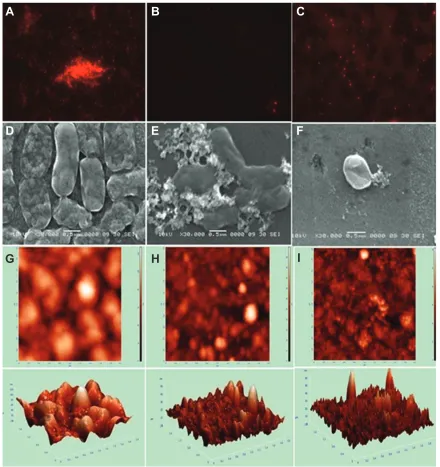
Figure 8A–I Images of Acinetobacter baumannii biofilm formation and inhibition using fluorescence microscopy, scanning electron microscopy (SEM), and atomic force
microscopy (AFM). Upper panel, fluorescence microscopy; middle panel, SEM; lower panel, AFM. (A,D,G) Biofilm formation; (B,E,H) biofilm inhibition with AgNPs; (C,F,I)
biofilm inhibition with AgAuNPs.
Abbreviations: agNPs,silver nanoparticles; agauNPs, bimetallic NPs.
biofilms were seen to be disrupted in presence of AgNPs up to 88% in A. baumannii, 67% in E. coli, 78% in S. aureus, and 64% in mixed biofilm, whereas chemically synthesized AgNPs showed poor disruption activity of about 19%–60%. AuNPs from PZRE showed lower biofilm disruption of around 40%, with a maximum of 95% in S. aureus, whereas chemically synthesized AuNPs did not show any biofilm-disruption activity. AgAuNPs also showed poor biofilm-disruption of about 61%–77%, but this was superior to that of chemical AgAuNPs (40%–70%).
Visualization of biofilm using fluorescence microscopy, SEM, and AFM
The cells were seen in aggregates in the absence of NPs ( Figure 8A) in images obtained under fluorescence
micros-copy at a resolution of 40×. In the presence of AgNPs, the
biofilm as well as cells were absent (Figure 8B), whereas in Figure 8C, although biofilm was absent in the presence of AgAuNPs, the cells were seen to be isolated. In SEM images,
A. baumannii cells and the biofilm formed, seen in Figure 8D,
were intact. Due to the presence of intact biofilm, the cells
International Journal of Nanomedicine downloaded from https://www.dovepress.com/ by 118.70.13.36 on 23-Aug-2020
Dovepress
Salunke et al
were present in colonies, and no change in the morphology was observed. Coincubation of the bacterial cells with AgNPs led to a change in the cell morphology and disrupted the bio-film of A. baumannii (Figure 8E), whereas cells were seen to be lysed in the presence of AgAuNPs (Figure 8F).
AFM images in 3-D represent A. baumannii biofilm formation (Figure 8G) and inhibition in the presence of AgNPs and AgAuNPs (Figure 8H and I). The roughness of the glass slide containing the biofilm and NPs was calculated, which varied for different bacterial cultures. Table 5 pres-ents the relative reduction in the roughness values of the biofilms when treated with AgNPs, AuNPs, and AgAuNPs. The roughness of the untreated biofilms was observed to be 16 nm, 5 nm, and 11 nm in A. baumannii, S. aureus, and
E. coli, respectively. The percentage of relative roughness
observed when the bacterial cultures were coincubated with biologically synthesized NPs was 12%–36% in A. baumannii and S. aureus and 40%–60% in E. coli. Chemically syn-thesized AgNPs (18%–45%) showed a reduction in rough-ness values, but were poor compared to biological AgNPs (12%–18%) except E. coli (20%). Chemically synthesized AuNPs and AgAuNPs showed lower reductions in rough-ness values of 80%–90% and 40%–60%, respectively, com-pared to biologically synthesized AuNPs (18%–60%) and AgAuNPs (25%–40%). Furthermore, it was also observed when fully formed biofilm was treated with AgNPs, rough-ness was reduced to 12% in A. baumannii and 50% in E. coli, which indicated that AgNPs also played a role in disrupting bacterial biofilms (Figure S7).
Discussion
P. zeylanica is reported to be a rich source of phytochemicals
and flavonoids, as observed in HPTLC fingerprinting and
GC-TOF-MS profile.44 Higher concentrations of sucrose,
glucose, and fructose determined by chromatographic tech-niques and quantitation assays may have stabilized the NPs synthesized from the root extract and may have controlled
NP shapes, such as spherical31 and hexagonal,45 during the
course of the synthesis. Starch concentration in PZRE was the same, whereas citric acid was found to be three times that
of Dioscorea bulbifera.37 Starch stabilizes the NPs by
cap-ping them.46 Lee et al47 demonstrated that citrate can adsorb
on NPs during their shaping and stabilize them. Therefore, owing to higher concentrations of citric acid in PZRE, NPs were better stabilized and evolved.
The 90 minutes required for the synthesis of AgAuNPs is the shortest reported for the biological synthesis of bimetallic AgAuNPs, in contrast to those reported from neem extract,
which took 296 minutes for complete synthesis.21 The rate of
synthesis was observed to be significantly dependent on the concentration of the salt solutions and temperature, which is
well in agreement with the previous reports.48,49 The hydroxyl
groups of polyphenols might be playing a significant role in
bioreduction, as revealed by FTIR analysis.37
UV-visible spectroscopy indicating a shift from 570 nm to 540 nm in synthesis of AgAuNPs, as well as EDS analysis indicating a lower percentage of gold compared to silver,
may be attributed to the Au core and Ag shell.21 The size
of AgNPs synthesized by PZRE was comparable to earlier
reports on Aloe vera50 and Cardiospermum halicacabum,51
as well as commercially available AgNPs.52 TEM
micro-graphs of AuNPs showed a unique feature of shape evolution in the form of nanotriangles, in which adherence of gold nanospheres covering the whole surface area of gold
nano-triangles was observed. However, Shankar et al53 reported on
the Turkevich protocol for synthesis of gold nanotriangles
and nanospheres, while Ghosh et al37 reported on anisotropic
AuNPs from D. bulbifera. AgAuNPs were comprised of
nanopolygons that were blunt-ended.54
We observed that chemically synthesized AgNPs showed poor antibacterial activity compared to biological AgNPs. It is important to note that AuNPs synthesized by PZRE showed antimicrobial activity. However, chemically syn-thesized AuNPs failed to show any activity. The reason for this may be the protein coating of NPs obtained from the
biological extract.55
Table 5 Roughness values of Acinetobacter baumannii, Escherichia coli, and Staphylococcus aureus biofilm in the presence and absence of nanoparticles, determined by atomic force microscopy
Name of the microorganism
Roughness values (nm)
Untreated Biologically synthesized Chemically synthesized
AgNPs AuNPs AgAuNPs AgNPs AuNPs AgAuNPs
A. baumannii 16 2 5 4 3 13 10
E. coli 5 2 3 2 1 4 2
S. aureus 11 2 2 4 5 10 6
Note: all experiments were performed in triplicate and standard deviations were negligible. Abbreviations: agNPs, silver nanoparticles; auNPs, gold NPs; agauNPs, bimetallic NPs.
International Journal of Nanomedicine downloaded from https://www.dovepress.com/ by 118.70.13.36 on 23-Aug-2020
Dovepress P. zeylanica-mediated synthesis of NPs and antibiofilm activity
Biofilm formation by human pathogenic microbes causing severe chronic lung, urinary tract, and various nosocomial infections is attributed to lower penetration and activity of drugs, altered genotype of bacteria exposed to
drugs, lower oxygen, and acidic pH.56–59 Therefore, research
on biogenic NPs for control of bacterial biofilms is very promising. Various attempts have been made to control biofilms by biosurfactants, rhamnolipids, and enzyme-based
detergents.60,61 Recently, Thawal et al62 demonstrated 80%
disruption of biofilm by a phage from the family Podoviridae isolated from A. baumannii.
Control of bacterial biofilms using NPs like chitosan, zinc oxide, and silver are interesting, because of their high
surface-to-volume ratio.42,63,64 Our results are in agreement
with the report of Kalishwaralal et al65 where 50 nM of
AgNPs significantly arrested P. aeruginosa biofilm for-mation without affecting cell viability, whereas 100 nM inhibited the growth of the organism itself and resulted in a 95%–98% decrease in biofilm. Also, AgNPs and AuNPs showed better biofilm inhibition than disruption; however, in the case of mixed cultures, AgAuNPs showed better biofilm disruption than biofilm inhibition. This shows the potential of AgAuNPs to disrupt mixed biofilms, which could be because of the synergistic effect of silver and gold components. Mixed biofilms, however, were inhibited and disrupted by AgNPs and AuNPs to a lesser extent compared to single bacterial biofilm, which might be due to more resistance to the penetrability of NPs challenging their potential for biofilm disruption.
The novelty of the study lies in the fact that PZRE-synthesized NPs were found to be antimicrobial against
A. baumannii and able to control its biofilm. Although A. baumannii is found in the human skin microbiome, it is
also considered to be a dreadful nosocomial pathogen, due to its high resistance to antibiotics and metal salts leading to severe mortality (17%–62%) among
immunocompro-mised patients because of bacteremia.26,58,66–72 Deformity in
A. baumannii cells treated with AgNPs, as observed in
fluo-rescence and SEM micrographs, might be due to enhanced penetrability of AgNPs within the biofilm, unlike metallic
silver.15,40,42 This can be a powerful strategy for sensitizing
A. baumannii with high metal resistance.
This is the first report of its kind where inhibition as well as disruption of bacterial biofilms have been demonstrated employing AFM after treatment with NPs synthesized by PZRE. Significant reduction of roughness confirmed the efficacy of NPs in biofilm inhibition and disruption. This proved to be advantageous, owing to semi-contact mode,
better resolution, biofilms observed in their own physiological condition with no addition of chemicals, direct contact with the surface with minimum use of lenses and electron beams, and deduction of roughness values based upon variation in
height and texture.73,74
Conclusion
This is the first report of rapid and efficient synthesis of AgNPs, AuNPs, and AgAuNPs by P. zeylanica. All the three types of NPs had unique features: being spherical in case of AgNPs, revealing shape evolution in case of AuNPs, and show-ing blunt-ended hexagonal nanostructures in AgAuNPs. These diverse properties were obtained due to phenolics, flavonoids, sugars, starch, and citric acid present in PZRE. Bioreduced NPs were able to inhibit to significant levels, particularly in the case of E. coli and S. aureus. S. aureus biofilm was inhibited and disrupted significantly by AuNPs, which shows that AuNPs can be more effective against positive bacteria than Gram-negative bacteria. Therefore, the NPs synthesized, particularly AgNPs from P. zeylanica, proved to be very efficient in the control of bacterial biofilms.
Acknowledgments
GS acknowledges the financial support for this work from the Institute of Bioinformatics and Biotechnology, University of Pune, Pune, India. SG thanks the Council of Scientific and Industrial Research (CSIR, Government of India) for a senior research fellowship (09/137[0516]/2012-EMR-I). Part of this work was supported by UPE Phase I and II, awarded to the University of Pune by the University Grant Commission (UGC), New Delhi, India. We are thankful to Dr Charegaonkar and Mr Naidu, Anchrome Enterprises (I) Pvt Ltd, Mulund, Mumbai, India for HPTLC analysis. We also acknowledge Professor SI Patil, Head of the Department of Physics, University of Pune for use of the TEM facility; and Purkayashta P, Khanka V, Banerjee S, and Koya R from India LECO instruments Pvt. Ltd. (Mumbai, Maharashtra, India) for GC-TOF-MS identification.
Disclosure
The authors report no conflicts of interest in this work.
References
1. Tran QH, Nguyen VQ, Le A. Silver nanoparticles: synthesis, properties, toxicology, applications and perspectives. Adv Nat Sci Nanosci Nanotechnol. 2013;4(3):033001.
2. Elavazhagan T, Arunachalam K. Memecylon edule leaf extract mediated green synthesis of silver and gold nanoparticles. Int J Nanomedicine. 2011;6:1265–1278.
3. Ghosh S, Patil S, Ahire M, et al. Synthesis of gold nanoanisotrops using Dioscorea bulbifera tuber extract. J Nanomater. 2011;2011:354793.
International Journal of Nanomedicine downloaded from https://www.dovepress.com/ by 118.70.13.36 on 23-Aug-2020
Dovepress
Salunke et al
4. He S, Zhirui G, Zhang Y, Zhang S, Wang J, Gu N. Biosynthesis of gold nanoparticles using the bacteria Rhodopseudomonas capsulata. Mater Lett. 2007;61(18):3984–3987.
5. Mourato A, Gadanho M, Lino AR, Tenreiro R. Biosynthesis of crys-talline silver and gold nanoparticles by extremophilic yeasts. Bioinorg Chem Appl. 2011;2011:546074.
6. Mukherjee P, Ahmad A, Mandal D, et al. Fungus-mediated synthesis of silver nanoparticles and their immobilization in the mycelial matrix: a novel biological approach to nanoparticle synthesis. Nano Lett. 2001;1(10):515–519.
7. Govindaraju K, Kiruthuga V, Kumar VG, Singaravelu G. Extracel-lular synthesis of silver nanoparticles by a marine alga, Sargassum wightii Grevilli and their antibacterial effects. J Nanosci Nanotechnol. 2009;9(9):5497–5501.
8. Chopade NB, Ghosh S, More P, et al. Biogenic copper nanoparticles as novel antidiabetic and antioxidant in nanomedicine. Poster presented at: Second International Translational Nanomedicine Conference; July 26–28, 2013; Boston, MA.
9. Khan M, Khan M, Adil SF, et al. Green synthesis of silver nanopar-ticles mediated by Pulicaria glutinosa extract. Int J Nanomedicine. 2013:81507–81516.
10. Woo KJ, Hye CK, Ki WK, Sook S, So HK, Yong HP. Antibacterial activ-ity and mechanism of action of the silver ion in Staphylococcus aureus and Escherichia coli. Appl Env Microbiol. 2008;74(7):2171–2178. 11. He Y, Du Z, Lv H, et al. Green synthesis of silver nanoparticles by
Chrysanthemum morifolium Ramat. Extract and their application in clinical ultrasound gel. Int J Nanomedicine. 2013;8:1809–1815. 12. Rai M, Yadav A, Gade A. Silver nanoparticles as a new generation of
antimicrobials. Biotechnol Adv. 2009;27(1):76–83.
13. Shakibaie MR, Dhakephalkar P, Kapadnis BP, Chopade BA. Removal of silver from photographic wastewater effluent using Acinetobacter baumannii BL54. Can J Microbiol. 1999;45(12):995–1000. 14. Waters AE, Contente-Cuomo T, Buchhagen J, et al. Multidrug-resistant
Staphylococcus aureus in US meat and poultry. Clin Infect Dis. 2011; 52(10):1227–1230.
15. Dhakephalkar PK, Chopade BA. High levels of multiple metal resistance and its correlation to antibiotic resistance in environmental isolates of Acinetobacter. Biometals. 1994;7(1):67–74.
16. Chopra I. The increasing use of silver-based products as antimicrobial agents: a useful development or a cause for concern? J Antimicrob Chemother. 2007;59(4):587–590.
17. Singh R, Wagh P, Wadhwani S, et al. Synthesis, optimization, and characterization of silver nanoparticles from Acinetobacter calcoa-ceticus and their enhanced antibacterial activity when combined with antibiotics. Int J Nanomedicine. 2013;8:4277–4290.
18. Shebdadkar U, Singh R, Wadhawani S, Chopade BA. Microbial synthesis of gold nanoparticles: current status and future prospects. Adv Colloid Interface Sci. Epub 2014 Jan 2.
19. Glomm WR. Functionalized gold nanoparticles for applications in bionanotechnology. J Dispers Sci Technol. 2005;26(3):389–414. 20. Song JY, Kim BS. Biological synthesis of bimetallic Au/Ag
nanopar-ticles using persimmon (Diopyros kaki) leaf extract. Korean J Chem Eng. 2008;25(4):808–811.
21. Shankar SS, Rai A, Ahmad A, Sastry M. Rapid synthesis of Au, Ag, and bimetallic Au core-Ag shell nanoparticles using neem (Azadirachta indica) leaf broth. J Colloid Interface Sci. 2004;275(2): 496–502.
22. Patwardhan RB, Dhakephalkar P, Chopade BA. Medicinal importance of chitraka plant: a review. Shrushti Health Bull. 2005;4:4–5. 23. Ahmad I, Beg AZ. Antimicrobial and phytochemical studies on
45 Indian medicinal plants against multi-drug resistant human patho-gens. J Ethnopharmacol. 2001;74(2):113–123.
24. van der Vijver LM. Distribution of plumbagin in the mplumbaginaceae. Phytochemistry. 1972;11(11):3247–3248.
25. de Paiva SR, Figueiredo M, Aragão TV, Kaplan MA. Antimicrobial activity in vitro of plumbagin isolated from Plumbago species. Mem Inst Oswaldo Cruz. 2003;98(7):959–961.
26. Shakibaie MR, Dhakephalkar PK, Kapadnis BP, Salayaghe G, Chopade BA. Plasmid mediated silver and antibiotic resistance in Acinetobacter baumannii BL54. Iran J Med Sci. 1998;23(12):30–36. 27. Deshpande LM, Chopade BA. Plasmid mediated silver resistance in
Acinetobacter baumannii BL54. Biometals. 1994;7(1):49–56. 28. Dhale DA, Markandeya SK. Antimicrobial and phytochemical
screen-ing of Plumbago zeylanica Linn. (Plumbaginaceae) leaf. J Exp Sci. 2011;2(3):4–6.
29. Asharani PV, Mun GLK, Hande MP, Valiyaveettil S. Cytotoxicity and genotoxicity of silver nanoparticles in human cells. ACS Nano. 2009; 3(2):279–290.
30. Egorova EM, Revina AA. Synthesis of metallic nanoparticles in reverse micelles in the presence of quercetin. Colloids Surf A Physicochem Eng Asp. 2000;168(1):87–96.
31. Panigrahi S, Kundu S, Ghosh SK, Nath S, Pal T. General method of synthesis for metal nanoparticles. J Nanopart Res. 2004;6(4): 411–414.
32. Zhao X, Shi Y, Wang T, Cai Y, Jiang G. Preparation of silica-magnetite nanoparticle mixed hemimicelle sorbents for extraction of several typical phenolic compounds from environmental water samples. J Chromatogr A. 2008;1188(2):140–147.
33. Chothani DL, Patel MB, Mishra SH. HPTLC fingerprint profile and isolation of marker compound of Ruellia tuberosa. Chromatogr Res Int. 2012;2012:180103.
34. Skalska-Kamińska A, Matysik G, Wójciak-Kosior M, Donica H,
Sowa I. Thin-layer chromatography of sugars in plant material. Curr Issue Pharm Med Sci. 2009;22(4):17–24.
35. Parveen I, Moorby JM, Fraser MD, Allison GG, Kopka J. Application of GCMS-TOF metabolite profiling techniques to the analysis of heathland plant diets of sheep. J Agric Food Chem. 2007;55(4):1129–1138. 36. Dubois M, Gilles DA, Hamilton JK, Rebers PA, Smith F. Colorimetric
method for the determination of sugars and related substances. Anal Chem. 1956;28(3):350–356.
37. Ghosh S, Patil S, Ahire M, et al. Synthesis of silver nanoparticles using Dioscorea bulbifera tuber extract and evaluation of its synergistic potential in combination with antimicrobial agents. Int J Nanomedicine. 2012;7:483–496.
38. Israni SA, Kapadia NS, Lahiri SK, Yadav G, Shah MB. An UV-visible spectrophotometric method for the estimation of plumbagin. Int J Chem Tech Res. 2010;2(2):856–859.
39. Augustine R, Rajarathinam R. Synthesis and characterization of silver nanoparticles and its immobilization on alginate coated sutures for the prevention of surgical wound infections and the in vitro release studies. Int J Nano Dimens. 2012;2(3):205–212.
40. Deshpande LM, Kapadnis, Chopade BA. Metal resistance in Acine-tobacter and its relation to β-lactamase production. Biometals. 1993;6(1):55–59.
41. Sahu PK, Iyer PS, Oak A, Pardeshi K, Chopade BA. Characteriza-tion of eDNA from the clinical strain Acinetobacter baumannii AIIMS 7 and its role in biofilm formation. Scientific World Journal. 2012;2012:973436.
42. Gaidhani SV, Singh R, Singh D, et al. Biofilm disruption activity of silver nanoparticles synthesized by Acinetobacter calcoaceticus PUCM 1005. Mater Lett. 2013;108:324–327.
43. Stepanovic S, Vukovic D, Dakic I, Savic B, Svabic-Vlahovic M. A modified microtiter-plate test for quantification of staphy-lococcal biofilm formation. J Microbiol Methods. 2000;40(2): 175–179.
44. Kishore N, Mishra BB, Tiwari V, Tripathi V. An account of phytochemi-cals from Plumbago zeylanica (Family: Plumbaginaceae): a natural gift to human being. Chron Young Sci. 2012;3(3):178–198.
45. Swarnavalli GCJ, Joseph V, Kannappan V, Roopsingh D. A simple approach to the synthesis of hexagonal-shaped silver nanoplates. J Nanomater. 2011;2011:825637.
46. Gao XH, Wei LQ, Wang J, Xu BS. Green synthesis of starch-stabilized silver nanoparticles and their antibacterial properties. Adv Mater Res. 2011;236–238:1945–1948.
International Journal of Nanomedicine downloaded from https://www.dovepress.com/ by 118.70.13.36 on 23-Aug-2020
Dovepress P. zeylanica-mediated synthesis of NPs and antibiofilm activity
47. Lee GP, Bignell LJ, Romeo TC, et al. The citrate-mediated shape evolution of transforming photomorphic silver nanoparticles. Chem Commun. 2010;46(41):7807–7809.
48. Jiang XC, Chen WM, Chen CY, Xiong SX, Yu AB. Role of temperature in the growth of silver nanoparticles through a synergetic reduction approach. Nanoscale Res Lett. 2011;6(1):32.
49. Zabetakis K, Ghann WE, Kumar S, Daniel M. Effect of high gold salt concentrations on the size and polydispersity of gold nanopar-ticles prepared by an extended Turkevich-Frens method. Gold Bull. 2012;45(4):203–211.
50. Chandran SP, Chaudhary M, Pasricha R, Ahmad A, Sastry M. Synthesis of gold nanotriangles and silver nanoparticles using Aloe vera plant extract. Biotechnol Prog. 2006;22(2):577–583.
51. Mitra B, Vishnudas D, Sant SB, Annamalai A. Green-synthesis and characterization of silver nanoparticles by aqueous leaf extracts of Cardiospermum helicacabum leaves. Drug Invent Today. 2012; 4(2):340–344.
52. Cytodiagnostics [website on the Internet]. Burlington, ON, Canada: Cytodiagnostics. Available from: http://www.cytodiagnostics.com. Accessed March 2, 2013.
53. Shankar SS, Bhargava S, Sastry M. Synthesis of gold nanospheres and nanotriangles by the Turkevich approach. J Nanosci Nanotechnol. 2005;5(10):1721–1725.
54. Mukherjee P, Nandi AK. Bimetallic Au(core)-Ag(shell) nanoparticles from interfacial redox process using poly(o-methoxyaniline). J Colloid Interface Sci. 2010;344(1):30–36.
55. Klein J. Probing the interactions of proteins and nanoparticles. Proc Natl Acad Sci U S A. 2007;104(7):2029–2030.
56. Costertan JW, Montataro L, Arciola R. Biofilm in implant infec-tions: its production and regulation. Int J Artif Organs. 2005;28(11): 1062–1068.
57. Pour NK, Dusane DH, Dhakephalkar PK, Zamin FR, Zinjarde SS, Chopade BA. Biofilm formation by Acinetobacter baumannii strains isolated from urinary tract infection and urinary catheters. FEMS Immunol Med Microbiol. 2011;62(3):328–338.
58. Høiby N, Bjarnsholt T, Givskov M, Molin S, Ciofu O. Antibiotic resistance of bacterial biofilms. Int J Antimicrob Agents. 2010;35(4): 322–332.
59. National Institutes of Health. Targeted research on oral microbial bio-films. 1998. Available from: http://grants.nih.gov/grants/guide/rfa-files/ RFA-DE-98-006.html. Accessed April 3, 2013.
60. Rodrigues L, van der Mei HC, Teixeira JA, Oliveira R. Biosurfactant from Lactococcus lactis 53 inhibits microbial adhesion on silicone rubber. Appl Microbiol Biotechnol. 2004;66(3):306–311.
61. Augustine N, Ali-Vehmas T, Atroshi F. Assesment of enzymatic cleaning agents and disinfectants against bacterial biofilms. J Pharm Pharm Sci. 2004;7(1):55–64.
62. Thawal ND, Yele AB, Sahu PK, Chopade BA. Effect of a novel podophage AB7-IBB2 Poster presented at: Second International Translational Nanomedicine Conference; July 26–28, 2013; Boston, MA.
63. Chopade BA, Ghosh S, Jagtap S, et al. Dioscorea bulbifera mediated synthesis of AgNPs exhibiting novel antibiofilm and antileishmanial activity. In: International Translational Nanomedicine: ITNANO; July 26–28, 2013; Northeastern University, Boston, USA. Abstract 59. 64. Shrestha A, Shi Z, Neoh KG, Kishen A. Nanoparticulates for antibiofilm
treatment and effect of aging on its antibacterial activity. Basic Res Technol. 2010;36(6):1030–1035.
65. Kalishwaralal K, BaraManiKanth S, Pandian SR, Deepak V, Gurunathan S. Silver nanoparticles impede the biofilm formation by Pseudomonas aeruginosa and Staphylococcus epidermidis. Colloids Surf B Biointerfaces. 2010;79(2):340–344.
66. Chopade BA, Patwardhan RB, Dakephalkar PK. Acinetobacter infections in India: genetic and molecular biology studies and some approaches to the problem. In: Sushil Kumar, Sen AK, editors. Tropi-cal Diseases: Molecular Biology and Control strategies. New Delhi: Council of Scientific and Industrial Research; 1994:704–716. 67. Patil JR, Jog NR, Chopade BA. Isolation and characterization of
Acine-tobacter from upper respiratory tract of healthy humans and demonstra-tion of lectin activity. Indian J Med Microbiol. 2001;19(1):30–35. 68. Pardesi KR, Yavankar SP, Chopade BA. Plasmid distribution and
antimicrobial susceptibility patterns of Acinetobacter genospecies from healthy skin of a tribal population in western India. Indian J Med Res. 2007;125(1):79–88.
69. Patil JR, Copade BA. Studies on bioemulsifier production by Acine-tobacter strains isolated from healthy human skin. J Appl Microbiol. 2000;91(2):290–298.
70. Robenshtok E, Paul M, Leibovici L, et al. The significance of Acinetobacter baumannii bacteraemia compared with Klebsiella pneumoniae bacteraemia: risk factors and outcomes. J Hosp Infect. 2006;64(3):282–287.
71. Sunenshine RH, Wright MO, Maragakis LL, et al. Multidrug-resistant Acinetobacter infection mortality rate and length of hospitalization. Emerg Infect Dis. 2007;13(1):97–103.
72. Dent LL, Marshall DR, Pratap S, Hulette RB. Multidrug resistant Acinetobacter baumannii: a descriptive study in a city hospital. BMC Infect Dis. 2010;10(196).
73. Oh YJ, Jo W, Yang Y, Park S. Influence of culture conditions on Escherichia coli O157: H7 biofilm formation by atomic force micros-copy. Ultramicrosmicros-copy. 2007;107(10–11):869–874.
74. Dufrene YF. Using nanotechniques to explore microbial techniques. Nat Rev Microbiol. 2004;2(6):451–460.
International Journal of Nanomedicine downloaded from https://www.dovepress.com/ by 118.70.13.36 on 23-Aug-2020
Dovepress
Salunke et al
Table of contents
Serial number
Contents Page
number
1. Supplementary figure 1 HPTLC fingerprint of PZRE. (A)PZRE ethyl acetate extract, and(B)standard mixture of plumbagin (P), diosgenin (D), quercetin (Q) and catechin (C).
2650
2. Supplementary figure 2 Bioreduction of AuNPs from PZRE at varying reaction temperatures and concentrations of the salts as a function of time.(A)Time course of AuNPs synthesis against reaction temperature, and (B)time course of auNPs formation at different haucl4 concentration.
2650
3. Supplementary figure 3 Determination of purity, size and nature of the AuNPs synthesized by PZRE at 37°c. (A)Representative spot energy-dispersive spectrum, (B) histogram of size distribution, (C) zeta potential analysis, and (D) representative X-ray diffraction profile of thin film.
2651
4. Supplementary figure 4 Determination of purity, size and nature of the AgNPs synthesized using 1% trisodium citrate.(A) Representative X-ray diffraction profile of thin film, (B) representative spot energy-dispersive spectrum,(C)transmission electron micrograph, and (D)histogramof size distribution.
2651
5. Supplementary figure 5 Determination of purity, size and nature of the AuNPs synthesized using 1% trisodium citrate. (A)Representative X-ray diffraction profile of thin film,(B) representative spot energy-dispersive spectrum, (C) transmission electron micrograph, and (D) histogram of size distribution.
2652
6. Supplementary figure 6 Determination of purity, size and nature of the AgAuNPs synthesized using 1% trisodium citrate. (A)Representative X-ray diffraction profile of thin film,(B) representative spot energy-dispersive spectrum, (C) transmission electron micrograph, and (D) histogram of size distribution.
2652
7. Supplementary figure 7 AFM micrographs for biofilm disruption. (A) A. baumannii biofilm disruption using agNPs using aFM, and (B) amplitude mode of AFM image.
2653
8. Materials and methods for cytotoxicity assay 2653
9. Supplementary figure 8 Cytotoxicity of the nanoparticles synthesized from PZRE and 1% trisodim citrate determined using MCF7 cells showing no inhibition upto the concentration of 0.5 mg/well.
2653
Abbreviations: hPTlc,high-performance thin-layer chromatography; PZRE, Plumbago zeylanica root extract; agNPs, silver nanoparticles; auNPs, gold NPs; haucl4,
chloroauric acid; AgAuNPs, bimetallic NPs; AFM, atomic force microscopy.
A
B
C
Q
D
P
Figure S1 HPTLC fingerprint of PZRE.
Notes: (A)PZRE ethyl acetate extract, and(B)standard mixture of plumbagin (P), diosgenin (D), quercetin (Q) and catechin (C).
Abbreviations: hPTlc, high-performance thin-layer chromatography; PZRE,
0 0.1 0.2 0.3 0.4 0.5 0.6 0.7 0.8
0 2 4 6
Time (h)
Absorbance at 570 nm
A
4°C 20°C 30°C 40°C 50°C
1.6 1.4 1.2
0.8 0.6 0.4 0.2 0 1
0 2 4 6
Time (h)
Absorbance at 570 nm
B
0.1 mM 0.3 mM 0.5 mM 0.7 mM 1 mM 2 mM 3 mM 4 mM 5 mM
Figure S2 Bioreduction of AuNPs from PZRE at varying reaction temperatures and concentrations of the salts as a function of time.
Notes: (A)Time course of AuNPs synthesis against reaction temperature, and
(B) time course of AuNPs formation at different HAuCl4 concentration.
Abbreviations: PZRE,Plumbago zeylanica root extract; auNPs, gold nanoparticles;
Supplementary materials
International Journal of Nanomedicine downloaded from https://www.dovepress.com/ by 118.70.13.36 on 23-Aug-2020