University of South Carolina
Scholar Commons
Theses and Dissertations
2017
Multilevel and Multisectoral Processes of
Implementing Nutritionsensitive Ideology and
Programming in Ethiopia’s Development
Landscape
Andrea Marie Warren
University of South Carolina
Follow this and additional works at:https://scholarcommons.sc.edu/etd Part of thePublic Health Education and Promotion Commons
Recommended Citation
Warren, A. M.(2017).Multilevel and Multisectoral Processes of Implementing Nutritionsensitive Ideology and Programming in Ethiopia’s
M
ULTILEVEL AND MULTISECTORAL PROCESSES OF IMPLEMENTING NUTRITION-SENSITIVE IDEOLOGY AND PROGRAMMING IN
E
THIOPIA’
S DEVELOPMENTLANDSCAPE
by
Andrea Marie Warren Bachelor of Arts University of Florida, 2010
Submitted in Partial Fulfillment of the Requirements For the Degree of Doctor of Philosophy in Health Promotion, Education, and Behavior The Norman J. Arnold School of Public Health
University of South Carolina 2017
Accepted by:
Edward A. Frongillo, Major Professor Christine Blake, Committee Member
Edward Carr, Committee Member Nancy Buchan, Committee Member
DEDICATION
ACKNOWLEDGEMENTS
I would like to thank my advisor, Ed Frongillo. For as little as I knew when I began this process five years ago, I was very lucky to find an advisor who truly knows what it is to be a mentor, and has been incredibly supportive as I found my way. Christine Blake, Ed Carr, and Nancy Buchan, thank you for your support and advice all along (and special thanks to Ed Carr for taking Daniel on as a student Fall 2013!). I would also like to thank Stuart Gillespie for giving me a chance, and for the invaluable lessons I have learned working with the Stories of Change team. My cohort-mates, Nick Younginer and Jason Craig: I probably wouldn’t have seen the delightful absurdity in the graduate
ABSTRACT
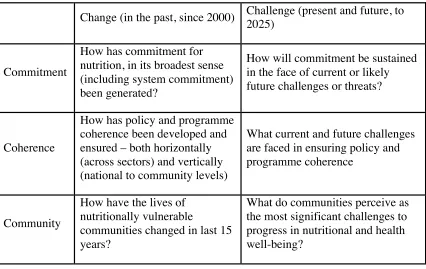
This research sought to understand the ways in which ideas and discourses in international development are adapted in a country context. Our particular focus was on how ideas at the international and national level become reality at the subnational and community levels. We primarily examined the sensitization of Ethiopia’s Productive Safety Net Program to nutrition across sectors and down levels of government as a way to understand how the global momentum around nutrition, particularly multisectoral or nutrition-sensitive initiatives, can be translated into action.
The first manuscript delves further into the operational realities of implementing multisectoral nutrition-sensitive programming among the neglected lower levels of government, or what we term the mid-level actors and their operating environments. We used key informant interviews with sub-district government implementers and
households in a vulnerable agrarian community. The second manuscript frames the current narrative around nutrition in development. We identify and describe the frameworks, ideologies, and operational realities that both influence the
We intend this work to serve as a practical guide for future research and
programming on multisectoral nutrition. Our identification and discussion of insidious, constraining patterns within nutrition research and practice, in combination with those within development at-large and the operational constraints at the country-level will ideally influence current discourses in such a way that possibilities for addressing the overarching (and underlying) structural factors that impact nutrition can be better
TABLE OF CONTENTS
DEDICATION ... iii
ACKNOWLEDGEMENTS ... iv
ABSTRACT ...v
CHAPTER 1: INTRODUCTION ...1
1.1 OVERVIEW OF RESEARCH QUESTIONS ...1
1.2 FRAMEWORK ...2
1.3 SPECIFIC AIMS ...5
1.4 RATIONALE FOR STUDY AIMS ...6
1.5 DOCUMENT OVERVIEW ...8 1 CHAPTER 2:BACKGROUND AND SIGNIFICANCE ...9
2.1INTRODUCTION: THE HISTORY AND CURRENT STATE OF NUTRITION IN DEVELOPMENT ...9
2.2 NEOLIBERALISM AND TRENDS IN GLOBAL HEALTH ...16
2.3 NUTRITIONISM ...27
2.4 NEOLIBERALISM AND NUTRITIONISM ...30
2.5 THE OTHER SIDE OF THE SPECTRUM: MID-LEVEL ACTORS AND IMPLEMENTATION 34 2.6 ETHIOPIA: NATIONAL STRATEGIC FRAMEWORKS AND PROGRAMS ...35
2.7 RESEARCH CONTEXT: STORIES OF CHANGE IN NUTRITION ...41
CHAPTER 3: METHODS ...43
3.2 STUDY DESIGN ...45
3.3 TIMELINE ...46
3.4 SAMPLE DESCRIPTION AND SAMPLING PROCEDURES ...46
3.5 SETTING ...49
3.6 DATA COLLECTION ...52
3.7 ANALYSIS ...55
3.8 POSITIONALITY ...57
3.9 ETHICS ...59
CHAPTER 4: MANUSCRIPTS ...64
4.1 MID-LEVEL ACTORS AND THEIR OPERATING ENVIRONMENTS FOR IMPLEMENTING NUTRITION –SENSITIVE PROGRAMMING IN ETHIOPIA ...64
4.2NUTRITION-SENSITIVE PROGRAMMING AND THE IDEOLOGICAL AND OPERATIONAL FORCES THAT CONSTRAIN ITS REALIZATION ...94
CHAPTER 5: CONCLUSION ...144
5.1 PERSPECTIVE ...144
5.2 LESSONS ...146
5.3 LIMITATIONS ...148
5.4 IMPLICATIONS AND FUTURE RESEARCH ...149
REFERENCES ...153
APPENDIX A: INTERVIEW GUIDES ...175
CHAPTER 1: INTRODUCTION
1.1 Overview of research questions
The starting point for this dissertation is the question of how researchers and
practitioners can balance the complexity of development work in the “real world” with
the need for critical self-awareness about the ideas, practices, and models their work
promulgates. We set out to examine the ways in which ideas about nutrition were adapted
and implemented through government programming in Ethiopia using the “sensitization”
of Ethiopia’s Productive Safety Net Program to nutrition as the focusing event—the point
at which international and national ideas intersected with the country’s modes of
operation. The research evolved over the two and a half years it took to complete it, but
we ultimately returned to the original starting point above, armed with more specific
questions: what are the dominant paradigms that influence how the idea of nutrition is
adapted and acted upon in a country context, where do these paradigms come from, and
what is missed by adherence to them. We addressed these considerations across several
scales and levels, and in the two manuscripts in Chapter 4 of this document we attempted
to retain much of the nuance and complexity of how these questions overlapped in the
“real world” setting of Ethiopia. The manuscripts in Chapter 4 detail the applied
operational aspects of nutrition service delivery in the context of an authoritarian system
of governance as well as the macro-level critique: the theoretical, ideological, and ethical
1.2 Framework
Images of undernourished children are some of the most powerful tools in
development to garner attention and resources—think acutely malnourished children in
famine conditions. But the context of acute malnourishment is crisis, often a disaster or
refugee situation where there is no medium or long term planning involved. The more
insidious and widespread forms of undernutrition occur over longer periods of time and
not necessarily in emergency situations, resulting instead from chronic vulnerability
leading to food insecurity, environmental risk factors, and lack of knowledge on infant
and young child feeding (Ruel et al., 2013). These factors can lead to stunting in children,
a largely irreversible condition associated with negative physical and cognitive effects
throughout the lifetime.
Over the past decade, nutrition actors have successfully brought international
attention to undernutrition and it is currently featured prominently in donor strategies,
government agendas, and the Sustainable Development Goals (SDGs). The widely
influential 2008 and 2013 Lancet series’ on maternal and child nutrition identified
undernutrition’s causes and outcomes, quantified the economic impact, and provided two
notable solutions: the scale up of proven interventions that impact the immediate causes
of undernutrition (micronutrient deficiencies, etc) via “nutrition specific” programming,
and addressing the underlying determinants of undernutrition (food insecurity, lack of
resources for caregiving, environmental risk factors) via “nutrition sensitive”
Nutrition actors acknowledge that blanketing a population with nutrition-specific
interventions is unlikely to lead to significant improvements in nutrition outcomes at a
population level. The introduction of the concept of nutrition sensitivity ostensibly points
to an acknowledgment that nutrition programming should also be targeting aspects of the
physical, economic, political, and cultural environment to address the underlying
determinants. Despite the potential inherent in nutrition-sensitivity to broaden the scope
of the conversation to seriously address the underlying determinants, nutrition-sensitive
efforts to date have largely focused on single factors at the individual behavioral level, in
alignment with the primary ways in which nutrition has operated throughout its history as
a field (Kimura, 2013; McDonell, 2016; Subramanian, Mejia-Guevara, & Krishna, 2016).
Nutrition actors must turn their attention to understanding why an ostensible shift in
thinking has not translated into practice, which calls for a reflexive examination of the
legacy paradigms within nutrition, and the processes at the interface of nutrition and
development, that both dominate and constrain the realization of nutrition goals.
A body of critical work originating in anthropology sheds light on some of the
more persistent features of nutrition research and practice that constrain the field, and
provides a theoretical and ethical framework useful to all nutrition actors to navigate this
new and complex multisectoral nutrition landscape. This body of work identified a
perspective dubbed “nutritionism” as prevalent within the practice of nutrition.
Nutritionism fosters the tendency to reduce complex relationships with food and eating,
as well as the highly fraught endeavor of obtaining adequate and nutritious foods, to the
simple provision and consumption of specific nutrients and caloric intake in the pursuit of
approaches that are largely technical, single-factor, individual-level, and serve to divorce
the condition of malnutrition from the context in which it is which fostered (Guthman et
al., 2014; Kimura et al., 2014; Biltekoff et al., 2014; Yates-Doerr, 2015). Nutritionism
also muffles the political connotations of undernutrition by placing emphasis on the body
and individual behaviors as opposed to the context. Nutritionism alone serves to limit the
field of nutrition, but it also acts in tandem with broader neoliberal forces in development
with which it intersects. The interaction of nutritionism with neoliberal rationality in a
development landscape reinforces the depoliticizing tendencies of both (Kimura, 2013).
In addition, the tendency within neoliberal development paradigms (particularly in global
health) to favor measurable, technical approaches with an emphasis on personal
responsibility over structural determinants limits the space for approaches that attempt
systemic engagement and account for contextual complexity (Ayo, 2012). This effect
further drives the focus away from the operational aspects of implementing ideas in
nutrition—a recognized gap that nutrition actors have attempted to address over the past
several decades (Berg, 1973; 1993; Kazarinoff and Habicht, 1991; Rogers, 1999; Pelto et
al., 2003; Pelletier et al., 2011).
Lessons from critical nutrition studies and other health initiatives in development
suggest that we as researchers should not devote the majority of our attention to questions
of barriers and facilitators to clinical and behavioral approaches to addressing
undernutrition. Also less important is the question of what could be accomplished by
underlying determinants of undernutrition—and achieve better and more equitable
nutrition outcomes—is what is missed by the overwhelming emphasis on approaches that
take individual bodies and decontextualized behavior as the starting point?
1.3 Specific aims
Manuscript 1 aims to draw attention to the operational realities of implementing
nutrition sensitive programming by focusing on implementation processes among
mid-level government actors and a target community. It is an applied operational study and
was developed for a special issue of the journal Global Food Security. This paper was
published with the other case studies from the Stories of Change in Nutrition project. The
audience for this work is primarily development practitioners and applied nutrition
researchers. It was intended to speak to the overarching goal of Stories of Change, which
was to situate nutrition actions over the past decade in the context of current
programming from which recommendations for moving nutrition efforts forward were
derived. I focused on the operational aspects as part of this larger “story” being told
because it was, and is, a largely neglected facet of nutrition work. Publication with this
series offered an opportunity to draw attention to the necessity of operational research—
through which engaging with the complexity of a program context becomes necessary—
for a relatively wide readership.
Manuscript 2 aims to draw out the theoretical implications of nutrition in
development through a closer examination of the expression and adaptation of the
concept of nutrition sensitivity in Ethiopia’s national strategic frameworks and its social
relevant bodies of macro-level critique to offer a reflexive examination of the constraints
to realizing nutrition goals in Ethiopia’s development landscape.
In combination, these manuscripts are intended to demonstrate the necessity of
engaging with country-level complexity complexity for nutrition actors to achieve better
service quality, coverage, and outcomes in nutrition programming as they have pledged
to work towards. Although nutrition as a field is a small part of the development
landscape in low- and middle-income countries, the charismatic and intersectional nature
of undernutrition itself renders the field uniquely well-positioned to lead in developing
ways to meaningfully engage with the social determinants of health so critical for
achieving better human development outcomes for all.
1.4 Rationale for study aims
An important point of this research, which is partly critique and partly applied, is
that there is, of course, a logic underpinning the choices that are made by researchers and
practitioners with regard to prioritizing certain groups or types of interventions in both
nutrition and development at large, and it largely boils down to this: systemic issues are
not fixed by patches, but patches are measurable fixes. Engaging with national systems to
work towards widespread, equitable, quality service delivery and the development of
information platforms relevant to the needs of a country, not a donor, does not offer quick
or measurable results, nor does it guarantee successful outcomes, and under leading
development paradigms it is certainly not a cost-effective approach. Participatory
issues (Bezner-Kerr et al., 2013; Classen et al., 2015; Adams et al., 2015). Current ideas
around accountability in research and practice do not necessarily facilitate this type of
flexibility. The policy and programmatic landscape of nutrition in development in
particular emphasizes “quick wins”—efforts that are typically technical, single-factor,
measurable, and attributable (Fukuda-Parr and Orr, 2014). But this is where lessons from
other development initiatives apply—quick wins do not often translate into systemic
change, or lead to efforts that meaningfully address the conditions that underpin a given
problem. When an explicit goal of nutrition is to address these underlying determinants,
existing approaches must be reconsidered—and nutrition actors are actively engaged in
doing so. Reflexive examination and incorporation of existing critique from outside of
the field of nutrition are critical to the endeavors that those within the field have set for
themselves, but appear to be lacking within the field itself.
The field of nutrition needs to be able to take some ownership of the theoretical,
ideological, and operational implications that arise from nutrition’s current prominent
position on development agendas, as well as leadership in ongoing discussions, including
discussions of how to move forward in relation to the recently released Sustainable
Development Goals (Fukuda-Parr, 2016). Taking part in this discussion goes beyond
identifying barriers and facilitators to the implementation of single-factor interventions.
Actors calling for ways to address the underlying determinants of nutrition and engage
with operational realities within the field should also turn their attention to a reflexive
examination of the legacy paradigms within nutrition, and the paradigms at the interface
of nutrition and development, that both dominate and constrain research and practice.
within bodies of relevant critique and providing examples, across scales and levels, of
that which is missed by current paradigms and modes of practice. In doing so, we offer a
way for other nutrition actors to incorporate reflexivity into research and practice.
1.5 Document overview
Chapter 2 expands on the summary of the theoretical framework presented in this
chapter, and provides expanded background on the historical, theoretical, and contextual
processes relevant to this research. Chapter 3 provides detailed methods for the
overarching study. Chapter 4 contains two original manuscripts. Chapter 5 concludes the
CHAPTER 2: BACKGROUND AND SIGNIFICANCE
2.1 Introduction: The history and current state of nutrition in development
Public health nutrition emerged as a field simultaneous with the modern economy
in the period following World War II. Public health nutrition reflected the quantification
discourses, and manifested as a new exercise in “scientization,” distillation, and
reductivism. It was part of the overarching project among the post-colonial powers of
organizing the world into knowable, measurable, and above all governable units
(Yates-Doerr, 2015).
Public health nutrition has seemingly struggled with its identity since its
formation. Critics forwarded the idea that one of the main factors in this struggle was
nutrition’s somewhat intuitive association, at least in the western postwar context, with
women and homemaking. Nutrition was considered to be an “appropriate” field for
women to study. Nutrition was somewhat denigrated as a branch of the little-respected
field of home economics and received neither the funding nor prestige of the
male-dominated fields of biological and biomedical sciences (Kimura, 2013; Apple, 1997).
Historians suggested that it was this struggle that fostered the now-familiar tendency
within the field to focus on “charismatic” micro-and macro-nutrients, which was an area
where nutrition could stake an authoritative claim (Apple, 1997). Individual nutrients and
their functions began to be identified in the 1930’s, but when hunger began to take shape
hunger with evocative conditions, particularly children with kwashiorkor, prompted the
focus on protein as a key nutrient throughout the 1960’s and 1970’s, until further research
began to suggest that protein supplementation in the absence of sufficient energy intake
did little to shift rates of malnutrition. The field of nutrition moved on to other nutrients,
focusing on a series of charismatic micronutrients from the 1980’s onward (Kimura,
2013). The discovery that Vitamin A supplementation could have dramatic effects on
child mortality was notably influential (Sommer et al., 1986). That Vitamin A was also
relatively cheap lent it a sort of “magic bullet” status, something that has pervaded
nutrition research ever since.
Arguably the chain of events that catapulted nutrition to its current prominence on
development agendas was the epidemiological demonstration that undernutrition directly
causes a large portion of child deaths (Sommers et al., 1986; Jones et al., 2003; Black et
al., 2003; Victora et al., 2003; Pelletier, Frongillo, & Habicht, 1993; Pelletier, Frongillo,
Schroeder, & Habicht, 1995) and the explicit economic framing deployed in the World
Bank (2006) repositioning statement on nutrition, the Copenhagen Consensus of
economists in 2008 and afterwards, and the 2008 and 2013 Lancet series’ on maternal
and child nutrition (Bhutta et al., 2008; 2013; Black et al., 2008; 2013; Victora et al.,
2008; Bryce et al., 2008; Ruel et al., 2013; Gillespie et al., 2013; Horton and Steckel,
2013). The enormous influence of both the 2008 and 2013 Lancet series’ on international
nutrition programming and policy in particular signaled a decisive turn in the
of practice also signaled a willingness to address nutrition as a whole—to scale up the
proven interventions to address the immediate causes of undernutrition as well as
consider ways to address the more structural or “underlying” factors that foster
undernutrition via nutrition-sensitive interventions, including in particular food
insecurity, access to care, poverty, and environmental factors that affect sanitation and
hygiene (Ruel et al., 2013). Nutrition-sensitive strategies seek to harness the resources
and platforms within non-health sectors to address the underlying determinants.
Nutrition-sensitivity is conceived of as a complement to nutrition-specific interventions,
which address the immediate determinants of nutrition, including “adequate food and
nutrient intake, feeding, caregiving and parenting practices, and low burden of infectious
diseases” (Ruel et al., 2013).
The nutrition-sensitive approach is a counterpoint to the single-nutrient “magic
bullet” approaches that have characterized nutrition research and practice throughout
most of its history. Nutrition sensitivity’s explicit acknowledgment of the need to address
the underlying determinants reaffirms the frequently muffled political dimension of
nutrition—that certain groups have poor nutrition outcomes because of systemic
disadvantages. This is evident in the utilization of sectoral platforms used to address the
needs of vulnerable groups, including social protection programs, agriculture livelihood
programs, and rural health extension services, to also (ideally) deliver nutrition
interventions in a targeted manner. In this way, nutrition sensitivity resonates with the
social determinants of health perspective, which seeks to draw attention to the structural
technocratic focus on the bodies and inadequate behaviors of individuals frequently
deployed in global public health.
Nutrition-sensitive programming operates in a still largely uncharted space at the
interface of nutrition as a biological science and a social science (Kazarinoff and Habicht,
1991; Pelto et al., 2003; Pelletier et al., 2013). Conceptually, nutrition sensitivity sits
somewhere between food security (generally the domain of the agricultural sector) and
health, an interesting clash with ethical implications for how the question of
accountability is approached. The possibilities of nutrition sensitivity initially garnered a
significant amount of attention from a range of actors in multiple sectors, but the issues of
defining and operationalizing this amorphous concept have inhibited significant
innovation. In Ethiopia, nutrition-sensitive programming has gained the most traction
within agriculture, health, social protection, and education. Current popular iterations in
agriculture (the intuitive melding of food production with consumption issues) include
fortification, biofortification, and “miracle foods,” and it is also expressed through the
growing popularity of value-chain approaches, particularly around animal source foods
(Kimura, 2013; McDonell, 2016; Hoddinott, Headey, & Dereje, 2015). These
approaches, however, are still frequently focused on the delivery of nutrients to
individuals, and do not necessarily represent a systemic response to the underlying causes
of undernutrition. The other form that nutrition-sensitive efforts tend to adopt has more
overlap with the health sector. This approach is to utilize agriculture and social-protection
of getting people to adopt beneficial practices). In Ethiopia’s national strategic
framework for nutrition, these are primarily conceived of as Behavior Change
Communication interventions targeted to women of reproductive age.
Nutrition sensitivity is intended to be a reflexive response to nutrition challenges.
It originated with actors from within the field of nutrition as the latest iteration of a
decades-long debate on how to better operationalize knowledge and advances in
nutrition. There has been a longstanding push-and-pull regarding the appropriate
conceptual and operational boundaries of the field itself, with periods of isolation and
periods of resistance to that approach, which came with calls for nutrition actors to
engage with the interdisciplinary nature of nutrition and its operationalization. For
example, nutrition actors advocated for multisectoral nutrition planning in the 1970s
(Berg, 1973). Over the course of the 1990’s, key actors within the field of nutrition laid
out a definition and an agenda for a new field, called public nutrition, which would
ideally meet the unique operational, interdisciplinary, and multisectoral challenges of
addressing undernutrition (Mason et al., 1996; Mason, 1999; Rogers, 1999; Berg, 1993).
Public nutrition proponents went so far as to develop research and training agendas to fill
the perceived knowledge gaps and grow the skillsets they identified as necessary to
achieve better nutrition outcomes the world over. Public nutrition recognized the range of
skills and perspectives needed to tackle something as complex and so utterly inextricable
from its context as undernutrition, but failed to gain widespread traction among the
nutrition community. Public nutrition’s emphasis on and simultaneous devaluation of
operational research was a curious approach—noting the low academic profile of such
this movement have reemerged recently through the formation of the Society for
Implementation Science in Nutrition by a group of prominent global nutrition actors,
once again calling attention to the ways in which nutrition can and should expand its
capacities for operational research. There is also, of course, the global Scaling Up
Nutrition (SUN) movement and network of countries who have subscribed to the
mission, which is strongly rooted in the Lancet 2008 and 2013 series’ and the UNICEF
framework for nutrition and advocates engagement with other fields and the private
sector to improve nutrition outcomes.
The early calls for multisectoral nutrition planning and calls for public nutrition
did not manage to garner much traction. The Lancet series and the SUN movement are
currently hugely influential in the field of nutrition and low and middle income countries,
but it remains to be seen whether they can significantly shift the ideological paradigms
within the field to meaningfully address the underlying determinants as they set out to do;
despite acknowledgment of the need to address the complex causes of undernutrition,
much of the efforts to date have been single-factor and focused on the immediate causes
(Subramanian, Mejia-Guevara, & Krishna, 2016). In the context of the current SUN and
Lancet discourse, nutrition actors have not been able to clearly articulate the reasons the
previous movements have been unable to gain momentum or how the newer generation
of nutrition strategies will overcome the issues of the past. We argue in section 4.2 that
nutrition sensitivity will fail to achieve its aims—to widen the scope of action on
therefore identified a need to contextualize current global nutrition strategy—to situate it
within external critique and within the context of its engagement with other forces and
sectors within the broader development landscape. This work is largely aimed at nutrition
actors, and we intend for it to help reframe current modes of practice.
The shift in thinking in nutrition to encompass the underlying determinants of
nutrition builds upon the past several decades of thought, but the question of
operationalizing this shift is another and the nutrition movement has not yet really been
able to grapple with it in a substantive way. We build upon recent work in critical
nutrition studies that suggests that the depoliticized, technocratic framing of nutrition that
currently dominates research and practice actively shuts out conversations on how to
meaningfully address the underlying determinants of undernutrition. So, given the
opportunity to shift the conversation that nutrition sensitivity presents, how do we move
beyond these constraints? This dissertation aims to contribute to this conversation by
contextualizing current nutrition-sensitive efforts within existing bodies of critique and
identifying the ideological and operational factors that negatively impact the realization
of nutrition-sensitive programming and, by extension, nutrition outcomes overall.
In this chapter, we begin with a review of neoliberalism and neoliberal theories of
being in the context of global health programming, concepts that play out in nutritionism
as well. We then outline nutritionism in section 2.3 and discuss more of the overlap
between neoliberalism and nutritionism in section 2.4. In section 2.5 we shift to a review
of the operational issues in nutrition. We conclude with further background on Ethiopia
2.2 Neoliberalism and trends in global health
As a concept, neoliberalism can be used as something of a boogeyman in
development—assigned a causal role without adequate explanation or nuance (Bell,
2016). This is not to say that it should not or cannot be used to good effect. Schrecker
(2016), Kimura (2013), Yates-Doerr (2015), Ayo (2012) among others cited in this
review provide thoughtful applications of the concept to health policy and outcomes. We
consider neoliberalism, as other have done in relation to health policy and outcomes, a
type of rationality that promotes a certain set of values, which inform priorities in
development, methods, and the forms of accountability associated with those priorities
and methods (Ayo, 2012). Though there are multiple facets of neoliberal rationality, of
particular relevance to the work presented here—global health and global public health—
is the powerful personal responsibility narrative that pervades health-related development
programming, and the depoliticizing effect this has on problem framings. That is,
health-related issues in development are often scrubbed of their political connotations, which
would call for solutions that speak to structural violence and foster inequities among
particular groups of people that impact access to food, services, and safe environments,
such as redistributive schemes and participatory modes of development (Guthman, 2014;
Kimura, 2014; Biltekoff, 2014). A disproportionate focus is placed on the behaviors of
individuals, manifesting in development practice as programming and policy that attempt
to influence outcomes at the individual level without adequate consideration of context or
2012) and a move towards “biomedicalization” in global health and global public health.
Healthism is entangled with states’ notions and theories of governance, and worked in the
US context to shift responsibility for health outcomes from the state to the individual,
regardless of the structural factors that disadvantage certain populations. Ayo noted that
individuals take up the project of healthism by constructing moral, normative, and/or
commodification narratives around the pursuit of health, and thereby perpetuate the
self-blame and self-blame between individuals for poor health outcomes, again, irrespective of
historical, sociopolitical, or economic context and their associated constraints on
behavior. Health promotion issues, when inflected by the ideology of healthism, are often
framed as technical issues suitable for intervention, particularly the single-factor,
silver-bullet interventions that are measurable and focus on individuals largely divorced of their
context. This is similar to biomedicalization as a trend in global health—more
particularly, global public health. Biomedicalization is the move by non-clinical fields to
adopt clinical best practices and apply them to the social and political issues frequently
within the purview of public health. Reductive, narrowing effects on framings of complex
social and political issues can result from this trend, most particularly the situation of
problems and solutions within cellular processes, bodies, and behaviors.
Pfeiffer and Chapman (2010) provided an overview of the history of Structural
Adjustment Programs (SAPs), which were emblematic of neoliberal rationality in
development and have had far-reaching consequences. In the 1980s, the World Bank and
the International Monetary Fund granted loans to low-income countries conditional upon
their acceptance of SAPs, which were conditions that, broadly speaking, when
decrease the role of the state in both service provision and market regulation. The Alma
Ata Declaration was introduced in 1978 just before SAPs were introduced, and advocated
for state-sponsored, multisectoral, and multi-tiered healthcare which grew into an
initiative known as “Healthcare for All by 2000.” In the wake of the enormously
influential SAPs, however, resources to implement this vision were absent. In 1993,
World Bank introduced the concept of disability-adjusted life years (DALYs) and the
practice of using “cost effectiveness to guide health investment.” This also signaled that
the World Bank was the most influential actor in health policy, over the World Health
Organization. Throughout the 1990s it became clear that SAPs were not giving the
expected “trickle down” results with the terms too restrictive to promote economic
growth, so debt relief began to concentrate on poverty reduction via the Poverty
Reduction Strategy Papers (PRSPs) in 1999. The PRSPs were criticized, however, for
retaining the core ideology of the SAPs. The Millennium Development Goals (MDGs)
were introduced in 2000. The MDGs arguably displayed a more “rights-based” approach
to development and disparities that implicitly clashed with PRSPs, but PRSPs continued
to dominate development strategy.
Scholars note the negative effects that structural adjustment policies and programs
had on health sectors in low- and middle-income countries, where the public sector was
severely weakened or constrained and no private sector services were able to step in to
meet the gap, as proponents of the SAPs had theorized (O’Laughlin, 2016; Levich, 2015).
individuals may access after health events, which is typically a more lucrative approach
for private healthcare providers, and less of an emphasis on preventative healthcare,
which is typically less lucrative for the private sector, but more cost-effective in public
sector service provision (Pfeiffer, 2010).
Storeng and Behagues’ (2014) discussion of the evolution of maternal mortality
initiatives in the development sphere to gain attention and resources demonstrated that
global nutrition is only one link in a long chain of fundamental health issues that are
contorted to speak to neoliberal rationality in the push to gain traction. Their
ethnographic work tracked the history of maternal mortality as a development priority.
Storeng and Behague described the growth of the global burden of diseases perspective
throughout the 1990s. This perspective encouraged a focus on specific diseases and their
relative prevalence in a given population, and thus the economic burden they represented.
This framing was intended to speak to high-level decision makers with the authority to
allocate international and national resources and ostensibly assist in calculating which
individual issues would be most cost-effective to address. The shirt towards this larely
numbers-based global burden approach represented a concurrent turn away from the
social determinants of health perspective, one that was grounded in the understanding
that diseases and conditions could not be extracted from their context, and that in order to
address specific issues, multiple valences of both bodily and systemic factors and their
relationships to each other (individual, community, societal, political, etc) would also
have to be considered and addressed. According to the authors, the burden of disease
logic directed attention and resources to disease by accounting for the highest burdens of
neglecting the intersectional and often social, political, or economic underpinnings of
certain conditions. For example, maternal mortality was de-emphasized under the global
burden of disease logic because it did not, on its own, represent a significant enough
proportion of the global burden of disease. Maternal mortality did, however, embody the
intersection of multiple inequalities and represented a disproportionately high cause of
mortality among the poorest within a society. To gain traction, advocates of reducing
maternal mortality had to take a deliberate turn away from a rights-based, social
determinants-oriented advocacy plan—one that had been largely ineffectual in the past—
and develop quantitative methods of representation to show the disproportionate impact
of certain conditions within vulnerable segments of societies on maternal mortality. This
story highlights the types of narratives and framings that have power in setting
development priorities, pointing to the low moral weight of a social determinants,
rights-based perspective relative to an “evidence-rights-based” and (superficially) value-free, scientific
approach to problem identification, framing, and solution formation. We may also
consider the possibility that the prioritization of certain conditions within global health—
the de-emphasis on non-communicable issues grounded in fundamental social, cultural,
and political inequalities—bore some relationship to the increasing global security
orientation of global health (Lakoff, 2010).
Biomedicalization and the global burden of disease perspective are both trends
grounded in neoliberal rationality that are made concrete through the priorities, policies
institutions—notably the World Bank, USAID, and the Bill and Melinda Gates
Foundation—and the particular forms of accountability they require of their grantees or
subcontractors have considerable sway within development initiatives beyond global
health efforts (Hartmann, 2016; Birn 2005; 2009; Storeng, 2014; Adams, 2015; Biehl and
Petryna, 2013; Birn, 2014; Storeng, 2017). For example, subnational development
governmental and nongovernmental actors in five low-income countries identified the
ways in which country-level development agendas are modified to speak to the
“evidence-based” policy making agendas of major donors. In these cases, “evidence”
based on program indicators around maternal and neonatal mortality was used to develop
justification for shifting donor resources away from supporting hospital and facility-based
care—a strong priority of the country in question—toward women’s empowerment
initiatives. Data showed that women’s empowerment was correlated with neonatal
mortality, which aligned with donor preferences for simple, broad-based, and in their
estimation, cost-effective, solutions over the more involved and long-term investment
required to support healthcare systems (Behague et al., 2009). The challenge here—in
many ways an ethical challenge—is that development-as-research rests upon the
assumption that the data produced is a type of value-free knowledge, an assumption that
does not hold up upon consideration of ground-level operational realities, as Behague et
al. (2009) demonstrated.
As discussed above, a notable product of neoliberal rationality, particularly the
personal responsibility narrative, is the turn to evidence-based policy- and
decision-making which requires development practitioners to approach development as research
Development interventions take on experimental designs with pre-set indicators to
determine success of the intervention, but also to produce an “evidence base” that can be
used to advocate for further funding and attempt to attribute causality to specific
organizations or efforts. This also stems from the application of business models in
development—methodologically “rigorous” quantitative evaluation designs are intended
to determine whether or not there is return on investment for donors for specific efforts—
as well as from the application of biomedical models. The Gates Foundation is
particularly well-known for this approach, which emphasizes technical, interventionist,
and frequently “magic bullet” approaches with clear and measurable outcomes (Birn,
2014; Storeng, 2014). These institutions and funding structures value certain types of
knowledge and engagement over others, which, given researchers’ reliance on external
funding shaped by these special interests, perpetuates these problem framings in research
as well as practice (Birn, 2005; 2014; O’Laughlin, 2016; Gideon and Porter, 2016).
Merry and Conley (2011) questioned the nature and function of indicators,
concluding that indicators act as a form of global governance. This sentiment is echoed
across a range of fields in development. Notably, Adams (2015) discussed the ways in
which small organizations with limited capacities to provide the breadth and extent of
data for which donors are increasingly requiring for measuring impact. Fukuda-Parr
(2014), Yamin and Boulanger (2014), Storeng (2017), and Storeng and Behague (2014)
described the ways in which indicators—in these cases, indicators for MDG priority areas
progress toward the MDG indicators but would ultimately do little to address the
systemic factors at the root of these issues.
2.2.1 Neoliberal theories of being
Gideon and Porter (2016) described the ways in which problem framings
deployed by donor institutions reduce women and their lives to their reproductive health
and caregiving behaviors and cast them in a more instrumental light. This framing
ignores “questions of power and inequality that reinforces gendered vulnerabilities to
poor health.” With this line of argument, the authors are not suggesting that addressing
reproductive health or health in the maternal context, or attempting to expand the
availability and accessibility of those services, for that matter, is inherently wrong. The
issue is that the instrumentalized and reductive framing of women within current
neoliberal value frameworks of international donors and partners ensures that this
specific set of issues receives a disproportionate share of attention, to the detriment of
programming that might tackle the root causes of vulnerability.
The concept of moral economies helps to explain the lack of critical scrutiny
regarding how and why we go about addressing structural issues at the bodily level. A
moral economy is “broadly conceived as involving the global and local “production,
distribution, circulation, and utilization of moral sentiments, emotions and values, norms
and obligations, in regards to specific social issues in particular historical contexts”
(Fassin 2013).” Maes (2015) applies this concept to the creation of unpaid community
health workforces in Ethiopia, going on to say that “according to Fassin (2013), moral
economies generally eclipse political economies: expressions of and narratives about
people to avoid ’the necessary analysis of the structural determinants of their exposure to
health risks and social hazards’” (p. 129).’” This applies well to what we observe about
the implementation of multisectoral nutrition agendas, particularly the efforts deemed
nutrition-sensitive. The idea of nutrition wraps the powerful imagery of children’s stunted
bodies and the economic future of a country into a moral economy.
Kimura (2013) describes nutritionism as an act of biopower. Biopower is a form
of governance in which an authority claims responsibility for overseeing the welfare of a
population; wrapped up within this is the ability of the authority to define both problems
and solutions, often in ways that are self-interested in terms of state goals and priorities.
She leans on the technocratic discourse or turn towards scientific objectivity as an
expression of global governance in the post-colonial era. Yates-Doerr (2015) similarly
describes the development of nutrition as a field in the aftermath of colonialism—as part
of the effort to quantify, and thereby control, what was previously under more direct rule.
In this estimation, “experts” filled the role of colonial administrators and the production
of knowledge became the new expression of legitimate authority over “others.”
The production of knowledge was (under colonial conditions) and in certain
aspects remains one-sided, with most of the experts coming from developed countries
and forcing citizens of developing countries to engage in unusual and often unregulated
dynamics to receive services; the one-sidedness of this power dynamic is particularly
apparent in the health sciences. Fassin (2007), Sullivan (2011), and Tilley (2011)
In Section 4.2, we discuss the evocative visibility of nutrition as a characteristic
that lends itself to depoliticization. The more visible an issue is, it seems, the less space
those at the center (the “victims”) have to lend their voices to the fray, particularly if
images taken by non-impacted actors are the means of communicating the issue to other
parties. In the case of undernutrition, images of the malnourished are used as shorthand
for the issue, to the exclusion of the voices of the malnourished. McDonell (2016),
Yates-Doerr (2015), and Kimura (2013; 2014) have identified instances of the silencing of
women’s voices in research and practice. Nutrition’s inherently gendered presentation as
an issue of mothers and children along with the construction of a crisis narrative wrests
control from the “victim” and situates it with others—experts, bureaucrats, etc. The
perceived need to “triage” concerns (and give them an urgent, dire, and therefore
influential framing to maintain relevance and therefore funding) ensures that, although
there may in fact be the time, space, and funding to consider multiple scales, issues and
solutions, for nutrition to remain a priority, it must represent an emergency and therefore
we must focus on the immediate victims—mothers and very young children (McDonell,
2016; Rocheleau, Steinberg, & Benjamin, 1995). Everyone else, along with mid- or
longer-term solutions that target more environmental or structural concerns, tend to lose
out in the virtual triage and become relegated to aspirational to-do lists. If nutrition is
seen as primarily a biological emergency--the focus on the first 1000 days certainly lends
some urgency to the need to address nutrition-- then the problem and solution are both
sited within the body (Pentecost, 2016; McDonell, 2016; Kimura, 2013). Inviting the
participation—eliciting the voices—of the victims is unnecessary and even potentially
The “sovereign human body” frequently placed at the center of nutrition research
and programming—that is, a body viewed as the sum of its biological processes and
components and divorced from its context—is a myth of neoliberal rationality (Guthman,
2014). Bodies and their conditions do not exist outside of time or place; moreover, the
conditions of bodies are the end result of social, political, and ecological processes often
well outside of the control of the individual, particularly in contexts of scarcity or chronic
vulnerability. The central assumption of the majority of nutrition programming—that the
body is both the problem and the solution and highly modifiable—leads to programming
predicated on the idea that the most simple and direct way to impact nutritional outcomes
for women and children is to tell women in contexts of scarcity to change their
behavior—one of the most complex endeavors possible (Guthman, 2014; Ayo, 2012). It
is a strong indication of the reach of neoliberal rationality that majority of the blame and
responsibility for poor nutritional status gets displaced onto the individual when so little
of the decision-making process around obtaining an adequate diet, let alone choices
around safe living conditions or access to services and resources (in addition to the
decisions around how their choices and challenges are characterized by governments,
scientists, and other experts) is carried out by the individual, particularly those most
vulnerable to poor nutrition (politically and socially disempowered, economically
disadvantaged, environmentally marginalized). The depoliticizing effect of the personal
responsibility narrative is insidious enough to effectively subvert the social determinants
intervene of the broader questions of structure and agency made explicit within the
nutrition-sensitivity framework.
Nutrition sensitivity has the potential to bust out of the bubble of nutritionism by
focusing on underlying determinants of nutrition, including in particular food insecurity,
care and feeding of infants and young children, and environmental factors that affect
sanitation and hygiene. The legacy of nutritionism, however, is that an ostensible focus
on the underlying determinants (via nutrition-sensitive programming) retains the problem
framings and approaches of nutritionism-style interventions focused on the body itself
(nutrition-specific in the Lancet parlance). That is, nutrition-sensitive programming is
predicated on the idea that there should be some clear, more or less direct way to impact
bodily factors and outcomes. This is the wrong approach if the goal of
nutrition-sensitivity is to shift some of the attention and resources from the immediate—the body
itself—to the conditions that foster malnutrition, which is what the underlying
determinants—thus nutrition-sensitive programming—are about. In addressing
underlying determinants, policy or programming should focus on some aspect of the
physical, social, political, and economic environment as the outcome.
2.3 Nutritionism
Nutritionism is an ideology within the field of nutrition. Nutritionism implicitly
informs problem framings and solutions, typically manifesting in the emphasis on
individual behavioral level interventions and single-factor, nutrient-centric interventions.
Nutritionism fosters the tendency to reduce the complexity of obtaining and consuming
food to simple intakes and outputs, and reduce food—the relational processes of
(Scrinis, 2008; Clapp and Scrinis, 2017; Biltekoff, 2014; Sathyamala, 2016). These
authors show how nutritionism is intertwined with marketing, “Big Food,” and the
back-and-forth of obesity politics and discourses in the US.
Nutritionism in efforts to address undernutrition in low-income country settings
promotes reductive, apolitical, instrumentalist views of populations that bypass questions
of agency and solutions that speak to the social determinants of health, structural
inequalities, or participatory modes of operating (Kimura, 2013; 2014; Patel,
Bezner-Kerr, Shumba, & Dakishoni, 2015; Mosely, Schnurr, & Bezner-Bezner-Kerr, 2015; Yates-Doerr,
2012; 2015; McDonell, 2016). Sathyamala (2016), McDonell (2016), and Patel,
Bezner-Kerr, Shumba, & Dakishoni (2015) highlighted the ways in which nutritionism allows
capitalistic interests to be foregrounded in efforts to address undernutrition. The body of
work critiquing nutritionism does not dispute the importance of key nutrition
interventions, but critics have suggested that the narrow focus fostered by nutritionism
actively excludes discussions that might begin to address the questions of why poor
nutrition happens to begin with, and what can be done at the structural level to prevent it.
In her ethnography of golden rice, a biofortified product, in Indonesia, Kimura
(2013) provides a comprehensive conceptual framework for applying nutritionism
critique to contexts of undernutrition. She posits that framing is critical in the study of
nutrition programming in the context of undernutrition. The stories told about women’s
bodies, children, and the future have intrinsic moral value, but they matter more to
depoliticization that both leads to and is reinforced by the heavy reliance on
nutritionism-influenced problem framings. She found that the inclusion of nutrition can act to
depoliticize or legitimize certain efforts, particularly economic development initiatives
that may otherwise be considered contentious (Kimura 2013, p4).
A 2014 issue of the journal Gastronomica introduced “critical nutrition studies” to
identify some of the core concepts and relevant content of research on nutrition from an
anthropological perspective. In a series of perspective pieces, the authors explored the
application of the concept of nutritionism in domestic and international research. They
also explored the moral and ethical dimensions—including expanding notions of healthy
eating to include environmental impact of modes of production—of nutrition research
including the notable dissonance of the reductive, behavior change-oriented approach to
the deeply complex and embedded condition of undernutrition (Guthman et al., 2014;
Biltekoff et al., 2014; Kimura et al., 2014).
McDonell’s (2015) assessment of miracle food narratives in the context of
nutritionism presented the ways in which the personal responsibility narrative pervades
even the more technocratic aspects of nutrition research and practice—that is, the
underlying theme in promoting miracle foods and their various charismatic nutrient
components is that undernutrition is the problem of the undernourished. She bolstered
this argument by describing how crisis narratives around undernutrition are used to keep
much of the focus on the body—the immediate—instead of taking a more systemic
approach (Rocheleau, Steinberg, & Benjamin, 1995). The effect is that the structural and
2.4 Neoliberalism and nutritionism
The field of nutrition’s vacillation between multisectoral engagement and
isolation—and the various inconsistencies this has prompted in nutrition training
programs in American universities—does not lend itself to widespread or in-depth
understanding of the ways in which nutrition can and does engage with other fields in
academia as well as with other sectors and forces in practice (or, indeed, agreement that
such an understanding is necessary). Therefore nutrition actors may be unaware of the
forces to which the types of solutions they promote will be subjected—how they will be
adapted or used in a country context. In the current case of nutrition being mainstreamed
into development programming, it becomes subject to the depoliticizing forces of
neoliberal development—biomedicalization, responsibilization, problematization,
perhaps among other “izations” (Kimura, 2013). These forces amplify and reinforce the
depoliticizing tendencies of nutritionism, particularly the technocratic aspect which tends
to construct undernutrition primarily as a biomedical phenomenon and not a political
economic one, and minimizes contextual complexity by focusing largely on individual
bodies as the problem and site of intervention (Guthman et al., 2014). In practice, these
ideological frameworks have the effect of narrowing the scope of possible action. That is,
conversations around how to meaningfully address the underlying determinants of
nutrition, which in theory call for an examination of “alternatives” to mainstream
development ideology (including participatory and redistributive schemes) (Yates-Doerr,
The complementarity between the personal responsibility narrative of
neoliberalism and nutritionism is apparent—both work to situate programmatic and
policy focus at the individual level, displacing the majority of the responsibility for health
and wellbeing onto the individual rather than the state. The programming that results
from these ideologies is largely single-factor or aimed at individual behavior, missing the
chance to meaningfully address the underlying determinants. Current ways of thinking
about measurement—particularly the tendency of neoliberal development institutions to
insist upon specific forms of metrics and methods in the interest of promoting
accountability and evidence-based policy and practice—can be thought of as
“micropractices” of development (Adams, 2016). As Storeng and Behague (2017) are
also careful to point out, current modes of practice in global health initiatives and ways of
framing issues are not necessarily done with the intention of producing neoliberal
outcomes, but do tend to contribute to the fulfillment of neoliberal political aspirations,
particularly through the technocratic emphasis on the inclusion of apolitical and
“objective” scientific methods in development interventions (Bell and Green, 2016).
Critique of neoliberalism within global health initiatives identified the trend
towards biomedicalization—applying a reductive, experimental, instrumental approach to
the complexities of sociocultural and political economic contexts, necessarily
depoliticizing efforts in the process to produce generalizable evidence. We consider
nutritionism to be more or less a specialization or instance of biomedicalization (Kimura,
on the other hand, considers it to be an instance of biopower) (Adams et al., 2016;
O’Laughlin, 2016; Gideon and Porter, 2016). Nutritionism’s effects within the field of
broadly. In particular, it manifests as the narrow foci on nutrients, individual behavior,
and mothers and young children seen in the majority of nutrition-sensitive programming.
Given that nutrition now operates as part of the larger development apparatus, we have to
consider the idea that the internal nutritionism of the framing of undernutrition issue for
non-nutrition actors works seamlessly with the biomedicalizing tendencies that already
color other initiatives that take place in relation to health in development.
In section 4.2 we discuss the nutrition-sensitive efforts in Ethiopia more in light of
this body of critique—critique which draws attention to the reductive and instrumental
focus on bodies—than the critique of capitalistic development and structural adjustment
that applies so readily to the agriculture or private sector-based nutrition-sensitive
interventions. Nevertheless, there are aspects of the capitalistic critique relevant to the
behavior change-oriented nutrition-sensitive programming discussed here, necessarily
brought to the fore because of the explicit economized framing applied to stunting
reduction.
The 2013 Lancet series, drawing from earlier work, explicitly framed stunting as
an economic issue, providing a stunning estimate of GDP losses due to stunting (World
Bank, 2006; Bhutta, 2013). The selling of nutrition to economists and their acceptance of
the importance of nutrition was seen as a way to raise the profile of nutrition, not
depoliticize it. That is, finance ministers control the budgets so to compete in the policy
and political sphere, you tie nutrition to economics. While the economic framing was
bodies as market factors (Adams, 2016). Gaining the attention of political actors is not
the same as politicizing an issue. The explicit economic framing aligns more with the
depoliticizating tendencies of development practice. For example, the recommendations
in the Lancet series focus largely on garnering resources and political momentum for the
scale-up of proven, primarily single-factor, interventions as opposed to redistributive
schemes that might address poverty. Little mention is made of undernutrition as a
manifestation of inequality.
The economic framing circles back around to overly technical and reductive
problem framings with cost effectiveness being the driving principle, rather than human
wellbeing. Where applying an explicitly politicized framing to nutrition would be
contentious, economizing the issue can lend it momentum—stunting is an economic
crisis and must be addressed—but also bypass issues of inequality, poverty, and the
systemic factors that foster and perpetuate these conditions without attempting to
question or challenge them. Feasibility is framed in terms of cost-effectiveness, because
relatively low-cost nutrition inputs can theoretically produce almost miraculous economic
gains. Interventions designed with this principle in mind will focus on what is perceived
to be most modifiable or that which can be considered “low-hanging fruit:” individual
behaviors and the types of services (to a certain extent) and information they receive. The
principle of cost effectiveness has deep roots in neoliberal ideology and will rarely, if
ever, allow significant restructuring of systems as a more politicized framing would
demand—indeed, many donors’ institutional rules forbid direct investment in
country-level public sectors. For a time (and in some cases currently) donor programs actively
privatization. Adams’ (2016) question is relevant here: what does treating life as a market
object do to our thinking about evidence in relation to health?
2.5 The other end of the spectrum: Mid-level actors and implementation
This research covered the ideological and theoretical dimensions of
nutrition-sensitivity as a concept as well as the other side of this issue—how nutrition-nutrition-sensitivity is
operationalized. A consistent theme throughout fieldwork was how high-level federal and
international actors would use various forums for knowledge sharing and
decision-making to discuss the minutia of ground-level metrics, or detailed notes on high-level
discourse, but give little to no attention to questions of how interventions and programs
are cascaded down levels of operation.
So little knowledge exists about mid-level actors, their operating environments,
and the relationships between the two that they have been dubbed the “missing middle”
(Foresti et al., 2013). The identity of mid-level actors may vary by country. In Ethiopia,
we identified them as the government actors, primarily those at the sub-district or woreda
level, directly involved in day-to-day decision-making and management of program
implementation, including the management of frontline personnel. Mid-level actors play
an essential role in program implementation (Behrends et al., 2014; Weisser et al., 2014;
Lapping et al., 2014; Hupe and Hill, 2015; Black, 2013; Lipsky, 2010). Doing this work
requires that they engage with national actors, communities, and other mid-level actors
within the context of their unique system of governance (Lavers and Hickey, 2016). They
(Menon et al., 2011; Pelletier et al., 2011). The environments in which they do this work
are complex, involving overlapping systems with multiple flows of information,
knowledge, influence, and resources; several sectors; potentially conflicting policy
directives; the need to make decisions while under constraints (Hammond and Dube,
2012), along with state-society relations (Emmenegger, 2016). Evidence on the roles and
environments of mid-level actors in the context of nutrition-sensitive programming is
limited given the relatively recent introduction of the concept in development
programming (Gillespie and van den Bold, 2015; Menon et al., 2014; Pelletier et al.,
2012).
2.6 Ethiopia: National strategic frameworks and programs
From the early 1990’s up until 2009, the Ethiopian government adopted an
Agriculture Development-Led Industrialization (ADLI) strategy modelled after a similar
approach in East Asia (Berhanu, 2016; Milman and Arsano, 2014). This strategy focused
on intensifying domestic food production of smallholder farmers, which, according to the
tenets of the theory, should have led to surplus capital that could have simultaneously
ensured national food security and been invested in efforts to industrialize other sectors
of the economy. This strategy was adopted namely because it could absorb the wealth of
human labor available thus preventing social discord. Additionally, given the land laws, it
was a strategy that would largely prevent smallholder farmers from accumulating wealth,
power, or land, and limit challenges the government’s authority. ADLI was abandoned
when it became clear that it could not fulfill its promises of industrialization, nor could it
In recent years, the government has instead shifted to a trade-based strategy for
economic development and encouraging agricultural investment, both foreign and
domestic. While this strategy has led to apparently strong gains in agricultural production
and economic development, it also raises questions of stability and sustainability. In the
interest of promoting investment, it has led the government to alienate some regions and
apparently violate the constitution which promises that the regions, which are essentially
autonomous ethnic entities, should have control over land use while the central federal
government retains control over investment decisions. The government has begun a
practice of bypassing regional governments and appropriating what it considers to be
marginal or underutilized lands (typically those belonging to lowland pastoralists) and
redistributing them to various national and international investors for agricultural
purposes (Lavers, 2013; Milman, 2014). The displaced lowland pastoralists are then
subjected to forced resettlement programs, which has drawn the criticisms of
international human rights agencies in recent years (Hammond, 2008).
The government of Ethiopia has developed several iterations of their National
Nutrition Program (2008; 2013; 2016 (forthcoming)), which is the guiding framework for
nutrition activities in country and is coordinated by the Ministry of Health (FMOH,
2013). The National Nutrition Program is a comprehensive document covering a range of
goals and possible initiatives, including both direct nutrition interventions and
nutrition-sensitive interventions, to improve nutrition and was developed with the technical