O R I G I N A L R E S E A R C H
Treatment patterns in patients using triptan and
prophylactic medication: an analysis of clinical
practice prior to the introduction of CGRP
antagonists
This article was published in the following Dove Press journal: Journal of Pain Research
Carola A Huber1
Reto Agosti2
Markus Näpflin1
Eva Blozik1,3
1Department of Health Sciences, Helsana
Insurance Group, Zürich, Switzerland;
2Headache Center Hirslanden,
Hirslanden Hospital Group, Zürich, Switzerland;3Department of Medicine,
University of Medical Centre Freiburg, Freiburg, Germany
Purpose: The newly developed calcitonin gene-related peptide (CGRP) antagonists were recently launched on the US and European market, with Switzerland as the second country worldwide. To enable forthcoming comparisons with established migraine therapy, the aim of this study was to provide a comprehensive picture of migraine (prophylactic) treatment patterns. Recent data in daily clinical practice are lacking.
Patients and methods: This population-based cohort study included enrollees from a Swiss Healthcare Insurance Database with at least one triptan prescription in 2015.
Treatment patterns were defined by assessing subsequent triptan and prophylactic medication
use (after index prescription for triptan) within the following year, divided into four quarters.
Results:Triptans were used by 10,090 patients (1.3%) in 2015. Most of them used triptan only (82.6%), 12.9% changed the treatment between triptan and prophylactics, and 4.5%
received both in combination within 1year. Among triptan users with ≥1 prophylactic
prescription in thefirst quarter, 48.6% used beta-blockers (BB), 40.7%“other prophylactics
than BB (eg, topiramate)”, and 10.7%“a combination of both”. Most patients who received
both BB and other prophylactics in thefirst quarter used this drug combination continuously
over all four quarters.
Conclusion: This study provides comprehensive data on treatment patterns prior to the introduction of a new drug class in migraine therapy. The majority of triptan users had no prophylactic medication therapy; however, a small, but relevant group used BB and other prophylactics concurrently in all quarters. Findings quantify the population in potential need for optimized migraine therapy, ie, the potential target population of the novel CGRP-targeted drugs.
Keywords:innovation, headache, migraine, preventive medication, drugs, real-world data
Introduction
Triptans (selective 5HT [serotonin] receptor agonist) were recommended as gold-standard therapy in international guidelines for patients with acute migraine
attacks.1,2 Since the introduction of the triptans in the early nineties, overall
seven active ingredients within this therapeutic group are available as prescription drugs in most countries in Europe (including Switzerland) and in the USA: suma-triptan, narasuma-triptan, zolmisuma-triptan, rizasuma-triptan, almosuma-triptan, elesuma-triptan, and frovatrip-tan. Numerous persons with acute migraine can be adequately treated by triptans alone, but a relevant proportion need prophylactic interventions, as their attacks are
Correspondence: Carola A Huber Department of Health Sciences, Helsana Insurance Group, P.O. Box 8081, Zürich, Switzerland
Tel +41 43 340 6341 Fax +41 43 340 0434 Email [email protected]
Journal of Pain Research
Dove
press
open access to scientific and medical research
Open Access Full Text Article
Journal of Pain Research downloaded from https://www.dovepress.com/ by 118.70.13.36 on 24-Aug-2020
either very frequent or are insufficiently controlled by
acute therapy.3 Several drugs, such as beta-blockers and
others, have been shown to reduce attack frequency in
some people.3,4 However, all these drugs may be
con-nected with adverse effects, contraindications, or intoler-ances, and patient acceptance of these drugs is limited.
Thus, specific patient populations with severe migraine are
currently lacking effective therapies, and new approaches for the management of migraine therapy for these patients are needed.3,5
Recent clinical trials provide evidence that calcitonin gene-related peptide (CGRP), a transmitter in the central and peripheral nervous system, play an important role in the development, maintenance, and chronicity of migraine and could be a potential target therapy for migraine
prevention.6–8 CGRP is a 37-amino acid neuropeptide,
belongs to the calcitonin family and is known as one of the strongest vasodilators. CGRP levels are increased dur-ing migraine attacks, and thus blockdur-ing of the CGRP-induced vasodilatation is expected to reduce symptoms
of migraine.9,10 The STRIVE study, for example,
com-pared a CGRP receptor antagonist (erenumab) as a monthly subcutaneous injection with placebo in 955 patients who had reported 8.3 migraine attacks per month
before the study began.6Erenumab could not completely
prevent further attacks, but could reduce their average number by 3.2 per month in the 70 mg dose and by 3.7 per month in the 140 mg dose compared to a decrease of 1.8 attacks per month in the placebo group. Erenumab was launched successfully, and galcanezumab and fremanezu-mab received FDA approval (October 2018). However, in order to approve a (potential) innovation in the migraine drug market, it is important to evaluate the present clinical practice in migraine acute and prophylactic treatment and consequently to compare it with the new therapeutic approach. Understanding current triptan user behavior and usage patterns within prophylactic treatment enables a prospective comparative analysis before and after the introduction of the new drug class, CGRP antagonists (blocking either CGRP ligands or receptors). However, within the last decade, only few studies provided a precise and comprehensive description on prevalence, extent, and
patterns of acute and prophylactic migraine drug use.11–13
Triptan use was investigated by some previous clinical and pharmacoepidemiological studies, indicating a range of
prevalence from less than 1% to over 2%.14,15 Some
studies included small sample sizes, and no study has
recently assessed the prevalence of triptan.11,14–17 One of
the recently published studies was based on data from
2007 and contributed to conflicting results as findings
revealed – in contrast to prior findings – a rather low
proportion of triptan user of about only half a percent.15
In view of the forthcoming CGRP antagonists as well as the lack of data on the present migraine drug therapy in clinical practice, a comprehensive overview of the recent pattern of triptan and, especially, prophylactic use is needed for future comparisons between the established migraine therapy and new approaches. Triptan users, suf-fering from acute severe migraine attacks, represent the target population for future potential CGRP antagonist consumer. Therefore, the aim of the present study was to provide a detailed picture of the pattern of triptan and prophylactic use by analyzing treatment patterns of triptan user, especially in terms of combination therapy and
chan-ging in migraine-specific medication (triptans and
proph-lactics) therapy over time in daily clinical practice.
Materials and methods
Study design and population
This analysis is a retrospective, population-based cohort study of a longitudinal patient-level-linked database con-taining claims data and anonymized records of mandatory health-insured persons in Switzerland (Helsana Group). Helsana is one of the largest Swiss health insurance groups whose database includes pharmacy, medical, and health services claims of about 1.2 million patients (around 15% of the entire Swiss population) and is considered approximately representative to the general population. All Swiss residents are obligated to have a basic health insurance, which can be acquired on private market of health insurers. The health insurance market is regulated by federal authorities, and every insurer is obligated to offer basic health insurance to every resident. The basic health insurance saves medical treatment that is considered as appropriate, clinically effective, and cost-effective. Insured persons, however, have co-payments including an annual deductible, which ranges from CHF 300 to a max-imum of 2,500 and can be chosen by the insured person, and an annual amount of 10% of the incurred costs (max-imum of CHF 700).
Subjects were seen as eligible for inclusion when they had at least one prescription of triptan in 2015, were
continuously covered by Helsana and aged ≥18 years.
We selected persons with initiated triptan prescription in 2015 and followed them 12 months from the date of index
Journal of Pain Research downloaded from https://www.dovepress.com/ by 118.70.13.36 on 24-Aug-2020
prescription (Figure 1). The following active ingredients were included: sumatriptan, naratriptan, zolmitriptan, riza-triptan, almoriza-triptan, eleriza-triptan, and frovatriptan.
De
fi
nition of treatment patterns
To monitor the treatment patterns of the patients using triptans, we additionally evaluated the migraine-related medication use (triptans, prophylactics) of the patients within the follow-up period. For each quarter after index
prescription (Q1–Q4), we described the received
medica-tions, whereby triptan use in Q1 was preconditioned: trip-tan only, prophylactics only, or combination (triptrip-tan and prophylactics). Based on this analysis, we summarized the data and constructed the following categories: use of
trip-tan only in ≥1 quarter (“Triptan only”, Group 1), use of
triptan and prophylactics combined in≥1 quarter (“Triptan
and prophylactics”, Group 2), and mixed and changed use
of triptans and prophylactics (“Change in treatment”,
Group 3). Prophylactic medication use, assessed in each quarter, comprised the following active ingredients: sibe-lium, topiramate, propranolol, metoprolol, botulinum toxin, and others (bisoprolol, amitriptyline, and valproic acid).
Moreover, a prophylactic subgroup analysis was per-formed to represent patients with preventive medication, which included subjects who had at least one prescription of prophylactics in Q1. In this secondary analysis, we investigated the treatment patterns of patients using
pro-phylactics (within the followed-period, Q1–Q4), by
sub-dividing into the type of prophylactic drug classes. All patients who have received prophylaxis within the four
quarters were defined as Group A “Prophylactics other
than beta-blockers”, as Group B“Beta-blockers, no other
prophylactics”, and as Group C“Combination of
prophy-lactic treatment (beta-blockers and other prophyprophy-lactics)”.
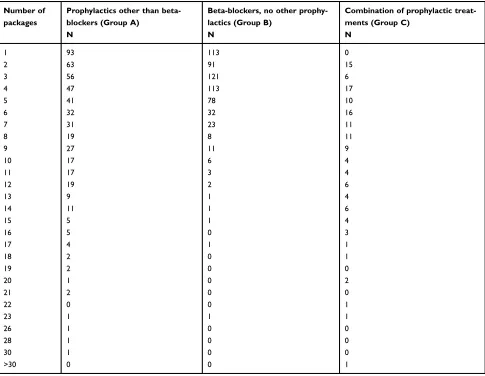
Additionally, we examined further drug information including the number of packages dispensed within the 12 months after index prescription among the prophylactic subgroup sample.
Measures and data analysis
Patients’ baseline characteristics were assessed at index
date, including gender, age (groups), and region of resi-dence. Clinical characteristics comprised previous
pre-scriptions of migraine-specific medication (triptans and
prophylactics), the use of acute medication within the following 12 months after index date (analgesics,
antie-metics), and patients’ comorbidity status measured by
pharmacy-based proxy diagnoses in the previous year. Proxy diagnoses were derived from prescribed drug data. Every drug can be assigned to its WHO Anatomical Therapeutic Chemical (ATC) code. The WHO ATC code of the drug describes its active ingredient and can be assigned to related chronic diseases (for example, oral antidiabetic drug and insulin use [ATC code A10A/B] as
proxy diagnosis for diabetes mellitus).18
Patient characteristics of triptan and prophylactic user were analyzed using descriptive statistics: categorical vari-ables were presented as absolute numbers of subjects and percentages, continuous data as mean ± SDs. We com-pared nominal and categorical variables of the different
(prophylactic) treatment groups by using Pearson’s
Chi-squared test (nominal) and continuous data by Kruskal–
Wallis test for >2-groups-comparisons (categorical).
Figure 1Study design for selecting the patient cohort (studyflow). Thisfigure displays an example of a patient, who received thefirst triptan prescription in 2015 (index date) and were followed for four quarters.
Journal of Pain Research downloaded from https://www.dovepress.com/ by 118.70.13.36 on 24-Aug-2020
Statistical significance was determined at the 0.05 level. All analyses were done using the statistical program R
version 3.2.0 (R Development Core Team 2015).
According to the national ethical and legal regulation (the Swiss Federal Law of data protection), an ethical approval and patient consent were not needed.
Results
Sociodemographic and clinical
characteristics
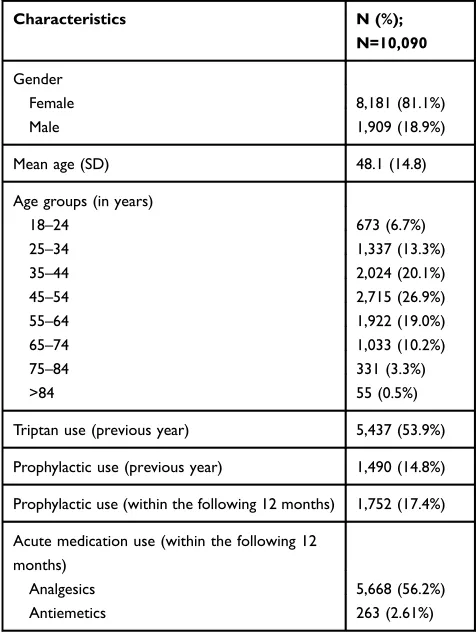
This cohort of triptan users included 10,090 subjects (Table 1), which corresponds with a percentage of 1.3% of the population using triptans out of the total study
population of 749,092. There was a significantly higher
proportion of women than men (81.1% vs18.9%) and a mean age of 48.1 (SD ±14.8) in the study cohort. Two-thirds (66.0%) of the sample with migraine were between 35 and 64 years old, and therefore with a lower percentage of older patients (>64 years: 14.0%). Whereas more than half (53.9%) of the patients used triptans in the previous
year (incident cases of triptan use: n=4,653), 85.0% of the patients had no prescription of prophylactics in the year before. Within the 12-month follow-up period, 17.4% of the triptan user were prescribed prophylactic treatment as well. Acute medication as analgesics received approxi-mately 56% of the triptan user.
Treatment patterns in the follow-up
period
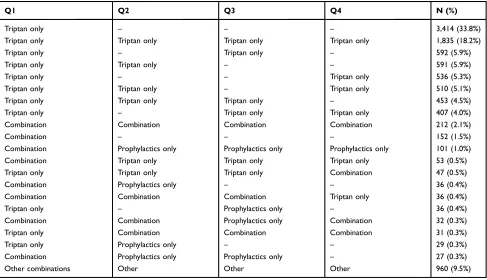
Table 2 presents the migraine-specific drug use for each
quarter (Q1–Q4). Overall, three medication groups were
defined for each quarter, whereby triptan use in Q1 was
preconditioned: triptan only, prophylactics only, or combi-nation (triptan and prophylactics). Based on this analysis,
we summarized the results and identified 8,338 patients
with triptan only in ≥1 quarter (Group 1: 82.6%), 454
patients with triptans and prophylactics in combination in
≥1 quarter (Group 2: 4.5%), and 1,298 patients with a
change in treatment (Group 3: 12.9%;Table 3). The
high-est proportion of women (84.7%) and of patients over 64 years (16.1%) were observed in the patient Group 3. About three-quarters of the patients in treatment Group 2 and Group 3 were suffering from more than two comorbid conditions, nearly 15% from exactly 2 conditions and only
3–4% had no comorbidity. In contrast, the triptan-only
group (1) included about 14% with no comorbidity, and consequently with a lower percentage of patients with more than two comorbid conditions (51.5%). In the pre-vious year, the majority of patients have already used triptans in all treatment groups, but prophylactics received mostly patients who were also prescribed preventive med-ication in the baseline year. Patients of all three treatment groups were mostly prescribed analgesics as acute medication.
Active substance in prophylactic
treatment
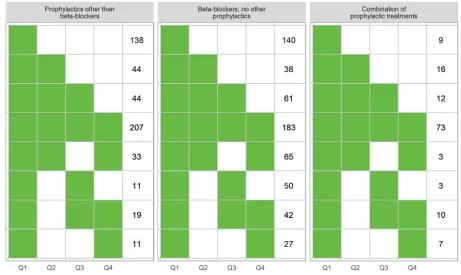
Figure 2 depicts the type of prophylactic treatment in patients who had at least one prescription in Q1 (n=1,246). About 40.7% (n=507) of the prophylactic
users received “other prophylactics than beta-blockers
(Group A)” (eg, valporic acid or topiramate), almost
48.6% (n=606) used “beta-blockers (Group B)”, and
10.7% (n=133) had a “combination of both prophylactic
treatments (Group C)”. In each prophylactic group, the
following proportions of patients used the medication at
least in one-quarter: Group A“59.2%”, Group B“69.8%”,
Table 1Baseline characteristics of the study population at index triptan prescription (Q1)
Characteristics N (%);
N=10,090
Gender
Female 8,181 (81.1%)
Male 1,909 (18.9%)
Mean age (SD) 48.1 (14.8)
Age groups (in years)
18–24 673 (6.7%)
25–34 1,337 (13.3%)
35–44 2,024 (20.1%)
45–54 2,715 (26.9%)
55–64 1,922 (19.0%)
65–74 1,033 (10.2%)
75–84 331 (3.3%)
>84 55 (0.5%)
Triptan use (previous year) 5,437 (53.9%)
Prophylactic use (previous year) 1,490 (14.8%)
Prophylactic use (within the following 12 months) 1,752 (17.4%)
Acute medication use (within the following 12 months)
Analgesics 5,668 (56.2%)
Antiemetics 263 (2.61%)
Abbreviation:Q, quarter.
Journal of Pain Research downloaded from https://www.dovepress.com/ by 118.70.13.36 on 24-Aug-2020
and Group C “45.2%”. Whereas the combi-group (Group C) had only a low proportion of single user (Q1; 6.8%), Group A and Group B showed a very high proportion of
patients, who used the drug only in thefirst quarter (Group
A: 27.2%; Group B: 23.1%). Within these groups, for
example, more than half (54.8%) of the “combi-users”
received both drugs throughout all four quarters; for
users of beta-blockers, this was only 30.2%.
Additionally, when calculated the number of switcher within the prophylactic treated group (beta-blocker and non-beta-blockers; n=133, 10.7%), we could observe that among these patients only 48 (36.1%) switched exactly once from beta-blockers to non-beta-blockers (or vice versa) within 12 months from index date (results not shown). The other 85 patients (63.9%) switched from one prophylactic medication to another medication multi-ple times.
Table 4 shows the individual active substances which
were used in the respective prophylactic groups.
Topiramate was prescribed by a majority in Group A
(other prophylactics than beta-blockers, 61.7%).
Botulinum toxin, on the other hand, was only used in a
total of 22 persons, and for beta-blockers “metoprolol”
was the most prescribed active ingredient in Group B (beta-blockers, no other prophylactics: 57.8%) and Group
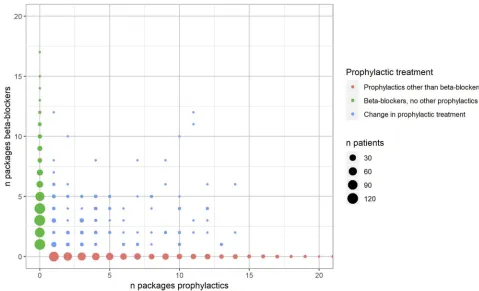
C (combination of prophylactic treatments: 53.4%). In the treatment Group A and Group B, one to three packages were most often prescribed within the 12-month follow-up period (41.8% and 53.6%, respectively), but in contrast patients changing the prophylactic treatment had the
high-est proportion of“high-users”with about a quarter of them
using more than 10 different prescribed packages (25.6%; Figure S1,Table S1).
Discussion
This retrospective cohort study provides a comprehen-sive picture of the treatment patterns in patients using triptan and prophylactic medication in daily clinical practice. We found a percentage of triptan users in the adult population of 1.3%, whereby 17% of those were prescribed prophylactic treatments as well. Our preva-lence is comparable with percentages of triptan users found in previous studies from the Netherlands (1.0%),
Italy (0.7–1.0%), and France (2.3%).11,14,17 Regarding
the migraine–prophylactic medication, our finding is
largely in line with previous studies. Based on our analysis, we found that most patients used triptans only, 4.5% of the patients combined triptans and pro-phylactic drugs, and 12.9% of the patients changed the treatment between triptan only and prophylactic use.
Table 2Treatment patterns of patients with triptan use in Q1 (per quarter)
Q1 Q2 Q3 Q4 N (%)
Triptan only – – – 3,414 (33.8%)
Triptan only Triptan only Triptan only Triptan only 1,835 (18.2%)
Triptan only – Triptan only – 592 (5.9%)
Triptan only Triptan only – – 591 (5.9%)
Triptan only – – Triptan only 536 (5.3%)
Triptan only Triptan only – Triptan only 510 (5.1%)
Triptan only Triptan only Triptan only – 453 (4.5%)
Triptan only – Triptan only Triptan only 407 (4.0%)
Combination Combination Combination Combination 212 (2.1%)
Combination – – – 152 (1.5%)
Combination Prophylactics only Prophylactics only Prophylactics only 101 (1.0%)
Combination Triptan only Triptan only Triptan only 53 (0.5%)
Triptan only Triptan only Triptan only Combination 47 (0.5%)
Combination Prophylactics only – – 36 (0.4%)
Combination Combination Combination Triptan only 36 (0.4%)
Triptan only – Prophylactics only – 36 (0.4%)
Combination Combination Prophylactics only Combination 32 (0.3%)
Triptan only Combination Combination Combination 31 (0.3%)
Triptan only Prophylactics only – – 29 (0.3%)
Combination Prophylactics only Prophylactics only – 27 (0.3%)
Other combinations Other Other Other 960 (9.5%)
Abbreviation:Q, quarter.
Journal of Pain Research downloaded from https://www.dovepress.com/ by 118.70.13.36 on 24-Aug-2020
Lafata et al.12 reported a percentage of 13–15% of
patients receiving ≥2 prescriptions for a medication
with migraine preventive properties, whereas another study yielded a broader range from 14% to 21% of triptan users who were concurrently prescribed at least
one prophylactic medication in a year.17 Overall, the
preventive pharmacotherapy for migraine might be underutilized in clinical practice. This is surprising in light of the US, Canadian, and European guidelines for migraine prevention, supporting the use of prophylactic
drugs as metoproplol or topiramate.2,19,20
Our analysis also revealed that most patients who used
“triptan and beta-blockers (only)” or “triptan and other
prophylactics (eg, topiramate)”at the start of the treatment
(first quarter) did not continue this treatment over all other
quarters. Prophylactics were prescribed only at the start of
therapy (first quarter) in a large number of cases (25%).
Thisfinding indicates low adherence to
migraine-preven-tive medication, which is in line with adherence rates as
reported by Hepp et al.21(about 20% at 12 months) or by
Berger et al.22 (29% at 6 months), but other similar
studies revealed higher adherence rates, as described by
Table 3Sociodemographic and clinical characteristics of the patients by treatment patterns
Characteristic Triptan only (Group 1) Triptan and prophylactics (Group 2) Change in treatment
(Group 3)
P -value
Total 8,338 (100%) 454 (100%) 1,298 (100%)
Gender
Female 6,727 (80.7%) 355 (78.2%) 1,099 (84.7%) ***,a
Male 1,611 (19.3%) 99 (21.8%) 199 (15.3%)
Mean age (SD) 47.7 (14.7) 48.4 (15.6) 49.9 (15.0) ***,b
Age group
18–24 562 (6.7%) 36 (7.9%) 75 (5.8%) **a
25–34 1,134 (13.6%) 61 (13.4%) 142 (10.9%)
35–44 1,699 (20.4%) 91 (20.0%) 234 (18.0%)
45–54 2,248 (27.0%) 107 (23.6%) 360 (27.7%)
55–64 1,556 (18.7%) 89 (19.6%) 277 (21.3%)
65–74 847 (10.2%) 47 (10.4%) 139 (10.7%)
75–84 251 (3.0%) 20 (4.4%) 60 (4.6%)
>84 41 (0.5%) 3 (0.7%) 11 (0.8%)
Region
Mittelland 1,447 (17.4%) 80 (17.6%) 266 (20.5%) ***a
Northwest 1,245 (14.9%) 61 (13.4%) 186 (14.3%)
East 894 (10.7%) 45 (9.9%) 143 (11.0%)
Leman 1,423 (17.1%) 101 (22.2%) 224 (17.3%)
Ticino 476 (5.7%) 41 (9.0%) 106 (8.2%)
Central 692 (8.3%) 32 (7.0%) 86 (6.6%)
Zurich 2,161 (25.9%) 94 (20.7%) 287 (22.1%)
Comorbidity status
Migraine only 1,182 (14.2%) 20 (4.4%) 40 (3.1%) ***a
Migraine with 1 CC 1,357 (16.3%) 36 (7.9%) 100 (7.7%)
Migraine with 2 CC 1,508 (18.1%) 70 (15.4%) 175 (13.5%)
Migraine with >2 CC 4,291 (51.5%) 328 (72.2%) 983 (75.7%)
Triptan use (previous year) 4,337 (52.0%) 301 (66.3%) 799 (61.6%) ***a
Prophylactics use (previous year) 395 (4.7%) 302 (66.5%) 793 (61.1%) ***a
Acute medication
Analgesics 4,485 (53.8%) 300 (66.1%) 883 (68.0%) ***a
Antiemetics 194 (2.3%) 11 (2.4%) 58 (4.5%) ***a
Notes:a
Chi-square test;bKruskal–Wallis test. **P
<0.01, ***P<0.001. Abbreviation:CC, chronic condition.
Journal of Pain Research downloaded from https://www.dovepress.com/ by 118.70.13.36 on 24-Aug-2020
Lafata et al.12(56% at 12 months). Since studies differ in used active ingredients and observed time periods, it is
quite difficult to compare with each other. We also found a
small, but relevant proportion of patients combining trip-tan use with beta-blockers and other prophylactics at least once in the year, and moreover, most of them received both preventive drugs concomitantly over four quarters (55%). Present analyses also revealed that some patients switched between several drug classes and were prescribed a high number of packages, which may indicate nonre-sponse to triptans and prophylactics. This might be caused
by adverse effects, contraindications or intolerances.3,5
Therefore, our findings help to quantify the population
who potentially use new approaches for the management of migraine therapy. This patient population includes 1) patients who stopped the prophylactic treatment within the
first year, indicating that the acceptance of these drugs
may be limited by these patients, 2) high users of
prophy-lactics “beta-blockers” and “other prophylactics”
concur-rently over a year, and 3) patients who switched several times between various drug classes. In this context, the novel CGRP-targeted drugs seem to be promising as a new era of migraine therapy. Anti-CGRP drugs seem to be well
tolerated.23 Furthermore, since triptan users represent the
target population for novel CGRP antagonist consumers,
our study provides data that enables forthcoming compar-isons before and after the introduction of the new drug class.
This study has some limitations, which should be con-sidered when interpreting the results. First, we analyzed the reimbursement of drugs. Prescriptions rates might be higher, and drug intake rates are likely to be lower. Second, there is a small proportion of medications that were not recorded in our database (eg, out-of-pocket pay-ments). However, internal analysis estimated that this pro-portion is around 3% of total prescriptions, so that the
potential bias is very small.24Third, for technical reasons,
we did not analyze the number of tablets per package, so that we cannot draw precise conclusions on the amount of drugs prescribed. Fourth, comorbidity was measured indir-ectly by medication claims. Fifth, the use of botulinum toxin was very low. Botulinum toxin for migraine is reim-bursed only in very severe cases after medical examination
and assessment of efficacy, appropriateness, and
effective-ness in the individual case by the medical officer of the
health insurance (Article 71a, Swiss health insurance reg-ulation, KVV). Sixth, our database is not completely representative of the Swiss population as minor
differ-ences in sex, age, and regions exist.25 However, we are
quite confident that our results are generalizable. The
Figure 2Type of prophylactic treatment in patients with use of triptan and prophylactics in Q1 (per quarter).
Journal of Pain Research downloaded from https://www.dovepress.com/ by 118.70.13.36 on 24-Aug-2020
study was based on a population of more than one million persons from all Swiss regions, and the data had a high
degree of completeness.26 Furthermore, the basic health
insurance package is mandatory for all Swiss residents.
Services provided in the basic health insurance are defined
at national level, and thus equally valid for every health
insurer. In addition, to our knowledge, this is thefirst study
evaluating the current treatment patterns in patients using triptan and prophylactics before the introduction of CGRP antagonists, by analyzing health care claims from daily clinical practice. In contrast to data from clinical trials, claims data picture patients treated in a real-life setting including those with more heterogeneous characteristics, comorbidities, and concurrent drug use. Another strength is that we assessed the migraine treatment patterns in a timeframe of 12 months, divided into four quarters. In this way, we were able to provide more reliable and robust results compared to previous studies measuring only one time point.
Conclusion
The present study is a comprehensive claims-based analy-sis describing the treatment patterns in patients in need of medical treatment for migraine. The majority of triptan users had no prophylactic medication therapy; however, analyses also revealed a small, but relevant high user group having beta-blockers and other prophylactics during all four quarters. Results help to describe and quantify the
migraine patient population that might potentially benefit
from the novel CGRP-targeted drugs. This study provides the baseline for future evaluations after the introduction of CGRP antagonists.
Acknowledgment
Financial support for this study was provided by Novartis Pharma Switzerland AG. The sponsor had no role in collec-tion, analysis, and interpretation of data; writing of the paper; or in the decision to submit the paper for publication.
Disclosure
Dr Carola A Huber reports grants from Novartis Pharma Switzerland AG, during the conduct of the study. Dr Eva Blozik reports grants from Novartis Pharma Switzerland, during the conduct of the study; grants from Vifor Pharma, grants from Amgen Switzerland, grants from MSD Switzerland, and grants from Astra Zenca, outside the
submitted work. The authors report no other conflicts of
interest in this work.
T able 4 Pr oph ylactic medication by drug substance among patients with triptan use (Q1 – Q4) Me d ic a ti on (A T C c o d e )* T otal, N=1,246 (%) Pr oph ylactics other than beta-block ers (Gr oup A), N=507 (%) Beta-b lock er s, no ot her p ro p h ylac ti cs (Gr o up B ), N =606 (%) Combination of p roph ylactic tr eatments (Gr o up C), N = 1 33 (%) Pr oph ylactics other than beta-block ers T opiramate (N03AX11) 374 (30.0) 313 (61.7) 61 (45.9) Amitriptyline (N06AA09) 164 (13.2) 113 (22.3) 51 (38.3) V alpr oic acid (N03A G01) 86 (6.9) 72 (14.2) 14 (10.5) Sibelium (N07C A03) 66 (5.3) 46 (9.1) 20 (15.0) B o tu lin u m to x in (M 0 3 A X 0 1 ) 22 (1.8) 16 (3.2) 6 (4.51) Beta-block ers Metopr olol (C07AB02) 421 (33.8) 350 (57.8) 71 (53.4) Pr opranolol (C07AA05) 310 (24.9) 245 (40.4) 65 (48.9) Bisopr olol (C07BB07) 22 (1.8) 20 (3.3) 2 (1.5) Notes: *Multiple answ ers wer e possible . Abbre viations: Q, quarter ; A TC , anatomical therapeutic chemical.
Journal of Pain Research downloaded from https://www.dovepress.com/ by 118.70.13.36 on 24-Aug-2020
References
1. Evers S, Afra J, Frese A, et al. EFNS guideline on the drug treatment of migraine–revised report of an EFNS task force. Eur J Neurol.
2009;16:968–981. doi:10.1111/j.1468-1331.2009.02748.x
2. Silberstein SD, Holland S, Freitag F, Dodick DW, Argoff C, Ashman E. Evidence-based guideline update. Pharmacologic treatment for episodic migraine prevention in adults: report of the quality standards subcommittee of the American academy of neurology and the
American headache society. Neurology. 2012;78:1337–1345.
doi:10.1212/WNL.0b013e3182535d20
3. Linde K, Allais G, Brinkhaus B, et al. Acupuncture for the prevention of episodic migraine.Cochrane Database Syst Rev.2016:CD001218. doi:10.1002/14651858.CD001218.pub3.
4. Linde M, Mulleners WM, Chronicle EP, McCrory DC. Topiramate for the prophylaxis of episodic migraine in adults.Cochrane Database Syst Rev.2013;CD010610. doi:10.1002/14651858.CD010610
5. Goadsby PJ, Lipton RB, Ferrari MD. Migraine–current understanding and treatment. N Engl J Med. 2002;346:257–270. doi:10.1056/ NEJMra010917
6. Goadsby PJ, Reuter U, Hallström Y, et al. A controlled trial of erenumab for episodic migraine. N Engl J Med. 2017;377:2123– 2132. doi:10.1056/NEJMoa1705848
7. Dodick DW, Ashina M, Brandes JL, et al. ARISE: a phase 3
rando-mized trial of erenumab for episodic migraine. Cephalalgia.
2018;38:1026–1037. doi:10.1177/0333102418759786
8. Tepper S, Ashina M, Reuter U, et al. Safety and efficacy of erenumab for preventive treatment of chronic migraine: a randomised, double-blind, placebo-controlled phase 2 trial.Lancet Neurol.2017;16:425– 434. doi:10.1016/S1474-4422(17)30083-2
9. Doods H, Hallermayer G, Wu D, et al. Pharmacological profile of BIBN4096BS, thefirst selective small molecule CGRP antagonist.Br
J Pharmacol.2000;129:420–423. doi:10.1038/sj.bjp.0703110
10. Holland PR, Goadsby PJ. Targeted CGRP small molecule antagonists for acute migraine therapy. Neurotherapeutics. 2018;15:304–312. doi:10.1007/s13311-018-0617-4
11. Smelt AFH, Assendelft WJJ, van Dijk CE, Blom JW. Triptan use after starting prophylactic migraine treatment: a retrospective cohort study in a primary care population.Cephalalgia.2014;34:927–932. doi:10.1177/0333102414521511
12. Lafata JE, Tunceli O, Cerghet M, Sharma KP, Lipton RB. The use of migraine preventive medications among patients with and without migraine headaches. Cephalalgia. 2010;30:97–104. doi:10.1111/ j.1468-2982.2009.01909.x
13. Hepp Z, Bloudek LM, Varon SF. Systematic review of migraine prophylaxis adherence and persistence.J Manag Care Spec Pharm.
2014;20:22–33. doi:10.18553/jmcp.2014.20.1.22
14. Braunstein D, Donnet A, Pradel V, et al. Triptans use and overuse: a pharmacoepidemiology study from the French health insurance
sys-tem database covering 4.1 million people. Cephalalgia.
2015;35:1172–1180. doi:10.1177/0333102415570497
15. Zebenholzer K, Gall W, Wöber C. Use and overuse of triptans in Austria - a survey based on nationwide healthcare claims data.J
Headache Pain.2018;19:34. doi:10.1186/s10194-018-0864-0
16. Dekker F, Wiendels NJ, de Valk V, et al. Triptan overuse in the Dutch general population. A nationwide pharmaco-epidemiology database analysis in 6.7 million people. Cephalalgia. 2011;31:943–952. doi:10.1177/0333102411408626
17. Da Cas R, Nigro A, Terrazzino S, et al. Triptan use in Italy: insights from administrative databases. Cephalalgia. 2015;35:619–626. doi:10.1177/0333102414550419
18. Huber CA, Szucs TD, Rapold R, Reich O. Identifying patients with chronic conditions using pharmacy data in Switzerland: an updated mapping approach to the classification of medications.BMC Public
Health.2013;13:1030. doi:10.1186/1471-2458-13-1030
19. Pringsheim T, Davenport WJ, Mackie G, Worthington IM. Canadian headache society guideline for migraine prophylaxis: supplement 2. Can J Neurol Sci. 2012;39:i–63. doi:10.1017/ S0317167100015109
20. Carville S, Padhi S, Reason T, Underwood M. Diagnosis and man-agement of headaches in young people and adults: summary of NICE guidance.BMJ.2012;345:e5765. doi:10.1136/bmj.e5765
21. Hepp Z, Dodick DW, Varon SF, Gillard P, Hansen RN, Devine EB. Adherence to oral migraine-preventive medications among patients with chronic migraine.Cephalalgia.2015;35:478–488. doi:10.1177/ 0333102414547138
22. Berger A, Bloudek LM, Varon SF, Oster G. Adherence with migraine prophylaxis in clinical practice. Pain Pract. 2012;12:541–549. doi:10.1111/j.1533-2500.2012.00530.x
23. Edvinsson L. Headache advances in 2017. A new horizon in migraine therapy. Lancet Neurol. 2018;17:5–6. doi:10.1016/S1474-4422(17) 30415-5
24. Reich O, Rapold R, Thöni M. An empirical investigation of the efficiency effects of integrated care models in Switzerland. Int J
Integr Care.2012;12. doi:10.5334/ijic.685.
25. Huber CA, Schwenkglenks M, Rapold R, Reich O. Epidemiology and costs of diabetes mellitus in Switzerland: an analysis of health care claims data, 2006 and 2011.BMC Endocr Disord.2014;14:44. doi:10.1186/1472-6823-14-44
26. Huber CA, Schneeweiss S, Signorell A, Reich O. Improved predic-tion of medical expenditures and health care utilizapredic-tion using an updated chronic disease score and claims data. J Clin Epidemiol.
2013;66:1118–1127. doi:10.1016/j.jclinepi.2013.04.011
Journal of Pain Research downloaded from https://www.dovepress.com/ by 118.70.13.36 on 24-Aug-2020
Supplementary materials
Figure S1Medication use of the prophylactic groups.
Journal of Pain Research downloaded from https://www.dovepress.com/ by 118.70.13.36 on 24-Aug-2020
Journal of Pain Research
Dove
press
Publish your work in this journal
The Journal of Pain Research is an international, peer reviewed, open access, online journal that welcomes laboratory and clinicalfindings in thefields of pain research and the prevention and management of pain. Original research, reviews, symposium reports, hypothesis formation and commentaries are all considered for publication. The manuscript
management system is completely online and includes a very quick and fair peer-review system, which is all easy to use. Visit http:// www.dovepress.com/testimonials.php to read real quotes from pub-lished authors.
Submit your manuscript here:https://www.dovepress.com/journal-of-pain-research-journal
Table S1Number of patients and packages by prophylactic group (Q1–Q4)
Number of packages
Prophylactics other than beta-blockers (Group A)
N
Beta-blockers, no other prophy-lactics (Group B)
N
Combination of prophylactic treat-ments (Group C)
N
1 93 113 0
2 63 91 15
3 56 121 6
4 47 113 17
5 41 78 10
6 32 32 16
7 31 23 11
8 19 8 11
9 27 11 9
10 17 6 4
11 17 3 4
12 19 2 6
13 9 1 4
14 11 1 6
15 5 1 4
16 5 0 3
17 4 1 1
18 2 0 1
19 2 0 0
20 1 0 2
21 2 0 0
22 0 0 1
23 1 1 1
26 1 0 0
28 1 0 0
30 1 0 0
>30 0 0 1
Journal of Pain Research downloaded from https://www.dovepress.com/ by 118.70.13.36 on 24-Aug-2020