Learning to read and spell
single words: a case study of a
Slavic language.
Marcin Szczerbiriski
A thesis submitted for the degree o f Doctor o f Philosophy
University College London
ProQuest Number: U643611
All rights reserved
INFORMATION TO ALL USERS
The quality of this reproduction is dependent upon the quality of the copy submitted.
In the unlikely event that the author did not send a complete manuscript and there are missing pages, these will be noted. Also, if material had to be removed,
a note will indicate the deletion.
uest.
ProQuest U643611
Published by ProQuest LLC(2016). Copyright of the Dissertation is held by the Author.
All rights reserved.
This work is protected against unauthorized copying under Title 17, United States Code. Microform Edition © ProQuest LLC.
ProQuest LLC
789 East Eisenhower Parkway P.O. Box 1346
ABSTRACT
We now have a good knowledge of the initial period of literacy acquisition in English, but the development of literacy in other languages, and the implication of this for our understanding of cognitive processing of written language, is less well explored. In this study, Polish T* - 3'*^ grade children (7;6-9;6 years old) were tested on reading and
spelling of words, with controls for factors which have been shown to affect performance in other languages (lexicality, frequency, orthographic complexity). Moreover, each participant was individually tested on a range of linguistic skills understood to be essential components of literacy acquisition. These included: phonological awareness (detection, analysis, blending, deletion and replacement of sound segments in words) serial naming (of pictures, digits, letters) and morphological skills (using prefixes and suffixes). Some higher-level visual skills, and general intellectual ability (vocabulary knowledge, reasoning) were also assessed.
In comparison with the existing data, Polish children appeared to acquire basic reading and spelling skills somewhat faster than their English counterparts, but slower than the consistent orthography learners (e.g. German). Some complex, conditional orthographic rules that occur in Polish were not fully mastered even in grade 3. This fits the description of Polish orthography as only moderately consistent overall.
Success in learning to read and spell was independently predicted by two factors: phonological awareness and naming ability, with other skills (morphological and visual) playing a minor or negligible role. This outcome is broadly consistent with that observed in other languages in which it has been studied, suggesting that the essential mechanisms of learning written language may be the same across orthographies.
ACKNOWLEDGEMENTS
Carrying out this project was much more than a scholarly exercise: it was an experience of mutual support, collaboration and friendship.
My thanks go first and foremost to my supervisors: Prof. Ruth Campbell and Dr. Nata Goulandris. The learning opportunities they offered me were truly exceptional. They took great care of my progress, providing the right blend of inspiration, freedom, challenge and encouragement - and remaining patient in the face of me failing so many solemnly sworn deadlines! I was privileged to receive even more, however, as the support and friendship they gave extended much beyond the boundaries of this project. A memorable aim: “to establish you as an independent researcher” formulated by Ruth during one of our meetings was to be a serious promise they both worked hard to fulfil.
I was equally privileged to have the UCL Department of Human Communication Science as my place of study. When going to study abroad I was hoping to find academic excellence - and I was not disappointed. I was offered excellent facilities, leamt a great deal about speech and language research and therapy (a new, exciting world for me), and was given an opportunity to teach that I enjoyed so much. The departmental studentship I received supported me for the large part of this study. I felt very welcome by all members of staff, and was privileged to collaborate and become friends with a number of people, particularly Liz Nathan, Michael Coleman, Mairead MacSweeney, Liz Milne, Fiona Kyle and Vassiliki Diamanti. Indeed, the lure of Human Communication Sciences was strong, and it is now the Sheffield HCS department that I can also thank for giving me ample time and resources to finish this project - as well as carry out new ones!
The fieldwork of this project was carried out mostly in the Primary School 14 in Krakow-Salwator. I am indebted to all the children who agreed to take part in what - I now realize - was too long and tedious a series of tests. I would also like to thank all the teachers and, particularly, the school psychologists. Dr. Jadwiga Wrohska and Ms Ewa Nowak. They made me feel welcome at their school, provided important information about my participants, and patiently endured the disruption I caused to their working schedule. Important pilot data for this project were also collected in two other primary schools (149 and 57 in Krakow- Kurdwanow). My gratitude extents to all pupils, parents, teachers and special needs staff that I met there.
literature searches in Krakow libraries. Assistance with literature searches was also given by Ms Joanna Sadowska.
Apart from my supervisors, who corrected my awkward writing style (and tried, with little success, to teach me the correct usage of definite and indefinite articles) a number of people read and commented on different parts of the manuscript. Chapters 3 and 4 were reviewed (at various stages of writing) by Dr. Liz Nathan, Prof. Bozydar Kaczmarek, and Dr. Ewa D^browska; chapter 1 by Dr. Patty Cowell, and chapter 9 by Vesna Stojanovik.. Final proofreading assistance was offered by Dr. Richard Body, Dr. Patty Cowell, Sarah James, Liz Milne, Dr. Liz Nathan, Vesna Stojanovik, and Fay Windsor.
I owe a great deal to my Polish colleagues involved in reading research; Dr Grazyna Krasowicz-Kupis, Dr Urszula Oszwa, Dr Alicja Maurer and Ms Krystyna Sochacka. They provided me with their unpublished or otherwise hard to access papers, and hours of stimulating face-to-face and e-mail discussions. Grazyna Krasowicz and Krystyna Sochacka both allowed me to access their datasets, and we spent an exciting and fruitful time analysing them together. Their ideas inspired this project greatly.
Nothing would be possible without the love, support and encouragement of my family. My father deserves a particular mention here. Without his encouragement to ‘think big and brave’, and his financial support during the difficult year before I formally registered as a PhD student, this project would certainly not have even been attempted. Decisive encouragement and advice to ‘go for if was also given by my master thesis supervisors and examiners: Dr. Janusz Palczyhski, Dr. Andrzej Kokoszka, and Dr. Dorota Jasiecka. I cannot fail to acknowledge Dr. Ewa Szurek-Skwierawska, a lecturer who introduced me to the subject of dyslexia. She arose my interest in this problem, encouraged my PhD efforts, and assisted me in arranging the pilot study.
I also cannot fail to mention my wonderful friends, in Poland, England and elsewhere. I will always cherish the love, fun and wisdom I received from them - not to mention the food, lodgings and computer power they offered me at quite a few critical junctures!
The project also received financial support from the British Council Fellowship, Overseas Research Scheme and the departmental teaching studentship from the Department of Human Communication Sciences, UCL.
CONTENTS
Abstract
2
Acknowledgements
3
Contents
5
List of tables
10
List of figures
13
List of appendices
15
1. Reading, spelling and learning
1.1. Definitions 16
1.2. Reading research - main problems and controversies 18
1.2.1. fVhat is the ro/e o f decoding/or reading comprehension 2 18 /. 2.2. fVord reading and speiiing: is the taskprimarifyperceptuai or
iinguisticF 22
1.2.3. fVhat are the hasic mechanisms or learning to read and speiiF 27
J.2. d. Is shiiled word recognition phonoiogicaily mediated? 33
1.2. S. Are reading and speiiing essentia/iy the same process.^ 35
1.3. Models or reading acquisition 38
/ .S.I. Stage andphase models 39
1.3.2. ^^Processes and resources models 41
1.3.3. Connectionist models 44
2. Literacy acquisition and linguistic skills
48
2.1. Phonological processing 49
2.1.1. Phonological awareness 49
2.1. J. J. The concept o f linguistic awareness 49 2. J.J. 2. Developntent o f phonological awareness 51 2. J. J. 3. The role o f phonological awareness in the acquisition
o f literacy 55
2.1.2. Phonological retrieval 66
2.2. Literacy and other linguistic skills 79
2.2.1. Syntactic awareness 80
2.2.2. Morpkoiogicalawareness 84
2.3. Conclusions 89
3. Cross-linguistic differences in literacy acquisition
91
3.1. Spoken language and literacy 91
3.1.1. Segmentalpkonoiogy 92
3.1.2. Suprasegmentalphonology 92
3.1.3. Syntax and morphology 94
3.1.4. IVord length 95
3.2. Orthography and literacy 95
3.2.1. Descrihing orthographies 95
3.2.2. The relationship between teaching methods and orthographies 103
3.2.3. The impact o/orthography on acquisition processes
-summary o f hypotheses 104
3.2.4. Language, orthography and the acquisition ofliteracy
-a review o f d-at-a 106
3.2.4. J. The relative dij^cu/ty o f acquisition 106
3.2.4.2. The differences in reading strategies 111
3.2.4.3. The differences in Unguis tic awareness 114
3.2.4.4. Predictors o f literacy acquisition in different orthographies116 3.3. Reading difficulties in different alphabetic orthographies 119
3.3. J. L. Simple orthographies - do they remove dyslexia F 119
3.3. J. 2. Simple orthographies - is dyslexia manifested differently !*\ 2 0
3.3. J. 3. Simple orthography dyslexias - is the nature o f the
problem different F 124
4. Polish language, orthography and literacy teaching
133
4.1. The language 133
4.J.I, Morpko/ogy and syntax 133
4.1. J.J. Inflections 133
4. J.J. 2. Derivational morphology 137
4.1.2. Phonology 138
4. J. 2. J. Segments 138
4. J. 2.2. Suprasegmentalphonology 142
4.2. The orthography 145
4.2.1. The alphabet 146
4.2.2. Transparency, regularity, consistency 146
4.2.2. J. Reading 146
4.2.2.2. Spelling 150
4.3. Teaching literacy 153
5. The study
156
5.1. Research problem and hypotheses 156
5.2. Participants 158
5.3. Methods 161
5. 3.1. Control measures 161
S. 3.2. Verbal memory 162
S. 3.3. Phonological sensitivity 162
5.3.4. Phonological awareness 164
5.3.5. Naming 166
5.3.6. Verbal/Iuency 167
5.3.7. J\Iorphologicalprocessing 168
5.3. S. Visual-motor processing 170
5.3.9. Reading and spelling measures 172
5.4. Procedure 174
6. Reading and spelling development
177
6.1. Components of literacy - their organisation and growth 177
6.1.1. Change heth^een the grades 178
6. J. 2. Internai structure ofiiteracy shills 181
6.1.3. Age-related changes In the structure o/literacy shills 184
6.2. ANOVA analyses 185
6.2.1. Reading accuracy 187
6.2.2. Reading time 190
6.2.3. Spelling accuracy 194
6.2.1. Summary o f ANOVA analyses 197
6.3. Error analyses 199
6.3.1. Reading errors 200
6.3.1.1. Errors as the function oforthographic complexity 203
6.3.2. Spelling errors 204
6.3.2.1. Sensitivity to orthographic conventions 207
6.4. Summary and conclusions 208
7. Literacy and other cognitive factors
212
7.1. Development of cognitive skills 212
7.2. Phonological, morphological and visual skills - internal structure 216
7.3. Development of phonological awareness 222
7.4. Cross-linguistic comparisons of phonological skills 227
7.4.1. Phoneme analysis and blending 227
7.4.2. Oddity tests 231
7.4.3. Vofvel replacement test 233
7.4.4. Speed and fluency tests 233
7.5. Cognitive predictors of literacy 236
7.3.J. Predicting word reading and spelling 237 7.S. I. J. Contribution o f individual variables 237 7. S. 1.2. l/nlgue contribution o f latent factors 240
7.5.2. Predicting non word reading and spelling 244
7.5.2.1 Contribution o f Individual variables 245
7. s. s. /heading andphonologicai an^areness - analysis ofin dividual
cases 250
7.5.d. The role o/graphemenaming 253
7.5.5. Changes in predictors o f literacy over time 256
7.6. Summary and conclusions 259
8. The cognitive profile of dyslexies and poor readers
263
8.1. Identifying dyslexic cases 265
8.2. Cognitive profile of dyslexic participants 271
8.3. Cognitive profile of poor readers 277
8.4. Visual deficits in dyslexia? 282
8.5. Testing the double deficit hypothesis 286
9. Summary and conclusions
290
9.1. Reading and spelling acquisition in Polish 290
9.J.I. Processing written words: ages, stages, mechanisms 290
9.1.2. Cognitive correlates o f literacy 293
9.1. S. fVritten language difficulties: symptoms and mechanisms 294
9.2. Broader theoretical issues 295
9.2.1. Language-specific and cognitive-universal aspects ofliteracy
acquisition 295
9.2.2. Phonological recoding versus orthographicprocessing 299
9.2. S. Reading versus speiiing 300
9.3. Limitations of the study and future directions 301
References
304
Appendices
328
Appendix 1: descriptive statistics 328
LIST OF TABLES
Table 1-1 Schematic comparison of some influential stage and phase models of 39 literacy acquisition.
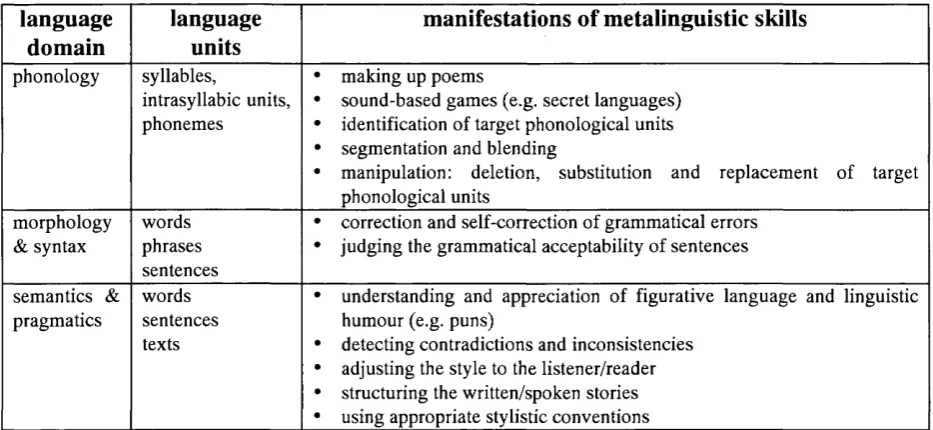
Table 2-1 The scope of metalinguistic skills. 51
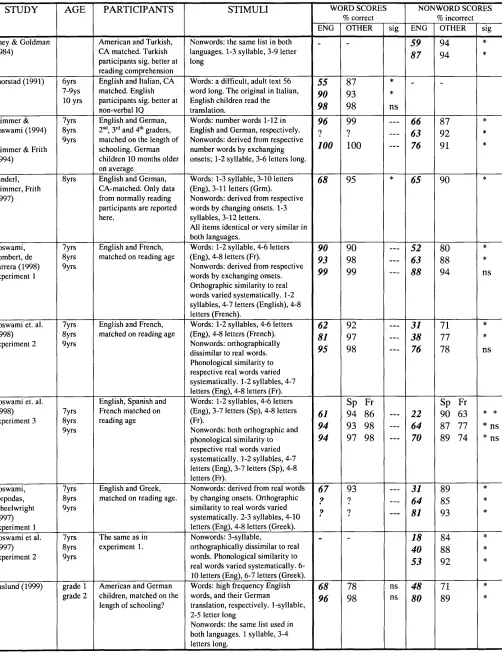
Table 3-1 Summary of cross-linguistic studies of early reading accuracy. 108
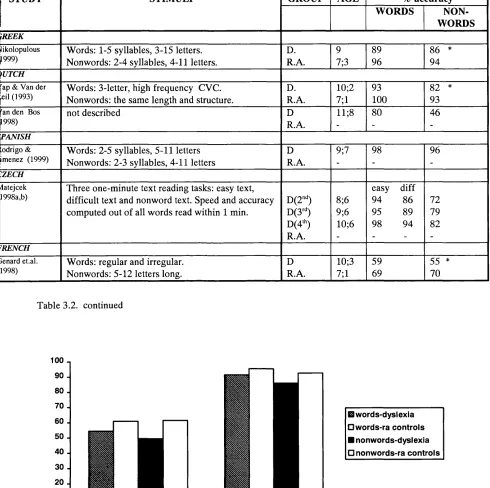
Table 3-2 Summary of dyslexia studies in English and other languages. 121
Table 3-3 Reading accuracy and time of dyslexies and chronological age controls 124 - the summary of existing non-English studies.
Table 4-1 Polish consonantal phonology. 141
Table 5-1 Age and gender characteristics of the sample. 159
Table 5-2 Participants’ performance on standardised measures. 160
Table 5-3 Reliability coefficients o f non-standardised measures used in the 176
study.
Table 6-1 Reading and spelling measures - descriptive statistics. 179
Table 6-2 Correlations between reading and spelling measures. 182
Table 6-3 Pattern matrix of the factor analysis of reading and spelling measures. 183
Table 6-4 Intercorrelations between various indices of reading and spelling, 185 presented separately for each grade.
Table 6-5 Accuracy of reading of diffemt types of stimuli (the short list). 187
Table 6-6 Accuracy of reading different types of stimuli (the long list). 189
Table 6-7 Reading times (in seconds per item) of different types of stimuli (the 190
short list).
Table 6-8 Reading times (in seconds per item) of different types of stimuli (the 192 long list).
Table 6-9 Accuracy of spelling different types of stimuli (the short list). 194
Table 6-11 The frequency of ortho graphically illegal and implausible renditions of 207 the target stimuli.
Table 6-12 Easiest and hardest tasks and stimuli (in 2"‘* and grade). 211
Table 7-1 Descriptive statistics for the cognitive measures used in the study. 213
Table 7-2 Ten tests showing largest developmental gains between the grades. 215 Growth is expressed in terms o f effect sizes.
Table 7-3 Pattern matrix of the first factor analysis. Values represent factor 217 loadings, and are sorted by size.
Table 7-4 Pattern matrix of the third factor analysis, which included only 219 linguistic measures.
Table 7-5 Summary of phonemic analysis studies. 228
Table 7-5 Summary of phoneme blending studies. 230
Table 7-6 The summary of sound categorisation studies. Rhyme detection 232 accuracy % is averaged across middle V and final C conditions.
Table 7-7 Performance of the Polish children on verbal fluency and rapid naming 234 tasks, compared to English norms.
Table 7-8 Multiple regression analyses predicting word reading and spelling skills from individual tests.
Table 7-9 Multiple regression analyses predicting word reading and spelling from six latent factors. Overall and adjusted R squared changes are based on the significant predictors only.
Tab. 7-10 Results of multiple hierarchical regression analyses predicting reading 242 and spelling from selected variables (best predictors in each factor).
Table 7-11 Multiple regression analyses predicting nonword reading and spelling 245 skills from individual tests.
Table 7-12 Multiple regression analyses predicting nonword reading and spelling 247 from six latent factors.
Table 7-13 Results of hierarchical multiple regression analyses predicting reading 248 and spelling from selected tests (best predictors in each factor).
Table 7-14 Cross-tabulation of reading and phonological awareness scores 251 (children selected for extreme reading scores).
Table 7-15 Cross-tabulation of reading and phonological awareness scores 252 (children selected for extreme scores on phonological awareness tests).
237
Table 7-16 Results of hierarchical multiple regression analyses predicting reading 253 and spelling skills from grapheme knowledge and naming speed.
Table 7-17 Results of hierarchical regression analyses predicting word reading and 255 spelling skills from grapheme mastery and nonword decoding.
Table 7-18 Accuracy of reading as a function of letter knowledge. 256 Table 7-19 The results of hierarchical regression analyses predicting word reading, 257
carried out separately for each grade.
Table 8-1 Criteria for identifying dyslexia and the list of identified children. 266
Table 8-2 ‘Relaxed’ criteria for identifying dyslexia, with the lists of identified 267 children.
Table 8-3 Selection criteria and basic characteristics of dyslexic and control 268 groups. Z scores are relative to a grade level.
Table 8-4 Word reading and intelligence tests scores in dyslexies and controls. 269 Table 8-5 Educational background of participants’ parents. 270 Table 8-6 Performance of dyslexies and controls on individual cognitive tests. 272 Table 8-7 Summary of significant differences between dyslexies and controls. 273 Table 8-8 Scores of dyslexic participants on phonological processing and reading 275
composites.
Table 8-9 Selection criteria and basic characteristics of poor readers and control 277 groups. Z scores are relative to a grade level.
Table 8-10 Word reading and intelligence tests scores in poor readers and control 278 groups.
Table 8-11 Performance of poor readers aid controls on individual cognitive 279 tasks.
Table 8-12 Summary of significant differences between poor readers and controls. 280 Table 8-13 Scores of poor readers on phonological processing and reading 281
composites.
Table 8-14 Mean scores on reading composites adjusted for general ability 285 (WISC-R Vocabulary and Columbia) z-scores.
Table 8-15 Scores of children with single and double phonological impairments on 286 reading and phonological processing composites.
LIST OF FIGURES
Figure 3-1 Schematic classification of alphabetic orthographies on the 103 dimensions of complexity and consistency.
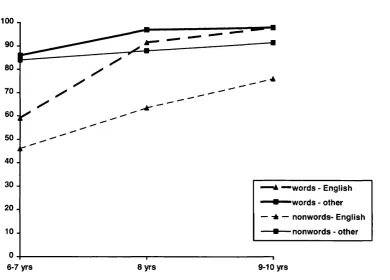
Figure 3-2 The % accuracy of word and nonword reading in English and other 109 languages.
Figure 3-3 % accuracy of word and nonword reading of dyslexies and reading 122 age control children - comparison between English and other
language studies.
Figure 5-1 The study and its relation to the primary education system. 158
Figure 6-1 Relative gains in reading and spellings skills, expressed as effect sizes 180 of change between grades.
Figure 6-2 Mean accuracy of reading different types of stimuli (the short list). 187
Figure 6-3 Mean reading times (secs/item) for different types of stimuli (the 191 short list).
Figure 6-4 Mean spelling accuracy o f different types of stimuli (the short list). 194
Figure 6-5 Relative frequencies of different types of word errors in grades 1-3. 201
Figure 6-7 Relative frequencies of different types of word spelling errors in 205 grades 1-3.
Figure 6-8 Relative frequencies of different types of nonword spelling errors in 206 grades 1-3.
Figure 7-1 Accuracy on phonological awareness tests in T* - 3'^* grade (boxplot). 224
Figure 7-2 The number of correct responses per minute generated in four verbal 226 fluency tests at each grade level.
Figure 7-3 Results of verbal fluency and rapid naming tests transformed to 235 PhAB English standard scores.
Figure 8-1 The median scores of dyslexies and chronological age controls on the 276 five composites.
Figure 8-3 Median scores of poor readers and controls on phonological and 283 visual composites.
Figure 8-4 Performance of children with different types of impairment and the 284 unimpaired controls.
Figure 8-5 Performance of children with single and double phonological 287 deficits, and their controls.
Figure 8-6 The effects of low general ability and phonological impairments on 288
LIST OF APPENDICES
1. Descriptive statistics
328
Table A-1 Reading and spelling variables 328 Table A-2 Phonological and morphological variables 329 Table A-3 Naming speed and fluency variables 331
Table A-4 Visual variables 333
2. Tests used in the study
334
N onw ord repetition 335
A lliteration oddity 336
Fem inine rhyme oddity 337
M asculine rhyme oddity 338
Phonem e analysis 339
Phonem e blending 340
Phonem e deletion 341
Consonant replacem ent 342
Vowel replacem ent 343
Rapid nam ing - pictures 344
Rapid nam ing - digits 348
Graphem e nam ing speed 351
Fluency - semantic 355
Fluency - alliteration 356
Fluency - feminine rhymes 357
Fluency - m asculine rhymes 358
Com parison o f adjectives 359
Derivative forms 361
Prefixes 363
Dim inutives 365
Chinese letters 367
Rey-Osterreith figure 373
Symbol discrim ination 374
Letter discrim ination 377
CHAPTER 1
READING, SPELLING AND LEARNING
This chapter introduces the central problem of the thesis - the development of word- level reading and spelling skills - and shows its place in the field of literacy research. First, I will examine the relationship between the ability to recognise and decode
individual words and general reading ability - that is, the ability to comprehend messages conveyed in writing. I will also evaluate some contrasting assumptions about the nature of reading and spelling, which gave rise to different research paradigms.
Finally, I shall focus on learning mechanisms of reading and spelling, discussing them in the context of formal models of literacy acquisition. This broad overview will set the background for discussing more specific cognitive, linguistic and cross-linguistic aspects of written word processing, which will follow in chapters 2-4.
1.1. DEFINITIONS
The thesis will investigate the development of word identification, nonword reading and spelling to dictation. Those specific skills, however, will be treated primarily as indicators of two more fundamental cognitive competencies o f a literate person: phonological recoding and orthographic processing. Because of the central importance of those concepts for the following argument, I shall start by defining them.
The term phonological recoding ^ be used to denote all reading and spelling processes that utilise information about phonological structure of words (Share, 1995).
The concept implies some form of (implicit or explicit) knowledge about mappings between phonology and orthography, yet is neutral with respect to specific modes of representing and applying this knowledge. These may involve sub-lexical units of different size (individual phonemes, onset-rimes, syllables and corresponding letter
strings) and different processing mechanisms (explicit application o f grapheme- phoneme correspondence rules, implicit analogy making, or some quasi-regular processes utilising distributional frequency information). Phonological recoding is
operationalized most directly through decoding (sounding out) of nonwords, and also a ‘reverse’ skill of producing phonoiogicaily plausible spellings of words and nonwords.
Orthographic processing (or orthographic shiiis) is defined in relation to its specific content: orthographic codes. This is a type of information (about basic units
graphemes - and their arrangements) that is unique to writing and constitutes a representational domain that is separate from phonology, morphology or semantics. There are different ways of characterising the scope of orthographic processing (Share, 1995). Some of them emphasise word-specific knowledge: storage of orthographic
representations of individual words and the ability to use them in word recognition and spelling. “The orthographic” may also refer to the hypothetical direct connections
between orthographic and semantic representations of words, which allow for reading without phonological recoding. Other definitions imply more general forms of knowledge. These may include sensitivity to grapho-tactic and grapho-statistic constraints of a given orthographic system (ability to judge the typicality or legality of a given letter sequence), or sensitivity to grammatical constraints that determine what
spelling is legal for a word, given its morphological or syntactic properties.
Like phonological recoding, orthographic processing is a theoretically neutral term that does not specify the nature of underlying cognitive mechanisms. Orthographic processing undoubtedly has to involve both visual and phonological processes, yet it cannot be fully subsumed under either of those, since orthographic codes are neither intrinsically visual (they are independent of font shape and can be conveyed by oral spelling) nor phonological (their match with phonological structures is usually not a one-to-one correspondence).
There are some controversies regarding operationalization o f orthographic processing (Vellutino, Scanlon & Chen, 1994). However, all tasks used in this context share basic similarities: they require decisions about letter sequences that cannot be made solely on the basis of phonological recoding. The tasks include: naming and
spelling of exception words, homophone choice ( e. g. “Which one is a number: ate or
eighfT') or letter string choice (deciding which one out of two written nonwords bears more resemblance to a real word, e.g.: nack or cka/i). Less directly, orthographic processing is also reflected in the efficiency (speed and accuracy) of naming any
1.2. READING RESEARCH - MAIN PROBLEMS AND CONTROVERSIES
1.2.1. What is the role of decoding for reading comprehension?
How does general reading ability - that is, the ability to comprehend written material -
relate to the ability to decode and recognize individual written words? This question has arguably been the most hotly debated one throughout the history of reading acquisition research. It re-surfaced in different forms (Adams, 1990) and over the last
thirty years it crystallised into controversy between two general approaches, labelled as ‘whole language’ and ‘code emphasis’. The former stresses the developmental primacy of comprehension, and the role of texts in learning to read, perceiving word-level skills merely as a by-product of meaning-oriented text activities. The latter approach recognises word decoding and recognition as skills in their own right, which are essential prerequisites of reading comprehension.
Within the “whole language” framework reading is conceptualised as meaning- seeking: a psycholinguistic process through which a reader actively re-constructs the writer’s message (Goodman & Goodman, 1982). It involves continuous generation and testing of hypotheses about the meanings conveyed in print. Specific skills involved in reading (such as word identification) are just aspects of this core process of meaning re construction, and cannot be understood in isolation from it. The emphasis is put on the top-down processing: to succeed in reading, a child has to bring in all levels of the linguistic skills she already possesses, and her general knowledge about the world.
The same process of hypothesis testing is responsible not only for text comprehension, but also for a child’s understanding of the very nature of writing, and the development of word-level skills. Individual words in a text are in fact predicted
from their linguistic context to a greater extent than they are identi/ied. hence referring to reading as a “psycholinguistic guessing game” (Goodman, 1967/1982). The bottom- up “cues” from a word are also essential, yet they are sampled parsimoniously, insofar as they are necessary to confirm or reject the top-down hypothesis about that word’s
important, yet mainly facilitatory; direct instruction into the ‘mechanics’ of reading is neither necessary nor desirable.
The whole language approach is primarily focused on the applied issues of literacy education (Goodman, 1992) and produced relatively little basic research into the mechanisms of reading acquisition. Some evidence, however, is forthcoming (notably, also from the opponents of this approach) to support at least some of the conjectures just
presented. The importance of top-down processing in word recognition has been demonstrated in a number of different research paradigms. Indeed, early research by Goodman (1965/1982) found that story context enabled children to successfully read words they failed to read in isolation; a finding confirmed by other authors (e.g.
Goswami, 1990). This can be experimentally demonstrated in semantic priming: preceding a word with a semantically related prime (a word or a sentence) facilitates recognition; conversely, recognition is inhibited if the preceding material is inconsistent with the target (e.g. Stanovich & West, 1979; Ehrlich & Rayner, 1981; for overview see Stanovich & Stanovich, 1995; Neely, 1991). Continuous top-down monitoring of word decoding and recognition is also reflected in reading errors. Skilled and unskilled readers alike err predominantly by producing whole word substitutions that are syntactically and semantically plausible in their context (e.g. Goodman, 1967/1982, Danielsson, 2000). Even in those experimental paradigms that remove all contextual cues and require processing of isolated words (naming, lexical decision) performance is influenced by factors such as age of acquisition or imageability of a word (Besner & Humphreys, 1991). This implies that written word recognition is never a fully autonomous, encapsulated process, but is always supported by other parts of the language system. Finally, for skilled readers, reading comprehension and listening
comprehension abilities show near-perfect correlation (Ellis, 1993), suggesting their common nature. Correlation between reading comprehension and single word recognition, on the other hand, tend to diminish as word recognition improves
(Vellutino, Scanlon & Tanzman, 1994).
The evidence for reading without decoding is also consistent with the whole language claims. Purely visual and non-orthographic information about words (such as their shape, length, salient letter parts) can indeed be used to make informed guesses at
1986). Even substituting some content words with pictures may leave reading
undisturbed.
The competing ‘code emphasis’ approach is expounded in a number of different theories, all of which share at least four basic tenets. First of all, general reading ability is a product of several partially independent components - rather than a unitary comprehension-driven process. Secondly, word recognition skills are a prerequisite of
reading comprehension, rather than its by-product. Thirdly, that the optimal way to develop proficient word recognition goes through systematic use o f phonological recoding. Finally, phonological recoding and word recognition benefit from explicit
instruction.
Those claims are supported by a large body of research, and seem ultimately consistent even with those findings that are apparently supportive for the ‘whole language’ claims. This regards, first of all, the basic mechanisms of word identification.
Contextually-based inferences are, on their own, clearly insufficient to guess word identity (giving only 20 - 30% chance of success; for overview of relevant studies see Stanovich & Stanovich, 1995; Share, 1995). Adding visual cues (word shapes and length) raises the ability of success considerably, yet only to a still moderate 60% (Haber, Haber & Furlin, 1983). Most importantly, guessing can, in principle, succeed only if the word already forms part of the reader’s vocabulary. Young children indeed deduce words from context, recognise their shapes (as in case of environmental print: brand names, company logos, etc.) or use other incidental cues. However, contrary to the expectations of whole language theorists, the ability to deal with written language this way bears no relation, or a negative relation, to subsequent progress in reading (for
review see Adams, 1990; Share, 1995; see also section 1.3.2. for further discussion). This is largely inevitable, since the mappings between the meaning of words and their visual or contextual attributes are arbitrary. As no underlying principle can be extracted to rely on, no possibility exists for self-teaching and independent development of
reading vocabulary (Share, 1995). It is only the reliance on letter-sound correspondences that may provide a basis for such self-tuition, thus allowing one to learn words that are truly new and unpredictable (non-redundant in their context).
recognition) they are still detectable after more than a year in spelling and reading comprehension (see Bus & Vanijzendoorm, 1999, for meta-analysis of existing studies).
Not only successful word decoding, but even attempts at such decoding (errors indicative of phonological recoding strategy) are positive predictors of later reading,
whereas errors that suggest global, visual guessing are associated with poorer reading outcome (Stuart & Coltheart, 1988). Contextual facilitation of word recognition is indeed important, yet it can bring success in unfamiliar word reading only if combined
with (at least rudimentary) decoding skills (Share, 1995; Nation & Snowling, 1998). The results of contextual facilitation studies are somewhat ambiguous, as the magnitude
of obtained effects depends on the way they are computed (Nation & Snowling, 1998). In most studies, however, the absolute context-related facilitation was largest in inexperienced readers and dyslexies (for review see Stanovich & Stanovich, 1995; Share, 1995). Relying on context may, therefore not be a predictor of reading success (as whole language theories would suggest) but rather a compensation for inadequate
decoding skills (Stanovich, 1980).
The evidence also exists - contrary to the whole language claims - that reading is not a holistic process, but reflects the interaction of autonomous components. In particular, word decoding and recognition abilities are partially independent from higher-language comprehension skills, making their own contribution to reading comprehension. A number of correlational studies showed that reading comprehension is jointly determined by word decoding skills and general language ability; the latter reflected most directly in listening comprehension (Tunmer & Hoover, 1992). It is not
clear whether their contributions are additive (reading comprehension = decoding + listening comprehension), interactive (decoding x listening comprehension) or constitute the combination of additive and interactive terms (decoding + listening comprehension + decoding x listening comprehension); in any case, however, both
show independent contribution to the variance in reading comprehension across groups of readers (Chen & Vellutino, 1997). In young, unskilled readers it is the weak word- level skills that are the main constraint on reading comprehension. Once these are mastered, reading comprehension becomes limited only by general language comprehension (Vellutino, Scanlon & Tanzman, 1994). Double dissociations between
developmental reading disorders of decoding and comprehension (dyslexia and hyperlexia) also support the functional independence of those two core components of
Interpretation of reading as a unitary or ‘holistic’ (Grundin, 1994) process may
be partially accurate with respect to the earliest phase of acquisition, when narrative skills or context-based inferences play an important role in word identification (Roth, Speece, Cooper & De La Paz, 1996; Share, 1995). Yet reading development is accompanied by increasing dissociation, or modularisation of its component sub processes (Perfetti, 1992). They eventually emerge partially segregated at the brain level
(Carr & Posner, 1993) and become vulnerable to selective functional impairments, which lead to different types of acquired dyslexia (Ellis &Young, 1988; McCarthy &
Warrington, 1990). This modularisation is also reflected in the growing specificity of connections between reading sub-components, and their linguistic predictors. Thus, phonological recoding is directly and reciprocally connected with phonological awareness, but only indirectly related to the ability to use contextual facilitation. The reverse, however, may be true for reading comprehension (Stothard & Hulme, 1992). The evidence for the dissociation between the predictors of phonological recoding and orthographic skills is less clear. Some studies suggest that, for the latter, an important role is played by the ability of rapid and automatic retrieval of verbal codes (operationalized with rapid naming tasks: Bowers, Sunseth & Golden, 1999; Manis, Seidenberg & Doi, 1999) or by syntactic and morphological awareness (Bryant, 1993). I shall discuss the cognitive predictors of reading in more detail in chapter 2.
Overall, despite some outstanding issues, the cumulative body of findings suggests that the reading process may be seen as a hierarchical structure. General reading (comprehension) ability is a product of partially independent skills (word recognition and spoken language comprehension), each comprising its own set of basic cognitive processes (e.g. phonological recoding and orthographic processing in word recognition) and having their unique developmental history and developmental pre
requisites (e.g. phonological awareness, efficient phonological retrieval) (e.g. Carver & Clark, 1998; Tunmer & Hoover, 1992).
1.2.2. Word reading and spelling: is the task primarily perceptual or linguistic?
modalities. Finally, efficient reading and spelling must be rapid 2ccA automatic. Each one of those aspects became, at some point of reading research history, a focus of special attention, was assumed to be critical and became the tenet of formal theory.
Undoubtedly, all the aspects just mentioned are involved in reading, from which does not follow, however, that all are equally important in the sense of posing non-trivial demands on a learner and being a frequent source of reading difficulties.
During its long early period, the research was dominated by the assumption of word recognition and spelling being complex perceptuai tasks. Visual aspects of reading, and links between reading and other visual processes have been particularly thoroughly investigated (for overview and critical discussion see Rayner, 1998;
Willows, Kruk & Corcos, 1993; Rayner & Pollatsek, 1989, Vellutino, 1979), although motor skills, cross-modal integration and linguistic skills were also the object of extensive scrutiny. Characteristically, however, if linguistic processes (e.g. discrimination of speech sounds) were investigated within the perceptual paradigm, they
were usually treated merely as an instance of general perceptual skills. Such an assumption was reflected in the terminology, e.g. the habit of referring to various phonological units (syllables, rhymes, phonemes) as ‘sounds’ and labelling the tasks that employed them as ‘auditory’.
This perceptual paradigm has been seriously challenged over the last three decades. One impulse for change came from the general developments in cognitive theory, namely the concept of modularity (Fodor, 1983). The modular theory understands mind/brain as a set of semi-independent, encapsulated skills, each having its own evolutionary history, biologically pre-specified aim, and its own internal representational code. This leaves less room for general-purpose perceptual processes,
on which reading acquisition could easily capitalise. Secondly, new insights came from psycholinguistics, especially research on the nature of phonological representations, which appeared to have unique properties, quite different from those exhibited by representations of non-linguistic auditory stimuli (e.g. Liberman & Mattingly, 1985,
1989). Those two paths were most consistently combined and applied to reading acquisition research by scientists at Haskins Laboratories in New Haven (e.g. Liberman & Liberman, 1990/1992; Liberman, 1995). In their view, no plausible psychology of
Although superficially auditory (i.e. received by ear) speech constitutes a separate modality, based on its own specific code - articulatory gestures. Writing is secondary to speech (or indeed, in the Libermans’ metaphor, ‘parasitic’ on it) as it constitutes a more
or less successful attempt at recording underlying sound structures by the means of arbitrary visual symbols. Those symbols are not naturally suited for linguistic processing; it is only when they are systematically linked with the units of speech that
they acquire linguistic values. Forming such secondary links is the essence of learning to read. No links could be formed, however, if a future reader was not aware of the units being associated. Visual units are explicitly provided, but the corresponding sound units
- phonemes - have to be brought to conscious awareness. Phonemes underlie speaking and listening, yet under normal circumstances they are not consciously attended to. Demands of speech efficiency require them to be coarticulated, i.e. merge into one seamless sound package corresponding to a syllable or even larger unit. In the process of learning to read, underlying phonemic structures have to be ‘unpacked’ from the surface speech signal - a somewhat unnatural act which makes learning to read difficult.
According to its proponents, the linguistie explanation of reading given above avoids some paradoxes the perceptual theories fell into. If reading and listening were two parallel perceptual processes (simply utilising different sensory channels) then both should be equally easy or difficult. If anything, it is reading that should be easier than listening: visual stimuli enjoy the advantage of not being transient, and vision seems to be the preferred sensory pathway of homo sapiens. Yet it is precisely learning to read and spell that requires - at least from some learners - a prolonged, conscious effort,
which does not always bring full success.
What is the evidence that could settle down the dispute between the perceptual
and the linguistic paradigm? It has to meet certain formal criteria. Within the developmental perspective, one must identify the cognitive processes or skills (either perceptual or linguistic) that constitute direct prerequisites or precursors of learning to
read and spell. In other words, one must find causa/ developmental links between reading and spelling and other cognitive skills. In order to identify any link as causal, it must meet several conditions (e.g. Goswami & Bryant, 1990):
1. Be selective: the skill in question should show strongest association with literacy,
not other areas of academic achievement (e.g. numeracy)
3. Be longitudinal - earlier level of the skill should predict later level of
reading/spelling performance.
4. Training or teaching of the skill in question should bring improvement in reading/spelling.
5. People with selective impairment of reading/spelling should also be poor, or deficient, on that skill.
A wide array of perceptual and linguistic skills and processes has been exposed to such causal scrutiny. On the perceptual side, significant correlations (also longitudinal) were
found between reading and spelling and the measures of visual, motor and nonverbal auditory functions, as well as their inter-modal and cross-modal integration. Poor readers, in particular, often obtain low scores on the measures of perception and perceptual-motor integration (for overview, see Vellutino, 1979; Willows, Kruk & Corcos, 1993). Some types of acquired dyslexia were also described in adult patients,
which can be interpreted in terms of breakdown of higher-order visual processing (McCarthy & Warrington, 1990). However, it is questionable whether the associations between reading and perceptual skills observed in the developmental studies are selective and specific. Successful performance on some complex perceptual tasks may, in fact, depend on good verbal skills that allow one to apply a strategy of verbal labelling (Hicks, 1980; Crispin, Hamilton & Trickey, 1984). Typically, the correlations between perceptual tasks and reading are only modest (usually of magnitude between 0.30 - 0.50; e.g. Bond & Dykstra, 1967/1997) and become stronger if a task contains phonological components (e.g. Bogdanowicz, 1997). Perceptual deficits are not
selectively associated with poor reading; rather, they reflect general learning difficulties (Rutter & Yule, 1975; Stanovich, 1994b). Many studies have shown that children with dyslexia are indistinguishable from their normal peers on visual analysis and memory (Vellutino, 1979). Training of perceptual skills usually does not bring any measurable improvement in reading (Adams, 1990). Successful remediation of poor reading is
primarily related to improvement in linguistic (especially phonological) skills, much less perceptual ones (Vellutino et. al., 1996). Overall, there is little evidence for perceptual skills being a direct constraint on reading acquisition - at least it is so with
metalinguistic awareness predicted later reading attainment even after possible concomitants (like IQ) were controlled for (for reviews, see e.g. Goswami & Bryant,
1990; Roth, Speece, Cooper & De La Paz, 1996). Phonological awareness is also if not fully specific then at least more important to reading and spelling than to other scholastic skills (e.g. Bradley & Bryant, 1983; Bryant, MacLean, Bradley & Crossland,
1990). Pre-school abnormalities and delays in language development, unless resolved early, are an important risk factor for reading failure (Stackhouse & Wells, 1997). Poor readers and dyslexies, although they may not experience any problems with oral communication (Snyder & Downey, 1997) were consistently found to be impaired on a
wide variety of tasks that require access to a segmental (phonemic) level of language (Rutter & Yule, 1975; Stanovich & Siegel, 1994) and speed of naming (Wolf & Bowers, 1999). Successful amelioration of reading failure is usually related to a
significant improvement in phonological skills (Vellutino et. al., 1996). Finally, experimental studies demonstrate that training in phonological awareness skills improves literacy. The improvement is typically small or even negligible if phonological awareness training is administered on its own, yet considerable gains occur if it is combined with tuition on letter sound-correspondences (Adams, 1990). Experimentally manipulated phonological awareness, combined with early alphabetic knowledge, explains about 12% of variance in later word recognition skills (see Bus & Vanijzendoorm, 1999 for the meta-analysis of the training studies). This quantification (which clearly suggests that there must be a host of other factors important to reading) probably downplays the role of phonology. Dyslexia research suggests that difficulties in phonological processing skills can have profound and lasting deleterious effect on
reading development; an effect which can only be compensated for in a highly able person, with a great deal of effort and in favourable educational circumstances (e.g. Campbell & Butterworth, 1985).
Although the specific mechanisms of interaction between reading and linguistic
skills remain a hotly debated issue (and I shall return to those controversies later on), the available data support the general conclusion about the central role of linguistic processes in reading acquisition, and support the validity of the linguistic paradigm.
Recently, after a period of relative dormancy, perceptual theories of reading
Merzenich et. al., 1996). There are also attempts at bringing the visual and auditory findings into one overarching theory of general deficit of rapid signal processing, caused by defects in magnocellular pathways throughout the brain (Livingstone, Rosen, Drislane & Galaburda, 1991; Stein, 1993; Stein, Talcott & Witton, 2001). The new
perceptual theories differ from the old ones in two important aspects. They are less concerned with the higher-level processing of perceptual stimuli, occurring under
voluntary, conscious control. Rather, they look at early stages of perceptual analysis: fast and default processes that take place at the intake of perceptual signal. Secondly, the new theories acknowledge the central (and causal) role of linguistic processes in reading. However, they seek an even more basic cognitive level at which those
linguistic processes can, in turn, be described. At the moment, those theories are undergoing intensive empirical scrutiny (e.g. Wimmer, Mayringer & Raberger, 1999; Mody, Studdert-Kennedy & Brady, 1997; Cestnick &Coltheart, 1999), and it remains to be seen whether they will mark a new paradigm shift. The general problem may be formulated as follows: Are the linguistic processes the u/t/mate level of cognitive explanation for the development of recoding and orthographic skills? Alternatively, is it the case that those linguistic processes that are required for reading acquisition can be broken down into even more basic cognitive components, whieh are not modularly specific (not limited to language)? This controversy is likely to become central in the field of reading research in the coming years. Whatever the outcome, the conclusion about the central role of linguistic skills for reading seems to be secure.
1.2.3. What are the basic mechanisms of learning to read and spell?
The question posed here can be further broken down into several connected problems. Can children understand writing (that is - leam to decode) implicitly and spontaneously, or is explicit tuition necessary (or at least helpful)? What are the linguistic units children
attend to when they try to relate written to spoken language? Does learning to read and spell recruit other-purpose learning mechanisms or does a specific mechanism exist that is uniquely suited to learning written language? The sides of this debate partially
to understand texts. This process may be facilitated by enhancing her general linguistic development, but not by explicit code instruction. In contrast, the code-oriented
approach maintains that any account of reading acquisition must explain, first of all, how children come to realise that writing constitutes a code (or, more precisely, a cipher: Gough 1992) and thus acquire alphabetic decoding skills. The beneficial effect of direct, structured instruction about the cipher (i.e. phonics teaching) is nearly always
stressed within this approach. However, various code-oriented theories may differ with respect to the grain-size of sublexical phonological units (phonemes versus other intrasyllabic units, such as onset-rime) they consider critical for the development of
decoding ability; and also may disagree as to how exp/ic/tS}ci\?> learning process is.
The ‘contextualisf view of reading acquisition advocated by the whole language proponents finds some support in sociological and ethnographic research that points out the importance of trans-generational patterns of literacy transmission. Home background is crucial in providing information about the structure and purpose of reading,
exercising pre-reading skills (like learning the alphabet, using pen and pencil, or working with a computer). Most importantly, the home environment may develop or hinder children’s motivation to become literate. Reading aloud to pre-school children, and engaging in a discussion about the text being read seems a particularly powerful factor (Adams, 1990), explaining some 8% of variance in later reading skills (Bus, Vanijzendoom & Pellegrini, 1995). The role of home background and learning opportunities (easy access to books, etc.) has also been powerfully confirmed in cross national studies of literacy (Elley, 1992, 1993). In terms of instruction, the case of precocious readers illustrates that becoming literate may indeed be a process of discovery, with minimal or no input from formal code instruction.
Within the code-oriented approach, social and cultural factors (and the general linguistic competence which they influence) are treated as distal preconditions of reading success, which should not, however, be confused with the proximal mechanism
of learning. This mechanism is often conceptualised in terms of three components (e.g. Byrne, 1998; Share, 1995). Children have to realise the phonological structure of words (i.e. develop phonological awareness), leam about the way phonemes are represented in
way, orthographic knowledge becomes gradually accumulated and decoding skills are
strengthened further (Share, 1995).
The majority of evidence is consistent with the hypothesis that children do not spontaneously discover the cipher nature of writing. They are capable of memorising a
large stock of written words but are unable to generalise this knowledge in a way that would enable them to read unfamiliar words. This was shown in the real-classroom context with children being taught to read by the Took and say’ method (Seymour & Elder, 1986) as well as using the experimental procedure of learning an artificial
orthography (Byrne, 1998). The latter series of experiments showed that children are able to generate hypotheses about writing and spontaneously break its cipher as long as it is based on the linguistic units that are naturally available to them - morphemes and syllables. However, children do not spontaneously hypothesise about writing as
representing phonemes. Thus, they are unable to discover the alphabetic principle. However, once even minimal explicit instruction is provided, the principle may be grasped and generalised to new instances. Even literate adults, when faced with an artificial orthography are unable to spontaneously extract its underlying mapping principles, if they are unaware of the linguistic units (articulatory features: Byrne, 1992, experiment 1) comprising the code.
Children who are left to discover the nature of print on their own, most often
form misconceptions about reading. They attend to the most salient, often misleading cues (Gough, Juel & Griffith, 1992) or develop the idea that “reading is about remembering” a large stock of shapes. A number of studies showed that only reliance on
phonological recoding enables fast growth in general reading proficiency - in particular, efficient accumulation of detailed orthographic representations of words. Reliance on other, visual and contextual, cues shows either no correlation, or a negative correlation, with subsequent progress in reading (Share, 1995; Gough, Juel & Griffith, 1992; Ehri,
1992). Even phonological reading errors (indicating reliance on imperfect decoding skills) are associated with better reading outcome than non-phonological errors that imply no use of phonological recoding (Stuart & Coltheart, 1988).
The beneficial effect of exp/icit instruction for the development o f phonological recoding and word recognition was demonstrated in a number of training studies with pre-readers or early readers. They showed that the teaching of phonological awareness or o f letter-sound correspondences were not particularly beneficial for subsequent reading, if each was conducted in isolation. However, combining the two was clearly so
Studies exploring the effectiveness of various methods of teaching literacy bring
converging evidence. It is true that children may be successfully introduced into reading with a wide variety of methods, and the factors such as teacher’s motivation, enthusiasm and belief in using “the right method” may be more important than method itself (Chall, 1967). Nevertheless, children taught by the methods that explicitly explore letter-sound
correspondences usually do better than those taught otherwise, particularly in word decoding, but also spelling and reading comprehension (Bond, Dykstra, 1967/1997; Chall, 1967; Adams, 1990; National Reading Panel, 1999).
Some authors, while acknowledging the crucial role of phonological recoding for reading development, question the necessity of explicit instruction. Instead they propose some kind of analogy-making mechanism by which children implicitly induce sound-symbol relations. A recent version of this position, which makes the distinction between explicit and implicit learning very clear, has been proposed by Thompson (2000). In his Knowledge Sources theory children may base their reading either on explicitly taught recoding or on lexicalised phonological recoding. The latter is a form of phonological reading that involves all relationships between letters and phonemes
that children are able to implicitly induce from their reading vocabularies by detecting how several words containing common sound also share the same letters. Thompson maintains that children may acquire phonological decoding by means of such implicit induction and still show normal reading progress; the claims he supports with a number of studies exploring reading development in a whole-language instructional environment (e.g. Thompson & Johnson, 2000). The idea of implicit analogy-making as an early learning mechanism was also proposed by Goswami (Goswami & Bryant,
1990; Goswami, 1999). The possibilities and limitations of explicit (taught) and implicit (induced) mechanisms of learning to decode require further investigation. It seems that, while explicit instruction may succeed with relatively few written word exemplars (Byrne, 1998) implicit analogy making becomes possible only for children
who have already accumulated considerable lexical knowledge (Thompson, 2000; Savage, 1998). Also, some experimental procedures designed to detect spontaneous analogy making (such as the clue word paradigm; Goswami, 1986) may, in fact, provide
more direct and explicit teaching than initially assumed; their modifications that tried to remove the explicit cues resulted in reduced or removed analogy-making effect (Muter,
Snowling & Taylor, 1994; Savage, 1998).
important to highlight the existing areas of consensus. All authors involved in this debate agree that, in every alphabetic orthography, learners have to understand that
letters ultimately represent phonemes - that is, they must grasp the alphabetic principle (Byrne, 1998, Goswami, 1999; Seymour, Duncan & Bolik, 1999). The disagreements, however, occur regarding the relative role of other phonological units (especially
intrasyllabic ones: onsets and rimes) in the discovery of the alphabetic principle and in recoding. One theory (Goswami, 1999; Goswami & Bryant, 1990) proposes that the application of the alphabetic principle to reading is preceded by (and partially
contingent upon) an analogy-based decoding strategy, which detects invariance between intrasyllabic phonological units of onset and rime and corresponding orthographic structures. The contrasting theory (Seymour, Duncan & Bolik, 1999) maintains that the reliance on those larger intrasyllabic units, however important, occurs later in development and is preceded by (and contingent upon) an earlier appreciation of the
alphabetic principle. The fact that use of a rhyme-based analogy-making strategy increases with overall reading proficiency (Bowey & Hansen, 1994) and seems to require some phoneme-level skills, such as phoneme identification or letter-sound decoding ability (Seymour, Duncan & Bolik, 1999) supports the latter hypothesis.
Most authors agree that the mechanisms and resources employed for learning to read and spell are not task specific, but ‘borrowed’ from other cognitive processes. This consensus seems to bridge the whole-language and code-emphasis divide, although each side identifies altogether different kinds of cognitive resources that are recruited for the task of learning to read. For the code-emphasis approach, these resources are intrinsic to the phonological module, i.e. mechanisms of representing and processing the
sound structure of words. This is consistent with describing reading in terms of emergent modularity, whereby resources and mechanisms that are specific to one module (such as storage, retrieval and manipulation of phonological codes) give rise to new cognitive structures and processes (such as orthographic lexicons, word recognition
and decoding) that gradually acquire their own quasi-modular autonomy. Whole- language theories perceive reading as resting on general-purpose perceptual abilities and language comprehension (Smith, 1994)', and thus also imply some ‘borrowed’
resources.
Few dissidents from this view propose that learning to read does not borrow other-purpose resources, but uses a learning mechanism unique to this task (Cossu &
Marshal, 1990; Cossu, 1994). This mechanism was recently characterised (Cossu,
1999) as a “metaphonological parser”, that is, “a cross-modal device for the (automatic) connection between phonology and other perceptual domains” (p. 226). It is understood to be modular in the strong sense of being innate and anatomically and functionally separate from other learning processes. The authors justify their conclusion with
neuropsychological case studies, which bring evidence of reading being independent not only from general intelligence and perceptual and motor skills, but also from phonological awareness. The latter finding came from investigations of children with
Down’s syndrome, who often could read very well despite low IQ and abysmally low performance on phonological awareness tests. Cossu (1999) also points to the limited effects of different types of remediation (including phonological training) on reading in developmental dyslexia, which, again, suggest a breakdown in a specific, autonomous
learning mechanism.
These radical conclusions have been criticised, both on theoretical and
methodological grounds (Marcel, 1990; Butterworth, 1994). Theoretically, it seems implausible that reading (which is a recent cultural artifact) could correspond to some pre-wired brain modules. The hypothesis of reading being parasitic on other-purpose mechanisms that have a long evolutionary history (like phonological processes) is more plausible. Methodologically, some of Cossu and Marshall’s conclusions are based on a highly idiosyncratic group of subjects (children with Down’s syndrome), which brings doubts about the generalizability of findings. Cossu (1999) responds to those criticisms by agreeing that the cross-modal parser he postulates as the neural mechanism of reading indeed evolved long before reading was invented. It originally served other
purposes, or perhaps was non-adaptive. Later it was recruited for the purpose of reading and writing as it was very well suited for those tasks - in fact, writing probably could not have been invented in the first place had this mechanism not already been in place.
Phylogenetically, then, we are indeed dealing with the case of an existing mechanism being ‘hijacked’ for the purpose of new task. Ontogenetically, however, we end up with a specific task (reading) having its unique, pre-wired neural mechanism.
Whatever final conclusions are reached in the debates outlined above, certain