A pedagogic analysis: Middle years of schooling and the role of creative practice
Ingrid Halina Liska, Bachelor of Education (Hons)
Faculty of Arts, Education and Human Development, Victoria University
Submitted in fulfillment of the requirements of the degree of Masters by Research
ABSTRACT
A pedagogic analysis: Middle years of schooling and the role of creative practice
The purpose of this thesis is to identify classroom strategies which stimulate student engagement. It
reports teaching and learning approaches which support the development of creativity in the
learning of young people in the middle years of schooling. This thesis presents a case study of one
teacher who attempted to improve student engagement, collaboration and thinking by changing
teaching and learning practices in a Year 5/6 classroom. Phenomenology methods were used to
understand the young people’s perceptions of their classroom environment and to reveal their
experiences as they occurred. The data collection included photographs, tapes conversations, case
writing and interpretive case writing to provide a rich and comprehensive description of teaching
and learning in one classroom. Analysis of data is situated in the theoretical characteristics of
creativity developed from an extensive literature review. The analysis resulted in the proposition of
six points of meta-analysis which map the experiences of the participants. This meta-analysis
structured the writing of the interpretive case which contains the findings from the research. By
researching the cultural values and mindsets constructed and maintained by teachers and students, it
is anticipated that further insight into the challenge of introducing creative strategies into everyday
classrooms bound by standards based curriculum can be reached. This study revealed the
dilemmas, approaches and small steps towards success experienced in dealing with those challenges
teachers face when implementing pedagogic change. It suggests the possible place for creativity in
schools can be supported through strategies for improving student engagement, collaboration and
MASTER BY RESEARCH DECLARATION
‘I Ingrid Liska, declare that the Master by Research thesis entitled A pedagogic analysis: Middle
years of schooling and the role of creative practice is no more than 60,000 words in length
including quotes and exclusive of tables, figures, appendices, bibliography, references and
footnotes. This thesis contains no material that has been submitted previously, in whole or in part,
for the award of any other academic degree or diploma. Except where otherwise indicated, this
thesis is my own work.’
ACKNOWLEDGEMENTS
I am extremely thankful to my supervisors Professor Brenda Cherednichenko and Associate
Professor Tony Kruger, whose long time encouragement, guidance and support from the initial to
the final level enabled me to develop a greater understanding of being creative.
Furthermore, I offer my regards and thanks to the participants of this study, including the principal,
teachers and students, and all of those who supported me in any respect during the completion of
Table of Contents
Title………...………….……..1
Abstract………....2
Master by research declaration………...………...……..3
Acknowledgements………..4
Table of Contents……….5
List of Figures………...………...6
List of Tables………7
Chapter 1 Introduction…………...………...………..8
Chapter 2 Literature Review……….………19
Chapter 3 Methodology .………..………....70
Chapter 4 Findings...………96
Chapter 5 Interpretive case..………..151
Chapter 6 Conclusions……….………..184
References………200
Appendix 1- Case 1………..217
Appendix 2- Case 2………..………...…….227
Appendix 3- Case 3………...….235
Appendix 4- Case 4………...…………..……….243
Appendix 5- Case 5………...255
Appendix 6- Case 6………...266
Appendix 7- Case 7……….………...281
LIST OF FIGURES
Figure 1: Systemic approach to creativity, an interpretation from Csikszentmihalyi (1996, p.
27)……….27
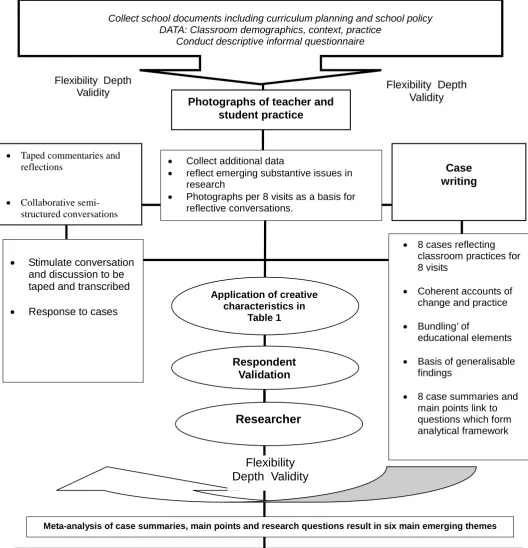
Figure 2: Flow chart summary of the data collection and analysis procedure used for this
LIST OF TABLES
Table 1: A summative model of definitions of creativity………...37
Table 2: Assessment strategies of creative learning………...63
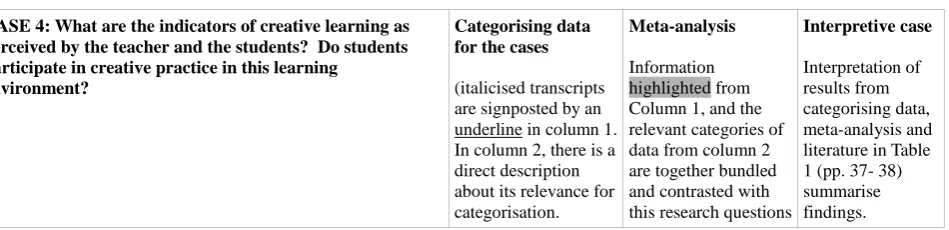
Table 3: Demonstration of case analysis………..115
CHAPTER 1
INTRODUCTION
Education has the capacity to engage students in those discourses which support thinking, creativity
and innovation, active citizenship and lifelong learning. Yet, many students in Australian schools
(Hartely, 2006; Prosser, 2006) are not developing and applying curriculum which consistently and
explicitly supports this learning. There is widespread acknowledgement that despite the reforms
(Dimarco 2009; ConsultQld; 2004) to encourage young people’s engagement in learning, especially
in the middle years (Years 5-9), many students are leaving school without realising their academic
potential, nor are they prepared for participation in lifelong learning. These factors greatly impact
on their future capacity for socio economic success.
These outcomes from the school experiences of many young people in our community emphasise
how teachers can respond to students’ individual needs and interests, and how they might draw on
innovative or creative learning approaches to do so. For example, such approaches can occur in
learning environments where creative pursuits are valued and encouraged via innovative or creative
pedagogies. In particular, the characteristics of creative pedagogies and the conditions for engaging
in creative learning embody many of the practices in goals for the middle years of schooling.
While schools acknowledge the need for improving pedagogic practices to meet student needs,
there are challenges on many levels, including restrictive timetables, acceptance of something
different and a standardised curriculum, all of which affect the possibilities for change.
This thesis presents a case study of one teacher who is attempting to introduce change in
pedagogical practices in a middle years classroom to improve student engagement, collaboration
reports the conditions for teaching and learning which might support the development of creative
practices of young people, as described by the UK Office for Standards in Education (Ofsted)
(2010), Chell and Athayde (2009), Csikszentmihalyi (2008), Hartley (2006) and Craft (2003). This
study specifically focuses on creative pedagogic strategies because they offer a way in which
teachers and learners can establish and practise many of the conditions for more engaging learning
environments. By researching the cultural values and mindsets constructed and maintained by the
school, teacher and students of this study, it is anticipated that further insight into the challenge of
introducing creative strategies into everyday classrooms bound by standards based curriculum will
be reached.
This particular research inquires about a teacher’s practices and the type of classroom environment
which could support creative learning in the middle years of schooling, specifically in Years 5 and
6. For this study, classroom teacher, Chris (pseudonym), was employed by principal Jones
(pseudonym) because of her reputed ability to enhance students' engagement, and to improve
learning and teacher performance through implementing innovative practices. The research reports
Chris’ experiences as she introduces new pedagogical practices into her classroom. It is important
to highlight that while this teacher attempts to find opportunities to implement innovative pedagogy
in her Year 5/6 classroom, it is not without difficulty. The struggles experienced by this teacher
when practising pedagogic change are largely due to school and curriculum structures that are
resistant to change and are bound by accountability standards. These issues cause the real
difficulties of being creative or innovative in education, despite the best of intentions. Chris’
experiences also included low collaborative cohesion of staff, lack of school resources and funding
to even provide a weekly Arts program as the school was situated in a low socio-economic area of
the outer western suburbs of Melbourne. This teacher's story is not unusual, and it presents the
school situations, as shown in recent research from Hipkins (2011). In particular, the study reveals
insights into the conditions and experiences which may be faced by many teachers who value
change, and whether or not every day classrooms can support strategies for creativity and
innovation as a way for learners to be engaged and motivated in classrooms.
Creative pedagogies can be an alternative way of modeling lifelong learning for young people
encountering a society and its culture that are being re-created by globalisation, technology, the
economy, enhanced accountability systems and the consequences of making choices. Research by
Hartley (2006) and the National College for School Leadership (NCSL) (2005) describe creative
pedagogies as a powerful way of engaging young adolescents in the collaborative and substantive
discourses which inform choice and accountability for those choices. Gresty (2009) proposes that:
We need to provide future generations with the skills for innovation to a greater degree than ever before: the confidence and insight to generate a novel idea or new approach; the motivation, commitment and resilience to pursue that idea; the leadership, energy and dynamism to communicate their vision to others and drive it forward from concept to reality (Gresty in Chell & Athayde, 2009, p. 2).
Recent research by Ofsted (2010) provides relevant evidence of how curriculum development can
promote pupils’ creative learning as an enhancement of National Curriculum rather than as an
alternative to it. The study reports that:
In secondary schools visited, the survey found similarly persuasive examples of the positive impact of creative learning on students’ motivation, progress and attainment. With this rather different approach, many students with previously low attainment and disaffection gained confidence and then competence in working towards accreditation to prepare them for future employment (Ofsted, 2010, p. 17).
Hence, the practice of creative learning in the middle years of schooling (Years 5- 9 or10-15 year
old students) is of particular interest to developing classroom environments which could be
Aim of Chapter
The aim of this Chapter is to introduce the research topic by clarifying, through reference to the
literature, the understandings of creative teaching and learning practices and their place in middle
years’ pedagogic practice. This Chapter is divided into two parts. First, a brief discussion outlining
the current context of creativity will establish the importance for creative pedagogies and learning
outcomes in the middle years. Here, a short focus on the current social and educational context will
highlight the challenges for teachers, learners’ needs, futures learning and the relationship between
teachers and students in the middle years of schooling. The remainder of the Chapter will define
the specific significance this study offers to current research, and identify the guiding research
questions used when examining learning practices, such as creative learning and classroom
practice.
Current context of creativity and the middle years of schooling (Years 5-6)
The term creativity has been used by Ofsted (2010), Starko (2004), Craft (2003), Mitchell (2003),
Bresler (2002) and Yashin-Shaw (2001) to describe a dimension of the nature of creative
pedagogies which involved problems, thinking and solutions. For these authors, creativity consists
of:
• finding problems, possibilities or issues that have extrinsic and intrinsic value by
questioning and challenging;
• generating ideas for addressing those problems;
• making connections and seeing relationships by exploring problems;
• reflecting critically on ideas, actions and outcomes;
• evaluating ideas, processes and products generated;
• containing relevance of product and process and offering a solution;
to evaluate its significance and effectiveness; and
• possessing skills of self-identity and autonomy; flexibility, originality, elegance of
problem solving, and risk taking when solving or approaching problems.
According to Csikszentmihalyi (2008, 1996), Craft (2001), Cropley (2001) creativity, dynamism
and self are the dimensions that embody the nature of creative pedagogies. Creativity is described
as a practice that involves processes of thinking about thinking, seeking problems and solutions for
innovation and change. Therefore creativity is dynamic and changes as new ideas and thoughts
emerge from an environment that is flexible with time, knowledge and changing risk taking
capacities, and which values the process of creativity itself. Creators are largely motivated to be
innovative or creative when they are engaging in the dimension of self, that is, self-identity and
autonomy, which are developed and re-created during and for creativity.
In a school classroom context, these understandings of creativity play an important role in the
engagement of students in learning. The provision of opportunities for young learners to develop
personally reflective, metacognitive and creative thinking skills is imperative for the teaching of
middle schooling students, specifically Year 5/6 students in this study, as it is a period when
thinking patterns and behaviours are established for the short and long term (Barratt, 1998). If too
few opportunities for curiosity and the exploration of an idea are available, and too many
obstructions are erected by teachers, then the motivation to engage in creative learning behaviour is
easily extinguished. Therefore, to boost students’ self-confidence and openness to the future, they
need to be educated to be innovative as well as competent. These findings are also supported by
Chell & Athayde (2009) who contend that 'creativity alone is not sufficient to foster innovation' (p.
14), and that self-efficacy and feelings of empowerment are essential motivators for long term
An innovative and creative middle years learning environment reflects a curriculum which models,
facilitates and enables adolescents, through processes of deliberative collaboration, to have the
energy, motivation and commitment to better understand and be critical of the forces of change
around them. However, the provision of such a learning environment can be challenging for many
middle years teachers. The Queensland Ministerial Advisory Committee for Educational Renewal
(MACER) (2004) argues that:
While communication skills, flexibility in thinking and emotional intelligence are increasingly seen as fundamental capability for living in a globalised world, the ideology of knowledge workers (teachers) who maintain tertiary education levels and voluntarily upgrade their stock of complex knowledge, impede the flow of flexibility, lifelong learning strategies, reflective and critical thinking, and dynamic knowledge (MACER, 2004, p. 14).
These challenges are still prevalent in the findings of current research by Oftsed (2010) indicating
that
Pupils made little progress when the outcomes expected were insufficiently challenging and when they received insufficient guidance. Occasionally, teachers failed to grasp that creative learning was not simply a question of allowing pupils to follow their interests; careful planning was needed for enquiry, debate, speculation, experimentation, review and presentation to be productive (Ofsted, 2010, p. 7).
As outlined in, the then DEET (Department of Education Employment and Training, 2001)
Discussion Paper on Knowledge, Innovation, Skills and Creativity, 'Education will need to help
students develop the skills and knowledge for the knowledge economy, lay the foundations for
lifelong learning and ensure they reach their full potential. Innovation and initiative are critical
areas of skill for the future' (2001, p. 5). Research by Chell and Athayde (2009), Halsey, Lord and
Jones (2006), Prosser (2006) asserts that teaching futures for the middle years also poses difficulties
in cross-cultural contexts, wherein the knowledge style and forms of presentation are all open, but
often not for negotiation, rendering them as inauthentic experiences. According to Brennan (2000)
students need to become active agents of their own education, and be given individual
the skills needed to navigate in a changing world.
Arguably, the learning and collaborative relationship and roles between teachers and students are
being transformed to meet such outcomes. Research in creativity, innovation and creative thinking
by theorists such as Chell & Athayde (2009), Hemlin, Allwood & Martin (2008), Hartley (2006),
Starko (2004) and Craft (2003), finds that adaptability in a changing world continues to be
important throughout each person’s lifetime, whereas specific skills and knowledge become
obsolete. Research by Ofsted (2010) and MACER (2004) acknowledges that schools and teachers
need to be actively engaged in creativity, innovation, risk, autonomy and self-management through
government promotion of:
• the motivation to promote new knowledge,
• the opportunity to engage actively in innovation,
• the skills for testing and assessing the validity of new knowledge,
• the means for transferring the validated innovations rapidly within their school and into
other schools,
• careful planning to ensure prescribed curriculum content for each subject is covered
within a broad and flexible framework so that key skills are developed, and
• whole-school commitment to developing and consistently using technology to enhance
pupils’ confidence and engagement.
While some government literature and research acknowledges the importance of knowledge,
innovation, skills and creativity (National College for School Leadership, 2005; ConsultQLD, 2004;
MACER, 2004), research by Ofsted (2010), Chell & Athayde (2009) show a movement forward
into innovation, creativity and lifelong learning success. Chell & Athayde (2009) identify creativity,
for students to develop more positive mindsets and attitudinal approaches to learning. In contrast,
the Victorian Department of Education Employment and Training’s (2001) discussion paper
identifies creativity as a catering to personality traits and learning styles. The paper describes older
style curriculum methods that are limited to isolated goals and targets, rather than being a dynamic,
educative strategy. Statewide mandated curriculum such as the Victorian Curriculum and
Assessment Authority's Victorian Essential Learning Standards (VCAA, 2005) and more recently
AusVELS (VCAA, 2012) still offer a prescriptive method of education with an incomplete
understanding about those pedagogic practices and new methods for assessing progress and
attainment in creativity; or how to cater for creative learning within the constructs of traditional
timetabling organized around curriculum.
Clearly, the curriculum standards which are made available to teachers influence the standard of
explicit learning outcomes and the potential for authentic learning. It is also clear that the social
context, including the classroom environment and personal situation of learners, is important in
shaping creative learning. Therefore, it is also important to understand those interpretations of
curriculum which teachers develop and practice to better understand the place for teaching and
learning for creativity.
Significance of research and contribution to knowledge
The research findings of Ofsted (2010) offer great insight to some schools in England that are
enhancing their prescribed National Curriculum, where creative approaches to learning are
progressively developed and assessed. Australian government initiatives, while supporting policies
for improved learning qualities such as creative learning or innovation practices, do not explicitly
deal with the notion of the type of learning environments which support schools to improve creative
insight into the support of creative pedagogies and their relevance to a middle years’ context, one
teacher’s classroom practices were examined in this research study. This research investigated the
teacher's and students’ beliefs about the nature of learning teaching and how they affect, stimulate
and lead to engagement by the students in learning outcomes in the middle years, through the
development of new strategies and innovative practices. This study used a case study to generate
new knowledge about the gap between policy and research, about the fate of innovation in a school
and the impact of standards based curriculum on creative learning in a middle years classroom. In
particular, this study reveals:
• The strategies and approaches a teacher uses to engage students in creative curriculum
and the classroom environment necessary to support those changes.
• The elements of teaching and learning that could support creative learning within the
constraints of a school system and standards based curriculum.
Research questions
In examining classroom practice, this research focused on the following issues:
• What are the different meanings and values attached to learning, and how are such
meanings related to teaching practice, innovative learning and assessment in the middle
years?
• What methods of creative practices or strategies are identified or supported in a regular
classroom?
• Can creative thinking be taught effectively as a specifically generated skill or as an
integrated approach into the practices of an everyday classroom and curriculum
conditions?
• What are the challenges faced by a teacher when introducing creative approaches to
• Is there a place for a model of teaching practice in a standards based curriculum, which
includes creative pedagogies?
An extended review of the relevant literature in Chapter 2 indicates the theoretical approaches to
developing creative learning and understanding the context and place of creativity in schools. It
discusses the idealized place of creative learning in current curriculum and how it could be applied
as a strategy for developing high order thinking, relevant skills and modeling life-long learning for
middle years students. Most importantly, the issues of democratic schooling and school
restructuring are discussed in light of creative pedagogies and the values placed upon creative
learning in and out of schools. This discussion will identify the potential challenges pertaining to
educational equity and students’ access to learning, the relationships of power between the teacher
and student, all of which impact the choices made when developing curriculum for teaching and
learning in the middle years. Finally, a review of recommended theoretical strategies for
establishing a creative teaching and learning environment emphasises the validity of creativity
pedagogies in powerfully engaging young adolescents in their present and life-long education.
Chapter 3 describes the qualitative methodology of data collection and analysis which have been
sourced from photographs, tapes conversations, case writing and interpretive case writing to provide
a rich and comprehensive description of teaching and learning in one classroom. The qualitative
methodology used is phenomenological, as this method enables the researcher to understand the
teacher and students’ perceptions of their classroom environment, and reveals the phenomena of
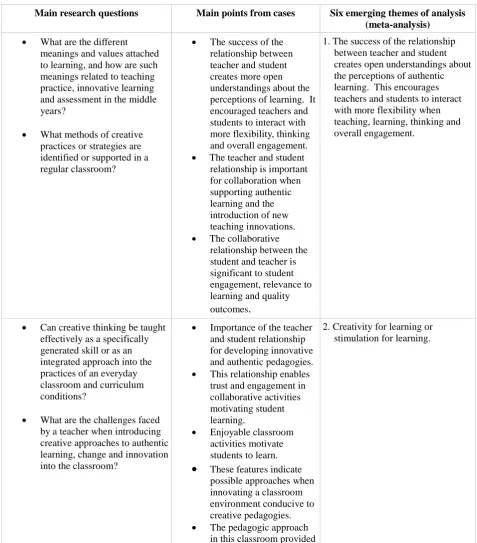
experiences as they occur (Van der Mescht, 2004). Chapter 4 presents the research analysis and
findings, with examples of how these findings were developed to inform a meta-analysis. The
meta-analysis advances six main themes that are significant in understanding the context and
applications of creative pedagogies in this middle years classroom. These analyses are applied in
Chapter 5 presents the final theorised case - the interpretive case - and reveals the dilemmas a
teacher faces when introducing pedagogic change to improve learning and student engagement. It
also reveals the relationship between pedagogy which reflects innovative approaches in one middle
years environment, and a school context bound by an accountability and standards based
curriculum. The interpretive case is informed by an analysis of findings applied to the
characteristics of creativity developed from the literature review, and then applied to the six points
of meta-analysis which map and document the experiences of this one class over the period of the
research. The interpretive case shows the influences upon the classroom participants being studied,
including: time, flexibility and creative processes, and the school community including other
teachers and parents. It also provides an insight into the relationship between the active
participation of students, perceived creative thinking and possible creative learning outcomes which
contributes to the body of the data collection. Finally, Chapter 6 summarises these results and
attempts to inform the literature about the balance between perceptions and experience of
curriculum, and the types of school culture and classroom environments needed to support them. It
offers conclusions to the strategies and difficulties faced by teachers when attempting to change
school culture to improve learning outcomes. This Chapter also discusses the implications of this
CHAPTER 2
LITERATURE REVIEW
This literature review explores the theorised approaches for developing creative learning in the
middle years, and understanding the possible place of creative practice in everyday classrooms.
These approaches include defining the term creativity, the nature of creative practice in learning, as
well as the major influences and constraints when developing creative learning in schools. A review
of the strategies for establishing a creative teaching and learning environment highlights the validity
of pedagogies for creativity in powerfully engaging young adolescents in their present and lifelong
education. This discussion will feature the idealized place for creative learning in current
curriculum and how it could be applied as a strategy for developing higher order thinking, relevant
skills and modelling life-long learning for middle years students. While schools acknowledge the
need for creativity in education (Bland, Brady & Carrington, 2009), it is not a consistent practice,
thus making innovation and change in schools and everyday classrooms a struggle. This review
will reveal the challenges pertaining to educational equity and students’ access to learning, the
relationships of power between the teacher and students, and the challenges of current curriculum
practices in schools and accountable decision making. These are all elements which affect the
choices for developing innovative practices such as creative learning in middle years classrooms.
Prominent in the literature are four main topics which contribute to understandings of creative
pedagogies and reflect the five main research questions below:
• What are the different meanings and values attached to learning, and how are such
meanings related to teaching practice, innovative learning and assessment in the middle
years?
classroom?
• Can creative thinking be taught effectively as a specifically generated skill or as an
integrated approach into the practices of an everyday classroom and curriculum
conditions?
• What are the challenges faced by a teacher when introducing creative approaches to
authentic learning or change and innovation into the classroom?
• Is there a place for a model of teaching practice in a standards based curriculum, which
includes creative pedagogies?
The main topics reviewed in this literature review cover research pertaining to cognitive theory,
curriculum and pedagogic theory and practice, sociology and social theory. The review is organised
into four themes which parallel the concepts of the research questions previously outlined: defining
creativity; creative learning; the teacher, student and power; and teaching for creativity.
The first theme reviews the definitions of creativity in education, and summarises the idealised
characteristics of creativity for this research. These are later applied to the analysis of findings in
Chapter 4 and the interpretive case in Chapter 5. The second theme of creative learning explores
the context of pedagogies in schools; reflecting middle years curriculum issues, school
restructuring, lifelong learning, the possible place of creativity and innovative pedagogies in
everyday classrooms. The third theme will present a review of the significant findings related to
emerging notions of pedagogic practice in the middle years. These include the distribution of
power between the teacher and student and effects on creative practice in the classroom, in light of
current curriculum practices and their capacity to engage students. Moreover, this theme reveals the
values placed on creativity from social, economic and technological perspectives which influence
implementation of pedagogic change in classroom practice.
The final theme reflects on the underlying issues of previously described topics, drawing attention
to how they can be interpreted when applying creative pedagogic strategies. Specifically, there is
an emphasis on two findings. First, the literature reveals strategies for understanding and
developing those classroom environments and school priorities which could support teaching and
learning through creative pedagogies and assessment of creative learning. Secondly, the literature
explores approaches to assessment and curriculum planning for creative learning outcomes.
Creativity
This first theme of the literature review sets out to explore the socio-cultural and economic contexts
and education issues which reflect the need for schools to develop creative learning pedagogies. It
defines the characteristics of creativity in education, followed by an examination of the relationship
between these theories of creativity and the approaches to creative practices based on social and
cognitive theory. These understandings will reveal the theoretical characteristics of creativity
which influence student learning, thinking and engagement in the middle years. A review of the
literature results in a summary of idealised characteristics of creativity which will be applied to this
research. This theoretical summary will identify and demonstrate the presence of creative learning
strategies which could possibly be supported in a standards based curriculum. This section about
creativity explores the following concepts and practices:
• context for creativity in the classroom;
• characteristics of creativity;
• a systemic approach to creativity;
• creativity: process versus product;
• the place of creative learning in a standards based curriculum; and
• finally, the characteristics of creativity for this research.
Context for creative learning in the classroom
There has been great evidence, emerging from education systems in western societies since the end
of the 1990s, in developing creativity in response to the problems of improving competition in the
globalised market economically, socially and technologically (Beane, 2001; Caine & Caine, 1997;
Calfe & Hiebert, 1991). Academic research in education reveals that the promotion of creativity in
the school curriculum propels students to make improved choices for the future. It is suggested by
Chell & Athayde (2009), Suda (2006) and National Middle School Association (2006) that, through
increased capacity to be flexible and to be innovative, an individual will generate the skills claimed
to be necessary for economic and societal survival. Chell & Athayde (2009) indicate that these
skills need to have a measure of accountability so as to identify their currency in education and
encourage a culture that helps innovative education to flourish. Research by UK Ofsted (2010) and
Hemlin, Allwood & Martin (2008) shows that successful curriculum initiatives taught alongside
creative approaches to learning encourages students to be divergent thinkers who can reflect on
their learning, understandings, inquire, hypothesise and apply their learning.
In education, the middle years of schooling have been identified as having special characteristics in
terms of student development, behaviour and learning needs (Bland, Carrington & Brady 2009;
O'Rourke & Dalmau 2002). The issue of middle years learning has also arisen from the demands of
a rapidly changing globalised society, particularly in those approaches pertaining to engagement
and learning experiences (Hipkins, 2011; Hartley, 2006; Prosser, 2006). Other theorists address
critical literacies (Luke et al., 2003), complex thinking and problem solving (Starko, 2004;
during the middle years (Years 5-9). Calls for developing these pedagogic characteristics have also
been influenced by a system constrained by dominant educational stereotypes and
misunderstandings of the role and identity of 10-15 year old students and their subcultures
(Ministerial Council on Education, Employment, Training and Youth Affairs, MCEETYA, 2008;
Beane, 2005; ConsultQLD, 2004; O’Rourke & Dalmau, 2002).
For students in the middle years, education should have immediate intrinsic value and relevance to
their lives, and not just present long term promises for future employment or studies (Bland,
Carrington & Brady, 2009; Prosser, 2006). Students need to know how and when to perform and
how to change their performance intellectually, socially and emotionally to fit new and different
contexts. Such understanding and metacognition are not only necessary for participating in
economic or intellectual futures, but for building responsible democratic communities, relationships
and personal independence, as the world of the middle years student evolves from the influences of
mass-media, telecommunications and multi-media (Chell & Athayde, 2009; MCEETYA, 2008).
In a society and an economy which demand technological proficiency, there is a shift towards an
information and innovation focus for education. For students in the middle years, technology is not
just a tool; it is a way of life where they are connected with their world and their peers through the
language and social networks they create. While schools need to impart the desire and pleasure of
learning, the ability to learn, how to learn and intellectual curiosity within such a framework
(MACER, 2004; Manning & Ryan, 2004; Craft, 2003; Bresler, 2002), it is through teaching for
problem solving and problem finding, that teachers can achieve this goal. Starko (2004) and
Newmann and Whelage (1995) suggest that school teachers need to practice a pedagogy that
focuses on problem-centered learning rather than student-centered or prescribed
Approaches to achieving problem-centered learning are suggested by Craft (2003, 2002) who
contends that life wide creativity, the creative practice applied to the breadth of contexts in everyday
life, enables the agency of individuals to be applied to the responsiveness and innovations required
to adapt to a rapidly developing society. According to Starko (2004), it is problem finding, in its
broadest sense, which underlies all types of creativity. The literature also discusses the type of
pedagogy where participants create, enact and experience purposes (Hemlin, Allwood & Martin,
2008). These practices involve learning values, expectations, knowledge and ways of knowing,
rules of discourse, roles and relationships, resources, artifacts, physical arrangements and
boundaries of the pedagogic setting both together and separately (Suda, 2006; Durbach, 2004;
Zyngier & Brunner 2002). Chell & Athayde (2009) argue that 'to become future innovators, young
people need an initial set of skills and attributes that are clearly linked to the innovation
process...innovation is a collaborative activity: whilst one individual may initiate the idea, few can
go it alone’ (2009, p. 13). It is these approaches to creativity and learning which are explored in this
research, to offer possible strategies which support students’ and teachers’ practices in the middle
years.
Characteristics of creativity
Creativity is diverse in its context and it is difficult to report one common definition. The difficulty
in presenting a single definition parallels the variation in the range of values schools and teachers’
exhibit when understanding, interpreting and implementing creativity in education. Gallop (2002)
describes creativity as an:
Creativity is not an objective realisation. What is judged as creative is due to the interaction
between a person and that environment (Csikszentmihalyi, 2008; Craft, 2003; Auh, 2000;
Sternberg, 1996). Robinson and Aronica (2009) contend that creativity can be thought of as applied
imagination, and present creativity as the key example of the dynamic nature of intelligence.
Paradoxically, a student can be creative and demonstrate creativity but not produce anything novel,
effective and ethical. However, Starko (2004) asserts that 'to be considered creative, a product or
idea must be original or novel to the individual creator,' (2004, p. 6) not only particular to the
evaluation of the participants in that environment or the experts within that field. Sternberg (1996)
identifies types of creative thinking, such as synthetic thinking which is the ability to make
connections and generate novelties that other people do not recognize spontaneously (1996, p. 3).
This type of thinking can be seen in Anderson and Krathwohl’s (2001) revised Bloom’s Taxonomy
Sub Categories where creativity has been added to the top of the Higher Order Thinking Skills
(HOTS). Anderson and Krathwohl (2001) believe creativity to be higher within the cognitive
domain than evaluation (Churches, 2008; Anderson & Krathwohl et al., 2001). Craft (2001)
describes this as 'high creativity', the sort of publicly acclaimed creativity which changes knowledge
and/or our perspective on the world (2001, p. 13).
Another position on creativity is that it can be applied to more than one context and is therefore not
limited to traditional domains of creativity in school or in the arts (Craft, 2001). Robinson (2009)
states that 'discovering the Element [creative potential] is all about allowing yourself access to all
the ways in which you experience the world and discovering where your own true strengths lie'
(2009, p. 51). It is apparent that creativity is more than an artistic or aesthetic phenomenon, and can
be applied to sports, business and manufacturing, mathematics and the natural sciences. Thus, it is
A systemic approach to creativity
A systemic approach to understanding the social systems, within which the creative act occurs, sets
the focus of analysis for this research. Figure 1 (p. 27) is an interpretation presented as a
triangulation of Csikszentmihalyi's systemic theory of creativity. Csikszentmihalyi (2008, 1996)
describes creativity as a systemic phenomenon, describing the product and process of the
'interaction between a person’s thoughts and a socio-cultural context' (1996, p. 23). As illustrated in
Figure 1 (p. 27), creativity results from the interaction within this system, composed of three
elements: a culture (domain) that contains symbolic rules, an individual who brings novelty into the
symbolic domain, and field of experts who recognize and validate the innovation.
The literature of Csikszentmihalyi (2008, 1996), Craft (2001) and Amabile (1990) indicate that all
three elements are necessary for creative ideas, product or discovery to take place. The domain is
the culture, which influences the creativity and potential of learners, both within and external to the
school environment. The domain has set symbolic rules and structures, which for students are
accessed via the teacher ('field' in Figure 1) curriculum and learning environments. The domain
directly affects the field, which in a school context reflects teachers acting as gatekeepers to the
domain, which is defined as society, future employment and government education requirements
and expectations and those of parents and local communities. Very often, the role of the field is
reactive to and pro-active about the requisites of the domain that in turn can narrow, broaden or
filter the selection of novelty to be created and developed (Csikszentmihalyi, 2008). The individual
(learner or creator) uses the symbols of the domain to create. The individual learns the rules and the
Figure 1: Systemic approach to creativity, an interpretation from Csikszentmihalyi 1996, p.
27)
According to Csikszentmihalyi (2008, 1996) the potential for creativity is influenced by interest in
and access to the domain and field, level of convergent and divergent thinking ability and the
complexity of processes involved. The central novelty or product of creativity can result in the
production of abstract concepts; plans, strategies and systems; physical structures; music and arts
and so on. Such creativity is effectual, thereby achieving an end product, which is wholly valued
and acknowledged subjectively and objectively by both the creator and external actors (domain and
field) (Csikszentmihalyi, 2008; Bresler, 2002). In this instance the personal traits of creativity are
not what determine whether or not a person is creative. Rather, what counts is whether the field of
experts in the cultural domain accepts the novelty produced. In the context of schools, the contrast
of Starko's earlier assertion of creative novelty having relevance for the creator, and
Csikszentmihalyi's notion that creativity is determined by the domain, pose questions for schools
and teachers regarding power, accountability, professional knowledge and acceptance or
acknowledgment for creative learning and practices. While it appears that many of the arguments
found in literature present arguments that represent creativity as highly cognitive and
learning is a possible way to promote students’ engagement and stimulus for thinking and learning
both individually and collaboratively.
Creativity: process versus product
There is consensus among theorists that creativity is too often determined by its product, indicating
that there is too much interest in the result, rather than focusing on the intricacies of development,
effort and deliberate choice that precede end products (Starko, 2004; Bresler, 2002). Creativity can
be also be identified by processes relating to its cause and as an interaction. The causality of the
process is acquired through the application of experiences and psychological factors via the
creator’s ability, knowledge, skills, motivations, values, flexibility, intellect, courage and openness.
The interactive nature of creativity relates to the creator’s exposure to the environment. Research
by Csikszentmihalyi (2008), Richards (2007) and Mitchell (2003) contend that this environment
encompasses:
• creator’s psychological factors;
• creator's interaction with the field (as described in Csikszentmihalyi 1996, pp. 27, 100);
• collaborative dialogues and interactions;
• 'resisters' or circumstances and people inhibiting the process, choice and freedom to
experiment;
• environment of tolerance, undue time pressure, competition, appropriate modelling,
encouragement and recognition during the process of creative production; and
• evaluative expectations.
It is important for pedagogy to reflect these elements of creativity, both process and product,
develop a classroom environment supportive of creative processes so that students feel safe to share
ideas, problem seek and experiment. None of the existing definitions of creativity is immune from
the problem of defining creativity as a product. Additionally, the process of interactivity required
for creative thinking may be limited by a curriculum that is too varied, as a creativelearner may not
be able to express creativity with equal ease and effectiveness in all areas consistently. This causes
a problem for teachers who largely assess the product of learning. Research by Ofsted (2010) and
Hemlin, Allwood, & Martin (2008) has shown that successful application of creative learning to
curriculum is multidisciplinary with cross curricular approaches. They encourage a flexible use of
time, allowing for detailed exploration of a topic and providing continuity of learning. Here,
motivation and construction of learning is still engaging even within a standards based curriculum,
as the approach to developing the teaching and learning practices are not compartmentalised into
one domain or thinking outcome, and are focused on the process of problem solving and seeking.
Approaches to creative problem solving
Csikszentmihalyi (2008), Hartley (2006) and Bresler (2002) argue that although the results of
creativity enrich and indirectly improve the quality of life within the culture, one may also learn
from this knowledge and make life more interesting and productive through applying creative
problem solving. Research by Yashin-Shaw (2001) focuses on a ‘controlled laboratory conditions’
approach to protocols utilised in creative problem solving. A tool has been developed for
‘navigating poorly structured problems for 'freeing' the practitioner to encourage students to use
cognitive resources interactively and iteratively rather than linearly to increase the quality of the
output’ (Yashin-Shaw, 2001, p. 271). A developed understanding of Yashin-Shaw’s model for
teachers could provide approaches to planning or teaching for creative problem solving. This
theory is supportive of the findings by Ofsted (2010) regarding cross curriculum creative learning
sequential nor based on stage-like models to enhance a middle years student's journey of creative
thinking; supporting the idea that the value of learning be primarily focused on the process of
learning.
O’Rourke & Dalmau (2002) present a social ecology perspective to education which supports
Yashin-Shaw’s model. They recognize that the ‘middle years student needs a responsive approach
to pedagogy, rather than specific frameworks or models' (2000, p. 6), such as the approaches by
Ofsted (2010, p. 9) for integrating national curriculum into planning for creative learning. Both the
positions of O’Rourke & Dalmau and of Yashin-Shaw show that it is significant that the evaluative
processes teachers use for assessment should focus on the entire process of learning and that
activities should not be 'locked into one specific schema for creative problem solving' (Yashin-Shaw
2001, p. 57).
The place of creative learning in a standards based curriculum
The literature proposes several approaches to curriculum methods, innovative practice and learning
styles which suggest the possible place for teaching and learning for creative learning in standards
based curriculum, to improve engagement, thinking skills and overall learning outcomes. Previous
discussions by Ofsted (2010), Churches (Bloom’s Revised Taxonomy) (2008), Hemlin, Allwood, &
Martin (2008), O’Rourke & Dalmau (2002), Yashin-Shaw (2001) present strategies for a pedagogy
which is flexible, dynamic, responsive, problem seeking and solving and inter curricular. However
some school curriculum methods are still founded on constructivist approaches, as discussed in the
literature for metacognitive thinking from the late 1980s by Biggs (1988) and Haller, Child, and
Walberg (1988). Research in the 1990s by Sternberg (1998) and Hattie, Biggs, Purdie (1996) argue
that students' knowledge was considered to occur in progressive developmental stages and did not
engaged in complex activities in a specific subject (Starko, 2004; Caine & Caine, 1997), it does not
allow the flexibility required for higher order thinking described by Ofsted (2010) such as thinking
divergently, reflecting on findings, posing questions, hypothesising and applying learning, or as
described in Csikszentmihalyi's (2008) triangulation of creativity in Figure 1 (p. 27).
A cognitive approach to creativity can involve the use of thinking tools or techniques to assist
students in generating original ideas (Starko, 2004). While many of these tools are specifically
designed for business purposes to develop new products and maintain a competitive edge, Starko
(2004) finds that the use of thinking tools as a sole method of stimulating or practising creativity,
can take the control and creativity away from the learner. Starko (2004) concludes that in the
development of creativity, 'having tools, however, is not always sufficient' (Starko 2004, p. 178).
He continues to explain that these thinking tools have relevance when the context and applications
are similarly relevant to the cultural contexts of students' lives:
…it is necessary to provide multiple vehicles or strategies to appeal not just to students' varied abilities or learning styles, but also to their diverse social and cultural values. This varied sense of appropriateness perhaps makes defining creativity more
complicated, but it also allows richness and diversity in the types of creative efforts that are attempted and appreciated (Starko, 2004, p. 7).
There is evidence that many of these strategies described can be effective in assisting both children
and adults in producing novel ideas. Some of the techniques reflect cognitive processes underlying
creativity, in turn developing attitudes or habits of mind that facilitate creativity, such as
independence in judgement, willingness to explore multiple options, and persistence beyond the
first idea (Starko, 2004). However, the use of tools still does not explain or demonstrate how
approaches to higher order thinking and problem finding will take into account interactivity,
flexibility and the time required for these learning processes in everyday classrooms bound by
Craft (2001) asserts that due to the various types of strategies, programs and thinking tools
developed to encourage and facilitate problem solving skills, 'there is rarely a transfer to more
complex activities such as creative production' (2001, p. 16). Though this may be apparent, there is
still a place for the teaching of thinking strategies in developing creative processes which are
necessary for lifelong creative skills. Craft (2001) acknowledges that some pedagogic strategies
may develop greater creativity than others. She gives, as an example, Montessori education which
supports educational practice to 'help children develop creativity, problem solving, social, and
time-management skills, to contribute to society and the environment, and to become fulfilled persons in
their particular time and place on Earth' (2001, p. 16). This model focuses on 'success-oriented and
self-correcting, hands-on manipulatives to accommodate the holistic nature of the child, including
physical, mental, and moral aspects' (Fogarty, 2007, http://www.robinfogarty.com). The basis of
Montessori practice in the classroom is respected individual choice of research and work, and
uninterrupted concentration rather than group lessons facilitated by an adult (Montessori,
1998-2012, http://www.montessori.edu/). This method largely seeks learning in a less technologically
dominated world and focuses on respect by the internal, individual nature of the learner
(Montessori, 1998 - 2012, http://www.montessori.edu/; Craft, 2001; Fogarty, 2007,
http://www.robinfogarty.com).
Craft (2001) groups current dominant approaches to creative thinking and learning into 'creative
cycle, single strategy, multi strategy and system approaches' (2001, p. 19). Included in these
groupings are similar approaches advanced by Starko (2004), Cropley (2001) and Choo (2000):
• 'Creative cycle' approaches describe the stages of creativity as preparation, incubation,
inspiration and verification; or Divergent Thinking strategies such as Guilford's Structure
different categories or points of view), originality (thinking of unusual ideas), and
elaboration (adding detail to improve ideas) (also in Starko 2004).
• 'Single-strategy' approaches, such as de Bono's Six Thinking Hats method (de Bono
1992), lateral thinking, Craft's 'possibility thinking', Robin Fogarty's activities in the
Thinking Curriculum (Plus Minus Delta, Y-charts, etcetera) (Fogarty, 2007,
http://www.robinfogarty.com; VCAA, 2005, http://www.vcaa.vic.edu.au).
• 'Multi-strategy' approaches include those significant for the pedagogic approaches to
creativity such as the restructuring of time, and flexibility, in teacher intervention and
classroom environment (Craft, 2001). Another approach is Torrance's and Safter's 1999,
Incubation Model which provides students with experiences encouraging them to identify
problems or gaps in knowledge, and to think about them in new ways, and to take time
for incubation to occur.
• 'System' approaches include those which modify the classroom environment, such as the
Reggio Emilia (2003) approach (http://www.reggioinspired.com). Though focused on
early childhood, relevant strategies to middle years include a focus on time to complete
tasks, space; rich resource materials also selected by students, a student represented
classroom environment, experimental environment, field trips and artifact presentations
(Craft, 2001).
While the literature provides many conceptions of authentic learning, including constructivist,
progressive, productive and critical pedagogies (Dimarco, 2009; Prosser, 2006; Beane, 2005; Luke
et al, 2003; O’Rourke & Dalmau, 2002), there is little explicit discussion of its relation to the notion
of teaching and learning for creativity nor its application to schools bound by accountability and
standards based curriculum. Chell & Athayde (2009) argue that 'regardless of subject discipline, a
on projects, they are developing the teamwork skills needed in the workplace' (2009, p. 3). This
research has resulted in a project called The Tool, which is focused on innovation as the key driver
to success. Their research states, 'The Youth Innovation Skills Measurement Tool aims to address a
gap in educational assessment by offering a robust measure of young people’s innovation skills'
(Chell & Athayde, 2009, p. 17). They find that creativity is a component of this approach, but
innovation is the primary key as it is the ability to generate an innovative idea that comes first in
this process. Then, the skills of imagination and creativity develop it. They conclude that
Imagination means the ability to envision the development of the idea into the future. Creativity subsumes imagination and adds an ability to connect ideas, to tackle and solve problems, and curiosity.
What is important in our work is to capture a mind-set and attitudinal approach rather than a set of personality traits (2009, p. 14).
Of the many strategies aimed at developing creative thinking and learning, those most efficient are
dependent on the theory of creativity behind the pedagogic practice. Significant findings in the
research by Ofsted (2010) indicate that in ‘curriculum planning, teachers need to balance
opportunities for creative ways of learning with secure coverage of National Curriculum subjects
and skills’ (2010, p.7). They discuss that:
In schools with good teaching, there is not a conflict between the National Curriculum, national standards in core subjects and creative approaches to learning. In the schools which were visited for this survey, careful planning had ensured that the prescribed curriculum content for each subject was covered within a broad and flexible framework and key skills were developed. These examples were accompanied by better than average achievement and standards or a marked upward trend (2010, p. 5).
One such finding from Ofsted (2010) is that, occasionally, teachers failed to grasp what creative
learning means, thus impacting the flexibility and planning required for meeting those outcomes for
creative learning.
and how it will function alongside curriculum, is important for its successful implementation. Thus,
the many viewpoints on creativity, established in the literature signify that the ways creative
strategies and practices are viewed and interpreted will influence its many applications to
curriculum. The terms create or creativity has been used in curriculum documents in many ways:
'Create a…' replaces 'Make a…' or 'Compose a…' such as in New Basics Rich Tasks, Education
Queensland (2000) and Burke (1997). The curriculum approaches used in New Basics referred to
creativity as ‘an essential learning component of thinking, linking it to wisdom and enterprise, the
capacity to contribute to shape ideas and solutions’ (Education Queensland, 2000, p. 278). Ofsted
(2010) assert that ‘creativity is more than allowing pupils to follow their interests, careful planning
was needed for enquiry, debate, speculation, experimentation, review and presentation to be
productive’ (2010, p. 6).
The state-wide mandated curriculum in Victoria, including AusVELS (2012), the Victorian version
of the Australian curriculum separate 'creativity' as an explicitly listed dimension of the domain
Thinking Processes and ICT for creating as a strand of Inter-Disciplinary Learning. It also features
a domain called Design, Creativity and Technology encompassing investigating and designing,
producing, and analysing and evaluating. Teachers are required to teach the domain outcomes of
creativity, but it is not about the processes which involve creative learning as discussed in the
literature, it is about products and outcomes and skills. While the curriculum is less organised by a
subject approach, it seems that creativity is subject specific, rather than as a flexible or responsive
approach for teaching and learning across the curriculum as previously discussed by O’Rourke and
Dalmau (2002). It seems, the elements of the processes of learning, and the interactivity of higher
order and creative thinking are overlooked as described by Bloom’s Revised Taxonomy (Churches
2008) and Starko (2004). Yet, as shown by the current research of Ofsted (2010), teachers can
[in England] subjects and skills’ (2010, p. 7); indicating that creative pedagogies could be supported
in everyday middle years classrooms that practice Australian curriculum.
Characteristics of creativity for this research
With regard to the theories explored thus far, creativity can be identified as an act, idea or product
that changes an existing domain or transforms into a new one. As established in the literature,
creativity is not exclusive learning, and can be stimulated by the use of thinking tools or multi
strategy approaches, both collaboratively and individually. Creativity and the processes of
innovation for higher order thinking are valuable and motivating skills to develop middle years
learning environments. The themes and definitions discussed are characterized into elements that
define a theoretical understanding of creativity for this research as shown in Table 1. These
elements present an idealised notion of what is defined by the literature as theoretical approaches to
creative pedagogy. However, while these approaches can inform teacher practice, it is not a
practical model on which to base pedagogic or curriculum reform, as it is not inclusive of school
contexts and cultures. Table 1 indicates the seven main characteristics of creativity as identified in
Table 1: A summative model of definitions of creativity
Characteristic General description Application to classroom practice
Self-Identity and Autonomy
Learner requires high self-esteem, self-sufficiency,
and passion for autonomy (Bresler, 2002).
• Autonomy is motivated by making decisions related to one’s career.
• Questions to develop self-conceptualizing: 1. Who am I?
2. What do I believe in and value? 3. What do I want to get out of life?
4. What are my strengths and weaknesses? • How capable a person am I?
• Provide collaborative experiences, reflecting on perceived reactions of others, peers and teachers (Csikszentmihalyi, 2008, 1996; Runco, 1990).
Non-Conformity Viewed from a non-stereotyped perspective of
artistic/ literary/ dramatic/ musical contexts. A commonality between excitability, non-conformity, risk taking and creativity is motivational, reducing fear of self-embarrassment (Starko, 2004; Yair, 2000).
Learning and behaving in non-conformist ways is applicable to all areas of the curriculum. Simultaneously with other characteristics of creativity, it could promote making remote associations thus developing thinking skills which lead to production of novelty (Csikszentmihalyi, 2008, 1990; Cropley, 2001; Amabile in Runco, 1990).
Flexibility Learning is a continuous process catering to abilities,
cognitive styles, motivational levels and
circumstances. Learners must be willing to revert to beginner status, both cognitively and socially by recognizing inadequacies in what they know and what they can do (Chell & Athayde, 2009; Halsey, 2006).
• Curriculum must avoid being restricted by accumulated knowledge and constructivist approaches to learning. • Learners and teachers need to be accommodating to new
knowledge and innovation by remaining open to novelty and challenging ideas, individually and collaboratively.
• Students work collaboratively without a fear of losing face. • Flexibility is learned through processes of elaboration and
Effectiveness
and Relevance
This element is often determined by the school and government curriculum standards. It is a specific physical and abstract product like memory for factual knowledge, problems, technical proficiency, and special talents. Products show relevance, offering solutions judged as effective and meaningful (Lingard, 2010; Ofsted, 2010).
• To motivate learning, both student and teacher need to identify whether the product and processes of creativity achieve effectiveness and relevance.
• Learning reflects personal concerns, societal and cultural knowledge (Yashin –Shaw, 2001; Csikszentmihalyi, 1996; Getzels, 1991).
Originality Learners are engaged in creative thinking, resulting
in original solutions to problems that continually arise in personal and vocational spheres. Learning involves generating solutions and alternatives that productive, valuable and worthwhile (Richards, 2007; Hartely 2006).
Assessment of originality can be unpredictable against conventional methods due to uncommonness of answers produced. An effective assessment method is during the creative process, by maintaining sensitivity to the problems encountered:
• What is it?
• How do I go about it? • When is it finished?
(Richards, 2007; Starko, 2004; Sternberg, 2003).
Elegance of Problem Solving
A process of problem solving original
products/novelty such as responses, ideas, solutions or actual products all of high quality, that is
productive, valuable, worthwhile (Csikszentmihalyi, 2008; Milgram, 1990).
The creator is involved in making connections and seeing or being involved in developing those relationships. It is inclusive, but not exclusive to the notion that it is entirely dependent on knowledge or traditional expressions of intelligence (Chell & Athayde 2009; Richards, 2007; Milgram, 1990).
Risk Taking When a lack of available opportunities for curiosity,
and engagement of risk and exploration is obstructed, then motivation to engage in creative behaviour is easily extinguished. Risk taking is affected by constraints of time and flexibility. Risk taking involves knowing that the outcome may not always be certain (Sawyer, 2003; Cropley, 2001; Covington, 1998).
• Students are more likely to take risks when learning is intrinsically interesting, enjoyable or satisfying.
• Extrinsic motivations such as expected evaluation strictly regimented educational methods, surveillance, competition, reward, restricted choice and deadline can hinder risk taking. • Learning has to stimulate curiosity, which is the element of
uncertainty or novelty, generating conceptual conflict, motivating specific explorations designed to resolve conflict. Asking questions of 'What if?' can stimulate this.
Creative learning
The literature covers a range of themes which reflect the need for pedagogic change in education,
and have resulted in research for creative pedagogies and learning as summarised in Table 1. First,
this discussion will briefly readdress the context for pedagogic innovation in classrooms and how
schools are attempting to address societal requirements for new types of knowledge and skills;
particularly for students in the middle years. The remaining issues of this section include school
restructuring; creative learning and learning to make choices; and creativity for democratic
schooling.
The context for pedagogic innovation
This section will briefly review the context for pedagogic innovation in classrooms, and
explore the impact of current social values of knowledge on school curriculum and how these
issues for reform, reflect teaching practice and student learning in the middle years. As
discussed earlier in this Chapter, research over the last decade indicates a 'new age economy'
or 'knowledge economy,' where the value of knowledge has increased dramatically (Chell &
Athayde, 2009; Prosser, 2006; Cuttance, Angus, Crowther & Hill, 2001). Knowledge is a
product that has clear economic value. Schools need to meet these emerging social and
cultural trends which have changed the values, needs, standards and education for the
workplace, community and beyond. Delors (1996) contends that:
Education is at the heart of both personal and community development; its mission is to enable each of us, without exception, to develop all our talents to the full and to realize our creative potential, including responsibility for our own lives and achievement of our personal aims(Delors, 1996, p. 17).
DEET (2001) concurs, indicating students need to develop the skills to accept differences and deal
with others respectfully as the cultural make up of our community diversifies, all while our access