Emerging Educational Technologiesfor TVET
to Boost Learning: Issues, Trends, and
Horizons
Dr. Md. Abu Raihan
1, Md. RashedulHuq Shamim
2Assistant Professor, Department of TVE, Islamic University of Technology (IUT), Dhaka, Bangladesh1 Corresponding Authors E-mail: [email protected]
Assistant Professor, Department of TVE, Islamic University of Technology (IUT), Dhaka, Bangladesh2
Abstract:While the typical school of today has a fair amount of technology, it may not be used fully. Model schools suggest how things might change if all schools made better use of available technology. In particular, technology is a mean to address and overcome specific challenges faced by learners; a way to help teachers design, develop, and implement learning experiences that engage learners to a greater degree and create more complex, realistic learning experiences for their learners. The objectives of the articles are to (i) Identify significant trends in emerging educational technology and speculate about their impact in the future, (ii) Identify the barriers that commonly inhibit the integration of technology and describe how a technology integration plan, training, and support address those barriers, (iii) Identify other issues (e.g., equity, privacy, security, plagiarism, isolationism) that have been produced or enhance because of integration of technology and describe how these issues can be effectively addressed, (iv) Explain the key benefits of investing time, energy, and money for the integration of technology within the TVET classroom and other learning environments, (v) Describe some horizon technologies, those that are emerging in importance, and discuss how they might impact TVET to boost the students learning. The outcomes of the article provides some innovations of educational technologies those may have great importance for TVET to enhance learning. Implementation the idea generated by this article will be helpful for the students, teachers, trainers and the practitioners of TVET all around.
Keywords:Educational Technologies, Boost Learning, Technical and Vocational Education and Training (TVET)
I.
I
NTRODUCTIONEducational technology, sometimes termed EdTech, is the study and ethical practice of facilitating e-Learning, which is the learning and improving performance by creating, using and managing appropriate technological process and resources [1].The educational technology includes, other systems used in the process of developing human capability. Educational technology includes, but is not limited to, software, hardware, as well as Internet applications, such as wikis and blogs, and activities. But there is still debate on what these terms mean.
The field of Technical and Vocational Education and Training (TVET) has changed throughout history, usually in response to the demands made upon it by the societies it serves. The current term- TVET- requires both definition and differentiation from other designations. Vocational education and training are probably as old as humanity, and knowledge, skills and belief systems have been transmitted from one generation to the next since the origins of humankind. The innovations of educational technologies have been required in TVET to boost the students learning.
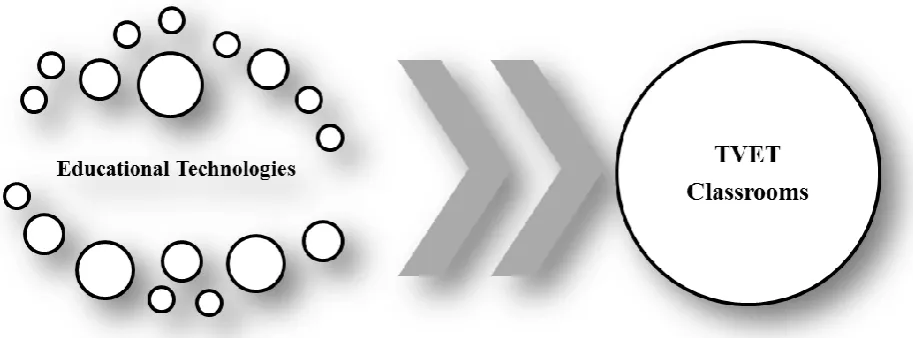
Fig. 1Emerging Educational Technologies for TVET Classrooms
Having a computer in the classroom is an asset to any teacher. With a computer in the classroom, teachers are able to demonstrate a new lesson, present new material, illustrate how to use new programs, and show new websites [2]. The class website, an easy way to display the student’s work is to create a web page designed for the class. Once a web page is designed, teachers can post homework assignments, student work, famous quotes, trivia games, and so much more. In today’s society, children know how to use the computer and navigate their way through a website, so why not give them one where they can be a published author.
There are a variety of Web 2.0 tools that are currently being implemented in the classroom. Blogs allow for students to maintain a running dialogue, such as a journal, thoughts, ideas, and assignments that also provide for student comment and reflection. Wikis are more group focuses to allow multiple members of the group to edit a single document and create a truly collaborative and carefully edited finished product. The microphones, noisy classrooms are a daily occurrence, and with the help of microphones, students are able to hear their teachers more clearly. Children learn better when they hear the teacher clearly. The benefit for teachers is that they no longer lose their voices at the end of the day.
The mobile devices such as clickers or Smartphone can be used to enhance the experience in the classroom by providing the possibility for professors to get feedback [3]. An interactive whiteboard, that provides touch control of computer applications. These enhance the experience in the classroom by showing anything that can be on a computer screen. This not only aids in visual learning, but it is interactive so the students can draw, write, or manipulate images on the interactive whiteboard.
education beyond the classroom. When students listen to the podcasts to identify and define “quality”. This can be a great tool for learning and developing literacy inside and outside the classrooms.
II. WHAT ARE TODAY’S RELEVANT TECHNOLOGY TRENDS?
Fig.2 Today’s Relevant Technology Trends
Evolution of learning perspectives: The beginning of 1960s and 1970s, cognitive theories of learning, such as the information processing perspective, began to hold sway. Today, constructivism is the focus of much research. There is a shift today from a more teacher-centered perspective to a more learner-centered perspective.
Media convergence: Today all media are converging through computer. Media have gone digital. The advantages of this development are considerable. Digital media can be reproduced flawlessly. They can be recorded on computer readable media such as CD-ROMs and DVDs or distributed anywhere in the world by computers over the Internet.
Increasing computing power with decreasing size and cost: Microchips are powering a host of new educational devices in addition to computers such as smart phones, which are already providing new educational opportunities.
The growth of the Internet: The emergence of the Internet as the Information Superhighway is another key trend of today. While personal computers were once isolated desktop machines, networking is common today and increasing globally at a phenomenal rate. It is as though our planet is beings unprecedented opportunities for and learning. It brings up-to-the-minute multimedia vehicle for communication among teachers, learners, students to publish their work.
III.WHATBARRIERSTOINTEGRATIONOFTECHNOLOGYHAVEBEENENCOUNTERED?
IV.HOWCANWEADDRESSANDOVERCOMETHEBARRIERSTOINTEGRATION?
Library/media specialists help students and teachers become effective users of ideas and information by providing access to materials, providing instruction to develop users’ interest as well as competence in finding and using information and ideas, and working with teachers to design learning strategies to meet the needs of individual students.
Over the past decade or so, a new category of specialist has emerged in the schools called – the computer or technology coordinator. The technology coordinator is a specialist and resource person who handles computers and related technologies for a school building or district. The job of technology coordinator varies considerable from school to school. It is common for such a coordinator to do any or all of the following: (i) Work with teachers to support and promote technology integration, (ii) Install and maintain the school’s computer network, (iii) Maintain up-to-date records of the school’s hardware and software, (iv) Assemble and disseminate information about instructional technologies, and (v) Provide in-service training for faculty and staff.
V. WHATADDITIONALISSUESMAYTHEINTEGRATIONOFTECHNOLOGYCREATE?
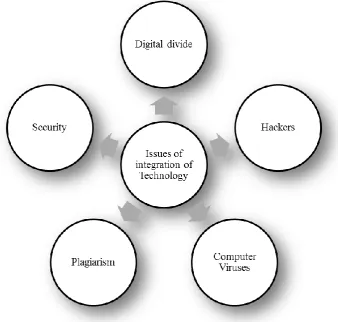
Fig. 3 Creating issues of integration technologies in TVET Classrooms
Unfortunately, socioeconomic differences have the potential to create a serious gap when it comes to technology. The “gap” between those who have access to technology and those who do not is often referred to as the “Digital Divide.”
Schools and teachers must also be concerned with a range of potential legal and ethical issues associated with instructional technologies. One of those called “Copyright” and how it affects teachers and schools. Schools should have a clearly stated policy regarding copyright, and this policy should be made known to every teacher and student. Schools and teachers have a responsibility to model proper use of educational technology within the confines of copyright law.
questionable behaviour. “Hackers”, the individuals who gain access to computer systems without authorization. Another thing is “Computer viruses” represent the threat in the school computer environment.
“Plagiarism” is another issue. When an individual copies an original idea or piece of work and attempts to pass it off as his or her own, a problem known as plagiarism occurs. Plagiarism is wrong because it robs the work’s originator of the acknowledgement that he/she deserves for its production. The last but not the least is called security. The Schools must address issues related to privacy and security.
Certainly, one concern that has been around for a number of years is “Security” of student data. Schools and teachers often keep grades and other student records on the computer. These should not be accessible to students. But perhaps a bigger concern today is the access to personal information that is possible through the Internet.
VI.WHY INVEST THE TIME, ENERGY, AND COST INTO THE INTEGRATION OF TECHNOLOGY?
In a world demanding greater levels of problem solving skills within complex learning environments, technology offers students a variety of ways to access, analyse, synthesize, and communicate their methods and potential solutions. Moreover, technology can be used to enhance the learning experience in order to help the learner grasp the problem, practice needed skills, present relevant answers, and assess the quality of the learning.
Another rationale for the value of technology integration is the impact it has on how teachers design and carry out their instructional lessons. Assimilating technology in a learning situation often triggers “changes away from lecture-driven instruction and toward constructivist, inquiry-oriented classrooms.” The integration of technology facilitates how learning is viewed and subsequently how the optimal learning experience is designed and implemented.
As labour and material costs increase, ways of using technology to reduce expensive person-hours and material scrap are constantly being sought. This continuous implementation and adaption of technology requires a workforce that understands the need to constantly learn and upgrade their skills. Likewise, within education, technology impacts how, when, and why we learn.
VII. WHAT HORIZON TECHNOLOGIES MAY POTENTIALLY FACILITATE STUDENTS LEARNING?
A number of technologies are emerging in importance today. Many of these technologies are not yet fully functional or widely implemented. But the nature of these technologies suggests that they could become increasingly important to teaching and learning. We call these horizon technologies, because, like the horizon, we can see them in the distance but we are not altogether sure what they will look like when we get closer.
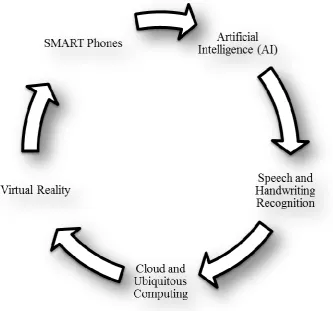
Today, many schools have moved away from desktop computers and towards laptops and tablet PCs. Students may also possess personal digital assistants (PDAs) and/or cell phones. Of particular interest are so-called Smart Phones, such as Apple’s iPhone that combines the functionality of a cell phone with the versatility of a handheld computer. These devices, which are small enough to fit in a pocket or purse, can be tools for note-taking, calculating, reading materials, working with productivity applications, and browsing the Web.
Artificial Intelligence (AI) is a branch of computer science concerned with the design of computers and software that are capable of responding in ways that mimic human thinking. Although AI has been around as a field of study for a long time now, the early promise of “intelligent” machines that can truly think like people has not been realized. In education, the concept of the expert system has led to the development of intelligent tutoring system (ITS), sometimes called intelligent computer-assisted instruction (ICAI). These programs have been developed in mathematics, geography, and computer science, to name just a few subjects.
Fig. 4 Horizon of Educational Technologies to Enhance Learning
An emerging technology relate to the growth and development of the Internet is so-called cloud computing. Cloud computing refers to the distribution of applications, processing power, and storage across may computers accessible via the Internet. Despite the possible drawbacks, cloud computing is clearly a growing trend. The Ubiquitous Computing, sometimes called pervasive computing or distributed intelligence, refers to situations in which computer processing power is embedded, often invisibly, in objects in the everyday environment. The idea, which was originally developed by researchers at the Xerox Palo Alto Research Center, is in some ways the opposite of virtual reality (VR).
Whereas virtual reality (VR) puts the user in a computer-generated environment, in ubiquitous computing, the environment is imbued with computer processing power. Virtual reality (VR) refers to a computer-generated, three-dimentional, visual representation of an environment that responds to the user’s motion within it. Today, VR systems often consist of a computer linked to special headgear and bodysuits or gloves worn by the user. For example, a student studying organic chemestry might be able to reach and rotate an organic molecule in three dimensions to better understand its structure and function. Virtual reality (VR) may be possible for students to take virtual field trips – re-creations of historical events, travel to faraway places, or journeys inside the human body. Virtual reality (VR) could make simulations incredibly lifelike. The possibilities are trul exciting.
Fig. 5 Horizons of Educational Technologies for TVET Classroom
All three solutions are server-based and allow access through a web browser to provide e-learning solutions through the Web.All three platforms have the capacity to: (i) provide course materials; (ii) manage enrolment and registration; (iii) develop evaluation material such as quizzes, tests, or assignments; (iv) communicate with instructor(s) and students online through an announcement section, discussion boards, e-mail, real-time chat sessions or “class rooms”, and an interactive whiteboard; (v) take and save notes about a course; (vi) manage grades and provide the grades to the students; (vii) present important dates through a calendar tool; (viii) provide links to related web sites.
Wireline technologies: (i) AnalogModemis the original device that allowed computers to connect to the Internet; (ii) DSL: DSL uses a normal copper telephone line (a pair of copper wires) to provide a high-speed connection to the Internet. Thus, it is telephone companies that typically provide DSL connections.(iii) ISDN: Similar to DSL, ISDN uses a normal copper telephone line to connect to the Internet[5];(iv) Cable: A cable connection uses the same coaxial cable used for television signals to send and receive data to and from the Internet. A cable modem acts as the interface between the computer and the coaxial cable; (v) LAN: The computers in businesses and educational institutions are usually connected to a LAN. A LAN connects computers and peripheral devices using the same transmission line, allowing for applications, devices (for example, printers), and data storage to be shared among the members of the LAN. There are three different methods for connecting computers in a LAN: cables, wireless, and power line systems [6](vi)Optical fibre: Optical fibres provide a huge amount of bandwidth that is ideal for high-performance applications such as videoconferencing or web-based applications that rely on a large amount of graphics [6].
Wireless technology: (i) Cellular: A cell phone with a cellular modem can be used to connect to the Internet.Wireless Broadband: There are two types of wireless broadband service: fixed wireless and satellite [7].(i) Fixed Wireless – A fixed wireless broadband connection uses a ground-based antenna system. A small rooftop antenna communicates with transmission towers, which are directly connected to the Internet[8].Satellite – For high-speed satellite Internet connections, a satellite dish and a “satellite modem” are required. Data signals are sent from the satellite dish to satellites orbiting the Earth.
direct, two-way interaction between participants. Discussions occur in real-time where learners can ask questions and instructors can respond immediately. Another advantage is its low set-up and operating cost.
Audiographicsis essentially audio conferencing accompanied by visual and graphical aids. “Graphics can be transmitted by facsimile (fax) machine, still video system, computers (text or graphic display), or electronic drawing systems (such as electronic whiteboard) which allow aparticipant to draw or write on an electronic screen which is transmitted to a remote site where other participants may see it”. Audiographics provide the same advantages of audioconferencing (two-way audio interaction and low set-up and operating costs,) while having an additional benefit of a visual aid for learners. The limitation of audiographics is that the visual aids such as text, slides, still video, images, CD-ROMs have to be distributed beforehand. For web-based aids, an Internet connection is required.
In this context, interactive television refers to instruction occurring over broadcast television. It allows learners to receive live television instruction remotely, away from the actual instructor. Theinstructor(s) are located at a broadcast studio and the learners view the instructor(s) on a television monitor. Interaction is provided by one or more additional components. “They can ask questions and/or provide feedback to the instructor through a number of mechanisms that can be used either independently or in combination” [9].Typically, an audioconferencing mechanism is used for real-time interaction. Additionally, a response pad can be used to link learners to a computerized instructor console in the broadcast studio (Stevens, 2001). There are other asynchronous aids that can also be used such as e-mail and fax.
The main advantage of interactive television is that instruction can be transmitted to several different sites, and thus potentially reach a large number of learners using existing broadcasting infrastructure. It can provide a high level of interaction if an audioconferencing mechanism is utilized. The effectiveness of the instruction depends on the quality of the audiovisual equipment. Low-quality equipment and unreliable infrastructure that causes outages can seriously hamper instruction [10].The main drawback of an interactive television system is its high cost, both at the main broadcasting site and the learner sites. There is also a high telecommunications cost for the transmission of the video, and there may be an additional audioconferencing cost.
Videoconferencing allows participating individuals in different locations to see and hear each other in real-time through videoconferencing equipment [9].The main advantage of videoconferencing is that it allows real-time, two-way interaction between individuals in different places. Participating parties may be in remote areas and may be separated by large distances. All individuals involved in the educational system from the teachers, students, curriculum developers, and specialists, to the policy makers can participate in a videoconference. It can be used for presentations, teaching sessions, discussion, course delivery (in combination with other media), and student support [11].
During course delivery and lectures, instructors can gauge a student’s progress and responsiveness immediately. Instructors can answer questions and provide feedback immediately.The main drawback for videoconferencing is the cost. For traditional systems, there is a high start-up cost for equipment and technical support must be available for the equipment at each site. Even Internet videoconferencing systems have a relatively high cost. PC-based systems require a PC and a compression card while the standalone systems cost in the thousands. Due to the high set-up cost, videoconferencing sites may not be readily available, especially in remote sites and developing countries. Thus, students may have to travel far to those sites that do use the technology. As well, the proper bandwidth and high-speed Internet access required for video conferencing may not be available and thus add to the overall cost.
VIII. DISCUSSION
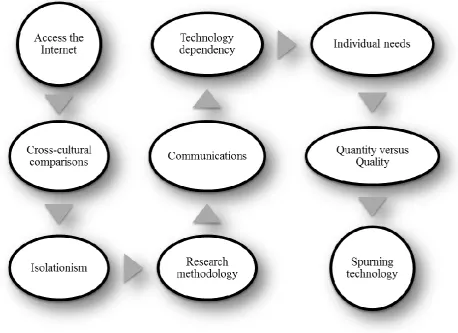
Information access on the Internet: What is the impact on students who now have access to the vast quantities of information available on the Internet?. Should filters be used to stop students from accessing certain types of information? Cross-cultural comparisons: In what ways can technology facilitate cross-cultural comparisons?. Will this type of comparison increase levels of understanding or could it highlight differences and subsequently increase levels of animosity?.Isolationism: If we can shop, get educated, be entertained, and complete our job assignments all from the confines of our own home, is there a need for us to ever go out?
Fig. 6 Benefits of Technology Integration for TVET
Individual needs: Is there a need to always have the latest and greatest technology? Is it possible (and possibly desirable) to skip certain generations of new machines and software?.Quantity versus quality: If the technology allows us to produce more efficient and/or effectively, why do individuals still seem to not have enough time to get things done?.Spurning technology: Are there times when the use of technology should not be used? Under what situations should we begin to think about eliminating technology or at least inhibiting its integration?.
IX.CONCLUSION
As Schools move toward the future, we see trends that are likely to continue in the future. There will be even greater convergence of instructional design, media, and computing. Computer networking will expand, and computer capabilities will grow. While education and schooling may ultimately either ignore these innovations or become totally transformed by them, we see a middle course in which instructional technology empowers both teachers and learners.
Predicting the future is always a risky business. Conditions change, new developments occur, and old patterns fail to hold true. Nonetheless, developments in educational technology over the past 100 years certainly do suggest some trends. We noted some of these earlier new perspectives on learning, media convergence, continuing computer developments, and growth of the Internet. If we assume that these trends will continue, then we are able to make some predictions. The implications of these trends may not always be clear, but it is possible, at least in some cases, to see the direction in which we are headed. And knowing which way we are going helps us to chart our course.
ACKNOWLEDGMENT
REFERENCES
[1] Richey, R.C. (2008). Reflections on the 2008 AECT Definitions of the Field. TechTrends. 52(1) 24-25.
[2] D. Randy Garrison and Terry Anderson (2003). E-Learning in the 21st Century: A Framework for Research and Practice. Routledge. ISBN 0-415-26346-8.
[3] Tremblay, E. (2010). "Educating the Mobile Generation – using personal cell phones as audience response systems in post-secondary science teaching. Journal of Computers in Mathematics and Science Teaching, 2010, 29(2), 217-227. Chesapeake, VA: AACE.". Retrieved 2012-12-29.
[4] Biocchi, M. (2011). "Games in the Classroom". Gaming in the Classroom. Retrieved 24 March 2011.
[5] ISDN Home User Hardware (2000). Retrieved February12, 2013 from the World Wide
Web:http://www.oss.buffalo.edu/Services/dialin/isdn_hardware.html
[6] Rusten, E., & Hudson, H. E. (2002). Infrastructure: Hardware, Networking, Software, and Connectivity. In W. D. Haddad & A. Draxler (Eds.), Technologies For Education Potentials, Parameters, and Prospects, 6. (pp. 76–93). Prepared for UNESCO and AED by Knowledge Enterprise Inc.
[7] Wireless (2003). Retrieved January 20, 2013 from the World Wide Web:http://www.idcglobal.net/content.pl?PageID=102
[8] Keizer, G. (2001). The broadband breakdown. Retrieved March15, 2013 from the CNET Web site: http://www.cnet.com/internet/0-3762-8-7287680-1.html?tag=st.is.3762-8-7287680-4.back2.3762-8-7287680-1
[9] Stevens, G. (2001). Distance learning for Technical and Vocational Education in Sub-Sahara Africa. The World Bank. Retrieved May18, 2013, from the World Wide Web: http://www.gtz.de/wbf/bibliothek/ detail .asp?number=1431
[10] Jurich, S. (2003). Interactive Television as an Education Tool: Consumer Satisfaction and Effectiveness. Techknowlogia, January – March
2003, 5 (1): 49–51. Retrieved June16, 2013 from the World Wide
Web:http://www.techknowlogia.org/TKL_active_pages2/CurrentArticles/main.asp?IssueNumber=19&FileType=PDF&ArticleID=470 [11] Perraton, H., Creed, C., & Robinson, B. (2002, March). Teacher Education Guidelines:Using Open and Distance Learning. Retrieved July
4, 2013 from the UNESCO web site: http://unesdoc.unesco.org/images/0012/001253/125396e.pdf
BIOGRAPHY
Md. Abu Raihan,Ph.D. (South Korea), M.Sc.T.E. & Post-Graduate Diploma (Technical Education), B.Sc. Engg. (Mech), IUT. He is an Assistant Professor in the Department of Technical and Vocational Education (TVE), Islamic University of Technology (IUT), A Subsidiary Organ of OIC, Gazipur-1704, Bangladesh. His area of interest is Teaching with Technology Today, ICT in education, Constructivism, and research in TVET