Cloud shield: Backing honor based trust
authority for cloud utility
Mr. N.SATEESH
Asst. Professor
Department of CSE
Ms. YELAGANDULA MOUNIKA
M.Tech in Computer Science
Department of CSE
Malla Reddy Institute of Technology, Maisammaguda, Dhulapally Post, Secunderabad and Telengana State, India.
Abstract:
Trust management of cloud services is emerging as an
important research issue in recent years, which possess
significant challenges because of mostly dynamic,
distributed, and translucent nature of cloud services. In
this project we describe Cloud Armor, a platfor m for
credibility based trust manage ment of cloud services.
This platfor m provides a crawler for automatic cloud
services discovery, a modifiable and strong credibility
model for measuring the credibility of feed backs, and
a trust-based recommender to recommend the most
trustworthy cloud services to users. This project
presents the motivation, design, implementation of the
system, and a demonstration of the Cloud Armor
platform.
A reputation based trust management frame
work, Cloud Armor provides a set of functionalities to
deliver Trust as a Service (TaaS), which includes a
plan to show the credibility of trust feed backs and
maintain the user privacy and an availability model to
manage the availability of the decentralized execution
of the TMS. The benefits of this model are provided to
a prototype and experimental studies were made using
a group of real world trust feed backs on cloud
services.
Index Terms: Cloud computing, trust management, reputation, credibility, credentials, security, privacy,
availability
Introduction:
A cloud service with mostly dynamic, distributed and
translucent nature makes the TMS a very big
challenge. Most Berkeley researchers ranked the trust,
security and availability as one of the top 10 problems
for adopting the cloud computation. Mean while, only
Service Level Agree ments (SLA’s) are not sufficient
for establishing the trust between the cloud consumers
and providers.
A feedback from consumers’ is a very good
source for accessing the overall trust worthiness of
cloud services. Many researchers understood the
importance of trust management and gave different
on the feedbacks which were collected from many
participants. This project mainly focuses on how to
improve the trust manage ment in cloud environments
by giving the planned ways for ensuring the credibility
of the trust feedbacks. Mainly, we discuss the
following issues in cloud computing environment for
the trust based manage ment system:
Consumers’ privacy: The privacy concerns are
raised by the adoption of cloud computing. Consumers
will be having the communication with the providers, which can involve much of sensitive information like
date of birth, address etc. or the interest of one
consumer can be leaked to other consumers. Hence,
the services must preserve the consumers’ privacy
where the interaction is involved.
Cloud services protection:
Cloud services, verycommonly, experience the attacks from its users.
Attackers can misuse the cloud service by creating
many accounts and giving the feedbacks in a negative
way (Sybil and Collusion attacks).
Absolutely, these users should be detected and cancel
their accounts. This involves very big challenges to the
cloud providers. And moreover, the user can have
several accounts in the same cloud service. Hence this
is somewhat difficult for the providers to detect the
malicious users and hence to eradicate the problems of
Sybil and collusion attacks.
Trust Management Service’s Availability:
For effective trust management, the TMS system will
be acting as an interface between the user and cloud
services. Then providing guarantee for the availability
of the TMS system is a very tough problem to be
encountered by the service providers due to the large
number of consumers using the same cloud service
and due to the dyna mic behavior of the cloud services
environment. Hence, the TMS should be very much
adaptable and highly dynamic for the changes in the
cloud environments.
This project deals with the design and
implementation of Cloud Ar mor, which means Cloud
consumers credibility assessment and trust
management of cloud services. This is nothing but a
framework for the reputation based trust management
system in the cloud services environment. Here the
trust is delivered as a service (TaaS) where TMS will
span many different distributed nodes to manage the
feedbacks in a scattered way. Cloud armor
accomplished several techniques to describe the
credible feedbacks different from the petty ones. In
short, the Cloud Armor has some salient features as
follows:
Zero-Knowledge
Credibility
Proof
Protocol (ZKCP2):
The Cloud armor hasintroduced the zkcp2 technique, which not only
protects the consumers’ privacy but also will make the
TMS to recognize the credulous feedbacks of the
consumers from the petty ones. This project has
introduced the Identity Management service (IdM)
which will help the TMS in calculating the credibility
of the trust feedbacks of the consumers without
breaking the privacy of the consumer. This introduced
some anonymization techniques which will maintain
the users’ privacy in the identity and interactions of
the users with the providers.
Credibility Model:
The credibility of feedbacksof the users or consumers will play a crucial role in the
performance of TMS service. Hence it provides some
detection which will include the Feedback Density and
Occasional Feedback Collusion, which will
differentiate the feedbacks of petty users from the
credibility feedbacks. This will also have the ability to
detect the strategic and occasional behaviors of
collusion attacks. Besides all these, we introduce some
other metrics for the detection of Sybil attacks, which
will include the Multi-Identity Recognition and the
Occasional Sybil Attacks. These metrics will allow the
TMS to identify misleading feedbacks from the Sybil
attacks.
An Availability Model:
High availability is an important requirement to the
trust management service. Thus, we propose to spread
several distributed nodes to manage feedbacks given
by users in a decentralized way. Load balancing
techniques are exploited to share the workload,
thereby always maintaining a desired availability
level. The number of TMS nodes is deter mined
through an operational power metric. Replication
techniques are exploited to minimize the impact of
crashing TMS instances. The number of replicas for
each node is determined through a replication
determination metric that we introduce. This metric
exploits particle filtering techniques to precisely
predict the availability of each node.
2
THE
CLOUDARMOR
FRAMEWORK:
The CloudArmor framework is primarily based on the
provider orientated structure (SOA), which delivers
accept as true with as a provider. SOA and net
offerings are one of the maximum essential allowing
technologies for cloud computing in the feel that assets
(e.g., infrastructures, structures, and software) are
uncovered in clouds as services. specially, the agree
with management carrier spans numerous disbursed
nodes that divulge interfaces so that customers can
give their feedbacks or inquire the believe results.
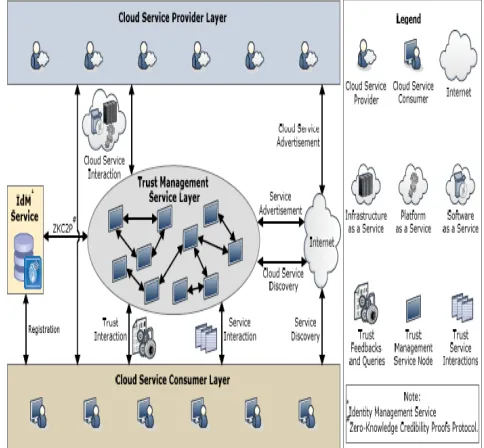
figure 1 depicts the framework, which includes three
special layers, namely the Cloud provider company
Layer, the agree with control carrier Layer, and the
Cloud service customer Layer.
The Cloud provider company Layer: this
layer consists of different cloud provider carriers who
offer one or numerous cloud services, i.e., IaaS
(Infrastructure as a carrier), PaaS (Platform as a
carrier), and SaaS (software as a service), publicly on
the net (more information about cloud offerings
fashions and designs can be located). These cloud
offerings are on hand via web portals and listed on net
search engines such as Google, Yahoo, and Baidu.
Interactions for this accretion are considered as cloud
carrier interplay with customers and TMS, and cloud services advertisements where vendors are capable of
The agreement with control provider
Layer: this layer consists of numerous allotted TMS
nodes which might be hosted in more than one cloud
environments in special geographical regions. Those
TMS nodes expose interfaces so that customers can
deliver their remarks or inquire the accept as true with
outcomes in a decentralized way. Interactions for this
layer encompass: i) cloud service interaction with
cloud service carriers, ii) carrier commercial to market
it the trust as a provider to users thru the net, iii) cloud
provider discovery via the net to permit customers to
assess the accept as true with of new cloud offerings,
and iv) zero-knowledge Credibility proof Protocol
(ZKC2P) interactions allowing TMS to show the
credibility of a selected client’s remarks (info in section three).
The Cloud carrier purchaser Layer:
Subsequently, this residue consists of various
customers who use cloud services. For instance, a new
startup that has constrained investment can eat cloud
services (e.g., website hosting their offerings in
Amazon S3). Interactions for this deposit consist of: i)
provider discovery where users are capable of find out
new cloud offerings and other services thru the net, ii)
agree with and provider interactions in which users are
able to deliver their comments or retrieve then agree
with outcomes of a particular cloud service, and iii)
registration wherein users set up their identity thru
registering their credentials in IdM before the usage of
TMS.
Our framework also exploits an internet crawling
technique for automatic cloud offerings discovery,
where cloud offerings are mechanically observed on
the internet and saved in a cloud services repository.
Further more our fra mework consists of an
identification management carrier (see figure 1) which
is answerable for the registration in which users check
in their credentials before the usage of TMS and
proving the credibility of a specific patron’s remarks
thru ZKC2P.
3. Zero-Knowledge Credibility Proof
Protocol (zkc2p):
Because there may be a robust relation between
consider and identification as e mphasised, we
advocate to use the identity control carrier (IdM)
helping TMS inmeasuring the credibility of a patron’s
feedback. However, processing the IdM facts can
breach the privateness of users. One way to preserve
privateness is to apply cryptographic encryption
techniques. However,there may be no efficient way to
procedure encrypted statistics. every other way is to
use anonymization techniques to technique the IdM
statistics with out breaching the privateness of
customers. Definitely, there's a alternate-off between
excessive anonymity and application. full anonymization way higher privacy, even as full utility
consequences in no privateness protection (e.g., using
a de-identity anonymization
method can nonetheless leak sensitive facts through
linking attacks). therefore, we advise a zero-know-how
Credibility evidence Protocol (ZKC2P) to permit TMS
to procedure IdM’s records (i.e., credentials) using the
Multi-identity recognition aspect (see info in phase
4.2). In different words, TMS will show the
customers’ comments credibility without
understanding the customers’ credentials. TMS
methods credentials without including the touchy
is used thru constant hashing (e.g., sha-256). The
anonymization manner covers all the credentials’
attributes besides the Timestamps characteristic.
Identity
management
carrier
(IdM):
considering consider and identity are intently
associated, as highlighted by David and Jaquet, we
believe that IdM can facilitate TMS inside the
detection of Sybil assaults in opposition to cloud
offerings without breaching the privateness of
customers. While customers try to use TMS for the
primary time, TMS requires them to sign in their
credentials on thebelieve identity registry in IdM to set up their identities.The trust identification registry
stores an identity document representedby a tuple I =
(C, Ca, Ti) for every user. C is theconsumer’s primary
identity (e.g., person name). Ca represents
a hard and fast of credentials’ attributes (e.g.,
passwords, postal cope with, and IP address) and Ti
represents the consumer’s registration time in TMS.
greater details on how IdM enables TMS in the
detection of Sybil attacks can be found in segment
four.2.
Agree with management service (TMS):
In a standard interplay of the popularity-based TMS, a
user either offers remarks regarding the trust
worthiness of a particular cloud provider or requests
agree with evaluation of the service1.
assumptions and assault models:
On this paper, we assume that tms is treated by a relied on 1/3 birthday celebration. We additionally assume
that tms communications are secure due to the fact
securing communications isn't the point of interest of
this paper. assaults along with man-in the- center
(mitm) is consequently past the scope of this paintings.
we recall the following varieties of assaults:
• collusion attacks. Additionally referred to as
collusive malicious remarks behaviors, such assaults
arise while numerous vicious customers collaborate
together to give several misleading feedbacks to
growth the agreement with end result of cloud
offerings (i.e., a self-promoting attack) or to lower the
trust result of cloud services (i.e., a slandering attack).
this form of malicious behavior can occur in a non-collusive manner in which a specific malicious user
gives more than one deceptive feedbacks to behavior a
self-selling attack or a slandering attack.
• sybil assaults. Such an assault arises whilst malicious
customers exploit a couple of identities:
1. we expect a transaction-based feedback wherein all
feedbacks are held in tms to provide severa misleading
feedbacks (e.g., generating a big variety of
transactions with the aid of developing multiple virtual
machines for a brief length of time to depart fake
feedbacks) for a self-selling or slandering attack. it is
of identities to conceal their negative historic believe
facts (i.e., whitewashing attacks).
4. the credibility version: our proposed credibility model is designed for i) the remarks collusion
detection inclusive of the remarks densityand coffee
comments collusion, and ii) the Sybil assaults
detection which include the multi-identity recognition
and low sybil attacks.
Remarks collusion detection:
Remarks density:
Malicious users may provide severa fake feedbacks to
control consider effects for cloud services (i.e.,
selfpromoting and slandering attacks). a few
researchers recommend that the variety of relied on
feedbacks can help users to conquer such manipulation
in which the number of relied on feedbacks offers the
evaluator a touch in figuring out the remarks
credibility. But, the quantity of feedbacks isn't always sufficient in figuring out the credibility of believe
feedbacks. for example, think there are two
one-of-a-kind cloud offerings sx and sy and the aggregated
consider feedbacks of both cloud services
are high (i.e., sx has 89% advantageous feedbacks
from one hundred fifty feedbacks, sy has 92% positive
feedbacks from a hundred and fifty feedbacks).
Intuitively, users have to continue with the cloud
provider that has the better aggregated agree with
feedbacks (e.g., sy in our case). however, a self-selling
attack might have been achieved on cloud service sy,
which method sx should were decided on as a
substitute. to conquer this hassle, we introduce the
idea of feedback density to guide the determination of
credible consider feedbacks. Especially, we consider
the entire variety of customers who give believe
feedbacks to a selected cloud provider because the
comments mass, the general range of consider
feedbacks given to the cloud service because the
feedback quantity. the feedback extent is prompted by
means of the comments extent collusion element
which is controlled via a detailed quantity collusion
threshold. This aspect regulates the multiple agree
with feedbacks quantity that might collude the general
depended on feedback quantity. As an instance, if the
volume collusion threshold is ready to 15 feedbacks,
any person c who offers greater than 15 feedbacks is
taken into consideration to be suspicious of related to
in feedback extent collusion. The comments density of
a positive cloud provider s, d(s), is calculated as
follows:
where M(s) denotes the total number of users who give
feedback to cloud service s (i.e., the feedback mass).
Occasional Feedback Collusion
:
Considering the fact that collusion attacks against cloud servicestime period [t0, t]. A surprising exchange in the comments behavior suggests probable and occasional
remarks collusion because the change of the wide variety of consider feedbacks given to a cloud service appear all at once in a quick time fra me. To hit upon such conduct, we degree the share of occasional trade
in the total wide variety of feedbacks some of the complete remarks conduct (i.e., users’ conduct in giving feedbacks for a sure cloud carrier). The
occasional re marks collusion component Of (s, t0, t) of cloud service s in a time frame [t0, t], is calculated as follows:
where the first part of the numerator represents the
whole area under the curve which represents the
feedback behavior for the cloud service s. The second
one a part of the numerator represents the intersection
among the place beneath the curve and the place
beneath the cumulative imply of the entire number of
trust feedbacks (i.e., the region a′ ∪b′ ∪ c′ in parent 2). cμ (jv(s, t)j) represents the mean of all factors
within the overall wide variety of consider feedbacks
and as much as the final element because the suggest
is dynamic and changes every now and then. the
denominator represents the complete area under the
curve. As a result, the occasional collusion attacks
detection is primarily based on measuring the
occasional change inside the overall number of
agree with feedbacks in a time period. the better
the occasional change within the overall number
of agree with feedbacks, the much more likely
that the cloud provider has been laid low with an
occasional collusion assault.
Sybil attacks detection:
Multi-identity popularity:
Because usershave to check in their credentials on theaccept as true
with identity registry, we accept as true with that
multi-identity reputation is applicable via evaluating
the values ofcustomers’ credential attributes from the
identification records i. the main aim of this aspect is
to shield cloud servicesfrom malicious customers who
use a couple of identities (i.e.,sybil attacks) to control the believe effects. in a typical accept as true with
identity registry, the whole identity statistics i are
represented as a listing of m customers’ number one
identitiescp = fp1, p2, ..., pmg (e.g., user name) and a
list of n credentials’ attributes ca = fa1, a2, ..., ang
(e.g., passwords, postal deal with, ip deal with,
computer name). In other words, the entire cpca
(customer’s primary identity- credentials’ attributes)
matrix, denoted as im, coversall users who registered
their credentials in tms. The credential characteristic
fee for a selected customer vc;t is saved in tms with
out consisting of credentials with sensitive facts the
usage of the zkc2p (see phase three).we argue that tms
can pick out patterns in customers’
anonymous cre de ntials. Malicious users can use comparable credentials in exceptional identification
facts i. therefore, we translate im to the
multi-identification recognition matrix, denoted as mirm,
which in addition covers the whole identity facts i
value for a specific patronqc;t within the new matrix
represents the frequency of the credential attribute
value for the same particular consumer vc;t in the
same credential attribute (i.e., attribute at). The
frequency of a particular credential attribute value vc;t,
denoted as qc;t, is calculated as the number of times of
appearance (denoted as Ap) that the credential value
appears in the tth credential attribute normalized by
the total number of identity records (i.e., the length of
at) as follows:
Occasional Sybil Attacks:
Malicious users may manipulate trust results to
disadvantage particular cloud services by creating
multiple accounts and giving misleading feedbacks in
a short period of time (i.e., Sybil attacks). To
overcome the occasional Sybil attacks, we consider the
total number of established identities jI(s)j for users
who give feedbacks to cloud service s during a period
of time [t0, t]. The sudden changes in the total number
of established identities indicates a possible occasional
Sybil attack. To detect such behavior, we measure the
percentage of occasional change in the total number of
established identities among the whole identity
behavior (i.e., all established identities for users who
gave feedback to a particular cloud service). Similarly,
the occasional Sybil attacks factor Oi(s, t0, t) of cloud
service s in a period of time [t0, t], is calculated as
follows:
Fee dback Credibility:
Based on the proposed credibility metrics, TMS
dilutes the influence of those misleading feedbacks by
assigning the credibility aggregated weights Cr(c, s,
t0, t) to each trust feedback as shown in Equation 1.
Cr(c, s, t0, t) is calculated as follows:
Change Rate of Trust Results:
To allow TMS to adjust trust results for cloud services
that have been affected by malicious behaviors, we
introduce an additional factor called the change rate of
trust results. The idea behind this factor is to
compensate the affected cloud services by the same
percentage of damage in the trust results. Given Con(s,
t0) the conventional model (i.e., calculating the trust
results without considering the proposed approach) for
cloud service s in a previous time instance, Con(s, t)
the conventional model for the same cloud service
calculated in a more recent time instance, the
credibility aggregated weights Cr(c, s, t0, t), and et(s)
the attacks percentage threshold. The change rate of
5 THE AVAILABILITY MODEL:
Guaranteeing the availability of the Trust management
provider (tms) is a enormous challenge because of the
unpredictable wide variety of invocation requests that
tms has to address at a time, in addition to the dynamic
nature of the cloud environments. in cloudarmor, we
endorse an availability version, which considers
numerous elements which include the operational
strength to allow tms nodes to percentage the
workload and replication willpower to reduce the
failure of a node hosting tms example. These factors
are used to spread several allotted tms nodes to
manipulate agree with feedbacks given via users in a
decentralized manner.
Operational electricity
In our technique, we suggest to spread tms nodes over
diverse clouds and dyna mically direct requests to the
ideal tms node (e.g., with decrease workload), in order
that its favored availability stage can be usually maintained. it's far critical to increase a mechanis m
that allows decide the ultimate variety of tms nodes
because extra nodes dwelling at numerous clouds way
better overhead (e.g., cost and resource intake along
with bandwidth and storage space) even as decrease
range of nodes way much less availability. to take
advantage of the load balancing method, we suggest
that every node web hosting a tms instance reports its
operational strength. the operational electricity aspect
compares the workload for a selected tms node with
the common workload of all tms nodes. the
operational power for a specific tms node, op(stms), is
calculated because the imply of the euclidean distance
(i.e., to degree the distance between a selected tms
node workload and the imply of the workload of all
tms nodes) and the tms node workload (i.e., the
proportion of agree with feedbacks treated by way of
this node) as follows:
Re plication will power:
In CloudArmor, we advise to exploit replication
strategies to limit the opportunity of the crashing of a
node hosting a TMS example (e.g., overload) to make
certain that customers can deliver accept as true with feedbacks or request a agree with evaluation for cloud
services. Replication allows TMS instance to recover
Particularly, we recommend a particle filtering
technique to precisely are expecting the provision of
every node web hosting a TMS instance which then
will be used to decide the best range of the TMS
instance’s replicas. To predict the supply of each node,
we version the TMS instance as a right away (or
factor) availability.
To this point, we can model the TMS instance’s availability prediction problem via defining the state
function and measure ment function respectively by
using:
Trust Result Caching
Due to the fact that several credibility factors are
considered in CloudArmor when computing the trust
result for a particular cloud service, it would be odd if
the TMS instance retrieves all trust feedbacks given to
a particular cloud service and computes the trust result
every time it receives a trust assessment request from a
trust results and the credibility weights based on the
number of new trust feedbacks to avoid unnecessary
trust result computations. The caching process is
controlled by two thresholds: one for users eCache(c)
and one for cloud services eCache(s). If the TMS
instance receives a trust assessment request from a
user, it should use the trust result in the cache as much
as possible, instead of computing the trust result from
scratch. The TMS instance updates the cache based on
the number of new trust feedbacks (i.e., since the last
update) given by a particular consumer jVc(c, s)jCache
and the number of new trust feedbacks given to a
particular cloud service jV(s)jCache. The caching
process is briefly shown in Algorithm 2.
Instances manageme nt:
as the principle example whilst the rest instances act as
ordinary times. the primary instance is liable for the
most appropriate range of nodes estimation, feedbacks
reallocation, trust end result caching (purchaser facet),
availability of each node prediction, and tms example
replication. regular times are responsible for believe
evaluation and feedback garage, the accept as true
with end result caching (cloud carrier side), and
frequency desk update. algorithm 3 suggests the quick
system on how tms instances are controlled.
6.
IMPLEMENTATION
AND
EXPERIMENTAL
Evaluation:
on thissegment, we document the implementation and
experimentalconsequences in validating the proposed approach.Our implementation and experiments have
been developed to validate and take a look at the
overall performance of each thecredibility model and
the provision version. 6.1 syste m Imple me ntation:
The accept as true with control carrier’s
implementation is a component of our huge studies
assignment, na med CloudArmor2, which gives a
platform for reputation-primarily based accept as true
with manage ment of cloud services. The platfor m
presents an environment wherein users can provide
feedback and request accept as true with evaluation for
a particular cloud carrier. specially, the agree with
management service (TMS) consists of essential
components: the trust statistics Provisioning and the
believe evaluation feature. The trust records
Provisioning. This component is accountable for
gathering cloud offerings and accept as true with
records. We evolved the Cloud offerings Crawler
module based at the Open supply web Crawler for
platform to routinely discover cloud services on the
internet. We applied a fixed of functionalities to
simplify the crawling system and made the crawled
statistics extra comprehensive (e.g., addSeeds(),
selectCrawlingDomain(), addCrawlingTime()). in
addition, we advanced the consider Feedbacks
Collector module to gather feedbacks at once from
customers within the shape of history data and stored
the m inside the agree with Feedbacks Database.
indeed, users commonly must set up their identities for
the first time they try and use the platform via
registering their credentials on the identification
management carrier (IdM) which shops the credentials
in the trust identification Registry. further more, we
developed the identification info Collector module to
gather the entire range of hooked up identities a
number of the whole identity conduct (i.e., all
established identities for customers who gave
feedbacks to a selected cloud carrier). The believe
evaluation feature. This function is accountable for
managing consider assessment requests from users
where the trustworthiness of cloud offerings are as
compared and the factors of agree with feedbacks are
calculated (i.e., the credibility factors). We evolved the
elements Calculator for attacks detection based totally on a set of things (greater info on how the credibility
factors are calculated may be observed in section 4).
moreover, we developed the consider Assessor to
compare the trustworthiness of cloud offerings via
soliciting for the aggregated elements weights from
the elements Calculator to weigh feedbacks after
which calculate the mean of all feedbacks given to
every cloud carrier. The agree with consequences for
each cloud service and the factors’ weights for
consider feedbacks are stored within the trust effects
and factors Weights garage.
Experimental Evaluation
We particularly focused on validating and studying the
robustness of the proposed credibility model against
different malicious behaviors, namely collusion and
Sybil attacks under several behaviors, as well as the
availability version expe rime nts:
we examined our availability version using the equal
dataset we a massed to validate the credibility model.
however, for the availability experiments, we focused
on validating the provision prediction accuracy,
believe results caching accuracy, and reallocation
performance of the availability model (i.e., to validate
the three proposed algorithms which includes particle
filtering primarily based set of rules, trust results &
credibility weights caching algorithm, and times
control algorithm).
7 Related work:
over the past few years, accept as true with
management has been one of the warm topics mainly
in the place of cloud computing. some of the research
efforts use coverage-based agree with management
techniques. as an instance, Ko et al suggest
TrustCloud framework for duty and accept as true with
in cloud computing. mainly, TrustCloud includes 5
layers which include workflow, information, machine,
regulations and laws, and regulations layers to cope
with duty in the cloud environment from all elements.
All of these layers hold the cloud responsibility
existence cycle which includes seven levels including
policy making plans, sense and trace, logging,
secure-preserving of logs, reporting and replaying, auditing,
and optimizing and rectifying. Brandic et al. endorse a
novel approach for compliance control in cloud
environments to set up agree with between special
events. The method is developed using a centralized
architecture and uses compliant control approach to
establish believe among cloud carrier users and cloud
service vendors. not like previous works that use
policy-primarily based agree with management
techniques, we check
the trustworthiness of a cloud carrier the use of
reputationbased accept as true with control techniques. popularity represents a excessive influence that cloud
provider customers have over the trust control device,
specially that the reviews of the numerous cloud
provider users can dramatically affect the popularity of
a cloud carrier both positively or negatively. some
research efforts also don't forget the reputationbased
accept as true with manage ment strategies. as an
example, Habib et al. propose a multi-faceted accept
as true with control (TM) system architecture for cloud
trustworthy cloud carrier providers. specially, the
architecture fashions uncertainty of consider records
gathered from a couple of sources the usage of a set of
pleasant of provider (QoS) attributes together with
security, latency, availability, and customer aid. The
structure combines two distinct accept as true with
control strategies which includes popularity and advice
in which operators (e.g., AND, OR, now not,
FUSION, CONSENSUS, and DISCOUNTING) are
used. Hwang et al. [4] recommend a safety aware
cloud architecture that assesses the agree with for each
cloud service providers and cloud provider users. to
evaluate the trustworthiness of cloud carrier vendors,
the authors suggest the consider negotiation method
and the statistics coloring (integration) using fuzzy
logic strategies. To verify the trustworthiness of cloud
carrier customers, they develop the allotted-Hash-desk
(DHT)-primarily based trustoverlay networks among
several records facilities to deploy a reputation-based
agree with control approach. in contrast to previous
works which do not recall the trouble of unpredictable
popularity assaults in opposition to cloud services, we
gift a credibility version that not only detects the
deceptive believe feedbacks from collusion and Sybil
assaults, however also has the capability to adaptively alter the trust outcomes for cloud offerings which have
been affected by malicious behaviors.
8 CONCLUSIONS:
Given the especially dynamic, disbursed, and nontransparent nature of cloud offerings, handling and
setting up believe between cloud provider users and
cloud offerings stays a enormous task. Cloud provider
customers’ feedback is a superb source to evaluate the
general trustworthiness of cloud services. however,
malicious users might also collaborate collectively to
i) disadvantage a cloud carrier by means of giving
more than one misleading believe feedbacks (i.e.,
collusion attacks) or ii) trick users into trusting cloud
services that are not straightforward by using creating
numerous money owed and giving deceptive believe
feedbacks (i.e., Sybil attacks). in this paper, we have
presented novel strategies that assist in detecting
reputationbased assaults and permitting customers to
successfully perceive trustworthy cloud services.
particularly, we introduce a credibility version that no
longer simplest identifies misleading believe
feedbacks from collusion assaults but also detects
Sybil assaults irrespective of these attacks take region
in a lengthy or quick time frame (i.e., strategic or
occasional assaults respectively). We also increase an
availability version that keeps the accept as true with
management carrier at a desired degree. we've
amassed a big quantity of consumer’s consider
feedbacks given on actual-international cloud services
(i.e., over 10,000 information) to assess our proposed
techniques. The experimental outcomes demonstrate
the applicability of our approach and display the
capability of detecting such malicious behaviors.
There are a few guidelines for our destiny paintings. We plan to mix one of a kind trust control techniques
which include popularity and recommendation to
growth the accept as true with effects accuracy. overall
performance optimization of the trust control service is
some other awareness of our future research paintings.
REFERENCES
[1] M. Armbrust, A. Fox, R. Griffith, A. Joseph, R.
I. Stoica, and M. Zaharia, “A View of Cloud
Computing,” Communications of the ACM, vol. 53,
no. 4, pp. 50–58, 2010.
[2] S. Habib, S. Ries, and M. Muhlhauser, “Towards a
Trust Management System for Cloud Computing,” in
Proc. of TrustCom’11, 2011.
[3] I. Brandic, S. Dustdar, T. Anstett, D. Schumm, F.
Leymann, and R. Konrad, “Compliant Cloud
Computing (C3): Architecture and Language Support
for User-Driven Compliance Manage ment in Clouds,”
in Proc. of CLOUD’10, 2010.
[4] W. Conner, A. Iyengar, T. Mikalsen, I. Rouvellou,
and K. Nahrstedt, “A Trust Management Framework
for Service-Oriented Environments,” in Proc. of
WWW’09, 2009
[5] F. Skopik, D. Schall, and S. Dustdar, “Start
Trusting Strangers? Bootstrapping and Prediction of
Trust,” in Proc. of WISE’09, 2009.
[6] H. Guo, J. Huai, Y. Li, and T. Deng, “KAF:
Kalman Filter Based Adaptive Maintenance for Dependability of Composite Services,” in Proc. of
CAiSE’08, 2008.
[7] T. Dillon, C. Wu, and E. Chang, “Cloud
Computing: Issues and Challenges,” in Proc. of
AINA’10, 2010.
[8] Y. Wei and M. B. Blake, “Service-oriented
Computing and Cloud Computing: Challenges and
Opportunities,” Internet Computing, IEEE, vol. 14, no.
6, pp. 72–75, 2010.
[19] P. Mell and T. Grance, “The NIST Definition of
Cloud Computing,” Sep 2011, accessed: 05/06/2012,
Available at:
http://csrc.nist.gov/publications/drafts/800-145/Draft-SP-800- 145 cloud-definition. pdf.
Mr. N.SATEESH was born in India in the year of 1985.
He received B.Tech degree in the year of 2008 &
M.Tech PG in the year of 2010 from K.U. He was expert
in Mathematical Foundations of Computer Science,
Database Management Systems, Object Oriented
Analysis and Design, Distributed Databases and Cloud
Computing Subjects. He is currently working as An Asst.
Professor in the CSE Department in Malla Reddy
Institute of Technology, Maisammaguda, Dhulapally
Post, Secunderabad, and Telengana State, India.