T H E O R E T I C A L A R T I C L E
Open Access
Quality assurance in crime scripting
Hervé Borrion
Abstract
Background:With the growing interest in the use of crime scripts and attack scenarios for the development of control measures comes the need for more systematic scripting methods. Information about those sequences of actions that offenders carry out to commit a given type of crime can be extremely valuable to designers as control measures may be designed to influence the possibility to actualise criminal plans. However, there exists limited guidance as to what qualities crime scripts should possess in order to support the creation of suitable
requirements, and how they should be handled in a design framework.
Discussion:This theoretical work contributes to the production and sharing of scientifically robust, useful and usable crime scripts. Drawing a link with the main application considered in this paper, it details the ways in which scripts can contribute to the development of functional requirements for control measures. It presents a list of defects commonly encountered with requirements specifications, and identifies those that could originate from poorly constructed scripts. This section adopts a modelling approach to identify and discuss the sought qualities of crime scripts, but the results apply to all scripts developed for the purpose of reducing crime.
Summary:The author presents a list of twelve quality criteria that could be used to evaluate crime scripts. These were identified by considering the common defects of requirements specifications, and tracing back their potential causes within crime scripts. The criteria relate to the following modelling aspects: typology, traceability, transparency, consistency, context, completeness, parsimony, precision, uncertainty, usability, ambiguity and accuracy.
A checklist is also provided to facilitate comparison between scripts, contribute to their utility, and ensure that the information required by designers of security systems is available within the functional requirements to be developed for innovative designs. Ultimately, this first investigation of quality assurance in crime scripting opens an important avenue towards further research on the construction and evaluation of crime scripts, their verification and validation.
Keywords:Crime script; Modus operandi; Verification; Risk; Design; Security; Control measure; Use case; Perpetrator techniques
Background
Engineering crime out
Control measures and systems requirements
Crime control is commonly achieved through the imple-mentation of control measures in the forms of security policies, security procedures, security personnel and se-curity products (e.g. Gill 2006; Stowell and Rebovich 2007; Byrne and Marx 2011). Their effectiveness in terms of crime prevention is both context and time dependent, and for this reason it is normally assessed when they are im-plemented in a given ecosystem by means of randomised control trials or quasi-experiments (Pawson and Tilley 1997). It is not necessary though to wait until they appear
in the field to make a rough estimate of their effectiveness. Unlike biological systems, control measures normally re-sult from goal-driven design processes that confer on them specific characteristics deemed conducive to secur-ing objects, places, services or individuals, hence their des-ignation (INCOSE 2010).
From the beginning, control measures are normally en-visaged as candidate solutions to specific security prob-lems (Asnar and Giorgini 2006, Taylor et al 2013), and according to most systems engineering frameworks (SEF) their development should be driven by stakeholders’needs (INCOSE 2010). Similar approaches can be found in problem-solving frameworks such as Scanning, Analysis, Response, and Assessment (SARA) (Clarke and Eck 2003) and the Security Function Framework (Ekblom 2012a, 2012b).
Correspondence:[email protected]
UCL Department of Security and Crime Science, 35 Tavistock Square, London WC1H 9EZ, UK
Top-down development methods encourage developers of security measures to specify the behaviours that those should exhibit across a range of operational conditions (Meyer & Ekblom 2012). For this a number of require-ments engineering (RE) frameworks were developed. They include KAOS (Dardenne et al. 1993), i*(Yu 1995), Tropos (Bresciani et al. 2004) and Common Criteria (CCSO 2006). An example of a functional requirement is given here for a museum security system: ‘the system should raise an alarm when the frame no longer touches the wall’. This information would normally feature in a require-ments document (RD) that specifies (amongst other things) what impact the security measure-to-be is required to have on its environment without over-specifying how it should achieve it. As explained by Van Lamsweerde (2009), requirements can be divided into two categories: Functional requirements that define‘the functional effect that the [crime control] system-to-be is required to have on its environment’and non-functional requirements that define‘constraints on the way the system-to-be should sat-isfy its requirements, or on the way it should be devel-oped’. In a RD, non-functional requirements typically address the following aspects: time, space, cost, accur-acy, reliability, safety, security, user interaction, compli-ance, installation, development, and maintainability (IEEE 2008, IS0 2011).
Process models for requirements engineering
In a security context, crime control measures are designed to influence the possibility to actualise crime choices (Felson and Clarke 1998). To prescribe their functions, a common approach is to refer to the way a crime is likely to occur (Kaplan and Garrick 1981; Cornish and Clarke 1986). For this, a model describing the actions leading to, and following from, a crime event can be extremely useful (Cornish 1994a).
In the field of information security, attack models are used to address software security issues, including attack graph, attack tree, misuse case, abuse case, and attack-defence tree. In an attack graph,‘nodes identify a state of an attack, [and] edges represent actions taken by the offender or his victim/unwilling assistant. […] Each edge has conditions on the users and/or machine. If all the conditions are met, the attack succeeds with a given probability and/or cost’ (Phillips and Swiler 1998). With
attack trees,‘attacks against a system are represented in a tree structure with the goal as the root node and dif-ferent ways of achieving that goal as leaf node’(Schneier 1999). Sindre and Opdahl (2000) proposed an approach based on misuse cases. Unlike normal use cases that represent the interaction between a system and a‘normal user’ (Carroll 1995), misuse cases are concerned with harmful actors. This is similar to the approach proposed by McDermott and Fox (1999) withabuse cases. Firesmith
(2003) wrote that misuse cases are useful to analyse threats but are insufficient to develop security require-ments. To fill in this gap, he subsequently introduced the concept of security use case that describes the system actions and system interactions that should occur at the different stages of a misuse case. Consid-ering that existing models ‘do not take into account the effects of potential defensive measures’, Kordy et al. (2012) introduced the concept of attack defense tree (ADTrees),‘a node labeled rooted tree describing the measures an attacker might take to attack a sys-tem and the defenses that a defender can employ to protect the system’. ADTrees have nodes of two op-posite types: ‘attack nodes and defense nodes, which correspond to an attacker’s and defender’s sub-goals respectively’. Outside the field of information security, scenarios and process models are also used for the analysis of physical security and safety risks (Ezell et al. 2010, Toubaline et al. 2012). In crime science, a process diagram that shares several modeling proper-ties with Phillips and Swiler’s attack graph was used by Brayley et al. (2011) to analyse internal child sex trafficking. The conflict between misuse cases and their corresponding security use cases (or between at-tacker’s and defender’s sub-goals) is also embodied in the term ‘script clashes’ that was coined by Ekblom (2007). In the following the concept of crime script at the heart of this article is further detailed before discussing its application to the design of control measures.
Crime scripts
Scripts
A script is a predetermined, stereotyped sequence of ac-tions that define a well known situation in a particular context (Schank and Abelson 1977, p. 41). Scripts are related to the concept of schema, i.e. ‘abstract cogni-tive representations of organised prior knowledge, ex-tracted from experiences with specific instances’ (Fiske and Linville 1980). In essence, they are a type of schema known asevent schema proposed to explain ’how know-ledge is organised about how to understand and enact be-havioural processes’.
Early work on scripts (Abelson 1976, 1981; Schank and Abelson 1977) was situated at the intersection be-tween linguistics, psychology and artificial intelligence. It was an attempt to simulate human cognitive structures and processes involved in understanding text. Scripts were hypothesised as knowledge structures whose func-tion is to represent ‘psychological and physical events occupying the mental life of individuals’(ibid).
characterise routines occurring in specific scenes. In a script, casts and props represent the individuals and ob-jects involved in the behavioural process considered.
In (Schank and Abelson 1977, p. 42) the script-theoretic approach is illustrated using an example commonly known as the Restaurant script. This script describes a dining procedure from the perspective of the customer. It covers four successive scenes: entering, ordering, eat-ing and exiteat-ing, with each scene compriseat-ing a sequence of actions that makes explicit the steps involved in it. For example, the first scene (entering) is described as follows: the customer enters in the restaurant, looks at tables, decides where to sit, moves to the selected table, and sits.
‘Scripts provide a cognitive representation of how an in-dividual believes a sequence of events will occur’(Abelson 1981), and‘individuals rely on their scripts to guide atten-tion and behaviour, especially in new situaatten-tion (Fiske and Taylor 1991). For this reason, scripts also represent an in-dividual’s interpretation of cultural norms (Bowleg et al. 2004; Simon and Gagnon 1986).
The first references to crime scripts can be found in (Schank and Abelson 1977) with situations involving an individual stealing coats in a restaurant (ibid, p. 56), a cus-tomer leaving a restaurant without paying (ibid, p. 57), and someone carrying out a robbery in a liquor store (ibid, p. 73). However, crime scripting only really found its place in the crime science toolbox a couple of decades later when Cornish (1994a) proposed to use it to support situ-ational crime prevention in his seminal article on the pro-cedural analysis of offending.
Crime scripts
‘Crime scripts are […] simply a way of highlighting the procedural aspects of crimes’(Cornish 1994a, p. 175). The development of Cornish’s crime scripting approach origi-nated from the adaptation and application of Abelson’s work to represent the commission of crime. In a crime script, casts are identified as the offender and the (human) target, props as weapons, and actions as those atomic ac-tivities carried out by offenders during the commission of specific crimes.
The value of crime scripting as a crime analysis tech-nique is perceived to lie in its potential to assist designers of situational prevention measures. It can‘provide a way of eliciting offender’s subjective account of crime-commission and provide a framework for constructing more com-prehensive and objective accounts of crime-commission synthesised from offender account and other source of in-formation’(ibid).
‘When the behavior associated with a script has been used repeatedly and successfully in the past, it will be activated more readily. If strong enough, an activated script will be followed by the scripted action, unless
there are strong inhibitory factors present’ (Tedeschi and Felson 1994, p. 181).
Levels of abstraction
Scripts, as a general word for an account of a procedural sequence, can be instantiated at different levels of ab-straction. Cornish identified four such levels of specifi-city:tracks, scripts, protoscriptsand metascripts. Atrack
is defined at the lowest classification level and corre-sponds to a specific series of actions in specific circum-stances. It represents the level at which situational crime prevention is commonly practiced (Leclerc et al., 2011). Cornish (Cornish 1994a, 1998) also provided specific ex-amples of scripts for each level. Exex-amples of scripts at
track levelinclude subway mugging, and sexual abuse of male children in a particular institutional setting. At the next level (script level), the crime is generalised. The scripts for the above examples become ‘robbery from the person’,‘sexual abuse of male children’, respectively. At the next level, further generalization is conducted, and the scripts become ‘sexual abuse against children’ and ‘robbery’. Finally, reaching the metascript level, only remains the direct subgroups of an offense, with‘theft of property’, and‘sexual offending’.
In addition to these four levels of abstraction, the components of a universal script were laid down, with the view to represent the generic structure of scripts (Cornish, 1994a). These includePreparation,Entry, Pre-condition, Instrumental precondition, Instrumental initi-ation, Instrumental actualization,Doing,Post-condition, andExit. Tompson and Chainey (2011) recently propose an alternative model with four steps only: Preparation, preactivity, activity and post-activity.
Personal, instrumental and situational scripts
Potential, planned and performed scripts
To apply the concept of script to real world problems, it seems useful to differentiate between potential scripts, planned scripts and performed scripts.
Potential scripts describe hypothetical sequences of actions. They are closely related to Heuer and Pherson’s definition of scenarios (2011):“plausible and provocative stories about how the future might unfold”and to misuses cases. For example, an attack scenario against a nuclear power plant can be build from a potential crime script that represents the various tracks that a terrorist could follow to break into the plant. This approach can be very risky as the scripts may not be sufficiently realistic or specific to develop effective measures with limited resources. However, it may be the only option available to derive risk scenarios for rare crime events.
Planned scripts are a subset of potential scripts, and represent sequences of actions that someone intends to execute. Typically they are generated from information obtained through the collection of intelligence. An example of planned script may be an instrumental script that has been selected for a specific operation, e.g. a bank robbery. Planned scripts can be established on the basis of incomplete, uncertain, and sometimes incorrect contextual information. If the context has changed since the planning phase, the actualization of a planned script may result in a (performed) script that only shares a few similarities with the planned script. This would be the case if, for example, covert control measures successfully influence the course of a robbery. Performed scripts concern sequences of actions that
actually occurred. Most of the crime scripts published in the crime science literature are developed based on empirical data and can be regarded as performed scripts. However, when they are used to develop new control measures, they are then interpreted as a model of what may happen in the future, and consequently also constitute potential scripts.
For those crimes recurrently occurring with the same modus operandi, developing performed scripts can yield relatively realistic potential scripts. However, replication of performed scripts also has limitations, and contextual changes should also be taken into account before using a script as misuse case.
Application of crime scripts
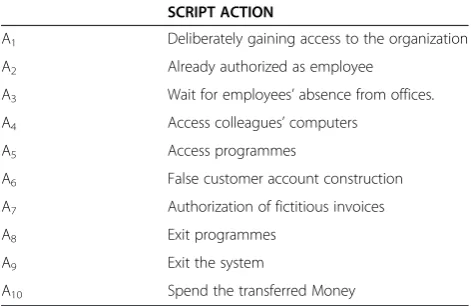
Table 1 provides an example of performed crime script with a single track. It describes a‘crime [that] involved a
local council employee who committed computer fraud. Taking advantage of poor access security (colleagues failed to lock their computers when leaving the office for a substantial period of time), the employee would wait until other members of staff had vacated the office. He would then access their computers to process the fraud. In total £15,000 was embezzled, through the setting-up, inputting and authorization of fictitious invoices’. (Willison 2006, Commission 1998).
Over the years, a number of crime scripts (or similar models) were produced to describe and analyse different types of crime. These include robbery, vandalism and auto theft (Cornish 1994a, 1994b), resale of stolen vehicle (Tremblay et al. 2001; Morselli and Roy 2008), burglary (Nee and Meenaghan 2006), check forgery (Lacoste and Tremblay 2003), employee computer crime (Willison and Siponen (2009), crimes in public transport (Smith and Cornish 2006), explosive attacks (Clarke and Newman 2006; Le Sage et al. 2013), corruption (Zanella 2013), orga-nised crime (Hancock and Laycock 2010), kidnapping (Yang et al. 2007), sex offenses (Cornish 1998; Beauregard et al. 2007a, 2007b; Deslauriers-Varin and Beauregard 2010; Brayley et al. 2011; Leclerc et al. 2011; Savona et al. 2013), drug manufacturing and drug dealing (Chiu et al. 2011; Jacques and Bernasco 2013), illegal waste activities (Tompson and Chainey 2011), stalking (Yanowitz and Yanowitz 2012; Leclerc 2013) and wildlife poaching (Hill et al. 2014). In addition, many crime scripts were created by practitioners and scholars over the years without neces-sarily being published.
Verification and validation
The number and diversity of published crime scripts illustrate the growing interest that exists in this model-ling approach amongst the crime science community. However, as Brayley et al. (2011) pointed out, limited guidance can be found as to how crime scripts should be developed, and in particular what information should (not) be included in a script.
Table 1 Computer input-fraud script (Willison, 2006)
SCRIPT ACTION
A1 Deliberately gaining access to the organization
A2 Already authorized as employee
A3 Wait for employees’absence from offices.
A4 Access colleagues’computers
A5 Access programmes
A6 False customer account construction
A7 Authorization of fictitious invoices
A8 Exit programmes
A9 Exit the system
Overall, many questions remain to be answered in this field:
What information should be collected for the creation of crime scripts?
How crime scripts should be developed from secondary data?
How crime scripts should be visualized? How crime scripts should be verified? How crime scripts should be validated?
One may appreciate that there exist multiple degrees of freedom in crime scripting. Scripts can be modeled to represent the actions of different protagonists, can be based on a single or several instances of the same crime, and can be based on one or several accounts. For example, Willison (2006) developed a crime script corresponding to a single instance of crime based on a single account. In contrast Brayley et al. (2011) developed a script that repre-sents on the same diagram five tracks based on multiple accounts, but unlike Savona et al. (2013) they did not ex-plicitly‘consider the actions undertaken by the victims’.
Faced with the task of constructing a script to analyse illegal waste disposal, Tompson and Chainey (2011) felt that,‘for the purpose of greater utility, […] many of the processes involved in script analysis needed to be stream-lined’, and contributed to improve the state of the art in crime scripting by proposing a more systematic scripting method as well as a framework for the development of control measures.
There exist dependencies between crime scripts and crime control measures. For example, new ideas for trol measures should be based on the information con-tained in the script used, but equally the information selected for the script should be relevant to the devel-oper of control measures. Recognizing this, Tompson and Chainey (ibid) modelled the problem in terms of prerequisites, facilitators, responsibility, and legislation and regulations. Whilst the scope of the article was lim-ited to ‘altering the choice-structuring conditions which give rise to offenders’decision-making’, the list still pro-vides a useful basis to generalize the analysis of more preventive options for reducing harm. It was also used more recently by Zanella (2013) to analyse corruption in public procurement.
Emphasizing the practical aspects of situational crime prevention, Clarke and Cornish (1985) recommend work-ing with‘good enough’models, i.e. basic models that serve their purpose. Without a list of qualities to evaluate crime scripts, there is a risk that scripts are always considered good enough. In order to avoid institutionalized compla-cence, it seems wise to ask ourselves why so few crime scripts were eventually used to create innovative control measures. Arguably, a hypothesis might be that crime
scripts are actually unfit for that purpose, and that an im-provement of crime scripting practices is needed to (i) in-crease our understanding of criminal procedures, and (ii) encourage the development of innovative control mea-sures. The following present six arguments supporting this hypothesis.
(1)Comparison is a method commonly used to identify inaccuracy or gaps in data. At present there is no agreed method and criteria that can be used to compare two different scripts representing the same crime event. The term‘script’has different meanings ranging from a type of schema existing only in the head of the perpetrator (e.g. Abelson1981) to an
a posterioridescription of the actions they actually carried out (e.g. Cornish1994b). Scripts can also have different scopes. For example, some scripts are limited to one scene whereas, for others, the timeline stretches across several scenes, before and/or after the criminal event. A suitable basis for script comparison and improvement appears to be missing from the literature, and robust quality assurance rules could provide ground for this. (2)Crime scripts can be considered as a form of
ecological models. The application of scientific principles to their development should therefore involve the implementation of a verification stage and a validation stage (Rykiel1996). In practice, very few articles explicitly report the results of script verification and validation, and confidence in the produced scripts is often almost entirely based on the analyst’s credibility.
In the context of simulation modeling,
‘verification is a demonstration that the modeling formalism is correct’(Fishman and Kiviat1968). For crime scripting, the set of rules and forms that analysts should adhere to is very limited. ‘Validation is a demonstration that a model
within its domain of applicability possesses a satisfactory range of accuracy consistent with the intended application of the model’(e.g. Sargent
1984, Curry et al.1989). However, for many, crime scripts are often provided without information about their application.
There are few cases of scripts that were used to specify new control measures, and even fewer where those measures were eventually implemented and evaluated. Consequently it is difficult to assess whether published crime scripts are actually good enough.
verification and validation of crime scripts should be normal practice. This was recognized by Tompson and Chainey (2011) when stating that‘issues of sampling and representativeness are important limitations to acknowledge’. However, many of the published scripts do not address this point. (4)Verification and validation stages are critical to
building credible models, i.e. models in which‘a user has sufficient confidence to base scientific and management decisions’(Holling1978, Sargent1984). Without the ability to test and verify them, the application of crime scripts to the development of requirements is very limited, as most SEFs based on the V model (a development model with successive phases of test and integration) require systems requirements to be verified and traceable (e.g. INCOSE2010, ISO2011; p34-36).
(5)If a script is to be used for the top-down design of control measures, elicitation and selection of information about the crime procedure should be driven by designers’needs. However, it is unclear how many analysts really understand the needs of designers. This is best illustrated by the SARA model, an example of a semi-structured problem-solving framework, whose main design step gives remarkably little insight into the design process:‘brainstorming for new interventions’. (POP2013).
(6)Crime scripts can reflect both cognitive and physical processes. They certainly have the potential to offer additional capabilities over the attack models presented above. However, crime scripts should also be rich enough to include the range of information needed by designers to devise physical control measures. The use of intuitive methods to model this information is perhaps not the most appropriate one, and crime scientists should perhaps look at the field of intelligence analysis where structured methods have been developed to handle some of the tasks (Heuer and Pherson2011).
Analysis
The above arguments show there are reasons of both aca-demic and practical natures to improve quality assurance in crime scripting. As a first step toward improving crime scripting methods, this article seeks to identify the qual-ities that crime scripts should possess in order to offer the quality and credibility required for their application to de-veloping functional requirements. The analysis is detailed in the following section, and a discussion on the applica-tion and limitaapplica-tions of the method also follows.
Method used for the elicitation of qualities
This second section describes the method used to derive the qualities that crime scripts should possess to yield
high quality systems requirements. The range of re-search designs considered was limited by the paucity of published cases where crime scripts were used for the development of control measures. For this reason, the work reported in this article adopted a theoretical ap-proach based on a backward and deductive analytical method similar to fault tree analysis (e.g. Bedford and Cooke 2001).
Stage 1: modelling the process by which requirements can be created from crime scripts, Stage 2: identifying the type of detects encountered
in RDs,
Stage 3: using the model to deduce the defects in scripts that could cause those in RDs.
NB: The analytical approach used to develop the argu-ment, and several of the terms used in the following sec-tion pertain to the fields of risk analysis and systems engineering. In addition, certain aspects of the models dis-cussed are closely linked to computer simulation. For this reason, some readers may feel that the matter discussed here is only relevant to the development of computer simulation. It should be clear, however, that the adoption of an object-oriented approach and the use of structured models borrowed from probabilistic risk analysis to in-vestigate the problem only represents a research design choice, and not a prescribed domain of application.
Stage 1–requirements development framework
The following summarizes the method used in a recent EU security project funded under the framework programme 7 to improve Resilience of Infrastructure and Building Security, to elicit functional requirements for new counter-terrorism measures (RIBS 2013).
Step 1–Eliciting the high level security requirements from the stakeholders.
Step 2–Modelling the scenarios relevant to those requirements.
Step 3–Modelling the decision, initiation and completion stages for each activity.
Step 4–Carrying out a sensitivity analysis of the selected activities.
Step 5–Specifying aspects of the proposed strategies, control principles and mechanisms. Step 6–Determining the response of the various
entities, and updating the scenarios. Step 7–Reiterating the previous steps as
appropriate.
Step 8–Comparing the different alternatives and selecting the most suitable ones.
Step 10–Verifying and validating the systems functional requirements.
Following this framework, the high level security re-quirements are elicited from the main stakeholders (Asnar et al. 2011). In order to identify the set of risk events and their causal chains, scenarios relevant to the requirements are then modelled and perpetrator scripts developed using an action model that makes the sub-activities explicit, e.g. decision, initiation and completion of activities. For the design of intervention the variables to which the scripts’sub-activities are most sensitive are then identified. Those factors can be decomposed into the individual’s intent, motivation and capabilities (Ezell et al. 2010), and may correspond to prerequisites and facilitators mentioned by Tompson and Chainey (2011). The performance of these activities is subsequently char-acterized as a function of the factors through sensitivity analysis. In order for designers to detail the functional requirements, at least one intervention strategy must be specified that indicates which activities of the crime script should be influenced by the measure-to-be. Do-main knowledge, e.g. situational crime prevention (SCP) principles, is then employed to prescribe the control principles and mechanisms that should be employed to alter the factors (Ekblom 1994; Ekblom and Hirshfield 2013, Roach et al. 2005). The scenarios are then adapted to account for the dynamic nature of the entities present in the ecosystem. The process described above is not lin-ear and several iterations of the previous stages typically take place before the (almost) final set of scenarios and requirements is obtained. Once done, the requirements can then be evaluated and prioritized. Inconsistency and conflicts between requirements are identified and ad-dressed. The most appropriate alternatives are then se-lected, and the effect that the control measures should have on the environment formally specified (Jackson and Zave 1995). Finally, verification and validation of the functional requirements are carried out before being used by a systems architect or designer in a systems en-gineering framework.
Stage 2–defects in requirements documents
Van Lamsweerde (2009) identified fourteen common types of defects in requirements specification: Omission; Contradiction; Inadequacy; Ambiguity; Opacity; Noise; Unintelligibility, Unmeasurability; Overspecification; Un-feasibility; Poor structuring; Forward Reference, Remorse and Poor modifiability. The first eight defects are con-sidered strongly dependent upon the way misuse cases (and consequently crime scripts) are modelled, and are detailed below. The other defects relate to the way the information is presented in a RD, or to the introduction of additional requirements, and are therefore less affected by
the content and presentation of crime scripts. For this rea-son the following focuses on the first eight defects:
‘Omission: Problem world feature (PWF) not stated by any RD item. Contradiction: RD items defining a PWF in an incompatible way. Inadequacy: RD item not ad-equately stating a PWF. Ambiguity: RD item allowing a PWF to be interpreted in different ways. Opacity: RD item whose rationale, authoring or dependencies are invisible. Noise: RD item yielding no information on any PWF. Unintelligibility: RD item stated in an in-comprehensible way for those who need to use it. Unmeasurability: RD item stating a PWF in a way that cannot be precisely compared with alternative options, or cannot be tested or verified in [designed] solutions’. (Van Lamsweerde 2009)
Stage 3–analysis
The final stage of this analysis attempts to link defects in requirements to the quality of crime scripts. As a start-ing point it is considered that Omission, Contradiction, Inadequacy, Ambiguity, Opacity, Noise, Unintelligibility, and Unmeasurability are observed during the tenth step. Going back through the various steps of the above re-quirements specification framework, it was possible to identify some of the possible causes at the script level. These qualities are highlighted in the text using italic font, and compiled in the section titled Results.
(1)To avoid undesirable omission, scenarios and alternatives should ideally be developed to ensure that no suitable alternative (amongst those
considered) is discarded. This implies that, in Step 6, the scenarios used to assess the alternatives should beunambiguous, asaccurateas possible, and sufficientlypreciseto evaluate the requirements against the selected set of selection criteria. If the
uncertaintyis too large, it may not be possible to differentiate between the different alternatives, which could also result in discarding suitable ones. (2)To avoid any contradiction between requirements, the set of selected scenarios should also provide the information needed by an analyst to reject any requirement that conflicts with the non-functional requirements of the organisation, i.e. it should be as
completeandusableas possible For example, it should be possible to notice that a measure leading to forced containment does not represent a feasible control principle if people’s right to self determination features as one of the stakeholders’requirements (Borrion et al.2012, Taylor et al.2013).
eventualities that could occur in a complex ecosystem. There is therefore a trade-off to find between theprecision(granularity) of the scripts and theircompletenessin terms of information represented.
(4)Even with empirical data about pas events, potential scenarios can only be postulated within a design framework. Theuncertaintyassociated with those scenarios should therefore be specified so that probability and consequences can be taken into account when assessing the various alternatives in Step 8.
(5)The selected strategies and control principles selected in Step 5 should also be sufficiently
unambiguous, asaccurate as possible,and sufficientlypreciseto evaluate the requirements against the set of selection criteria. For example, a requirement for a control measure may relate to the introduction of an obstacle that would prevent an offender from carrying out a specific action. However, if the location of the obstacle is imprecisely prescribed, or if specific information about thecontextis omitted, the designed obstacle may be utterly ineffective.
(6)Likewise, if theuncertaintyabout an alternative is too large, the assessment in Step 8 may not be sufficiently insightful to decide whether to select or reject it, and to measure whether a candidate solution is satisfactory.
(7)Sensitivity analysis of the selected activities is performed in Step 4. In practice this typically involves characterizing the outcomes of the script’s activities (and their likelihood) as the states of the various entities are modified. Such an analysis can reveal the factors (i.e. requisite and facilitating/ hindering conditions) that could be altered to support or disrupt certain activities. In order to ensure that appropriate strategies and control principles are selected in Step 5, the activities described in the script should therefore be sufficientlyunambiguous, asaccurate as possible,
and sufficientlypreciseto allow analyst to identify the main factors of performance.
(8)Consistency,transparency and traceabilitycan also support the development of feasible and adequate requirements. Bothconsistencyandtransparency
about the syntax and method used to represent the script are essential to identify the key factors of performance in an effective and efficient manner. The same applies totraceabilityof the relationships between entities (their states and actions) and the high-level requirements. In addition, to reduce noise, the script should ideally be asparsimoniousas possible with the identified dependencies between
the activities, states, factors and requirements explicitly indicated.
(9)In Step 3 the crime script should provide sufficient information to allow the breaking down of activities into three stages: decision, initiation and completion. This implies that the properties of the entities selected for the scripts should be those that influence these three sub-activities. For example, most scripts provide some information about the property‘location’of the offender. This is justified because their ability to see a given physical resource and to use it to commit the crime depends on sensorial accessibility (e.g. visibility) and physical accessibility (e.g. being able to make direct physical contact with the object), and therefore on the distance between the offender and the resource. To develop a rich set of alternatives, it is thus essential to consider not just the most obvious and visible factors (e.g. location) but also the more abstract ones, e.g. trust.
(10)Finally, for a given script, theirtypeshould be clearly indicated so to facilitate comparison between scripts as well as their application. Clarifying whether a script is a potential script, planned script, or performed script would allowuncertaintyto be better considered, and would ensure (where possible) that new designs of control measures are based on probable scripts developed using empirical data, rather than anecdotal or purely hypothetical scripts.
Summary
Quality criteria for crime scripts
To encourage the development of effective control mea-sures and reduce the presence of defects in RDs, the above analysis recommends that crime scripts should have certain qualities. These relate to the following properties of crime scripts: typology, traceability, transparency, consistency, context, completeness, parsimony, precision, uncertainty, usability, ambiguity and accuracy.
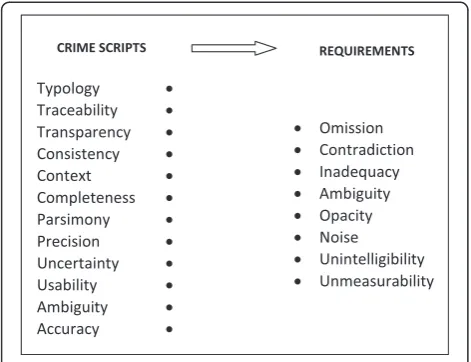
Figure 1 represents the identified links between the de-fects at the requirements level and the qualities of the crime scripts used to create the requirements.
Checklist
A checklist is proposed for the development and evalu-ation of crime scripts:
1. Typology: The type of the script should be clearly indicated: potential script, planned script or performed script; perpetrator script, victim script, control script, etc.
problem. Dependencies between the states of the entities and activities should be clearly visible. 3. Transparency: The syntax and method adopted for
the creation of a script should be clearly communicated, along with the data used for its generation. The criteria used for the development of the model and its calibration should also be made explicit. When multiple scripts are combined, the syntax and method of integration should be provided.
4. Consistency: The syntax and method adopted for the creation of a script and the integration of existing scripts should be consistently applied throughout the entire scripting process. Consistency also applies to scripts represented in a diagrammatic form.
5. Context: Crime and crime control are both context sensitive. A mention of the context should be added alongside the script so to allow more accurate understanding of the constraints and conditions that could impact on the effectiveness of control
measures.
6. Completeness: Scripts should include relevant information about the elements that significantly influence the probability distribution of the consequences. Whilst it is understood that ecological models are always incomplete, the main factors of performance should be described for all modelled activities, including physical and psychological ones.
7. Parsimony: Scripts should not include any information about those elements that are not relevant to the stakeholders’high level requirements. 8. Precision: The precision and resolution of the
information included in a script should be based on
the sensitivity of the control measures, and allow effective evaluation of requirements.
9. Uncertainty: The uncertainty about the commission of crime and its impact according to the
stakeholders’criteria should be explicitly detailed. For example, one should distinguish between sensed, inferred or speculated actions. Equally, when the scripts is based on multiple instances of crime and contain several tracks, the likelihood and statistical significance of each path should ideally be indicated. 10.Usability: Scripts should be comprehensive to those
expected to use them. When scripts are represented using activity diagrams, both the text and symbols used should be intelligible.
11.Ambiguity: It should not be possible to interpret the information forming a crime script in more than one way.
12.Accuracy: The intrinsic and relational properties of the elements represented in a crime script should be accurately characterised.
Discussion
In this article, twelve quality criteria for crime scripts were derived, and a checklist was proposed to support the specification, verification and validation of functional requirements for control measures. This is the first list of its kind for crime scripts, and its application to review the crime scripts mentioned in the background section already provides some insight into the areas that need improvement.
Accuracy, precision and uncertainty are related to model substance. For scripts based on empirical data, the question of accuracy can be divided in two sub-questions: does the data accurately represent the crime phenomenon of interest? and does the script accurately describe the data? Systematic methods for answering these questions remain to be developed. However, it is evident that quantitative methods such as those used by Beauregard et al. (2007a) can provide greater confidence in the results. Another interesting observation concerns the selection of information and its precision. In many cases, the granularity of the scripts was such that the re-quirements that could be formulated to produce new control measures would probably not be specific enough to be useful to a designer. Finally, very few authors con-sidered or reported the uncertainty present in crime scripts. Given that the script correspond to a potential risk scenario, an indication of the relative likelihood of the different tracks occurring would be useful to allocate resources effectively and prioritize the requirements.
Improving the aspects of crime scripts related to typ-ology, traceability, transparency, parsimony, usability, consistency and ambiguity could greatly facilitate their application in a collaborative environment. A review of Figure 1The logic of defect propagation between crime scripts
the literature shows that some scripts can be ambiguous. For example, in the above example it is not clear whether the term ‘system’ refers to the organisation or the computer system. In some cases, the keys of the dia-grams were created by the authors of scripts and/or in-consistently employed. Traceability is an issue found in most scripts. Because the activities of the scripts are not explicitly connected to the goals, objectives of the offender (and security team), most scripts found in the literature offer little analytical support for the development of re-quirements. In particular, it would be impossible to update the scenarios in Step 6 of the above framework without making any assumption about the goals and requirements underpinning the offender’s actions. Le Sage et al. (2013) provide useful directions to address current traceability issues in crime scripts, but did not propose a usable pres-entation format. Finally all scripts were found to be parsi-monious with no irrelevant information included.
Completeness should be defined with respect to the scope and limitations of the project for which it is used. Completeness does not mean however that all the rele-vant information must be represented in the script. However, if the control principles to be actualized by the future control measures are based on situational crime prevention, the elements that factor in the offender’s perceived risk, reward, effort, provocations and excuses should feature in the script. For many of the scripts, this was unfortunately not the case. Equally limited informa-tion was provided about the context, and if so it was often in a separate section in the document. Clearly for-mulated situational conditions defining the context could help refining the functional requirements and de-veloping non-functional ones.
Limitations
The list of criteria presented in Section 2 has both theor-etical and practical limitations.
Theoretical limitations–The list of criteria is most cer-tainly incomplete as (1) the set of defects used as input in the identification process was obtained from empirical ob-servations with no guaranty of completeness, and (2) the analytical method employed to deduce the criteria is heur-istic in nature. Comparison with the list presented by Wang and Strong (1996) shows that many of the above el-ements are supported by the theory in the general field of data quality. Some elements in their list are not included, for example objectivity, reputation and believability. How-ever, these qualities are not considered essential to create a step change in the field at this point in time. Empirical research examining actual security related R&D projects could provide valuable information needed to test and im-prove this list. At this stage the list is still relatively ab-stract and further work should be carried out to explore these quality criteria individually and more concretely.
Practical limitations – Some of the recommendations are context dependent and are ‘getting it right’ may not be straightforward. For example, there is currently no visualization system that could provide an effective means of representing the relations between the offender’s goals, requirements, objectives, scripts and factors, and those of the security team. If one were to be developed, it is unlikely that it would be comprehensively represented on a static page.
Conclusions
This article aimed at improving quality assurance in the field of crime scripting to encourage the development of innovative control measures. A list of twelve quality cri-teria for crime scripts was derived that could be used to improve crime scripting practices. These relate to the fol-lowing properties of crime scripts: typology, traceability, transparency, consistency, context, completeness, parsi-mony, precision, uncertainty, usability, ambiguity and ac-curacy. A checklist was derived from those to support practical applications.
In the short term, researchers could improve their scripts by using the checklist to identify some of the de-fects that may propagate through the different stages of design frameworks, and impact on the quality of re-quirements for control measures. The twelve dimensions may also serve to guide the research occurring in this field by highlighting those challenges that should be tacked to improve crime scripting. Finally, this paper adds to the systematic generation of useful and usable crime scripts by articulating how crime scripts can be used to create requirements for control measures.
Two important observations were made after using this list to examine scripting practices. Whilst everyone can intuitively produce a crime script, researchers and practitioners should appreciate the differences that exist between a model that simply represents the data, and one that clearly shows the information needed by its users for a design purpose.
A review of the literature shows that the vast majority of published scripts offer very poor traceability to the objectives. Actions should be more explicitly connected to the goals and objectives of the offender and the secur-ity team. Understanding how certain activities contribute to enable other activities or prevent certain mechanisms is essential for effective information selection.
of situations influence script granularity and information selection? Would an analyst completely foreign to com-puters represent in details the various steps involved in the procedure of a given software, or would they tend to use a higher level of abstraction and discard valuable in-formation? Two decades after Cornish’s seminal paper on the topic, there is evidence that crime scripts should evolve to provide greater analytical support for the de-sign of control measures. At this stage the two most promising directions seem to be: (1) to represent much richer scripts that include not just the perpetrator’s ac-tions but all the main entities that influence the criminal procedure, and (2) moving from intuitive to structured scripting methods based on, for example, object-oriented models.
Competing interests
The author declares that he has no competing interests.
Authors’information
HB is the Deputy Director of the Security Science Doctoral Training Centre at UCL.
Acknowledgment
The research reported in this article has received funding from the Seventh Framework Programme FP7 2007-2013 under grant agreement no242497. The author thanks Dr Tanya Le Sage, Dr Sonia Toubaline and Prof Nick Tilley for the discussions he had with them about this work. He is also grateful to the anonymous reviewers and the editor for their comments.
Received: 1 July 2013 Accepted: 18 October 2013 Published: 31 October 2013
References
Abelson, RP. (1976). Script Processing in Attitude Formation and Decision Making. In JD Carroll & J Payne (Eds.),Cognition and Social Behavior. Hillsdale NJ: Erlbaum.
Abelson, RP. (1981). Psychological Status of the Script Concept.American Psychologist, 36, 715–729.
Asnar, Y, & Giorgini, P. (2006). Modelling risk and identifying countermeasure in organizations. InCritical Information Infrastructures Security(pp. 55–66). Heidelberg: Springer Berlin.
Asnar, Y, Giorgini, P, & Mylopoulos, J. (2011). Goal-driven risk assessment in requirements engineering.Requirements Engineering, 16(2), 101–116. London: Springer-Verlag.
Beauregard, E, Proulx, J, Rossmo, K, LeClerc, B, & Allaire, JF. (2007a). Script analysis of the hunting process of serial sex offenders.Criminal Justice and Behavior, 34(8), 1069–1084.
Beauregard, E, Rossmo, K, & Proulx, J. (2007b). A descriptive model of the hunting process of serial sex offenders: A rational choice approach.Journal of Family Violence, 22, 449–463.
Bedford, TJ, & Cooke, RM. (2001).Probabilistic Risk Analysis: Foundations and Methods. Cambridge (UK): Cambridge University Press.
Borrion, H, Mitchener-Nissen, T, Taylor, J, & Lai, KM. (2012). Countering Bioterror-ism: Why smart buildings should have a code of ethics. InIntelligence and Security Informatics Conference (EISIC)(pp. 68–75). European: IEEE. Bowleg, L, Lucas, KJ, & Tschann, JM. (2004). The ball was always in his court: An
exploratory analysis of relationship scripts, sexual scripts, and condom use among African-American women.Psychology of Women Quarterly, 28, 70–72. Brayley, H, Cockbain, E, & Laycock, G. (2011). The Value of Crime Scripting:
Deconstructing Internal Child Sex Trafficking.A Journal of Policy and Practice, 5, 132–143.
Bresciani, P, Perini, A, Giorgini, P, Giunchiglia, F, & Mylopoulos, J. (2004). Tropos: an agent-oriented software development methodology.Autonomous Agents and Multi-Agent Systems, 8(3), 203–236.
Byrne, J, & Marx, G. (2011). Technological Innovations in crime prevention and policing: A review of the research on implementation and impact.Journal of Police Studies, 20(3), 17–38.
Carroll, JM (Ed.). (1995).Scenario-based Design: Envisioning Work and Technology in System Development. New York: John Wiley & Sons.
Chiu, Y-N, Leclerc, B, & Townsley, M. (2011). Crime script analysis of drug manu-facturing in clandestine laboratories: Implications for strategic intervention.
British journal of criminology, 51, 355–374.
Clarke, RV, & Cornish, DB. (1985). Modeling offenders’decisions: A framework for research and policy.Crime Justice, 6, 147–185.
Clarke, RVG, & Eck, J. (2003).Become a problem-solving crime analyst: In 55 small steps. London: Jill Dando Institute of Crime Science.
Clarke, RV, & Newman, GR. (2006).Outsmarting the terrorists. Westport, CT: Praeger Security International.
Commission, A. (1998).Ghost in the Machine: An Analysis of IT Fraud and Abuse. London: Audit Commission Publications.
Common Criteria Sponsoring Organizations (CCSO). (2006). Common Criteria for Information Technology Security Evaluation Part 1: Introduction and General Model, Version 3.1 Rev 1. InIn Nat’l Inst Of Standards and Technology CCMB-2006-09-001. Nat’l Inst Of Standards and Technology CCMB-2006-09-001.
Cornish, DB. (1994a). The procedural analysis of offending and its relevance for situational prevention. In RV Clarke (Ed.),Crime prevention studies 3(pp. 151–196). Monsey, NY: Criminal Justice Press.
Cornish, DB. (1994b).Proceedings of the International Seminar on Environmental Criminology and Crime Analysis (pp. 30–45). Tallahassee, FL: Florida Statistical Analysis Center, Florida Criminal Justice Executive Institute and Floria Department of Law Enforcement.
Cornish, DB. (1998). Regulating lifestyles: A rational choice approach. In M Martin (Ed.),Environmental criminology and crime analysis: Papers of the Seventh International Seminar, Barcelona, June 1998 (Volume 1 (pp. 165–176). Barcelona, Spain: University of Barcelona.
Cornish, DB, & Clarke, RV. (1986).The Reasoning Criminal. New York: Springer. Curry, GL, Deuermeyer, BL, & Feldman, RM. (1989).Discrete Simulation. Oakland,
CA: Holden-Day.
Dardenne, A, van Lamsweerde, A, & Fickas, S. (1993). Goal-directed requirements acquisition.Science of Computer Programming, 20(1), 3–50.
Deslauriers-Varin, N, & Beauregard, E. (2010). Victims’routine activities and sex offenders’target selection scripts: A latent class analysis.Sexual abuse: a journal of research and treatment, 22(3), 315–342.
Ekblom, P. (1994). Proximal circumstances: A mechanism-based classification of crime prevention.Crime prevention studies, 2, 185–232.
Ekblom, P. (2007).Thinking Thief: Crime frameworks for design against crime. Presented at the Design Against Crime Research. UK, London: Centre. Ekblom, P. (2012a). The Security Function Framework. In P Ekblom (Ed.),Design
against crime: crime proofing everyday objects. Crime Prevention Studies 27. Lynne Rienner: Boulder, CO.
Ekblom, P. (2012b). Happy returns: ideas brought back from situational crime prevention’s exploration of design against crime. In G Farrell & N Tilley (Eds.),
The Reasoning Criminologist: Essays in Honour of RV Clarke. Cullompton: Crime Science series. Willan.
Ekblom, P, & Hirshfield, A. (2013).An alternative formulation of SCP principles–the 11Ds (and counting). Philadelphia: International Seminar, Environmental Criminology and Crime Analysis, Temple University. June 2013. Ezell, BC, Bennett, SP, Winterfeldt, DV, Sokolowski, J, & Collins, AJ. (2010).
Probabilistic Risk Analysis and Terrorism Risk.Risk analysis: an official publication of the Society for Risk Analysis, 30(4), 575–589.
Felson, M, & Clarke, RV. (1998).Opportunity Makes the Thief. Police Research Series, Paper 98. Policing and Reducing Crime Unit, Research, Development and Statistics Directorate. London: Home Office. http://www.homeoffice.gov.uk/ rds/prgpdfs/fprs98.pdf. Accessed 1 June 2013.
Firesmith, DG. (2003). Security use cases.Journal of object technology, 2(3), 53–64. Fishman, GS, & Kiviat, PJ. (1968). The statistics of discrete-event simulation.
Simula-tion, 10(4), 185–195.
Fiske, ST, & Linville, PW. (1980). What does the schema concept buy now?
Personality and Social Psychology Bulletin, 6, 543–557.
Fiske, ST, & Taylor, SE. (1991).Social cognition(2nd ed.). New York: McGraw-Hill. Gill, M (Ed.). (2006).The handbook of security. Basingstoke: Palgrave Macmillan. Hancock, G, & Laycock, G. (2010). Organised crime and crime scripts: prospects
Heuer, RJ, & Pherson, RH. (2011).Structured Analytical Techniques for Intelligence Analysis. Washington, D.C.: CQ Press.
Hill, JF, Johnson, SD, & Borrion, H. (2014). Potential uses of computer agent-based simulation modelling in the evaluation of wildlife poaching. In A Lemieux (Ed.),Situational Prevention of Poaching. Crime Science. London: Routledge. Holling, CS. (1978).Adaptive Environmental Assessment and Management. New
York, NY: John Wiley & Sons.
IEEE. (2008).IEEE Guide for Developing System Requirements Specifications (IEEE Std 1233(1998th ed.). Piscatway, NJ: IEEE.
INCOSE. (2010).Systems Engineering Handbook: A Guide for System Life Cycle Processes and Activities, v. 3.2. INCOSE-TP-2003-002-03.2. Seatle, WA: International Council on Systems Engineering.
International Organization for Standardization (ISO). (2011).ISO/IEC/IEEE 29148:2011 - Systems and software engineering—Life cycle processes— Requirements engineering. ISO/IEC/IEEE Switzerland: ISO.
Jackson, M, & Zave, P. (1995). Deriving specifications from requirements: an example. InProceedings of the 17th international conference on Software engineering(pp. 15–24). ACM.
Jacques, S, & Bernasco, W. (2013). Drug dealing. In B Leclerc & R Wortley (Eds.),
Cognition and Crime: Offender Decision Making and Script Analyses. Crime Science. London: Routledge.
Kaplan, S, & Garrick, BJ. (1981). On the quantitative definition of risk.Risk analysis, 1(1), 11–27.
Kordy, B, Mauw, S, Radomirović, S, & Schweitzer, P. (2012). Attack–defense trees.
Journal of Logic and Computation. doi; 10.1007/978-3-642-40196-1_15. Lacoste, J, & Tremblay, P. (2003). Crime and innovation: a procedural analysis of
patterns in check forgery. InTheory for Practice in situational crime prevention. Crime Prevention Studies(pp. 169–196). Monsey (NY): Criminal Justice Press. Le Sage, T, Borrion, H, & Toubaline, S. (2013).An Object-Oriented Approach for
Modelling Security Scenarios. Computer Modelling and Simulation. Cambridge, UK: International Conference on - April 2013.
Leclerc, C. (2013). Script analysis for situational crime prevention. In B Leclerc & R Wortley (Eds.),Cognition and Crime: Offender Decision Making and Script Analyses. Crime Science. London: Routledge.
Leclerc, B, Wortley, R, & Smallbone, S. (2011). Getting into the script of adult child sex offenders and mapping out situational prevention measures.Journal of Research in Crime and Delinquency, 48(2), 209–237.
McDermott, J, & Fox, C. (1999).Using abuse case models for security requirements analysis. In Computer Security Applications Conference, 1999. (ACSAC’99) Proceedings. 15th Annual(pp. 55–64). Piscatway, NJ: IEEE.
Meyer, S, & Ekblom, P. (2012). Specifying the explosion-resistant railway carriage—a ‘bench’test of the Security Function Framework.Journal of Transportation Security, 5(1), 69–85.
Morselli, C, & Roy, J. (2008). Brokerage qualifications in ringing operations.
Criminology, 46(1), 71–98.
Nee, C, & Meenaghan, A. (2006). Expert decision making in burglars.British Journal of Criminology, 46, 935–949.
Pawson, R, & Tilley, N. (1997).Realistic Evaluation. London: Sage Publications. Phillips, C, & Swiler, LP. (1998). A graph-based system for network-vulnerability
analysis. InProc. of the 1998 Workshop on New Security Paradigm(pp. 71–79). Resilience of Infrastructure and Building Security (RIBS). (2013).
http://www.ribs-project.eu. Accessed 20 June 2013.
(2013).Center for Problem-Oriented Policing (POP). http://www.popcenter.org/ about/?p=sara Accessed 20 June 2013.
Roach, J, Ekblom, P, & Flynn, R. (2005). The conjunction of terrorist opportunity: a framework for diagnosing and preventing acts of terrorism.Security Journal, 18(3), 7–25.
Rykiel, EJ, Jr. (1996). Testing ecological models: the meaning of validation.
Ecological modelling, 90(3), 229–244.
Sargent, RG. (1984). A tutorial on verification and validation of simulation models. InConference on Winter simulation, Proceedings of the 16th(pp. 114–121). Piscatway, NJ: IEEE.
Savona, EU, Giommoni, L, & Mancuso, M. (2013). Human trafficking for sexual exploitation in Italy. In B Leclerc & R Wortley (Eds.),Cognition and Crime: Offender Decision Making and Script Analyses. Crime Science. London: Routledge.
Schank, R, & Abelson, R. (1977).Scripts, Plans, Goals, and Understanding. Hilladale NJ: Lawrence Erlbaum Associates.
Schneier, B. (1999). Attack trees.Dr. Dobb’s journal, 24(12), 21–29.
Simon, W, & Gagnon, JH. (1986). Sexual Script: Permanence and change.Archives of Sexual behaviour, 15, 97–120.
Sindre, G, & Opdahl, L. (2000).Eliciting security requirements by misuse cases. Proc TOOLS Pacific, 10(1), 120–131. Secaucus, NJ: Springer-Verlag New York. Smith, MJ, & Cornish, DB (Eds.). (2006).Secure and Tranquil Travel: Preventing Crime
and Disorder on Public Transport. London: University College London (UCL) Jill Dando Institute of Crime Science.
Stowell, J, & Rebovich, D. (2007). Institutional Corrections and Hard Technology. In J Byrne (Ed.),The New Technology of Crime, Law and Social Control(pp. 215–286). Monsey, NY: Criminal Justice Press.
Taylor, J, Margaritis, D, Nasir, ZA, Borrion, H, & Lai, KM. (2013). The Role of Protection Measures and their Interaction in Determining Building Vulnerability and Resilience to Bioterrorism.Journal of Bioterrorism & Biodefense, 4, 123. Tedeschi, J, & Felson, R. (1994).Violence, aggression, & coercive actions.
Washington, DC: American Psychological Association.
Tompson, L, & Chainey, S. (2011). Profiling illegal waste activity: using crime scripts as a data collection and analytical strategy.European Journal of Criminal Policy and Research, 17(3), 179–201.
Toubaline, S, Borrion, H, & Le Sage, T. (2012).Homeland Security (HST), 2012 IEEE Conference on Technologies (pp. 111–116). Piscatway, NJ: IEEE.
Tremblay, P, Talon, B, & Hurley, D. (2001). Body switching and related adaptations in the resale of stolen vehicles. Script elaborations and aggregate crime learning curves.British Journal of Criminology, 41(4), 561–579.
van Lamsweerde, A. (2009).Requirements Engineering - From System Goals to UML Models to Software Specifications. Chichester, UK: John Wiley & Sons. Wang, RY, & Strong, DM. (1996). Beyond accuracy: what data quality means to
data consumers.Journal of Management Information Systems, 12(4), 5–33. Willison, R. (2006). Understanding the perpetration of employee computer crime
in the organisational context.Information and organization, 16(4), 304–324. Willison, R, & Siponen, M. (2009). Overcoming the insider: reducing employee
crime through Situational Crime Prevention.Communications of the ACM, 52(9), 133–137.
Yang, SL, Wu, B, & Huang, SL. (2007). Kidnapping in Taiwan: the Significance of Geographic Proximity, Improvisation and Fluidity.International Journal of Offender Therapy and Comparative Criminology, 51, 324–339.
Yanowitz, KL, & Yanowitz, JL. (2012). The role of gender in the generation of stalking scripts.Sex Roles, 66(5–6), 366–377.
Yu, E. (1995).Modelling strategic relationships for process engineering(PhD thesis). Torronto: University of Toronto, Department of Computer Science. Zanella, M. (2013). Script analysis of corruption in public procurement. In B
Leclerc & R Wortley (Eds.),Cognition and Crime: Offender Decision Making and Script Analyses. Crime Science. London: Routledge.
doi:10.1186/2193-7680-2-6
Cite this article as:Borrion:Quality assurance in crime scripting.Crime
Science20132:6.
Submit your manuscript to a
journal and benefi t from:
7Convenient online submission
7Rigorous peer review
7Immediate publication on acceptance
7Open access: articles freely available online 7High visibility within the fi eld
7Retaining the copyright to your article