R E S E A R C H A R T I C L E
Open Access
Efficacy of low-level laser therapy in
accelerating tooth movement, preventing
relapse and managing acute pain during
orthodontic treatment in humans: a
systematic review
Mikael Sonesson
1*, Emelie De Geer
2, Jaqueline Subraian
3and Sofia Petrén
1Abstract
Background:Recently low-level laser therapy (LLLT) has been proposed to improve orthodontic treatment. The aims of this systematic review were to investigate the scientific evidence to support applications of LLLT: (a) to accelerate tooth movement, (b) to prevent orthodontic relapse and (c) to modulate acute pain, during treatment with fixed appliances in children and young adults.
Methods:To ensure a systematic literature approach, this systematic review was conducted to Goodman’s four step model. Three databases were searched (Medline, Cochrane Controlled Clinical Trials Register and Scitation), using predetermined search terms. The quality of evidence was rated according to the GRADE system.
Results:The search identified 244 articles, 16 of which fulfilled the inclusion criteria: three on acceleration of tooth movement by LLLT and 13 on LLLT modulation of acute pain. No study on LLLT for prevention of relapse was identified. The selected studies reported promising results for LLLT; elevated acceleration of tooth movement and lower pain scores, than controls. With respect to method, there were wide variations in type of laser techniques.
Conclusions:The quality of evidence supporting LLLT to accelerate orthodontic tooth movement is very low and low with respect to modulate acute pain. No studies met the inclusion criteria for evaluating LLLT to limit relapse. The results highlight the need for high quality research, with consistency in study design, to determine whether LLLT can enhance fixed appliance treatment in children and young adults.
Keywords:Low-level laser therapy, Orthodontics, Pain, Relapse, Tooth movement
Background
It has recently been proposed that low intensity lasers, which interact with oral tissues, could improve ortho-dontic treatment by reducing treatment time, preventing relapse and modulating the pain of tooth movement.
Low-level laser therapy (LLLT), also known as cold laser, is a type of irradiation that does not cause a temperature rise in the tissue [1]. The mechanism of action depends on the ability of subcellular photoreceptors to respond to
visible red and near-infrared wavelengths. Stimulation of these receptors influences the electron transport chain, the respiratory chain and oxidation, expressed as an increase in the cellular metabolic processes [2].
There are various potential modes of action of LLLT on the inflammatory process during orthodontic treatment, e.g. vasodilatation and induction of degranulation of mast cells, with release of proinflammatory substances to acce-lerate tissue healing. LLLT also increase osteoblastic and osteoclastic activity and stimulates collagen production [1]. The neuronal effect of laser therapy includes stabilization of membrane potential, inhibiting activation of the pain signal. Following laser irradiation, suppression of the pulpal
* Correspondence:[email protected]
1Department of Orthodontics, Faculty of Odontology, Malmö University, Carl Gustavs väg 34, SE-205 06 Malmö, Sweden
Full list of author information is available at the end of the article
© 2016 The Author(s).Open AccessThis article is distributed under the terms of the Creative Commons Attribution 4.0 International License (http://creativecommons.org/licenses/by/4.0/), which permits unrestricted use, distribution, and reproduction in any medium, provided you give appropriate credit to the original author(s) and the source, provide a link to the Creative Commons license, and indicate if changes were made. The Creative Commons Public Domain Dedication waiver (http://creativecommons.org/publicdomain/zero/1.0/) applies to the data made available in this article, unless otherwise stated. Sonessonet al. BMC Oral Health (2017) 17:11
response to painful stimulation has been shown in C-fibers [3]. Moreover, laser irradiation has been shown to decrease inflammatory mediators such as prostaglandin E2, known to elicit painful sensations [4].
The aim of the present study was to investigate the scien-tific evidence to support the application of low-level laser therapy to (a) accelerate orthodontic tooth movement, (b) prevent orthodontic relapse or (c) modulate acute pain of orthodontic treatment in children and young adults.
Methods
To ensure a systematic approach, the literature review was conducted according to Goodman’s model [5], which consists of the following steps:
Problem specification
Formulation of a plan for the literature search
Literature search and retrieval of publications
Data extraction, interpretation of data and evidence from the literature retrieved.
The title and abstract lists were independently assessed by the four authors (MS,EDG,JS,SP). Papers of potential relevance were selected. The full-text version was analyzed and assessed according to a preset protocol by the authors, on the basis of the initial inclusion criteria. Diverging opinions were solved in consensus. The literature selection followed the PRISMA-compliant selection process [6].
Problem specification
I. Is there evidence that LLLT is more effective than a control method in accelerating tooth movement in children and young adults during orthodontic treatment with fixed orthodontic appliances? II. Is there evidence that LLLT is more effective than a
control method in preventing relapse after
orthodontic treatment in children and young adults? III. Is there evidence that LLLT is more effective than a
control method in modulating the acute pain of orthodontic treatment in children and adolescents?
The search terms used in the problem specification were defined on the basis of the United States National Library of Medicineʼs Medical Subject Headings (MeSH) prior to the literature search.
Formulation of a plan for the literature search
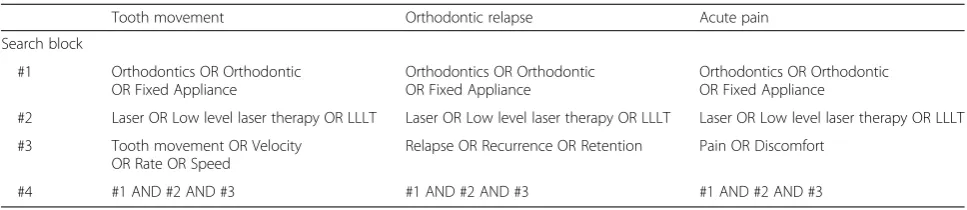
Three databases were searched to identify all relevant studies: Medline (via PubMed), The Cochrane Controlled Clinical Trials Register and Scitation. The entrez date was 27/11/2015. To ensure the most comprehensive search, no MeSH terms were used, in order to avoid exclusion of recently published studies without these terms. The search
strategy is presented in Table 1. The search was assisted by the staff at the Library, Malmö University, Sweden.
Literature search and retrieval of publications
Inclusion criteria were determined prior to reading the retrieved abstracts, using the population intervention control outcome method (PICO), as presented in Table 2. Sample size calculations in two studies with sufficient power [7, 8], resulted in the decision to require a mini-mum of twenty subjects per group.
Publications written in English or a Scandinavian lan-guage, addressing questions which seemed relevant to the specifications of the problem, were read in full and either included for further analysis, or excluded. The reference lists of included studies were hand searched for additional publications.
Data extraction, interpretation and evidence from the literature
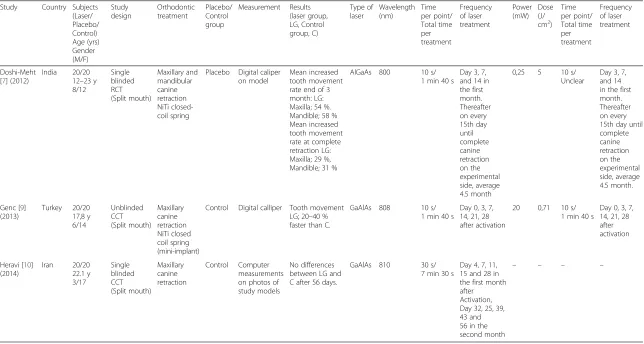
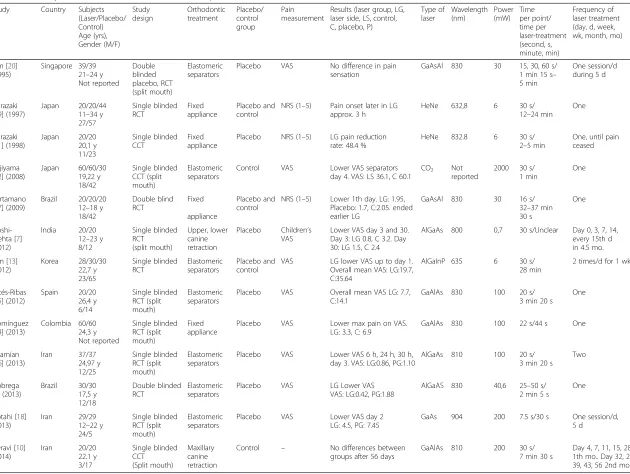
A data extraction protocol (not shown) was used to create an overview of the included studies. See Tables 3 and 4.
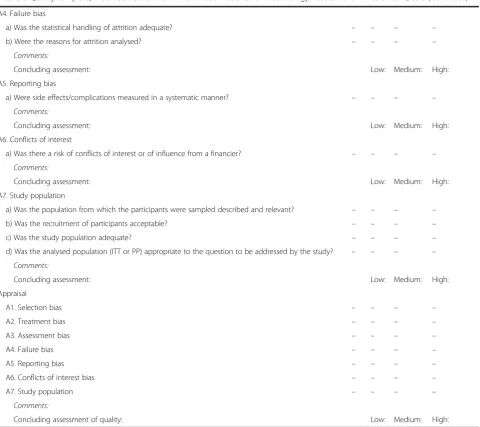
The quality of the selected publications was assessed according to predetermined criteria for methodology and performance. The criteria of the checklist for clinical trial ofThe Swedish Council on Technology Assessment in Health Care (SBU),was modified and used (Appendix 1). Seven variables were analyzed; adequate selection, blind-ing,adequate interpretation of results,adequate reporting of attrition, adequate reporting of side effects, risks for conflict of interest and adequate study population. Each variable consisted of several subheadings.
The results were summarized and resulted in ayesor a
nofor the field. One point was awarded for each variable, except for the variabledouble blindedwhich was awarded two points, as double blind studies are preferred. The quality of studies awarded six to eight points was denoted as high, three to five points as moderate, and up to two points as low. Quality of evidence was rated according to Grading of Recommendations Assessment, Development and Evaluation (GRADE) guidelines, as strong, moderate, low and very low. To investigate the risk of publication bias, a search was conducted in www.controlled-trials.com and www.clinicaltrials.gov to verify the number of ongoing studies in this field. No studies were to be found.
Results
Accelerating tooth movement
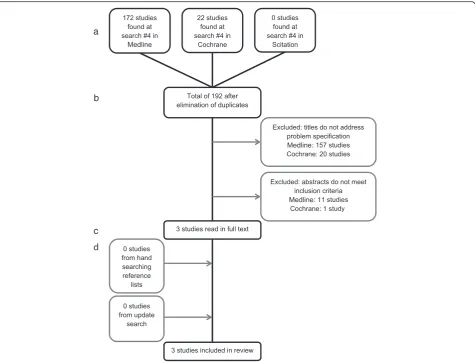
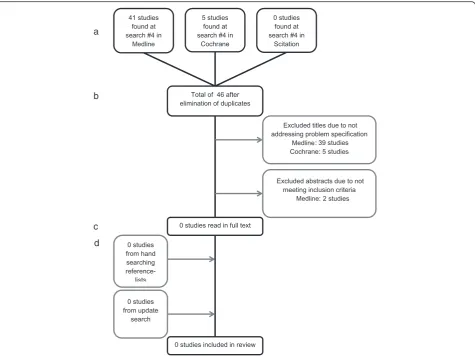
The systematic search approach, further described in Fig. 1 yielded three studies [7, 9, 10]. One trial was from India, one from Iran, and one was from Turkey. One study was designed as a randomized controlled trial (RCT) and two as controlled clinical trials (CCT), Table 3. Two of the studies reported a significant increase in velocity of tooth movement [7, 9]. One study showed an increased velocity
of tooth movement of approximately 30 % in the laser treatment group compared to the control group [9]. Another study reported similar results after complete canine retraction: acceleration of 27 % in the maxilla and 31 % in the mandible [7]. Finally, one study re-ported no accelerated tooth movement [10], Table 3.
Preventing relapse
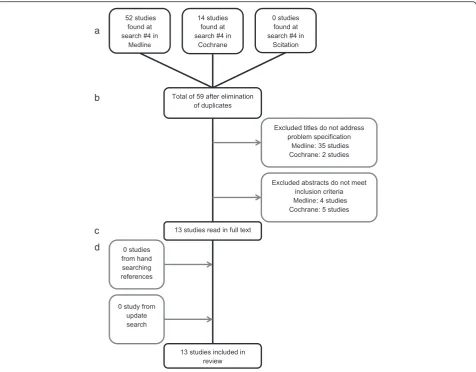
The systematic search approach failed to identify any relevant study that matched the inclusion criteria, Fig. 2.
Modulating acute pain
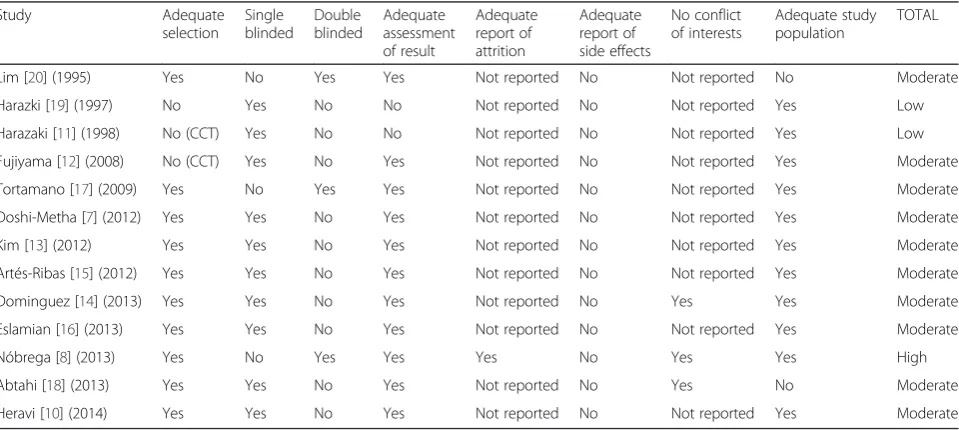
The systematic search approach yielded thirteen studies, Fig. 3. Two trials were from Brazil, one from Colombia, one from India, three from Iran, three from Japan, one from Korea, one from Singapore and one was from Spain. Ten studies were designed as RCT and three as CCT, Table 4. Eleven studies showed a statistically significant reduction in reported pain among the patients treated with LLLT [7, 8, 11–19]. Two studies [10, 20] found no differences in pain sensation, Table 4.
Quality evaluation
Accelerating tooth movement After analysis, the quality of the three studies of acceleration of tooth movement by laser irradiation was rated asmoderate, Table 5.
One study [7] included a power analysis and had single blinded subjects, but failed to report side effects. The quality of two studies [9, 10] was downgraded because the subjects were not blinded and recruitment of the participants was not described. In addition, no power analysis or control of side effects was included. Quality of evidence was rated according to GRADE guidelines asvery lowTable 6.
Preventing relapse No quality analysis or quality of evi-dence rating according to GRADE was made.
Modulating acute pain In the quality analysis, two studies [11, 19] were graded aslowand ten studies [7, 10, 12–18, 20] as moderate. Only one study [8] was considered to be of highquality, Table 7.
All subjects in the studies on pain were blinded to their treatment; three studies used a double blind method [8, 17, 20]. Three studies included a power analysis to calculate the number of subjects needed [7, 8, 13]. However, one study [7] was on pain and treatment time and the sample size calculation was based on treatment time. Quality of evidence was rated accor-ding to GRADE guidelines as low, Table 6.
Table 1Search strategy
Tooth movement Orthodontic relapse Acute pain
Search block
#1 Orthodontics OR Orthodontic OR Fixed Appliance
Orthodontics OR Orthodontic OR Fixed Appliance
Orthodontics OR Orthodontic OR Fixed Appliance
#2 Laser OR Low level laser therapy OR LLLT Laser OR Low level laser therapy OR LLLT Laser OR Low level laser therapy OR LLLT #3 Tooth movement OR Velocity
OR Rate OR Speed
Relapse OR Recurrence OR Retention Pain OR Discomfort
#4 #1 AND #2 AND #3 #1 AND #2 AND #3 #1 AND #2 AND #3
Table 2Inclusion/exclusion criteria
Tooth movement Orthodontic relapse Acute pain
Inclusion criteria
Study design – RCT, CCT –
Observation period – Unlimited –
Language – English, Scandinavian –
Population – Male/female, mean age 10–30 years,
sample size≥20/group
–
Intervention LLLT accelerate movement LLLT prevent relapse LLLT diminish acute pain
Control – Control or placebo –
Outcome Measurement in mm or per cent – Measurement in NRS or VAS
Exclusion criteria
Problem specification – Not addressed –
Research – Not original (editorial, review etc.), case series –
Table 3Summary of data of the included studies on tooth movement Study Country Subjects
(Laser/ Placebo/ Control) Age (yrs) Gender (M/F) Study design Orthodontic treatment Placebo/ Control group Measurement Results (laser group, LG, Control group, C) Type of laser Wavelength (nm) Time per point/ Total time per treatment Frequency of laser treatment Power (mW) Dose (J/ cm2)
Time per point/ Total time per treatment Frequency of laser treatment Doshi-Meht [7] (2012)
India 20/20 12–23 y 8/12 Single blinded RCT (Split mouth) Maxillary and mandibular canine retraction NiTi closed-coil spring
Placebo Digital caliper on model
Mean increased tooth movement rate end of 3 month: LG: Maxilla; 54 %. Mandible; 58 % Mean increased tooth movement rate at complete retraction LG: Maxilla; 29 %, Mandible; 31 %
AlGaAs 800 10 s/ 1 min 40 s
Day 3, 7, and 14 in the first month. Thereafter on every 15th day until complete canine retraction on the experimental side, average 4.5 month
0,25 5 10 s/ Unclear
Day 3, 7, and 14 in the first month. Thereafter on every 15th day until complete canine retraction on the experimental side, average 4.5 month.
Genc [9] (2013) Turkey 20/20 17,8 y 6/14 Unblinded CCT (Split mouth) Maxillary canine retraction NiTi closed coil spring (mini-implant)
Control Digital calliper Tooth movement LG; 20–40 % faster than C.
GaAlAs 808 10 s/ 1 min 40 s
Day 0, 3, 7, 14, 21, 28 after activation
20 0,71 10 s/ 1 min 40 s
Day 0, 3, 7, 14, 21, 28 after activation
Heravi [10] (2014) Iran 20/20 22.1 y 3/17 Single blinded CCT (Split mouth) Maxillary canine retraction Control Computer measurements on photos of study models
No differences between LG and C after 56 days.
GaAlAs 810 30 s/ 7 min 30 s
Table 4Summary of data of the included studies on acute pain Study Country Subjects
(Laser/Placebo/ Control) Age (yrs), Gender (M/F) Study design Orthodontic treatment Placebo/ control group Pain measurement
Results (laser group, LG, laser side, LS, control, C, placebo, P)
Type of laser Wavelength (nm) Power (mW) Time per point/ time per laser-treatment (second, s, minute, min) Frequency of laser treatment (day, d, week, wk, month, mo)
Lim [20] (1995) Singapore 39/39 21–24 y Not reported Double blinded placebo, RCT (split mouth) Elastomeric separators
Placebo VAS No difference in pain sensation
GaAsAl 830 30 15, 30, 60 s/ 1 min 15 s– 5 min
One session/d during 5 d
Harazaki [19] (1997)
Japan 20/20/44 11–34 y 27/57 Single blinded RCT Fixed appliance Placebo and control
NRS (1–5) Pain onset later in LG approx. 3 h
HeNe 632,8 6 30 s/
12–24 min One
Harazaki [11] (1998)
Japan 20/20 20,1 y 11/23 Single blinded CCT Fixed appliance
Placebo NRS (1–5) LG pain reduction rate: 48.4 %
HeNe 832.8 6 30 s/
2–5 min
One, until pain ceased
Fujiyama [12] (2008)
Japan 60/60/30 19,22 y 18/42 Single blinded CCT (split mouth) Elastomeric separators
Control VAS Lower VAS separators day 4. VAS: LS 36.1, C 60.1
CO2 Not reported
2000 30 s/ 1 min
One
Tortamano [17] (2009)
Brazil 20/20/20 12–18 y 18/42 Double blind RCT Fixed appliance Placebo and control
NRS (1–5) Lower 1th day. LG: 1.95, Placebo: 1.7, C:2.05. ended earlier LG
GaAsAl 830 30 16 s/ 32–37 min 30 s
One
Doshi-Mehta [7] (2012) India 20/20 12–23 y 8/12 Single blinded RCT (split mouth) Upper, lower canine retraction Placebo Children’s VAS
Lower VAS day 3 and 30. Day 3: LG 0.8, C 3.2. Day 30: LG 1.5, C 2.4
AlGaAs 800 0,7 30 s/Unclear Day 0, 3, 7, 14, every 15th d in 4.5 mo.
Kim [13] (2012) Korea 28/30/30 22,7 y 23/65 Single blinded RCT Elastomeric separators Placebo and control
VAS LG lower VAS up to day 1. Overall mean VAS: LG:19.7, C:35.64
AlGaInP 635 6 30 s/ 28 min
2 times/d for 1 wk
Artés-Ribas [15] (2012)
Spain 20/20 26,4 y 6/14 Single blinded RCT (split mouth) Elastomeric separators
Placebo VAS Overall mean VAS LG: 7.7, C:14.1
GaAlAs 830 100 20 s/ 3 min 20 s
One
Domínguez [14] (2013)
Colombia 60/60 24,3 y Not reported Single blinded RCT (split mouth) Fixed appliance
Placebo VAS Lower max pain on VAS. LG: 3.3, C: 6.9
GaAlAs 830 100 22 s/44 s One
Eslamían [16] (2013)
Iran 37/37 24,97 y 12/25 Single blinded RCT (split mouth) Elastomeric separators
Placebo VAS Lower VAS 6 h, 24 h, 30 h, day 3. VAS: LG:0.86, PG:1.10
AlGaAs 810 100 20 s/ 3 min 20 s
Two
Nóbrega [8] (2013)
Brazil 30/30 17,5 y 12/18 Double blinded RCT Elastomeric separators
Placebo VAS LG Lower VAS VAS: LG:0.42, PG:1.88
AlGaAS 830 40,6 25–50 s/ 2 min 5 s
One
Abtahi [18] (2013) Iran 29/29 12–22 y 24/5 Single blinded RCT (split mouth) Elastomeric separators
Placebo VAS Lower VAS day 2 LG: 4.5, PG: 7.45
GaAs 904 200 7.5 s/30 s One session/d, 5 d
Heravi [10] (2014) Iran 20/20 22.1 y 3/17 Single blinded CCT (Split mouth) Maxillary canine retraction
Control – No differences between groups after 56 days
GaAlAs 810 200 30 s/ 7 min 30 s
Day 4, 7, 11, 15, 28 1th mo.. Day 32, 25, 39, 43, 56 2nd mo.
Discussion
The present systematic review revealed that there is cur-rently inadequate evidence to support the application of LLLT to prevent relapse. With respect to acceleration of tooth movement, the quality of evidence was very low.
The quality of evidence that LLLT modulates the acute pain of orthodontic tooth movement waslow.
The aim of the present review was to identify studies of higher quality. A limited number of studies were found and only one [8] was of high quality. However, this is a relatively recent field of research and several of the studies were published in periodicals, thus not included in the databases. Wider inclusion criteria, including studies in other languages than English or Scandinavian, might have resulted in higher numbers of studies, thus better reflec-ting the scientific field. However, as inclusion was limited to human studies of adequate sample size ensuring suffi-cient power, this review is of high clinical relevance. Using the strict guidelines ofThe Swedish Council on Technology Assessment in Health Care, the present review shows that, there is inadequate scientific evidence supporting
application of LLLT to improve orthodontic treatment with respect to current indications.
The main reason for exclusion of studies was that the laser application investigated was not relevant to the sci-entific question specified for the present review. Other applications included e.g. measurements of casts and bonding of brackets. The inclusion criterion requiring a minimum of twenty subjects in the test group was based on sample size calculations in two studies [7, 8]. In the quality analysis, the inclusion of dental students was considered unacceptable because of the potential increase in the Hawthorne effect. However, such an assumption about the test subjects is ambiguous and could be regarded as an error in the selection method.
Accelerating tooth movement
Several studies were excluded because they did not meet the established inclusion criteria. The main reason for exclusion was that the stated objectives did not corres-pond with the specifications of the research question to be addressed by the review. Four studies were excluded Fig. 1Flowchart showing studies included in LLLT and acceleration of tooth movement.aIdentification.bScreening.cEligibility.dIncluded
because of inadequate sample size [21–24]; all but one [22] reported significant acceleration of tooth move-ment. One study showed that irradiated teeth, compared to control teeth, moved 34 % further during the same time interval and one study showed that LLLT acceler-ated the initial phase of canine retraction [21, 24].
Although there are few published investigations in this field, all studies included reported similar results, LLLT accelerates tooth movement by 30 %. Doshi-Mehta et al. [7] investigated both velocity and pain. Different exposure times and output power were used to promote analgesia or biostimulation. Given the differences between power and exposure in comparison with other studies, the possi-bility that the analgesic regimen affected biostimulation and vice versa, cannot be disregarded.
Neither the included nor the excluded studies ad-equately addressed side effects of LLLT treatment. The clinical advantages and disadvantages must be consid-ered before LLLT becomes generally available for clinical application. Rapid tooth movement increases the risk of root resorption [25], yet only one study [7] used radio-graphs to monitor possible radiographic changes. It is
important to monitor such side effects, even though this is not a primary effect of the irradiation, but an effect of its ability to accelerate tooth movement.
Two studies [7, 9] stated that LLLT reduced orthodontic treatment time: according to the authors this could lead to further benefits for the patient as well as reduced costs. However, another study [10] showed that LLLT did not reduce treatment time. Thus to date the effects of LLLT on treatment time are unconfirmed.
Preventing relapse
One study [26], excluded because of the small sample size (n = 14), investigated the impact of LLLT on preventing relapse, by stimulating bone remodelling after closure of a median diastema, but there was no statistically significant difference between test and control groups. As no studies were included, the question of whether LLLT can prevent relapse remains undetermined. One reason for the limited number of studies in the field might be the difficulty of study design: an extended follow-up time, preferably up to several years, is desirable. In addition, the long term side effects of using LLLT seems not to be investigated. Fig. 2Flowchart showing studies included in LLLT and prevention of orthodontic relapse.aIdentification.bScreening.cEligibility.dIncluded
Nevertheless, given the increasing demand from patients for long-term treatment results, this field of research is likely to warrant more attention in future.
Modulating acute pain
Four studies [23, 27–29] on LLLT and modulation of pain during orthodontic treatment were excluded due to small sample sizes. All but one [28] of these studies re-ported reduced pain sensation in the LLLT group. One study [29] showed both less pain and a decrease in Pros-taglandin E2 production and two studies [23, 27] showed lower pain prevalence when using LLLT.
Of the included studies [7, 8, 11–19], all but one [12] had a placebo group. The placebo groups received only light from the laser device or were irradiated with a Light Emitting Diode, LED. Since all studies scored severity of perceived pain by VAS (Visual Analogue Scale) or NRS (Numeric Rate Scale), a placebo group must be considered preferable, as it excludes any response that could interfere with perception of pain. The means used to elicit pain dif-fered in the studies, some using elastomeric separators and others fixed orthodontic appliances. None of the stud-ies addressed the question of whether pain elicited by an elastomeric separator is as recalcitrant as that elicited by a Fig. 3Flowchart showing studies included in LLLT and modulation of acute pain.aIdentification.bScreening.cEligibility.dIncluded
Table 5Quality evaluation protocol showing total score for studies on tooth movement
Study Adequate
selection
Single blinded
Adequate assessment of result
Adequate report of attrition
Adequate report of side effects
No conflict of interests
Adequate study population
TOTAL
Doshi-Mehta [7] (2011) Yes Yes Yes Not reported No Not reported Yes Moderate
Genc [9] (2013) Yes No Yes Not reported No Not reported Yes Moderate
Heravi [10] (2014) Yes Yes Yes Not reported No Not reported Yes Moderate
fixed orthodontic appliance. No correlation was discerned between the type of pain stimulus and the study results. Thus, as the method of pain induction seemed to have little impact on the result, it would be more clinically relevant to measure pain associated with fixed appliance treatment rather than separators.
In the studies on pain, the most frequently used method for measurement was VAS. In some studies [11, 17, 19] NRS was used instead. Only one study [7] used a childrenʼs VAS. None of the studies addressed
the question of whether the younger participants were able to comprehend the method being applied.
Acute orthodontic pain lasts up to 7 days [30]. It is therefore of interest to note that in the study investigating the severity of pain on day 30 [7], canine retraction did not start until day 21. In one study [19] the subjects rated their pain for 14 days: this must be considered an unnecessarily long follow-up time. Moreover, five subjects in the control group experienced pain until day 14: this is difficult to explain and was not commented on by the authors.
Three studies on pain [11, 17, 19] were double blinded. Blinding was not discussed in any of the studies; although in this context, the risk of operator bias is considered to be low, double blinding would have been preferable. An inherent risk associated with the split mouth method is that the desired effect may occur on the control side as well. This issue was not addressed in any of the studies.
It is notable that none of the studies discussed side effects of laser treatment. Furthermore, no safety instruc-tions appear to have been given to those operating the equipment. LLLT is unlikely to cause side effects in the oral environment, but should always be handled with care [31]. Although eleven out of thirteen studies reported sig-nificant modulation of acute orthodontic pain associated with application of LLLT, it was difficult to draw any con-clusions because of the variation in study design. Some studies [11, 14] measured the most severe pain as the main outcome, whereas others [15, 19] focused on delayed pain or acute pain. Furthermore, the pain rating was gen-erally low in both the placebo/control group and in the experimental group. A pain reduction of approximately one unit on the scale must unfortunately be considered to be of limited clinical relevance.
Table 6Quality of evidence that LLLT accelerates tooth movement and modulate acute pain
Accelerating tooth movement
Modulation of acute pain
Studies 3 13
Subjects 60 333
Study design RCT, CCT RCT
Preliminary grade of evidence ⊕ ⊕ ⊕ ⊕ ⊕ ⊕⊕
Study qualitya 1 1
Inconsistencya 0 1
Indirectness/Relevancea 1 0
Imprecise datab 0 0
Risk of publication biasa 0 0
Large effectc 0 0
Dose-responsed 0 0
Confounding factorsd 0 0
Overall quality of evidence ⊕Very low ⊕⊕Low aFactors that can reduce the quality of the evidence (1 or 2 levels)
bFactor that can reduce the quality of the evidence (1 level)
cFactor that can increase the quality of the evidence (1 or 2 levels) d
Factors that can increase the quality of the evidence (1 level)
Table 7Quality evaluation protocol showing total score for studies on acute pain
Study Adequate
selection Single blinded
Double blinded
Adequate assessment of result
Adequate report of attrition
Adequate report of side effects
No conflict of interests
Adequate study population
TOTAL
Lim [20] (1995) Yes No Yes Yes Not reported No Not reported No Moderate
Harazki [19] (1997) No Yes No No Not reported No Not reported Yes Low
Harazaki [11] (1998) No (CCT) Yes No No Not reported No Not reported Yes Low
Fujiyama [12] (2008) No (CCT) Yes No Yes Not reported No Not reported Yes Moderate
Tortamano [17] (2009) Yes No Yes Yes Not reported No Not reported Yes Moderate
Doshi-Metha [7] (2012) Yes Yes No Yes Not reported No Not reported Yes Moderate
Kim [13] (2012) Yes Yes No Yes Not reported No Not reported Yes Moderate
Artés-Ribas [15] (2012) Yes Yes No Yes Not reported No Not reported Yes Moderate
Dominguez [14] (2013) Yes Yes No Yes Not reported No Yes Yes Moderate
Eslamian [16] (2013) Yes Yes No Yes Not reported No Not reported Yes Moderate
Nóbrega [8] (2013) Yes No Yes Yes Yes No Yes Yes High
Abtahi [18] (2013) Yes Yes No Yes Not reported No Yes No Moderate
Heravi [10] (2014) Yes Yes No Yes Not reported No Not reported Yes Moderate
Because the studies used different definitions of pain frequency, intensity, onset and duration, these characteris-tics were not considered separately in the present review. The question arises as to how these aspects of pain per-ception might affect patient preferences. Would it be preferable to experience severe pain of short duration or mild pain over a longer period? The findings of pain modulation in the studies should be considered in the context of current knowledge about different perceptions of pain. As in all discussions of pain, the wide individual range in sensitivity needs to be taken into account.
Several studies included in this review reported quite promising results for the application of LLLT to accelerate tooth movement and modulate acute pain. In addition, two systematic review were published recently, one meta-analysis on the efficacy of LLLT for accelerating tooth movement and one on LLLT for orthodontic pain, indi-cating that LLLT might be a promising method to speed up the tooth movement and relieve pain during orthodon-tic treatment [32, 33]. However, the previous reviews had different inclusion criteria partly identifying other studies compared to the present investigation, which makes it difficult to do any comparisons of the outcome.
In this study, the laser regimens varied widely between the investigations and it is obvious that there is no
consensus with respect to different lasers, frequencies and powers. Thus whether the relationship between the different laser parameters is a major determinant of effectiveness of LLLT in improving orthodontic treat-ment, is still open to speculation. The question of selec-tion of laser regimen cannot be overemphasized. For instance, comparison of studies is difficult because of the confusion of concepts and terms. One example is the term
dose, which can be referred to as J/cm2 or just Joules. Also, J/cm2can be described as total time or per second. As it is unclear what J/cm2refers to in the included stud-ies, the termdosein Tables 4 and 5 is not further defined.
Conclusions
The present systematic review reveals verylowquality of evidence that LLLT accelerates orthodontic tooth move-ment and low quality of evidence that LLLT modulates acute orthodontic pain. No studies on LLLT to prevent orthodontic relapse met the inclusion criteria.
These findings highlight the need for consistency in study design and conformity of laser method, to deter-mine whether LLLT is an effective method for accelera-ting tooth movement, prevenaccelera-ting orthodontic relapse or modulating the acute pain of orthodontic tooth movement in children and young adults.
Table 8Quality template, modified version from The Swedish Council on Technology Assessment in Health Care, SBU
A1. Review of shortcomings–any systematic errors (bias) Yes No Indefinite Not applicable
A1. Selection bias
a) Was an appropriate method for randomizing used? – – – –
b) If the study used any form of limitation within the process of randomizing (for example block, strata, minimizing), are the reasons for this adequate?
– – – –
c) Was the composition of the groups adequately analogous? – – – –
d) If there was any correction for imbalances in the baseline variables, was it performed in an adequate way? – – – – Comments:
Concluding assessment: Low: Medium: High:
A2. Treatment bias
a) Were the study participants blinded? – – – –
b) Were the researchers blinded? – – – –
Comments:
Concluding assessment: Low: Medium: High:
A3. Assessment bias
a) Were the observers evaluating the results blinded to the type of intervention? – – – –
b) Were the observers reviewing the outcome impartial? – – – –
c) Was the outcome adequately defined? – – – –
d) Was the outcome identified/diagnosed with a validated method of measurement? – – – –
e) Were adequate statistical methods applied to reporting the outcome? – – – –
Comments:
Concluding assessment: Low: Medium High:
Appendix 1
Abbreviations
CCT, Controlled clinical trials; GRADE, Grading of recommendations assessment, development and evaluation; J/cm2, Joules per square meter; LLLT, Low-level laser therapy; MeSH, Medical Subject Headings; NRS, Numeric rate scale; PICO, Population intervention control outcome; RCT, Randomized clinical trials; SBU, The Swedish Council on Technology Assessment in Health Care; VAS, Visual analogue scale
Acknowledgements
The authors are thankful to the Malmö University for their help with the literature search.
Funding
No funding was obtained for this study.
Availability of data and materials
Since this is a systematic review the available data may be found by using the search strategy stated in Table 1.
Authors’contributions
The study was designed by MS, EDG, JS and SP. The data gathering was made by MS, EDG, JS and SP. Data analysis and writing was supervised by MS and SP who also, together with EDG and JS. All authors wrote the final draft and organized the preparation for the submitting and all authors read and approved the final manuscript.
Competing interests
The authors declare that they have no competing interests. There was no external support or funding source associated with this review.
Consent for publication
“Not applicable”.
Ethics approval and consent to participate
“Not applicable”.
Author details
1Department of Orthodontics, Faculty of Odontology, Malmö University, Carl Gustavs väg 34, SE-205 06 Malmö, Sweden.2Vasternorrland County Council, Sundsvall, Sweden.3Orebro County Council, Orebro, Sweden.
Table 8Quality template, modified version from The Swedish Council on Technology Assessment in Health Care, SBU(Continued)
A4. Failure bias
a) Was the statistical handling of attrition adequate? – – – –
b) Were the reasons for attrition analysed? – – – –
Comments:
Concluding assessment: Low: Medium: High:
A5. Reporting bias
a) Were side effects/complications measured in a systematic manner? – – – –
Comments:
Concluding assessment: Low: Medium: High:
A6. Conflicts of interest
a) Was there a risk of conflicts of interest or of influence from a financier? – – – – Comments:
Concluding assessment: Low: Medium: High:
A7. Study population
a) Was the population from which the participants were sampled described and relevant? – – – –
b) Was the recruitment of participants acceptable? – – – –
c) Was the study population adequate? – – – –
d) Was the analysed population (ITT or PP) appropriate to the question to be addressed by the study? – – – – Comments:
Concluding assessment: Low: Medium: High:
Appraisal
A1. Selection bias – – – –
A2. Treatment bias – – – –
A3. Assessment bias – – – –
A4. Failure bias – – – –
A5. Reporting bias – – – –
A6. Conflicts of interest bias – – – –
A7. Study population – – – –
Comments:
Concluding assessment of quality: Low: Medium: High:
Received: 23 January 2016 Accepted: 29 June 2016
References
1. Chung H, Dai T, Sharma SK, Huang YY, Carroll JD, Hamblin MR. The nuts and bolts of low-level laser (light) therapy. Ann Biomed Eng. 2012;40:516–33. 2. Johar K. Low level laser therapy. In: fundamentals of laser dentistry. New
Delhi: Jaypee Brothers Medical Publisher (P) Ltd; 2011. p. 128–32. 3. Wakabayashi H, Hamba M, Matsumoto K, Tachibana H. Effect of irradiation
by semiconductor laser on responses evoked in trigeminal caudal neurons by tooth pulp stimulation. Lasers Surg Med. 1993;13:605–10.
4. Bjordal JM, Lopes-Martins RA, Iversen VV. A randomised, placebo controlled trial of low level laser therapy for activated Achilles tendinitis with microdialysis measurement of peritendinous prostaglandin E2 concentrations. Br J Sports Med. 2006;40:76–80.
5. Goodman CS. Report from the Swedish council on technology assessment in health care (SBU). literature searching and evidence interpretation for assessing health care practices. Int J Technol Assess Health Care. 1994;10:714–5.
6. Moher D, Liberati A, Tetzlaff J, Altman DG, and The PRISMA Group. Preferred reporting items for systematic reviews and meta-analyses: the PRISMA Statement. PLoS Med. 2009;6, e1000097.
7. Doshi-Mehta G, Bhad-Patil WA. Efficacy of low-intensity laser therapy in reducing treatment time and orthodontic pain: a clinical investigation. Am J Orthod Dentofacial Orthop. 2012;141:289–97.
8. Nobrega C, da Silva EM, de Macedo CR. Low-level laser therapy for treatment of pain associated with orthodontic elastomeric separator placement: a placebo-controlled randomized double-blind clinical trial. Photomed Laser Surg. 2013;31:10–6.
9. Genc G, Kocadereli I, Tasar F, Kilinc K, El S, Sarkarati B. Effect of low-level laser therapy (LLLT) on orthodontic tooth movement. Lasers Med Sci. 2013;28:41–7.
10. Heravi F, Moradi A, Ahrari F. The effect of low level laser therapy on the rate of tooth movement and pain perception during canine retraction. Oral Health Dent Manag. 2014;13:183–8.
11. Harazaki M, Takahashi H, Ito A, Isshiki Y. Soft laser irradiation induced pain reduction in orthodontic treatment. Bull Tokyo Dent Coll. 1998;39:95–101. 12. Fujiyama K, Deguchi T, Murakami T, Fujii A, Kushima K, Takano-Yamamoto T.
Clinical effect of CO2laser in reducing pain in orthodontics. Angle Orthod. 2008;78:299–303.
13. Kim WT, Bayome M, Park JB, Park JH, Baek SH, Kook YA. Effect of frequent laser irradiation on orthodontic pain. A single-blind randomized clinical trial. Angle Orthod. 2013;83:611–6.
14. Dominguez A, Velasquez SA. Effect of low-level laser therapy on pain following activation of orthodontic final archwires: a randomized controlled clinical trial. Photomed Laser Surg. 2013;31:36–40. 15. Artes-Ribas M, Arnabat-Dominguez J, Puigdollers A. Analgesic effect of a
low-level laser therapy (830 nm) in early orthodontic treatment. Lasers Med Sci. 2013;28:335–41.
16. Eslamian L, Borzabadi-Farahani A, Hassanzadeh-Azhiri A, Badiee MR, Fekrazad R. The effect of 810-nm low-level laser therapy on pain caused by orthodontic elastomeric separators. Lasers Med Sci. 2013;29:559–64. 17. Tortamano A, Lenzi DC, Haddad AC, Bottino MC, Dominguez GC, Vigorito
JW. Low-level laser therapy for pain caused by placement of the first orthodontic archwire: a randomized clinical trial. Am J Orthod Dentofacial Orthop. 2009;136:662–7.
18. Abtahi SM, Mousavi SA, Shafaee H, Tanbakuchi B. Effect of low-level laser therapy on dental pain induced by separator force in orthodontic treatment. J Dent Res. 2013;10:647–51.
19. Harazaki M, Isshiki Y. Soft laser irradiation effects on pain reduction in orthodontic treatment. Bull Tokyo Dent Coll. 1997;38:291–5.
20. Lim HM, Lew KK, Tay DK. A clinical investigation of the efficacy of low level laser therapy in reducing orthodontic postadjustment pain. Am J Orthod Dentofacial Orthop. 1995;108:614–22.
21. Cruz DR, Kohara EK, Ribeiro MS, Wetter NU. Effects of low-intensity laser therapy on the orthodontic movement velocity of human teeth: a preliminary study. Lasers Surg Med. 2004;35:117–20.
22. Limpanichkul W, Godfrey K, Srisuk N, Rattanayatikul C. Effects of low-level laser therapy on the rate of orthodontic tooth movement. Orthod Craniofac Res. 2006;9:38–43.
23. Youssef M, Ashkar S, Hamade E, Gutknecht N, Lampert F, Mir M. The effect of low-level laser therapy during orthodontic movement: a preliminary study. Lasers Med Sci. 2008;23:27–33.
24. Sousa MV, Scanavini MA, Sannomiya EK, Velasco LG, Angelieri F. Influence of low-level laser on the speed of orthodontic movement. Photomed Laser Surg. 2011;29:191–6.
25. Proffit WR. The biological basis of orthodontic therapy. In: Proffit WR, Fields HW, Sarver DM, editors. Contemporary Orthodontics. 5th ed. St. Louis: Mosby Elsevier; 2013. p. 278–311.
26. Zahra SE, Elkasi AA, Eldinb MS, Vandevska-Radunovicc V. The effect of low level laser therapy (LLLT) on bone remodelling after median diastema closure: A one year and half follow-up study. Orthod Waves. 2009;68:116–22. 27. Turhani D, Scheriau M, Kapral D, Benesch T, Jonke E, Bantleon HP. Pain relief
by single low-level laser irradiation in orthodontic patients undergoing fixed appliance therapy. Am J Orthod Dentofacial Orthop. 2009;130:371–7. 28. Esper MA, Nicolau RA, Arisawa EA. The effect of two phototherapy protocols
on pain control in orthodontic procedure—a preliminary clinical study. Lasers Med Sci. 2011;26:657–63.
29. Bicakci AA, Kocoglu-Altan B, Toker H, Mutaf I, Sumer Z. Efficiency of low-level laser therapy in reducing pain induced by orthodontic forces. Photomed Laser Surg. 2012;30:460–95.
30. Krishnan V. Orthodontic pain: from causes to management—a review. Eur J Orthod. 2007;29:170–9.
31. Coluzzi DJ, Convissar RA. Laser fundamentals. In: Convissar RA, editor. Principles and practice of laser dentistry. 1st ed. St. Louis: Mosby Elsevier; 2011. p. 12–26.
32. Ge MK, He WL, Chen J, Wen C, Yin X, Hu ZA, Liu ZP, Zou SJ. Efficacy of low-level laser therapy for accelerating tooth movement during orthodontic treatment: a systematic review and meta-analysis. Lasers Med Sci. 2015;30:1609–18.
33. Li FJ, Zhang JY, Zeng XT, Guo Y. Low-level laser therapy for orthodontic pain: a systematic review. Lasers Med Sci. 2015;30:1789–803.
• We accept pre-submission inquiries
• Our selector tool helps you to find the most relevant journal
• We provide round the clock customer support
• Convenient online submission
• Thorough peer review
• Inclusion in PubMed and all major indexing services
• Maximum visibility for your research
Submit your manuscript at www.biomedcentral.com/submit