Open Access
Research
A putative RNA-interference-based immune system in
prokaryotes: computational analysis of the predicted enzymatic
machinery, functional analogies with eukaryotic RNAi, and
hypothetical mechanisms of action
Kira S Makarova
1, Nick V Grishin
2, Svetlana A Shabalina
1, Yuri I Wolf
1and
Eugene V Koonin*
1Address: 1National Center for Biotechnology Information, National Library of Medicine, National Institutes of Health, Bethesda, MD 20894, USA and 2Department of Biochemistry, University of Texas Southwestern Medical Center, 5323 Harry Hines Blvd, Dallas, TX 75390-9050, USA
Email: Kira S Makarova - [email protected]; Nick V Grishin - [email protected];
Svetlana A Shabalina - [email protected]; Yuri I Wolf - [email protected]; Eugene V Koonin* - [email protected] * Corresponding author
Abstract
Background: All archaeal and many bacterial genomes contain Clustered Regularly Interspaced Short Palindrome Repeats (CRISPR) and variable arrays of the CRISPR-associated (cas) genes that have been previously implicated in a novel form of DNA repair on the basis of comparative analysis of their protein product sequences. However, the proximity of CRISPR and cas genes strongly suggests that they have related functions which is hard to reconcile with the repair hypothesis.
Results: The protein sequences of the numerous cas gene products were classified into ~25 distinct protein families; several new functional and structural predictions are described. Comparative-genomic analysis of CRISPR and cas genes leads to the hypothesis that the CRISPR-Cas system (CASS) is a mechanism of defense against invading phages and plasmids that functions analogously to the eukaryotic RNA interference (RNAi) systems. Specific functional analogies are drawn between several components of CASS and proteins involved in eukaryotic RNAi, including the double-stranded RNA-specific helicase-nuclease (dicer), the endonuclease cleaving target mRNAs (slicer), and the RNA-dependent RNA polymerase. However, none of the CASS components is orthologous to its apparent eukaryotic functional counterpart. It is proposed that unique inserts of CRISPR, some of which are homologous to fragments of bacteriophage and plasmid genes, function as prokaryotic siRNAs (psiRNA), by base-pairing with the target mRNAs and promoting their degradation or translation shutdown. Specific hypothetical schemes are developed for the functioning of the predicted prokaryotic siRNA system and for the formation of new CRISPR units with unique inserts encoding psiRNA conferring immunity to the respective newly encountered phages or plasmids. The unique inserts in CRISPR show virtually no similarity even between closely related bacterial strains which suggests their rapid turnover, on evolutionary scale. Corollaries of this finding are that, even among closely related prokaryotes, the most commonly encountered phages and plasmids are different and/or that the dominant phages and plasmids turn over rapidly.
Published: 16 March 2006
Biology Direct2006, 1:7 doi:10.1186/1745-6150-1-7
Received: 08 February 2006 Accepted: 16 March 2006
This article is available from: http://www.biology-direct.com/content/1/1/7
© 2006Makarova et al; licensee BioMed Central Ltd.
Conclusion: We proposed previously that Cas proteins comprise a novel DNA repair system. The association of the cas genes with CRISPR and, especially, the presence, in CRISPR units, of unique inserts homologous to phage and plasmid genes make us abandon this hypothesis. It appears most likely that CASS is a prokaryotic system of defense against phages and plasmids that functions via the RNAi mechanism. The functioning of this system seems to involve integration of fragments of foreign genes into archaeal and bacterial chromosomes yielding heritable immunity to the respective agents. However, it appears that this inheritance is extremely unstable on the evolutionary scale such that the repertoires of unique psiRNAs are completely replaced even in closely related prokaryotes, presumably, in response to rapidly changing repertoires of dominant phages and plasmids.
This article was reviewed by: Eric Bapteste, Patrick Forterre, and Martijn Huynen.
Open peer review: Reviewed by Eric Bapteste, Patrick Forterre, and Martijn Huynen.
For the full reviews, please go to the Reviewers' comments section.
Background
The discovery of the elaborate and versatile systems of RNA silencing in eukaryotes is one of the pivotal advances in biology of the last decade [1-6]. There are two major, distinct forms of regulatory small RNAs involved in eukaryotic gene silencing: small interfering (si) RNAs and micro (mi) RNAs. siRNAs are produced from double-stranded RNAs of viruses and transposable elements, which are processed by the dicer nuclease, one of the essential components of the RNA-Induced Silencing Complexes (RISCs) [7-9]. Dicer cleaves long dsRNA mol-ecules into short, 21–22 nucleotide duplexes which are subsequently unwound by the RISC to yield mature siR-NAs. The RISC-siRNA complex then binds to the target mRNA which is cleaved by the slicer nuclease, another crucial component of RISC, to release the RISC-siRNA which acts as a recyclable catalyst [9,10]. In addition to silencing genes of exogenous agents, a distinct class of longer, 28 nt siRNAs, the so-called repeated-associated siRNAs (rasiRNAs), silence expression of chromosomal copies of transposons and transposon-like repeats [11-13].
Unlike the siRNAs, 21–25 nt-long miRNAs are encoded in eukaryotic genomes and are either perfectly (in plants) or imperfectly (in animals) complementary to sequences in the 3'-untranslated regions of specific endogenous mRNAs [6,13]. Base-pairing of miRNAs with the target mRNAs, which is mediated by a distinct form of RISC, results either in RNA cleavage or in down-regulation of translation [8]. Evidence is rapidly accumulating that numerous, probably, thousands of miRNAs in animals and plants are major players in development regulation and chromatin remodeling [6].
Prokaryotes have apparent functional counterparts to the miRNA system, i.e., regulation of bacterial gene expres-sion by small antisense RNAs. The best characterized of
these pathways employ the RNA-binding protein Hfq for small RNA presentation and RNAse E for target degrada-tion [14-17]. Escherichia coli has ~60 microRNA genes, and comparable numbers of expressed, small antisense RNAs have been detected in the archaea Archaeoglobus fulgidus [18] and Sulfolobus solfataricus [19], suggesting an impor-tant role of this regulatory mechanism in prokaryotic physiology. In addition, small antisense RNAs have been shown to regulate plasmid replication and killing of plas-mid-free bacterial cells by silencing specific plasmid genes [20-22]. In contrast, counterparts to the eukaryotic siRNA mechanism so far have not been described in prokaryotes. Here, we apply comparative genomics and in-depth com-putational analysis of protein and RNA sequences and structures to predict a distinct prokaryotic siRNA-like sys-tem and the associated enzymatic apparatus.
In a previous comparative-genomic study, which has been originally conceived as a test case for methods for con-served gene neighborhood analysis we have developed, we characterized an extensive set of genes that included several proteins related to DNA or RNA metabolism and was, mostly, specific to thermophiles [23]. These genes comprise a complex array of overlapping neighborhoods that are partially conserved but highly diversified, in terms of both gene composition and gene order, and are repre-sented in all archaeal and many bacterial genomes [23,24]. At the time of its discovery, we hypothesized that these genes encoded an uncharacterized, versatile repair system, largely, associated with the thermophilic lifestyle [23].
class of repetitive elements that are present in numerous prokaryotic genomes. A CRISPR element consists of a direct repeat of ~28–40 base pairs (bp), with the copies separated by a unique sequence of ~25–40 bp. Typically, CRISPR form tandem arrays containing from 4 to >100 elements. Most of the genomes contain a single array of CRISPR in which the sequences of the repeats are (nearly) identical; some, however, possess multiple CRISPR cas-settes that may have substantially different sequences [24,25]. The repeats in CRISPR from different genomes show only limited similarity, but often retain distinct, conserved motifs shared even by distant species including archaea and bacteria [18,26]. There seems to be a strict link between CRISPR and cas genes, suggestive of a (nearly) mutualistic relationship: the great majority of the genomes that contain CRISPR also have at least a minimal set of cas genes, and vice versa.
Recently, Mojica and coworkers reported that the unique inserts in some of the CRISPR are homologous to frag-ments of bacteriophage and plasmid genes [27]. This led to the hypothesis that the CRISPR might have a function in the defense of prokaryotes against invading foreign rep-licons and that there could be functional analogies between this putative defense system and eukaryotic RNA interference. Similar findings have been independently reported by two other groups [28,29].
The recent rapid growth of the number and diversity of sequenced prokaryotic genomes has led to a dramatic increase in the complexity of the identified cas gene arrays [24]. Here we describe the results of an exhaustive sequence analysis of the Cas protein sequences which yielded a classification of these proteins, several new func-tional predictions, and a reconstruction of evolutionary relationship between these genes. We propose that the cas genes encode the protein machinery of a prokaryotic siRNA-like system that performs, primarily, but perhaps, not exclusively, defense functions and is generally similar, in some respects, to eukaryotic siRNA, and in other respects, to the vertebrate immune system. The predicted enzymatic machinery of this system seems to be function-ally analogous, but not homologous, to the protein appa-ratus involved in the eukaryotic RNA-mediated gene silencing. Finally, we outline possible molecular mecha-nisms of the predicted prokaryotic siRNA system. The hypothesis on the involvement of Cas proteins in an RNAi-type mechanism supplants the previous proposal that these proteins might comprise a novel DNA repair system [23] which is hardly compatible with the tight association of these proteins with CRISPR and the exist-ence of unique CRISPR inserts homologous to phage and plasmid sequences.
Results and discussion
Identification, classification and evolutionary analysis of cas genes
In the original study of the cas gene neighborhoods, which was performed with ~40 genomes, we identified ~20 protein families that were tightly or more loosely associated with the system we now call CASS. A recent update by Haft and coworkers with >200 genomes yielded a diverse "guild" of ~45 Cas protein families [24]. Many of the Cas proteins show very low sequence conservation which makes identification of homologous relationship between them a non-trivial task. We employed an iterative approach to the exhaustive analysis of the Cas protein sequences. The protein sequences of each Cas family were compared to the protein sequences from all available prokaryotic genomes using PSI-BLAST [30,31], the pro-teins encoded in the neighborhoods of all identified can-didates were used as queries for further searches, and the process was iterated until convergence. The sequences of Cas proteins were, in addition, carefully compared to each other, in an attempt to identify possible traces of common origin of some of these genes that have so far eluded detection [for a complete list of Gene Identification (GI) numbers of the detected Cas proteins, see Additional file 1].
COG1518, a universal marker of CASS
In agreement with the previous observations [23], we found that Cas1 (COG1518 in the Clusters of Ortholo-gous Group of proteins classification system [32]) is the best marker of the CRISPR-associated systems (CASS). This gene encodes a highly conserved protein and that is represented in all cas neighborhoods, with the single exception of Pyrococcus abyssii. A PSI-BLAST search for COG1518 members in the completely sequenced prokaryotic genomes revealed the presence of at least one representative of this COG in 77 of the 177 analyzed genomes.
Given that COG1518 is represented in all versions of CASS, the distribution of this gene among prokaryotic lin-eages serves as a proxy for the distribution of CASS itself
(P. abyssii was included as having CASS, the absence of
COG1518 notwithstanding); this distribution is, obvi-ously, non-uniform (Fig. 1). All sequenced archaeal genomes, including, notably, the tiny genome of
Nanoar-chaeum equitans, encode this protein. In contrast, in each
of the bacterial lineages with a representative set of sequenced genomes, half or more species do not have COG1518. We came across several cases of differences in the presence of CASS among closely related bacterial spe-cies and even between strains of the same spespe-cies. Thus,
Corynebacterium diphtheriae has a COG1518 gene but
Corynebacterium efficiens does not; similarly, CASS was
Mycobac-terium bovis or Mycobacterium leprae; significant differences in the composition of CASS were noticed even between strains of several bacterial species, e.g., Thermus
ther-mophilus [33].
Phylogenetic analysis of COG1518 combined with gene neighborhood comparisons yields a clear classification of CASS based on gene composition and (predicted) operon organization (Fig. 2a) which is, generally, in agreement with the recent study of Haft et al [24]. Altogether, we delineated 7 distinct versions of CASS which show sub-stantial differences in gene composition and predicted operon organization. Only four CASS variants (CASS1-4) have a more or less stable operon organization. While a distinct operon organization motif is recognizable in the other CASS variants as well (Fig. 2a), these versions have undergone numerous, complex rearrangements in differ-ent prokaryotic genomes including gene duplications, fusion with other CRISPR-related operons, insertion of additional genes, and others. Thus, in line with the obser-vation that CASS is often eliminated from genomes dur-ing evolution, this plasticity of CASS operon organization suggests that the CRISPR-associated genomic regions are "hot spots" of recombination and ensuing genome rear-rangement. Taken together, all these observations demon-strate the extraordinary evolutionary mobility of CASS.
The recent work of Haft et al has identified a "guild" of over 45 protein families comprising the CASS [24]. Here we refine this classification by unifying many of the fami-lies into superfamifami-lies and also expand the list of
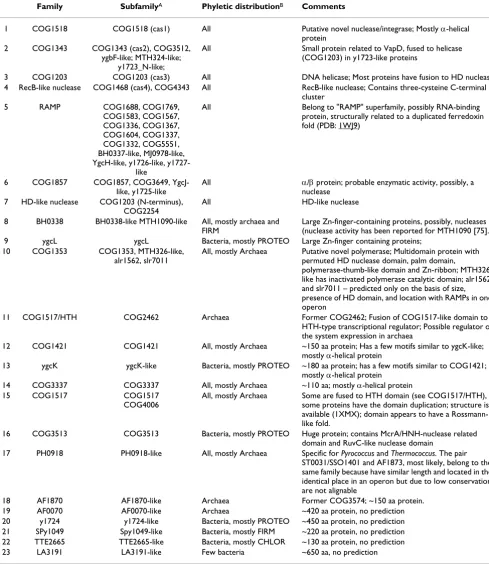
CASS-linked genes to include those that are found in cas oper-ons less commonly and comprise the "cloud" surround-ing the core CASS components. Only COG1518 and COG1343 (see below) are invariably present in all ver-sions of CASS (with the exception of P. abyssii and several bacterial species that carry disrupted COG1518 gene). A few genomes that have a cassette of CRISPR-associated genes without COG1518 also possess another CRISPR-associated operon in a different genomic location that does include this gene. Altogether, we end up with ~25 gene families that are tightly associated with CASS (Table 1)
COG1343 and its relatives – distant homologs of VapD
COG1343 (cas2) is another gene that is common in CASS. Typically, this gene is located immediately downstream of the COG1518 gene (Fig. 2a). Exhaustive PSI-BLAST search starting from COG1343 proteins identified proteins of COG3512 as homologs of COG1343 such that these COGs could be unified in a single superfamily. The mem-bers of this superfamily are small (80–120 amino acids) proteins with distinct structural motifs, in particular, an N-terminal β-strand followed by a polar amino acid, most often, aspartate or asparagine (see Additional file 2). In CASS2, which is typified by the cas operon of E. coli, there is an uncharacterized gene coding for a small protein immediately downstream of the COG1518 gene. Analysis of the multiple alignment of the homologs of this protein revealed motifs highly similar to those in COG1343, sug-gesting that these proteins actually are diverged COG1343 homologs. Only CASS3 does not seem to contain a gene for a small protein that potentially could be a COG1343 homolog. However, we found that, in CASS3, the next gene after COG1518, which codes for the CASS helicase (cas3 or COG1203) is unusually long and contains a small domain preceding the HD-hydrolase N-terminal domain present in many COG1203 proteins. We analyzed this domain separately and found that its size and motifs were consistent with a homologous relationship with COG1343 (see Additional file 2). Thus, it appears that, either as a stand-alone protein or as part of a multidomain protein, the COG1343 domain is present in all CASS (except for a few highly degraded and, probably, non-functional ones) and, accordingly, could be essential for the CASS functions. Furthermore, searches started with the sequences of many proteins of COG3512 showed some sequence similarity to vapD (COG3309 family), a family of uncharacterized proteins that are functionally linked to the VapBC operon [34]. The VapBC operon encodes a variant of the bacterial toxin-antitoxin (TA) module which includes an HTH-containing transcription regulator and a PIN-domain nuclease. The PIN domain has been shown to possess ribonuclease activity that in eukaryotes is involved in pre-rRNA processing, nonsense-mediated decay (NMD) of aberrant mRNAs, and RNAi
Distribution of COG1518 genes and, by implication, CASS among prokaryotic lineages
Figure 1
Distribution of COG1518 genes and, by implication, CASS among prokaryotic lineages.
Percent of genomes encoding cas1 gene (COG1518) by taxon
[35-37]. It has been proposed that there is an evolutionary connection between eukaryotic NMD and bacterial TA systems, and that the functioning of the TA module might involve mRNA degradation as well [38].Together, these observations seem to establish links between CASS and the TA system and, through the latter, between CASS and eukaryotic NMD and RNAi, but do not directly shed light on the function of the COG1343 domain. However, the COG1343 proteins and VapD show some generic similar-ity to the PIN domain in terms of size and the signature motifs (COG1343 proteins contain several partially
con-served aspartates; see Additional file 2) which makes it tempting to speculate that these proteins represent yet another family of nucleases.
COG1857 – another putative enzyme found in most CASS versions
Another conserved CASS family that resists straightfor-ward functional prediction is COG1857. This gene is present in most CASS, with the exception of the "mini-mal" variants, CASS 4, 6, and 7. The COG1857 proteins consist of ~350 aa and typically have an N-terminal β -strand followed by a loop containing a conserved
asparag-Phylogenies of the key cas genes and organization of cas operons Figure 2
Phylogenies of the key cas genes and organization of cas operons. (a) Phylogenetic tree for COG1518 proteins (b) Phylogenetic tree for COG1203 proteins (predicted helicase) from the CASS versions lacking COG1518 (c) Phylogenetic tree for the predicted CASS polymerase (COG1353). Prokaryotic lineages are color-coded: orange, archaea; blue, Proteobacteria; green, low-GC Gram-positive bacteria; black, other bacteria. In the operon organizations cartoons, orthologous genes are color-coded and denoted by either the predicted function or the COG number. Exclamation points denote previously unde-tected RAMPs. The names of species that have a reverse transcriptase gene within one of the cas operons are underlined in red. In the left panel, the distinct versions of CASS are numbered, and in the right panel, these numbers are given at tree leaves to indicate the helicase cassette(s) that co-occurs with the given polymerase cassette.
1857 1857 1857 1857 1857 ! RAMP/ 1688 10 Cordip DIP0037 Bacfra BF3951 Wolsuc WS1444 Camjej Cj1522c Neimen NMA0630 Pasmul PM1126 Strthe str0658 Strpyo Spy 0770
Treden TDE0328
Staepi SERP2463 Mycgal MGA 0523 Mycmob MMOB0320 Porgin PG1982 Legpne lpp0161 Wolsuc WS1615 Sulsol SSO1450 Aerper APE1240 Sulsol SSO1405 Pyraer PAE0200 Pyraer PAE0081 Metmaz MM0559 Metmaz MM3249 Arcful AF1878 Mansuc MS1635 Niteur NE0111 Myctub Rv2817c Nostoc alr0381 Synech slr7071 Thethe TTHB145 Chrvio CV1229 Xanaxo XAC3842 Chltep CT1130 Desvul DVUA0134 Metcap MCA0651 Azoarc ebA3283 Deigeo_DRAFT_1682 Mansuc MS0981 Baccla ABC3592 Bachal BH0341
Strpyo Spy 1286
Vibvul VVA1544 Nostoc alr1468 Synech slr7092 Synech slr7016 Geosul GSU0057 Thethe TTHB224 Nostoc alr1568 Metkan MK1312 Esccol b2755 Saltyp STM2938 Phopro PBPRC0034 Geosul GSU1392 Chltep CT1977 Thethe TTHB193 Deigeo_DRAFT_2639 Symthe_STH663 Corjei jk0643 Nocfar nfa44220 Strave SAV7537 Metcap MCA0930 Cordip DIP2214 Chrvio CV1756 Zymmob ZMO0680 Pasmul PM0311 Erwcar ECA3679 Yerpes y1722 Legpne lpl2837 Phopro PBPRB1995 Acinet ACIAD2484 Clotet CTC01148 Fusnuc FN1177 Aquaeo aq 369
Theten TTE2658 Themar TM1797 Bacfra BF2544 Porgin PG2014 Halmar pNG4053 Clotet CTC01463 Metjan MJ0378 Pyrhor PH1245 Thekod TK0455 Metthe MTH1084 Arcful AF2435 Metace MA3670 Nanequ NEQ017 Pyrhor PH0173 Pictor PTO0003 Pictor PTO0049 Thevol TVN0106 ! 1518 1343 1518 1343 1518 1518 1343 1518 RecB-f/ 4343 RecB-f/ 1468 RecB-f/ 1468 RecB-f/ 1468 Helicase/ 1203 1857 RAMP/ 1688 RAMP/ 1688 Helicase/ 1203 Helicase/ 1203 RAMP/ BH0337 RAMP/ YgcH ! ! RAMP/ y1727 RAMP/ y1726 1857 1518 Helicase/ 1203 HD-f Helicase/ 1203 HD-f 1343 HD-f HD-f HD-f RuvC-f AF0070 BH0338 y1724 ygcK ygcL R AMP/ 1583 HTH AF1870 SPy1049 3574 AF1870 PH0918 HTH 3574 1857 RAMP/
1688 RecB-f/ 1518 1468 Helicase/ 1203 HD-f AF1870 MTH1090 AF1873 R AMP/ 1583 3574 AF1870 3574 1343 1 7 2 3 4 5 6 7a Sulsol SSO1999 Sulsol SSO1440 Sultok ST2639 Sultok ST0032 Sulsol SSO1402 Pyraer PAE0068 Arcful AF1874 Pyrhor PH0917 Thekod TK0450 Pyraby PAB1689 1343 3513 3513 1518 RuvC-f HNH 4a HNH 10 Pyrhor PH0162 ** * * ** * * * * * * * * * * * * * * * 66,4 6 4# 1,6 1 7 7 7 7 7 1 2 7 7 7 7 5, 7 5, 7 5, 7 5, 7 5, 7 5, 7 6, 1 7 * * Metkan MK1314 Metace MA1931 Metmaz MM3356 Metbar Mbar_A1355 Strthe stu0960 Myctub Rv2823c Staepi SERP2461 Themar TM1811 Mansuc MS1651 Niteur NE0123 Thethe TTP0102 Metthe MTH1082 Metthe MTH326 Metjan MJ1672 Pictor PTO0053 Thevol TVN0112 Metkan MK1297 Thethe TTP0115 Bachal BH0328 Synech sll7090
Aquaeo aq 387 Theten TTE2639 Themar TM1794 Arcful AF1867 Pyrfur PF1129 Thefus Tfu1578 Porgin PG1987 Sultok ST1979 Sulsol SSO1991 Sulsol SSO1729 Sultok ST0012 Sulaci Saci 2046 Nostoc all1479
POL RAMP POL 1421 RAMP/
1567 RAMP RAMP 1517
3337 RAMP/ 1583 RAMP/ MTH323 RAMP RAMP/ 1769 POL RAMP RAMP RAMP RAMP
X
MTH324 !“Polymerase” cassette
“Helicase” cassette
(a) (c)
Table 1: Protein components of CASS
Family SubfamilyA Phyletic distributionB Comments
1 COG1518 COG1518 (cas1) All Putative novel nuclease/integrase; Mostly α-helical protein
2 COG1343 COG1343 (cas2), COG3512, ygbF-like; MTH324-like;
y1723_N-like;
All Small protein related to VapD, fused to helicase (COG1203) in y1723-like proteins
3 COG1203 COG1203 (cas3) All DNA helicase; Most proteins have fusion to HD nuclease 4 RecB-like nuclease COG1468 (cas4), COG4343 All RecB-like nuclease; Contains three-cysteine C-terminal
cluster 5 RAMP COG1688, COG1769,
COG1583, COG1567, COG1336, COG1367, COG1604, COG1337, COG1332, COG5551, BH0337-like, MJ0978-like, YgcH-like, y1726-like,
y1727-like
All Belong to "RAMP" superfamily, possibly RNA-binding protein, structurally related to a duplicated ferredoxin fold (PDB: 1WJ9)
6 COG1857 COG1857, COG3649, YgcJ-like, y1725-like
All α/β protein; probable enzymatic activity, possibly, a nuclease
7 HD-like nuclease COG1203 (N-terminus), COG2254
All HD-like nuclease
8 BH0338 BH0338-like MTH1090-like All, mostly archaea and FIRM
Large Zn-finger-containing proteins, possibly, nucleases (nuclease activity has been reported for MTH1090 [75]. 9 ygcL ygcL Bacteria, mostly PROTEO Large Zn-finger containing proteins;
10 COG1353 COG1353, MTH326-like, alr1562, slr7011
All, mostly Archaea Putative novel polymerase; Multidomain protein with permuted HD nuclease domain, palm domain,
polymerase-thumb-like domain and Zn-ribbon; MTH326-like has inactivated polymerase catalytic domain; alr1562 and slr7011 – predicted only on the basis of size, presence of HD domain, and location with RAMPs in one operon
11 COG1517/HTH COG2462 Archaea Former COG2462; Fusion of COG1517-like domain to HTH-type transcriptional regulator; Possible regulator of the system expression in archaea
12 COG1421 COG1421 All, mostly Archaea ~150 aa protein; Has a few motifs similar to ygcK-like; mostly α-helical protein
13 ygcK ygcK-like Bacteria, mostly PROTEO ~180 aa protein; has a few motifs similar to COG1421; mostly α-helical protein
14 COG3337 COG3337 All, mostly Archaea ~110 aa; mostly α-helical protein
15 COG1517 COG1517
COG4006
All, mostly Archaea Some are fused to HTH domain (see COG1517/HTH), some proteins have the domain duplication; structure is available (1XMX); domain appears to have a Rossmann-like fold.
16 COG3513 COG3513 Bacteria, mostly PROTEO Huge protein; contains McrA/HNH-nuclease related domain and RuvC-like nuclease domain
17 PH0918 PH0918-like All, mostly Archaea Specific for Pyrococcus and Thermococcus. The pair ST0031/SSO1401 and AF1873, most likely, belong to the same family because have similar length and located in the identical place in an operon but due to low conservation are not alignable
18 AF1870 AF1870-like Archaea Former COG3574; ~150 aa protein. 19 AF0070 AF0070-like Archaea ~420 aa protein, no prediction 20 y1724 y1724-like Bacteria, mostly PROTEO ~450 aa protein, no prediction 21 SPy1049 Spy1049-like Bacteria, mostly FIRM ~220 aa protein, no prediction 22 TTE2665 TTE2665-like Bacteria, mostly CHLOR ~130 aa protein, no prediction 23 LA3191 LA3191-like Few bacteria ~650 aa, no prediction
A – Subfamilies are named by the corresponding COG number or by a protein ID B – All indicates that the family is widespread in all major
ine (see Additional file 3). Although no other motifs con-taining potential catalytic residues seem to be conserved throughout COG1857, perhaps, due to the extensive divergence between the subfamilies of this family, the observed conservation pattern suggests that this protein is an enzyme, perhaps, yet another nuclease. COG1857 pro-teins are typically encoded immediately upstream of another widespread CASS gene, COG1688 (named Cas5 by Haft et al. [24]). We have previously identified COG1688 as a member of the Repair-Associated Mysteri-ous Protein (RAMP) superfamily [23] that has been renamed to Repeat-Associated Mysterious Protein (pre-serving the acronym) by Haft and coworkers [24]. In CASS3, COG1688 is replaced by the y1726 family which we found to include another set of RAMPs distantly related to COG1688 (Figs. 2a and 3A).
The Repeat-Associated Mysterious Proteins (RAMPs)
The RAMPs are the most diverse class of CASS genes. In addition to the previously identified 5 distinct families of RAMPs, we detected several additional ones, namely, BH0337-like, y1726-like, YgcH-like, y1727-like, and MJ0978-like families, as well as numerous diverged mem-bers of the previously described families (Fig. 3A). Despite the dramatic sequence divergence, all these protein con-tain the RAMP signature, the G-rich loop at the C-termi-nus (Fig. 3A). One family of RAMPs, COG1853/ COG5551, is often encoded outside the CASS operons or on the periphery of these. Moreover, analysis of the gene context of this gene in Aquifex aeolicus led us to the identi-fication of yet another member of RAMP superfamily, COG1851. This protein family does not appear to be linked to CASS at all.
With the identification of these new families of RAMPs, it now becomes apparent that all CASS versions, with the apparent exception of the minimal CASS4, include at least one RAMP. The crystal structure of one of the RAMPs from the newly detected YgcH-like family has been solved as part of one of the structural-genomics projects (PDB: 1wj9). The structure of this protein from Thermus
ther-mophilus reveals that the RAMP module is a duplication of
a ferredoxin-like fold domain. Each domain has a two-layer α+β architecture and is composed of four β-strands and two α-helices topologically arranged as a repeat of two βαβ units (Fig 3B, A1-A86, β1 through β4; and A87-A211, β5 through β8 for the first and the second domains, respectively). The N-terminal ferredoxin-like domain con-tains two additional α-helices (α1' and α1", Fig 3A) inserted before and after the first α-helix. The C-terminal domain has two disordered regions and houses the con-served Gly-rich loop situated between the last α-helix and β-strand (Fig. 3A). Various structure similarity search pro-grams detect ferredoxin fold proteins as the first hits to RAMP domains. In particular, for the N-terminal RAMP
domain, DALI [39], first match is the anticodon-binding domain of Phe-tRNA synthetase (PDB Entry 1eiy, chain B) with Z-score 4.8 and RMSD (squared Root of Mean Square Deviations) 2.9Å over 67 aligned residues. The VAST pro-gram [40] finds ribosomal protein S6 (PDB Entry 1fjg chain F) as the top hit for the C-terminal RMAP domain with P-value 0.039, RMSD 2.6 Å over 64 residues.
Thus, at least six gene (super)families seem to comprise the stable core of the CASS: COG1518 (cas1), COG1343 (cas2), COG1203 – a helicase often fused to a HD-family hydrolase (cas3) plus free-standing versions of the HD-hydrolase (COG2254), COG1468 (cas4) – a RecB family nuclease usually containing a C-terminal Zn cluster, COG1857, and RAMPs. This exact set of genes is seen only in a few genomes; most versions of CASS have substantial variations around this core – loss of some core genes in the minimal versions and addition of other genes and whole gene cassettes in others (Fig. 2a,b).
The second major module of CASS – the pol-cassette
The most notable non-core CASS module which, in a sense, constitutes a second, even if non-ubiquitous, cen-tral part of CASS may be called the "pol-cassette" after the predicted palm-domain RNA or DNA polymerase of COG1353. The pol-cassette also includes several distinct RAMPs and a few uncharacterized genes. The pol-cassette is strictly linked only to CASS5 and CASS7 and also, in some instances, is found in CASS1,2,4,6 (Fig. 2c), although, in some genomes, the pol-cassette is not adja-cent to the CASS-core gene array. The phylogenetic tree for the predicted polymerase (COG1353), which consisted of two major branches corresponding to two distinct operon organizations (Fig. 2c), showed essentially no topological congruence with the COG1518 tree (for those CASS that have both components; compare the two trees in Fig. 2a,c). Thus, it appears that the pol-cassette comprises a distinct evolutionary unit that is often transferred hori-zontally independently of the CASS-core. Notably, the pol-cassette is strongly, although not strictly, linked to thermophily – the great majority of the species containing this module, typically associated with CASS5 and CASS7, are thermophiles. Additionally, several species possess a third module containing a diverged form of COG1353 with an apparently intact HD hydrolase domain but an inactivated polymerase (PALM) domain (Fig 2c).
Ancillary CASS components
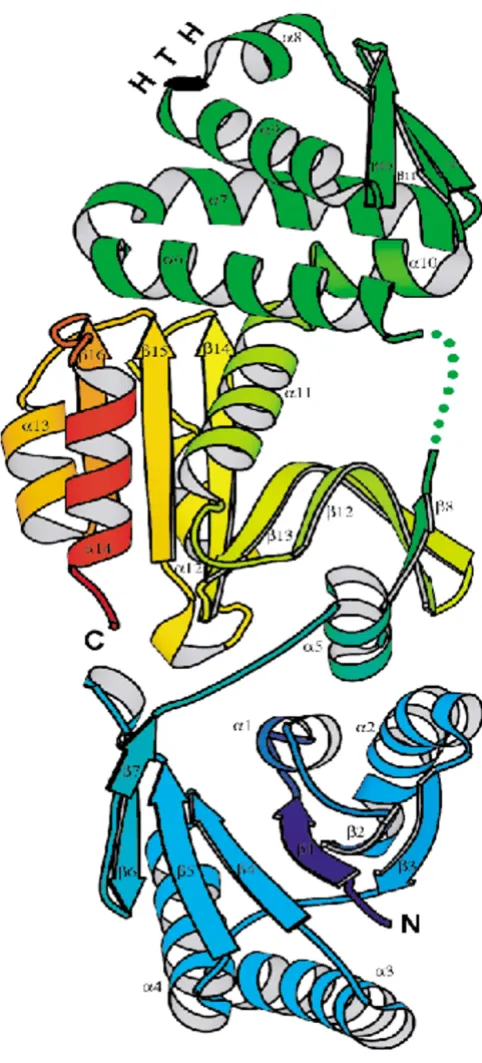
unifica-tion as well as expansion and the ensuing rise in status of some of the families remains a possibility. For example, COG1517 is such a growing family. Typically, the COG1517 genes are located on the periphery of pol-cas-settes and, in many cases, contain fused helix-turn-helix (HTH) domains. The core domain of COG1517 is ~150 aa; several proteins, e.g. TM1812, contain a duplication of this domain, and several fusions, in addition to the one with HTH, were detected. The sequences of COG1517 proteins tend to be highly diverged, and some of these were detected in genomes with no CASS, indicating that the association of this gene with CASS is not as tight as it is for the extended core of CASS. For one such protein from Vibrio cholerae, the 3D structure has been solved, again, in one of the structural genomics projects (PDB: 1xmx). The structure is composed of three domains. The N-terminal domain (A-1-A137, β1 through β7, Fig. 4) is a modified Rossmann-like fold, with the next to the last β -strand (β6) being antiparallel to the rest of the strands. The middle domain (A161-A249, α6 through α10) is a winged helix-turn-helix (HTH) with an additional α-helix on each terminus (α6 and α10, respectively). The C-termi-nal domain (composite of A250-A383 and A138-A156, α11 through α14 plus α5 and β8) belongs to the restric-tion endonuclease superfamily. In the 1xmx structure, the endonuclease domain is positioned between the HTH and the Rossmann-like domain (Fig. 4). The lowest VAST P-values of the matches between each of the 1xmx domains and the respective domains with known folds are highly statistically significant (<10-5) which is strongly suggestive of homologous relationships.
The functions of several other CASS gene families remain obscure. For instance, CASS1, 5, 7 contain genes upstream of COG1857 that encode large (500–600 amino acids), homologous proteins; the best conserved family in this set of proteins is represented by BH0338 and its orthologs. Some members of the BH0338 family contain a Zn-rib-bon in the middle of the sequence but otherwise have no recognizable domains or motifs. Among several con-served motifs of these proteins, are two concon-served aspar-tates and a distal conserved glycine, a combination that resembles the motifs seen in the PALM polymerase domain (not shown). Although we were unable to obtain additional evidence of the potential connection of this family with polymerases, it is tempting to speculate that these proteins might contain an extremely diverged ver-sion of the PALM domain. Similar, albeit less pro-nounced, motifs are detectable in the MTH1090 family proteins which are present in CASS5 and CASS7. This sim-ilarity and the fact that the respective genes occupy the same position in the corresponding operons suggest that the BH0338-family and the MTH1090-family proteins are highly diverged homologs. CASS2 also includes a large protein (YgcL-family), some of which contain Zn-clusters;
however, the conserved motifs of these proteins and their position in the respective operons are different from those of the MTH1090 and BH0338 families. CASS4 contains another huge protein (COG3513, ~1150–1400 aa) with two recognizable domains, a McrA/HNH nuclease and a RuvC-like nuclease (RNAseH fold). These observations emphasize the striking diversity of still poorly character-ized CASS components, particularly, the plethora of pre-dicted nucleases of various classes and potential novel ones.
Hypothesis: CASS is a prokaryotic defense system that functions on the RNAi principle
Based on the properties of CRISPR and Cas proteins, we speculate that this system is a functional analog of the eukaryotic siRNA systems and propose possible mecha-nisms of the putative prokaryotic small RNA interference. The crucial observation reported independently by Mojica et al [27], Pourcel et al [29], and Bolotin et al [28] is that a certain fraction (~10% according to [27]) of the unique inserts in CRISPR units are homologous to fragments of viral (bacteriophage) or plasmid genomes. Only a minis-cule fraction of the existing phage and plasmid sequences is currently available, whereas the total diversity of prokaryotic mobile elements is humungous and appar-ently exceeds the diversity of prokaryotes at least by an order of magnitude [41,42]. Thus, it is not far fetched to propose that most, if not all, CRISPR inserts are derived from mobile replicons [29].
Should that be the case, it seems more or less obvious that CASS is a prokaryotic defense system against foreign rep-licons that functions on the antisense RNA principle. More specifically, it seems likely that the inserts are tran-scribed and silence the cognate phage or plasmid genes via the formation of a duplex between the prokaryotic small interfering (psiRNA) and the target mRNA followed by cleavage of the duplex or translation repression. Indeed, Mojica et al [27] mention the analogy between the CRISPR and eukaryotic RNA interference systems but propose no specific mechanisms for the action of the putative defense systems and, crucially, do not explore the connection between the putative psiRNA and the pre-dicted activities of Cas proteins. Important supporting evi-dence has been independently obtained through the analysis of the small non-messenger RNA expression in the euryarchaeon Archaeoglobus fulgidus which showed that CRISPR are transcribed (from a leader-promoter sequence), apparently, in the form of a multiunit precur-sor that is subsequently cleaved into CRISPR monomers and oligomers [18]; very similar observations have been subsequently reported for the crenarchaeon Sulfolobus
sol-fataricus [19]. Furthermore, as noticed by Pourcel and
The RAMPs Figure 3
The RAMPs. (A) The conserved motifs of the RAMP superfamily and individual RAMP families. h designates a hydrophobic residue, p designates a polar residues, t designates a residue with high turn-forming propensity, and + designates a positively charged residue. (B) A ribbon model of the structure of a RAMP protein from Thermus thermophilus (PDB entry 1wj9). Two ferredoxin-like domains are rainbow-colored from N- to C-terminus such that the corresponding strands in the two each domain receive the same color. The G-rich conserved loop in the C-terminal domain is colored black, structurally disordered regions are shown by dots, α-helices and β-strands are numbered consecutively throughout the sequence from α1 to α4 and from β1 to β8.
(A)
(B)
MOTIFs specific I II III IV V
COGs 1336,1367, h.h...s.h.hG.s ust-lKGhh+.hh hhGtt h.D lGht.t.s.G.h 1604,1337,1332
y1726-like slhlpEKuVRGT lRTIDs YGuVTs.Ghuh
COG1851 hGphpG.psaFh hGFGRh
BH0337-like T.pA-h+GIh-uIh hhLpDV LGsREh.u.ht
COG1567 .hhhp.p up.s-lhtAh...h lusc.o.GhG.h COG1769 hhhh+Ph-.hhh .s.s-hhGhlhs.h h.G.h hGtcp+hsthchp COG1688 (Cas5) h..h...hh.ht.s ss.sshhGhl..sh lGttp..h.h COGs 1583,5551 hh.hhoPhhl hGtppshGFG.l
YgcH-like hHphlh hG.u+uhGhGhh
y1727-like LHphLh .G.FsthGLStss
homologous to a prophage present in other strains of the same bacterium that, conversely, do not carry the CRISPR. This is compatible with the possibility that the insert makes the bacterium immune to the given phage.
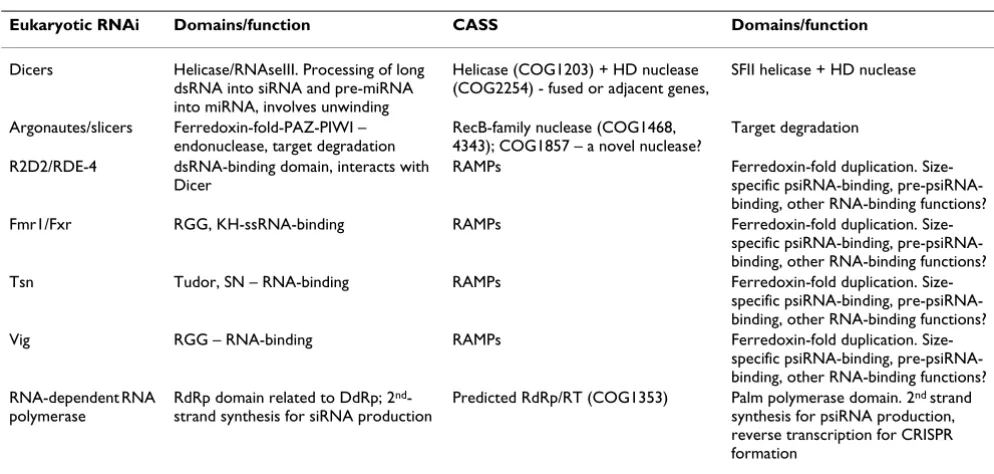
Here, we pursue these lines in an attempt to present a coherent, even if speculative, description of the putative prokaryotic siRNA system. Circumstantial but crucial evi-dence in support of the psiRNA hypothesis comes from analogies between the predicted functions of CASS pro-teins and the protein components of eukaryotic RNA interference systems, in particular, the RISCs [7-9] (Table 2). The core parts of RISCs are a helicase fused with two RNAse III domains, dicer, and the exonuclease of the arg-onaute family, slicer [9,10,43]. Both dicer and slicer are represented by variable numbers of paralogs in eukaryo-tes, and different paralogs are included into RISCs with distinct functions [9,10]. Various RISCs also contain addi-tional RNA-binding proteins and nucleases [9,44]. Puta-tive functional analogs of all these proteins can be gleaned among the CASS proteins. The dicer analog is immedi-ately apparent: the COG1203 helicase that is either fused or encoded next to a predicted nuclease of the HD family (Fig. 2a); we tentatively designate this protein p-dicer (prokaryotic dicer). Identification of the slicer counterpart (p-slicer) is less straightforward because of the diversity of predicted nucleases within the CASS. One candidate is the predicted RecB-family nuclease (COG1468). Alternatively or additionally, the slicer function could be performed by a novel, still unidentified nuclease, such as COG1857. Indeed, the possibility cannot be dismissed that different or even the same version of CASS employ multiple p-slic-ers, in a parallel with the multiple, paralogous eukaryotic slicers of the argonaute family. We further propose that RAMP proteins, by far the most diverse components of the CASS, play a major role in the prokaryotic siRNA mecha-nism as RNA-binding proteins that display a degree of specificity to the psiRNAs, most likely, by specifically binding psiRNAs of different sizes. The RAMPs, diverse representatives of the same protein superfamily, can be functional analogs of the more structurally diverse RNA-binding proteins of eukaryotic RISCs (Table 2). The pres-ence of two ferredoxin-fold domains in RAMPs (Fig. 3B) is compatible with this proposal given that this fold is seen in a broad variety of RNA-binding proteins, such as the ribosomal proteins S6 and S10, several spliceosomal subunits, and others. Although the structural similarities between the two domains of RAMP and ferredoxin-like domains are not particularly strong, it might be significant that the top structural neighbors for each of the RAMP domains are different RNA-binding domains (see above).
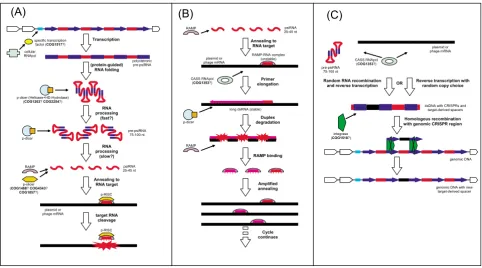
Figure 5a presents our current hypothesis on the basic mechanism of the functioning of the prokaryotic RNAi system. We speculate that CRISPR regions are transcribed
from a promoter located in the AT-rich CRISPR leader. Transcription might be regulated with the participation of one of the Cas proteins and, conceivably, would be stim-ulated by stress, such as phage infection, although the results of expression analysis in A. fulgidus suggest some level of constitutive transcription [18]. The work of Tang and coworkers further indicates that the primary tran-script is likely to encompass the entire CRISPR repeat region. This transcript would be cleaved into 70–100 nt pre-psiRNA, conceivably, by the putative p-dicer, the COG1203 protein (Fig. 5a). We further postulate that p-dicer catalyzes the second, perhaps, slower (judging by the results of Tang et al) processing step that releases mature psiRNA species (Fig. 5a). The psiRNA molecules would bind RAMPs in a size-specific manner and anneal to the target mRNA. The resulting complex would recruit p-slicer, forming the minimal form of the prokaryotic ana-log of RISC (pRISC) that would cleave the mRNA and could be recycled to attack the next target molecule, thus, silencing the respective gene (Fig. 5a).
Figure 5b shows a version of this pathway that involves the activity of the CASS polymerase, by analogy with the eukaryotic RdRp, which participates in some RNAi path-ways in most eukaryotes, but apparently has been lost in arthropods and chordates [45-47]. The initial steps in this scheme are the same as in the basic one (Fig. 5a) – tran-scription of the CRISPR, processing of the psiRNA precur-sor, and annealing of psiRNA to the target mRNA mediated by the pRISC – but, at the next step, psiRNA is postulated to serve as the primer for elongation by the CASS polymerase, yielding an extended double-stranded form of the target (Fig. 5b). This form would be cleaved by p-dicer analogously to the cleavage of viral and transpo-son dsRNAs by the eukaryotic dicers. The p-dicer might function as a complex with the respective RAMP to form a distinct version of pRISC. This could be the endpoint of the pathway, or else, the dsRNA degradation products could be utilized as new psiRNAs, resulting in amplifica-tion of the silencing effect (Fig. 5b). The CASS polymerase is most common in thermophiles, and it is tempting to speculate that the prevalence of this form of the psiRNA pathway has to do with the instability of the psiRNA-tar-get duplex under the high ambient temperatures of these organisms.
A ribbon model for the structure of a COG1517 protein, Vc1899 from Vibrio cholerae (PDB entry 1xmx) Figure 4
to replace the unique insert within the pre-psiRNA with a new fragment of foreign (e.g., phage) RNA. The nature of this mechanism remains unclear. In principle, two possi-bilities can be envisaged: i) reverse transcription with copy choice whereby a reverse transcriptase, most likely, the predicted CASS polymerase (COG1353) switches from using the pre-psiRNA as a template to using a phage mRNA, and then back, and ii) direct, non-homologous RNA recombination between a pre-psiRNA and a foreign mRNA, followed by reverse transcription of the resulting recombinant RNA (Fig. 5c). Both mechanisms are non-trivial in their molecular choreography and are unlikely to occur with high efficiency. Nevertheless, there are prece-dents for both in the molecular biology of retroviruses and other RNA viruses. In particular, reverse transcriptase switches templates in each cycle of retrovirus first-strand cDNA synthesis although, in this case, copy-choice is facil-itated by the spatial juxtaposition of the two templates within the virus particle; a similar mechanism is responsi-ble for recombination in retroviruses [48]. In addition, and probably, more relevantly to the psiRNA case, reverse transcription with copy-choice is thought to be involved in the incorporation of copies of cellular genes, such as oncogenes, into retroviral genomes [49,50]. The alterna-tive, namely, direct recombination between RNA mole-cules might seem far fetched, but such a process has been demonstrated, by several groups independently, to occur in RNA viruses, apparently, via a protein-independent mechanism [51,52]. During the formation of new psiRNA species, these low-frequency processes might be facilitated by the high abundance of the phage mRNAs involved. Indeed, it has been shown that the unique inserts in CRISPR most often correspond to fragments of essential, highly conserved phage genes that are typically expressed at a high level in infected bacteria[27]. Once the dsDNA molecule consisting of a CRISPR unit with the new, unique insert is produced, by one of the mechanisms out-lined here or, perhaps, via a different pathway, it must insert into the CRISPR array via homologous recombina-tion (Fig. 5c). We suspect that this process is mediated by the COG1518 protein, the universal marker of CASS con-taining conserved motifs resembling those of different nucleases [23]. It seems likely that this protein functions as the CRISPR integrase/recombinase, perhaps, in cooper-ation with the COG1343 protein, another universal com-ponent of CASS.
Additional lines of evidence relevant for the predicted RNAi function of CASS
Genes loosely associated with CASS
In addition to the bona fide (even if not ubiquitous) CASS components, a variety of genes were found in association with CRISPR and CASS in only one or a few closely related genomes. Thus, functional association of these genes with CASS appears uncertain. However, examination of the list
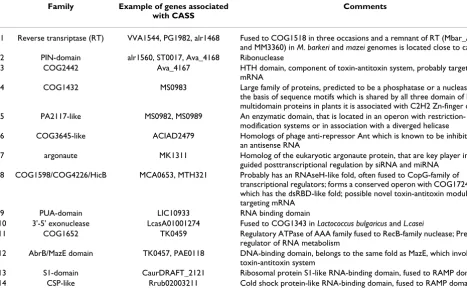
of such genes clearly indicates that they are not a random set (Table 3). Similarly to the common CASS compo-nents, there are several nucleases on this list. More notable is the presence of the reverse transcriptase (RT) which, on at least two independent occasions, has been fused to the COG1518 gene (Fig. 2a and Table 3). This fusion suggests the intriguing possibility that, in the respective variants of CASS, the RT (probably derived from retron-type ele-ments) takes over the proposed function of the CASS polymerase (Fig. 5c); this appears to provide indirect but substantial support for the reverse-transcription-mediated mechanism of CASS function. Perhaps, the most remark-able observation is the presence of the archaeal homolog of the eukaryotic argonaute protein (the slicer) in one of the CASS operons of the archaeon Methanopyrus kandleri (Table 3). This suggests the possibility of a functional association of this protein with CASS, at least in some archaea, and provides the only putative (even if weak – until other archaeal genomes with such a gene arrange-ment are found) link between CASS and the eukaryotic RISCs at the level of homologous proteins.
A connection between CRISPR and RAMPs
Putative psiRNAs: relationships with phage and plasmid genes and secondary structure
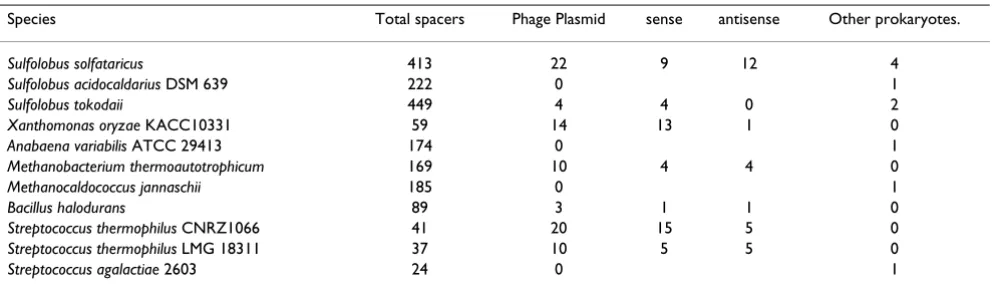
We sought to reassess the relationship between the unique CRISPR inserts and bacteriophage and plasmid genes with the currently available, increased collection of prokaryotic and phage genomes. Using somewhat more stringent cri-teria than those adopted by Mojica et al. [27], we found that only a small fraction the unique CRISPR inserts showed significant similarity to any sequences in the cur-rent databases. Altogether, we identified 83 inserts with apparent homologs, or ~2% of all available CRISPR sequences. Importantly, the great majority of these inserts were indeed homologous to fragments of phage or plas-mid genes rather than to sequences from bacterial or archaeal chromosomes (Table 5). Rather unexpectedly, it turned out that CRISPR inserts homologous to phage and plasmid genes came in both the sense and the antisense orientations (Table 5). Although determination of the direction of transcription for CRISPR cassettes is ambigu-ous because the leader sequence thought to include the CRISPR promoter is hard to identify, it is certain that some of the CRISPR cassettes contain inserts of both ori-entations (Table 5). This finding presents a complication to the schemes of CRISPR functioning presented in Fig. 5 because sense fragments of genes, obviously cannot silence the respective targets directly. There seem to be three possible solutions to this problem, all based on the assumption that the recombination process in the scheme shown in Fig. 5c is random with respect to direction. The first possibility is that the sense inserts are non-functional by-products of indiscriminate recombination. Alterna-tively, it is conceivable that both sense and antisense
inserts are converted to duplexes, probably, by the CASS polymerase, after which the sense strand is destroyed whereas the antisense strand becomes part of the pRISC. A very similar mechanism involving the RNA-dependent RNA polymerase has been described for one of the endog-enous siRNA pathways in plants [53]. The third, more exotic possibility is that psiRNA actually function not by silencing mRNAs but by promoting degradation of the target DNA, in which case both sense and antisense psiR-NAs could be active. This option is further discussed in the Conclusions section.
Importantly, the CRISPR insert sequences from even closely related bacterial strains are unrelated to each other, with only a few exceptions among enterobacterial strains (data not shown). This suggests that the inserts are replaced rapidly on the evolutionary scale, perhaps, via the mechanism outlined in Fig. 5c. A broader implication is that the dominant phages and plasmids encountered by even closely related bacteria are different leading to the rapid generation of distinct repertoires of psiRNAs.
In terms of their ultimate function, the putative psiRNAs appear to be conceptually most similar to eukaryotic siR-NAs in that they are homologous to foreign, rather than endogenous, genes and are predicted to function as part of a defense system. However, the psiRNAs also share a major feature with the miRNAs in that they are embedded in and, probably, cleaved from a specific precursor mole-cule, rather than from a long dsRNA like the siRNAs (Fig. 5). In an attempt to elucidate common features of the psiRNA precursors, we predicted the secondary structures
Table 2: Functional and structural parallels between CASS and eukaryotic RNAi machinery
Eukaryotic RNAi Domains/function CASS Domains/function
Dicers Helicase/RNAseIII. Processing of long dsRNA into siRNA and pre-miRNA into miRNA, involves unwinding
Helicase (COG1203) + HD nuclease (COG2254) - fused or adjacent genes,
SFII helicase + HD nuclease
Argonautes/slicers Ferredoxin-fold-PAZ-PIWI – endonuclease, target degradation
RecB-family nuclease (COG1468, 4343); COG1857 – a novel nuclease?
Target degradation
R2D2/RDE-4 dsRNA-binding domain, interacts with Dicer
RAMPs Ferredoxin-fold duplication. Size-specific psiRNA-binding, pre-psiRNA-binding, other RNA-binding functions? Fmr1/Fxr RGG, KH-ssRNA-binding RAMPs Ferredoxin-fold duplication.
Size-specific psiRNA-binding, pre-psiRNA-binding, other RNA-binding functions? Tsn Tudor, SN – RNA-binding RAMPs Ferredoxin-fold duplication.
Size-specific psiRNA-binding, pre-psiRNA-binding, other RNA-binding functions? Vig RGG – RNA-binding RAMPs Ferredoxin-fold duplication.
Size-specific psiRNA-binding, pre-psiRNA-binding, other RNA-binding functions? RNA-dependent RNA
polymerase
RdRp domain related to DdRp; 2nd
-strand synthesis for siRNA production
Predicted RdRp/RT (COG1353) Palm polymerase domain. 2nd strand
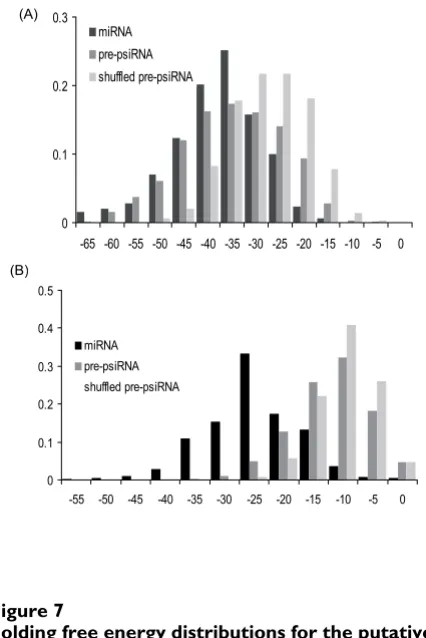
of all available CRISPR units. The results were somewhat ambiguous as shown in Fig. 7. The folding free energies of GC-rich CRISPR units were substantially lower than those for the shuffled CRISPR units; notably, the CRISPR fold-ing energies were distributed similarly to those of miRNA precursors (Fig. 7a), with numerous CRISPR units capable of folding into highly stable secondary structures. These observations suggest the possibility that psiRNA precur-sors possess a distinct secondary structure that could be important for recognition by p-dicer, RAMPs or other pro-teins. However, the folding energy distribution for AT-rich CRISPR shows only a slight shift compared to the distribu-tion for shuffled sequences and is completely different from the distribution for miRNA precursors of the same base composition (Fig. 7b). Thus, AT-rich psiRNA precur-sors, which comprise approximately half of the CRISPR, on average, do not seem to be capable of folding into sta-ble secondary structures. Thus, the existence of a function-ally relevant consensus structure of psiRNA precursors remains uncertain.
Figure 8 shows two predicted secondary structures of putative psiRNA precursors in which the inserts are homologous to phage or plasmid genes. The relatively
GC-rich sequence from Xanthomonas axonopodis forms a stable secondary structure, whereas the AT-rich sequence from Streptococcus thermophilus can fold only into a weak stem-loop structure. Curiously, in both cases, the unique insert contributes significantly to stem formation. Clearly, further analysis of the structures of putative psiRNA pre-cursors by computational and experimental means is required to identify their functionally important features.
Conclusion
Obviously, the entire concept of the prokaryotic CASS defense system functioning on the RNAi principle cur-rently remains a hypothesis. However, we believe that three lines of evidence make such a mechanism, in its broad outline, almost a logical inevitability: i) the indis-putable origin of at least some of the unique CRISPR inserts from phage and plasmid genes, ii) the demonstra-tion of transcripdemonstra-tion and processing of the CRISPR loci in
A. fulgidus and S. solfataricus, and iii) the abundance of
CASS components that are clearly implicated in nucleic acid degradation, processing, and possibly, recombina-tion. The only substantial variation on the theme of RNAi could be an antisense mechanism acting on DNA. Such a mechanism is, obviously, much less common than
post-The current hypothetical model for CASS functioning and CRISPR formation Figure 5
The current hypothetical model for CASS functioning and CRISPR formation. (A) The basic model of CASS func-tioning (B) The variant of CASS funcfunc-tioning involving the CASS polymerase (C) Formation of new CRISPR with unique inserts.
Transcription
(protein-guided) RNA folding
specific transcription factor (COG1517?) cellular RNApol
polycistronic pre-psiRNA
p-dicer (Helicase+HD-Hydrolase) (COG1203?COG2254?)
RNA processing
(fast?)
pre-psiRNA 75-100 nt
RNA processing
(slow?)
p-dicer
psiRNA 25-45 nt p-slicer
(COG1468?COG4343?
COG1857?) RAMP
target RNA cleavage
p-RISC
plasmid or phage mRNA
Annealing to RNA target
p-RISC
psiRNA 25-45 nt RAMP
RAMP-RNA complex (unstable) plasmid or
phage mRNA
Primer elongation
CASS RNApol (COG1353?)
Amplified annealing
long dsRNA (stable) p-dicer
Duplex degradation
RAMP
RAMP binding
Cycle continues Annealing to
RNA target plasmid or
phage mRNA
pre-psiRNA 75-100 nt
CASS RNApol (COG1353?)
Reverse transcription with random copy choice Random RNA recombination
and reverse transcription
dsDNA with CRISPRs and target-derived spacers
Homologous recombination with genomic CRISPR region
integrase (COG1518?)
genomic DNA
genomic DNA with new target-derived spacer
OR
transcriptional gene silencing by small RNAs, but is not without precedent. Indeed there are strong indications that elimination of intergenic DNA sequences in the macronucleus of the ciliate Tetrahymena occurs via a siRNA-mediated mechanism, with the participation of a specific dicer-slicer pair [54,55]. In principle, this mecha-nism is compatible with the finding of both sense and antisense sequences among CRISPR inserts homologous to phage and plasmid genes (Table 5). Nevertheless, given the much wider prevalence of silencing pathways and, in particular, the demonstrated instances of antisense RNA regulation in bacteria, it seems most likely that CASS acts by silencing genes from invading replicons. This being said, it should be emphasized that the mechanisms depicted in Figure 5 are only rough outlines of some of the ways in which this system could function. There is no doubt that experimental studies will reveal mechanisms different from these, at least, in detail. However, regard-less of the specific mechanisms and even whether the pre-dicted psiRNA systems acts on RNA or on DNA, it appears certain that its main function is RNAi-mediated defense against alien replicons invading archaea and bacteria.
The predicted psiRNA system resembles the eukaryotic counterparts not only in its functional principle but also in the general characteristics of the implicated proteins. What is most striking is the comparable complexity,
diver-sity, and plasticity of the protein machineries involved. Both systems consist of one or more helicases, a broad spectrum of nucleases, a specific polymerase, and a variety of RNA-binding proteins. Both in CASS and in RISCs, only two or three protein subunits appear to be truly indispen-sable; the rest come and go, resulting in a variety of RISCs with their distinct functions, many of them still poorly understood [7-9], and, presumably, in a comparable diversity of CASS. Remarkably, however, not a single pro-tein belonging to the bona fide CASS has an ortholog in eukaryotes, involved in RNAi or otherwise. The single direct link could be the argonaut protein which is the cen-tral active moiety of eukaryotic RISCs (slicer) and might have some functional connection to CASS in archaea as tentatively suggested by the M. kandleri CASS operon structure; admittedly, however, the indications of poten-tial involvement of argonaut in the CASS functioning are currently quite weak.
The eukaryotic RNAi systems come in two basic varieties: i) siRNAs that are produced from dsRNAs of viruses and transposons and protect the host from the respective agents via perfect base-pairing with the respective target mRNAs, and ii) miRNA that regulate translation of endog-enous genes via either perfect (plants) or imperfect (ani-mals) base-pairing [6]. CASS appears to be the functional counterpart of the siRNA mechanism inasmuch as it
Table 3: Genes loosely associated with CASS
Family Example of genes associated with CASS
Comments
1 Reverse transriptase (RT) VVA1544, PG1982, alr1468 Fused to COG1518 in three occasions and a remnant of RT (Mbar_A1351 and MM3360) in M. barkeri and mazei genomes is located close to cas 2 PIN-domain alr1560, ST0017, Ava_4168 Ribonuclease
3 COG2442 Ava_4167 HTH domain, component of toxin-antitoxin system, probably targeting mRNA
4 COG1432 MS0983 Large family of proteins, predicted to be a phosphatase or a nuclease on the basis of sequence motifs which is shared by all three domain of life. In multidomain proteins in plants it is associated with C2H2 Zn-finger domain 5 PA2117-like MS0982, MS0989 An enzymatic domain, that is located in an operon with
restriction-modification systems or in association with a diverged helicase
6 COG3645-like ACIAD2479 Homologs of phage anti-repressor Ant which is known to be inhibited by an antisense RNA
7 argonaute MK1311 Homolog of the eukaryotic argonaute protein, that are key player in RNA guided posttranscriptional regulation by siRNA and miRNA
8 COG1598/COG4226/HicB MCA0653, MTH321 Probably has an RNAseH-like fold, often fused to CopG-family of transcriptional regulators; forms a conserved operon with COG1724/hicA, which has the dsRBD-like fold; possible novel toxin-antitoxin module targeting mRNA
9 PUA-domain LIC10933 RNA binding domain
10 3'-5' exonuclease LcasA01001274 Fused to COG1343 in Lactococcus bulgaricus and L.casei
11 COG1652 TK0459 Regulatory ATPase of AAA family fused to RecB-family nuclease; Predicted regulator of RNA metabolism
12 AbrB/MazE domain TK0457, PAE0118 DNA-binding domain, belongs to the same fold as MazE, which involved in toxin-antitoxin system
seems to be involved in defense against infecting agents, the psiRNAs seem to be derived from the invading genome and are predicted to function via perfect base-pairing with the target. From a different viewpoint, how-ever, this system is similar to miRNA in that the active small RNA moieties are encoded in the prokaryotic genomes rather than produced from the foreign dsRNA. The closest eukaryotic analogs of the CASS system might be the rasiRNAs that, like the putative psiRNAs, are encoded in the genome, are generated by processing of double-stranded molecules formed by symmetric tran-scripts of transposons (or repeats thought to be of trans-poson origin) and silence the latter, which contributes to heterochromatin formation [11-13,56]. In contrast, the bacterial small antisense RNA regulatory pathways that employ Hfq and RNAse E that target regular, chromo-somal bacterial genes, rather than those of infectious agents or transposons [14-16], seem to be the functional counterpart of eukaryotic miRNA systems. Thus, prokary-otes seem to have at least two distinct RNAi systems none of which is operated by homologs of eukaryotic RNAi pro-tein machinery components. Furthermore, unlike the case of eukaryotes where the siRNA, rasiRNA, and miRNA sys-tems are operated by substantially overlapping sets of pro-teins [8], the prokaryotic systems seem to be completely independent from one another.
Clearly, our interpretation of the probable functions of CASS is based, in large part, on the analogy with the eukaryotic siRNA system. There might be danger in heav-ily relying on analogy as a prediction method because, if the basic premise is false, the entire scheme will fall apart. However, in the case of CASS and eukaryotic siRNA, the analogy stems from two a priori independent lines of evi-dence, namely, the discovery of CRISPR inserts homolo-gous to phage and plasmid genes and the functional similarity between Cas proteins and components of eukaryotic RNAi systems, e.g., dicer. Should there be no
bona fide functional analogy between CASS and RNAi,
there would be no basis for this congruence. By contrast, the homology of CRISPR inserts to phage and plasmid genes and, more generally, the association of cas genes with CRISPR have no explanation in the context of our
previous hypothesis that CASS is a repair system [23] which forces us to abandon this interpretation of the CASS function.
All the analogies notwithstanding, the predicted psiRNA system shows at least one fundamental difference from the eukaryotic counterpart: the coding segments for the putative psiRNAs are derived from genes of invading agents and incorporated into the host genome to confer heritable immunity to the respective agent. As an acquired immunity mechanism, CASS resembles more the verte-brate immune system than the eukaryotic RNAi pathways but, again, with the crucial difference that the animal immunity is not inheritable. Furthermore, the wide spread of CASS that spans a great variety of prokaryotic lineages contrasts the narrow presence of classical immu-nity which appears to be a mechanism specific to jawed vertebrates; the recent discovery of a dramatically different immunity system in jawless vertebrates [57] emphasizes the status of the immune system as a lineage-specific evo-lutionary novelty. More generally, it appears that CASS is one of the most ancient if not, indeed, the primordial bio-logical defense system that probably emerged at an early stage of prokaryotic evolution, considering that diverse viruses, in all likelihood, have accompanied cellular life from its very beginning. Given the ubiquity of CASS in archaea and its less prominent presence in bacteria, one scenario is that CASS emerged in an ancient ancestor of archaea and spread to bacteria horizontally.
Interestingly, as a mechanism of inheritance of acquired traits, CASS seems to come closest to a true Lamarckian mode of evolution among all known systems of heredity. Remarkably, however, this putative system of Lamarckian inheritance appears to be extremely volatile on the evolu-tionary scale as indicated by the lack of conservation of the psiRNA sequences even between closely related strains. A general implication of this aspect of CASS evo-lution is that the diversity of mobile replicons (phages, plasmids, transposons etc) in nature might be even more enormous than it is currently estimated [58,59] such that even closely related bacteria occupying similar niches are predominantly invaded by different agents. Additionally
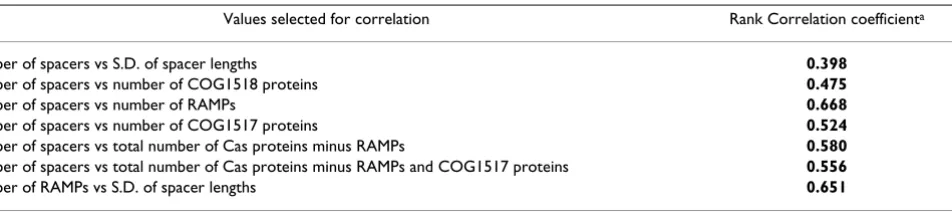
Table 4: Rank correlations coefficients between CRISPR spacers and selected Cas proteins
Values selected for correlation Rank Correlation coefficienta
Number of spacers vs S.D. of spacer lengths 0.398
Number of spacers vs number of COG1518 proteins 0.475
Number of spacers vs number of RAMPs 0.668
Number of spacers vs number of COG1517 proteins 0.524
Number of spacers vs total number of Cas proteins minus RAMPs 0.580
Number of spacers vs total number of Cas proteins minus RAMPs and COG1517 proteins 0.556
Number of RAMPs vs S.D. of spacer lengths 0.651
or alternatively, it is conceivable that, in many niches, the dominant phages and plasmids rapidly turn over with time, making existing CRISPR cassettes obsolete as defense means and triggering their exchange.
Finally, a practical note. It seems that, once the psiRNA mechanism described here is investigated experimentally, it could be exploited to silence any gene in organisms that encode CASS. The simple design of such experimental gene silencing in prokaryotes will involve transfection with a plasmid containing the desired psiRNA inserted between CRISPR to facilitate homologous recombination.
Methods
Genome sequences, databases and sequence analysis
The complete bacterial and archaeal genome sequences were retrieved from National Center for Biotechnology Information (NCBI, NIH, Bethesda) FTP site. The non-redundant database of protein sequences at the National Center for Biotechnology Information (NIH, Bethesda) was iteratively searched using the PSI-BLAST program [31]. The cut-off of E < 0.01 was normally employed for inclusion of sequences in the position-specific weight matrices. Each retrieved sequence was used as the query for additional searches until no new sequences could be detected. For detecting subtle sequence conservation, the PSI-BLAST search results were visually examined and sequences with greater E-values, but containing signature
motifs of a given protein family were included into pro-files on a case by case basis [30,60]. Multiple alignments of protein sequences were constructed using the MUSCLE program [61] and corrected on the basis of PSI-BLAST results. Protein secondary structure was predicted using the JPRED program [62]. Protein structure comparisons were performed using the DALI [63] and VAST [40] pro-grams, and ribbon diagrams of protein structures were generated made using the program BOBSCRIPT [64].
Phylogenetic analysis
Distance trees were constructed from multiple protein sequence alignments after excluding poorly aligned posi-tions, by using the least-square method as implemented in the FITCH program of the PHYLIP package [65,66]. Maximum likelihood trees were constructed using the ProtML program of the MOLPHY package, with the JTT-F model of amino acid substitutions, by optimizing the least-square trees with local rearrangements [67,68].
Identification and analysis of CRISPR repeats
Search for repeats was performed as follows: first, all exactly matching 20-mer anchor substrings were identi-fied in the nucleotide sequence of a bacterial or archaeal genome. Alignments around these anchors were expanded in both directions, to include all adjacent posi-tions with information content above or equal to 1.5 bits [69]. All identified high-similarity fragments were used as queries in nucleotide BLAST [70] search (word size 7; mismatch penalty 1; both gap opening and extension costs -1; E-value threshold 0.001) to detect more diverged ver-sions of the repeats as well as the instances of the repeat in the opposite strand. To determine the repeat boundaries more precisely, sequences of all loci with short (20 nt) flanks added were collected and aligned using the MUS-CLE program [61]. Alignments were trimmed from the 5' and 3' termini up to columns with information content exceeding 1.3 bits. Repeat families that shared the spatial arrangement typical of CRISPR (median repeat length of 20–50 nt; median spacer length of 15–60 nt) were identi-fied as CRISPR candidates and further examined for chro-mosomal proximity to cas genes. The custom PERL scripts used for this analysis are available upon request.
Sequences of eukaryotic miRNAs precursors, CRISPRs, and randomly shuffled CRISPR sequences were computa-tionally folded, and the free energy of the most stable sec-ondary structure was calculated using a a dynamic programming algorithm that employs nearest neighbor parameters to evaluate free energy [71]. Energy minimiza-tion was performed by dynamic programming method that finds the secondary structures with the minimum free energy by summing up the contributions from stacking, loop length, and other structural features, using improved thermodynamic parameters [72].
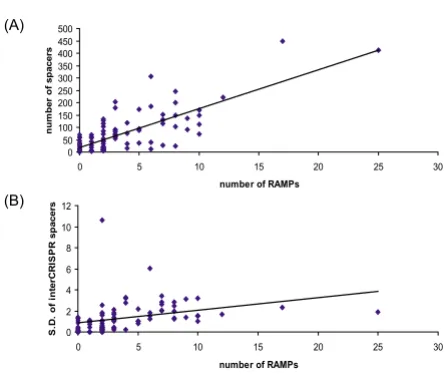
CRISPR and RAMPs Figure 6
CRISPR and RAMPs. (A) Correlation between the number of encoded RAMPs and the number of CRISPR units in prokaryotic genomes (B) Correlation between the number of encoded RAMPs and the variance of unique insert lengths of CRISPR-related spacers in prokaryotic genomes.
0 50 100 150 200 250 300 350 400 450 500
0 5 10 15 20 25 30
number of RAMPs
n
u
m
b
er
o
f
sp
acer
s
0 2 4 6 8 10 12
0 5 10 15 20 25 30
number of RAMPs
S
.D
.
o
f
in
ter
C
R
IS
P
R
sp
acer
s
(A)