98
Customer-The Value Co-Creator
Balaji Gopalan, Marko Kohtamäki
Abstract: Today‘s customers have become co-creators of value. They are facilitated by technologies such as the Internet, mobiles and telecommunications. The extent of participation facilitated by the interactivity between the customer and the firm decides the multiplicity of innovation in products and services. In the innovation of products and services, firms are associating connected, networked and knowledgeable customers on the Internet in real time across geographies for the development and improvement of products and services. Customers are increasingly participating with firms in defining and creating value through the use of information and communication technologies (ICT). Customers today find the World Wide Web (www), social networks, mobile phones and ICT as useful ways of connecting with their real world for multitasking and social interactivity to enhance professions and vocations. With the demonstrated usefulness of ICT, firms are now acknowledging the economic and social benefits of involving customers directly with the firm to become co-creators of value.
Index Terms: Information and communication technologies (ICT), information technology (IT), Internet, knowledge development, value co-creator
————————————————————
1
I
NTRODUCTIONMcKinsey Quarterly‘s November 2011 report notes that firms are increasingly making use of social technologies to extend their organizations‘ expertise for value-realization and assimilation [2]. Numerous factors add value to networked customers during human and machine interaction and in this study, machine refers to the computer and studies on people and establishments in terms of value co-creators are not clearly contextualized as economic or social value. Previous literature on value co-creators has not integrated the variables, motivations and measures of interactions that happen between humans and machines. In the context of business, firms find this necessary to maximize value added during coordination between services and businesses in Web 2.0 for the networked customer (i.e. people, businesses and governments). This improves the effectiveness of integrating customers into new product development projects or knowledge development between businesses and customers across the Internet. Expectations from customers for products and services may vary. In terms of the value co-creator, customer expectations for products and services during participation on the Internet for businesses present multidimensionality for Information Management; Decision Support Systems; Advertising, Psychology and Marketing; Electronic Commerce; Business Research and Strategy. Prahalad and Ramaswamy [21] state ―The meaning of value and the process of the value creator have changed from one that focuses on either the expectations of the producer or the firm to an experience of a product or service that is personalized for the customer.‖ During interactivity among businesses and customers, ease of interactivity between the human and the machine and in this study the computer and participation of customers in collaborative new product development is enhanced through knowledge networks; authenticity and customer efficacy and the improved socio-technical design of ICT facilitating quality in interactivity between the human and machine.
For example, in the case of collaborative technologies such as wikis, development of quality content depends on custodianship or responsibilities, purpose of the activity; themes, sessions of participation; knowledge management; and the integration of technologies [24]. Crowdsourcing in webpages such as Kickstarter have helped people mobilize funds for creativity or hobbies through crowd financing.
2
A
IMS AND OBJECTIVESIn electronic commerce that integrates the physical and virtual, information access and order fulfilment about a product or service for the networked customer significantly improves service convenience when paired with customer service, resulting in creation of value for the customer, loyalty in return for firms [19] and optimization of transaction costs. Further, innovations in technologies facilitating effectiveness during interactions between the human and the machine add value from integrating the geography, demography and themes [16]. This paper provides perspectives for ICT on how the value co-creator is facilitated and enhanced between businesses and customers while using the Internet.
3
B
ACKGROUNDIn today‘s world, people are increasingly utilizing location based ICT for self-referent tasks; social interactions or other needs [9]. Both offline and internet-based geographical information systems along with public information or public services have added value to the general public. Networked localities embedded in networks facilitating information technology (IT) for businesses and customers are customized and personalized and therefore have demonstrated new ways of solving with inventive uses of ICT towards meeting specific needs and necessities [9]. These infrastructures in IT facilitate personalization of interactions between businesses and customers and multiply the cost effectiveness in the development of product and service knowledge. This has led to firms‘ marketing units to focus and invest in cost effective marketing incentives across the Internet to generate additional revenue for electronic commerce. The ability of infrastructures of IT in electronic commerce to facilitate simultaneous product or service knowledge development; effective technologies facilitating human and machine interactions and a greater statistic of participating customers with businesses is its chief distinction from paradigms of traditional marketing [20]. The resourcefulness and quality of information available on the internet has tremendously added value to customers in developing knowledge and improving their efficacy. Hence,
________________________
Balaji Gopalan is currently faculty in Operations Management and Business Analytics at the Kirloskar Institute of Advanced Management Studies, Harihar, Karnataka, India. PH: +917073899154. E-mail:
digital media literacy adds value to customers in terms of decision support; knowledge development and personalization. For example, the effectiveness of mobile phones and ICT created awareness during citizen responses in social networks during the 2010 earthquake in New Zealand when landline telephones were not working [4]. By enabling experiences on the Internet that are close to being real or surreal or imaginative, value is added to businesses and customers who perceive the experiences as realistic and the medium as interactive, especially for those who perceive the value of the utilitarian experience. An example is the popularity of geographical information systems (GIS) in urban areas for location based navigation and its utilization for public services [9] such as the mapping of locations in digital that are useful for the citizen or traveler for learning more about cities, locations and services. Further, demographics, personality and lifestyle experiences also influence the customer's evaluations of the utility of products and services and the experience of ICT and the associated sociability. This is relevant because people around the world utilize ICT for personal work at homes, offices or in public places to organize themselves via emails, mobile phones or webpages [12] [13] to improve their social and work life.
3.1 Human-Machine Interactions for Co-creator
Personalization and contextualization of the Internet by customers and localities thriving on the Internet provide managers with product or service knowledge development. ICT now facilitate customers to interactively co-design products on a webpage in real time. For example, Nike‘s NIKEiD webpage lets a customer co-design shoes in real time on a machine before purchase.
Fig. 1. Nike’s NikeID webpage for co-designing sneakers
(Source: NIKE. July 2013)
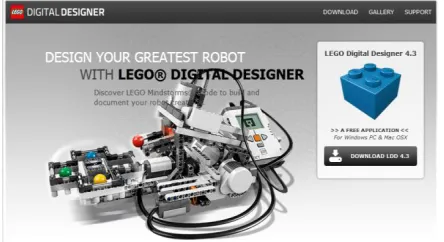
Another example is Lego‘s Digital Designer webpage that lets fans create and share Lego designs within the Lego network.
Fig. 2. Lego’s Digital Designer(Source: LEGO. July 2013)
Customer interactions with firms and between businesses have facilitated co-production and co-evolution of products and services [12]. This is enabled when navigability and convenience of ICT enhance the effectiveness of interactivity between humans and machines for businesses and customers.
Fig. 3. Flipboard Magazines (Source: Flipboard. August 2013)
This has added value to mobile applications such as Flipboard in mobile commerce based social technologies to let browsers read and gather magazines on a topic of their interest and allows them to create, curate and share their experiences with customers across the Internet.
Fig. 4. Skylanders Video Game (Source: Skylanders. August 2013)
Skylanders is a video game played with toys that interacts with a machine through tele-immersion of a toy character in the physical world placed upon a platform called the ‗Portal of Power‘. It shows that portals can be designed to enable physical objects to be tele-immersed into information technologies (IT).
3.2 Product or Service Knowledge Development
100 knowledge creating Web 2.0 services with participation in
social networks to better manage its portfolio during product and service knowledge development. This enables businesses to integrate open innovation projects involving business across the Internet for distributed innovation processes and purposefully managed flows of internal and external knowledge with customers. This encourages crowd-sourced new product design; transitions and upgrades; product or service knowledge development and development of domain expertise. It is now possible to integrate knowledge capital between businesses and customers across the Internet into open innovation projects requiring expertise that cannot otherwise be easily internalized. Businesses and customers have demonstrated the capability of facilitating a greater statistic of participation from across geographies with domain knowledge expertise and experience. Innocentive is an example of a portal on the Internet that invites individuals, businesses and governments into crowd-sourcing with the help of incentives for innovative and cost effective solving in projects involving varying degrees of complexity.
Chart 1. Innocentive’s Crowdsourcing Portal (Source: Innocentive July 2013)
Businesses and customers across the Internet facilitating avatars and social identities facilitate solving and a personalized experience of sociability for the Internet. Businesses having avatars representing in portals across the internet intend to create a quality experience for participants with the facilitation of navigability and convenience into the design of ICT and improving interactivity between humans and machines. Communispace, a services firm solving needs of clients helped create a webpage for Kraft foods, the second largest food and beverage company in the world and involved customers at every stage of the product life cycle to co-create a line of 48 South Beach diet brand entrees, snacks, and frozen foods that brought sales of $100 million within half a year (Communistudy 2007).
Fig. 5. Kraft Food’s involvement with the Co-creator (Source: Communispace July 2013)
Businesses can now facilitate collaborative ICT into portals on the Internet for products and services allowing customers to interact and participate in new product design. An example is IKEA‘s Home Planner software that allows customers to design kitchen plans on the Internet in 3D, store the plans on a webpage and discuss them with an expert at a local IKEA store before purchase.
Fig. 6. IKEA’s Home Planner (Source: IKEA Group. July 2013)
eYeka, an internet portal invites the co-creator for solving and innovation challenges of prominent businesses providing incentive based crowd-sourcing for businesses and customers.
Fig. 7. eYeka’s Internet Portal for Crowd-sourced Innovation
Socio-technological innovation projects in crowd-sourcing and broadcast search involving an unknown and unrestricted audience have attracted people with intrinsic and extrinsic motivation and domain knowledge expertise for substantial solving skills [5]. Businesses gain knowledge for calibrating their business logic with customers for product and service knowledge development in social networks.
3.3 Human-Machine Interactivity
Customer interaction with businesses and product discussion networks on the Internet facilitate purchases, demography and commerce, such as in social networks involving product and service knowledge development. Service professionals of internet bank services help newcomers‘ adjustment to services, a fact that adds value to a company‘s financial performance gaining the loyalty and trust of the customer by facilitating service conveniences [14]. The typology of product and service networks should be segmented according to the customer's networked locality; efficacy and market profile. Purchases in the physical world are not influenced by advertisements on the internet but by demographics, needs and knowledge. Prominent businesses are known to create successful portals on the Internet while some have not. Studies on interactivity between humans and machines demonstrate that participants create more value addition through better designs that enable mobility and personal freedom while using ICT. Businesses and customers across the Internet facilitating market expansion; creativity and improvement in the design of technologies and innovation in products and services provide for an experience of sociability that further add to the economic growth by attracting a greater statistic of participation.
3.4 Product Concept Effectiveness
Participation of customers in product and service networks across the Internet facilitate knowledge development for businesses and have become extensions of firms seeking to integrate customers as a co-creator of products and services. Firms investing in businesses and customers across the Internet help define and market products and services in
electronic commerce; solve customer queries and expand latent capabilities of small and medium business creativity across geographies required for economic and social growth. Product and service networks across the Internet are also increasingly being viewed to be convenient for efficacy needs and knowledge development. Therefore, an opportunity emerges for analysis of customer behavior and responses in networks for new launches or premiers of commercial products or services. The success of products and services depends on socio-psychological attributes such as equity and ethics; sociability and values. These attributes are value added to make Web 2.0 services more efficient during knowledge development; performance and functioning. Firms with corporate social responsibility find the Internet to be convenient and popular for businesses and customers by facilitating rhetorical or social interactivity; knowledge development and wellness. In terms of marketing, firms derive value when advertisements in social networks are associated with products and service knowledge development and when businesses integrate behavioral economics into Web 2.0 services. With increasing digital media literacy, it has become obvious and lucrative for businesses to invest in electronic commerce for expanding their markets. For firms in retailing
serving electronic commerce, businesses and customers across the Internet create economic value when navigation and convenience of ICT integrate product promotion, pricing and transaction processes in an orderly way increasing the effectiveness of the interactivity between humans and machines and the associated services. This adds value to customers in electronic commerce because of the logistical integration and channeling of shippable products through a combined process of synchronization of secure information access, order fulfilment and customer service resulting in service convenience for the customer. This has demonstrated that electronic commerce is efficient enough in facilitating order fulfilment and transactions involving a greater statistic of customers.
3.5 Secure Access, Efficacy and Value Creation
Hyper-connected sellers in electronic commerce across the Internet have created considerable economic value by providing customers with a secure access to a greater statistic of sellers across networks [23]. Electronic commerce has demonstrated that the centrality of sellers and shops are absent in electronic marketplaces and hyper-networked sellers are equally available to customers and businesses. Customer efficacy and awareness across the Internet improves product and service knowledge development for firms. For example, collaborative ICT such as Wikis have demonstrated that secure access and networked participation across the Internet improves the quality of knowledge development during knowledge creation and knowledge aggregation [24]. Further, the study indicates that knowledge development through collaborative ICT in wikis depend on custodianship, purpose, value addition; transitions, supervision and membership management along with effective interactivity between humans and machines provided by the sponsoring establishment.
3.6 Information Policy and Social Benefit
102 by designing ICT to support effective participation during
networked interactivity; creativity and innovativeness. The credibility and benefits of interactivity between participants in networks is facilitated by social cohesion, awareness and stability for a greater statistic of participation across the Internet.
3.7 Customer Decision Making
Creative socio-technological innovations for businesses and customers across the Internet have facilitated social capital; aesthetics and decision support. Most visitors to social networks have low business intentions; low purchasing power and perceive the social needs. Participants in social networks
have gained from interactivity across the Internet; personalization and customization [16]. Products and services across the Internet provide decision support for customers through credible evaluations. Customer awareness across the Internet regarding products and services has greatly improved from knowledge development and social interactivity. Networked customers across the Internet have demonstrated to be passionate advocates of products and services and are likely to market value by providing personalized decision support in social networks. Environments for interactivity between humans and machines and businesses and customers across the Internet offer an opportunity for firms to directly involve the customer into product and service development for new product development projects. Sponsoring firms would need to invest or involve themselves in developing design principles of ICT and software for co-creator systems to facilitate participation; synchronization, convenience and creativity through a shared sense of interactivity. Studies suggest that an interactive experience for businesses and customers across the Internet involving ICT provides insight for firms in deriving value of not only the benefits of Web 2.0 technologies and services as a medium for telecommunication but also the possibility of inviting people with a greater domain knowledge expertise to participate across the Internet required for crowd-sourced or socio-technological innovation. Research has also shown that the design of an experience environment for participation for ICT requires knowledge of the technical requirements for digital communication; interactivity between humans and machines and psychology or behavioral economics [18]. Product and service networks across the Internet that retain membership through digital media literacy, creativity or innovativeness, and participation facilitate experiences of networked sociability among members and promote co-shopping across interpersonal networks [4]. Digital media literacy improves with participation of networked and knowledgeable individuals who interactively co-create value with the firm. For example, in the case of social networks such as blogs, writer credibility and author‘s knowledge sharing and rapport have promoted membership and member efficacy [3]. Advances in Web 2.0 and socio-technological innovation involving businesses and customers across the Internet have led to the rapid expansion of small and medium businesses in terms of growth in economic and social capital. Businesses and customers across the Internet enable small and medium businesses to use technology infrastructures provided by Web 2.0 services to leverage internal and external knowledge and resources [1]. Further, the opportunity for networked value, cost effectiveness and creative ICT facilitate firms interacting with businesses and customers across the Internet with the
logistical advantage of becoming co-creators, delivering associative value and multi-channel product procurement [23]. Customer participation in product or service networks across the Internet has facilitated decision support and popularity serving as reference groups for customers in their decision making process. For businesses and customers across the internet, crowd-sourcing and broadcast search associated to innovation projects have brought intellectuals with intrinsic and extrinsic motivation and domain knowledge expertise for substantial and needful solving skills [6]. Research has also confirmed that in professional services firms, people develop domain knowledge expertise through personalization of knowledge during referencing of hyper-linked knowledge through a cumulative process of knowledge creation and knowledge aggregation [11]. This supports the employee in recombining knowledge into an array of consideration sets that complements the innovativeness within firms.
4
S
UMMARY ANDC
ONCLUSIONSCollaborative new product development involving socio-technological innovation for the Internet and ICT adds value through knowledge networks; authenticity and customer efficacy. Socio-technical design of ICT improves the quality of interactivity between humans and machines. Both offline and public services on the Internet have added value to the general public. Socio-technological innovations that facilitate interactivity add value from integrating geography, demography and themes. With personalization, businesses and customers across the Internet multiply the cost effectiveness of products and service knowledge developed. The ability of network infrastructures in electronic commerce
enhancing IT capabilities between businesses and improving IT communications required for business and IT development [23]. Hybridized mobile commerce applications have the potential for creating economic value by providing an interface for entrepreneurship. Technology interfaces facilitate small and medium business expansion. In comparison to physical shopping environments that have limitations in accommodating customers, electronic commerce across geographies and time zones has the ability to accommodate numerous customers and purchases and add value from a greater statistic in membership. New functionality designs and innovation on the Internet promote social, economic or intellectual motivation and value. Hyperlinked knowledge repositories (e.g., wikis, electronic-libraries) provide for knowledge development by increasing the relevancy of knowledge sought across the Internet that facilitates learning. Effective networks encourage participation for improving rhetorical communication associated to work and are shown to improve wellness.
A
CKNOWLEDGMENTSThis paper is a product of FUTIS (Future of Industrial Services) research projects. The financial support of the Finnish Funding Agency for Technology and Innovation (Tekes), FIMECC and the companies involved in these projects is gratefully acknowledged.
REFERENCES
[1] J. Bell and S. Loane, ―New-wave' Global Firms: Web 2.0 and SME Internationalisation,‖ Journal of Marketing Management, vol. 26, no. 3/4, pp. 213, 2010
[2] J. Bughin, A.H. Byers and M. Chui, ―How Social Technologies are Extending the Organization,‖ McKinsey Quarterly Report, 2011
[3] J. Colliander and M. Dahlén, ―Following the Fashionable Friend: The Power of Social Media - Weighing the Publicity Effectiveness of Blogs versus Online Magazines,‖ Journal of Advertising Research, vol. 51, no. 1, pp. 313, 2011
[4] K.W. Chan, and S.Y. Li, ―Understanding Consumer-to-Consumer Interactions in Virtual Communities: The Salience of Reciprocity,‖ Journal of Business Research, 63(9/10), 1033, 2010
[5] N. Dabner, ―‗Breaking Ground‘ In the Use of Social Media: A case study of a university earthquake response to inform educational design with Facebook,‖ The Internet and Higher Education, Volume 15, Issue 1, January 2012, Pages 69-78, ISSN 1096-7516, http://dx.doi.org/10.1016/j.iheduc.2011.06.001.
[6] K. Frey, C. Lüthje and S. Haag, ―Whom Should Firms Attract to Open Innovation Platforms? The Role of Knowledge Diversity and Motivation,‖ Long Range Planning, vol. 44, no. 5–6, pp. 397-420, 2011
[7] B. Gopalan, ―Value Co-creation – Internet for Development and Telecommunications,‖ Saarbrücken, Germany. LAP LAMBERT Academic Publishing, 2017
[8] B. Gopalan and M. Kohtamäki, ―Value Co-creation and Open Innovation in Social Media,‖ Paper presented at Strategic Management Society Conference, June 20– 22, 2013, Glasgow, UK, available at https://glasgow.strategicmanagement.net/subdomains/gl asgow/downloads.(accessed 19th January 2017). Unpublished (unpublished manuscript)
[9] B. Gopalan and M. Kohtamäki, ―Open Innovation through Value Creation in Social Media,‖ Paper presented at American Marketing Association (AMA) SERVSIG 2012. International Service Research Conference, June 7-9, 2012, Helsinki, Finland, available at
https://helda.helsinki.fi/bitstream/handle/10138/36614/Pr oceedings%20from%20the%207th%20AMA%20SERVS IG%20International%20Service%20Research%20Confe rence.pdf;sequence=1 (accessed 19th January 2017). Unpublished (unpublished manuscript)
[10] E. Gordon and A. Silva, ―Net Locality: Why Location Matters in a Networked World,‖ Hoboken, NJ, USA: Wiley-Blackwell, 2011.
[11] P.H. Gray, S. Parise and B. Iyer, ―Innovation Impacts of Using Social Bookmarking Systems,‖ MIS Quarterly, vol. 35, no. 3, pp. 629-643, 2011
[12] V. Grover and R. Kohli, ―Cocreating IT Value: New Capabilities and Metrics for Multifirm Environments,‖ MIS Quarterly (36, 1), pp. 225-232, 2012
[13] C. Hine, ―Internet Research and the Sociology of Cyber-Social-Scientific Knowledge,‖ Information Society, 21(4), 239-248, 2005, doi:10.1080/01972240591007553.
[14] J.R. Höflich, G.F. Kircher and C. Linke, ―Mobile Media and the Change of Everyday Life,‖ Frankfurt, DEU: Peter Lang AG, 2010. ProQuest ebrary. Web. 10 November 2014. Copyright © 2010. Peter Lang AG. All rights reserved.
[15] C.F. Köhler, A.J. Rohm, K.D. Ruyter and M. Wetzels, ―Return on Interactivity: The Impact of Online Agents on Newcomer Adjustment,‖ Journal of Marketing (75:2), pp. 93-108, 2011
[16] Lego Digital Designer. Lego.com, n.d. Web. 19 Dec. 2014. <http://ldd.lego.com/en-us/>
[17] P.R. Messinger, E. Stroulia, K. Lyons, M. Bone, R.H. Niu, K. Smirnov and S. Perelgut, ―Virtual Worlds - Past, Present, and Future: New Directions in Social Computing,‖ Decision Support Systems, vol. 47, no. 3, pp. 204, 2009
[18] P. Nambisan and J.H. Watt, ―Managing Customer Experiences in Online Product Communities,‖ Journal of Business Research, 64(8), 889, 2011
[19] NikeID Customize Shoes and Accessories. Nike.com,
n.d. Web. 19 Dec. 2014.
104 [20] L. Oh and H. Teo, ―Consumer Value Co-creation in a
Hybrid Commerce Service-Delivery System,‖ International Journal of Electronic Commerce (14:3), pp. 35-62, 2010
[21] W. Ozuem, K.E. Howell and G. Lancaster, ―Communicating in the New Interactive Marketspace,‖ European Journal of Marketing, 42(9/10), 1059-1083, 2008, doi:10.1108/03090560810891145
[22] C.K. Prahalad and V. Ramaswamy, ―Co-creation Experiences: The Next Practice in Value Creation,‖ Journal of Interactive Marketing (18:3), pp. 5-14, 2004
[23] P. Rai, G. Pavlou, Im and S. Du, ―Interfirm IT Capability Profiles and Communications for Cocreating Relational Value: Evidence from the Logistics Industry,‖ MIS Quarterly (36:1), pp. 233-262, 2012
[24] A.T. Stephen and O. Toubia, ―Deriving Value from Social Commerce Networks,‖ Journal of Marketing Research, vol. 47, no. 2, pp. 215, 2010
[25] C. WAGNER and A. MAJCHRZAK, ―Enabling Customer-Centricity Using Wikis and the Wiki Way,‖ Journal of Management Information Systems, vol. 23, no. 3, pp. 17-43, 2006
[26] Flipboard Magazines. Flipboard.com, n.d. Web. 19 Dec. 2014. <https://about.flipboard.com/magazines/>.
[27] Skylanders Video Game. Skylanders.com, n.d. Web. 19 Dec. 2014. <http://www.skylanders.com/>
[28] Innovation Management / Crowdsourcing / Challenges / Competitions. Innocentive.com, n.d. Web. 19 Dec. 2014. <http://www.innocentive.com/>.
[29] Kraft Customer Co-creation Case Study / Communispace. Communispace.com, n.d. Web. 19 Dec. 2014. <http://www.communispace.com/Kraft-South-Beach-Diet-case-study/>.
[30] IKEA HOME PLANNER. Ikea.com, n.d. Web. 19 Dec. 2014.
http://www.ikea.com/ms/en_JP/rooms_ideas/splashplan ners.html