University of Pennsylvania
ScholarlyCommons
Publicly Accessible Penn Dissertations
2018
The Role Of The Ventromedial Prefrontal Cortex
In Value-Based Decision-Making
Linda Qinhe Yu
University of Pennsylvania, [email protected]
Follow this and additional works at:https://repository.upenn.edu/edissertations
Part of theNeuroscience and Neurobiology Commons, and thePsychology Commons
This paper is posted at ScholarlyCommons.https://repository.upenn.edu/edissertations/3371 For more information, please [email protected].
Recommended Citation
Yu, Linda Qinhe, "The Role Of The Ventromedial Prefrontal Cortex In Value-Based Decision-Making" (2018).Publicly Accessible Penn Dissertations. 3371.
The Role Of The Ventromedial Prefrontal Cortex In Value-Based
Decision-Making
Abstract
The ventromedial prefrontal cortex (vmPFC) has been shown to correlate with the subjective value for options, across reward type and across hundreds of functional neuroimaging studies. Despite the prominence of its role in preference-based decision-making, its specific contributions to how decisions are made have not yet been well-characterised. Study 1 addresses what the vmPFC signal represents during decision-making. While the vmPFC signal has been shown to correlate highly with subjective value in past studies, this signal is also consistent with mental navigation through a conceptual attribute space using a grid-like code. We found that the mental navigation model lacked support in the evidence, and the subjective value model remains the best explanation for vmPFC signal during decision-making. After having established that the signal in vmPFC reflects subjective value, Study 2 addresses whether subjective value representations remain consistent for non-choice preference tasks, and when this representation comes online during the decision process. This study shows that the value network seen previously for choice tasks also is active during a matching bidding task, and that the vmPFC, interestingly, represents value only at the time of the final choice. Finally, in Study 3, I address the question of how the vmPFC is necessary for subjective value in my third chapter. Transitivity (the idea that if A > B, and B > C, then A > C) is a key property of a value-based system. Individuals with ventromedial frontal lobe damage have been found to make more transitivity errors in the past, but it is not known whether vmPFC damage causes fundamentally intransitive choices (implying abolishment of value), or transitive but noisier choices (implying preservation of value but increased instability). We found strong evidence for the second case, demonstrating that vmPFC damage adds instability to valuation but does not abolish it. The evidence I present here is consistent with the theory that vmPFC is involved in a subjective value-based process during decision-making, yet that value is a distributed process over many brain regions where other regions may compensate for the loss of the vmPFC in calculating value.
Degree Type
Dissertation
Degree Name
Doctor of Philosophy (PhD)
Graduate Group
Psychology
First Advisor
Joseph W. Kable
Keywords
decision-making, lesion, neuroimaging, value
Subject Categories
Neuroscience and Neurobiology | Psychology
THE ROLE OF THE VENTROMEDIAL PREFRONTAL CORTEX IN
VALUE-BASED DECISION-MAKING
Linda Q. Yu
A DISSERTATION
in
Psychology
Presented to the Faculties of the University of Pennsylvania
in
Partial Fulfillment of the Requirements for the
Degree of Doctor of Philosophy
2019
Supervisor of Dissertation
_______________________
Joseph W. Kable, Baird Term Professor, Psychology
Graduate Group Chairperson
________________________
Sara Jaffee, Professor, Psychology
Dissertation Committee
Emily Falk, Associate Professor, Communication, Psychology and Marketing
ii
ACKNOWLEDGMENTS
A sign propped up in our lab space reads, “If we knew what we were doing, it
wouldn’t be called research. – A. Einstein.” If this quote is true, then I sure did a ton of
research. I would like to thank the many people who helped me know slightly more what
I am doing. First among them is my advisor in all senses of that word, Joe Kable. You
admirably performed the duties of both supervisor and therapist, radiating calm and
reassurance through my many neuroses. Thank you for your knowledge, support,
guidance, and above all, maintaining good humour through the many pranks I have
pulled.
I would also like to thank my committee, Anjan Chatterjee and Emily Falk, for
being kind and supportive, and for providing valuable feedback on my research and
helping my professional development over the years.
Thank you to Lesley Fellows and Christine Déry at McGill and Eileen Cardillo at
Penn for making the patient part of my research possible, and especially to the patients
themselves for donating their time to research.
Thanks to all Kable lab members, past and present, who made Penn and
Philadelphia feel like home. I recognize how lucky I am to have hit the jackpot in finding
so many good friends in the place I work. Thanks for the long talks, help with research,
driving me to patient testing appointments, and being so down for happy hours, Bucket
List adventures and Harry Potter themed events. A special thanks must go to Sangil
“Arthur” Lee, who arrived at Penn the same day as I did, for being my co-author,
iii
Thank you from the bottom of my heart to my parents, Liyao Yu and Shiling Li,
whose decision to bring me as a child from China to a wonderful land called Canada,
where homework did not seem to exist, changed the course of my life. I owe everything I
have to you, and I am so grateful every single day for your sacrifice and wisdom in
giving me a life better than I could ever imagine. And thanks to Larry for making me the
happiest, proudest big sister in the world.
Thank you to the Vaidya family for your kindness, innumerable hot meals, advice
and laughter.
Finally, thank you to Avi, whom I am astonished at my good fortune to call my
husband and best friend. Thank you for supporting my decision to go to grad school far
away, lasting five years of long distance, editing papers, talking through research, making
me laugh, cooking me dinner, and always encouraging me to be the best version of
iv ABSTRACT
THE ROLE OF THE VENTROMEDIAL PREFRONTAL CORTEX IN
VALUE-BASED DECISION-MAKING
Linda Q. Yu
Joseph W. Kable
The ventromedial prefrontal cortex (vmPFC) has been shown to correlate with the
subjective value for options, across reward type and across hundreds of functional
neuroimaging studies. Despite the prominence of its role in preference-based
decision-making, its specific contributions to how decisions are made have not yet been
well-characterised. Study 1 addresses what the vmPFC signal represents during
decision-making. While the vmPFC signal has been shown to correlate highly with subjective
value in past studies, this signal is also consistent with mental navigation through a
conceptual attribute space using a grid-like code. We found that the mental navigation
model lacked support in the evidence, and the subjective value model remains the best
explanation for vmPFC signal during decision-making. After having established that the
signal in vmPFC reflects subjective value, Study 2 addresses whether subjective value
representations remain consistent for non-choice preference tasks, and when this
representation comes online during the decision process. This study shows that the value
network seen previously for choice tasks also is active during a matching bidding task,
and that the vmPFC, interestingly, represents value only at the time of the final choice.
Finally, in Study 3, I address the question of how the vmPFC is necessary for subjective
v
key property of a value-based system. Individuals with ventromedial frontal lobe damage
have been found to make more transitivity errors in the past, but it is not known whether
vmPFC damage causes fundamentally intransitive choices (implying abolishment of
value), or transitive but noisier choices (implying preservation of value but increased
instability). We found strong evidence for the second case, demonstrating that vmPFC
damage adds instability to valuation but does not abolish it. The evidence I present here
is consistent with the theory that vmPFC is involved in a subjective value-based process
during decision-making, yet that value is a distributed process over many brain regions
vi TABLE OF CONTENTS
ACKNOWLEDGMENTS ... II
ABSTRACT ... IV
LIST OF TABLES ... VIII
LIST OF ILLUSTRATIONS ... IX
CHAPTER 1 -- INTRODUCTION ... 1
CHAPTER 2 - SUBJECTIVE VALUE, NOT A GRID-LIKE CODE, DESCRIBES NEURAL ACTIVITY IN VENTROMEDIAL PREFRONTAL CORTEX DURING DECISION-MAKING ... 12
Abstract ...12
Introduction ...13
Methods ...15
Results ...20
Discussion ...26
Supplemental Materials ...30
CHAPTER 3 -- TIMING OF VALUE REPRESENTATION IN VENTROMEDIAL PREFRONTAL CORTEX IN A COMPLEX AUCTION TASK ... 39
Abstract ...39
Introduction ...40
Materials and Methods ...41
Results ...46
Discussion ...51
vii
Introduction ...56
Materials and Methods ...58
Results ...70
Discussion ...84
CHAPTER 5 – GENERAL DISCUSSION ... 91
viii LIST OF TABLES
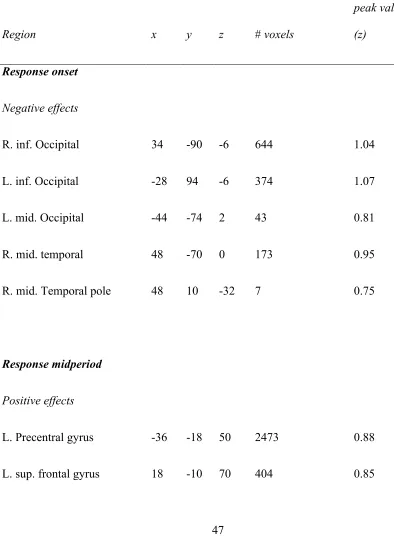
Table 3-1: Peak foci of BOLD effects ... 47
Table 4-1. Demographics of participants. ... 61
ix LIST OF ILLUSTRATIONS
Figure 2-1. Correlation between subjective value signal and its most similar hexagonal modulation signal.. ... 21
Figure 2-2. Regions with significant SV correlation in session 1 and session 2.. ... 22
Figure 2-3. Z-transformed F-statistics of brain regions that are significantly explained by two hexagonal grid modulation regressors. ... 23
Figure 2-4. Effect of grid-angle consistency and SV in grid cell ROIs. ... 25
Figure 2-5. Effect of grid-angle consistency and SV in SV-defined ROIs. ... 26
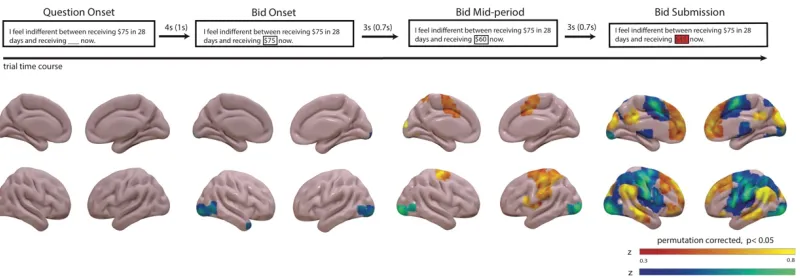
Figure 3-1 .Whole brain effects correlated with participants’ bid response on each trial at the four time points in the trial.. ... 50
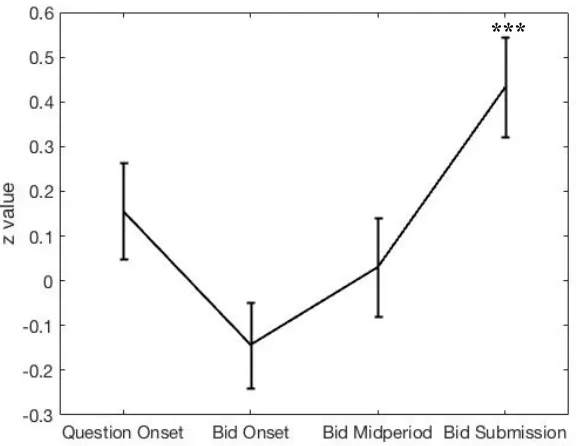
Figure 3-2. Activity in the vmPFC ROI related to participant’s bid is only significant at the final time point, that of bid response submission.. ... 51
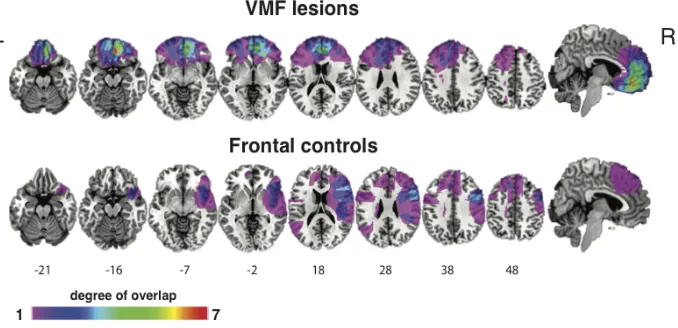
Figure 4-1. Overlap images of the VMF and frontal control lesion groups.. ... 60
Figure 4-2. Group average and individually plotted intransitive choices.. ... 71
Figure 4-3. Lesion tracings of the three individuals with VMF lesions who had
significantly more intransitive choices compared to healthy control subjects. ... 75
Figure 4-4. DDM parameter fits: noise, drift rate, initial starting point, non-decision time, and alpha (exponent on rank distance).. ... 81
1
Chapter 1
– Introduction
Our primate ancestors must be very jealous of us. We have a buffet of choices
before us in the supermarket, endless aisles of protein, fat and sugar available with the
single reach of the hand. The biggest problems we face (in rich, industrialized countries,
anyway) these days is which restaurant we want to tap on our phone so they can deliver
us dinner, and then what multi-million-dollar entertainment franchise to tap on next that
we can watch while we eat. We have so many choices that, in fact, we are often paralyzed
by them – a cacophony of multi-sensory influences competing for our hand. When you
can have anything you desire, what do you desire?
The central question of this dissertation is to figure out how our brain deals with
all this noise, and how we extract that precious thing called desire from them. This brain
of ours originates not just from those unlucky primate ancestors; from the earliest days as
a mere few cells strung together, it has had the task of keeping itself alive from when life
begun. To do so in the eons before smartphones, it had to figure out what actions to take
to feed itself and procreate. How does it do so in a way that would maximize its chances
of perpetuating itself? One way, economists thought, was that it should maximize utility,
which is essentially the usefulness of something in advancing one’s goals (Baron, 2008).
Utility is like a summary of the attributes (either benefits or drawbacks) of an item or
action, which can then be compared to those of another. Because utility is something that
is abstracted from the attributes of the individual options, dissimilar items like apples and
2
preferences should be transitive (Samuelson, 1937). If a slime mold prefers agar patch A
to agar patch B, and a.p. B to a.p. C, then it ought to prefer A to C. The reason to do so is
to maximize utility towards towards its goal, which, for a slime mold, is to maximize
metabolic energy and avoid light (Devi, Guttes, & Guttes, 1968).
An alternative to using an integrated value representation to adjudicate among
options is using heuristics. For example, one could impose a rule that, when choosing
among two different agar patches, if the light exposure is similar enough, one should
choose the patch with more agar. Such a rule seems reasonable on its face, but would run
into problems of violating transitivity under certain conditions (Tversky, 1967) and
therefore would not maximize utility. Nevertheless, heuristics have been shown to be
used when people’s preferences are not well-formed, and/or if the decision-maker wishes
to avoid making trade-offs (Tversky, Sattath, & Slovic, 1988).
A topic of study over the years has been if, and how, preferences are constructed.
A utility signal that is invariant to context and mode of elicitation should give rise to the
same preference for the same option no matter how the question is couched. This
concept, called procedure invariance, has been clearly shown not to be the case, and
people do change their preferences depending on how the question is asked, and even
slime molds change preferences based on what other options are available (for review on
humans see Payne, Bettman, and Johnson (1992); for slime mold see Latty and Beekman
(2010)). However, it is debated as to how people construct their preferences – whether
such a signal is more utility-like, but just influenced by context at the time, or something
closer to heuristics, in which case it would be rule-based and not dependent on utility
3
Behavioral economic concepts of value were intended as as-if models (meaning
people behave as if they are maximizing utility), and not as a way of describing how
things actually worked in their heads (Kable & Glimcher, 2009). Similarly, behavioral
studies are limited in their ability to assess the process by which people construct
preferences. For organisms more complex than our single-celled mold friend, we can use
neuroscience tools to investigate how this utility concept is actually implemented in the
brain, and reveal the timing of such representations during the decision process. In
humans, meta-analyses show a well-established network of regions known to be involved
in representing reward and preference, including the ventral striatum, posterior cingulate
cortex, and ventromedial prefrontal cortex, or vmPFC (Bartra, McGuire, & Kable, 2013;
Levy & Glimcher, 2012; J. Peters & Büchel, 2010). The focus of this dissertation will be
on the vmPFC (an area of the frontal lobes around eye-level), and its involvement in
decision-making.
The Ventromedial Prefrontal Cortex
The definition of the vmPFC can vary based on the paper or method of
investigation. In the fMRI literature, it generally refers to the anterior cingulate cortex
(ACC) below the genu of the corpus callosum [ventral portions of areas 24, 25, 32, --as
defined by Petrides and Pandya (1994)], the frontal pole (area 10), as well as medial
orbitofrontal cortex (area 14). In the lesion literature, it often additionally includes central
and lateral parts of the orbitofrontal cortex (areas 11, 13, and 12/47), and moreover the
white matter as well as the grey matter. In this thesis, we will refer to this broader
definition as “ventromedial frontal lobes”, in relation to discussions of studies of
4
The vmPFC and orbitofrontal cortex (OFC) contain two distinct patterns of
connections, the medial network and the orbital network (Öngür & Price, 2000). The
medial network, which includes the aforementioned ACC areas and medial OFC, is
densely connected to limbic structures (e.g., amygdala, entorhinal cortex, hippocampus),
as well as projecting to the ventral striatum. The orbital network, on the other hand,
consists of the central and lateral OFC, and is characterised by connections to sensory
inputs, primarily olfactory, gustatory, visual, and somatosensory, in addition to being
connected to perirhinal cortex and more central parts of the striatum. The medial and
orbital networks share connections with each other, particularly through intermediary
areas like area 13 and posterior area 14.
The connections with limbic structures, then, puts the vmPFC at a particularly
suitable position to represent preferences, gaining inputs from structures involved in
emotion and memory, while projecting to reward-related centers like the nucleus
accumbens. At the same time, the multiple sensory inputs in orbitofrontal cortex, and its
connections to regions involved in recognition memory and action-learning, puts it in a
position to represent learning and linking sensory inputs to outcomes (Haber, 2016).
Activity within overlapping regions of the vmPFC has been found to correlate
with preferences for different categories of objects, suggesting that this region integrates
value information for different types of stimuli into a common scale (Bartra et al., 2013;
Chib, Rangel, Shimojo, & O'Doherty, 2009; Levy & Glimcher, 2012). The vmPFC’s
signal, moreover, describes a subjective assessment of the value of the options, which
integrates dimensions of costs and benefits into a single representation that reflect
5
Glimcher, 2007; Plassmann, O'Doherty, & Rangel, 2007; Tom, Fox, Trepel, & Poldrack,
2007). More recently, it has been shown with multivariate methods that vmPFC
represents a domain-general value signal, while central orbitofrontal cortex instead
represents identity category-specific value (Howard, Gottfried, Tobler, & Kahnt, 2015;
Howard & Kahnt, 2017; Pegors, Kable, Chatterjee, & Epstein, 2015). Individuals with
damage to the vmPFC have been repeatedly found to be less consistent in
preference-based choices between multiple kinds of goods (Fellows and Farah, 2007; Camille et al.,
2011; Henri-Bhargava et al., 2012), suggesting a critical, general role for this region in
valuation of stimuli.
Open Questions
Though the above evidence might show that value is robustly associated with the
vmPFC, the opposite inference cannot be made. The vmPFC is involved in many other
domains of cognition, a prominent one of which is schematic memory. fMRI studies have
shown that vmPFC activity represents implicit relationships between elements within a
task (Schuck, Cai, Wilson, & Niv, 2016; Zeithamova, Dominick, & Preston, 2012), and
damage to the vmPFC has been shown to disrupt and weaken processing of semantic
associations (Spalding, Jones, Duff, Tranel, & Warren, 2015; Spalding et al., 2018). One
way of representing and inferring relationships between concepts is by situating them
within a mental map, like one would buildings in a city – a theory known as the cognitive
map (Tolman, 1948). Recently, fMRI studies have found that vmPFC appears to be
involved in navigation through physical and conceptual space (Constantinescu, O’Reilly,
& Behrens, 2016; Doeller, Barry, & Burgess, 2010), using the same mechanism of
6
& Moser, 2005).This grid-like code has been proposed to underlie cognition broadly,
including decision-making (Bellmund, Gärdenfors, Moser, & Doeller, 2018). In other
words, making decisions between two movies would be like mentally traversing in a
space made out of its attributes, e.g., genre and critical rating. Thus, though subjective
value has been found to correlate with activity in the vmPFC, conceptual navigation
represents a model of choice that could conceivably mimic such a signal that would not
be value-based at all. The plausibility of such a model in decision-making has not yet
been tested, and remains an open question.
Secondly, while there is an extensive literature on the vmPFC’s role in
preferences for choice tasks, it is not well-established as to how this process is conducted
in the brain in preference tasks other than choice. That the same neural network would be
active for a non-choice preference task is not to be taken for granted, given that people
may change their preferences between choice and matching tasks (where one must come
up with an amount for an attribute that would make one option equivalent to another),
and it is thought that different strategies underlie choice in these different paradigms
(Fischer & Hawkins, 1993; Tversky et al., 1988). In addition, there is little known about
the temporal evolution of preferences in human vmPFC, and once again the available
evidence is only on choice tasks (Harris, Adolphs, Camerer, & Rangel, 2011; Harris,
Clithero, & Hutcherson, 2018). Thus, it is an open question as to how preferences are
represented in non-choice preference tasks, and when this information arises during the
decision process.
Finally, though individuals with vmPFC damage has been shown in the past to
7
Farah, 2007; Henri-Bhargava, Simioni, & Fellows, 2012), it is unknown if vmPFC
damage causes fundamentally intransitive choices, or transitive but noisier choices. This
distinction is important because the first possibility would imply that the vmPFC is
necessary for value-based decisions per se (in which case decisions would be made
without value, for example relying on heuristics), while the second would imply that the
vmPFC is necessary for an aspect of value-based choice. This question has implications
for whether the idea of value is a distributed system where each region of the frontal
lobes computes attributes in a similar fashion, but contributes distinct aspects of value to
the whole representation (Hunt & Hayden, 2017), or if the vmPFC represents the final
common pathway for value representation.
My dissertation aims to describe vmPFC function during decision-making. It will
address three questions: 1) does the vmPFC signal during decision-making truly reflect
subjective value, or is it instead reflective of the conceptual navigation model? 2) how are
preferences represented in the brain in a non-choice task, and when does it do so during
the decision-process? 3) in what way is the VMF necessary to value-based choice?
General Methods
In this dissertation, I will use two cognitive neuroscience methods: analysis of
neural data from functional magnetic resonance imaging (fMRI), and the study of the
behavior of individuals who have sustained focal damage to specific brain areas. fMRI is
an observational method in which participants perform cognitive tasks while lying in a
8
dependent, or BOLD, signal) throughout the brain. If the task elicits more activity in a
certain brain region, then that region will consume more oxygen, therefore prompting
more oxygenated blood flow there and increasing the BOLD signal. The evidence this
method provides is correlational, meaning that the BOLD signal is correlated with neural
activity — and hence an fMRI study tests the association of this activity with some task
variable, or behavior. The advantage of this method is that it provides a relatively high
resolution, whole-brain picture of activity. As such, it is possible to test various cognitive
models and statistically assess how well they describe actual brain function. However,
fMRI evidence does not tell us whether any brain region is necessary for the function in
question.
My second method, study of individuals with focal lesions, provides evidence for
necessity. A lesion study involves comparing the behavior of a group of individuals with
damage to a target region (here vmPFC) against two control groups: an age and education
matched healthy control group, and a group of individuals with damage to other parts of
the brain (in this case, the frontal lobes) sparing the target region. The second control
group is intended to rule out both that any observed behavioral differences are an effect
of sustaining frontal lobe damage or having undergone a major medical event. If the
vmPFC-damaged group performs worse than both control groups on a certain measure, it
is taken as evidence that the vmPFC is specifically necessary for normal performance on
that measure. This technique is inferentially powerful, but spatially imprecise (as there is
9
By combining the advantages of both methods in my dissertation, I will both be
able to investigate models of representation and process in decision-making, as well as
able to assess the necessity of the vmPFC to decision-making.
Research Overview
Chapter 2 addresses what the vmPFC signal represents during decision-making.
While the vmPFC signal has been shown to correlate highly with subjective value in past
studies, neural models inspired by spatial navigation have recently suggested that the
vmPFC may be involved in navigation through conceptual space (Constantinescu et al.,
2016). This has led to proposals that decision-making and other cognitive processes
operate via mental navigation through a conceptual space made out of attributes (Behrens
et al., 2018; Bellmund et al., 2018). Thus, in this chapter we assess both the theoretical
plausibility and empirical fitness of this conceptual navigation model to vmPFC activity
during decision-making. We find that the conceptual navigation model and subjective
value model are highly correlated, so it is theoretically possible that the signal previously
interpreted as subjective value could actually instead be reflective of mental navigation
through conceptual space consisting of option attributes. We then sought to distinguish
these two possibilities in a large dataset of 106 participants that performed an delay
discounting task while going under functional neuroimaging. We found that the mental
navigation model lacked support in the evidence, and the subjective value model remains
the best explanation for vmPFC signal during decision-making.
After having established that the signal in vmPFC reflects subjective value,
10
paradigm, and when does this representation comes online during the decision process.
We analysed the data of 37 participants who performed a bidding delay discounting task,
where they were asked to decide the amount of money they would accept to receive
immediately, in exchange for $75 offered at varying delays. Participants entered their bid
by scrolling through descending possible amounts of money and submitting their final
decision. We found that first, that the brain does represent a similar pattern of
value-related activity as found in choice tasks, and second, that the vmPFC represented the final
bid only at the very end of the decision period, when the participants submitted their
answers, and not any time prior. These results both support the idea of preference
construction late into the decision, and demonstrates that neural representation between
choice tasks and other types of preference-based tasks share common characteristics.
Finally, though evidence from both fMRI and past lesion studies show that
vmPFC is critically involved in valuation, it is not known how it is necessary for
subjective value. Specifically, is value abolished altogether in vmPFC damage, or does it
remain but is altered in some way? I address this question in Chapter 4, by leveraging the
idea that transitivity is a fundamental feature of value. Past studies have only presented
choices between options once, so that violations of transitivity are considered in a
deterministic way, which does not make clear whether the subject would always make
such an error if given the same options again. To look at the question of whether VMF
subjects are fundamentally transitive, it is necessary to present subjects with repeated
pairs of choices, and look at whether they are consistent with transitivity in a probabilistic
way, over the repetitions. We presented individuals with VMF damage, individuals with
11
choices in three categories (art, chocolate brand, and gambles), where some of the pairs
are repeated (to test probabilistic transitivity) and others were not (to test deterministic
transitivity). We found strong evidence for the second possibility, where individuals with
VMF damage were fundamentally transitive in tests of probabilistic transitivity, but still
made more errors relative to control groups in deterministic definitions of transitivity.
This finding is consistent with the theory that value is a distributed process over many
brain regions, where other regions can compensate for the loss of VMF in calculating
value. However, the VMF is necessary for stability in choices.
In conclusion, my three chapters advance the state of knowledge of the vmPFC’s
role in decision-making, by showing that 1) its signals are consistent with subjective
value over an alternative model, 2) that value representations in vmPFC come online at
the end of a decision process and not prior, and 3) that it is necessary for the stability and
fidelity of decisions. The evidence I present here is consistent with the idea that vmPFC
is involved in a value-based process during decision-making, yet that it cannot be the
12
Chapter 2
-- Subjective value, not a grid-like code, describes
neural activity in ventromedial prefrontal cortex during
decision-making
Abstract
Recently, activity in the ventromedial frontal and entorhinal cortices has been
shown to be modulated in a grid-like manner for navigation through conceptual as well as
physical space. These findings have led to proposals that such a grid-like code could
broadly underlie complex cognition, and specifically may be used for comparisons
between multi-attribute objects in decision-making. We first assess the plausibility of this
claim, showing theoretically that the activity correlated with subjective value observed in
vmPFC in previous fMRI studies of decision-making could, in principle, reflect
navigation through a conceptual space defined by the option attributes. We then
empirically test for grid-like modulation in a large fMRI dataset of individuals making
intertemporal choices. Here, though, we find that grid-like model fails confirmatory tests
and does not provide the best description of the neural activity during decision-making.
Our results constrain the type of tasks for which grid-like modulation is observed in
vmPFC and further confirm that subjective value remains a good description of neural
13 Introduction
Neural activity in the ventromedial prefrontal cortex (vmPFC) has been shown to
correlate with the subjective value of expected or experienced outcomes across a wide
variety of decision-making tasks and categories of outcomes (Bartra et al., 2013; Clithero
& Rangel, 2013; Levy & Glimcher, 2012). Neural correlates of subjective value have
been found in vmPFC using both functional neuroimaging in humans as well as single
cell recording in non-human animals (Kable & Glimcher, 2007; Strait, Blanchard, &
Hayden, 2014; Yamada, Louie, Tymula, & Glimcher, 2018). One potential explanation
for these correlates is that vmPFC encodes a representation of expected subjective value
that could be used to make decisions or to guide learning (Kable & Glimcher, 2009).
However, recent studies have suggested that the similar area of vmPFC observed
in human neuroimaging studies of decision-making encodes representations important for
navigation through real and conceptual spaces (Constantinescu et al., 2016; Doeller et al.,
2010; Jacobs et al., 2013). Both intracortical recordings and fMRI studies have revealed
activity in medial prefrontal cortex while humans navigated virtual arenas that reflected a
hexagonal spatial pattern characteristic of grid cells (Doeller et al., 2010; Jacobs et al.,
2013). Grid cells were first discovered in entorhinal cortex during spatial navigation and
can provide an efficient representation of two-dimensional space (Hafting et al., 2005).
Furthermore, the same potential fMRI signature of grid cells has been observed in
vmPFC during navigation in a purely conceptual space (Constantinescu et al., 2016).
Specifically, stimuli in that study could be characterized by two dimensions, and when
14
in vmPFC showed a similar response pattern as that observed during two-dimensional
spatial navigation.
These results raise the intriguing question of whether the patterns of activity
observed in vmPFC during conceptual navigation might explain the engagement of this
region during decision-making tasks. Many decisions involve a choice between two
options that differ along multiple dimensions or attributes. For example, choices can be
between foods that differ in their taste and health or between monetary options that differ
in their amount and probability or amount and delay. In the same way that spatial
navigation involves moving through the two dimensions of longitude and latitude, and
the conceptual navigation studied in Constantinescu et al. (2016) involves moving
through a space defined by two stimulus attributes, might decisions involve navigating a
conceptual space defined by the attribute dimensions of the choice options?
Here we aim to assess whether grid cell-like activity reflecting conceptual
navigation through attribute space can account for the value correlates previously
observed in vmPFC during decision making. If true, this would demonstrate that these
signals do not reflect any encoding of value, and instead can be subsumed under an
account of vmPFC function in terms of grid cell-like activity and more broadly in terms
of encoding a cognitive map of decision space. We first show theoretically that grid
cell-like activity could in principle explain subjective value correlates, as a plausible
construction of grid-like regressors for a two-attribute choice task is highly correlated
with subjective value. We then empirically test which of these two models better explains
BOLD activity in vmPFC, using a large pre-existing dataset of subjects performing a
15
that vmPFC activity in this task is correlated with subjective value and cannot be
explained by grid cell-like modulation.
Methods Task.
We used the intertemporal task from Kable et al. (2017) as the decision-making
task in the following analyses. Participant chose between a smaller immediate reward and
a larger later reward. The smaller immediate reward was held constant at $20 today while
the larger later reward varied in amount (A: $21 ~ $85) and delay (D: 20 days ~ 180 days)
from trial to trial. Each trial displayed the amount and delay of the delayed option; the
immediate option as not displayed. Participants had 4 seconds to make their choice.
Theoretical correlation between subjective value and grid regressors.
Firstly, we sought to show that, in theory, hexagonal grid modulation could mimic
or account for activity correlated with subjective value (SV) during decision making. To
do this, we calculated the SV signal at a given discount rate for a given range of amounts
and delays, and then estimated the best-fitting hexagonal grid modulation for this signal.
The correlation between the SV signal and its best-fitting hexagonal grid modulation was
taken as a measure of the highest potential similarity between the two signals. This
correlation was examined across a range of discount rates.
For a given discount rate, the SVs of delayed monetary outcomes were calculated
16
where k is the discount rate. The amount A varied from 20 to 80 in increments of 5 (13
levels) and the delay D varied from 20 to 180 in increments of 5 (33 levels) resulting in a
total of 429 SVs for a given k. This 429-element vector of SV was then regressed against
two hexagonal grid modulation regressors in order to estimate the best-fitting hexagonal
modulation signal:
In words, the grid-like model contains a linear combination of sine and cosine of
the direction of the trajectory angle with 60° periodicity. The trajectory angle is taken
as the angle between the immediate option ($20 now) and the delayed option on each
trial. This model implicitly assumes that the direction of “navigation” is a straight line
between the immediate and the delayed option.
The Pearson correlation between SV and the fitted signal (i.e.,
) was assessed as the similarity statistic between the two signals.
This procedure was repeated for 51 levels of k whose base-10 log ranged from -5 (i.e., k =
0.00001) to 0 (i.e., k = 1) in 0.1 increments.
17
In order to empirically test whether hexagonal grid modulation can better explain
activity patterns previously attributed to SV during decision making, we used the
intertemporal choice fMRI dataset from Kable et al. (2017). 107 participants (between the
ages of 18-35) completed two sessions of scans 10 weeks apart. Each scan session
contained 120 binary choices. 5 participants whose choices were entirely one-sided in a
session (i.e., always choosing the immediate option or always choosing the delayed
option) were removed from further analyses, making the total count of subjects 102.
Participants were scanned with a Siemens 3T Trio scanner with a 32-channel head
coil. T1-weighted anatomical images were acquired using an MPRAGE sequence (T1 =
1100ms; 160 axial slices, 0.9375 x 0.9375 x 1.000 mm; 192 x 256 matrix). T2*-weighted
functional images were acquired using an EPI sequence with 3mm isotropic voxels, (64 x
64 matrix, TR = 3,000ms, TE = 25ms; tilt angle = 30°) involving 53 axial slices with 104
volumes. B0 fieldmap images were also collected for distortion correction (TR = 1270ms,
TE = 5 and 7.46ms). The datasets were preprocessed via FSL FEAT (FMRIB fMRI
Expert Analysis Tool). Functional images were skull stripped with BET (FMRIB Brain
Extraction Tool), motion corrected and aligned with MCFLIRT (FMRIB Linear Image
Restoration Tool with Motion Correction), spatially smoothed with a FWHM 9mm
Gaussian Kernel, and high pass filtered (104sec cutoff). Registration was performed with
FNIRT with warp resolution of 20mm (FMRIB’s Non-linear Image Registration Tool) to
a 2mm MNI standard brain template.
18
Empirical demonstration of hexagonal grid modulation involves two steps
(Constantinescu et al., 2016). The first step is to identify regions in the brain where
variance in activity is significantly explained by two grid-angle regressors (i.e.,
). The second step is to show that a given person’s unique grid angle,
calculated from these two hexagonal regressors, is consistent across time, and that such
consistency is only observed for 6-fold modulation and not for other numbers of folds
(e.g., 4, 5, 7, 8).
For the first step, we ran a whole-brain GLM using FSL FEAT on the first
session’s data. Three regressors of interest were used: the event regressor that modeled
average activity of all trials, and the two hexagonal grid angle regressors
( ). All three regressors were time-locked to the
beginning of the trial with 0.1 duration. Standard 6-parameter motion regressors were
also included as nuisance variables. We calculated the f-stat for the two hexagonal
regressors and converted it to a z-stat1. We performed group-level permutation testing
using the 102 subjects’ z-transformed f-stat map with threshold-free cluster enhancement
to identify brain regions that are well explained by the two grid angle regressors.
For the second step, we identified ROIs in which we calculated each individual’s
grid angle and evaluated angle consistency across sessions. We created two spherical
ROIs of 33 voxels (2mm voxels) from the peak activation coordinates reported by
1 The conversion to a z-stat provided three benefits: 1) z-stats are more easily
interpretable as they are from a standard normal distribution, 2) z-stats do not depend on degrees of freedom to calculate probabilities, and, most importantly, 3) the null
19
Constantinescu et al. (2016) in mPFC and ERC. To address any concerns that the loci of
grid activation are different in our dataset from those of Constantinescu et al. (2016), we
also defined two spherical ROIs of 33 voxels based on our peak activation coordinates
from the GLM above, choosing the peaks in mPFC and ERC that were closest to the
coordinates in Constantinescu et al. (2016). Finally, we also adopted the mPFC and
ventral striatum (VS) ROI from Bartra et al. (2013), which identified consistent SV
effects across hundreds of studies through meta-analysis.
In order to test for the consistency of hexagonal grid angles, we first needed to
calculate the individual’s unique grid angle. For a n-fold modulation, the individual’s grid
angle was calculated by first running a GLM on the first session’s data with and
as the modulators. Then we calculated the average coefficients for the cosine and
sine regressors within the ROI ( ). The n-fold grid angle was then
calculated:
Subsequently, the consistency of the grid angle was tested on the second session by
calculating the ROI’s z-stat (converted from t-stat) for the following GLM regressor:
If there is significant hexagonal modulation in an ROI, the average coefficient for this
20 Results
Theoretical correlation between subjective value and grid regressors
We first show via simulation that hexagonal grid modulation, of the form
previously reported in medial prefrontal cortex, could account in theory for previously
reported activity correlated with SV in this region. Using an intertemporal choice task as
an example, we calculated the best-fitting hexagonal modulation for different theoretical
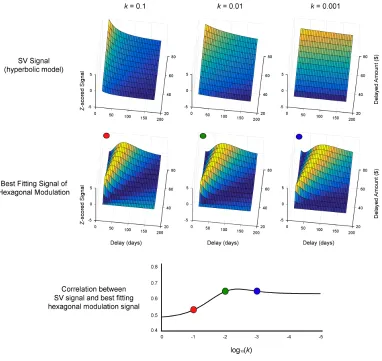
SV signals that assumed different discount rates. Figure 1 shows the correlation between
21
Figure 2-1. Correlation between subjective value signal and its most similar
hexagonal modulation signal. The top three panels show simulated SV signal for
various delayed amounts at various discount rates and the bottom three panels show the
best fitting hexagonal grid modulations. The correlation between the two signals are
provided below at various discount rates.
The correlation between the two signals ranges between r = 0.5 and r = 0.7 depending on
the discount rate. These correlations show that it is possible for hexagonal grid
22
modulation provides a possible alternative theoretical account of previously reported
activity correlated with SV.
Data.
We then examined whether hexagonal grid modulation does account for
SV-related activity in actual data, using an intertemporal choice fMRI dataset from Kable et
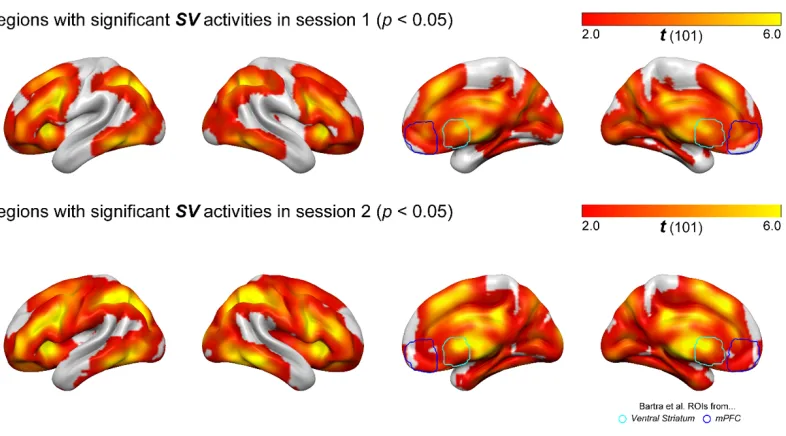
al. (2017). As previously reported, widespread regions show activity correlated with SV,
calculated for each subject individually using their discount rate. These activations are
consistent across two scanning sessions separated by 10 weeks (Figure 2).
Figure 2-2. Regions with significant SV correlation in session 1 and session 2. Top
panel shows the t-statistics (estimated from permutation) of regions that show significant
correlation with SV signal (p < 0.05 with permutation testing). Bottom panel shows the
23
SV signal (p < 0.05 with permutation testing). Bottom right brains show overlays of the
two ROIs from Bartra et al. (2013).
Though hexagonal grid modulation could in theory account for this SV-correlated
activity, we do not find that it does so in this dataset. Testing the hexagonal grid
modulation hypothesis requires two steps: (1) showing that activity in a region is
significantly explained by hexagonal grid regressors, and (2) showing that the grid angle
implied by those regressors is consistent across time. There are many brain regions in this
dataset where activity was significantly explained by the combination of two grid angle
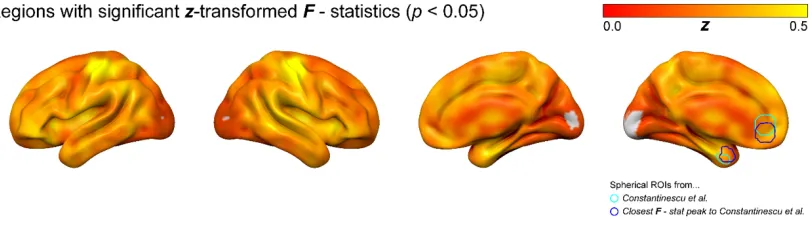
regressors ( ). In fact, almost the entire brain reaches statistical
significance for the F-test of these two regressors (Fig. 2). The peaks in this map include
mPFC and ERC, as well as several other regions including somatosensory cortex, right
TPJ, and dmPFC.
Figure 2-3. Z-transformed F-statistics of brain regions that are significantly
explained by two hexagonal grid modulation regressors. Most brain regions were
significant at p < 0.05 level. The right panel shows overlays of grid-cell ROIs: two
24
spherical ROIs defined from peak F-statistic activation that was closest to the coordinates
of Constantinescu et al. (2016).
However, though the two grid angle regressors account for significant variance in
activity in widespread regions including MPFC and ERC, the grid angle implied by these
regressors is not consistent across time as required by grid cell hypothesis. We evaluated
grid angle consistency in 4 ROIs in MPFC or ERC. These ROIs were defined based on
the peaks in the above analyses (Figure 3) or previous reports of grid cell like activity
(Constantinescu et al., 2016). We calculated the average grid angle in the first session’s
data in a given ROI, and then tested whether the activity in the second session was well
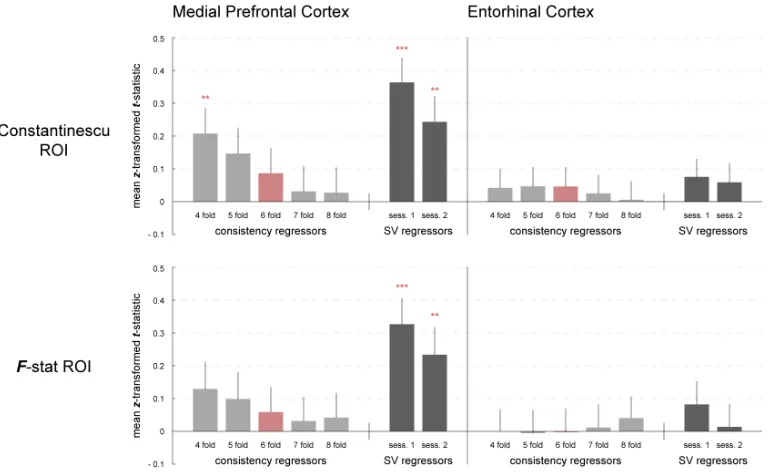
aligned with the first session’s grid angle. The grid angle consistency effect for hexagonal
modulation was not significant in any ROI, nor was this effect larger in size for the 6-fold
regressor than that observed for modulation at other folds (4 fold, 5-fold, 7-fold and
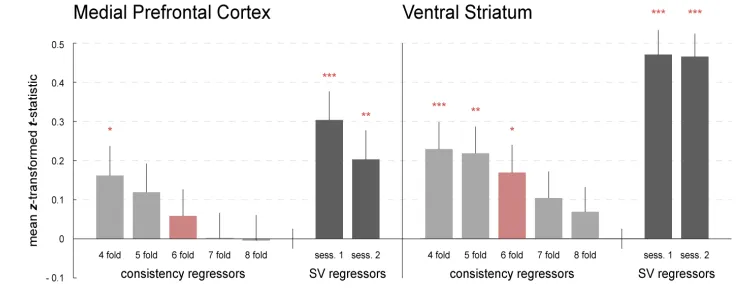
8-fold). (Figure 4). Note that the pattern observed in MPFC, of decreasing grid angle
consistency from 4-8 fold modulation, is predicted of a signal that is correlated with SV
25
Figure 2-4.Effect of grid-angle consistency and SV in grid cell ROIs. The top two
panels show consistency effects and SV effects in ROIs defined by a previous study by
Constantinescu et al. (2016), the middle two show consistency effects and SV effects in
ROIs defined by the closest F-statistic peaks to coordinates of Constantinescu et al.
(2016). The left panels show ROIs in mPFC and the right two panels show ROIs in ERC.
26
We also checked for grid angle consistency in regions previously associated with
SV via meta analysis by Bartra et al. (2013). In both mPFC and VS, there is no evidence
of hexagonal grid consistency and rather a similar pattern as in other mPFC ROIs:
decreasing grid angle consistency from 4-8 fold manipulation (Fig. 5).
Figure 2-5. Effect of grid-angle consistency and SV in SV-defined ROIs. The left
panel shows consistency effects and SV effects in mPFC ROI from Bartra et al. (2013)
and the right panel shows them in VS ROI from Bartra et al. (2013). * p < 0.05, ** p <
0.01, *** p < 0.001 (uncorrected t-test against zero).
Discussion
In this paper, we assessed the idea that vmPFC activity during decision-making,
commonly interpreted as subjective value, could be explained by a grid-like signal
27
is theoretically plausible, in that regressors from a subjective value model are highly
correlated with those of a grid-like navigational model, implying that past findings of
subjective value-related activity could in principle be consistent with the conceptual
navigational explanation. Thus, it was necessary to empirically test whether the
conceptual navigation model can, in fact, appropriately describe activity during
decision-making. We assessed the fit of this model, replicating the methods of Constantinescu et
al. (2016), to the fMRI data of a large dataset of subjects performing a standard
two-attribute decision task (intertemporal choice) across two sessions. In the critical analysis,
we assessed the consistency of subject-specific navigational angle within a region of
interest between two days of data collection, as well as whether 6-fold modulation (a
characteristic of grid cell activity) can describe activity better than modulations at other
frequencies. We found neither to be the case: the subject-specific navigational angle was
not consistent between two days of data collection, and 6-fold modulation did not
outperform control models with modulations at other frequencies. Thus, there is no
evidence that the grid-like conceptual navigational model explains vmPFC activity during
decision-making, and subjective value remains the best description of this activity.
Our results constrain the implications of Constantinescu et al. (2016), by limiting
the conditions under which grid-like activity is observed in the vmPFC. Our standard
intertemporal choice task is obviously very different from the sort of mental navigation
demanded in Constantinescu et al. (2016). Their study involved extensive learning of a
novel conceptual space by the participants prior to the navigational task; ours takes
advantage of a spontaneous one created by the option attributes as they are presented.
28
asked to “imagine” the progress of the stimulus, similar to spatial navigation tasks,
whereas we simply ask participants to make a choice. Nevertheless, the two tasks share
important similarities in the sense that both operate within a two-dimensional space
where grid-like representation of the task structure might be expected (Behrens et al.,
2018). Our finding means that the task space required when making decisions between
options is one scenario that does not provoke grid-like representations, and thus grid-like
coding cannot explain all cognitive activity in the vmPFC during such tasks.
One potential objection to our results might be that we do not see grid-like
representations because we are not considering either the appropriate two-dimensional
mental space or method of mental travel. One assumption made in our analyses was
linear spacing between each unit in amount and delay. As we know that human beings do
not generally perceive numbers in a linear way, but rather loglinearly as numbers become
larger (Zauberman, Kim, Malkoc, & Bettman, 2009), perhaps loglinear spacing would be
more appropriate. Indeed, in loglinear space, the grid-like model correlates even more
highly with the subjective value model (see Supplementary materials). However, when
tested empirically, the grid-like model with loglinear spacing also fails to account for
BOLD activity. Another assumption we made in our grid-like model was that the subjects
would “navigate” in a straight line between the immediate and delayed options. There are
other conceivable assumptions such an analysis could make; however, we chose these
assumptions precisely because they resulted in high correlations between the subjective
value and grid-like regressors, meaning that the latter could plausibly mimic past results
seen with the former. Thus, we have shown that the most plausible forms of grid-like
29
limitation of the intertemporal choice paradigm is that choices with tradeoffs necessarily
preclude “no-brainer” pairs (i.e., strictly dominated options), and therefore many of the
possible angles of conceptual travel in the attribute space. However, we could have
sufficiently detected evidence of sixfold modulation in the quadrant of angles we were
able to test.
The vmPFC is important for a wide variety of functions, from learning and
decision-making to schematic memory and social cognition. A possible explanation for
its diverse function is that different subregions of the vmPFC serve different functions.
Though we used the same ROI as in Constantinescu et al. (2016) for our analysis, fMRI
does not allow for the resolution necessary to differentiate between populations of
neurons that may have different functions. Another possibility that has been raised is that
the vmPFC represents a cognitive map of the inferred, hidden structure of the current task
(Behrens et al., 2018; Wilson, Takahashi, Schoenbaum, & Niv, 2014). We have presented
here evidence against the cognitive map based on a grid-like code during
decision-making. However, the nature of the coding scheme in vmPFC may instead depend on the
demands of the task at hand. Subjective value is a representation that has long been
known to afford useful features for decision-making; for example, using such a
representation of multi-attribute options and choosing the maximal valued option is
guaranteed to result in transitive, non-cyclical choices (Samuelson, 1937). Subjective
value may therefore be the most efficient representation of the option space for the kind
30 Supplemental Materials
Methods.
Theoretical correlation between subjective value and grid regressors in
logarithmic space.
In addition to grid angle analyses in the manuscript, we also considered the
possibility that the cognitive map may be represented in logarithmic scale such that the
hexagonal grid angle only manifests when one scales both axes of the space
logarithmically. Hence, we re-did all the analyses in the manuscript with logarithmic grid
angle calculations. All methods are as described in the manuscript except for the
calculation of angles which is now instead of
.
We first assessed the theoretical correlation between SV signal and hexagonal
grid modulation signal in logarithmic space. This was done by calculating a range of SVs
for a given discount rate and then fitting the best hexagonal modulation signal (methods
in main manuscript). The Pearson correlation between the SV and the fitted signal was
assessed as the similarity between the two signals.
Simulation of angle consistency in grid space assuming subjective value signal
We were interested in finding out how the grid-like regressor would behave in
within-subject, inter-session angle consistency analyses if the true underlying signal
actually represented subjective value. This simulation would be useful to compare against
our analyses in real data, to better assess how subjective value describes the pattern of
31
consistency analyses if we assume the true signal actually represented SV, in both regular
and logarithmic space. First, we calculated the SVs of 102 people in our dataset for both
session 1 and session 2. A Gaussian noise with was added on to the SV to
simulate fMRI noise in signal. Then, we estimated each individual’s grid angle based on
the first session’s simulated SV signal by running the following regression:
Based on the grid angle calculated from session 1 , we used the following regression
to assess the consistency effect:
The resulting t-statistic of was converted to a z-statistic and then compared across
different number of folds (n = 4 ~ 8).
Analysis of data
We proceeded largely in the same manner as the main manuscript. The only
difference being the calculation of grid angles (described above).
Results.
Theoretical correlation between subjective value and grid regressors in
32
Firstly, our simulations show that it is quite possible for logarithmic hexagonal
grid activity to mimic SV signal, even more so than non-logarithmic hexagonal grid
activity. Across different discount rates, we found that the correlation between
logarithmic grid angle activity and SV activity was very high (r = 0.8~1.0) and always
higher than the correlation between non-logarithmic grid angle activity and SV (Suppl.
33
Supplementary figure 1. Correlation between SV signal and its most similar
hexagonal modulation signal in regular and logarithmic space. The top three panels
show simulated SV signal for various delayed amounts at various discount rates and the
middle three panels show the best fitting hexagonal grid modulations in regular space.
34
space. The correlation between the two signals are provided below at various discount
rates.
Simulation of angle consistency in grid space assuming true subjective value
signal.
Our simulations of fMRI data that posit a true underlying SV signal shows that, in
this scenario, the grid regressors in regular, non-logarithmic space would show a pattern
of decreasing inter-session angle consistency as the folds of modulation of the angles
grow. The consistency is highest for the four-fold regressor, which is the regressor that
most closely resembles the pattern of subjective value (i.e., highest for low delays and
high amounts, then decreases as the delays grow). The six-fold regressor, in this case,
would not be the model with the highest angle consistency. In logarithmic space, the
inter-session angle consistency would be flat across modulations of folds, and the six-fold
regressor would once again not be the model with the highest consistency (Suppl. Figure
35
Supplementary figure 2. Angle consistency in simulated fMRI data positing
subjective value in non-logarithmic and logarithmic space. The left panel shows
results of the inter-session angle consistency analysis for simulated fMRI data that
assume underlying subjective value in non-logarithmic space, for the 6-fold grid
regressor and the control folds. The right panel shows the same in logarithmic space. In
both cases, the 6-fold regressor does not outperform the other folds for high angle
consistency.
Analysis of data.
Just like non-logarithmic grid angle regressors, the logarithmic grid angle
regressors ( and ) together were able to significantly explain variance in
36
Supplementary figure 3. Z-transformed F-statistics of Brain regions that are
significantly explained by two logarithmic hexagonal grid modulation regressors.
Most brain regions were significant at p < 0.05 level. The right panel shows overlays of
grid-cell ROIs: two spherical ROIs defined from peak coordinates of Constantinescu et
al. (2016) and two spherical ROIs defined from peak F-statistic activation that was
closest to the coordinates of Constantinescu et al. (2016).
We then repeated our analyses for inter-session, within-subject angle consistency
analyses for each ROI, but this time in logarithmic space (MPFC and ERC ROIs defined
from peak activation in Constantinescu et al., 2016 and from peak activation in our own
GLM analysis above; the MPFC and VS ROIs from Bartra et al., 2013). Just like in
analyses from non-logarithmic space, the grid angle consistency effect for hexagonal
modulation was not significant in any ROI for logarithmic space, nor was this effect
larger in size for the 6-fold regressor than that observed for modulation at other
37
Supplementary figure 4. Effect of grid-angle consistency and SV in grid cell ROIs.
The top two panels show consistency effects and SV effects in ROIs defined by a
previous study by Constantinescu et al. (2016), the middle two show consistency effects
and SV effects in ROIs defined by the closest F-statistic peaks to coordinates of
Constantinescu et al. (2016). The left panels show ROIs in mPFC and the right two
38
Supplementary figure 5. Effect of grid-angle consistency and SV in SV-defined
ROIs. The left panel shows consistency effects and SV effects in mPFC ROI from Bartra
39
Chapter 3
-- Timing of value representation in ventromedial
prefrontal cortex in a complex auction task
Abstract
The ventromedial prefrontal cortex (vmPFC) has been shown to be involved in
value representations in many studies of decision-making. However, these past studies
have mostly focused on choices between options, with very little work concerning
preference tasks other than choice (such as ratings or auction tasks). As psychological
theories have posited that those types of tasks involve different cognitive mechanisms
compared to choice tasks, it is necessary to investigate whether the neural response to
decisions in auction tasks would reflect the same value-related representations as have
been found in choice tasks, and when those representations might occur. We conduct a
study where participants play an auction task in which they selected the amount they
would be willing to receive in exchange for a fixed amount of $75 at a variable delay. We
find that vmPFC and other regions in the value network correlated with the participant’s
bid, and that this representation occurred only at the end of the bidding period – i.e., the
time of the bid submission. Our study shows that vmPFC activity reflects the same
value-based process in a complex auction task as in choice tasks, and supports the view that
40 Introduction
Previous fMRI studies have shown that activity in the ventromedial prefrontal
cortex is correlated with value across many different domains. Typically, participants in
these experiments are given a choice, usually between two options (Levy & Glimcher,
2012). These studies have shown that the ventromedial prefrontal cortex is a region that
appears to overlap in reward representation for various categories of rewards including
foods, trinkets, attractive faces, and monetary gambles, with support for domain-general
valuation across both univariate studies and multivariate studies (Chib et al., 2009;
Howard et al., 2015; Pegors et al., 2015). This region thus may make common
comparisons between dissimilar goods (Bartra et al., 2013), and this representation scales
with a participant’s subjective preferences (Kable & Glimcher, 2007; Tom et al., 2007).
Choices are, of course, not the only way people make decisions. We haggle over
treasures at a flea market, put a bid on a house, and rate products or services online.
These other forms of decisions have been studied in the laboratory using different kind of
auction, rating or matching tasks. Such studies have demonstrated that different cognitive
mechanisms can be engaged depending on the form of the decision. For instance,
participants assign greater weight to an attribute when it is compatible with the response
scale , or use a lexicographic step in choice but not matching tasks (Fischer & Hawkins,
1993; Tversky et al., 1988). Though this literature has made a clear case that decisions
can depend on the manner in which they are elicited, little is known about how preference
is expressed in the brain in tasks other than choice. Though several fMRI studies
technically involve ratings (Hare, Camerer, & Rangel, 2009) or auctions (Plassmann et
41
$0-$4) making them similar to a choice between four or five options. Whether the same
neural mechanisms are active in more complex and cognitively demanding auction or
matching tasks therefore remains an open question. Answering this question would
inform our understanding of how decisions may be constructed depending on the task
demands.
In this study, we ask participants to bid on monetary rewards at different delays
while measuring functional activity with BOLD fMRI. This task has two features of
interest that are novel. First, in this complex auction task there were a large array of
possible responses (from $0-$75; Cooper, Kable, Kim, and Zauberman (2013)), making
the task similar to bidding and matching tasks studied behaviorally. Second, the response
period for up to 10 seconds, so that the timing of neural signals within the task can be
reasonably studied given the temporal resolution of fMRI. Thus, we have a valuable
paradigm that is set to reveal the a) manner of value representation in a complex bidding
task and b) its onset during the decision process. With this task, we seek to answer two
questions: does the valuation network in the brain respond in a similar manner in this
auction task as it does during choice? And, if so, at which point in time during the task
does this signal occur?
42
Forty participants (16 male; 88% right handed) were recruited for this study from
University of Pennsylvania and surrounding community. Participants had a mean age of
21.75 years (SD = 3.27 years). Participants were compensated for their time on two
testing sessions; they also received incentive payments based on their decisions in auction
task. All participants provided consent in accordance with the Institutional Review Board
of the University of Pennsylvania.
Task.
All subjects completed two sessions involving different tasks: a subjective time
estimation task (first session) and intertemporal decision-making task (second session).
The two sessions were separated by an average of 10 d (SD 5 d, range, 4-21 d). Only the
analysis of the latter task is discussed in this paper. For discussion of the subjective time
estimation task, as well as behavioral results from the intertemporal decison task, see
Cooper et al. (2013).
In the intertemporal decision task, participants bid on delayed monetary rewards.
They selected the amount they would be willing to receive immediately in exchange for a
fixed amount of $75 at a variable delay (e.g., “I feel indifferent between receiving $75 in
28d and receiving $? now”). Bids were entered using an interface that allowed subjects to
scroll through possible values. The bid amount always began at the maximum amount of
$75 now. Participant used two buttons to increase or decrease their bid and a third button
to submit their bid.
The intertrial interval was variable, between 0.5 and 13.5s. In the “question