i Jesus Caesar:
A Roman Reading of John 18:28—19:22
Rev Laura J. Hunt, MTS
Supervised by
Dr Catrin H. Williams & Dr Kathy Ehrensperger
Submitted in partial fulfilment for the award of the degree of Doctor of Philosophy by Research
University of Wales Trinity Saint David.
v
In memory of my father, James Rhen Vance
vii
Thesis Abstract
ix
Acknowledgements
Anyone who has engaged in research knows the immense value of libraries and those who work in them. It is no exaggeration to say that without the libraries of Moody Theological Seminary, the University of Michigan, Spring Arbor University and the Milan Public Library this thesis could not have been written. Special thanks to Joe Cataio from Crowell Library in Chicago and Kami Moyer from White Library in Spring Arbor who worked miracles to get me any book or article I asked for, no matter how obscure, Joe for the first couple of years and Kami for the last several. Thank you as well to Andrea Schultz who tirelessly renewed hundreds of books by hand for me, and to Micah Jelinek who regularly added to the Moody Michigan collection based on my book requests. Finally, I am so incredibly grateful to the many people working in the ILL system at Milan Public Library and the book request system at Buhr Shelving Facility in Ann Arbor. Your tireless, faithful work was a mainstay of my research, and your smiles when I picked books up were a regular source of encouragement. I appreciate you more than you could know.
The ideas presented in this thesis percolated over a period of years and therefore are infused with the influence of the key scholars I interacted with during that time. Two in particular stand out. J. Brian Tucker encouraged my early ideas and provided an environment where I, and they, could grow. He has been a gracious exemplar of a scholar, and a source of encouragement throughout. More directly involved in this work, Catrin Haf Williams has been the best of all possible supervisors. I enjoy our time together, yet she has drawn me on to more and better work than I knew I could accomplish. She is knowledgeable, insightful and unfailingly kind. I gratefully acknowledge my indebtedness and take full responsibility for any and all shortcomings.
xi
Table of Contents
Declaration Sheet ... iii
Thesis Abstract ... vii
Acknowledgements ... ix
Table of Contents ... xi
Abbreviations ... xv
Table of Figures ... xxi
1. The Romans, Their Language, and the Gospel of John ... 1
1.1. Empire Studies ... 3
1.2. Three Questions Raised by Empire Studies ... 6
1.2.1. Politics and religion ... 7
1.2.2. Interpretation ... 9
1.2.3. Intersectionality in the Roman empire ... 16
1.3. The Cultural Effects of Language Contact on the Gospel of John ... 20
1.3.1. Antilanguage ... 21
1.3.2. Hidden transcripts ... 26
1.3.3. Social identity theory ... 33
1.4. Conclusion and Thesis Outline ... 35
2. The Semiotics of Multilingual Communication ... 39
2.1. An Encyclopaedia of Cultural Units ... 39
2.1.1. Cultural units ... 40
2.1.2. Encyclopaedias and universes of discourse ... 42
2.1.3. Multiple cultures, multiple cultural units ... 47
2.2. Languages in Contact ... 55
2.2.1. Definitions: language, bilingualism and domain ... 55
2.2.2. Code-switching for specificity ... 60
2.3. Literary Allusions in Semiotic Analysis ... 66
2.3.1. Literary allusions ... 69
2.3.2. The semiotics of allusions ... 73
2.4. Conclusion ... 81
3. Latin Intersections in the Eastern Roman Empire and in the Gospel of John ... 83
3.1. Latin and the Cities Connected with the Composition of John’s Gospel ... 83
3.1.1. Ephesus ... 86
3.1.2. Antioch ... 94
3.1.3. Alexandria ... 100
xii
3.2. Latinisms and the Text of John’s Gospel ... 109
3.2.1. Code-switches ... 110
3.2.2. Syntactical Latinisms ... 118
3.2.3. Calques and language shift ... 127
3.3. Conclusion ... 131
4. Legitimating Jesus as Caesar in the Gospel of John ... 133
4.1. Imperator or Rex ... 134
4.2. Βασιλεύς in John 18:33-37 ... 138
4.3. Jesus’ Legitimation as Caesar ... 144
4.3.1. The Roman recusatio ... 146
4.3.2. John 6:15 through Roman eyes... 149
4.3.3. The consensus of the gods: Prophecies, wonders and signs ... 152
4.3.4. The consensus of the people: Adventus and John 12:12-19 ... 159
4.4. Jesus as Caesar in John 18:38—19:22 ... 171
4.4.1. Jesus as divi filius ... 171
4.4.2. The ἐξουσία of Jesus ... 178
4.5. Conclusion ... 183
5. Presenting Jesus as Caesar in John 19:2-5 ... 185
5.1. Pledging Faith: John 19:2-3 ... 186
5.1.1. Roman soldiers’ acclamations ... 187
5.1.2. Jesus’ triumphal attire ... 191
5.1.3. The soldiers’ words and actions ... 198
5.1.4. Irony, hidden transcripts, and truth ... 203
5.1.5. Mid-chapter conclusions ... 210
5.2. Aeneid Allusion in John 19:5 ... 211
5.2.1. Awareness ... 215
5.2.2. Recognition ... 223
5.2.3. Understanding ... 231
5.2.4. Interpretation ... 233
5.2.5. Re-interpretation of the greater context ... 234
5.3. Conclusion ... 246
6. Pilate Testing Loyalties: An Inferential Walk through John 18:28—19:22 ... 249
6.1. Filling in the Gaps ... 250
6.1.1. The auditors’ previous knowledge of Jesus ... 250
6.1.2. The Roman cultural unit of a governor: keeping the peace ... 254
xiii
6.1.4. The Roman cultural unit of a governor: the power of the people ... 262
6.1.5. Claims of kingship and Roman treason ... 264
6.2. An Inferential Walk through John 18:28—19:22 ... 266
6.2.1. Cycle 1: Pilate tests the loyalty of ‘the Jews’ to Jesus ... 272
6.2.2. Cycle 2: Pilate tests the loyalty of ‘the Jews’ to Caesar ... 283
6.3. Conclusion ... 324
7. A Hidden Transcript That Addresses Identity ... 327
7.1. Ethnic Identity in John 18:28—19:22 ... 328
7.1.1. Language and developing Roman identity ... 329
7.1.2. Roman identity discourse ... 336
7.1.3. Jewish identity discourse... 341
7.1.4. Recategorization in John 18:28—19:22 ... 346
7.1.5. Law in John 18:28—19:22 ... 357
7.2. A Hidden Transcript ... 364
7.2.1. A hidden transcript that negotiates empire... 364
7.2.2. A hidden transcript that recategorizes violence ... 371
7.2.3. A hidden transcript for persecuted Jesus-believers ... 376
7.2.4. A hidden transcript that creates honour for the marginalized ... 383
7.2.5. A hidden transcript that calls for the vulnerability of the powerful ... 386
7.3. Conclusion ... 392
8. Concluding Synthesis ... 395
Bibliography ... 401
xv
Abbreviations
All abbreviations in this work follow The SBL Handbook of Style: For Biblical Studies and Related Disciplines, edited by Billie Jean Collins, Bob Buller, and John F. Kutsko, 2nd edition (Atlanta: SBL Press, 2014). They are reproduced, with some additions and corrections:
AB Anchor Bible
ABD Anchor Bible Dictionary. Edited by David Noel Freedman. New York: Doubleday, 1992.
ABRL Anchor Bible Reference Library
AE Année épigraphique
AGJU Arbeiten zur Geschichte des antiken Judentums und des Urchristentums (Ancient Judaism and Early Christianity)
AJP American Journal of Philology AnBib Analecta Biblica
AnBoll Analecta Bollandiana
ANRW Austieg und Niedergang der Römischen Welt: Geschichte und Kultur Roms im Spiegel der neueren Forschung. Part 2, Principat. Edited by Hildegard Temporini and Wolfgang Haase. De Gruyter: Berlin, 1972– APF Archiv für Papyrusforschung
BBB Bonner biblische Beiträge
BDAG Greek-English Lexicon of the New Testament and Other Early Christian Literature. Frederick W. Danker, Walter Bauer, William F. Arndt, and F. Wilbur Gingrich. 3rd ed. Chicago: University of Chicago Press, 2000. BDF A Greek Grammar of the New Testament and Other Early Christian
Literature. Friedrich Blass, Albert Debrunner, and Robert Walter Funk. Chicago: University of Chicago Press, 1961.
BDR Grammatik des neutestamentlichen Griechisch. Friedrich Blass, Albert Debrunner, and Friedrich Rehkopf. 15th edition. Göttingen: Vandenhoeck & Ruprecht, 1979.
BECNT Baker Exegetical Commentary on the New Testament BETL Bibliotheca ephemeridum theologicarum Lovaniensium
BGU Aegyptische Urkunden aus den königlichen staatlichen Museen zu Berlin, Griechische Urkunden. 9 vols. Berlin: Weidmann, 1895-1937.
Bib Biblica
BibInt Biblical Interpretation BibInt Biblical Interpretation Series
BNTC Black’s New Testament Commentaries BTB Biblical Theology Bulletin
BZ Biblische Zeitschrift
BZNW Beihefte zur Zeitschrift für die neutestamentliche Wissenschaft CAH Cambridge Ancient History
CBET Contributions to Biblical Exegesis and Theology CBQ Catholic Biblical Quarterly
CdE Chronique d’Égypte
ChLA Chartae latinae antiquiores. Edited by Albert Bruckner and Robert Marichal et al. 49 Vols. Dietikon-Zurich: Graf, 1954-98.
CII See CIJ
xvi CLA Codices latini antiquiores
CLSCC Cognitive Linguistic Studies in Cultural Contexts ClQ Classical Quarterly
CNT Commentaire du Nouveau Testament
ConBNT Coniectanea Neotestamentica or Coniectanea Biblica: New Testament Series
C.P. Collected Papers. Charles Sanders Peirce. CP Classical Philology
C. Pap. Jud. Corpus papyrorum Judaicarum CPL Corpus papyrorum latinarum CPR Corpus papyrorum Raineri
DELG Dictionnaire étymologique de la langue grecque: histoire des mots. Pierre Chantraine. 4 vols. Paris: Klincksieck, 1968-77.
DHA Dialogues d’histoire ancienne
DLNT Dictionary of the Later New Testament and Its Developments. Edited by R. P. Martin and P. H. Davids. Downers Grove, IL: InterVarsity Press, 1997.
DNTB Dictionary of New Testament Background. Edited by Craig A. Evans and Stanley E. Porter. Downers Grove, IL: InterVarsity Press, 2000.
EAGLL Encyclopedia of Ancient Greek Language and Linguistics. Edited by Georgios K. Giannakis. 2013. Online. Access provided by University of Wales Trinity Saint David.
EAH The Encyclopedia of Ancient History. Edited by Roger S Bagnall et al. Hoboken, NJ: Wiley, 2013.
ELL Encyclopedia of Language and Linguistics. Edited by Keith Brown. 2nd ed. Oxford: Elsevier, 2006. Online. Access provided by the University of Michigan.
ETL Ephemerides theologicae Lovanienses ExAud Ex auditu
ExpTim Expository Times
HBT Horizons in Biblical Theology
Historia Historia: Zeitschrift für alte Geschichte HSCP Harvard Studies in Classical Philology
HThKNT Herders Theologischer Kommentar zum Neuen Testament HTR Harvard Theological Review
HTS Harvard Theological Studies HvTSt Hervormde teologiese studies
IAph2007 Inscriptions of Aphrodisias. Edited by Joyce Reynolds, Charlotte Roueché, and Gabriel Bodard. 2007. Online:
http://insaph.kcl.ac.uk/iaph2007 IBS Irish Biblical Studies
ICC International Critical Commentary IEph Die Inschriften von Ephesos IG Inscriptiones graecae
IGLS Inscriptions grecques et latines de la Syrie
IGR Inscriptiones graecae ad res Romanas pertinentes ILS Inscriptiones latinae selectae
IMagnMai Die Inschriften von Magnesia am Mäander JAAR Journal of the American Academy of Religion JBL Journal of Biblical Literature
xvii JHS Journal of Hellenic Studies JRA Journal of Roman Archaeology JRS Journal of Roman Studies
JSJ Journal for the Study of Judaism in the Persian, Hellenistic, and Roman Periods
JSNT Journal for the Study of the New Testament
JSNTSup Journal for the Study of the New Testament Supplement Series JSOTSup Journal for the Study of the Old Testament Supplement Series JSP Journal for the Study of the Pseudepigrapha
JTS Journal of Theological Studies KTAH Key Themes in Ancient History
L&N Greek-English Lexicon of the New Testament: Based on Semantic
Domains. Edited by Johannes P. Louw and Eugene A. Nida. 2nd ed. New York: United Bible Societies, 1989.
LCL Loeb Classical Library
LD A Latin Dictionary: Founded on Andrews’ Edition of Freund's Latin Dictionary. Charlton T. Lewis and Charles Short. Oxford: Clarendon, 1879. Online. Perseus Digital Library.
LDAB ‘Leuven Database of Ancient Books’. Edited by Willy Clarysse et al. http://www.trismegistos.org/ldab/index.php.
LNTS Library of New Testament Studies
LS A Greek-English Lexicon. Henry George Liddell and Robert Scott. 9th ed. Oxford: Clarendon, 1968.
MH Museum Helveticum
MP3 ‘Le fichier Mertens-Pack3’. Edited by Marie-Hélène Marganne and David Linotte. This database is a continuation of previous editions of The Greek and Latin Literary Texts from Greco-Roman Egypt. Roger Ambrose Pack. 2nd ed. (Ann Arbor: University of Michigan Press, 1965). The numbering system used in this second edition has been taken over and expanded for the online database, but the numbers from the first edition (1952) are different. These last are not referenced in this thesis.
http://promethee.philo.ulg.ac.be/cedopalMP3/indexanglaisMP3.aspx. NA28 Nestle-Aland Novum Testamentum Graece Greek-English New Testament.
Edited by Barbara Aland et al. 28th ed. Stuttgart: Deutsche Bibelgesellschaft, 2012.
NCB New Century Bible
Neot Neotestamentica
NewDocs New Documents Illustrating Early Christianity. Edited by Greg H. R. Horsley and Stephen Llewelyn. North Ryde, NSW: The Ancient History Documentary Research Centre, Macquarie University, 1981-
NICNT New International Commentary on the New Testament
NIDNTT New International Dictionary of New Testament Theology. Edited by Colin Brown. 4 vols. Grand Rapids: Zondervan, 1975-1978.
NIGTC New International Greek Testament Commentary
NovT Novum Testamentum
NovTSup Supplements to Novum Testamentum NTL New Testament Library
NTS New Testament Studies
NTTSD New Testament Tools, Studies, and Documents
xviii
OCCL The Oxford Companion to Classical Literature. Edited by M. C.
Howatson. 3rd ed. Oxford: Oxford University Press, 2011. Online. Access provided by University of Wales Trinity Saint David.
OCD The Oxford Classical Dictionary. Edited by Simon Hornblower, Antony Spawforth, and Esther Eidinow. 4th ed. Oxford: Oxford University Press, 2012. Online. Access provided by University of Wales Trinity Saint David.
OCM Oxford Classical Monographs
ODB The Oxford Dictionary of Byzantium. Edited by Alexander P. Kazhdan. Oxford University Press, 2005. Online. Access provided by Spring Arbor University.
ODCC The Oxford dictionary of the Christian Church. Edited by F. L. Cross and E. A. Livingstone. 3rd ed. Oxford: Oxford University Press, 2005.
ODE Oxford Dictionary of English. Edited by Stevenson, Angus. 3rd ed. Oxford: Oxford University Press, 2010. Online. Access provided by University of Wales Trinity Saint David.
ODLT The Oxford Dictionary of Literary Terms. Chris Baldick. 3rd ed. Oxford: Oxford University Press, 2008. Online. Access provided by University of Wales Trinity Saint David.
OEAGR The Oxford Encyclopedia of Ancient Greece and Rome. Edited by
Michael Gagarin. Oxford: Oxford University Press, 2010. Online. Access provided by University of Wales Trinity Saint David.
OLD Oxford Latin Dictionary. Edited by P. G. W. Glare. Oxford: Oxford University Press, 1982.
O. Wilck. Griechische ostraka aus Aegypten und Nubien
PC Brill’s New Pauly: Antiquity Volumes. Hubert Cancik and Helmuth Schneider. Brill Online, 2006. Access provided by University of Wales Trinity Saint David.
PCPhS Proceedings of the Cambridge Philological Society P. Masada Masada II: The Yigael Yadin Excavations 1963-1965 P. Oxy. The Oxyrhnchus Papyri
P. Ross. Georg.
Papyri russischer und georgischer P. Lond. Greek Papyri in the British Museum
PSI Papiri greci e latini: Pubblicazioni della Società Italiana per la Ricerca dei Papiri Greci e Latini in Egitto
P. Théad Papyrus de Théadelphie
PTSDSSP Princeton Theological Seminary Dead Sea Scrolls Project P. Wisc. The Wisconsin Papyri
R&T Religion and Theology
RB Revue biblique
RBPH Revue Belge de philologie et d’histoire / Belgisch tijdschrift voor filologie en geschiedenis
REG Revue des études grecques ResQ Restoration Quarterly RevPhil Revue de philologie
RGRW Religions in the Graeco-Roman World RSR Revue de science religieuse
SBL Society of Biblical Literature
xix
SEP The Stanford Encyclopedia of Philosophy. Edward N. Zalta. Stanford: Stanford University, 2011. http://plato.stanford.edu/
SJ Studia Judaica
SNTA Studiorum novi testamenti auxilia
SNTSMS Society for New Testament Studies Monograph Series
SP Sacra pagina
SR Studies in Religion/Sciences religieuses
TANZ Texte und Arbeiten zum neutestamentlichen Zeitalter TAPA Transactions of the American Philological Association
THEMAM Textes, histoire et monuments de l'Antiquité et du Moyen Age THKNT Theologischer Handkommentar zum Neuen Testament
TLG ‘Thesaurus Linguae Graecae® Digital Library’. Edited by Maria C. Pantelia. University of California, Irvine. http://www.tlg.uci.edu TM ‘Trismegistos’. Edited by Mark Depauw.
http://www.trismegistos.org/index.html. TSAJ Texte und Studien zum antiken Judentum
UBS5 The Greek New Testament. Edited by Barbara Aland et al. 5th ed. Stuttgart: Deutsche Bibelgesellschaft, 2014.
USQR Union Seminary Quarterly Review VTSup Supplements to Vetus Testamentum
WGRWSup Writings from the Greco-Roman World Supplement Series WTJ Westminster Theological Journal
WUNT Wissenschaftliche Untersuchungen zum Neuen Testament WW Word & World
ZPE Zeitschrift für Papyrologie und Epigraphik ZTK Zeitschrift für Theologie und Kirche
Translations of Aristides are from Aristides, P. Aelius. The Complete Works: Volume II. Orations XVII-LIII. Translated by Charles A. Behr. Leiden: Brill, 1981.
Translations of John Malalas are from The Chronicle of John Malalas. Translated by Elizabeth Jeffreys, Michael Jeffreys, and Roger Scott. Byzantina Australiensia 4. Melbourne: Australian Association for Byzantine Studies, 1986.
xxi
Table of Figures
Figure 1. Cultural units for “king” and “world” within some of the cultural encyclopaedias
of the first and second century CE ... 49
Figure 2. The opening of the Roman encyclopaedia in John 18:28--19:22 ... 66
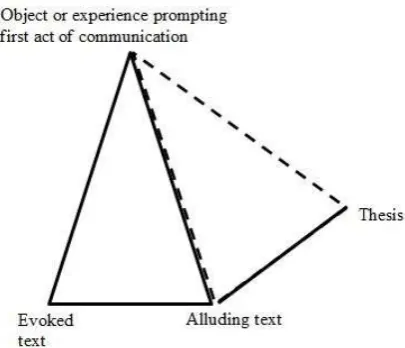
Figure 3. Ben-Porat's 4 steps in activating a literary allusion ... 71
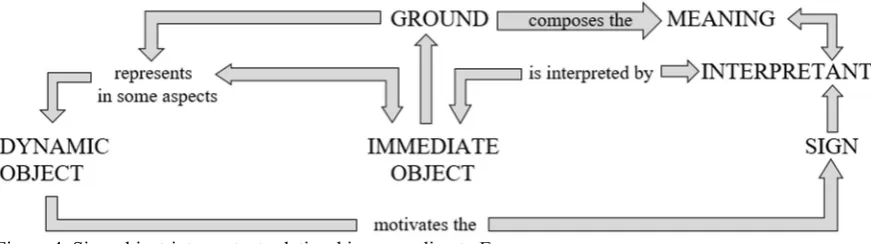
Figure 4. Sign-object-interpretant relationships according to Eco... 74
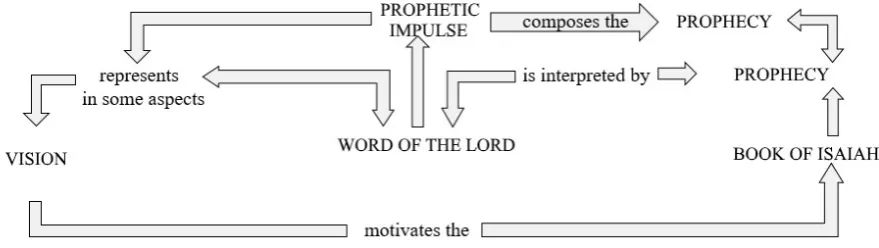
Figure 5. Sign-object-interpretant relationships in the production of Isaiah ... 76
Figure 6. Unlimited semiosis motivated by the same object ... 78
Figure 7. Semiotics of allusion motivated by the same object ... 79
Figure 8. Semiotics of allusion motivated by different objects ... 79
Figure 9: Latin and Latin-Greek Inscriptions in EDH in 2014 ... 88
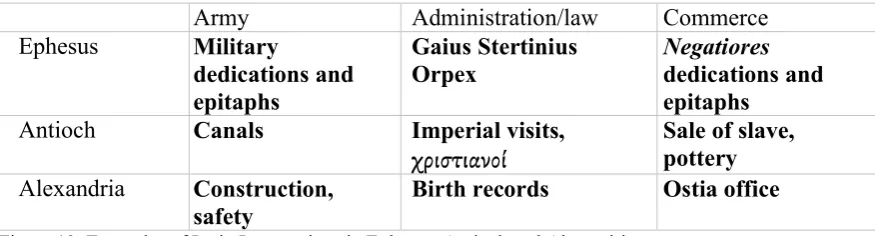
Figure 10: Text of Epitaph of Gaius Stertinius Orpex ... 93
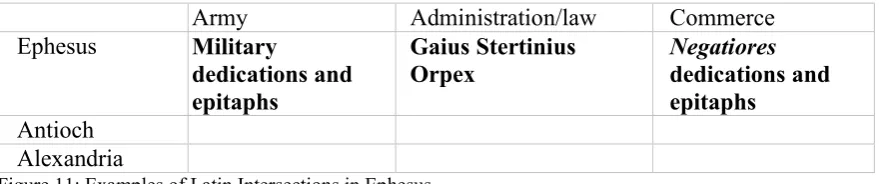
Figure 11: Examples of Latin Intersections in Ephesus ... 94
Figure 12: Examples of Latin Intersections in Ephesus and Antioch ... 100
Figure 13: Examples of Latin Intersections in Ephesus, Antioch and Alexandria ... 105
Figure 14: ὅτι in the Gospels ... 125
Figure 15: ἵνα in the Gospels ... 125
Figure 16: Measurements in the NT According to Language Origin ... 126
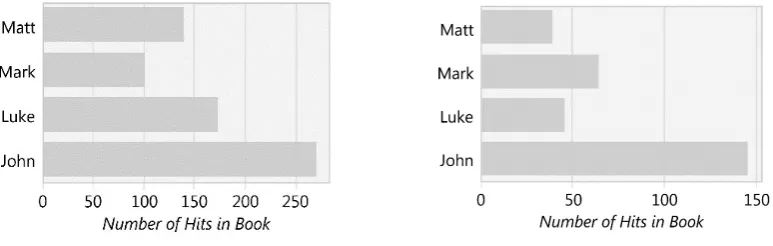
Figure 17: Spread of Latinisms in Mark ... 130
Figure 18: Latin Spread in John ... 131
Figure 19: The Abductive Cycle ... 143
Figure 20. Unlimited semiosis motivated by the same object ... 237
Figure 21: Unlimited semiosis in John 18:28--19:22 ... 237
Figure 22: Sign-object-interpretant relationships in John 18:28—19:22 ... 239
Figure 23. Semiotics of allusion motivated by different objects ... 239
xxii
Figure 25: Robertson-Manning diagram in John 19:2-5 frame ... 241
Figure 26: Robertson-Manning diagram in John 18:28—19:22 frame ... 242
Figure 27: Robertson-Manning diagram in Gospel of John frame ... 246
Figure 28: The structure of the Johannine trial narrative according to various scholars ... 267
Figure 29: Scene divisions in John 18:28--19:22 ... 271
Figure 30: Sign-object-interpretant for identity construction in the Fourth Gospel ... 350
Figure 31: All Johannine characters constructed as Jewish except the Roman, Jesus ... 352
Figure 32: Jesus portrayed as Caesar ... 353
1
1. The Romans, Their Language, and the Gospel of John
‘Die Rezeption der Äußerung eines anderen ist nicht nur ein hermeneutisches, sondern
grundlegend immer auch ein ethisches Problem. Wie verhalte ich mich zu einem Anderen?’.1
Alkier proposes that Umberto Eco’s semiotic theory addresses this issue by positing an interpretation of the text that, on the one hand, always points back to an outside world that prompted the creation of the text, but that, on the other hand, continues to correct itself through an interpreting community.2
The social presence of the Roman empire in the world outside the Gospel of John has been emphasized, for example in Warren Carter’s work.3 However, the Roman presence in the Eastern Mediterranean in the first century CE also affected language use. On the one hand, Latin words and some Latin grammatical constructions entered the vocabulary and impacted the syntax of Koine Greek. Additionally, the presence of Romans in administration, law, the army and commerce made knowledge of the Roman cultural encyclopaedia important for provincial retainers. These cultural and linguistic resources, therefore, may have been available to the composer(s) of the Gospel of John. The text itself, in John 18:28—19:22, references a Roman setting and raises Roman concerns, such as rebellion (John 18:36, 40) and the legitimation of authority (19:11-12). Thus, more work is needed to hear not what the text says about Roman power, but what it says to those embedded in Roman culture.
In New Testament scholarship, however, Roman culture is often eclipsed by Greek. When Wayne Meeks wrote The Prophet-King in 1967, he proposed that surveys of Johannine sources should include ‘geographically, the whole Mediterranean world’ and
1 Stefan Alkier, ‘Ethik der Interpretation’, in Der eine Gott und die Welt der Religionen: Beiträge zu
einer Theologie der Religionen und zum interreligiösen Dialog, ed. Markus Witte (Würzburg: Religion & Kultur, 2003), 21-41 (23).
2 Alkier, ‘Ethik’, 26-32. The word ‘community’ will be used in this thesis to designate such an
interpretive community (see Section 1.2.2, especially n. 48), without taking a position on its cohesiveness, either geographical or ideological (Section 7.1.4).
2
‘chronologically … the Roman-Hellenistic period’.4 He then listed the possibilities for ‘dominant influences’ as ‘“Jewish” or “Hellenistic”, “Palestinian” or “Diaspora” traditions’.5 Thus, although ‘Roman’ is not only referenced but prioritized in his terminology, it is almost absent from his discussion.6 He only mentions Roman traditions with reference to the question of who is sitting at the βῆμα in the trial scene (John 19:3), and he does so only à propos historical ‘verisimilitude’.7 Meeks’s work is highlighted in this discussion only as a representative example of this phenomenon.8 Indeed, despite the ostensible presence of the Roman empire in the term ‘Greco-Roman’, when it is used the ‘Greco’ often eclipses the ‘Roman’.
Some scholars, rather than omitting attention to the Roman empire, have specifically focused on it. The present thesis agrees with these ‘empire studies’ (see Section 1.1) in so far as they recognize the Roman empire as an inescapable presence in the first and second century CE Mediterranean world. It argues that Roman culture and the Latin language must be added among the traceable influences on the text of the Gospel of John. This chapter will start by situating this assertion within current discussions, first within the category of empire studies. These have raised important questions about John’s engagement vis à vis the Roman
4 Wayne A. Meeks, The Prophet-King: Moses Traditions and the Johannine Christology, ed. W. C.
van Unnik, NovTSup 14 (Leiden: Brill, 1967), 30, emphasis mine.
5 Meeks, Prophet-King, 30.
6 See, similarly, Jerome H. Neyrey, The Gospel of John, ed. Ben Witherington, III, The New
Cambridge Bible Commentary (New York: Cambridge University Press, 2007), 30.
7 Meeks, Prophet-King, 74. The authorship of John is beyond the scope of this study, and the use of
‘John’ throughout the thesis should not be construed as implying that authorship is singular or known.
8 See also, for example, Christopher Stanley’s chapter on ‘citation technique in Greco-Roman
3
empire, typically focusing on issues of power.9 This thesis enters this conversation, however, via the Romans’ language and argues that Greek contact with Latin in the Eastern Mediterranean amounts to an intersection of language and culture that provides important data for understanding the text of the Fourth Gospel, especially John 18:28—19:22. Thus, recent studies on language in John will be addressed and the proposal that the Fourth Gospel is written in an antilanguage will be critiqued. This chapter will suggest that the concept of a hidden transcript is more relevant to the Fourth Gospel, and discuss a connection between hidden transcripts and social identity theory, before giving an overview of the rest of the thesis.
1.1. Empire Studies
Some contributions to empire studies explicitly use the anti-imperialism they find in ancient texts to combat imperialism today. For example, the Union Theological Seminary conference held in 2004 was ‘convened at a time where empire had re-emerged as one of the most dangerous and frightening phenomena of our time’ and ‘addressed directly the ways the New Testament today can help shape ways of resisting and negotiating the realities of arrogant American power’.10 Interpreters who offer anti-imperial readings are often similarly explicit about the applications of their results to the modern world. Warren Carter, for example, suggests that his work, The Roman Empire and the New Testament, ‘provid[es] something of … an agenda for ecclesial communities to pursue in forming alternative
9 For the earliest manuscript evidence connecting the name of John with this Gospel, see the discussion
of Udo Schnelle. Note, however, that he rightly emphasizes that ‘es handelt sich um das eine Evangelium, so wie es Johannes erzählt’ [Das Evangelium nach Johannes, ed. Jens Herzer and Udo Schnelle, THKNT 4 (Leipzig: Evangelische Verlagsanstalt, 1998), 346]. It is his function as a re-teller of the story that will be emphasized in this thesis, and the name John will be retained for convenience.
10 Hal Taussig, ‘Prologue: A Door Thrown Open’, USQR 59.3-4 (2005): 1-5 (1). Others that take this
4
worldviews and communities that embody alternative, anti-imperial practices’.11 This passion for changing oppressive systems in today’s world is valuable and necessary. However, in reading these authors, one often feels that one is reading exegesis written with one eye in each world.12 My methodology, grounded in Peirce’s semiotics and detailed in the next chapter, is designed to keep both eyes as much as possible in binoculars that point backwards.13
Scholars such as those mentioned above, that is, those explicitly critical of modern imperialism, have sometimes been accused of having overt contemporary biases.14 Yet all analyses can lead to this-century applications.15 Christopher Bryan, for example, does not find in the biblical text any interest in critiquing specific ‘power structures’ by proposing their replacement.16 He does not see Jesus as apolitical, yet he asserts that ‘Jesus does not question authority’, neither that of ‘Rome’s client Herod’, nor that of ‘Rome’s collaborators the Sadducean high-priests’, nor that of ‘the scribes’, nor that of ‘pagan Caesar within the spheres that God has allotted to him’.17 His conclusions are extended to the present day in his ‘unscientific postscript’.
[T]he biblical tradition subverts human order not by attempting to dismantle it or replace it with other structures but by consistently confronting its representatives with the truth about its origin and its purpose. Its origin is that God wills it, and its purpose is to serve God’s glory by promoting God’s
11 Carter, Roman, 143. For further descriptions and analyses of these approaches, see Stephen D.
Moore, Empire and Apocalypse: Postcolonialism and the New Testament, ed. J. Cheryl Exum, Jorunn Økland, and Stephen D. Moore, The Bible in the Modern World 12 (Sheffield: Sheffield Phoenix Press, 2006), 3-23.
12 This is not necessarily a criticism. Such an analysis is sometime purposeful, such as with new
historicist approaches [Peter Barry, Beginning Theory: An Introduction to Literary and Cultural Theory (Manchester: Manchester University Press, 2009), loc 3145].
13 This does not negate the impossibility of doing this completely; see further below.
14 McKnight and Modica, for example, note that ‘at times empire criticism sounds too much like one’s
personal progressive, left-wing, neo-Marxist, or whatever, politics’ [‘Introduction’, in Jesus Is Lord, Caesar Is Not: Evaluating Empire in New Testament Studies, ed. Scot McKnight and Joseph B. Modica (Downers Grove, IL: InterVarsity Press, 2013), 15-21 (19)].
15 In discussion, Brian Walsh pointed out, for example, that all analyses have political implications
[‘Research Group: Ancient Historiography and the New Testament’ (review panel of McKnight and Modica, Jesus, presented at the annual meeting of the Institute for Biblical Research, Baltimore, MD, 22 November, 2013)].
16 Christopher Bryan, Render to Caesar: Jesus, the Early Church, and the Roman Superpower
(Oxford: Oxford University Press, 2005), 9.
5
peace and God’s justice for all. Powers and superpowers are allowed to exist, and may even be approved, but they are always on notice.18
Thus, although he claims that political power structures are not threatened with replacement, he offers standards by which they are judged and an implicit threat for their downfall.
My purpose is to steer carefully between this Scylla and Charybdis, to offer a reading of the Johannine trial narrative that takes into account the ubiquity of the Roman empire but allows it to inform that reading only in so far as it is warranted by the text. However, the texts that biblical scholars analyse continue to have constitutive effects on the identity of many communities. Furthermore, as much as I may attempt to keep my eyes on the binoculars reaching back across the centuries, there is no way to see without using my own contemporary eyes. Thus, the challenge for me is to limit the degree to which desired present-day applications map my interpretations, while at the same time recognizing that they inevitably undergird them. Furthermore, I have a responsibility to think soberly about the ways that the discussions and conclusions from within the guild might affect the practices of future Christian communities and those who interact with them. Therefore, in Chapter 7, I shall allow some of those concerns to come into dialogue with my interpretation of John 18:28—19:22.
The chronological tension between current empire studies and the ancient texts that
they address can perhaps be illustrated by the encounter in Monty Python and the Holy Grail
between King Arthur and two peasants from an ‘Anarcho-Syndicalist Commune’.19 When
the king announces that he is ‘King of the Britons’, the woman responds, ‘Who are the Britons?’, a question familiar to anyone who has asked about ethnicity in antiquity.20 On the
18 His first-century conclusions are similar: ‘the general biblical understanding of pagan empire …
sees empire as having the potential either to be supportive of God’s people or else to be self-absolutizing and therefore the enemy of God’s people’ (Bryan, Render, 110-11, 125). For the divorce between the ‘religious’ and the ‘political’, see Section 1.2.1.
19 Terry Gilliam, and Terry Jones, Monty Python and the Holy Grail (Burbank, CA: Columbia TriStar
Home Entertainment, 2001). See also Darl Larsen, A Book About the Film Monty Python and the Holy Grail: All the References from African Swallows to Zoot (Lanham, MD: Rowman & Littlefield, 2015), 112-49.
6
topic of the right to rule, King Arthur (quite reasonably within the movie world) explains with an angelic choral accompaniment that he is king because ‘the Lady of the Lake, her arm clad in the purest shimmering samite held aloft Excalibur from the bosom of the water’. The peasant Dennis, in the role of postcolonial analyst, passionately argues that ‘strange women lyin’ in ponds distributin’ swords is no basis for a system of government’. And finally, when Arthur grabs Dennis and yells at him to shut up, Dennis victoriously exclaims, ‘Ah ha! Now we see the violence inherent in the system!’21
The humour in the skit stems, of course, from mapping the standards of evaluation from one era onto those of another. Although contemporary categories may help to better describe the first-century world, conclusions about meaning have to be set in categories closer to those that the first century would recognize. In this thesis, I shall attempt as much as possible to understand the language of the text in the ways that it could have been understood in the first and second century CE. However, since I am neither a Roman soldier nor a Jewish proselyte living in the Mediterranean region in those years, but a twenty-first century interpreter looking back at the past, my analysis is inevitably apprehended through different eyes.22
1.2. Three Questions Raised by Empire Studies
Although empire studies have received some criticism, the questions they raise have certainly led to fruitful discussion. Three topics are particularly relevant for this study. First, empire studies have demonstrated that the separation of politics and religion is a modern construct unhelpful for first-century analyses. Secondly, the various contemporary uses of empire studies raise questions about where interpretation is located. And thirdly, they have
21 See Section 7.2.2.
22 This is by no means a novel remark. See, for example, James Aageson who wrote, ‘biblical
7
drawn scholars’ attention to the pervasiveness of the Roman empire in the Mediterranean world of the early centuries of our era.
1.2.1. Politics and religion
Empire studies have critiqued the modern dichotomy between politics and religion, between the ‘spiritual’ and what might be called the ‘economic’, especially as they are used to analyse the past.23 An ancient practice such as sacrificing for good harvests, which today one might want to categorize as a ‘Hail Mary’ (an expression that in itself reveals today’s conception of the place of the religious), would have fit into the same category as tilling the soil in ancient times.24 The problem can be illustrated by various authors’ conclusions on John 18:36 (‘My rule is not from this world’, author translation).25 When Raymond Brown concludes that this ‘statement allows Pilate to relax: Jesus’ kingship presents no danger to the genuine political interests of Rome’, a dichotomy between the political and the religious is presumed that does not reflect first-century conceptions.26 Lance Richey both recognizes
23 For an overview of recent work on the Fourth Gospel that recognizes this dichotomy and addresses
‘the geopolitical’, see Fernando F. Segovia, ‘Johannine Studies and the Geopolitical: Reflections Upon Absence and Irruption’, in What We Have Heard from the Beginning: The Past, Present, and Future of Johannine Studies, ed. Tom Thatcher (Waco, TX: Baylor University Press, 2007), 281-306. See, similarly, Carter, John, 20-22. A related issue, the categorization of the ‘human’ and the ‘divine’, is elucidated in Steven J. Friesen, Twice Neokoros: Ephesus, Asia, and the Cult of the Flavian Imperial Family, ed. R. Van den Broek, H. J. W. Drijvers, and H. S. Versnel, RGRW 116 (Leiden: Brill, 1993), 146-52. The complex relationship of the discourse of John 18:28—19:22 to the Roman empire and to empire in general will be more particularly discussed in Sections 7.1.2 and 7.2.1.
24 Philip Harland discusses the way the rejection of a political-religious dichotomy affects discussions
of the cults of the emperor [‘Honours and Worship: Emperors, Imperial Cults and Associations at Ephesus (First to Third Centuries C.E.)’, SR 25.3 (1996): 319-334 (322-23)].
25 I am translating βασιλεία as ‘rule’ for now (‘βασιλεία’, BDAG 168, 1a), although in Section 4.2 I
will argue for ‘empire’ as a suitable translation in this context.
26 Raymond E. Brown, The Gospel According to John, ed. William Albright and David Noel
Freedman, AB 29 (New York: Doubleday, 1966; 1970), 2.869. Others who also support this dichotomy include R. H. Lightfoot, St. John's Gospel: A Commentary, ed. C. F. Evans (London: Oxford University Press, 1956), e.g., 311; C. H. Dodd, Historical Tradition in the Fourth Gospel (London: Cambridge University Press, 1965), e.g., 115; Heinrich Schlier, The Relevance of the New Testament, trans. W. J. O'Hara (New York: Herder and Herder, 1968), 216-17; C. F. Evans, Explorations in Theology 2 (London: SCM, 1977), 60; Rudolf Schnackenburg, The Gospel According to St John, trans. Cecily Hastings et al., vol. 2: Commentary on Chapters 5—12 (New York: Seabury, 1980), e.g., 374-76.
8
that the two belong together in the ancient world and yet often separates them in his analysis.27 A better approach is exemplified by Horsley’s assertion that ‘defining religion
as
sui generis
may simply stand in the way of recognizing the various ways in which whatmay appear as “religious” expressions are inseparably related to other aspects of life’.28
Particularly is this true of the origins and basis for rule, yet on this topic as well
interpreters are not always clear.29 Per Jarle Bekken, for example, argues that the presence
of the large contingent of Roman soldiers at Jesus’ arrest (18:3) demonstrates that they may
have seen him as ‘a nationalistic warrior king’.30 He states, however, that ‘Jesus’ kingship’
is not ‘an ordinary earthly, military, and political one’, and that Peter (18:11) ‘is
commissioned for a higher cause than a military battle of a worldly order’, one where Jesus
conducts ‘“messianic” and peaceful “warfare” in the framework of Jewish apocalyptic
ideas’.31 This statement is quite clear as to what this kingdom is not, but vague as to what it
is. However, rule in the Mediterranean, particularly Roman imperium, was connected with
authority given by the gods. Augustus’ Res gestae divi Augusti can even be called the
‘Evangelium des Augustus’.32 Thus, there seems to be no warrant for consigning the
βασιλεία constructed for Jesus to a realm separate from the authorities in existence at the
27 He notes the ambiguity of those terms for emperor worship on the top of p. 37, 39 and joins them
together on p. 57 (‘not as a private decision but as a public and political act of rebellion’) and p. 67 (‘religious and political life’). Yet he draws conclusions based on their separation, such as on p. 78 where he contrasts scribes with ‘a political figure’. See also a similar assumption of the separation of meaning because of the separation of political/secular and religious spheres on pp. 79-80. See, further, p. 85 where he suggests that ‘the scarcity of this term [σωτήρ] in the NT is not very surprising. An examination of its range of meanings in the first century reveals that it did not have a singularly religious, much less messianic, sense’. And on p. 157, he concludes that ‘[t]he setting of this saying is manifestly political’ [Lance Byron Richey, Roman Imperial Ideology and the Gospel of John (Washington, DC: Catholic Biblical Association of America, 2007)].
28 Richard A. Horsley, Religion and Empire: People, Power, and the Life of the Spirit (Minneapolis:
Fortress, 2003), 129.
29 On John 19:11, see Section 6.2.2.2.
30 Per Jarle Bekken, The Lawsuit Motif in John's Gospel from New Perspectives: Jesus Christ,
Crucified Criminal and Emperor of the World, ed. M. M. Mitchell and D. P. Moessner, NovTSup 158 (Leiden: Brill, 2015), 248.
31 Bekken, Lawsuit, 248-49. Bekken offers some further precision in his subsequent discussion, which
will be addressed in Section 2.1.3.
32 Dieter Georgi, ‘Aeneas und Abraham: Paulus unter dem Aspekt der Latinität?’, Zeitschrift für Neues
9
time. The fact that other rulers besides Jesus were authorized from above will provide a basis
for discussing Roman authority throughout this thesis.33
Andrew Lincoln’s work suggests a further answer: ‘Religious and political
dimensions of the kingdom are inextricably interwoven, since, for both “the Jews” and
Pilate, acknowledgement of Jesus’ kingship is shown to clash with loyalty to Caesar’s
rule’.34 This thesis proposes to answer in what sense this is and is not the case. There is
clearly some sort of comparison being made between Jesus and Caesar in John’s depiction
of Jesus’ trial before Pilate (e.g., 19:2-5, 12, 15).35 Yet it is equally clear that Jesus’ disciples
are not encouraged to rebel against Caesar’s rule (18:10-11, 36). The solution to this
dilemma proposed in this thesis is a recategorization of loyalties that orders loyalty to Jesus
above loyalty to Caesar.36 Thus, although ‘the issue of power is subordinated to that of truth’,
Roman conceptions of power are nevertheless addressed.37
1.2.2. Interpretation
Besides questions of conceptual categories, empire studies have also questioned how one can know where meaning is situated. Where should interpretation happen? Richard Horsley draws his analysis of ‘the historical Jesus in a fuller and more adequate historical context’ than he believes is usually done.38 In contrast Elisabeth Schüssler Fiorenza highlights the importance of interpreting ‘by carefully analysing and reframing the workings of power, in the imperial discourses of the past and those of the present, as well as by constructing an imaginative space for articulating an alternative radical egalitarian
33 Religious and political authority also cannot be separated in the case of the Jewish élite [Helen K.
Bond, ‘Political Authorities: The Herods, Caiaphas, and Pontius Pilate’, in Jesus among Friends and Enemies: A Historical and Literary Introduction to Jesus in the Gospels, ed. Chris Keith and Larry W. Hurtado (Grand Rapids: Baker Academic, 2011), 219-47 (226)].
34 Andrew T. Lincoln, Truth on Trial: The Lawsuit Motif in the Fourth Gospel (Peabody, MA:
Hendrickson, 2000), 127.
35 This will be a main focus of the discussion in Chapters 4, 5 and 7. 36 See Section 7.1.
37 See Sections 6.1 and 7.2; Lincoln, Truth, 128. On ‘truth’, see the discussion of hidden transcripts
in Sections 1.3.2 and 5.1.4.
38 Richard A. Horsley, Jesus and Empire: The Kingdom of God and the New World Disorder
10
discourse’.39 I shall be focusing the binoculars on the space between these two, not attempting to push through the text to a historical Jesus but neither looking at current practices stemming from contemporary interpretations of the texts. I am interested, instead, in the way the matrix of languages in the first century (see below and in Chapter 3) affected communication, and the way an awareness of these intersections—especially with Latin— might illuminate the Gospel of John. For this reason, the locations usually associated with its composition and redaction (specifically Ephesus, Antioch, and Alexandria) will figure more prominently in this thesis than Galilee and Judaea.40
In order to pursue the question just raised, I shall use methodology developed by Umberto Eco and Stefan Alkier. Based on Charles Sanders Peirce’s categorical semiotics, it describes the process of meaning-production and analyses both the context of production and the context of interpretation (past and present), recognizing the inherent limitations of each individual analysis.41 The three elements in Peirce’s semiotic triad are Sign, interpretant, object where a Sign is ‘something which stands to somebody for something in some respect or capacity’.42 The thing it stands for (the ‘something’) is the object, and the
39 Schüssler Fiorenza, Power, 28. For other studies that highlight the Roman empire but that focus
primarily on the historical Jesus, see Richard A. Horsley, and Tom Thatcher, John, Jesus, and the Renewal of Israel (Grand Rapids: Eerdmans, 2013); Bryan, Render. The definition of ‘discourse’ used in this thesis is provided by Chandler: ‘A discourse is a system of representation consisting of a set of representational codes (including a distinctive interpretive repertoire of concepts, tropes and myths) for constructing and maintaining particular forms of reality within the ontological domain (or topic) defined as relevant to its concerns. Representational codes thus reflect relational principles underlying the symbolic order of the “discursive field”’ [Semiotics: The Basics (London: Routledge, 2007), 249]. (For a definition of ‘code’, see Section 2.1.2.) ‘Discourse’ is often used in literary studies to distinguish words spoken by characters from narration [e.g., David A. Lamb, Text, Context and the Johannine Community: A Sociolinguistic Analysis of the Johannine Writings (London: Bloomsbury T&T Clark, 2014), 146]. This thesis will use ‘speech’ for those instead.
40 For an argument for these locations in particular, see Section 3.1.
41 The following discussion is based on Stefan Alkier, ‘New Testament Studies on the Basis of
Categorical Semiotics’, in Reading the Bible Intertextually, ed. Richard B. Hays, Stefan Alkier, and Leroy Andrew Huizenga (Waco, TX: Baylor University Press, 2009), 223-48; as well as Chandler, Semiotics, 29-33. For a similar approach without an explicitly semiotic foundation, see Manfred Lang, ‘The Christian and the Roman Self: The Lukan Paul and a Roman Reading’, in Christian Body, Christian Self: Concepts of Early Christian Personhood, ed. Clare K. Rothschild and Trevor W. Thompson, WUNT 1.284 (Tübingen, Germany: Mohr Siebeck, 2011), 152-73. Although this thesis will occasionally reference Peirce, it primarily depends on Eco’s work as it interprets and applies the theories of Peirce. For a clear and concise description of the semiotic triad in Peirce, see James Jakób Liszka, A General Introduction to the Semeiotic of Charles Sanders Peirce (Bloomington: Indiana University Press, 1996), 18-34.
42 Charles Sanders Peirce, ‘Logic as Semiotic: The Theory of Signs’, in Philosophical Writings of
11
interpretant is the image or concept created in the mind of someone (the ‘somebody’).43 Although Signs are often conceived of broadly, this thesis will only focus on Signs in the form of written texts.44 Peirce is used in preference to Saussure because the inclusion of an interpretant, the primacy of the Sign, and the extensive elaboration of their connections with culture allow me to interpret a text that emerged from cultural intersections.45 Eco and
something else’ [A Theory of Semiotics (Bloomington: Indiana University Press, 1976), 16]. The words ‘Sign’, ‘interpretant’, and ‘object’ are variously capitalized or not in the literature. In this thesis I have chosen only to capitalize the word ‘Sign’ in order to distinguish its use in semiotics (Sign) from its use in Johannine studies (sign). See, too, the recent explanation of these elements in Leroy A. Huizenga, ‘The Old Testament in the New, Intertextuality and Allegory’, JSNT 38.1 (2015): 17-35 (10). I am aware that some analyses have taken the Gospel of John as a sign in the Johannine sense. That is not the claim being made in this thesis. See for example Tom Thatcher’s description of Dodd’s approach in ‘The Semeiotics of History: C. H. Dodd on the Origins and Character of the Fourth Gospel’, in Engaging with C.H. Dodd on the Gospel of John: Sixty Years of Tradition and Interpretation, ed. Tom Thatcher and Catrin H. Williams (Cambridge: Cambridge University Press, 2013), 1-28 (10-12). Thatcher says, ‘In Dodd’s paradigm, then, the word “sign” describes the function of the Fourth Gospel’s total narrative rather than the specific form of any individual episode within it’. Certainly, Dodd says this of the ‘arrest, trial and crucifixion of Jesus Christ’ [C. H. Dodd, The Interpretation of the Fourth Gospel (Cambridge: Cambridge University Press, 1953), 438-39]. Note that an error in Thatcher mistakenly places this passage in Dodd, Tradition (Thatcher, ‘Semeiotics’, 12).
43 The interpretant, although sometimes described as the idea that arises in the mind of the addressee,
must, in Eco’s determination, be a public understanding separated from mere ‘mental experience’ [Kant and the Platypus: Essays on Language and Cognition, trans. Alastair McEwen (London: Secker & Warburg, 1999), 137; see also Peirce cited in Umberto Eco, The Limits of Interpretation, ed. Thomas A. Sebeok, Advances in Semiotics (Bloomington, IL: Indiana University Press, 1990), 28; Eco, Theory, 68-72]. It is ‘either a sign or an expression or a sequence of expressions which translate a previous expression’ (Umberto Eco, Semiotics and the Philosophy of Language (Bloomington: Indiana University Press, 1984), 43). David Savan suggests that Peirce might have more properly called it a ‘translatant’ [An Introduction to C.S. Peirce's Full System of Semeiotic, Monograph Series of the TSC 1 (Toronto: Toronto Semiotic Circle, 1988), 41]. Neither Peirce nor his interpreters are always clear on this: ‘the interpretant is the image or concept created in the mind of the somebody’ (Peirce, ‘Logic’, 99). Albert Atkin clearly identifies the way the interpretant is determined by the Sign-object relation but may somewhat muddy the waters by referring to one’s ‘understanding’ [‘Peirce's Theory of Signs’, in The Stanford Encyclopedia of Philosophy, ed. Edward N. Zalta (Stanford, CA: The Metaphysics Research Lab: Center for the Study of Language and Information: Stanford University, 2013), 3, 5, 6, 14-15, 18, 21-25]. However, the repeated use of the first person plural in these passages connects this ‘understanding’ clearly to a consensus that exists outside of individual appropriation and therefore can be expressed. Furthermore, Eco detaches the concept of interpretant from individual mental experiences by reminding that ‘[t]he interpretant is not the interpreter (even if a confusion of this type occasionally arises in Peirce)’; Eco, Theory, 68; pace Leroy A. Huizenga, New Isaac: Tradition and Intertextuality in the Gospel of Matthew, ed. M. M. Mitchell and D. P. Moessner, NovTSup 131 (Leiden: Brill, 2009), 32.
44 Texts, like Signs, can be defined more broadly and thus can ‘refer to anything which can be “read”
for meaning; to some theorists, the world is “social text”. Although the term appears to privilege written texts (it seems graphocentric and logocentric), to most semioticians a text is a systems of signs (in the form of words, images, sounds and/or gestures). The term is often used to refer to recorded (e.g., written) texts which are independent of their users (used in this sense the term excludes unrecorded speech)’ (Chandler, Semiotics, 263). It is in this last sense that the word ‘text’ will be used in this thesis, to refer to written systems of Signs, with particular reference to their role in conveying meaning.
45 Dermot Nestor, Cognitive Perspectives on Israelite Identity (New York: T&T Clark, 2010),
112-25. The object, in Peirce, relates to the condition of secondness. It is not existence nor even simple perception. It is the effect of perception on one’s conceptions. Peirce discusses the change in the pitch of a train whistle as it goes by an observer (C.P. 1.335). One perceives first one note, then another. Experience, though, which is secondness, consists in the recognition that the note changes; it therefore pushes back against the firstness of one’s mind.
12
Alkier’s elaborations of Peirce are used in preference to Bourdieu, because Bourdieu’s focus on habitus, the regulative system of habitual actions and responses of individuals in their social worlds, takes analysis beyond the text into discussions of behaviour.46 While I touch briefly on ethics and ethos in Chapter 7, my main focus will be on language and culture, topics which Eco and Alkier helpfully discuss.
As an example of Peirce’s triad of Sign, object and interpretant, this thesis can be described, in the language of Peirce, as follows:
The Gospel of John is a Sign that arose on the basis of the needs and experiences of its creator(s). It is not a clear and transparent window into that reality (the dynamic object), but a Sign determined by the immediate object, or John’s particular view of the life of Jesus.47 The Sign-object relation produces an interpretant, which may be immediate (initial and unformed, like my first reading of the Gospel), dynamic (a scholar’s magnum opus), or final (a comprehensive interpretant that hopefully mirrors the immediate object, produced by a community over time).48 However, in writing this thesis, I have taken my interpretant
Applications, ed. Ning Yu and Farzad Sharifian, CLSCC (Amsterdam: John Benjamins, 2011), 3, 19-20, 25-26]. On the one hand, he says, ‘people view various aspects of the environment as cognitive anchors for their conceptualisations’, which seems to put experience first, but he immediately goes on to say that ‘Aboriginal Australians have conceptually associated their totemic and cultural stories with aspects of their environment. This has often acted as a basis for considering various aspects of the environment, such as a rock, as “sacred”’. Then, ‘[w]e tend to categorise every single entity around us’ (Cultural, 38-39). So whether Sharifian agrees or disagrees with Peirce is unclear.
46 Nestor, Cognitive, 114.
47 An example of a dynamic object would be a //dog// as it exists, in all of its aspects including the
chemical composition of its saliva. An example of an immediate object is the idea of a dog that only includes certain aspects (such as its loyalty, bark, furriness) that British culture emphasizes as the salient elements of dog-ness, and that English speakers represent with the Sign /dog/. (For the conventions used for representing Signs and their contents, see Eco, Theory, xi). Note that from the point of view of the object, ‘the sign is passive’, determined by the object. From the point of view of ‘sign production’, on the other hand, ‘[t]he production of a sign is the causal result of the interaction between a dynamic object and the sign medium of some sign-interpreting agency’ (Liszka, General, 23).
48 Another word frequently used to describe the final interpretant is ‘habit’ [e.g., Eco, Theory, 70;
13
of the Sign produced by John (my understanding of the text of the Gospel) and turned it into an object.49 This object, pared down according to certain grounds (primarily Roman culture in the East), has prompted the creation of this new text, a new Sign that requires an interpretant—from each and all of my readers.
The previous paragraph describes this thesis using the Peircian triad to demonstrate the theoretical basis for an analysis that allows for multiple approaches to the Gospel without excluding authorial intent.50 Alkier explains:
Peirce is revealed here as a representative of a version of the correspondence theory of truth. The semiotic point of Peirce’s theory is to learn to think about the plurality of interpretations as stations on the way to truth, without favoring an absolute arbitrariness. In the short run, however, no interpretation can claim to be the absolute interpretation. It cannot show itself to be suitable for the dynamic object. Only in the long run can an interpretive community achieve an approach to the final interpretant.51
This helps with concerns raised by Stanley Porter.52 When Richard Hays discusses the creation of meaning, he notes that what he calls ‘the hermeneutical event’ could happen either ‘in Paul’s mind’, ‘in the original readers of the letter’, ‘in the text itself’, ‘in my act of reading’, or ‘in a community of interpretation’.53 And Hays determines that since he is ‘neither prepared to embrace the doctrines of any of the hermeneutical schools represented … nor inclined to jettison any of the elements of interpretation to which they draw attention’, he planned his work as ‘an attempt to hold them all together in creative tension’.54 Stanley Porter responds by pointing out that ‘it is not at all apparent how one can hold all five of
Bloomsbury, 2014), 13-39 (17)]. Also, see, Rogers Brubaker, Mara Loveman, and Peter Stamatov, ‘Ethnicity as Cognition’, Theory and Society 33 (2004): 31-64.
49 This wording recognizes my activity and contributions in the process. ‘I have tried to underscore
the crucial active, creative nature of interpretation by referring to writers of interpretations instead of the more passive-sounding readers of texts. The process of interpreting the Bible (or actually any other script) is an [sic] dynamic process of writing a new “text” into existence, whether oral (for example, a sermon) or physically written’ (Tolbert, ‘Writing’, 21). On this see further Section 2.1.2.
50 The triad is presented in this section and elaborated further in Section 2.1, as well as applied in the
rest of the thesis. Alkier’s approach is summarized by Huizenga in ‘Old’, 9-14.
51 Alkier, ‘Studies’, 229. One might think that 2000 years is enough of a long run, and yet
interpretation goes on! For more on Alkier’s concerns for ethical interpretation, see ‘Ethik’.
52 These concerns are raised in the context of intertextuality which will be discussed in Section 2.3. 53 Richard B. Hays, Echoes of Scripture in the Letters of Paul (New Haven: Yale University Press,
1989), 26.
14
these positions together in tension, unless the rules of contradiction and exclusion are suspended’.55 Porter specifically points out the impossibility of conducting an analysis that grounds meaning in what the author intended to say, what early readers understood, what today’s readers think early readers understood, what the text implies the author meant and the readers were supposed to understand, what I think the text means, and what scholars together (if there is such a thing) think the text means, all at the same time.56
A semiotic analysis divides and conquers the problem. Peirce’s semiosis grounds communication in a three-fold process, thus legitimizing analyses of each of its three parts. One studies the Sign in its relationship to the culture that produced it; one studies the historical realities that impacted Sign production, and one studies the way the text has been and is now understood.57 Furthermore, semiotics recognizes that an interpretation, too, is a new object that prompts the interpreter to create a new Sign to communicate it—an article, a thesis or a commentary. This new Sign then requires interpretation, the immediate interpretant developing into a dynamic interpretant and, ultimately, into a final interpretant of the thesis of the student of the Gospel of John—which, then, may become an object that prompts your response.
What is important for this project is the way this three-fold process of semiosis provides a theoretical basis for examining the text of the Gospel itself as well as interpreters and interpretations, ancient and contemporary. Even experimental intertextuality, which opens up study to an infinite variety of initially implausible connections between written
55 Stanley E. Porter, ‘Allusions and Echoes’, in As It Is Written: Studying Paul's Use of Scripture, ed.
Stanley E. Porter and Christopher D. Stanley, SBL Symposium Series 50 (Atlanta: SBL Press, 2008), 29-40 (37). Thomas Hatina raises similar concerns; see ‘Intertextuality and Historical Criticism in New Testament Studies: Is There a Relationship?’, BibInt 7.1 (1999): 28-43.
56 Porter, ‘Allusions’, 37-38.
57 Alkier’s full proposal will not be detailed in this thesis. Briefly, it includes three aspects, what he
15
works, may prove illuminating. The question becomes not ‘where is meaning located?’ but ‘which part of the meaning-making process do I want to investigate in order to offer more precision for the dynamic interpretant of the Gospel of John current in scholarship today?’ Most importantly, Alkier offers this model not as a ‘plea for arbitrariness but rather [as] the sign-theoretical motivation for collaboration on the basis of an intersubjectively defensible
and qualified pluralism’.58 Beethoven’s fifth symphony, Steve Moyise rightly notes, can be
played with infinite variety, but it will never become Beethoven’s sixth.59
Semiotic theory, then, provides a methodological underpinning for proposing to
study the Gospel of John from a Latin and Roman perspective despite its undoubtedly Jewish
background.60 This theory will be further discussed and defined in the next chapter. This
study also recognizes that this is only one view of the Gospel and must be integrated into,
rather than set against, other interpretations. (There will likely be areas of incompatibility,
but the expectation is that these can be resolved through nuancing and only occasionally by
the complete abandonment of one position or another.) More specifically, this methodology
provides a structure that connects Sign, object, and interpretant. Thus, this thesis will discuss
the text of John 18:28—19:22 and its connections with a Roman cultural encyclopaedia.61 It
will also include examinations of possible objects—historical events, literary texts, and
material culture that contributed to the realities that prompted the creation of the Gospel of
John.62 And on the basis of the extension of the Latin language and Roman culture into
certain social strata and geographical areas of the eastern Mediterranean of the first two
58 Alkier, ‘Studies’, 228.
59 Steve Moyise, Evoking Scripture: Seeing the Old Testament in the New (London: T&T Clark, 2008),
138-39.
60 Some who note the connections between the Fourth Gospel and the Hebrew or Greek Bible include
Lincoln, Truth, e.g., 37; Manfred Lang, ‘Johanneische Abschiedsreden und Senecas Konsolationsliteratur: Wie konnte ein Römer Joh 13,31-17,26 zu lesen?’, in Kontexte des Johannesevangeliums: Das vierte Evangelium in religions- und traditionsgeschichtlicher Perspektive, ed. Jörg Frey and Udo Schnelle, WUNT 175 (Tübingen: Mohr Siebeck, 2004), 365-412 (366); Peter M. Phillips, The Prologue of the Fourth Gospel (London: T&T Clark, 2006), 225. Lang and Phillips in particular note the Jewish influences on the text despite the broader (Phillips) or other (Lang) primary focus of their own work.
61 Chapters 4-6.
16
centuries CE, it suggests that some of John’s first auditors lived in close enough proximity
to Romans to have access to their cultural encyclopaedia, and that John crafted at least part
of his narrative, the trial before Pilate, in a way that utilized those communicative
resources.63
1.2.3. Intersectionality in the Roman empire
The third question to be addressed then is: to what extent did the Roman empire influence the creation of the text under consideration? Was it in ‘the foreground, not the background, of late first-century daily life’ or was it ‘lurking in the background of the narrative’?64 This thesis will answer with a firm neither.
Romans and their Latin language were present to some extent throughout the Roman empire.65 Some scholars, however, have tried to delineate an exact border between the Greek Eastern half of the empire and the Latin Western half.66 However, to divide the territories into such constructed divisions is to impose a heuristic device that ignores the points of contact between the ruled and their rulers, locals and foreigners, merchants and buyers, scribes, slaves, and stonecutters with their masters, patrons or employers. Halvor Moxnes notes the problems with such constructions, especially those of race, culture, tribe, ethnicity and religion. He argues ‘that identity, what it is to be human, is not based on pre-given social categories but on processes of interaction between people living in complex and diversified situations’.67 Thus, it is illegitimate to conceptualize identities in the first century that rely
63 Chapter 3. Note that the use of the word ‘trial’ for John 18:28—19:22 has recently come under fire.
For a discussion of my continued use of the word, see Section 2.1.3.
64 Carter, John, x; Christopher W. Skinner, ‘John's Gospel and the Roman Imperial Context: An
Evaluation of Recent Proposals’, in Jesus Is Lord, Caesar Is Not: Evaluating Empire in New Testament Studies, ed. Scot McKnight and Joseph B. Modica (Downers Grove, IL: InterVarsity Press, 2013), 116-29 (122).
65 For some examples of Roman influence in the East, see Chapter 3 as well as Simon Swain,
Hellenism and Empire: Language, Classicism, and Power in the Greek World, AD 50-250 (Oxford: Oxford University Press, 1996), 418-21.
66 See, for example, the map showing areas of language influence in Bruno Rochette, Le latin dans le
monde grec: Recherches sur la diffusion de la langue et des lettres latines dans les provinces hellénophones de l'empire romain (Brussels: Latomus, 1997), 390-91.
67 Halvor Moxnes, ‘Identity in Jesus’ Galilee–from Ethnicity to Locative Intersectionality’, BibInt
17
exclusively on religion, or to construct a Jewish/Christian binary that was not present at the time but that helps to define the scholar in the present. This kind of constructed identity subsumes all particularity under the all-defining element of religion and flattens out the wide variety of religious expressions that are present based on, for example, gender.68 However, this same critique can be raised against attempts to create maps of first-century linguistic territories that reflect the constructed monolingualism of the United States or the national territories that, in theory, separate the languages of the European Union and obscure actual language use.
Moxnes proposes instead ‘an intersectionalist approach’ that ‘raises the question of whose interests are legitimized, whose needs are served and what power relations are supported’.69 Power relations will be brought into this study primarily in Chapter 7. His approach, however, allows for the creation of a matrix in which each individual exists not only within his or her intersection of gender, health, place, and status but also next to someone at a different intersection—her husbands (John 4:16-18), his brother (1:40), her servants (2:5), his disciples (2:11).70 This coheres with Siân Jones who ‘suggests that an analysis of a society must consider different kinds of identities; at the very least it must include ethnicity, class and gender. And most significantly, these should be analysed not as separate entities, but in their intersections, i.e. when they come together and are interrelated’.71
especially notions of cultural fusion in the use of the term ‘Hellenism’. That term, along with the term ‘Greco-Roman’ (see Chapter 1), has been avoided in this thesis in favour of Moxnes’ ‘intersectionality’ [Paul at the Crossroads of Cultures: Theologizing in the Space-Between, ed. Mark Goodacre, LNTS 456 (London: Bloomsbury, 2013), 35-36].
68 Moxnes, ‘Identity’, 398. 69 Moxnes, ‘Identity’, 391. 70 Moxnes, ‘Identity’, 403, 406.
71 Moxnes, ‘Identity’, 399; Siân Jones, The Archaeology of Ethnicity: Constructing Identities in the