R E S E A R C H A R T I C L E
Open Access
EHR based Genetic Testing Knowledge Base
(iGTKB) Development
Qian Zhu
1*, Hongfang Liu
2, Christopher G Chute
3, Matthew Ferber
4From
IEEE International Conference on Bioinformatics and Biomedicine (BIBM 2014)
Belfast, UK. 2-5 November 2015
Abstract
Background:The gap between a large growing number of genetic tests and a suboptimal clinical workflow of incorporating these tests into regular clinical practice poses barriers to effective reliance on advanced genetic technologies to improve quality of healthcare. A promising solution to fill this gap is to develop an intelligent genetic test recommendation system that not only can provide a comprehensive view of genetic tests as education resources, but also can recommend the most appropriate genetic tests to patients based on clinical evidence. In this study, we developed an EHR based Genetic Testing Knowledge Base for Individualized Medicine (iGTKB).
Methods:We extracted genetic testing information and patient medical records from EHR systems at Mayo Clinic. Clinical features have been semi-automatically annotated from the clinical notes by applying a Natural Language Processing (NLP) tool, MedTagger suite. To prioritize clinical features for each genetic test, we compared odds ratio across four population groups. Genetic tests, genetic disorders and clinical features with their odds ratios have been applied to establish iGTKB, which is to be integrated into the Genetic Testing Ontology (GTO).
Results:Overall, there are five genetic tests operated with sample size greater than 100 in 2013 at Mayo Clinic. A total of 1,450 patients who was tested by one of the five genetic tests have been selected. We assembled 243 clinical features from the Human Phenotype Ontology (HPO) for these five genetic tests. There are 60 clinical features with at least one mention in clinical notes of patients taking the test. Twenty-eight clinical features with high odds ratio (greater than 1) have been selected as dominant features and deposited into iGTKB with their associated information about genetic tests and genetic disorders.
Conclusions:In this study, we developed an EHR based genetic testing knowledge base, iGTKB. iGTKB will be integrated into the GTO by providing relevant clinical evidence, and ultimately to support development of genetic testing recommendation system, iGenetics.
Introduction
Individualized medicine, as a rapidly advancing field of healthcare, intends to enable accurate predictions about a person’s susceptibility of developing disease, the course of disease, and its response to treatment based on genetic, genomic, and clinical information of individual patients. [1-5] No wonder so much hope is riding on the promise of“individualized medicine”, particularly genetic screen-ing and other tests provide more confident evidence for
tailoring treatments to patients, potentially improving health care and saving money. With the recent advances in genetic technology, genetic tests are performed by over 500 laboratories for over 2,000 rare and common medical conditions. [6] These tests can effectively help health professionals determine or predict the genetic conditions for their patients. However, physicians have not actively incorporated these tests into their clinical practices partly due to the lack of the familiarity and sup-portive evidence of those genetic tests according to two recent national surveys commissioned by UnitedHealth Group in conjunction with Harris Interactive (n = 2,760; fieldwork conducted in January and February 2012) [7].
* Correspondence: [email protected]
1
Department of Information Systems, University of Maryland Baltimore County, Baltimore, MD, USA
Full list of author information is available at the end of the article
Obviously, there is an urgent need to develop an intelli-gent system that will provide necessary information and guidance to assist physicians in applying genetic tests in their regular clinical practices. Ideally, this system will be able to 1) provide comprehensive information about genetic tests as education resources; 2) recommend the most appropriate genetic tests to patients based on clini-cal evidence.
Since the inception of the Human Genome Project [8] in 1990, a large portion of genetic testing information has been accumulated accordingly. The Clinical Pharma-cogenetics Implementation Consortium (CPIC) [9] pub-lished pharmacogenomics guidelines in peer reviewed journals. [10-19] NIH maintains a list of genetic testing relevant data resources including GTR (Genetic Testing Registry), [9] ClinVar, [20] MedGen. [20] Electronic health records (EHR) include a wide spectrum of clinical information about patients, such as medical history, laboratory tests including genetic tests. Particularly, EHR data has attracted much more interests in accelerating individualized medicine research, [21,22] given a sys-tematic collection of health information contained in EHR systems. [23] For instance, the NHGRI-funded eMERGE network (electronic Medical Records and GEnomics), [24] is coupling DNA biobanks to large comprehensive EHRs (containing millions of patients) for large-scale, high-throughput genetic research with the ultimate goal of returning genomic testing results to patients in a clinical care setting. To our knowledge, no efforts have been made to extract clinical evidence regarding to genetic testing from EHR to support genetic test recommendation. In this paper, we intro-duce our contribution in this particular area.
We have developed GTO (Genetic Testing Ontology) [25] by integrating GTR, ClinVar, HPO (Human Pheno-type Ontology) [26] as well as scientific evidence extracted from the SemMedDB. [27] The capability of providing sufficient information regarding to particular genetic diseases or genetic tests and recommending appropriate genetic tests based on the clinical observa-tion and professional knowledge, has been demonstrated in our previous study. [25] To enhance the aforemen-tioned capability of the GTO with more concrete clini-cal evidence identified from EHR systems, in this study, we extracted and determined dominant clinical evidence corresponding to genetic tests operated at Mayo Clinic in 2013. Those clinical evidence will be integrated into the GTO. Information about genetic tests available in the EHR systems at Mayo Clinic is in semi-structured format, we utilized a Natural Language Processing (NLP) suite, MedTagger to extract information from the EHR and statistical analysis has been performed to deter-mine the most relevant clinical features accordingly for each test. More detail about clinical evidence extraction
is described in the Background and Methods section. Pros and cons about this study has been versioned and discussed in discussion section.
Background and methods
Genetic testing operation at Mayo Clinic
Genetic testing is a type of medical test to analyze chro-mosomes, genes, or proteins. The results of a genetic test can detect suspected heritable medical condition and furthermore determine the percentage of developing or passing on a genetic disorder for individual patient. More than 1,000 genetic tests are currently in use, and more are being developed.
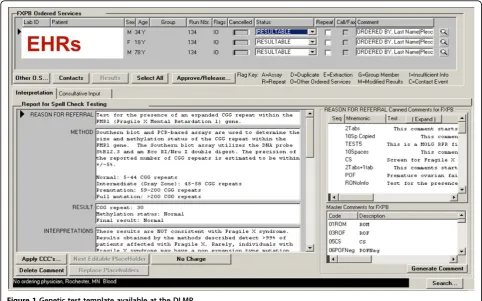
At Mayo Clinic, there are about 65,000 samples being tested per year. Among these 65,000 samples, about 3,250 samples (5%) are from Mayo Clinic, and the rest of samples are referred from outside Mayo Clinic. In this study, we focused on the 5% Mayo Clinic patients, as their complete medical records are available in the EHR systems. The Department of Laboratory Medicine and Pathology (DLMP) at Mayo Clinic maintains genetic test-ing information that include patient clinical id, date of birth, gender, test reported, collected and received date, reason for referring, test results and interpretation, shown in Figure 1. We had an IRB approval (13-008995) to allow us accessing patient data for this study.
Clinical evidence extraction
In this retrospective study, we analyzed patients’medical information extracted from the EHRs in order to deter-mine the most significant clinical features observed in particular population groups for each genetic test. Four steps performed accordingly, are described as below.
Genetic test selection
In this study, we obtained information about 61 genetic tests operated at Mayo Clinic in 2013. In order to access patients’complete lists of their medical history, only patients from Mayo Clinic were included in this study. In addition to ensure accuracy of data analysis with enough samples, we mannually selected 7 genetic tests being tested for more than 100 patients. However, there are two genetic tests are used to detect risk for multiple genetic disorders respectively.“BRAF Mutation Analysis (V600E) Tumor”with internal Mayo test id “87980” is used to detect BRAF V600E mutation for diagnosis of Lung ade-nocarcinoma, Colorectal adeade-nocarcinoma, Brain glioma,
and etc. “Hereditary Nonpolyposis Colorectal Cancer
genetic tests were selected for this study, and listed in Table 1.
Patient group composition
To compare and determine the most relevant clinical fea-tures for each genetic disorder based on the patients’ medi-cal history, we composed four different population groups. Group A (All) is consisted of 138, 229 patients from Mayo Clinic Employee Community Health (ECH); group T (Tested) is consisted of Mayo patients being tested by one of five selected genetic tests accordingly; group P (Positive) is consisted of Mayo patients being tested as positive for the genetic test; and group N (Negative) is con-sisted of Mayo patients being tested as negative for the genetic test. Genetic testing information is stored in semi-structured format, for instance, patient general information including patient id, sex, date of birth is in structured for-mat, but referring reason, test results, and interpretation
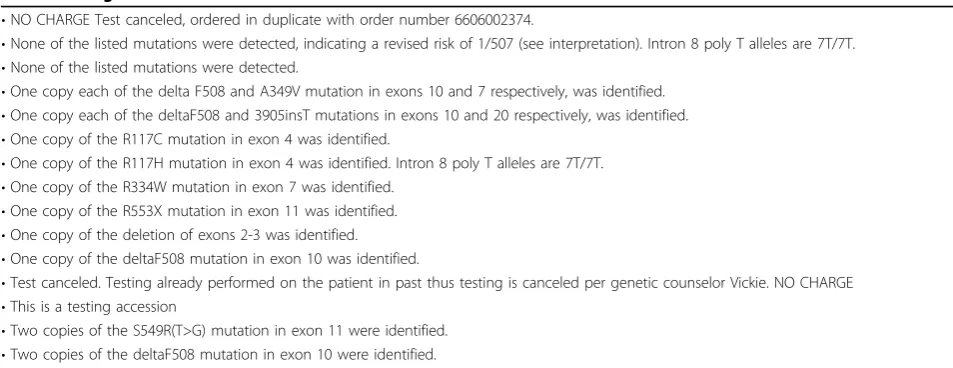
are in free text. To our knowledge, there is no NLP tool for extracting test result and observation for genetic tests, we manually reviewed the test results and separated test samples into group P and group N. Specifically, each test includes predefined categories to desribe specific“test result”and relevant“interpretation”. For example, cate-gories for“test result”of the test“9497”are summarized in Table 2. We manully reviewed such category information assigned to each patient for each test, and sepreated group T to group P and group N.
Clinical feature extraction
In order to extract clinical feature from clinical notes more intentionally, avoiding non-relevant clinical fea-tures interfering the final annotation results and decreas-ing the computation cost, we first collected the most common clinical features from a local copy of the HPO for each genetic disorder. In order to facilitate further
Figure 1Genetic test template available at the DLMP.
Table 1 Information about five selected genetic tests
Test ID Genetic test Name Genetic Disorder
82993 Alpha-1 Antitrypsin Alpha 1-antitrypsin deficiency
81508 Hemochromatosis HFE Gene Analysis, Blood Hereditary hemochromatosis
61247 EGFR Gene. Mutation Analysis Lung Cancer
9497 Cystic Fibrosis Mutation Analysis, 106 Mutation Panel Cystic Fibrosis
data integration, we mapped all collected clinical features to Unified Medical Language System (UMLS) via UMLS MetMap API. Then for each genetic test, we extracted mentions of the identified clinical features from clinical notes for each patient group by applying an existing NLP tool, MedTagger suite. [28,29]
Clinical feature prioritization
For each genetic test, we computed frequency of each clinical feature occurring in the above four patient groups by using Eq.(1), and we manually compared the calculated frequencies across four groups for each clini-cal feature. The frequency of each cliniclini-cal feature in increasing trend among the four population groups, from group A to group N, has been labeled as an enriched clinical feature. In addition to further quanti-tively measure the significance of the enriched clinical features impacting genetic test results, we calcualted odds ratio between group P and group N, as it is critical to determine the significance of the features by assessing odds and probability of clinical features identified among patients with positive test results against negative test results.
Feature% = Number of patients with the clinical feature / Total number of patients in that group (1)
Results
Data collection for genetic tests
• Genetic testing information. We obtained 3,595 patients’genetic testing information for 61 tests. As mentioned before, only five tests with sample size greater than 100 have been selected for this study. Thus, 2,054 patients being tested by the five selected genetic tests were remained in this study. Of these 2,054 patients, 604 patients without clinical notes have been excluded. Total 1,450 patients with test
information including clinical id, date of birth, gen-der, reason for referring, test results, interpretation and their medical records have been extracted for further data analysis.
• Patient cohort. Four patient groups have been composed to compare and determine the signifi-cance of clinical features. Group A including 138,229 patients from the ECH was retrieved as a reference patient group to provide overall prevalence level of the clinical features for each genetic test. For each test, by excluding the patients whose test was cancelled after the test been prescribed and inserted into the DLMP system, the remaining patients are consisted of group T. By manully reviewing category
information of “test results” for each test, we
sepreated group T to group P and group N. The dis-tribution of these four patient groups is shown in Table 3.
Clinical feature collection
In this study, we programmatically identified 243 com-mon clinical features for five genetic disorders from the HPO. We applied MedTagger to annotate mentions of the identified clinical features in clinical notes of study subjects. We excluded the clinical features that are men-tioned in less than one patient’s clinical notes in the group P and group N. Thus, the remaining 60 clinical features were left for further analysis. It is worthy to note that there is no mention of any of the identified clinical features in clinical notes for tested patients for the test“61247”, thus we excluded this test for further analysis. Four genetic tests along with the number of clinical features from the original list and annotation results are listed in Table 4.
Table 2 Categories of test results for test“9497”
•NO CHARGE Test canceled, ordered in duplicate with order number 6606002374.
•None of the listed mutations were detected, indicating a revised risk of 1/507 (see interpretation). Intron 8 poly T alleles are 7T/7T.
•None of the listed mutations were detected.
•One copy each of the delta F508 and A349V mutation in exons 10 and 7 respectively, was identified.
•One copy each of the deltaF508 and 3905insT mutations in exons 10 and 20 respectively, was identified.
•One copy of the R117C mutation in exon 4 was identified.
•One copy of the R117H mutation in exon 4 was identified. Intron 8 poly T alleles are 7T/7T.
•One copy of the R334W mutation in exon 7 was identified.
•One copy of the R553X mutation in exon 11 was identified.
•One copy of the deletion of exons 2-3 was identified.
•One copy of the deltaF508 mutation in exon 10 was identified.
•Test canceled. Testing already performed on the patient in past thus testing is canceled per genetic counselor Vickie. NO CHARGE
•This is a testing accession
•Two copies of the S549R(T>G) mutation in exon 11 were identified.
Clinical feature prioritization
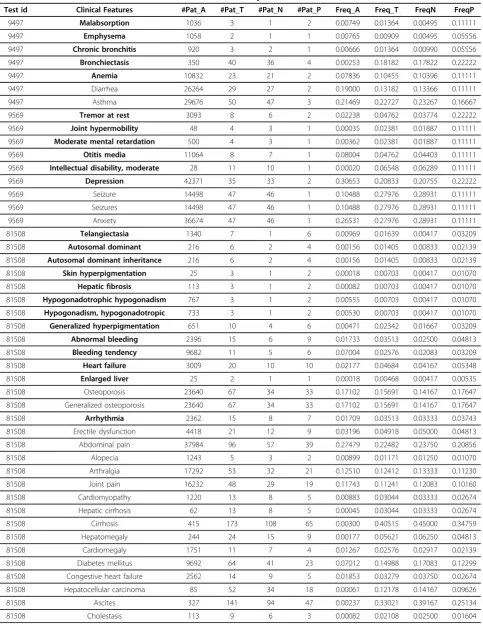
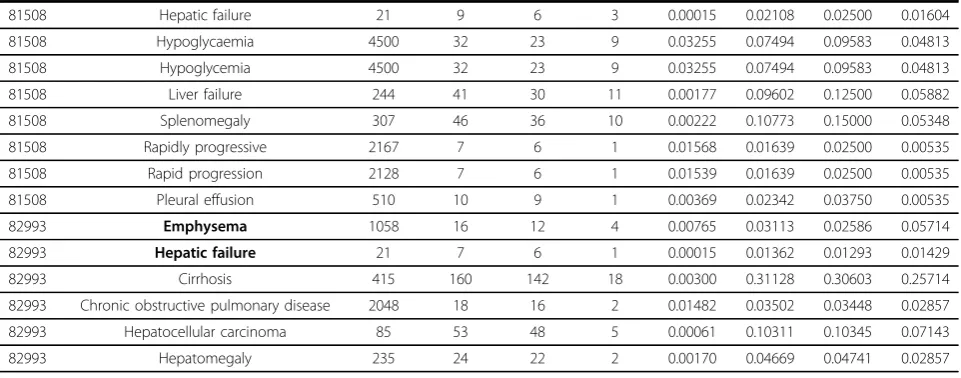
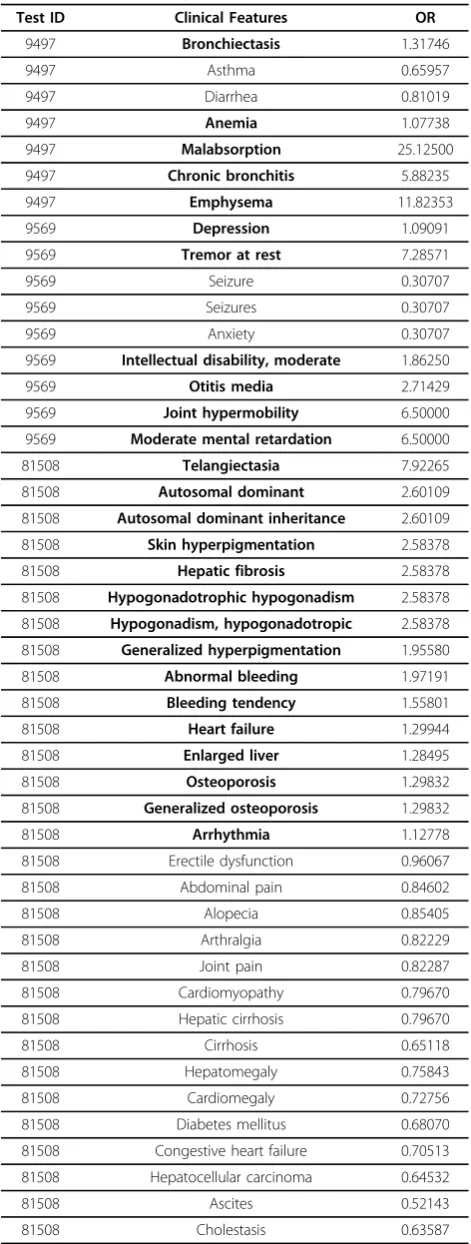
We calculated and compared numbers of patients and frequencies of each clinical feature among four popula-tion groups. In Table 5 enriched clinical features in bold are manually selected based on frequency comparison across four population groups. Subsequently we calcu-lated odds ratio for each clinical feature by comparing group P and group N, the results are listed in Table 6. The clinical features with odds ratio greater than 1 were selected as dominant features and shown in bold in Table 6. For example, “hepatic failure”, “emphysema” are the two clinical features with high odds ratio (greater than 1) for test“82993”. Patients with these two clinical features will be highly recommended for the genetic test, “Alpha-1 Antitrypsin”. The clinical features with their odds ratio as ranking weight, along with their associated genetic tests and genetic disorders have been loaded into iGTKB for further data integration to the GTO and genetic testing recommendation.
Discussion
Genetic testing allows genetic diagnosis of vulnerabilities to inherited diseases, and determine a child’s parentage (genetic mother and father) or in general a person’s ancestry. However, insufficient resources and tooling hinder incorporating genetic testing into regular clinical practice. In this paper, we introduce an EHR based genetic testing knowledge base, iGTKB, as a fundamen-tal clinical evidence resource in computational manor that will be able to better assist clinical decision making, especially to support development of an individualized genetic test recommendation system, iGenetics. In this section, we discuss multiple benefits gained as well as
challenges and issues arising from this preliminary work and proposed future plans accordingly.
A. An executable genetic testing resource, iGTKB
Multiple resources, such as GTR, ClinVar, GeneReview maintained by the NIH contain comprehensive genetic testing information, which is browseable through NIH websites. In the meantime, authorized professionals are manually defining and approving genetic testing guide-lines as golden standard to guide physicians to prescribe appropriate genetic tests. For instance, CPIC [9] as a shared project between PharmGKB [30] and the PGRN [31] publishes pharmacogenomics guidelines that are peer-reviewed and published in a leading journal. The goal of the CPIC is to publish 3-4 guidelines per year as this is an entire manual curation process. More and more efforts have been/will be made to provide and maintain new and the existing resources, as genetic test-ing is one of critical steps towards individualized medi-cine. However, most of these existing resources are primarily based on domain knowledge and information provided by the laboratories. To our knowledge, there is no effort made by mining EHR data to identify indivi-dualized information about genetic testing from patient perspective. In this study, we focused on genetic testing information and patient information retrieved from the EHR systems at Mayo Clinic and successfully identified dominant clinical features for the selected genetic tests. In our previous study, we have generated a genetic test-ing ontology (GTO) by integrattest-ing GTR, ClinVar, HPO and SemMedDB. In the next step, we will integrate clini-cal evidence identified from this study and our previous study [32] into the GTO to provide more comprehensive
Table 3 Genetic testing information
Test ID # of patients in group T # of patients in group P # of patients in group N
82993 514 70 464
81508 427 187 240
61247 101 15 86
9497 220 18 202
9569 168 9 159
Table 4 Distribution of clinical features
Test ID # of CFs selected from the HPO # of CFs mentioned in the clinical notes
82993 9 6
81508 86 38
61247 4 0
9497 74 7
Table 5 Statistical numbers for clinical features identified from patients’clinical notes
Test id Clinical Features #Pat_A #Pat_T #Pat_N #Pat_P Freq_A Freq_T FreqN FreqP
9497 Malabsorption 1036 3 1 2 0.00749 0.01364 0.00495 0.11111
9497 Emphysema 1058 2 1 1 0.00765 0.00909 0.00495 0.05556
9497 Chronic bronchitis 920 3 2 1 0.00666 0.01364 0.00990 0.05556
9497 Bronchiectasis 350 40 36 4 0.00253 0.18182 0.17822 0.22222
9497 Anemia 10832 23 21 2 0.07836 0.10455 0.10396 0.11111
9497 Diarrhea 26264 29 27 2 0.19000 0.13182 0.13366 0.11111
9497 Asthma 29676 50 47 3 0.21469 0.22727 0.23267 0.16667
9569 Tremor at rest 3093 8 6 2 0.02238 0.04762 0.03774 0.22222
9569 Joint hypermobility 48 4 3 1 0.00035 0.02381 0.01887 0.11111
9569 Moderate mental retardation 500 4 3 1 0.00362 0.02381 0.01887 0.11111
9569 Otitis media 11064 8 7 1 0.08004 0.04762 0.04403 0.11111
9569 Intellectual disability, moderate 28 11 10 1 0.00020 0.06548 0.06289 0.11111
9569 Depression 42371 35 33 2 0.30653 0.20833 0.20755 0.22222
9569 Seizure 14498 47 46 1 0.10488 0.27976 0.28931 0.11111
9569 Seizures 14498 47 46 1 0.10488 0.27976 0.28931 0.11111
9569 Anxiety 36674 47 46 1 0.26531 0.27976 0.28931 0.11111
81508 Telangiectasia 1340 7 1 6 0.00969 0.01639 0.00417 0.03209
81508 Autosomal dominant 216 6 2 4 0.00156 0.01405 0.00833 0.02139
81508 Autosomal dominant inheritance 216 6 2 4 0.00156 0.01405 0.00833 0.02139
81508 Skin hyperpigmentation 25 3 1 2 0.00018 0.00703 0.00417 0.01070
81508 Hepatic fibrosis 113 3 1 2 0.00082 0.00703 0.00417 0.01070
81508 Hypogonadotrophic hypogonadism 767 3 1 2 0.00555 0.00703 0.00417 0.01070
81508 Hypogonadism, hypogonadotropic 733 3 1 2 0.00530 0.00703 0.00417 0.01070
81508 Generalized hyperpigmentation 651 10 4 6 0.00471 0.02342 0.01667 0.03209
81508 Abnormal bleeding 2396 15 6 9 0.01733 0.03513 0.02500 0.04813
81508 Bleeding tendency 9682 11 5 6 0.07004 0.02576 0.02083 0.03209
81508 Heart failure 3009 20 10 10 0.02177 0.04684 0.04167 0.05348
81508 Enlarged liver 25 2 1 1 0.00018 0.00468 0.00417 0.00535
81508 Osteoporosis 23640 67 34 33 0.17102 0.15691 0.14167 0.17647
81508 Generalized osteoporosis 23640 67 34 33 0.17102 0.15691 0.14167 0.17647
81508 Arrhythmia 2362 15 8 7 0.01709 0.03513 0.03333 0.03743
81508 Erectile dysfunction 4418 21 12 9 0.03196 0.04918 0.05000 0.04813
81508 Abdominal pain 37984 96 57 39 0.27479 0.22482 0.23750 0.20856
81508 Alopecia 1243 5 3 2 0.00899 0.01171 0.01250 0.01070
81508 Arthralgia 17292 53 32 21 0.12510 0.12412 0.13333 0.11230
81508 Joint pain 16232 48 29 19 0.11743 0.11241 0.12083 0.10160
81508 Cardiomyopathy 1220 13 8 5 0.00883 0.03044 0.03333 0.02674
81508 Hepatic cirrhosis 62 13 8 5 0.00045 0.03044 0.03333 0.02674
81508 Cirrhosis 415 173 108 65 0.00300 0.40515 0.45000 0.34759
81508 Hepatomegaly 244 24 15 9 0.00177 0.05621 0.06250 0.04813
81508 Cardiomegaly 1751 11 7 4 0.01267 0.02576 0.02917 0.02139
81508 Diabetes mellitus 9692 64 41 23 0.07012 0.14988 0.17083 0.12299
81508 Congestive heart failure 2562 14 9 5 0.01853 0.03279 0.03750 0.02674
81508 Hepatocellular carcinoma 85 52 34 18 0.00061 0.12178 0.14167 0.09626
81508 Ascites 327 141 94 47 0.00237 0.33021 0.39167 0.25134
view of genetic test and ultimately support automation of genetic test recommendation.
B. Clinical feature identification
Clinical features are key clinical factors to support clin-ical decision making, particularly to guide genetic test prescription. Thus it is very important to accurately and completely identify a list of clinical features as dominate clinical factors for each genetic disease. Therefore, in this study, two steps have been per-formed to identify clinical features from the EHR data. 1) For each genetic disorder, we automatically searched the HPO for clinical features accordingly, which were used to direct annotation with clinical notes in free text. 2) We systematically annotated clinical notes to extract mentions of the clinical features identified in the first step, and statistically quantified significance of individual clinical features to corresponding genetic tests by calculating odds ratio. The strategy of clinical feature identification is effectively identify the most common clinical features and dramatically decrease the computation cost as no extraction performed for those non-relevant features.
Based on the current experiment, some of the clinical features have zero occurance in the EHR data. The main reason causing such absense is the identified clini-cal features from the HPO have high level descriptions, such as“abnormal head movement”. However,“
abnor-mal head movement” with zero occurrence does not
mean that there is no patient with abnormal head move-ment. It is just because physicians do not describe in
this way in the clinical notes. Deep phenotyping will be proposed for more in-depth SME involvement.
In this study, MedTagger has been applied to extract clinical features from patients’clinical notes only. The reason why we skipped to annotate information pre-sented in family history is that family history is not always documented in clinical notes at Mayo Clinic. To avoid false positive results generated from statistical analysis due to inconsistent occurrence of family history and patient’s medical history in clinical notes in this early stage of experiment, we excluded annotation for family history. To avoid such shortcoming occurring in the EHR data, literature based analysis to identify infor-mation about family history will be one of the solutions. Previously we have conducted a preliminary study [33] to analyze 10 randomly selected chapters of Gene-Reviews, [33] which is “expert-authored, peer-reviewed disease descriptions ("chapters”) presented in a standar-dized format and focused on clinically relevant and medically actionable information on the diagnosis, man-agement, and genetic counseling of patients and families with specific inherited conditions”. Family history as one of sections is included in each chapter of GeneReviews. In the future study, we will integrate annotation results including information about family history from GeneRe-views to the GTO, to provide extra criteria for genetic testing guideline generation.
In this study, we were focusing on sign and symptoms mentioned in clinical notes as clinical features. However, there are several other clinical characteristics mentioned in the report of radiology, laboratory and/or medications,
Table 5 Statistical numbers for clinical features identified from patients?’? clinical notes(Continued)
81508 Hepatic failure 21 9 6 3 0.00015 0.02108 0.02500 0.01604
81508 Hypoglycaemia 4500 32 23 9 0.03255 0.07494 0.09583 0.04813
81508 Hypoglycemia 4500 32 23 9 0.03255 0.07494 0.09583 0.04813
81508 Liver failure 244 41 30 11 0.00177 0.09602 0.12500 0.05882
81508 Splenomegaly 307 46 36 10 0.00222 0.10773 0.15000 0.05348
81508 Rapidly progressive 2167 7 6 1 0.01568 0.01639 0.02500 0.00535
81508 Rapid progression 2128 7 6 1 0.01539 0.01639 0.02500 0.00535
81508 Pleural effusion 510 10 9 1 0.00369 0.02342 0.03750 0.00535
82993 Emphysema 1058 16 12 4 0.00765 0.03113 0.02586 0.05714
82993 Hepatic failure 21 7 6 1 0.00015 0.01362 0.01293 0.01429
82993 Cirrhosis 415 160 142 18 0.00300 0.31128 0.30603 0.25714
82993 Chronic obstructive pulmonary disease 2048 18 16 2 0.01482 0.03502 0.03448 0.02857
82993 Hepatocellular carcinoma 85 53 48 5 0.00061 0.10311 0.10345 0.07143
82993 Hepatomegaly 235 24 22 2 0.00170 0.04669 0.04741 0.02857
which also provide comprehensive information for genetic testing guideline. We will extract and integrate that infor-mation into the iGTKB for supporting accurate genetic test predictions.
C. Clinical feature prioritization
In this study, the patient sample size of each genetic test is still relatively small as only information about tests operated in 2013 at Mayo Clinic has been included. Small sample size resulted in insufficient annotation results produced consequently, which significantly impacted our statistical analysis for clinical feature prioritization. In the next step, we will request more data from the DLMP, especially increasing the time win-dow of test operation to include more eligible genetic tests.
Two steps have been performed to prioritize clinical features for each genetic test accordingly, manual enrichment analysis and statistical analysis based on odds ratio, which produced consistent results, shown in Table 5 and Table 6. The clinical features with high odds ratio illustrate their significance to the genetic tests, as odds ratio was calculated between group P and group N. However, for those with lower odds ratio maybe also meaningful clinical features in clinical set-tings based on their overall prevalence distribution. For example, “cirrhosis” as one of clinical features for
“alpha-1 antitrypsin deficiency”, corresponding to the test“82993”, odds ratio is 0.78494, less than 1, however, the odds ratio calculated based on group T and group A to reflect overall prevalence distribution is 150.09353, the highest value comparing to other features. The rea-son for such huge difference between these two types of odds ratio is this clinical feature had been observed in a
Table 6 Statistical analysis results
Test ID Clinical Features OR
9497 Bronchiectasis 1.31746
9497 Asthma 0.65957
9497 Diarrhea 0.81019
9497 Anemia 1.07738
9497 Malabsorption 25.12500
9497 Chronic bronchitis 5.88235
9497 Emphysema 11.82353
9569 Depression 1.09091
9569 Tremor at rest 7.28571
9569 Seizure 0.30707
9569 Seizures 0.30707
9569 Anxiety 0.30707
9569 Intellectual disability, moderate 1.86250
9569 Otitis media 2.71429
9569 Joint hypermobility 6.50000
9569 Moderate mental retardation 6.50000
81508 Telangiectasia 7.92265
81508 Autosomal dominant 2.60109
81508 Autosomal dominant inheritance 2.60109
81508 Skin hyperpigmentation 2.58378
81508 Hepatic fibrosis 2.58378
81508 Hypogonadotrophic hypogonadism 2.58378
81508 Hypogonadism, hypogonadotropic 2.58378
81508 Generalized hyperpigmentation 1.95580
81508 Abnormal bleeding 1.97191
81508 Bleeding tendency 1.55801
81508 Heart failure 1.29944
81508 Enlarged liver 1.28495
81508 Osteoporosis 1.29832
81508 Generalized osteoporosis 1.29832
81508 Arrhythmia 1.12778
81508 Erectile dysfunction 0.96067
81508 Abdominal pain 0.84602
81508 Alopecia 0.85405
81508 Arthralgia 0.82229
81508 Joint pain 0.82287
81508 Cardiomyopathy 0.79670
81508 Hepatic cirrhosis 0.79670
81508 Cirrhosis 0.65118
81508 Hepatomegaly 0.75843
81508 Cardiomegaly 0.72756
81508 Diabetes mellitus 0.68070
81508 Congestive heart failure 0.70513
81508 Hepatocellular carcinoma 0.64532
81508 Ascites 0.52143
81508 Cholestasis 0.63587
Table 6 Statistical analysis results(Continued)
81508 Hepatic failure 0.63587
81508 Hypoglycaemia 0.47704
81508 Hypoglycemia 0.47704
81508 Liver failure 0.43750
81508 Splenomegaly 0.32015
81508 Rapidly progressive 0.20968
81508 Rapid progression 0.20968
81508 Pleural effusion 0.13799
82993 Cirrhosis 0.78494
82993 Hepatocellular carcinoma 0.66667
82993 Emphysema 2.28283
82993 Hepatomegaly 0.59091
82993 Chronic obstructive pulmonary disease 0.82353
82993 Hepatic failure 1.10628
large number of patients from group N (patients with negative test result). To this end, “cirrhosis” has been considered as one of key clinical features for test pre-scription, although a majority of patients have negative test results accordingly. Thus, to avoid losing any possi-ble signals, we will integrate clinical features with odds ratio calculated based on group P and group N, as well as prevalence ratio calculated based on group T and group A as one reference criteria into the GTO.
D. Genetic testing result annotation
As mentioned before, there are no NLP tools available for genetic testing information extraction and normali-zation. Currently we manually reviewed genetic testing results as well as test result interpretation to separate group T into group P and group N. However, manual review is still cumbersome. Thus, we will work with DLMP to seek possibility that we can help them to define a normalized genetic test registry template. Ide-ally the template will include normalized terms to indi-cate test results and interpretation that can be parsed programmatically, ultimately, it will facilitate the adop-tion of such useful informaadop-tion for research purpose. Consequently, development of an NLP tool for auto-mated genetic testing information extraction is neces-sary to accelerate the pace of building the iGTKB and integrating more genetic testing information program-matically, which will be the next step.
E. Patient cohort identification based on ICD9
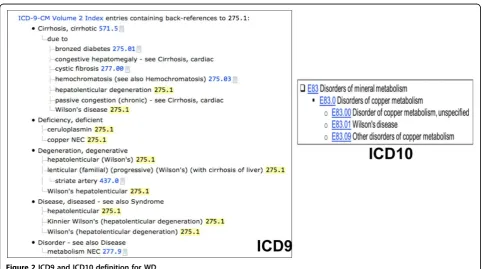
In our previous study, we extracted group D namely a patient group consisting of patients based on their ICD 9 codes. However, the accuracy and completeness of patient retrieval for this group is very low due to the natural structure of ICD 9, comparing to the refined definition of ICD 10. For example, one ICD 9 code,
“273.5”has been defined and used to label multiple
dis-orders including Wilson’s disease. In comparison,
“E83.01”, an ICD 10 code for Wilson’s disease is a child
node of “Disorders of copper metabolism” (E83.0),
which is shown in Figure 2. This resulted that the num-ber of retrieved patients according to the ICD 9 codes of genetic disorders is very small. For example, we have
extracted 240 patients have been tested for “Cystic
Fibrosis Mutation Analysis” however, the total number of patients we retrieved based on the ICD 9 codes
“277.00”, “277.01”, “277.02”, “277.03” and “277.09” of
“Cystic Fibrosis” is only 8. Such inaccurate and incom-plete list of patients identified based on ICD 9 has nega-tive impact on further analysis. Thus, in this study, we excluded group D based on the ICD9 codes. Given the importance of group D, alternatively, we propose two steps to further improve patient retrieval based on their diagnosis in the next step, 1) use both of codes, ICD 9 and ICD 10 if possible (ICD 10 is rarely being used in current EHR systems) for patient cohort retrieval; 2) apply more concrete phenotype algorithms for patient cohort retrieval. Those algorithms will not only rely on
the diagnosis codes, but also medications and appropri-ate laboratory test will be considered to determine patients with a particular disease. Some algorithms can be found at PheKB [34], or generated with help from the domain experts.
F. Genetic test recommendation
This is a first step to generate an EHR based genetic testing knowledge base, and test recommending signals have been shown based on existing evidence available in the iGTKB. However, it can not support test prediction for patients with clinical features that are not documen-ted in the iGTKB. Such functionality will be designed and embedded into iGenetics, which is developed on top of the next generation of the GTO with other resources we generated previously. [25,32,33]
Conclusion
In this study, we successfully built an EHR based genetic testing knowledge base (iGTKB). The current version of iGTKB consists information regarding to genetic test as well as relevant genetic disorders, and clinical features extracted from the EHR systems. To enlarge its recom-mendation capability, we will integrate iGTKB and infor-mation extracted from the GeneReviews into the GTO to generate a comprehensive computational genetic testing resource for supporting iGenetics development.
Competing interests
The authors declare that they have no competing interests.
Authors’contributions
QZ carried out the experiment and data analysis, and drafted the manuscript; HL exacted EHR data from Mayo Clinic EHR system. CGC: reviewed the manuscript and provided feedback and suggestions. MF helped genetic testing data retrieval. All authors have read and approved the final manuscript.
Acknowledgements
This work was supported by the Pharmacogenomic Research Network (NIH/ NIGMS-U19 GM61388) and partially by R01GM102282-01 and Mayo Center of Individualized Medicine. We thank Doug Van Cuyk for genetic testing data retrieval support.
Declarations
Publication costs for this article were funded by Mayo Center of Individualized Medicine.
This article has been published as part ofBMC Medical Informatics and Decision MakingVolume 15 Supplement 4, 2015: Selected articles from the IEEE International Conference on Bioinformatics and Biomedicine (BIBM 2014): Medical Informatics and Decision Making. The full contents of the supplement are available online at http://www.biomedcentral.com/ bmcmedinformdecismak/supplements/15/S4.
Authors’details
1Department of Information Systems, University of Maryland Baltimore
County, Baltimore, MD, USA.2Department of Health Sciences Research, Mayo
Clinic, Rochester, MN, USA.3Division of General Internal Medicine, Johns
Hopkins University, Baltimore, MD, USA.4Department of Laboratory Medicine and Pathology, Mayo Clinic, Rochester, MN, USA.
Published: 25 November 2015
References
1. Kirchheiner J, Bertilsson L, Bruus H, Wolff A, Roots I, Bauer M:Individualized medicine-implementation of pharmacogenetic diagnostics in
antidepressant drug treatment of major depressive disorders.
Pharmacopsychiatry2003,36:S235-S243.
2. Cortese D:A vision of individualized medicine in the context of global health.Clinical Pharmacology & Therapeutics2007,82(5):491-493. 3. Krynetskiy E, McDonnell P:Building individualized medicine: prevention
of adverse reactions to warfarin therapy.Journal of Pharmacology and Experimental Therapeutics2007,322(2):427-434.
4. Hall JG:Individualized medicine. What the genetic revolution will bring to health care in the 21st century.Canadian Family Physician2003,
49(2):12-13.
5. Farrugia G, Weinshilboum R:Challenges in Implementing Genomic Medicine: The Mayo Clinic Center for Individualized Medicine.Clinical Pharmacology & Therapeutics2013.
6. Genetic Testing: How it is Used for Healthcare.[http://report.nih.gov/ nihfactsheets/ViewFactSheet.aspx?csid=43].
7. United Health Group CfHRM:Personalized Medicine: Trends and prospects for the new science of genetic testing and molecular diagnostics2012. 8. Sawicki MP, Samara G, Hurwitz M, Passaro E:Human genome project.The
American journal of surgery1993,165(2):258-264.
9. Rubinstein WS, Maglott DR, Lee JM, Kattman BL, Malheiro AJ, Ovetsky M, Hem V, Gorelenkov V, Song G, Wallin C:The NIH genetic testing registry: a new, centralized database of genetic tests to enable access to comprehensive information and improve transparency.Nucleic acids research2012, gks1173.
10. Relling MV, Gardner EE, Sandborn WJ, Schmiegelow K, Pui CH, Yee SW, Stein CM, Carrillo M, Evans WE, Klein TE:Clinical Pharmacogenetics Implementation Consortium Guidelines for Thiopurine Methyltransferase Genotype and Thiopurine Dosing.Clin Pharmacol Ther2011,89(2):387-391. 11. Scott SA, Sangkuhl K, Stein CM, Hulot JS, Mega JL, Roden DM, Klein TE,
Sabatine MS, Johnson JA, Shuldiner AR:Clinical Pharmacogenetics Implementation Consortium Guidelines for CYP2C19 Genotype and Clopidogrel Therapy: 2013 Update.Clin Pharmacol Ther2013,
94(2):317-323.
12. Johnson JA, Gong L, Whirl-Carrillo M, Gage BF, Scott SA, Stein CM, Anderson JL, Kimmel SE, Lee MTM, Pirmohamed M,et al:Clinical Pharmacogenetics Implementation Consortium Guidelines for CYP2C9 and VKORC1 Genotypes and Warfarin Dosing.Clin Pharmacol Ther2011,
90(2):625-629.
13. Crews KR, Gaedigk A, Dunnenberger HM, Klein TE, Shen DD, Callaghan JT, Kharasch ED, Skaar TC:Clinical Pharmacogenetics Implementation Consortium (CPIC) Guidelines for Codeine Therapy in the Context of Cytochrome P450 2D6 (CYP2D6) Genotype.Clin Pharmacol Ther2012,
91(2):321-326.
14. Martin MA, Klein TE, Dong BJ, Pirmohamed M, Haas DW, Kroetz DL:Clinical Pharmacogenetics Implementation Consortium Guidelines for HLA-B Genotype and Abacavir Dosing.Clin Pharmacol Ther2012,91(2):734-738. 15. Wilke RA, Ramsey LB, Johnson SG, Maxwell WD, McLeod HL, Voora D,
Krauss RM, Roden DM, Feng Q, Cooper-DeHoff RM,et al:The Clinical Pharmacogenomics Implementation Consortium: CPIC Guideline for SLCO1B1 and Simvastatin-Induced Myopathy.Clin Pharmacol Ther2012,
92(2):112-117.
16. Hershfield MS, Callaghan JT, Tassaneeyakul W, Mushiroda T, Thorn CF, Klein TE, Lee MTM:Clinical Pharmacogenetics Implementation Consortium Guidelines for Human Leukocyte Antigen-B Genotype and Allopurinol Dosing.Clin Pharmacol Ther2013,93(2):153-158.
17. Hicks JK, Swen JJ, Thorn CF, Sangkuhl K, Kharasch ED, Ellingrod VL, Skaar TC, Muller DJ, Gaedigk A, Stingl JC:Clinical Pharmacogenetics
Implementation Consortium Guideline for CYP2D6 and CYP2C19 Genotypes and Dosing of Tricyclic Antidepressants.Clin Pharmacol Ther
2013,93(2):402-408.
18. Leckband SG, Kelsoe JR, Dunnenberger HM, George AL, Tran E, Berger R, Muller DJ, Whirl-Carrillo M, Caudle KE, Pirmohamed M:Clinical Pharmacogenetics Implementation Consortium Guidelines for HLA-B Genotype and Carbamazepine Dosing.Clin Pharmacol Ther2013,
19. Caudle KE, Thorn CF, Klein TE, Swen JJ, McLeod HL, Diasio RB, Schwab M:
Clinical Pharmacogenetics Implementation Consortium Guidelines for Dihydropyrimidine Dehydrogenase Genotype and Fluoropyrimidine Dosing.Clin Pharmacol Ther2013.
20. Landrum MJ, Lee JM, Riley GR, Jang W, Rubinstein WS, Church DM, Maglott DR:ClinVar: public archive of relationships among sequence variation and human phenotype.Nucleic acids research2013, gkt1113. 21. McCarty CA, Chisholm RL, Chute CG, Kullo IJ, Jarvik GP, Larson EB, Li R,
Masys DR, Ritchie MD, Roden DM:The eMERGE Network: a consortium of biorepositories linked to electronic medical records data for conducting genomic studies.BMC medical genomics2011,4(2):13.
22. Denny JC, Ritchie MD, Crawford DC, Schildcrout JS, Ramirez AH, Pulley JM, Basford MA, Masys DR, Haines JL, Roden DM:Identification of Genomic Predictors of Atrioventricular Conduction Using Electronic Medical Records as a Tool for Genome Science.Circulation2010,122(2):2016-2021. 23. Gunter TD, Terry NP:The emergence of national electronic health record
architectures in the United States and Australia: models, costs, and questions.Journal of Medical Internet Research2005,7(1).
24. The eMERGE Network.[http://emerge.mc.vanderbilt.edu/].
25. Li P, Liu H, Zhu Q:Scientific Evidence Based Genetic Testing Ontology Development towards Individualized Medicine.Accepted by Journal of Translational Medicine & Epidemiology2015.
26. Robinson PN, Mundlos S:The human phenotype ontology.Clinical genetics2010,77(2):525-534.
27. Kilicoglu H, Shin D, Fiszman M, Rosemblat G, Rindflesch TC:SemMedDB: a PubMed-scale repository of biomedical semantic predications.
Bioinformatics2012,28(2):3158-3160.
28. Torii M, Wagholikar K, Liu H:Using machine learning for concept extraction on clinical documents from multiple data sources.Journal of the American Medical Informatics Association2011,18(2):580-587. 29. Liu H, Bielinsku S, Sohn S, Murphy S, KB W, SR J, KE R, ST W, IJ K, CG C:An
Information Extraction Framework for Cohort Identification Using Electronic Health Records.AMIA Summits on Translational Science Proceedings2013.
30. Klein T, Chang J, Cho M, Easton K, Fergerson R, Hewett M, Lin Z, Liu Y, Liu S, Oliver D:Integrating genotype and phenotype information: an overview of the PharmGKB project.Pharmacogenomics J2001,
1(2):167-170.
31. Giacomini K, Brett C, Altman R, Benowitz N, Dolan M, Flockhart D, Johnson J, Hayes D, Klein T, Krauss R:The pharmacogenetics research network: from SNP discovery to clinical drug response.Clinical Pharmacology & Therapeutics2007,81(2):328-345.
32. Zhu Q, Liu H, Chute CG, Ferber M:Genetic testing knowledge base (GTKB) towards individualized genetic test recommendation–An experimental study.Bioinformatics and Biomedicine (BIBM), 2014 IEEE International Conference on: 2014IEEE; 2014, 574-577.
33. Li P, Zhu Q:A survey of automated information retrieval for genetic disorder from GeneReviews.Submitted to AMIA Annual meeting 20152015. 34. PheKB.[http://phekb.org].
doi:10.1186/1472-6947-15-S4-S3
Cite this article as:Zhuet al.:EHR based Genetic Testing Knowledge Base (iGTKB) Development.BMC Medical Informatics and Decision Making
201515(Suppl 4):S3.
Submit your next manuscript to BioMed Central and take full advantage of:
• Convenient online submission
• Thorough peer review
• No space constraints or color figure charges
• Immediate publication on acceptance
• Inclusion in PubMed, CAS, Scopus and Google Scholar
• Research which is freely available for redistribution