Published by Faculty of Science, Kaduna State University
Conventional and Molecular Characterization of Selected Lactic Acid Bacteria from Fermented Corn Gruel (Ogi) and Fermented Milk (Nono)
CONVENTIONAL AND MOLECULAR CHARACTERIZATION OF
SELECTED LACTIC ACID BACTERIA
FROM FERMENTED CORN
GRUEL (OGI) AND FERMENTED MILK (NONO)
1*David A.A.D., 2Orukotan A.A. and 3Mohammed S.S.D.
1Department of Sciences, College of Nursing and Midwifery, Kafanchan, Kaduna State, Nigeria 2Department of Microbiology, Faculty of Science, Kaduna State University, Kaduna, Nigeria
3Department of Microbiology and Biotechnology, Faculty of Natural and Applied Science, Nile University of Nigeria. FCT-Abuja
*Corresponding Author’s Email Address:[email protected] Phone: +2348034302208
ABSTRACT
Fermented foods have served as important vehicle for microbial flora that have overtime formed a niche as part of the human diet. One of such is the Lactic acid bacteria which are nonpathogenic, extensively disseminated and keenly included in most fermentative procedures. This research was conducted to isolate lactic acid bacteria from fermented food sources. Pour plate method was used for the isolation of bacteria on MRS media. The bacteria isolates obtained from fermented corn gruel (ogi) and fermented milk (nono) were characterized through conventional and molecular methods. A total of six (6) bacteria isolates were recovered and identified to reveal a community of bacteria dominated by Lactobacilli sp and Bacillus sp.Specie identification was based on sequence analysis of 16SrRNA gene resulting in 4 Lactobacilli sp made up of 1 L. plantarum, 2 L acidophilus, 1 L. fabifermentan and 1 Bacillus sp. However, one of the isolates was identified as coccobacilli due to its peculiar structure on the basis of its microscopy and biochemical reaction only.The mean total aerobic bacteria plate count ranged from 2.0×10² cfu/g to
6.5x10⁴ cfu/g. Studies continue to portray lactic acid bacteria as
the predominant group of microorganisms that have undergone several studies for food fermentation and have been used extensively as potential sources of probiotics for the production of functional foods.
Keywords: Probiotic, Bacteria, Lactic Acid, Fermentation
INTRODUCTION
For many years, research on the link between certain food and health benefits has been ongoing. This has led to the realization that the human diet consists largely of fermented products, acquired from plant or animal sources. These fermented products have for centuries now been acknowledged and consumed globally in most part of the world as a fundamental part of the human diet (Hassan and Amjad, 2009; Owusu-Kwarteng et al., 2015). More so, the practice of food fermentation has been compelled by indigenous microorganisms in the raw ingredient all through Africa which control the dietary accessibility, organoleptic value and security of the end products (Pedersen et al., 2012; Owusu-Kwarteng et al., 2012; Owusu-Kwarteng et al., 2015). However, for improved safety and the production of fermented foods with unfailing quality as well as beneficial health effects, a trend has emerged which involves the isolation of wild-type strains from conventional fermented products to be used as functional starter cultures (with inherent functional characteristics) in food fermentation, principally the lactic acid bacteria (Okorie et
al., 2013; Owusu-Kwarteng et al., 2015).
Lactic acid bacteria have for a while now, because of their overt function in most fermented foods, been the center of attention for researchers (Khedid et al., 2009) and have been isolated from numerous fermented foods for their use as probiotics and functional food resources (Solieri et al., 2014). In food technology, fermentation is by and large considered as a secure and tolerable method of preservation. Thus, the utilization of LAB in fermentation is best categorized into two groups based on the raw material employ for the procedure; non-dairy and dairy fermentation (Widyastuti et al., 2014). Lactic Acid Bacteria have found application in non-dairy fermented products such as products from vegetables, fish, meat (Rhee et al., 2011), cereals (Arena et al., 2015), tubers, roots (Jyoti et al., 2016), fruits, soybean (Ray and Joshi, 2014), and dairy products (Okereke et al., 2012) such as cheese (Ray and Joshi, 2014) and milk (Arena et al., 2015).
Milk (from cow) is the source from which Nono a fermented food drink is derived from. This is done through milking of cows by the Fulani Herdsmen usually the third and sixth months of lactation. Microbial activity is said to spoil milk, if left untreated, within a short period of time; as a result, processing it advances its storage and broadens its utilization (Egwim et al., 2013). Milk from diverse mammalian animals has been utilized in dairy fermentation to generate numerous products of interest usually by the actions of Lactic acid bacteria widely employed for most milk fermentation. LAB in milk fermentation is considered either as natural or inoculated starter cultures. Moreover, milk itself is recognized as one of the intrinsic environments for LAB proliferation (Widyastuti et al., 2014).
Similarly, in Nigeria, Ogi also known as pap, akamu, or koko, been a conventional fermented food, is a staple cereal and is the first native food given to babies at wearing. It is made from maize (zea mays), millet (Pennisetum americanum), or guinea corn (Sorghum spacers). Traditional ogi fermentation has shown that besides the corn in bacteria, S. cerevisiae, Enterobacter cloacae and L. plantarum are the most predominant microorganisms inherent (Egwim et al., 2013).
Lactic acid bacteria are proficient in limiting exogenous pathogens and in so doing, wield many functional effects on human health. Owing to their capacity to prevent invader colonization as well as their ability to direct the intestinal pH in the release of acetic and lactic acids, LAB are able to efficiently prevent constipation and diarrhoea triggered as a result of lactose intolerance or pathogenic bacteria. Lactic acid bacteria have also been
Fu
ll L
en
gt
h Rese
ar
ch
Conventional and Molecular Characterization of Selected Lactic Acid Bacteria from Fermented Corn Gruel (Ogi) and Fermented Milk (Nono)
implicated in escalating metabolism, suppressing the serum cholesterol intensity in blood (Okereke et al., 2012), generate antimicrobial compounds promoting probiotic properties, stabilization of gut microflora (Khedid et al., 2009) and modulation of gut-associated lymphoid tissue (GALT) immune activity (Arena et al., 2015).
For the most part, the LAB groups are classified as gram-positive, catalase negative organisms, belonging to genera Lactobacillus, Bifidobacterium, Lactococcus, Pediococcus and Leuconostoc. They have immense prospective as food bio-preservatives and have the proficiency to manufacture bacteriocins, hydrogen peroxide and acids. Some diverse strains of LAB which are residents of the commensal bacteria in the gut of human and animals, mainly- Lacobacilli and Bifidobacteria owing to their therapeutic functions have been used extensively as probiotics (Lavanya et al., 2011). Studies have inevitably shown that Lactobacilli denote an important part of the human intestinal microflora. The genus Lactobacillus itself is shown as one of the key groups of lactic acid bacteria that have for long been employed in the service of food fermentation worldwide, due to their well-known status as generally recognized as safe (GRAS) microorganisms as such, possess immense economic importance (Pyar and Peh. 2013; Widyastuti et al., 2014). Thus, the realization of cautiously selected strains of Lactic acid bacteria as co-cultures in fermentation procedures can help to accomplish in situ an expression of the preferred property, upholding an entirely natural product and where appropriate, still function as probiotics (impart health benefit unto the consumer) (Owusu-Kwarteng et al., 2015).
This research was aimed at isolation and characterization of Lactic acid bacteria from known fermented food sources through conventional and molecular techniques to serve as starter culture in the production of functional foods.
MATERIALS AND METHODS Collection of Samples
Fresh cow milk (Nono) obtained from a farm and homemade overnight Ogi were collected within Kawo-Kaduna state for isolation of bacteria. The samples were kept in a cool box and transported to the Department of Microbiology laboratory, Kaduna State University in sterile plastic bottles for analysis. These samples were stored at 4°C until use.
Isolation of Lactic Acid Bacteria from Fermented Corn Gruel (Ogi) and Milk (Nono)
Twenty five (25) grams of ogi was weighed aseptically and homogenized in 225ml of sterile distilled water. Exactly 1ml aliquot of Fresh cow milk (Nono) and 1 ml homogenized Ogi samples were taken aseptically and serially diluted in separate test tubes up to 10-fold using 0.1% (w/v) bacteriological peptone. 1ml dilutions of both (Ogi and Nono) samples were each plated out separately in duplicate using spread plate method according to Cheesbrough, (2009) on de Man Rosa Sharpe Agar (MRS) for 48 hours at 30oC for the bacteria count. The colonies obtained
after incubation were counted using the colony counter and were recorded as colony forming unit per milliliter (cfu/ml) according to the methods of (Oyeleke and Manga, 2008: Mohammed et al., 2017). Repeated subcultures of discrete colonies were made on fresh MRS agar to obtain pure cultures (Nwachukwu et al., 2016).
Using the method of Oyeleke and Manga (2008), the pure isolates obtained were preserved in MRS agar slants and stored at 4°C for further identification and characterization.
Characterization and Identification of LAB Isolated From Fermented Foods
Phenotypic Identification
Phenotypic characterization, microbial Colony morphology, cell morphology, arrangement and gram staining were conducted for colonial shape which included both elevation and margin, as well as size, color, and consistency and observed accordingly. Furthermore, smoothness of colony (shiny glistening surface), rough (dull, uneven, coarse, or lusterless surface), or mucoid (slimy or sticky forms) and murkiness of the colonies (transparent, translucent, or opaque) were viewed. In order to categorize the isolates obtained into gram +ve and/or gram –ve and present them as either rods, cocci or coccobacilli, gram staining was carried out (Bansal et al., (2013).
Biochemical Characterization of LAB Isolated From Fermented Foods
Biochemical tests which include: Oxidase, catalase, motility, Methyl Red and Voges Proskaur (MRVP), indole, Carbohydrate Fermentation and Citrate Utilization Tests were conducted (using standard methods as described by Cheesbrough (2009), Oyeleke and Manga, 2008; Mohammed, 2011; Beatrice and Tega 2015)
Oxidase Test
A sterile Whatman number one filter paper was wet with a few drops of oxidase reagent (1% aqueous tetramethyl-p-phenlene diamine hydrogen chloride). A bit of 48 hours growth culture of the isolates were each smeared on the damp filter paper using a nichrome wire loop and observed for colour change (Oyeleke and Manga, 2008).
Catalase Test
On a clean grease free slide, a drop of 3% hydrogen peroxide (H2O2) was placed. A loop full of the culture from colonies on
MRS agar was emulsified into the drop and observed for bubbling and frothing (Oyeleke and Manga, 2008).
Motility Test
MRS broth was used to grow the organisms for 24 hours at 30 - 37°C. A few drops of the broth was placed on a clean grease free dry glass slide and examined under the oil immersion (x100) lens of the microscope for proof of motility (Oyeleke and Manga, 2008; Beatrice and Tega 2015)
Indole Test
This test was conducted according to the method described by Muhammad (2011). Peptone water was inoculated with the isolates of LAB and incubated at 37oC for 24 hours. After the
period of incubation, 0.5 ml of Kovac`s reagent was added and mixed properly and observed for colour change.
Methyl Red (MR) Test
This test was conducted according to the method described by (Muhammad, 2011 and Oyeleke Manga, 2008). Into sterile test tubes, 5ml of glucose phosphate peptone water was added. Each test tube was inoculated with test culture separately and
Conventional and Molecular Characterization of Selected Lactic Acid Bacteria from Fermented Corn Gruel (Ogi) and Fermented Milk (Nono)
incubated at 37oC for 48 - 72 hours. A few drops of methyl red
solution was added after incubation and observed for colour change.
Voges Proskaur (VP) Test
Using the methods of Oyeleke and Manga, (2008), 5ml of VP reagent (glucose phosphate peptone water) was inoculated with test organisms in sterile test tubes and incubated at 30 - 37oC for
48 - 72 hours. After which, 5 drops of 40% potassium hydroxide reagent was added, followed by the addition of 15 drops naphthanol in ethanol. This was mixed gently with the cap loosely tightened and allowed to stand in a sloping position and observe for colour change.
Carbohydrate Fermentation Test
Exactly 1% of six (6) sugars (Xylose, Sucrose, Maltose, Fructose, Lactose and Glucose) were inoculated into 4ml pre sterilized basal medium (with peptone water) containing phenol red indicator and organisms. This was incubated for 48 hours and observed for fermentation (production of acids) (Oyeleke and Manga, 2008).
Citrate Utilization Test
As described by Oyeleke and Manga, (2008), exactly 5ml of Simon citrate agar was prepared in a slant and incubated with the microbial isolates for 48 hours and observed for colour change.
Molecular Characterization of Lactic Acid Bacteria Isolated from Fermented Foods
Genomic DNA Isolation
Exactly 1.5 ml of bacterial culture was taken in centrifuge tube and Centrifuged for 2 minutes at 10,000 rpm. The supernatant obtained was discarded. 1 ml of distilled water was added to the pellet and the pellet dissolved entirely and further centrifuged for 2 min at 10,000 rpm. The procedure was repeated twice. The supernatant was discarded and to the pellet 100l of Tris EDTA buffer was added and the pellet dissolved completely in buffer (Ratna et al., (2012).
DNA Amplification 16s rRNA Characterization
For amplification of 16S rRNA fragments, a pair of Lactobacillus universal primers having the following sequence was used: {27f (8f) AGAGTTTGATCMTGGCTCAG-3’) and 907r (926r) (5’-CCGTCAATTCMTTTRAGTTT-3’)} as previously described by (Ludwig et al., 1993; Muyzeret al., 1995). The amplification step was performed to amplify the isolated total bacteria DNA using a modified version of the protocol prescribed by Alatawi et al., (2015).
A PCR reaction was performed in 0.2ml thin walled tubes with flat frosted caps (Thermo scientific Massachusetts, USA) having a 25μl PCR reaction volume made up of 12.5 µLTaq master Mix (containing - (20 μm) of deoxynucleoside triphosphates (dNTP), Taq DNA Polymerase and Taq buffer with MgCl2) (New England
Biolabs, UK) and 7.5µL of molecular grade water. 1 μl of each primer 27f and 907r, 0.5 μl of Taq DNA polymerase, 3μl of template DNA and 16 μl of ddH2O, with a thermal cycler under the following cycling conditions: Initial denaturation at 95°C for 3 min, denaturation at 94°C for 30 sec, annealing at 56°C for 30 sec, extension at 70°C for 1min followed by final extension at
70°C for 10 min. Giving a total number of 28 cycles. Along with 100bp DNA ladder, PCR products were electrophoresed in 1% agarose gel and stained with loading dye. Amplicons obtained were visualized under UV light GelDoc (Alatawi et al., 2015). The amplification of the 16S rRNA was performed in an Applied Biosystems GeneAmp 9700 PCR system (Applied Biosystems, CA, USA).
Agarose Gel Electrophoresis of LAB DNA Fragments
Using standard method, amplification product was resolved by agarose gel electrophoresis using 1% agarose in 1X TBE buffer, 0.5μg/ml of ethidium bromide, and loading buffer (0.25% Bromophenol Blue in 40% sucrose). To 10μl of PCR products, 5 μl of the loading dye was added and loaded to the agarose gel. Electrophoresis was carried at 90V for 55 minutes to allow proper separation of the PCR bands. The gel was observed under UV light and documented using Hero Lab Gel Documentation unit (Shiva et al., 2010).
Sequencing of Lactic Acid Bacteria
The amplified PCR products were sequenced using DNA auto sequencer as well as the same primers (Kebeish and El-sayed, 2012). The PCR products were purified and sequenced (Sanger sequencing) at Inqaba Biotech, SA. The sequence received from Inqaba was opened using Finch TV and the sequence blasted against NCBI nucleotide database through the use of Mega 7 analyzer.
Basic Local Alignment Search Tool (BLAST) for DNA
Following assembling of the recovered Lactobacillus DNA sequence, the whole sequence was used in searching for a well-suited sequence from the database or library. Molecular identities with closely related isolates were asserted in the database using a multiple sequence alignment software (Kebeish and El-sayed, 2012) above a certain threshold (Ratna et al., 2012)
RESULTS
Morphological Characterization of Isolated Bacteria Cells
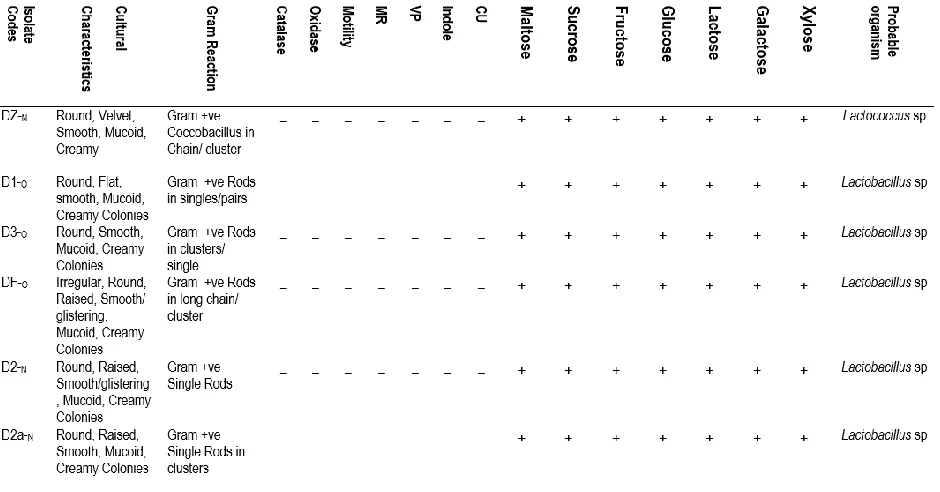
A total of six (6) bacteria isolates were obtained and identified from fermented corn gruel (ogi) and fermented milk (nono). They were further characterized and coded as DZ-N, D1-O, D3-O, DF-O,
D2-N and D2a-N measuring 1-3 mm in diameter, forming
characteristic round creamy white colonies. DZ-N appeared round,
velvet, smooth, mucoid and creamy. DF-O, D2-N and D2a-N gave
round, raised, rough or smooth, mucoid, creamy colonies. However, D1-O and D3-O appeared as round, flat, smooth,
mucoid, creamy colonies (Table 1). A distinct morphological growth pattern of the sub-cultured pure isolates on MRS Agar after 24hrs incubation was observed on the various sub cultured plates.
Microbial count of Fermented Foods
Table 2, showed the total bacteria counts of the fermented food investigated. The highest bacteria count obtained for fermented corn gruel (ogi) had 5.2 × 10³ CFU/g and the lowest bacteria
count was obtained and documented as 2.7 ×10² cfu/g. Whereas,
the highest occurrence of the bacteria isolates in fermented cow milk (nono) was 6.5 × 10⁴ cfu/g and the least recorded as 2.1×10³
CFU/g respectively.
Conventional and Molecular Characterization of Selected Lactic Acid Bacteria from Fermented Corn Gruel (Ogi) and Fermented Milk (Nono)
Biochemical Characterization of Bacteria Isolates
The morphological characterization of the isolates showed that, the cells of the isolates coded as D1-O, D3-O, DF-O, D2-N, and
D2a-N were gram positive (+) rod shaped isolates occurring
singly, in pairs, chains and/or clusters as similarly highlighted in the work of Bansal et al. (2013). The result obtained indicated that the isolated bacteria could be identified as Bacillus sp based on the rod shaped appearance. Whereas the isolate DZ-N, appeared
as Gram +ve coccobacilli occurring in a chained cluster, creating an interesting diagonal pattern. All the bacteria isolated from the fermented foods fit the classification of LAB as Gram positive organisms.
Table 1 highlights the motility of the organisms as observed microscopically from an overnight broth. The result showed that all the 6 isolates obtained were non-motile and catalase negative. Table 1 indicates that all the isolates were negative for the different tests at different temperature conditions as consistent with Lactobacillus sp.
Table 3 showed, the carbohydrate fermentation of the isolated cells utilized all the 7 available sugars (maltose, lactose, sucrose, galactose, fructose, xylose and glucose) used in the study. This was confirmed by a change of the medium from red to yellow color with no gas formation, giving some characteristic semblance to Lactobacillus sp as outlined similarly by Pyar and Peh, (2014).
Identification of Bacteria isolates using 16S rDNA gene sequencing
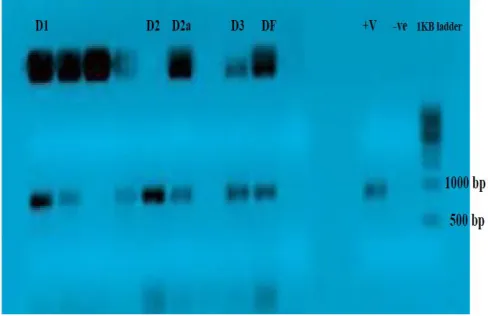
Table 3 and Fig 1 summarizes the amplification of the 16S regions of the isolates sequenced and further records DNA fragments having 500-1000 base pairs corresponding in size to L. plantarum,L. fabifermentum, L. acidophilus and Bacillus sp all of which share a relationship with Lactic acid bacteria. Sequence analysis (BLASTn) of all the bacteria isolates evidently showed the 16S product as having homology with a range of recognized strains. Thus, using the sequences inherent in the NCBI, five (5) of the six (6) isolates obtained were recognized as varying species with a query coverage of 95-100% and showing a corresponding homology of 99.72% __100% with L. plantarum, L.
fabifermentum,L. acidophilus and Bacillus sp as the recognized strains through BLAST search on the NCBI database.
Phylogenetic Tree
16S rRNA gene sequence of four (4) LAB species and one (1) bacillus sp (DF-O) identified in the study gave the basis for the
construction of the Phylogenetic tree. It shows the relationship between neighboring Lactobacillus type strains based on the 16S rRNA gene sequence; Lactobacillus plantarum strain L15 (D1-O),
Lactobacillus acidophilus, strain YT1 (D2-N),and CMUL67 (D2a-N), Lactobacillus fabifermentans LMG 24284 (D3-O),respectively.
Similarly, Fig 2 of the phylogenetic tree gave a representation of the affiliations of all the Lactobacillus isolates among diverse LAB species found in most plant products showing corresponding DNA similarity alongside their matching reference sequences
Table 1: Morphological, Biochemical and Carbohydrate Fermentation Tests for Lactic Acid Bacteria
KEY: Lab:Lactic Acid Bacteria,MR: Methyl Red, VP: Voges Proskaur, CU: Citrate Utilization, O:, +: Utilized Sugar, __: Non Utilized Sugar + = positive ,- = negative, Isolate code: Alphanumerical codes of isolate and source of origin: D1–O, D2-O, D2a-O, D3-N, DF-N (O, - Ogi, N –
Nono).
Conventional and Molecular Characterization of Selected Lactic Acid Bacteria from Fermented Corn Gruel (Ogi) and Fermented Milk (Nono)
Table 2: Total Bacteria Counts of Fermented Gruel (Ogi) and Milk (Nono)
Key:
Alphanumerical codes of isolate and source of origin: D1–O,
D2-O, D2a-O, D3-N, DF-N (Ogi, N : Nono)
Table 3: Molecular Identification of Lactic Acid Bacteria (Using 16S rRDA)
KEY:
Strain Type - Lactobacillus sp. WGX143, YT1, CMUL67, LMG 24284, Bacillus sp- LLO
Alphanumerical Codes of isolate: D1–O, D2-O, D2a-O, D3-N, DF-N
Fig 1. Gel Electrophoresis of PCR for Lactic Acid Bacteria (LAB); L: Ladder; Control pos. (+ve) neg. (-ve), Alphanumerical codes of isolates:- Lactobacillus sp.(D1, D2 D2a &D3);Bacillus sp.(DF) bp: base pairs
Fig 2. Percentage Frequency for Occurrence of Lactic Acid Bacteria in fermented foods (Ogi and Nono)
Fig. 3. Phylogenetic tree derived from 16S rDNA sequence of lactic acid bacteria Isolates
DISCUSSION
Previous studies have highlighted the significance of fermented food as probable vehicles that play essential role in the continuous isolation of Lactic acid bacteria due to their capacity to not only generate tremendously elevated levels of lactic acid but also thrive consistently in extreme acidic state (Bansal, et al., 2013).
Based on molecular characterization, the result obtained highlighted Lactobacillus sp as the highest occurring organisms. These group of microorganisms have been reported to exist broadly in vast habitats including plants, within dairy and a wide range of fermented products of commercial interest globally as reported by (Bull et al., 2013).
Research has shown that the lactic acid bacteria L. plantarum is by and large one of the most predominant species of LAB with high occurrence rate isolated from plant sources through fermentation. These isolates are tested as probiotic candidates for their probiotic potential and applied in most food fermentation (Bansal, et al., 2013). L. plantarum was isolated from ogi a natural cereal food; Traditional ogi fermentation has shown that besides other viable microorganisms, L. plantarum are the most predominant microorganisms inherent in most cereal based products (Egwim et al., 2013). Their identification in this study
Conventional and Molecular Characterization of Selected Lactic Acid Bacteria from Fermented Corn Gruel (Ogi) and Fermented Milk (Nono)
was basically as a result of their morphological and colonial characteristic.
As reported by Buyuyour, et al. (2010), Lactococcal sp are lactic acid bacteria that grow optimally at 30oC which supports the
growth condition utilized in this present work. Their presence in milk sample is consistent and indicates their use as starter cultures in dairy fermentation, usually in cheese ripening. In this study, this isolate was strictly phenotypically characterized as lactococci based on its microscopic characteristic indicating a fused cocco-bacillus structure. However, the need for application of PCR amplification is suitable to further characterize the isolate into sub species. Similarly, the highly diverse and heterogeneous Lactobacillus acidophilus has been documented globally to comprise probiotic characteristics and is applied as a prominent base for dietary intake. These group of microorganisms largely make up an integral faction of the innate human microbiota cultured from the oral, digestive and vaginal tracts (Bull et al., 2013). Its appearance as part of the isolates obtained in this study is not surprising owing to the fact that L acidophilus is available in a wide range of products including milk etc (Bull et al., 2013). Identification of the strain was made prominent by its characteristic rough and smooth feature on MRS Agar. Although, other sub species such as L. fabifermentans were isolated and have been shown to be the most diverse of the Lactic acid bacteria species. These genus is capable of producing Lactic acid as their core fermentation end product under varying temperature (10-37oC) conditions in MRS Agar, which falls in line with the
temperature (30oC) utilized in this study for the cultivation of LAB.
Of importance to note is that, because the 16S genes of certain Lactobacillus (L. plantarum and L. fabifermentans) appear similar, characterization at species level is often made somewhat difficult. Findings from other research shows that, isolation of L fabifermentans was reported in Ghanian cocoa fermentation and further detected among cultivable Lactobacillus species in grape marc at T30. Though from a different plant source, this shares similarity to this study which isolated these isolates from plant cereal source (sorghum) which serve as niche for Lactobacillus colonization. Further research shows that among the sequenced Lactobacillus species, L fabifermentans has the largest genome (3,580,413 bp) compared to the average genome size of Lactobacillus species (Campanaro et al., 2014). Similarly, L plantarum and L fabifermentans are heterofermentative bacteria and their simultaneous occurrence can be attributed not only to their ability to be highly resistant to inconsiderate conditions, but also, both are exceedingly competent in carbohydrate consumption (glucose and fructose) as shown in the biochemical analysis and have similar carbohydrate utilization outline. Furthermore, unlike other Lactobacillus strains, they are all-rounder’s and are able to colonize and adapt in several settings (Campanaro et al., 2014). Similarly, earlier studies have shown that most Lactobacillus species are capable of utilizing a wide range of both simple and complex carbohydrates owing to the availability of sugar utilizing cassettes in certain LAB species with intense supply (O'Donnell et al., 2013; Campanaro et al., 2014). Bacillus sp according to a study reported by Mohammed et al. (2017) are a vital producers of extracellular proteases involved in the hydrolysis of complex plant proteins as such, its presence as an isolate in this study is not surprising as it is an organism whose occurrence is consistent in cereal crops like sorghum used as raw material for fermented corn gruel (ogi).
Conclusion
In conclusion, previous studies have portrayed Lactic acid bacteria as the predominant group of microorganisms that have undergone several studies for food fermentation and have been used extensively as potential sources of probiotics for the production of functional foods. These group of microorganisms have continued to pave way for varying commercial applications, in the bio-preservation of foods and biomedical purposes. All the isolated bacteria were effectively identified and characterized as Lactobacillus sp, Lactococcus sp and Bacillus sp via conventional and molecular techniques using suitable PCR primers.
REFERENCES
Agaliya, JP and Jeevaratnam, K (2012). Molecular characterization of lactobacilli isolated from fermented idli batter Brazilian Journal of Microbiology 44(4): 1199-1206
Ali Ramadan, Alatawi, A Sutarno, Ari Susilowati and Hailu Weldekiros Hailu (2015). Biochemical and Molecular Characterization of Food Contaminating Bacteria Isolates from Food Stall Vegetables British Microbiology Research Journal 5(5): 405-411,
Annuk , H Shchepetova, J Kullisaar, T Songisepp, E Zilmer, M and Mikelsaar , M (2003). Characterization of intestinal lactobacilli as putative probiotic candidates. Journal of Applied Microbiology 94(3)
Bansal, S Singh, A Mangal, M and Sharma, SK (2013). Isolation and Characterization of Lactic Acid Bacteria from Fermented Foods International journal of plant research 26(2): 325-330 Bull, M Plummer, S Marches, J & Mahenthiralingam, E (2013). The life history of Lactobacillus acidophilus as a probiotic: a tale of revisionary taxonomy, misidentification and commercial success FEMS Microbiology 349: 77–87 Buyuyour, S Cibik, R, Cetinkaya, F Soyutemiz, GE Goksov, FO
and Krrkan, S (2010). Isolation, Phenotypic and Molecular Identification of Lactococcus lactis Isolates from Traditionally Produced Village Cheeses Journal of Animal and Veterinary Advances 9(16):2154
Campanaro, S. Treu, L. Vendramani, V, Bovo, B. Giacomini, A and Corich, V (2014). Metagenomic analysis of themicrobial community in fermented grape marc reveals that Lactobacillus fabifermentans is one of the dorminant species: insights into its genome structure. Applied Microbiology and Biotechnology 00253-014-5795-3 Egwim E, Amanabo M, Yahaya A and Bello M (2015). Nigerian
Indigenous Fermented Foods: Processes and Prospects Mycotoxin and Food Safety in Developing Countries Nigeria Biochemistry Department, Federal University of Technology, Minna, Niger State, INTECH Open Science 154-180 Hassan, A and Amjad, I (2010). Nutritional evaluation of yoghurt
prepared by different starter cultures and their physiochemical analysis during storage Full Length Research Paper African Journal of Biotechnology 9 (20): 2913-2917, 17
Khedid, K. Faid, M. Mohtari, A. Soulaymani and Zinedine, A (2009). Characterization of lactic acid bacteria isolated from the one humped camel milk produced in Morocco, Microbiological Research164(1): 81-91
Lavanya, B., Sowmiya, S., Balaji, S. and Muthuvelan, B. (2011). Screening and characterization of lactic acid bacteria from
Conventional and Molecular Characterization of Selected Lactic Acid Bacteria from Fermented Corn Gruel (Ogi) and Fermented Milk (Nono)
fermented milk. British Journal of Dairy Sciences 2(1): 5-10. Mattia P. Arena, Graziano Caggianiello, Pasquale Russo, Marzia
Albenzio, Salvatore Massa, Daniela Fiocco, Vittorio Capozzi and Giuseppe Spano (2015). Functional Starters for Functional Yogurt Foods 4: 15-33
Minervini, F., Siragusa, S., Faccia, M., Dal Bello, F., Gobbetti, M. and De Angelis, M. (2012). Manufacture of Fior di Lattee cheese by incorporation of probiotic lactobacilli. Journal of Dairy Science 95: 508-520.
Mohammed, SSD. Orukotan, AA and Musa, J (2017). Effect of Fermentation and Malting on Some Cereal Weaning Foods Enriched with African Locust Beans Journal of Applied Science and Environmental Management 21(5): 911-921
Mohammed S. S. D., Wartu J. R., Aminu A. H., David A. A. D. and Musa B. J. (2018). Bio-preservation of Nigerian soft-white cheese in submerged consortium of bacteriocinogenic lactic acid bacteria culture African Journal of Biotechnology 17(5): 118-125
Nwachukwu, I., Ekaiko, M. U. & Stephen, C. (2016). Microbiological Quality Of Palm Wine (Elaeis Guineensis and Raphia Hookeri) Sold Within Aba Metropolis, Abia State, South Eastern Nigeria Progressive Academic Publishing, UK European Journal of Biotechnology and Genetic Engineering 3(1): 38
O'Donnell MM, O'Toole PW, and Rose, RP (2013). Catabolic flexibility of mammalian-associated Lactobacilli Microbiology Cell Fact 12:48
Owusu-Kwarteng J, Akabanda F, Nielsen DS, Tano-Debrah K, Glover RL, and Jespersen L. (2012). Identification of lactic acid bacteria isolated during traditional fura processing in Ghana. Food Microbiology 32(1): 72–8. Owusu-Kwarteng, James, Kwaku Tano-Debrah, Akabanda
Fortune and Jespersen, Lene (2015). Technological properties and probiotic potential of Lactobacillus fermentum strains isolated from West African fermented millet dough BMC Microbiology 2015; 15: 261.
Okereke, H.C., Achi, O.K., Ekwenye, U.N. and Orji, F.A.(2012). Antimicrobial properties of probiotic bacteria from various sources. African Journal of Biotechnology 11(39): 9416-9421
Okorie CP, Olasupo NA. (2013). Controlled fermentation and preservation of UGBA–an indigenous Nigerian fermented food. Springer Plus. 2(1): 470.
Oyeleke, S.B and Manga, B.S (2008). Essentials of Laboratory Practices in Microbiology. 1st Edition, Tobest Publishers, Minna - Nigeria. 36 - 60.
Pedersen LL, Owusu-Kwarteng J, Thorsen L, Jespersen L. (2012). Biodiversity and probiotic potential of yeasts isolated from Fura, a West African spontaneously fermented cereal. International Journal of Food Microbiology. 159 (2):144–51.
Pyar, H and Peh, K.K (2014). Characterization And Identification Of Lactobacillus Acidophilus Using Biolog Rapid Identification System Academic Sciences International Journal of Pharmacy and Pharmaceutical Sciences 6 (1). Ratna Kumari, A Sobha, Mounika, K Nageswara Rao G J and
Ashok, M (2012). Molecular characterization of bacteria Capable of organophosphate Degradation International Journal of Life Science & Pharmaceutical Research 1(3). Rhee, S. J., Lee, J. E. and Lee, C. H. (2011). Importance of lactic
acid bacteria in Asian fermented foods. Microbial Cell Factories 10 (1): S5.
Shiva Reddy DM, Mohan BK, Nataraja S, Krishnappa M, Abhilash M (2010). Isolation and molecular characterization of bacillus megaterium isolated from different agro climatic zones of Karnataka and its effect on seed germination and plant growth of Sesamum in dicum Research Journal of Pharmaceutical, Biological and Chemical Sciences 1 (3): 614
Widyastuti1, Y. Rohmatussolihat, Febrisiantosa, A. (2014). The Role of Lactic Acid Bacteria in Milk Fermentation, Food and Nutrition Sciences 5: 435-442
Zhang, R Daroczy, K Xiao,B Yu,L Chen, R and Liao, Q (2012). Qualitative and semi quantitative analysis of Lactobacillus species in the vaginas of healthy fertile and postmenopausal Chinese women Journal of Medical Microbiology 61: 729– 739.