Geschke Center
Doctoral Dissertations Theses, Dissertations, Capstones and Projects
2016
The Effect of More and Less Relevant Details and
Teacher Voice on Student Retention and
Problem-Solving Transfer in Teacher-Created Multimedia
Colette RocheUniversity of San Francisco, [email protected]
Follow this and additional works at:https://repository.usfca.edu/diss
Part of theCognitive Psychology Commons, and theEducational Methods Commons
This Dissertation is brought to you for free and open access by the Theses, Dissertations, Capstones and Projects at USF Scholarship: a digital repository @ Gleeson Library | Geschke Center. It has been accepted for inclusion in Doctoral Dissertations by an authorized administrator of USF Scholarship: a digital repository @ Gleeson Library | Geschke Center. For more information, please [email protected].
Recommended Citation
Roche, Colette, "The Effect of More and Less Relevant Details and Teacher Voice on Student Retention and Problem-Solving Transfer in Teacher-Created Multimedia" (2016).Doctoral Dissertations. 313.
The University of San Francisco
THE EFFECT OF MORE AND LESS RELEVANT DETAILS AND TEACHER VOICE ON STUDENT RETENTION AND PROBLEM-SOLVING TRANSFER IN
TEACHER-CREATED MULTIMEDIA
A Dissertation Presented to
The Faculty of the School of Education Department of Learning & Instruction
In Partial Fulfillment
of the Requirements for the Degree Doctor of Education
by Colette Roche San Francisco
ii
THE UNIVERSITY OF SAN FRANCISCO
Dissertation Abstract
The Effect of More and Less Relevant Details and Teacher Voice on Student Retention
and Problem-Solving Transfer in Teacher-Created Multimedia
Many teachers create multimedia resources for their students, but most are
uncertain as to what factors to consider regarding the design of multimedia instructional
materials. Prior research identified instructional design principles for multimedia
including the coherence principle and voice principle.
The purpose of this study was to test the coherence principle in a realistic setting
using a heterogeneous group of ninth grade students in a humanities course to determine
the effect of seductive details on retention and problem-solving transfer. To extend
understanding of the voice principle, this study examined the effect of the teacher’s voice
on student learning as measured by retention and problem-solving transfer. Additionally,
the study explored the relationship between prior knowledge, retention, and
problem-solving transfer.
Accordingly, the study, a 2 x 2 factorial design used a convenience sample of 134
ninth grade students enrolled in a Christian Sexuality course in an urban, co-ed high
school in the San Francisco Bay Area. Students were randomly assigned to one of four
groups for the four multimedia packages delivered over a month: No Seductive
Details/Teacher Voice, No Seductive Details/Different Teacher Voice, Seductive Details/
iii
prior knowledge inventory first and a retention inventory and problem-solving transfer
inventory after each multimedia package.
Eight two-way ANOVAs were conducted to determine differences in
performance between the groups. One statistically significant main effect for the
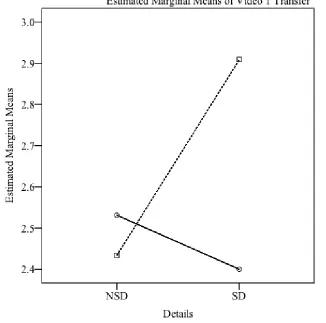
seductive details condition, F(1, 121) = 4.32, p < .05 , d = 0.36 , was observed for
problem-solving transfer in Video 1. In contrast to prior research conducted in laboratory
settings, there was no seductive details effect observed. No statistically significant
differences for voice were observed, but the descriptive statistics revealed a trend of
improving scores for both retention and transfer for different teacher voice suggesting
that social agency theory does not explain previous voice principle research. Prior
knowledge was positively associated with transfer for teacher’s voice and with retention
iv
This dissertation, written under the direction of the candidate’s dissertation committee
and approved by the members of the committee, has been presented to and accepted by
the Faculty of the School of Education in partial fulfillment of the requirements for the
degree of Doctor of Education. The content and research methodologies presented in this
work represent the work of the candidate alone.
Colette Roche April 7, 2016
Candidate Date
Dissertation Committee
Mathew Mitchell, Ph.D. April 7, 2016 Chairperson
Kevin Oh, Ph.D April 7, 2016
v
Acknowledgements
We all stand on the shoulders of giants. Human accomplishment is the result of the work of those who came before and with the support of those walking alongside. I am deeply grateful to those who provided research from which my work emerged and to those who supported me in completing my research. In particular, I wish to acknowledge the following:
My grandmother and my mother: Pearl Robertson for instilling a love and respect of learning in my mother, Phyllis Roche, who in turn instilled that love in me.
My dear friends: Valerie Hecht and Karl Sutphin, who encouraged me with their interest and pep-talks.
My work colleagues: Dr. Diana Murray, Jocelyn Sideco, Rich Vitale, Mark Lederer, and Pam Shay without whom this study could not have been completed.
My cohort and near cohort colleagues: Trudy Gross, Elaine Barry, Yvette Mere-Cook, Denae Nurnberg, Val Stokeld, Diana Neebe, and Melisa Kaye for their commiseration, kindness, and understanding of my “lone wolf” nature.
My committee members: Dr. Kevin Oh and Dr. Susan Prion for their perceptive suggestions that added clarity and depth to the study.
My advisor and committee chairperson: Dr. Mathew Mitchell for his insightful feedback and for providing exactly the guidance I needed at each stage of the process.
vi
TABLE OF CONTENTS
DISSERTATION ABSTRACT………... ii
SIGNATURE PAGE………...iv
ACKNOWLEDGEMENTS………. v
TABLE OF CONTENTS………vi
LIST OF TABLES………... x
LIST OF FIGURES………... xii
CHAPTER I: INTRODUCTION………. 1
Statement of the Problem………. 1
Purpose of the Study……… 4
Significance of the Study………. 4
Theoretical Framework……… 6
Cognitive Load Theory……… 6
The Cognitive Theory of Multimedia Learning……….. 9
Social Agency Theory………11
Background and Need……….... 12
The Modality Effect and Multimedia Advantage……….. 14
Seductive Details and the Coherence Principle………. 16
Personalization Principle and the Voice Principle………. 23
The Need for the Study……….. 25
Research Questions……… 27
Definition of the Terms……….. 27
Summary……… 30
CHAPTER II: REVIEW OF THE LITERATURE………... 32
Instructional Design Principles……….. 32
Reduce Extraneous Processing……….. 34
Coherence Principle………... 34
Signaling Principle………. 34
Redundancy Principle……… 35
Spatial Contiguity Principle………... 35
Temporal Contiguity Principle……….. 36
Manage Essential Processing………. 36
Segmenting Principle………. 36
Pre-training Principle………. 37
vii
Foster Generative Processing………. 38
Personalization Principle………39
Voice Principle………...39
Embodiment Principle………40
Guided Discovery Principle………... 40
Self-Explanation Principle………. 40
Drawing Principle……….. 41
Instructional Design Principles and the Study………... 41
Seductive Details………41
First Generation Seductive Details Research………. 41
“Seductive Details Effect” with Scientific Text……… 42
Measure of Reading Ability and Biographical Text……….. 45
Placement of Seductive Details and Prior Knowledge………….. 46
Topic Knowledge, Cognitive Interest, and Text Recall…………. 49
Time Spent on Details……… 50
Challenges in First Generation Seductive Details Research…….. 50
Attempt to Address Challenges………..52
Summary of First Generation Research on Seductive Details…………... 54
Second Generation Seductive Details Research……… 55
Illustration and Problem-Solving Transfer……… 55
Exploring How Seductive Details Harm Learning……… 58
Studies Finding No Differences………. 60
Prior Knowledge……… 61
Working Memory………...62
Large Amounts of Seductive Details………. 63
Self-paced Environment and Prior Knowledge…………. 64
Training Environment……… 64
Summary of Second Generation Research……….65
The Coherence Principle……… 65
Limitations in the Literature……….. 67
Role of Prior Knowledge………... 67
Defining Seductive Details……… 69
Amount of Seductive Details Used……… 72
Types of Seductive Details……… 73
Materials Used in Multiple Studies………77
Settings Used………..78
Time………... 79
Homogeneous Samples……….. 80
The Voice Principle………... 81
Summary……… 85
CHAPTER III: METHODOLOGY………... 87
Research Questions……… 87
Research Design……….87
Sample………88
viii
Instrumentation……….. 92
Treatment Description………95
Development of the Learning Objects………... 95
Design of the Learning Objects………. 97
Defining Seductive Details……….... 99
Procedures……… 102
Data Analyses……….. 104
CHAPTER IV: RESULTS………... 106
Research Question 1……….107
Research Question 2……….110
Data Analysis………... 111
Research Question 3……….119
Summary of Results………. 129
CHAPTER V: DISCUSSION OF RESULTS………. 131
Summary of the Study………..131
Summary of Findings………... 133
Limitations………... 135
Student Integrity and Effort………. 135
Technology………...137
Quantifying and Defining Seductive Details………... 138
Measurement……….... 140
Discussion of the Findings………... 143
The Role of Seductive Details………. 143
The Role of Voice……… 145
The Interactions between Details and Voice………... 147
The Role of Prior Knowledge……….. 148
Conclusions……….. 151
Implications for Research……… 152
Quantification and Validation of Seductive Details Designs………….. 152
Length……….. 154
Actual Students’ Use of Multimedia………154
Measurement……… 155
Learning Management Systems………... 156
Application to Authentic Settings……… 156
Implications for Practice……….. 157
REFERENCES……… 161
APPENDICES………. 171
APPENDIX A: Informed Consent………. 172
APPENDIX B: Site Permission………. 175
APPENDIX C: Content Expert Rating Sheet Model for Prior Knowledge Inventory………... 179
ix
APPENDIX E: Content Expert Rating Sheet Model for Assessment
Questions……….. 187
APPENDIX F: Video 1 Assessment……….. 190
APPENDIX G: Video 2 Assessment……….. 195
APPENDIX H: Video 3 Assessment……….. 200
APPENDIX I: Video 4 Assessment……….. 205
APPENDIX J: Content Expert Rating Sheet for Multimedia Design………... 210
APPENDIX K: Slides of the Video 1 No Seductive Details……….. 213
APPENDIX L: Slides of the Video 1 Seductive Details……… 228
APPENDIX M: Slides of the Video 2 No Seductive Details……….. 243
APPENDIX N: Slides of the Video 2 Seductive Details……… 260
APPENDIX O: Slides of the Video 3 No Seductive Details……….. 277
APPENDIX P: Slides of the Video 3 Seductive Details……… 297
APPENDIX Q: Slides of the Video 4 No Seductive Details……….. 321
APPENDIX R: Slides of the Video 4 Seductive Details……… 337
x
LIST OF TABLES
Table 1. Multimedia Design Principles Defined……… 33
Table 2. Design of Study……… 88
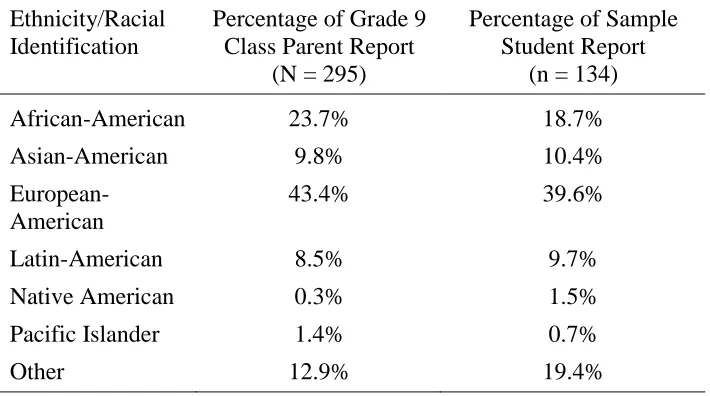
Table 3. Ethnicity/Racial Identification Provided Upon Enrollment by Parents of All Ninth Grade Students and Self-Reported Ethnicity/Racial Identification Provided by Students in Sample……….. 89
Table 4. Gender as Reported by All Grade 9 Students at Time of Enrollment (n = 295)……….. 90
Table 5. Gender of Sample (n = 134)……… 90
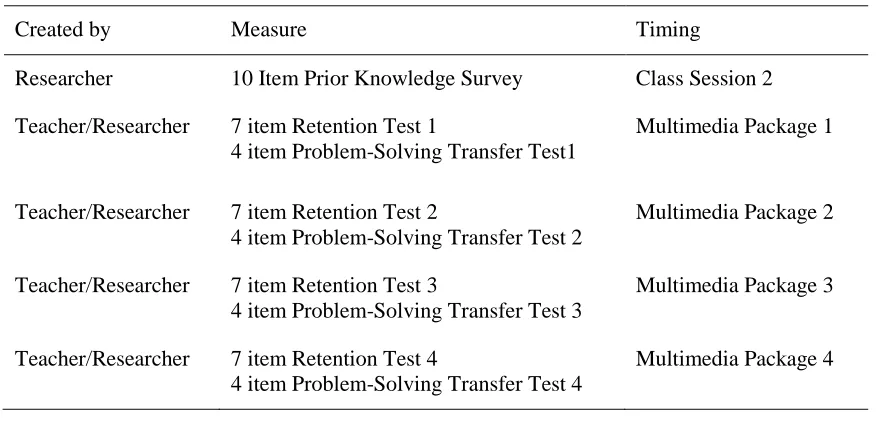
Table 6. Measures and Timing……….. 92
Table 7. Reviewer Background and Explanation for Content Rating………96
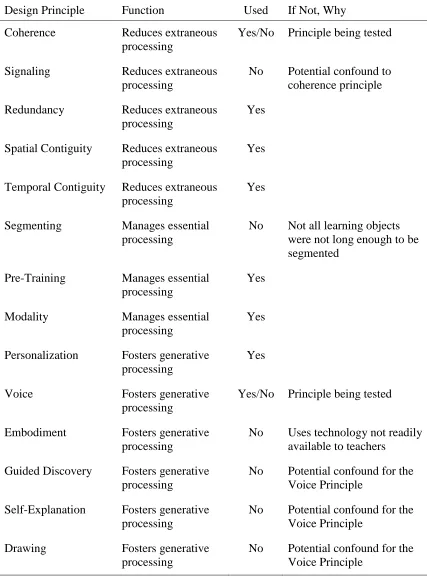
Table 8. Multimedia Design Principles………. 98
Table 9. Comparison of NSD and SD Elements in Creation Video (Video 1)………. 100
Table 10. Comparison of NSD and SD Elements in Self-Disclosure Video (Video 2)……….100
Table 11. Comparison of NSD and SD Elements in History of Courtship 1 (Video 3)……….100
Table 12. Comparison of NSD and SD Elements in History of Courtship 2 (Video 4)……….101
Table 13. Video and Version Lengths by Teacher………. 102
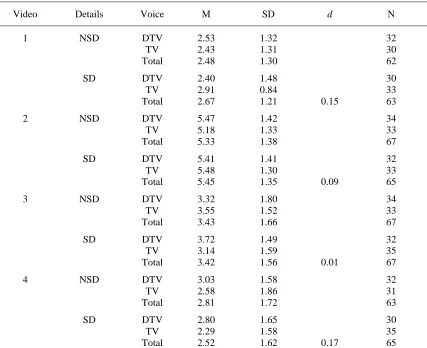
Table 14. Descriptive Statistics and Cohen’s d for Retention by Details for Videos 1-4……….. 108
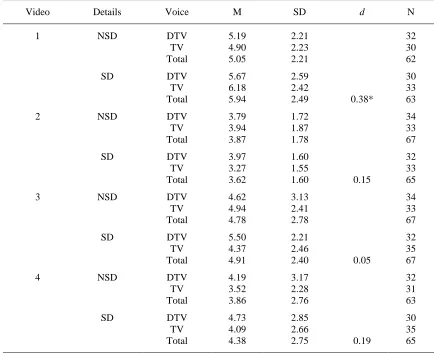
Table 15. Videos 1-4 Descriptive Statistics and Cohen’s d for Problem-Solving Transfer Details………. 109
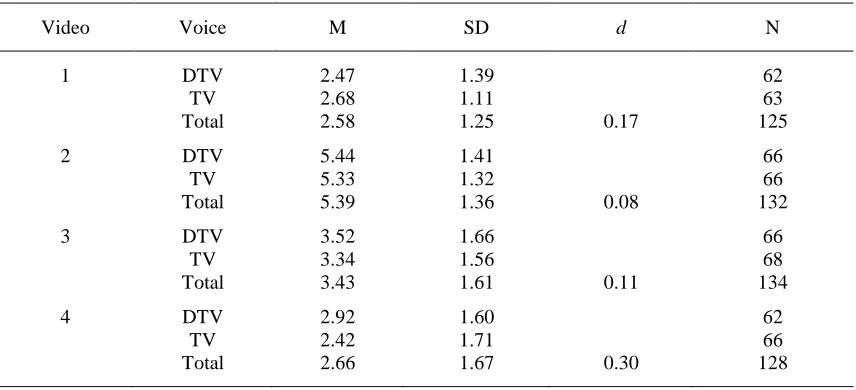
Table 16. Descriptive Statistics and Cohen’s d for Retention by Voice for Videos 1-4……….. 110
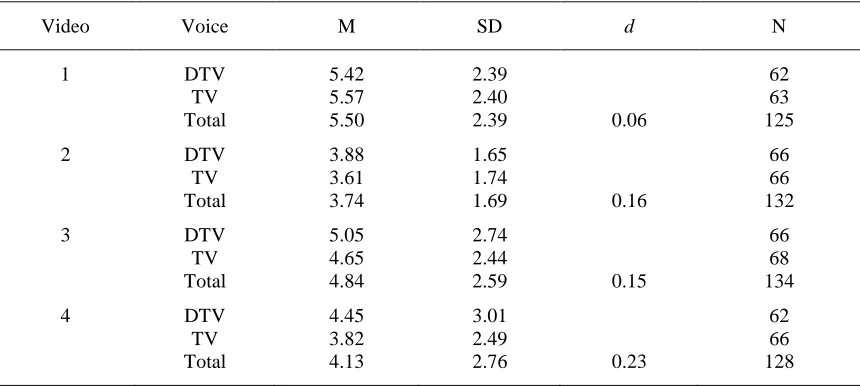
Table 17. Problem-Solving Transfer Descriptive Statistics for Voice by Video……… 111
Table 18. Descriptive Statistics for Prior Knowledge Measures………... 120
xi
Table 20. Descriptive Statistics and Prior Knowledge Pearson Product
Moment Correlation Coefficients by Voice for Video………... 122
Table 21. Descriptive Statistics and Pearson Product Moment Correlation
Coefficients for Prior Knowledge by Groups for Video 1………... 122
Table 22. Descriptive Statistics and Pearson Product Moment Correlation
Coefficients for Prior Knowledge by Details for Video 2………... 123
Table 23. Descriptive Statistics and Pearson Product Moment Correlation
Coefficients for Prior Knowledge by Voice for Video 2………….………... 123
Table 24. Descriptive Statistics and Pearson Product Moment Correlation
Coefficients for Prior Knowledge by Group for Video 2………... 124
Table 25. Descriptive Statistics and Pearson Product Moment Correlation
Coefficients for Prior Knowledge by Details for Video 3……….. 125
Table 26. Descriptive Statistics and Pearson Product Moment Correlation
Coefficients for Prior Knowledge by Voice for Video 3……….... 125
Table 27. Descriptive Statistics and Pearson Product Moment Correlation
Coefficients for Prior Knowledge by Group for Video 3………...126
Table 28. Descriptive Statistics and Pearson Product Moment Correlation
Coefficients for Prior Knowledge by Details for Video 4………..126
Table 29. Descriptive Statistics and Pearson Product Moment Correlation
Coefficients for Prior Knowledge by Voice for Video 4……… 127
Table 30. Descriptive Statistics and Pearson Product Moment Correlation
Coefficients for Prior Knowledge by Group for Video 4………... 127
Table 31. Statistically Significant Pearson Product Moment Correlation
xii
LIST OF FIGURES
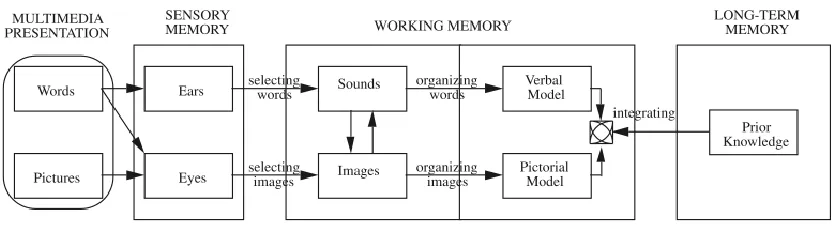
Figure 1. Mayer’s CTML model (Mayer, 2001, p. 37)………... 10
Figure 2. Interaction Plot for Video 1 Retention Details to Voice……… 112
Figure 3. Interaction Plot Video 2 Retention Details to Voice………. 113
Figure 4. Interaction Plot Video 3 Retention Details to Voice………. 114
Figure 5. Interaction Plot Video 4 Retention Details to Voice………. 115
Figure 6. Interaction Plot Video 1 Problem-Solving Transfer Details to Voice……... 116
Figure 7. Interaction Plot Video 2 Problem-Solving Transfer Details to Voice……... 117
Figure 8. Interaction Plot Video 3 Problem- Solving Transfer Details to Voice…….. 118
Figure 9. Interaction Plot Video 1 Problem-Solving Transfer Details to Voice……... 119
Figure 10. Summary of Statistically Significant Results……... 129
CHAPTER I
INTRODUCTION
Statement of the Problem
Multimedia is a widely used instructional tool in secondary classrooms. While
teachers generally can evaluate content for clarity and accuracy, most are uncertain as to
what other factors to consider regarding the selection and design of multimedia
instructional materials (Rey, 2012; Thalheimer, 2004; Towler, 2009).
Multimedia designers and users often operate under the belief that adding
information for interest (seductive details) is helpful in motivating students to learn (Rey,
2012). As a result, multimedia often includes narrative detail as well as sound and visual
effects that are irrelevant to the defined learning goals (Thalheimer, 2004). In contrast,
others design multimedia to include only essential elements (coherence principle) of the
material to be learned (Mayer & Moreno, 2002). Ascertaining the relative efficacy of
these two conflicting approaches to multimedia design—seductive details versus the
coherence principle—has practical importance for secondary teachers as they gain greater
access to inexpensive and easy tools for creating their own multimedia as well as to
Research regarding multimedia initially focused on comparing learning with and
without multimedia components (Samaras, Giouvanakis, Bousiou, & Tarabanis, 2006);
however, inconclusive findings led to a greater emphasis on identifying instructional
design principles that maximize multimedia benefits (Mayer, 1997; Mayer & Moreno,
2002). One line of inquiry has focused on designs that reduce cognitive load, the mental
effort used in the working memory (Moreno & Park, 2010). Cognitive load is theorized to
be created by the limitations of the working memory, which processes information
received via the senses in order to connect the new information with existing information
in long-term memory (Sweller, 2010). One design principle theorized to reduce cognitive
load and thereby improve student learning is the coherence principle whereby extraneous
materials are reduced or omitted in multimedia instructional material (Mayer& Fiorella,
2014; Rey, 2012; Thalheimer, 2006).
The coherence principle evolved from previous investigations of the effect of
varying types of details in written materials (Muller, Lee, & Sharma, 2008). A number of
earlier studies investigated paragraphs of text where seductive details (extraneous
material not essential to the learning goals) were added to increase the interest level of
the material for students (Garner, Gillingham, & White, 1989; Hidi, Baird, & Hildyard,
1982; Mayer & Moreno, 2003, 2010). Although seductive details were found to help
students with high prior knowledge (Park, Moreno, Seufert, & Brünken, 2011), other
research suggested that some students were distracted from learning by seductive details
content (Rey, 2012). In research on multimedia, Mayer and Moreno (2003, 2010)
suggested eliminating extraneous material improves learning with multimedia. Park et al.
using dual channels (visual and verbal without redundant material) led to better transfer
and retention results for students with higher prior knowledge.
Teacher-created multimedia lends itself to being shared among teachers beyond
the creator of the materials. Related research into effective multimedia found a
personalization principle where using informal instruction language in multimedia led to
better problem-solving transfer results (Kartal, 2010; Moreno & Mayer, 2000b, 2004).
Seven additional experiments explored the role of the human voice by comparing it with
a computerized voice or comparing standard accents with strong, nonstandard accents. In
six cases that Mayer (2009) identified as supporting an emerging voice principle, the
human voice in a standard accent resulted in better problem-solving transfer results
(Atkinson, Mayer, & Merrill, 2005; Mayer, Sobko, & Mautone, 2003). In contrast, Ahn
(2010) found no difference between standard accents and nonstandard accents.
The coherence principle and the personalization principle, as well as other
instructional design principles for multimedia, are grounded in systematic research that
reports sufficient statistical information for comparison including measures of practical
significance (Mayer, 2014c; Mayer & Fiorella, 2014; Rey, 2012; Thalheimer, 2004).
However, the generalizability of these instructional design principles is limited by the
nature of the research design and sample compositions in prior studies. Generally,
experiments were short, one-shot treatments in a laboratory environment followed by
measurement. The test subjects were university students who were part of the psychology
general test pool, generally in their early 20’s and self-identified novices in the natural
Purpose of the Study
Prior research has identified instructional design principles for multimedia
including the easily implemented coherence principle and voice principle. Both yield
problem-solving transfer increases of medium to high practical significance (Mayer &
Fiorella, 2014). However, these findings are limited in generalizability because they were
conducted in laboratory environments testing homogeneous samples with low prior
knowledge generally in natural sciences (Clark & Mayer, 2011; Mayer, 2009; Rey, 2012;
Thalheimer, 2004). Therefore, the purpose of this study was to test the coherence
principle in a realistic setting using a heterogeneous group of ninth grade students in a
humanities course to determine the effect of seductive details on retention and
problem-solving transfer. Additionally, this study extended the emerging voice principle by
examining the effect of the teacher’s voice on student learning as measured by retention
and problem-solving transfer. Finally, this study explored the relationship between prior
knowledge, retention, and problem-solving transfer.
Accordingly, the study used a series of 2 x 2 between subjects factorial designs
and randomly assigned students across six classes to one of four groups: seductive details
and teacher’s voice, no seductive details and teacher’s voice, seductive details and
different teacher’s voice, or no seductive details and different teacher’s voice. The study
also collected a measure of prior-knowledge.
Significance of the Study
This study is important for four reasons. First, this study provided application of
laboratory-based research to a realistic school setting. Mayer’s review of 14 studies about
designed using the coherence principle (Mayer 2009). But Clark and Mayer (2011)
acknowledged the need for such research in “authentic learning environments” (p. 172).
Research outside of the laboratory setting does not always find support for a coherence
principle (Muller et al., 2008; Rey, 2012).
Second, the large effect sizes, median Cohen’s d = 0.97 in a review of 14
laboratory-based, coherence principle studies, suggest an easily implemented multimedia
design approach for significantly improving student problem-solving transfer and
retention results (Mayer, 2009). Confirmation of this principle’s effect in a realistic
setting would provide teachers with essential guidance in their choice or design of
multimedia. Because the coherence principle is easy for teachers to recognize and
implement, evidence regarding its generalizability in a realistic classroom setting is of
particular importance.
Third, this study adds to the research on the relationship between prior knowledge
and seductive details. Rey (2012) notes inconsistency in past research on seductive
details with regard to prior knowledge. While the coherence principle is a design
principle that reduces cognitive load by eliminating unnecessary details, seductive details
are included to enhance student interest and thus motivate students to attend to the
content. Most previous studies used self-assessment scores to identify subject area
novices (Rey, 2012), and a few studies used prior knowledge as a covariate to control for
a lack of random assignment (Muller et al., 2008; Park et al., 2011; Park, Kim, Lee, Son,
& Lee, 2005). By using a heterogeneous sample and a measure of prior knowledge, this
study sought to explore the relationship between prior knowledge, retention, and
Finally, teachers commonly share instructional materials that they create. This
study extended the emerging voice principle by explicit assessment of the effect of
knowing the teacher’s voice on student learning.
Theoretical Framework
While many theories can be applied to the study of multimedia learning, this
study is grounded in the cognitive theory of multimedia learning (CTML). CTML
extends cognitive load theory (CLT) and adapts it specifically to multimedia learning
(Mayer, 2005). Both are concerned with efficiency and effectiveness in instruction
(Mayer, 2014a; Sweller, 2010). Additionally, a portion of this study is built on social
agency theory, a theory used to explain how some design choices in multimedia learning
objects increase learning (Atkinson et al., 2005; Mayer, 2014c; Mayer et al., 2003;
Moreno, Mayer, Spires, & Lester, 2001).
Cognitive load theory
CLT is an instructional design theory based on the assumption that learning is a
process of moving information into long-term memory in such a way that it can be
recalled and transferred in different contexts (Sweller, 2010). CLT assumes that the
working memory is the key to the long-term memory and that working memory is
constrained at any given moment by the processing loads placed on it. CLT identifies
three types of load: extraneous, intrinsic, and germane (Moreno & Park, 2010; Sweller,
2010).
How materials are presented and organized can increase or reduce the demands
placed on the working memory. Extraneous load refers to the cognitive resources
(e.g., a chaotic learning environment) (Kalyuga, 2011). For example, when lesson
materials do not address a learner’s lack of prior knowledge, extraneous load increases as
learners struggle to organize the new material (Kalyuga, 2010; Moreno & Park, 2010;
Sweller, 2010).
Extraneous load is also created by adding interesting information that is not
directly related to learning goals. Some instructional materials have “seductive details”
deliberately included to motivate learners to continue through the learning materials. CLT
suggests that learning is harmed by extraneous load and thus seductive details should be
eliminated (Garner et al., 1989; Mayer & Moreno, 2003, 2010; Rey, 2012).
Intrinsic load, the second of the three loads, is a function of how complex the
learning materials are—a factor over which the instructional designer has limited control
(Kalyuga, 2010). Frequently, intrinsic load is measured by element interactivity, i.e.,
counting how many elements interact with each other and thus must be processed in the
working memory at same time in order to complete a task (Sweller, 2010). Intrinsic load
has also been measured as “task difficulty” by using the mean probability of reaching the
correct solution (Brünken, Seufert & Paas, 2010). Another key factor for intrinsic load is
the prior knowledge of the learner. Students who can draw on existing schemas because
they have greater prior knowledge have fewer elements to process simultaneously within
their working memories than learners with lower prior knowledge (Kalyuga, 2010).
Germane load refers to the cognitive resources that are used for building schema
for the new learning material (Moreno & Park, 2010). In essence, germane load is the
active processing that the learner engages in to make sense of and to integrate the
to CLT, should include elements that encourage active processing, like self-explanation
where students are prompted to explain concepts to themselves as they proceed through
lesson material (Kalyuga, 2010). Another technique for generating germane load is using
the personalization principle in designing instructional materials. Moreno and Mayer
(2010) report on several studies demonstrating that students performed better when the
language used in the instructional materials, written or oral, is informal and included the
learner. They concluded that the personalization principle is one simple design element
for increasing germane load (generative processing). However, they also acknowledged
that it was possible that the learning advantages of the personalization principle could be
a result of reducing extraneous load. Informal language choices may be easier and clearer
to students (Moreno & Mayer, 2010). Six additional studies have investigated the role of
voice (Atkinson et al., 2005; Mayer & DaPra, 2012; Mayer et al., 2003). They found
advantages for learning for human voices (vs. computer generated) with a standard accent
(American English vs. English with a Russian accent). Mayer (2014c) sees preliminary
evidence for a voice principle that may increase learning by encouraging active
processing.
The three loads, extraneous, intrinsic, and germane, are considered to be additive,
so reducing extraneous load, in theory, allows more cognitive resources for processing
higher intrinsic loads and for engaging in germane (active) processing. Thus,
instructional design based on CLT seeks to identify and reduce extraneous demands on
the working memory that are a result of instructional design choices (Kalyuga, 2010,
2011; Moreno & Park, 2010; Sweller, 2010). CLT suggests that eliminating seductive
resources available for intrinsic and germane loads. Additionally, using informal
language and human, standard accented voices may increase germane load which is
theorized to be beneficial for learning.
The cognitive theory of multimedia learning
CTML, an instructional design theory specific to multimedia learning, extends
CLT and is predicated on three assumptions, each of which is grounded in theory (Mayer,
2005):
1. Learning is limited by working memory constraints (CLT).
2. Learning is more efficient when dual channels are used (dual coding theory).
3. Active processing is necessary for learning (generative theory).
CTML, like CLT, sees the constraints of working memory as key to instructional
design. Essentially, all information must be processed through the working memory in
order to be incorporated into the long-term memory. Miller (1956) found that the general
limitation for processing information was seven items plus or minus two. Baddeley and
Hitch (1974) extended Miller’s work by theorizing models of how information is
processed. CLT and CTML focus on the limited processing ability in the working
memory. Learning materials designed using the CLT or CTML frameworks are thus
intended to limit unnecessary use of working memory resources (Mayer, 2009; Sweller,
2010).
CTML recognizes dual coding, using both auditory and visual sensory channels
for conveying information as suggested by Paivio’s Dual Coding theory (Moreno &
Mayer, 2000a), as a key reason for using multimedia for instruction (Mayer, 2014a). Dual
verbal channels and that use of both channels simultaneously increases the number of
ways that information is coded in memory (Mayer, 1997; Mayer & Moreno, 2002).
Finally, CTML emphasizes active processing called generative processing in
CTML or germane load in CLT. Both CLT and CTML recognize the need for the learner
to actively engage with the learning materials in order to move information into
long-term memory and to build schemas (Mayer & Moreno, 2003, 2010).
CTML is a model to explain how meaningful learning occurs (Mayer, 2014a;
Mayer & Wittrock, 1996). Meaningful learning is the name Mayer gave to his initial
model, which has evolved into CTML (Mayer 2005). Figure 1 shows Mayer’s model.
Figure 1. Mayer’s CTML model (Mayer, 2001, p. 37).
Meaningful learning occurs through an active process. Learners select relevant
words and pictures, organize them into verbal and visual models, and then integrate them
with each other and their prior knowledge (Mayer, 2005). Mayer and Wittrock (1996)
assess meaningful learning indirectly by use of problem-solving transfer questions. Harp
and Mayer (1997) identified the addition of the first measure of problem-solving transfer
as one of their unique contributions to seductive details research. Problem-solving
transfer is the ability to use what has been learned in one situation in a novel situation
(Mayer & Wittrock, 1996). Problem-solving transfer items ask students to figure out
understanding from the lesson (Mayer & Wittrock, 1996). Within multimedia research,
problem-solving transfer is generally measured immediately after the learning period by a
series of problem-solving questions (Mariano, 2014). Muller et al. (2008) shifted from
Mayer’s free response problem-solving transfer questions to multiple choice questions.
Muller et al. (2008) justified the shift because multiple-choice questions are better suited
for realistic settings.
As an instructional design theory, CTML seeks to reduce extraneous cognitive
load, to increase efficient use of both the auditory and visual channels, and to engage
learners in actively processing learning materials (Mayer, 1997; Mayer & Moreno, 2002).
Social agency theory
In some multimedia studies an additional theoretical framework is included with
CTML. Social agency theory has been proposed as a means of exploring the effectiveness
of pedagogical agents (Atkinson et al., 2004; Mayer et al., 2003; Moreno et al., 2001). If
personalization and the voice principle augment germane load (Mayer, 2010), social
agency theory may explain how. Social agency theory in multimedia learning posits that
the relationship between the computer and the learner can take on similar characteristics
to purely human relationships. Within multimedia, the assumption is that a relationship
can be fostered by including human voices in the accent of the region of the learner and
that social cueing can be prompted by informal choices of language. Social cueing,
according to the framework, may improve learning by causing the student to try to learn
more deeply because his/her social interaction schema has been primed (Mayer, 2014c;
Mayer et al., 2003). While one explanation for the effects of the personalization and
computerized voices, too formal or too casual of language, or voices that students do not
readily recognize may add extraneous load causing students to lose efficiency in
processing learning material (Atkinson et al., 2004).
This study explored the effect of seductive details in dual channel instructional
materials (multimedia) on retention and problem-solving transfer and included a prior
knowledge measure. According to CTML, seductive details should have interfered with
student retention and problem-solving transfer when students had lower prior knowledge
because prior knowledge reduces the amount of working memory needed to process the
learning material and may prevent the wrong schemas from being primed (Rey, 2011,
2012). This study also explored the effect of the teacher’s voice in retention and
problem-solving transfer. Although some research has led to the identification of an emerging
voice principle, no studies have been conducted to examine whether the student knowing
the teacher’s voice increases student learning. Both CLT and social agency theory would
predict that students should perform better in retention and problem-solving transfer tests
when the voice in the multimedia is that of their teacher because students are not using
additional cognitive resources in figuring out whose voice they are listening to (CLT) or
because they are able to draw on the existing classroom relationship when they hear their
teacher’s voice in the multimedia.
Background and Need
As schools and individuals have acquired increased access to technology and the
internet, more teachers use video podcasts, animations, and multimedia packages as part
of instruction (Eskicioglu & Kopec, 2003). One relatively new multimedia tool
is a collection of screencasts (initially created by Sal Khan to tutor his cousin in another
state) and other instructional videos designed to help students learn independently.
Content is chunked into discrete segments, generally ranging from two to 15 minutes in
length. One result of the Khan Academy and new multimedia technology is the
recognition of the digitally “flipped” classroom (Bormann, 2014; LaFee, 2013). The
digitally flipped classroom model uses teacher-created screencasts or other multimedia
materials to provide direct instruction outside of the classroom so that class time can be
used for problem solving, discussion, labs, and other activities that students cannot
engage in productively outside of class (Bergmann & Sams, 2013; Bormann, 2014;
LaFee, 2013). Proponents of the digitally flipped classroom model focus on the
opportunity for students to absorb direct instruction at their own pace while class time is
used for deeper learning through problem solving and group activities (Bergmann &
Sams, 2013; LaFee, 2013; Lancaster, 2013). However, multimedia selection and creation
in this context tends to reflect more of a teacher’s anecdotal sense of what engages
student interest than research-backed design principles about what effectively augments
student learning (Smith & Smith, 2012; Towler, 2009). As reflected in the Khan Academy
collection, a long tradition in teaching is the sharing of teacher-created instructional
materials. In the past, shared materials were generally limited to written materials
(worksheets) where authorship is rarely clear; however, shared teacher-created
multimedia products make authorship obvious when students cannot help but note that
the voice belongs to a different teacher. There is no research on the effect of the learner
The modality effect and multimedia advantage
Multimedia allows the use of both the auditory and visual sensory channels,
theorized by both CLT (Sweller, 2010) and CTML (Mayer, 2014a) to improve cognitive
processing. Improved problem-solving transfer resulting from using auditory and visual
sensory channels to deliver information is called the modality effect (Mayer & Moreno,
2003). The modality effect is one solution to an increased cognitive load due to split
attention—the additional cognitive processing required when the learner must divide
attention between visuals like text and a graphic on the screen (Sweller, 2010).
Multimedia allows written text to be replaced by an auditory track allowing the user to
hear information while viewing an accompanying graphic. Multimedia materials
designed to use the visual and auditory channels simultaneously provide a means to avoid
overloading a single channel (Mayer, 1997). Multimedia, because it relies on the use of
both audio and visual material, shifts some of the learner’s processing from one channel
to another by moving some information to the auditory channel to prevent overloading
the visual channel.
The CTML suggests that designing multimedia so that the auditory and visual
channels are used to prevent overloading either channel can lead to improved student
learning (Mayer, 2014a). Several studies (e.g., Ginns, 2005; Mayer & Anderson, 1991,
1992; Mayer & Moreno, 2002) found that replacing written text with spoken narration led
to greater transfer, the ability to apply a recently learned concept to a different context or
circumstance. For example, after studying a multimedia program on botany, the
problem-solving transfer test provided students with characteristics of a natural environment and
computer program, students selected plant parts (type of leaf, type of root system, type of
stem, etc.) that were appropriate for the given natural environment (Moreno & Mayer,
2000b).
In a meta-analysis of 39 studies of the modality effect, Ginns (2005) found that
students performed better when graphics were presented with spoken narration than with
text, but those effects were moderated by the degree of element interactivity—the number
of items the learner must be able to hold simultaneously in the working memory (Ginns,
2005)—and by whether the presentation was user-paced or system-paced. Spoken
narration with graphics was more effective with high element interactivity and more
effective with system-paced presentations. Because element interactivity was used as a
proxy measure for intrinsic load (Moreno & Park, 2010), Ginns (2005) suggested that
combining spoken narration with visual graphics has greater impact for high intrinsic
load (inherently complex) materials than for lower intrinsic load (inherently less
complex) tasks. Although proponents of flipped classrooms cite the ability of students to
review materials as much as they need (Bormann, 2014), Ginns (2005) suggested that
system-paced materials more accurately reflect the reality that students have limited time
to learn concepts. As long as formal education is set to a strict timeline, user-pacing is
limited by the finite amount of time students have to learn content (Ginns, 2005).
While screencasting and video creation provide teachers with the ability to take
advantage of the benefits of multimedia (i.e., reducing cognitive load by using both the
audio and visual channels to process information), they also raise questions about design.
effective design for student learning? Can teachers continue to share their materials with
their colleagues or does the voice on the audio track influence student learning?
Seductive details and the coherence principle
Text and multimedia research have explored the effects of adding details that are
interesting but not directly relevant to the instructional goal as a means of maintaining
student interest. The research consistently uses two measures of learning called retention
and problem-solving transfer (Harp & Maslich, 2005; Harp & Mayer, 1997, 1998; Rey,
2011; Thalheimer, 2004). Retention, in these studies, refers to the ability to recall main
ideas and details from the content (Harp & Mayer, 1997) and was a standard measure
from the reading research. Transfer, sometimes called problem-solving transfer in these
studies, generally refers to the ability to use the content information in a new and
different context (Harp & Mayer, 1997; Mayer & Wittrock, 1996). Harp and Mayer
(1997) included problem-solving transfer for the first time in studies of seductive details
because they were interested in meaningful learning: selecting words and images,
organizing the words and images into models, and integrating the verbal and visual
models with prior knowledge. Mayer and Wittrock (1996) posited that problem-solving
transfer was a way to measure meaningful learning. Seductive details research began with
text-based materials and was later extended to multimedia materials.
A body of research in the 1980s and 1990s studied the impact of various means of
enhancing text interest for students. Hidi et al. (1982) found that students generally
identified narrative text as interesting and that students were able to identify key ideas
within narrative (story-telling) text. In contrast, students found expository (explanatory)
read blended text (narrative and expository) they were less successful in identifying key
ideas. Hidi et al. (1982) found that subjects’ responses seemed to indicate that mixing
interesting and important material with uninteresting and important material distracted
readers from identifying the main ideas.
Garner et al. (1989) explored the relationship between what they labeled seductive
details in expository text on macro-processing, the ability to recall key ideas, and
micro-processing, the ability to recall and use information in a new context, extending the work
of Hidi et al. (1982). Garner et al. (1989) conducted two experiments. In the first, 20
adult graduate students selected for strong academics were placed in one of two groups.
Both groups read three paragraphs of expository text. The text for one group added one
seductive detail to each paragraph while the other did not. Seductive details were details
included to add interestingness to the reading for the purpose of keeping readers engaged.
While related to the material to be learned, they were not necessary for achieving the
learning goal. After reading, each participant was asked to identify the main ideas, rate
interest, write down the most interesting thing read, and then perform a picture exercise
where the investigator held up a picture of an animal and asked the participant to choose
a second picture that was different from the first based on characteristics described in the
reading. The second experiment (n = 36) was made up of seventh graders identified by
tests and teachers as average readers. Participants were placed in one of three conditions:
no seductive details, no seductive details and redundant signaling, and seductive details.
The text was the same from the first experiment except for the redundant signaling text,
which included additional signal words intended to cue students to the important
Garner et al. (1989) found in experiment one that adults in the seductive details
group performed less well on the identification of the main ideas task and that there was
no difference on the second task that required participants to identify an insect that was
different from the insects in the reading and to justify the choice with a reason based on
the reading. Both groups rated their text as of average interest. In experiment two they
found that the group of seventh graders who had materials that included seductive details
and minimal signaling performed significantly less well than the groups that did not have
seductive details. Garner et al. (1989) called this decrease in performance the “seductive
details effect.”
Mayer and Moreno (2003, 2010) extended the research with texts and suggested
that eliminating extraneous material improves learning with multimedia. Extraneous
material, sometimes called seductive details, are words, sounds, images, and video that,
while interesting, are not essential to the material or learning goals and instead add to the
cognitive processing load for students (Mayer & Moreno, 2010). Reduction of extraneous
material in instructional material is referred to in the literature as the coherence principle,
the design principle (Clark & Mayer, 2011; Mayer, 2009; Mayer & Moreno, 2003, 2010)
recommended to counteract the seductive details effect.
In a review and meta-analysis of literature (n = 39) on the seductive details effect,
Rey (2012) reported that a review of the literature provided mixed results regarding a
seductive details effect. Studies finding support for the seductive details effect reported
large effect sizes, and a meta-analysis revealed a statistically and practically significant
effect for the seductive details effect (Rey, 2012; Thalheimer, 2004). For retention, the
problem-solving transfer, the weighted mean effect size was Cohen’s d = 0.48, a medium effect
size (Rey, 2012). In other words, seductive details interfered with retention and, more
importantly, with problem-solving transfer. A number of moderating effects were
examined including the use of time limits for the learning phase and/or testing phase, the
effect of different kinds of seductive details, the impact of cognitive load (low load with
seductive details outperformed those without the seductive details), and learner
characteristics (extraversion, self-regulation skills) (Rey, 2012).
Rey (2012) noted several key limitations of the research he reviewed. First, the
research generally used a self-report of prior knowledge to ensure only novices
participated. Using a measure of prior knowledge as a covariate could improve the
interpretability of the role of prior knowledge. Second, power analyses are necessary to
ensure the sample is large enough to find an effect. Third, the type of seductive details
should be distinguished (irrelevant vs. somewhat unimportant). Studies rarely provide a
clear definition of seductive details, and Rey (2012) suggests that differentiating between
whether the material is totally irrelevant to the learning objectives as opposed to
somewhat unimportant to the learning objectives may sort out some of the inconsistent
findings in the literature. Fourth, longer learning times are necessary. Fifth, different
types of learners should be included in order to connect the expertise reversal effect
(when students with high prior knowledge perform more poorly in a reduced cognitive
load environment) and the seductive details effect. Sixth, research should be connected to
adaptive learning environments (Rey, 2012).
Rey’s (2012) meta-analysis reviewed research about the seductive details effect
with illustration, a growing body of work examines the seductive details effect in
instructional multimedia materials.
Mayer, Heiser, and Lonn (2001) report on four experiments, two experiments
(one and two) testing the effects of redundancy with text and audio and two experiments
(three and four) testing the effects of adding video to multimedia to enhance interest. The
treatment group in experiment three received a multimedia program interspersed with six
short (approximately 10 seconds each) narrated video clips related to the instructional
topic of lightning but not related to the instructional goal of explaining a cause and effect
model of lightning formation. In contrast, the control group received only the multimedia
program. While no statistical difference in retention scores was found, there was a
statistical difference in the transfer scores favoring those who did not receive the videos.
Experiment 4 used the same videos, but instead of interspersing the videos throughout the
instructional materials, they were all placed either before or at the end of the same
multimedia program used in experiment 3. Mayer et al. (2001) found no statistical
difference in performance on retention, but did find a statistical difference favoring the
group that saw the videos after the multimedia instructional program. Mayer et al. (2001)
interpreted the results as supporting the extension of the seductive details effect found in
earlier text research to multimedia design.
In contrast, Park et al. (2011) found that seductive details were useful for students
with higher prior knowledge with multimedia that had been designed to use dual channels
to reduce cognitive load. In their experiment, 100 high school students were randomly
assigned in a 2 x 2 factorial design testing the reduction of cognitive load by shifting text
each multimedia design. The self-paced multimedia package was made up of 11 screens
and was part of the single 75-minute session that included pre-tests, instruction and
post-tests. They found that the students who achieved the highest scores were those in the
narrative-seductive details group. The narration condition also received higher ratings of
cognitive load. They suggested that perhaps adding some additional cognitive load (like
seductive details) for knowledgeable learners might enhance learning. Their findings
suggest that some learner traits (higher prior knowledge) and design traits (dual channel)
may make seductive details useful.
The seductive details effect has been investigated from a perspective of
application. Mayer and colleagues applied seductive details research to designing
learning materials without seductive details thus testing a coherence principle (Mayer,
1999, 2003, 2008, 2009; Mayer & Moreno, 2003, 2010). In one of the very few studies
conducted in a realistic environment, Muller et al. (2008) tested the coherence principle
with 104 students from years 10 (n = 22), 11 (n = 18) and the first year of university (n =
64) using an online multimedia treatment on stellar spectra. Students participated
voluntarily as part of homework and accessed the computer-based learning material from
home on their personal computers. This study compared results of students who received
a concise version of the material (7 minutes 30 seconds) to those who received the longer
version with interesting but irrelevant details (10 minutes 45 seconds). The post-test was
made up of 13 multiple-choice questions and three short answer questions. Each question
type included items intended to measure retention and problem-solving transfer. Muller et
al. (2008) found no significant difference between the concise and extended treatment
determined by the different grade levels participating in the study. Muller et al. (2008) in
their experiment in authentic setting failed to replicate the findings of Mayer and
associates in their laboratory-based research. They suggested a number of possible
explanations for their results including the “noise” introduced into the experiment by
having the students complete the work at home instead of in a classroom. They noted,
however, the advantages of deploying materials online with the ability to randomly
assign treatment groups as well as creating a transparent and repeatable process. They
also recommended that future studies consider improving item discrimination by
employing two-tiered, multiple-choice tests, using a measure of cognitive load, using a
measure of interest, and awarding grades for “earnest participation” in order to provide
better abilities for linking the extra materials to an observable result.
Much of the research conducted regarding the seductive details effect and its
countermeasure, the coherence principle, has taken place in laboratory conditions in
single shot treatments for very short durations. Learning materials are often less than four
minutes in duration and groups receive a single treatment that is measured immediately
(Doolittle & Altstaedtler, 2009; Harp & Maslich, 2005; Mayer, DeLeeuw, & Ayres,
2007; Mayer & Moreno, 2002, 2003; Mayer et al., 2001; Moreno & Mayer, 2000a). The
participants, generally, have been homogenous groups selected for limited prior
knowledge. Longer learning sequences with heterogeneous groupings in an authentic
environment are needed to learn more about the generalizability of the seductive details
effect and the effectiveness of designing multimedia by following the coherence principle
(2008) suggested, reducing the amount of “noise” that enters the study in an authentic
environment is also needed.
Personalization principle and the voice principle
One question about teacher-created multimedia is whether it is effective for
teachers to share their created content with other teachers of the same course. A body of
research supports a multimedia design principle called personalization, an instructional
design principle that says that when multimedia instruction is presented in a
conversational style that people learn more deeply (Mayer, 2014c), that may be relevant
to this inquiry. Studies of personalization initially investigated the effect of multimedia
materials that used formal language in contrast with materials that used conversational
style. Moreno and Mayer (2000b) reported on five experiments using a computerized
voice agent or text with results suggesting that students who received personalized text or
voice outperformed those who received the formal style text or voice. Personalized text
and speech used second person (“you”) and a conversational style. Moreno and Mayer
(2000b) suggested that the improved problem-solving transfer and retention for subjects
who received the personalized materials may have been a result of the priming of
cognitive engagement activating the learner’s self-structure. They also suggested that the
less formal, conversational language may reduce cognitive load as students work to make
sense of the materials.
A subsection of the research on personalization in multimedia has focused on the
differences between computer voices and human voices as well as the role of accents,
which has led to the identification of an emerging principle, the voice principle (Mayer,
where participants were randomly assigned to one of two groups—computer voice or
human voice. The first experiment was with college students while the second was with
high school students. In both experiments the human voice groups outperformed the
computer voice groups on near (structurally identical problems) and far (structurally
different) problem-solving transfer as well as in performance on all four practice
problems. The practical significance was moderate to large on each measure. The
experiments suggest that there is a voice principle that can guide design of multimedia
learning packages.
Mayer et al. (2003) examined the role of voice in two experiments. Their
experiments were conducted in English using a voice with a standard accent voice for the
region and a voice with a heavy, but understandable, Russian accent. They hypothesized
that human, standard accented voices may improve the likelihood of students engaging
cognitively with material because social cues prime the schema for making meaning of
material. They found that students performed significantly better on problem-solving
transfer tasks when they were in a regionally standard accented human voice group. In
contrast, Ahn (2010) in a doctoral dissertation study was unable to replicate the findings
of Mayer et al. (2003). Ahn used a longer learning period, included levels of accent
(medium and heavy), and used two different accents (German and Korean). She found no
statistical differences among groups in learning measures and suggested that the longer
learning period may have allowed students to acclimate to the accents (Ahn, 2010).
Mayer (2014c) cataloged instructional design research on the personalization
principle using Cohen’s d to focus on practical significance. In his review of 17
In a related line of research, there is preliminary evidence suggesting that human voices
with a standard accent lead to better transfer than computerized or accented voices.
Mayer (2014c) reviewed six studies on the voice principle and found a large median
effect size of 0.74. The large effect sizes suggest that instructors can very easily improve
the effectiveness of their multimedia materials. Extending the research of the voice
principle to whether the student knowing the voice has a significant effect on learning as
social agency theory suggests is of practical value to instructors.
The need for the study
The relative ease with which teachers can now produce multimedia for their
students creates a practical need for research-based guidelines for effective design.
Research reveals a modality effect suggesting that students have better problem-solving
transfer results when dual channels are used (Ginns, 2005; Mayer, 1997; Mayer &
Moreno, 2003; Sweller, 2010). Research in text and multimedia suggests that including
interesting but instructionally irrelevant details to motivate student interest creates a
seductive details effect which is detrimental to student learning as evidenced by
problem-solving transfer results, while research on designing multimedia that follows the
coherence principle, the design principle that eliminates instructionally irrelevant details,
improves problem-solving transfer for students (Clark & Mayer, 2011; Garner et al.,
1989; Mayer 2009; Mayer & Moreno, 2003, 2010; Mayer et al., 2001; Rey, 2012).
This study sought to address weaknesses and gaps in the previous research on the
seductive details effect and its countermeasure, the coherence principle. The study was
conducted within a realistic environment with materials that were longer in duration
used four instructional sessions with four measurement sessions with the same subjects.
This better reflects realistic instructional practices. The sample for this study, unlike in
most previous studies, was a heterogeneous group and the prior knowledge measurement
provided a means to explore the relationship between prior knowledge, retention, and
problem-solving transfer in different conditions (Rey, 2012; Thalheimer, 2004). To
account for how students encounter multimedia learning, this study was conducted within
the classroom environment as an in-class learning activity and thereby reduced “noise”
(Muller et al., 2008) while contributing data from a realistic environment.
Further instructional design research revealed a personalization principle where
informal instructional language leads to better problem-solving transfer, and, in a related
line of research, there is preliminary evidence suggesting that human voices with a
standard accent lead to better transfer than computerized or accented voices. Thus the
study sought to extend the limited research on the voice principle to investigate the role
of knowing the teacher’s voice. These principles are particularly relevant because
teachers frequently share instructional materials with other teachers, and the research that
has led to the identification of the voice principle suggests that applying simple design
principles leads to strong learning gains. Additionally, a finding in support of improved
learning when the learner knows the teacher’s voice would add support to social agency
theory in understanding the voice principles in multimedia learning.
This study also extends the understanding of both the seductive details effect and
the voice principle by examining a possible interaction between the two. The large effect
sizes found in research on the coherence principle (0.86), the personalization principle
(Mayer, 2014c; Mayer & Fiorella, 2014). The study directly addresses acknowledged
weaknesses and gaps in the literature and holds practical importance for teachers who
design their own course multimedia materials.
Research Questions
The study sought to answer the following questions:
1. What is the effect of seductive details at four testing times in teacher-created
multimedia on retention (the ability to recall content) and on problem-solving transfer
(the ability to use content knowledge in a new and different context)?
2. What is the effect of the teacher’s voice at four testing times in teacher-created
multimedia on retention and problem-solving transfer?
3. What is the relationship between prior knowledge, seductive details, and
teacher voice?
Definition of Terms
Coherence Principle: An instructional design principle that says that students
learn better from materials where extraneous words, images, sounds, and video have been
eliminated (Mayer & Moreno, 2003).
Cognitive Load Theory: An instructional design theory based on knowledge of
human cognitive architecture which specifically addresses the limitations of working
memory (Paas & Sweller, 2014).
Cognitive Theory of Multimedia Learning: An instructional design theory that
addresses how people learn from words and pictures. It has three assumptions: limited
capacity, dual-channel processing, and active processing. According to the theory, people
Meaningful learning occurs when people engage in appropriate cognitive processing
while learning (Mayer, 2014a).
Dual Coding Theory: A theory that visual information and verbal information are
processed in separate cognitive channels of the brain (Paivio, 1986).
Element Interactivity: The number of elements that must be processed at the same
time in the working memory. Used as a way of describing intrinsic load in cognitive load
theory (Sweller, 2010).
Essential Processing: The cognitive processing necessary to represent the
essential presented material in the working memory during learning. This is related to the
complexity of the material (Mayer & Pilegard, 2014).
Expository Text: Text that explains, informs, or describes (Gillingham et al.,
1989).
Extraneous Cognitive Load: In cognitive load theory, the demands placed on
working memory by instructional design choices that create non-essential elements that
interact in the working memory (Paas & Sweller, 2014).
Germaine Cognitive Load: In cognitive load theory, the demands placed on
working memory by the intrinsic interactivity of elements (Paas & Sweller, 2014).
Intrinsic Cognitive Load: In cognitive load theory, the demands placed on
working memory by the essential interacting elements that must be processed at the same
time in the working memory (Paas & Sweller, 2014).
Meaningful Learning: Learning that is a result of selecting, organizing, and
it was initially presented. Meaningful learning is measured by problem-solving transfer
tests (Mayer, 2003).
Multimedia Instructional Message: Learning materials consisting of words and
pictures intended to foster meaningful learning (Mayer, 2003).
Non-Seductive Details Design: For the purpose of this study, non-seductive
details versions included only visuals selected as directly relevant to the learning
objectives and an audio track that omitted anecdotes and did not include music.
Narrative Text: Text that tells a story (Hidi & Baird, 1986).
Personalization Principle: An instructional design principle that says that when
multimedia instruction is presented in a conversational style that people learn more
deeply (Mayer, 2014c).
Problem-Solving Transfer: A form of transfer that occurs when a student is able
to solve problems that are different from those studied during the instruction phase
(Mayer, 1999).
Retention: How much learners remember from a learning unit. Often measured
through unstructured recall activities (write down everything you remember) or
structured recall activities (write down everything you remember about . . . ) (Garner,
Alexander, Gillingham, Kulikowich, & Brown, 1991; Garner & Gillingham, 1991;
Garner et al., 1989; Hidi & Baird, 1986). In this study, retention was measured by the
number of correct answers on multiple choice quizzes after the learning time.
Schema: Knowledge organized into units or chunks that can reduce demands on