World Maritime University World Maritime University
The Maritime Commons: Digital Repository of the World Maritime
The Maritime Commons: Digital Repository of the World Maritime
University
University
World Maritime University Dissertations Dissertations
11-5-2017
Job security awareness in relation to job continuity for seafarers
Job security awareness in relation to job continuity for seafarers
sailing on international ships
sailing on international ships
Jihyeon Gina Kim
Follow this and additional works at: https://commons.wmu.se/all_dissertations Part of the Labor Relations Commons, and the Transportation Commons
Recommended Citation Recommended Citation
Kim, Jihyeon Gina, "Job security awareness in relation to job continuity for seafarers sailing on international ships" (2017). World Maritime University Dissertations. 564.
https://commons.wmu.se/all_dissertations/564
WORLD MARITIME UNIVERSITY
Malmö, Sweden
JOB SECURITY
AWARENESS IN RELATION
TO JOB CONTINUITY FOR SEAFARERS
SAILING ON INTERNATIONAL SHIPS
By
JIHYEON GINA KIM
Republic of Korea
A dissertation submitted to the World Maritime University in partial
fulfilment of the requirements for the award of the degree of
MASTER OF SCIENCE
In
MARITIME AFFAIRS
(MARITIME EDUCATION AND TRAINING)
2017
ii
ACKNOWLEDGEMENTS
The 14-month journey in World Maritime University gave me experience and opportunities that I have never anticipated in my life. I would like to acknowledge the magnificent academic curricula, and the knowledgeable faculty members who are always open to share thoughts and ideas. The enriching contents in foundation studies, field trips, and specialization studies have raised me to reach the next academic level. The staff at World Maritime University are caring, and warm-hearted. All these accomplishments I have gained would not have been possible if it had not been for them. The governments, organizations, companies, and maritime education and training institutions, which welcomed us during field studies not only helped me gain deeper insights, but also matured me culturally.
Professor Lisa Froholdt, I appreciate your thoughtful supervision for this dissertation. The fruitful ideas and guides, also the chocolate. Professor Song, Professor Manuel, Professor Kitada, and Dr. Bolmsten, I appreciate you all for the advice and caring. Lyndell, I would never forget your special caring, particularly for my medical circumstance early this year. Alma, Ana, Sara, and Kylie, I appreciate you all for your professional help and warm smiles. Mr. and Mrs. Hoebeke, the reason why Henrik Smith Residence is home for us is because you are there. Nicola and Nicolas, your well-balanced diet kept me healthy and facilitated pursuing my studies.
All through the year 2016, and 2017 colleagues of World Maritime University have embraced me, in spite of the lack of knowledge and experience in this field. They rendered me opportunities to obtain priceless knowledge by sharing what they had learned and experienced. S17 student council, MET colleagues, and party animals, I show my sincere appreciation for your support. Aditya, Yoon-tae Sim, Mr. Novalsyah, Min-Jung, Fangfang Hu, Solas, Sir Ong, and Kumar, I acknowledge your guidance and assistance for this research data collecting. Heather Daniel, you were there for me through good and bad in Sweden. You are my mother, a friend, and a teacher for life. Finally, Grazie per aver protetto il mio paese. Dr. Luzi.
iv
ABSTRACT
Title of Dissertation: Job Security Awareness in Relation to Job Continuity for Seafarers Sailing on International Ships
Degree: MSc
This dissertation is about the perceptions of the world seafarers, who are sailing on international ships, of job security in relation to job continuity.
There are leading trends that have influenced the structure of global maritime employment worldwide; 1) globalization, 2) technological development, 3) intensification, and 4) flexicurity. Shipping, in the contemporary era, has a significant impact on the global and national economy, the global community, society, culture, and education and training. Therefore, it makes sense to evaluate the current maritime labor market, and envisage the appropriate future maritime employment environment.
The purpose of this dissertation is to present the international seafarers’ perceptions of job security in relation to job continuity, address the significance of job continuity to job security, and finally foster the global attention to the matter.
Triangulated approach was applied to enhance the validity of the results. Non-reactive research included reviewing the existing international legal instruments, and the previous studies regarding improving employment conditions. Reactive research encompassed quantitative and qualitative research: surveys and interviews.
ILO Convention No. 145 was integrated into MLC, 2006 Regulation 2.8 with the addition of areas associated with skill and career development, and emphasis on the competence of the individual. However, the ambiguity, and non-mandated statements need to be observed and improved. On the other hand, according to the survey results, slightly more than half the seafarers generally perceived their jobs as secured. When it comes to the termination of the current contracts, a majority have to search for jobs via individual approach to manning agencies, and by human networks predominantly. Job continuity was selected as one of the burdens that seafarers have in continuing their career at sea; as significant as salary. Besides, job continuity was considered to be the most important prerequisite for seafarers’ career development. There were no significant correlations between nationalities and perceptions of job security, or nationalities and job continuity. However, there were negative correlations between experience and job continuity as well as rank and job continuity.
vi
TABLE OF CONTENTS
DECLARATION ... ii
ACKNOWLEDGEMENTS... iii
ABSTRACT ... v
TABLE OF CONTENTS ... vi
LIST OF TABLES ... ix
LIST OF FIGURES ... x
1 INTRODUCTION ... 1
1.1 Background ... 1
1.2 Statement of the problem ... 6
1.3 Objectives ... 8
1.4 Research questions ... 8
1.5 Scope ... 9
2 LITERATURE REVIEW ... 9
2.1 Job security in relation to job continuity... 9
2.1.1 The importance of job security ... 9
2.1.2 The term ‘job continuity’ and the relation to job security ... 11
2.1.3 Research regarding job security for seafarers ... 13
2.1.4 Rationale for research regarding job continuity for seafarers ... 14
2.1.5 Trends and influencing factors for seafarers’ job insecurity ... 16
2.2 Case studies from other fields ... 21
2.2.1 ILO Career Cycle Model for female career path ... 21
2.2.2 Study of European Foundation for the improvement of quality of work and employment ... 23
3.1 ‘Triangulation’ – integration of non-reactive and reactive procedures ... 26
3.2 Primary source of data ... 27
3.2.1 Reasons for the choice of the data collection tools ... 27
3.2.2 Reasons for selection of the sample ... 29
3.3 Survey and interview questionnaire ... 29
3.3.1 Structure of the questionnaire ... 29
3.3.2 Questions creation ... 29
3.3.3 Selection for the options ... 31
3.4 Procedure for data collection: survey and interview ... 34
3.5 Data analysis and presentation methods ... 34
4 DATA PRESENTATION, ANALYSIS AND RESULTS ... 36
4.1 Non-reactive research: international legal instruments about job security in relation to job continuity ... 36
4.1.1 ILO Convention 145: Continuity of Employment (Seafarers) Convention, 1976, and Recommendation 154: Continuity of Employment (Seafarers) Recommendation, 1976 ... 36
4.1.2 MLC 2006 Regulation 2.8 ... 37
4.1.3 STCW 78, as amended Regulation I/14 and Chapter VIII ‘Watchkeeping’ ... 38
4.2 Personal information: sample profile ... 38
4.3 Quantitative data: survey ... 41
4.3.1 Perception of job security and protectivity ... 41
4.3.2 Job searching ... 44
4.3.3 Burdens for seafarers ... 45
4.3.4 Career development and influencing factors... 48
4.4 Qualitative data: interview ... 49
4.4.1. Expression and body language via interviews ... 52
4.4.2 Perception of job security and protectivity ... 54
viii
4.4.4 Burdens for seafarers ... 55
4.4.5 Career development and influencing factors... 55
5 DISCUSSION AND RECOMMENDATIONS ... 56
5.1 Introduction ... 56
5.2 Discussion of data analysis results and recommendations... 56
5.2.1 MLC, 2006, Regulation 2.8 ... 56
5.2.2 Perception of job security and protectivity ... 57
5.2.3 Job searching ... 58
5.2.4 Burdens for seafarers ... 58
5.2.5 Career development and influencing factors... 59
5.3 Sample profile ... 60
5.3.1 Nationalities ... 60
5.3.2 Experiences ... 60
5.3.3 Rank ... 61
5.4 Model and policy recommendations ... 61
5.5 Limitation of the research ... 63
6 CONCLUSION ... 64
REFERENCES ... 68
APPENDICES ... 73
Appendix 1 ILO Convention No.145 ... 73
Appendix 2 ILO Recommendation No. 154 ... 76
Appendix 3 MLC, 2006, Article X ... 78
Appendix 4 MLC, 2006, Regulation 2.8 ... 79
Appendix 5 STCW Regulation I/14, and Code A-I/14 ... 80
Appendix 6 Survey and interview questions ... 82
LIST OF TABLES
Table 1: Positive and negative aspects that influence seafarers' professionalism (adopted from Lim & Lee (1993) cited by Cho (2014)). 15 Table 2: Factors that influence quality of seafarers careers at different scopes. 17 Table 3: Different forms of flexibility (Eurofound, 2002). 24 Table 4: The structure of the questionnaire and interpretation of each criterion. 30 Table 5: Selection of options for each question. 33
Table 6: Sample composition. 39
Table 7: Job security and job protectivity correlation coefficients by different
personal profiles (*p < .05). 44 Table 8: Correlation coefficients between burden areas and personal profiles (*p <
.05). 47
Table 9: Correlation coefficients between contribution factors for career
x
LIST OF FIGURES
Figure 1: The indicators that influence job satisfaction, adopted from Herzberg's two factor theory (Octaviannand, Pandjaitan, & Kuswanto, 2017). 4 Figure 2: An analytical framework for job and employment quality criteria
(Eurofound, 2002). 5
Figure 3: Life-span career development model adopted after Super's development theory (Super, (1996),and (1990) cited by Jepsen & Dickson (2003), pp
217-220) 10
Figure 4: The Laeken indicators of job quality. Adopted from Eurofound (2008). 11 Figure 5: Attraction-Selection-Attrition framework from ‘Interactionist perspective on
organizational effectiveness’ (Schneider (1987) adopted from Schneider
(1983)). 22
Figure 6: ILO Career Cycle Model for female career path (Turnbull, 2013). 23 Figure 7: Triangulation of this research: triangulation for methods and data (adopted
from Flick (2004)). 27
Figure 8: The choice of survey data collection tools. 28 Figure 9: Options filtration by five criteria. 32
Figure 10: Sample composition. 40
Figure 11: Perception of job security. 41 Figure 12: Perception of job security reasons. 42 Figure 13: Perception of protectivity in relation to job security. 43 Figure 14: Protection means in relation to job security. 43 Figure 15: Job searching after a contract termination. 44 Figure 16: Job searching methods. 45 Figure 17: Frequency of job searching methods by nationality. 45 Figure 18: Experiencing burdening for continuing seafaring. 46 Figure 19: Burdens for continuing seafaring. 46 Figure 20: Proportion of burden areas by rank. 47 Figure 21: Seafarers' career development vision. 48 Figure 22: Contribution factors for career development in the maritime field. 48 Figure 23: Seafarers' career development path (adopted from Turnbull (2013), and
LIST OF ABBREVIATIONS
ASA Attraction-Selection-Attrition
BIMCO Baltic and International Maritime Council CPS Career Pattern Study
FTC Fixed-Term Contract
ICS International Chamber of Shipping ILO International Labour Organization IMO International Maritime Organization
ITF International Transport Worker's Federation METI Maritime Education and Training Institutions MLC, 2006 Maritime Labour Convention 2006, as amended PGA Participatory Gender Audit
RIR Retention – Interruption – Re-entry SAR Search And Rescue
STC Special Tripartite Committee
STCW The International Convention on Standards of Training, Certification and Watchkeeping for Seafarers
UNCTAD The United Nations Conference on Trade and Development UNCTAD STAT The United Nations Conference on Trade and Development
1 INTRODUCTION
1.1 Background
How a seafarer initiates his or her career in the maritime field differs individually. However, some prevalent reasons are the relatively high salary in comparison to ashore jobs, inheritance of family business or family legacy, impartial opportunities for everyone to start the career regardless of any specific background, chances for early acquisition of responsibility, the charm of adventure in the light of chances to travel around the world, rapid career development path regarding promotion, and opportunities to work and live in a multicultural environment since the emergence of open registry (Alderton, 2004). However, there are also disadvantages seafarers encounter. According to research by Raunek (2016), the common reasons for seafarers’ determination to change their careers at sea are the unsettled lifestyle, particularly after marriages, the isolation from the society, demanding physical workload, the conflict between social and professional lives derived from politics onboard, possible dangers on the open seas, medical issues, criminalization and, last but not least, the insecurity of higher remuneration and unstable career continuity which became worse as a result of the world economic depression. There are, however, reasons for them to be at sea. In reality, most global seafarers from developing countries have no choice but to continue staying in this field for relatively high salary so that they can remit the majority of their income back home where the entire family economy is depending on them.
resources in the global marine industry, including the maritime and fisheries, in areas such as navigating, controlling and monitoring the safe vessel operation, and handling cargo for 90 per cent of the world trade (Asarioti, R et al., 2016) and fishing. Seafarers have been greatly appreciated for their experience and knowledge in safety management, passenger ship management and advisory for marine accident tribunals. In addition, they play important roles in navies and coast guards and contribute to the national ocean security (Park, 2016). In cases of marine accidents, seafarers render assistance in search and rescue (SAR). Paradoxically, they are not recognized for what they have been dedicating to the world by working in an extreme working environment and being secluded from the world. This is because the maritime industry has focused mainly on economic benefits, technological development and more efficient operation on board (Alderton, 2004), not considering the importance of working and living conditions for seafarers.
for the new paradigm of seafarers’ careers, not only their competencies but also protection for their basic rights as employees.
Since the world economic recession in 2008, security and continuity for the current career in the sense of long-term stable career have been raised as big concerns for the world population. The world population is estimated at 7.5 billion in 2015 and the growth is continuing (Population Reference Bureau, 2017). Amongst the 7.5 billion, the age range that is defined to be the working age-group is from 15 to 64 (OECD, 2017). The working group of the whole population is estimated at 66 per cent in 2016 (The World Bank Group, 2017). According to the given data, the working population around the world is 4.88 billion (OECD, 2017). Amongst the 4.88 billion, the supply of seafarers around the world is estimated at 1,647,500 in 2016. (BIMCO/ICS, 2016). In other words, 0.03 per cent of the world working population participate in the maritime industry as seafarers in international commercial vessels. The estimated number of merchant ships has exceeded 50,420 in January 2015 (President, B. S., 2015) and the number is predicted to be increased more taking into account the more globalized world trade. According to UNCTAD STAT (2017, June 21), the total global gross tonnage of ship building in 2016 was estimated at 66,256,634. In other words, despite the unstable world economy, the seaborne trade is still an essential sector. Therefore, the shipping industry demands sufficient manpower in ships. Besides, there is a shortage of officers by 16,500 and a surplus of 119,000 ratings in 2016. The prediction is a further shortage of officers by a number of 147,500 by 2025, notwithstanding the current endeavor regarding training, which aims to produce competent seafarers complying to STCW 78, as amended, and minimizing the wastage of seafarers’ recruitments (BIMCO/ICS, 2016). There are more types of ships other than commercial vessels, such as fisheries ships, passenger vessels, ferries and service vessels, for example tugboats. As a result, the global shipping industry still needs more human resources, not only officers but the ratings, who are to be the future officers, to be employed so as to satisfy the demand. Therefore, the sufficient research and creation of a robust framework for seafarers’ recruitment are deemed to be important.
seafarers regarding demand and supply, the industry has started to recognize the essence of the quality of jobs. The importance of job security was elaborated by Herzberg’s two-factor theory. The indicators that influence job satisfaction, which are presented in Figure 1, are divided into motivation and hygiene factors. Job security along with company policy, administration, working conditions and salary underlie hygiene factors which drive job dissatisfaction that can affect overall an individual’s satisfaction with his or her job (Alshmemri, Shahwan-Akl, & Maude, 2017). Octaviannand, Pandjaitan, and Kuswanto (2017) evaluated the significant impact of job satisfaction and motivation on employee performance.
Figure 1: The indicators that influence job satisfaction, adopted from Herzberg's two factor theory (Octaviannand, Pandjaitan, & Kuswanto, 2017).
(MLC, 2006) which was established to enhance and ensure seafarers’ working and living rights, provides regulations that manifest and facilitate improvement of hygiene factors (ILO, 2015). The importance of the provision of quality jobs to make employees obtain job satisfaction (Belias, D., Koustelios, A., Sdrolias, L., & Aspridis, G., 2015), evidently, has been emphasized through conducting studies and making regulations. In pursuant to MLC, 2006, the indicators for seafarers’ rights with regards to employment are predominantly provided under the Title 2, ‘Conditions of employment’. The employment guideline describes security of employment as in types of contracts; fixed contract or temporary contract, and retention in terms of the continuity (Eurofound, 2008). As a result, it can be perceived that paying attention to continuous employment opportunities, ‘job continuity’, would render job satisfaction. Moreover, considering the factual circumstance that the seafarers’ prevalent contracts of employment vary from temporary agency contract, indefinite contract to fixed contract (Eurofound, 2002), continuous opportunities shall contribute to seafarers’ feelings of being satisfied.
Therefore, enhancing seafarers’ job security, as one of the promotion strategies in terms of improving the quality of work and employment, shall be considered essential to attract more numbers. Employment of seafarers, particularly retention, in other words, job continuity stands on a profound agenda. There have been studies conducted, as well as international and national legal efforts, such as MLC, 2006, to preserve ship crew members’ fundamental rights. However, there is still a lack of appreciation for the world seafarers’ life-dedicating work, as well as a lack of reported case histories of awareness of job security and the stability of continuity (ITF, 2016).
1.2 Statement of the problem
The current trends in the maritime sectors are globalization (Lane, 2002), developments in technology, intensification, and focusing on employment flexicurity. Flexicurity is a concept that describes the integration of flexibility and security with regard to employment (Eurofound, 2002). In the sphere of the employment trend, the world shipping industry is encountering a shortage of seafarers. Thus, maintaining personnel by rendering decent working conditions has come into focus. Che (2006) elaborated the changes on board where there is less hierarchy, and masters or higher-rank officers as well as companies are unable to force or bully lower-rankers anymore. However, the unfair treatments with regard to employment by shipowners or manning companies are still reported. As it was mentioned in the previous chapter, considering the importance of world seafarers, enhancing the quality of job satisfaction will foster more involvement of seafarers.
unions, shipowners’ associations and governmental bodies, Special Tripartite Committee (STC) has been convened in order to develop and improve seafarers’ rights and welfare (ILO, 2016).
Moreover, the products of worldwide endeavors to improve seafarers’ rights are known to be international conventions, such as ILO Conventions and Recommendations. In terms of mandatory Conventions with regards to seafarers’ employment, there are: 1) Placing of Seamen Convention, 1920; 2) Employment Service Convention, 1948; 3) Employment Policy Convention, 1964; and 4) Continuity of Employment (Seafarers) Convention, 1976. Relevant Recommendations are: 1) Statement 14 of Employment of Seafarers (Technical Developments) Recommendation, 1970, 2) Employment Service Recommendation, 1948, 3) Termination of Employment Recommendation, 1963 Replaced by Recommendation166 ‘Termination of Employment Recommendation, 1982’, 4) Employment Policy Recommendation, 1964, and 5) Continuity of Employment (Seafarers) Recommendation, 1976. Besides, The International Convention on Standards of Training, Certification and Watchkeeping for Seafarers (STCW), 1978, as amended, may as well be considered. For instance, the standards about companies’ responsibilities in Regulation I/14, and resting hours in Chapter 8 ‘Watchkeeping’ are relevant. Since the development of MLC 2006, it has become the representative legal instrument for the world seafarers’ rights. Particularly, MLC 2006, Title 2 provides regulations regarding conditions of employment. Notwithstanding the existence of such instruments, the focus is on the conditions of employment. Important matters covered by the MLC, 2006, include the obligations of employers with respect to contractual arrangements with seafarers, negligence of manning agencies, health and safety, work hour limits, crew accommodation, catering standards, and seafarers’ welfare. In terms of job continuity, the term as used in the relevant conventions is ambiguous.
what they actually know and think at three different levels of responsibility - management, operational and support levels - would facilitate developing a model that ensures job security for all seafarers. In order to prove whether this is a misconception or the fact, and seek for solutions for augmenting the awareness and stability, the scope of this research reflects on the current circumstance of seafarers’ awareness of their own status in terms of job security and their individual perception of whether they could continue working in the maritime industry.
The purpose of this study is to address seafarers’ feelings with regard to their ‘awareness of job security’ and their individual perceptions of stable ‘job continuity’ - In other words, how secure they feel about their current careers and whether they think they can continue working in the maritime field without the burden of seeking for jobs or contracts after termination of the previous ones. The scope of this research extends to how seafarers regard job continuity to plan their success or the further career development.
1.3 Objectives
•
To elaborate influencing factors that precipitate seafarers’ job security in danger• To address the significant importance of job continuity for seafarers’ career security via survey and interview results
•
To provide significant aspects which MLC, 2006, may also pay attention to, based on the research results•
To recommend global scale attention to the matter and endeavor to improve the issue1.4 Research questions
•
What is job continuity and what is the relation to job security?•
How much does seafarers’ job continuity contribute to job security? What is the impact of seafarers’ job discontinuity?•
What is the current international seafarers’ perception of their career security in relation to job continuity?1.5 Scope
Expected results
• There are significant relationships between job security and job continuity.
•
With secure job continuity, a variety of benefits can be guaranteed.•
There are differences in seafarers’ perceptions of their job security by nationalities, experience, and levels of responsibility.•
Job discontinuity is one of the influencing factors for seafarers’ perceptions of career establishment in the maritime industry.•
There are possible improvements in the current system that would enhance job security in relation to job continuity for seafarers.Implications
•
There is, and will be still, a considerable demand for the number of seafarers.•
The majority of seafarers are eager to, or forced to, continue and expand their careers depending on circumstances in the maritime industry.•
Seafarers’ career security is endangered owing to several aspects, including technical development. Thus, it should be necessary to improve existing protection instruments, and develop recruitment and employment systems.•
Having proven the importance of job continuity, awareness of the current circumstances fosters attention for the optimum resolutions at international level.2 LITERATURE REVIEW
2.1 Job security in relation to job continuity
2.1.1 The importance of job security
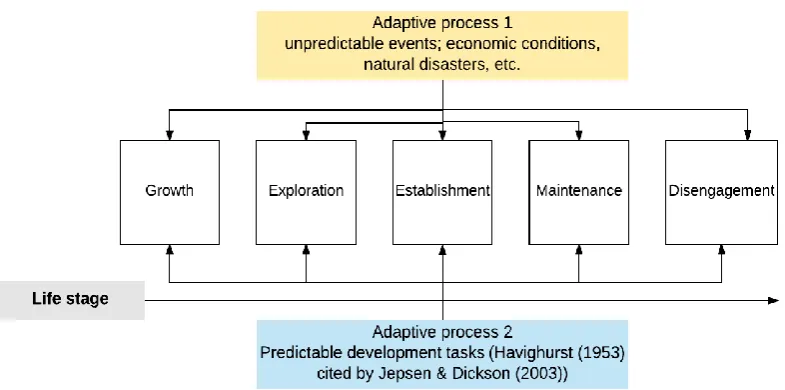
A career for a human being used to mean making a living (Eurofound, 2002). However, it is beyond the mere fulfillment of the primitive needs. A career may reflect his or her life in contemporary society. In that context, establishment in a career shows achievement of a person. It has been said that a job is who you are and how successful you are. Super (1985) identified five factors that reflect establishment in a career in his and his colleagues’ most renowned study on the ‘Career Pattern Study (CPS)’. The five factors are attained status, job satisfaction, occupational advancement, career progress, and career satisfaction. In his further study, ‘Life-Span Career Development’ was created (Super, 1990). Besides, Clausen (1991) cited by Jepsen & Dickson (2003) utilized career satisfaction and career orderliness as measurements for career establishment. Jepsen & Dickson (2003) have defined that through each lifelong career development stage, the continuity is an essential factor to guide a person to reach his or her own career establishment stage. The success of continuity is determined by coping behavior against any events and tasks (Havighurst (1953) cited by Jepsen & Dickson (2003)), which appear anytime and anywhere, at each stage. Figure 3 describes the five stages and external influencing factors that differentiate individuals’ career establishment results.
1. In that research, professionalism was evaluated by career value and job satisfaction. Job
generate a better outcome. Ann & Choi (1992) cited by Cho (2014) evaluated job satisfaction as one of the factors that contribute to a technician’s career professionalism. Furthermore, job security was identified as one criterion for job satisfaction1.
Figure 3: Life-span career development model adopted after Super's development theory (Super, (1996),and (1990) cited by Jepsen & Dickson (2003), pp 217-220)
Regarding job and employment quality, Eurofound (2002) promoted four means, as shown in Figure 2 in Chapter 1. Career and employment security encompass employment status, income, social protection and workers’ rights. In further studies (Eurofond, 2002), Laeken indicators were introduced, as a measure of the quality of job and employment. Transitions between non-employment and employment, and part-time and fixed-time contracts ratio were enclosed in three dimensions - 1) Intrinsic job quality, 2) Flexibility and security and 3) Inclusion and access to the labor market as shown in Figure 4 (Eurofound, 2008)
contracts and sufficient employment opportunities should be guaranteed in order to obtain high quality achievement. Based on the previous research and notions regarding job security, the definition has been made. In this research ‘job security’ means the possibility of a job and whether it enables a person to continue being employed in order to ensure making a decent living and career establishment.
Figure 4: The Laeken indicators of job quality. Adopted from Eurofound (2008).
2.1.2 The term ‘job continuity’ and the relation to job security
2. Refer to Figure 3. Five stages of life-span career development
3. The benefits are maternity pay, flexible working requests and redundancy pay. The calculation commences from the first day of work.
2) business continuity awareness, 3) employment continuity, and 4) continuity of employment.
Jepsen & Dicken (2003) elaborated that career development is constructed by mastering each of five life-span career stages2 hierarchically. They proved the
profound value of career continuity in between each stage. Here, the terminology ‘career continuity’ implies the continuum of staying in a certain career field in order to improve one’s status, in terms of development and accomplishment.
‘Continuity awareness’ is frequently used in business management studies as ‘business continuity awareness’. The term can be uniformly defined as sustainability and potential development capability, which is measured by human factors, organizational structure and amenities (Arthur, 2003).
The government of the United Kingdom defines ‘employment continuity’ as one employee’s continuous employment under one particular employer without a break. The importance underlies the benefits when it is achieved3.
The closest term for ‘job continuity’ was used in one of ILO Conventions, Convention No. 145, as ‘continuity of employment’. The term ‘continuous employment’ was aligned with ‘regular employment’. This may cause confusion of exact meaning, whether it means the status at sea without periods of leave, or the agreement between a shipowner and a seafarer for the consecutive contract after termination of the current contract.
In another case, the term ‘continuity of employment’ was utilized to describe a court case between an Education Council and an irregularly contracted teacher over her private tutoring activities during unemployed period, that is ‘no job period’ (Davies, 2006). The term was used to exaggerate the plaintiff's anxious situation, which could have been derived from an uncertain future 4.
5. Other types of manning in the maritime labor market include: 1) direct employment by sponsor companies through maritime education and training institutions (METI), 2) international and national job search and employment data base services by manning agencies or governments, and 3) using human networks, such as family, colleagues and acquaintances.
Finally, based on the studies and definitions, associated to continuity, the definition for this research has been created. ‘Job continuity’ for this research indicates the continuum of working opportunities for a person in a career so as to support his or her living, minimizing uncertainty for the future, and providing career establishment, in other words to improve job security.
2.1.3 Research regarding job security for seafarers
The holistic atmosphere of the maritime labor market is affected by the global economic circumstances, political tension, diplomatic and economic agreement between countries, international and national regulations and globalization (Asarioti, R et al., 2016). Globalization has introduced a new manning paradigm, so to say ‘multi-culture’. Consequently, alteration in the shape and composition of manning has occurred. For example, the emergence of manning clusters in ports 5, such as Piraeus
and Rotterdam, Japan, Republic of Korea and other Asian-Pacific regions where there are big ports, has generated opportunities for individual seafarers to contact manning agencies, or small shipping companies for jobs (Alderton, 2004). However, there is a high risk of fraudulent crimes by unscrupulous brokers and crewing managers (Alderton, 2004).
Artuso et al. (2015) explained the importance of labor costs for shipowners’ decisions for ship registration. Open registry is one of the reasons why cheaper labor outside western Europe has become renowned. This phenomenon caused chaos regarding unemployment rates for the past primary manpower countries, particularly developed counties, and crimes targeting labor market in developing countries.
Studies and research to enhance the maritime career security are: 1) a study regarding seafarers’ professionalism and provision of factors that influence
promoting more human resources in the maritime labor industry owing to the insufficient demand and supply by ICS (2017).
However, the studies chiefly focused on generic welfare, such as working environment related to bullying and harassment, and the repercussions on economy in relation to seafarers’ mental health (Iversen, 2012). Alderton (2004) elaborated that thanks to international and national works by ILO, ITF and Seafarers’ unions, there has been an improvement in seafarers’ working and living conditions. They are mainly concentrated on remuneration, repatriation, abandonments, criminalization, family caring, accommodation and catering, piracy, and education and training, with a small part for sudden dismissal.
In conclusion, precise and explicit research on job security and continuity that reflect the current stream in the maritime labor market circumstances are essential.
2.1.4 Rationale for research regarding job continuity for seafarers
The global labor market and employment trends are different from the past few decades (Eurofound, 2002). The maritime labor market is no exception, needless to say, but the research to ensure seafarers’ job security in relation to job continuity are seldom. The following studies assert the importance of substantial research.
Jepsen & Dickson (2003) developed a life-span career development stages, particularly exploration, by adopting Super’s (1990) theory. In relation to seafarers’ career development, pre-judgmental perceptions regarding job security, owing to extreme working and living conditions at the exploration stage, may hinder the individual from creating a positive picture to continue seafaring. In order for an individual to have a guaranteed period for his or her career establishment, continuous job opportunity shall be a prerequisite (Jepsen & Dickson, 2003).
15
USD (Alderton, 2004). Alderton (2004) recommended that the Continuity of Employment (Seafarers) Convention, 1976 (No. 145) should be integrated into the rubric of Merchant Shipping (Minimum Standards) Convention, 1976 (No. 147) in order to provide sustainable employment opportunities.
IMO has already been aware of the problems regarding seafarers’ recruitment and low retention owing to the supply and demand. As one of the promotion strategies, the Day of the Seafarer has been created to foster more involvement of seafarers, for instance ‘Go to sea’ campaign in 2010 (International Maritime Association, 2011).
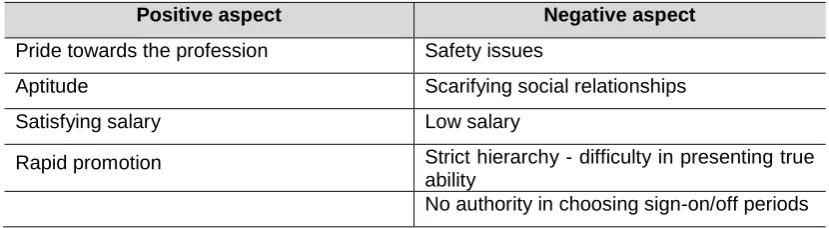
Cho (2014) described criteria of positive and negative factors that influence seafarers’ professionalism, presented in Table 1, by adopting from Lim & Lee (1993)’s research on seafarers’ job perception. Having no authority over choosing sign-on/off periods was pointed out in terms of employment system (Lim & Lee (1993) cited by Cho (2014)).
Cho (2014) introduced national ‘Seafarers’ employment stabilization project’ in South Korea: 1) registration on employment & recruitment data base, 2) certification for overseas employment, 3) affiliation with International Transport Worker's Federation (ITF), and 4) issuing seaberth record certificate for the next employment.
Park (2016) asserted the necessity of establishing Panel Data of seafarers’ embarking and disembarking records as an endeavor to reduce career changes and increase career continuity for seafarers
Table 1: Positive and negative aspects that influence seafarers' professionalism (adopted from Lim & Lee (1993) cited by Cho (2014)).
Positive aspect Negative aspect
Pride towards the profession Safety issues
Aptitude Scarifying social relationships
Satisfying salary Low salary
Rapid promotion Strict hierarchy - difficulty in presenting true ability
No authority in choosing sign-on/off periods
The cited studies address the importance of enhancing job continuity. However, the recommendation was derived from indirect factors, which include speculations from descriptions of certain situations not via an explicit research to the topic.
2.1.5 Trends and influencing factors for seafarers’ job insecurity
The global trends in the maritime labor industry are: 1) globalization, which brought multicultural crewing – this aspect is mentioned in a majority of studies about the maritime labor -, 2) development in technology (Jatau, 2002), 3) intensification (Eurofound, 2002), which incurred minimization of labor wastage, and 4) flexicurity in employment (Eurofound, 2002).
The trend globalization, comparatively higher salaries than ashore jobs in developing countries, increased the number of not only crewing agencies and brokers for efficiency, but also frauds targeting candidates. On the other hand, the replacement of seafarers from western Europe or developed countries by relatively cheaper labor nationality crews caused a severe unemployment crisis (Artuso et al., 2015). Therefore, the necessity of enhancing the maritime job security arose for both developed and developing countries.
Jatau (2002) stated:
“Some of this progress is clearly a result of the profound technological changes …… although not all technological changes have necessarily improved the
quality of life of seafarers……thus reducing manning and creating a need for polyvalent personnel.”
Development in technology has fostered the intensive work during decreased working hours. Eurofound (2002) described that the emergence of intensification accelerated the diverse employment status6 in order to avoid labor wastage costs, and reduce
17
by implementing various employment statuses particularly for workers (Eurofound, 2002). However, seafarers are unable to enjoy flexicurity, taking into account their unique working conditions, being away from the society for a certain period, and the unpredictable labor market structure. Their working place is where they live. Seafaring careers were estimated to be approximately seven to eight years (Turnbull, 2013). The necessity of improving seafarers’ stable job security shall be reiterated and their job continuity which reflects the real employment conditions shall be considered at this point.
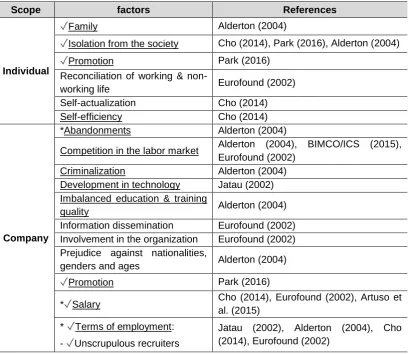
What are the factors that affect their career? Table 2 presents the factors with references to five different scopes: individual, company, country and society, the world and aboard.
Table 2: Factors that influence quality of seafarers careers at different scopes.
Scope factors References
Individual
✓Family Alderton (2004)
✓Isolation from the society Cho (2014), Park (2016), Alderton (2004)
✓Promotion Park (2016) Reconciliation of working &
non-working life Eurofound (2002) Self-actualization Cho (2014) Self-efficiency Cho (2014)
Company
*Abandonments Alderton (2004)
Competition in the labor market Alderton (2004), BIMCO/ICS (2015), Eurofound (2002)
Criminalization Alderton (2004) Development in technology Jatau (2002) Imbalanced education & training
quality Alderton (2004) Information dissemination Eurofound (2002) Involvement in the organization Eurofound (2002) Prejudice against nationalities,
genders and ages Alderton (2004)
✓Promotion Park (2016)
*✓Salary Cho (2014), Eurofound (2002), Artuso et al. (2015)
*✓Terms of employment: - ✓Unscrupulous recruiters
- ✓Employment status6
-✓Inflexibility regarding contract period
- ✓Poor employment system The industry’s intensive focus on
capital Jatau (2002)
✓Working environment - *✓Safety
- *Multicultural - Heavy workload
Cho (2014), Park (2016), Alderton (2004)
Country Society
Availability of human resources BIMCO/ICS (2015)
*✓Career development path Cho (2014) Criminalization Alderton (2004)
Diplomatic relations Asarioti, R et al. (2016) Imbalanced education & training
quality Alderton (2004) Piracy Alderton (2004)
Political tension Asarioti, R et al. (2016) Prejudice against nationalities,
genders and ages Alderton (2004) Segregation
- *✓Salary
- ✓Promotion opportunity - *Social protection
Cho (2014), Eurofound (2002), Artuso et al. (2015), Jatau (2002), Alderton (2004)
Social reputation Cho (2014), Jatau (2002), Park (2016)
✓The national maritime labor
market structure Asarioti, R et al. (2016) Working environment
- Hierarchy Jatau (2002)
World
✓Demanding requirements Alderton (2004)
✓Development in technology Jatau (2002) Diplomatic relationships
-Geographical characteristics Asarioti, R et al. (2016)
✓Employment status trend6 Eurofound (2002)
*✓International legal instruments Jatau (2002)
Political tension Asarioti, R et al. (2016) Prejudice against nationalities,
genders and ages Alderton (2004) The industry’s intensive focus on
capital Jatau (2002) The market demand & supply for
19
- The seaborne trade fluctuation *Time management
- Working & resting hours Eurofound (2002), Alderton (2004)
Aboard
Bullying & Harassment
(particularly for female seafarers) Turnbull (2013)
✓Development in technology
- Automation Jatau (2002), Eurofound (2002)
✓Isolation from the society Cho (2014), Park (2016), Alderton (2004) Piracy Alderton (2004)
Repetitive work Cho (2014) *Time management
- Working & resting hours Eurofound (2002), Alderton (2004)
✓Working environment - *Safety
- Multicultural - Heavy workload - Hierarchy
Cho (2014), Park (2016), Alderton (2004)
First, in terms of the factors associated with individuals, Alderton (2004), Cho (2014), Park (2016), and Eurofound (2002) addressed family, isolation from the society, promotion, reconciliation of working and non-working life, and perceptions for self-actualization and self-efficiency.
7. The minimum hours of rest in pursuant to the ILO Maritime Convention should be a minimum of ten hours in any 24-hour period and a minimum of 77 hours in any seven-day period (Marine Insight, 2012).
8. MLC, 2006, states that the number of ship working hours should be eight hours per day, under normal circumstances, with one day as a rest day. The maximum of working hours should not exceed 72 hours in any seven-day period (Marine Insight, 2012).
employment are highly associated to seafarers’ job security. The terms are related to unscrupulous recruiters, employment status, inflexibility regarding contract period, and poor employment systems.
Third, for national and societal scopes, Alderton (2004), Cho (2014), Park (2016), Eurofound (2002), Jatau (2002), and Artuso et al. (2015), BIMCO/ICS (2015), and Asarioti, R et al. (2016) chose labor supply, career development paths and criminalization that are influenced by national regulations, diplomatic relations, political tension, piracy and education and training quality. Furthermore, the hierarchical working environment with different cultures, prejudice against nationalities, genders and ages cause segregation in salary, promotion opportunity, social protection, and social echelon.
Fourth, the international dimension encompasses more holistic aspects over economy, the market trend, diplomatic relations, cultural differences, technological development (Jatau (2002) and Eurofound (2002)), and legal instruments. The world economy, such as the seaborne trade fluctuation (Asarioti, R et al., 2016), the market trend – employment status trend (Eurofound, 2002), the industry’s intensive focus on capital (Jatau, 2002), and the market demand and supply for qualified and competent seafarers ((BIMCO/ICS (2015) and Alderton (2004)) are categorized. In terms of diplomatic relations, geographical characteristics and political tension (Asarioti, R et al., 2016) were mentioned. Cultural differences, prejudice against nationalities, genders and ages were stated by Alderton (2004).
Finally, demanding requirements (Alderton (2004) and Jatau (2002)), and working and resting hours7, 8, 9 were addressed (Eurofound (2002) and Alderton (2004)).
10. With regard to safety issues, transportation and storage were ranked third for accidents at work after construction and manufacturing (Eurostat, 2016).
also pointed out that, in contrast, this development is a threat to workers’ job opportunities and career accomplishments. To support the idea, Jatau (2002) elaborated the importance of the establishment of legal regulatory:
“The protection of seafarers’ rights remains a question of law and not of charity.”
In addition, isolation from the society, piracy, repetitive work, working and resting hours and overall working environment – safety10, multicultural crews, heavy workload,
hierarchy – were mentioned (Alderton (2004), Cho (2014), Eurofound (2002), and Park (2016)).
In conclusion, the factors that influence seafarers’ job security are defined unclearly in the previous research. The provision of criteria for job continuity was similar to job security. Therefore, the indicators for job security and job continuity were developed to be used for this research. The factors that affect seafarers’ job security in accordance with the definition stated in part 2.1.1 are underlined, and the factors in relation to job continuity according to the definition in part 2.1.2 are marked with checkmarks. Finally, the factors which are enclosed in MLC, 2006 (MLC, 2006) were marked with asterisks.
2.2 Case studies from other fields
2.2.1 ILO Career Cycle Model for female career path
Turnbull (2013) elaborates that women, living and working in contemporary society, are expected to manage double workload. That is, after work, household chores tend to be considered as female responsibilities. The workload increases after returning from giving birth because of child care and striving to return to work after maternity-leave. Eventually, the reality reminds and pushes them to choose another career path to balance between child care and work, or no career at all.
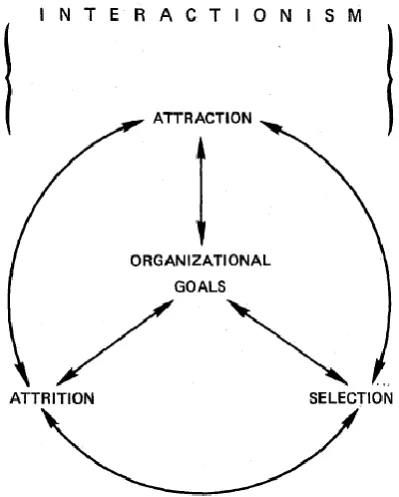
and the organization and addresses the utmost importance of human behavior for achievement of goals (Schneider, 1987).
Figure 5: Attraction-Selection-Attrition framework from ‘Interactionist perspective on organizational effectiveness’ (Schneider (1987) adopted from Schneider (1983)).
Figure 6 describes six stages of female transport workers’ career cycle including realistic factors that they encounter as well as neutral aspects that can be improved at each stage, such as stereotyping from gender discrimination, career breaks, maternity and caring provision, re-training. The model emphasizes re-training, human resource management in terms of placement, flexible working hours, equal salary and a participatory gender audit (PGA) (Turnbull, 2013).
Figure 6: ILO Career Cycle Model for female career path (Turnbull, 2013).
2.2.2 Study of European Foundation for the improvement of quality of work and employment
The scope of employment has shifted from quantity to quality. However, the quality does not imply only jobs but also employees. Hereby, the labor market has become more and more competitive and complex (Eurofound, 2002).
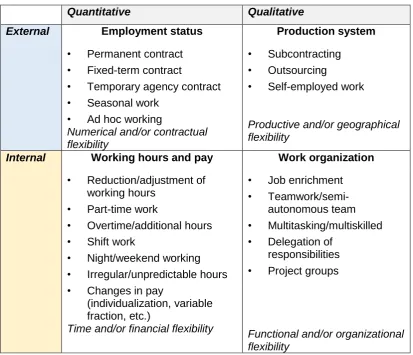
instance, rendering diverse flexibilities with regards to employment status, and policies for both external, and internal systems as shown in Table 3.
Table 3: Different forms of flexibility (Eurofound, 2002).
Quantitative Qualitative
External Employment status Production system
• Permanent contract
• Fixed-term contract
• Temporary agency contract
• Seasonal work
• Ad hoc working
Numerical and/or contractual flexibility
• Subcontracting
• Outsourcing
• Self-employed work
Productive and/or geographical flexibility
Internal Working hours and pay Work organization
• Reduction/adjustment of working hours
• Part-time work
• Overtime/additional hours
• Shift work
• Night/weekend working
• Irregular/unpredictable hours
• Changes in pay
(individualization, variable fraction, etc.)
Time and/or financial flexibility
• Job enrichment
• Teamwork/semi-autonomous team
• Multitasking/multiskilled
• Delegation of responsibilities
• Project groups
Functional and/or organizational flexibility
3 METHODOLOGY
3.1 ‘Triangulation’ – integration of non-reactive and reactive procedures
Triangulation, which includes more than two means of perspectives in social science research, enhances the logic and reliability of the research by combining those various scopes (Flick, 2004). The different approaches make it possible to measure validity, reliability, or confirmability of the research or research data (Trochim, Donnelly, & Arora, 2016).
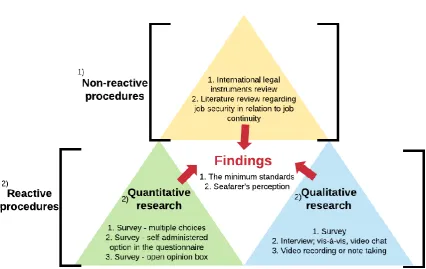
Therefore, as Figure 7 shows, this research implemented the concept of triangulation in both methods, and data collection. In terms of methods, reactive procedures, including qualitative and quantitative methods such as interviews and surveys, and non-reactive, such as current system review, and analysis of available international legal instruments, were conducted. The non-reactive procedure renders the international minimum standards for seafarers’ job security in relation to job continuity. Besides, the relevant studies were reviewed to investigate the history of effectiveness of the standards. Interview and survey results present the end-users’ perceptions with quantified data as well as thematized details. Finally, the center common area will be findings of this research – the seafarers’, sailing the international waters, perceptions and the effectiveness of the relevant ILO Convention and Recommendation as well as MLC, 2006.
opinions. As a result, both survey and interview results were attained to be triangulated.
Figure 7: Triangulation of this research: triangulation for methods and data (adopted from Flick (2004)).
3.2 Primary source of data
3.2.1 Reasons for the choice of the data collection tools
document, ILO – Information System on International Labour Standards (NORMLEX), and KR – CON.
Surveys and interviews were conducted for the sake of accountability, accessibility and availability to collect as much data as possible within the time fragment. Surveys rely on the availability of the internet and location. Figure 8 describes the choice of data collection tools. Seafarers who are ashore for their vacation or job seeking were sent either e-survey form in Googleform link1, or printed photocopies. Completed
survey sheets were collected and delivered in either paper, scanned files or photographed images. There was a case of Google software unavailability in a country. The same questionnaire was translated into the native language and converted into WeChat survey system.
In the case of interviews, six vis-à-vis, and four video chats, via SNS messengers at the convenience of the interviewees, were conducted taking into account the time differences and vacation periods. Video recording was to catch facial expressions or body language which are likely to be overlooked during interviews.
3.2.2 Reasons for selection of the sample
The criteria for the selection of the study samples were 1) any seafarers who have experiences sailing in international trade vessels within the last 6 months, 2) seafarers from various ranks and experience distribution, and 3) seafarers from various countries. The research aimed to gather as many samples as possible within a four-month period from April, 2017 to early August, 2017.
3.3 Survey and interview questionnaire
3.3.1 Structure of the questionnaire
The purpose of this questionnaire was to measure seafarers’ perceptions on job security in relation to job continuity. The notion of job security was likely to cause confusion with safety. Hence some questions embedded adequate options to remind the respondents about the meaning of ‘job security’ by providing the choices that were identified as influencing factors in the previous research, shown in Table 2. The structure of the questionnaire was constructed with five criteria; 1) personal information reflecting only the experience, nationality, and rank, 2) perception of general job security, and protectivity, 3) prevalent job searching methods, 4) burdens and job continuity, and 5) perception of career development.
3.3.2 Questions creation
Table 4 elaborates the structure of the questionnaire and the interpretation of each criterion. Questions 1, 2 and 14 belong to the first criterion to investigate any differences and similarities amongst experiences, nationalities, or ranks. More various sample composition enhances the validity of the results.
be interpreted and exploited to identify the most predominant measures that seafarers perceive that they can take in any trouble. In case of negative answers, the parts that need to be improved with regard to protecting the career can be identified as an assessment of the effectiveness of MLC, 2006.
Questions 8 and 9 belong to the third criterion ‘prevalent job searching methods’. The results could show the essentiality of job security in relation to job continuity depending on how many seafarers have to seek for jobs after the termination of the current contracts. On top of that, the following question could navigate to the areas that can be improved to enhance job security and continuity.
Questions 10 and 11 are associated with the fourth criterion ‘burdens and job continuity’. How significant job continuity is, amongst other factors, which were covered by MLC, 2006, could be interpreted, as well as the effectiveness of MLC, 2006, for the chosen areas.
Lastly, questions 12 and 13 ask seafarers to picture their individual career development paths in the maritime field. The question 13 can show the importance of seafarers’ perceptions of job continuity for their career development and underpin the necessity of worldwide attention.
Table 4: The structure of the questionnaire and interpretation of each criterion.
Criteria Questions Interpretation
Personal information
1. How long have you been a seafarer?
- Are there any differences by experiences,
nationalities, and ranks? 2. What is your rank?
14. What is your nationality?
Perception of job security and
protectivity
3. Do you think your job (seafarer) is secure?
- What is an overall perception of job security?
- What and how the given options influence seafarers’ job security or insecurity?
31
5. Do you think your career is protected well?
- The effectiveness of MLC, 2006
- Perception of the most predominant measures for seafarers in trouble - Areas that need to be improved regarding protection of career 6-7. What do you think is
protecting/ not protecting your job?
Prevalent job searching
methods
8. Do you seek jobs after a contract termination?
- How profound job security is in relation to job continuity?
- What area can be improved in terms of enhancing job security and continuity?
9. How do you search for a job?
Burdens and job continuity
10. Do you experience any burden in continuing seafaring?
- The significance of job continuity parallel to other aspects, under MLC, 2006
- The effectiveness of MLC, 2006 and the areas that need to be improved
11. What are the burdens?
Career development
12. What do you think is the final destination of your career in shipping?
-Expectation about career development in seafaring and the significance of job continuity
13. How do you think different levels of responsibility can be achieved? What can assist you?
3.3.3 Selection for the options
All overlapped factors are listed in Figure 9. The factors are filtered by the five criteria of the questionnaire. Finally, each option was chosen relevantly. Table 5 describes the process and final option selection.
Figure 9: Options filtration by five criteria.
2. Correlation analysis is a statistical evaluation method to investigate either positive or negative relationships between two or continuous variables. +1 means strong positive correlation, 0 means no relation, and -1 implies strong negative correlation.
3. Cross Tabulation is a categorical data analysis method.
33
Table 5: Selection of options for each question.
Criteria Questions Options
Personal information
1. How long have you been a seafarer?
2. What is your rank?
14. What is your nationality?
Perception of job security and
protectivity
3. Do you think your job (seafarer) is secure?
4. Yes/No for 3. How? a. Salary
b. Prospective career development
c. Working environment d. Health
5. Do you think your career is protected well?
6-7. What do you think is protecting/ not protecting your job?
a. The international conventions/ national law b. Society c. Company d. Colleagues Prevalent job searching methods
8. Do you seek jobs after a contract termination?
9. How do you search for a job? a. Individual approach to manning agencies b. By using human network
c. National agency (on/offline)
Burdens and job continuity
10. Do you experience any burdens in continuing seafaring?
11. What are the burdens? a. Salary b. Family
c. Social relationships d. Health
2. Correlation analysis is a statistical evaluation method to investigate either positive or negative relationships between two or continuous variables. +1 means strong positive
Career development
12. What do you think is the final destination of your career in shipping?
13. How do you think different levels of responsibility can be achieved? What can assist you?
a. Job security b. Job continuity c. International regulations d. My willingness
3.4 Procedure for data collection: survey and interview
Surveys and interviews were attempted for the subjects that satisfy the criteria of this research described in part 3.2.1 with the same questionnaire. Owners or employees of shipping companies, managers of manning agencies, officials of maritime administrations, and sailing graduates of various METIs were contacted. Owing to possible ethical issues of this research, such as the anonymity, and any further repercussions for the subjects, an official research ethics permission procedure was undertaken.
Several survey and interview trials were conducted with ex-seafarers, who have not had sailing experiences in the past two-year period, to evaluate the validity and practicality of the questionnaires. Those data were excluded for the results.
All responses of the survey, both in digital and analog based, were stored in Microsoft Excel Spreadsheet version 2016. The interview results were recorded in videos and documented with Microsoft Word version 2016 in table form for the later analysis.
3.5 Data analysis and presentation methods
According to the principle of triangulation, the collated survey data were analyzed and presented by Google Analytics Spreadsheet, Microsoft Excel Spreadsheet Analytics, PEARSON Correlation analysis2 and Microsoft Excel Cross Tabulation3 as
35
in Kvale & Brinkmann (2009). The final presentation is to be integrated with survey results, then discussed further by coupling with the MLC, 2006.
3.6 Limitations of data collection and the questionnaire
Time and space limitation, particularly the internet availability which is an infamous restriction agent for surveys and interviews of the maritime studies, hindered larger sample collection. Thus, participants were not able to represent the perception of the whole world seafarers. However, the diversity of nationalities, and types of vessels, which the participants have had experience on, for this research strived to include as many numbers as possible. The types of vessels were excluded for this research, owing to the non-uniformity as a group amongst the 202 individuals’ different types of vessels experience. Secondly, the language means, English, was another limitation. All seafarers had different English competences and came from countries where the language is not the mother tongue. Therefore, the survey and interview questionnaire was designed to be as simple and precise as possible.
Some questions required justification with regard to options and interpretation. For instance, question 2, the terminology of ranks, abided by the provision of STCW, 78, as amended. However, the options did not include all the uncommon ranks existing in the world.
Secondly, question 5 requires a yes/no answer. The follow-up questions 6 and 7 allow for multiple neutral answers. However, taking into account the subjectivity, complementary responses were to be used in interpretation. For example, some answered ‘yes’ that overall job security was due to salary, but picked the society as a factor that decreases the security partly, in a self-administered option. Triangulation of methodology, that is combination of quantitative and qualitative data, enhanced the validity of such responses.
4 DATA PRESENTATION, ANALYSIS AND RESULTS
4.1 Non-reactive research: international legal instruments about job security
in relation to job continuity
4.1.1 ILO Convention 145: Continuity of Employment (Seafarers) Convention, 1976, and Recommendation 154: Continuity of Employment (Seafarers) Recommendation, 1976
The existing ILO maritime labour Conventions will be obsolescent gradually once countries that have ratified those Conventions ratify the MLC, 2006. However, there will be transitional periods for some Conventions that stay in parallel with the MLC, 2006. The 36 ILO Conventions and one protocol that are consolidated in the MLC, 2006, are in Article X (ILO: International Labour Organization, 2014)1.
ILO Convention No. 145 entered into force in 1979. 17 countries ratified from 1979 to 1990, Brazil was the last state in 1990. With the development of MLC, 2006, 12 countries denounced the Convention automatically owing to the inclusion of the contents into MLC, 2006. Brazil, Costa Rica, Cuba, Iraq, and Egypt are still in force. The status of this Convention is ‘Up-to-date’ and categorized in ‘Technical Convention’.
2. ILC (2009) 3. ILO (2014a) 4. ILO (2014b)
37
Article 3 provides regulations regarding contracts or agreements, and maintenance of registers or lists of qualified seafarers. Article 4 ensures the implementation of the registers or lists into national law, practice or collective agreement during employment bargaining. Seafarers on such registers or lists shall be assured to have engagement for employment first as well as be available for work. On the other hand, ILO Recommendation No. 154 provides supplementary guidelines for the previous Convention. Paragraph 3 recommends the creation of systems that allocate jobs for unemployed qualified seafarers efficiently and preserve the right to select for the sake of the seafarer’s interest and benefit. Paragraph 4, which has been eliminated in MLC, 2006, advises to allow regular contracts to seafarers to transfer to another temporary work. Finally, paragraph 5 provides a guidance for compensation when continuous or regular employment is not feasible. The other following paragraphs 9 and 10 describe the reduction of the registers or lists, and termination of employment considering avoidance of any damage on seafarers’ rights.
4.1.2 MLC 2006 Regulation 2.82, 3, 4
Amongst MLC, 2006, Regulations and Codes, Regulation 2.8, Standard A 2.8, and Guideline B 2.8 provide contents regarding employment opportunities. The differences between them, and ILO Convention No. 145 and Recommendation No. 154 are the omission of the word ‘continuity’ from the title, addition of scope about an individual’s career and skill development, and stress on the duties of each Member State towards domiciled seafarers in its territory.
Guidance B 2.1.1 ‘Record of employment’ under Guideline B 2.1 ‘Seafarers’ employment agreements’ elaborates regarding career development and emphasizes the Record of Employment, which shall be placed on board with the holder, for the further career path and promotion.
To summarize, MLC, 2006, Regulation 2.8 elaborates the close relation between continuous opportunities for further employment and individuals’ competencies.
After entry into force on August 20, 2013 of MLC, 2006, four years have passed. The effectiveness, and practicality may well be assessed to attain the purpose of the Convention, guaranteeing the world seafarers decent working and living conditions.
4.1.3 STCW 78, as amended Regulation I/14 and Chapter VIII ‘Watchkeeping’
STCW 78, as amended provides the minimum standards for seafarers’ mandatory competencies on board for the sake of safety. In pursuant to Regulation I/14 ‘Responsibilities of companies’, companies of an employee on board shall ensure his or her certificate to be appropriate, training to be up to date, and familiarization process on board. Furthermore, safe manning, accessibility of relevant documentation and data of all seafarers, and the ship’s competence in emergency shall comply with the Convention.
Chapter VIII ‘Watchkeeping’, Regulation VIII/1 ‘Fitness for duty’, paragraph 1 requries each Administration to prevent fatigue by conforming to rest periods under Code A-VIII/1, paragraph 2, 3 and 4.
However, these two provisions aim to assure safe navigation, prevention of pollution and protection of life at sea, not seafarers’ rights.
4.2 Personal information: sample profile
39
per cent for Chinese and Indians each. The other nati