World Maritime University
The Maritime Commons: Digital Repository of the World
Maritime University
World Maritime University Dissertations Dissertations
2016
Kandangan dry port project: an option of solution
for congestion: case of Lamong Bay Terminal
(Surabaya, Indonesia)
Wardhani Pudji Rahmanto
Follow this and additional works at:http://commons.wmu.se/all_dissertations
This Dissertation is brought to you courtesy of Maritime Commons. Open Access items may be downloaded for non-commercial, fair use academic purposes. No items may be hosted on another server or web site without express written permission from the World Maritime University. For more information, please [email protected].
Recommended Citation
Rahmanto, Wardhani Pudji, "Kandangan dry port project: an option of solution for congestion: case of Lamong Bay Terminal (Surabaya, Indonesia)" (2016).World Maritime University Dissertations. 528.
WORLD MARITIME UNIVERSITY
Malmö, Sweden
KANDANGAN DRY PORT PROJECT:
AN OPTION OF SOLUTION FOR CONGESTION
Case of Lamong Bay Terminal (Surabaya, Indonesia)
By
WARDHANI PUDJI RAHMANTO
Indonesia
A dissertation submitted to the World Maritime University in partial
Fulfillment of the requirements for the award of the degree of
MASTER OF SCIENCE
In
MARITIME AFFAIRS
(PORT MANAGEMENT)
2016
ii
iii
Acknowledgements
In the name of Allah, most Merciful and most Gracious.
Writing this dissertation may not have been quickly completed without the guidance
and help from my supervisor Dr. Devinder Grewal with his experience and
knowledge. He gave me very helpful advice and support and provided motivation in
doing this dissertation. Thank you so much for all the patience, time and valuable
support during the process to show me in the right direction. Moreover, I would also
like to thank all of my lecturers, friends at World Maritime University for giving me
much experience, story and knowledge especially for Maritime Academies.
My special honor is addressed to my company Indonesia Port Corporation III, who
has given me a chance and challenge to follow this Master’s degree program and
supported me fully by financing and giving me the spirit from the beginning until the
last day in this dissertation process.
Also, I would like to express my infinite thankful to my parents, wife and my
children who always encouraged and supported me with their wishes and best hope. I
am also very thankful to my Indonesian colleagues: Tiggi, Anwar, Riduan, Putra,
Afif, Syafi’, Aries, Agus and Yudho at World Maritime University for supporting
me.
iv
Abstract
Title of Dissertation: Kandangan Dry Port Project: An option of solution for congestion case of Lamong Bay Terminal (Surabaya, Indonesia)
Degree: MSc
The increasing number of the container throughput and traffic has affected the availability of container yard in Lamong Bay Terminal (TTL). This was due to the development of industries in the hinterland. If TTL cannot handle this, TTL cannot improve their productivity for throughput and this can cause congestion. This study observes political, economic, social, technological, environmental, legal and ethical (PESTELE) factors that need to be considered by Kandangan Dry Port to optimize its purpose as an option of the solution to handle TTL Congestion. By using the 7-point Likert scale analysis tool, the previous data are collected in advance of the respondents who are directly involved with port operations such as container depot, terminal operators, port operators, shipping line, logistic providers. Moreover, by using the Importance-Performance Analysis (IPA) to analyze the gap between “The importance of the factors” and “The existing condition of Kandangan Dry Port” is based on the equal factors to determine the factors that need to be considered by Kandangan Dry Port.
The result of the questionnaires obtained three factors that can maximize its function and considered need to focus more on that. The three factors are (1) Value added services, (2) Government support, regulation and policy and (3) Implementation of Advanced Technologies. Based on research, the main important factors affecting the success of the implementation and the development Kandangan Dry Port are the active role and policies of the government. Finally, it was concluded that Kandangan Dry Port should pay attention to important key factors, namely the active part of the support, regulation, and policy of the government. It is advisable to conduct further in-depth research on how to support, regulate and make policy of the government in the port and shipping industry to improve Kandangan dry port performance for further studies.
v
Table of Contents
Declaration ... ii
Acknowledgements ... iii
Abstract ... iv
Table of Contents ... v
List of Tables ... vii
List of Figures ... viii
List of Abbreviations ... ix
Chapter 1 Introduction ... 1
1.1. Research Background ... 1
1.2. Problem Identification ... 2
1.3. Research Question ... 5
1.4. Scope of work ... 5
1.5. Research Objectives ... 5
1.6. Research Structure ... 5
Chapter 2 Literature Review ... 7
2.1. Increasing Market of Containers ... 7
2.2. Container Port Problems ... 9
2.3. Concept of Dry Port ... 10
2.4. Implementation of Dry Port Factor ... 19
2.5. Implementation dry port in Indonesia ... 26
2.6. Summary ... 30
Chapter 3 Methodology ... 31
3.1. Collection of Data ... 31
3.2. Respondents ... 32
3.3. Questionnaire Design ... 34
3.4. Analysis Method ... 35
3.5. Ethical Issue ... 35
Chapter 4 Analysis of Data ... 37
4.1. Questionnaire Overview Result ... 37
4.2. Government Support, Regulation and Policy Factor ... 39
vi
4.4. Location (closeness to markets and seaport) Factor ... 42
4.5. Transportation Cost Factor ... 43
4.6. Main Services Factor ... 45
4.7. Value Added Services Factor ... 46
4.8. Accessibility between dry port and seaport and between dry port and hinterland Factor ... 47
4.9. Managerial Factor ... 49
4.10. Implementation of Advanced Technologies Factor... 50
4.11. Environmentally Friendly Factor... 51
4.12. Importance – Performance Analysis (IPA) Matrix... 53
4.13. Summary of Analysis Data ... 56
Chapter 5 Summary and Conclusions ... 57
5.1. Preliminary ... 57
5.2. Findings Summary ... 57
5.3. Conclusions ... 60
5.4. Research Weaknesses ... 60
5.5. Research Recommendations ... 61
References ... 62
vii
List of Tables
Table 1. Dry port definition ... 10
Table 2. List and source of revitalization factor in dry port ... 26
Table 3. TTL throughput trend (Pp3, 2014) ... 27
Table 4. TTL Respondents or stakeholder summary. ... 32
Table 5. Respondent Characteristics ... 33
Table 6. Considered factors in implementation of Kandangan dry port result ... 38
Table 7. Government support, regulation and policy factor questionnaire result ... 40
Table 8. Stakeholder support and role factor questionnaire result ... 41
Table 9. Location factor questionnaire result ... 43
Table 10. Transportation cost factor questionnaire result ... 44
Table 11. Main service factor questionnaire result ... 45
Table 12. Value added service factor questionnaire result ... 46
Table 13. Accessibility between seaport and dry port and between hinterland and dry port factor questionnaire result ... 48
Table 14. Managerial factor questionnaire result ... 49
Table 15. Implementation of Advanced Technologies factor questionnaire result ... 50
viii
List of Figures
Figure 1. Growth Projection of GDP by IMF (The World Bank, 2016) ... 2
Figure 2. Rank of Indonesian GDP 2003 – 2015 (The World Bank, 2016). ... 3
Figure 3. TTL Throughput in Teus (TTL a, 2016) ... 3
Figure 4. Top 5 developing countries for Container port throughput in million TEUs (UNCTAD, 2013) ... 7
Figure 5. Comparison of vessel capacity and container throughput for top 5 container ports in million TEUs (World Shipping Council, 2013 and Informa UK Ltd, 2012) ... 8
Figure 6. Operational procedures of dry port (UNCTAD, 1991 - draw by author) ... 14
Figure 7. Distant dry port location (Roso et al., 2006). ... 16
Figure 8. Midrange dry port location (Roso et al., 2006). ... 16
Figure 9. Close dry port location (Roso et al., 2006) ... 17
Figure 10. Split of modal at EU Container Ports (Rodrigue et al., 2010) ... 22
Figure 11. Masterplan TTL Surabaya (IPC III, 2016) ... 27
Figure 12. TTL Surabaya – Kandangan railway. (Google, 2014) ... 29
Figure 13. An overall score of mean importance and mean existing ... 39
ix
List of Abbreviations
Coarri Container Arrival message
Codeco Container Departure Confirmation
Coparn Container Pre-Arrival Notice
EDI Electronic Data Interchange
GDP Gross Domestic Product
ICT Information, Communication and Technology
PESTELE Political, Economy, Social, Technology, Environment, Legal and
Ethics
1
Chapter 1 Introduction
1.1.Research Background
In the economic world, trading activities cannot be separated from export and import
activities which are the main activities in the distribution of goods to get benefits and obtain
the desired goods. Import and export trade worldwide is growing, including in Asia. From the
year 2011 to 2014 imports and exports has increased from more than 15% year by year
(UNESCAP, 2016). Asia is expected to grow in the import and export of containerized goods
which became 56% and 68% in 2016 (UNESCAP, 2016). The development of the
manufacturing industry in the world makes trade grew twice; it will have an impact on the
increased demand for transportation, including the carriage by sea, which reached more than
90% of the volume of world trade (Stopford, 2008). Low cost of ocean transport due to
cheaper vessel fuel costs and vessel size getting bigger because of economies of scale makes
sea transportation become an important and significant part of world economic growth.
In Asia the container throughput increased and it was also followed by the increase in the size
of container ships to minimize transportation costs (Nishimura, 2009). The biggest container
ship today can bring up to 19,224 TEUs (ICS, 2016). To face the growing size of ships, the
port or terminal operator should pay more attention to the handling of their capacity.
Clarkson’s Shipping Intelligence Network (2016) recorded that “World Seaborne Container
Trade also grows from 139 million TEUs in 2010 to 181 million TEUs in 2016.” Another
problem, congestion at the port cannot be avoided, for example, like conditions in North
America and Europe due to the high growth in container throughput (Visser et al., 2007). In
response to this growth, the port or container terminal operators began expanding the area of
their container capacity and even build a new container terminal. However, by broadening the
capacity of the container yard will require many budgets and take a long time in development.
Also, it was not enough time to pursue with the increasing number of trades (International
Herald Tribune, 2016). Several other cases show that the lack of transport facilities and
infrastructure at the container port made slow progress for itself (Cullinane, 2012).
Slack (1999) provides a solution to the problem of capacity and congestion of ports through a
satellite terminal concept called a dry port. “It offers an inland port or inland terminal that has
the same function, capabilities and services like a seaport and gives transportation network
and connects the container movement between the hinterland and sea port” (Rodrigue et al.,
2
congestion that can be implemented and accepted in Europe, even in some ports in Europe
began using the dry port to accommodate some container from China (Visser, 2007).
Rodrigue et al. (2010) also mentioned that ports in North America had also successfully
applied the dry port to move their container handling services to the hinterland. In Europe and
North America it can be distinguished that the dry port in Europe is used as a transshipment
and entrance for short and medium distances, while the North American dry port is used to
serve the market in the hinterland that is connected with long-distance trains.
1.2.Problem Identification
Indonesia is a developing country whose economic growth reached a peak between the third
fastest in G20 countries (The World Bank, 2016). From figure 1, it can be seen that Indonesia
ranks third among G20 countries regarding the country with the fastest Gross Domestic
Product (GDP) growth projections by the International Monetary Fund.
Figure 1. Growth Projection of GDP by IMF (The World Bank, 2016)
Furthermore, according to the World Bank data, Indonesia's GDP per capita (in million USD)
increased from 2003 until 2015. Indonesia's GDP experienced a sharp increase in the 3-year
period from 2009 to 2011, wherein 2009 GDP was at 2272 and rose to 3471 in 2011, which
makes Indonesia ranks in the world rise from rank 22 in 2003 and being ranked 16th in 2012;
then ranking became stable in 16 until 2015. Figure 2 illustrates that according to the data, the
3
Figure 2. Rank of Indonesian GDP 2003 – 2015 (The World Bank, 2016).
Moreover, the Java island was the province where the capital of Jakarta is located and several
other big cities that became the center of a major economic activity in Indonesia. Lamong
Bay Terminal or known as TTL, which is a domestic and international container terminal
located in the northern city of Surabaya, is also a subsidiary of Indonesian Port Corporation
III, Surabaya, East Java, Indonesia. The main business of TTL is to handle loading-unloading
/ export-import containers in East Java and another area in Indonesia. With a surface covering
114 hectares, which can accommodate approximately 5.5 million TEU, includes docks,
container yards, warehouses and backup area. Thus, TTL becomes a fairly busy container
terminal in eastern Java and plays the role in improving the economy. The yard occupancy
ratio at this terminal has reached 60%, which became one of the causes of the problems of
congestion. Furthermore, Figure 3 shows the growth in throughput increased significantly
from 2014 to 2016.
Figure 3. TTL Throughput in Teus (TTL a, 2016)
0 5 10 15 20 25 30
2002 2004 2006 2008 2010 2012 2014 2016
4
This research focuses on the factors that affect the implementation of developing Kandangan
Dry Port as one of the solutions to reduce congestion in TTL. TTL plays an important role
not only as a place where the loading and unloading of containers or consolidation cargoes
take place but also acts as a chain of regional and national economic activity. Indonesia is an
archipelago where most of the area is the sea; nearly 84% of domestic and 90% of export and
import are a seaborne trade. Meanwhile, in line with economic growth and trade, in particular,
the port is expected to be offset by developing additional services. As in the previous case
study conducted by Cullinane et al. (2012), it was stated that the port can experience barriers
to progress at its port because the infrastructure, superstructure and transport networks are
lacking. Yard Occupancy Ratio of TTL climbed to 60%; this will cause congestion in the area
around the port if it is not finding a solution. In fact it was found that the manufacturer along
with the location of facilities for the storage of most of the manufacturers is in the area near
the port (Rodrigue, 2006). To deal with the congestion problem, TTL requires the assistance
and cooperation of stakeholders that can help reduce the risk of the consequences that might
arise out of the congestion by taking independent action (risk sharing) (Gray, 1990). Certain
parts of the seaport and dry port development, implementation have become a basic analysis
of this study. The cost and time of construction of a new container yard are not too cheap and
fast. Therefore, the best solution to avoid congestion must be found at the port as well as to
improving performance at the port is most important and urgent. Therefore, seaports need to
be supported by dry ports. Also, to reduce the lack of capacity of the container as well as
addressing the problem of congestion in the port area, some previous research has been
analyzed and identified to successfully implement the dry port concept as one of the solutions
to these problems.
Kandangan dry port of Surabaya is located approximately 4.5 kilometers south of the city of
Surabaya, which was formerly used as a dry port, but now does not work anymore or is
untapped owned by private companies (Dephub, 2015). In collaboration with stakeholders
regarding the regulation and finance, construction of dry port project Kandangan takes a lot
of finances but time is expected to reduce congestion in the port area. As well as cooperation
with the railway company and the opening up of new pathways in the port area of Tanjung
Perak, TTL is expected to immediately address the congestion problems quickly and cheaply
(Dephub, 2015). Therefore, to establish a real connection to the hinterland by revitalizing
Kandangan dry port is one of the solutions that is expected to solve traffic congestion in the
5
Finally, the author will try to analyze PESTELE factors, which are obtained from Kandangan
dry port, and in general, define and detail the PESTELE factors which could be considered to
revitalize the Kandangan dry port to optimize its function as one option to a solution in
dealing with congestion in the port area.
1.3.Research Question
The research questions will answered by these questions: “What factors need to be
considered in revitalizing Kandangan Dry Port?”
1.4.Scope of work
In completing this dissertation, research into TTL as terminal operators and facilitators in
Kandangan Dry Port has been done, in particular the container handling procedures of
domestic and international cargoes. The underlying problem will be identified and analyzed.
1.5.Research Objectives
The research objectives are:
1. To analyze the PESTELE (Political, Economy, Social, Technology, Environment, Legal
and Ethical) factors of dry ports in general.
To break down or make details of PESTELE factors that should be considered by the
Kandangan Dry Port.
1.6.Research Structure
The objective of this systematic writing is that discussions are conducted and linked between
one chapter to another chapter, so that the result is organized and systematic and easily
understood by the reader. Therefore, the final project is divided into five sections plus a
discussion with several appendices and bibliography. The order of the presentation of this
dissertation is as follows:
Chapter I describes the background, problem identification, research question, the scope of
work, purpose, and objective of writing and systematics of writing or research structure.
Chapter II reviews literature describing the study of the theory of the framework for
understanding logical thinking like Dry Port, and some reviews about the condition of
Kandangan Dry Port.
Chapter III will describe and explain the general methodology, a description of the data
6
Chapter IV will give the results of the exposure of the data already collected. After that, the
correlation and the compatibility of the questionnaire results and from previous studies will
be analyzed.
Chapter V will discuss the answered questions, conducting this research, then the author will
conclude this dissertation and provide advice to the improved performance of Kandangan Dry
7
Chapter 2 Literature Review
The research studies try to revitalize the Kandangan dry port from the other previous studies
that believed could solve congestion problems that occur in Lamong Bay Terminal (TTL).
Slack (1999) stated that to tackle congestion and anticipate problems is to use a dry port
where several activities of loading and unloading of containers in the seaport area can be
moved to the countryside. This chapter attempts to understand the role of the dry port to
provide and explore some of the literature related to the dry port and can help troubleshoot
problems that occur. The first section will discuss the growth of containers that occurs
throughout the world. The next section will discuss the operational problems that occurred at
the port and how to solve the operational problems that have been done by another researcher.
By using this literature review, which would be directed to the role of Kandangan dry port as
one of the solutions to overcome the problems of congestion in TTL.
2.1.Increasing Market of Containers
In 2012, the growth in container throughput volume in the world had increased by about 3.8
percent with 601.8 million TEUs (UNCTAD, 2013). Based on predictions from Drewry
Shipping Consultants, container throughput growth in 2020 is expected to rise to 371 million
TEUs of 287 million TEUs in 2016 (cited in Chen et al., 2012). In most developing countries,
trade grew dramatically, in particular through the container trade. Figure 4 shows the top 5
developing countries for container port throughput. The development of container traffic has
increased significantly. In most of those countries, the traffic has risen in the last three years
(2010 – 2012).
Figure 4. Top 5 developing countries for Container port throughput in million TEUs (UNCTAD, 2013)
1 3 0 .2 9 2 9 .1 8 2 3 .7 0 1 8 .5 4 1 8 .2 7 1 4 3 .9 0 3 0 .7 3 2 4 .3 8 2 0 .8 3 2 0 .1 4 1 5 5 .0 2 3 2 .2 4 2 3 .1 0 2 1 .4 5 2 0 .8 7 0.00 20.00 40.00 60.00 80.00 100.00 120.00 140.00 160.00 180.00
China Singapore Hong Kong, China Republic of Korea Malaysia
2010
2011
8
Along with the growth in container throughput, an increase in the size of the vessel is
followed, which aims to reduce the cost of transportation or logistics (economy of scale)
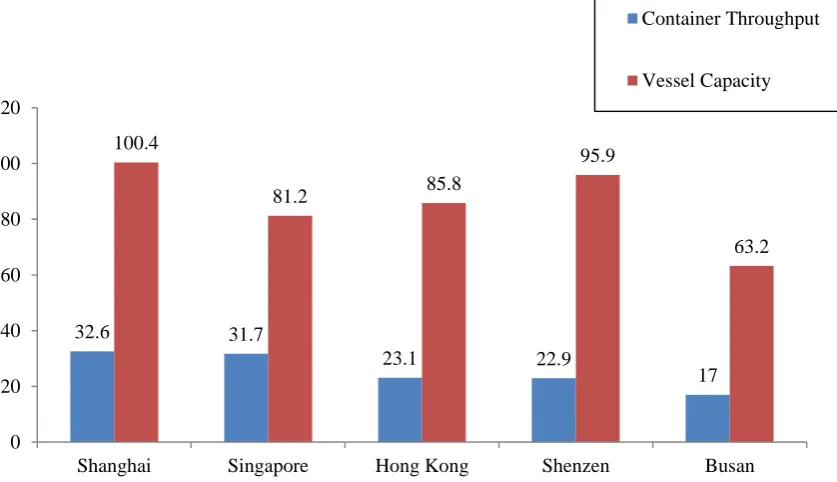
(Nishimura et al., 2009). Figure 5 shows the top 5 container ports in the world in the growth
of vessel capacity and growth of container throughput. To improve efficiency and optimize
logistics networks, shipping lines should accelerate the transit time, reducing shipping routes
and downsizing area coverage shipping (Paixao, 2002). Notteboom (2006) noted factors that
determine the demand that is made up of the quality of service. Container ports now have to
pay more attention to the handling capacity in line with the increasing size of ships. Container
ports reconfigure their handling port operations with developing capacity in new locations,
restructuring terminal or placing more equipment. However, it is not cheap to develop all of
this. If the container port cannot handle the growth capacity of vessels, then they will not be
able to increase throughput capacity and the worst is the big ships cannot berth at the port.
“
”
Figure 5. Comparison of vessel capacity and container throughput for top 5 container ports in million TEUs (World Shipping Council, 2013 and Informa UK Ltd, 2012)
32.6 31.7
23.1 22.9
17 100.4
81.2 85.8
95.9
63.2
0 20 40 60 80 100 120
Shanghai Singapore Hong Kong Shenzen Busan
Container Throughput
2.2.Container Port Problems
2.2.1 Road Congestion
A common problem that usually occurs as a result of an increase in the number of container
throughput in the world, especially in America and Europe, is the problem of congestion at
the port. The congestion problem does not only affect to the port, but also the consignee and
shipper (Visser et al., 2007). Congestion at the port has a big domino effect on transport costs
and logistics costs in general which usually occurs in the transport of using land transport
modes such as trucks. Congestion on highways could indirectly make the price of goods
increase as more fuel is used during traffic jams, lost time, vehicle maintenance more due to
the duration of use, as well as the bad consequences for the environment caused by air
pollution resulting from vehicles. (Roso, 2006). Therefore, to reduce congestion, it is
necessary to shift modes of transportation and the location. This is expected to reduce
transportation costs by using modes other than trucks capable and always available to connect
and access to and from the hinterland (UNCTAD, 2013).
For example, freight costs from Shanghai, China to Rhine-Scheldt Delta is about 0.12 € per
FEU-km, whereas transportation costs to send the goods from ports in northern Europe by
truck is 1.5-4 € per FEU-km (Notteboom, 2008). Using rail and waterway systems (short-sea
and river) is expected to provide benefits and solutions for the congestion problems (Roso,
2006).
2.2.2 Port Capacity Problem
Increasing container throughput not only causes congestion around the port area, but will also
have an impact on congestion on the roads all over the place which are connected to the port.
Besides in some container ports there are problems regarding port capacity, which means lack
of efficiency. The main causes of congestion on the road, come from the lack of hinterland
access, gates, and terminals (Meersman et al., 2012). Industry players recommend and found
by expanding the capacity of the terminal will reduce the congestion caused by the increased
throughput of goods. However, to expand the terminal capacity requires considerable time
and sometimes there is not enough time to catch up with the cargoes throughput growth. One
of the easiest ways to increase port capacity issues regarding intermodal connection is to
expand capacity by an additional area of water transport modes. However, sometimes it is not
10
of capacity with other ways of transport water due to the large amounts of money and
considerable time.
Port capacity problems have been experienced by some European countries because of the
increasing flow of container traffic and goods. Inefficiency and congestion is the biggest
problem faced by a large port, while the second-class port is now easier to grow and have a
better perspective. In Rotterdam, which is the largest port in Europe can handle a standstill up
to 48 hours in the Delta terminal since mid-April (Loadstar, 2014). Because of lack of space
due to congestion that resulted in some port operations services about 50% of all movements
become ineffective (Schonknecht, 2009). To solve this it is better to build an additional port
residing in remote areas with the help of trains that can transport the commodity goods in
containers.
2.3. Concept of Dry Port
2.3.1 Dry Port Definitions
Extension function seaport located in the hinterland has been referred to as inland freight
villages, inland logistics, inland hubs, inland ports, inland terminals, and dry ports.
Cardebring (1995), Roso (2005), Roso (2006), Roso et al. (2009), Vasiliauskas (2007),
Wiegmans (1999) make a distinction, a proposed classification and various definitions of
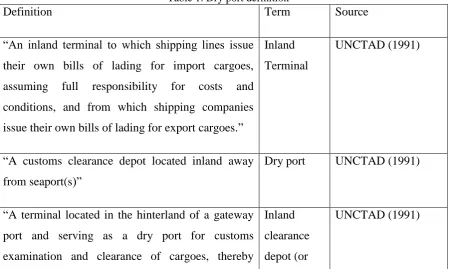
inland nodes. (See Table 1).
Table 1. Dry port definition
Definition Term Source
“An inland terminal to which shipping lines issue
their own bills of lading for import cargoes,
assuming full responsibility for costs and
conditions, and from which shipping companies
issue their own bills of lading for export cargoes.”
Inland
Terminal
UNCTAD (1991)
“A customs clearance depot located inland away
from seaport(s)”
Dry port UNCTAD (1991)
“A terminal located in the hinterland of a gateway
port and serving as a dry port for customs
examination and clearance of cargoes, thereby
Inland
clearance
depot (or
11
eliminating customs formalities at the seaport.” inland
customs
depot)
“A common user inland facility with public
authority status, which is equipped with fixed
installations and offers services for the handling and
temporary storage of any kind of goods (including
container) carried under customs transit by any
applicable mode of inland surface transport, placed
under customs control to clear goods for home use,
warehousing, temporary admission, reexport,
temporary storage for onward transit and outright
export.” Inland clearance depot Economic Commission for
Europe (1998), Roso
(2005), Jaržemskis
and Vasiliauskas
(2007), Roso et al.
(2009)
“A common user facility with public authority
status, which is equipped with fixed installations
and offers services for the handling and temporary
storage of import/export loaded and empty
containers.” Inland container depot Roso (2005), Jaržemskis and Vasiliauskas (2007),
Roso et al. (2009)
“A concentration of independent companies
working in freight transport and supplementing
services in a designated area where a change of
transport units between traffic modes can take
place.” Intermodal freight center Cardebring and Warnecke (1995),
Roso et al. (2009)
“Any facility, other than a seaport or an airport,
operated on a common user basis, at which cargo in
international trade is received or dispatched.”
Inland freight terminal Economic Commission for Europe (1998), Jaržemskis & Vasiliauskas (2007),
12 “A port that is located inland, generally far from
seaport terminals, and that supply regions with an
intermodal terminal or a merging point for traffic
modes—rail, air and truck routes— involved in
distributing merchandise that comes from seaports;
an inland port usually provides international
logistics and distribution services, including freight
forwarding, customs brokerages, integrated
logistics and information systems.”
Inland port Economic
Commission for
Europe (2001),
Jaržemskis and
Vasiliauskas (2007),
Roso et al. (2009)
“An inland intermodal terminal that is directly
connected to seaport(s) with high capacity transport
mean(s), where customers can leave/pick up their
standardized units as if directly to a seaport.”
Dry port Leveque (2002), Roso
(2005), Roso et al.
(2009)
“A dry port can be understood as an inland setting
with cargo-handling facilities to allow several
functions to be carried out—for example,
consolidation and distribution, temporary storage,
customs clearance and connections between
transport modes— allowing for the agglomeration
of institutions (both private and public), which
facilitates the interactions between different
stakeholders along the supply chain.”
Dry port Ng and Gujar (2009)
“This type of terminal is almost exclusively aimed
at trans-shipping continental freight. There are
almost no collection and distribution in the region
where the terminal is located. The freight arrives at
and departs from the terminal in huge flows. The
terminal is characterized by large areas that enable
direct transshipments between trains and/or barges.
The corresponding bundling model is the
hub-and-spoke network.”
Transfer
terminal
Wiegmans et al.
13 “At this terminal, added value is created in the form
of an extra service provided by the terminal
operator. From locations A, B, and C, continental
freight arrives at the terminal and is consolidated
into shipments for customers X, Y and Z. One or
more terminal services are added by the terminal
operator to the shipments at the terminal. The
corresponding bundling model is the line network.”
Distribution
terminal
Wiegmans et al.
(1999)
“Small continental cargo shipments are brought to
the hinterland terminal and consolidated into bigger
freight flows. These bigger freight flows are further
transported by larger transport means, such as trains
or barges. The corresponding bundling model is the
trunk line with a collection and distribution
network.”
Hinterland
terminal
Wiegmans et al.
(1999)
Source: Compiled by the author.
2.3.2 Dry Port Functions
Increasing container throughput is beneficial for both economic growth in the surrounding
area and get more customers, UNESCAP (2006) suggests that dry port or inland terminals
have to be focused on regarding their functions for development. Basic functions of the dry
port should be able to provide handling services, custom control and a temporary area for
loading and unloading of an empty container. After that, the dry port can extend more
functions by providing value-added services, giving full export/import processes and expand
the place in industrial parks or special economic zones (UNESCAP, 2006).
A logistic chain can be performed by using the dry port for the goods while giving
value-added services. Panayides and Song (2007) stated that by giving value-value-added services in a
dry port area in different stages, together with third-party logistics, to provide tailor-made
services such as deliver requested service to segmented market, delivery goods on time, to
adjust different schedules of various intermodal operations services and to handle various
14
Shipper Truck (Export Customs) Dry port and
(Exp
Consignee
Ship
Truck Dry port and
(Import Customs)
Train
Train
Port Of Departure
Port Of Reception
According above explanation, it can be concluded that the concept of value-added services
means providing added value to the services required by the customer of a dry port. Presently,
Kandangan, which as dry port has the function and role of the principal port is very
influential on various aspects of economic activities, among others:
- Part of a chain of regional and national economic activities.
- Regions where export / imports goods are consolidated.
- Points of completion of administrative and port procedures on import export
documents also related to customs, facilitating exporters and importers (customer) in
the processing of documents.
- Assist the trade turnover and industrial development in the surrounding the area.
- Help to reduce the factors high-cost economy or high economic costs, resulting in a
rise in the price of products purchased by consumers because the cost of
transportation as part of the pricing of such products is quite high.
- Expand business opportunities and employment.
- Encourage the establishment of management systems and handling of goods exports
and imports are more effective and efficient.
2.3.3 Dry Port Operational Procedures “
“
“
“
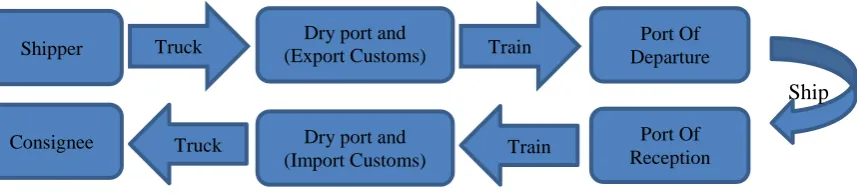
Figure 6. Operational procedures of dry port (UNCTAD, 1991 - draw by author)
According to UNCTAD (1991), the workflow operation of a dry port is like the following
scheme. For export activities, shippers send and retrieve goods from the warehouse and then
transport them to the dry port by trucks. When the goods are still in palletized condition, the
item will be put in a container in the dry port. Checking by customs should be done and
completed in the dry port area, so the exporters do not need to do anything at the seaport and
after that, the container will be transported to the seaport by rail. Goods are then shipped on
the sea by ship from the shipping company. When the goods have arrived at the destination
15
After arriving at the dry port and checked by the customs, the goods are sent from the dry
port heading to the recipient by truck.
Integrating Logistics Centre Networks in the Baltic Sea Region (INLOC) (2007) groups dry
port into several category groups: billing and cash collection, data storage/exchange and
communication, cargo storage, gate in/out security, customs clearance, cargo
loading/unloading to and from train, truck operations, cargo receipt and dispatch.
2.3.4 Dry Port Location
There is still no agreement for minimum distance in determining the criteria as a dry port
which makes the transportation costs to be efficient. The problem of distance is determined
by each case based on the operational implementation. Dry port development is highly
dependent on the location and good connections with the railway, so the dry port location can
be evaluated based on economic, technical and theoretically aspects (Rutten, 1998).
A dry port site selection has an effect that is of particular importance when using a
connection via rail. In addition, in the implementation of a dry port external costs should be
paid because of differences in modes of the transport system, so it must receive more
attention, especially in the economic value and also have an effect on the environment. The
use of intermodal transport to make total transportation costs is small compared to only using
the mode of land, so that it can provide value and the shipper can take advantage of the dry
port as a substitute for a seaport.
As an example, in India, the shipper has been utilizing a nearby dry ports, but the shipper still
cannot minimize transportation costs. This is due to lack of value added services provided by
the dry port and a lack of support from the government regulations and policies (Ng, 2006).
Based on the research that has been made by Roso, et al. (2006) and Woxenius et al. (2004)
16
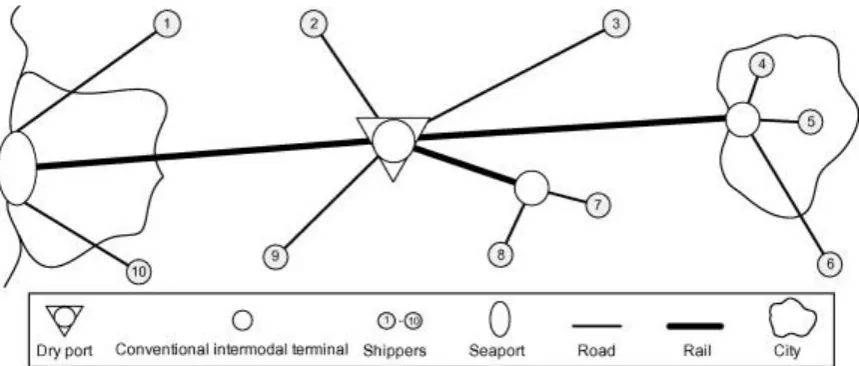
Figure 7. Distant dry port location (Roso et al., 2006).
The dry port location is said to be far if the distance between the dry port and sea port is more
than 500 km and is surrounded by a manufacturer or factories as well as being a large area. In
addition to having potential as a place to receive a number of goods, the dry port could also
serve as a consolidation and distribution center as well as extra services for logistics. From
Figure 7 it is demonstrates that all goods shipped from the seaport to the dry port or vice
versa, are transported by rail instead of trucks. Besides reducing air pollution caused by
trucks, congestion in a seaport can be reduced. As the case in Europe, the use of railway
transportation mode between the seaport and dry port can provide benefits of efficiency and
effectiveness of the logistics transportation system, for the comparison of the one long train
are proportional to the number of 40 trucks (Roso, 2006). Therefore, as shown in Figure 7 the
significant benefits of the dry port are that shipper who is far away from the seaport can still
continue to send the goods by utilizing a dry port.
17
Furthermore, the use of mid-range dry port and close dry port should be considered when a
sea port cannot accommodate the goods due to capacity constraints at the seaport as well as a
storage area or warehouse. The port is not allowed to expand capacity because of limited land
that has been used for the benefit of other parties or due to environmental aspects. This is
illustrated in Figure 8 where the mid-range dry port has a range of about 70-500 km from the
sea port. In the mid-range dry port, some shippers are served directly from the dry port when
using the dry port while others are still served by conventional intermodal services because
the shipper has limited distance. The combination of mid-range and the close dry port has
benefits for the shipper because shippers can choose nearby a terminal from the shipper
location, dry ports or sea ports.
Figure 9. Close dry port location (Roso et al., 2006)
Figure 9 shows a schematic of a close dry port within approximately less than 50 km. The
closest port does not cause congestion in the seaport area although it is close to the seaport
even for the long distance and middle distance shipper. The long-distance shipper must send
the goods to the conventional terminal by a truck before it can continue to be sent to the dry
port by train. This requires reliable transport modes to maintain the schedule for loading onto
the ship in a seaport on time.
2.3.5 Advantages of Dry Port
Congestion at the port affects consignees, shippers, hinterland operators, stevedores, carriers,
and terminal operators (Visser et al., 2007, Meersman et al., 2012). Congestion at the port
gives rise to environmental pollution, especially air pollution. Moreover, congestion can
reduce the efficiency of the delivery or the flow of goods. There must be real action now to
reduce air pollution in various ways due to congestion. When a seaport faces problems of
18
despite spending considerable money. The logistics transport chain and the dry port concept
may bring a valuable solution. The coverage area of seaports can be expanded for their
operations until deep into the hinterland, though far from the sea, but could provide added
value for the transport and logistics system. A seaport can help send the goods directly from
the shipper yard and can accept new items or containers that come to the empty space.
For example, as in the Netherlands, Slack (1999) reported that the public policies
implemented in the Netherlands did not support the port to expand the terminal areas on a
large scale. Therefore, some port operations, mainly operational storage and handling the
capacity of the port of Rotterdam, moved into the hinterland and eventually many inland
terminals were built in Venlo (Slack, 1999). A logistics and distribution company involved in
building a distribution center in Venlo has provided facilities and tools of transportation
connecting by train from the port of Rotterdam (Slack, 1999).
From the previous survey in northern Europe, research has been done about the benefits of
the implementation of dry port. The benefits of the dry port are avoiding road and port
congestion, reducing environment pollution, reducing the used of sea ports, firming
multi-modal transport, firming the transport chains and reducing transportation costs (INLOC,
2007).
2.3.6 Governance of Dry Port
Dry port management varies greatly depending on the circumstances of each project initiator.
Rodrigue et al. (2006) state that the terminal has been split into two main groups which are
execution operations and ownership.
1. Operational Executor: describes the execution that happens in the terminal. This type of
operation is usually done by the owner or other persons appointed or can also be both:
• Private companies: A dry port can be owned by an individual person, so capital and
operation are managed and operated by private companies or they use the concession
contract from the government to be able to use public facilities (Rodrigue et al., 2006).
• Public control: Dry port operations, employees and operational equipment are provided by
public authorities.
2. Ownership: States owners, equipment, facilities and the terminal. There are two types of
19
• Private ownership: The terminal owner is private funding who gives funds for investment
in the infrastructure of the terminal. It can be found in the United Kingdom and New
Zealand (Rodrigue et al., 2006).
• Public ownership: The owner of the terminal is public authorities, who give funds for
investment in the future expansion, planning, and infrastructure.
Furthermore, the dry port governance body is also highly dependent on operating
management and initiator of the dry port. Governance is in the dry port is usually a
combination of:
1. Public governance
The ownership is the government or public sector organization or state that can be funded for
the terminal transport development, such as the railway or a port. The government controls
the transport modes, revenue, and operations. The government must be fair, must be adhered
to equality for all users and ability to guarantee justice and security for other organizations to
minimize shipping negligence, for example, discrimination between customer companies and
determination of reasonable rates. (UNCTAD, 1991).
2. Private.
Private management can be implemented on private investment. The private sector is
expected to provide much better service and quick response in terminal operations, including
regarding changes in the tariff structure. A quick response can affect and change the pattern
and special supply needs each day (UNCTAD, 1991).
3. Public‐private partnership (PPP).
Public-private partnership provides greater flexibility at the time of the initial development
partnership agreement or contract compared with that of the government. This provides an
opportunity and the possibility to change the form of cooperation relations. It will also
provide an opportunity to regulate the development of new projects, including the
implementation of a network of terminals and infrastructure. Moreover, the financial factors,
which are crucial for the public sector, should be able to choose the best investment and the
private sector should be able to recover the investment that has been obtained (UNCTAD,
1991).
2.4.Implementation of Dry Port Factor
To help understand and analyze the external factors affecting the company's performance and
20
(Politics, Economic, Social, Technology, Environment, Legal, and Ethics) analysis
(Thompson et al., 2010). This research is expected to focus more on PESTELE factors
needed to be analyzed more deeply because it will affect good business for the company.
According to Grigoriu (2006), the PESTELE includes seven aspects there are political,
economic, social, technology, environment, legal and ethics. These PESTELE factors will be
analyzed using a macro-environmental framework to better suited to answer questions from
this study, “What factors need to be considered in revitalizing Kandangan Dry Port?”
1. Politic factor
The previous studies suggest that the relationship is good and close cooperation between
government and the private sector or other stakeholders, such as logistics providers, shipping
lines, terminal operators, container depot, port operators and railroad company which are
urgently needed (Visser et al., 2007). Both local and central government plays an important
role in the development and implementation of the dry port, such as tax regulation, inland
customs clearance procedures, concession contracts, operational authorizing, land
arrangements, and investment regulations (Beresford et al., 2012). For example, in China, the
government also helps regarding coordination and promotion (Hanaoka and Regmi, 2011).
However, other previous studies found that in China in which the Shijiazhuang dry port there
were incompatibility and less harmony in customs policy issues, which could indicate a lack
of coordination between institutions concerned with the government (Hanaoka and Regmi,
2011). The same thing happened in Brazil, where there was less government support for the
development of the dry port in Brazil. Eventually, it took about 20 years of development, as
construction began in 1970 and was finally completed in 1990 (Padilha and Ng, 2012). From
the examples above, it can be concluded that the bureaucracy of the government support
could influence the development and implementation of a dry port.
However, a good relationship or collaboration between the private sector to the public sector
or the government cannot be separated in the development and implementation of a dry port
(Beresford et al., 2012). The government could also help regarding an investment that
requires a lot of money to help alleviate financial problems (Rodrigue et al., 2010). The
partnership between the private and public sectors which shares obligations, risks, and
investments have been applied to various ports but that strategy is not always the same in
every country (UNESCAP, 2008; UNESCAP, 2009). For example, in North America, where
the dry port is fully operated and owned by private parties, but not in Europe who use the
21
ownership. However, in China strategic planning and good policy exist at an early stage of
development where it involves the central government and other relevant government
agencies and stakeholders, such as industry, port operators, terminal operators, quarantine,
and customs. Moreover, in the operational phase following the completion of planning, the
dry port will involve many stakeholder parties, such as railway companies, container freight
stations, logistics forwarders, shipping lines. From the example mentioned above, for the
successful development and implementation of a dry port collaboration between the
government and all stakeholders of the dry port is required.
2. Economic factor
UNECE (1998) explains the definition of a dry port as a place to provide temporary services
including handling and storage services to offer every kind of goods and container.
Nowadays, for the successful development and implementation of the dry port, warehousing
and customs that can be used as the main services from existing services need to be included.
Some previous studies also stated the importance of the infrastructure, facilities, capacity, and
size of the dry port (Crainic et al., 2013; Gujar and Haralambides, 2012). To improve cost
efficiency, several research studies suggest planning location to create improved access to
seaports and dry ports as service planning and operational dry port (Ka, B., 2011; Zhong et al.,
2010).
The rapid development in the shipping and maritime industry, providing value-added services
greatly affect the implementation of the dry port, such as container freight station (CFS),
container maintenance, stuffing and stripping and also customs clearance (Crainic et al., 2013;
Roso et al., 2009; Woxenius et al., 2004). value-added services are important, especially if
the dry port acts as a consolidation and distribution center (The South East of Scotland
Transport Partnership, 2012). Customers will be able to feel the economic benefits if the dry
port could successfully carry out value-added services.
Robinson, A.E. (1999), cited in Harrison (2011) defining a mode of transportation that
connects the dry port with the seaport and hinterland is critical to use deep water access,
highway, rail, and air. In addition, the direct connection via train is also crucial, according to
some stakeholders (Crainic et al., 2013). Meanwhile, the performance of the dry port is
determined by the availability of good access from and to the dry port (Roso, 2007).
Available modes of transportation are not only used for connections from and to the dry port,
22
Furthermore, to reduce traffic congestion due to the increased flow of containers and to
reduce transport costs, the ports in Europe combine ground transportation and waterway
transportation (Fremont & Franc, 2010). In addition to the connections using a railway,
transportation mode can also reduce logistics costs due to the increased volume of the
container (Lumsden, 2009; Woxenius et al., 2004). With a combination of modes of transport
can reduce the number of congestion at ports in northern Europe and also make the growth of
container traffic.
Figure 10. Split of modal at EU Container Ports (Rodrigue et al., 2010)
Transportation capacity should also be taken into consideration in the development and
implementation of a dry port in addition to only considering the major services and access to
hinterland (The South East of Scotland Transport Partnership, 2012). Large transport capacity
will have a positive impact because logistics transportation costs will decrease. To examine
the transport cost of the economy of scale should also be considered (Toh et al., 2008; Wang
and Wang, 2012).
3. Social factor
Social factors here are one of the aspects that is related to management. Although
management does not have a direct relationship in the operational process, it still has a very
important role in the revitalization of the dry port. From previous studies resulting in getting
good performance, the dry port should be run by an efficient management who can provide
facilities for planning and marketing, so the management plays an important factor (Slack,
1999; Padilha and Ng, 2012). Good management requires communication and reliable human
23
Also, based on previous studies, to expand its market share up to the hinterland and attract
more customers, proper strategic planning of management for the dry port is needed (Ng and
Padilha, 2012; The South East of Scotland Transport Partnership, 2012; Toh et al., 2008).
Also, Harrison (2011) stated that to attract new business in the hinterland, the dry port should
gain public support by making a more aggressive marketing. Therefore, in addition to having
short dwelling time, compared to the seaport and other benefits for the implementation of
marketing strategies to approach good communication with the customer will be able to
attract more customers (Slack, 1999).
Factors other than management, such as social factors, will also be discussed on the subject
of the location of a dry port itself. One of the goals to determine the right location of a dry
port is to consider the labor and transportation costs. Strategic location is close to the center
of the industry or business as well as close to the center of the residence. However, it should
be kept in mind that the implications of these locations could create new problems, for
example accessibility and territorial conditions, environmental acceptability, social welfare
and levels of economic growth.
4. Technology Factor
Implementation of advanced technology cannot be separated from the dry port
implementation. From previous studies it was found that with the application of advanced
technology in the dry port operations can further optimize operational performance and help
maintain safety procedures for the dry port (Crainic et al., 2013, Visser et al., 2007). Factors
Information and Communication Technology (ICT) should also be considered in the
construction of the dry port. Data exchange between customs, dry port and seaport can help
prevent the illegal import and export (Harrison, 2011; Robinson, 1999).
The electric window is a system that could help change the manual process towards an
automated paperless process. Using an electronic gateway linking the trade users to port /
terminal operators, customs department, ports authorities and other government agencies and
obtain approvals electronically makes this feature have many benefits, such as:
1. Sharing information can help improve and smoothen the interaction and the level of
collaboration and coordination between the many stakeholders.
2. Enhancing public services, responsiveness, and productivity, efficiency,
accountability, accuracy, increased transparency, improve monitoring and control of
24
3. Increasing the speed of port services, reduce cycle time from error data entry because
of accessible 24/7 from anywhere
4. Supporting and linking with the government system to implement the single window
system such as e-government, portnet, e-trade.
5. Re-engineering the import and export processes to increase competitiveness and
image in the global marketplace.
By using an integrated electronic windows system that can integrate and connect all kinds of
information can be exchanged among all stakeholders in port. To succeed in the
implementation of the electronic windows system, the people concerned need to get used to
running a new more innovative culture to the public, such as:
1. Increasing End-Users and client's knowledge and skills by conducting some training,
seminars related Electronic Windows System and IT literacy and also collecting
feedback.
2. Cooperating and collecting the full support of the stakeholders at various levels.
3. Upgrading internet and telecom or hardware infrastructure services.
4. Recruiting and building a committed and competent team.
5. Doing an aggressive strategic marketing.
6. Implementing change management, including changing method, tools, work processes
until mindsets.
Therefore, one of the requirements for the revitalization of the dry port is to apply advanced
technology in both hardware and software (ICT) (Wang & Wang, 2012).
5. Environment factors
As a result of globalization forcing the port, especially in the operational processes and
infrastructure, it may be less safe for the environment because of interference of hydrological
processes and water system changes that could potentially damage the environment. (Michail,
2006; Robinson, 2002). The dry port could also benefit the environment if it could implement
a system that is environmentally friendly (Hanaoka and Regmi, 2011). Previous research,
conducted by Liao et al. (2009), which found that Taiwan was able to reduce emissions from
port activities, cleaning them up to 60% based on modeling activity emissions. Furthermore,
research is also conducted in London which got the result that emissions of Freight
25
can be concluded from previous studies that dry port operations could be friendly to the
environment if it could reduce the emissions generated.
6. Legal factors
Governments, both local and central, play a major role in the development and
implementation of the dry port, ie. tax regulations, inland customs clearance procedures,
concession contracts, operational authorizing, land arrangements, and investment regulations
(Beresford et al., 2012). As an example the case in Madrid, Spain in 2003, where the Spanish
government supported in creating or approving legislation to Coslada Dry Port, which was
advised to provide customs and regulatory inspection services (Estrada, 2008). More
importantly also from government support there will be regulations and policies regarding
legal issues and bureaucracy of the funding obtained from the government or from multiple
stakeholders (Harrison et al., 2011).
7. Ethics factor
Ethics is generally known and associated with individual characteristics such as
trustworthiness and honesty. Each individual must have a moral and ethics in daily life, both
at home and in the office, especially for the leadership of an organization. Discipline at work
is one example of implementation of ethics (Brown, 2005). Corporate culture or
organizational culture also brings an important role in creating an ethical workplace.
Corporate culture teaches how a company or organization can survive in an external
environment and is responsible for internal matters. Good conduct or ethics should be
promoted and used as a standard of values or norms of behavior in the company (Gorman,
1989). From research conducted in 2014 it was found that income in an organization or
company lost 5% as a result of fraud or corruption. From the estimated gross world product
in 2013, the data obtained loss due to fraud and corruption amounting to 3.7 trillion dollars
(Association of Certificate Fraud Examiners, 2014). Therefore, good moral ethics for
employees with the implementation of policies and codes of conduct in the company,
especially in the dry port is needed to reduce the possibility of fraud or corruption.
After all the PESTELE factors have been discussed, the dry port should immediately consider
these factors in the successful development and implementation of the dry port's future.
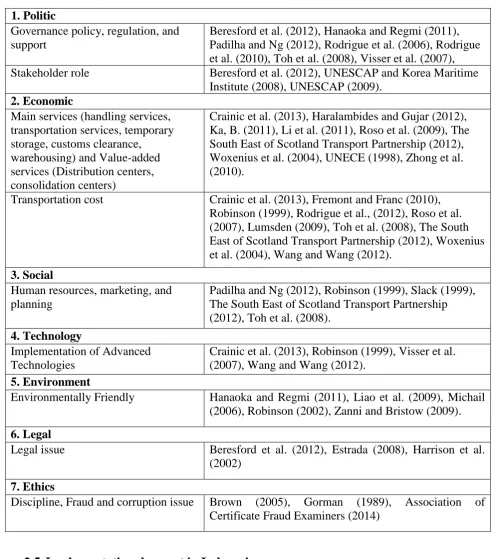
Finally, in Table 2 the factors that influence the implementation of the dry port based on the
26
Table 2. List and source of revitalization factor in dry port
“1. Politic
Governance policy, regulation, and support
Beresford et al. (2012), Hanaoka and Regmi (2011), Padilha and Ng (2012), Rodrigue et al. (2006), Rodrigue et al. (2010), Toh et al. (2008), Visser et al. (2007), Stakeholder role Beresford et al. (2012), UNESCAP and Korea Maritime
Institute (2008), UNESCAP (2009). 2. Economic
Main services (handling services, transportation services, temporary storage, customs clearance, warehousing) and Value-added services (Distribution centers, consolidation centers)
Crainic et al. (2013), Haralambides and Gujar (2012), Ka, B. (2011), Li et al. (2011), Roso et al. (2009), The South East of Scotland Transport Partnership (2012), Woxenius et al. (2004), UNECE (1998), Zhong et al. (2010).
Transportation cost Crainic et al. (2013), Fremont and Franc (2010), Robinson (1999), Rodrigue et al., (2012), Roso et al. (2007), Lumsden (2009), Toh et al. (2008), The South East of Scotland Transport Partnership (2012), Woxenius et al. (2004), Wang and Wang (2012).
3. Social
Human resources, marketing, and planning
Padilha and Ng (2012), Robinson (1999), Slack (1999), The South East of Scotland Transport Partnership (2012), Toh et al. (2008).
4. Technology
Implementation of Advanced Technologies
Crainic et al. (2013), Robinson (1999), Visser et al. (2007), Wang and Wang (2012).
5. Environment
Environmentally Friendly Hanaoka and Regmi (2011), Liao et al. (2009), Michail (2006), Robinson (2002), Zanni and Bristow (2009).
6. Legal
Legal issue Beresford et al. (2012), Estrada (2008), Harrison et al. (2002)
7. Ethics
Discipline, Fraud and corruption issue Brown (2005), Gorman (1989), Association of Certificate Fraud Examiners (2014)”
2.5.Implementation dry port in Indonesia
2.5.1 Lamong Bay Terminal
Terminal Teluk Lamong (Lamong Bay Terminal) or known as TTL is an international and a
domestic container terminal in the Port of Tanjung Perak, Surabaya, East Java, Indonesia.
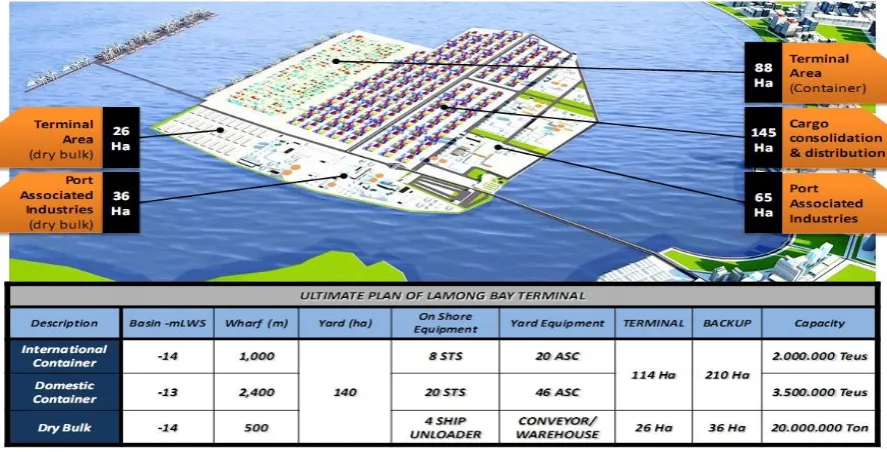
27
export, and domestic in East Java and the surrounding area. The container yard that can
accommodate 5.5 million TEUs, 20 million tons of dry bulk, and a total of 386 hectares of
port area which includes quays, yards, warehouses and land, TTL has become one of the
largest container terminals in East Java.
Figure 11. Masterplan TTL Surabaya (IPC III, 2016)
Table 3. TTL throughput trend (Pp3, 2014)
Period Call Total Box Total Teus Nov-14 1 290 304
28
May-16 48 14245 16735 Jun-16 52 17048 20058 Jul-16 35 15823 19993 Aug-16 52 18380 21444
From the data in Table 3 it can be seen that the additional container yard is required at the
place of the container in TTL. Availability of the container yard is influenced by the
increasing traffic of container throughput. If TTL cannot deal with the increase in container
traffic throughput, it will cause congestion around TTL. Congestion problems not only affect
the terminal operators, but also affect the performance for all stakeholders, such as
consignees, shippers, hinterland operators, stevedores and carriers (Visser et al., 2007).
According to research carried out by Cullinane et al. (2012), it showed that some cases that
occurred in the port due to lack of infrastructure and adequate transportation can make the
performance of port operations slow, so that ports need to develop their services to keep
balance with the growth of trade.
The TTL must be able to provide better service that can be integrated with other modes of
transportation service systems which are simpler, secure and reliable to compete with other
container terminals in Java and Indonesia in general. Congestion that occurs at the port and
the surrounding area is a challenge that must be faced by the company to reduce the total cost
of logistics in Indonesia. Yard Occupancy Ratio is almost 60%, but the standard should be
below about 50% of the total terminal operator in IPC III. This made a special concern for the
continuity of operations in TTL (Pelindo III, 2016). Table 3 shows that the growth rate of
container throughput increased from 2014 through 2016 for import and export activities,
which could potentially cause congestion if not an immediate solution is found.
2.5.2 Kandangan Dry Port
So far the presence of the dry port in Indonesia is still not used optimally to support a reliable
national logistics system because it is not well managed and there are still many who do not
take advantage of the railway transportation mode (Pelindo III, 2016).
Kandangan is the name of the area which is located about 15 kilometers to the south of
Surabaya; there is a dry port that has not been used optimally and even now not operated
anymore. It is owned by the government companies (Pelindo III, 2016). With a good