www.earth-syst-dynam.net/6/375/2015/ doi:10.5194/esd-6-375-2015
© Author(s) 2015. CC Attribution 3.0 License.
Migration and global environmental change:
methodological lessons from mountain areas of the
global South
A. Milan1, G. Gioli2, and T. Afifi3
1Institute for Environment and Human Security, United Nations University, Bonn, Germany
2Institute of Geography, CLISEC – University of Hamburg, Hamburg, Germany
3independent scholar
Correspondence to: A. Milan ([email protected])
Received: 06 November 2014 – Published in Earth Syst. Dynam. Discuss.: 10 December 2014 Revised: 27 May 2015 – Accepted: 02 June 2015 – Published: 22 June 2015
Abstract. The relationship between migration and environmental and climatic changes is a crucial yet under-studied factor influencing mountain livelihoods in the global South. These livelihoods are often characterized by high prevalence of family farming, widespread dependence on natural resources, and high sensitivity to cli-matic changes. Except for a limited number of empirical case studies, the literature on migration and global environmental change has not yet moved beyond case study results to address and explain global patterns and specificities of migration in mountain areas of the global South. After an introduction to the topic, the authors present a new synthesis of three field studies combining household surveys, participatory research approach (PRA) tools and key informant interviews in Pakistan, Peru, and Tanzania. This article suggests that the system-atic use of transdisciplinary approaches, with a combination of quantitative and qualitative empirical methods, is the key to understanding global migration patterns in rural mountain areas of the global South. The results of our synthesis suggests that survey data should be triangulated with PRA results as well as secondary data in order to build household profiles connecting vulnerability (measured through a multidimensional index) with human mobility patterns. Such profiles can be conducive to better understand the feedback processes between livelihoods and mobility patterns both within each case study and across case studies, helping researchers to draw general lessons.
1 Introduction
1.1 Migration and environmental change in the context of climate change
Research on the interaction between migration and global environmental change dates to the late 19th century, when many of the “founders” of migration studies (Ratzel, Sem-ple, Ravenstein, Huntington, and Kropotkin) included envi-ronmental and climatic considerations among the determi-nants of migration decision-making (Piguet, 2013).
However, the environment has disappeared from the mi-gration debate for most of the 20th century, only to reappear around the end of the same century when climate change
became a key scientific and political topic (HM Treasury, 2006; IPCC, 2007). In fact, the First IPCC Assessment Re-port highlighted that the single greatest impact of climate change could be on human migration (Tegart et al., 1990).
The initial framing of the debate in the 1990s focused pre-dominantly on whether environmental drivers per se could determine human mobility patterns, and on estimating fig-ures of potential (climate refugees) (often portrayed as a se-curity threat) in future climate change scenarios.
200 million potential environmental migrants by 2050 (My-ers, 1993, 1997, 2002; Nicholls, 2004; HM Treasury, 2006; Suhrke, 1994). These estimates continue to capture media headlines, fuelling imagery of a future world flooded by cli-mate refugees forced to move because of an increasingly hos-tile and resource-scarce environment.
However, hosts of subsequent studies have cast serious doubts on the reliability of such estimates which were mostly based on the number of people living in places at risk without factoring in the degree of resilience and adaptive capacity of affected communities. Moreover, these estimates ignored the multi-directional and often temporary nature of migration as well as the inherent complexity of the decision to migrate (IPCC, 2007).
In the recent literature, a broad academic agreement has emerged on five key points regarding the relationship be-tween migration and environmental change in the context of climate change:
– Environmental change will have an increasing impact on migration in the future through its interrelationship with other demographic, economic, political, and social drivers of migration (Foresight, 2011). Hence, migra-tion decision-making is always complex and researchers should be careful in establishing any direct relationship between climatic and environmental stressors and mi-gration (Afifi, 2011; Bettini, 2013; Mortreux and Bar-nett, 2009; Piguet, 2012; Wrathall, 2012).
– Most migration related to climatic and environmental factors is and will be internal rather than international, with the notable exception of border areas (including mountains) and small states (particularly small island developing states) (Hugo, 1996).
– While migration is often understood and framed as a failure to adapt to climate change, it can also be part of positive adaptation strategies (Bardsley and Hugo, 2010; Black et al., 2011b; McLeman and Smit, 2006; Tacoli, 2009).
– In the upcoming decades, millions of people who would like to move might be unable to leave locations in which they are vulnerable to environmental change (Black et al., 2013).
– Existing legal protection gaps should be filled, espe-cially in the case of or people displaced across borders in the context of disasters and the effects of climate change (Kälin, 2012).
In spite of these points of agreement and an increasing num-ber of theoretical and empirical publications on migration and environmental and climatic changes, the knowledge base remains uncertain. Aside from the inherent complexity of the nexus of environmental and climatic changes and migration, different scientific communities (from the disaster reduction
risk to the migration and development communities and the climate and environmental science scholarship) have looked at the issue through their specific disciplinary lens. This has led to a general lack of holistic theoretical and empirical ap-proaches, which is paramount for both research and policy design.
In this context, mountains are a blank spot in terms of aca-demic research and available data on both their hydroclima-tology and societal responses to climatic and environmental change, including human mobility.
1.2 Climate change and its societal impacts in mountain areas of the global South
Climatic variability – along with extreme weather events – impacts particularly resource-dependent societies, affecting both assets and livelihoods. These issues are exacerbated in regions in socioeconomic transition and political instability, so that many of the identified hotspots of climate change are located in the global South, where higher degrees of exposure and sensitivity are often accompanied by a limited adaptive capacity, high levels of poverty, weak institutions and con-flict.
Within resource-dependent areas of the global South, mountain areas are particularly vulnerable to the adverse ef-fects of climate change because of their high sensitivity to climatic changes and high prevalence of (often rain-fed) fam-ily farming in marginal and harsh areas (Beniston, 2003; IPCC, 2013, 2014; Jodha, 1992; Messerli et al., 2004).
Mountain areas comprise approximately 20 % of the Earth’s surface, they are home to roughly 10 % of the world’s population, and they supply about 50 % of the world’s pop-ulation with major natural resources including water, energy, minerals, forest and agricultural products. Moreover, they are key storehouses of biological diversity, natural habitats for endangered species, and an indispensable part of the world’s ecosystem (Godde et al., 2000; Smethurst, 2000; Viviroli et al., 2007).
The Fifth Assessment Report of the Intergovernmen-tal Panel on Climate Change (IPCC AR5) points out ma-jor adverse impacts of climate change on mountain areas worldwide and particularly on precipitation, glaciers, snow-fall, permafrost, and ice cover (2013, 2014). Rising global temperatures contribute to changes in species distribution (Pounds et al., 1999); rainfall variability and extreme rainfall events (Dore, 2005); and snow cap melting (Hock, 2003). Glacial melting and high rainfall can in turn lead to inten-sive floods and landslides (Evans and Clague, 1994); higher amount of debris flows and avalanches (Beniston, 1994); and other potential hazards which impose major threats to the ecosystem and great damages to the infrastructures, com-munication networks, farm productivity and local economy (Beniston, 1994).
(such as population dynamics and economic globalization) is of the greatest importance yet it is relatively understudied (IPCC, 2013; Jodha, 1992; Messerli et al., 2004). In partic-ular, the relationship between migration and environmental and climatic changes is a crucial driver of livelihood dynam-ics which has barely been studied in a systematic way (Koll-mair and Banerjee, 2011; Skeldon, 1985).
1.3 Past empirical approaches to study migration and environmental change in mountain areas of the global South
1.3.1 Quantitative studies
From an empirical point of view, most quantitative studies on migration and the environment in mountain areas have taken two approaches: either using existing population and environmental data from different sources or designing a new survey to collect them through a case study approach (Bils-borrow and Henry, 2012).
A good application of the first approach is provided by the Chitwan Valley Family Study (CVFS) in the Terai belt of Nepal (situated at the foothill of the Himalaya). The CVFS spans over 108 months (between 1997 and 2006) and in-cludes a total of 1583 household surveys, 5271 individual interviews (with life histories), land use measurements for each neighbourhood, and a monthly registry of demographic events. The database has been analysed applying descriptive and inferential statistical tools as well as modelling migra-tion through discrete time event history methods (Bhandari, 2004; Massey et al., 2010).
However, past survey data can only be used when a com-prehensive database with information on demographic, mi-gratory and environmental issues is available. Given the re-moteness and isolation of mountain areas and the lack of reli-able data, the chances of successfully replicating this method are presently limited.
More often, researchers have designed a new survey to an-swer specific research questions within case studies (Ezra, 2003; Gray, 2009; Gray and Bilsborrow, 2013, 2014). While individual sample surveys can be tailored very well to spe-cific contexts (Piguet, 2010), they have rarely been used to look at migration in mountain regions of more than one coun-try.
The Where the Rain Falls (hereafter Rainfalls) case stud-ies in mountain areas of Guatemala, Peru, and Tanzania (the latter two to be presented later in this article) are an excep-tion. Similarly, the case study of Pakistan presented here has followed the approach developed by the International Cen-tre for Integrated Mountain Development (ICIMOD) in the project entitled Too much water, too little water – Adapta-tion strategies to climate induced water stress and hazards in the greater Himalayan region (2008–2011), which looked at the role of labour migration in communities affected by the impacts of too much (flash and other floods) and too little
(drought and water shortage) water in four countries of the Hindu Kush–Himalaya (HKH) region (China, India, Nepal, and Pakistan) (Banerjee et al., 2011, 2013).
1.3.2 Mixed methods
The relationship between population dynamics and the en-vironment in mountain areas of the global South is com-plex and cannot be easily captured by quantitative surveys alone. While empirical studies relying exclusively on qual-itative methods are rare (Kaenzig, 2015), most researchers use a mix of quantitative methods (especially survey data) and qualitative data (ethnographic methods).
There are two most common combinations of quantita-tive and qualitaquantita-tive data. Firstly, household surveys are often complemented by in-depth individual interviews (Goodall, 2004). Secondly, as shown in the three case studies presented in this article, survey data can be combined with key infor-mant interviews and participatory research approach (PRA) tools (Banerjee et al., 2013; Milan and Ruano, 2014).
1.4 Contribution of this article
In the case studies, the authors built household profiles link-ing household vulnerability with human mobility patterns which helped explain the role of migration in household at-tempts to manage risks in areas where they are highly vulner-able to environmental and climatic stressors. In particular, they provide insights into households which will likely use migration to enhance their resilience; those that will likely migrate but for which it is an erosive (to their resiliency) and undesirable action indicating constraints or limits to adaptive capacity in situ; and those who cannot move, even if they “would like to” (Gioli et al., 2014, p. 263; Warner and Afifi, 2014, p. 11).
While these household profiles, built as an ex post ex-ercise, provided important insights and lessons learned for the future, the authors suggest in the discussion that trans-disciplinary teams should aim at building household pro-files based on multidimensional vulnerability indices from the onset of the research. Such profiles should be used as a lens through which researchers study the relationship be-tween socioeconomic status and different forms of mobility both within and across different case studies, especially in the case of rural mountain areas of the global South, which are highly sensitive to climate change and where isolation, lack of demographic data and scant distribution of meteorological stations present a specific set of challenges.
1.5 Theoretical background of the case studies
at the household level, and the main question addressed is “under what circumstances do households use migration as a risk management strategy when facing rainfall variability (Sects. 2 and 3), environmental shocks (Sect. 4) and food in-security?”.
Such a question calls for a deeper understanding of the livelihood and environmental context, and this is why the NELM theory was supplemented by the sustainable liveli-hoods approach (SLA) which allows one to explore the as-set base of households, divided into natural, physical, fi-nancial, human, and social assets that are complementary to each other (Banerjee et al., 2013; Carney, 1998; Kollmair and Gamper, 2002; Kniveton et al., 2008).
2 The Rainfalls Peru case study
2.1 Methodological approach
The Peru case study of the Rainfalls project was conducted in fall 2011 in three mountainous communities located in the central part of the Mantaro Basin: Acopalca, located at 3900 m a.s.l. (metres above sea level), Chamisería (3583 m a.s.l.) and Paccha (3260 m a.s.l., but approximately half of its inhabitants share communal grazing land at higher altitudes). These communities belong to the region of Junín, in the Cen-tral Highlands of Peru and they are all within less than 30 km from the commercial city of Huancayo (see Fig. 1).
The research site was selected using three main criteria:
– population highly vulnerable to rainfall variability and bad weather (prevalence of rain-fed agricultural activi-ties);
– high percentage of people living in conditions of poverty;
– high prevalence of migration.
Following the Rainfalls research protocol, the team con-ducted 150 household surveys, 23 PRA sessions with a to-tal of almost 150 participants, and 14 semi-structured expert interviews at the national, regional, and local level.
The survey focused on three main variables: rainfall vari-ability, food insecurity, and human mobility, without over-looking other economics, political, social, cultural, and de-mographic factors. Surveyed households were identified through simple random sampling.
The PRA sessions included participatory socioeconomic and environmental mapping, seasonality calendars, focus group discussions, timeline and trend analysis, livelihood risk ranking, Venn diagrams, and mobility maps.
Expert interviews were based on a comprehensive list of open questions on the following variables: climate change and rainfall variability; livelihood and food security; mi-gration; and the connections between these variables. Dur-ing each interview, only a selection of relevant questions was used. The research team interviewed representatives
Figure 1.Location of the Rainfalls Peru research site. Source: Mi-lan and Ho (2014; their Fig. 1).
from several ministries and governmental agencies, interna-tional institutions, non-governmental organizations (NGOs) and academics.
Finally, in addition to primary data, the research team used local and national secondary socioeconomic data as well as rainfall data from the Shullcas meteorological station located within the research area at 3750 m a.s.l.
The Rainfalls research protocol contains more detailed information on the overall project’s research approach and methodology (Rademacher-Schulz et al., 2012). In addition to its implementation in Peru and Tanzania (presented in this article), the Rainfalls approach has been used within the project in six other case studies: Bangladesh, Ghana, Guatemala, India, Thailand, and Vietnam (Etzold et al., 2014; Milan and Ruano, 2014; Murali and Afifi, 2014; Rademacher-Schulz et al., 2014; Sakdapoldrak et al., 2014; Van de Geest et al., 2015).
2.2 From methods to results
In the first phase, all primary and secondary data were anal-ysed in order to understand the complex interactions be-tween livelihoods and migration patterns in the area. The task proved challenging given the complex nature of local liveli-hoods, where households often combine rural agricultural activities, urban employment in the nearby city of Huan-cayo, and different forms of human mobility. While Aco-palca, Chamisería, and Paccha were all located within a rel-atively short horizontal distance (approximately 20km), dif-ferences between households located in different parts of the basin were evident, in particular with regards to the relative importance of rural and urban activities and the prevailing forms of human mobility (Ho and Milan, 2012).
patterns of households in a comparative way based on higher altitude (highland) and lower altitude (lowland). This ex post exercise had some limitations in terms of survey data: only 114 households could be identified as either lowland or high-land, while 33 households from Paccha were excluded from the analysis because of insufficient information for determin-ing their location (Milan and Ho, 2014).
An important component at both stages of the data anal-ysis process was the data triangulation process. For each of the variables of interest, survey data was checked against comes of PRA exercises; whenever survey data and PRA out-comes were not consistent, the authors found an explanation for the discrepancy through outcomes of expert interviews as well as secondary data available (including relevant liter-ature).
2.3 Open questions remaining
A first open question emerging from this case study is how to better analyse the interaction between migration and speci-ficities of mountain areas such as remoteness and difficult access to market opportunities; the impact of land steep-ness and land fragmentation; high vulnerability to climate change; glacial melting and water issues; and other specifici-ties which are often hard to measure and to relate to human mobility (Jodha, 1992).
Another interesting area for future investigation both in this research area and in mountain areas in general is the in-teraction of human mobility with risk of conflicts related to glacial melting and water issues.
Last but not least, Rainfalls focused on the area of origin of migrants. It would be interesting to follow migration tra-jectories, at least for one or two main migration corridors, in order to understand what determines migration outcomes in areas of destination (Findlay, 2011).
2.4 Lessons learned
Methodologically, one of the most important choices in the survey design phase is the trade-off between the necessary survey length for such a complex issue and data quality which tends to decrease as survey length increases. The com-bination of a short quantitative survey and qualitative tech-niques seems to be a good compromise.
Moreover, conducting a cross-country comparative survey without losing valuable information about the local context is a complicated task. An interesting approach for combin-ing cross-country comparability and in-depth understandcombin-ing of the local context, as discussed later in this article, is build-ing household profiles based on socioeconomic characteris-tics and migratory responses to sudden and slow-onset envi-ronmental and climatic events and stressors.
The timing of research also played an important role: re-search was conducted right after the wettest rainy season on record. As a consequence, people tended to focus their
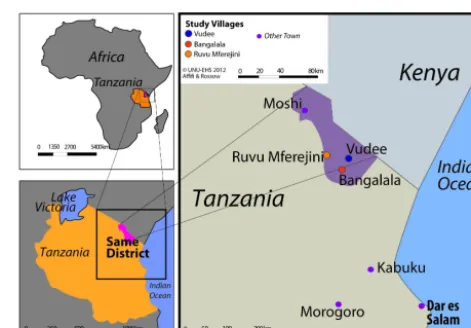
Figure 2.Location of the Rainfalls Tanzania research site. Source: Afifi et al. (2014; their map 1).
answers on issues related to heavy rains, especially in the household survey.
3 The Rainfalls Tanzania case study
3.1 Methodological approach
Like with the rest of the Rainfalls case studies, a mixed-methods approach combining expert interviews with a 165 household survey and PRA tools was applied in Tanza-nia. The expert interviews included national and local gov-ernment officials, NGO representatives, and academics in the fields of migration and climate change, geographers, and meteorologists. Due to the availability of information about household wealth data, it was relatively simple to apply strat-ified random sampling on households that were classstrat-ified as poor, medium (wealth), and wealthy. The three research vil-lages were classified according to their altitudes: Ruvu Mfer-ejini (lowland – 655 m a.s.l.), Bangalala (midland – 900 m a.s.l.) and Vudee (highland – 1950 m a.s.l.), all located in the Same District, Kilimanjaro, north-east Tanzania, on the bor-der with Kenya (Afifi et al., 2014) (see Fig. 2).
3.2 Results
However, there was an agreement among meteorological experts, survey respondents, and PRA participants about the fact that the total amount of annual rainfall has not decreased significantly throughout the past 3 decades. Nevertheless, large amounts of rainfall over only a limited number of days throughout the year, resulting in crop failure. Hence, it is the intensity and distribution of the rain over time that af-fect livelihoods. Based on the PRA outcomes, rainfall vari-ability (increase in drought incidences, seasonal shifts, and prolonged dry spells) and water shortage are the most impor-tant threats to livelihood, and hence, influence the migration decision.
Elevation also plays a role in determining the migration patterns across the three villages; Vudee (highland) is the vil-lage with the lowest records of migration. The reason for this could be the highest precipitation level (successful subsis-tence agriculture) and the fewest landholdings of its inhabi-tants (least means for migration) as compared to the rest of the villages. In addition, Vudee has the highest average years of schooling and the most teachers (no need to send the chil-dren to schools outside the village). The immobility can also be attributed to Vudee’s highest number of elderly. The ex-treme opposite is represented in the lowland village Ruvu Mferejini with the most landholdings and the lowest precip-itation. Not only would its inhabitants be relatively mobile due to these two factors (more resources and means to out-migrate and stronger reasons to seek water resources else-where), but also to its closeness to urban areas. This creates pull factors for inhabitants seeking new jobs. Moreover, this is the village with the highest ratio of pastoral communities (highest percentage of people dependant on livestock activi-ties of the three villages), which are always more sensitive to water availability. It is worth mentioning that the high num-ber of landholdings of this village could be an outcome of the remittances that in turn support young people in the com-munities to seek education elsewhere. Moving to Bangalala, the midland village, it lies between the two other villages re-garding all the factors mentioned above.
3.3 Open questions remaining
There are a few open questions remaining after the field re-search and the analysis of its outcomes: it is not clear how the communities will deal with climatic problems in the future, especially that these seem to have intensified throughout the past few decades. This might not be an issue in the highlands where the precipitation is relatively high and the infrastruc-ture allows the communities to survive without needing to move to other areas. However, in the lowlands, it is impor-tant to consider the migration patterns more closely and to find out whether short-term and seasonal migration would turn into long-term or even permanent migration, given the increasing frequency of droughts and dry spells. Permanent out-migration, especially among the youth, would imply less labour in the areas of origin and would hence lead to
ne-glecting agricultural activities with all the negative effects on vegetal cover and soil.
One other question the research was not able to answer is to what extent villages with different altitudes interact in terms of human mobility and whether there are migration flows between these villages with all the implications on labour and landholdings. For example, it is clear that Vudee (highland) has the lowest records of out-migration, but the researchers did not know whether it received migrants from mid- and lowland villages, such as Bangalala or Ruvu Mfer-ejini, who might want to benefit from the high precipitation and improved education, instead of moving downwards to urban areas. This might be an option for Vudee, given that the number of elderly is the highest among the three villages and “pumping” new labour into it would be beneficial for the village in general.
3.4 Lessons learned for the future
Since the field research period was a total of 3 weeks in one particular season, the researchers sensed the need of visit-ing the same research site more than once and stayvisit-ing longer during each visit in order to capture more detailed and nu-anced insights into its dynamics, especially since the most important variable they were looking at was rainfall variabil-ity. Therefore, future research should consider the number of visits and its duration.
Since polygamy is widespread in the research site, it was often a challenge to find out which household representative to interview in the case of the absence of the household head. It might be useful to design the questionnaires in the future, such that this factor is considered and where a set of ques-tionnaires could accommodate more than one household in the case of polygamy.
It might also be useful to compare between villages on the same altitude but in different areas/regions rather than comparing between villages of different altitudes in the same area/region. This might help the villages under similar cir-cumstances learn from each other, especially when it comes to coping strategies in response to rainfall variability.
4 The Pakistan case study
4.1 Methodological approach
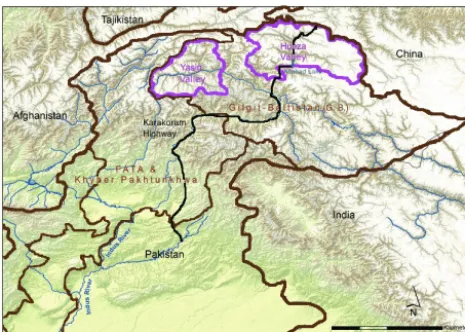
Figure 3. Location of the Pakistan research site. Source: Gioli et al. (2014) (Fig. 1).
on indigenous irrigation systems channelling meltwater di-rectly from glaciers to the bottom of the mountain slopes. The two valleys have faced similar challenges and used sim-ilar strategies, following the same model of development (implemented by the Aga Khan Rural Support Program)1. Nonetheless, their level of development diverges, as sug-gested by various socioeconomic indicators such as literacy and the average per capita income which is USD 160 in Yasin and USD 340 in Hunza (Gioli et al., 2014, p. 259).
The study area lies in the upper Indus Basin (UIB), where the observed climate trends are anomalous: as opposed to the climate change signal experienced in the Himalaya, the UIB has experienced cooling trends in the summer season for decades, non-statistically significant trends of annual temper-ature, and increasing or stable precipitation throughout the year (Archer and Fowler, 2004; Fowler and Archer, 2006; Khattak et al., 2011; Bocchiola and Diolauiti, 2013), accom-panied by mass gains in the glaciers of the region (Bolch et al., 2012; Hasson et al., 2014). The survey considered two major environmental shocks: the 2010 flood (Yasin) and the massive 2010 landslide, which blocked the Hunza River and created Attabad Lake. The lake submerged houses, agri-cultural land, and infrastructure, including part of the vital Karakoram Highway. While the two events considered are not a direct result of climate change, they are assumed to be a proxy for future more severe natural hazards resulting from climate change. The household survey aimed at collecting data on (1) the local perceptions of changes in climate pat-terns and natural shocks; (2) the impacts of climate change and variability on households’ productivity, livelihood
secu-1The Aga Khan Rural Support Program (AKRSP) is a branch of
the Aga Khan Development Network (AKDN) that has pioneered rural development in Gilgit–Baltistan. Since the 1980s AKRSP has introduced cash crops such as potatoes and developed orchards (e.g. of almonds, apricots, and grapes), which have become a major source of income for local people.
rity, and main adaptation strategies, and (3) the role of migra-tion in the context of environmental change and its gendered impacts. The households were randomly selected in each vil-lage by random walks, representing about 12 % of the esti-mated number of households per village.
4.2 Results
The study has found a high degree of convergence between climatic data and the local narratives of change collected in the survey (Gioli et al., 2013). Over the last 10 years, cli-mate change and variability are perceived as negatively af-fecting nonagricultural productivity by over 85 % of the sur-veyed households, and “Low temperatures”, “Erratic rain-fall”, “Flood”, and “Landslide” are indicated as the top causes. As for the responses to climate change and variabil-ity, the study highlighted that most households resorted to coping mechanisms to ward off immediate risks rather than proactive adaptive strategies. In the sample, labour migra-tion emerges as an important means of livelihood and is un-dertaken by 76 % of the surveyed households. Migration oc-curs predominantly at provincial (50 %) and national scales (97 %), from rural to urban areas, and is predominantly sea-sonal and circular, towards trade hubs in the region or to ma-jor cities within the country (especially to Karachi). Migra-tion peaked in 2010 – the year in which the two considered environmental shocks took place – with 34 % of all the mi-grants’ first migration occurring during 2010–2012 over a pe-riod spanning from 1985 to 2012.
Figure 4.Household profiles highlighting the role of migration in households deprived of all or most arable land after the 2010 environmental shocks. Source: Gioli et al. (2014) (Fig. 3).
and decreases the household’s overall resilience; (3) house-holds (39 %) whose first migration took place before 2010 (mostly in the 2000s). This group has substantially increased its income which is now more similar to the average of the whole sample, showing that migration as ex ante risk mitiga-tion strategy is the most successful form of mobility.
4.3 Questions remaining open
The observed changes of the hydro-climatology of the sur-veyed area over the last few decades present peculiar features as compared to the rest of the HKH region. The scientific rea-sons behind such anomalous behaviours are still being de-bated and it also remains unclear whether such anomalies will persist in the near future. Until now, besides diversify-ing livelihoods, local people have resorted to several copdiversify-ing measures and in the sample, the shift of the agricultural cal-endar in response to cooler summers, reduced river flow, and erratic precipitation was the most commonly adopted mea-sure (Gioli et al., 2013).
Pakistan has the highest urbanization rates of any coun-try in South Asia, and future demographic scenarios are paramount for policy and highly uncertain (the last national census was held in 1998). Improved education for both genders is triggering rural-to-urban movements, and Gilgit– Baltistan fares slightly better than the national average at al-most every level of education in terms of female school en-rolment (USAID, 2011). The surveyed communities, espe-cially Hunza, fare particularly well within the region, and the increase in highly educated men and women in the region
presents both a challenge and an opportunity. It is not clear to what extent in situ opportunities will arise for taking ad-vantage of the human capital and start a virtuous cycle of development and gender-positive transformation.
Another aspect of uncertainty is the institutional status of the target area. The region is remote and institutionally marginalized within Pakistan2. The proper integration of the region within the state of Pakistan would indeed contribute to reducing its volatility and to sustaining mid- and long-term plans for adaptation and climate-smart rural development.
4.4 Lessons learned for the future
The desk review of relevant local literature and expert in-terviews took place in Islamabad and Lahore over a period of 2 months. However, the lack of available socioeconomic, geographical, and geophysical data (due to its special con-stitutional status, the region is not included in official statis-tics) have limited the quality of the design of the survey, as well as the ability to interpret the obtained data. Future re-search should integrate surveys on migration with informa-tion on land cover and its changes obtained through satel-lites to enhance understanding of, for instance, how changes in agriculture affect migration and vice versa. The research team fully appreciated the benefits of such an interaction,
2In August 2009, the region gained self-rule and was granted
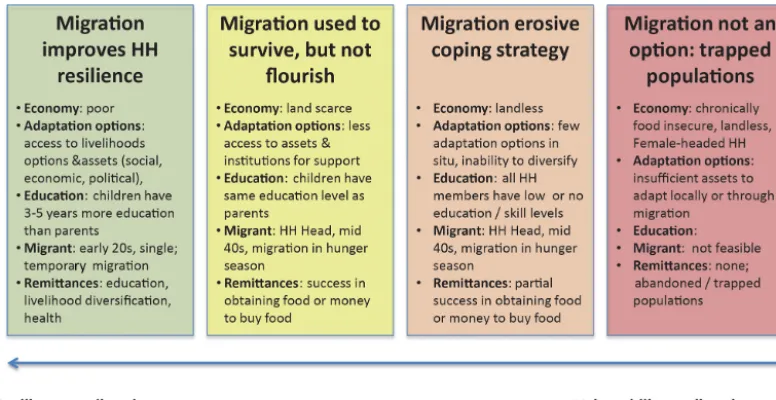
Figure 5.Household (HH) profiles affect whether migration is adaptive or erosive vis-à-vis rainfall, food, and livelihood insecurity. Source: Warner and Afifi (2014) (Fig. 2).
as an extensive investigation of seasonal snow cover in the study area (Hasson et al., 2014) was driven by both meteo-rological observations and local perceptions researched dur-ing the present study. The integration of advanced remote sensing (RS) and geographic information system (GIS) tech-niques with mixed methods and micro-scale approaches to livelihoods and communities’ perceptions will significantly help in better understanding the vulnerabilities, quantifying the risks, and mapping the capabilities of the local commu-nities, and could greatly enhance understanding of mobility in the context of global environmental change.
Due to the remoteness and security challenges, as well as to lack of resources, the actual fieldwork in Gilgit–Baltistan was completed in 18 days (in June 2012), and the area of As-tore (initially in the plan) had to be dropped. The surveyed communities are very cohesive and ethnically homogenous. It would have been extremely useful to have surveyed at least one community within the region facing similar environmen-tal challenges but characterized by a different social compo-sition and economic indicators.
In the future, more attention shall be devoted to the selec-tion of control groups in order to better assess the role played by several socioeconomic variables in determining the avail-ability and the success of migration as a livelihood diversifi-cation strategy in the context of environmental change.
5 Comparative results and discussion
5.1 Household profiles
5.1.1 Lessons learned from the three case studies Beyond its single case studies, the Rainfalls project offered interesting insights into how to move methodologically from
case-study-specific results to cross-country results through the profiling of households in terms of their socioeconomic characteristics and migratory dynamics (Fig. 5). It would be interesting to conduct a similar exercise for several studies in different mountain ranges worldwide.
The profiles used in this article have been employed to enhance the understanding of migration patterns as they re-late to both long-term processes, such as rainfall variability (Peru and Tanzania), and short-term shocks, such as floods and landslides (Pakistan).
The households’ typology helped identify two main pro-cesses of positive feedback in both studies. On the resilient side of the spectrum, more assets allow for more liveli-hood diversification (including migration), which in turn pro-duces more assets and increases the resiliency of the house-hold. On the vulnerable side, a positive feedback process is found again, but one leading to the so called “poverty trap”: the most vulnerable households (e.g. female headed house-holds, those lacking human capital) enter a self-reinforcing mechanism which causes poverty to persist. In some cases, these households are not only economically trapped, but they might also be financially trapped as they do not have the re-sources to migrate and, in times of hazardous events, they will not be able to utilize mobility as an adaptive strategy (Milan and Ruano, 2014).
re-searchers could look at the role of migration in specific envi-ronmental settings and conditions through more comprehen-sive and comparable research.
5.1.2 Future research: building profiles through a multidimensional vulnerability index
The three case studies presented here were derived from an ex post data analysis, but the profiles could become the hy-potheses to be tested in the next generation of research on migration and global environmental change in mountain ar-eas of the global South. Researchers from different academic disciplines should work closely with practitioners in order to build household profiles based on a solid multidimensional vulnerability index, where both the key dimensions of vul-nerability and the thresholds for their indicators properly rep-resent the socioeconomic reality as well as human mobility patterns.
While the use of multidimensional indices in the poverty (Alkire and Foster, 2011) and livelihoods (Hahn et al., 2009) literature is widespread, its possible use on human migra-tion is promising yet understudied (Siegel and Waidler, 2012; Loschmann and Siegel, 2014), and no attempt has been made to link a multidimensional vulnerability index to human mo-bility patterns in mountain areas of the global South.
On one hand, such an index would build on the lessons learned from the poverty and livelihoods literature, both from a theoretical perspective (in which dimensions of vulnerabil-ity should be considered) and an empirical point of view (in which indicators and thresholds allow researchers to build ef-fective profiles that can be conducive for case-study-specific in-depth understanding and for comparability).
On the other hand, the index should take into account the specificities of local livelihoods in resource-dependent mountain areas, such as the importance of livelihood diver-sification, preventive measures against climatic and environ-mental hazards, and housing conditions.
Such profiles would contribute to the academic debate on migration and environmental change in several ways; firstly, they would help overcome the inherent tension between much-needed site-specific research digging deeply into a par-ticular real-world scenario (with a combination of quantita-tive methods and ethnographic and PRA methods) and gen-eralizations conducive to comparability and general lessons for policy makers.
Secondly, drawing on poverty economics, these household profiles could help integrate migration (usually neglected in the microeconomics of poverty or understood as negative) into studies of micro-dynamics of adaptation to climatic and environmental changes at the household/community level. Thirdly, they could act as a bridge for better integrating mi-gration research with community-based adaptation method-ologies.
For instance, the role of gender and ethnicity in shap-ing the differentiated and interdependent adaptive options
available to men and women has been increasingly acknowl-edged (Adger et al., 2009; Nightingale, 2009; Onta and Res-urrecion, 2011; Verma et al., 2011). Whereas the wider adap-tation scholarship recognizes the role of entrenched inequal-ities at the intersection of gender, class, ethnicity, religious affiliation, caste, etc. in shaping adaptive responses, the lit-erature on migration and global environmental change still lacks the proper integration of these elements. In the case of mountain areas, the case study of Pakistan has explic-itly looked into gender dynamics and Massey et al. (2010), in their CVFS study, show that the effects of environmen-tal change vary by gender and ethnicity, with women being more affected by changes in the time required to gather fod-der and men by changes in the time gathering firewood, and high-caste Hindus generally being less affected than others by environmental change.
5.2 Way forward: further methods for transdisciplinary research on migration and global environmental change
The Pakistani case study has highlighted the potential of tegrating RS in the research design. Brandt et al. (2014) in-vestigated interactions between changes in temperature, rain-fall patterns and vegetation trends by combining GIS meth-ods with in-depth field work at the local scale. The combi-nation of macro-scale top-down approaches (GIS and RS) and bottom-up mixed methods to develop household profiles could greatly enhance our understanding of migration in the context of climatic and environmental changes, in particu-lar if such approaches are not just merely juxtaposed but co-designed beginning at the outset of the research.
Regarding methodologies for simulating possible future migration patterns under different climatic and environ-mental scenarios, agent-based modelling seems to be the most promising approach (Kniveton et al., 2011; McLe-man, 2012; Piguet, 2010; Smith et al., 2008). An agent-based model (ABM) is a computational simulation of the behaviour of human agents (individuals and/or households) as well as their interactions with each other and the envi-ronment. Within such models, agents can learn, adapt, and modify their behaviour depending on the circumstances they face, and their subjective norms on attitudes towards migra-tion can change over time (Bonabeau, 2002; Janssen and Os-trom, 2006; Kniveton et al., 2012; Smith, 2014).
A further methodological addition could be made by com-plementing monitoring of monthly migratory movements with a demographic database and with genealogical charts which offer very interesting insights into long-term migra-tory dynamics (Umezaki and Ohtsuka, 2002).
In recent years, academics have tried to overcome the dis-ciplinary isolation and reductionism of climate change, and migration scholarship through interdisciplinary approaches (McAdam, 2010). Nevertheless, knowledge on the field of climate change, environmental change and migration is still uncertain and the concrete nature of the problem is dis-puted (Bettini, 2013; Bettini and Andersson, 2014; Nichol-son, 2014), conditions which call for a truly transdisciplinary approach rather than just interdisciplinary approaches (Klein et al., 2001; Hirsch Hadorn et al., 2008).
In particular, the case studies presented in this article con-firm that survey data should always be combined with PRA tools, a cornerstone of transdisciplinary research, understood as an approach based on collaboration with local people that takes in account their rich knowledge and their perceptions of the problem.
6 Conclusions
Over the last few years, the theoretical debate on migration and global environmental change has moved forward sub-stantially (Black et al., 2011a). The literature would also benefit from more systematic transdisciplinary empirical ap-proaches, and a widespread use of mixed quantitative and qualitative methods (Obokata et al., 2014; Piguet, 2010; Warner, 2011a, b).
There are three main reasons why we believe trans-disciplinary approaches and multidimensional vulnerability index-based household profiles have great potential for the advancement of the literature on migration patterns in the context of environmental change both in mountain areas and elsewhere.
Firstly, in an increasingly mobile world, accounting for the timing, conditions, and costs of migration across different so-cioeconomic household profiles is a crucial step for a com-prehensive livelihoods assessment. This can also be the first step to assess through time-series analysis under which cir-cumstances migration can be considered as a positive process contributing to livelihood resilience rather than a detrimental process.
Secondly, studying rural livelihoods through the system-atic use of socioeconomic and migratory profiles would al-low for drawing general lessons based on relative consider-ations. It would be interesting to understand whether house-holds in relatively similar conditions within their socioeco-nomic and environmental context in different areas of the world tend to also follow similar migration patterns.
Thirdly, building household profiles with a transdisci-plinary approach could help embed wider developmen-tal concerns and indicators into research on popula-tion/environment interactions, in particular on how socioeco-nomic differences shape the migration process itself and the relationship between mobility and immobility (who is able to move, where to, and at what price) in different contexts. This
transdisciplinary work will help to understand migration as integral part of wider developmental process rather than as an outcome of poverty or growth.
In conclusion, the authors hope that this article will boost the (still underdeveloped) scientific debate on empirical methodologies to enhance scientific understanding of liveli-hoods and migration patterns in the context of global envi-ronmental change in mountain areas of the global South.
Author contributions. Each author drafted the section on a par-ticular case study: A. Milan – The Rainfalls Peru case study, T. Afifi – The Rainfalls Tanzania case study, and G. Gioli – The Pakistan case study. Moreover, A. Milan drafted the rest of the manuscript which was then enriched with substantial contributions from the co-authors.
Acknowledgements. We would like to thank everyone in the research areas for their participation in the household survey, participatory research group discussions, and expert interviews: we learned a lot from the communities and appreciated their cooperation. We are also thankful to the research teams in Pakistan, Peru, and Tanzania for their great data collection and data entry work. A. Milan and T. Afifi have benefited from the very valuable background work of Kristina Belesova, Noemi Cascone, Beatriz Lopez, and Alice Yiu (UNU-EHS). G. Gioli acknowledges the support of the Integrated Climate System Analysis and Prediction (CliSAP) Cluster of Excellence of the University of Hamburg. Last but not least, all authors are grateful to the participants to the 2013 Hamburg Conference on Climate Change and Environmental Pressure: Adaptation and Resilience of Local Communities in the Hindu-Kush-Himalaya (HKH) for their feedback on the preliminary concept for this paper.
Edited by: A. Turner
References
Adger, W. N., Dessai, S., Goulden, M., Hulme, M., Lorenzoni, I., Nelson, D. R. and Wreford, A.: Are there social limits to adapta-tion to climate change?, Climatic Change, 93, 335–354, 2009. Afifi, T.: Economic or environmental migration? The push factors
in Niger, Int. Migrat., 49, e95–e124, 2011.
Afifi, T., Liwenga, E. and Kwezi, L.: Rainfall-induced crop failure, food insecurity and outmigration in Same-Kilimanjaro, Tanza-nia, Clim. Develop., 6, 53–60, 2014.
Alkire, S. and Foster, J.: Counting and multidimensional poverty measurement, J. Publ. Econ., 95, 476–487, 2011.
Archer, D. R. and Fowler, H. J.: Spatial and temporal variations in precipitation in the Upper Indus Basin, global teleconnections and hydrological implications, Hydrol. Earth Syst. Sci. Discuss., 8, 47–61, doi:10.5194/hess-8-47-2004, 2004.
Banerjee, S., Gerlitz, J., and Kniveton, D.: A methodology for as-sessing patterns of labour migration in mountain communities exposed to water hazards, in: Disentangling Migration and Cli-mate Change, edited by: Faist, T. and Schade, J., Springer, Dor-drecht, the Netherlands, 81–100, 2013.
Bardsley, D. K. and Hugo, G. J.: Migration and climate change: examining thresholds of change to guide effective adaptation decision-making, Populat. Environ., 32, 238–262, 2010. Beniston, M. (Ed.): Mountain environments in changing climates,
Routledge, New York, USA, 1–496, 1994.
Beniston, M.: Climatic Change in Mountain Regions: A Review of Possible Impacts, Climatic Change, 59, 5–31, 2003.
Bettini, G.: Climate barbarians at the gate? A critique of apocalyptic narratives on ’climate refugees’, Geoforum, 45, 63–72, 2013. Bettini, G. and Andersson, E.: Sand waves and human tides:
explor-ing environmental myths on desertification and climate-induced migration, J. Environ. Develop., 23, 160–185, 2014.
Bhandari, P.: Relative Deprivation and Migration in an Agricultural Setting of Nepal, Populat. Environ., 25, 475–499, 2004. Bilsborrow, R. E. and Henry, S. J. F.: The use of survey data to
study migration–environment relationships in developing coun-tries: alternative approaches to data collection, Populat. Environ., 34, 113–141, 2012.
Black, R., Adger, W. N., Arnell, N. W., Dercon, S., Geddes, A., and Thomas, D.: The effect of environmental change on human migration, Global Environ. Change, 21, S3–S11, 2011a. Black, R., Bennett, S. R. G., Thomas, S. M., and Beddington, J. R.:
Climate change: Migration as adaptation, Nature, 478, 447–449, 2011b.
Black, R., Arnell, N. W., Adger, W. N., Thomas, D., and Geddes, A.: Migration, immobility and displacement outcomes following extreme events, Environ. Sci. Policy, 27, S32–S43, 2013. Bocchiola, D. and Diolaiuti, G.: Recent (1980–2009) evidence of
climate change in the upper Karakoram, Pakistan, Theor. Appl. Climatol., 113, 611–641, 2013.
Bolch, T., Kulkarni, A., Kääb, A., Huggel, C., Paul, F., Cogley, J. G., Frey, H., Kargel, J. S., Fujita, K., Scheel, M., Bajracharya, S., and Stoffel, M.: The state and fate of Himalayan glaciers, Science, 336, 310–314, 2012.
Bonabeau, E.: Agent-based modelling: Methods and techniques for simulating human systems, P. Natl. Acad. Sci. USA, 99, 7280– 7287, 2002.
Brandt, M., Romankiewicz, C., Spiekermann, R., and Samimi, C.: Environmental change in time series – An interdisciplinary study in the Sahel of Mali and Senegal, J. Arid Environ., 105, 52–63, 2014.
Carney, D.: Sustainable Livelihoods: What contribution can we make?, Department for International Development (DFID), Lon-don, UK, 1998.
Dore, M. H.: Climate change and changes in global precipitation patterns: what do we know?, Environ. Int., 31, 1167–1181, 2005. Etzold, B., Ahmed, A. U., Hassan, S. R., and Neelormi, S.: Clouds gather in the sky, but no rain falls. Vulnerability to rainfall vari-ability and food insecurity in Northern Bangladesh and its effects on migration, Clim. Develop., 6, 18–27, 2014.
Evans, S. G. and Clague, J. J.: Recent climatic change and catas-trophic geomorphic processes in mountain environments, Geo-morphology, 10, 107–128, 1994.
Ezra, M.: Environmental vulnerability, rural poverty, and migration in Ethiopia: a contextual analysis, Genus, 63–91, 2003. Findlay, A. M.: Migrant destinations in an era of environmental
change, Global Environ. Change, 21, S50–S58, 2011.
Foresight: Migration and global environmental change, Final project report, The Government Office for Science, London, UK, 2011.
Fowler, H. J. and Archer, D. R.: Conflicting signals of climatic change in the Upper Indus Basin, J. Climate, 19, 4276–4293, 2006.
Gioli, G., Khan, T., and Scheffran, J.: Climatic and environmental change in the Karakoram: making sense of community percep-tions and adaptation strategies, Reg. Environ. Change, 14, 1151– 1162, 2013.
Gioli, G., Khan, T., Bisht, S., and Scheffran, J.: Migration as an adaptation strategy and its gendered implications: A case study from the Upper Indus Basin, Mount. Res. Develop., 34, 255–265, 2014.
Godde, P. M., Price, M. F., and Zimmermann, F. M. (Eds.): Tourism and Development in Mountain Regions, CABI Publishing, New York, USA, 2000.
Goodall, S. K.: Rural-to-Urban Migration and Urbanization in Leh, Ladakh: A Case Study of Three Nomadic Pastoral Communities, Mount. Res. Develop., 24, 220–227, 2004.
Gray, C. L.: Environment, Land, and Rural Out-migration in the Southern Ecuadorian Andes, World Develop., 37, 457–468, 2009.
Gray, C. L. and Bilsborrow, R. E.: Environmental Influences on Hu-man Migration in Rural Ecuador, Demography, 50, 1217–1241, 2013.
Gray, C. L. and Bilsborrow, R. E.: Consequences of out-migration for land use in rural Ecuador, Land Use Policy, 36, 182–191, 2014.
Hahn, M. B., Riederer, A. M., and Foster, S. O.: The Livelihood Vulnerability Index: A pragmatic approach to assessing risks from climate variability and change – A case study in Mozam-bique, Global Environ. Change, 19, 74–88, 2009.
Hasson, S., Lucarini, V., Khan, M. R., Petitta, M., Bolch, T., and Gioli, G.: Early 21st century snow cover state over the western river basins of the Indus River system, Hydrol. Earth Syst. Sci., 18, 4077–4100, doi:10.5194/hess-18-4077-2014, 2014. Hirsch Hadorn, G., Hoffmann-Riem, H., Biber-Klemm, S.,
Grossenbacher-Mansuy, W., Joye, D., Pohl, C., Wiesmann, U., and Zemp, E.: Handbook of Transdisciplinary Research, Springer, Dordrecht, the Netherlands, 2008.
HM Treasury: The Stern Review of the Economics of Climate Change, HM Treasury, London, UK, 2006.
Ho, R. and Milan, A.: Where the Rain Falls Project Case Study Report Peru, Report no. 5, United Nations University Institute for Environment and Human Security (UNU-EHS), Bonn, Germany, 88 pp., 2012.
Hock, R.: Temperature index melt modelling in mountain areas, J. Hydrol., 282, 104–115, 2003.
Hugo, G.: Environmental concerns and international migration, Int. Migrat. Rev., 30, 105–131, 1996.
IPCC – Intergovernmental Panel on Climate Change: Climate Change 2013: The Physical Science Basis, in: Contribution of Working Group I to the Fifth Assessment Report of the Inter-governmental Panel on Climate Change, edited by: Stocker, T. F., Qin, D., Plattner, G.-K., Tignor, M., Allen, S. K., Boschung, J., Nauels, A., Xia, Y., Bex, V., and Midgley, P. M., Cambridge University Press, Cambridge, UK and New York, USA, 1535 pp., 2013.
IPCC – Intergovernmental Panel on Climate Change: Climate Change 2014: Impacts, Adaptation, and Vulnerability, Part A: Global and Sectoral Aspects, in: Contribution of Working Group II to the Fifth Assessment Report of the Intergovernmen-tal Panel on Climate Change, edited by: Field, C. B., Barros, V. R., Dokken, D. J., Mach, K. J., Mastrandrea, M. D., Bilir, T. E., Chatterjee, M., Ebi, K. L., Estrada, Y. O., Genova, R. C., Girma, B., Kissel, E. S., Levy, A. N., MacCracken, S., Mastrandrea, P. R., and White, L. L., Cambridge University Press, Cambridge, UK and New York, USA, 1132 pp., 2014.
Janssen, M. and Ostrom, E.: Empirically based, agent-based mod-els, Ecol. Soc., 11, 37, 2006.
Jodha, N. S.: Mountain perspective and sustainability: a framework for development strategies, in: Sustainable Mountain Agricul-ture, edited by: Jodha, N. S., Banskota, M., and Partap, T., Oxford and IBH Publishing Co, New Delhi, India, 1992.
Kaenzig, R.: Can glacial retreat lead to migration? A critical discus-sion of the impact of glacier shrinkage upon population mobility in the Bolivian Andes, Populat. Environ., 36, 480–496, 2015. Kälin, W.: From the Nansen Principles to the Nansen Initiative,
Forced Migrat. Rev., 41, 48–49, 2012.
Khattak, M. S., Babel, M. S., and Sharif, M.: Hydro-meteorological trends in the upper Indus River basin in Pakistan, Clim. Res., 46, 103–119, 2011.
Klein, J. T., Grossenbacher-Mansuy, W., Häberli, R., Bill, A., Scholz, R. W., and Welti, M.: Transdisciplinarity: Joint Problem Solving among Science. An Effective Way for Managing Com-plexity, Birkhäuser Verlag, Basel, Switzerland, 332 pp., 2001. Kniveton, D. R., Schmidt-Verkerk, K., Smith, C. D., and Black, R.:
Climate change and migration: Improving methodologies to es-timate flows, IOM Migration Research Series 33, International Organization for Migration, Geneva, Switzerland, 2008. Kniveton, D. R., Smith, C. D., and Wood, S.: Agent based model
simulations of future changes in migration flows for Burkina Faso, Global Environ. Change, 21, S34–S40, 2011.
Kniveton, D. R., Smith, C. D., and Black, R.: Emerging migration flows in a changing climate in dryland Africa, Nat. Clim. Change, 2, 444–447, 2012.
Kollmair, M. and Banerjee, S.: Drivers of migration in mountainous regions of the developing world: A review, Foresight: Migration and global environmental change driver review 9, Government Office for Science, London, UK, 2011.
Kollmair, M. and Gamper, S.: The sustainable livelihood approach: Training input, Development Study Group Zurich (DSGZ), Zurich, Switzerland, 2002.
Loschmann, C. and Siegel, M.: The influence of vulnerability on migration intentions in Afghanistan, Migrat. Develop., 3, 142– 162, 2014.
Massey, D. S., Axinn, W. G., and Ghimire, D. J.: Environmental Change and Out-Migration: Evidence from Nepal, Populat. Env-iron., 32, 109–136, 2010.
McAdam, J. (Ed.): Climate change and displacement: Multidisci-plinary perspectives, Bloomsbury Publishing, Oxford, UK, 2010. McLeman, R.: Developments in modelling of climate
change-related migration, Climatic Change, 117, 599–611, 2012. McLeman, R. and Smit, B.: Migration as an adaptation to climate
change, Climatic Change, 76, 31–53, 2006.
Messerli, B., Viviroli, D., and Weingartner, R.: Mountains of the world: vulnerable water towers for the 21 century, Ambio, 13, 29–34, 2004.
Milan, A. and Ho, R.: Livelihood and migration patterns at different altitudes in the Central Highlands of Peru, Clim. Develop., 6, 69– 76, 2014.
Milan, A. and Ruano, S.: Rainfall variability, food insecurity and migration in Cabricán, Guatemala, Clim. Develop., 6, 61–68, 2014.
Mortreux, C. and Barnett, J.: Climate change, migration and adapta-tion in Funafuti, Tuvalu, Global Environ. Change, 19, 105–112, 2009.
Murali, J. and Afifi, T.: Rainfall variability, food security and human mobility in the Janjgir-Champa district of Chhattisgarh state, In-dia, Clim. Develop., 6, 28–37, 2014.
Myers, N.: Environmental refugees in a globally warmed world, Bioscience, 43, 752–761, 1993.
Myers, N.: Environmental refugees, Populat. Environ., 19, 167– 182, 1997.
Myers, N.: Environmental refugees: a growing phenomenon of the 21st century, Philos. T. Roy. Soc. Lond. B, 357, 609–613, 2002. Nicholls, R. J.: Coastal flooding and wetland loss in the 21st
cen-tury: changes under the SRES climate and socio-economic sce-narios, Global Environ. Change, 14, 69–86, 2004.
Nicholson, C.: Climate change and the politics of causal reason-ing: the case of climate change and migration, Geograph. J., 180, 151–160, 2014.
Nightingale A. J.: Warming up the climate change debate: A chal-lenge to policy based on adaptationl, J. Forest Livelih., 8, 84–89, 2009.
Obokata, R., Veronis, L., and McLeman, R.: Empirical research on international environmental migration: a systematic review, Pop-ulat. Environ., 36, 111–135, 2014.
Onta, N. and Resurreccion, B. P.: The Role of Gender and Caste in Climate Adaptation Strategies in Nepal, Mount. Res. Develop., 31, 351–356, 2011.
Piguet, E.: Linking climate change, environmental degradation and migration: A methodological overview, Wiley Interdisciplinary Reviews, Climate Change, 1, 517–524, 2010.
Piguet, E.: Migration: The drivers of human migration, Nat. Clim. Change, 2, 400–401, 2012.
Piguet, E.: From “primitive migration” to “climate refugees”: The curious fate of the natural environment in migration studies, Ann. Assoc. Am. Geogr., 103, 148–162, 2013.
Pounds, J. A., Fogden, M. P., and Campbell, J. H.: Biological re-sponse to climate change on a tropical mountain, Nature, 398, 611–615, 1999.
Rademacher-Schulz, C., Schraven, B., and Mahama, E. S.: Time matters: shifting seasonal migration in Northern Ghana in re-sponse to rainfall variability and food insecurity, Clim. Develop., 6, 46–52, 2014.
Sakdapolrak, P., Promburom, P., and Reif, A.: Why successful in situ adaptation with environmental stress does not prevent peo-ple from migrating? Empirical evidence from Northern Thailand, Clim. Develop., 6, 38–45, 2014.
Siegel, M. and Waidler, J.: Migration and multi-dimensional poverty in Moldovan communities, East. J. Eur. Stud., 3, 105– 119, 2012.
Skeldon, R.: Population Pressure, Mobility, and Socio-Economic Change in Mountainous Environments: Regions of Refuge in Comparative Perspective, Mount. Res. Develop., 5, 233–250, 1985.
Smethurst, D.: Mountain Geography, Geogr. Rev., 90, 35–56, 2000. Smith, C. D.: Modelling migration futures: development and testing of the Rainfalls Agent-Based Migration Model – Tanzania, Clim. Develop., 6, 77–91, 2014.
Smith, C. D., Kniveton, D., Wood, S., and Black, R.: Predictive Modelling, Forced Migrat. Rev., 31, 58–59, 2008.
Stark, O. and Bloom, D. E.: The new economics of labour migra-tion, Am. Econ. Rev., 75, 173–178, 1985.
Stark, O. and Levhari, D.: On migration and risk in LDC, Econ. Develop. Cult. Change, 31, 191–196, 1982.
Suhrke, A.: Environmental degradation and population flows, J. Int. Affairs, 47, 473–496, 1994.
Tacoli, C.: Crisis or adaptation? Migration and climate change in a context of high mobility, Environ. Urban., 21, 513–525, 2009. Tegart, W. J. McG., Sheldon, G. W., and Griffiths, D. C. (Eds.):
Report prepared for Intergovernmental Panel on Climate Change (IPCC) by Working Group II, Australian Government Publishing Service, Canberra, Australia, 1990.
Umezaki, M. and Ohtsuka, R.: Changing Migration Patterns of the Huli in the Papua New Guinea Highlands: A Genealogical De-mographic Analysis, Mount. Res. Develop., 22, 256–262, 2002.
USAID – United States Agency for International Devel-opment: Pakistan Education Statistics. Islamabad, Pak-istan: Academy of Educational Planning and Manage-ment, http://www.aepam.edu.pk/Files/EducationStatistics/ PakistanEducationStatistics2010-11.pdf (last access: 15 Febru-ary 2014), 2011.
Van der Geest, K., Khoa, N. V., and Thao, N. K.: Migration in the Upper Mekong Delta, Vietnam: What role for climate-related stressors?, Asia-Pacific Populat. J., 29, 25–41, 2015.
Verma, R., Nellemann, C., and Hislop, L.: Women at the Frontline of Climate Change: Gender Risks and Hopes, United Nations En-vironment Programme, GRID-Arendal, Arendal, Norway, 2011. Viviroli, D., Dürr, H. H., Messerli, B., Meybeck, M., and Wein-gartner, R.: Mountains of the world, water towers for humanity: Typology, mapping, and global significance, Water Resour. Res., 43, W07447, doi:10.1029/2006WR005653, 2007.
Warner, K.: Environmental change and migration: methodological considerations from ground-breaking global survey, Populat. En-viron., 33, 3–27, 2011a.
Warner, K.: Interdisciplinary approaches to researching environ-mental change and migration: Methodological considerations and field experiences from the EACH-FOR project, in: Hand-book of Research Methods in Migration, Castles, S., Cohen, R., Delgado-Wise, R., and DeWind, J., Edward Elgar Publishing Ltd, Cheltenham, UK, 366–395, 2011b.
Warner, W. and Afifi, T.: Where the rain falls: Evidence from 8 countries on how vulnerable households use migration to man-age the risk of rainfall variability and food insecurity, Clim. De-velop., 6, 1–17, 2014.
Warner, K. and van der Geest, K.: Loss and damage from climate change: local-level evidence from nine vulnerable countries, Int. J. Global Warm., 5, 367–386, 2013.