ANALYSIS OF THE ISSUES OF EFFECTIVE BROADBAND MEDIA
SERVICES DEPLOYMENT IN THE COMPUTER COMMUNICATION
Dr.S.S.Riaz Ahamed
Principal, Sathak Institute of Technology, Ramanathapuram, Tamilnadu, India. Email:[email protected], [email protected]
ABSTRACT
Fast Internet access barely scratches the surface of the powers of broadband, DSL, and IP technology, which, combined in broadband media services, will connect people and businesses around the world like never before. Broadband media services will put the consumer in total control by enabling personal, custom, on-demand viewing of entertainment, e-learning, video games, and other types of content. Individuals will choose what they want to hear, see, or be entertained by on their own, and people will no longer have to plan around preconceived broadcast schedules for home entertainment. A broadband media service provides endless possibilities for consumers to choose and personalize their entertainment and infotainment. A brief history tracing the evolution of broadband media services will be presented, along with descriptions of multimedia standards, potential services, and the roles of the various entities involved in creating broadband media services–network providers, content providers, services providers, and businesses and consumers.
Keywords: Digital Subscriber Lines (DSL), Customer Relationship Management (CRM), International Standards Organization (ISO), Customer-Premises Equipment (CPE)
1. INTRODUCTION
Broadband refers to a type of network connection that supports a very high bit rate, as opposed to "narrowband," which supports a lower bit rate. The higher the bit rate, which is a measure of speed of transmission of bits per second (bps), the faster the transmission will occur in a given period of time. "Bandwidth" is a measure of capacity. Greater bandwidth allows more information to be communicated in a given period of time. Broadband media services delivery requires transmitting large amounts of information quickly, so the combination of fast broadband transmissions and large amounts of bandwidth required to deliver information are the foundation of broadband media services delivery. "Broadband media" is sometimes called "streaming media" because the services, or "content," that is delivered via broadband networks is digitized, and received by users of the content in continuous real-time "streams." Broadband content is digitized and accessed utilizing IP, the standard protocol used for Internet access today. In fact, high-speed IP access through digital subscriber lines (DSL) that utilize existing voice lines for high-speed transmissions is the foundation of the broadband media services network, and DSL is available in many parts of the world today. DSL is a group of increasingly high-speed technologies that enables fast Internet access in homes and businesses. DSL "always on" connections will also form the basis of the sophisticated broadband media services networks of tomorrow.
Broadband media services is the seamless, customized, "on demand" creation and delivery of multimedia services to homes, businesses, and mobile users, including entertainment services (movies, interactive games, broadcast TV), infotainment (e-learning, online training) through high-speed Internet protocol (IP) networks. The proliferation of high-speed broadband IP access and broadband media services will require content creators to distribute large amounts of rich media to a global audience of high-speed users with increasingly greater demand for access to specific services. The challenges for broadband media development include understanding true consumer wants and needs for services and perfecting the technology standards behind the high data rates and significant bandwidth required for seamless delivery of high-quality multimedia services.
2. BROADBAND MEDIA SERVICES
Digital technology standards
While broadband media and IP standards are in rapid development and are given frequent enhancements, incompatible proprietary streaming-media technologies still exist. Similarly, not all content creators have adopted digital distribution strategies required for delivering broadband media services. This is changing quickly, however, as more large media conglomerates are signing deals with content providers to provide digital content to consumers.
Broadband content for mobile users
In the near future, third-generation mobile communication systems will extend the scope of today's Internet broadband solutions by introducing standardized broadband media services that target the mobile user's specific needs. Third-generation systems will provide high-quality streamed Internet content to the rapidly growing mobile market. These systems will offer value-added applications, supported by an underlying network that combines broadband media services with a range of unique mobile-specific services. Mobile application scenarios present many challenges, such as how to provide spectrum-efficient broadband media services over different radio-access networks to different types of end-user terminals and devices. Next-generation network architectures that fit seamlessly into third-generation mobile-communication systems are in development that will address the diversity and unique UI attributes of content on mobile devices.
Seamless content storage and retrieval
The amount of content involved in delivering broadband media services to businesses and consumers will be staggering. Research on indexing, storing, and creating retrieval mechanisms for multimedia archives inspires several directions for future developments and opportunities for additional revenues for entrepreneurial companies. For example, existing genre-classification and topic-detection methods require processing and analyzing large parts of a document, an even greater challenge when performed on live streams. New ways of indexing and categorizing network content will be created to improve organization and access to content. Scalability plays an important role in deploying such systems, given the amount of computation required for simultaneous processing of multiple streams. Fortunately, rapid progress in CRM networking is enabling deployment of new systems for tracking, disseminating, and billing customers for content consumption.
Content
Content rights and distribution have become one of the hottest issues in the industry as a result of several well-publicized cases of copyright infringement lawsuits. The questions include the following: Who owns the distribution rights? Who owns access to the customer? How does digital content distribution affect the industry business model? need to be worked out and real-life implementation of advanced media services will require legal documentation on the limits and extent of responsibilities of each participant in the broadband media services value chain. Other issues that are being addressed in broadband media services deployment include the following:
Maintaining a balance between data compression and media quality. Enhancing MPEG standards as digital content develops by introducing new, better methods for compressing data size, yet maintain its quality.
Access in remote areas. Ensuring widespread adoption of the client-server architecture to ensure network delivery of content across a broad geographic area, from cities to remote areas.
3. TECHNOLOGY
Just as the Internet will continue to bring people together and provide individualized services like never before, the IP network technology that enables broadband media services is rapidly improving and becoming more powerful. This section of the broadband media services tutorial will provide an overview of the network and component technology required for end-to-end broadband media services provision, as well as an overview of technology standards involved in digital multimedia content creation and transmission.
In a truly mobile information society, mobility, traditional fixed and mobile-network services, value-added services, and the Internet are all combined to offer seamless services for end-users. As uniform services will be available through different access points and optimized for each device (TV, PC, wireless device, etc.), seamless roaming among multiple access devices will be required. Users won't have to be concerned with the underlying technologies used, but they will be concerned with being able to access the same services wherever they are and whenever they choose.
The Next-generation network, the first truly data-oriented broadband network supporting broadband media services, will be all IP, meaning all access to the network will occur via IP standards. The evolution of the broadband media services network can be characterized by six different transitions:
Transition from a dial-up-like circuit-switched network to a data-oriented network Transition from connectivity to service-creation platforms
Transition from a copper-based network towards an all-optical network Convergence of fixed networks
Convergence of mobile and fixed networks Transition to IP version 6 (Ipv6) networks
In short, next-generation networks will evolve to better reflect the requirements of broadband media services. In practice this means bringing IP and other associated network functionalities in the network closer to the customers. The DSL technology and network components that enable high-speed IP access and basic broadband media services exist today, and will remain the foundation of the next-generation broadband media services network:
The major components of a broadband IP access network and next generation broadband media services network are
High-speed DSL access multiplexers (DSLAM) equipment, located in the operator central 0ffice (CO) and/or in remote locations close to end-users
Broadband access servers
DSL modems in the home and/or office providing fixed local-area networks (LAN) and wireless LAN (WLAN) network access
Network- and service-management and provisioning products
Loop management for managing DSL services in the local telecom loop
IP network security and authentication products for network security and user identification
In addition to network infrastructure, network services will manage and enhance the physical network for broadband media services delivery. Broadband media services network integration services could include network capacity planning and business consulting for network optimization and interoperability, network installation setup and field-testing trials, customer-service support and training, and network validation and certification services.
Components
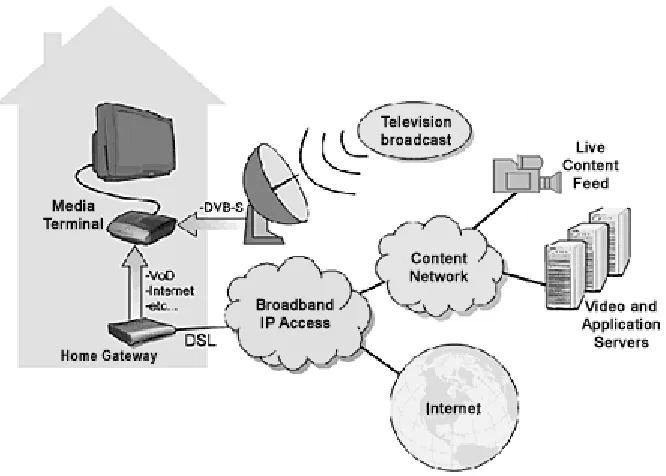
Figure 1. Broadband Media Services for the home
Video Encoders
Video encoders are devices that create digital video. Input to the encoders can be analogue video or a Digital Video Broadcasting Group (DVB) multiplex. Both are required because some video content will be statically loaded from video tapes and some content will be captured from a satellite (DVB) multiplex. Video encoders that are used to deliver broadband media services most often allow for the creation of MPEG content and have the ability to support IP multicast at varying bit rates, as well as the ability to decrypt video streams to remove conditional access.
Video Servers
Video servers perform two major functions. First, they act as content repositories for the material being streamed. Second, they are responsible for streaming out video and audio using the desired format and network protocol. Video servers can be scaled from streaming 20 to over 5,000 simultaneous video streams. Video servers generally support several different transport protocols for video delivery.
Interactive Television Application
Interactive TV (ITV) applications consist of many different applications. The core of the system is the application framework and the data-handling capabilities of the back-end systems. Highly scalable for add-on features, the fundamental applications in an ITV system are customer relationship management (CRM) software modules that track customer usage, profiles, buying characteristics, and application subscription information and create billing events that-can be exported to various billing systems. Applications that typically run on the application framework are VOD, time-shifted TV, web access integrated with video applications, e-mail, personalized user interfaces, broadcast multichannel TV, and pay-per-view applications. Variants of these fundamental applications include channel blocking; parental controls; instant web access associated with viewing preferences for an enhanced, interactive viewing experience; video special offers; and targeted advertising.
Set Top Box and Customer Premises Equipment
network office or remote sites. User connections to broadband media services are made through modems and media terminals in the home and office, while the main infrastructure lies in the back-end networks, invisible to the end-user.
Standards
To help ensure the interoperability, modularity, and flexibility of services, network, content, and service providers are driving towards open standards for individual broadband media services. Standards forums meet regularly to enhance existing standards, incorporate new technological developments into current standards, agree on next steps for testing, and anticipate new developments that will affect standards. Some of the standards involved in broadband media services are
IP
This is a standard supported by major application providers, software companies, and computer manufacturers. Since the range and variety of broadband media applications are more important with respect to commercial revenue-bearing services than any one specific application, enabling the integration of a broad range of media services and applications, IP is crucial. Without IP as a unifying protocol, the set of applications could be limited. One of the features of broadband media services is that it takes full advantage of the guarantees provided by IP access products with respect to real-time IP data delivery.
MPEG
This is a digital video and audio compression format that was defined as part of the International Standards Organization (ISO). MPEG is a compression method that uses interframe compression. Interframe compression assumes that although something is happening in the foreground, the background in most video frames remains the same. This means that it is not necessary to compress each entire frame, but only the differences between them.
MPEG–2
MPEG–2 is a widely used, standardized video coding and compression technology. MPEG–2 is used in DVD movies and digital satellite distribution. Non-compressed video stream is roughly 200 Mbps, but with MPEG– 2 the video can be encoded at 1.5–18 Mbps. DVD quality can be reached between 5–9 Mbps, but 2–3 Mbps is enough to exceed VHS quality. MPEG–4 is also a video coding and compression technology.
MPEG–4
MPEG–4 is a compression/decompression technology that aims to achieve interactivity, efficiency, and stability in transmissions. The result of another international effort involving hundreds of researchers and engineers from all over the world, MPEG–4 offers higher video quality and resolution at a lower data rate than MPEG–2. Also, the MPEG–4 stream encoding rate range is wider (5 kbps–60 Mbps). MPEG–4 allows interactive objects in the stream, making it more multimedia ready. On a broader level, MPEG–4 aims to pave the way toward a uniform, high-quality encoding and decoding standard that would replace the many proprietary streaming technologies in use on the Internet today. MPEG–4 is also designed for low bit-rate communications devices, such as wireless mobile devices that can display video. MPEG–4 supports scalable content, which means content is encoded once and automatically played back and transmitted at different rates depending on the available network connection.
Real-Time Streaming Protocol (RTSP)
This defines the control interface between video server and video client. With RTSP, the end user can control the video server as he or she would control the home VCR (play, pause, fast forward, rewind, etc.) RTSP also initiates the video streams and identifies different streams in the network so that the information can be used in billing.
Internet Group Management Protocol (IGMP)
This is a protocol that supports IP multicasting, a method of broadcasting that authenticates end-users prior to receiving content.
This is an extremely high-speed DSL technology for transmitting digital information over short reaches of an existing phone line to homes and businesses. With VDSL, transmission rates are very dependent upon actual loop length. The maximum downstream rate is between 51 and 55 Mbps over lines up to 1000 ft (300 meters) in length. Initial upstream rate will be an asymmetric rate between 1.6 and 2.3 Mbps. The data channel will be a separate frequency than that of bands used for plain old telephone service (POTS) and integrated services digital network (ISDN), thus enabling service providers to overlay VDSL onto existing services. As needs arise for higher-speed upstream rates, VDSL may need echo cancellation.
4. SERVICES
The variety of broadband media services that consumers will receive is only limited by the creativity of network, service, and content providers. While research is being conducted regularly to determine demand for specific services, one thing is clear—for broadband media services to have successful deployment, the services will have to add value to individual lives. User interface (UI) is an important component of this, and the interface and controls have to make sense for users. Ideally, users would control and access content with familiar remote-control devices and create and select content via customized on-screen menus according to their preferences. An example would be a single on-screen menu (viewable on the users TV, PC, etc) that provides access to the home DVD collection, music library, video game library, Internet and e-mail, e-greetings library, family photos, broadcast TV, pay-per-view options, and more. In the office, a single interface could provide access to employee-training videos, industry discussion forums, Internet and e-mail, and other company news and information. Since ease of use is a crucial part of the overall solution, companies are actively researching consumer preferences for integrated media interfaces to offer a variety of options that address individual tastes.
The three cornerstones of Broadband Media Services are
Truly customized "per customer," "per media type" access to multimedia content Content "on demand"—what you want, when you want it
Advanced interactivity
With that in mind, broadband media services are probably best described as a mix of Internet applications (interactive surfing of the WWW)
E-commerce Pay-per-view
Interactive targeted marketing
To better understand the potential of broadband media services, here are a few real-world examples of services that are being intensively developed and tested:
Media on Demand
On-demand experiences are a cornerstone of broadband media services in that users can consume content when it is convenient for them, as opposed to planning viewing or listening times around a preconceived, generic broadcast schedule. Generally, a media on demand (MOD) system's primary goal is for a client to request video or music and have it play back without interruptions, with little or no delay. MOD means that the content starts playing back from the beginning or from some specified point as opposed to joining a transmission in progress.
Live IP Broadcasting
streamed to video servers. Broadcasting of live streams could also mean receiving satellite, cable, or terrestrial TV channels and encoding them into the IP network. Regional production of global sports events, concerts, and local events in real-time will become a reality and will create new revenue streams for operators. For consumers, IP broadcasting will become as close to "being there" for the live event as one could possibly get and allow people to keep close ties with favorite local programming around the globe. New revenue opportunities abound for service providers, as broadband media services will enable advanced targeted marketing messages. Broadband media services will create new classes of advertising such as on-demand marketing, where companies provide audio and video messages to consumers who express interest in a particular product. Automakers, for example, could offer one- or two-minute video clips demonstrating the features of specific new car models. Broadband media services will enable marketers to reach consumers near the time of the purchase consideration, with content targeted directly to the actual purchase decision-makers.
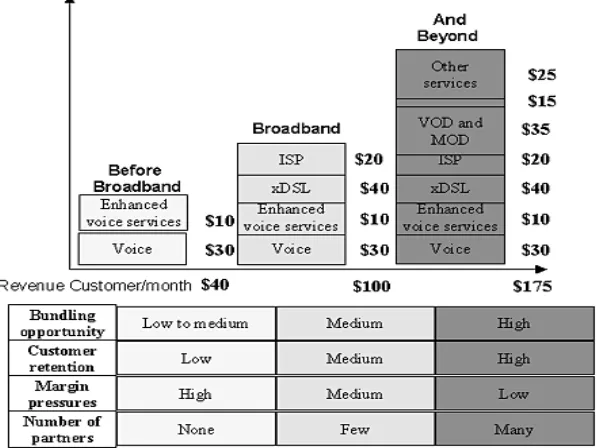
Figure 2. Example of broadband media services revenue-boosting potential for service providers with new service opportunities for existing customers.
In the Figure 2, Broadband media services enable operators to capture part of households' new TV and video services and bundle them with traditional voice services, reducing customer churn and margin pressure. Everyone will benefit. Operators and service providers will provide access to services; network providers will generate revenues by maintaining and managing modular and scalable network enhancements and add-ons; content providers will create and license new content; advertisers will target customer user groups better than ever; and end-users will enjoy a new level of personalized services.
5. CONCLUSION
Broadband media services will create new revenue streams for operators, media companies, and service providers through enhanced usage of existing networks, branded media portals, interactive "one-to-one" advertising and endless e-commerce possibilities. Eventually, we will decide our own schedules for much of our entertainment. Furthermore, broadband media services will allow individuals to easily create their own content, personalize it, and distribute it for viewing on TVs, PCs, remote laptops, and mobile phones and other wireless devices around the world, instantly.
6. REFERENCES
[1] Broadband Bible (Bible) by James Gaskin, ISBN13:9780764569517,ISBN10: 0764569511, Powell's Publications, Pp 43-195. [ 2 ] Campbell et al. Comparison of IP micromobility protocols. IEEE Wireless Communications Magazine, Pp 72-122, February 2002. [3] Planet Broadband by Yassini Rouzbeh, Publisher: Cisco Pres, ISBN: 1587200902, Pp 110-210.
[5] A. Bakre and B.R. Badrinath. I-TCP: Indirect TCP for mobile hosts. Proceedings of the 15th International Conference on Distributed Computing Systems (ICDCS). May 1995, Pp 48-90.
[6] H. Balakrishna, et al. A comparison of mechanisms for improving TCP performance over wireless links. Proceedings of ACM/IEEE Mobicom, Pp. 77–89, September 1997.
[7] H. Balakrishna et al. Improving TCP/IP performance over wireless networks. Proceedings of ACM/IEEE Mobicom. November 1995, Pp 110-134.
[8] L. Blunk and J. Vollbrecht. PPP extensible authentication protocol (EAP). IETF RFC 2284. March 1998.
[9] C. Borman et al. Robust header compression (ROHC): Framework and four profiles: RTP, UDP, ESP, uncompressed. IETF RFC 3095. July 2001.
[10] R. Braden et al. Resource reservation protocol. IETF RFC 2205. September 1997.
[11] L. Brakmo and L. Peterson. TCP Vegas: End to end congestion avoidance on a global internet. IEEE Journal on Selected Areas in Communication, Pp 1465–1480, October 1995.
[12] H. Gossain et al. Multicast: Wired to wireless. IEEE Communications Magazine, 40(6):116–123, June 2002.
[13] M. Gudmundson. Analysis of handover algorithm. Proceedings of the IEEE Vehicular Technology Conference, May 1991. [14] M. Gudmundson. A correlation model for shadow fading in mobile radio. Electronics Letters, Pp 14–21, November 1991. [15] M. Da Silva, "Data Above Voice Systems," Mobile Radio Technology, October 2003, pp. 16-27.
[16] C. C. Davis et al., "Flexible Optical Wireless Links and Networks," IEEE Communciations Magazine, March 2003, pp. 51-57. [17] J. Hodges and R. Morgan. Lightweight directory access protocol (v3): Technical specifications. IETF RFC 3377, September 2002. [18] K. Xu et al. TCP—Jersey for wireless IP communications. IEEE Journal on Selected Areas in Communications, Pp 747–756, May 2004. [19] J. Zander, and SL. Kim. Radio Resource Management for Wireless Networks. Artech House, 2001,Pp 112-197.
[20] K. Leung et al. Mobility management using proxy mobile IPv4. draft-leung-mip4-proxy-mode-01.txt, Internet Draft, June 2006. [21] Broadband Powerline Communications: Network Design by Halid Hrasnica, John Wiley, ISBN:9780470857410 , 2004,Pp 89-176. [22] Integrated Communications Management of Broadband Networks by David Griffin,Crete University Press, Heraklion, ISBN 960 524 006 8,
Pp 77-145.
[23] G. W. Bernas and D. M. Grieco, "A Comparison of Routing Techniques for Tactical Circuit-Switched Networks," Proc. ICC '78, pp. 23.5.1-.5.
[24] B. W. Boehm and R. L. Mobley, "Adaptive Routing Techniques for Distributed Communications Systems," IEEE Trans. on Communications, vol. COM-17, pp. 340-349 (June 1969).
[25] B. Widrow, et al., "Adaptive Antenna Systems," Proc. IEEE, vol. 55, pp. 2143-2159 (December 1967). [26] B. Widrow, et al., "Adaptive Noise Cancelling: Principles and Applications," Proc. IEEE, vol. 63, pp. 1692-1716
[27] P. J. Smith, M. Shafi, and H. Gao, "Quick Simulation: A Review of Importance Sampling Techniques in Communications Systems," IEEE J. on Selected Areas in Comm., Vol. 15, pp. 597-613 (May 1997).
[28] E. S. Sousa, J. Silvester, and T. D. Papavassiliou, "Computer-Aided Modeling of Spread Spectrum Packet Radio Networks," IEEE J. Sel. Areas in Comm., Vol. 9, pp. 48-58 (January 1991).
[29] S. Chennakeshu and G. J. Saulnier, "Differential Detection of pi/4 - Shifted-DQPSK for Digital Cellular Radio," IEEE Trans. on Vehicular Technol., Vol. 42, pp. 46-57 (February 1993). [Includes derivation of square-root raised-cosine filter impulse response.]