Volume 15, Number 2, Summer 2016 DOI 10.4119/UNIBI/jsse-v15-i2-1541
2 Jennifer Bruen is Associate Dean for Teaching and
Learning in the Faculty of Humanities and Social Sciences at Dublin City University. Her research interests include political education, language teaching and learning, and language policy. School of Applied Language and Intercultural Studies, Dublin City University, Dublin Ireland, Email:
Tilman Grammes is Chair of Educational Science/Social Studies Education at Hamburg University and Editor of JSSE. Research interest among others: comparative and intercultural education, qualitative research. University of Hamburg, Faculty of Education Science , FB 5, Von-Melle-Park 8, 20146 Hamburg, Germany Email: [email protected]
Jennifer Bruen, Tilman Grammes
Editorial: Controversial Issues in the Political Classroom
Keywords
Beutelsbach Consensus (Beutelsbacher Konsens), contro-versial issues, Dewey, indoctrination, political action
1 Introduction: The Beutelsbach Consensus and its core principles
„Was in Wissenschaft und Politik kontrovers ist, muss auch im Unterricht kontrovers erscheinen.“
“Ce qui dans les sciences et en politique fait l'objet de controverses doit l'être au même titre dans l'ensei-gnement.”
“Lo que resulta controvertido en el mundo de las cien-cias y la política, tiene que aparecer asimismo como tema controvertido en clase.”
“Matters which are controversial in intellectual and po-litical affairs must also be taught as controversial in ed-ucational instruction.”
Website of Landeszentrale für politische Bildung Baden-Württemberg (Federal Agency of Political Education Baden-Württemberg)
www.lpb-bw.de/beutelsbacher-konsens.html
The above are official translations of one of the most famous extracts from the Beutelsbach Consensus (Beutelsbacher Konsens) which this year celebrates its 40th anniversary. Originating from an informal set of minutes, documenting a meeting held in a small town in the South of Germany in 1976, the Consensus encap-sulates core principles intended to underpin political education in Germany and has become a central pillar of the education landscape in the German-speaking world (for ongoing debate see Bundeszentrale für politische Bildung, 2016; Frech & Richter, 2016).
While many of the concepts, with which the Consensus grapples, are universal, others are deeply rooted in German educational culture rendering the document it-self notoriously difficult to translate. Official translations exist, nonetheless, in English, Spanish and French, and
unofficial translations in, for example, Danish, Italian, Russian, Polish, Turkish, Korean and Chinese. As a result, the Beutelsbach Consensus remains probably Germany’s most prominent contribution to date to international discourse on citizenship education. It can be argued that its existence allays to some extent the concerns of aca-demics in the German tradition that their contributions may at times be perceived by an international audience as being somewhat individualistic, perhaps even overly “cerebral”.
The principle of respect for controversy underpins all other principles elucidated in the Beutelsbach Consensus. Indeed, it is widely cherished as one of the fundamental values of democratic education (see Council of Europe “Training Pack”, 2015). This notion that an education system should not attempt to present issues as being either “harmonious” or resolved when they are viewed by the wider public as controversial can be traced back to the ideological debates which took place during the era of the Weimar Republic in Germany. In the af-termath of the First World War, this principle was used to differentiate between political education (politische Bildung), on the one hand, and party political schooling (parteipolitische Schulung) on the other, or more broadly between education and the transfer of values between successive generations (Erziehung) and indoctrinationi.
The relationship between (prohibited) indoctrination and teaching in schools remains ambiguous, however. While explicit, dogmatic indoctrination can be clearly identified, for example in the educational dictatorship that was Nazi Germany, more subtle means of influen-cing students using persuasive strategies of omission and avoidance, for example, may be less apparent. Thus, the ban in the Beutelsbach Consensus on the indoctrination of students, primarily by overwhelming them with infor-mation giving only one side of an argument, is widely recognized as an essential component of teachers’ pro-fessional ethics both in Germany and further afield. It is argued that a student should instead be regularly con-fronted with opposing, contradictory views, claims, de-mands and judgments and in order to truly experience contemporary debates taking place around them.
Volume 15, Number 2, Summer 2016 ISSN 1618–5293
3
In an extract from her book, Teaching civics. A Manualfor Secondary Education Teachers, a seminal text in the German speaking world (Politikdidaktik, 2005, 4th edition in 2012), Reinhardt uses her experience as a young tea-cher in the early 1970s as a starting point. She draws on how she and her post-1968 generation of novice tea-chers struggled with the problem of controversy and ideology in the classroom. These struggles included con-flicts among teachers, with both students and parents, and with the wider public. They took place at a time during which political education was a “hot topic” ideolo-gically to the extent that, in 1974, debate around guide-lines for political education contributed significantly to the fall of a federal government in the German state of Hesse, an experience which paralyzed developments in this field for a long period. Reflecting on 25 years’ experi-ence as a secondary school teacher, prior to accepting a University Chair, Reinhardt identifies a typology of lear-ner groups and related professional strategies for civics teachers. She addresses in particular the crucial ques-tions of whether or not teachers should disclose their personal political views in the classroom.
Reinhardt’s seminal work is frequently used as a foun-dation text in teacher training and such translation of Reinhardt’s subject-specific didactic principles in tandem with examples of best practice in their implementation makes the “German tradition” accessible to the non-German speaking scholar in an exemplary manner. Her work is also capable of being amended and adapted for use in a variety of contexts. Partially to stimulate such exchange, two reviewers, in this issue, approach Reinhardt’s conceptualisation of political education from different perspectives. A focus in both reviews is on the extent to which her principles and practices are capable of becoming embedded in different national and regional contexts. John Lalor (Dublin City University, Dublin, Ireland) presents a comprehensive and reflective review from the perspective of an Irish educational context, while Anders Christensen (Syddansk Universitet, Odense, Denmark) provides an intriguing insight into the nature and applicability of Reinhardt’s principles from a Scandinavian perspective. Perspectives on Reinhardt’s text and the implementation of the re-commended prin-ciples from francophone, eastern European or other educational cultures would be extremely welcome. As JSSE editors, we hope that highlighting Reinhardt’s work in translation will foster the mutual exchange of ideas and practices among civics education cultures in Europe and beyond.
Many authors refer to Dewey in their introduction re-flecting an ongoing transatlantic conversation about education theory and practice (Oelkers & Rhyn, 2000). Indeed, Dewey’s seminal “Democracy and Education”, first published in 1916, celebrates its centenary this year. This “most important book on education in American history” remains celebrated and is considered by some as, “….the bible of democratic education worldwide”. It continues to be cited more frequently than all other classics of American educational studies. ii Transatlantic conversation and coincidental parallel discovery is also
obvious in the similarities between Reinhardt’s typology (discussed previously) and Kelly (1996).
Reinhardt’s contribution grants the reader access to the various “embryonic societies” (Dewey, 1907, p. 32) encapsulated within civics classrooms, many of which mirror the social and political culture in which they are rooted. Central questions include the extent to which we are informed about “doing controversy”, the everyday practices of controversial discourse and debate in the classroom, and ways in these controversial processes of negotiation of meaning and knowledge construction can be described and analysed.
El consenso de Beutelsbach
1. Prohibicón de abrumar al alumno con objeto de lograr su adhesión a una opinión política determinada ...
2. Lo que resulta controvertido en el mundo de las cien-cias y la política, tiene que aparecer asimismo como tema controvertido en clase.
Esta exigencia está íntimamente ligada a la anterior, pues si se pasan por alto posiciones y posturas divergentes, se ignoran opciones y no se discuten alternativas, ya se está caminando por la senda del adoctrinamiento. Cabe preguntarse si el enseñante no debería incluso asumir una función correctora, es decir, si no debe elaborar y presentar muy particularmente aquellos puntos de vista y alternativas que a los alumnos (y a otras personas participantes en los programas de formación política), por su origen político y social específico, les son ajenos. Al constatar este segundo principio queda claramente de manifiesto por qué la posición personal del enseñante, el fundamiento teórico de su actividad científica y su opinión política, carecen relativamente de su interés. Para volver sobre un ejemplo ya citado, su noción de democracia no constituye problema alguno, dado que también se tienen en cuenta las opiniones contrarias.
Traducción de : Das Konsensproblem in der politischen Bildung (El problema del consenso en la formación política), editado por Siegfried Schiele y Herbert Schneider, Stuttgart 1977 (Traducción al español: Ute Schammann y Raúl Sánchez) Hans-Georg Wehling (S. 179/180) in: Siegfried Schiele/ Herbert Schneider (Hrsg.): Das Konsensproblem in der politischen Bildung, Stuttgart 1977
Versión completa -> www.lpb-bw.de/beutelsbacher-konsens.html
2 Insights into classrooms: “Doing controversy”
Volume 15, Number 2, Summer 2016 ISSN 1618–5293
4
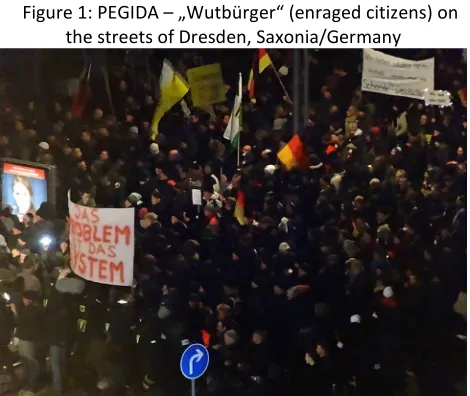
Deutschland’ (AfD). The weekly PEGIDA demonstrations,which have been taking place since autumn 2014, have captured the attention of the international media.iii
In their contribution, David Jahr, Christopher Hempel and Marcus Heinz (Universität Halle and Universität Leipzig, Germany), entitled “... not simply say that they are all Nazis”, take us into German civics classes and dis-cussions of current “hot topics” (heisse Eisen). Their fo-cus is on two approaches to teaching politics, ‘Numbers of the Day’ (Zahlen des Tages), a teacher-centred class-room discussion, and ‘Weekly Newsreel’ (Wochenschau), a student-led classroom discussion. These facilitate the raising of fundamental questions around challenges to democracy, such as those posed by movements like PEGIDA. The two contrasting scenes from classroom discourse presented in Jahr, Hempel and Heinz’s paper distinguish between “deep” and “surface” approaches to dealing with controversy (see also further discussion of this issue in Bruen, 2014).
Figure 1: PEGIDA – „Wutbürger“ (enraged citizens) on the streets of Dresden, Saxonia/Germany
By Kalispera Dell (http://www.panoramio.com/photo/115724065) //creativecommons.org/licenses/by/3.0, via Wikimedia Commons The slogan on banner reads “The problem is the system.”
Describing an experimental study conducted in the USA, Alongi (Sequoyah High School, Pasadena, USA) Heddi (University of Oklahoma, US) and Sinatra (University of Southern California, USA) in their paper entitled Teaching for Transformative Experiences in History: Experiencing Controversial History Ideas present a pedagogical intervention known as Transformative Experience in History, or TTEH. Originally developed for the study of science, the approach focuses on facilitating two constructs, ‘transformative experience’ and ‘conce-ptual change’ through the exploration of controversial issues. Alongi, Heddi and Sinatra describe the deve-lopment and implementation of this approach in two secondary school classrooms located in a large urban setting in the western United States of America. Using an experimental approach and a combination of qualitative and quantitative measures, they demonstrate how TTEH can lead to higher levels of student motivation and development in conceptual understanding applicable by students beyond their secondary school classroom. The concepts, in this case, are “liberty” and “power” in a US
government context. The question as to the extent to which students’ perspectives are clear “misconceptions” or to be regarded as substantive and legitimate, albeit controversial, views, is central.
“Should there be a second attempt to ban the National Democratic Party?” This controversial issue was the “hot topic” of choice for our next contributor at a time when ongoing public debate regarding right-wing extremism in Germany had been triggered by the disclosure of a series of assassinations by the neo-Nazi group National Socialist Underground (Nationalsozialistischer Untergrund) in November 2011. In her study, Dorothee Gronostay (Universität Duisburg-Essen, Germany) describes “… patterns of argument reappraisal in controversial class-room discussions”. The process of “doing controversy” is again explored, this time by analysing the dynamics of argumentative discourse that emerge in fishbowl dis-cussions. The scenes are part of a video study entitled “Argumentative teaching-learning processes”. Scenes are presented from a sub-sample of four classes that did not receive any intervention, while other classes received a standardized political learning unit within regular civic education lessons. The sample consisted of ten classes of 8th/9th graders in urban secondary schools throughout North Rhine-Westphalia, all of an average socioeconomic standing. After studying the related subject-matter, the students discussed a controversial political issue in class. Effectively bringing theory to life, the classroom scenes provide useful material for the teacher of political education.
Volume 15, Number 2, Summer 2016 ISSN 1618–5293
5
Maillot and Péchenart (2016). As Bernt Gebauer(Bensheim, Germany) reports from an international trainer training course which forms part of the Council of Europe’s Pestalozzi Programme (entitled “Evaluation of Transversal Attitudes, Skills and Knowledge”), the “gold” resides in the debrief.
Polarising political and ideological issues are increa-singly prevalent in European societies and hence also in the civics classroom. The growth of right wing populist movements is one such issue and highlights the fact that the teaching of controversial issues in the classroom requires that participants must be prepared to ‘agree to disagree’iv or ‘agree to differ’ up to a point. Significant challenges are associated with the identification of the ‘point’ at which this becomes impossible or undesirable. These challenges arise partially from a tension between democratic principles and the desire to ensure the survival of democracy. The degree of tension may differ depending on the nature of the democratic culture. For example, there may be more of a focus on defence against threats to the survival of democracy in more ‘militant’ (wehrhafte or streitbare) democratic political cultures, as opposed to a greater focus on the freedoms afforded to all by democratic principles in less militant democracies. For instance, the question can be posed as to the extent to which the right to freedom of expression extend to those who oppose that right. A similar ques-tion concerns the extent to which arguments for rance include tolerating those who would oppose tole-rance. This brings us up against Popper’s (1945) “Paradox of Tolerance” which arises when a tolerant person is intolerant of intolerance. In a pedagogical context, this is only part of the question, however, in that consideration should also be given to the process of child or adolescent development or even in some cases the continuing development of the more mature adult. This presents the need for a teacher to be intolerant of intolerance in principle but to tolerate a currently intolerant student at particular times Systematic clarification combined with instructive case studies are presented in Hess and McAvoy’s The Political Classroom. Evidence and Ethics in Democratic Education (New York/London: Routlege 2015).v This subject-specific didactic conceptualisation is reviewed by Gebauer (Bensheim, Germany) in this issue and drawn on by many of our contributors. This is a further indicator of the dynamic, transatlantic discourse which characterises this field.vi
A further core principle of the Beutelsbach Consensus moves our understanding of the role of political edu-cation from reflection to positive action. The third principle emphasises the fact that the student should be empowered to both analyse political situations in which they find themselves and to influence such situations to their own advantage (eigene Interessenlage). This principle is related to empowering the student to engage directly and in a concrete manner with the world beyond their classrooms in the sense that “Political Education is itself part of the political”, and “Political Education creates opportunities to change society, both individually and collectively” (Eis et. al. 2016)vii. It also aligns to a
degree with Jeliazova’s (2015) depiction of the neutral teacher as a scared teacher.
3 Reflection and/or engagement?
The principle of empowerment sits, additionally, within the Deweyian learning tradition, in recognizing the need for immediate concrete action to move the learning ex-perience beyond an exex-perience approaching rote learn-ing. On the other hand, implementing this principle in full may involve activities alien to “normal” school culture and the principle has, as a result, been a source of heat-ed debate with some heat-educators preferring a focus on analysis and judgement (Urteilsbildung) in the classroom, and tending to avoid active ‘interference’ with the socio-political world outside its doors. In other words, there is a tension between reflection and active political enga-gement and the degree of priority that is (or should be) assigned to the two in the political education or civics classrooms. This tension is illustrated by several of the contributors to this volume
3. El alumno tiene que estar en condiciones de poder analizar una situación política concreta y sus intereses más fundamentales,
así como buscar las soluciones más adecuadas para influir sobre la situación política existente en el sentido que marcan sus propios intereses. Semejante objetivo significa conceder gran importancia a las aptitudes de acción concreta, lo cual, sin embargo, es una consecuencia lógica de los principios anteriores. El reproche que a veces se puede escuchar en este contexto _ por ejemplo contra Hermann Giesecke y Rolf Schmiederer _ de que ello es un retorno al formalismo" a fin de no tener que corregir los propios contenidos, no es acertado en la medida en que no se trata de buscar un máximo consenso, sino de lograr un consenso mínimo.
3. L' élève devra être en mesure d'analyser une situation politique en la confrontant à sa propre situation,
pour rechercher les moyens et les procédures qui lui permettront d'exercer une influence dans le sens qui lui convient. Un tel objectif contient une mise en relief particulière de l'aptitude à agir concrètement, conséquence logique des deux principes cités ci-dessus. Le reproche de retour au formalisme " formulé parfois à ce sujet _ entre autres contre Hermann Giesecke et Rolf Schmiederer _ qui consiste à dire qu'on se dispenserait ainsi de corriger ses propres positions, est dénué de toute valeur, puisqu'il s'agit de rechercher un consensus minimum et non pas maximum.
www.lpb-bw.de/beutelsbacher-konsens.html
Volume 15, Number 2, Summer 2016 ISSN 1618–5293
6
which some readers may consider to have been highlycontroversial. Two of the projects were carried out in Northern Ireland and three in the Republic of Ireland with the first project completed in 2004 and the re-mainder carried out between 2010 and 2011. These projects range from involving students in a debate at the US Embassy concerning the role of the UN in East Timor, involving students directly in investigating the ease with which small arms can be procured online, creating a film on homophobic bullying using the concept of role reversal, requiring students to interview civil rights activists and members of voluntary organizations in-volved in the Northern Ireland peace process, and finally designing an animation intended to reflect geographic barriers and restrictions on movement for members of different communities in Northern Ireland. Analysis of the projects reinforce Dewey’s views regarding the value of a combination of reflection, direct action, and further reflection, or again “learning by thinking about what we are doing” as well as the value associated with de-briefing.
Of interest to the reader may be the possibility or otherwise, in terms of intercultural comparison, of con-ducting similar projects within their own culture of citizenship education.viii Critical transcultural studies de-pict “controversy” as an effective “Western” principle of democratic decision making and systemic learning. From this dominant perspective, “Asian” or “Muslim” teaching and learning cultures are constructed as supposedly focussing more on “harmonious”, consensual knowledge by ignoring or concealing factual conflict and con-troversy. A genuine form of “othering”. Of course, ques-tions of perspective and observer focus or perhaps even bias remain. Even within European civics classrooms, culture and context, opinions may differ as to the feasi-bility, practicality and indeed legality of positive action projects in public schools. The five projects presented by McSharry and Cusack serve as excellent academic tea-ching material to initiate a discussion about the risks, needs and the limitations of political action and political education (see also the “Chestnut case” outlined in Sammoray & Welniak, 2012).
It may be that taboos and Foucault’s zones-du-non-pensée exist which are not touched upon in official citizenship curricula which may also, in some cases, not respect the principle of presenting controversial issues as such.ix This phenomenon arises owing to the fact that textbooks often reveal what narrative a society wishes to convey to the next generation. This means that an analysis of textbooks can be used to capture the social and political parameters of society. Based on a total of 76 Finnish textbooks in geography, history and social studies for grades 5 to 9, Pia Mikander’s (University of Helsinki, Finland), Globalization as Continuing Colonialism – Critical Global Citizenship Education in an Unequal World takes a critical look at textbooks in Finland, a country, where, in Mikander’s words, students are often told that being born in Finland is like “winning the lottery”. Finland has not been considered a colonial power, and this might explain some (of the observed) reluctance of Finnish
society to grasp the extent of this legacy. Even the construction of Western supremacy, prevalent in society at large during the 20th century, was introduced and confirmed in school textbooks, although what could have been considered more obviously racist statements began to fade from the 1960s onwards. Mikander observes that current textbooks continue in some cases to take on a perspective of “us” Westerners and to portray other peoples selectively as the opposites of progressive, civilized Europeans. The analysis is embedded in inter-national discourse on post-colonial and anti-racist pedagogies (Andreotti & de Souza, 2012), and “teaching about privilege”. The study is further related to the global citizenship education initiative recently launched by UNESCO (//en.unesco.org/gced). Mikander’s study contains a number of important implications for tea-chers. The experienced teacher of citizenship education may find themselves having to prepare challenging classes with less than optimal material. Use of more than one textbook simultaneously is a suggested approach where multiperspectivity on the part of the student is one of the objectives. Or, as the English chemist, edu-cator and political theorist, Priestley (1765, 27), stated 250 years before: "If the subject be a controverted one, let (the tutor) refer to books written on both sides of the question."x
Volume 15, Number 2, Summer 2016 ISSN 1618–5293
7
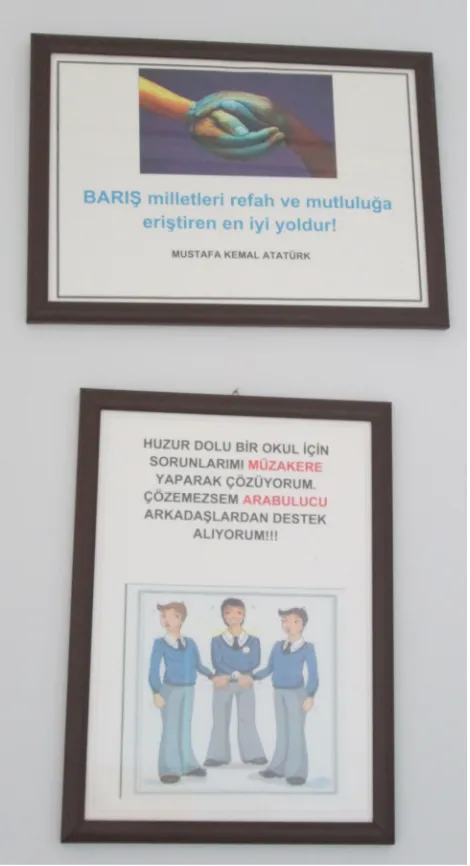
A photographic seriesxii from a secondary school inIstanbul, taken in 2014, [//www.ew.uni-hamburg.de/ ueber-die-fakultaet/personen/grammes/files/ politische-bildung-in-der-tuerkei.pdf, Kab 2015) documented a mainly Kemalist citizenship culture in education. Revisiting this school which is now an “Imam hatip” schoolxiii, two years later, revealed a dramatically trans-formed learning environment (Figure 2).
Figure 2: Wall decoration in a school corridor, Istanbul
Above: citation by Mustafa Kemal Atatürk
„Peace is the best way to develop wellbeing und happiness among nations! “
Below: „For a comfortable and welcoming school, I solve my problems through negotiation. When I can’t solve them, I get support from friendly intermediaries“
Copyright: Irem Kab, 2015
The Beutelsbach Consensus was originally intended to apply to public schools. However, in the meantime, its scope has been extended to include extra-curricular political education for both adults and young people, including adolescents. With regard to extra-curricular political education, the applicability of the principle can be controversial given the sometimes mandatory nature of participation in political education provided by
organizations like political parties, religious groups, trade unions or NGOs (Oxfam 2006). There are questions to be raised around whether such organisations, which may enjoy certain constitutional freedoms in light of their status, have the right or duty to impose a particular non-controversial worldview. Questions around public fun-ding of such organisations may also have some relevance here. ACRI, the Association for Civil Rights in Israel, founded in 1972 and considered Israel’s oldest and largest human rights organization, is used as an example by Ayman Kamel Agbaria and Revital Katz-Pade (University of Haifa, Israel). Their article dealing with Human Rights Education in Israel and the role of NGO’s, discriminates between four types of good citizenship. These reflect some of the major socio-political contro-versies in Israeli society and respond to the ethno-national parameters of a Jewish and democratic political framework (for related examples of classroom culture in Israel see Cohen, 2014).
Le consensus de Beutelsbach
1. Interdiction d'user de son influence pour emporter l'adhésion d'une autre personne …
2. Ce qui dans les sciences et en politique fait l'objet de controverses doit l'être au même titre dans l'enseignement.
Cette exigence est intimement liée à la précédente, car c'est lorsque des points de vue divergents ne sont pas pris en compte, lorsque des choix sont écartés, lorsque des solutions alternatives ne font jamais l'objet de
débats, que l'on s'engage sur la voie de
l'endoctrinement.
Il faudrait plutôt se demander si l'enseignant ne devrait pas avoir, de surcroît, une fonction corrective, ce qui signifie qu'il devrait mettre particulièrement en lumière les solutions et les points de vue peu familiers aux élèves (et à d'autres participants à des programmes de formation politique), en raison de leurs respectives origines politiques et sociales.
Traduit de: Das Konsensproblem in der politischen Bildung (Le problème du consensus dans la formation politique), publié par Siegfried Schiele et Herbert Schneider, Stuttgart 1977 (Traduction française établie par Annie Blumenthal)
Version complete: www.lpb-bw.de/beutelsbacher-konsens.html
4 Future pathways: Dogmatism, core republican values, and the open mind
Volume 15, Number 2, Summer 2016 ISSN 1618–5293
8
dogmatism, for example, from the perspective ofdevelopmental or political psychology. Issues of interest include ways in which the cognitive characteristics of a dogmatic versus an “democratic open mind” (Milton Rokeach, 1960) can be described in citizenship teaching; empirical evidence of an assumed “ideological” develop-mental stage in late adolescence which is seen as necessary transitional stage towards adulthood; the amount of ambiguous controversial knowledge that can be tolerated by the adolescent seeking certain and secure knowledge and belief systems; the role of social stress and ideological relativism; and finally the role of tolerance of ambiguity and complexity (Berczyk & Vermeulen, 2015). Questions abound in this increasingly dogmatic twenty-first century around the criteria for democratic schools with hermeneutic-friendly, inter-pretative knowledge cultures of ambiguity (Bauer, 2011). The next issue of JSSE (autumn 2016) continues the focus on controversial issues in teaching and learning with a review of French educational culture and, in particular, the recent program, “Grande mobilisation de l’École pour les valeurs de la République” (Matthias Busch/Nancy Morys). Please also note the call for papers on character education and citizenship education (JSSE 2017-3. This represents another highly controversial topic, played out in “curricular battles” between pro-ponents of moral and/or political education.xiv The Association of Citizenship Teaching (ACT 2016) in the United Kingdom has also dedicated the latest issue of its professional journal to the topic of “Teaching Controversial Issues”. We hope such contributions will continue to deepen and intensify discussion in Europe in this fascinating and highly relevant field.
Sincere thanks to all of the contributors to this volume. We very much appreciate their time, effort and input.
References
Acikalin, M. & Grammes, Tilman. (2016). A Turkish Social Studies Lesson. Qualitative Data Collection and
Interpretation. In Journal of Social Studies Education Research 2016, 1. (forthcoming)
www.dergipark.ulakbim.gov.tr/jsser/
Andersson, E. (2016). Producing and Consuming the Controversial – A Social Media Perspective on Political Conversations in the Social Science Classroom. Journal of Social Science Education, 15(1), 6-16.
www.jsse.org/index.php/jsse/ article/view/1487/ 1552)
Association of Citizenship Teaching (2016). Teaching Controversial Issues. What’s controversial and what should Citizenship teachers do about it? Teaching Citizenship, 43( spring 2016).
www.teachingcitizenship.org.uk/
Bauer, T. (2011). Die Kultur der Ambiguität. Eine andere Geschichte des Islams [Culture of ambiguity. A different history of Islam]. Frankfurt am Main, Germany: Verlag der Weltreligionen.
Berczyk, J. & Vermeulen, F. (2015). Prevent abroad: militant democracy, right-wing extremism and the prevention of Islamic extremism in Berlin. In Baker-Beall, C., Heath-Kelly, C. & Jarvis, L. (Ed.)
Counter-Radicalisation. Critical perspectives (pp. 88-105). London/New York: Routledge.
Bombardelli, O. (1993). Educazione civico-politica nella scuola di una società democratica. Brescia: Editrice La Scuola. (Beutelsbach consensus see pp. 32-33)
Bruen, J. (2013). Civic Education and Democratic Socialisation: From Passive Subject to Active Citizen in
Post-Communist States and Beyond. Journal of Social
Science Education, 12(4), 43-50.
www.jsse.org/index.php/jsse/article/view/102/1242
Bruen, J. (2014). Politics: Interest, Participation and Education. Comparing the Republic of Ireland with Germany. Irish Journal of Educational Studies, 33(1), 37-55. www.tandfonline.com/doi/abs/
10.1080/03323315.2013.874543?journalCode=ries20
Bruen, J. & Grammes, T. (2014). The Social Sciences in
Higher Education. Journal of Social Science Education,
13(2), 2-10.
www.jsse.org/index.php/jsse/ article/view/1373/1362
Bruen, Jennifer; Crosbie, Veronica; Kelly, Niamh; Loftus, Maria; McGillicuddy, Aine; Maillot, Agnes and Pechenart, Juliette (2016). Teaching Controversial Topics in the Humanities and Social Sciences in Ireland: Using Structured Academic Controversy to develop
multi-perspectivity in the learner. Journal of Social Science
Education 2016-3. (forthcoming)
Bundeszentrale für politische Bildung/Widmaier, Benedikt (Ed.) (2016). Brauchen wir den Beutelsbacher Konsens? [Do we need the Beutelsbach Consensus?] Schriftenreihe der Bundeszentrale für politische Bildung. Bonn. (forthcoming)
Christensen, A. S. (2015). Demokrati- og
medborgerskabsbegreber i grundskolens samfundsfag i Danmark, Norge, Sverige og Tyskland [Concepts of democracy and citizenship in social studies in lower secondary school in Denmark, Norway, Sweden and Germany]. Nordidactica: Journal of Humanities and Social Science Education. 2015(1), 64-92. (Danish)
Cohen, A. (2014). Methodological Aspects of
Documenting Civics Lessons in Israel. Journal of Social Science Education. 13(1), 74-86.
www.jsse.org/index.php/jsse/article/view/1322/1318
Volume 15, Number 2, Summer 2016 ISSN 1618–5293
9
Detjen, J. (2011). The German Politische BildungTradition: Development, Organisational Forms, Objectives and Research. In Schüllerqvist, B. (Ed.), Patterns of Research in Civics, History, Geography and Religious Education, (pp. 13-26). Karlstad: Karlstad University Press.
Dewey, John (1907). The School and Society. Chicago, IL: University of Chicago Press.
Dewey, John, and Bentley, Arthur F. (1949). Knowing and the known. Westport, CT: Greenwood Press.
Eis, A., Lösch, B., Schröder, A. & Steffens, G. (2016). Frankfurt Declaration: For a Critical-Emancipatory Political Education. Journal of Social Science Education. 15 (1), 74-75.
www.jsse.org/index.php/jsse/article/view/1520/1558
Frech, S. & Richter, D. (Ed.) (2016). Wie ist der
Beutelsbacher Konsens heute zu verstehen? [How is the Beutelsbach Consensus to be understood today?] Schriftenreihe der Landeszentrale für politische Bildung Baden-Württemberg. Schwalbach, Germany:
Wochenschau Verlag. (forthcoming)
Grammes, T. (4/2014). Kontroversprinzip. [Principle of Controversy.] In: Sander, Wolfgang (Ed.): Handbuch der politischen Bildung. [Handbook of Political Education.] (pp. 266-274). Bonn, Germany: Bundeszentrale für politische Bildung.
Hand, M. (2007). Should we teach homosexuality as a controversial issue? Theory and Research in Education 2007(1), 69-86.
Hess, D. & Mc Avoy, P. (2014). The Political Classroom. Evidence and Ethics in Democratic Education. New York u.a.: Routledge.
Jeliazkova, M. (2015). Social Science Teachers on Citizenship Education: A Comparative Study of Two Post-Communist Countries. Journal of Social Science
Education, 14(1), 31-46.
www.jsse.org/index.php/jsse/article/view/1379/1467
Kab, I. (2015). Atatürk Imam Hatip Mittelschule für Jungen. In: Cidem, Y. & Grammes, T. (Ed.) Politische Bildung in der Türkei - Türkiye’de vatandaşlık dersi [Political Education in Turkey]. Hamburg 2015, pp. 109-142.
www.ew.uni-hamburg.de/ueber-die- fakultaet/personen/grammes/files/politische-bildung-in-der-tuerkei.pdf
Kelly, Thomas E. (1986). Discussing Controversial Issues. Four perspectives on the teacher's role. Theory and Research in Social Education, 1986(2), 113-138.
Kesten, A., Brodsky-Schur, J. & Gürsoy, K. (2014). Teaching Human Rights in Turkey: Commentaries on a Single Lesson from Multiple Perspectives, Journal of Social Science Education, 13(2), 146-156.
www.jsse.org/index.php/jsse/article/view/1381/1400
Mouffe, C. (2013). Agonistics: Thinking The World Politically. London, England: Verso.
Oelkers, J., Rhyn, H. (Ed.) (2000). Dewey and European Education: General Problems and Case Studies. Dordrecht u.a.: Kluwer
Olgers, T., van Otterdijk, R., Ruijs, G., de Kievid, J., Meijs, L. (2010). Handboek vakdidactiek maatschappijleer. Amsterdam: Landelijk Expertisecentrum Mens- en Maatschappijvakken. Instituut voor Publiek en Politiek.
Oxfam (2006). Teaching Controversial Issues. London, England: Oxfam
Peng, Z. (2010). A Milestone in Political Education in Germany: Beutelsbach Consensus. Elementary & Secondary Schooling Abroad, 2010(5), 24-29.
Popper, K. (2013). The Open Society and Its Enemies (Vol. 1, The Spell of Plato) (orig. London, England: Routledge 1945). Princeton, NJ: Princeton University Press.
Priestley, J. (2/1996). An Essay on a course of liberal Education for civil and active life (Warrington 1765), Reprint: London, England: Routledge.
Rokeach, M. (1960). The Open and Closed Mind. Investigations into the Nature of Belief Systems and Personality. New York, NY: Basic Books.
Sammoray, J., Welniak, C. (2012). Learning Democracy by Empowerment? A Controversial View on the Project: The Chestnut Case. Journal of Social Science Education, 11 (2), 120-134.
www.jsse.org/index.php/jsse/article/view/1205/1108
Sandahl, J. (2015). Preparing for Citizenship: Second Order Thinking Concepts in Social Science Education, Journal of Social Science Education, 14(1), 19-30. www.jsse.org/index.php/jsse/article/view/1375/1466
Tønnessen, Rolf Th. (1992). Demokratisk dannelse i tysk perspektiv - 20 års diskusjon om Hermann Gieseckes syn på den politiske opdragelsen [Democratic education in a German perspective – 20 years of discussion of Herman Giesecke’s view on political education]. Dissertation Universitetet Trondheim. (Norwegian)
Endnotes
i It is, in some ways, surprising to observe that in socialist pedagogy in the communist sphere pre-1989, including the approaches to the teach-ing of civics (Staatsbürgerkundemethodik) in the former GDR, the prin-ciple of controversy is represented in a form of dialectical thinking reflected in the developmental laws of Marxism-Leninism and Scientific Communism. This ideology draws on contradictions evident at the level of everyday experiences (alltagsweltliche Erscheinungen). These are then eventually resolved with recourse to an essence (Wesen) and the historical legality (Gesetzmäßigkeiten) of the higher development of society on a Marxist-Leninist basis. The teacher acts as propagandist for the leading political party and is required to actively confront the student body with controversy. Leadership (Führung) and trust ( Ver-trauen) are used offensively as means of strengthening conviction (Überzeugungsbildung) and building support for the single one party (see also Bruen 2013).
ii
See for example thedemocracycommitment.org/100-years-of-john-deweys-democracy-and-education-commemorate-in-dc-in-april-2016/ iii
Volume 15, Number 2, Summer 2016 ISSN 1618–5293
10
Controversial: A Social Media Perspectives on Political Conversations in the Social Science Classroom, published in the previous edition of JSSE (2016-1). As he outlines, the use of social media creates both new challenges and new opportunities, transforming the role of the learner who becomes a producer and consumer, or “prosumer”, of educational content. With a social media perspective and a focus on learning and political action, Andersson leads us to consider the learning oppor-tunities provided by controversial political conversations in social science education and derives a set of didactic strategies. Approaching the classroom as a diverse, ideological public space, recognising the students as political agents and using a social media perspective, his work implies the possibility of balancing different educational func-tions. www.jsse.org/index.php/jsse/article/view/1487/1552
iv
The concept of ‘agreeing to disagree’ refers to the resolution of, for example, a debate or discussion by tolerating but not accepting the alternative position(s).
v
See also Hand 2007 for a detailed exposition of a particular moral case and the role of the “epistemic criterion”; or Mouffe’s 2013 “agonistic” approach from the perspective of critical democratic theory.
vi
Reinhardt (2015) and Hess/McAvoy (2015) are similar text genres. However, they do not recognize at all their respective parallel dis-courses. Reinhardt (with one peripheral exception) does not mention literature on citizenship education from the US/anglo-saxon tradition, while Hess and McAvoy do not refer to literature from German edu-cational discourse.
vii More recently, the Beutelsbach consensus has been challenged by authors of The Frankfurt Declaration for Critical Emancipatory Political Education (Frankfurter Erklärung. Für eine kritisch-emanzipatorische Politische Bildung) (Eis et.al. 2016) In Germany, the Frankfurt decla-ration is already regarded as an important document in the field of social science education). www.jsse.org/index.php/jsse/article/view/ 1520/1558
viii An example includes the Dutch „Handboek vakdidactiek maatschappijleer“ (Handbook on subject matter didactics in the field of civics) which discusses the role of the teacher in relation to “neutraliteit versus betrokkenheid” (Olgers et.al. 2010, pp. 22ff.: “impartiality versus partiality”).
ix Again, the Frankfurt declaration discusses this point critically as follows: “Controversy, understood as a principle of teaching and learn-ing, is not only the documentation of different positions alongside already existing and influential perspectives, it deals with contentious issues and underlying dissent, reveals opposition and encourages critical thinking.” (No. 2).
x Disputation is known in classic Greece and Roman rhetorics, e.g. the Sophistic movement or the medieval scholastism, as the cognitive and public skill of value clarification, judgement and well-argued decision-making.
xi With the initial support of the Council of Europe, Turkey has a vibrant social studies teacher trainer association, the USBES, which recently held its 5th annual conference at Denzili University (www. pau.edu-.tr/usbes/en).
xii In a previous issue (JSSE 2014, 1 www.jsse.org/index.php/jsse/article/ view/1323), JSSE initiated a research project focusing on symbolic scenes and spatial learning environments from citizenship classrooms seen through the lens of an ideal or typical student’s day at school. Photographic documentation was received from Denmark, Poland, Japan and Germany. Feedback to this journal indicates that this ma-terial has, since then, enjoyed frequent use as a teaching resource. xiii Imam hatip school in the new Turkish system refers to a school which trains prayer leaders and leaders of muslim communities. As well as the standard curriculum, students also take obligatory subjects including Arabic, Study of the Quran and Islamic Studies. Graduates can also go on to take University entrance exams.