Graham Pike
From Internationalism to Internationalisation: The Illusion of a
Global Community in Higher Education
Both global education and international education are movements designed to promote the concepts of internationalism and global community in national education systems, but with different histories. While the former, a grassroots K-12 movement, has struggled to make headway against the forces of neoliberalism, the latter has thrived in a market-driven era in which revenue from international student mobility has offset declining public funding of higher education in many developed countries. Current trends in the internationalisation of higher education have resulted in increasing commercialisation and intensive competition for international students, fuelled by world rankings of elite universities. Tensions exist between these trends and the more altruistic goals of international education proclaimed in institutional mission statements and government policies. An analytical matrix is offered as a tool with which higher education institutions can map their internationalisation activities and assess the extent to which they match their stated policies and missions. While the rhetoric of international education purports to promote the concept of a global community, the article suggests this claim may be illusory.
Keywords
Global education, international education, global community
1 Global Education and International Education: Responses to
Globalisation
In the recent history of public education there are two notable movements that have attempted to broaden students’ understanding of the concept of community in the wake of the impacts of globalisation, namely global education (at the primary and secondary levels of education) and
nation (Smith 1998). Thus, the idea of community as a geographical space, whether spoken of or implied in curricula and classrooms, has tended to run the spectrum from the immediate neighbourhood to the nation’s borders, but not beyond.
In the latter half of the twentieth century, building on some earlier attempts and strategies (Heater 1984), educators in the global North began to argue that this interpretation of community was too restrictive, both from pragmatic and philosophical perspectives. The pragmatic viewpoint emerges from the inexorable rise of globalisation: in an era when national economies are increasingly interdependent and the passage of goods and services is indifferent to political boundaries, an understanding of the world as a global village is more attuned to the everyday realities that link people, cultures and places in a vast interconnected web. The interactions and relationships that are intrinsic to community are still vital; it is just that the spatial dimensions of community have expanded way beyond the shores of the nation. Whether for good or ill, the argument goes, globalisation has forever changed the way the world works and education shoulders a responsibility to prepare students to adapt and contribute to this enlarged community. The philosophical argument draws credibility from the realities of globalisation but goes further than the pragmatist view. Given that we now live in a global village, we have responsibilities that are similarly far reaching in their scope (Dower 2003). Now that we are intimately interconnected, and the impacts of our actions and decisions will have consequences for people around the globe, we should extend our circle of compassion to include those who live beyond our nation’s border and to ‘give the circle that defines our humanity special attention and respect.’ (Nussbaum 1996, 9). The care and concern for neighbours, one of the defining characteristics of a well-functioning community, becomes a global, rather than just a local or national, ethic. It is an argument grounded more in morality than in law, though many of the key pronouncements that it draws upon (such as the Universal Declaration of Human Rights) carry considerable weight. Education’s role then, in this regard, is to sensitise national citizens to the stark inequalities and injustices of the global system and to equip them with the tools necessary to help ameliorate the lives of the less fortunate, wherever they may reside. Whereas nationalism is primarily concerned with the welfare of citizens within one nation, internationalism proposes that the interdependence of all nations requires those citizens to view all of humanity as members of a global community (Elvin 1960).
community, incorporating the idea that citizens of one nation should not only understand the global implications of their decisions and actions but also should feel concern for the citizens of other nations who may be impacted by those decisions or may simply need their attention and care. In the intimate milieu of the primary and secondary classroom, where the inculcation of values such as tolerance, respect, fairness and compassion is relatively easy to justify as falling within the mandate for public education, teachers can feel relatively confident about dwelling on these aspects, whether at local, national or global levels. More problematic is the extent to which teachers feel able, personally and politically, to encourage their students to take actions that are designed to bring about social and political change, either at home or abroad. The history of the global education movement is peppered with accounts of teachers, proponents and advocacy organizations that have been censured for their attempts to promote more radical social change towards their own visions of a global community (Cunningham 1986; Schukar 1993; Scruton 1985).
2 The Impact of Neoliberalism
Running parallel to the development of the global and international education movements has been the increasingly pervasive influence of neoliberalism (Harvey 2005) in education systems. During the 1980s, at about the same time as the global education movement was beginning to identify its key tenets and attract interest from primary and secondary teachers in the developed world (Pike 2008), the market-driven ideology of neoliberalism was finding a foothold in the governance of school systems and in the struggle for control of curriculum. The pragmatic goals of global education were not necessarily viewed as incompatible with the neoliberal agenda; in fact, lists of essential skills for the late twentieth century employment produced by corporate and industrialist think-tanks were often remarkably similar to skill sets promoted by global educators and were used by some in advocacy campaigns for global education (O’Sullivan 1999). This pragmatic rationale for global education is still very much in evidence today, as seen in this Canadian provincial economic strategy report:
We will need more entrepreneurs, financiers and managers. We need people who are comfortable doing business globally, with multiple languages and cross-cultural skills. To seize the opportunities offered by an economy that functions as an interconnected grid, people need to be attuned to the world and prepared to participate in global networks. The education system at all levels has an important role to play in fostering this mindset. (Premier’s Council for Economic Strategy 2011, 64).
The moral and philosophical arguments found in the global education literature, however, were often viewed as a threat to the efficient production of suitably qualified workers for the increasingly competitive global economic system. As mathematics, science and technology achieved higher status in the politics of curriculum development, the softer ideals of global education embedded in the social sciences, especially ideas related to the widening of the circle of compassion and to the pursuit of social justice globally, were subjected to more frequent attack or were squeezed out of an increasingly crowded and regulated curriculum (Tye 2009). The classic hallmarks of a neoliberal approach to education – standardisation, quantifiable outcomes, accountability – presented considerable challenges to the fundamental tenets of global education that view learning as a journey with an undetermined destination and adopt the beliefs and values of the student as the starting point for that journey. The predominant neoliberal focus on the acquisition of a fixed body of knowledge, inevitably prioritised by educational goals that insist on measurable outcomes, was largely at odds with the nascent global education movement that was struggling to define its epistemological parameters and which, in any case, wished to give more weight to skills development and the exploration of values.
decision-makers, the powerful forces of neoliberalism reigned in its most ardent practitioners and undermined its support mechanisms. During the 1990s, funding from national governments was eliminated or cut back in several developed countries; consequently, regional and local support groups struggled for survival or withered, resulting in diminished professional development opportunities and curriculum materials for classroom teachers. The most committed practitioners did continue, however, through tenaciously and creatively adapting their holistic vision for education to suit the more exacting requirements of a much more utilitarian concept of schooling. One notable example of such adaptation has been to exploit the renewed interest in citizenship education, now a mandatory strand within the National Curriculum of England and Wales and enjoying increasing attention in other countries, to highlight the concept of global citizenship. While citizenship education does not necessarily share the same content or values base as global education, and is more restricted in its advocacy of social action (Davies, Evans, Reid 2005), its greater legitimacy among policy makers has provided a welcome vehicle for global education practitioners in challenging times.
In contrast to global education, international education has thrived under the influences of neoliberalism. As public higher education institutions across many parts of the developed world have suffered consistent, and sometimes drastic, cuts in their funding from governments, those institutions have actively pursued other revenue sources to make up the deficit. At the same time, the attractions of a cross-border educational experience have been recognised in many fast-developing economies, particularly China and India, by increasing numbers of college and university students who view the status of ‘international student’ as a passport to higher paid employment in their home country or, in many cases, as a bridge to obtaining permanent residence in a more developed country. This has created a burgeoning pool of eager international students who are willing to pay premium tuition fees, often many times the cost of tuition in their home country, to pursue a dream. This is neoliberalism in education writ large: educational institutions with a desperate need for funds and, in many cases, a dwindling local population, supplying the credentials demanded by a growing elite of wealthy students from beyond their national borders. As the market for educational credentials is largely unregulated and global in scope, it offers those students who can afford the fees a wide choice of education providers and thus sets up intense competition between educational institutions worldwide wishing to mine this rich seam of additional revenue.
infinitely preferable to the limited vision of the college or university that caters principally to the needs of its local middle-class neighbourhoods; in a global economy and an increasingly interdependent global system, it makes eminently good sense for future employees to gain experience of other cultures, languages and ways of knowing at the same time as earning their required credential. The desirability of what the forces of neoliberalism have helped to create in higher education institutions, I would submit, is not in question; however, the predominance of economic need as a key driver of the current trends in international education raises many questions that sit uncomfortably with the rhetoric emanating from these institutions and which are fundamental to any deliberations about the concept of global community. Driven, in the past, by a belief in the benefits to humankind of internationalism, the economic forces that now shape international education on many campuses have other, less altruistic, goals.
3 Current Trends in the ‘Internationalisation’ of Higher
Education
The ‘internationalisation’ of higher education, the term most commonly used to identify the various activities within colleges and universities that are both a response to and agent of increasing globalisation (de Wit, 2009a), is one of the fastest growing movements for change in the tertiary education sector (Egron-Polak, Hudson 2010). Jane Knight’s (recently updated) definition of internationalisation is widely used to encapsulate the broad array of activities that it encompasses:
Internationalization at the national/sector/institutional levels is the process of integrating an international, intercultural, or global dimension into the purpose, functions, or delivery of higher education at the institutional and national levels. (Knight 2008, 21).
the introduction of culturally sensitive teaching and learning methods; some view the opportunities for students and professors to have a short-term study, research or teaching experience in another country as being an important benefit. The involvement of professors and students in international development projects, often funded through governmental or international aid programmes, has been a cornerstone of international activity in developed world institutions for a long time. More recently, some institutions have drawn upon many of these activities to create ‘internationalisation at home’ initiatives, such as the celebration of International Education Week or International Development Week, in an attempt to give a higher profile to internationalisation efforts on their campuses.
The current trends in internationalisation would not be possible without a large, and increasingly significant, infrastructure that facilitates and supports a vast network of connections and partnerships among higher education institutions worldwide. International, national and regional associations of international education provide an array of services for their members, including networking news bulletins, journals and magazines, professional development workshops, and organised recruitment and study tours. The larger organisations also stage major conventions for international education professionals such as the annual conference organised by NAFSA, the North American association, that attracts up to 10,000 people from around the world. Such conferences establish a strategic marketplace for negotiating the myriad inter-institutional memoranda of understanding, agreements and contracts that are the hallmarks of the institutional partnerships at the heart of this globalisation of higher education. At the institutional level, international education activities are frequently co-ordinated through a designated administrative unit, often reporting directly to a senior officer of the institution and funded through the proceeds of international student recruitment. In the nations most active and successful in international recruitment, governments play a significant role through strong investment in the marketing and branding of the educational products and services offered by the institutions in their country. The relative value placed on educational branding is a frequent and heated topic of debate at the national policy level:
Institutions that wish to seriously diversify revenues will need to be very active in cross-border education. This is an area in which Canada is lamentably weak; despite our highly multicultural society, strong ability to deliver courses in English (…), quality of life, and proximity to the US, our performance in attracting these students has been only slightly better than abject. We have thrown away these advantages partly because institutions do not seem to understand the value of a ‘national brand’ in education and choose not to co-operate with one another in recruitment efforts and partly because the Government of Canada (…) feels inhibited about selling Canada as a place to study in English. This, simply, has to change, and fast. (Usher, Dunn 2009, 28).
the infrastructure that supports it, it is hardly surprising that recent trends in international education are a major contributor to the increasing commercialisation of higher education. Neither is it surprising that significant internationalisation activity has occurred in business and management programmes (Brookes, Becket 2011; Bennett, Kane 2011), where the rationale of preparing students for the economic competitiveness of the global marketplace is easy to justify. As Stefan Collini notes in his review of higher education in Britain:
British society has been subject to a deliberate campaign, initiated in free-market think tanks in the 1960s and 1970s and pushed strongly by business leaders and right-wing commentators ever since, to elevate the status of business and commerce and to make ‘contributing to economic growth’ the overriding goal of a whole swathe of social, cultural and intellectual activities which had previously been understood and valued in other terms. (Collini 2011, 9).
As is typically the case with market-driven phenomena, international education is a commodity available to those who can afford it. While access to higher education has risen globally, increasing by more than 50% in just a decade (Altbach 2010), the students who gain access to educational institutions in countries other than their own are much more likely to be reinforcing an already privileged status (Scott 2010). Expensive tuition fees, higher costs of travel and subsistence, knowledge of another language and the vision and support of parents are the normal requisites of student mobility, all likely to rule out the cross-border experience for most but the elites of any society, particularly in low to middle-income countries. Indeed, even in a high-income country like Canada, fewer than 3% of university students, and only about 1% of college students, take advantage of a study abroad opportunity (Bond 2010; Association of Canadian Community Colleges 2010). Thus, the international mobility of students, which forms the bedrock of international education activity, is a scarce and valuable resource. As with other scarce resources in the global marketplace, competition among institutions for the lucrative proceeds of international recruitment is intense. Institutions across the globe attempt to define and market their own comparative advantage, often offering special deals including scholarships, tuition discounts and lower admissions pre-requisites in order to attract international fee-paying students to their campuses and out of reach of their competitors. The wealthier and more entrepreneurial institutions extend their global reach through establishing satellite campuses in other countries, where they can tap into a valuable alternate market: the student who desires the international accreditation but without the expense and risks of the international experience.
higher education institutions to the increasing global competition for students. For those students seeking an international education experience, the rankings offer a consumers’ guide to the relative status of education providers but not, necessarily, to the value to the consumer of the products they sell. As a recent European report concludes (Rauhvargers 2011), international rankings tend to focus on an institution’s quantifiable research outputs, not on the quality of teaching and learning it provides. Additionally, rankings only include between 1 and 3% of the world’s 17,000 universities, mostly in wealthy countries. Even the Vice Chancellor of one of Canada’s most highly ranked institutions contends that the academic research outputs ‘provide little indication of what kind of impact these advancements have on factors that the global community generally agrees are markers of prosperous and secure societies with a high quality of life.’ (Samarasekera 2011, np).
4
Some Risks and Tensions in Internationalisation
mills and greater competition among institutions, are juxtaposed with the third highest ranked rationale for internationalisation – an enhanced international profile and reputation – one begins to determine a trend that may question the belief that internationalisation is a route towards improving quality in higher education (74).
Growing competition among institutions worldwide for the scarce resource of mobile students would appear to be the principal driver of internationalisation activity at present. The widespread ‘branding’ of their educational products by governments and institutions, the importance attached to world rankings, and the aggressive marketing that takes place at recruitment fairs around the world, are all indications of the key motive behind this globalisation of higher education. The rhetoric emanating from government policy statements and institutional strategic plans may talk of the benefits of international collaboration for knowledge exchange and student preparedness while the reality, notwithstanding the actual benefits that may accrue from student and faculty mobility, is mired more in economic self-interest and institutional competitiveness. The moral dilemma inherent in this reality is summarised succinctly in a recent internal report from a Canadian university:
The future for Ontario (and indeed all western) universities will be a difficult, even perilous, journey. The ability of society to fund expensive education for a large percentage of a diminishing local population is in question. One possible aspect of this future is for the publically funded universities to market education to other jurisdictions at a profit to finance their public (provincial) obligation. This is a significant development and should be debated in the context of the mission of the publicly supported post-secondary education system of Ontario. (Carleton University 2011, 15)
Recent trends suggest that this reality is not likely to change in the foreseeable future. While international education has largely benefited, to this point, countries in the North, nations that used to be net exporters of students, such as China, are now successfully marketing their own educational products to students from other nations. Furthermore, the emergence of ‘education hubs,’ backed by significant private investment, in locations such as the United Arab Emirates, Singapore and Malaysia indicates that the more prosperous nations in the global South are determined to become serious players in the international education marketplace (Knight 2011). As governments in the North become increasingly reliant on international tuition revenue to offset reductions in higher education funding, competition for international students looks set to intensify.
internationalisation; nor would I wish to doubt the motives of those involved in the international education movement who daily strive to create more global understanding, knowledge exchange and intercultural sensitivity through their actions. Whatever the prevailing economic ideology, the internationalisation of higher education would seem to offer the only sensible path for institutions to take in the pursuit of greater human development and international security. However, along with a growing number of educators and commentators (e.g. Knight 2008; de Wit, Brandenburg 2011), I do wish to raise the alarm with regard to some prevailing trends in internationalisation and to suggest that those of us involved in the steering of policy and practice at the institutional level have a duty to critique these trends and, through so doing, attempt to stimulate public debate. As the Vice Chancellor of a British university points out, international education as a movement seems profoundly uneasy with the idea of engaging in debate with ‘alternative forms of globalization,’ even though internationally mobile students often ‘play a key role in developing these new global social movements and forms of political action’ (Scott 2010, 3). Such debate is no more, and no less, than should be expected at institutions of higher learning that value the notion of academic freedom and the rights of the academic community to comment on the decisions of their governments and employers.
A key argument in the debate should be the responsibility of internationalisation in higher education to foster a global community. Central to my understanding of a global community is the widening of the circle of compassion or what Dower (2003, 26) calls the ‘global moral
5 Mapping the Motivations for Internationalisation: An
Analytical Matrix
In commenting on international education (which, in this case, includes global education initiatives) in American primary and secondary schools, Walter Parker notes:
International education … is a solution on the loose; international education solves a variety of problems, serves an array of masters, and expresses diverse and sometimes conflicting values. There is no coherence to the movement, only an illusion conjured by the common use of a name. (Parker 2008, 202).
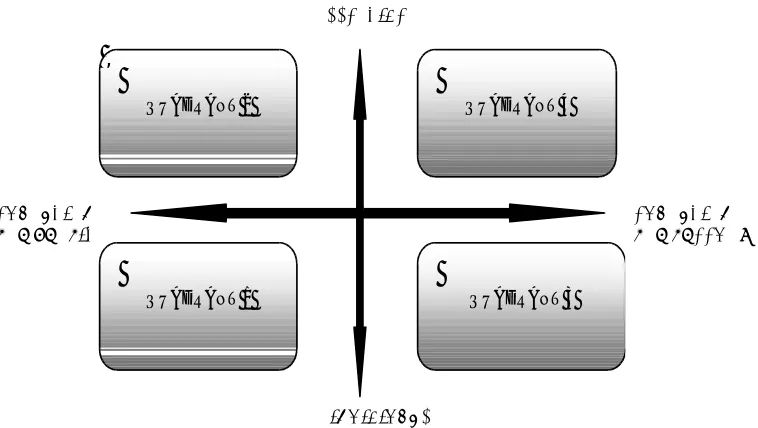
Figure 1
COLLECTIVE
EDUCATION EDUCATION
FOR PROFIT FOR FREEDOM
INDIVIDUAL
Placement of any internationalisation activity in a certain quadrant might vary from one institution to another according to the motivation behind it, how it is construed and implemented, and its resulting impact. Such variations notwithstanding, I offer the following chart to indicate where sample activities are likely to be placed (samples are drawn from the IAU Global Report [Egron-Polak, Hudson 2010, 214]):
A more nuanced understanding of internationalisation within any institution could be achieved through attempting to calculate the percentage of time and/or resources that are devoted to each activity and then finding the total percentage for each quadrant.
QUADRANT 2 QUADRANT 4
QUADRANT 1 QUADRANT 3
Quadrant 2
• Developing joint and double/dual degree programmes with foreign partner institutions
• Offering foreign academic programmes in our institution
Quadrant 4
• Strengthening international/intercultural content of curriculum
• International research collaboration • Internationalization “at home”
• International development and capacity building projects
Quadrant 1
• Marketing/recruiting fee-paying international students
• Provision of programmes/establishment of branch campuses abroad (face-to-face instruction)
• Delivery of distance education courses/on-line programmes abroad
• Short-term language programmes for international students
Quadrant 3
• Outgoing mobility opportunities for students
• International student exchanges • Outgoing mobility opportunities for
faculty/staff
• Hosting international scholars
The point of such a mapping exercise is not to pass judgment on activities that are located within one quadrant compared with another. As pointed out earlier, there are significant external forces that have influenced the path of development of international education at the institutional level. Furthermore, as the matrix is intended to map internationalisation activities from the perspective of an institution’s primary motivation, not from the point of view of how the student experiences each activity, it is quite possible that the recruitment of an international student (a ‘for profit’ motive) could result in an emancipatory experience for the student (a ‘for freedom’ result). At the macro level however, such mapping can assist institutions in determining the desirability of the path they are pursuing. Does it fit with their institution’s mission statement and their international education policy or strategy? If ‘improving student preparedness for a globalized/internationalized world’ is the most important rationale for internationalisation (as strongly indicated by institutions responding to the IAU survey [Egron-Polak, Hudson 2010, 21]), is this borne out by the mix of activity at the institution? Is the balance of activities among the quadrants appropriate, or should more emphasis be placed on one particular quadrant? When new strategies are proposed – for example, the establishment of a branch campus abroad – where does this fit in the matrix and how will it influence the overall weighting of internationalisation activity in the institution? What are the trends over time in terms of the balance among the four quadrants?
6 Beyond the Illusion of a Global Community
Global education and international education have been differently affected by the impacts of neoliberalism on education systems. In the more regulated environment of the K-12 sector, global education has struggled to bring about significant change in primary and secondary education because its grassroots-driven, value-rich goals were deemed to challenge some fundamental tenets of neoliberalism. International education, however, has flourished in the tertiary sector because, through embracing neoliberal principles, higher education institutions have found a welcome solution to a funding crisis in difficult economic times. A critical question, however, is to what extent international education, as it is currently played out around the world, contributes to the realisation, rather than the illusion, of a global community, a community in which the principles of equity, social justice and sustainability are core and in which the circle of compassion is sufficiently wide to embrace all inhabitants. The rhetoric of international education, from institutional mission statements to government policy documents, would seem to claim that a global community is the ultimate goal; the reality of much activity on the ground, and the apparent direction of current trends, would suggest that this claim is somewhat problematic. The challenge for those intimately involved in international education is to harness the passion for internationalism that has inspired the global education movement, and that undoubtedly exists in higher education institutions, and bring it to the fore. The economic motivation for internationalisation at the institutional level is unlikely to recede in significance, but it should not be allowed to overshadow or subvert the higher goals of internationalism that many institutions proclaim. This is not an easy task, but it may be the most important contribution that higher education can make to a more peaceful and sustainable future.
References
Altbach, Philip G. 2010. Access Means Inequality. In: International Higher Education, Vol. 61, 3-5.
Association of Canadian Community Colleges. 2010. Internationalizing Canadian Colleges and Institutes: The First National Report on International Education and Mobility. Ottawa.
Bennett, Roger; Kane, Suzanne. 2011. Internationalisation of U.K. University Business Schools: A Survey of Current Practice. In: Journal of Studies in International Education, Vol. 15, No. 4, 351-373.
Bond, Sheryl. 2010. World of Learning: Canadian Post-Secondary Students and the Study Abroad Experience. Ottawa.
British Columbia. 2011. The BC Jobs Plan. Canada Starts Here. Victoria.
Carleton University. 2011. Report on International Recruitment.Ottawa.
Collini, Stefan. 2011. From Robbins to McKinsey. In: London Review of Books, Vol. 33, No. 16, 9-14.
Cunningham, Gregg L. 1986. Blowing the Whistle on Global Education. Denver: Region VIII Office, United States Department of Education.
Davies, Ian; Evans, Mark; Reid, Alan. 2005. Globalising Citizenship
Education? A Critique of “Global Education” and “Citizenship Education.” In: British Journal of Educational Studies,Vol. 53, No. 1, 66-89.
de Wit, Hans. 2009a. Benchmarking the Internationalisation Strategies of European and Latin American Institutions of Higher Education. In: de Wit, Hans, ed. Measuring Success in the Internationalisation of Higher
Education.EAIE Occasional Paper 22, European Association for International Education, 123-133.
de Wit, Hans. 2009b. Measuring Success in the Internationalisation Strategies of Higher Education: An Introduction. In: de Wit, Hans, ed. Measuring Success in the Internationalisation of Higher Education. EAIE Occasional Paper 22, European Association for International Education, 1-8.
de Wit, Hans; Brandenburg, Uwe. 2011. The End of Internationalization. In: International Higher Education, Vol. 62, 15-17.
Dolby, Nadine; Rahman, Aliya. 2008. Research in International Education. In: Review of Educational Research,Vol. 78, No. 3, 676-726.
Dower, Nigel. 2003. An Introduction to Global Citizenship.Edinburgh.
Egron-Polak, Eva; Hudson, Ross. 2010. Internationalization of Higher Education: Global Trends, Regional Perspectives. IAU 3rd Global Survey Report, International Association of Universities.
Elvin, H. Lionel. 1960. Nationalism and Internationalism in Education. In: The School Review, Vol. 68, No. 1, 1-22.
Gillard, Julia. 2009. Australia: International Education’s Contribution. In: University World News, Vol. 78, 31 May.
(http://universityworldnews.com/article.php?story=20090528173114651)
accessed March 21, 2012.
Green, Andy. 1997.Education, Globalization and the Nation State. Basingstoke.
Harvey, David. 2005. A Brief History of Neoliberalism. Oxford.
Heater, Derek. 1980. World Studies: Education for International Understanding in Britain. London.
Heater, Derek. 1984. Peace through Education: The Contribution of the Council for Education in World Citizenship. Lewes.
Hicks, David. 2003. Thirty Years of Global Education: A Reminder of Key Principles and Precedents. In: Educational Review, Vol. 55, No. 3, 265-275.
Knight, Jane. 2008. Higher Education in Turmoil: The Changing World of Internationalization. Rotterdam.
EAIE Forum, Spring, 34-37.
Kunin, Roslyn. 2011. The Economic Impact of International Education in British Columbia.Vancouver.
Nussbaum, Martha. 1996. Patriotism and cosmopolitanism. In: Cohen, Joshua, ed. For Love of Country: Debating the Limits of Patriotism. Boston.
Nussbaum, Martha. 2009. Education for Profit, Education for Freedom. In: Liberal Education, Vol. 95, No. 3, 6-13.
O’Sullivan, Brian. 1999. Global Change and Educational Reform in Ontario and Canada. In: Canadian Journal of Education, Vol. 24; No. 3, 311-325.
Parker, Walter. 2008. International Education: What’s in a Name? In: Phi Delta Kappan, Vol. 90, No. 3,196-202.
Pike, Graham. 2008. Global Education. In: Arthur, James; Davies, Ian; Hahn, Carole. The Sage Handbook of Education for Citizenship and Democracy. Los Angeles.
Premier’s Council for Economic Strategy. 2011. Shaping Alberta’s Future: Report of the Premier’s Council for Economic Strategy. Edmonton.
Rauhvargers, Andrejs. 2011. Global University Rankings and Their Impact. Brussels.
Samarasekera, Indira. 2011. What Global Rankings Ignore. In: Inside Higher Ed, July 12.
(http://www.insidehighered.com/views/2011/07/12/essay_on_one_of_the_
flaws_of_international_rankings_of_universities) accessed October 10,
2011.
Schukar, Ron. 1993. Controversy in Global Education: Lessons for Teacher Educators. In: Theory into Practice, Vol. 32, No. 1, 52-57.
Scruton, Roger. 1985. World Studies: Education or Indoctrination? London.
Scott, Peter. 2010. International Education: Alternatives to the Market. In: International Higher Education, Vol. 61, 2-3.
Smith, Anthony D. 1998. Nationalism and Modernism. London.
Taylor, John. 2004. Towards a Strategy for Internationalisation: Lessons and Practice from Four Universities. In: Journal of Studies in International
Education, Vol. 8, 149-171.
Toope, Stephen. 2011. Stephen Toope: How International Students Change Canadian Schools. In: The Globe and Mail, January 26.
(
http://www.theglobeandmail.com/news/opinions/leading-
thinkers/stephen-toope-how-international-students-change-canadian-schools/article1883278/) accessed March 21, 2012.
Tye, Kenneth A. 2009. A History of the Global Education Movement in the United States. In: Kirkwood-Tucker, Toni Fuss, ed. Visions in Global Education: The Globalization of Curriculum and Pedagogy in Teacher Education and Schools. New York.