Review Article
Open Access
Effect of vitamin D supplementation on serum C-reactive
protein level: a meta-analysis of randomized controlled trials
a PhD student, Department of Clinical Nutrition and Dietetics, Faculty of Nutrition and Food Technology, National Nutrition and Food Technology Research Institute, Shahid Beheshti University of Medical Sciences, Tehran, Iran b
Nutrition and Endocrine Research Center, Research Institute for Endocrine Sciences, Shahid Beheshti University of Medical Sciences, Tehran, Iran
a b
Zahra Yari, Samira Ebrahimof
A B S T R A C T
key words:
Accepted:
CRP,
Article History
inflammation,
Received:
22-November-2016
Revised:
01 January 2017
14 January 2017
meta-analysis, vitamin D cholecalciferol,
Methods: A systematic search for RCTs was conducted on PubMed, and Scopus, and completed by a manual review of the literature from January 2000 to May 2015. The pooled effect was estimated using a random-effects model and the statistical heterogeneity was assessed by Cochran’s Q and I2 statistics.
Conclusion: Vitamin D supplementation may not be effective in reducing CRP. However, a more accurate estimate of the effect requires further large and well-designed clinical trials.
Objective: Vitamin D may have anti-inflammatory actions; however, there is no consensus on the effects of vitamin D supplementation on C-reactive protein (CRP) level in randomized clinical trials (RCTs). In a systematic review and meta-analysis, we investigated the effect of vitamin D supplementation on serum CRP levels.
Results: Of 157 potentially relevant studies retrieved, 20 clinical trials met the inclusion criteria. Mean baseline CRP levels in the intervention and the control groups were 3.5 ± 2.6 and 3.3 ± 2.3 mg/L, respectively. The mean duration of the studies was 29.0 ± 30.2.0 weeks (8 to 144 weeks). The dose of vitamin D3 supplementation varied between 200 and 57142 IU/day. Pooled analysis showed a nonsignificant increase of 0.04 mg/L (95% CI, −0.12 to 0.21; p = 0.61), with no evidence of heterogeneity (I2 = 17.8%, p = 0.17).
gained growing interest for its novel anti-inflammatory properties [4, 5]. Inflammation presumably plays critical roles in chronic diseases, and C-reactive protein (CRP) is a reliable and well-established biomarker of systemic inflammation among a broad range of inflammatory biomarkers [6]. There are several ways in which vitamin D affects the immune system. For instance, 1,25(OH)2 D3 regulates cytokine expression directly, through influencing gene transcription, and indirectly, through interfering with signaling pathways [7]. In recent years, a growing number of observational and interventional studies have investigated the effect of vitamin D supplementation on circulating CRP level and yielded inconsistent results [8-13]. Introduction
Hypovitaminosis D is one of the most prevalent micronutrient deficiencies and has become a universal health issue [1, 2]. Vitamin D is mainly involved in calcium homeostasis and bone metabolism, but it has many other physiologic functions in the body [3]. Recently, vitamin D has
Corresponding author:
Samira Ebrahimof, PhD, Nutrition and Endocrine Research Center, Research Institute for Endocrine Sciences, Shahid Beheshti University of Medical Sciences, Tehran, Iran PO Box:19395-4763
Therefore, given the increased statistical power afforded by analysis, we conducted this meta-analysis of randomized controlled trials (RCTs) to evaluate whether vitamin D supplementation could improve circulating CRP level.
Methods
These discrepancies could mostly be attributed to small sample size, the dose of vitamin D administered, short trial duration, variation in study design, and the baseline plasma levels of 25(OH)D and CRP.
Data sources, search strategy, and eligibility criteria
This manuscript was written following the Preferred Reporting Items for Systematic Reviews and Meta-analyses (PRISMA) statement [14]. A comprehensive search and systematic assessment of studies and data extraction were conducted in a stepwise process in accordance with our specific question: What is the effect of vitamin D3 supplementation on CRP? The PICOS (population, intervention, comparator, outcome, study design) framework is shown in Table 1. The literature search was conducted by two independent authors for studies published from January 2000 to May 2015 in MEDLINE and EMBASE databases using the following keywords: ((“Cholecalciferol”[Mesh] OR vitamin d3 supplementation [title/abstract]) OR
citations and then retrieved potentially eligible articles for perusal in full text. Studies were eligible for inclusion if they fulfilled the following criteria: (a) the study design was an RCT, (b) the intervention was oral vitamin D3 supplementation, (c) the outcome of interest was CRP, and (d) the population of interest was adults (aged > 18 years). Trials which compared vitamin D3 supplementation with a placebo, or compared calcium + vitamin D3 supplementation with calcium were included. Studies were excluded if they were animal studies, observational studies, uncontrolled trials, without a placebo group, or involved vitamin D in forms other than cholecalciferol or in the form of vitamin D3-fortified products. Studies were also excluded if they involved pregnant/lactating women or patients with renal disease, hypercalcemia, hyperparathyroidism, malabsorption, or hyperthyroidism. Studies which did not report CRP at baseline and its changes after (vitamin d3[title/abstract] AND supplementation [title/abstract])) AND “C-Reactive Protein” OR “CRP” OR “high-sensitivity C-reactive protein” OR “high-sensitive C-reactive protein” OR “hs-CRP”). The search was limited to studies published in English. We also checked the reference lists of the published papers for relevant studies. Any discrepancies were resolved with discussion. First, we perused the title and abstract of each of these
intervention were also excluded.
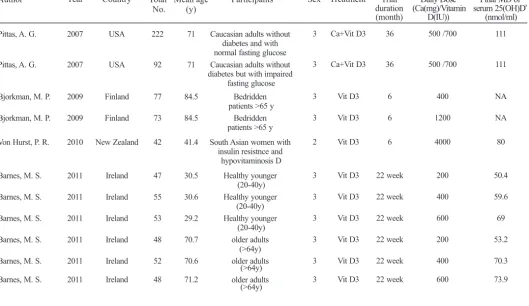
Table 1: Characteristics of included studies
Pittas, A. G.
Pittas, A. G.
Bjorkman, M. P.
Bjorkman, M. P.
Von Hurst, P. R.
Barnes, M. S.
Barnes, M. S.
Barnes, M. S.
Barnes, M. S.
Barnes, M. S.
Barnes, M. S.
2007 2007 2009 2009 2010 2011 2011 2011 2011 2011 2011 USA USA Finland Finland New Zealand Ireland Ireland Ireland Ireland Ireland Ireland 222 92 77 73 42 47 55 53 48 52 48
Caucasian adults without diabetes and with normal fasting glucose Caucasian adults without diabetes but with impaired
fasting glucose Bedridden patients >65 y
Bedridden patients >65 y South Asian women with
insulin resistnce and hypovitaminosis D Healthy younger (20-40y) Healthy younger (20-40y) Healthy younger (20-40y) older adults (>64y) older adults older adults (>64y)
Author Year Country Total
No.
Mean age (y)
Participants Sex Treatment Trial
duration (month)
Daily Dose (Ca(mg)/Vitamin
D(IU))
Author Year Country Total No.
Mean age (y)
Participants Sex Treatment Trial
duration (month)
Daily Dose (Ca(mg)/Vitamin
D(IU))
Final MD of a serum 25(OH)D (nmol/ml) Muldowney, S. Muldowney, S. Muldowney, S. Muldowney, S. Muldowney, S. Muldowney, S. Wood A.D Wood A.D Breslavsky, A. Rahimi-Ardabili, H. Wamberge L Witham, M. D.
Witham, M. D.
Yiu, Y. F. Chandler, P. D.
Chandler, P. D.
Chandler, P. D.
2012 2012 2012 2012 2012 2012 2012 2012 2013 2013 2013 2013 2013 2013 2014 2014 2014 Ireland Ireland Ireland Ireland Ireland Ireland United Kingdom United Kingdom Israel Iran Denmark United Kingdom United Kingdom Japan USA USA USA 202 202 202 192 192 192 102 101 24 24 26 39 39 50 81 83 83 Healthy younger (20-40y) Healthy younger (20-40y) Healthy younger (20-40y) older adults (>64y) older adults (>64y) older adults (>64y) postmenopausal women postmenopausal women diabetic patients PCOD women with hypovitaminosis D
Obese adults Patients with a
history of myocardial infarction
Patients with a history of myocardial infarction diabetic patients Healthy African Americans Adults Healthy African Americans Adults Healthy African Americans Adults 3 3 3 3 3 3 2 2 3 2 3 3 3 3 3 3 3 Vit D3 Vit D3 Vit D3 Vit D3 Vit D3 Vit D3 Vit D3 Vit D3 Vit D3 Vit D3 Vit D3 Vit D3 Vit D3 Vit D3 Vit D3 Vit D3 Vit D3 22 week 22 week 22 week 22 week 22 week 22 week 12 12 12 2 26 weeks 2 6 3 3 3 3 200 400 600 200 400 600 400 1000 1000 50000/ 20 days 7000 100000 100000 5000 1000 2000 4000 29.9 29.9 29.9 70.8 70.8 70.8 63.5 64.1 66.8 26.8 41.2 64.3 64.3 65.8 51.1 50.3 51.3 NA 59.6 69.8 NA 68.9 70.9 64.86 75.66 17.6 22.9 NA NA NA 58.6 29.7 34.7 45.9 Sinha-Hikim, I. Sinha-Hikim, I.
Sollid, S. T.
2014 2014 2014 USA USA Norway 40 40 242 non-alcoholic fatty liver disease
Latino and African-American Subjects with Pre-Diabetes and Hypovitaminosis D Latino and African-American Subjects with Pre-Diabetes
and Hypovitaminosis D Adults with IFG or IGT
3 3 3 Vit D3 Vit D3 Vit D3 51.6 51.6 62.3 Gagnon, C. Mason, C. Sadiya, A. Sadiya, A. Sharifi, N. 2014 2014 2014 2014 2014 Canada USA UAE UAE Iran 35 109 45 45 27
Adults at risk of type 2 diabetes
overweight/ obese women
obese type 2 diabetic subjects
obese type 2 diabetic subjects adult patients with
3 2 3 3 3 Ca+Vit D3 Vit D3 Vit D3 Vit D3 Vit D3 6 12 3 3 4 6 12 12 1200/2000 2000 6000 3000 50000 (twice per month) 85 300 IU ± 16 000
per week
85 300 IU ± 16 000
per week 20000/week 53.8 60.3 49 49 40.33 95 35 77.2 61.4 30 NA 70 105.7 Carrrilo Beilfuss, J. Beilfuss, J. Genpner A.D 2012 2012 2012 2012 USA Norway Norway USA 10 110?? 110?? 57
overweight and obese adults participating in a progressive resistance exercise
Healthy overweight and obese adults Healthy overweight
Data extraction
Two reviewers independently assessed each trial’s risk of bias, taking into account factors such as randomization, allocation concealment, blinding, completeness of outcome assessment, and selective reporting. Quality of studies was assessed using the Jadad scale for reporting randomized controlled trials
Assessing the risk of bias
We used a predesigned data abstraction form to extract relevant information. The extracted information included sample size, study design, location, participants’ age, trial duration, number of participants in control and intervention groups, type and dose of daily vitamin D, and mean baseline and postintervention serum CRP levels. Authors were contacted if extra data were required. If a study used two or more doses of vitamin D3 versus placebo, we considered each dose of vitamin D3 as a single study, and these were included separately in the analysis. Moreover, if a study measured CRP at various intervals over a protracted follow-up period, we included each interval as a separate study in analysis. Additionally, in the case of multiple publications, we included the most up-to-date or comprehensive information.
Data synthesis
Results
[15]. The Jadad score is based on the description of randomization, blinding, and dropouts. The studies were considered as low-quality if their Jadad score was < 3, and the rest were considered as high-quality studies.
Weighted mean differences (MD) and 95% confidence intervals (95% CI) were pooled using a random-effects model. Cochran’s Q and I² were used to assess statistical heterogeneity (I² > 50% was deemed significant). Publication bias was measured by visual inspection of funnel plots. Statistical analysis was performed with STATA version 8.0 (StataCorp, College Station, TX, USA). Level of significance was set at 0.05.
Study selection
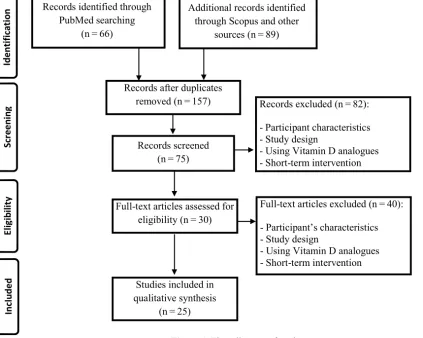
A total of 157 articles were found in our initial search, 82 of which were excluded by screening the titles and abstracts (Figure 1). A further 40 articles were excluded either because they did not detail randomized controlled trials or they were review articles. Ten more trials were excluded because they did not meet the inclusion criteria. Thus, 20 randomized trials were included in the final analysis.
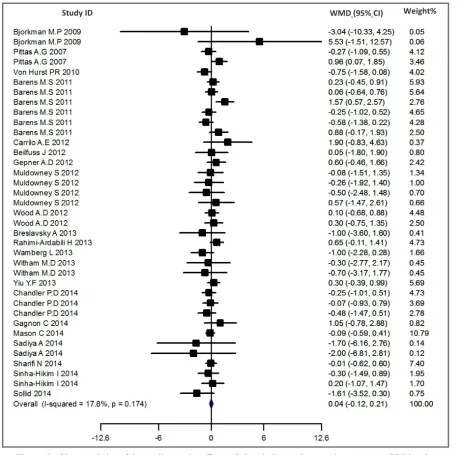
The forest plot for the effect of vitamin D3 supplementation on CRP is presented in Figure 2. Vitamin D did not significantly change mean CRP (MD: −0.043 mg/L; 95% CI, −0.12 to 0.21; p = 0.61)
Study characteristics
Characteristics of the included studies are shown in Table 2. The mean (±SD) age of participants was 54.7 ± 16.4 year. Baseline CRP levels were 3.5 ± 2.6 and 3.3 ± 2.3 mg/L in the intervention and the placebo group, respectively. The mean duration of the studies was 29.0 ± 30.2.0 weeks (8 to 144 weeks). Doses of vitamin D3 supplementation varied between 200 and 57142 IU/day. Studies were generally of low or unclear risk of bias. Only one of the studies had low quality (Jadad score < 3) [16].
Meta-analysis
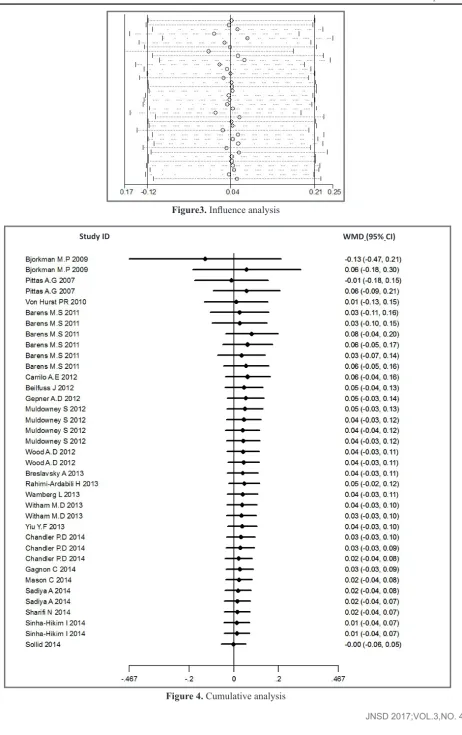
Influence analysis also showed that none of the trials had a significant effect on pooled effect size (Figure 3). Cumulative analysis indicated consistency from the year 2009 (Figure 4).
Influence and cumulative analysis
Publication bias
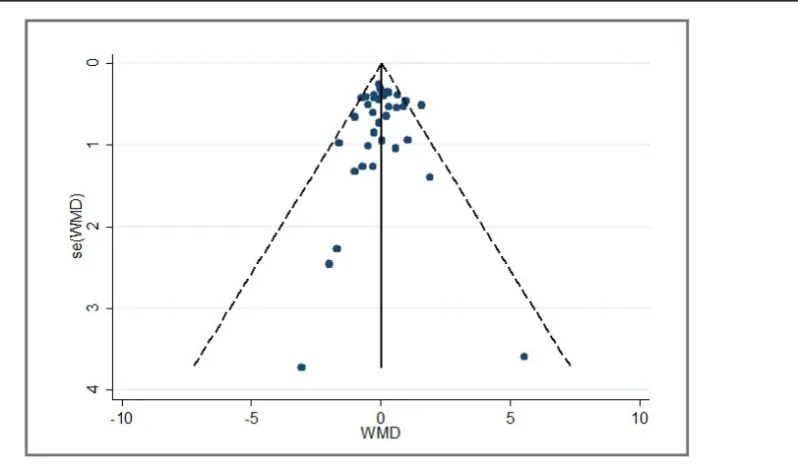
Egger’s regression analysis (p = 0.56) showed that there was no publication bias (Figure 5).
Our findings indicate that the program for the fortification of wheat flour with iron and folic acid was relatively successful in Zanjan province. compared with no vitamin D3 group. There was no heterogeneity among studies for the effect of vitamin D3 supplementation on CRP (I2 = 17.8%, p = 0.17).
Figure3. Influence analysis
Discussion
The current meta-analysis considered previous findings from relevant studies in an attempt to determine the possible effect of vitamin D supplementation on serum levels of CRP. Meta-analysis of twenty clinical trials yielded null results. This means that either the effect of the intervention (in terms of duration or the dose of supplementation) was insignificant or the sample sizes were too small to allow the detection of a small but potentially significant effect.
In many RCTs in which participants did not have a specific disease, CRP levels did not significantly change [20, 23-26], and only one trial reported a significant decline in CRP level following high-dose vitamin D supplementation [27]. One study showed that vitamin D supplementation induced a modest, but nonsignificant, decrease in circulating CRP [28], while another trial reported nonsignificantly increased CRP levels in overweight or obese subjects [16]. In spite of the high baseline CRP level in Sadiya et al [22] and Bjorkman et al [12], no Although optimal serum concentration of 25(OH)D has not been defined, it has been proposed that concentrations as high as 32 to 40 ng/ml may be required for optimal immune function and other health outcomes [17, 18]—a concentration that was not achieved in most of the included RCTs [19-22]. In addition, it is reasonable to speculate that the effects of vitamin D supplementation are influenced by the baseline levels of vitamin D and CRP and the increment of vitamin D level in blood. Some studies reported a relationship between vitamin D deficiency and increased CRP levels, with no significant effect of vitamin D supplementation on CRP [23, 24].
significant inverse association was observed between baseline levels vitamin D and serum CRP. Other studies concluded no effect of vitamin D supplementation on CRP.
It has been proposed that vitamin D affects the immune system and reduces inflammation [4, 30, 31]. There are several ways through which vitamin D affects the immune system, although the exact molecular basis of these effects remains to be identified. It has been suggested that vitamin D may reduce inflammation by modulating the expression of several cytokine genes controlled by the vitamin D receptor (VDR) [32, 33]. Vitamin D suppresses inflammation through targeting the NF-kB pathway, which is a major transcription factor in response to inflammatory stimulation [34].
In contrast to our results, a previous meta-analysis of 10 relevant studies, totaling 924 subjects, found that vitamin D had a significant effect on CRP [29]; however, because there was evidence of heterogeneity, the results should be interpreted with caution. The strength of our study is that we pooled information from homogeneous and qualified randomized RCTs, making the results provided here more precise and powerful than the previous meta-analysis.
Our results are supported by observational studies. Shea et al [8] investigated the relation of vitamin D with several inflammatory markers in 1 381 subjects and showed no significant association between vitamin D status and most of the markers, including CRP. Michos et al [9] measured 25(OH)D levels in 650 Amish participants and, similarly, reported no significant association between vitamin D and CRP.
Our review has several limitations. First, we
found few eligible studies, although with high quality. Second, as with any meta-analysis, the potential for publication bias needs to be discussed. However, the visual inspection of the funnel plot suggests that the presence of publication bias in this meta-analysis is less likely. Finally, none of the studies included in our analysis were specifically designed to evaluate the effect of vitamin D on serum CRP. For all of these reasons, the results of this meta-analysis should be treated with considerable caution. Therefore, the inflammation-modulating effects of vitamin D supplementation should be further investigated through large-scale, higher-quality and strictly-randomized trials with adequate doses and with a proper population with a higher level of circulating CRP as an inclusion criterion.
Vitamin D supplementation does not seem to significantly reduce circulating CRP. These findings are generally consistent with individual reports, most of which have reported null effects.
Conclusion
Acknowledgement
SE designed the study. SE and ZY performed the literature search, data extraction, and reviewing. SE performed the statistical analyses. ZY wrote the first draft of the manuscript. ZY and SE prepared the final draft.
5. May E, Asadullah K, Zugel U. Immunoregulation through 1, 25-dihydroxyvitamin D 3 and its analogs. Current Drug Targets-Inflammation & Allergy. 2004;3(4):377-93.
2. Holick MF. Vitamin D deficiency. New England Journal of Medicine. 2007;357(3):266-81.
4. Guillot X, Semerano L, Saidenberg-Kermanac’h N, Falgarone G, Boissier M-C. Vitamin D and i n f l a m m a t i o n . J o i n t B o n e S p i n e . 2010;77(6):552-7.
Funding: None
Reference
Conflict of Interest
1. Holick MF, Chen TC. Vitamin D deficiency: a worldwide problem with health consequences. Am J Clin Nutr. 2008;87(4):1080S-6S.
3. Adams JS, Hewison M. Update in vitamin D. The J o u r n a l o f C l i n i c a l E n d o c r i n o l o g y & Metabolism. 2010;95(2):471-8.
None of the authors have any conflict of interest
6. Pearson TA, Mensah GA, Alexander RW, Anderson JL, Cannon RO, Criqui M, et al. Markers of inflammation and cardiovascular disease application to clinical and public health practice: a statement for healthcare professionals
14.Picot J, Hartwell D, Harris P, Mendes D, Clegg A, Takeda A. The Preferred Reporting Items for Systematic Reviews and Meta-Analyses checklist. 2012.
16. Beilfuss J, Berg V, Sneve M, Jorde R, Kamycheva E. Effects of a 1-year supplementation with cholecalciferol on interleukin-6, tumor necrosis factor-alpha and insulin resistance in overweight and obese subjects. Cytokine. 2012;60(3):870-4. 17. Hollis BW. Circulating 25-hydroxyvitamin D
levels indicative of vitamin D sufficiency: 11. Pittas AG, Harris SS, Stark PC, Dawson-Hughes B. The effects of calcium and vitamin D supplementation on blood glucose and markers of inflammation in nondiabetic adults. Diabetes Care. 2007;30(4):980-6.
9. Michos ED, Streeten EA, Ryan KA, Rampersaud E, Peyser PA, Bielak LF, et al. Serum 25-hydroxyvitamin d levels are not associated with subclinical vascular disease or C-reactive protein in the old order Amish. Calcified tissue international. 2009;84(3):195-202.
15. Jadad AR, Moore RA, Carroll D, Jenkinson C, Reynolds DJ, Gavaghan DJ, et al. Assessing the quality of reports of randomized clinical trials: is blinding necessary? Control Clin Trials. 1996;17(1):1-12.
10. Amer M, Qayyum R. Relation between serum 25-hydroxyvitamin D and C-reactive protein in asymptomatic adults (from the continuous National Health and Nutrition Examination Survey 2001 to 2006). The American journal of cardiology. 2012;109(2):226-30.
13.Liefaard MC, Ligthart S, Vitezova A, Hofman A, Uitterlinden AG, Kiefte-de Jong JC, et al. Vitamin D and C-Reactive Protein: A Mendelian R a n d o m i z a t i o n S t u d y . P L o S O N E . 2015;10(7):e0131740.
from the centers for disease control and prevention and the American Heart Association. Circulation. 2003;107(3):499-511.
7. van Etten E, Mathieu C. Immunoregulation by 1, 25-dihydroxyvitamin D 3: basic concepts. The Journal of steroid biochemistry and molecular biology. 2005;97(1):93-101.
8. Shea MK, Booth SL, Massaro JM, Jacques PF, D'Agostino RB, Dawson-Hughes B, et al. Vitamin K and vitamin D status: associations with inflammatory markers in the Framingham O ff s p r i n g S t u d y. A m e r i c a n j o u r n a l o f epidemiology. 2008;167(3):313-20.
25. Barnes MS, Horigan G, Cashman KD, Hill TR, Forsythe LK, Lucey AJ, et al. Maintenance of wintertime vitamin D status with cholecalciferol supplementation is not associated with alterations in serum cytokine concentrations among apparently healthy younger or older adults. Journal of Nutrition. 2011;141(3):476-81.
27. Witham MD, Dove FJ, Khan F, Lang CC, Belch JJF, 23. Chandler PD, Scott JB, Drake BF, Ng K, Manson JE, Rifai N, et al. Impact of vitamin D supplementation on inflammatory markers in African Americans: results of a four-arm, randomized, placebo-controlled trial. Cancer Prev Res (Phila). 2014;7(2):218-25.
19. Von Hurst PR, Stonehouse W, Coad J. Vitamin D supplementation reduces insulin resistance in South Asian women living in New Zealand who are insulin resistant and vitamin D deficient-a randomised, placebo-controlled trial. British Journal of Nutrition. 2010;103(4):549-55.
24.Gepner AD, Ramamurthy R, Krueger DC, Korcarz CE, Binkley N, Stein JH. A prospective randomized controlled trial of the effects of Vitamin D supplementation on cardiovascular disease risk. PLoS ONE. 2012;7(5).
18. Bischoff-Ferrari HA, Giovannucci E, Willett WC, Dietrich T, Dawson-Hughes B. Estimation of optimal serum concentrations of 25-hydroxyvitamin D for multiple health outcomes. Am J Clin Nutr. 2006;84(1):18-28.
20. Wood AD, Secombes KR, Thies F, Aucott L, Black AJ, Mavroeidi A, et al. Vitamin D 3 supplementation has no effect on conventional cardiovascular risk factors: A parallel-group, double-blind, placebo-controlled RCT. Journal of Clinical Endocrinology and Metabolism. 2012;97(10):3557-67.
22. Sadiya A, Ahmed SM, Carlsson M, Tesfa Y, George M, Ali SH, et al. Vitamin D supplementation in obese type 2 diabetes subjects in Ajman, UAE: a randomized controlled double-blinded clinical trial. European Journal of Clinical Nutrition. 2014.
26. Muldowney S, Lucey AJ, Hill TR, Seamans KM, Taylor N, Wallace JM, et al. Incremental cholecalciferol supplementation up to 15 ug/d throughout winter at 51-55 degrees N has no effect on biomarkers of cardiovascular risk in healthy young and older adults. J Nutr. 2012;142(8):1519-25.
implications for establishing a new effective dietary intake recommendation for vitamin D. J Nutr. 2005;135(2):317-22.
21. Rahimi-Ardabili H, Pourghassem Gargari B, Farzadi L. Effects of vitamin D on cardiovascular disease risk factors in polycystic ovary syndrome women with vitamin D deficiency. Journal of Endocrinological Investigation. 2013;36(1):28-32.
28. Sharifi N, Amani R, Hajiani E, Cheraghian B. Does vitamin D improve liver enzymes, oxidative stress, and inflammatory biomarkers in adults with non-alcoholic fatty liver disease? A randomized clinical trial. Endocrine. 2014;47(1):70-80.
29. Chen N, Wan Z, Han S-F, Li B-Y, Zhang Z-L, Qin L-Q. Effect of vitamin D supplementation on the level of circulating high-sensitivity C-reactive protein: a meta-analysis of randomized controlled trials. Nutrients. 2014;6(6):2206-16. 30. Bhalla AK, Amento EP, Clemens TL, Holick MF,
Krane SM. Specific high-affinity receptors for 1, 25-dihydroxyvitamin D3 in human peripheral blood mononuclear cells: presence in monocytes and induction in T lymphocytes following activation. The Journal of Clinical Endocrinology & Metabolism. 1983;57(6):1308-10.
32. Adorini L, Penna G, Fibbi B, Maggi M. Vitamin D receptor agonists target static, dynamic, and inflammatory components of benign prostatic hyperplasia. Annals of the New York Academy of Sciences. 2010;1193(1):146-52.
33. Eleftheriadis T, Antoniadi G, Liakopoulos V, Antoniadis N, Stefanidis I, Galaktidou G. Vitamin D receptor activators and response to injury in kidney diseases. J Nephrol. 2010;23(5): 514-24.
34. Chen Y, Kong J, Sun T, Li G, Szeto FL, Liu W, et al. 1, 25-Dihydroxyvitamin D3 suppresses inflammation-induced expression of plasminogen activator inhibitor-1 by blocking nuclear factor-κB activation. Archives of biochemistry and biophysics. 2011;507(2):241-7.
31.Cantorna MT, Zhu Y, Froicu M, Wittke A. Vitamin D status, 1, 25-dihydroxyvitamin D3, and the immune system. Am J Clin Nutr. 2004;80(6):1717S-20S.