Exploring the feasibility and acceptability of the contents, design, and functionalities of an online intervention promoting mental health, wellbeing, and study skills in Higher Education students
Marietta Papadatou-Pastou1*, Lauren Campbell-Thompson2, Elizabeth Barley3, Mark Haddad4, Caroline Lafarge5, Eamonn McKeown6, Louise Simeonov7, Patapia Tzotzoli8
1School of Education, National and Kapodistrian University of Athens, Athens, Greece, [email protected]
2iConcipio Ltd, South London and Maudsley, Camberwell, London SE 5 8 AZ, [email protected]
3University of West London, Paragon House, PR405, Boston Manor Road, Brentford Middlesex TW8 9GA, [email protected]
4City, University of London, [email protected]
5School of Human and Social Sciences, University of West London, Paragon, Boston Manor Road, Brentford TW8 9GA, [email protected]
6City, University of London, [email protected]
7University College London, 1-19 Torrington place, London, WC1E 7HB, [email protected]
8My Psychology Clinic and iConcipio Ltd, London, 13 Orchard Rise, Richmond, TW10 5BX, UK, [email protected]
*Address correspondence to Dr Marietta Papadatou-Pastou, School of Education, Faculty of Primary Education, National and Kapodistrian University of Athens, 13A Navarinou Str, 106 80 Athens, Greece, [email protected], Tel: +30 210 3642771
Word Count: 8,017 words
2
Abstract
Background: Substantial numbers of students in Higher Education (HE) are reporting mental health difficulties, such as mild to moderate symptoms of depression and anxiety. Coupled with academic skills challenges, these difficulties can lead to decreased academic performance, low levels of study satisfaction, and eventually drop out. Student support services are facing budget cuts and can only attend to limited numbers of students, usually the ones who present with more severe mental health problems. Moreover, face-to-face contact may not appeal to those students who feel embarrassed by their problems or are afraid of being stigmatised. To address this important problem, an online psychological wellbeing and study skills support system called MePlusMe, has been developed to provide personalised support to its users. In the present study we investigated the feasibility and acceptability of the contents, design, and functionalities of the system.
Methods: An offline version of the system was introduced to 13 postgraduate and undergraduate students (mean age = 31.3 yrs, SD = 10.25 yrs; 4 males) in a UK HE Institution, who presented with mild or moderate mental health difficulties. The participants evaluated the design of the system, its functionalities, and contents at Baseline and at Weeks 2, 4, and 8.
Results: Participants found the system easy to use, professional, and efficient and its contents non-judgemental and informative.
Participants stated that engaging with and practicing the techniques targeted at mental health difficulties led to improvements in positive thinking and self-confidence, while the study skills techniques were practical. Suggestions for further improvement included the development of an app and an option for direct engagement with professionals.
Conclusions: The findings confirmed the acceptability of the contents, design and functionalities of the system, while providing useful information to inform its further development. Next steps include a feasibility study, which will test and quantify the effects on everyday functioning, mood, mental wellbeing, and academic self-efficacy after using the system, and subsequently a randomized controlled trial, which will evaluate its effectiveness.
3
The life of a Higher Education (HE) student can come with a wealth of exciting experiences, invaluable memories, and new challenges. However, during such a critical period of personal, social, and academic development, some of these new challenges may result in initiating or exacerbating existing mental health issues or in making study skills challenges more prominent [1]. A worrying number of students have indeed been found to experience mild to moderate symptoms of depression or anxiety, with the number of students who experience mental health difficulties whilst at university increasing [2]. An online system for psychological, as well as academic, support has been designed to specifically address the growing needs of HE students, MePlusMe. Here we present evidence for the feasibility and acceptability of the system’s contents, design, and functionalities.
Background
An increasing number of students in Higher Education Institutions (HEIs) are experiencing mental distress and mental health conditions in the UK. In 2015 the Higher Education Statistics Agency (HESA) reported that a total of over eighty thousand students requested counselling from their HEI’S, compared to sixty thousand in 2013, a rise of over 27% [3]. YouGov’s 2016 national survey found that one in four students suffer with mental health issues, with 77% experiencing depression-related symptoms and 74% experiencing anxiety-related symptoms [2]. More recently, the World Health Organisation (WHO) World Mental Health International College Student Initiative reported that one in three first year university students experience symptoms of a mental health condition [4]. Furthermore, the WHO contributed to a study at Ulster University in Northern Ireland to monitor student wellbeing using the WHO World Mental Health Composite International Diagnostic Interview (WMH-CIDI). Results showed high baseline prevalence rates of both short-term and long-term mental health and substance disorders, Attention-Deficit/Hyperactivity Disorder (ADHD) and suicidality, with more than 50% of new undergraduate students reporting a lifetime disorder. Alarmingly, co-morbidity was common with 19.1% of students experiencing three or more disorders at a given time [5].
4
Anxiety and depression symptoms are the most commonly reported by HE students [8]; with over 77% of students reporting depression-related symptoms, 74% reporting anxiety-related symptoms, and a 74% co-incidence rate [2]. The Royal College of Psychiatrists (RCP) found that students are more likely to experience mental health difficulties or symptoms compared to age-matched peers outside of HE [9]. Worryingly, these findings may underestimate the true scope of the issue due to the social stigma surrounding mental health difficulties or due to such difficulties being undetected or unreported [10]. Indeed, studies have shown that although student support services are frequently advertised by HEI’s, many students are reluctant to seek support [11] [9] or avoid doing so [12]. A national survey conducted in 2013 on behalf of the National Union of Students (NUS) reported that 8% of students identified themselves as “having a mental health problem but not seeking diagnosis” [13] with 10% reporting having been diagnosed but not actively seeking treatment. Within the United States, a recent study found using the 12-item general health questionnaire [14] that 32% of doctoral students are at risk of having or developing a common psychiatric disorder, with the most common being depression [15].
The effects of mental distress and untreated mental health conditions can be debilitating, and has been highlighted in HE students in the form of decreased levels of academic performance [16]. Study skill problems and poor psychological well
being, independently and in conjunction have been found to negatively impact academic potential, decrease levels of engagement, lower graduation rates, and increase academic dropout rates [2, 17]. HESA has reported substantial numbers of students experiencing study skill difficulties i.e. over 90% of students reported issues with exam stress and deadline stress [3]. Another recent study found that 92% of students attending university counselling sessions were having problems completing their academic work [18]. For international students, other study skill difficulties may present themselves. For example, a big challenge for international students concerns studying in a non-native tongue. Although there is a minimum language requirement for HE course entry, even when students do meet the entry criteria they may not be familiar with technical terminology for a specialist subject area. This has been found to be problematic for some international students at the initial stages of a course and during an already pressured time [19].
Student support services
5
increase in the number of students contacting the counselling support service at their HEI [20]. A 94% increase was found by the Institute for Public Policy Research (IPRR) [21]
. Moreover, 67% of HEIs were found not to be able to provide students access to NHS mental health specialists who can deliver interventions onsite and 23% not to work closely with NHS secondary mental health services [21]. Financial pressures placed on HE students due to government funding decreases in particular courses, such as nursing, as well as high student to lecturer ratios have led to an increased demand for study support needs. For example, the National Student Loans Company provisional data for the academic year of 2016/17 showed a decrease of almost £0.6 billion or 36% was awarded based on the previous year [22
]. Early data shows that for 2017/18 a further fall of £0.55 billion is to be expected [23
]. Other possible explanations for the increased numbers in HE students experiencing mental health difficulties are the removal of protective factors, for example, larger class sizes compared to those in high school can make it more difficult to socialise for some, and increased demands on academic staff can result in less individual support for students. Another explanation for increased demand could be the 2016 British government Widening Access Scheme, which aimed to encourage students from wider backgrounds to apply for HE and indeed resulted in a steady 2% increase in university applications between 2015/16 and 2016/17 [24
].
In 2011 the RCP reported that access to mental health services on the NHS has progressively narrowed down to focus on high-intensity treatments and severe illnesses, resulting in the clear majority of students presenting with mild to moderate symptoms not fitting the criteria for NHS Primary Mental Health Care [9]. This narrowing of focus is the result of an influx of self-referrals for primary mental health care services from the general population to the NHS [25
] due to increased accessibility and awareness. The effect of this increasing demand on HEIs’ student counselling services has been substantial. Students are often left without adequate support as student to counsellor ratios are typically less than favourable [26
]. Students frequently report response times to their initial enquiries at up to two-weeks [9] and up to nine weeks from referral to assessment [27
]. Research suggests that long waiting times can result in poorer mental health outcomes, such as more days in inpatient care and longer recovery times [28].
Another limitation of student support services is the lack of continuity of care that students may face when using them [29
]. For example, many students now study away from home and internationally, leaving them without support outside of term time. It is therefore imperative that a flexible solution is found.
6
The RCP [9] suggests self-help programmes and guides such as web-based interactive cognitive behavioural therapy (CBT) for non-emergency situations, leaving face-to-face counselling prioritized for those with a severity of distress, disabilities and academic difficulties. The use of these tools will likely increase the number of those seeking diagnosis and treatment [30
] as well as improve standards of treatment [31
, 32
] and continuity of care and reduce dropout rates in HEI’s and possibly improve academic grades [33
].
There is substantial evidence that supports the effectiveness of computer-based programmes when compared to face-to-face CBT [31
, 34
, 35
]. In addition to this, groups that may be hard to contact on a face-to-face basis, such as those with anxiety disorders and depression, may particularly benefit from online CBT [36
]. Computerised programmes and application-based CBT also enable the user to maintain anonymity and privacy, avoid being subjected to long waiting lists and removing the stigma that surrounds appointments with a counsellor [37
]. Recent studies have shown great progress with the use of online support systems as interactive interventions, demonstrating their positive impact on accessibility and their flexibility [38
, 39
]. Furthermore, effects have been shown to be longitudinal, with self-reported symptoms significantly reduced 12 months post participation [40
, 41
].
In recent years, several web-based systems have started to offer psychological support, advice, and information to the public, for example NHS Silvercloud and PLUS [42
]. However, most of these systems focus on the general population and only a few address the study skill issues that HE students face. The few systems that target HE students, for example, “CALM” (Computer Aided Lifestyle Management) and “Students Against Depression”, have yet to be tested for their feasibility or effectiveness and unfortunately do not address study skills [42
]. Moreover, these systems offer pre-made, non-tailored packages for specific conditions.
The present paper will investigate the feasibility and acceptability of the contents, design, and functionalities of MePlusMe, an online support system designed specifically for HE students who are facing mild to moderate psychological and/or study skill difficulties, or for students who just simply want to take care of their psychological wellbeing and improve their academic competence. MePlusMe is the only system that currently offers personalised interventions in video format for HE students by addressing depression and anxiety symptoms and study skill difficulties. Unlike these, the packages offered by MePlusMe can vary each time depending on the user’s present difficulties, thus facilitating multiple uses from the same user, resulting in an increased likelihood of recurrent and long-term engagement.
7
iConcipio has designed a web-based solution under the name MePlusMe [43
]. It is designed to help students with mild to moderate mental health and/or study skills difficulties, as well as students who do not present with any specific difficulties but who desire to learn how to take care of their psychological wellbeing and improve their study skills. MePlusMe can be used as a stand-alone tool or alongside traditional face-to-face services.
Several filters throughout the system, including a “panic button”, refer students with severe difficulties to other services for more intensive support. The rest of the students can easily use the system by following one of the two available routes. The first is a symptoms-based assessment (Questionnaire route) that invites users to identify the symptoms they experience, and the second is a technique-driven approach (Library route) whereby users select directly their preferred techniques. Both routes lead to a customised package of psychological wellbeing and/or study skill techniques presented in 2D animated video format.
The screening questionnaire has been adapted from the following established tools and clinical questionnaires: the Hospital Anxiety and Depression Scale [HADS] [44
]; the Generalized Anxiety Disorder Scale [GAD-7] [45
]; the Patient Health Questionnaire [PHQ-9] [46
]; and the Mini International Neuropsychiatric Interview [M.I.N.I.] [47
]. The HADS, GAD-7, and M.I.N.I. formed the choice of anxiety symptom-based questions. The HADS, PHQ-9, and M.I.N.I. formed the choice of depression symptom-based questions.
The design of the questionnaire addresses symptoms, instead of conditions/diagnoses and the system automatically links clusters of symptoms with specific video techniques. As a result, each package represents the best-fit solution for students tailored to address the specific difficulties they face each time. The library route leads to the package of techniques that students themselves see as best-fit to address their challenges. This route allows students the flexibility to edit their packages at any point by adding the techniques that they prefer or by deleting unsuitable techniques.
8
watch the videos anytime and from anywhere they wish. A reminder option that users are encouraged to make use of and which sends emails prompting them to return and practise their techniques within a period of eight weeks, is also available.
Users are also asked to report how well they are doing over time, starting on the day they undertake the Questionnaire or Library route and then after 2, 4, and 8 weeks. This self-monitoring progress is shown in the form of a motivational graph. When a package is not relevant anymore, students can archive it for later use. Moreover, they can quickly access and restore past packages any time they wish in order to use them again. MePlusMe further offers an integrated, monitored online peer support network. Student engagement is encouraged in this social section of the site, called “Thoughtwall”, a space where students can post their thoughts under their chosen nickname, “like” the shared thoughts of other users, and share their progress graph after completion of a package. They can also share their thoughts and graphs to other sites outside MePlusMe. Finally, students can personalise their profile by uploading pictures of their preference on their “Wall”.
System Development
9
Advisory Board, consisting of clinical psychologists and academics have further ensured that MePlusMe’s design and contents adhere to best psychological practice and supervised this work.
Scope of the present study
To date, iConcipio has developed the contents of MePlusMe, namely the design and all the initial video techniques and certain functionalities of the platform, with the exception of some automatized ones. The present study aims to collect qualitative data on the feasibility and acceptability of the MePlusMe’s contents in order to further develop the system. Furthermore, data gained from participants will contain user feedback on how engaging they found the media elements of MePlusMe (the video techniques). It will introduce this material offline to UK HEI students who will be administered one of the routes (Questionnaire or Library) and who will then receive their own customised package of techniques. Students will answer questions regarding the system’s design, functionalities, and video contents. They will then be advised to use their suggested techniques on an as and when needed basis. The students will be approached again to answer questions regarding their interaction and satisfaction with the video techniques on weeks 4 and 8 of the study. It is expected that students will enjoy MePlusMe’s personalized, friendly, and easy-to-use design, as well as the multimedia instructional videos alongside their supporting documents. We expect to see sufficient engagement with MePlusMe’s techniques as well as positive feedback about MePlusMe’s design and contents.
Methods
Recruitment and Eligibility
Undergraduate and postgraduate students undertaking full- or part-time study at the host University were eligible for inclusion. Potential participants also had to be over 18 years old and comprehend English well enough to understand the intervention materials. They also had to present only minor to moderate, and not severe, psychological difficulties, as assessed using the GAD-7 [45
], the PHQ-9 [46
], and the Warwick-Edinburgh Mental Wellbeing questionnaire (WEMWB) [54
].
10
eligibility criteria. The study received ethical approval by the host institution (anonymised for the peer review process).
Registration to the study
Whether they were recruited online or face-to-face, potential participants were given a link to a webpage where they could read detailed information about the study. They were also presented with the screening statements to decide whether alternative services would be more suitable to them and allow them to exit at this time point. Remaining participants were then presented with the consent form. They had to agree to all statements on the form and register themselves to participate in the study by leaving their contact details. They were then contacted by the research team within a few days of registering to invite them to the face-to-face group session. Each student had to attend a group session only once; twenty face-to-face-to-face-to-face sessions were offered in total.
Materials
The system: MePlusMe, the online support system developed by iConcipio, the contents of which was under study here, offers access to techniques tailored to users’ needs and designed to address mild to moderate symptoms of anxiety and depression, as well as study-related difficulties. Following registration, users can either follow the symptoms-route (‘Questionnaire’) or the techniques-route (‘Library’), before they receive a tailor-made package with techniques that best address their needs at the time (see Figures 1 and 2). Techniques are demonstrated using 2D animated videos. Users can then practise these techniques in their own time. A detailed description of the system can be found in the introduction. For the purposes of the present study, an offline demo version of the system was used.
Please insert Figures 1 and 2 about here
11
framed, therefore higher scores indicate increasing symptoms. Possible scores range from 0 to 21, and scores of 5, 10, and 15 are taken as the cut-off points for mild, moderate, and severe anxiety.
Patient Health Questionnaire [PHQ-9] [46
]: The PHQ-9 assesses the severity of depressive symptoms. The scale includes nine statements scored using a four-point Likert scale ranging from ‘not at all’ (scored “0”) to ‘nearly every day’ (scored “3”). The items are negatively framed, therefore higher scores indicate increasing symptoms. Possible scores range from 0 to 27; scores ranging 0-4 indicate no depressive symptoms, 5-9 mild, 10-14 moderate, 15-19 moderately severe, 20-27 severe depressive symptoms.
Warwick-Edinburgh Mental Wellbeing scale [WEMWB] [55
]: The WEMWB scale was used to assess participants’ mental wellbeing. The WEMWB comprises 14 positively worded wellbeing statements and uses a five-point Likert scale ranging from ‘none of the time’ (scored “1”) to ‘all of the time’ (scored “5”). Higher scores indicate enhanced mental wellbeing. Possible scores range from 14 to 70. England's population mean score is 51.6 (SD = 8.70) (Health Survey for England. 2010; n = 7020).
PHQ-9, GAD-7, and WEMWB ratings were obtained at baseline and repeated at Weeks 2, 4, and 8. The absence of severe difficulties was also ascertained during the screening phase, where participants were presented with statements with regards to risky and/or aggressive behaviour, unusual sensory experiences or beliefs, and intentions of self-harm, and were prompted to think whether they relate to any of these experiences. Participants who related to any of these statements would automatically be given information on where to seek more appropriate help, including the accessible mental health helpline services SANE (http://www.sane.org.uk/) and Nightline (https://www.nightline.ac.uk/), and they would be excluded from the study. However, none of the participants screened out for this reason. .
12
importance because we are using a total (rather than sub-scale) score, and (because this is an exploratory feasibility study) using scale score only for descriptive analyses.
Everyday Functioning: The users’ everyday level of functioning was assessed using the question “How well are you getting on now in your daily life”, which was measured using a five-points Likert scale ‘not at all well’ to‘extremely well’.
System evaluation questions: At Baseline, participants were asked the reason they decided to participate in the study (possible responses to select all that apply: “I am currently having a difficult time studying at university”, “I am currently having a difficult time emotionally at university”, “I think the support
system (MePlusMe) is a great idea and I want to find out more”, “I have nothing better to do”, “Other, please
specify”). They were moreover asked how satisfied they were with the features and the contents of MePlusMe (i.e., Questionnaire, Library, MyPlace, the video techniques) with response options including “Very poor”. “Poor”, “Fair”, “Good”, “Very Good”, what they liked and did not like about the overall design of the system (open-ended questions), whether they liked the name (“Like a lot” to “Dislike a lot”), whether they liked the “MePlusMe Philosophy” video (“Like a lot” to “Dislike a lot”), whether they used other online support systems (e.g., self-help websites, MoodGym, Living Life to the Full) and how they compare to MePlusMe, as well as their overall satisfaction of the system (“Very satisfied” to “Very dissatisfied”). They were also asked to comment on areas for improvement.
At Weeks 4 and 8, participants were asked how often they watched (“Everyday”, “1-3 times/week”, “1-3 times/month”, “Only once”, “Never”) and practised the techniques (“Μore than 3 times/week”, “1-3 times/week”, “1-3 times/month”, “Only once”, “Never”), how they felt MePlusMe has helped them so far (open-ended), whether they contacted student support services after accessing the materials (“Yes”/”No”), where they will seek support in the future if need be (“Approach Student Union only”, “Approach Student Union in addition to using MePlusMe”, “Only use MePlusMe”, “Not sure”, “Other – Please specify”, their overall satisfaction with the system (“Very satisfied” to “Very dissatisfied”), how likely they are to recommend MePlusMe to a friend (“Very likely” to “Very unlikely”), and whether they plan to continue using the system after the completion of the study (“Definitely will continue” to “Definitely won’t continue”). They were also invited to share their recommendations to improve MePlusMe. Participants had the opportunity to provide qualitative feedback to questions, where appropriate.
13
The study was conducted over an eight-week period between October and January 2018, and included a) an online session where students had the opportunity to read in depth information about the study, decide whether they meet the study’s inclusion criteria and sign the consent form, b) a face-to-face group session (Βaseline)
, and c) three online follow-up sessions at Weeks 2, 4, and 8.
. All data were collected online using the Qualtrics software.
Group session (Baseline): The aim of the group session was to introduce participants to the system and its contents, take them through the system’s assessment routes (Questionnaire or Library) and create the individual packages of techniques tailored to their needs. Most of the verbal information communicated on the day were coming from a script to keep the same conditions across participants and
to replicate as closely as possible the experience of the fully developed online system (i.e., verbal instructions were given as they would see them on the system).
In the first part of the session, participants
were
introduced to the system by watching a video on the rationale of the system (MePlusMe’s “philosophy”, which is available online [57
]) and were asked to browse the system offline to get a feel of how it looked and worked. They were then logged into the system and asked to navigate their way through it, use its available functionalities and access its contents. Baseline measures on their mental wellbeing (i.e., GAD-7, PHQ-9, and WEMWB),
level of self-efficacy regarding study-related skills (i.e., ASE) ands demographic information were collected at this stage.
In the second part of the session, participants were individually administered by a member of the research team the assessment route they preferred (Questionnaire or Library)
to identify their current difficulties. They were then asked how well they were functioning in their lives whilst experiencing these difficulties (Visual Analogue Scale question). Participants were then required to name their package of techniques and
indicate whether they wished to receive reminders to watch the videos for the duration of the study. A 20-minute break followed, during which researchers used the students’ answers to put together their individual personalised package of techniques,
upload
it
in an individual folder on an online storage provider and email
students a link to
access their folder
.
After the break,
participants were asked to log in to their emails and click on the link
sent to them
to access the folder. The folder contained
their individual package of techniques in video format,
14
the other video techniques before being asked to answer questions about their experience with the system until that point (see “System evaluation questions” for Baseline). At the end of the group session, participants were encouraged to watch the videos and apply the techniques in their own time. Participants were reminded to expect e-mails at Weeks 2, 4, and 8 to complete the follow-up measures. In addition, those who had opted to receive reminder emails, were told to expect these on Days 4, 8, 12, 22, and 45. All participants were reminded to expect e-mails at Weeks 2, 4, and 8 to complete the follow-up measures.
Follow-up online sessions: Participants were asked to complete
questions assessing their degree of
current functioning
, measures pertaining to their mental wellbeing (i.e., GAD-7, PHQ-9, and WEMWB) and a self-efficacy questionnaire regarding study-related skill (i.e., ASE) at Weeks 2, 4, and 8. In addition, at Week 4 and Week 8 they were asked to answer questions regarding their engagement with the video techniques,
potential after effects from their usage and their overall satisfaction with the system (see “System evaluation questions” Weeks 4 and 8). Participants who had not submitted their answers were sent a reminder three days after the date they were due to complete the online survey at weeks 2, 4, and 8.
Analysis
All demographic and scale data and comment responses to open-ended questions were transposed from the MePlusMe system to Microsoft Excel and, following checking and appropriate coding, were entered into an SPSS (version 23) spreadsheet for descriptive analyses.
The qualitative data collected via the open-ended questions in the questionnaires was analysed using Thematic Analysis [58
], a common approach in qualitative research for identifying patterns of meaning (or "themes") within data. The researchers scrutinised the written comments made by participants for patterns and categories and these are presented in tabular form below along with examples of the comments from which the themes were derived.
Results
Participant characteristics
15
T
he responses to scaled questions indicated that these data were sufficiently normally distributed for mean and standard deviation values to be meaningful descriptors:
skewness statistics for all baseline findings were found to be between -0.5 and +0.5, and the Shapiro-Wilk test was non-significant for all scale measurements.
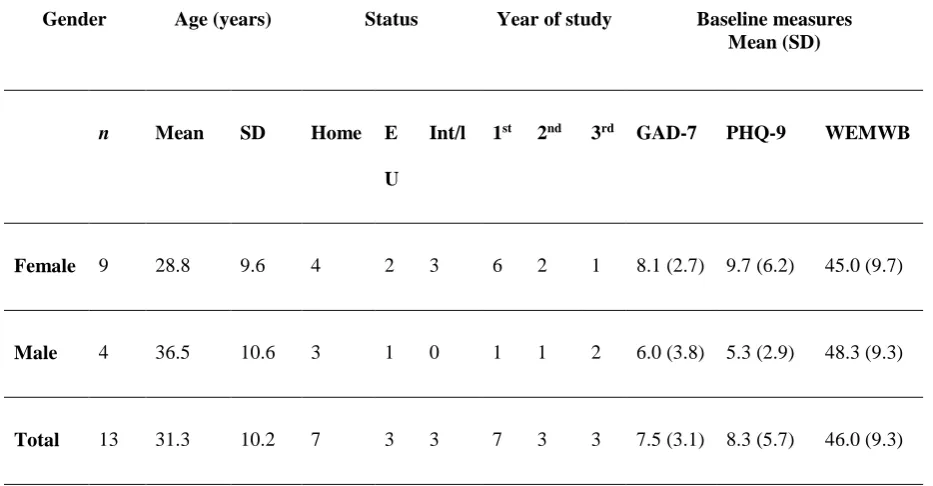
Table 1. Participants characteristics (GAD-7: Generalized Anxiety Disorder Scale, PHQ-9: Patient Health Questionnaire, WEMWBS: Warwick-Edinburgh Mental Wellbeing scale)
Gender Age (years) Status Year of study Baseline measures
Mean (SD)
n Mean SD Home E
U
Int/l 1st 2nd 3rd GAD-7 PHQ-9 WEMWB
Female 9 28.8 9.6 4 2 3 6 2 1 8.1 (2.7) 9.7 (6.2) 45.0 (9.7)
Male 4 36.5 10.6 3 1 0 1 1 2 6.0 (3.8) 5.3 (2.9) 48.3 (9.3)
Total 13 31.3 10.2 7 3 3 7 3 3 7.5 (3.1) 8.3 (5.7) 46.0 (9.3)
Table 2. Mean mental wellbeing score changes over 8 weeks (standard deviation of scores in parenthesis) (GAD-7: Generalized Anxiety Disorder Scale, PHQ-9: Patient Health Questionnaire, WEMWBS: Warwick-Edinburgh Mental Wellbeing scale)
Baseline Week 2 Week 4 Week 8
GAD7 7.5 (3.1) 3.1 (1.6) 2.2 (3.3) 3.3 (3.8) PHQ9 8.3 (5.7) 4.1 (3.7) 4.4 (5.6) 4.7 (4.0) WEMWBS 46.0 (9.3) 54.4 (8.5) 48.4 (13.7) 47.5 (12.2)
16
Academic Self-Efficacy
151.1 (43.1) 169.4 (42.6) 181.2 (54.0) 178.5 (61.2)
n 13 7 5 4
Everyday Functioning
2.38 (0.87) 2.71 (0.49) 3.60 (1.14) 3.33 (0.52)
n 13 7 5 5
Reasons for participating in the study
Out of the 13 initial participants eight reported that they are “currently having a difficult time studying at university”, four reported that they are “currently having a difficult time emotionally at university”, seven that “the support system (MePlusMe) is a great idea and I want to find out more”, and two also selected “other”, explaining that they “want to improve coping techniques” and that “I am interested in how things happen and why”.
Progress and completion
As shown in Table 2, out of the 13 initial participants, seven completed the follow-up measures in Week 2, five in Week 4 and six in Week 8 (Week 8 attrition rate: 53.85%). The study was not powered to determine the effectiveness of the intervention, but all participants reported decreased symptoms of anxiety and depression and increased (Weeks 2 & 4) or stable (Week 8) wellbeing scores, compared to the Baseline. With regards to the ASE scores (see Table 2), a general improvement in scores was evident over the successive ratings, with all four of the participants who completed self-efficacy ratings at Week 8 having improved scores compared to their baseline ratings. Similarly, the VAS (see Table 2)
scores showed an improvement at successive time-points to Week 4, with a modest reduction in Week 8.
System evaluation
1. Impressions of the MePlusMe video that explains the rationale behind the system
non-17
judgemental content of the message. Negative comments centered around the fact that the video was not
informative enough, the fact that the basic style was unengaging, and changes needed in the voice-over. Some of the comments are listed below:
Table 3
. Positive impressions of first MePlusMe video
Theme Participant comment examples
Style / well-designed It is design simple and efficient. Communicate in a good way.
The video and animations were well done.
The way it was styled and presented was good
The use of visual and audio.
Ease of understanding It simple to understand / it is a great and easy way to start improving
yourself
I like story boards, it is a very clever way of transferring information. The audio is at a good pace and tone.
The video did a good job at explaining the program.
Content of message I liked the mention that tendencies are your tendencies and are neither
good nor bad.
Table 4
Negative impressions of first MePlusMe video
Theme Participant comment examples
Problems understanding message I thought the video could have been more informative. It could have
explained a bit more about techniques etc.
Basic style unengaging Simple animation - not so eye catching and a bit difficult to relate to
Lack of ethnic diversity in video
Choice of voice-over Interesting concept, but could have chosen another voice actor.
The way it was styled and presented was good, only felt that the voice over should be sped up a little
18
After first viewing the MePlusMe videos there was limited subsequent engagement, with the two major factors identified were the fact that no re-watching was needed and time constraints. Some of the comments are listed below:
Table 5
: Reasons for reduced engagement with MePlusMe videos after first viewings
Theme Participant comment examples
Already incorporated techniques I tried to use them in my own style, so I watched them a few times and then I used them according to my lifestyle.
After watching once, I didn't need to re-watch the videos I just put the techniques into action and when I did view them it was to refresh and make sure I understood
Many of the techniques did not really provide benefit from being repeated. I got lots of helpful advice for how to prepare for exams, and don't feel that I would benefit from watching the videos again.
Time constraints Due to time
I've been busy
3. How has MePlusMe helped participants so far - Positive outcomes
Participants generally expressed that their engagement with the MePlusMe techniques was a positive experience. No specifically negative outcomes were identified. The major positive outcomes identified were improved positive thinking and enhanced memory, improved confidence, reassurance that self-improvement is possible, reassurance that others had similar experiences, practical outcomes through study tips. Some of the comments are listed below:
Table 6
: Positive outcomes from engaging with MePlusMe
Theme Participant comment examples
Improved positive thinking & enhanced memory I tried to replace my negative thoughts with positive ones.
It has enhanced my memory
19
Provided reassurance that self-improvement is possible
It made me feel better knowing there were more things I could be doing to help myself
Provided reassurance that others had similar experiences
Assured me that everyone is going through the same issues and also with the right thinking about them and solving them correctly
Provided practical outcomes through study tips I managed to have a pretty clear schedule
Good tips for planning exam studying in January
Good study tips
I like how it has a pragmatic approach to actually giving you
some techniques and work sheets which are tangible.
4. Evaluation of the features and contents
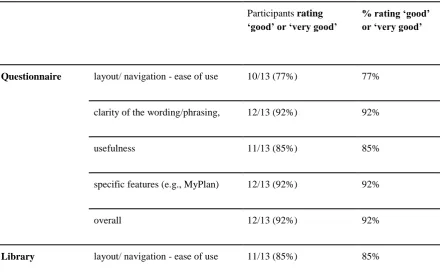
A high level of satisfaction with the Questionnaire was indicated. As can be seen in Table 7, the extent of endorsement of the particular features was consistently high, ranging between 69% for a single aspect (the clarity of wording within the Library), to 100% for several elements (the video techniques as a whole; the layout and the phrasing within MyPlace)
Table 7: Likert scaled responses concerning the MePlusMe system
Participants rating
‘good’ or ‘very good’
% rating ‘good’ or ‘very good’
Questionnaire layout/ navigation - ease of use 10/13 (77%) 77%
clarity of the wording/phrasing, 12/13 (92%) 92%
usefulness 11/13 (85%) 85%
specific features (e.g., MyPlan) 12/13 (92%) 92%
overall 12/13 (92%) 92%
20
clarity of the wording/phrasing, 9/13 (69%) 69%
usefulness 10/13 (77%) 77%
specific features (e.g. MyPlan) 11/13 (85%) 85%
overall 11/13 (85%) 85%
MyPlace layout/ navigation - ease of use 13/13 (100%) 100%
clarity of the wording/phrasing 13/13 (100%) 100%
specific features (e.g. MyMessages 12/13 (92%) 92%
overall 12/13 (92%) 92%
Video techniques illustrations 10/13 (77%) 77%
narrator’s voice 11/13 (85%) 85%
clarity of the study board 12/13 (92%) 92%
ability to sustain interest 11/13 (85%) 85%
overall 13/13 (100%) 100%
21
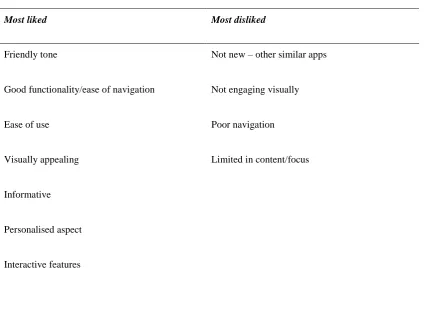
interactive forum that would allow users to engage directly with professionals. The overall impression of MePlusMe’s system was positive and most users were satisfied, as the system was found to be useful and practical, calming, relaxing, and easy to use and navigate through, having a clear and attractive design, being engaging as well as bespoke and tailored to the users needs. Most used the techniques 1-3 times a week or more. Participants were uncertain whether they liked the name “MePlusMe” “a lot” or “a little” with equal numbers of responders selecting these alternatives) and that they had not used other online support systems in the past (10/13 responders, 77%). None of the participants approached the student support services in the duration of the study, most reported that they will continue to use MePlusMe after the completion of the study, and most of participants claimed that if they will seek support in the future, if need be, they will do so by approaching the student union in addition to using MePlusMe. Negative impressions were also identified and were invariably related to the design and user experience. Specifically, participants reported ambiguity in the wording of the questionnaire used to assign the techniques, videos being too long but also too short and the fact that the material covered is accessible elsewhere. Table 8
presents the aspects of MePlusMe that participants reported to like and dislike most.
Table 8
: Aspects of MePlusMe which participant said they most liked and disliked
Most liked Most disliked
Friendly tone Not new – other similar apps
Good functionality/ease of navigation Not engaging visually
Ease of use Poor navigation
Visually appealing Limited in content/focus
Informative
Personalised aspect
22
Library component
Discussion
The present study investigated the feasibility, and acceptability of the contents, design, and functionalities of MePlusMe. This investigation took place before the system’s online functionalities are fully developed in order to inform further development. Responses included positive remarks as well as useful suggestions for the improvement of the system. MePlusMe was found to be practical, easy to use, engaging, and tailored to users needs, but also in need of enrichment of content and of using more diverse characters. Moreover, the questionnaire and library routes that were provided to the users and the subsequent steps (e.g., responding to the VAS scale) were successfully navigated by users, showcasing the feasibility of our approach.
When participants watched their first video describing one of the techniques, they commented on its simple, professional, and efficient design, as well as on its good style and presentation. Moreover, they found the contents easy to understand and non-judgemental. While some participants found that the audio had a good pace and tone, others considered it to be unengaging and suggested changes in the voice-over, such as speeding it up and using a different voice actor. A lack of diversity and an ambiguity in the wording of the questionnaire were also noted as was the simplicity of the animation and the fact that is was not engaging visually. Participants were divided when it came to whether they liked the name “MePlusMe” or not. Further engagement with MePlusMe videos was limited, as participants found that not many repetitions were needed due to the contents being easily understandable, but also due to time constraints. Overall, the techniques offered by MePlusMe attracted positive comments that included improvements in positive thinking, memory, and self-confidence as well as reassurance that self-improvement is possible and that others have similar experiences. The study skills techniques were considered to provide a pragmatic approach and useful tips. Suggestions for further improvement were also collected. These included the system’s further development into an app and the option of having direct online engagement with professionals via a forum built into the system.
23
comments that videos are too long or too short. We will also introduce new narrators so that different voices can appeal to our target group. Moreover, the development of an app, through which users will be able to use the system via their smartphones, is also pending. In addition, the possibility of having direct contact with professionals through the system is already being considered and will take place through emails, video-conferencing and offline face-to-face treatment. Limitations of the present study include the small number of participants (n = 13), which though adequate for qualitative [60] and feasibility evaluation, does limit the interpretation of the measure scores to a descriptive analysis. Additionally, this study took place offline, rather than online which will be the standard mode of delivery when the system is fully developed.
When the online functionalities of the system are fully developed a feasibility study will follow, for which the protocol has been already published [57
]. This study will allow for the assessment of the extent of change between pre- and post-intervention time points, with regards to mood, wellbeing, academic self-efficacy, and everyday functioning. Upon the completion of the feasibility study, a Randomized Controlled Trial (RCT) will ensue, in order to systematically measure the effectiveness of the intervention. Of note, of the six online support systems recently identified as having been designed specifically for HE students [42], only MePlusMe has conducted development studies, such as the current one, as well as an initial survey of end-users [52] and a proof-of-concept study [53]. This way MePlusMe responds to the call for more research on such systems [42].
Once the system is live, students will be able to use it anonymously, at their own space and time, as soon as symptoms arise and as often as they wish, removing common barriers in help seeking [61-63]. This will allow students to feel empowered by taking control over their mental health and personal effectiveness. It will further reinforce their motivation to change as well as their confidence and help them develop long-lasting coping skills. The online system will further host a space where the community of users will be able to provide additional support to each other. This build-in community could further help normalize the experiences of the users and give them a sense of belonging. The online nature of the system is by default holistic and inclusive. Therefore, the system will be available to students who would not normally seek face-to-face support. Furthermore, support will be tailor-made to the needs of each user every time they choose to use the system.
24
difficulties, as a complementary service alongside the offline services. This way, student support services will emphasize on prevention, in a cost-effective manner [64]. Moreover, the system can be used as a first line of support for students on the waiting line to see a professional or as a fall-back plan, after therapy has been completed. MePlusMe could further provide analytics on students’ wellbeing and academic competence, which could allow HEIs to respond to students needs in a targeted manner. This way, HEIs will be in an informed position to improve student experience, reduce drop-out rates, and achieve higher ratings, intake, and income (for a more detailed discussion on the benefits of online support systems designed for students in HE see [42] and [43]).
Conclusions
MePlusMe, is a multimedia, online system aiming to provide personalized support to HE students facing mild to moderate mental health difficulties as well as study skills difficulties and students who just want to take care of their mental health and improve their academic competence. It is the first system that is designed specifically for HE students that tackles both potential sources of problems, psychological and academic, in a personalized manner. Following a rigorous development process which includes a market research project with counsellors in HEIs, an initial survey of end-users [52]
and a proof-of-concept study [53
]
, this paper explored the acceptability and feasibility of the system’s developed contents, design, and functionalities, before its online functionalities are fully developed using qualitative data. Responses were overall positive, with useful comments and suggestions for further improvement. A larger feasibility study of MePlusMe’s design and contents using both quantitative and qualitative measures is currently underway in Riga Stradins University in Latvia. A feasibility study with a fully functioning system is the next step in the system’s development [59]
,25
List of abbreviations
ADHD Attention Deficit Hyperactivity Disorder
ASE Academic Self-Efficacy
CALM Computer Aided Lifestyle Management
CBT Cognitive Behavioural Therapy
GAD-7 7-item Generalized Anxiety Disorder Scale
HADS Hospital Anxiety and Depression Scale
HE Higher Education
HEI Higher Education Institution
HESA Higher Education Statistics Agency
M.I.N.I The Mini International Neuropsychiatric Interview
PHQ-9 Patient Health Questionnaire
RCT Randomized Controlled Trial
RCP Royal College of Psychiatrists
NHS National Health Services
NUS National Union of Students
UK United Kingdom
WEMWB Warwick-Edinburgh Mental Wellbeing questionnaire/scale
WHO World Health Organisation
WMH-CIDI World Health Organization World Mental Health Composite International Diagnostic Interview
26
Ethics approval and consent to participate
The study was approved by [College of Nursing, Midwifery and Healthcare Ethics Committee from the University of West London, UWL/REC/CNMH-00262]. All participants gave written, informed consent before taking part in the study.
Availability of data and material The full data set is available at request. Competing interests
MPP is a Research Fellow for iConcipio Ltd. and has no other competing interests. PT is the CEO and Founder of iConcipio Ltd. iConcipio Ltd. is the developer of MePlusMe. LCT worked as a research assistant for iConcipio Ltd on this project and has no other competing interests. EB, MH, CL, LS and EM are researchers affiliated to different universities and have no other competing interests. EB and MH have worked in the past on other research projects for iConcipio Ltd.
Funding
No funding supported the completion of this study. Consent for publication
Not applicable Authors' contributions
PT conceived the study. PT set up and ran the study with the support of CL and LS. MH and EM analysed the data. LCTcontributed in the write up of this paper. MPP and PT supervised the writing of the manuscript, edited it at different time points, co-wrote the introduction, methods and results, and MPP wrote the discussion section. All authors reviewed and edited the manuscript and approved the final version of the manuscript.
Acknowledgements
27
References
1. Pedrelli P, Nyer M, Yeung A, Zulauf C, Wilens T. College Students: Mental Health Problems and Treatment Considerations. Acad Psychiatry. 2015;39:503–11. doi:10.1007/s40596-014-0205-9.
2. Smith M. One in four students suffer from mental health problems | YouGov. YouGov. 2016.
https://yougov.co.uk/topics/lifestyle/articles-reports/2016/08/09/quarter-britains-students-are-afflicted-mental-hea. Accessed 23 Dec 2018.
3. HESA. Students in Higher Education 2015/16. Higher Education Statistics Agency 2015-16. 2017. https://www.hesa.ac.uk/data-and-analysis/publications/students-2015-16. Accessed 27 Dec 2018.
4. Auerbach RP, Mortier P, Bruffaerts R, Alonso J, Benjet C, Cuijpers P, et al. WHO World Mental Health Surveys International College Student Project: Prevalence and distribution of mental disorders. J Abnorm Psychol. 2018;127:623–38. doi:10.1037/abn0000362.
5. Auerbach RP, Mortier P, Bruffaerts R, Alonso J, Benjet C, Cuijpers P, et al. Mental disorder comorbidity and suicidal thoughts and behaviors in the World Health Organization World Mental Health Surveys International College Student initiative. Int J Methods Psychiatr Res. 2018; Special Issue:7–8. doi:10.1002/mpr.1752.
6. Eisenberg D, Gollust SE, Golberstein E, Hefner JL. Prevalence and correlates of depression, anxiety, and suicidality among university students. Am J Orthopsychiatry. 2007;77:534–42.
doi:10.1037/0002-9432.77.4.534.
7. Ibrahim AK, Kelly SJ, Adams CE, Glazebrook C. A systematic review of studies of depression prevalence in university students. J Psychiatr Res. 2013;47:391–400. doi:10.1016/J.JPSYCHIRES.2012.11.015.
8. Andrews B, Wilding JM. The relation of depression and anxiety to life-stress and achievement in students. British Journal of Psychology. 2004;:509–21.
9. Psychiatrists RCO. Mental health of students in higher education council report CR166. 2011.
https://www.rcpsych.ac.uk/docs/default-source/improving-care/better-mh-policy/college-reports/college-report-cr166.pdf?sfvrsn=d5fa2c24_2. Accessed 27 Dec 2018.
10. Cukrowicz KC, Schlegel EF, Smith PN, Jacobs MP, Van Orden KA, Paukert AL, et al. Suicide Ideation Among College Students Evidencing Subclinical Depression. J Am Coll Heal. 2011;59:575–81.
28
11. Giovazolias T, Leontopoulou S, Triliva S. Assessment of Greek university students’ counselling needs and attitudes: An exploratory study. Int J Adv Couns. 2010;32:101–116.
12. NUS. Mental health poll 2015 @ NUS connect. 2015;:9–11. http://appg-students.org.uk/wp-content/uploads/2016/03/Mental-Health-Poll-November-15-Summary.pdf. Accessed 27 Dec 2018.
13. NUS. Mental Distress Survey Overview. 2013. https://www.nus.org.uk/global/campaigns/20130517 mental distress survey overview.pdf. Accessed 27 Dec 2018.
14. Goldberg DP, Blackwell B. Psychiatric Illness in General Practice: A Detailed Study Using a New Method of Case Identification. Br Med J. 1970;2:439–443.
15. Levecque K, Anseel F, De Beuckelaer A, Van der Heyden J, Gisle L. Work organization and mental health problems in PhD students. Res Policy. 2017;46:868–79. doi:10.1016/J.RESPOL.2017.02.008.
16. Lipson SK, Eisenberg D. Mental health and academic attitudes and expectations in university populations: results from the healthy minds study. J Ment Heal. 2018;27:205–13. doi:10.1080/09638237.2017.1417567.
17. Salzer MS. A comparative study of campus experiences of college students with mental illnesses versus a general college sample. J Am Coll Heal. 2012.
18. McKenzie K, Murray KR, Murray AL, Richelieu M. The effectiveness of university counselling for students with academic issues. Couns Psychother Res. 2015;15:284–8.
19. Bamford J. Strategies for the improvement of international students ’ academic and cultural experiences of studying in the UK. Hosp Leis Sport Tour Netw Enchancing Ser Int. 2008;20:551–64.
20. - JB. Increase in students using University Counselling Service | Cherwell. Cherwell. 2017.
http://cherwell.org/2017/05/26/huge-increase-in-students-using-university-counselling-service/. Accessed 27 Dec 2018.
21. Thorley, C. Not By Degrees: Improving student mental health in the UK's Universities, IPPR, 2017. Accessed 05/06/19 https://www.ippr.org/files/2017-09/1504645674_not-by-degrees-170905.pdf
22. Student Loans Company. Student Support for Higher Education in England 2017. Department of Education
29
23
. The Student Loans Company and Department for Education. Student Support For Higher Education In England 2017-2018 Awards. 2018. www.slc.co.uk/statistics.aspx. Accessed 27 Dec 2018.
24
. HESA. Higher Education Student Statistics: UK, 2016/17 - Student numbers and characteristics | HESA. 2018. https://www.hesa.ac.uk/news/11-01-2018/sfr247-higher-education-student-statistics/numbers. Accessed 30 Dec 2018.
25
. NHS. NHS England: increasing mental health therapy referrals. 2017.
https://www.england.nhs.uk/2017/12/1-4-million-people-referred-to-nhs-mental-health-therapy-in-the-past-year/. Accessed 30 Dec 2018.
26
. Broglia E, Millings A, Barkham M. Challenges to addressing student mental health in embedded counselling services: a survey of UK higher and further education institutions. Br J Guid Counc. 2018;46:441– 55. doi:10.1080/03069885.2017.1370695.
27
. Connell J, Barkham M, Mellor-Clark J. CORE-OM mental health norms of students attending university counselling services benchmarked against an age-matched primary care sample. Br J Guid Couns. 2007;35:41– 57.
28. Reichert, A, Rowena, J. The impact of waiting time on patient outcomes: Evidence from early intervention in psychosis services in England.Health Economics. 2018; 27(11); 1772-1787. doi:
10.1002/hec.3800.
29
. UK U. Universities UK: Student mental wellbeing in higher education. 2000.
https://www.universitiesuk.ac.uk/policy-and-analysis/reports/Documents/2015/student-mental-wellbeing-in-he.pdf. Accessed 30 Dec 2018.
30
. Christensen H, Griffiths KM, Korten AE, Brittliffe K, Groves C. A Comparison of Changes in Anxiety and Depression Symptoms of Spontaneous Users and Trial Participants of a Cognitive Behavior Therapy Website. J Med Internet Res. 2004;6:e46. doi:10.2196/jmir.6.4.e46.
31
. Andersson G, Titov N. Advantages and limitations of Internet-based interventions for common mental disorders. World Psychiatry. 2014;13:4–11. doi:10.1002/wps.20083.
30
33
. Aloraini S. The impact of using multimedia on students’ academic achievement in the College of Education at King Saud University. J King Saud Univ - Lang Transl. 2012;24:75–82.
doi:10.1016/J.JKSULT.2012.05.002.
34
. Christensen H, Mackinnon AJ, Batterham PJ, O’Dea B, Guastella AJ, Griffiths KM, et al. The effectiveness of an online e-health application compared to attention placebo or Sertraline in the treatment of Generalised Anxiety Disorder. Internet Interv. 2014;1:169–74. doi:10.1016/j.invent.2014.08.002.
35
. Høifødt RS, Lillevoll KR, Griffiths KM, Wilsgaard T, Eisemann M, Waterloo K, et al. The clinical effectiveness of web-based cognitive behavioral therapy with face-to-face therapist support for depressed primary care patients: randomized controlled trial. J Med Internet Res. 2013;15:e153. doi:10.2196/jmir.2714.
36
. Kohn R, Saxena S, Levav I, Saraceno B. The treatment gap in mental health care. Bull World Health Organ. 2004;82:858–66.
37
. Postel MG, de Haan HA, De Jong CAJ. E-Therapy for Mental Health Problems: A Systematic Review. Telemed e-Health. 2008;14:707–14.
38
. Hollis C, Morriss R, Martin J, Amani S, Cotton R, Denis M, et al. Technological innovations in mental healthcare: Harnessing the digital revolution. British Journal of Psychiatry. 2015;206:263–5.
doi:10.1192/bjp.bp.113.142612.
39
. Hollis C, Falconer CJ, Martin JL, Whittington C, Stockton S, Glazebrook C, et al. Annual Research Review: Digital health interventions for children and young people with mental health problems – a systematic and meta-review. J Child Psychol Psychiatry Allied Discip. 2017;58:474–503. doi:10.1111/jcpp.12663.
40
. Räsänen P, Lappalainen P, Muotka J, Tolvanen A, Lappalainen R. An online guided ACT intervention for enhancing the psychological wellbeing of university students: A randomized controlled clinical trial. Behav Res Ther. 2016;78:30–42. doi:10.1016/j.brat.2016.01.001.
41
. Musiat P, Potterton R, Gordon G, Spencer L, Zeiler M, Waldherr K, et al. Web-based indicated
prevention of common mental disorders in university students in four European countries - Study protocol for a randomised controlled trial. Internet Interv. 2018; In Press. doi:10.1016/j.invent.2018.02.004.
31
43
. Barrable A, Papadatou-Pastou M, Tzotzoli P. Supporting mental health, wellbeing and study skills in Higher Education: An online intervention system 11 Medical and Health Sciences 1117 Public Health and Health Services 17 Psychology and Cognitive Sciences 1701 Psychology 13 Education 1303 Specialist. Int J Ment Health Syst. 2018;12. doi:10.1186/s13033-018-0233-z.
44
. Zigmond AS, Snaith RP. The Hospital Anxiety and Depression Scale. Acta Psychiatr Scand. 1983;67:361–70.
45
. Spitzer RL, Kroenke K, Williams JBW, Löwe B. A brief measure for assessing generalized anxiety disorder: The GAD-7. Arch Intern Med. 2006;166:1092–7.
46
. Spitzer RL, Williams JBW, Kroenke K, Hornyak R, McMurray J. Validity and utility of the PRIME-MD Patient Health Questionnaire in assessment of 3000 obstetric-gynecologic patients: The PRIME-MD Patient Health Questionnaire Obstetrics-Gynecology Study. Am J Obstet Gynecol. 2000;183:759–69.
47
. Lecrubier Y, Sheehan D V., Weiller E, Amorim P, Bonora I, Sheehan KH, et al. The Mini International Neuropsychiatric Interview (MINI). A short diagnostic structured interview: Reliability and validity according to the CIDI. Eur Psychiatry. 1997;12:224–31.
48
. Dendato KM, Diener D. Effectiveness of Cognitive/Relaxation Therapy and Study-Skills Training in Reducing Self-Reported Anxiety and Improving the Academic Performance of Test-Anxious Students. J Couns Psychol. 1986;33:131–5.
49
. McKenzie K, Schweitzer R. Who Succeeds at University? Factors predicting academic performance in first year Australian university students. High Educ Res Dev. 2001.
50
. Weissberg NC, Owen DR. Do psychosocial and study skill factors predict college outcomes? Comment on Robbins et al. (2004). Psychol Bull. 2005;131:407–9.
51
. Mayer RE. Cognitive theory of multimedia learning. In: The Cambridge Handbook of Multimedia Learning, Second Edition. 2014.
52
. Goozée R, Papadatou-Pastou M, Barley E, Haddad M, Tzotzoli P. Survey to Inform the Development of an Online Support System for Higher Education Students <br>—Higher Education and Online Support. Health (Irvine Calif). 2018;10:351–64. doi:10.4236/health.2018.103028.
32
system for students in higher education: Proof-of-concept study. Digit Heal. 2016;2. doi:10.1177/2055207616655012.
54
. Tennant R, Hiller L, Fishwick R, Platt S, Joseph S, Weich S, et al. The Warwick-Dinburgh mental well-being scale (WEMWBS): Development and UK validation. Health Qual Life Outcomes. 2007;5:63.
doi:10.1186/1477-7525-5-63.
55
. Tennant R, Hiller L, Fishwick R, Platt S, Joseph S, Weich S, et al. The Warwick-Edinburgh Mental Well-being Scale (WEMWBS): development and UK validation. Health Qual Life Outcomes. 2007;5:63.
doi:10.1186/1477-7525-5-63.
56
. Zajacova A, Lynch SM, Espenshade TJ. Self-efficacy, stress, and academic success in college. Research in Higher Education. 2005; 46(6), 677-706. doi:10.1007/s11162-004-4139-z.
57
. Patapia Tzotzoli. Our philosophy - MePlusMe by iConcipio Ltd on Vimeo. 2016. https://vimeo.com/160705952. Accessed 12
June
2019.
58
. Braun V, Clarke V. Using thematic analysis in psychology. Qual Res Psychol. 2006;3:77–101.
59
. Papadatou-Pastou M, Goozée R, Barley EA, Haddad M, Tzotzoli P. Online intervention, “MePlusMe”, supporting mood, wellbeing, study skills, and everyday functioning in students in higher education: A protocol for a feasibility study. Pilot Feasibility Stud. 2015;1:34. doi:10.1186/s40814-015-0029-8.
60. Marshall, B., Cardon, P., Poddar, A., & Fontenot, R.. Does sample size matter in qualitative research?: A review of qualitative interviews in IS research. Journal of Computer Information Systems. 2013; 54(1), 11-22. doi: 10.1080/08874417.2013.11645667
61. Fox, J. C., Blank, M., Rovnyak, V. G., & Barnett, R. Y. Barriers to help seeking for mental disorders in a rural impoverished population. Community Mental Health Journal. 2001; 37(5), 421-436.
62. Gulliver, A., Griffiths, K. M., & Christensen, H. Perceived barriers and facilitators to mental health help-seeking in young people: a systematic review. BMC psychiatry. 2010; 10(1), 113. doi: 10.1186/1471-244X-10-113
63. Helms, J. L. Barriers to help seeking among 12th graders. Journal of Educational and Psychological Consultation. 2003; 14(1), 27-40. doi: 10.1207/S1532768XJEPC1401_02
Cost-33
effectiveness of computerised cognitive-behavioural therapy for anxiety and depression in primary care: randomised controlled trial. The British Journal of Psychiatry. 2004; 185(1), 55-62. doi: 10.1192/bjp.185.1.55
Figure captions
Figure 1. Screenshot of the Library route