Review Article
CODEN: IJPNL6
MULTIPLE UNIT PELLET SYSTEMS: A REVIEW
VR Sirisha K
*1, K Vijaya sri
2, K Suresh
3and G Kamalakar Reddy
41
Department of Pharmacy, JNTUA, Anantapur
2
Department of Pharmaceutics, Malla Reddy College of Pharmacy, Maisammaguda,
Secunderabad
3Omega College of Pharmacy, Ghatkesar, Hyderabad
4
Formulation R&D, Hetero Labs Ltd., Secunderabad, India
*Corresponding author e-mail:
[email protected], [email protected]
ABSTRACT
Compressed multiple unit pellet tablets/multiple unit particulate or pellet system commonly called MUPS are composed of polymer coated subunits namely pellets; which are embedded in an inert excipients matrix designed to overcome the difficulties in administering capsules and improved physico-chemical stability compared to suspensions. The functional coating like drug coating, barrier coating, enteric polymer coating is usually applied in a fluid bed coating processor provides each subunit with the characteristic desired drug release properties. The size, shape and surface morphology of the pellets to be coated are the prerequisites for coating of pellets. Design of MUPS involves formulating pellets by different techniques and further compression of these pellets into rapidly disintegrating tablets; disintegrate rapidly in the oral cavity for the delivery of coated pellets into the gastrointestinal tract or the site of release of the drug. Inspite of the challenges like content uniformity of the compressed tablets, ability of the film to withstand compression force; MUPS occupy a prominent role in formulating drugs due to their greater patient compliance; process, formulation and therapeutic advantages.
Key words: Pellets, design, formulation, MUPS, advantages and process parameters
INTRODUCTION
A design principle of increasing importance for sustained, controlled, delayed, site specific or pulsatile release preparations is the compaction of coated particles into disintegrating multiple unit tablets. One challenge in the production of disintegrating multiple unit tablets is maintaining the modified drug release after compaction, as the application of the compaction pressure can lead to deformation of film coating and, consequently, altered drug release, as reviewed by Bodmeier. [1] To protect the coating from such changes, excipients with so-called cushioning or protective properties are usually incorporated in the tablet formulation in addition to fillers. The compression-induced changes in the structure of a film coating may depend on physical factors of pellets such as the size, shape,
density, porosity and formulation factors such as type and amount of coating, the properties and structure of the substrate pellets and the incorporation of excipient particles. The demand for MUPS tablets has been increasing due to its greater advantage over other dosage forms. The present review focuses on compaction and characteristics of multiple unit pellets to tablets.
COMPRESSION OF PELLETS TO TABLETS (MUPS)
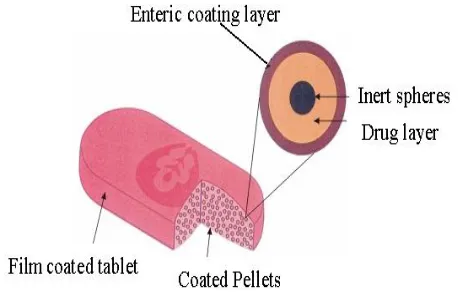
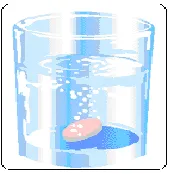
Multi particulates are filled into hard-shell gelatin capsules, compressed into tablets (Figure I), suspended in liquids or packed in sachets. Compaction of single units results in disintegrating tablets illustrated in Figure II; becoming more and more important on the pharmaceutical market, as
International Journal of Pharmacy
they provide several advantages compared to single-unit dosage forms and pellet-filled capsules.
ADVANTAGES
1. The compression of multiparticulates into
tablets, unlike the hard gelatin capsule, is a tamper-proof dosage form and has greater physicochemical and microbiological stability of pellets as they are embedment in the inert matrix.
2. Tablets have less difficulty in oesophageal
transport than capsules.
3. Tablets containing coated subunits can be
prepared at a lower cost than these subunits filled into hard gelatin capsules because of higher production rate of the tablet press.
4. The expensive control of capsule integrity after filling is also eliminated.
5. In addition, tablets containing multiparticulates without losing the controlled-release properties could be scored, which allow a more flexible dosage regimen.
6. Composing the tablet with equal or different kinds of particles can be combined and so that very specific release profiles can be generated. 7. Once the coated subunits have been developed
different dose strengths can be prepared just by varying the tablet size keeping the same composition – no additional development efforts need to be taken.
8. Another option for dose strength variation is the
development of dividable multi-unit tablets. Since the release characteristics are related to the single subunits, dividing the tablet does not affect the release characteristics as it is true for monolithic tablets.
9. Rapid and uniform transit of subunits contained in tablets from the stomach into small intestine owing to their small size, drug release is more uniform and possibility of dose dumping is avoided with minimized tendency for inter-subject variations.
All these reasons support multi-unit tablets as the preferred type particularly for modified release dosage forms.
RATIONALE OF FORMULATING MUPS
The rationale in formulating MUPS is to design chased on the release rates such as designing controlled release, sustained release, delayed release and colon targeted drug delivery system; oral disintegrating taste-masked dosage form; combining drugs with different release characteristics in the same dosage form. The drug dose administered in modified release form can be increased as compared
to that possible with capsules and enhance the stability of dosage form as compared to its capsule counterpart. It also helps in obviating the need for specialized packaging such as that required for capsules making it a more cost effective dosage form.
IDEAL CHARACTERISTICS OF MUPS
1. Should maintain all the tablet properties.
2. Pellets should not show any interaction like
developing electrostatic charges; during
compression.
3. The pellets should not show any deviation in its
release even after compression.
4. The coated pellets during the process of
compression should not fuse into a
nondisintegrating matrix and should not lose its coating integrity either by breaking or cracking or rupturing the coating layer(s) or pinholes and other imperfections.
5. Like tablets, MUPS should have ease to
withstand physical parameters, stability, packing storage and transportation. The dosage form must disintegrate rapidly into individual pellets in gastrointestinal fluids.
TYPES OF MUPS FORMULATIONS
MUPS formulations are broadly classified into two types illustrated in Figure III.
MUPS with matrix pellets used generally in controlled release formulations. These pellets are coated with swellable or erodable polymers than diffusible polymers. The main problem of matrix pellets in compression is fusion of polymer coating of pellets with other pellets and also polymer coating
with extra-granular material. This can be
counteracted by coating with any non interfering coating agent. For example hydrophobic coating agent prevent fusion of pellets-pellet and pellet- tabletting excipients. MUPS with pellets coated using different pelletization techniques with all the desired characteristics for compression of pellets.
STAGES IN COMPRESSION OF PELLETS TO MUPS
Four stages are considered in compression into MUPS includes Deformation of functional coating layer, Densification of polymeric coating layer, Fragmentation and Attrition of pellets.
DEFORMATION OF PELLETS DURING COMPRESSION
capacity, mode and the resistance to deformation. The mode of deformation of pellets depends on the material composition of the pellets and extra-granular material used for compression. This is of two types. The former is surface oriented deformation, a local change in the geometry of the external surface of a pellet making the pellet conform to the external surfaces of adjacent pellets (i.e. there is no change in the bulk dimensions). Later one is bulk oriented deformation, a change in the main dimensions of the pellets, primarily expressed as a flattening of their bulk. High surface deformation refers to the great ability of the pellets to conform to the surfaces of surrounding pellets. In pellets containing a soft component, the primary particles can reposition within the agglomerate and hence the ability to fill the intergranular pore space is increased. For pellets consisting of a hard material, on the other hand, the compaction stress may give local failure at pellet surfaces. Thus, the material properties of the primary particles constituting the pellets are important for the compression behavior of pellets.
CHALLENGES IN FORMULATING MUPS
1. To ensure uniformity of content and weight.
2. To compress the coated subunits to tablets with sufficient hardness and low friability without damaging the film coatings. [2,3]
OVERCOME OF CHALLENGES
1. The tabletting mixture with good flow and
narrow particle size distribution preventing de-mixing of pellets and extra-granular material. In case of big sized coated particles, size adaptation of the outer phase may be considered which can be managed by granulation.
2. In order to ensure undamaged film coatings and
thus reproducible drug release after tablet
compression, various impact factors need to be considered:
3.
Pellet shape: the shape of the pellets should be spherical or nearly spherical for good rhombohedral packing. A more deviation in spherical shape does not result in compacts of characteristic release due to flaws and cracks during compression.
Pellet size: The size of the coated pellets can be maximum upto 2 mm to withstand compression pressure. Large sized pellets cause rupture to the coating of pellets due to segregation with tabletting excipients and there by direct exposure of the transmitted force by the upper punch to lower punch. Thus influences content uniformity of the final tablet.
Pellet Density: Pellets of density about 1.5 g/cm3 shows faster gastric emptying than pellets with higher density of > 2 g/cm3. Pellets with < 2 mm in diameter and < 2 g/cm3 density can pass through pyloric sphincter both in fasted and fed state which is similar to liquids in terms of gastric emptying.
Pellet core and Core material: Pellets should have low surface to volume ratio; which might result in a decreased area of contact between the particles as they consolidate. In favor of this, pellet core should have some degree of plasticity to have deformation in shape during compression without any damage to the coated film. An extensive study was carried out on
microcrystalline cellulose (MCC) by many
researchers both as powdered and granulated forms, and revealed that MCC shows plastic deformation during compression and offers better protection to the coated particles as powder and granules. Studies done with different concentrations of MCC and starch 155 confirmed that starch strong compacts were formed by increasing concentrations of MCC while compaction with MCC and starch 1500 results in decreased strength of compacts. Core material should not be too hard eg. DCP pellets, which obstructs the flow of pellets. In such case, compression force shows impact on the surface and results in deformation of the surface and alters the release characteristics.
by the polymer coating used and the extragranular material. The excipients used should not interfere with the pellets which alter the drug release profile. The extragranular material must form closest packing with the deformed pellets.
Polymer coating and Film flexibility: Polymers widely used in attaining specific release profiles are cellulose derivatives and polyacryls. Cellulose and its derivatives like HPMC, HPMCP has elongation < 5% forms hard and brittle films that fractures during compression whereas polyacryls and copolymers of acrylics form flexible film deforms easily on compression. Plasticizers like triethyl citrate (TEC), triacetin and polyethylene glycol (PEG) also helps in the formation of flexible films. Among them TEC was found efficient. During compression a highly flexible film ensures elastic properties and prevents cracking of coating. Polymers like Eudragit along with plasticizers triethyl citrate provide greater flexibility to the film in sufficient/required quantity.
Retardation characteristics occur at higher
percentages. [4]
Solvents used: both aqueous and non-aqueous coatings can be done. Though aqueous coating is eco-friendly, a certain drawbacks such as degradation of the drug due to entrapped moisture; when pellets are cured for more time to evaporate moisture, the temperature also results in degradation, changes the pH of the micro-environment of the pellet and spraying solution, alters the viscosity of the solution.
Combination polymer systems, presence of
electrolytes and pH of the spraying solution also have an impact on the viscosity of the solution. Whereas, non-aqueous coatings show thixotropy of polymer solution as sol-to-gel; helps to coat the polymeric solution and the solvent evaporate much earlier than aqueous solvents. But the aqueous solvents coagulate the polymer film.
Mechanical resistance: Film flexibility provides mechanical stability to pellets during compaction. During compression, high mechanical resistance support film integrity by preventing deformation of pellets. High mechanical stability is given by a dense structure like that provided by mini-tablets, extrusion pellets or roller compaction granules. Furthermore, a bigger particle size supports mechanical stability and in addition leads to less interparticle contacts which also support less film damages.
Coating thickness: The thickness of coating layer is related to mechanical resistance of pellets during compaction. Greater thicknesses support elastic properties, whereas below a certain thickness even
highly flexible films will break. The manner in which
deformation of the coated pellets occurs during
compaction alters the thickness of the coating layer which has an impact on the release profile of the drug. If the deformation of the substrate pellet may stretch out the coating, making it thinner or more permeable, faster drug release was observed. Whereas the densification of the substrate pellet may compress the coating, making it thicker or less permeable, and consequently results in prolonged drug release (Figure IV).
Extra-granular material and cushioning agents:
Film stability is influenced by extra-granular material during compression. Sharp-edged and abrasive crystalline materials may damage the coating as compression force increases. This alters the drug release characteristics after compaction into tablets. Type and amount of the coating agent, selection of additives like plasticizers, use of cushioning excipients and rate of pressure applied must be monitored carefully to maintain the drug release properties of the sub units helps in the protection of the film. Soft materials or conventional powder excipients with plastic or elastic behavior like micro crystalline cellulose or lactose can be used to protect film coating. The quantity of extagranular to be compressed along with pellets is 30-70% w/w. A threshold of atleast 30% (w/w) of extra-granular material should be added as it provides support and cushioning; hence the coated subunits embed freely in the matrix without segregation and form a coherent tablet. With use of higher amount of pellets of atleast 50%w/w; variation may reduce, but the tendency for damage to coating increases. Generally suggested fillers are combination of different grades of fillers with different particle size like Avicel PH 200 and Avicel PH 101. Cushioning agents are waxy in nature take up the pressures of compaction by re-arranging themselves within the tablet structure or by preferentially getting deformed and/or fractured thereby provides protection to the coated pellets. They also enhance deformation of pellets when used as extra-granular material in addition to diluents. The best choice of cushioning agent is polyethylene glycol (PEG) preferably PEG 6000. [5] Cushioning pellets are normally more porous and soft compared to coated drug pellets and normally made of excipients which are used. The drug pellets-to-cushioning excipient(s) ratio is very critical in preventing coating film damage – a ratio of 1:3 or 1:4 is considered most suitable.
cycle. This problem is usually solved by adding talc, which acts as a glident. During development of multiparticulate tablets comparative dissolution tests should be conducted to identify the possible differences between the release rates of the uncompressed tabletting mixture versus the tablets. In order to ensure reproducible drug releases the difference between the two dissolution profiles should not exceed 10%. The schematic representation of various approaches to prepare MUPS of coated pellet formulations was illustrated in figure 5.
TABLET PRESS FOR PREPARING MUPS
Tablet press designed MUPS have a modification in the hopper, feed frame and forced feeders compared to normal tablet press. The hopper for feed consists of a butterfly valve to modulate the flow of blend to feed frame. The feed frame designed is continuous to ensure uniform clearance from the turret and prevent attrition/ segregation of pellets from extra-granular material and also crushing of coated pellets throughout the compression process, which is not possible with the regular rotary tablet press. The forced feeder used is gravity feeder, designed to prevent abrasion or grinding of pellets. [6]
PROCESS VARIABLES IN FORMULATING MUPS
Compression force, to a greater extent leads to damage of polymeric functional coating and alters dissolution profile based of the designed type of formulation. In case of delayed release formulation rupture of polymer coat leads to release of drug in acidic media and thereby, degradation of the drug.
Compression speed, probably be optimum for the formulation. High speed may cause improper die fill. Capping and lamination can be prevented by increasing the contact between punch heads and compression rollers.
MARKETED PRODUCTS OF MUPS
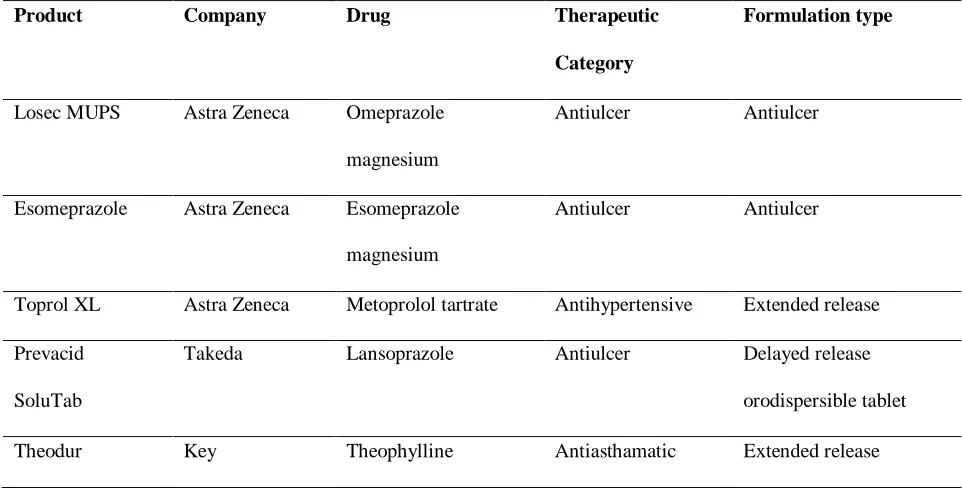
Losec MUPS, [7] consisting of microencapsulated drug granules tabletted with excipients [8] is the second highest selling pharmaceutical drug product in Sweden in the year 2002. Another patent is of European Patent Office by Astrazeneca EP 723437 for Nexium and Losec for compression of proton pump inhibitor (PPI) to tablets for MUPS into the market. Different marketed products are tabulated in Table I.
CONCLUSION
Formulation of different drugs to MUPS tablets has a prominent role because dissolution profiles tailor-made to biopharmaceutical requirements are a key therapy success factor. Present scenario of MUPS find a greater advantage which is the compaction of pellets coated with drug and polymer due to its flexible design in variable release properties, stability, patient compliance and economic compared to other dosage forms. For the pharmaceutical industry, not only the innovation of new products and techniques, creation of line extension, expansion of patent protection, achieving globalized product and thereby overcome competition are also key strategies with respect to profit perspective. MUPS meet all these with medical, health care, and business benefits.
Figure 2: MUPS showing rapid disintegration in water.
Figure 3: A) MUPS with matrix pellets B) MUPS with polymer coated pellets
Figure 4: Impact of compaction on pellet deformation and drug release
Table I: Marketed MUPS
Product Company Drug Therapeutic Category
Formulation type
Losec MUPS Astra Zeneca Omeprazole
magnesium
Antiulcer Antiulcer
Esomeprazole Astra Zeneca Esomeprazole
magnesium
Antiulcer Antiulcer
Toprol XL Astra Zeneca Metoprolol tartrate Antihypertensive Extended release
Prevacid
SoluTab
Takeda Lansoprazole Antiulcer Delayed release
orodispersible tablet
Theodur Key Theophylline Antiasthamatic Extended release
REFERANCES
1.Bodmeier R. Eur J Pharm Biopharm, 1997, 43: 1-8.
2.Chang R-K, Rudnic EM. Int J Pharm, 1991, 70: 261-70.
3.Aulton ME, Dyer AM, Khan KA. Drug Dev Ind Pharm, 1994; 20: 3069-104.
4.Heinamaki JT, et al. Pharm Ind, 1995, 57: 68-71.
5.VSN Murthy Dwibhashyam, J Vijaya Ratna. 2008, 70, 5: 555-64.
6.Mangesh E. Bhad, et al. Int J Pharm Tech Res, 2010, 2 (1): 847-55.
7.Antonov K, Hultgren U, Torell E, 2003.