DOI 10.1007/s13173-010-0013-3 O R I G I N A L PA P E R
Virtual software team project management
Valentine Casey
Received: 7 December 2009 / Accepted: 23 April 2010 / Published online: 29 May 2010 © The Brazilian Computer Society 2010
Abstract Globally distributed information systems devel-opment has become a key strategy for large sections of the software industry. This involves outsourcing projects to third parties or offshoring development to divisions in remote locations. A popular approach when implementing these strategies is the establishment of virtual teams. The justi-fication for embarking on this approach is to endeavor to leverage the potential benefits of labor arbitrage available between geographical locations. When implementing such a strategy organizations must recognize that virtual teams op-erate differently to collocated teams, therefore, they must be managed differently. These differences arise due to the com-plex and collaborative nature of information systems devel-opment and the impact distance introduces. Geographical, temporal, cultural, and linguistic distance all negatively im-pact on coordination, cooperation, communication, and vis-ibility in the virtual team setting. In these circumstances, it needs to be recognized that the project management of a virtual team must be carried out in a different manner to that of a collocated team. Results from this research high-light six specific project management areas, which need to be addressed to facilitate successful virtual team opera-tion. They are: Organizational Virtual Team Strategy, Risk Management, Infrastructure, Implementation of a Virtual Team Process, Team Structure and Organization, and Con-flict Management.
Keywords Project management·Virtual teams·Global Software Development (GSD)·Culture·Coordination·
V. Casey (
)Department of Computing & Mathematics,
Dundalk Institute of Technology, Dundalk, Co. Louth, Ireland e-mail:[email protected]
Cooperation·Communication·Visibility·Tools·Process re-engineering·Knowledge transfer
1 Introduction
In recent years, the software industry has been impacted by globalization and this trend continues today [1,2]. The advent of the Internet, e-mail, and low cost international telecommunications has facilitated the development of vir-tual teams, virvir-tual work groups, and virvir-tual companies [3]. These changes have been coupled with the availability in large numbers of qualified software engineers located in low cost economies, who are capable and willing to un-dertake outsourced and offshored software development [4]. The sustained popularity for the adoption and implementa-tion of this strategy is attributed to organizaimplementa-tions endeav-oring to gain and maintain competitive advantage [5, 6]. The economic imperatives driving the globalization of soft-ware development are often based on capitalizing the per-ceived advantage of labor arbitrage between geographical locations [7]. The logic underpinning this type of strategy is that labor cost savings and temporal difference between remote locations provide opportunities for reduced time to market and facilitate competitive pricing. Increasingly, or-ganizations are endeavoring to leverage these opportunities to enable them to establish, maintain, or extend their ket share, in what are increasingly volatile international mar-kets [8–10].
been completely outsourced to remote third party organiza-tions. In other circumstances, organizations have set up sub-sidiaries in low cost economies. During the 90s, the trend was for software companies to outsource software develop-ment to third parties or subsidiaries based in Ireland, Israel, and India [12]. In recent years, the focus has shifted away from Ireland and Israel to Eastern Europe, Latin America, and the Far East, where China and India are the most pop-ular locations [13]. The number of organizations globaliz-ing their information systems development continues to in-crease [8]. This means that globally distributed software de-velopment is set to continue to have a significant impact on the way the software industry operates for the foreseeable future.
Due to the level of complexity involved in information systems development, outsourcing or offshoring have both proved that they are not straightforward tasks [14]. Some of the difficulties encountered include such factors as the prob-lem of understanding requirements, testing of systems, and the coordination of these types of projects [4]. These dif-ficulties are compounded by cultural and linguistic differ-ences, lack of communication, and geographical and tempo-ral distance. These are further compounded by limited vis-ibility, lack of cooperation, different process maturity lev-els, tools, standards, and different levels of experience. As a result, the management of globally distributed information systems development projects is now recognized as a diffi-cult and complex endeavor [15–17].
Many software organizations are opting to implement a policy of establishing virtual teams when undertaking an outsourcing or offshoring strategy. Therefore, it is impor-tant to formally define what is meant by the term virtual team. The virtual team has been described as the core build-ing block of the virtual organization [18]. A traditional team has been described as a social group of individuals who are collocated and interdependent in their tasks. They undertake and coordinate their activities to achieve common goals and share responsibility for outcomes [19]. Virtual teams have the same goals and objectives as collocated teams, but op-erate across time, geographical locations, and often orga-nizational boundaries linked by communication technolo-gies [20].
A virtual team has been formally defined as a team whose members use the Internet, intranets, extranets, and other networks to communicate, coordinate, and collaborate with each other on tasks and projects even though they may work in different geographical locations [3]. It is specifi-cally categorized as differing from the traditional collocated team in that its members are distributed across geographi-cal sites, but remain interdependent in their tasks [20]. Vir-tual teams normally operate in a multicultural and multilin-gual environment, which often cross divisional or organiza-tional boundaries [21]. This necessitates the requirement for
the implementation of a project management strategy which recognizes and addresses the fact that globally distributed virtual team based information systems development is com-plex and differs in a number of key ways from collocated development [22].
The results presented in this paper are the culmination of 11 years of research in the areas of Global Software De-velopment (GSD) and virtual team operation. The specific findings are the outcome of the largest of three independent GSD studies undertaken by the author. Some of the find-ings from this study have been incorporated with those from the other two studies and have been the subject of peer re-view and publication. Where this has taken place, the rele-vant findings are referenced. This is the first time this study has been published in journal form and it focuses on six spe-cific project management areas which this research has iden-tified. It also provides comprehensive insight, which has not been previously presented.
The goal of this study was to identify the key factors and variables which were directly relevant to the effective operation and management of virtual software teams. An additional factor to consider was that those offshoring the work had considerable experience of having projects off-shored to them. An important element in the identification and selection of research questions for this study were that they should be broad to facilitate discovery, while remaining centered on the research goals. The research questions can therefore be summarized as follows:
• What were the key factors and variables which needed to be considered and addressed to develop and facilitate effective virtual team operation?
• Did the extensive experience gained by team members and managers who had previously been offshored to, pro-vide any insight or understanding to facilitate the off-shoring of their work and the effective operation of the virtual teams?
This paper is structured in the following way: Section 2 places this work in context by considering software project management in general and in the globally distributed vir-tual team setting. Section3introduces the research project and case study. The research methodology is discussed and the strategies employed for data gathering and analysis are detailed. Section 4 presents the relevant findings from the study and the six specific project management areas are out-lined in detailed. Section5provides the conclusions and a discussion on the limitations of the study. It also contains a further work section which outlines how the findings from this study are being utilized.
2 Software project management
management today is an art. The skillful integration of soft-ware technology, economics and human relations in the specific context of a software project is not an easy task. The software project is a highly people-intensive effort that spans a very lengthy period, with fundamental implications on the work and performance of many different classes of people” [23]. In this context, the role of the software project manager can be compared to that of a juggler [24]. There is the need to be an arbitrator between diverse stakehold-ers with different expectations and agendas. There is the re-quirement to manage the project effectively within the con-straints of available resources, both financial and technologi-cal. This has to be achieved utilizing the personnel, technical capabilities, resources, and time available.
The responsibility of the software project manager is to determine objectives. It is also to define, create, evalu-ate, and select alternatives to achieve those objectives and to control their implementation [25]. This is accomplished through effectively planning, organizing, staffing, leading, controlling, and coordinating the project. The project man-ager is required to have the ability to arbitrate, appease, ad-monish, praise, inspire, and motivate those who they man-age and come in contact with [26,27]. This role also re-quires effective people management, business management, risk management, and expectation management [28]. 2.1 Project management of globally distributed virtual
team projects
When operating in a globally distributed environment, ef-fective project management is a more difficult and complex task to undertake than with collocated projects [9,29,30]. To successfully implement a virtual team strategy, all the factors that impact on the operation of collocated soft-ware projects come into play and need to be addressed by an effective project management strategy. In addition to the requirements for the organization and management of collocated teams and projects, there are numerous factors which emanate directly from and impact on the operation of geographically distributed virtual teams and their related projects [31].
In these circumstances, it is clear that the management of globally distributed virtual teams and globally distributed information systems development projects require that the role and responsibilities of the project manager be extended. The manager needs to take responsibility for not only the normal collocated project management activities. They also need to recognize and take measures to address and lever-age all the factors and issues which arise directly from op-erating in a geographically distributed and virtual team en-vironment. A key issue which needs to be understood and addressed is that project management must change from the traditional to the virtual for this strategy to be successfully implemented.
The impact of a distributed environment on the project management of virtual software teams is considerable. The essence of effective management is coordination and con-trol [28]. Distance by its very nature introduces barriers and complexity into the management of globally distributed vir-tual teams and impacts on both control and coordination through its effect on communication [32–34]. Coordination, Control, and Communication are sometimes referred to as the 3 Cs of GSD [35]. In this context, for effective manage-ment and control to take place, four key variables need to be considered [22,36]; these are communication [33], cooper-ation [37], coordination [30], and visibility [9]. These vari-ables are influenced by language, culture, and process [38].
This can be directly ascribed to the fact that there are four key elements to distance in this context. Geographical distance introduces physical separation between team mem-bers and hinders visibility [5]. Temporal distance hinders and limits opportunities for direct contact [39]. Linguistic distance limits the ability for coherent communication to take place [40,41]. Cultural distance negatively impacts on the level of understanding and appreciation of the activities and efforts of remote colleagues [42]. As a result of dis-tance, communication between virtual team members is nor-mally electronic, with limited opportunities for synchronous contact, depending on geographical location and time zone difference. Communication, cooperation, coordination, and visibility, are all negatively impacted by geographical, tem-poral, linguistic, and cultural distance [43]; see Fig.1.
If these elements of distance and their potential for nega-tive impact are not recognized and managed correctly, they can be responsible for creating serious barriers and com-plexity within virtual team based projects. In this context, it is important to remember software development is not only a technical activity. It also has social, collaborative, and knowledge sharing aspects which are key to its success [44]. As with traditional teams, coordination includes realistic project planning and risk evaluation [15]. However, for the virtual team, work must be partitioned between sites where team members have been selected and trained based on the technical needs of the project and their ability and experi-ence [30]. Furthermore, there is a requirement for the effec-tive utilization of technology between teams and locations. Procedures need to be put in place to facilitate and moni-tor the level of cooperation between team members in all locations [9]. These should allow for the identification and addressing of problems when and where they arise [40].
Fig. 1 The impact of distance on virtual team operation [40]
schedules and structures are put in place with the objective of keeping management and team members informed [22].
The project manager must ensure that communication difficulties do not become a barrier to effective virtual team operation [46]. This requires having a common vocabulary for all aspects of the project and the use of effective com-munication tools which are understood and utilized by all team members. When teams are distributed, communication protocols—language, cultural, and temporal differences— between team members need to be clarified and understood. Effective policies and procedures to facilitate communica-tion between sites need to be put in place [36]. These should include the evaluation of the linguistic competence of team members. Training in methods of effective communication should be provided and where required English classes made available [43].
Cooperation within virtual teams, as with collocated teams, is important to the overall success of a project [30]. In the virtual team, there is little opportunity for one-to-one contact, giving individuals a very limited chance to get to know each other at a social level [11]. Project managers need to consider how team relationships can be developed and fostered, particularly where there may be fear of losing jobs to colleagues in low-cost locations [47]. The negative con-sequences of this type of fear should not be underestimated as it can seriously hamper the operation of virtual teams [48, 49]. The impact of cultural diversity on the operation of vir-tual team projects also needs to be determined, monitored, and addressed through effective training [50,51]. In addi-tion, project managers need to ensure that team members in all locations know who the relevant ‘experts’ are that can be approached when difficulties are experienced with different tasks [22].
Therefore, when dealing with virtual teams, the role of a project manager is no longer simply to manage, monitor,
and coordinate team activities and artifacts, as it is when op-erating in a collocated environment. To be effective, their management strategy must also address the specific require-ments of the globally distributed nature of virtual team op-eration. These include monitoring and controlling the addi-tional variables both social and technical caused by operat-ing in a virtual team environment.
The inherent difficulty of effectively managing virtual software teams has been recognized. Erran Carmel [30] paraphrased a software manager when he stated, “No one in their right mind would do this”. While that may indeed be true, the reality is, virtual software teams have to be man-aged and manman-aged effectively. As previously stated, the pri-mary goal of this research was to identify the key factors and variables which were directly relevant to the effective operation and management of virtual teams. The objective of doing this was to increase the level of knowledge of this area and help reduced the difficultly of successfully manag-ing these types of teams and projects.
3 Research project
based in Ireland, to more cost effective development loca-tions.
3.1 Case study: Computing U.S.
This case study was undertaken over a three year period in the Irish-based division of a US multi-national organization Computing US (a pseudonym). The parent organization em-barked on a global manufacturing strategy in the 1960s and had been operating in Ireland for over 20 years when this research commenced. A large percentage of the work un-dertaken was carried out in cooperation with their US par-ent. The success achieved was attributed to the development of a common corporate culture between both locations and the nearshore cultural and linguistic status ascribed to Ire-land [11], which the organization leveraged. Over most of that period, the Irish division had been the recipient of many offshored projects, while it did on occasion outsource and offshore some small aspects of its operation to other organi-zations and divisions worldwide.
Two years prior to the commencement of this study, corporate strategy changed. The company established vir-tual software development teams between their Irish and Malaysian divisions. The objective of implementing this strategy was to leverage the technical ability and experience of the Irish staff with the competitive salary levels of their Malaysian based colleagues. The Malaysians were part of a CMMI Level 5 division and Ireland was CMMI Level 3. The Irish staff had a minimum of 4 years domain specific experi-ence, most of which had been gained with the company. This level of experience and domain specific knowledge was not available in the Malaysian division.
When this research was undertaken, four virtual software development teams were operating within the Irish-based division of Computing US. Some had been established for over a year and a half, while others were only operating for a period of 6–8 months. Embarking on this virtual team strat-egy had proved a difficult task and a number of complex issues and problems had arisen prior to the commencement of this investigation.
3.2 Research methodology
A number of research methodologies were considered prior to the selection of the strategy which was ultimately imple-mented for this study. A key factor in the selection process was to leverage the level of support and access offered by Computing US. This included the possibility of undertak-ing an extended period of onsite research. The objective was therefore to maximize the opportunity which this level of access provided. Having considered the requirements of the research project in detail, it was determined that a quali-tative structured but inductive approach was required. The
difficulty of implementing what appeared to be contradic-tory approaches was appreciated. To address this issue, a re-view of possible research methods was undertaken. The out-come of this resulted in the selection of a Yin [54] based em-bedded case study which incorporated a Strauss and Corbin grounded theory [55] approach to data gathering and sis. This case study focused on two embedded units of analy-sis. One was a virtual team with members located in Ireland and Malaysia which had been in operation for a period of 18 months. The second was a virtual team with a similar makeup, but had been established for just over 6 months, when the study commenced.
A Yin based case study does not normally align itself with an implementation of a sophisticated grounded theory based strategy. To successfully undertake this research, both approaches had to be considered in detail to see if they could be jointly implemented. A particular concern was the impor-tance which Yin [54] places on the formulation of theories prior to undertaking research, which he terms propositions. Given the inductive and exploratory nature of the grounded theory approach which was required for this investigation it was clear, propositions were not applicable. It emerged having reviewed Yin’s approach in detail he recognizes that when undertaking exploratory case study research, there can be a legitimate reason for not having propositions.
All empirical studies have an implicit or explicit research design. Yin (1994) defines research design as “an action plan for getting from here to there”. The term hereis de-fined as the initial research questions andthereas the con-clusions reached. Central to the design of an efficient re-search plan was the need to put structures in place to ensure that the research remained focused on its fundamental goals and objectives. The focus of this research was that it should be carried out in an ideographic manner, which embarked on a journey of discovery that remained bounded in its relevant context while not being constrained by it.
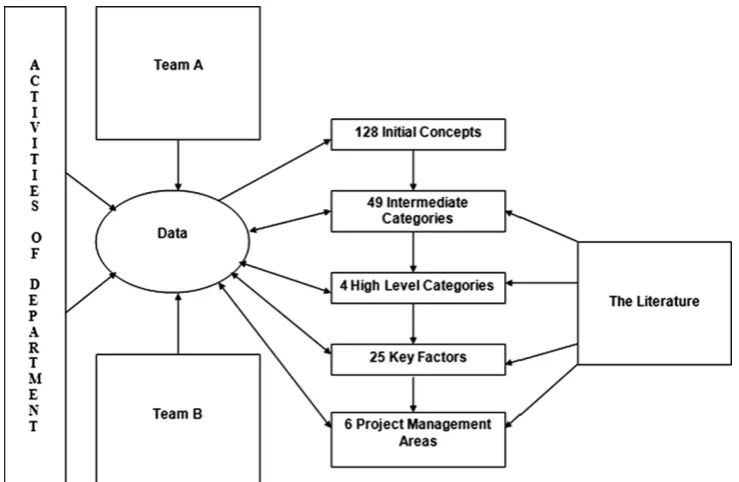
Fig. 2 Overview of the data gathering and analysis process
what was really going on. This was achieved by listening to what they said, seeing what they did, and how they did it and evaluating what was produced.
3.3 Data gathering and analysis
The data gathering process incorporated extensive docu-ment review and direct observation over an extended pe-riod. Numerous in dept interviews were carried out with 17 staff members over the lifetime of the study. These inter-viewed included the senior manager with responsibility for implementing the offshoring strategy, the senior staff engi-neer responsible for quality and two section managers who both managed virtual team projects. Two team coordina-tors, two trainers as well as senior and junior team members were also interviewed. Focus groups where held with both teams and questionnaire were completed. The data gathering process incorporated document review, direct observation, interviews, focus groups and questionnaire completion. This was carried out in accordance with sophisticated grounded theory principles. As the data was generated, it was an-alyzed, which incorporated memo writing, microanalysis, and open and axial coding. These were systematic and rigor-ous activities which resulted in the identification of 128 ini-tial concepts, which with further refinement were incorpo-rated into 49 intermediate categories. The intermediate cat-egories were evaluated and combined which resulted in the identification of four high level categories: Project Manage-ment, Communication, Culture, and Fear. These four high level categories were broad enough to incorporate all the as-pects of the intermediate categories identified. Based on the detailed analysis of the four high level categories and the
intermediate categories, 25 key factors were identified [43]. As a result of further analysis, six specific project manage-ment areas were identified which will be discussed in detail in the next section. An overview of the data gathering and analysis process is presented in Fig.2.
The results generated from this investigation needed to be interpreted, verified, and placed in context. To achieve this objective, the results which emerged from the analysis of the data were triangulated with the existing research and litera-ture in the areas of virtual team operation, Global Software Development (GSD), Software Process Improvement (SPI), project management practice and relevant aspects of orga-nizational theory. They were also presented, discussed, and verified with the relevant management and staff of Comput-ing US to ensure they were an accurate reflection of what had taken place.
4 Virtual team project management
for management to understand and handle the level of com-plexity involved in offshoring or outsourcing software de-velopment [56,57]. This is of particular importance when operating in a virtual team environment. As a result, there were specific issues which needed to be considered and ad-dressed.
Prior to implementing the virtual team strategy, the man-agement of the Irish-based division had only been responsi-ble for outsourcing and offshoring projects where effective partitioning of work had taken place [42]. This ensured there was a limited requirement for communication and coordina-tion between sites. This had been facilitated by the nature of the work which was self-contained, straightforward, and required only basic technical skills to be correctly executed. As a result, limited external supervision and minimum inter-action between staff at both locations was required. Where only straightforward outsourcing had been undertaken, a collocated project management strategy had proved success-ful. As one manager stated: “When we outsourced before we only sent over basic ‘grunt’ work that required very little collaboration on our part.”
In light of the problems which were experienced operat-ing the virtual teams it was clear the collocated project man-agement strategy had to be reassessed. When asked what was needed to improve the situation, a project manager stated: “I would have a good process, which was well de-fined and followed with clear roles and well coordinated”. The implications from this response were clear, these key elements were not in place and these issues needed to be ad-dressed. As with all well run projects, there was the require-ment to plan, monitor and control costs, time, and quality. However, in addition, there was also the need to plan, imple-ment, and monitor communication and coordination related activities with effective policies and procedures.
The impact of cultural diversity on the operation of the projects needed to be determined and addressed. A coherent team had to be developed from a culturally diverse and geo-graphically dispersed group who were required to work as a single unit to achieve specific goals [58]. There was a need for effective procedures to be put in place to facilitate and monitor the level of cooperation between team members in both locations. Procedures were required to be developed to identify and address these problems when they arose. There was a clear need for the development of trust between re-mote team members [59,60]. There was also a requirement for measures to address the palpable fear felt by many of the Irish-based virtual team members of losing their jobs to Malaysia. This was a serious ongoing problem which time did not decrease which needed to be acknowledged by man-agement and specific measures taken to address it. This out-come is mentioned here in summary form and has been dis-cussed at length in [47,48]. This has been corroborated by the outcome of an independent study undertaken in Finland where similar findings were identified [49].
There was a requirement for policies and procedures to be drawn up for the establishment and operation of vir-tual teams, which facilitated visibility into the activities and output of the respective team members at both locations. There was the need for the clear and unambiguous artic-ulation of roles and responsibilities for all team members. A clearly defined common vocabulary for key milestones, procedures, and processes needed to be produced and put in place which was clearly understood by team members at both locations [61]. To be effective, a successful virtual software team project management strategy needs to address monitor and control all these additional variables and areas. Given the importance that project management plays, this paper focuses on the management areas which the research identified as having a specific relevance to virtual software team operation. This was based on the detailed analysis of the twenty four key factors which emerged from the study with reference to the data and literature; see Fig.2. In this context, the six most important project management related areas which were identified are presented here. Each area is illustrated with at least one example from the specific cir-cumstances researched.
4.1 Organizational virtual team strategy
A key element for the success of any long-term organiza-tional strategy is the level of sustained support provided by senior management, for its implementation, and opera-tion [62]. To achieve effective support, it is essential that the success of such a strategy is directly linked to the attainment of organizational goals and objectives. With regard to the se-curing of the required support for a geographically distrib-uted virtual team strategy, it is important that the implemen-tation of such an approach will in fact allow the achievement of these organizational goals and objectives. The reason why and how this will be accomplished should be realistically de-fined and clearly articulated to senior management to gain and sustain their support [63]. It also needs to be recognized that in a number of situations, globally distributed software development has failed [64] or produced disappointing re-sults [65].
The potential for cost saving is often cited as a key factor for organizations embarking on such a strategy [17,53,66]. In the case researched, a respondent who had access to such information stated, the cost of a Malaysian engineer was half that of an Irish engineer. The reality was that this was not an accurate figure on which to base a comparison. The Irish-based team members had on average four or more years ex-perience within the organization. As a result, they had rel-evant technical knowledge, domain specific expertise, and experience which their Malaysian colleagues did not pos-sess.
the Irish engineers’ technical knowledge and extensive rel-evant experience, which was reflected in their productivity levels needed to be factored into the equation to provide a realistic comparison. It is equally important to appreciate that the Irish-based staff productivity advantage was time limited. The productivity gap between staff at both loca-tions would decrease as their Malaysian colleagues’ techni-cal knowledge and experience increased. The implementa-tion of an effective project management strategy would help to address this issue and speed the closure of this gap.
The wage and infrastructure costs are not the only ele-ments involved in the implementation of a virtual team strat-egy. Training, travel, productivity, and product quality costs need to be included. As this research also highlighted, there is the effect of additional factors such as fear and lack of mo-tivation that such a strategy can have on the staff at the out-sourcing location and the negative impact this can have on their level of cooperation and productivity [36]. There is also the possibility of the loss of key personnel at the outsourc-ing location as a result of implementoutsourc-ing this approach [67]. These factors all need to be considered when calculating the true cost of implementing such a strategy [47].
It is also very important from the project management perspective that true costs are calculated to ensure that an adequate budget is provided. Of equal importance is that se-nior management and stakeholders are correctly informed and have realistic expectations so that undue pressure is not placed on the project manager to try to achieve unrealistic results.
4.2 Risk management
It is recognized that there is a need for risk to be specifically incorporated into all well planned software projects [68,69]. This is a particularly relevant issue which needs to be specif-ically addressed in the virtual team environment. One of the key reasons outlined for the large number of failures of soft-ware projects in the nineteen nineties was directly attributed to the fact that managers did not correctly assess and manage risk [70]. Software development projects which are Globally distributed carry additional high-risk exposure [71]. These include the risk of delay or failure due to linguistic, cul-tural difference, fear, and motivational and temporal dis-tance which all need to be recognized and addressed [5,72]. This research highlighted the fact that the political risk of offshoring mission critical activities to remote locations was not considered by the management of Computing US. This emerged from detailed discussions which took place with senior management. They were unaware of the political sit-uation or history of Malaysia and the region in general [73]. While the potential for political, national, or international unrest may be small. It should never be ignored when mis-sion critical activities are involved. In these circumstances,
it is therefore important when identifying a location to off-shore or outsource to, that political risk is recognized and given due consideration when making such a decision. Even where this has been taken into consideration, contingency plans should be in place to address any potential problems which might arise in this area. This is particularly relevant given the current volatility of international relations.
This study also identified the risk involved in not un-derstanding the culture of remote team members. This was highlighted by the strategy of having the Malaysian staff work long hours because they seemed to be prepared to do them. This was directly due to their cultural reluctance to say no when asked to take on extra work [58]. A large number of Malaysian staff left the organization as a consequence of being over worked. This resulted in the loss of a large num-ber of personnel which the organization had invested time, effort, and money in training. Depending on the stage of the project when their departure took place this dictated the level of damage which such a strategy incurred. Having realized this, the Irish-based management had forbidden such prac-tices within their section. This was not the case with other divisions who were offshoring work to Malaysia and their engineers continued to work long hours which resulted in very high attrition rates and the loss of key personnel. As this research highlighted, this can be a risky, costly, and in-efficient strategy [58].
The virtual team strategy also had a negative impact on many of the Irish-based staff who feared their jobs would be offshored to Malaysia. This increased the risk of losing key personnel from the Irish division. The Irish staff were also seriously demotivated and this impacted on their pro-ductivity levels and their willingness to provide knowledge transfer and support to their colleagues in Malaysia [40].
In addition, communication, cooperation, visibility and coordination problems all negatively impacted on the pro-gress of the respective projects. The risks associated with all these issues should have been considered and addressed. In these circumstances it is clear that a collocated risk strategy which addressed the elements of a normal software devel-opment project were not adequate. As this study highlights, risk management requires additional effort and activities to successfully achieve its objectives in a globally distributed virtual team environment [22,74].
4.3 Infrastructure
problems associated with an inadequate remote telecommu-nication system impacted on routine commutelecommu-nication and particularly had a negative impact on training and knowl-edge transfer.
Once basic and effective infrastructure has been put in place, common tools for the locations involved should be sourced. This ensures the interoperability of cross-site oper-ations and artifacts. An essential element of an effective vir-tual team operation is the selection and implementation of a configuration management system. The importance of effec-tive configuration management in a globally distributed en-vironment is appreciated [9,30,61]. Within Computing US, an effective documented configuration management system was in place for all the relevant documentation and artifacts. However, it was observed that while respondents during this study were familiar with the concept of configuration man-agement, they were not familiar with the term, which was an unexpected outcome.
Provision was made for the supply and use of the same type of development tools at both locations. A relevant is-sue that arose in this area was that, while some tools are supported by the manufacturers in North America and Eu-rope they may not be covered when they are located else-where. This was highlighted when a piece of hardware sent to Malaysia from Ireland developed problems. The relevant project manager discovered that because of its location, it was no longer covered under its normal warranty. As a re-sult, the equipment had to be returned to Ireland to have it repaired. In these circumstances, it is important that when tools are being selected for use in the virtual team envi-ronment, that the situation regarding the geographical areas covered by the warranty is clarified. When necessary, addi-tional cover should be secured if available. Where this is not possible, alternative tools should be selected which have or can provide such cover.
Computing US provided a broad range of communica-tion tools such as telephone, e-mail, Instant Messenger, Net-Meeting, conference calls, and team Intranet websites. It was noted that the provision of communication tools on its own did not guarantee their use. That said they are essential and with proper motivation, training and management their effective use can be the lifeblood of a successful virtual team strategy [36].
A communication tool which was not available was video conferencing. A relevant sample of the respondents com-ments on this subject were as follows:
“If we had video conferencing I think that might help if we saw those people.”
“It is quite difficult with a conference call, which is just a phone call, when you have five people in a room and you are struggling with the accents in the first place. . .you may not understand. . .it is difficult to recognize who is talking.
. . .If that was coming through a web cam you could see who is talking.”
It is of interest to note that the desire for video conferenc-ing came from some of the respondents themselves. They clearly appreciated the difficulty of operating in an envi-ronment without the normal collocated visual contact with their remote colleagues. This was something that manage-ment did not understand and when the subject was discussed they expressed the view that video conferencing was not re-quired. Given the advances in video technology over recent years and the specific desire expressed by a number of en-gineers, this is something which should have been seriously considered. The project manager needs to ensure that the rel-evant tools and resources are available regardless of location to support all their team members so that they can effectively and efficiently complete their tasks.
4.4 Implementation of a virtual team process
Having insured adequate infrastructure is in place, the adop-tion of a common and effective virtual team process must be considered [30,36]. While in some globally distributed environments this approach might not be appropriate, for example, where collaboration is temporary and prompt re-sults are urgently required [61]. That said, it is a require-ment for the implerequire-mentation of virtual teams. In Comput-ing US, a virtual team process was not implemented and the collocated process was “exported from here (Ireland)”. The justification for this approach was that the Irish collocated process was effective and was tied to the tools and artifacts. However, given the nature of the virtual team environment, there was a specific requirement for the process to be re-assessed. “Organizations must reassess existing processes for use in a distributed work environment” [72]. This in-cludes the need for more formal methods of collaboration and communication given the loss of informal communica-tion methods [75]. This research has highlighted some prob-lems associated with these issues which include:
• Projects not having a formal system or mechanism for identifying remote team member’s skills, ability, and ex-perience.
• Team members not having a formal procedure or system for identifying subject matter experts.
• Team members not being informed of the status of remote colleagues’ progress.
• There was the need for agreement on how the work was to be carried out and the objective should have been the development of an effective shared and agreed modified process to achieve that goal. This should have been based on the specific requirements of the project and both loca-tions.
had simply been exported to Malaysia. Furthermore, it had not been modified in any meaningful way to take the vir-tual team environment into account. When discussing if the remote staff had any input into the process or if negotia-tions regarding the process had taken place, a project man-ager stated: “We exported the (Irish) process out to them and there was no negotiation, or need for negotiation.”
It was clear that exclusive ownership of the process lay with the Irish team members. This approach did nothing to develop an effective cooperative virtual team environment. Sole ownership of a software development process by team members at a single location in a virtual team setting can lead directly to the alienation of team members at the other location [36]. As a direct result, this can negatively impact on the whole area of virtual team cohesion and the long-term effectiveness of the virtual team strategy.
Good software practice recognizes that process owner-ship and development are best placed with those who are closest to the process [76]. This clearly was not the situation in this case. In these circumstances, the remote team mem-bers could have perceived their input as not being valued or pertinent. As stated previously, the Malaysians were part of a CMMI Level 5 division and Ireland was CMMI Level 3. Regardless, input was not sought from the Malaysian team members as to how the process could be improved. It is also of interest to note that the software process maturity lev-els of both divisions did nothing to address the specific vir-tual team related problems which were experienced. This is not surprising given current software process improvement models were not designed to address the specific require-ments of operating in a virtual team environment.
To address the issue of process, there was the need for the establishment of common goals, objectives and rewards across both sites. Clearly this had not taken place. A key ele-ment in impleele-menting such an approach is the developele-ment of dual ownership of the process. The input of staff at both locations should have been sought, encouraged and valued. There was a need for the process to be totally reengineered to incorporate these issues.
The requirement for the definition and implementation of a common vocabulary which included the clear defin-ition of artifacts and deliverables was evident. There was also the need for agreement across sites on the achievement of jointly formulated milestones [77] which had not taken place. A collaborative element which addressed these im-portant issues should have been incorporated into the devel-opment of a shared and agreed process, which specifically tackled the needs of the virtual environment in which it op-erated.
4.5 Team structure and organization
The implementation of an effective team and organizational structure is an important factor for the success of a virtual
team project management strategy. Establishing an organi-zational structure is the creation of roles, relationships and rules which can facilitate effective coordination and control. In the software industry, the overall objective of the imple-mentation of a collocated and virtual team structure is to fa-cilitate the successful management, coordination, and oper-ation of the teams to produce the required software artifacts. It is necessary in the virtual team environment that this struc-ture is cognitive of and addresses the additional variables that need to be considered. The importance of documenting this structure and providing access to this information is an important step. The purpose of this exercise is to allow staff at all locations to understand both their and other people’s roles and responsibilities within the project.
In Computing US, the options for the geographical dis-tribution and structure of the virtual teams were outlined by two project managers as:
“You have a choice you can either have a full remote team just managed from here (Ireland) for example. You can have a team that is half and half. You can have a team that is mostly here and a small number of the people remotely lo-cated”.
Another project manager outlined the structure of their team as: “. . . we have a very small (Irish) team, but a big Malaysian team so the balance is actually very right”. The balance of having a small number of Irish-based team mem-bers and a larger number of Malaysians was what was con-sidered the ideal objective. The project manager went on to outline the rationale for implementing such an approach: “The strategy is to utilize and leverage the local (Irish) expe-rience and combine that with cheap and more efficient labor costs in Malaysia that is what we are trying to do”.
The ‘very right’ size of the teams researched equated to around 8 team members based in Ireland and 19–20 in Malaysia. Size is an important element in virtual team op-eration. Virtual teams are in general larger than collocated teams [30].
Overall team size can impact directly on the effective op-eration of a virtual team [78]. Equally the number of vir-tual team members at specific locations can negatively im-pact on team relations, cooperation, and knowledge trans-fer [47,67]. This was highlighted in this research by the fears expressed by many of the team members in Ireland, at the large number of team members based in Malaysia. This was perceived by them as the precursor to the loss of their jobs to their Malaysian colleagues [48].
When this is the case, the size of the remote team can have a negative impact on the efficiency of the operation of the team as a whole. It also places particular pressure on the team members at the outsourcing/offshoring location, who are expected to provide support to a large number of inex-perienced remote colleagues. This is particularly relevant, when there is limited opportunity for synchronous commu-nication.
4.6 Conflict management
The importance of conflict management for effective soft-ware team operation and particularly in a virtual team set-ting is recognized [17,34,79,80]. When the respondents discussed a procedure or method for conflict resolution with regard to the operation of the virtual teams, a typical reply was:
“If you asked the question I would say people would prob-ably say ‘I don’t know’. There is probprob-ably an official proce-dure there somewhere. I think it is a personality thing. Some people tend to be aggressive and go in there straight for the jugular ‘Why is this not done?’ Other people will be there saying look he or she is not doing this. It will depend on the person involved, it is a personal thing”.
In the collocated situation, an informal procedure had been in place, where if an individual could not resolve an issue or/and there was serious conflict with another member of staff, they contacted their project manager directly. This step was only undertaken in very serious situations:
“I am not too sure whether people generally go to their project manager. You might try sort it out yourself or men-tion it to someone and say what should I do? I suppose if you were not getting anywhere with it you would go to your Manager as a last resort”.
When discussing the matter with a project manager, they further outlined the conflict resolution mechanism that had been in place. “In reality you have to gauge it by the people, depending on who the people are. Depending on the con-flict involved and the situation. In some cases, I have had situations where the two people literally work it out them-selves by just having a discussion about it. In other cases, the right thing to do is just to keep the two people apart and have them work in different areas. I have seen different ap-proaches working and I have seen different apap-proaches not working”.
This strategy may well have been effective in a collocated situation where staff have the opportunity for regular face-to-face contact and on that basis could work their problems out, but this is not the case with remote members within vir-tual teams. In this setting, “there must be some mechanism for handling conflict resolution and someone who decides that resolution” [9].
It is also important to remember that there are differ-ent types and levels of conflict. Some are open and easy
to recognize. There is also another type of conflict which is not blatant, but is still there festering. This was particu-larly relevant in the case researched given the uncooperative and on occasions obstructive behavior of some of the Irish-based team members toward their Malaysian colleagues, due to their fears for their jobs [47]. This was compounded by the Malaysians cultural aversion to conflict and their reluc-tance to express their opinions or even openly disagree with their Irish colleagues [58]. When unreasonable requests or behavior was experienced, their approach was to ignore it, rather than confront it. This had particular relevance to the effectiveness of the informal procedure which was in place, which a project manager went on to outline as follows:
“With reference to the remote sites an informal procedure exists. There is an escalation procedure, which is specific to the project. It depends if it is a personal thing, or ‘I can-not continue my project because I am can-not getting a response from this person’. That would come up as part of the weekly report we get from the team in Malaysia. As part of that they would highlight any risks, any issues and stuff like that. You know if they were not getting any feedback they could high-light it as part of the issues that this feature is impacting on—there is no formal mechanism”.
It has to be stated the project managers were concerned to do their best, but the reality was that the procedure was not adequate. It should also be stated that the project man-agers had not received any training in the culture of their re-mote team members so it was a case of learning as they went along. The latter statement that there was no formal mech-anism in place summed up the reality of the situation. This along with the other factors and areas outlined, highlighted the requirement for the whole process to be re-evaluated based on the specific needs of operating in a virtual team environment. This needed to be undertaken with the objec-tive of addressing the specific requirements of staff in both locations.
5 Conclusion
The implementation of a globally distributed information systems development strategy is not a straightforward or an easy task. There are many factors which arise due to geo-graphical, cultural, linguistic and temporal distance which are inherent to its implementation and operation. These all have particular relevance for the successful establishment and operation of virtual teams who by their very nature are exposed to the full impact of these issues. In this context, virtual team project managers have to ensure that they are aware of these factors and their full implications.
in the global environment have been presented. In this con-text, a key point which has been highlighted is that strate-gies, processes, and procedures which have been utilized successfully for the management of collocated software de-velopment teams, need to be revised and modified to meet the specific requirements of effectively managing a virtual team.
In addition, to implement an effective virtual team project management strategy, management not only need to be cog-nitive of the additional and complex issues which have been highlighted. It is also required that specific measures are taken to address them. This necessitates a change of em-phasis and orientation in the implementation of a project management strategy. It is also recognized that the six ar-eas highlighted here are not the only issues which need to be considered and other issues have been discussed.
On a related point it is of interest to note that even though the management and staff of the Irish division of Comput-ing US had been offshored to for a long period of time they showed no particular insight or understanding when it came to offshoring their work. In fact, they treated their re-mote colleagues in a similar way as they had been treated. It emerged from this case study that previously the nega-tive impact of such treatment had been minimized in the Irish context due to the cultural and linguistic similarities between those offshoring and receiving the work. In that sit-uation, the Irish-based management and staff were well able to demand the information and support required to complete their projects from their often uncooperative US-based col-leagues. This resulted in the negative impact of such treat-ment being minimized.
It is important to note the role of a project manager in the virtual software team situation is not simply to manage, monitor and coordinate team activities and artifacts as it is in the single site environment. To be effective, a success-ful project management virtual software team strategy must address the specific requirements of this dynamic environ-ment [63]. The process employed must be amended to take account of the globally distributed nature of virtual software teams.
5.1 What are the limitations of this study?
The limitations of this study are recognized, it was carried out over a specific time period of 3 years. This took place in a single organization and within a specific software domain. It also only focused on the operation of virtual teams with members in two countries. Having acknowledged this, it is important to state this research has focused on what can be learned which would be of value to the software industry as a whole. This was done rather than focusing on formulating solutions to meet the specific requirements of Computing US.
The limitations of the generalizing case study research are understood. That said, this study should still be of value to the GSD and virtual software team community. Its find-ings have been validated by previous and subsequent re-search and it has provided a solid basis on which a number of additional research projects have been undertaken.
5.2 Further work
It is important to state that the responsibility for success-ful software project management is not the sole domain of one or more individual project managers. It is the respon-sibility of the management team as a whole, which includes senior management, coordinators as well as the project man-agers. It requires a concerted effort from all those involved to address and indeed leverage the issues that directly impact on the operation of the virtual team to successfully manage and effectively deliver a virtual team based project. To this end, the results from this study and the other studies under-taken by the author have been utilized to develop a GSD Implementation Model [57]. The objective of the creation and presentation of this model has been to provide a practi-cal and systematic approach to address the key activities, infrastructure and support which are required to facilitate effective management of distributed software development project [63].
Based on the results from this study the relevance of un-dertaking broader research in the area of the experience of recipients of offshored or outsourced software projects was recognized. It was therefore considered of value to under-take research which focused on the perspective of the re-cipients of this work in a broader geographical context. In particular, it was considered pertinent, to focus on the per-spective and experience of Indian managers. As a result, re-search has been undertaken with personnel from two large Indian based software organizations and one small Indian software company [81,82]. This research is currently ongo-ing.
Acknowledgements This research has been is supported in part by the Science Foundation Ireland (SFI) Stokes Lectureship Programme, grant number 07/SK/I1299, the SFI Principal Investigator Programme, grant number 08/IN.1/I2030, and Bournemouth University.
References
1. Lamersdorf A, Jürgen M, Dieter R (2009) A survey on the state of the practice in distributed software development: criteria for task allocation. Presented at the 4th IEEE international conference on global software engineering (ICGSE) 2009, Limerick, Ireland 2. Ågerfalk PJ, Fitzgerald B, Holmström Olsson H, Ó Conchúir
E (2008) Benefits of global software development: the known and unknown. Presented at international conference on software process, ICSP 2008, Leipzig, Germany
3. O’Brien JA (2002) Management information systems managing information technology in the business enterprise, 6th edn. Mc-Graw Hill, New York
4. Toaff SS (2002) Don’t play with “mouths of fire,” and other lessons of global software development. Cutter IT J 15:23–28 5. Prikladnicki R, Audy JLN, Evaristo R (2003) Global software
de-velopment in practice lessons learned. Softw Process Improv Pract 8:267–279
6. Slaughter S, Ang S (1996) Employment outsourcing in informa-tion systems. Commun ACM 39:47–54
7. Carmel E, Tjia P (2005) Offshoring information technology: sourcing and outsourcing to a global workforce. Cambridge Uni-versity Press, Cambridge
8. Herbsleb JD (2007) Global software engineering: the future of socio-technical coordination. Presented at Future of Software En-gineering (FOSE’07), Minneapolis, MN, USA
9. Karolak DW (1999) Global software development: managing vir-tual teams and environments. IEEE Computer Society Press, Los Alamitos
10. Clerc V, Lago P, van Vliet H (2007) Global software development: are architectural rules the answer? Presented at second IEEE inter-national conference on global software engineering ICGSE 2007, Munich
11. Hayes IS (2002) Ready or not: global sourcing is in your IT future. Cutter IT J 15:5–11
12. Ashish A, Gambardella A (2005) The globalization of the software industry: perspectives and opportunities for developed and devel-oping countries. In: Jaffe AB, Lerner J, Stern S (eds) Innovation policy and the economy, vol 5. MIT Press, Cambridge, pp 1–32 13. Geer D (2006) Software developer profession expanding. IEEE
Softw 23:112–115
14. Herbsleb JD, Moitra D (2001) Global software development. IEEE Softw 18:16–20
15. Ebert C, De Neve P (2001) Surviving global software develop-ment. IEEE Softw 18:62–69
16. Lanubile F, Damian D, Oppenheimer HL (2003) Global software development: technical, organizational, and social challenges. SIGSOFT Softw Eng Notes 28:1–4
17. Davidson EJ, Tay ASM (2003) Studying teamwork in global IT support. Presented at in the proceedings of the 36th Hawaii inter-national conference on systems science, Kona-Kailua, HI 18. Davidow WH, Malone MS (1992) The virtual corporation.
Ed-ward Brulingame Books/Harper Business, New York
19. Powell A, Piccoli G, Ives B (2004) Virtual teams: a review of cur-rent literature and direction for future research. DATA BASE Adv Inf Syst 35:6–36
20. Lipnack J, Stamp J (1997) Virtual teams: reaching across space, time and originating with technology. Wiley, New York
21. DeSanctis G, Staudenmayer N, Wong SS (1999) Interdependence in virtual organizations, vol 6. Wiley, Chichester
22. Casey V, Richardson I (2006) Project management within virtual software teams. Presented at the 1st IEEE international conference on global software engineering, Florianopolis, Brazil
23. Boehm BW, Ross R (1989) Theory-W software project manage-ment principles and examples. IEEE Trans Eng Manag 15:902– 916
24. Wiegers KE (2002) 21 project management success tips. In: Reifer DJ (ed) Software management. IEEE Computer Society, Los Alamitos, pp 171–181
25. Gilb T, Finz S (1988) Principles of software engineering manage-ment. Addison-Wesley, Wokingham
26. Reifer DJ (2002) Traditional software management approaches. In: Reifer DJ (ed) Software management, 6th edn. IEEE Computer Society, Los Alamitos, pp 137–148
27. Summerville I (2001) Software engineering. Pearson Education, Harlow
28. Weihrich H (2000) Management: science, theory and practice. In: Thayer RH (ed) Software engineering project management, 2nd edn. IEEE Computer Society Press, Los Alamitos, pp 4–13 29. Oshri L, Kotlarsky J, Willcocks L (2008) Missing links:
collab-orative builidng social ties for global teamwork. Commun ACM 51:76–81
30. Carmel E (1999) Global software teams: collaboration across bor-ders and time zones. Prentice Hall, Saddle River
31. Paré G, Dubé L (1999) Virtual teams: an exploratory study of key challenges and strategies. Presented at proceeding of the 20th the international conference on information systems, Charlotte, North Carolina, United States
32. Carmel E, Agarwal R (2001) Tactical approaches for alleviating distance in global software development. IEEE Softw 1:22–29 33. Herbsleb JD, Mockus A (2003) An empirical study of speed
and communication in globally distributed software development. IEEE Trans Softw Eng 29:481–494
34. Damian DE, Zowghi D (2003) An insight into the interplay be-tween culture, conflict and distance in globally distributed require-ments negotiations. Presented at proceedings of the 36th interna-tional conference on systems sciences (HICSS’03), Hawaii 35. Ågerfalk PJ, Fitzgerald B, Holmström H, Lings B, Lundell B,
Ó Conchúir E (2005) A framework for considering opportunities and threats in distributed software development. Presented at inter-national workshop on distributed software development (DiSD), Paris, France
36. Casey V, Richardson I (2004) Practical experience of virtual team software development. Presented at European Software Process Improvement (Euro SPI), Trondheim, Norway
37. Paasivaara M, Lassenius C (2003) Collaboration practices in global inter-organizational software development projects. Softw Process Improv Pract 8:183–199
38. Beise CM (2004) IT project management and virtual teams. Pre-sented at proceedings of the 2004 SIGMIS conference on com-puter personnel research: careers, culture, and ethics in a net-worked environment, Tucson, AZ, USA
39. Rutkowski AF, Vogel DR, Van Genuchten M, Bemelmans TMA, Favier M (2002) E-collaboration: the reality of virtuality. IEEE Trans Prof Commun 45:219–230
40. Casey V, Richardson I (2006) Uncovering the reality within virtual software teams. Presented at first international workshop on global software development for the practitioner, Shanghai, China 41. Lutz B (2009) Linguistic challenges in global software
develop-ment: lessons learned in an international SW development divi-sion. In: The 4th IEEE international conference on global software engineering. IEEE, Limerick
43. Casey V (2009) Software testing and global industry: future para-digms. Cambridge Scholars Publishing, Newcastle
44. Kotlarsky J, Oshri I (2005) Social ties, knowledge sharing and suc-cessful collaboration in globally distributed system development projects. Eur J Inf Syst 37–48
45. Whitaker K (1997) Motivating and keeping software developers. Computer 30:126–128
46. Herbsleb JD, Mockus A, Finholt TA, Grinter RE (2001) An em-pirical study of global software development: distance and speed. Presented at proceedings of the 23rd international conference on software engineering, 2001, ICSE 2001, Toronto, Canada 47. Casey V, Richardson I (2008) The impact of fear on the operation
of virtual teams. Presented at the 3rd IEEE international confer-ence on global software engineering, Bangalore, India
48. Casey V, Richardson I (2008) Virtual teams: understanding the impact of fear. Softw Process Improv Pract 13:511–526 49. Piri A, Niinimäki T, Lassenius C (2009) Descriptive analysis of
fear and distrust in early phases of GSD projects. In: The 4th IEEE international conference on global software engineering. Limer-ick, Ireland
50. Boden A, Avram G, Bannon L, Wulf V (2009) Knowledge man-agement in distributed software development teams—does culture matter? In: IEEE international conference on global software en-gineering. IEEE, Limerick
51. Krishna S, Sahay S, Walsham G (2004) Managing cross-cultural issues in global software outsourcing. Commun ACM 47:62–66 52. Tallon PP, Kraemer KL (1999) The impact of technology on
Ire-land’s economic growth and development: lessons for developing countries. In: Hawaii international conference on system sciences. IEEE, Maui
53. Sahay S, Nicholson B, Krishna S (2003) Global IT outsourc-ing: software development across borders. Cambridge University Press, Cambridge
54. Yin RK (1994) Case study research / design and methods, 2nd edn, vol 5. Sage, Thousand Oaks
55. Strauss A, Corbin J (1998) Basics of qualitative research: tech-niques and procedures for developing grounded theory, 2nd edn. Sage, Thousand Oaks
56. Jonsson N, Novosel D, Lillieskold J (2001) Successful manage-ment of complex, multinational R&D projects. Presented at pro-ceedings of the 34th annual Hawaii international conference on system sciences, Maui, HI
57. Casey V, Richardson I (2008) A structured approach to global soft-ware development. Presented at European systems and softsoft-ware process improvement and innovation, Dublin, Ireland
58. Casey V (2009) Leveraging or exploiting cultural difference? In: The 4th IEEE international conference on global software engi-neering (ICGSE). IEEE, Limerick
59. Keyzerman Y (2003) Trust in virtual teams. Presented at IEEE international professional communication conference, 2003, Or-lando, Florida, USA
60. Moe NB, Šmite D (2008) Understanding a lack of trust in global software teams: a multiple-case study. Softw Process: Improv Pract 13:217–231
61. Battin RD, Crocker R, Kreidler J, Subramanian K (2001) Leverag-ing resources in global software development. IEEE Softw 1:70– 77
62. Humphrey WS (1989) Managing the software process. Addison-Wesley, Reading
63. Casey V, Richardson I (2009) Implementation of global soft-ware development: a structured approach. Softw Process Improv Pract 14
64. Laplante PA, Costello T, Singh P, Bindiganavile S, Landon M (2004) The who, what, why, where and when of IT outsourcing. IT Profess 6:19–23
65. King WR (2001) Developing a sourcing strategy for IS: a behav-ioral decision process and framework. IEEE Trans Eng Manag 48:15–24
66. Bass M, Paulish D (2004) Global software development process research at Siemens. Presented at proceedings of the international workshop on global software development, international confer-ence on software engineering, Edinburgh, Scotland
67. Casey V, Richardson I (2005) Virtual software teams: overcoming the obstacles. Presented at 3rd world congress for software quality, Munich, Germany
68. Henry J (2003) Software project management: a real-world guide to success. Addison-Wesley, Boston
69. van Vliet H (2000) Software engineering: principles and practice, 2nd edn. Wiley, Chichester
70. Keil M, Cule PE, Lyytinen K, Schmidt RC (1998) A framework for identifying software project risks. Commun ACM 41:76–83 71. Ebert C, Parro C Hernandez, Suttels R, Kolarczyk H (2001)
Im-proving validation activities in a global software development. Presented at proceedings of the 23rd international conference on software engineering, Toronto, Ontario, Canada
72. Nidiffer KE, Dolan D (2005) Evolving distributed project man-agement. IEEE Softw 22:63–72
73. Rabasa A (2001) The changing political-military environment southeast Asia. In: The United States and Asia: toward a new US strategy and force posture, monograph/reports. Rand, Santa Mon-ica, pp 163–202
74. Prikladnicki R, Audy JLN, Evaristo R (2004) A reference model for global software development. Presented at the 5th IFIP work-ing conference on virtual enterprises, Toles
75. Herbsleb JD, Grinter RE (1999) Architectures, coordination, and distance: Conway’s law and beyond. IEEE Softw 16:63–70 76. Fitzgerald B, O’Kane T (1999) A longitudinal study of software
process improvement. IEEE Softw 16:37–45
77. Paulk MC, Weber CV, Curtis B, Chrissis MB (1997) The capabil-ity maturcapabil-ity model: guidelines for improving the software process. Addison-Wesley, Reading
78. Bradner E, Mark G, Hertel TD (2003) Effects of team size on participation, awareness, and technology choice in geographically distributed teams. Presented at proceedings of the 36th annual Hawaii international conference on system sciences, Hawaii 79. Sabherwal R (1999) The role of trust in outsourced IS
develop-ment projects. Commun ACM 42:80–86
80. Paul S, Seetharaman P, Samarah I, Mykytyn P Jr. (2005) Under-standing conflict in virtual teams: an experimental investigation using content analysis. Presented at proceedings of the 38th an-nual Hawaii international conference on system sciences, Hawaii 81. Casey V, Despande S, Richardson I (2008) Outsourcing software
development the remote project manager’s perspective. Presented at second information systems workshop on global sourcing, ser-vices, knowledge and innovation, Val d’Isére, France
82. Deshpande S, Richardson I (2009) Management at the outsourc-ing destination—global software development in India. Presented at the 4th IEEE international conference on global software engi-neering (ICGSE), Limerick, Ireland
83. Richardson I, Casey V, Burton J, McCaffery F (2010) Global software engineering: a software process approach. In: Mistrík I, Grundy J, Hoek A, Whitehead J (eds) Collaborative software en-gineering. Springer, Berlin