144
International Journal of Pharmaceutical Sciences and Drug Research
2016; 8(3): 144-148
Research Article
CODEN (USA): IJPSPP
ISSN: 0975-248X
Computational Studies of Synthetic and Plant-Derived Compounds against
Cardiovascular Disease Targets
N. Jauhari, S. Gupta, S. Saxena, N. Bharadvaja
*Department of Biotechnology, Delhi Technological University (formerly Delhi College of Engineering), Delhi, India
ABSTRACT
Knowledge of cardiovascular diseases and improved diagnostic capacity is rapidly expanding with the advancement of medical sciences. However, heart diseases are a challenge to human life. Few important therapeutic targets for cardiovascular diseases were collected from mining of various bibliographic sources. Different proteins and bioactive small molecules are taken into consideration for target search. From ancient times, medicinal plants are shown to have remedial effect on cardiovascular system of human body, yet their modes of action are not completely understood till now. Selected plant derivatives, which have been examined under in vitro conditions to be effective against various heart diseases, were subjected to molecular docking with proposed targets using a bioinformatics tool, Hex 8.0. We have explored eight targets for five types of cardiovascular diseases and ten different ligands from herbal plants with a brief description about the cardiovascular diseases, their symptoms, target, ligand, source of the ligand and their mechanism of action. All the reported synthetic and phytocompounds were found to have good binding energies with all potential disease targets. Among all, Forskolin is found to be the best inhibitor of Angiotensin II type I receptor with the E-score of -369.96 for Atherosclerosis.
Keywords: Molecular docking; cardiovascular; Hex; phytocompounds.
INTRODUCTION
Cardiovascular diseases (CVD) are the group of disorders of heart and circulation, responsible for premature death. CVDs include: ischemic heart disease (IHD), stroke, hypertensive heart disease, rheumatic heart disease (RHD), aortic aneurysms, cardiomyopathy, atrial fibrillation, congenital heart disease, endocarditis, and peripheral artery disease (PAD). Risk factors of CVDs are mainly unhealthy diet, lack of physical activity, high blood pressure, high blood cholesterol, diabetes, smoking, obesity and
*Corresponding author: Dr. N. Bharadvaja,
Delhi Technological University (formerly Delhi College of Engineering), New Delhi-110042, India; Tel.: +91-9868446613; E-mail: [email protected]
Received: 28 March, 2016; Accepted: 10 May, 2016
Int. J. Pharm. Sci. Drug Res. May-June, 2016, Vol 8, Issue 3 (144-148)
Atherosclerotic or coronary heart disease includes symptoms like stable and unstable angina, myocardial infarction as well as sudden artery death. Myocardial Ischemia (MI), a heart condition, occurs through decreased blood flow to the myocardium due to a partial or complete blockage of coronary arteries. Blood clotting disorder is the condition of shock and possible death when the loss of blood from the damaged or cut blood vessels was not stopped.
CVDs are the consequence of multiple pathogenic factors, reflecting the changed interaction between interconnected genes and their products. A number of chemicals, synthetic drugs, NSAIDs have been used to cure CVDs but demand for compounds with lesser side effects is increasing. In addition to the tremendous growth of biochemical data and the progress of network pharmacology, the analysis of mechanisms of action of medicinal herbs at in silico level has become possible. Walker (1996) has reviewed plant foods and extracts for prophylactic and curative effects in reducing cardiovascular disease. [1] Table 1 shows all
studied targets their ligands, source of ligand and their corresponding associated diseases.
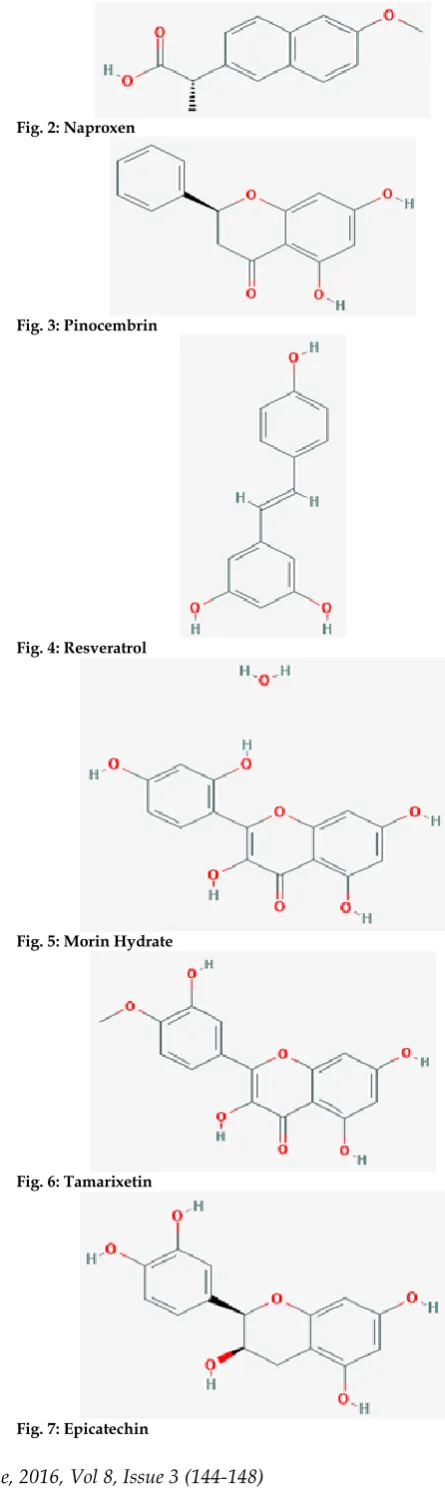
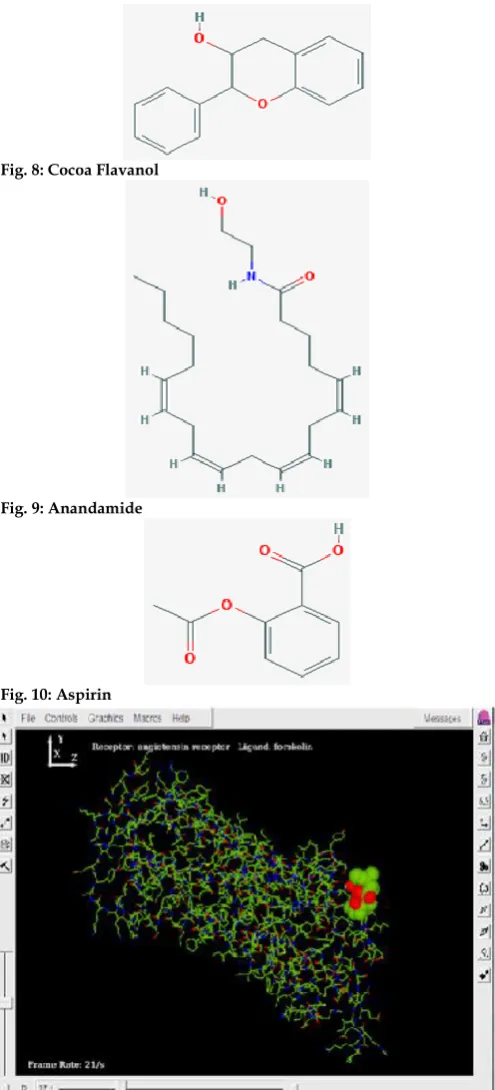
Literature survey reveals that the majority of current CVD drugs develop adverse effects. On the contrary, natural and few industrially produced compounds contain the remedial properties without any harmful effects on human being even after long-term use. These compounds can play a vital role in the production of novel treatment amenity for cardiovascular diseases. Therefore, objective of the present study is to identify the inhibitors having the potential to inhibit various targets of cardiovascular diseases and explore their interaction capability with selected ligands. In the present study, we worked on eight potential molecular targets for five types of cardiovascular diseases and docked them with ligands of medicinal plants and safe synthetic compounds to test their binding affinity for probable phytomedicine as well as synthetic but harmless drug for humans. The selected ligands are Forskolin (Fig. 1), Naproxen (Fig. 2), Pinocembrin (Fig. 3), Resveratrol (Fig. 4), Morin hydrate (Fig. 5), Tamarixetin (Fig. 6), Epicatechin (Fig. 7), Cocoa flavanols (Fig. 8), Cannabidoids (Anandamide) (Fig. 9) and Aspirin (Acetylsalicyclic acid) (Fig. 10). Except naproxen and aspirin all are plant-derived compounds. Various bioinformatics tools like Swiss prediction, Hex, OpenBabel Graphical User Interface (GUI), various databases (uniprot, PDB, RCBS, NCBI), pc3 viewer and argus lab have been used to explore the findings.
Fig. 1: Forskolin
Fig. 2: Naproxen
Fig. 3: Pinocembrin
Fig. 4: Resveratrol
Fig. 5: Morin Hydrate
Fig. 6: Tamarixetin
Int. J. Pharm. Sci. Drug Res. May-June, 2016, Vol 8, Issue 3 (144-148)
Fig. 8: Cocoa Flavanol
Fig. 9: Anandamide
Fig. 10: Aspirin
Fig. 11: Docked complex of ATR and Forskolin (red and green balls)
MATERIALS AND METHODS
Inverse (or reverse) docking (for target prediction) Molecular docking is a computational process, which helps to determine the energy associated with a ligand-target complex and how the energy level changes according to configuration in the form of E values. Once the genes responsible for causing diseases are found, it would be possible to design lead molecules, which could modulate those genes or their protein products. The growth in the number of 3D structure databases of proteins eg. PDB and the increase in computing power have made virtual screening of lead
molecules an easier and faster process. However, in reverse docking, protein targets are searched, which can bind to a specific known ligand. The procedure is as follows -a compound with known biological activity is docked to the binding sites of all 3D structures of proteins in a given database. Protein ‘hits’ identified from this docking can further be used as potential candidates for validation. This approach is referred to as reverse docking. The software that was used to do reverse docking was SwissTargetPrediction.
Ligand preparation
The 3D structures of the 10 plant derived compounds were obtained from PubChem in PDB format. The ligands were available in XML, SDF, JSON and ASN.1 formats. Most structures were obtained in SDF format. These conformations were used as starting conformations to perform docking. [2]
Target preparation
Most appropriate targets were obtained through Swiss target search. Secondary research via literature survey has been done for the validation of the selected targets. Target structures were obtained from Protein Data Bank in PDB format. Targets were downloaded in such a way that heteroatoms like water, ions etc. were not present and they did not complex with other bioactive molecules. Those structures, which were found complexes with other bioactive molecules, were individually modeled using SWISS MODEL. It uses the FASTA format of protein sequences. [2]
Ligand visualization
The ligand and target in the PDB format were visualized in Argus Labs [3] and in PC3 viewer.
ArgusLab and PC3 viewer are both freely licensed. The structure files obtained from ChemSketch, Pubchem were not in PDB format. They were converted to PDB format using OpenBabel. Molecular Docking technique was done using Hex 8.0.0 with 10 plant-derived compounds. Hex is an interactive molecular graphics program used for calculating and displaying feasible docking pairs of protein-DNA or, protein-ligand molecules, assuming the ligand is rigid.
RESULTS AND DISCUSSION
Each compound was docked to the same or a different target. In order to compare docking interactions between selected natural compounds and the known inhibitor/activators (as required) of each target, docking was also performed with specific compounds that are reported to have activity against the studied targets, via previous studies. Table 2 shows the E-score of all interactions.
Int. J. Pharm. Sci. Drug Res. May-June, 2016, Vol 8, Issue 3 (144-148)
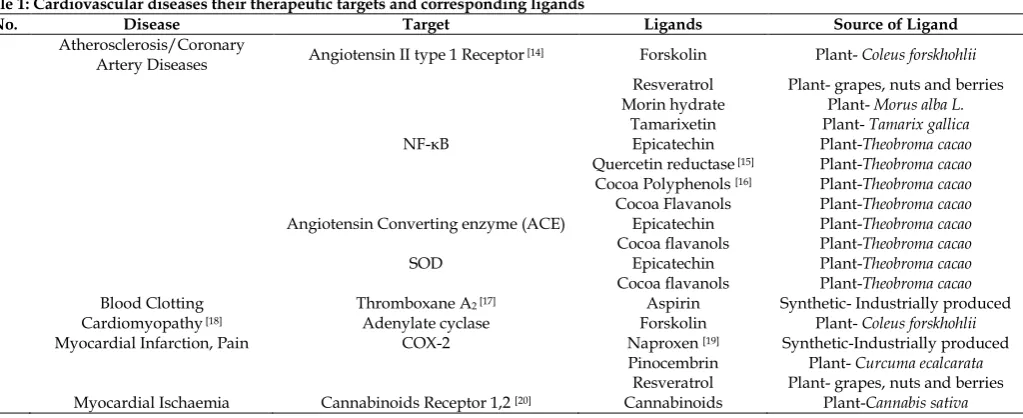
Table 1: Cardiovascular diseases their therapeutic targets and corresponding ligands
S. No. Disease Target Ligands Source of Ligand
1 Atherosclerosis/Coronary Artery Diseases Angiotensin II type 1 Receptor [14] Forskolin Plant- Coleus forskhohlii
Resveratrol Plant- grapes, nuts and berries
Morin hydrate Plant- Morus alba L.
Tamarixetin Plant- Tamarix gallica
NF-κB Epicatechin Plant-Theobroma cacao
Quercetin reductase [15] Plant-Theobroma cacao Cocoa Polyphenols [16] Plant-Theobroma cacao
Cocoa Flavanols Plant-Theobroma cacao
Angiotensin Converting enzyme (ACE) Epicatechin Plant-Theobroma cacao
Cocoa flavanols Plant-Theobroma cacao
SOD Epicatechin Plant-Theobroma cacao
Cocoa flavanols Plant-Theobroma cacao
2 Blood Clotting Thromboxane A2 [17] Aspirin Synthetic- Industrially produced
3 Cardiomyopathy [18] Adenylate cyclase Forskolin Plant- Coleus forskhohlii
4 Myocardial Infarction, Pain COX-2 Naproxen [19] Synthetic-Industrially produced
Pinocembrin Plant- Curcuma ecalcarata
Resveratrol Plant- grapes, nuts and berries
5 Myocardial Ischaemia Cannabinoids Receptor 1,2 [20] Cannabinoids Plant-Cannabis sativa
Table 2: E-score of all docking interactions performed for cardiovascular disorders
S. No. Targets Ligands Total E-score
1 Adenylate cyclase Forskolin -313.3
2 Angiotensin II type 1 Receptor Forskolin -369.96 11] [Figure
3 Angiotensin Converting enzyme
Anthocynidine
reductase -769.9
4 Cannabinoids Receptor 1,2 Anandamide -344.4
5 COX-2 Naproxen -289
Resveratrol -351.0
Pinocembrin -286.97
Resveratrol -280.5
Morin hydrate -325.3
6 NF-KB Anthocynidine reductase -245.4
Quercetine
reductase -325.6
7 SOD Anthocynidine reductase -879.1
8 Thromboxane A2 Aspirin -132.85
Forskolin elicited marked accumulations of cyclic AMP in rat cerebral cortical slices. [4] Naproxen binds to
cyclooxygenase-2 (COX-2) with good interaction energy. All three ligands have been reported as inhibitors of COX-2. The inhibitors suppressed the formation of prostaglandin I2 as COX-2 was the source
of prostaglandins E2 and I2, which mediate
inflammation. [5] The selective inhibition of this target
has been shown to relieve patients of myocardial infections. AT1 (Angiotensin II type 1 receptor) is a well-known vasconstrictor, which causes blood vessels to constrict thereby causing hypertension. Angiotensin II receptor blockers (ARBs) prevent ligand angiotensin II to bind these receptors on blood vessels, providing relief in atherosclerosis. [6] Here, many plant derivatives
were found to play this role. Forskolin, Resveratrol, and Morin hydrate have good binding with AT1. Forskolin is found to be the best inhibitor among all docked ARBs. Fig. 11 shows docked complex of angiotensin II type I receptor and Forskolin (red and green balls). Binding of Anthocynidine reductase to SOD leads to its
activation. SOD is produced in more amounts. E-score of this interaction is good interaction. In vivo interaction between ROS and RNS, results in the formation of peroxynitrite (a powerful oxidant). [7] The reaction
between SOD and reactive oxygen species prevents interaction between ROS and NO. Thus, maintaining concentration of NO that is a vasorelaxant. [8] This is
beneficial against atherosclerosis. Another target in Atherosclerosis is angiotensin converting enzyme (ACE). Angiotensin-converting enzyme (ACE) inhibitors interfere with the formation of Angiotensin II that can constrict blood vessels. ACE inhibitors lower B.P. and reduce the workload on the heart, which lowers the chances of heart attack. Anthocynidine reductase showed good inhibition when complexes with ACE. Anandamide, an endocannabinoids was docked with CB receptor 1 and resulting complex showed inhibition of the receptor. Cannabinoids provide protective role in atherosclerosis progression and in cerebral and myocardial ischemia. [9-11]
Anandamide limits infarct size induced by ischemia-reperfusion injury and the pharmacological profile of this response fails to match with any of the previously known mechanisms of cannabinoid action. [12]
Thromboxane-A2 is the therapeutic target of blood
clotting disorder [13] and its ligand Aspirin is helpful in
giving relief from skeletal pain, viz. arthritis, fever (antipyretic), prevents platelet coagulation (thus used for preventing heart attacks) and inhibits prostaglandin synthesis. As such, its role is being studied in diseases where blood clotting blocks vessels. Binding with target thromboxane A2 is noticed as least effective.
Int. J. Pharm. Sci. Drug Res. May-June, 2016, Vol 8, Issue 3 (144-148)
studied docked complexes can be referred for development of potential drugs for cardiovascular diseases. Experimented computational technique is faster than the traditional drug designing method, cheaper and less laborious. Results of this investigation can further be utilized for the development of safe and potent herbal and synthetic drug after in vivo studies and clinical trials to the benefit of humankind.
ACKNOWLEDGEMENT
We would like to thank Vice Chancellor of Delhi Technological University and Head of Department of Department of Biotechnology, for providing the facility and support to conduct the research work.
REFERENCES
1. Walker AF. Of Hearts and Herbs. Biologist. 1996; 43: 177-180. 2. Lisina KV, Piramanayagam S. An in-silico Study on
Thymoma with Inhibitors from Petiole and Tender Coconut Water from Cocos nucifera. Int. J. Pharm. Sci. Drug Res. 2014; 6: 52-59.
3. Baghel MS, Goswami K. Bcl-2 Targeted Structural Based Computer Aided Drug Design (CAAD) For Therapeutic Assessment of Ricin in Prostate Cancer. Int. J. Pharm. Sci. Drug Res. 2015; 7:168-171.
4. Rodbell M. The role of hormone receptors and GTP-regulatory proteins in membrane transduction. Nature. 1980; 284: 17-22.
5. Garret A, Fitz, Gerald MD. Coxibs and Cardiovascular Disease. The New England Journal of Medicine. 2004; 351: 1709-1711.
6. Fu GD, Sun YL, Hamet P, Inagami T. The angiotensin II type 1 receptor and receptor-associated proteins. Cell Research. 2001; 11:165-180.
7. Bilfinger TV, Salzet M, Fimiani C, Deutsch DG, Tramu G, Stefano GB. Pharmacological evidence for anandamide amidase in human cardiac and vascular tissues. International Journal of Cardiology 1998; 64 (Suppl 1): S15-S22.
8. Kim van der heiden, Simon C, Le A. luong, MZ, Paul CE. Role of nuclear factor κB in cardiovascular health and disease. Clinical Science.2010; 118: 593-605.
9. Hillard CJ. Endocannabinoids and vascular function. Journal of Pharmacology and Experimental Therapeutics. 2000; 294:27-32.
10. Randall MD, Harris D, Kendall DA, Ralevic V.
Cardiovascular effects of cannabinoids. Pharmacology and Therapeutics. 2002; 95: 191-202.
11. Pacher P, Bátkai S, Kunos G. Cardiovascular pharmacology of cannabinoids. Handbook of Experimental Pharmacology. 2005; 168: 599-625.
12. Underdown NJ, Hiley CR, Ford WR. Anandamide reduces infarct size in rat isolated hearts subjected to ischaemiareperfusion by a novel cannabinoid mechanism. Br J Pharmacol. 2005; 146: 809-816.
13. Andrew O. Maree, MSc, MD; Desmond J. Fitzgerald, MD. Variable Platelet Response to Aspirin and Clopidogrel in Atherothrombotic Disease. Circulation 2007; 115: 2196-2207. 14. Matsoukas MT, Cordomí A, Ríos S, Pardo L, Tselios T.
Ligand binding determinants for angiotensin II type 1 receptor from computer simulations. J Chem Inf Model. 2013; 11: 2874-2883.
15. Kleemann R, Verschuren L, Morrison M, Zadelaar S, van Erk MJ, Wielinga PY, Kooistra T. Anti-inflammatory, anti-proliferative and anti-atherosclerotic effects of quercetin in human in vitro and in vivo models. Atherosclerosis. 2011; 1: 44-52.
16. Vázquez-Agell M, Urpi-Sarda M, Sacanella E, Camino-López S, Chiva-Blanch G, Llorente-Cortés V, Tobias E, Roura E, Andres-Lacueva C, Lamuela-Raventós RM, Badimon L,
Estruch R. Cocoa consumption reduces NF-κB activation in peripheral blood mononuclear cells in humans. Nutr Metab Cardiovasc Dis. 2013; 3: 257-263.
17. Rivera J, Lozano ML, Vicente V. Platelet receptors and signaling in the dynamics of thrombus formation. Haematologica. 2009; 5: 700-711
18. Denniss AR, Marsh JD, Quigg RJ, Gordon JB, Colucci WS. Beta-adrenergic receptor number and adenylate cyclase function in denervated transplanted and cardiomyopathic human hearts.Circulation.1989; 79: 1028-1034.
19. Hippisley-Cox J. Risk of myocardial infarction in patients taking cyclo-oxygenase-2 inhibitors or conventional non-steroidal anti-inflammatory drugs: population based nested case-control analysis. BMJ.2005; 330-1366.
20. Filippo CD, Rossi F, Rossi S, D’Amico M. Cannabinoid CB2 receptor activation reduces mouse myocardial ischemia-reperfusion injury: involvement of cytokine/chemokines and PMN. JLB. 2003; 3: 453-459.