Therapeutics and Clinical Risk Management 2019:15 409–421
Therapeutics and Clinical Risk Management
This article was published in the following Dove Press journal: Therapeutics and Clinical Risk Management
Dove
press
submit your manuscript | www.dovepress.com 409
R e v i e w open access to scientific and medical research
Open Access Full Text Article
Unmet needs in asthma
Kevin Gruffydd-Jones Box Surgery, Box, UK
Abstract: Despite advances in the diagnosis and management of asthma, uncontrolled disease
is still associated with a substantial mortality and morbidity burden. Patients often overestimate their level of asthma control while also reporting that asthma symptoms affect their quality of life and ability to work or study. There is some evidence of success with primary prevention measures in high-risk children and the secondary prevention of asthma in sensitized individuals or those at risk of developing occupational asthma. There are challenges with diagnosis – with under- and overdiagnosis and misdiagnosis being common – and in the treatment of asthma, despite clear treatment guidelines. In particular, severe asthma presents a huge challenge to the clinician, and its complex and heterogeneous nature warrants a personalized medicine approach to match therapies to individual patients. However, the tools for this are currently lacking in primary care. This article reviews the current unmet need in the diagnosis and clinical manage-ment of asthma, and provides an overview of the limitations of current therapies.
Keywords:b2-agonists, anticholinergics, inhaled corticosteroids, respiratory disease, unmet
need, asthma management
Introduction
The global prevalence of clinical asthma has increased over the past 60 years,
particularly in children,1 with estimates of more than 300 million people of all ages
affected worldwide.2,3 Although clinical advances in diagnosis and management have
led to a reduction in the number of asthma-related deaths, there remains no cure and a substantial mortality burden still exists. Between 1990 and 2015, the age-standardized
asthma-related death rate fell by 58.8%, with 397,000 deaths due to asthma in 2015.4
The National Review of Asthma Deaths, a UK-wide investigation of asthma deaths
occurring between 2012 and 2013, reported that .50% of deaths occurred in patients
treated for mild or moderate asthma, and, importantly, factors that could have prevented deaths were identified in 46% of cases.5
In addition to mortality, uncontrolled asthma is associated with substantial morbidity, despite the availability of effective treatments, and patients often
over-estimate their level of asthma control. For example, .80% of respondents to the
Europe-wide Recognize Asthma and Link to Symptoms and Experience survey who had experienced acute exacerbations in the previous year considered their asthma to be controlled, despite only a fifth of respondents having Global Initiative for Asthma
(GINA)-defined asthma control.6 There is thus a need to improve the assessment of
control from both a patient and physician perspective through education measures. Furthermore, among patients treated with an inhaled corticosteroid (ICS) and a long-acting b2-agonist (LABA), poor asthma control is associated with worse health-related quality of life compared with those with well-controlled asthma when considering
mental and physical component scores and health utility.7 Additionally, compared
Correspondence: Kevin Gruffydd-Jones Box Surgery, London Road, Box, wilts SN13 8NA, UK
email [email protected]
Journal name: Therapeutics and Clinical Risk Management Article Designation: Review
Year: 2019 Volume: 15
Running head verso: Gruffydd-Jones Running head recto: Gruffydd-Jones DOI: 160327
Point your SmartPhone at the code above. If you have a QR code reader the video abstract will appear. Or use:
http://youtu.be/rpIjF8R0vEw video abstract
Therapeutics and Clinical Risk Management downloaded from https://www.dovepress.com/ by 118.70.13.36 on 27-Aug-2020
Dovepress
Gruffydd-Jones
with well-controlled asthma, poorly controlled asthma is associated with increased loss of work productivity, including higher rates of presenteeism and overall work impairment.7 In 2016, 24% of patients participating in Asthma UK’s Annual Asthma Survey reported that asthma symptoms affected their ability to work or study, with more than a quarter reporting at least 1 week off work or education as a result of their asthma in the previous year.8
Scope
There have been several articles on unmet needs in asthma.
These have been mainly secondary care-based,9,10 but some
also consider the patient’s perspective.11 This review aims
to provide an up-to-date review of the literature, together with the author’s primary care perspective. Although this was not intended to be a systematic literature review, literature searches were conducted on PubMed from August to November 2017 using the keywords “asthma prevention”, “asthma diagnosis” and “asthma management”. Further relevant articles were obtained from the reference lists of reviewed articles. This review forms the first part of a thematic series, which reviews the use of anticholinergics in asthma.
Asthma prevention
Primary prevention of asthma
Asthma is a heterogeneous disease, and its development and persistence are associated with gene–environment interac-tions. Findings from intervention studies suggest that a “window of opportunity” may exist in early life, perhaps even in utero, during which targeted interventions can be used to minimize the risk of future asthma development. The aim of primary prevention measures is to prevent the onset of asthma in high-risk individuals, such as those with a family history of atopy or asthma, through the use of targeted interventions that minimize exposure to dietary, environmental, and/or pharmacologic allergens.1,12
A number of factors have been associated with an increased risk of developing asthma in young children who wheeze; however, evidence is mostly inconclusive. Positive associations with future asthma development have been reported for maternal factors during gestation (smoking, cesarean delivery, stress, high body mass index [BMI]), familial factors (genetics, family history of atopy), infections (respiratory syncytial virus, rhinovirus, pertussis), medication (paracetamol, b2-agonists, antibiotics), diet, and inhalation exposure (tobacco smoke, indoor and outdoor air pollution,
house dust mite, mold).1 Conversely, factors found to be
negatively associated with the development of childhood
asthma include agricultural subsistence, lifestyle, day care,
diet, endotoxin, and farm animal exposure.1
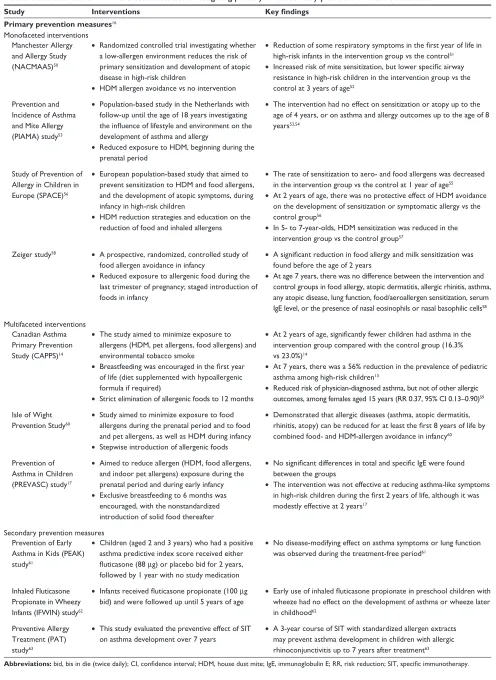
Primary prevention measures have investigated interven-tion and avoidance programs that focus on individual risk factors; however, these have generally yielded inconclu-sive results. Based on the heterogeneous nature of asthma development and the interplay of multiple environmental and genetic factors, another approach is to implement mul-tifaceted prevention programs that target high-risk children during gestation and/or early life. A number of multifac-eted programs have been trialed, with varying results. For example, the Canadian Asthma Primary Prevention Study aimed to minimize exposure to allergens (house dust mites and pet allergens) and environmental tobacco smoke, and encouraged breastfeeding during the first year of life. These measures successfully reduced the prevalence of pediatric allergist-diagnosed asthma and asthma symptoms among high-risk children up to 7 years of age by 56% compared with the control group.13,14 Similarly, the Isle of Wight Prevention Study was successful in reducing the development of allergic disease, including asthma, among high-risk children during the first 8 years of life by reducing exposure to food and house
dust mite allergens in infancy.15 A Cochrane review found
that multifaceted rather than monofaceted intervention was preferable to usual care for the primary prevention of asthma
in children aged ,5 or $5 years; however, no significant
differences were found between mono- and multifaceted interventions in reducing the frequency of asthma diagnosis in children aged ,5 or $5 years or in reducing the likeli-hood of nocturnal coughing.16 Despite the promising findings of these studies, other multifaceted prevention programs in primary care settings, such as the PREVASC study, have not been effective at reducing asthma symptoms in high-risk
infants up to 2 years of age.17 Selected primary prevention
studies are detailed in Table 1.
It is possible that primary intervention programs have limited generalizability to other populations beyond those studied, who may have different lifestyles and are thus exposed to different risk factors. Additionally, the essential
components of multifaceted programs remain unknown.12
Nonetheless, there is compelling evidence to suggest that reducing exposure to multiple allergens reduces the likeli-hood of an asthma diagnosis in children versus usual care; however, further studies are warranted.
Secondary prevention of asthma
For sensitized individuals, secondary prevention measures aim to prevent the subsequent development of chronic and
Therapeutics and Clinical Risk Management downloaded from https://www.dovepress.com/ by 118.70.13.36 on 27-Aug-2020
Dovepress Gruffydd-Jones
Table 1 Selected mono- and multifaceted studies investigating primary and secondary prevention measures in asthma
Study Interventions Key findings
Primary prevention measures16
Monofaceted interventions Manchester Allergy and Allergy Study
(NACMAAS)50
• Randomized controlled trial investigating whether
a low-allergen environment reduces the risk of primary sensitization and development of atopic disease in high-risk children
• HDM allergen avoidance vs no intervention
• Reduction of some respiratory symptoms in the first year of life in
high-risk infants in the intervention group vs the control51
• Increased risk of mite sensitization, but lower specific airway
resistance in high-risk children in the intervention group vs the
control at 3 years of age52
Prevention and incidence of Asthma and Mite Allergy
(PiAMA) study53
• Population-based study in the Netherlands with
follow-up until the age of 18 years investigating
the influence of lifestyle and environment on the
development of asthma and allergy
• Reduced exposure to HDM, beginning during the
prenatal period
• The intervention had no effect on sensitization or atopy up to the
age of 4 years, or on asthma and allergy outcomes up to the age of 8
years53,54
Study of Prevention of Allergy in Children in
europe (SPACe)56
• european population-based study that aimed to
prevent sensitization to HDM and food allergens, and the development of atopic symptoms, during infancy in high-risk children
• HDM reduction strategies and education on the
reduction of food and inhaled allergens
• The rate of sensitization to aero- and food allergens was decreased
in the intervention group vs the control at 1 year of age55
• At 2 years of age, there was no protective effect of HDM avoidance
on the development of sensitization or symptomatic allergy vs the
control group56
• in 5- to 7-year-olds, HDM sensitization was reduced in the
intervention group vs the control group57
Zeiger study58 • A prospective, randomized, controlled study of
food allergen avoidance in infancy
• Reduced exposure to allergenic food during the
last trimester of pregnancy; staged introduction of foods in infancy
• A significant reduction in food allergy and milk sensitization was
found before the age of 2 years
• At age 7 years, there was no difference between the intervention and
control groups in food allergy, atopic dermatitis, allergic rhinitis, asthma, any atopic disease, lung function, food/aeroallergen sensitization, serum
ige level, or the presence of nasal eosinophils or nasal basophilic cells58
Multifaceted interventions Canadian Asthma Primary Prevention
Study (CAPPS)14
• The study aimed to minimize exposure to
allergens (HDM, pet allergens, food allergens) and environmental tobacco smoke
• Breastfeeding was encouraged in the first year
of life (diet supplemented with hypoallergenic formula if required)
• Strict elimination of allergenic foods to 12 months
• At 2 years of age, significantly fewer children had asthma in the
intervention group compared with the control group (16.3%
vs 23.0%)14
• At 7 years, there was a 56% reduction in the prevalence of pediatric
asthma among high-risk children13
• Reduced risk of physician-diagnosed asthma, but not of other allergic
outcomes, among females aged 15 years (RR 0.37, 95% Ci 0.13–0.90)59
isle of wight
Prevention Study60
• Study aimed to minimize exposure to food
allergens during the prenatal period and to food and pet allergens, as well as HDM during infancy
• Stepwise introduction of allergenic foods
• Demonstrated that allergic diseases (asthma, atopic dermatitis,
rhinitis, atopy) can be reduced for at least the first 8 years of life by
combined food- and HDM-allergen avoidance in infancy60
Prevention of Asthma in Children
(PRevASC) study17
• Aimed to reduce allergen (HDM, food allergens,
and indoor pet allergens) exposure during the prenatal period and during early infancy
• exclusive breastfeeding to 6 months was
encouraged, with the nonstandardized introduction of solid food thereafter
• No significant differences in total and specific IgE were found
between the groups
• The intervention was not effective at reducing asthma-like symptoms
in high-risk children during the first 2 years of life, although it was
modestly effective at 2 years17
Secondary prevention measures Prevention of early Asthma in Kids (PeAK)
study61
• Children (aged 2 and 3 years) who had a positive
asthma predictive index score received either
fluticasone (88 μg) or placebo bid for 2 years, followed by 1 year with no study medication
• No disease-modifying effect on asthma symptoms or lung function
was observed during the treatment-free period61
inhaled Fluticasone Propionate in wheezy
infants (iFwiN) study62
• Infants received fluticasone propionate (100 μg bid) and were followed up until 5 years of age
• Early use of inhaled fluticasone propionate in preschool children with
wheeze had no effect on the development of asthma or wheeze later
in childhood62
Preventive Allergy Treatment (PAT)
study63
• This study evaluated the preventive effect of SiT
on asthma development over 7 years
• A 3-year course of SiT with standardized allergen extracts
may prevent asthma development in children with allergic
rhinoconjunctivitis up to 7 years after treatment63
Abbreviations: bid, bis in die (twice daily); CI, confidence interval; HDM, house dust mite; IgE, immunoglobulin E; RR, risk reduction; SIT, specific immunotherapy.
Therapeutics and Clinical Risk Management downloaded from https://www.dovepress.com/ by 118.70.13.36 on 27-Aug-2020
Dovepress
Gruffydd-Jones
persistent disease, and include the avoidance of indoor and outdoor environmental pollution and allergens. For example, active and passive smoking in childhood and adolescence substantially increases the incidence of wheeze and the risk for new-onset asthma, particularly in nonallergic children
and in those exposed in utero to maternal smoking.18
Addi-tionally, exposure to outdoor allergens in the form of envi-ronmental traffic-related air pollution during early and late childhood has been associated with a significant increase in the incidence of childhood asthma and allergic disease up to the age of 12 years.19
Occupational asthma refers to new-onset asthma caused directly by exposure to substances in the workplace, and rep-resents the most common work-related respiratory disease in industrialized countries.20 Notably, it is estimated that $10% of cases of new or recurrent adult asthma are work-related,
although the exact frequency is unknown.20,21 Although
guidelines recommend that individuals with suspected occu-pational asthma be asked whether their symptoms improve when away from work, this approach may lack diagnostic accuracy. Therefore, the use of an objective test, such as a specific allergen challenge, is recommended.21,22 In cases of confirmed occupational asthma, further exposure should be prevented as early as possible to reduce the risk of developing
established disease and to promote recovery.20
In summary, interventions to improve primary and secondary prevention of asthma have been disappointing. However, research in this area remains a priority. In 2017, the European Asthma Research and Innovation Partner-ship project included the following statement in the top 15 research priorities in asthma: “Understand the increase in asthma (both childhood asthma and different types of asthma, such as allergic and hyper-responsive asthma) to help develop primary and secondary prevention strategies”.23 It is hoped that further research in this area can help improve understand-ing of the risk factors associated with asthma development so that appropriate and successful prevention measures can be implemented in a timely manner.
Unmet needs in asthma diagnosis
A recent cross-sectional study found that patients diagnosed with asthma exhibit heterogeneous patterns of airway dys-function, despite having similar symptom scores, highlight-ing the need for accurate asthma diagnosis before treatment initiation, particularly in primary care.24 Currently, there is no single gold-standard diagnostic test for asthma, and guidelines recommend the use of an initial structured clini-cal assessment to determine the probability of asthma inindividuals with respiratory symptoms, with consideration of a personal or family history of atopy.21,22 When asthma is suspected, objective tests are then recommended to assess pulmonary function and demonstrate airway obstruction; these include spirometry, bronchodilator reversibility, peak expiratory flow variability, assessment of airway inflamma-tion, and airway hyperreactivity.21,22 Nevertheless, the tests have varying degrees of false positive and false negative values underlying the premise that there is no one gold standard test, and although positive findings on objective tests only indicate the probability of asthma, these tests are not being carried out, resulting in high rates of false-positive and false-negative findings.22 Similarly, in patients with suspected asthma, outcomes of objective tests and the presence of respiratory symptoms may vary over time, reflecting the heterogeneous nature of the disease. Therefore, guidelines recommend that testing is repeated and compared
in patients during symptomatic and asymptomatic periods.22
The sensitivity and specificity of objective tests used in the diagnosis of asthma are summarized in Table 2.
The lack of a single well-defined gold-standard diagnostic measure for patients with suspected asthma means that both over- and underdiagnosis are common. For example, in one study, no evidence of asthma was found in a third of partici-pants who had previously received a physician diagnosis of asthma upon serial assessment of symptoms, lung function, and airway reversibility.25 In addition, undiagnosed asthma (defined as the presence of asthma-like symptoms with one or more obstructive airway abnormalities in the absence of physician-diagnosed asthma) was reported in a third of adolescents; underdiagnosis was independently associated with self-reported family problems, daily exposure to indoor tobacco smoke, low physical activity, high BMI and the absence of serial sneezing.26 It is likely that the problem of asthma underdiagnosis also reflects the underrepresenta-tion of respiratory symptoms to primary care physicians, despite the presence of decreased lung function in some individuals.27
The overdiagnosis of asthma may in part explain the increasing prevalence of asthma observed in recent years, whereas its underdiagnosis and subsequent undertreatment may be reflected in the reported morbidity and mortality associated with asthma. In the Netherlands, an asthma diag-nostic consultancy service was established with the aim of assisting general practitioners in their diagnostic process. Subsequently, an asthma diagnosis was excluded in approxi-mately half the patients referred to this service, and a change
in maintenance therapy was recommended in three-quarters.28
Therapeutics and Clinical Risk Management downloaded from https://www.dovepress.com/ by 118.70.13.36 on 27-Aug-2020
Dovepress Gruffydd-Jones
Table 2
Sensitivity and specificity of objective tests in asthma diagnosis
Strategy
Description*
Parameter*
Range of predictive values* (note that a single value indicates datum from a single study)
Comments** Sens i Spec ii PPV iii NPV iv
Clinical assessment Symptoms and signs The commonest symptoms assessed were cough and wheeze, and, in adults, shortness of breath
Cough in adults
16%–66%
26%–64%
8%–44%
18%–92%
As isolated symptoms cough,
wheeze and shor
tness
of br
eath ar
e neither sensitiv
e,
nor specific f
or asthma.
Most childr
en with asthma ha
ve intermittent cough,
wheeze and ex
er
cise-induced symptoms,
but onl
y about
a quar
ter of childr
en with these symptoms ha
ve asthma.
Note that the single study in pr
eschool childr
en
compar
ed cur
rent symptoms with a diagnosis of asthma
tw
o y
ears later
.
w
heeze in adults
9%–76%
34%–87%
10%–81%
28%–94%
Dyspnea in adults
11%–73%
38%–71%
41%–59%
26%–70%
Cough in schoolchildren
21 63% 75% 14% 97% w
heeze in children
21
59%
93%
34%
97%
Cough in preschool children
88%
7%
76%
15%
w
heeze in preschool children
54%
57%
80%
27%
Shortness of breath in preschool children
76%
52%
84%
40%
Symptom variability
episodic symptoms in adults
9%–40%
36%–91%
14%–86%
18%–93%
Asking about episodic symptoms improves the positive predictive values in children compared to current symptoms.
Diurnal symptoms in adults
30%–56%
36%–83%
48%–76%
18%–67%
Symptoms after exercise in adults
5%–40%
32%–93%
5%–81%
58%–84%
episodic symptoms in children
22,23
36%–93%
35%–93%
40%–94%
62%–90%
Symptoms after exercise in children
22,23
82%–94%
59%–73%
54%–86%
79%–91%
Nocturnal symptoms in children
22.23
57%–84%
58%–78%
64%–85%
57%–82%
Combinations of symptoms (typically cough, wheeze, chest tightness, dyspnea, exercise symptoms)
Symptom scores in adults
60%
66%
Combinations of symptoms are clinically more helpful than isolated symptoms, especially in children. For example, two thirds of children with a cluster of cough, wheeze, chest tightness, dyspnea and exercise symptoms have asthma. Asthma is unlikely if a child does not have at least some of these symptoms.
Symptom scores in chiidren
21–23
45%–83%
85%–97%
44%–94%
66%–97%
Symptoms of cough and wheeze in preschool children
49%
59%
80%
51%
History of atopy Personal/family history of atopic/ allergic diseases
Personal history of atopy in adults
54%–55%
68%–74%
46%–76%
45%–79%
History (personal or family) of atopic disease has poor sensitivity and specificity for asthma.
Personal history of rhinitis/eczema in preschool children
47%–62%
20%–75%
72%–86%
14%–30%
Family history of atopy in adults
26%–60%
56%–83%
44%–74%
38%–70%
Family history of atopy in children
43%–44%
57%–70%
51%–77%
24%–62%
Strategies for demonstrating airway obstruction Spirometry
Regard an F
ev1
:F
v
C ratio of less
than 70% as a positive test for obstructive airway disease Obstructive spirometry in adults Obstructive spirometry in children (5–18 years) 23%–47% 52% 31%–100% 73% 45%–100% 75% 18%–73% 49%
in the four larger studies (adults and children), the NP
v
was between 18% and 54%, which means that more than half of patients being investigated who have normal spirometry will have asthma (ie, false negatives).
Strategies for demonstrating variability in airway obstruction Bronchodilator reversibility in adults, regard an improvement in F ev1
of
$
12% and
$
200 mL as
a positive test. in children regard an improvement in F ev1
of
$
l2% as a positive test.
Bronchodilator reversibility in adults
17%–69%
55%–81%
53%–82%
22%–68%
in these secondary care populations, about one in three
people with a positive reversibility test will not have asthma (the cohorts all included people with COPD); and at least one in three people with a negative bronchodilator reversibility test will have asthma.
Bronchodilator reversibility in schoolchildren (using a threshold of 9% change in F
ev 1 ) 71 50% 86% ( Continued )
Therapeutics and Clinical Risk Management downloaded from https://www.dovepress.com/ by 118.70.13.36 on 27-Aug-2020
Dovepress Gruffydd-Jones Table 2 ( Continued ) Strategy Description* Parameter*
Range of predictive values* (note that a single value indicates datum from a single study)
Comments** Sens i Spec ii PPV iii NPV iv Challenge tests
Regard a PC
20
value of 8 mg/mL or
less as a positive test
Methacholine challenge in adults Methacholine challenge in children
31,43,72
51%–100% 47%–86% 39%–100% 36%–97% 60%–100% 20% 46%–100% 94% Challenge tests are a good indicator for those with a definitive diagnosis of asthma already (based upon clinical judgment, signs and symptoms and response to antiasthma therapy).
Fall in F
ev1
$
15% at cumulative
dose of
#
635 mg is positive
Mannitol in adults Mannitol in children 56% 63% 75% 81%
80%
49%
These data are from a single study in adults and children with symptoms of asthma on questionnaire.
exercise challenge
exercise challenge in adults
26%–80%
100%
100%
0%
The studies in adults had very small sample sizes. The larger study in children had a false positive rate of 1% (PP
v
99%).
exercise challenge in children
69%–72%
69%–72%
90%–99%
5%–73%
Peak flow charting
Monitor peak flows for 2–4 weeks, calculate mean variability. Regard
$
20% variability as a
positive test
Pe
F charting in adults in a population study
– using mean variability of
. 20% 46% 80% 97% 10%
it is not clear whether the patients in these studies were symptomatic at the time of the charting, and results may not reflect clinical use in symptomatic populations. One study concluded that the number of days with diurnal variation was more accurate than calculating the mean variation.
– using mean variability of
. 15% 3%–5% 98%–99% 60%–67% 60%
– using diurnal variation
. 15% on . 3 days/week 20% 97% 82% 64% Pe
F charting in children
– using variation
.
12.3% (95th centile)
50%
72%
48%
74%
Strategies for detecting eosinophilic inflammation or atopy FeNO
Adults: Regard an FeNO level of 40 ppb or more as a positive test Children 5–16 years: regard an FeNO level of 35 ppb or more as a positive test.
FeNO in adults
43%–88% 57% 60%–92% 87% 54%–95% 90% 65%–93% 49% These studies are all in secondary care populations. Approximately one in five adults with a positive FeNO test will not have asthma (ie, false positives) and one in five adults with a negative FeNO test will have asthma (ie, false negatives).
FeNO in schoolchildren
Blood eosinophils Suggested thresholds for blood eosinophils: Adults
. 4.15% Children $ 4% 65
Blood eosinophils in adults
15%–36%
39%–100%
39%–100% 56%–69% 27%–65% 73% elevated blood eosinophil level is poorly predictive. The threshold varies in these studies from 4.0% to 6.3%.
Blood eosinophils in children
55%–62%
67%–84%
ig
e
Any allergen-specific IgE
. 0.35 kU/l in adults 54%–93% 67%–73% 5%–14% 95%–99% A normal ig
e substantially reduces the probability of
asthma in adults with a false negative rate of less than one in 10, although a positive result is poorly predictive.
Total
ig
e in adults
. 100 kU/ i 57% 78% 5% 99%
Skin-prick testing
Any positive test (wheal
$
3 mm) in adults
61%–62%
63%–69%
14%–81%
39%–96%
Any positive test (wheal
$ 3 mm) in children 44%–79% 56%–92% 65%–92% 36%–79% Notes: *Data derived from NICE evidence tables unless otherwise specified.
64 Only
studies reporting sensitivity, specificity, PPV, and NPV included here; **comments have been added by the guideline development group as an aid to interpretation of the data presented;
iprobability of
test
being positive when asthma
present;
iiprobability of
test being negative when asthma absent; iiiproportion of patients
with positive test
who actually have
asthma
(100 minus PP
v is the proportion of patients with a false positive test); ivproportion of patients with negative test who do not have asthma (100 minus NP v is the proportion of patients with asthma , but in whom test was negative). in most studies, the
reference test was spirometry plus either bronchodilator reversibility
or a challenge test, although some studies also included a “typical history of attacks”
or diurnal variation, or used physician diagnosis.
Studies evaluating
methacholine-challenge tests used physician diagnosis or bronchodilator reversibility and/or diurnal peak flow variability. In children, reference tests used were physician-diagnosed asthma plus spirometry or documented history of wheeze on at least
two occasions and variability in F
ev1
over time or on exercise testing. This table is reproduced from BTS/S
iGN British Guideline on the management of asthma by kind permission o
f the British Thoracic Society.
22
Abbreviations:
COPD, chronic obstructive pulmonary disease;
Fev
1
, forced
expiratory volume in 1 second;
FeNO, fractional exhaled nitric oxide; F
v
C, forced
vital capacity; N
iC
e, National
institute for Health and
Care
excellence; NP
v
,
negative predictive value; PC
20
, provocative concentration causing a 20% fall in F
ev
1
; PEF, peak expiratory flow; PPV, positive predictive value; Sens, sensitivity; Spec, specificity.
Therapeutics and Clinical Risk Management downloaded from https://www.dovepress.com/ by 118.70.13.36 on 27-Aug-2020
Dovepress Gruffydd-Jones
In addition to the under- and overdiagnosis of asthma, misdiagnosis is also common, and has implications for the correct management of patients diagnosed with asthma who may have another respiratory condition that is neither appropriately investigated nor treated. Young children com-monly present with sporadic respiratory symptoms; however, diagnosing asthma in children aged ,5 years is challenging, as the routine assessment of airflow limitation is not possible
in young children.21 For example, recurrent viral wheeze is
common among this population, and usually occurs in com-bination with an upper respiratory tract infection. However, a diagnosis of asthma based on the initial presentation of wheeze is difficult.12 In this population, “trial by treatment” is the diagnostic approach commonly used, with reviews recommended every 2–3 months to assess response to controller treatment and temporal patterns of symptoms. In addition, a diagnosis of asthma in young children should
consider any family history of atopy.12 GINA recommend
that symptoms be treated based upon the physician’s clinical judgment and objective tests performed once the child reaches an appropriate age.12
Despite advances in the understanding of asthma pathophysiology and an increased awareness of patient risk factors, there is still a need for improved diagnostic measures and procedures. Therefore, asthma diagnosis should be considered a key unmet need, as improvements in this area will ensure timely and accurate diagnosis of patients with suspected asthma, and allow them subsequently to receive appropriate management.
Unmet needs in asthma
management
According to GINA recommendations, the long-term aims of asthma management in patients of all ages are to achieve control of asthma symptoms and to reduce the risk of future exacerbations and fixed airflow limitation.12,22 In control-based asthma management, which involves a continuous cycle of assessment, treatment adjustment, and review, both symptoms and future exacerbation risk should be considered when initiating therapy and establishing a management
plan.12 However, even with the availability of different
treatment options and guidelines to aid clinical decision-making, a high proportion of patients with asthma fail to
obtain guideline-defined control and remain symptomatic.29
Poor asthma control can arise through a combination of patient and physician factors. Patient factors associated with poor asthma control include poor adherence to treatment, poor perception, lower annual household income, previous
exacerbation or emergency room visit, psychoemotional factors, and poor inhaler technique, including errors and comorbidities (rhinitis, obesity, depression).5,7,30 In the UK, almost two-thirds of individuals who pay for their asthma medication stated that this impacted their finances, with the
highest impact on patients in northeast England.8
A review of local, national, and multinational survey data revealed inadequate patient education in terms of both their underlying disease and its treatment, underreporting of symptoms, and a mismatch between patient perception of their asthma control and symptoms. Importantly, patients often tolerated poor asthma control and underreported symptoms, with direct implications on disease classification
and management.29–31 For example, .65% of patients
ques-tioned in the Asthma UK survey reported symptoms in the
previous week, although .80% considered their asthma to
be “controlled”, highlighting the disconnection between the patients’ perception of their disease and its control.32 Simi-larly, in the Asthma Insights and Reality in Europe study, only 5.3% of participants achieved the goals set forth in the
GINA recommendations.29 Furthermore, in Asthma UK’s
2016 Annual Asthma Survey, 82% of participants reported having poorly controlled asthma, which affected the everyday life of more than half the patients.8
The Global Asthma Physician and Patient (GAPP) survey aimed to identify differences in opinions on the management of asthma between patients and physicians, and identified a direct link between patient–physician communication and
treatment compliance.11 Notably, there was a mismatch
between the perception of education provision, with 87% of physicians stating that up to 50% of the time spent in office visits was devoted to education, compared with 64% of patients who, on average, stated that only 25% of the
appoint-ment was spent discussing educational issues.11 Similarly,
there was a mismatch in the perception of compliance, with patients overstating their level of treatment compliance com-pared with that reported by the physician.11 There was a direct association between better patient–physician communication and greater patient-reported compliance.
Physician factors associated with poor asthma control include noncompliance with guidelines, lack of action plans, and no/poor assessment of asthma control. Basic asthma care includes an annual asthma review, an action plan, and an assessment of inhaler technique; however, only a third of patients surveyed received these three aspects of care.8,22 Notably, 42% of patients received an asthma action plan in 2016, compared with 24% in 2013; therefore, although this figure almost doubled between 2013 and 2016, more than
Therapeutics and Clinical Risk Management downloaded from https://www.dovepress.com/ by 118.70.13.36 on 27-Aug-2020
Dovepress
Gruffydd-Jones
half the patients surveyed did not have an asthma action plan, despite more than three-quarters (78%) attending an
annual asthma review.8 In the INSPIRE study, only 28%
of participants had well-controlled asthma (defined by Asthma Control Questionnaire [ACQ] score), despite 70% receiving treatment with an ICS with or without a LABA. Consistently with previous reports, there was a disconnect
between patient-reported and ACQ-defined asthma control.31
In summary, there is encouraging evidence that asthma management can be improved by measures to enhance phy-sician and patient education on supported self-management and developing better inhaler techniques. A detailed review of inhaler devices is covered by Dr Omar Usmani (Imperial College London) elsewhere in this thematic review series.
Unmet needs in the treatment of
asthma
According to GINA recommendations, asthma treatment deci-sions should be based on assessing and adjusting treatment,
as well as reviewing the treatment response.12 Before
step-ping up treatment, the following should be considered: is the diagnosis of asthma correct? Are there any other significant comorbidities contributing to the worsening of symptoms? Is there compliance with the existing medication? Is the inhaler technique correct? Are there any other confounding factors,
such as smoking or exposure to asthma triggers, at work?12
The treatment can then be adjusted up or down in a stepwise approach, as shown in Figures 1 and 2. However, ineffective
asthma treatment, such as inappropriate use of therapy, remains and can thus be considered a primary unmet need.
inhaled corticosteroids
Both physicians and patients believe there is a need for new medication options for the treatment of asthma.11 A key element of asthma pathophysiology is airway inflammation. First-line asthma controller treatment with a low-dose ICS targets eosinophilic airway inflammation and is recommended early in the disease course to reduce the risk of future exacer-bations.12 However, despite high agreement among physicians that ICS represents the gold standard for asthma treatment, the results of the GAPP survey reported an underuse in first-line ICS for asthma patients. Notably, first-line treat-ment for asthma is not prescribed in accordance with GINA recommendations, with physicians often prescribing a LABA only, despite the lack of efficacy of this drug class on airway inflammation.11 Canonica et al concluded that the underuse of ICSs may be explained by physician dissatisfaction with this
drug class and lack of adherence to treatment guidelines.11
However, in the 3-year Inhaled Steroid Treatment as Regular Therapy in Early Asthma (START) study, early
intervention with low-dose ICS (budesonide 200 or 400 μg/
daily) in children and adults with recent-onset mild persistent asthma reduced the risk of a severe asthma exacerbation
versus placebo by 44%.33 Importantly, ICS treatment was
safe and well tolerated, with no unexpected unfavorable
adverse events reported.34 Although guidelines recommend
3UHIHUUHG FRQWUROOHU FKRLFH
2WKHU FRQWUROOHU RSWLRQV 5HOLHYHU
/75$/RZGRVHWKHRSK\OOLQH
$VQHHGHG6$%$
0HGLXPKLJKGRVH ,&6ORZGRVH
,&6/75$
RUWKHRSK\OOLQH
$GGWLRWURSLXPA
KLJKGRVH ,&6/75$
RUWKHRSK\OOLQH
$VQHHGHG6$%$RU
ORZGRVH,&6IRUPRWHURO
$GGORZ GRVH,&6 &RQVLGHU
ORZGRVH ,&6
/RZGRVH,&6 ,&6/$%$/RZGRVH
0HGLXPKLJK GRVH,&6/$%$
5HIHUIRU DGGRQ WUHDWPHQW
HJ
WLRWURSLXPA
DQWLOJ(
DQWL,/
6WHS 6WHS 6WHS
6WHS
6WHS
Figure 1 Stepwise asthma management in adults, adolescents, and children aged 6–11 years.
Notes: *Not for children aged ,12 years; **for children aged 6–11 years (preferred step 3 treatment medium-dose iCS); #for patients prescribed BDP/formoterol or BUD/ formoterol maintenance and reliever therapy; ^tiotropium by mist inhaler is an add-on treatment for patients aged $12 years with a history of exacerbations. Copyright ©2018 Global initiative for Asthma. Reproduced with permission from. Global initiative for Asthma. Global strategy for asthma management and prevention. 2018. Available from: http://ginasthma.org/2018-gina-report-global-strategy-for-asthma-management-and-prevention/.12
Abbreviations: iCS, inhaled corticosteroid; BDP, beclomethasone dipropionate; BUD, budesonide; LABA, long-acting b2-agonist; LTRA, leukotriene receptor antagonist; SABA, short-acting b2-agonist.
Therapeutics and Clinical Risk Management downloaded from https://www.dovepress.com/ by 118.70.13.36 on 27-Aug-2020
Dovepress Gruffydd-Jones
the addition of a LABA to first-line ICS in asthma patients who remain symptomatic (Figure 1), uncertainty exists
regarding the optimal dose of ICS.35 The dose–response
relationship of fluticasone propionate in terms of improve-ment of symptoms and lung function begins to plateau at
around 100–200 μg/day, with maximum efficacy achieved
with doses of approximately 500 μg/day in adults and adoles-cents for lung function and symptom control, although data on the use of this dose in patients with asthma are limited.36 Consistently with this, a meta-analysis has shown that if add-on therapy is warranted in patients with asthma who remain symptomatic despite the use of ICS, the addition of
a LABA to moderate-dose ICS (approximately 200 μg/day
fluticasone or equivalent) confers greater clinical benefit than doubling the dose of ICS.35
In most patients with asthma, symptoms can be controlled by low-dose ICSs; however, some patients require high doses or oral steroids (steroid-insensitive asthma), while others are completely resistant to the effects of steroids regardless of dose (steroid-resistant asthma).37 Additionally, patients with more severe asthma are less responsive to ICS than those with mild asthma. ICS resistance can occur through exposure to risk factors, such as smoking,38 or through genotype effects.
Evidence suggests that familial steroid resistance is linked to abnormalities in the glucocorticoid receptor (GR), including reduced GR-binding affinity, reduced nuclear translocation, and decreased GR expression in peripheral blood
mono-nuclear cells.37,39 Additionally, abnormal histone
acetyla-tion and transcripacetyla-tion factor activaacetyla-tion may be mechanisms
of steroid resistance in patients with asthma.37 Additional
studies on peripheral blood mononuclear cells isolated from steroid-resistant individuals have demonstrated that corticosteroids fail to inhibit the secretion of interleukin-2 (IL2) and interferon-γ (IFNγ) in these patients.37 Therefore, steroid resistance represents an area of unmet need in asthma management, particularly in severe asthma, and additional therapies are required that target the underlying airway inflammation. Interestingly, there is some evidence to suggest that LABAs promote GR nuclear translocation and increase sensitivity to corticosteroids, and may thus enhance the func-tion of glucocorticoids and assist in restoring their funcfunc-tion in steroid-insensitive/resistant patients.37,40,41
b
2-Agonists
Since b2-agonists do not target airway inflammation in
asthma, patients should only be treated with a b2-agonist
Daily low-dose ICS
LTRA intermittent ICS
Infrequent viral wheezing
and no or few interval
symptoms
Symptom pattern consistent with asthma and asthma symptoms not well controlled, or ≥3 exacerbations per year
Symptom pattern not consistent with asthma but wheezing episodes occur frequently, eg, every 6–8 weeks
Give diagnostic trial for 3 months
As-needed short-acting β2-agonist (all children)
Low-dose ICS + LTRA
Asthma diagnosis, and not well controlled on
low-dose ICS
Not well controlled on
double ICS
First check diagnosis, inhaler skills, adherence, exposures
Add LTRA increase ICS
frequency Add intermittent
ICS Double
low-dose ICS
Continue controller and refer for
specialist assessment
Step 2 Step 1
Preferred controller choice
Other controller options
Reliever
Consider this step for children with:
Step 3
Step 4
Figure 2 Stepwise asthma management in children aged #5 years.
Note: Copyright ©2018 Global initiative for Asthma. Reproduced with permission from . Global initiative for Asthma. Global strategy for asthma management and prevention. 2018. Available from: http://ginasthma.org/2018-gina-report-global-strategy-for-asthma-management-and-prevention/.12
Abbreviations: iCS, inhaled corticosteroid; LTRA, leukotriene-receptor antagonist.
Therapeutics and Clinical Risk Management downloaded from https://www.dovepress.com/ by 118.70.13.36 on 27-Aug-2020
Dovepress
Gruffydd-Jones
alone in exceptional circumstances, including in those
with mild intermittent asthma and infrequent symptoms.12
Although LABAs in the absence of an ICS may be effective at reducing asthma symptoms, evidence from meta-analyses suggests that they may increase the risk of adverse out-comes in adult patients, including severe exacerbations and death.42 Therefore, an as-needed short-acting b
2-agonist is recommended as reliever therapy in GINA step 1 (Figures 1
and 2),12 rather than regular use of a LABA. Patients have
reported that suboptimal asthma control substantially affected their health-related quality of life, despite receiving
main-tenance treatment with an ICS with or without a LABA.31
Therefore, such patients may benefit from additional bron-chodilation, such as that provided by an anticholinergic (also known as a long-acting muscarinic antagonist).
Leukotriene receptor antagonists
Leukotriene receptor antagonists, such as montelukast, may be effective in some patient populations, including those with exercise-induced asthma, virus-induced wheeze, and asthma
associated with allergic rhinitis.43 However, no routine
laboratory tests are currently available to predict leukotriene-receptor-antagonist responsiveness in individual patients.
Challenges of severe asthma
Severe asthma is defined by GINA as asthma that requires step 4 or 5 treatment to maintain symptom control (Figure 1), and may present similarly to asthma that is poorly controlled due
to lack of treatment.12 Although severe asthma only affects
5%–10% of the asthma population,44 it is responsible for a
high proportion of total asthma-related deaths (39% in the
recent National Review of Asthma Deaths survey).5 Many
patients with severe asthma are treated with oral corticoste-roids, although these are associated with side effects in the majority of patients, as well as poor adherence and reduced quality of life.45 Therefore, there is a need for effective treat-ments in this population of patients, and urgent solutions are required. A major unmet need in severe asthma is the development of therapies that match the individual phenotype of the patient. Biological therapies, such as omalizumab and mepolizumab, are now available for a more targeted approach
to therapy.46 However, in the absence of patient
phenotyp-ing, treatment options with efficacy over the range of asthma severities, including patients with severe asthma, are needed.
Limitations of current asthma
therapies
Randomized clinical trials analyze group mean data; however, asthma is a heterogeneous disease, and different
phenotypes (observable features) and endotypes (molecular mechanisms of pathogenesis) exist that may respond
dif-ferently to therapy.47 Additionally, real-world populations
include both responders and nonresponders. Current diag-nostic labels, including those for airway disease, are based on an outdated understanding of physiological mechanisms, and do not consider the heterogeneity of the disease, which
may lead to suboptimal management.48
The complex and heterogeneous nature of asthma warrants a precision medicine approach. Agusti et al48 introduced the concept of “treatable traits” as a label-free precision-medicine strategy for chronic airway diseases, such as asthma and chronic obstructive pulmonary disease. Within the adult population, treatable traits are based upon phenotypes or an understanding of the underlying endotype, and include airflow limitation, which may be treated with a LABA and/or long-acting anticho-linergic, and eosinophil airway inflammation, for which an ICS is recommended.48 While this approach is certainly attractive, the tools required for precision medicine are currently lacking in clinical practice, especially in primary care. Additionally, the definitions proposed by Agusti et al48 exclude children, who represent a large population of patients in need of improved diagnostic measures and treatment options. Until such time as the tools for precision medicine become universally available and pediatric patients are considered, there remains a need for asthma therapy with proven efficacy and safety over the range of disease severities and patients. Recently, the efficacy of tiotro-pium, a long-acting anticholinergic approved for the treatment of symptomatic patients at risk of exacerbation despite treatment with an ICS plus a LABA, was demonstrated to be independent of baseline characteristics and allergic status in patients with asthma.49 This suggests that an anticholinergic such as tiotro-pium may be appropriate for targeting a broad population of patients. The evidence for the role of anticholinergics in adults, children, and preschool children is covered by several review articles in this series, and is thus not included here.
Conclusion
Asthma remains a disease with significant morbidity and preventable mortality. Figure 3 outlines the key areas of unmet need. Despite increased recognition of environmental and genetic factors, which are linked to the development of asthma, there is limited evidence of successful primary prevention measures. Similarly, there is a huge unmet need in reducing factors known to aggravate established asthma, such as vehicle pollution and tobacco smoke. Evidence for successful intervention has been variable to date. Under- and overdiagnosis of asthma is common, and there is a need for accurate objective tests that can be used widely in
Therapeutics and Clinical Risk Management downloaded from https://www.dovepress.com/ by 118.70.13.36 on 27-Aug-2020
Dovepress Gruffydd-Jones
primary care, in addition to quality-assured implementation of guideline-recommended diagnostic procedures.
ICS therapy remains the cornerstone of asthma manage-ment, but compliance is still poor. Potential solutions include improved patient education/self-management and use of integral inhaler device monitors, which may improve out-comes. However, asthma is a heterogeneous disease, and there is a need to target treatment to the individual patient. Therefore, it may be beneficial to adopt the precision medicine approach, particularly given that the use of targeted biological therapy in patients with severe asthma is indeed progressing rapidly. Nevertheless, for the majority of patients with asthma, many of whom are treated in primary care, this approach is far from being established. Therefore, there is an important role for such agents as long-acting anticholinergics, which are effective across a broad spectrum of severity and age groups.
Acknowledgments
The author would like to thank Kjeld Hansen, a member of the Patient Ambassador Group for the European Lung Foun-dation, for his input to the video summary for this manuscript. Medical writing assistance in the form of the preparation and revision of the draft manuscript was supported financially by Boehringer Ingelheim and provided by Lisa Jolly, PhD, of MediTech Media, under the author’s conceptual direction and based on feedback from the author. Boehringer Ingel-heim was given the opportunity to review the manuscript for factual accuracy only. The author takes full responsibility for
the scope, direction, content, and editorial decisions relating to the manuscript, was involved at all stages of development, and has approved the submitted manuscript.
Disclosure
As a general practitioner, the author has provided a primary care perspective on the review topic. The author has acted as a medical consultant and spoken on behalf of Astra-Zeneca, Boehringer Ingelheim, Chiesi, GlaxoSmithKline, Mundipharma/Napp, Nutricia, Pfizer, and Teva. The author reports no other conflicts of interest in this work.
References
1. Beasley R, Semprini A, Mitchell EA. Risk factors for asthma: is preven-tion possible? Lancet. 2015;386(9998):1075–1085.
2. Global Burden of Disease 2016 Disease and Injury Incidence and Preva-lence Collaborators. Global, regional, and national incidence, prevaPreva-lence, and years lived with disability for 328 diseases and injuries for 195 countries, 1990–2016: a systematic analysis for the Global Burden of Disease Study 2016. Lancet. 2017;390:1211–1259.
3. Bousquet J, Khaltaev N. Global surveillance, prevention and control of chronic respiratory diseases: a comprehensive approach. Geneva: World Health Organization; 2007.
4. GBD 2013 Mortality and Causes of Death Collaborators. Global, regional, and national age-sex specific all-cause and cause-specific mortality for 240 causes of death, 1990–2013: a systematic analysis for the Global Burden of Disease study 2013. Lancet. 2015;385(9963):117–171. 5. Royal College of Physicians. Why Asthma Still Kills: The National
Review of Asthma Deaths (NRAD). London: RCP; 2014.
6. Price D, Fletcher M, van der Molen T. Asthma control and management in 8,000 European patients: the Recognise Asthma and Link to Symp-toms and Experience (REALISE) survey. NPJ Prim Care Respir Med. 2014;24:14009.
Figure 3 Key areas of unmet need in asthma.
Abbreviations: BMi, body mass index; iCS, inhaled corticosteroid.
$VWKPD WUHDWPHQW
$VWKPD GLDJQRVLV
6HFRQGDU\ DVWKPD SUHYHQWLRQ $VWKPD
PDQDJHPHQW
3RRUFRQWUROSDWLHQWIDFWRUV
•3RRUDGKHUHQFHSHUFHSWLRQ
•/RZHUDQQXDOKRXVHKROGLQFRPH
•3UHYLRXVH[DFHUEDWLRQHPHUJHQF\ URRPYLVLW
•3V\FKRHPRWLRQDOIDFWRUV
•3RRULQKDOHUWHFKQLTXHHGXFDWLRQ
•1RUPDOL]LQJV\PSWRPVSRRUFRQWURO
3RRUFRQWUROSK\VLFLDQIDFWRUV
•1RQFRPSOLDQFHZLWKJXLGHOLQHV
•/DFNRIDFWLRQSODQV
•1RSRRUDVWKPDFRQWURODVVHVVPHQW
3ULPDU\ DVWKPD SUHYHQWLRQ
•0DWHUQDOIDFWRUVGXULQJJHVWDWLRQ VPRNLQJFHVDUHDQGHOLYHU\ VWUHVVKLJK%0,
•)DPLOLDOIDFWRUVJHQHWLFVIDPLO\ KLVWRU\RIDWRS\
•,QIHFWLRQVUHVSLUDWRU\V\QF\WLDO YLUXVUKLQRYLUXVSHUWXVVLV
•0HGLFDWLRQSDUDFHWDPRO βDJRQLVWVDQWLELRWLFV
•'LHWDQGLQKDOHGH[SRVXUHV WREDFFRVPRNHLQGRRUDQG RXWGRRUDLUSROOXWLRQ KRXVHGXVWPLWHPROG
•6XERSWLPDOXVHRIDGGRQWKHUDS\
•,&6UHVLVWDQFHLQVHYHUHDVWKPD
•3HUVRQDOL]HGWKHUDS\
•$YRLGDQFHRILQGRRUDQGRXWGRRU HQYLURQPHQWDOSROOXWLRQDQGDOOHUJHQV
•2FFXSDWLRQDODVWKPD
•1RVLQJOHJROGVWDQGDUGGLDJQRVWLFWHVW
•2YHUXQGHUDQGPLVGLDJQRVLV
$UHDVZLWKJRRGHYLGHQFHEDVHEXWSRRULPSOHPHQWDWLRQ 9DULDEOHHYLGHQFHIRULQWHUYHQWLRQ
Therapeutics and Clinical Risk Management downloaded from https://www.dovepress.com/ by 118.70.13.36 on 27-Aug-2020
Dovepress
Gruffydd-Jones
7. Pavord ID, Mathieson N, Scowcroft A, Pedersini R, Isherwood G, Price D. The impact of poor asthma control among asthma patients treated with inhaled corticosteroids plus long-acting b2-agonists in the
United Kingdom: a cross-sectional analysis. NPJ Prim Care Respir Med. 2017;27(1):17.
8. Asthma UK. Annual asthma survey: 2016 report. 2016. Available from: https://www.asthma.org.uk/globalassets/get-involved/external-affairs- campaigns/publications/annual-asthma-care-survey/annualasthmasur-vey2016final.pdf. Accessed November 01, 2017.
9. Scal P, Davern M, Ireland M, Park K. Transition to adulthood: delays and unmet needs among adolescents and young adults with asthma. J Pediatr. 2008;152(4):471.e1–475.e1.
10. Worstell M. Asthma: individual patient perspective and current unmet needs. Clin Exp Allergy. 2000;30 Suppl 1:11–15.
11. Canonica GW, Baena-Cagnani CE, Blaiss MS, Dahl R, Kaliner MA, Valovirta EJ. Unmet needs in asthma: Global Asthma Physi-cian and Patient (GAPP) survey: global adult findings. Allergy. 2007;62(6):668–674.
12. Global Initiative for Asthma. Global strategy for asthma management and prevention. 2018. Available from: http://ginasthma.org/2018-gina-report-global-strategy-for-asthma-management-and-prevention/. Accessed May 21, 2018.
13. Chan-Yeung M, Ferguson A, Watson W, et al. The Canadian Childhood Asthma Primary Prevention study: outcomes at 7 years of age. J Allergy Clin Immunol. 2005;116(1):49–55.
14. Becker A, Watson W, Ferguson A, Dimich-Ward H, Chan-Yeung M. The Canadian Asthma Primary Prevention study: outcomes at 2 years of age. J Allergy Clin Immunol. 2004;113(4):650–656.
15. Arshad SH, Bateman B, Sadeghnejad A, Gant C, Matthews SM. Pre-vention of allergic disease during childhood by allergen avoidance: the Isle of Wight prevention study. J Allergy Clin Immunol. 2007;119(2): 307–313.
16. Maas T, Kaper J, Sheikh A, et al. Mono and multifaceted inhalant and/or food allergen reduction interventions for preventing asthma in children at high risk of developing asthma. Cochrane Database Syst Rev. 2009;(3):CD006480.
17. Schönberger HJ, Dompeling E, Knottnerus JA, et al. The PREVASC study: the clinical effect of a multifaceted educational intervention to prevent childhood asthma. Eur Respir J. 2005;25(4):660–670. 18. Gilliland FD, Islam T, Berhane K, et al. Regular smoking and asthma
incidence in adolescents. Am J Respir Crit Care Med. 2006;174(10): 1094–1100.
19. Bowatte G, Lodge C, Lowe AJ, et al. The influence of childhood traffic-related air pollution exposure on asthma, allergy and sensitization: a systematic review and a meta-analysis of birth cohort studies. Allergy. 2015;70(3):245–256.
20. Nicholson PJ, Cullinan P, Taylor AJ, Burge PS, Boyle C. Evidence based guidelines for the prevention, identification, and management of occupational asthma. Occup Environ Med. 2005;62(5):290–299. 21. National Institute for Health and Care Excellence. Asthma: Diagnosis
and Monitoring of Asthma in Adults, Children and Young People. London: NICE; 2017.
22. British Thoracic Society (BTS)/Scottish Intercollegiate Guidelines Network (SIGN). British Guideline on the management of asthma. Edinburgh: SIGN; 2016. (QRG 153). [cited November 2017]. Available from: http://www.sign.ac.uk. Accessed November 01, 2017. 23. Masefield S, Edwards J, Hansen K, et al. The future of asthma research
and development: a roadmap from the European Asthma Research and Innovation Partnership (EARIP). Eur Respir J. 2017;49(5):1602295. 24. Shaw D, Green R, Berry M, et al. A cross-sectional study of patterns of
airway dysfunction, symptoms and morbidity in primary care asthma. Prim Care Respir J. 2012;21(3):283–287.
25. Aaron SD, Vandemheen KL, Boulet LP, et al. Overdiagnosis of asthma in obese and nonobese adults. CMAJ. 2008;179(11):1121–1131. 26. Siersted HC, Boldsen J, Hansen HS, Mostgaard G, Hyldebrandt N.
Pop-ulation based study of risk factors for underdiagnosis of asthma in ado-lescence: Odense schoolchild study. BMJ. 1998;316(7132):651–657.
27. van Schayck CP, van der Heijden FM, van den Boom G, Tir-imanna PR, van Herwaarden CL. Underdiagnosis of asthma: is the doctor or the patient to blame? The DIMCA project. Thorax. 2000;55(7): 562–565.
28. Gillis RM, van Litsenburg W, van Balkom RH, Muris JW, Smeenk FW. The contribution of an asthma diagnostic consultation service in obtain-ing an accurate asthma diagnosis for primary care patients: results of a real-life study. NPJ Prim Care Respir Med. 2017;27(1):35. 29. Rabe KF, Vermeire PA, Soriano JB, Maier WC. Clinical management
of asthma in 1999: the Asthma Insights and Reality in Europe (AIRE) study. Eur Respir J. 2000;16(5):802–807.
30. Holgate ST, Price D, Valovirta E. Asthma out of control? A structured review of recent patient surveys. BMC Pulm Med. 2006;6 Suppl 1:S2. 31. Partridge MR, van der Molen T, Myrseth SE, Busse WW. Attitudes
and actions of asthma patients on regular maintenance therapy: the INSPIRE study. BMC Pulm Med. 2006;6:13.
32. Hyland ME, Ståhl E. Asthma treatment needs: a comparison of patients’ and health care professionals’ perceptions. Clin Ther. 2004; 26(12):2141–2152.
33. Pauwels RA, Pedersen S, Busse WW, et al. Early intervention with budesonide in mild persistent asthma: a randomised, double-blind trial. Lancet. 2003;361(9363):1071–1076.
34. Sheffer AL, Silverman M, Woolcock AJ, Diaz PV, Lindberg B, Lindmark B. Long-term safety of once-daily budesonide in patients with early-onset mild persistent asthma: results of the Inhaled Steroid Treatment as Regular Therapy in Early Asthma (START) study. Ann Allergy Asthma Immunol. 2005;94(1):48–54.
35. Masoli M, Weatherall M, Holt S, Beasley R. Systematic review of the dose-response relation of inhaled fluticasone propionate. Arch Dis Child. 2004;89(10):902–907.
36. Holt S, Suder A, Weatherall M, Cheng S, Shirtcliffe P, Beasley R. Dose-response relation of inhaled fluticasone propionate in adoles-cents and adults with asthma: meta-analysis. BMJ. 2001;323(7307): 253–256.
37. Barnes PJ. Corticosteroid resistance in patients with asthma and chronic obstructive pulmonary disease. J Allergy Clin Immunol. 2013; 131(3):636–645.
38. Chalmers GW, Macleod KJ, Little SA, Thomson LJ, McSharry CP, Thomson NC. Influence of cigarette smoking on inhaled corticosteroid treatment in mild asthma. Thorax. 2002;57(3):226–230.
39. Sher ER, Leung DY, Surs W, et al. Steroid-resistant asthma: cellular mechanisms contributing to inadequate response to glucocorticoid therapy. J Clin Invest. 1994;93(1):33–39.
40. Usmani OS, Ito K, Maneechotesuwan K, et al. Glucocorticoid receptor nuclear translocation in airway cells after inhaled combination therapy. Am J Respir Crit Care Med. 2005;172(6):704–712.
41. Kobayashi Y, Mercado N, Miller-Larsson A, Barnes PJ, Ito K. Increased corticosteroid sensitivity by a long acting b2 agonist formoterol via b2
adrenoceptor independent protein phosphatase 2A activation. Pulm Pharmacol Ther. 2012;25(3):201–207.
42. Salpeter SR, Buckley NS, Ormiston TM, Salpeter EE. Meta-analysis: effect of long-acting b-agonists on severe asthma exacerbations and asthma-related deaths. Ann Intern Med. 2006;144(12):904–912. 43. Marcello C, Carlo L. Asthma phenotypes: the intriguing selective
intervention with montelukast. Asthma Res Pract. 2016;2:11. 44. Busse WW, Banks-Schlegel S, Wenzel SE. Pathophysiology of severe
asthma. J Allergy Clin Immunol. 2000;106(6):1033–1042.
45. Asthma UK. Severe asthma: the unmet need and the global challenge. 2017. Available from: https://www.asthma.org.uk/globalassets/get-involved/external-affairs-campaigns/publications/severe-asthma-report/ auk_severeasthma_2017.pdf. Accessed November 01, 2017. 46. Menzella F, Galeone C, Bertolini F, Castagnetti C, Facciolongo N.
Innovative treatments for severe refractory asthma: how to choose the right option for the right patient? J Asthma Allergy. 2017;10:237–247. 47. Lötvall J, Akdis CA, Bacharier LB, et al. Asthma endotypes: a new
approach to classification of disease entities within the asthma syn-drome. J Allergy Clin Immunol. 2011;127(2):355–360.
Therapeutics and Clinical Risk Management downloaded from https://www.dovepress.com/ by 118.70.13.36 on 27-Aug-2020
Therapeutics and Clinical Risk Management
Publish your work in this journal
Submit your manuscript here: http://www.dovepress.com/therapeutics-and-clinical-risk-management-journal
Therapeutics and Clinical Risk Management is an international, peer-reviewed journal of clinical therapeutics and risk management, focusing on concise rapid reporting of clinical studies in all therapeutic areas, outcomes, safety, and programs for the effective, safe, and sustained use of medicines. This journal is indexed on PubMed Central, CAS,
EMBase, Scopus and the Elsevier Bibliographic databases. The manuscript management system is completely online and includes a very quick and fair peer-review system, which is all easy to use. Visit http://www.dovepress.com/testimonials.php to read real quotes from published authors.
Dovepress
Dove
press
Gruffydd-Jones
48. Agusti A, Bel E, Thomas M, et al. Treatable traits: toward precision medicine of chronic airway diseases. Eur Respir J. 2016;47(2):410–419. 49. Kerstjens HA, Moroni-Zentgraf P, Tashkin DP, et al. Tiotropium
improves lung function, exacerbation rate, and asthma control, inde-pendent of baseline characteristics including age, degree of airway obstruction, and allergic status. Respir Med. 2016;117:198–206. 50. International Standard Randomised Controlled Trial Number.
Manches-ter Asthma and Allergy study: primary prevention of asthma and allergy by allergen avoidance in high risk infants. 2005. Available from: http:// www.isrctn.com/ISRCTN63558189. Accessed November 01, 2017. 51. Custovic A, Simpson BM, Simpson A, Kissen P, Woodcock A. Effect
of environmental manipulation in pregnancy and early life on respira-tory symptoms and atopy during first year of life: a randomised trial. Lancet. 2001;358(9277):188–193.
52. Woodcock A, Lowe LA, Murray CS, et al. Early life environmental control: effect on symptoms, sensitization, and lung function at age 3 years. Am J Respir Crit Care Med. 2004;170(4):433–439.
53. Prevention and Incidence of Asthma and Mite Allergy. The PIAMA research project. Available from: http://piama.iras.uu.nl/index-en.php. Accessed November 01, 2017.
54. Corver K, Kerkhof M, Brussee JE, et al. House dust mite allergen reduction and allergy at 4 yr: follow up of the PIAMA study. Pediatr Allergy Immunol. 2006;17(5):329–336.
55. Halmerbauer G, Gartner C, Schierl M, et al. Study on the Prevention of Allergy in Children in Europe (SPACE): allergic sensitization at 1 year of age in a controlled trial of allergen avoidance from birth. Pediatr Allergy Immunol. 2003;14(1):10–17.
56. Horak F Jr, Matthews S, Ihorst G, et al. Effect of mite-impermeable mattress encasings and an educational package on the development of allergies in a multinational randomized, controlled birth-cohort study: 24 months results of the Study of Prevention of Allergy in Children in Europe. Clin Exp Allergy. 2004;34(8):1220–1225.
57. Arshad SH, Bojarskas J, Tsitoura S, et al. Prevention of sensitiza-tion to house dust mite by allergen avoidance in school age children: a randomized controlled study. Clin Exp Allergy. 2002;32(6):843–849. 58. Zeiger RS, Heller S. The development and prediction of atopy in
high-risk children: follow-up at age seven years in a prospective randomized study of combined maternal and infant food allergen avoidance. J Allergy Clin Immunol. 1995;95(6):1179–1190. 59. Ramsey C, Chan E, Chooniedass R, et al. The Canadian Asthma Primary
Prevention Study (CAPPS): outcomes at 15 years of age. Am J Resp Crit Care Med. 2013;181:A3520.
60. Arshad SH, Bateman B, Sadeghnejad A, Gant C, Matthews SM. Pre-vention of allergic disease during childhood by allergen avoidance: the Isle of Wight prevention study. J Allergy Clin Immunol. 2007; 119(2):307–313.
61. Guilbert TW, Morgan WJ, Zeiger RS, et al. Long-term inhaled corti-costeroids in preschool children at high risk for asthma. N Engl J Med. 2006;354(19):1985–1997.
62. Murray CS, Woodcock A, Langley SJ, Morris J, Custovic A. Secondary prevention of asthma by the use of Inhaled Fluticasone propionate in Wheezy Infants (IFWIN): double-blind, randomised, controlled study. Lancet. 2006;368(9537):754–762.
63. Jacobsen L, Niggemann B, Dreborg S, et al. Specific immunotherapy has long-term preventive effect of seasonal and perennial asthma: 10-year follow-up on the PAT study. Allergy. 2007;62(8):943–948.
64. National Institute for Health and Care Excellence. Asthma: Diagnosis, Monitoring and Chronic Asthma Management. London: NICE; 2017.
Therapeutics and Clinical Risk Management downloaded from https://www.dovepress.com/ by 118.70.13.36 on 27-Aug-2020