An Action
Research into International
Masters Program in Practicing Management
(IMPM): Suggesting Refraction to
Complement Reflection for Management
Learning in the Global Knowledge Economy
Tunc D. MEDENI
*
Katsuhiro UMEMOTO
**
Abstract
International Masters Program in Practicing Management (IMPM) is a collaborative effort by major business schools and corporations around the world, balancing practical and academic issues within pedagogy of “experienced reflection”. This action research into the IMPM aims to explain the IMPM and its importance for the global knowledge economy, as well as identify and improve the current limitations of the program. As a result, we hope to provide specific suggestions for the IMPM practice and general guidelines for business education. Our suggestions are based upon a framework of “refraction” that follows a methodology of action research and pluralistic knowledge science epistemology, a critique of management learning, and a literature review on (critical) reflection, as well as our findings about the IMPM practice. Also, critically reviewing Mintzberg and other authors’ ideas on management learning and IMPM specifically supports our discussion in this paper.
Keywords:Business education, cross-cultural learning and knowledge management, action research, pluralistic epistemology and knowledge science.
JEL Classification Codes: D83, I21, M12, M53.
*
Ph.D. Candidate in School of Knowledge Science, Japan Advanced Institute of Science and Technology (JAIST), JAPAN, [email protected].
**
1. Introduction
As a cross-cultural management education program, International Masters Program in Practicing Management (IMPM) is a collaborative effort by more than five major business schools and more than ten major corporations around the world. Developed by such a “worldly collaboration” of universities and companies, it strikes a good balance between practical and academic matters. “Experienced reflection” is the pedagogy that enables this balance. These aspects emphasize a blending of cross-cultural management and knowledge management for management learning in today’s global knowledge economy.1
This action research studied the IMPM in order to understand better how IMPM works as a significant business education program in the global knowledge economy. As a valuable research result, we have hoped to identify the current limitations and problems in the IMPM, and provide our own suggestions to improve the program. As a written account of this study, this paper initially provides background information about the research methodology and critique of management learning. Specifically, Mintzberg’s ideas about management education and development are discussed together with their critiques. A more detailed literature review on reflection and critical reflection for management learning with recent critics and advancements is also provided. Then, the IMPM is discussed more deeply, identifying its limitations besides its innovations. At the end, the concept of “refraction” is introduced to address these limitations, and provide some suggestions for program improvements.
2. Research Methodology
With respect to the “pluralist epistemology” (Spender 1998), “epistemic types, aspects and levels in knowledge management” (Umemoto 2004) and “knowledge(s) science(s)” (Umemoto 2006),2 a pluralistic knowledge science epistemology fits well with the cross-cultural knowledge management perspective in this action research into management learning.
Build upon this discussion of causal-process observations for social inquiry, this study is an action research for improving practice in the case of IMPM and advancing theory in knowledge science and management.4 In accordance with what McNiff, Lomax and Whitehead (1996) suggest, pursuing my master’s management learning and doctor’s knowledge science studies on IMPM, I have been a part of the academic context at Lancaster and JAIST, both of whose faculty members contribute significantly to the program. At Lancaster, I was one of the two student-consultants for the module director of the “reflective mindset.” At JAIST, I have been an assistant for the “collaborative mindset”. As a result of such involvement, suggestions for the improvement of the program have also been made (Carr & Kemmis 1986).
In this action research the following methods of data collection have been used: qualitative unstructured, open-ended, informal interviews, as well as more structured but still open-ended e-mail interviews; document analyses; field diaries and notes; and participant observations. This data has been triangulated by gathering accounts from the different points of view of the faculty participants, the practitioner participants, and the participant researcher for validity (Junkers 1960; Easterby-smith, Thorpe & Lowe 2002; Koshy 2005).5 Meanwhile, the literature review has shed light on the analysis, leading to coming up with a few explanatory factors for reliability. Besides, this action research has also benefited from a case study approach (Yin 1994), especially in the preliminary stages of the study.6 Table 1 provides detailed information about the stages of the study.
As one final note about the research methodology, the above-mentioned pluralistic knowledge science epistemology has allowed us to study the knowledges of other sciences and studies such as material sciences and mythologies. As a result, for instance, in this study it has become possible to use analogies that are based upon material science metaphors as well as mythological stories for developing a social science model as a theoretical implication of this action research.
Table 1: Chronological List of the Action Research Interactions
Chronological List of the Action Research Interactions
At Lancaster, U.K.
2001 Summer: master’s thesis on reflection mindset for management learning, and student-consultancy work for reflective mindset module directorship
Autumn 2001: presentation of findings
Winter 2001: review of literature on reflection for faculty
In U.K., Turkey and Japan
2002- 2003 benefiting from the Lancaster and JAIST affiliations with IMPM, arranging to pursue doctoral degree work on management learning in knowledge science
At JAIST
2004: analysis of IMPM as one of the existing knowledge management education programs, as well as work on cross- cultural knowledge management and communities of practice
Summer 2005: Collaborative Mindset Module, IMPM Cycle 9. Participant observations, interviews with participants. (June, 2005 at JAIST, and in Kanazawa and Tokyo)
Autumn 2005-Spring 2006: e-mail communications with not only academic participants with the occasion of writing a book chapter on graduate management education and IMPM (Medeni 2006a) but also student participants
Summer 2006: Collaborative Mindset Module, IMPM Cycle 10. Participant observations, interviews with participants and alumni. Visit to the Contemporary Art Museum (June, 2006 at JAIST, and in Kanazawa and Tokyo)
Autumn 2006: Analyses of field notes and diaries, and private and public documents, writing-up doctoral dissertation
Winter 2006: Presentation of findings
3. A Critique of Management Learning
the disconnect between theory and practice, between knowing and doing, and between rigor and relevance (Wankel & DeFillippi 2006). Similarly, a recent survey conducted by Koys & Gundry (2002) highlights, as the most important competence needed by the graduates of management education, critical and creative thinking, which is followed by the use of information technology, communication, teamwork & leadership, decision-making, ethics and social awareness, technical and analytical skills, and global awareness – all of which underscore the importance of inter-cultural knowledge creation in the global knowledge economy, in shorter terms, knowledge management. However, while it is expected that “negotiating and solving conflicts,” as well as “handling politics and power relations” (Saito 2007) are important for inter-cultural knowledge creation, according to a most recent survey among academicians and practitioners, “very unexpectedly” these “conflict- and power-related capabilities” are not considered among the “knowledge management competences.” (ibid)
In short, debate continues as to the question of whether a new vision of management learning is needed (Mintzberg 2004, Wankel & DeFillippi 2006). Areas of debate include “whether it is possible to teach management, how it can be taught, to whom it should be taught, and what should be taught” (Shepherd 2005: 1089):
• Specifically, is leadership too tacit to be taught?
• Can a typical MBA curriculum teach cognitive and emotional intelligence competencies?
• How can critical thinking and reflection be introduced?
• Can managers without experience really benefit from management education?
• Or can this type of student add to the whole classroom learning experience by creatively challenging conventions in the same way that dot.com entrepreneurs have invented successful new business models in established industries?
• How much do we know about the effectiveness of management education, and what new challenges do the innovation economy, the globalization of knowledge work, and heightened interest in talent management – all features of 21st century – bring to the future of management education and learning?
management and its learning. Specifically, the focus is incorporating inter-cultural thinking, as well as critical and reflective thinking into management learning and knowledge management so that these challenges can be addressed. Inevitably, however, concerns like whether it is possible to teach management, and how/to whom/what can/should be taught stay at the background. These concerns will be pointed out next by introducing Mintzberg’s ideas, as a crucial representative of critiques on academic and practical management knowledge.
3.1 Mintzberg’s Ideas about Management Practice and Education,
with their Critique
Management knowledge and practice are influenced by and influence management schools and consultancy firms, nevertheless still they remain deeply embedded in the practice of everyday living (Burgoyne & Reynolds 1997, Magretta 2002, Mintzberg 2004). “Management is complex and based on practice… Knowledge in management is basically local, and not normally generalisable” (Griseri, 2002: 1-2).
Mintzberg (2004) particularly discusses that managing is not about one’s own success but about fostering success in others, basing his argument on the ideas of previous works such as the work of Livingston (1971: 84).8 According to Mintzberg (2004: 32), disciplines like psychology, sociology, economics, mathematics, anthropology, and history, among others, can be considered to be the roots of the management. “Research as well as the very notion of business and organization9 comprise the trunk, feeding out to the business functions” such as finance, strategy, information technology, marketing, accounting, organizational behavior, management science, and operations management, or management of technology “as branches;” although “now each of these branches has taken root on its own and stands apart from the others.”
As a summarizing argument, Mintzberg (2004: 92-93) explains management as a practice that combines art, craft, and science. Accordingly, the styles at each of the poles of a triangle of art, craft and science would be understood in negative terms. Each of the combinations of two leaving out the third also would have negative connotations. Effective managing tends to happen where the three approaches coexist. (Minztberg 2004: 92-93)
of business and the analysis of decision making while trying to give the impression that they are developing managers – for business and everything else” (Mintzberg 2004: 66).10
Finally, Mintzberg (2004: 243-275) also has these specific propositions for the development of management education, based on which Mintzberg and his colleagues have developed the pedagogy of “experienced reflection,” and established the IMPM program:
1. Management education should be restricted to practicing managers.
2. The classroom should leverage the managers’ experience in their education
3. Insightful theories help managers make sense of their experience
4. Thoughtful reflection on experience in the light of conceptual ideas is the key to managerial learning
5. “Sharing” their competencies raises the managers’ consciousness about their practice
6. Beyond reflection in the classroom comes learning from impact on the organization
7. All of the above should be blended into a process of “experienced reflection”
8. The curriculum, the architecture, and the faculty should accordingly be shifted from controlled designing to flexible facilitating
Leaving aside these favourable and unfavourable critiques and comments about his ideas, Mintzberg’s propositions are given value for the purposes of this research, in accordance with the above concerns about addressing the new challenges that the global knowledge economy brings to management, by specifically incorporating inter-cultural knowledge creation into management learning as well as into knowledge management. As a part of this incorporation, critical thinking and reflection, which are crucial for cross-epistemic interaction as well as addressing some of these critiques, will be discussed in the next two sections.
3.2 Reflection and Critical Reflection for Management Learning
To begin with, Schön’s (1983) study of reflective practitioners highlights that the gap between convergent thinking and divergent practice can be bridged by reflection. Through reflection, the practitioner not only can bring to the surface and criticize the tacit understandings that have developed around the repetitive experiences of a specialized practice, but also can make sense of the new situations of uncertainty, or uniqueness that one can experience. As Mc Alpine & Weston (2002: 69) point out, “transforming experiential and tacit knowledge into principled explicit knowledge… requires intentional reflection…” Reflection, making thoughtful and productive use of otherwise uncoded (tacit) experience (Usher 1985), requires linking existing knowledge to an analysis of the relationship between current experience and future action. Because of this, managers are also encouraged to become reflective practitioners where management education and development has an important role to play (Liu 2001). 11
knowledge, although clearly they are based on what we know Moon (1999, 2004).12
Furthermore, based on the three knowledge ‘interests’ (technical, practical and emancipatory) proposed by Habermas (1972), Kemmis (1985) distinguishes three forms of reflection (technical, practical and critical); emphasizing that although reflection is a mental process its aim should be social action. These modes of reflection are applied to the design developments of educational programs for practitioners, for instance as instrumental, consensual and critical (Burgoyne & Reynolds 1997, Reynolds 1998). Reynolds (1998) develops a critical management education pedagogy, combining these developments that have impact on both the content and the methods of education programs, and concluding that critical reflection is qualitatively different from the concept of reflection, as it deals with analysis of power and control within a collective setting in addition to the individual examination of the taken-for-granteds within which the task or problem is situated (Liu 2001).
As Liu & Medeni (2006) suggest, since managing exerts significant impact of social relationships on wider society, and on the environment, a critical focus to question hidden assumptions or power relations, and in general a questioning attitude towards existing knowledge should not be avoided. This becomes especially true for cross-cultural interactions for learning and knowledge creation. However, since management is a field of chaos practice and managers play a crucial role in the power relations within their organizations, whether this approach can be really applicable for management education and development still needs to be questioned more (Liu & Medeni 2006).
3.3 Recent Critics and Advancements in the Literature of (Critical)
Reflection
(Critical) reflection has also not yet been freed from criticism, as Taylor (2006) points out. First of all, as Moon (1999, 2004) stresses, it is a term that is too crowded and vague. Burton (2000) adds to this that there is a lack of research evidence to support the mandate to reflect, while Johns (1999) reminds us of the existence of cultural barriers to empowerment through reflection. Moreover, for Pryce (2002) reflection fails to address the postmodern cultural contexts.
complementing phenomenon can be found in the literature (Amar 2002, Pryce 2002).14
As Gould (2004:4) argues the “recognition that learning is experiential and organizationally embedded potentially connects the concept of the learning organization with the process of reflective practice.” Reynolds and Vince (2004) also discuss that “reflection is understood better as a socially situated, relational, political and collective process” rather than as an individual, personally private, introspective process. Nicolini, Sher, Childerstone and Gorli (2004) also refer to organizational structures that can connect and reflect, as deliberate spaces where reflective practices can be linked to power conditions that can support the implementation of the results of the reflection. Finally, Evans et al (2006) focus on the social and collective aspects of reflection in the context of work; in other words, people reflecting together in the workplace.15
Finally, although there is no clear or common comprehension of what it would be, refraction can be identified as an emerging concept to complement reflection. Kayes and Kayes (2003) identifies this emergence in management learning without specifically naming it, but calling it “management education gone awry, ‘through the looking glass’”: Conceptualizing management development as a series of concurrent reflective conversations, they illustrate the developmental change process through the experiences of Lewis Carroll’s character in the books, “Through the Looking Glass” and “Alice and Her Adventures in Wonderland”. The authors further the distinction between personal and social knowledge and suggest development and learning are not a direct reflection of individual self but rather a process of looking “awry” at individual experience. With its implications for various pedagogies, this suggestion of looking awry at experience through the looking glass, if nothing else, brings up and emphasizes a process of refraction besides reflection, without naming it.
Then, it is possible to trace the concept of refraction and the use of the relevant terms within the existing literature, even if there can be found no satisfying clarity, consensus or comprehension about the meaning of the underlying concepts or the usage of the related terms. For instance, according to Amar (2002:11), as a creativity skill, refractivity is essential to give new understanding to “physical and non-physical variables,” and “to find creative encounters to interact with them.”16 Amar (2002:12) also discusses “skill to manipulate time and space” of the physical world.17 Besides, Drucker and Maciariello (2004) discuss the temporal and spatial in-between-ness that would provide suitable conditions for refractive skills, especially for those that can assume a role of bystander.
no effect except on himself. But standing in the wings—much like the fireman in the theater—the bystander sees things neither actor nor audience notices. Above all, he sees differently from the way actors or audiences see. Bystanders reflect, and reflection is a prism rather than a mirror; it refracts. (Drucker & Maciariello 2004: 48)
Furthermore, refraction is also discussed as a cross-cultural communication concept by Uno (1999). As he asserts, (trans-cultural) refraction is defined as a form of adaptation within the objective assessment process for the adoption of innovations, to build upon the concept of inter-cultural adaptation.18
Amar (2002) concludes with proposing the skill to refract, or manipulate time or space for helping to create “a host of scenarios in new light that have never been previously understood,” acknowledging refraction and related skills for learning, knowledge, and management requires further elaboration and discussion. While we hope our work contributes to such elaboration, our attention now turns to the IMPM, as discussed in the following sections.
4. What is IMPM? Cross-Cultural Management Education
International Masters Program in Practicing Management, “IMPM” as called, is a collaborative effort by more than five major business schools and more than ten major corporations around the world. “Designed to be the ‘Next Generation’ Masters Program, IMPM is a degree program that focuses directly on the development of managers in their own contexts. IMPM is therefore deeper than conventional management development programs and more applied than traditional degree programs.”19
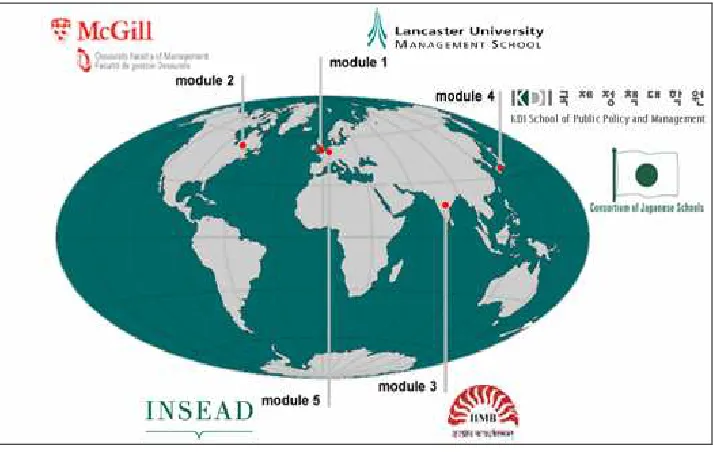
Figure 1: International Masters Program in Practicing Management
(IMPM)
Source: IMPM, http://www.impm.org/overview.htm last access 22.Nov.2006.
Within this “worldly collaboration” and “experienced reflection” approach of IMPM, management education is structured around managerial mindsets (namely Reflective, Analytic, Worldy, Collaborative, and Action). While the managerial mindset of reflection is learned in Lancaster University Management School, that of collaboration is learned in the partnership of Korean and Japanese Schools.
The development of this state-of-the-art, leading-edge management education program “masks the tremendous debate, and the many people who animated it” during its development process. This was a program that sought from the outset to construct management education and development with the realities of managerial work at its core. Constant re-examination of these realities in cultures around the world extended the ‘R&D’ phase well into the delivery of the program itself.20
1) The focus on the current practice of managing in real-life contexts;
2) The importance of reflection on experience and on concepts;
3) The maintenance of a pluralistic learning community;
4) And the impact on organizational life and performance.21
All these issues, we believe, emphasize a blending of cross-cultural management and knowledge management22 for management learning. This blending, in the words of the program designers, incorporates an important matter that business schools have forgotten for more than a century, while they have been trying to find the ideal educational formula for the ideal manager: Management and “managers are products of a perpetually imperfect (but not unhealthy) world …in which the search for perfection is just that: a journey towards the mythical final harmony,” which, as “the ‘(unattainable) end’ is not as important as the journey itself.23 However,IMPM “tells the story of an alternative journey:”
a project whose aim is precisely to engage management education with the creative ‘mess’ of life in organizations around the world. The goal was to create a Masters program which would build back bridges between academic education and the multiple, complicated and imperfect worlds of management.24
In that sense, IMPM is “a turning away from a search for an illusive final state, to a search for the daily ‘dis-ordered’ realities of managerial practices,” although, “it is crucial to see it against the background of the dominant trends in business schools” in order to comprehend the “terms of reference for this move.”25 This IMPM movement can be compared with that of the MBA, which “was, and continues to be, ‘all things to all people’,”26 which, “unsurprisingly…has never been achievable.”27
To the extent that ‘the world’ is in fact a plural (diverse) cultural reality there can obviously be no single, universal model of ‘best practice’ in business organizations. There can be learning and connectedness across the world, but these are open processes which cannot be locked into ‘mean and lean’ models aiming to reduce the complexity which is the very core of life.28
predominant provision of single search into single cultural reality in management learning.
For the part that our work contributes to this journey, this research will explain how these multiple, cross-cultural29 searches within one single program work. This explanation itself then will contribute to a blend of cross-cultural knowledge management that addresses not only the myriad aspects of culture and knowledge, but also their interrelations for management learning.
4.1 “Educating Managers on the Edges”
Near the end of his discussion of management education and IMPM, Mintzberg (2004:372-376) uses three metaphors, “borders, tightropes, and ridges” to explain the essential characteristics of the IMPM innovation. We also would like to add “jigsaw puzzle” to these metaphors. All these are related to exciting but difficult “edges, where life is richer and more varied, more conducive to innovation, but also subject to tension.” This is in accordance with the feedback of one participant who has written that the IMPM should be kept “as a work in progress . . . constantly shifting . . . to remain at the edge,” or the joke of another participant who has linked the field visit to an SME specialized in high-tech cutting machinery with the importance of working at the “cutting-edge!”
First of all, the IMPM is an experience of educating beyond borders in management learning, which divide, keep things apart, for better and for worse.30 Management education must respect the variations in companies, industries, nations and people, which require being “far more eclectic, flexible, and customized than it now is.” Moreover, “however collaboratively we work across them, we also need some borders in management learning.” (Mintzberg 2004:374). This issue of borders can then be explained with the following metaphors below:
distinguishing, and making sense of the individual pieces, which constitute the bigger picture.
The comprehension of the borders and boundaries, however, is not an easy task to do. Inside an organization or institution, boundaries and borders are the odd, unsafe places, away from the comforting center. These places are where extremes are experienced or can be experimented on, rather than where norms are practiced. Furthermore, boundaries are not always easy-to-perceive, and perceiving the limits they define may require risky experimenting, forcing or pushing from inside or outside.31 Mintzberg (2004) also stresses the point that there are often tensions along borders, like tightropes. As Mintzberg argues, management learning is necessarily “shaky, suspended in space,” and this is because of what is right with it, not wrong. “The real problems of managing are up here, amid the ambiguity, complexity, and nuance.”32
As Mintzberg concludes (2004), stretching out all the tensions, one can appreciate the set of precarious tightropes on which the participants and faculty of such educational programs have to walk. However “these are not just the tensions of education; most of them come from the everyday life of managing. Thus they have to appear in any program that is truly managerial.” Besides, as one participant has pointed out, “only when a tightrope is tense can you advance along it, to make progress.” So these tightropes have to be walked, not avoided, which may require a different perspective to see them.
Finally, Mintzberg (2004: 375-376) considers the metaphor of a ridge as both border and tightrope. (“It is a border between the terrain on either side (often, as such, a national border). It can also feel like a tightrope, just more solid, although when it gets narrow, you begin to wonder.)” This may be the best metaphor of all to appreciate management learning, as Minzberg argues.
4.2 The Significance of IMPM in the Global Knowledge Economy
Thus, as a program of “worldly collaboration” and “experienced reflection,” IMPM addresses the creative “complex mess” of “diverse cultural reality” for “learning and connectedness across the world.” In other words, the IMPM program tries to satisfy the principle of requisite variety33 to meet the challenges of the increasingly complex, global knowledge economy, as a multi-organizational education program that is implanted and embedded in “contrived diversity.”
While generally facilitating the cross-epistemic learning and conversation among different cultures that satisfactorily represent the diversity in the global knowledge economy, IMPM is also significant in some more specific senses. For instance, the IMPM approach signifies the emergence of intra-regional learning as a result of the partnership between Japan and Korea. Consequently, in Korea an “explicit inter-firm” and in Japan an “implicit intra-inter-firm” collaboration pedagogy have evolved in action within the collaborative mindset module.
4.3 What are the Current Problems and Limitations in IMPM?”
In order to signify the leading-edge characteristics of the program, this study of IMPM highlights a framework of cross-epistemic management that addresses not only the myriad aspects of culture and knowledge but also their entwining for management learning. In the mean time, the current problems or limitations of the program identified as a result of this study are provided below:
1.IMPM represents a partial “worldly”-ness: IMPM claims to be worldly
rather than global, to emphasize the integration of indigenous and international management knowledge. However, the local indigenous knowledges that are represented in the program are mostly those of the multinational companies from developed companies, while small and medium enterprises and developing countries in this world are underrepresented. This is an important concern that ought to be addressed more considerately for the betterment of the cross-cultural learning in the program.
2.Impact on practice of participating organizations is limited: Even if the
leading-edge, IMPM has not yet been totally able to address a major concern of education, how learning in education can be applied to real practice. Although this criticism of IMPM is considered to be a shortfall on behalf of the companies, for a management education program that signifies cross-cultural learning this is again a crucial criticism.
3.Creative and critical reflections are limited to individual incidents: As a
issue for a management education program in the global knowledge economy. To some extent, this issue can be understood in a way that, not only IMPM itself, but also the existing frameworks of theory and practice themselves, do not yet sufficiently address these more creative and critical types of reflection. For instance, by their nature creative activities are expected to be unexpected and unsystematic. Or, such a top-level program may need to be more elitist than emancipating. However, still it should be underlined that in the knowledge economy, not only critical but also creative thinking demands to be managed and learned. This becomes more important for a management education that offers itself as a template for the diffusion of its innovations.
4.Virtual facilities are not developed enough: Even if there is a deliberate
decision to use more analog low-tech but high-touch ways of learning and practice of soft skills like reflection, the current hard technology at use in IMPM ought to be brought to a level that can at least catch up with the current use of digital technology for softer, more touchy ways.
5. Refraction as a Framework to Address the Limitations of IMPM
We hope the above information about the special characteristics, significance, current problems and limitations of IMPM identified as a result of this action research provides a useful picture of the program in general. Now, we discuss a framework of “refraction” to address these limitations, providing more specific related information. This notion of refraction will be based upon and complement the concept of reflection.
5.1 Reflection
As discussed above, even if it is a leading-edge program that emphasizes educating managers on the edges, and has significant impact on individual participants, IMPM has not yet been totally able to cross the edge and have a real impact on organizational participants. This issue is enough to start questioning the limitations of the program, especially its “experienced reflection” pedagogy, and then look for ways that these limitations can be improved.34
social movement theories, as well as from different levels, from intra-individual to inter-social.
We can provide an easy explanation about physical reflection, which we commonly come across in our daily lives, such as the image of our face in a mirror. However, there is more to this, if we recall the story, or the picture, of “Echo and Narcissus”, painted by Waterhouse (1849-1917).36 While a mirror image is a reflection we perceive with our eyes, an echo is a reflection we perceive with our ears. Furthermore, according to the myth: Narcissus falls in love with himself, his own reflection on the water; and finally dies, trapped by an obsession with his own beauty; where he dies, narcissus flowers grow.
Finding their roots in such mythological stories or other works of the classical age, psychology and psychoanalysis make use of reflection as well, such as in the works of Lacan, or in transactional analysis. Similar links between the natural world and the social world provide rich sources of metaphorical relations to explain and use the concept of reflection, such as in the work, “Future and Past are Relative” by Alizadeh.37 With regard to this, in the IMPM, one of the important aspects of the reflection concept is that it is not limited to past experience. Together with past one can reflect on future, for instance about one’s purposes or plans to reach these purposes. By reflecting past and future, then present experience can be “unfolded”, with respect to the original meaning of the word, “re-flect.”
Management of self-knowledge through reflection is important, and there are personal ways to reflect on our own selves. For instance, to use a physical metaphor, consider a person inside a room looking out from a glass window at twilight. As it gradually gets dark, the window glass turns into a mirror, reflecting the person together with the surroundings, rather than what exists outside. In daily life, keeping a diary, a morning run, taking time off for a trip to a place that has not been visited before nor for a long time, or a relaxing shower can all contribute to personal reflection. Similarly, field trips, reflection papers, and insight books are among the tools that are used in IMPM for personal reflection. Furthermore, it is also important to consider reflection as a collective act that includes other people.
good examples of this collective reflection, when, using other persons as mirrors, participants get the chance to reflect on themselves and others.
5.2 Refraction and Reflection
In general, reflection and the reflective mindset are useful concepts for management learning and professional/practitioner development and training (Moon 1999, 2004; Taylor 2006), but there are other related issues that can be better explained with the concept of refraction in addition to reflection. For instance, in general, one of the most important things that participants learn from the IMPM is how to ask the right questions, which can be linked with critical and creative skills for problem-solving, being able to think out-of-the-box or linearly where ‘everyone else’ thinks in-box or in a linear fashion. And, this non-linear, critical and creative thinking is associated more with refraction than reflection. Thus, a closer look at refraction would be helpful to understanding issues related with reflection. To explain refraction we would like to give two examples, again from the physical world.
First, the human perception of a break in the straw in a glass of water is a good example of being able to see non-linearly. This could be interpreted as the ability to think in a non-linear but rational fashion through refraction. The other interpretation, the rationalized misperception of something actually linear, is another issue. Our mind has the tendency to simply perceive the course of light in a linear fashion, even if the course of light passes through different contexts. As a result, we mistakenly see a break in the straw. This simple misperception based on linearity is common in our thinking and decision-making. A similar natural phenomenon we observe in optical prisms is the refraction of sunlight. Just as white light turns into different colors as it travels through and out of the prism, refraction can help individuals to think colorfully and creatively, to become able to see the true different colors that construct the white, among others who can see only the visible white. Another optical instrument can then be used to convert the split colors into one, maintaining the continuity of the phenomenon without reducing it into separate pieces, unless this separation would be done deliberately, for, for instance, analytical purposes.
5.3 Refraction for IMPM
We suggest that in addition to reflection, refraction is also an important concept for management learning. Reflection and refraction together can play an important role in the transfer of learning and knowledge from one context to another. Here temporal and spatial concerns are very important, together with human perceptions and misperceptions, which are exemplified by the above examples of the prism and the straw in a glass of water. When we deal with the transfer of data and information, a simple linear understanding of reflection and refraction can be sufficient, as in fiber optics, but when it comes to the creation and transfer of knowledge from one context to another, the situation becomes more complex and chaotic, necessitating a non-linear, multidimensional explanation resembling perhaps a continuous spiral as in the knowledge-creation model of Nonaka & Takeuchi (1995), butterfly flapping of Lorenz’s Attractor, or the infinity symbol.
The IMPM program also recognizes the necessity of dealing in the right way with the complex nature of knowledge transfer and, to a certain extent, facilitates the transfer of knowledge, learning, and experience of participants from workplace to the program and then back again to the workplace. Theses and ventures are important examples facilitating knowledge transfer between the educational program and the organization. For instance, as discussed above, in participating organizations, an executive sponsor works with the participants and the IMPM tutor in the venture and thesis, linking the learning to the company’s strategic priorities, or “burning strategic themes.” (Purves: 11)
Reflective and refractive interactions are equally important, when we consider individuals as agents and actors in their actual work and personal life, or as members of their respective communities of practice, or as members of work groups and other social formations. Moreover, the free and creative thinking associated with reflection and refraction coincides with the ‘emancipatory’ nature of the term, as an important social dimension. This stresses being critical and evaluative towards an outcome that is transformative and liberating in effect, not only for the individual but also for society (Habermas 1973, 1972; Mezirow 1990; Reynolds 1998). That critical aspect of reflection is also encouraged in the reflective mindset at the IMPM, although there is contradictory evidence about whether the program is able to produce successful results on this. (Liu 2001)
the chance to see one’s own experience through the eyes of another. The faculty (Western & Gosling) identifies three stages within this reflective learning experience: (1) “Acquiring Knowledge”, (2) Reflective Thinking”, and (3) “New Mindsets”. The flow of learning in the Management Exchange leads to emergent thinking, imagination and creativity in the third stage, although not all the participants manage to cross the boundary between the reflective thinking and this emergent thinking, and reach the higher part of the evolving new mindsets.38 Furthermore, Liu (2001) and Medeni (2001) argue that a more critical and creative perspective could be developed for a reflective mindset, which then could be incorporated into the philosophy and practice of the IMPM program and its reflective mindset module.
One of the reasons for this contradictory evidence and discussions can be found in the conceptualization of the IMPM reflective mindset. This does not make an explicit distinction between reflection and refraction, while incorporating some of the discussions about refraction into those of reflection. In the same fashion, in general, it is unusual to have discussions about refraction, when we talk about a reflective mindset or reflective learning and practice, although refraction is an important concept for management learning, in addition to reflection. Refractive issues either remain unnoticed or are incorporated into the conceptualizations of reflection. Examples of this can be found in Moon’s classification of Best Possible Representation of Learning (1999); or in the title of an e-Portfolio Conference (2004), “Reflection Is Not a Mirror, It's a Lens”, which works by refraction. On the other hand, the two concepts can be distinguished, for instance by associating reflection with being able to see things as they are, and refraction with seeing things differently, both of which are important. Nevertheless, it would be useful to consider reflection and refraction together, and complementing each other in order to make our general point and develop our discussion for management learning and reflective mindset.
Recognition and incorporation of refraction into our conceptual frameworks could also help to clarify and develop our understanding and use of reflection, which has been associated with too many issues.
Even in the IMPM, which is a very good example of how reflection can be learned and practiced, it is pointed out that in the Management Exchange program, different stages of learners’ reflective experience are identified, but not all participants can reach the certain stage that leads to emergent thinking, imagination and creativity, as we have discussed above. One suggestion regarding this could be that, instead of trying to relate all these stages with one-all-encompassing framework of reflection, treating and targeting these different stages differently by relating the higher stages with refraction rather than reflection could be useful, for not leaving to individual efforts, but systematically supporting at the organizational level the pursuit of this ultimate learning experience. Arguably, some refractive aspects are found already in different parts of the existing program, such as the IMPM Management Exchange program, reflective and analytic mindset. Similarly, knowledge transfer, critical thinking and creativity features can be found in all five mindsets of the IMPM, as well as in other management education and development programs in different ways. However, these refractive aspects and features can be more systematically identified and incorporated into the program curriculum design and delivery. Again, when we suggest learning refraction, we by no means undervalue the learning of reflection. Participants should learn refraction in relation to reflection, while these two concepts are distinguished and the interrelations between them are identified, such as considering refraction as critical and creative reflection, and highlighting their complementing roles in knowledge transfer.
Although there are other management education and development programs, and knowledge management education programs that incorporate the learning of reflection, with experienced reflection pedagogy, IMPM is the leading edge in management development and education. Still, the integration of refraction into the curriculum, which would be supported by the application of new learning methods and technologies for reflection and refraction, can improve the program considerably.
entities that stand outside our boundaries. The refraction is what moves across, to the other side, as the boundary interface refracts the interaction in order to adjust to the conditions of the moved context. Managing the boundary interface can help us determine the nature of the interaction across different contexts, facilitating, for instance, refraction so that we can develop a beneficial relation among different parties such as school and workplace, bridge conflicting paradigms and world views, make sense of the true nature of the reality around us, change our thinking from in-box to out-of-the-box , solve complex problems, deal with chaotic situations, be more critical and creative, or simply co-exist.
5.4 Virtual Refractions
Although he proposes an architecture and technology (used in general terms) for the learning of reflection, Mintzberg (2004) suggests that being low-tech and analogue in contrast to high-tech and digital works better for the facilitation of reflection and its learning. Perhaps reflecting this perspective, in IMPM so far a digital network that connects and facilitates the knowledge and experience sharing among the participants, tutors and graduates yet to be used effectively, as admitted by the staff.39
However, we think that even some simple digital technologies (used mostly in terms of specific computer and communications technology) can be very effective for the learning and practice of reflection and refraction. For instance, not only are computer-mediated collaborative learning or asynchronous communication tools (such as blogs, email, discussion forums) supportive of reflective interaction and learning; but fantasy role-playing and creative story-writing in digital environments or virtual communities can contribute considerably to the practice and learning of reflection and refraction, as well. The virtual environment provides reflective and refractive filters or potential spaces for social representation and knowledge creation.
The artificial, or virtual, experience of role-playing could also complement the forced experience of project work, the simulated experience of case study, the added experience of action learning, and the natural experience of experienced reflection, in accordance with Mintzberg’s suggestion for blending different pedagogies for management, which was discussed before. As virtual experiences are increasingly becoming a part of our real lives, hybrid digital environments for both virtual and natural experiences can be used more extensively and purposefully for the pedagogical practice of experienced reflection, for instance. To sum up, while we by no means undervalue the learning of reflection in the IMPM, we take note that a refractive mindset needs to be incorporated more systematically into the curriculum design of this leading-edge management program.
5.5 Critical Reflections on Management Learning, IMPM and their
Study
For the learning and practice of management, even if concerns about creativity, critical thinking, and transfer of knowledge from the educational context to the work context can be addressed with refraction (together with reflection) in theory at schools such as the IMPM, these are still problematic concerns to put into practice in the real world. Reflecting purposefully for creative or critical thinking would be always easier to do in theory than in practice. Similarly, the characteristics of the education/theory and work/practice contexts are so different, that the knowledge refracts significantly during the in-between transfer, making it very hard to deal with the actual knowledge for both the learning at school and the management at work for different individual and organizational purposes.
how information is converted to individual and then organizational knowledge and action can be evaluated.
These issues about the evaluation and evolution of the IMPM, not only as a pioneering management education program, but also as a normal (management) education program are to be the subject for further research, as they are important for realistically identifying the value and characteristics of the program, so that these characteristics can be furthered and diffused to other education or development programs.40 Nevertheless, even if we can draw upon our research on cross-cultural management education and IMPM to reach general conclusions about IMPM, this research itself has not specifically aimed to make an overall and thorough assessment of the IMPM program. The five mindset modules and other program activities should be studied individually and comprehensively in order to reach such an aggregate, comprehensive conclusion.
Whether it is successful at the transfer (utilization, or application) of knowledge from education to practice, or simply provides a playground for participants or not, the IMPM is an important case for highlighting the interaction between individual, organization and the education program itself, as the program tries to get the involvement of the company with the learning of the individual participant, and tailors itself to address the concerns of the individual and organizational participants. The interaction among these three parties also can be considered within a unifying knowledge creation and management mindset, where we can think about and discuss knowledge-creating individuals, companies and organizations.
6. Planning Ahead: A Journey to Wisdom
If we recall the previous discussion of the IMPM faculty41, management education is in search of a mythical final harmony, whose end is not as important as the journey itself. This is similar to the journey of “the conference of the birds” in search for the mythical bird Simorgh:42
“The conference of the birds” is a book of story poems that recounts the longing of a group of birds who desire to know the great Simorgh, and start their journey toward the land of Simorgh. One by one, the birds drop out of the journey, each offering an excuse and unable to endure the journey. Eventually only thirty birds remain as they finally arrive in the land of Simorgh — all they see there are each other and the reflection of the thirty birds in a lake — not the mythical Simorgh. The thirty birds seeking the Simorgh realize that Simorgh is nothing more than their transcendent totality. Its most famous section is:
And be the Eternal Mirror that you saw:
Rays that have wander'd into Darkness wide
Return and back into your Sun subside (Attar 1177).43
In one account, Simorgh was said to live 1700 years before plunging itself into flames; in later accounts, it is immortal and is said to have a nest in the Tree of Knowledge,” or “the Tree of Life” in the Garden of Eden.This can be compared with the Phoenix: The bird and its nest are “reduced to ashes, from which a new, young phoenix arises.”44 Simorgh, image of which represents the sophisticating journey of wisdom, used by Suphism, has a philosophical antagonism towards Serpent, image of which also represents the embodiment of the wisdom transmitted by Sophia, used by Gnosticism.45
As Costea & Gosling discuss,however, IMPM “tells the story of an alternative journey” that precisely aims to engage management education with the creative ‘mess’ of life in organizations around the world. The program turns away from a search for an illusive final state, to a search for the daily ‘dis-ordered’ realities of managerial practices. However, it is crucial to see IMPM against the background of the dominant trends in business schools, in order to comprehend the “terms of reference for this move.”46
For IMPM, these terms of reference are the modules, as searches into local realities of academic and business management knowledge. During these searches into the time-space of the local realities, in Kant’s terms, space enables the participants to know the co-incidence, while time enables them to know succession.47
As a result, IMPM can be considered as a journey to wisdom, with multiple searches into local realities through the modules as terms of reference. This journey to wisdom that IMPM represents brings a different perspective to management education as well as knowledge management education where learning of wisdom is distinguished from that of information and knowledge.
Consequently, IMPM itself can also be considered as a knowledge-creating spiral. This knowledge-creating spiral consists of the modules in different countries. As a curvature of time and space, this knowledge-creating spiral flows around the world, bending in response to local realities in its path, and carrying everything in its diversity along its twists and turns. Not only each module within one IMPM cycle, but also each IMPM cycle, contributes to the accumulation of knowledge within this knowledge-creating spiral.
IMPM can benefit from the partnering of two neighbouring countries for one module.
This suggestion can be conceptualized within a framework that emphasizes addressing not only local and global but also regional diversity of cultures. According to this, regional diversity can be understood as the interplay between local and global diversities. A regional outlook then can provide insights about cross-cultural interactions both for local and global issues. As a result, such regional perspective also fits with a conceptualization of in-between-ness between different knowledge systems that themselves are the results of the interplays among different epistemes and ontologies.
Accordingly, the IMPM program could commence with England-France, then could move to Turkey & Russia to provide the historical heritage and current condition @ the “center of the earth,” to be followed by India-China, and then Canada-U.S.A. and concluded by Japan-Korea. In summary, rather than a linear modular design, this kind of program would have a nautilus-like structure that is composed of accumulating chambers resulting in a knowledge-creating spiral. Here the and nautilus shell design could also be considered as an anaphora, “a carrying up or back” in Ancient Greek, and an amphora as “a whirling eddy” in current Turkish, or an amphora as “a carrying craft” in a more common sense - with its all mental, real and virtual aspects of time-space, the last of which are already being represented by the well-known sign for the Internet navigation, @.
Such “@” notion matches well with the notion of multiple searches for the “daily ‘dis-ordered’ realities” of management knowledge that is advocated by the “alternative journey” of IMPM. This is to apply a systemic inquiring attitude towards the practice through the asking of circular, hypothetical and reflexive questions (Kikoski & Kikoski 2004) frequent enough in a certain period of time,48 which is eminent in IMPM with its modular structure based on 5 mindsets spread over 1.5 years, or one “IMPM Cycle.” In this way, IMPM participants find the chance to frequently question the taken-for-granted assumptions of worldviews of each other during the modules and tutorings.
In addition to this, during these multiple, frequent inquiries into diverse cultural realities, practitioners can have insights and outsights of the existing management knowledge as not only participant observers but also by-standers. Both participant observation and by-standing can provide intimate insights as well as critical outsights. Participant observers can take different stances that can provide them either reflective insights or refractive outsights. As for the by-standing observers, standing at the in-between-ness enables them to take either “insights out” or “outsights in”.
6.1 Suggestions for Improvement
As a result of this study, some more practical inferences can be made with implications not only for the IMPM program but also for curriculum development for management education. Firstly, the following suggestions are made as for the practical implications of this action research to address the current problems of IMPM:
1. Furthering the worldly-ness of IMPM by systematically incorporating business schools and attracting business companies from such emerging economies as China, Russia and Brazil, and fast-growing economies such as Turkey. This systematic incorporation can also be accompanied with a regional perspective that complements local and global perspectives.49
2. Second, incorporation of a cross-cultural refraction mindset into the IMPM pedagogy, to complement “experienced reflection” and “worldly collaboration” would be suggested.
3. This incorporation of cross-cultural refraction mindset can not only improve the impact of the program on practice, but also facilitate the cross-cultural learning and practice of more critical and creative types of reflective interactions. Furthermore, this could attract the art-oriented practitioners, who are underrepresented among the craft-and-science-oriented practitioners of management education, with certain implications for visionary leadership education. (Mintzberg 2004)
As for the curriculum development for management education, secondly, a Nautilus model of practitioners’ life-long-learning is suggested. This Nautilus model that can be used to improve the conventional sandwich model in general education is discussed below:
6.2 Moving towards a Nautilus Model for Education
increasing the number of practical experiences as well as academic experiences in the education program, so that more frequent boundary-crossings between academic management knowledge and practical management knowledge are facilitated (Figure 2). In that sense, IMPM is considered to be a primitive case of this Nautilus model.
As a spiral shell, the Nautilus model provides a good analogy for the knowledge-creation spiral (Nonaka & Takeuchi 1995), which should be incorporated into the future agenda of education programs, in addition to the information-acquisition and knowledge-transfer aspects. In that manner, learning can be facilitated to deliberately contribute to systematic knowledge-creation.
Figure 2: Comparison of Nautilus Model and Sandwich Model
7. Conclusion
In this paper we have presented our findings about an action research into a leading-edge business education and management learning program, IMPM,
PMK
AMK
PMK
Sandwich Model
PMK: Practical Management Knowledge AMK: Academic Management Knowledge
PMK
PMK
PMK
AMK
AMK
education program in the global knowledge economy. Within this action research perspective, our aim has been to provide suggestions for program improvement, identifying its current limitations and problems. Our suggestions would also provide guidelines for advancement of the current management education and development programs in general.
Following a background information about the research methodology, in this paper, we have given a critique of management learning, specifically discussing Mintzberg’s ideas and their critiques. We have provided an in-depth literature review on reflection and critical reflection for management learning, underlining recent critics and advancements. Then, the unique, leading-edge characteristics, as well as current problems and limitations of the IMPM in the global knowledge economy has been discussed. “Refraction” has been introduced to complement reflection, thus, address limitations of the program. We have concluded our discussion with specific suggestions for improvements.
We indeed hope the study presented in this paper would be useful for the development of the future business education programs. In the mean time, we also further our work, conducting follow-up e-mail interviews and surveys, thanks to the support of previous program participants. As for future work, understanding and documenting better how business education and management learning programs could contribute to the development of people or organizations that managers have interactions, but not only the development of managers themselves is an important issue to focus in a cross-cultural, knowledge-based economy and society.
References
Amar, A. D. (2002) Managing Knowledge Workers. Unleashing Innovation and Productivity. London: Quorum Books
Argyris, C., Putnam, R., & McLain Smith, D. (1985) Action Science: Concepts, Methods, and Skills for Research and Intervention. San Francisco: Jossey-Bass.
Bentz, V. M. & Shapuro, J. J. (1998) Mindful Inquiries in Social Research. London: Sage Publications
Brady, H.E., Collier, D. and Seawright, J. (2004). “Refocusing the Discussion of Methodology.” Rethinking Social Inquiry. pp 3-19. Oxford: Rowman & Littlefield Publishers, Inc.
Burgoyne J. G. & Reynolds, M. (Eds.) (1997). Management Learning: Integrating Perspectives in Theory and Practice. London: Sage Publications.
Burton, A. (2000) “Reflection: Nursing’s Practice and Education Panacea?” Journal of Advanced Nursing, 31(5): 1009-17.
Carr, W. & Kemmis, S. (1986) Becoming Critical. London: Falmer.
Chia , R. (2005b) “Book Review: Response to Pfeffer” Organization Studies 26 (7): 1095. Collier, D., Brady, H.E. & Seawright, J (2004) “Sources of Leverage in Causal Inference: Toward an Alternative View of Methodology.” In Rethinking Social Inquiry, by Brady H.E. & Collier D. (editors). pp. 229-266. Oxford: Rowman & Littlefield Publishers, Inc.
Donaldson, L. (2005) “Book Review: Questioning Mintzberg’s Educational Philosophy: Critical Comments on Managers not MBAs” Organization Studies 26 (7) 1098-1104
Drucker,P.F. and Maciariello,J.A. (2004), The Daily Drucker. Harper Business
Easterby-Smith, M., Thorpe, R., & Lowe, A. (2002) Management Research: An Introduction. 2nd ed. London: Sage.
Evans, K. Hodkinson, P., Rainbird H. & Unwin, L. (2006) Improving Workplace Learning. Routledge- Taylor & Francis Group
Gould, N. (2004) “Introduction: The learning organization and reflective practice – the emergence of a concept” N. Gould and Baldwin, M. (Eds.) Social work, critical reflection and the learning organization Burlington: Ashgate. pp. 1-10
Griseri, P. (2002) Management Knowledge: A Critical View. New York: Palgrave. Habermas, J. (1972) Theory and Practice. Boston, MA: Beacon Press
Habermas, J. (1973). Border Crossings. Boston: Beacon Press
Heylighen F. (1992) “Principles of Systems and Cybernetics: an evolutionary perspective” Cybernetics and Systems R. Trappl (ed.) Singapore: World Science, pp. 3-10.
Holden, N.J. (2002) Cross-Cultural Management: A Knowledge Management Perspective. Financial Times
Johns, C. (2000) “Reflection as Empowerment?” Nursing Inquiry. 6(4):241-9
Junkers, B.H. (1960) Fieldwork: An Introduction to the Social Sciences. Chicago University Press
Kayes, D.C. & Kayes, A.B. (2003) “Through the Looking Glass” Management Education Go Awry” Journal of Management Education, 27 (6) pp. 694-710
Kemmis, S. (1985) “Action Research and the Poltics of Reflection” D. Bound, R. Keogh and D. Walker (eds.) Reflection: Turning Experience into Learning, London: Kogan Page
Kikoski, C.K. & Kikoski, J.F. (2004) The Inquiring Organization: Tacit Knowledge, Conversation, and Knowledge Creation: Skills for 21st-century organizations. Westport: Praeger Publishers King, G., Keohane, R. & Verba, S (1994). Designing Social Inquiry. Princeton, NJ: Princeton University Press
Koschy, V. (2005) Action Research for Improving Practice: A Practical Guide. London: Paul Chapman Publishing
Liu, J (2001). Fostering Critical Reflection in Management Education – A Case Study of the Reflective Module of IMPM. Unpublished Dissertation presented for MA in Management an Organizational Learning, Lancaster University
Liu, J & Medeni, T (2006) “Fostering Critical Reflection in Management Learning: A Literature Review” 7th International Symposium on Knowledge and Systems Science, 2006, China Livingston, J. “Myth of the well-educated manager.” Harvard Business Review (January- February 1971) pp. 79:89.
Magretta, J. (2002) What Management is. New York: The Free Press
McAlpine, L., & Weston, C. (2002). “Reflection: Issues related to improving professors” teaching and students’ learning.’ In P. Goodyear & N. Hativa (Eds.) Teacher thinking, beliefs and knowledge in higher education. Dordrecht, The Netherlands: Kluwer, 59-78.
McDrury, J., Alterio, M. (2003) Learning through Storytelling in Higher Education.London: Kogan Page
McNiff, J., Lomax, P. & Whitehead, J. (1996) You and Your Action Research Project. London: Routledge.
Mezirow, J. (1990) “How Critical Reflection Triggers Transformative Learning” J. D. Mezirow (ed.) Fostering Critical Reflection in Adulthood: A Guide to Transformative and Emancipatory Learning, Oxford: Jossey-Bass
Mintzberg, H. (2004). Managers not MBAs: A Hard Look at the Soft Practice of Managing and Management Development. San Francisco: Berrett-Koehler Publishers.
Moon, J. (1999) Reflection in Learning and Professional Development: Theory and Practice London: Kogan Page
Moon, J. (2004). A Handbook of Reflective and Experiential Learning: Theory and Practice. London: RoutledgeFalmer
Nicolini, D., Sher, M., Childerstone, S. & Gorli, M. (2004) “In search of the ‘structure that reflects’: Promoting organizational reflection practices in UK Health Authority” M. Reynolds & R. Vince (Eds.) Organizing Reflection Ashgate Burlington: Publishing Company, pp: 81-104
Nonaka, I & Takeuchi, H. (1995) The Knowledge-creating Company: How Japanese Companies Create the Dynamics of Innovation. Oxford: Oxford University Press.
Pfeffer , J. (2005a) “Book Review: Mintzberg’s Unasked Question” Organization Studies 26 (7): 1093-1094.
Pfeffer , J. (2005b) “Book Review: Response to Donaldson” Organization Studies 26 (7): 1105-1106
Pfeffer J., &. Fong C.T. (2002). “The End of Business Schools? Less Success than Meets the Eye.” Academy of Management Learning & Education 1 (1)
Pryce, A. (2002) “Refracting experience: reflection, transformations and postmodernity.” NT Research 7 (4): 298-310.
Purves, S. The IMPM: What the Companies Wanted, and What They Got.