INTERNATIONAL RESEARCH JOURNAL OF PHARMACY
www.irjponline.com
ISSN 2230 – 8407
Research Article
INTER SIMPLE SEQUENCE REPEAT (ISSR) AND START CODON TARGETED POLYMORPHISM (SCoT)
AS DISCRIMINATION TECHNIQUES BETWEEN CERTAIN APPLE AND PEAR CULTIVARS.
Seham S. El-Hawary
1, Mona E. EL-Tantawy
2, Farid N. Kirollos
1, Walaa E. Hammam
2*
1Pharmacognosy Department, Faculty of Pharmacy, Cairo University, Cairo, Egypt
2
Medicinal plants and natural products department, National Organization for Drug Control and Research, Giza, Egypt
*Corresponding Author Email: [email protected]Article Received on: 05/08/18 Approved for publication: 18/09/18
DOI: 10.7897/2230-8407.099192
ABSTRACT
Rosaceae is a large family in the plant regality, includes 3200 species in 115 genera such as Malus and Pyrus to which belong Malus domestica Borkh. fruits (apples) and Pyrus communis L. fruits (pears). Apples and pears have a wide variety of active constituents like anthocyanins, flavonoids, sterols, and tannins. P. communis and M. domestica fruits exhibit good antioxidant, antihyperglycemic, and chemopreventive activities. Botanists prefer to keep apple and pear under genus Pyrus but recently, American authors keep them distinct, apple under genus Malus and pear under genus Pyrus. Hybrids were developed to produce cultivars adapted to Egypt warm weather, so there is a large similarity between the different pear and apple cultivars which requires accurate and rapid techniques for their differentiation. The genetic discrimination between apple cultivars, Anna (1), Volus (2), Dorset golden (3) and pear cultivars, Le-Conte (4), MKM (5) and Flordahome (6) were carried out using start codon targeted and inter simple sequence repeat techniques with ten decamer primers, five for each technique. All primers gave bands with all cultivars with total 49 bands, 26 with ISSR and 23 with SCoT techniques, respectively with 27, 19 and 3 monomorphic, polymorphic and unique bands, respectively. According to combined dendrogram and similarity matrix, apple and pear cultivars grouped into two main groups, one contains the apple cultivars and the other contains pear cultivars with similarity coefficient 0.76-0.92. As a result, we can use ISSR and SCoT techniques for differentiation between apple and pear cultivars which have large morphological similarity.
Keywords: Rosaceae, Malus domestica, Pyrus communis, SCoT, ISSR, DNA primers.
INTRODUCTION
Precise identification of closely related species of medicinal herbs, moreover the cultivars in the same species is an important issue in quality control of these herbs and thus in their medicinal utility. Authentication of the plant origin is essential for accurate and correct use of closely related Plants in different medicinal remedies and products. The use of popular methods in plant identification such as morphological 1, anatomical 2 and chemical 3, 4 methods is difficult between the closely related plants and
furthermore, require professional taxonomist’s specialty. Genetic analysis is a preferred tool for resolving taxonomists’ differences in discrimination between close species and cultivars resulting in the use of useful genotypes which increase the quality and efficiency of drug standard formulations 5. DNA based
authentication is a useful method in quality control assurance and safety monitoring of medicinal herbal products. It can also raise the medicinal potential of herbal products 6. Botanists prefer to
keep apple and pear under genus Pyrus but recently, American authors keep them distinct, pear under genus Pyrus and apple under genus Malus 7 due to the presence of slight botanical
distinctions between the two genera which is difficult to clear by unprofessional students. Apple and pear fruits require cold weather for blooming and production of important antioxidants as anthocyanins 8, so hybridization for developing of cultivars
being adapted to warm weather as apple cultivar Anna and pear cultivar Le-Conte was carried out. Thus, new cultivars will differ more or less in their active constituents’ composition and quantity in reference to other apple and pear cultivars. Therefore, accurate and rapid authentication methods of medicinal plants will ensure
quality and efficiency of herbal formulations 9. Inter-simple
sequence repeats (ISSRs) are regions in the genome flanked by microsatellite sequences. PCR amplification of these regions using a single primer yields multiple amplification products that can be used as a dominant multilocus marker system for the study of genetic variation. ISSR markers are easy to use, low-cost, and less demanding compared to other dominant markers, the generation of ISSR markers makes use of microsatellite sequences that are highly variable and absolutely distributed across the genome, at the same time ISSR achieves higher reproducibility than Random amplified polymorphism (RAPD)10.
ISSR technique was widely used in genetic diversity analysis of medicinal plant species, such as Memecylon species 11 and
Ocimum species 12. Start Codon Targeted Polymorphism (SCoT)
is a simple and novel DNA marker technique, uses 18-mer single primer in PCR and an annealing of 50 ºC. PCR products are resolved using standard agarose gel electrophoresis. SCoT based on the short conserved region flanking the start codon (ATG) in plant genes. This technique is more polymorphic, efficient and reproducible than RAPD and successfully utilized in rice for cultivar identification and genetic diversity analysis 13, moreover,
SCoT polymorphismis correlated to functional genes and their corresponding traits such as different metabolites in closely related species. SCoT polymorphism used also in genetic diversity of Jojoba genotypes 14. Combined ISSR and SCoT
techniques were used in discrimination between closely related cultivars, such as Mango cultivars 15 and Indian Jujube
cultivars 16. Malus genus is reported to consist of 25–35
species 17. Pyrus recorded species were listed into two categories,
hybrids and ferals 18. P. communis L. and M. domestica Borkh.,
contain many chemical constituents, as proanthocyanidin, flavonoids, caffeoylquinic acid derivatives 19, 20, sterols 21, 22 and
pectin 23. P. communis L. have antibacterial, antiseptic,
antipyretic, aphrodisiac, astringent, diuretic, laxative and antihyperglycemic activities 24, also M. domestica Borkh.
reported to possess chemopreventive in liver cancer 25,
furthermore, apples and pears have antioxidant and antihyperlipidemic activity 26. Our main purpose of this study,
therefore, was to develop accurate, rapid and reproducible DNA-based marker (ISSR) and (SCoT) techniques for discrimination of different apple and pear cultivars, as there is no report of usage of ISSR and SCoT combination for study of genetic diversity between apple and pear cultivars in Egypt.
MATERIAL AND METHODS
Plant Material
The leaves of the six cultivars, apple cultivar Anna (1), Volus (2), Dorset golden (3), pear cultivar Le Conte (4), MKM (5) and Flordahome (6), were collected in March 2017 from Horticulture Research Institute, Giza, Egypt. The plants were authenticated by Dr. Galal Eliwa professor in the institute and by Dr. Abdel Halim Abdel Mogaly, taxonomist in the Agricultural Museum, Giza, Egypt. Voucher specimens no. 12.03.2017.01 and 12.03.2017.02 were deposited in the herbarium of Pharmacognosy Department, Faculty of Pharmacy, Cairo University, Cairo, Egypt. Samples of leaves were stored at -70 ᵒC and then, were ground using liquid nitrogen to a fine powder before DNA isolation. DNA analysis was carried out in Horticulture Research Institute, Agricultural Research center, Ministry of Agriculture and Land Reclamation, Giza, Egypt in 2017.
DNA Mapping Material
Buffers: Extraction buffers: Lysis Buffer AP1: 10 mM Tris-HCl (pH 8), 1 mM EDTA (pH 8), 0.1% SDS, 0.1M NaCl, 1X PVP, 10mM DTT, RNase (add fresh prior to use). Protein Precipitation buffer AP2: 60 ml of 5M potassium acetate (98.14 g in 200 ml d H20), 11.5 ml of glacial acetic acid in 28.5 ml d H20. Binding Buffer AP3: 1M Guanidine Hydrochloride (4.78 g GH in 50 ml 100% ethanol). Wash buffer AW: 70% ethanol. 5X Tris-borate (TBE) (pH 8), Tris-base 5.4 g, Boric acid 2.75g, 500 mM EDTA (pH 8) 0.29 g and deionized water (d.w) up to 100 ml. Reaction buffer: 10X TBE, 25mM MgCl2, 2.5 mM dNTPs, 10 pmol primer,
Taq DNA polymerase, Template DNA and (d.w) H2O. Loading
dye buffer 5X: 2 ml Na-EDTA (pH 8), 5 ml Glycerol (100%), 0.75 ml Bromophenol blue and 1.5 ml (d.w.) H2O.
Primers: ten primers were purchased from Metabion international AG (Germany), five primers were used for ISSR analysis and their sequences are as follows:
14A; [CTC TCT CTC TCT CTC TTG], 44B;[CTC TCT CTC TCT CTC TGC], HB-12;[CAC CAC CAC GC], HB-14; [CTC CTC CTC GC], HB-15;[GTG GTG TGG C].
Five primers for SCoT analysis with the following sequences. SCoT 2;[ ACC ATG GCT ACC ACC GGC], SCoT 3;[ ACG ACA TGG CGA CCC ACA], SCoT 6;[ CAA TGG CTA CCA CTA CAG], SCoT 8;[ ACA ATG GCT ACC ACT GAG], SCoT 11;[ ACA ATG GCT ACC ACT ACC].
Molecular weight marker: DNA ladder 100 bp, Bio-Rad laboratories.
Apparatus: The DNA amplifications were performed in an automated thermocycler (model Techno 512), agarose gel electrophoresiswas carried out by (mini-submarine gel Bio-Rad) tool.Visualization of ISSR and SCoT fragments was carried out by UV Polaroid camera.
Methods for Molecular Examination
DNA extraction: DNA extraction was performed using DNeasy Plant Mini Kit (QIAGEN) by DNeasy-like protocol 27.
Amplification of ISSR and SCoT markers: PCR was performed with 25 ng DNA template according to 28 following thermal cyclic
profile.
Thermal cyclic profile:The DNA amplifications were performed in an automated thermal cycle (model Techno 512) programmed for one denaturation cycle at 94º C for 4 min followed by 45 cycles each of 1 min at 94º C, an annealing cycle for 1 min at 57º C, and an elongation cycle for 2 min at 72º C. Finally, the primer extension section was prolonged to 10 min at 72º C. The amplified products were determined by electrophoresis using 1.5% agarose gel containing (0.5µg/ml) ethidium bromide in 1X TBE buffer for 30 min at 80 V in mini submarine gel Bio-Rad.
ISSR and SCoT Analysis
DNA extraction was performed using DNeasy Plant Mini Kit (QIAGEN), PCR amplifications were performed in an automated thermal cycle (model Techno 512). Amplification products were determined by electrophoresis, visually studied and recorded for the presence (1) or absence (0) of DNA bands. Cluster analysis of data using unweighted pair group method with arithmetic average (UPGMA) was used for obtaining of the similarity matrix. Each of DNA bands was treated as a unit character for assessment of genetic diversity between the tested samples 28. The similarity
matrices were done using Gel works ID advanced software UVP-England Program. The relationships among genotypes as revealed by dendrograms were done using SPSS windows (Version 24) program. DICE computer package was used to calculate the pairwise difference matrix and plot the phenogram among cultivars 29.
RESULTS
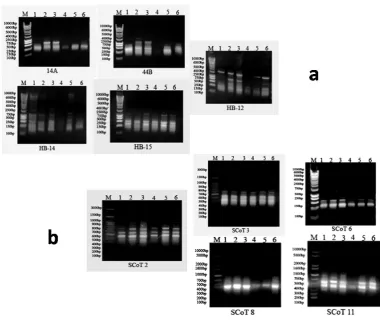
monomorphic, polymorphic and unique bands, respectively. All used apple and pear cultivars are differentiated by presence or absence of unique bands in ISSR or SCoT profiles. The total number of different band types resulted with each primer is represented in (Table. 1) and the common and unique bands produced by ISSR and SCoT PCR amplification are provided in (Table. 1). Dendrograms are computational diagrams used for clustering of samples and genes. They have been widely used in clustering of closely related pear cultivars 30 and in the
differentiation of jojoba male and female genotypes 14 and used in the evaluation of genetic diversity of wild Pistacia Species 31.
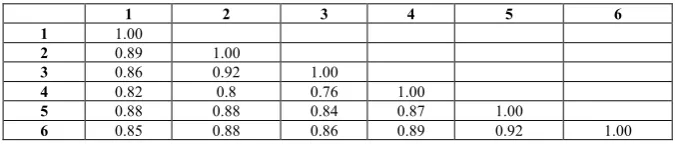
Use of dendrograms based on unweighted pair group method with arithmetic average (UPGMA) analysis results in clustering of the six cultivars as follows, according to ISSR data (Fig. 3 A) they were grouped into three main groups with Dice similarity coefficient ranging from 0.77 to 0.96 (Table. 2), the first group includes two apple cultivars, Volusand Dorset golden and the second group includes, pear cultivar Le-Conte, MKM and Flordahome and finally, the third group include, apple cultivar Anna alone. Dendrogram based on SCoT data (Fig. 3 B) grouped the six cultivars into two main groups with Dice similarity coefficient ranging from 0.74 to 0.92 (Table. 3), the first include the three apple cultivars and the second includes the three pear cultivars with further division of the first group to two sub groups, one contains cultivars Anna and Volus and the other contains only cultivar Dorset golden, also, the second main group is divided into two subgroups, one includes pear cultivars MKM and Florda home and the other has only cultivar Le-Conte. According to the dendrogram based on combined ISSR and SCoT data (Fig. 3 C), the six cultivars were clustered into two main groups with Dice similarity coefficient ranging from 0.76 to 0.92 (Table. 4), the first included apple cultivars with two subgroups, one for cultivar Anna alone and the other contains cultivars Volus and Dorset golden. The second main group contains pear cultivars with also, two subgroups, one contains only cultivar Le-Conte and the other contains cultivars, MKM and Florda home.
DISCUSSION
Herbal drug adulteration with cheaper or less active adulterants is widely spread whereas, it is intended or due to unawareness, despite the reason, herbal drugs adulteration can cause harmful effects on human health 32. Assurance of traditional medicines
safety, quality and efficacy is one of the WHO guidelines that are required firstly in the evaluation and research methodology of traditional medicines which requires necessarily, the correct identification. DNA-based discrimination of different plants is undoubted, a superior technique that provides accurate and reproducible identification based on unique genetic structure and furthermore, it is not affected by age, physiological or environmental factors. Moreover, DNA-markers are not tissue specific and thus can be used in the identification of the plants in any developmental stage 6. In comparison with morphological
and chemical authentications, DNA based technology provides precise, efficient and fast means of differentiation for hundreds of samples because it can be operated automatically. DNA based authentication is utilized in differentiation between species, individuals and populations as a widely distributed technique in many fields so, DNA based tools of discrimination used now as an important pharmacognostic measure in medicinal plants quality control and quality assurance. The great importance of DNA based discrimination in quality control of commercial medicinal plants which are adulterated is due to the utility of this technology in both processed and unprocessed forms of the plants33. Apples and pears are well known edible fruits with high
nutritional value but also, they are a great source of different biologically active compounds whereas in fruits or leaves such as, phenolic compounds with their different classes as flavanoids, phenolic acids and procyanidins 19, 20 beside the presence of high
amounts of fiber and pectin 23. Scientific studies suggested that
apples and its products had a wide range of biological activities that include antioxidant, antiproliferative, diabetic, anti-inflammatory, lipid oxidation inhibition, and cholesterol-lowering activities which may contribute to health beneficial effects against cardiovascular disease, asthma and pulmonary dysfunction, diabetes, obesity, and cancer 34. It was reported also,
that pears have several biological activities such as antioxidant, antiulcer and antibacterial activities 35-37. Polyphenols
concentration in apple is influenced by the plant variety as well as environmental factors, including geographic region, growing season, and storage 38 that is assuring the importance of using
DNA-based technology for evaluation of genetic diversity of apple and pear cultivars. Recent studies were carried out for evaluation of genetic diversity between Chinese wild apple species and apple cultivars 39 and between northeastern Spain
local apple cultivars 40 by using simple sequence repeats (SSR)
markers. Genetic diversity of some pear cultivars and genotypes by use of (SSR) Markers was done 41. In this study, we preferred
Table 1: Polymorphic pattern and degree of polymorphism for the genetic relationship in apple and pear cultivars
Primer
name Sequence Monomorphic Gel polymorphism
bands
Polymorphic (without unique)
Unique bands
Polymorphic (with unique)
TNB % P
14A CTC TCT CTC TCT CTC TTG
1 3 0 3 4 75%
44B CTC TCT CTC TCT CTC TGC
2 3 0 3 5 60%
HB-12 CAC CAC CAC GC 4 1 0 1 5 20%
HB-14 CTC CTC CTC GC 4 3 0 3 7 43%
HB-15 GTG GTG GTG GC 3 2 0 2 5 40%
SCoT 2 ACC ATG GCT
ACC ACC GGC
3 2 1 3 6 50%
SCoT 3 ACG ACA TGG
CGA CCC ACA
5 0 0 0 5 0%
SCoT 6 CAA TGG CTA
CCA CTA CAG
2 1 1 2 4 50%
SCoT 8 ACA ATG GCT
ACC ACT GAG 1 2 0 2 3 67%
SCoT 11 ACA ATG GCT
ACC ACT ACC
2 2 1 3 5 60%
Table 2: Genetic similarity matrix based on ISSR data among six of P. communis L. and M. domestica Borkh. cultivars estimated according to dice method
1 2 3 4 5 6
1 1.00
2 0.87 1.00
3 0.82 0.96 1.00
4 0.81 0.78 0.77 1.00
5 0.93 0.89 0.84 0.84 1.00
6 0.85 0.86 0.86 0.91 0.93 1.00
Table 3: Genetic similarity matrix based on SCoT data among six of P. communis L. and M. domestica Borkh. cultivars estimated according to dice method
1 2 3 4 5 6
1 1.00
2 0.92 1.00
3 0.9 0.88 1.00
4 0.84 0.81 0.74 1.00
5 0.82 0.86 0.84 0.9 1.00
6 0.86 0.89 0.87 0.87 0.91 1.00
Table 4: Genetic similarity matrix based on combined ISSR and SCoT data among six of M. domestica Borkh. and P. communis L. cultivars estimated by dice method
1 2 3 4 5 6
1 1.00
2 0.89 1.00
3 0.86 0.92 1.00
4 0.82 0.8 0.76 1.00
5 0.88 0.88 0.84 0.87 1.00
Fig. 1: Photos of the three apple and three pear cultivars’ trees
Fig. 2: The obtained PCR bands of Malus domestica borkh. cvs. Anna (1), Volus (2), Dorset golden (3) and P. communis l.cvs Le-conte (4), MKM (5) and Flordahome (6) with (a) ISSR primers (14A, 44 B, HB-12, HB-14 and HB-15) and (b) SCoT primers (SCoT2, SCoT 3, SCoT 6,
Fig. 3: UPGMA dendrograms showing the clustering of the six apple and pear cultivars based on (a) ISSR data, (b) SCoT data and (c) combined ISSR and SCoT data.
CONCLUSION
Use of different DNA based analysis techniques whether alone or preferably in combination as we used in this study can provide large, accurate and reference data base can be used for fast and precise authentication of closely related medicinal plants from their adulterants.
REFERENCES
1. Carlsward BS, Stern WL, Judd WS, Lucansky TW. Comparative leaf anatomy and systematic in Dendrobium, sections Aporum and Rhizobium (Orchidaceae). Int J Plant Sci 1997; 158: 332-42. https://doi.org/10.1086/297445 2. Stern WL, Morris WM, Judd WS. Anatomy of the thick
leaves in Dendrobium section Rhizobium (Orchidaceae). Int J Plant Sci 1994; 155: 716-29. https://doi.org/ 10.1086/297210
3. Kite GC, Veitch NC, Boalch ME, Lewis GP, Leon CJ, Simmonds MSJ. Flavonol tetraglycosides from fruits of Styphnolobium japonicum (Leguminosae) and the authentication of Fructus Sophorae and Flos Sophorae. Phytochemistry 2009; 70: 785-94. https://doi.org/ 10.1016/j.phytochem.2009.04.003
4. Li M, Jiang RW, Hon PM, Cheng L, Li LL, Zhou JR, Shaw PC, But PPH. Authentication of the anti-tumor herb Baihuasheshecao with bioactive marker compounds and molecular sequences, Food Chem 2010; 119: 1239-45. 5. Novak J, Grausgruber-Grőger S, Lukas B. DNA-based
authentication pf plant extracts. Food Res Int 2007; 40: 388-92. https://doi.org/10.1016/j.foodres.2006.10.015
6. Ganie SH, Upadhyay P, Das S, Sharma MP. Authentication of medicinal plants by DNA markers. Plant Gene 2015; 4: 83-99 https://doi.org/10.1016/j.plgene.2015.10.002
7. Bailey LH. Genus Malus. In: Standard Cyclopedia of Horticulture, Vol. ІІ. New York; The Macmillan company; 1953. p.1973.
8. Steyn WJ, Wand SJE, Jacobs G, Rosecrance RC, Roberts SC. Evidence for a photoprotective function of low-temperature-induced anthocyanin accumulation in apple and pear peel. Physiol Plant 2009; 136: 461-72. https://doi.org/10.1111/ j.1399-3054.2009.01246.x
9. Song JY, Yao H, Li Y, Li XW, Lin YL, Liu C, et al. Authentication of the family polygonaceae in Chinese pharmacopeia by DNA barcoding technique. J
Ethnopharmacol 2009; 124: 434-39. https://doi.org/ 10.1016/j.jep.2009.05.042
10.Ng WL, Tan SG. Inter-Simple Sequence Repeat (ISSR) markers: Are We Doing It Right?. ASM Sci J 2015; 9: 30-39. 11.Rasametty BT, Bajpe SN, Kadappa SKK, Saini RK, Basavaraju SN, Ramachandra KK, et al. Identification and genetic diversity of Memecylon species using ISSR, RABD and Gene-based DNA barcoding tools. Electron. J. Biotechnol 2016; 24: 1-8.
12.Patel HK, Fougat RS, Kumar S, Mistry GJ, Kumar M. Detection of genetic variation in Ocimum species using RAPD and ISSR markers. Biotech 2015; 5: 697-707. 13.Collard BC, Mackill DJ. Start Codon Targeted (SCoT)
polymorphism: A simple, Novel DNA Marker Technique for Generating Gene-Targeted Markers in Plants. Plant Mol Biol Report 2009; 27: 86-93. https://doi.org/10.1007/s11105-008-0060-5
14.Heikrujam M, Kumar J, Agrawal V. Genetic diversity analysis among male and female jojoba genotypes employing gene targeted molecular markers, Start Codon Targeted (SCoT) polymorphism and CAAT box-derived polymorphism (CBDP) markers. Meta Gene 2015; 5: 90-97. https://doi.org/10.1016/j.mgene.2015.06.001
15.Luo C, He X, Chen H, Ou S, Gao M, Brown JS, et al. Genetic diversity of mango cultivars estimated using SCoT and ISSR markers. Biochem Sys Ecol 2011; 39: 676-84. https://doi.org/10.1016/j.bse.2011.05.023
16.Singh SK, chhajer S, Pathak R, Bhatt RK, Kaila RK. Genetic diversity of Indian jujube cultivars using SCoT, ISSR, and rDNA markers. Tree Genet Genomes 2017; 13: 1-14. https://doi.org/10.1007/s11295-016-1092-x
17.Hokanson SC, Lamboy WF, Szewc-Mcfadden AK, Mcferson JR. Microsatellite (SSR) variation in a collection of Malus (apple) species and hybrids. Euphytica 2001; 118: 281-94. https://doi.org/10.1023/A:1017591202215
18.Browicz K. Conspect and chorology of the genus Pyrus L. Arboretum Kornickie 1993; 38: 17-33.
19.Liaudansks M, Zymone K, Viškelis J, Klevinskas A, Janulis V. Determination of The Phenolic Composition and Antioxidant activity of Pear Extracts. J. Chem 2017; 2017: 1-9.
21.Jäger S, Trojan H, Kopp T, Laszczyk MN, Scheffler A. Pentacyclic Triterpenes Distribution in Various Plants-Rich Sources of a New Group of Multi-Potent Plant extracts. Molecules 2009; 14: 2016-31. https://doi.org/10.3390/ molecules14062016
22.He X. Liu RH. Triterpenoids isolated from apple peels have potent antiproliferative activity and may be partially responsible for apple's anticancer activity. J Agric Food Chem 2007; 55: 4366-70. https://doi.org/10.1021/jf063563o 23.Franchi ML, Marzialetti MB, Pose GN, Cavalitto SF.
Evaluation of Enzymatic Pectin Extraction by a Recombinant Polygalacturonase (PGI) from Apples and Pears Pomace of Argentinean Production and Characterization of the Extracted Pectin. J Food Process Technol 2014; 5(8): 1-4.
24.Duke JA, Bogenscutz-Godwin MJ, Du Cellier J, Duke PK. Handbook of Medicinal Herbs, 2nd ed. Washington: CRC press; 2002. p. 560.
25.Kraja-Kuźniak V, Paluszczak J, Celewicz L, Barciszewski J, Baer-Dubowska W. Phloretamide, an apple phenolic compound, activates the Nrf2/ARE pathway in human hepatocytes. Food Chem Toxicol 2013; 51: 202-9. https://doi.org/10.1016/j.fct.2012.09.033
26.Leontowicz H, Gorinstein S, Lojek A, Leontowicz M, Číž M, Soliva-Fortuny R, et al. Comparative content of some bioactive compounds in apples, peaches and pears and their influence on lipids and antioxidant capacity in rats. J. Nutr. Biochem 2002; 13: 603-10.
27.Alexander PJ, Rajanikanth G, Bacon CD, Bailey CD. Recovery of plant DNA using a reciprocating saw and silica-based columns. Mol Ecol Notes 2007; 7: 5-9. https://doi.org/10.1111/j.1471-8286.2006.01549.x
28.Williams JKG, Kublek AR, Livak KJ, Rafalsky JA, Tingey SV. DNA polymorphism amplified by arbitrary primers is useful as genetic markers. Nucleic Acids Res 1990; 18: 6531-35. https://doi.org/10.1093/nar/18.22.6531
29.Yang X, Quiros CF. Identification and classification of celery cultivars with RAPD markers. Theo Appl Genet 1993; 86: 205-12.
30.Monte-Corvo L, Goulão L, Oliveria C. ISSR Analysis of Cultivars of Pear and Suitability of Molecular Markers for Clone Discrimination. J. Amer. Soc. Hort. Sci 2001; 126: 517-22.
31.Sorkheh K, Amirbakhtiar N, Ercisli S. Potential Start Codon Targeted (SCoT) and Inter-retrotransposon Amplified Polymorphism (IRAP) Markers for Evaluation of Genetic Diversity and Conservation of Wild Psitacia Species Population. Biochem Genet 2016; 54: 368-87. https://doi.org/ 10.1007/s10528-016-9725-1
32.Jordan SA, Cunningham DG, Marles RJ. Assessment of herbal medicinal products: challenges, and opportunities to increase the knowledge base for safety assessment. Toxicol Appl Pharmacol 2010; 243: 198-216. https://doi.org/ 10.1016/j.taap.2009.12.005
33.Kumar PS, Ketkar P, Nayak S, Roy S. Application of DNA fingerprinting tools for authentication of Ayurvedic herbal medicines-A review. J Sci Innov Res 2014; 3: 606-12. 34.Boyer J, Lui RH. Apple phytochemicals and their health
benefits. Nutr J 2004; 3(5): 1-15.
35.Salta J, Martins A, Santos RG, Neng NR, Nogueria JMF, Justino J, et al. Phenolic composition and antioxidant activity of Rocha pear and other pear cultivars. A comparative study. J Funct Food 2010; 2: 153-57. https://doi.org /10.1016/j.jff.2010.02.002
36.Hamauzu Y, Forest F, kohzy Hiramatsu K, Mitsukim Sugimoto M. Effect of pear (Pyrus communis L.) procyanodins on gastric lesions induced by HCL/ethanol in rats. Food Chem 2007; 100: 255-63. https://doi.org/ 10.1016/j.foodchem.2005.09.050
37.Guven K, Yucel E, Cetinta F. Antimicrobial activities of fruits of Crataegus and Pyrus species. Pharm Biol 2006; 44: 79-83. https://doi.org/10.1080/13880200600591253 38.Tsao R, Yang R, Xie S, Sockovie E, Khanizadeh S. Which
polyphenolic compounds contribute to the total antioxidant activities of apple?. J Agric Food Chem 2005; 53: 4989-95. https://doi.org/10.1021/jf048289h
39.Zhang Q, Li J, Zhao Y, Korban SS, Han Y. Evaluation of Genetic Diversity in Chinese Wild Apple Species Along with Apple Cultivars using SSR Markers. Plant Mol Bio Rep 2012; 30: 539-46. https://doi.org/10.1007/s11105-011-0366-6 40.Urrestarazu J, Miranda C, Santesteban LG, Royo JB. Genetic
diversity and structure of local apple cultivars from Northeastern Spain assessed by microsatellite markers. Tree Genet Genomes 2012; 8: 1163-80. https://doi.org/ 10.1007/s11295-012-0502-y
41.Erfani J, Ebadi A, Abdollahi H, Fatahi R. Genetic Diversity of Some Pear Cultivars and Genotypes Using Simple Sequence Repeat (SSR) Markers. Plant Mol Biol Rep 2012; 30: 1065-72. https://doi.org/10.1007/s11105-012-0421-y
Cite this article as:
Seham S. El-Hawary et al. Inter simple sequence repeat (ISSR) and start codon targeted polymorphism (SCoT) as discrimination techniques between certain apple and pear cultivars. Int. Res. J. Pharm. 2018;9(9):80-86 http://dx.doi.org/10.7897/2230-8407.099192
Source of support: Nil, Conflict of interest: None Declared