Original Research Article
Knowledge and preventive practices regarding dengue
in an urban area of Palakkad
Sreedevi Chakkanmattil
1, Shilu M. Zachariah
1*, Deepak Kuttikatt Soman
1,
Jayalekha J. J.
2, Athira K. P.
2, Marie J. Naina
2INTRODUCTION
Dengue is a mosquito-borne viral disease transmitted by female mosquitoes of species Aedes aegypti and Aedes albopictus.1 It is a self-limiting disease, but secondary infection and high risk host factors contribute to more severe illness and high case fatality rate. Dengue is the most rapidly spreading viral disease in the world with an increase of incidence up to 30 fold and geographic expansion to new countries in the last 50 years.2
In India, dengue is a major public health threat being endemic in 35 states/ Union territories with an increase recently because of rapid urbanization, climate change and improper water management practices.1 As per IDSP annual report 152, 177 and 164 outbreaks have been reported in the country in three consecutive years from 2015. High incidence was seen in Kerala, Tamil Nadu, Karnataka, Punjab, West Bengal and Maharashtra.3 In 2017, Kerala experienced an alarming outbreak with high ABSTRACT
Background: Dengue is the most rapidly spreading viral disease in the world. Kerala had reported high incidence of dengue cases recently including deaths. Integrated vector management is the most effective method of vector control which requires community participation. As high incidence of dengue cases are reported in Palakkad district, it is imperative to assess the knowledge level and preventive practices followed by the community. This will help to formulate further action plans including awareness creation and behaviour change.
Methods: A cross sectional study was conducted in two randomly selected wards of Palakkad municipality from July to August 2017. An adult from each household was interviewed using a semi-structured questionnaire. The household and its surroundings were also observed to identify breeding sources and calculate relevant vector indices.
Results: 95.9% of informants knew that dengue is transmitted through bite of infected mosquito. 67.8% felt that dengue mosquito bites during the daytime. 53.0% of the families observed dry day practices. 15.8% used mosquito repellent creams and only 25.9% used mosquito nets. The house index, container index and breteau index were found to be 24.60%, 23.55% and 33.43% respectively.
Conclusions: The awareness regarding modes of transmission and biting time of Aedes mosquito is good but the usage of personal protective measures is quite low. Although majority of the respondents had knowledge about breeding places, there were significant numbers of breeding sources especially plastic containers. Vector indices were also high indicating risk of transmission of dengue.
Keywords: Dengue, Knowledge, Preventive practices, Vector index
1
Department of Community Medicine, 1,2Govt Medical College Palakkad, Kerala, India
Received: 27 November 2019 Revised: 11 December 2019 Accepted: 13 December 2019
*Correspondence: Dr. Shilu M. Zachariah,
E-mail: [email protected]
Copyright: © the author(s), publisher and licensee Medip Academy. This is an open-access article distributed under the terms of the Creative Commons Attribution Non-Commercial License, which permits unrestricted non-commercial use, distribution, and reproduction in any medium, provided the original work is properly cited.
death toll. In 2017 there were 19 reported outbreaks, 19994 cases and 37 deaths in Kerala.4,5
In the current scenario, the main method to control or prevent dengue is to combat vector mosquitoes through integrated vector management, which is also the strategic vector control approach promoted by WHO.6,7 Community participation is the essential requisite of a well-executed and sustainable vector control programme. For this purpose, empowering and equipping individuals with required scientific information and skill and inculcating an attitude of social responsibility is needed. So assessing the knowledge level and preventive practices followed by the community is important for further action including awareness creation and behaviour change. Palakkad is a district which faces seasonal water scarcity and people have the habit of storing water in multiple containers which may act as potential containers for
Aedes breeding. Although high incidence of dengue cases have been reported in Palakkad district, no similar study to assess the awareness and preventive practices of dengue has been conducted in Palakkad district.
The primary objective of the study was to assess the knowledge and preventive practices regarding dengue among the adult population in an urban area. The secondary objective was to find out the relevant vector indices of dengue.
METHODS
The study was a cross-sectional study conducted in 2 wards belonging to Palakkad Municipality from July to August 2017 following an outbreak of dengue. The wards were randomly selected out of 22 wards coming under field practice area of our medical college. From each household in the selected wards, an adult aged above 18 years was randomly selected for the study purpose. The exclusion criteria included locked houses, houses where reliable informant was not available and those unwilling to participate in the study.
A sample size of 296 was calculated using the formula,
n=4pq/L2
where ‘p’ is taken as 25.2% and indicates the proportion of individuals aware that dengue is a preventable disease and ‘L’ is 20% relative precision.8
A total of 317 respondents were included in the study. Informants were interviewed using a semi-structured questionnaire. The household and its surroundings were also observed to identify breeding sources. The study variables included socio-demographic variables, knowledge regarding dengue and preventive practices related to dengue. Vector indices were also calculated.
The data was analysed using SPSS 20 version software. The data was expressed in proportions, mean and
standard deviation. Chi-square test was used to measure association.
Informed written consent was taken from the study participants and confidentiality of data ensured.
RESULTS
The mean age of the informants was 47.35±16.34 years. Nearly 232 (73.2%) of informants were women while 85 (26.8%) were men. 216 (68.1%) belonged to nuclear families, 30 (9.5%) to joint families and 71 (22.4%) to three generation families.
149 (47%) were Muslims, 148 (46.7%) were Hindus and 20 (6.3%) were Christians.
Among 317 informants, majority 116 (36.6%) have high school education, 74 (23.3%) are graduates and 51 (16.1%) have higher secondary education. 27 (8.5%), 25 (7.9%) and 10 (3.2%) have lower primary, upper primary and postgraduate education respectively. 6 (1.9%) and 8 (2.5%) are illiterate and professionals respectively.
226 (71.3%) of families belong to above poverty line while 91 (28.7%) belong to below poverty line families.
148 (46.7%) of informants were homemakers followed by 61 (19.2%) who were unemployed and 37 (11.7%) were skilled workers. 26 (8.2%), 14 (4.4%), 13 (4.1%) and 8 (2.5%) were unskilled workers, clerks, students and professionals respectively.
Awareness about dengue
Among 317 informants, 304 (95.9%) knew that dengue is transmitted through bite of infected mosquito. 10 (3.2%) thought dengue is a waterborne disease. Rest 3 (0.90%) didn’t know about mode of transmission.
134 (42.3%) knew that dengue is transmitted by Aedes
mosquito. 4 (1.3%) thought that dengue is transmitted by
Culex and almost 179 (56.5%) did not know how dengue is transmitted.
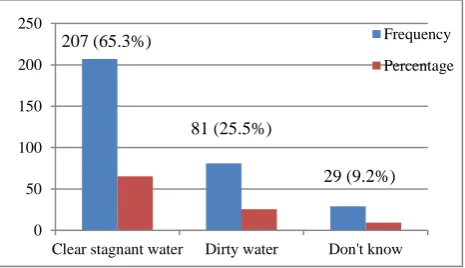
Figure 1: Distribution of study subjects based on knowledge about breeding places (n=317).
0 50 100 150 200 250
Clear stagnant water Dirty water Don't know Frequency
Percentage 207 (65.3%)
81 (25.5%)
215 (67.8%) of informants felt that dengue mosquito bites during the daytime. 13 (4.1%) felt that the mosquito bites during night and 8 (2.5%) felt that there was no specific time of bite. 81 (25.6%) did not know the biting time of
Aedes mosquito.
Only 117 (36.9%) had heard about dry day.
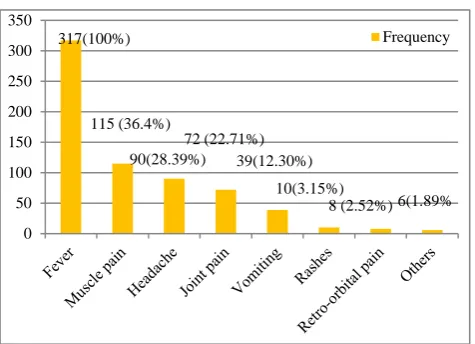
Figure 2: Distribution of study subjects based on awareness of symptoms (n=317).
All were aware of at least one symptom of dengue.
Among 317 respondents, all of them knew that fever is a symptom of dengue. But only 115 (36.4%) people knew about muscle pain as a symptom. Even lesser percentage of people knew about other symptoms such as head ache, joint pain, vomiting, retro orbital pain, rashes etc.
Awareness regarding preventive practices on dengue
Among 317 families, 286 (90.2%) had water storage containers, but only 28 (9.8%) had covered containers. 283 (89.3%) had water tanks, however, only 30 (10.6%) covered their water tanks.
Only 50 (15.8%) used mosquito repellant creams. Also only 82 (25.9%) used mosquito nets.
Among 154 (48.6%) families having plant pots, 119 (77.3%) changed water once weekly. Among 232 (73.2%) families having fridge, 202 (87.1%) emptied their fridge trays on a weekly basis.
Among 317 families, only 91 (28.7%) used larvicides and only 29 (9.1%) reared guppy fishes. Around 168 (53.0%) of the families observed dry day practices.
Health workers have visited 168 families within last 6 months. Among 317 informants, nearly 223 (70.3%) received health education from health workers regarding source reduction and 109 (34.4%) regarding personal protection to prevent dengue fever.
Vector breeding and entomological indices
In our survey we found out that 19 (19.8%) of open wells, 10 (10.4%) of plant pots, 11 (19.6%) of water tanks, 7 (19.4%) coconut shells, 4 (13.3%) of discarded tyres, 8 (7.9%) of fridge trays and 23 (35.9%) of plastic containers had breeding of Aedes larvae.
The house index (HI), container index (CI) and breteau index (BI) were found to be 24.60%, 23.55% and 33.43% respectively.
Table 1: Association between education of the study subjects and breeding habits of mosquitoes.
Education
Breeding habits of
mosquitoes Total
Yes (%) No (%) Illiterate 2 (33.33) 4 (66.67) 6 Lower primary 19 (70.37) 8 (29.63) 27 Upper primary 9 (36.00) 16 (64.00) 25 High school 68 (58.62) 48 (41.38) 116 Higher
secondary 37 (72.55) 14 (27.45) 51 Graduate 58 (78.38) 16 (21.62) 74 Postgraduate 9 (90.00) 1(10.00) 10 Professional 5 (62.50) 3 (37.50) 8
Total 207 (65.30) 110 (34.70) 317
χ²=37.53, p<0.001.
There is a significant association between education of the respondents and awareness regarding breeding habits of mosquitoes.
Table 2: Association between awareness of dry day and observation of dry day.
Awareness of dry day
Dry day observation Total
(%) Yes (%) No (%)
Aware 97 (82.9) 20 (17.1) 117 (100)
Not aware 71 (35.5) 129 (64.5) 200 (100) 168 (53.0) 149 (47.0) 317 (100) χ²=66.6, p=0.001.
A significant association between awareness of dry day and the observation of dry day practices was seen.
DISCUSSION
A cross sectional study was done to find out the awareness and preventive practices followed by the community of Palakkad municipality following an outbreak of dengue. Presence of vector breeding in the premises was observed and various vector indices were calculated.
Awareness of dengue
In our study, it was found that 95.9% of the participants were aware that the spread of dengue is by mosquito. This 0
50 100 150 200 250 300 350
Frequency 317(100%)
115 (36.4%)
90(28.39%) 72 (22.71%)
39(12.30%)
10(3.15%)
shows good awareness regarding mosquito borne transmission. This could be due to health education messages regarding dengue that are propagated in various media and also prior dengue outbreaks occurring in the municipality area.
Similarly, good awareness levels of 91.5% and 86.3% regarding correct transmission of dengue were reported by Dhiman and Chinnakali et al in their studies respectively.9,10 In study done by Maestre-Serrano in Columbia, 94.6% of the participants were aware that the spread of dengue is by mosquito.11
In the present study, only 42.3% of the participants were aware that dengue is caused by Aedes mosquito. Bota et al reported that 58.6% of the participants were aware that dengue is caused by Aedes mosquito in their study.12
Biting time
While 67.8% knew that Aedes mosquito bites during daytime in our study, only 4.1% of the participants had a misconception that Aedes mosquito bites during night time. Jeelani et al in their study reported that most respondents knew that mosquito usually bites either at evening (58.8%) or at morning time (44.4%).13 Chinnakali et al reported that only 24% knew that Aedes
mosquito bites during day time.10
According to Naing et al, 45.6% of the study population had a misconception that preferred biting time of Aedes
mosquito bite is dusk or sunset.14
No association was seen between education of the respondents and biting time of the mosquitoes.
Breeding
65.3% of respondents knew that Aedes bred in clean stagnant water while 25.5% believed that it bred in dirty water.
Jeelani et al reported that 67.8% of the participants believed that Aedes bred in drains and only 42.5% knew that it breeds in stagnant water.13 Dhiman reported that 74% believed that Aedes bred in dirty water and only 3% knew correctly that it is in stagnant clean water.9
Better awareness was seen among respondents in our study regarding breeding places of Aedes mosquito. However, this needs to be further improved.
Symptoms
All the respondents knew at least one of the symptoms of dengue. Ghilan et al found that 93.7% were aware of symptoms of dengue fever.15
In our study, all the respondents knew fever as a symptom of dengue.
Fever as most common symptom was reported by 85.7% and 74% in studies by Maestre-Serrano et al and Nayyar.11,16
In our study, 36.4% were aware of muscle pain as a symptom. Bota et al found that 39.6% were aware of muscle pain as a symptom of dengue.12 Jeelani et al reported that body pain was mentioned by 23%.13
Only 3.2% knew about dengue specific symptom like rashes in our study. None reported bleeding as a symptom of dengue. Chinnakali et al reported that only 2% and 11% knew about bleeding and rashes as symptoms of dengue.10 It is important to educate people regarding dengue specific symptoms so that early diagnosis and treatment can be initiated. There is also a need to educate people regarding other common symptoms of dengue.
Only 117 (36.9%) were aware about observing dry day for prevention of dengue. Singru et al reported that only 3.39% of the urban population surveyed knew about the maintenance of dry day as a method for control of mosquito.17 However, in study by Shinde et al, almost 60% of those surveyed were aware about dry day.18
IEC should be strengthened regarding observance of dry day to prevent breeding of Aedes mosquitoes.
Preventive practices
Only 28 (9.8%) had effectively covered water storage containers. In contrast, Dhiman and Naing et al mentioned that in their survey that 30.5% and 44.5% of households had covered their water storage containers respectively.9,14
Only 15.8% were using mosquito repellent creams. Dhiman and Chinnakali et al also reported low levels of usage of mosquito repellent creams in their studies being 15% and 22% respectively.9,10
Only 25.9% used bed nets which is similar to Chinnakali et al where 27.5% of the participants were using bed nets.10 Dhiman reported usage of bed nets by 17.5%.9
Only 9.1% of the respondents were rearing guppy fishes in their households. Phuanukoonnon found that only 4% of the urban households were keeping water containing fish.19
Overall, the practices with respect to prevention of dengue were found to be inadequate. This can lead to an increased risk of transmission of dengue. Proper coverage of water storage containers, using personal protective measures and rearing guppy fish can be emphasised by health education campaigns.
Dry day
although awareness regarding dry day concept was less, majority of the families were observing dry day practices. This can be attributed to a cultural practice of routinely cleaning their households every week. Awareness can be improved regarding the dry day concept.
Vector survey
Out of the 317 households that were surveyed, the major source of vector breeding was the plastic containers followed by, open wells, water tanks and coconut shells. This was similar to the study by Fulmali et al where plastic drums and small plastic containers were the main sources of breeding.20
Coconut shells (73%) were foremost sources of mosquito breeding in Udupi as per Kamath et al.21
Lutomiah et al found that jerry cans were the most productive containers (18%), followed by drums (17%), buckets (16%), tires (14%) and tanks (10%).22
Entomological survey revealed that the HI was 24.60%, CI was 23.55% and BI was 33.43% in our study. This showed an increased risk of transmission of dengue. Vijayakumar et al reported HI, CI, and BI of 13.08, 13.28 and 16.57%, respectively in their study conducted in Thiruvananthapuram.23 HI, CI, and BI of 48.2%, 28.6%, and 48.2% was reported from Tirunelveli during a dengue outbreak.24
There is a significant association between education of the respondents and awareness regarding breeding habits of mosquitoes. A significant association between education and knowledge of breeding places was also reported by Kumanan et al.25
There is a significant association between awareness of dry day and observation of dry day practices in our study.
CONCLUSION
The awareness regarding modes of transmission and biting time of Aedes mosquito is good but the usage of personal protective measures is quite low. Although majority of the respondents had knowledge about breeding places, there were significant numbers of breeding sources especially plastic containers. Vector indices were also high indicating risk of transmission of dengue. Effective preventive practices like usage of larvicide and rearing of guppy fishes were also very low. Health education campaigns needs to be strengthened to improve awareness regarding effective disposal and reuse of waste like plastic containers, dry day observation and personal protective measures. Effective dry day observation and regular vector surveillance should be ensured by the health workers of respective localities. Local self-government and community groups should actively participate in control measures related to dengue.
Funding: No funding sources Conflict of interest: None declared
Ethical approval: The study was approved by the Institutional Ethics Committee
REFERENCES
1. Park.K. Epidemiology of Communicable Diseases. In: Park’s Textbook of Preventive and Social medicine. 25 th ed. Jabalpur, Madhya Pradesh: M/s Banarsidas. Bhanot Publishers; 2019: 269-275. 2. Brady OJ, Gething PW, Bhatt S, Messina JP,
Brownstein JS, Hoen AG, et al. Refining the global spatial limits of dengue virus transmission by evidence-based consensus. PLoS neglected tropical diseases. 2012;6(8):e1760.
3. DGoHS: Directorate General of Health Services (DGHS). Central Bureau of Health Intelligence, Directorate General of Health Services. National Health Profile 2015. New Delhi: Ministry of Health and Family Welfare, Government of India; 2015. 4. Ministry of Health and Family welfare. Integrated
Disease Surveillance Project. Annual report, 2017. Available at https://idsp.nic.in/showfile.php. Accessed on 28 October 2019.
5. DGoHS: Directorate General of Health Services (DGHS). Central Bureau of Health Intelligence, Directorate General of Health Services. National Health Profile 2019. New Delhi: Ministry of Health and Family Welfare, Government of India; 2019. Available at: https://www.cbhidghs.nic.in. Accessed on 11 November 2019.
6. World Health Organization. Dengue and Severe Dengue. Key Facts. World Health Organization. Available from: http://www. who. int/news-room/fact-sheets/detail/dengue-and-severe-dengue. Accessed on 30 October 2019.
7. WHO. Global strategic framework for integrated vector management. Geneva, World Health Organization, 2004. Available at: http://whqlibdoc.who.int/hq/2004/WHO_CDS_CPE _ PVC_2004_10.pdf. Accessed on 28 October 2019 8. Ashok KV, Rajendran R, Manavalan R, Tewari SC,
Arunachalam N, Ayanar K, et al. Studies on community knowledge and behavior following a dengue epidemic in Chennai city, Tamil Nadu, India. Trop Biomed. 2010;27(2):330-6.
9. Dhiman N. Knowledge, attitude, behaviour and practices (KABP) of the community and resultant IEC leading to behaviour change about dengue in Jodhpur City, Rajasthan. J Vector Borne Dis. 2016;53:279-82.
10. Chinnakali P, Gurnani N, Upadhyay RP, Parmar K, Suri TM, Yadav High level of awareness but poor practices regarding dengue fever control: A cross-sectional study from North India. North Am J Med Sci. 2012;4:278-82.
related to dengue in tyre shops in Atlantico, Colombia. Rev Salud Publica (Bogota). 2015;17(5):738-48.
12. Bota R, Ahmed M, Jamali MS, Aziz A. Knowledge, attitude and perception regarding dengue fever among university students of interior Sindh. J Infect Public Health. 2014;7(3):218-23.
13. Shah SJ, Sabesan S, Swaminathan S. Community knowledge, awareness and preventive practices regarding dengue fever in Puducherry- South India. Public Health. 2015;129:790-6.
14. Naing C, Ren WY, Man CY, Fern KP, Qiqi C, Ning CN, et al. Awareness of dengue and practice of dengue control among the semi-urban community : a cross sectional survey. J Community Health. 2011;36(6):1044-9.
15. Ghilan K, Al-Taiar A, Altaire A, Alqadsi A, Alariqi EF, Hassaan M. Knowledge, attitude and preventive practices regarding dengue fever in rural areas of Yemen. Int Health. 2015;7:420-5.
16. Nayyar U, Dar UF, Latif MZ, Haider R, Mahmud T, Nizami R. Knowledge, awareness and practices about dengue fever. Pakistan J Med Health Sci. 2013;7:1097-9.
17. Singru SA, Debnath D, Bhosale SB, Pandve HT, Fernandez K. Study of knowledge, attitude and practices regarding dengue in the urban and rural field practice area of a tertiary care teaching hospital in Pune, India. Med J DY Patil Univ. 2013;6:374-7. 18. Shinde L, Bayas R, Harde S, Mamta G, Phalke G.
Knowledge, awareness and practices regarding mosquito borne diseases among people of Jana, Maharashtra. Int J Health Sci Res. 2019;9(8):419-25.
19. Phuanukoonnon S, Mueller I, Bryan JH. Effectiveness of dengue control practices in household water containers in Northeast Thailand. Trop Med Int Health. 2005;10(8):755-63.
20. Fulmali PV, Walimbe A, Mahadev PV. Spread, establishment & prevalence of dengue vector Aedes aegypti (L.) in Konkan region, Maharashtra, India. Indian J Med Res. 2008;127(6):589-601.
21. Kamath R, Gupta R, Chandrasekaran V, Pattanshetty S. Assessment of environmental factors associated with dengue transmission in Udupi taluk, Karnataka. J Sci Soc. 2013;40:159-61.
22. Lutomiah J, Barrera R, Makio A, Mutisya J, Koka H, Owaka S, et al. Dengue outbreak in Mombasa City, Kenya, 2013-2014: Entomologic Investigations. PLoS Negl Tropl Dis. 2016;10(10):e0004981.
23. Vijayakumar K, Sudheesh Kumar TK, Nujum ZT, Umarul F, Kuriakose A. A study on container breeding mosquitoes with special reference to Aedes (Stegomyia) aegypti and Aedes albopictus in Thiruvananthapuram district, India. J Vector Borne Dis. 2014;51(1):27-32.
24. Basker P, Kannan P, Porkaipandian RT, Saravanan S, Sridharan S, Kadhiresan M. Study on Entomological Surveillance and its Significance during a Dengue Outbreak in the District of Tirunelveli in Tamil Nadu, India. Osong Public Health Res Perspectives. 2013;4(3):152-8.
25. Kumanan T, Logeswaran D. A study on knowledge, attitude and practice regarding dengue among hospitalized patients from Northern Sri Lanka. Sri Lankan J Infect Dis. 2018;8(2):127-32.