http://www.ijcmph.com pISSN 2394-6032 | eISSN 2394-6040
Original Research Article
Interns willingness to serve in rural area: a cross sectional survey in a
government medical college, Mysore
Sajja Jayashree, Manjunatha S. N.*
INTRODUCTION
India's health workforce has a diversity of health workers offering health services in several systems of medicine. Today’s health system is focused on to achieve Universal Health Coverage. The High Level Expert Group has recommended a minimum doctor population ratio of 1:1000 for this. Despite the population being tripled, the overall doctor population ratio in India is still 1:1800.1 Moreover around one third of India s population lives in rural areas. There is a wide gap between rural and urban India with respect to technology, living condition, economic empowerment etc. As a result many in rural India lack access to education, nutrition, health care, sanitation, land and other assets and they are trapped into
poverty and uneven distribution of health workers in India across the country adding onto it.2
Foundation of our rural health services was laid by Bhore committee about 70 years ago when acute infections dominated the health scenario.1 India is a signatory to the Alma Ata Declaration of 1978 and had committed to attaining “Health for All” by 2000AD through the Primary Health Care approach therefore the National Rural Health Mission (NRHM) was launched in 2005 with a goal to improve the availability and accessibility of quality health care to the people, especially for those residing in rural areas, the poor, and women.3 In view of the changing health scenario, it is time to review the structure of rural health services and tailor medical education to meet their needs.1
ABSTRACT
Background: India's health workforce has a diversity of health workers offering health services in several systems of medicine. There is uneven distribution and this scarcity is due to both the disinclination of qualified private physicians to work in underserved areas and the inability of the public sector to adequately staff rural health facilities. The objective of the study was to assess willingness of interns to comply with their commitment of serving in a rural area after internship completion and to identify the factors which influence their decision regarding compulsory rural service.
Methods: A cross sectional survey was conducted among interns of a tertiary care hospital Mysore, India from September 2017-December 2017. Statistical methods like frequency, mean, proportions, Z test was used to analyze the data.
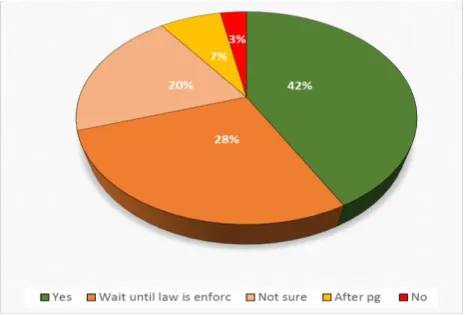
Results: Amongst the 100 students who participated in the study, 42% were willing to comply with the bond of serving rural area for a period of 1 year against a penalty of 10 lakhs signed while enrolling to the course.
Conclusions: Majority of the interns are still not willing to comply with the bond, therefore achieving mandatory posting as per government regulations still remains a challenge.
Keywords: Rural service, Rural bond, Interns career preference, Rural health
Department ofCommunity Medicine, Mysore Medical College and Research Institute, Mysore, Karnataka, India
Received: 15 May 2018
Revised: 24 June 2018
Accepted: 25 June 2018
*Correspondence:
Dr. Manjunatha S. N.,
E-mail: [email protected]
Copyright: © the author(s), publisher and licensee Medip Academy. This is an open-access article distributed under the terms of the Creative Commons Attribution Non-Commercial License, which permits unrestricted non-commercial use, distribution, and reproduction in any medium, provided the original work is properly cited.
Although the number of health facilities in rural areas of India have increased during the past decade, convincing doctors to work in them remains a challenge. Primary Health Centers are the cornerstone of rural health delivery system. The number of PHCs has increased from 77 in the first plan (1955) to 23,887 (2016) but still seventy per cent posts of specialists (surgeons, physicians, pediatrics, gynecologists, etc.) at the Community Health Centers (CHCs), which provide minimum specialist services to villagers, are lying vacant.1 The majority (60%) of health workers are present in urban areas inspite of 60% of India’s population residing in rural. The density of allopathic physicians in urban areas is four times that of rural areas, and for nurses and midwives it is three times as large.4
These shortages exist despite India having one of the largest medical education systems in the world, with more than 410 government and private medical schools having an annual intake of 50 000 students for MBBS courses. It is a fact that the doctors are reluctant to serve in villages. City-bred and educated doctors are not willing to serve in rural areas, many of which still lack electricity and roads. Indian medical education is geared to train doctors to work only in tertiary care and specialized hospitals, so these areas become the primary professional aspiration of health workers.5 During the past few decades, the central health ministry and state governments have attempted various strategies to attract doctors to rural areas, such as compulsory rural postings, linking rural postings to admission into postgraduate courses, and offering monetary incentives. There is no doubt that medical students should be exposed to challenges of rural health care. This could be easily done through proper implementation of the current undergraduate medical curriculum and not through coercive tactics such as extending the 5.5 year-MBBS course to 6.5 years by making one year rural service mandatory and banning doctors from settling abroad.1 Rural India today needs skilled doctors on a priority basis. Understanding of perceptions and attitudes of medical students toward working in rural areas can help in addressing these problems and overcome the shortage of doctors in these areas.
Objectives
To assess willingness of interns to comply with their commitment of serving in a rural area after internship completion.
To identify the factors which influence their decision regarding compulsory rural service.
METHODS
It was a cross sectional study done in Government medical college of Mysore, Karnataka from September 2017 to December 2017. Data was collected in the
medical students who were pursuing internship during the study period and had given written informed consent as participants in the study. Data was collected using a pretested semi structured proforma. A pilot study was done in the month of June amongst those who passed internship from the same institution in the previous year. The proforma was distributed to the interns after obtaining consent. Out of 150, 122 interns could be approached out of which 110 had given consent to participate. Filled-in proforma could be collected back from 100 participants. Data was entered and analyzed in Micrososft excel. Calculation of Z test for proportion has been done using online Z score calculator.
RESULTS
Mean age of the participants was 23 years. Most of them were males 57% as compared to females and from urban background (65%) and Hindus by religion. 93% of the participants claimed that the decision for willingness or non-willingness has been taken by them not under family and peer influence or pressure. Since only two participants were married at the time of study, the effect of it couldn’t be studied on their decision.
Compliance to bond
Conditioned compliance to the bond
Since many of them were in a dilemma or had a specific reason to decide about their compliance to the bond, participants were asked the same under certain specific conditions. Firstly, when asked about their opinion if there was a certain benefit of adding extra marks or so, in pg entrance exam for those who were compliant to the bond, the percentage of willingness scaled up from 42 to 57 and if proper conditions for living (mainly food, water, shelter, all season accessible roads) or a pay scale of around 50,000–60,000 per month was provided 71% and 63% were ready to serve respectively (Figure 2).
Figure 2: Conditioned compliance to bond.
Reasons for willingness to serve
42 students who were willing to serve, were enquired into the reasons for their decision. Most common reason quoted by them was that, it provides an opportunity for independent working, therefore enhances their confidence (35.7%). Around 25 people who had done their schooling (35.7%) or were residing in a rural background (23.8%) in childhood felt it was their duty to serve rural area. 16% of the people were influenced by a person either from the family, relatives or neighborhood who had served in these areas. Some of the other reasons quoted to a lesser extent were as follows: expectation of higher pay scale,
for the attainment of knowledge regarding Indian 3-tier heath system, financial constraints, one of the respectful job a doctor must be associated with (Figure 3).
Figure 3: Reasons for willingness to serve rural area.
Reasons for non-willingness to serve
Amongst 58 students who were reluctant to be compliant with the bond, most common reasons quoted by them were hectic duty hours, fear of losing pg seat in the competitive era, lack of guidance, infrastructure, transport facilities and proper living conditions. Other reasons were the same as above but in contrast (Figure 4).
Figure 4: Reasons for non-willingness to serve rural area.
Table 1: Factors influencing decision of interns.
Factors Willingness group (n1=42) Non-willingness group (n2=58) Pvalue
Male gender 29 26 0.01*
Rural background 11 26 0.06
Doctor in family 9 18 0.28
Doctor parents 3 7 0.41
Entrance rank
<100 11 2 0.00*
100-1000 17 43 0.00*
>1000 24 13 0.22
Aggregate MBBS percentage
<60 5 8 0.77
61-70 36 40 0.06
>70 1 10 0.02*
Not aiming for studies abroad 24 39 0.30
Awareness of the bond 38 40 0.01*
Factors influencing their decision
Participants were divided into two groups. One group consisted of 42 members who were willing to serve and the other consisted of 58 who were not willing to serve. Z test for proportion was applied to see if these groups differed in certain factors which researchers while interacting with the participants thought would play a crucial role in their decision. Mean age of the participants was 23 years in both the willing and non-willing group. The proportion of two groups differed significantly with respect to male gender, better entrance rank, higher aggregate marks and awareness regarding the penalty and content of the bond (Table 1).
DISCUSSION
Most of the participants i.e. 58% in our study were not willing to serve in rural area. This was in accordance with the studies done in some regions of India. In studies done among Goan doctors and by Gaikwad et al in Bangalore 71% and 66% of the interns were reluctant to serve in the rural areas.6,7 These findings were in contrast with those done in dental colleges, Telangana and Haryana where 70% and 58% were willing to serve respectively.8,9This might be due to the higher concentration of dental clinics in urban area which led students to feel that competition in rural area would be relatively low. Another study done in Mangalore amongst interns and final year students revealed a slightly higher percentage, 60% of students both Indian and others willing to serve.10 In the present study too nearly 60% and above were willing to serve if proper living conditions or extra marks would be added in their PG entrance. In the Telangana study too about half, i.e., 50.8% of the medical opined that increase in the pay will make students favorable toward the 1‑year rural service.8 If proper facilities are provided, 90.1% male and female students, 80.5% of Indian students and 95.8% Malaysian students were ready to work in rural areas in the Mangalore study.10
The major reasons revealed for willingness in the current study were opportunity for working independently which intern would enhance their confidence, experience and some were influenced by the person working in similar circumstances. Apart from these common reasons quoted by other studies were less competition in such setting, would get a chance to enter in government jobs subsequently, to help the rural poor and underprivileged. The reasons for non-willingness in our study were similar with the findings in other studies with stress for acquiring post-graduation seat and lack of facilities being the major cause in all.6-11
The two groups differed significantly with respect to gender may be because of the concerns like lack of security and infrastructure, therefore males are expected to be a little more favorable as compared to females. Also
be confident of cracking a PG seat and wouldn’t be willing to spend an year more or are not dependent on the benefits of serving rural area. To come to any decision adequate knowledge and the awareness regarding the same, plays a crucial role, so was seen in the study.
CONCLUSION
Most of the interns are still not willing to comply with the bond, therefore achieving mandatory posting as per government regulations still remains a challenge. Proximal factors influencing decision of interns are high workload, lack of infrastructure in a PHC set up, poor living conditions and the increasing concern for obtaining a PG seat through competitive examinations. Such studies further in different settings might lead us to resolve the issue.
Funding: No funding sources Conflict of interest: None declared
Ethical approval: The study was approved by the Institutional Ethics Committee
REFERENCES
1. Deo M. Doctor population ratio for India - The reality. Indian J Med Res. 2013;4(137):632-5. 2. Das D, Pathak M. The Growing Rural-Urban
Disparity in India: Some Issues. International J Advancements Res Technol. 2012;1(5):1-7.
3. Srinath V, Veena R. NRHM and IPHS - Standards in Primary Health Care. International J Pharma Med Biol Sci. 2012;1(2):206-16.
4. Rao K, Bhatnagar A, Berman P. So many, yet few: Human resources for health in India. Human Res Health. 2012;10(1):19.
5. Sharma D. India still struggles with rural doctor shortages. Lancet. 2015;386(10011):2381-2. 6. Cacodcar J, Colaco S, Oliveira A. A cross sectional
study of attitudes among Goan doctors towards rural service. J Evol Med Dental Sci. 2015;4(66):11468-73.
7. Gaikwad V, Sudeepa D, Madhukumar S. A study on career preferences and attitude towards the rural health services among the graduating interns of a medical college in Bangalore rural. Int J Biological Med Res. 2012;2(3):1577-80.
8. Reddy J, Reddy P, Anjum M, Monica M, Rao K, Hameed I. Compulsory 1 year rural Service - Stance of interns and postgraduates of medicine and dentistry in Hyderabad City, Telangana: A cross-sectional survey. J Indian Association Public Health Dentistry. 2017;15(4):383.
9. Sharma V. Perception towards serving rural population amongst interns from Dental colleges of Haryana. J Clin Diagnos Res. 2014;8(9):ZC31–2. 10. Sarkar T, Adhikary M, DV, Jana P, Rai A, Biswas I.
11. Dutt R, Shivalli S, Bhat M, Padubidri J. Attitudes and perceptions toward rural health care service among medical students. Medical J Dr DY Patil University. 2014;7(6):703.