R E S E A R C H
Open Access
Enabling location-aware quality-controlled access
in wireless networks
Hwangnam Kim
1*, Hyun Soon Kim
1, Suk Kyu Lee
1, Eun-Chan Park
2and Kyung-Joon Park
3Abstract
Location-based services (LBSs), such as location-specific contents-providing services, presence services, and E-911 locating services, have recently been drawing much attention in wireless network community. Since LBSs rely on the location information in providing services and enhancing their service quality, we need to devise a framework of directly using the location information to provide a different level of service differentiation and/or fairness for them. In this paper, we investigate how to use location information for QoS provisioning in IEEE 802.11-based Hot Spot networks. Location-based service differentiation is different from existing QoS schemes in that it assigns different priority levels to different locations rather than flows or stations and schedules network resources to support the prioritized service levels. In order to realize such the location-based service differentiation, we introduce the concept ofper-location target loadto simply represent the desirable rate of traffic imposed to the network, which is dynamically changing due to the number of stations. The load consists ofper-location load, which directly quantifies per-location usage of link capacity, andnetwork-wide load, which indirectly calibrates the portion ofper-location loadcontributed to the network-wide traffic. We then propose a feedback framework of provisioning service differentiation and/or fairness according toper-location target load. In the proposed framework, the load information is feedback to traffic senders and used to adjust their sending rate, so that per-location load does not deviate from a given per-location share of wireless link capacity and lays only tolerable traffic on the network in cooperation with other locations. We finally implemented the proposed framework inns-2simulator and conducted an extensive set of simulation study so as to evaluate its performance and effectiveness. The simulation results indicate that the proposed framework provides location-based service differentiation and/or fairness in IEEE 802.11 Hot Spot networks, regardless of the number of stations in a location, traffic types, or station mobility.
Keywords:Service differentiation, location-based service, IEEE 802.11, Hot Spots
1 Introduction
With portable WiFi-enabled laptops and PDAs, cost-effective installment of access points (APs), the license exempt bands, and timely available international stan-dards, IEEE 802.11 wireless local area networks (WLANs) [1] have been widely deployed in order to provide pervasive access to the Internet for nomadic people. In addition to these last-mile extensions in cam-puses, restaurants, and convention centers, IEEE 802.11-enabled portable consumer electronics have also started to be available in home networks for uploading and/or
downloading multimedia contents to/from a home gateway.
On the other hand, wireless Internet service providers (WISPs) recently implemented and launched location-based services (LBSs) owing to the availability in loca-tion measurement technologies and the noticeable advancements in personal navigational aids and tracking services [2-4]. LBS gives WISPs the ability of tailoring available information and services to user’s preference based on his (or her) current location and also of pro-viding location-specific control and management for themselves to conduct efficient network resource man-agement. Additionally, it comes into play in public safety and security since the 911 mandate of U.S. Federal Communication Committees requires the location of a * Correspondence: [email protected]
1
School of Electrical Engineering, Korea University, Anam-Dong, Seongbuk-Gu, Seoul 136-713, Korea
Full list of author information is available at the end of the article
wireless station should be available for emergency call dispatchers [5]. LBSs are usually deployed in an inte-grated framework of positioning technology, personal devices of displaying geographic information, and loca-tion-specific information system in order to support var-ious types of applications (available at a designated location). Based on the framework, LBS (i) enables users to pinpoint their current position in a new area into which they move or to search geographical information in the position; (ii) personalizes information, contents, or services according to users’interest; (iii) provides a list of local service providers for users according to their location, e.g., private location, home location, or work location, so that they can choose one of them giving most economic rate for voice or data service, i.e., at rate, special, and discount rate; (iv) assists users to determine most appropriate communication access tech-nology, such as cellular, WiFi, WiMAX, or BlueTooth; (v) identifies emergent events or users in danger or dis-seminates crucial events to all the people in the proxi-mity and then provides the relevant safety services and information; (vi) provides privileged access to keep track of friends, family members, or employees moving in a fleet. Considering LBSs directly use location information and also require different levels of quality of services (QoS), we need to use the location information in LBS frameworks in order to provide QoS for LBSs, instead of just resorting to any existing per-flow or per-station QoS-provisioning scheme [6-24].
In this paper, we propose a framework of service dif-ferentiation to support LBSs in IEEE 802.11-based Hot Spot networks. For example, if we assume that a confer-ence or class room is equipped with a Wi-Fi AP to let all the participants to share presentation or class materi-als, which usually covers a few tens of square meters, then a presenter or instructor gives a presentation with his handheld Wi-Fi devices (such as PDA or notebook), whose traffic is upload traffic to a web disk (or a cyber bulletin board) and attendants or students listen to the presentation with their devices, whose traffic is down-load traffic from the disk. In this configuration, updown-load and download traffic are decided by the location at the room. Note that the position for the presenter or instructor is usually in the front area of the location. Since this kind of configuration can be possible wher-ever the position determines the traffic direction and quality, we need to devise location-aware service differ-entiation scheme for Hot Spot networks.a
Note that since the techniques for identifying a correct position achieve 90% of accuracy within roughly 2 m [25], LBSs and their differentiations need to realized with the same accuracy, and Hot Spot networks, which usually covers a few tens of square meters, are large enough to accom-modate those differentiations.
Even though there are some solutions to support QoS, such as IEEE 802.11e [24], they are not appropriate for the service differentiation for LBSs, i.e., provisioning dif-ferent level of service qualities according to user’s current location, since they just focus on per-flow or per-station QoS enforcement without considering and exploiting location information. within a LBS framework, There-fore, we need to take a departure from the per-flow or per-station QoS-provisioning schemes (which are explained in Section 2) and then propose a new aspect of service differentiation, location-aware QoS provision-ing, in IEEE 802.11 Hot Spot networks. In other words, we propose to assign per-location priority (or weight) instead of per-station or per-flowto the traffic, regardless of the number of stations at a location, traffic types, sta-tion mobility, or wireless link status. The proposed scheme operates in what follows. It first partitions the AP coverage into several locations, various from a single point to a regionb, and then assigns a different weight to each location. Then, AP continuously keeps track of load (network-wide and subnetwork-wide) and feed-backs the information to traffic senders. Traffic senders then adjust their sending rate according to the delivered load information. Note that traffic senders are assumed to be TCP senders in this paper, but if traffic senders can use some feedback control function, then the pro-posed scheme can be applied to them also. We imple-mented the framework inns-2simulator and carried out an extensive set of simulations to evaluate its perfor-mance with respect to service differentiation. The simu-lation results indicate that the framework provides per-location service differentiation and fairness, regardless of the number of stations per region, station mobility, traf-fic types, wireless link errors, and any combination thereof. Note that the AP is assumed to know all the stations’ positions within its coverage. This is possible with GPS or any other positioning device and/or infra-structure. In the cases where GPS is unavailable, we can estimate the direction and position of transmitting node since we have some techniques for estimating them. The standard way of doing this is by using more than one directional antenna [26]. Specifically, the direction of incoming signals is determined from the difference in their arrival times at different elements of the antenna. To the best of our knowledge, this is the first attempt to exploit location information to provide a service differ-entiation in IEEE 802.11-based Hot Spot networks. We believe that the proposed scheme is very appropriate for providing a QoS scheme for LBSs in wireless networks and also used to extend previous per-flow or per-station QoS frameworks.
Section 2 and then we explain the motivation for this work with an example in Section 3. We propose a fra-mework of QoS provisioning in Section 4, validate the framework in Section 5, and present the simulation results in Section 6. Finally, we conclude the paper with Section 7.
2 Related work
In this section, we summarize LBSs and QoS-provision-ing schemes in WLANs prior to proposQoS-provision-ing a location-based service differentiation scheme. As for service dif-ferentiation, we include work that deals with fairness among wireless stations as a sub-category of service dif-ferentiation since the fairness scheme can be extended to provide weighted-fairness with acceptable modifica-tion and the weighted-fairness scheme can be regarded as a kind of service differentiation.
2.1 Location-based services
Once the first commercial LBSs were launched in Japan by KDDI in 2001, mobile network service providers have started to pay much attention to exploiting geogra-phical information to provide users with services tai-lored to their specific location or to assist them to achieve their objective at the location [27] (e.g., traffic routing). Additionally, since the E-911 mandate obliges cellular service providers to be able to pinpoint the source of emergency call [5], many researches and developments have been made to realize LBSs.
In overall, LBS relies on an integrated framework of positioning technologies, coordinate system, geographic information system, and applications. Among those con-stituents, improving positioning technologies in perspec-tive of the quality of positioning (the accuracy of localization) have been addressed with high priority and then a city-wide framework of provisioning location-based applications and services, such as LoCation Ser-vice (LCS), navigation serSer-vices, intelligent traffic alerts, tracking, pinpointing child’s location, and local map pro-visioning have been dealt with much attention in the community [2-4]. Noticeable point is that these research and developments are guided by the international stan-dard organization, such as ITU-the 3rd Generation Part-nership Project (3GPP) [28], ITU-the 3rd Generation Partnership Project 2 (3GPP2) [29], Open Mobile Alli-ance (OMA) [30], and Internet Engineering Task Force (IETF) [31].
As mentioned earlier, LBS can be successfully imple-mented and deployed with the following principal attri-butes. Firstly, the positioning technologies have been playing a key role to realize LBS and have been pro-posed in various ways. We can estimate one person’s current location based on (i) a combination of pre-viously known locations, moving speed, and an
identified course; (ii) pre-established base station coordi-nates or cell ID (base station ID); (iii) a trilateration based on signal strength, time of arrival, and angles of arrival analysis; (iv) a Global Navigation Satellite System, such as global positioning system (GPS), assisted-GPS (A-GPS), and Galileo System. Secondly, in addition to these positioning technologies, location management has also been developed in cellular networks to support paging, roaming, and handover. Thirdly, both the posi-tioning and location management are carried out within a coordinate system. We have a number of coordinate systems, e.g., universal transverse Mercator (UTM), mili-tary grid reference system (MGRS), National Grid Sys-tems, Irish National Grid, and any other global or local coordinate system [32].Fourthly, the geographic infor-mation system (GIS), which is an inforinfor-mation system that processes geographic data, plays also important role in deploying LBSs since many features of GIS should be used to enhance service quality of current LBSs or
develop more advanced LBSs [33]. Lastly, we should
develop various applications to which LBSs are applied to (i) smart communication, which chooses an appropri-ate access technology available in a specific location and/or suitable to satisfying delay or throughput con-straints for communication services, (ii) efficient fleet control and management which locates and keeps track of mobile vehicles and their performance at regular intervals, (iii) intelligent navigation system which allows mobile vehicles to avoid traffic congestion and to warn of diversions, traffic accidents, and any other emergent situation, (iv) enhanced safety and security, which saves people from emergent accidents, weather, and natural disaster, and (v) location-dependent entertainments which are location-based directory services, peer-to-peer contents sharing localized to a certain area, location-specific instant personal messaging, and etc [34]. We do not discuss aforementioned issues further since they are out of scope of this paper,
Remark:Most of the previous work do not directly address the quality of services (QoS), but instead, resort to existing research that partially deals with QoS provi-sioning within its target system, such as network, oper-ating, multi-media, and real-time system. However, considering that every LBS exploits location information, has different requirements, and processes location itself as one of attributes to define the services, we need to directly use location information within a LBS
frame-work in order to provide location-based service
differentiation.
2.2 Service differentiation in WLANs
As the first category of service differentiation or fair-ness, there are some schemes that directly control TCP congestion window size so as to mitigate the unfairness issue of TCP in IEEE 802.11 MAC protocol [6,7]. Pilosof et al. [6] have exhibited that the AP in a Hot Spot net-work favors uplink TCP flows more than downlink TCP flows and its buffer capacity affects the fairness among stations, and then proposed the solution that the AP directly manipulates the advertised TCP window size included in TCP acknowledgment (ACK) packets pas-sing through it. Lee et al. have proposed the solution of extending the idea in [6] in the way that AP modifies advertised TCP window size by reflecting a maximally achievable TCP window size into the computation of advertised window size in addition to inspecting current buffer availability [7].
As the second category, queue management schemes have been proposed to address the fairness in IEEE 802.11 WLAN [8-12]. The approach presented by Wu et al. is to carry out per-flow scheduling at the AP in the way that it distinguishes data queue type from ACK queue type and computes to use optimal scheduling probability for each flow queue [8]. Similarly, Lin et al. have proposed to use a queue management scheme where AP maintains virtual per-flow queue and makes separate packet-dropping probability based on each queue length [9]. Ha et al. have presented a dual queue scheme, one of which is used for TCP data and the other is for TCP ACK. The scheme schedules each queue with different scheduling probability to achieve per-flow fairness [10]. Gong et al. have proposed to employ SPM-AF (selective packet marking scheme with ACK filtering) scheme and combine it with LAS (least attained service) scheduling [11]. This approach focuses on assuring per-flow fairness by giving much service opportunity to downlink TCP data packets; the AP removes redundant ACK packets belonging to the same connection when they arrive in the queue. Nicola et al. mitigates the unfairness problem by implementing a token-bucket-based rate-limiter in the AP. The limiter controls the rate of aggregate uplink traffic in the man-ner that it provides fairness between downlink and uplink TCP flows [12].
As the last category, there exists some solutions that directly differentiate channel access schemes [13,14]. Leith et al. employed the service differentiation scheme of IEEE 802.11e [24] to achieve the fairness. In the scheme, a different set of inter-frame space, contention window size, and transmission opportunity (TXOP) is specified and applied to TCP data and ACK packets [13]. Bruno et al. have exploited frame bursting to improve TCP fairness between uplink and downlink flows and to maximize channel utilization. In the approach, AP is able to transmit multiple frames in a
burst, whose size is adjusted based on the collision probability monitored in the AP [14]. Additional schemes of supporting the fairness among sending and receiving stations directly manage MAC parameters in [15-17]. The approach in [15] mitigates the unfairness by reducing the chances of transmission for the sending stations in the way of increasing the minimum conten-tion window size. The downlink compensaconten-tion access (DCA) algorithm in [16] gives higher priority to the AP with smaller inter-frame space. In the proposed method of [17], each sending station defers its access based on the next packet information.
Remark:As mentioned in Section 1, the scheme that we propose in this paper has a different aspect from aforementioned methods in that it assigns a different priority (weight) to a different location according to the required service quality, instead of flow and station. The proposed scheme can also resolve in part the unfairness between uploading and downloading stations, and addi-tionally, it can be incorporated into any service differen-tiation scheme aforementioned.
3 Motivation: location-aware service differentiation
Before we propose the framework for provisioning loca-tion-aware QoS, we demonstrate that the current IEEE 802.11-based Host Spot networks are inappropriate for supporting location-based service differentiations.
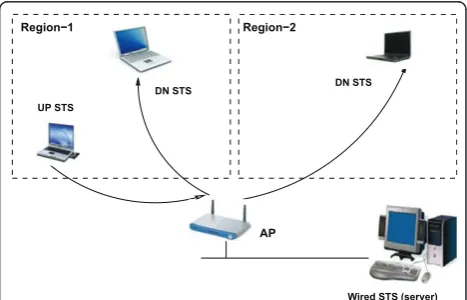
Suppose we have the network presented in Figure 1
whereRegion-1has one station, which is denoted by
DN STSand carries out bulk download with FTP traffic, and Region-2 has another station, which is denoted by DN STS and also generates download FTP traffic during the whole time of [0s, 160s]. Additionally, the
Region-1 comes to have the third station at the instant of 40s, which is denoted by UP STSand active to conduct upload FTP traffic during the next 80s. The main problem that we address in the paper is how to
AP
Region−1 Region−2
UP STS
DN STS DN STS
Wired STS (server)
serve an equal amount of data delivery service to
Region-1andRegion-2 or to give a higher priority
to the station at Region-2 than any station at
Region-1, regardless of the number of stations per region, traffic types generated at each station, station mobility, or wireless link errors. Therefore, if we let the
aggregate throughput at Region-1 equal to that at
Region-2, we can give a higher priority toDN STSat
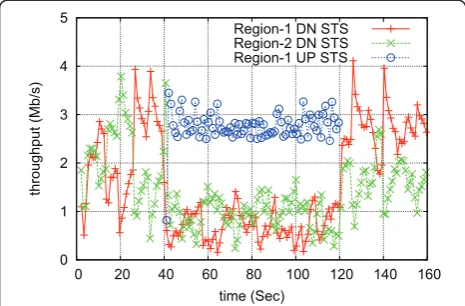
Region-2 than any other station at Region-1and also achieve fairness between two regions. Note that “the aggregate throughput“means the summed result of all the throughput achieved at each station in the same region. Figure 2 presents the results obtained when we use existing IEEE 802.11 MAC protocol. From the fig-ure, we observe the followings.Firstly, IEEE 802.11 DCF cannot guarantee any service differentiation nor fairness even among stations. Specifically, we observed (i) in the period of [0s, 40s], each region has only one station
active, andDN STSat Region-1uses 2.16 Mb/s while
DN STS atRegion-2does 2.06 Mb/s; (ii) in the period of [40s, 120s] whenUP STS appears atRegion-1, the
throughput of DN STSat Region-1 is degraded to
0.73 Mb/s while that of DN STS at Region-2 is
decreased to 0.97 Mb/s, but UP STS at Region-1
gains the higher throughput of 2.76 Mb/s; (iii) in the last period of simulation, which is [120s, 160s],DN STS
at Region-1 uses 2.74 Mb/s while DN STS at
Region-2 does 1.64 Mb/s. Secondly, IEEE 802.11-based network imposes unfairness on downloading sta-tions (twoDN STSs) compared to uploading station (UP
STS) due to TCP-driven unfairness exaggerated with
IEEE 802.11 DCF [35-37];Lastly, there is no location-based service differentiation. Note that the aggregate
throughput of Region-1, which is the summed
throughput of two stations, is 3.49 Mb/s, but that of
Region-2, which is simply the throughput ofDN STS, is 0.97 Mb/s (during the period of [40s, 120s]).
4 Service differentiation algorithm based on per-location load
In order to compute the portion of link capacity assign-able to each location for location-based service
differen-tiation, we introduceper-location target load.
The load represents a desirable degree of traffic that a designated location imposes to the network (to the AP); it is used to match the aggregate input rate across all the stations in the location with the given portion of link capacity previously assigned to the location. Note that the“aggregate input rate“means the total summed rate of all the traffic imposed on the AP. Considering that the capacity of wireless channel and network-wide load are time-varying due to the varying number of con-tending stations, we cannot deterministically decide the optimal target per-location load (which lets the aggre-gate input rate to match with the per-location link capa-city). Therefore, we need to adjust thecurrentinput rate to the current per-location link capacity, so that we
devise per-location target loadto provide
per-location weighted fair share of link capacity.
This load information is estimated by TaLE, which stands for target load estimator and positioned at the link layer of AP, then delivered to traffic senders, and finally used to let them to adjust their sending rate. In
specific, the per-location target load, denoted
byωi, for theith locationRiconsists of two portions: (i) the per-location load, ωir, (ii)the
network-wide load,ωi, where the former represents per-loca-tion link usage (in the influence of wireless link errors)
and the latter represents the contribution of
per-location load to the network-wide load (affected by the number of stations across the all the regions). The
per-location target loadis denoted as:
ωi(t) =ωri(t) +ωi(t). (1)
We first define per-location load and
net-work-wide loadand then design the proposed frame-work of provisioning service differentiation based on
per-location target load.
Per-location load: The portion of link capacity allotted for each location is initially given to the AP according to per-location weight. Therefore, per-location load ωri should not exceed the preassigned per-location link capacity. Also, since the load is dynamically chan-ged due to the number of locationsN, we need to trace the current load for each location and give positive (negative) incentive to a specific location that has exploited wireless link capacity less (more) than its given link per-location capacity.
In order to identify the course of per-location load
TaLEis positioned at the link layer and entitled to keep track of load for each location. Let Ci denote
0 1 2 3 4 5
0 20 40 60 80 100 120 140 160
throughput (Mb/s)
time (Sec) Region-1 DN STS Region-2 DN STS Region-1 UP STS
location share of link capacity during a given wireless link monitoring interval,Tωr. If the link is shared byN locations, then we compute
Ci=
wherejirepresents the positive weight of theith
loca-tion, and C is the maximally achievable link capacity. This equation implicitly includes the proportional fair-ness among traffics, and thus if one of them uses less amount of capacity than its allotted capacity ji, the
other traffics can additionally share the surplus bandwidth.
During every interval,Tωr, of monitoring the link, the
TaLEestimates the amount of trafficaifor theith
loca-tion. Whenever the AP sends/receives a data frame for any station at the ith locationTaLE increasesai by the
amount ofL=toh ×C, where Ldenotes the frame size
andtoh denotes the time to process overhead involved to the frame transmission, such as inter-frame space time, back off time, ACK transmission time, and RTS/ CTS handshake time if it is used.
With per-location link access amount ai (bits) and
per-location link capacityCi (b/s) TaLEcalculates the
current per-location loadωri as follows: Sinceai[k] and Ci denote the amount of link usage and per-location
link capacity of theith location at thekth monitoring interval, i.e.,t=k·Tωr, per-location (aggregate) rateri[k] this rate-based per-location load can be expressed in either amount-based or time-based per-location load since the amount allocated to theith location isCi×Tωr and the per-location access time of the ith location is
Conclusively, if all the stations at the ith location Ri
have imposed load on the link excessively more than given per-location portion of wireless link capacity in the previous monitoring interval, i.e.,ri[k−1]>Ci, then
TaLE delivers to traffic senders per-location load
increased by ωri[k] at the current interval. If
ri[k−1]<CiTaLEfeedback decreased per-location load
to compensate any station at theith location for the less
usage of per-location link capacity in the previous interval.
Network-wide load:Even though per-location load at theith location is used to adjust the rate of traffic sen-ders to a desirable level, the traffic directed from/to the location contributes to the aggregate traffic perceived at the AP, so that it may congest the AP and consequently influence on other traffic (which belongs to other loca-tions). In order to reduce excessive contribution of per-location traffic to the network-wide loadTaLEalso esti-mates the network-wide load,ωi, and includes it in the
computation ofper-location target load.
The network-wide load is tightly related to packet losses incurred due to the aggregate input rate larger than the current link capacity. Let us define thecurrent network-wide load ℓ(t) at a time instant oftas the dif-ference between the aggregate input rate r(t) and wire-less link capacity C(t), which in turn represents the change rate of the current queue length:
(t) =r(t)−C(t) = d
dtq(t). (3)
Let ℓ[k] andℓref[k] denote the current network-wide loadand itstarget load, respectively, at the kth monitor-ing time instant, i.e., at the time instant of k=t/Tω, whereTωis a given interval of monitoring the network-wide traffic. Here, thetarget load meanstolerable traffic which can be remained at the AP and cleared out before newly arrived traffic is processed without incurring unnecessary droppings. Based on ℓ[k] and ℓref[k], the network-wide load ωi[k]at the time instant k is deter-mined as:
ω
i[k] =α([k]−ref[k]), (4)
wherea(>0) is a control gain. This equation quantifies the difference by which thecurrent network-wide load becomes more (or less) than itstarget load.
In order to compute the deviation of thecurrent net-work-wide loadfrom itstarget loadin (4), we first deter-mine thecurrent network-wide loadℓ[k] based on (3) as follows:
[k] =r[k]−C[k]. (5)
Then, in order to determine the target load ℓref, we introduce a tolerable queue length at the AP, qref, for the purpose of accommodating the aforementioned tol-erable traffic, i.e., a small mismatch between the link capacity and the imposed traffic, and finally determine the target loadℓrefas:
ref[k] =β
qref−q[k]
where b(>0) is a control gain, q[k] is the AP queue length, and Δℓref[k] denotes an accumulated deviation from the target load. TheΔℓref[k] in (6) can be recur-the following approximation based on (3):
r[j]−C[j] =
q[j]−q[j−1]
Tω . (9)
Based on (4)-(9), theTaLE algorithm can easily cali-brate the network-wide load with only the queue length, without estimating the aggregate input rate, or the cur-rent wireless link capacity and thus the network-wide load is as:
TaLE-based Framework of Service Differentiation:
With current per-location load of theith location Riand
its contribution to network-wide load, we can devise a totalTaLEframework to providelocation-based service differentiation and fairness in IEEE 802.11-based Hot Spot networks. The details on how to use and estimate
per-location target load in TaLE will be accounted for in what follows, and also the overall
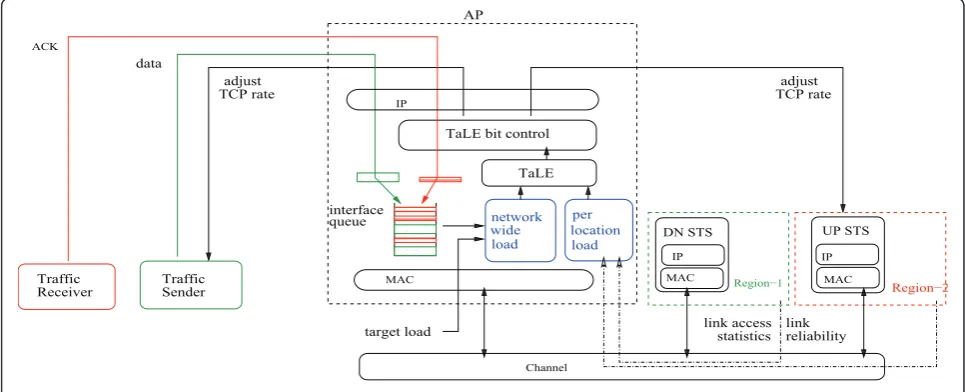
TaLEframework is demonstrated in Figure 3.
•At every given intervalTaLEsets per-location tar-get load by estimating the current per-location load and its contribution to current network-wide load, based on current link usage, aggregate input rate, and wireless link capacity;
•Once a packet (TCP data or ACK packet) arrives
to the AP, theTaLEidentifies the location to which the packet belongs, then randomly chooses a num-ber between zero and one, and compares it with the previously computed target load value: if the number is less than the load, it marks a single bit ofTaLE
(for which we use one bit from the undefined sub-type of frame control field) in the MAC header; thus, the information is piggybacked on the data frame from the AP to its sending station;
•On receiving a packet whoseTaLE bit is set, the station should deliver the information to the trans-port layer. If the IP layer sees TaLE bit (in MAC header) set, it marks the ECN bit [38] in the IP header. If the station is a receiver, theTaLE bit is returned to the corresponding sender via its corre-sponding TCP ACK packet. It needs to be noticed that since the ECN bit plays the role of delivering the result ofTaLEframework to the sending station and does not affect the performance, any other feed-back scheme can be used with theTaLEframework; •Finally, the TCP sender recognizes its current con-tribution to per-location load through the ECN bit and then accordingly adjusts its congestion window by halving the window.
As for the computational complexity of the proposed
TaLE framework, we have the following investigation
TaLE
TCP rateadjust TCP rateadjust
MAC MAC
Receiver Region−1
Channel
target load link access linkstatistics reliability
results. As aforementioned, the AP equipped withTaLE
framework needs to compute the per-location
target loadby estimating the current per-location load and its contribution to the current network-wide load with link reliability, aggregate input rate, and net-work-wide load every Tω interval time. And, the AP
decides whether or not it marks each packet with the computed target load. Since the computation involves to only several additions and multiplications, the computa-tion is not computacomputa-tion demanding (that requires high-end computing powers). Additionally, the AP does not need to keep track of per-connection (per-flow) statis-tics, but instead, it keeps track of per-location statisstatis-tics, and the tracked statistics are simply the amount of suc-cessfully transmitted packets. Therefore, the overhead is surely acceptable in both keeping track of per-location
statistics and computing per-location target
load.
Note that the proposed TaLE framework can be
incorporated with any transport protocol with a feed-back control scheme, but, since it is out of scope to introduce or devise such the protocol, we simply use TCP protocol to completely construct it.
5 Validation
We firstly validated that the TaLE framework solves
both problems of unfairness and service differentiation that we dealt with at Section 1 with Figures 1-2.
5.1 Location-based fairness
With the same network configuration and scenario used in Figures 1-2 at Section 1, we first verified the effect of
TaLE framework on per-location fairness. Note that
each location has the same weight in this simulation to evaluate fairness. In this simulation, we do not enable the RTS/CTS mechanism and we have little concern
about hidden terminals since we assume all the stations hear each other. The allocated buffer size, B, for all queues is set to 100 packets, and the maximum conges-tion window size of TCP is set to 50 packets. We employ TCP/Reno and set TCP packet size to 1500 bytes. The parameters of theTaLE framework, a, b,g, andK, are set to 0.0003, 0.03, 0.05, and 0.8, respectively, to minimize queue length error according to the tuning technique specified in [39], and the interval of monitor-ing per-location loadTωr, and that of updating network-wide load Tω are set to 10 and 10 ms, individually.
These settings are continuously used for the subsequent simulation study in Section 6.
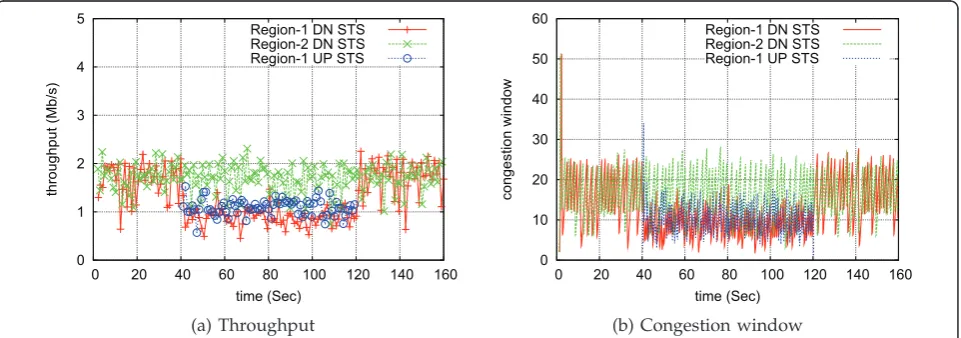
Figure 4a presents per-station throughput dynamics according to the given scenario. Specifically, we make the following observations: (i) In the period of [0s, 40s],
the TaLE framework allocates 1.65 and 1.73 Mb/s to
Region-1(DN STS) andRegion-2(DN STS), respec-tively, which is more fair bandwidth allocation between
two regions, compared to the case without TaLE(see
Figure 2); (ii) WhenRegion-1 comes to haveUP STS
during the period of [40s, 120s] TaLEdistributes 0.89
and 1.09 Mb/s to DN STS andUP STS atRegion-1,
respectively, which are in total 1.98 Mb/s, but it
allo-cates 1.68 Mb/s to DN STS at Region-2, which is
decreased from the previous period of [0s, 40s]; (iii) In the last period of [120s, 160s], the throughput of DN STSat Region-1is 1.70 Mb/s while that in Region-2is 1.72 Mb/s. As already noticed, theTaLEframework enforces bandwidth allocation to be compliant with given weights and the allocation is conducted for each identified location, not for each station. Note that in the period of [40s, 120s], the aggregate throughput at
Region-1 (i.e., 1.98 Mb/s) is almost equal to that at
Region-2 (i.e., 1.68 Mb/s) and also that the
through-put of Region-2 is not much affected by the
0 1 2 3 4 5
0 20 40 60 80 100 120 140 160
throughput (Mb/s)
time (Sec) Region-1 DN STS Region-2 DN STS Region-1 UP STS
0 10 20 30 40 50 60
0 20 40 60 80 100 120 140 160
congestion window
time (Sec) Region-1 DN STS Region-2 DN STS Region-1 UP STS
(a) Throughput (b) Congestion window
varying number of stations at Region-1. Figure 4b presents the congestion window dynamics observed in all the stations in the network. We can easily observe the similar trend to the per-station throughput observed in Figure 4a.
5.2 Location-based service differentiation
In order to verify that the TaLE framework achieves
more elaborate service differentiation, we carry out an additional simulation study. In this study, we use a sim-plified network configuration in that each region has one station in the network of Figure 1, but employs the following complex simulation scenario:
• Region-1 has DN STS active throughout the whole period of [0s, 160s];
•Region-2has UP STSduring the period of [20s, 140s];
• Both Region-1 and Region-2 have the same weight of 1 initially;
• Region-1comes to have the weight of 4 in the interval of [40s, 80s], and the weight returns to 1 after this interval;
• Region-2 starts to have the weight of 4 in the interval of [80s, 120s], and it returns to 1 at the instant of 120s.
Note that the higher number means the higher weight (priority).
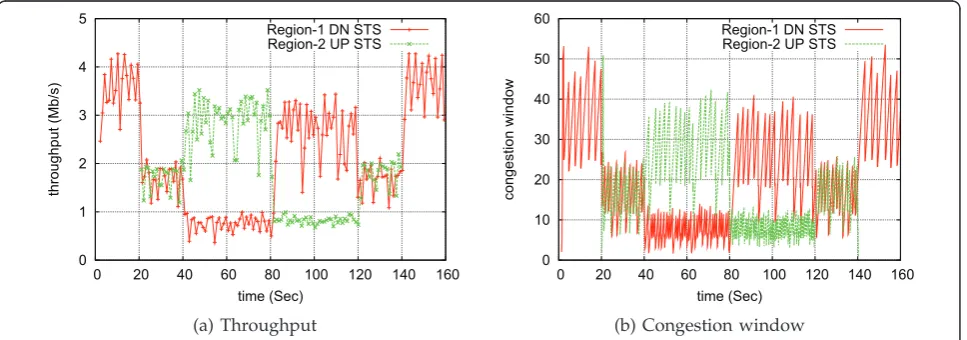
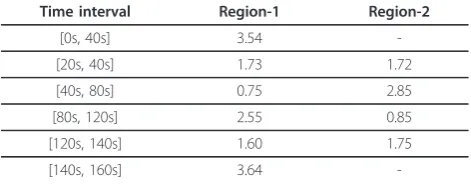
From Figure 5a, we can observe that theTaLE frame-work enforces fairness among two regions when their priorities are equal, regardless of uploading or down-loading station, shown in periods of [20s, 40s] and [120s, 140s]; in specific,Region-1 (DN STS) achieves 1.73 (1.69 Mb/s) in the period of [20s, 40s] ([120s, 140s]) whileRegion-2(UP STS) uses 1.72 (1.75 Mb/s)
in the corresponding period. Also, we can see that it gives service differentiation between two regions accord-ing to the weight given to each region. In the period of
[40s, 80s], Region-2serves UP STSwith 2.85 Mb/s
while Region-1 does DN STS with 0.75 Mb/s, but
when we exchange weights between Region-1 and
Region-2, the ratio of throughput inRegion-1 and
2 becomes reversed; in specific,DN STS atRegion-1
exploits 2.55 Mb/s but UP STSatRegion-2uses 0.85
Mb/s. Figure 5b presents congestion windows observed in DN STS at Region-1and UP STS at Region-2. We can observe the same trend of dynamics as done in TCP throughput according to weights assigned to each region. These results are presented in Table 1. Conclu-sively, the TaLEframework supports per-location ser-vice differentiation and fairness efficiently.
6 Performance evaluation
In this section, we conduct ans-2simulation study with more various perspectives so as to demonstrate the properties of the TaLEframework. The network topol-ogy we use is presented in Figure 6. The AP coverage (100 m × 100 m) is divided into three regions that are
Region-1,Region-2, andRegion-3. These regions are not overlapped each other. Stations positioned at
each region,STS-1,STS-2, andSTS-3 communicate
with their corresponding wired stations two hops away from them. Link capacity and delay for wired stations are also presented in the figure.
Simulation study has been carried out in three phases (i) single-station case where each region has one station with one flow, (ii) multi-station case where each region has two or more number of stations, and (iii) heteroge-neous station case where each region serves one station with a different number and type of flows. With these three phases of evaluation, we verify whether the TaLE
0 1 2 3 4 5
0 20 40 60 80 100 120 140 160
throughput (Mb/s)
time (Sec)
Region-1 DN STS Region-2 UP STS
0 10 20 30 40 50 60
0 20 40 60 80 100 120 140 160
congestion window
time (Sec)
Region-1 DN STS Region-2 UP STS
(a) Throughput (b) Congestion window
framework can support service differentiation among regions, irrespective of wireless errors, mobility, the number of stations per location, or the number of flows per station.
6.1 Performance in case of single-station
We first conduct a simulation study where each station in Figure 6 has only one flow: two stationsSTS-1 and
STS-2 download data from the corresponding wired station while one station STS-3 uploads its data to its wired peer. Note that we have similar results (stated below) for the cases of other combinations with upload and download, even though we do not present them due to the space limit.
6.1.1 Performance with respect to per-location throughput
As the first simulation study, we investigate the fairness and service differentiation among regions, with the fol-lowing simulation scenario:
• Region-1 has STS-1 active throughout the whole period of [0s, 180s];
• Region-2 starts to serve the STS-2 at the instant of 20s, and stops it at 140s;
• Region-3 accommodates STS-3 during the interval of [40s, 160s];
•Region-1, Region-2, andRegion-3are initi-ally assigned to the same weight of 1;
• Region-1, Region-2, and Region-3 are assigned to highest weight (3), the middle one (2), and the lowest weight (1), individually, during the interval of [60s,120s];
• All the stations do not move around in the
network;
•Ten simulation runs are carried out for each net-work simulation, but we choose one when we pre-sent the throughput dynamics.
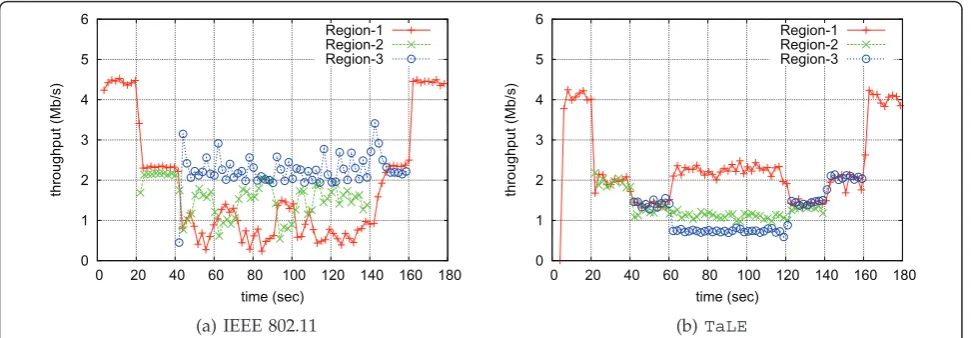
Figure 7 presents TCP throughput dynamics of IEEE
802.11-based Hot Spot and that of TaLE-enabled Hot
Spot. As for IEEE 802.11-based Hot Spot network in Figure 7a, we can observe no considerable discrepancy
between two regions (Region-1and Region-2) in
the period of [20s, 40s] when no station at Region-3
appears yet. When STS-3starts to upload data at the instant of 40s, it dominates to use network bandwidth in the period of [40s, 140s]. The throughput of
Region-1and Region-2is significantly degraded in this period.
On the contrary, TaLE-enabled Hot Spot does not
suffer from such the unfairness. Figure 7b presents that all the regions successfully achieve both the per-location fairness and service differentiation at each period. In the period of [20s, 40s], the average throughput of
Region-1and that of Region-2are almost equal to each other (2.14 and 1.94 Mb/s, respectively). Similarly, in the period of [40s, 60s], all the three regions share the bandwidth evenly. When different weights are
Table 1 Average per-location throughput inTaLE -enabled Hot Spot
Time interval Region-1 Region-2
[0s, 40s] 3.54
-[20s, 40s] 1.73 1.72
[40s, 80s] 0.75 2.85
[80s, 120s] 2.55 0.85
[120s, 140s] 1.60 1.75
[140s, 160s] 3.64
-20Mb/s, 20ms
20Mb/s, 20ms 10Mb/s, 10ms
router
AP
Wi−Fi hot spot stations wireless corresponding
wired stations
Region−1
Region−3
Region−2 100Mb/s, 5ms
STS−1
STS−3
STS−2
STS−1 peer
STS−2 peer
STS−3 peer
assigned to each Region in the period of [60s, 120s], each region exploits different amount of network
band-width according to its assigned weight. After STS-2
leaves the network at the instant of 140s, the remaining
STS-1 andSTS-3 equally share the available band-width (in the period of [140s, 160s]). Consequently, per-location throughput in the period of [20s, 40s], [40s, 60s], [120s, 140s], and [140s,160s] is nearly equal to one another. In specific, numerical comparison between per-location throughput of IEEE 802.11-based Hot Spot and that ofTaLE-enabled Hot Spot is presented in Table 2. As already discussed with Figure 7, we continuously
observe that TaLE framework can accurately support
service differentiation and/or fairness according to a given set of per-location weights. In order to quantita-tively evaluate the fairness among regions when all the regions are assigned to the same weight, we use the fol-lowingJain’s index[40]:
F=
whereNis the number of regions (stations) and μiis the throughput of the ith region. TheF has the maxi-mum value of when each region has the same through-put. Table 3 presents such the fairness index at the periods of [20s, 40s], [40s, 60s], [120s, 140s], and [140s, 160s]. We easily confirm that theTaLE framework can accurately provide the fairness among regions when all the regions have the same weight, in addition to service differentiation in the other case.
6.1.2 Performance in the presence of link errors
In order to handle wireless link errors within TaLE fra-mework, we need to measure and reflect link reliability into the proposed algorithm. Underlying reasoning for this information is that the aggregate input rate ofith locationRishould be compliant with per-location
por-tion of link capacity even when wireless link errors degrade wireless link capacity. But, this is another research, which is out of scope of this paper, and the interested readers are referred to [41-44]. As aninterim solution, we propose a simple beaconing scheme in which every station is supposed to broadcast abeacon
frame at every period ofTbeacon. The AP keeps tack of
the number of successfully received beacon frames
from each station. We then employ the ratio of the number of successfully received frames to the total number of transmitted frames as the link reliability. Henceforth, per-location loadωri in (2) is changed to
what follows:
(a) IEEE 802.11 (b)TaLE
Figure 7Throughput comparison between 802.11-based andTaLE-enabled Hot Spot.
Table 2 Comparison of average per-location throughput between IEEE 802
[40s, 60s] 0.89 1.48 2.15 1.43 1.30 1.41
[60s, 120s] 0.87 1.39 2.19 2.21 1.11 0.76
[120s, 140s] 0.67 1.57 2.29 1.47 1.26 1.38
[140s, 160s] 1.98 - 2.48 2.00 - 2.04
[160s, 180s] 4.24 - - 3.89 -
-Table 3 Comparison of fairness index between IEEE 802
Time interval IEEE 802.11-based Hot Spot TaLE-enabled Hot Spot
[20s, 40s] 0.995 0.999
[40s, 60s] 0.896 1.000
[120s, 140s] 0.840 0.998
ωr
−K otherwise, (12)
whereωis(0<Wis≤1)is the per-location link
reliabil-ity based on aforementioned beaconing scheme for
the locationRi. The specific algorithm of determiningωis
is in what follows. LetδRi[k]denote the successful trans-mission rate of theith location during a given interval. Then, the link reliability for the ith location,ωsi[k], is given as
ωs
i[k] =δRi[k−1]. (13)
If it receivesnbibeaconframes from station iamong
last 1/Tbeacon number of beacons,δRiis nb
i
1/Tbeacon. Note that Tbeacon is independent ofTωrand TaLEconsiders last 1/Tbeacon number of beacons in calculating ωsi.
Therefore, if a certain location experiences transmission failure frequently, then its reliability becomes lower and lower, reducing per-location load ωir. Note that the above beaconing-based scheme for estimating link relia-bility can be replaced with any scheme of estimating the link reliability.
Based on this new modified per-location loadωri, we carry out a simulation study when a wireless link error scenario comes into play in order to see whether the fairness is supported in time-varying unreliable wireless link, which is to verify the role of ωsi in calculating
per-location load,ωri, in (2). We setTbeaconto 50 ms for this simulation study. We basically use the same simulation scenario as used in Section 6.1.1 except
• all the regions have the same weight in the whole period,
and we employ two-state semi-Markov-modulated process in order to generate wireless link errors as fol-lows:
• inOFF state, the wireless link is error-free, while
frame error occurs in ON state with the average
probability of 0.9;
• the periods of OFF and ON states are sustained
during 100 and 75 ms, respectively;
•the state transition probability matrix is given as
•only Region-1suffers from the link errors in the period of [60s, 120s].
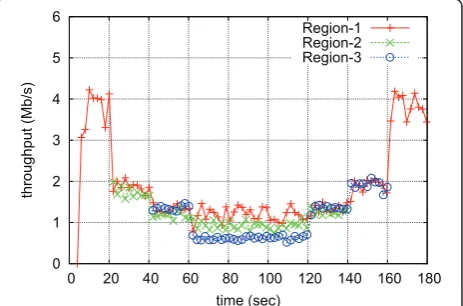
Figure 8 and Table 4 present throughput dynamics of
TaLE-enabled Hot Spot and its fairness index at each period in comparison with IEEE 802.11-based network in part. Note that we do not present throughput dynamics of EEE 802.11-based network since they are similar to those presented in Section 6.1.1 and easily inferred from fairness indices. In specific, Figure 8 exhi-bits that theTaLE framework can address wireless link errors and still support per-location fairness even though wireless errors disrupt transmissions in
Region-1. We can conclusively acknowledge that, even if wireless link errors are incurred inRegion-1, the service differentiation supported by theTaLE frame-work continuously frame-works with small throughput degra-dation at all the regions while exiting IEEE 802.11-based network does not respond to the errors. In case of fair-ness index presented in Table 4 (b), we clearly see that when all the regions have the same weight, i.e., [20s, 40s], [40s, 60s], [60s, 120s], and [120s, 140s], the TaLE
framework allocates the link capacity to each region almost equally even though wireless link errors reduce the capacity and consequently degrade the index some-what (see the index when errors appear, i.e., the period of [60s, 120s]). In fact, ωisportion of per-location load information compensates unsuccessful transmissions due to wireless link errors by loweringper-location target load.
6.1.3 Performance in the presence of mobility
As the next performance study, we investigate the effect of station mobility on theTaLEframework. We use the following mobile scenario, in addition to the scenario used in Section 6.1.1:
• STS-1 moves to Region-3 from Region-1
whileSTS-3moves to Region-1fromRegion-3
at the instant of 80s at the speed of 1 m/s.
Figure 8Throughput dynamics of TaLE-enabled Hot Spot in
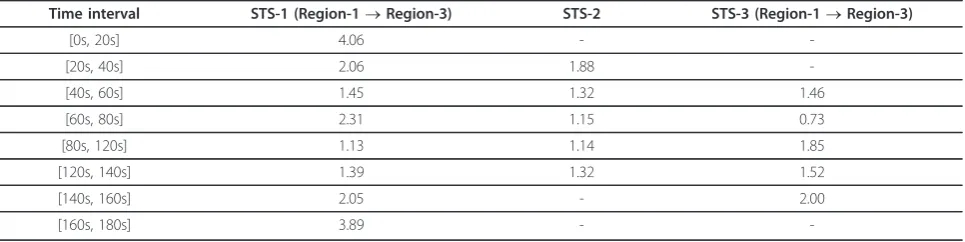
Figure 9 and Table 5 present per-station throughput in TaLE-enabled network in comparison with those in IEEE 802.11-based Hot Spot network. Note that we pre-sent in this figure per-station throughput dynamics instead of per-location throughput since stationsSTS-1
and STS-3exchanges their positions. In Figure 9, we can perceive that theTaLEframework provides distinct service differentiation agreeable to given weights. Espe-cially, in the period of [60s, 80s], STS-1station enjoys the highest bandwidth among three stations since
Region-1 has the highest weight, but, after STS-1
andSTS-3 stations exchange their positions according to the mobile scenario, STS-3 is entitled to use the highest bandwidth since its current location becomes
Region-1with the highest weight. Once all the regions come to have the same weight, i.e., the periods of [40s, 60s], and [120s, 140s], we can see all the stations use equal quantity of network bandwidth. Table 5 compares numerically per-station throughput between IEEE
802.11-based and TaLE-enabled Hot Spot network at
each period.
6.2 Performance in case of multiple stations
In this section, we do a simulation investigation when each region has multiple stations to evaluate theTaLE
framework in perspective of per-location throughput,
network-wide throughput, and loss rate when the num-ber of stations per location increases.
6.2.1 Performance with respect to per-location throughput
In the extended line of previous simulation studies in
Section 6.1, we evaluate the TaLE framework with
respect to per-location throughput when multiple sta-tions appear at each region. The simulation scenario is as follows:
•Region-1and Region-2have two downloading station whileRegion-3has two uploading station; •all the regions serve their resident stations during the whole simulation period of 100s;
•Region-1,Region-2, andRegion-3have 1, 2, and 3 as its weight, respectively.
• all the regions suffer from wireless link errors, which are generated by the same way as used in Sec-tion 6.1.2, except:
- the errors appear in the period of [30s, 70s].
Figure 10 and Table 6 show that TaLE-enabled net-work supports per-location service differentiation immune to wireless link errors (Figure 10) and presents per-location aggregate throughput in each interval (Table 6). Since weights given to Region-1, Region-2, andRegion-3 are 1, 2, and 3, respectively, we can
simply check whether or not the TaLE framework
works by comparing the summed throughput of
Region-1 and Region-2 with throughput of
Region-3. As shown in the Table as well as the figure,
we confirm that the TaLE framework can accurately
support location-based service differentiation according to given weights, regardless of wireless link errors and the number of stations per location.
6.2.2 Performance in the presence of mobility
Then, we investigate whether theTaLE framework can
be immune to the mobility. We continuously use the same simulation configuration that we have used for the Section 6.2.1, and we have additional scenarios as fol-lows:
• STS-2 moves to Region-3 from Region-1,
STS-4moves toRegion-1 from Region-2, and
STS-6moves toRegion-2fromRegion-3at the instant of 40s at the speed of 10 m/s;
•Wireless link errors are disabled.
The results are shown in Figure 11a. We can observe from the figure that even though mobile nodes appear in the network, the location-based differentiation is suc-cessfully supported by theTaLEframework.
In addition, we enable the wireless link in the above simulation scenario in order to see how both wireless
link errors and mobility affect the TaLE framework.
Table 4 Fairness index ofTaLE-enabled Hot Spot in the presence of wireless link errors
Time interval IEEE 802.11-based Hot Spot TaLE-enabled Hot Spot
[20s, 40s] 0.998 0.993
[40s, 60s] 0.902 1.000
[60s, 120s] 0.713 0.950
[120s, 140s] 0.836 1.000
[140s, 160s] 1.000 1.000
0 1 2 3 4 5 6
0 20 40 60 80 100 120 140 160 180
throughput (Mb/s)
time (sec) STS-1 (Region-1->Region-3) STS-2 (Region-2)
STS-3 (Region-3->Region-1)
Figure 9Throughput in TaLE-enabled Hot Spot in the presence
The scenario for generating wireless link errors is the same one as used in the Section 6.2.1; in other words, wireless link errors appear in the period of [30s,70s]. Figure 11b presents the results that shows theTaLE fra-mework works well in the combined presence of wire-less link errors and mobile nodes.
6.2.3 Performance with respect to aggregate throughput and loss rate
Based on the results in Section 6.2.1, we further investi-gate whether theTaLEframework still holds its effect when each region includes varying number of stations. We continuously use the same simulation scenario as employed in Section 6.2.1, but we have the following modifications on the scenario:
•each simulation set uses a different number of sta-tions per region, varying from one to five;
•each simulation set has 10 number of runs, each of which is executed with a different seed;
•all the regions are free from wireless link errors.
Notice that since each set includes 10 runs, all the results are presented in average.
Firstly, we evaluate the TaLEframework with respect to per-location throughput. Figure 12 presents aggregate per-location throughput as the number of stations per region increases. The aggregate throughput means total throughput cross all the stations in the region. As indi-cated in Figure 12, IEEE 802.11-based network cannot
manage to do anything when the region Region-3
(which has only uploading stations) dominates to exploit link capacity. The unfairness results from the inter-play between TCP and IEEE 802.11 MAC protocols
[35,36,45]. The aggregate throughput of Region-3
increases from 2.09 (through 3,26, 3.95, and 4.18) up to 4.11 Mb/s when the number of nodes increases from 1 to 5, whileRegion-1(Region-2) decreases from 0.98 (1.40) to 0.10 (0.16) Mb/s. Note that the discrepancy
betweenRegion-1andRegion-2comes from
differ-ent round trip time due to differdiffer-ent link capacity and delay between router and their corresponding wired
peer. On the contrary, the TaLE framework prevents
any region from excessively exploiting link capacity, which is presented in Figure 12(b).Region-1uses 1.30
~ 1.39 Mb/s, Region-2 uses 1.30 ~ 1.42 Mb/s, and
Region-3 uses 1.42 ~ 1.56 Mb/s, regardless of the number of stations per region.
Then, we evaluate theTaLEframework in perspective of the network-wide aggregate throughput and frame loss rate. Figure 13 compares the network-wide aggre-gate throughput and loss rate between IEEE
802.11-based and the TaLE framework. From the figure, we
first observe that, even though the network-wide throughput is stable, immune to the number of stations
Table 5 Average per-location throughput inTaLE-enabled Hot Spot in the presence of mobility
Time interval STS-1 (Region-1®Region-3) STS-2 STS-3 (Region-1®Region-3)
[0s, 20s] 4.06 -
-[20s, 40s] 2.06 1.88
-[40s, 60s] 1.45 1.32 1.46
[60s, 80s] 2.31 1.15 0.73
[80s, 120s] 1.13 1.14 1.85
[120s, 140s] 1.39 1.32 1.52
[140s, 160s] 2.05 - 2.00
[160s, 180s] 3.89 -
0 0.3 0.6 0.9 1.2
0 25 50 75 100
per-station throughput (Kb/s)
time STS-1 (Region-1) STS-2 (Region-1) STS-3 (Region-2)
STS-4 (Region-2) STS-5 (Region-3) STS-6 (Region-3)
Figure 10Throughput dynamics and averages in TaLE-enabled
Hot Spot when two stations appear at each region.
Table 6 Average per-location throughput inTaLE -enabled Hot Spot when two stations appear at each region
Time interval Per-station/region throughput (Mb/s)
Region-1 Region-2 Region-3
[0s, 30s] 0.34 +0.34 = 0.68 0.62+0.54 = 1.16 0.92+0.94 = 1.86
[30s, 60s] 0.21 +0.22 = 0.43 0.37+0.39 = 0.76 0.67+0.68 = 1.35
in both networks, the throughput ofTaLE-enabled net-work is a little smaller than that of IEEE 802.11-based network due to theTaLEoverhead resulted from broad-castingbeacon frame to estimate channel state (Figure
13a). We however observe thatTaLE-enabled network
experiences significantly less loss rate than IEEE 802.11-network does (Figure 13b). Based on two metrics in Fig-ure 13a and 13b, we can realize that theTaLE frame-work can reduce bandwidth waste used to retransmit lost frames, so that the effective throughput conse-quently increases.
Remark:The performance metrics that we have used in this section show the superior performance of the proposed TaLEframework against that of the original IEEE 802.11-based network. This is because all the sta-tions in a specific location cannot use more bandwidth than its allocated amount, which is decided by a given
service differentiation ratio. The TaLE framework
installed at the AP actually enforces the differentiation together with the feedback control of TCP (or TCP-like) protocol. Even if wireless errors disrupt the data transmissions or some mobile scenarios appear (so that the available bandwidth is changed), the frame-work can redistribute the current available bandwidth according to the service differentiation since it con-tinuously keeps track of the current state of the net-work bandwidth and the current locations of the mobile nodes. Note that all these aspects are embedded in Eq. (10).
6.3 Performance in case of heterogeneous station In this section, we investigate the effect of theTaLE fra-mework when each region has a different number of flows and each flow has different traffic properties. We use the following three different types of stations according to the property of their data flows instead of 0
0.3 0.6 0.9 1.2
0 25 50 75 100
per-station throughput (Kb/s)
time STS-1 (Region-1) STS-2 (Region-1) STS-3 (Region-2)
STS-4 (Region-2) STS-5 (Region-3) STS-6 (Region-3)
0 0.3 0.6 0.9 1.2
0 25 50 75 100
per-station throughput (Kb/s)
time STS-1 (Region-1) STS-2 (Region-1) STS-3 (Region-2)
STS-4 (Region-2) STS-5 (Region-3) STS-6 (Region-3)
(a) With mobility (b) With mobility and wireless link errors
Figure 11Throughput dynamics in TaLE-enabled Hot Spot in the presence of mobility and wireless link errors.
0 1 2 3 4 5
1 2 3 4 5
throughput (Mb/s)
number of stations per region Region-1
Region-2 Region-3
0 1 2
1 2 3 4 5
throughput (Mb/s)
number of stations per region Region-1
Region-2 Region-3
(a) IEEE 802.11 (b)TaLE
STS-1,STS-2, andSTS-3used in previous simulation studies:
•Region-1 has aTYPE-1station, which conducts bulk download, and generates web-surfing-type traf-fic and also messenger-type traftraf-fic;
• Region-2 has a TYPE-2 station, which down-loads bulk data;
• Region-3 serves a TYPE-3 station, which uploads its data.
Note that TYPE-1 station has three flows, while
others have a single flow. As for application traffic, we generate bulk download or upload traffic with FTP, web traffic with an exponential distributed traffic generator, and messenger traffic with a Pareto distributed traffic generator.
6.3.1 Performance with respect to per-location throughput
In this study, we employ the same simulation scenarios as used in Section 6.1.1 except that TYPE-1, TYPE-2, and TYPE-3stations are employed instead of STS-1,
STS-2, and STS-3.
Figure 14 and Table 7 present throughput dynamics and average throughput ofTaLE-enabled Hot Spot net-work. Note that we do not include corresponding results of IEEE 802.11-based network since the results show similar trends to those in Section 6.1 in the way that IEEE 802.11-based network provides neither fairness nor differentiation.
We observe from Figure 14 that TaLE-enabled Hot
Spot network does not suffer from any unfairness when all the regions are assigned to the same weight and suc-cessfully provides service differentiation according to the given weights at the other case. Specifically, in the per-iod of [20s, 40s], the average throughput ofRegion-1
and that of Region-2are almost equal to each other
(2.04 and 2.10 Mb/s, respectively). Similarly, in the per-iod of [40s, 60s], all the three regions use almost equal bandwidth. When different priorities are assigned to dif-ferent Regions in the period of [60s, 120s], each region is entitled to use different network bandwidth according to the weight assigned to them. After Region-2stops
serving TYPE-2 stations at the instant of 140s, the
Region-1 and Region-3share the available band-width evenly in the period of [140s, 160s]. Consequently, per-location throughput for each region is nearly equal to each other when all the regions have the same weight, which reconfirms that per-location fairness
achieved in the TaLEframework is almost immune to
the number of flows and their traffic types. On the other hand, per-location throughput is differentiated according to per-location weight in the period of [60s, 120s]. In order to present those results in detail, Table 7 presents numerical results at each period. As already
0 1 2 3 4 5 6 7
1 2 3 4 5
aggregate throughput (Mb/s)
number of stations per region IEEE 802.11
TaLE
0 1 2 3 4 5
1 2 3 4 5
loss rate (%)
number of stations per region IEEE 802.11
TaLE
(a) Aggregate throughput (b) Loss rate
Figure 13Aggregate throughput and loss rate comparison between 802.11-based and TaLE-enabled Hot Spot in the presence of
mobility.
0 1 2 3 4 5 6
0 20 40 60 80 100 120 140 160 180
throughput (Mb/s)
time (sec)
Region-1 Region-2 Region-3
Figure 14 Throughput dynamics and average per-location throughput in TaLE-enabled Hot Spot when each region serves
discussed with Figure 14, we observe that theTaLE fra-mework can accurately support both service differentia-tion and fairness according to a given set of per-locadifferentia-tion weights for each period.
6.3.2 Performance in the presence of link errors
We then check whether or not the TaLE framework
continuously supports the service differentiation when wireless link disrupts the wireless transmissions. We use the same simulation scenario as used in Section 6.3.1 for this study except what follows:
•there is no mobile scenarios for any station; •all the regions are assigned to the same weight; • wireless link errors specified in Section 6.1.2 appear in the period of [60s,120s].
Figure 15 and Table 8 present throughput dynamics
measured in TaLE-enabled Hot Spot. Figure 15 shows
that, even if wireless link errors are incurred in the
Region-1, the service differentiation supported by
TaLEframework is continuously working with a small
throughput degradation at the erroneous region while
exiting IEEE 802.11-based network does not respond to the errors.
Table 8 compares in detail per-location throughput between IEEE 802.11-based andTaLE-enabled Hot Spot at each period when previously introduced two-state Markov-modulated wireless errors occurs at the Region-1.
6.3.3 Performance in the presence of mobility
We then verify whether theTaLE framework
continu-ously supports the service differentiation when two sta-tions,TYPE-1and TYPE-3, exchange their positions. We use the same simulation scenario as used in Section 6.1.3 for this study except that TYPE-1,TYPE-2, and
TYPE-3are used instead ofSTS-1,STS-2, and STS-3.
Figure 16 and Table 9 present per-station throughput dynamics and average throughput of three stations in
TaLE-enabled network. We observe that the TaLE
-enabled framework supports distinct service differentia-tion agreeable to weights from Figure 16. Especially, in the period of [60s, 80s], the highest bandwidth is assigned toTYPE-1 station since the highest weight is
set to Region-1. Once TYPE-1 station moves to
Table 7 Throughput dynamics and average per-location throughput inTaLE-enabled Hot Spot when each region serves a different type of station.
Time Interval Region-1
(TYPE-1 STS)
Region-2 (TYPE-2 STS)
Region-3 (TYPE-3 STS)
[0s, 20s] 3.95 -
-[20s, 40s] 2.04 2.10
-[40s, 60s] 1.30 1.51 1.65
[60s, 120s] 2.06 1.26 0.92
[120s, 140s] 1.30 1.36 1.48
[140s, 160s] 1.87 - 2.35
[160s, 180s] 3.92 -
0 1 2 3 4 5 6
0 20 40 60 80 100 120 140 160 180
throughput (Mb/s)
time (sec)
TYPE-1 STS (Region-1) TYPE-2 STS (Region-2) TYPE-3 STS (Region-3)
Figure 15Throughput dynamics of TaLE-enabled Hot Spot in
the presence of wireless link errors.
Table 8 Average per-location throughput ofTaLE -enabled Hot Spot in the presence of wireless link errors.
Time interval Region-1
(TYPE-1)
Region-2 (TYPE-2)
Region-3 (TYPE-3)
[0s, 20s] 3.81 -
-[20s, 40s] 1.87 2.03
-[40s, 60s] 1.22 1.36 1.58
[60s, 120s] 0.94 1.15 0.86
[120s, 140s] 1.23 1.30 1.91
[140s, 160s] 1.73 - 2.28
[160s, 180s] 3.72 -
0 1 2 3 4 5 6
0 20 40 60 80 100 120 140 160 180
throughput (Mb/s)
time (sec) TYPE-1 STS (Region-1->Region-3) TYPE-2 STS (Region-2)
TYPE-3 STS (Region-3->Region-1)
Figure 16Throughput dynamics in TaLE-enabled Hot Spot when TYPE-1and TYPE-3stations exchange their locations at
Region-3and simultaneouslyTYPE-3station move to
Region-1according to mobile scenario,TYPE-3 sta-tion comes to use the highest bandwidth since its
cur-rent location becomes Region-1 with the highest
weight. When all the regions come to have the same weight, i.e., the periods of [40s, 60s] and [120s, 140s], we can see all the regions use equal quantity of network bandwidth. Table 9 specifically enumerates per-station average throughput inTaLE-enabled Hot spot network at each period of simulation. Conclusively, even though different types of flows are served at each station and mobile scenario is presented, the simulation results indi-cate that the TaLEframework can provide the service differentiation according to per-location weight.
7 Conclusion
As location-based services (LBSs) become attractive ser-vices and are expected to be widely used, we need to directly use location information to provide service dif-ferentiation and/or fairness for them, which is comple-tely different from existing per-station and per-flow service differentiation. In this paper, we have introduced
per-location target load in order to support location-basedservice differentiation, then devised Tar-get Load Estimator (TaLE) to determine current
per-location target load, and finally proposed a
TaLE-based framework of QoS provisioning in IEEE
802.11-based Hot Spot networks. In theTaLE-based fra-mework, the AP keeps track of current per-location load diverged from a given per-location share of link capacity and its contribution to current network-wide load, and it feedbacks the load information to traffic senders. Based on the load information, each traffic sender adjusts its sending rate. We have implemented the pro-posed framework in ns-2simulator, and we carried out an extensive set of simulations to evaluate its perfor-mance with respect to fairness and service differentia-tion. The simulation results have indicated that the
proposed TaLE-based framework can successfully
support both the per-location fairness and service differ-entiation, irrespective of the number of stations per location, station mobility, the number of flows per sta-tion, traffic types, and any combination thereof.
We have several directions for ongoing and future
research. We plan to extend the TaLE framework to
accommodate multi-hop cases with mobile scenarios and also extend it to accommodate other transport pro-tocol, such as UDP, by designing an appropriate rate feedback control scheme. We then would like to build up an integrated framework of per-location, per-station, and per-flow QoS provisioning, adaptive to link status, traffic type and mobile scenario.
Acknowledgements
This work was supported in part by the IT R&D program of MKE/KEIT [KI001822, Research on Ubiquitous Mobility Management Methods for Higher Service Availability], and in part by the KCC (Korea Communications Commission), Korea, under the R&D program supervised by the KCA (Korea Communications Agency) (KCA-2011-09913-04003).
aNote that“differentiation”does not mean any service guarantee in
perspective of network bandwidth and delay, but gives a different priority to different traffic.bWe interchangeably use region, location, and place in this paper.
Author details 1
School of Electrical Engineering, Korea University, Anam-Dong, Seongbuk-Gu, Seoul 136-713, Korea2Department of Information & Communications, Dongguk University-Seoul, Korea3Department of Information and Communication Engineering, DGIST, Korea
Competing interests
The authors declare that they have no competing interests.
Received: 26 February 2011 Accepted: 18 September 2011 Published: 18 September 2011
References
1. IEEE 802.11 WG, Part 11, Wireless LAN medium access control (MAC) and physical layer (PHY) specification, inIEEE 802.11 Standard(1999) 2. NTT DOCOMO, Ntt docomo i-mode. http://www.nttdocomo.com/services/
imode/index.html
3. Sprint, Sprint navigation. http://navigation.sprint.com/snweb
4. Verizon, Verizen chaperone and navigator. http://products.vzw.com/index. aspx?id=fnd_toolsApps_childFinder
5. Federal Communications Commission (FCC), Fcc report to congress on the deployment of e-911 phase ii services by tier iii service providers (2005) 6. S Pilosof, R Ramjee, D Raz, Y Shavitt, P Sinha, Understanding TCP fairness
over wireless LAN, inProceedings of IEEE INFOCOM(2003)
7. E-J Lee, H-T Lim, S-J Seok, C-H Kang, A scheme for enhancing TCP fairness and throughput in IEEE 802.11 WLANs. InProceedings of IFIP NETWORKING (2007)
8. Y Wu, Z Niu, J Zheng, Study of the TCP upstream/downstream unfairness issue with per-flow queuing over infrastructure-mode WLANs. Wirel. Commun. Mob. Comput.5(4), 459–471 (2005). doi:10.1002/wcm.303 9. X Lin, X Chang, JK Muppala, VQ-RED: An efficient virtual queue
management approach to improve fairness in infrastructure WLAN, in Proceedings of IEEE Local Computer Networks (LCN)(2005)
10. J Ha, C-H Choi, TCP fairness for uplink and downlink flows in WLANs, in Proceedings of IEEE Globecom 2006(2006)
11. M Gong, Q Wu, C Williamson, Queue management strategies to improve TCP fairness in IEEE 802.11 wireless LANs, inProceedings of Workshop on Resource Allocation in Wireless Networks (RAWNET)(2006)
12. N Blefari-Melazzi, A Detti, I Habib, A Ordine, S Salsano, TCP fairness issues in IEEE 802.11 networks: Problem analysis and solutions based on rate control. IEEE Trans. Wirel. Commun.6, 1346–1355 (2007)
Table 9 Average per-station throughput inTaLE-enabled Hot Spot when TYPE-1 and TYPE-3 stations exchange their locations at the instant of 80s
Time interval TYPE-1 STS TYPE-2 STS TYPE-3 STS
[0s, 20s] 4.10 -
-[20s, 40s] 1.99 2.20
-[40s, 60s] 1.33 1.48 1.64
[60s, 80s] 2.15 1.29 0.95
[80s, 120s] 1.18 1.10 2.12
[120s, 140s] 1.26 1.49 1.69
[140s, 160s] 1.95 - 2.32