R E S E A R C H
Open Access
A conceptual framework for measuring
community health workforce performance
within primary health care systems
Smisha Agarwal
1,2*, Pooja Sripad
1, Caroline Johnson
1, Karen Kirk
3, Ben Bellows
1, Joseph Ana
4, Vince Blaser
5,
Meghan Bruce Kumar
6, Kathleen Buchholz
7, Alain Casseus
8, Nan Chen
7, Hannah Sarah Faich Dini
9,
Rachel Hoy Deussom
10, David Jacobstein
11, Richard Kintu
12, Nazo Kureshy
11, Lory Meoli
11, Lilian Otiso
6,
Neil Pakenham-Walsh
4, Jérôme Pfaffmann Zambruni
9, Mallika Raghavan
7, Ryan Schwarz
13,14, John Townsend
1,
Brittney Varpilah
7, William Weiss
2,11and Charlotte E. Warren
1Abstract
Background:With the 40th anniversary of the Declaration of Alma-Ata, a global effort is underway to re-focus on strengthening primary health care systems, with emphasis on leveraging community health workers (CHWs) towards the goal of achieving universal health coverage for all. Institutionalizing effective, sustainable community health systems is currently limited by a lack of standard metrics for measuring CHW performance and the systems they work within. Developed through iterative consultations, supported by the Bill & Melinda Gates Foundation and in partnership with USAID and UNICEF, this paper details a framework, list of indicators, and measurement
considerations for monitoring CHW performance in low- and middle-income countries.
Methods:A review of peer-reviewed articles, reports, and global data collection tools was conducted to identify key measurement domains in monitoring CHW performance. Three consultations were successively convened with global stakeholders, community health implementers, advocates, measurement experts, and Ministry of Health representatives using a modified Delphi approach to build consensus on priority indicators. During this process, a structured, web-based survey was administered to identify the importance and value of specific measurement domains, sub-domains, and indicators determined through the literature reviews and initial stakeholder
consultations. Indicators with more than 75% support from participants were further refined with expert qualitative input.
Results:Twenty-one sub-domains for measurement were identified including measurement of incentives for CHWs, supervision and performance appraisal, data use, data reporting, service delivery, quality of services, CHW
absenteeism and attrition, community use of services, experience of services, referral/counter-referral, credibility/ trust, and programmatic costs. Forty-six indicators were agreed upon to measure the sub-domains. In the absence of complete population enumeration and digitized health information systems, the quality of metrics to monitor CHW programs is limited.
(Continued on next page)
© The Author(s). 2019Open AccessThis article is distributed under the terms of the Creative Commons Attribution 4.0 International License (http://creativecommons.org/licenses/by/4.0/), which permits unrestricted use, distribution, and reproduction in any medium, provided you give appropriate credit to the original author(s) and the source, provide a link to the Creative Commons license, and indicate if changes were made. The Creative Commons Public Domain Dedication waiver (http://creativecommons.org/publicdomain/zero/1.0/) applies to the data made available in this article, unless otherwise stated. * Correspondence:[email protected]
1Population Council, Washington, DC, USA
2Department of International Health, Johns Hopkins Bloomberg School of
Public Health, Baltimore, MD, USA
(Continued from previous page)
Conclusions:Better data collection approaches at the community level are needed to strengthen management of CHW programs and community health systems. The proposed list of metrics balances exhaustive and pragmatic measurement of CHW performance within primary healthcare systems. Adoption of the proposed framework and associated indicators by CHW program implementors may improve programmatic effectiveness, strengthen their accountability to national community health systems, drive programmatic quality improvement, and plausibly improve the impact of these programs.
Keywords:Community health worker, Primary health care, Health metrics, Healthcare quality indicators, Health information systems
Background
The landmark 1978 Declaration of Alma-Ata formally entrenched for the first time a political declaration that enshrined health as a human right within the global health agenda and emphasized primary health care (PHC) as a key mechanism for achieving health for all [1]. The 40th anniversary of the Declaration of Alma-Ata was a global call to re-invigorate efforts to achieve health for all through strengthening PHC systems [2, 3]. Mounting evidence since 1978 in low-and-middle-income countries (LMICs) has shown that focusing on provision of health services at the community level not only leads to more efficient and equitable use of health resources and better health outcomes [4], but also is a consistent component of strong, effective health systems. Since Alma-Ata, commu-nity health worker (CHW) programs in LMICs have been promoted to strengthen broad-based health efforts within community settings. CHWs, who for the purposes of this paper, refer to frontline health workers with up to 6 months of initial training, serve as the first point of con-tact for community members, especially for individuals living in low-income or rural communities whose access to facility-based health care may be limited. Often as community members themselves, CHWs possess a unique understanding of the local context, including barriers and facilitators to accessing timely and quality PHC, and can facilitate the most effective linkages to care.
Despite decades of interest and renewed commitment to expand Universal Health Coverage (UHC) by scaling up CHW programs, a universal, standardized system for empirically measuring the effectiveness of CHW programs does not yet exist [5–7]. Measurement is limited by the lack of an accepted and pragmatic set of theoretically grounded and validated indicators [8]. The integrated Community Case Management (iCCM) Framework was an attempt to provide guidance on measurement and metrics of iCCM programs; however, it has few metrics measured at the community level [9]. There is a need for consensus on measuring CHWs’performance as a part of the larger community health system, broadly defined as“set of local actors, relationships, and processes engaged in producing, advocating for, and supporting health in communities and
households outside of, but existing in relationship to, formal health structures”[10–13]. In practice, community health systems may include the enabling environment in which CHWs work, including household-level care-givers, other formal and informal healthcare providers, organizational intermediaries including non-governmental and faith-based organizations, other government sectors such as housing and education, among others [11]. As the link between individuals, communities, and health facilities, CHWs must be fluent in navigating the formal, facility-based health system, while maintaining their relationships within the community where they work [11, 14]. Conse-quently, the measurement of CHW performance needs to account for not only the activities of the CHW, but also those of the community health system that support the CHW. Experts have called for the recognition of the community health system as its own, unique sub-system of the health system, articulating a need to standardize the way performance and success of this sub-system is mea-sured [11].
Addressing this gap in standardized metrics for asses-sing performance of community health systems is one of the main goals of Population Council’s Frontline Health (FLH) project, supported by the Bill & Melinda Gates Foundation and implemented in partnership with Last Mile Health. USAID, UNICEF, and the Bill & Melinda Gates Foundation are working together around a set of jointly defined investment priorities that advance front-line delivery of and community engagement in primary health care. The Integrating Community Health (ICH) collaboration focuses on catalytic partnerships for sys-tem strengthening; measurement, learning, evaluation, and accountability; and, advocacy and pathways to scale. FLH is a partnership of the Population Council and Last Mile Health with USAID, UNICEF, and ICH partners in Bangladesh, Democratic Republic of the Congo, Haiti, Kenya, Liberia, Mali, and Uganda.
health policy and system support to optimize CHW pro-grams through the generation of tools and best practices to improve the design, implementation, performance, and evaluation of CHW programs [16]. The Frontline Health project interacts with country and global stakeholders to contribute to the objective of advancing metrics and evi-dence for community health. As part of this effort, key learning and research priorities for countries considering greater institutionalization and professionalization of CHW programs have already been identified in another manu-script [17].
Here, we distill lessons from the literature and expert consultations to propose the Community Health Worker Performance Measurement Framework. The goal of this framework is to guide governments and implementing agencies in the development of priority standardized metrics for measuring the performance of CHW pro-grams within the context of the broader system within which they operate. In this article, we describe the process of developing the framework and associated metrics, identify considerations for measurement of CHW program performance, and articulate future con-siderations for developing a robust agenda for monitor-ing community health systems at the country level.
Methods
Review of evidence
Community health literature from peer-reviewed data-bases and online knowledge management centers (CHW Central and Human Resources for Health (HRH) Global Resource Center), as well as publications from multilat-eral organizations, were reviewed to identify broad meas-urement domains in CHW program monitoring. A total of 85 reports from the CHW Central and 300 from the HRH Global Resource Center were screened for relevance. Peer-reviewed articles were identified using a convenience snowball sampling and included if they identified critical measurement gaps to improve CHW programs. This infor-mation was abstracted and consolidated to inform the measurement domains for the framework. At first, the review was aimed at identifying a framework in the existing literature that would comprehensively identify priority metrics for measuring CHW programs, instead of develop-ing a new framework. We identified 34 frameworks (Box 1) that peripherally addressed this objective, including but not limited to the CHW Assessment and Improvement Matrix (CHW AIM) [18], CHW logic model proposed by Naimoli et al [6], USAID Community Health Framework [19], and the Primary Health Care Performance Initiative (PHCPI) conceptual framework [20]. While these frameworks were useful in identifying areas of measurement appropriate to community health, they were not explicitly developed for operationalizing measurement of CHW programs [6, 18–20]. Given this, a new framework was proposed
that leverages these existing frameworks and is prag-matically geared towards monitoring community health worker programs.
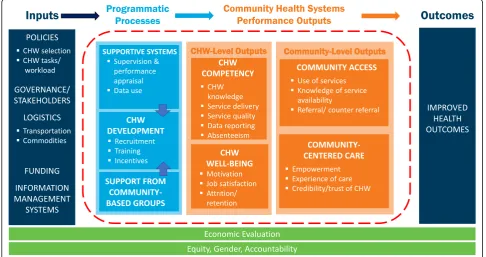
The review of literature and existing frameworks helped identify and define sub-domains of a draft Community Health Worker Performance Measurement Framework. This was refined further based on a series of consultations as described below (Fig.1).
Concept development
Four critical considerations guided the development of the framework:
1. Measurement of CHW performance should consider system-level processes including the role of governance, policy, internal and external investments, and other supportive mechanisms, and account for the broader community health system that influences CHW program
performance.
2. In countries without centralized coordination, NGOs typically play an outsized role in
implementation of CHW programs, with divergent CHW roles, responsibilities, and timelines. To account for this variation, we recommend the use of existing standardized metrics (e.g., for iCCM, HIV, TB, family planning, maternal health) to measure downstream impacts of services on a specific outcome area.
3. While several factors contribute to the success of CHW programs, the proposed indicators around the framework focus on aspects that are amenable to and critical for the purposes of measurement of CHW performance. For multidimensional and critical concepts such as community empowerment and job satisfaction, formative work is currently being undertaken by the Population Council within the Frontline Health project to develop scale-based metrics.
4. Balance short-term demand for data to inform programmatic activities with the long-term data needed to understand program effectiveness.
sub-domains were added or combined. Next, indicators in the peer-reviewed literature were identified from 383 reports in the Health Care Provider Performance Review database using the filters of “lay health worker” and pro-cesses of care outcomes [28]. A desk review of global data collection tools was conducted to identify existing global indicators that evaluate CHW performance. Reviewed sources are as follows: WHO National Health Workforce Accounts [29], Woman’s and Man’s Questionnaires from Demographic and Health Surveys (DHS) [30], DHS Service Provision Assessments (SPA) [31], WHO Service Availabil-ity and Readiness Assessment (SARA) [32], World Bank Service Delivery Indicators (SDI) [33], CHW Assessment and Improvement Matrix (CHW AIM) [18], Countdown to 2030 [34], WHO European Health for All [35], OECD Health Care Quality Indicators [36], SDG Goal 3 Indicators [37], WHO Global Reference List of 100 Core Health Indi-cators [38], and Integrated Community Case Management
(iCCM) indicators [9]. Each of these sources was systemat-ically searched for its inclusion of indicators that explicitly measured CHW performance at the community level.
Consultations and prioritization of metrics
framework. A Technical Advisory Group (TAG) of 25 dis-tinct participants was then convened in Washington, DC, United States of America, to identify priority areas for measurement from the perspective of global stakeholders, community health system advocates, and measurement experts. During the TAG meeting, a structured web-based survey was administered to TAG members, as well as select members of the Frontline Health Workers Coalition who volunteered to participate. For each of the meas-urement sub-domains, the respondents were asked to determine its importance (response categories—yes, no, maybe). For each of the indicators under the sub-domains, respondents were asked whether the indicator was valuable (response categories—yes, no, unclear, un-sure). Sub-domains that had greater than 75% support as important areas of measurement, were further dis-cussed in plenary, and the associated indicators further refined. For sub-domains with less than 75% agreement on their level of importance, changes were made based on expert feedback alone. Results from the survey are presented in Additional file1.
As a final step, in October 2018, a consultation was held in Liverpool, United Kingdom, during a side session of the Fifth Global Symposium on Health Systems Re-search. A meeting of a third set of 32 researchers, pro-gram implementers, and policy stakeholders, focused on community health systems, met to further validate the framework and indicators by confirming their priority areas for measurement and the relevant metrics through a nominal group technique process [41, 42]. Following
this process, participants were asked in a group discussion format to adopt the lenses of (a) donors/international policymakers, (b) national/sub-national policymakers and managers, (c) program/service implementers, and (d) moni-toring/evaluation specialists and researchers and prioritize metrics within the framework based on their perspective. Qualitative notes taken during this discussion, including priority areas and indicators documented during nominal group technique process and perspective-based presenta-tions, were used to further clarify the indicators, refine the definitions, and contextualize them.
Results
Community Health Worker Performance Measurement Framework
The Community Health Worker Performance Measure-ment Framework (Fig. 2), derived from iterative frame-work and indicator review and consultation, identifies critical areas for measuring the performance of CHW pro-grams within their community health systems [43, 44]. While community health systems are inherently non-linear and complex, the framework structure uses the common input-process-output-outcome logic model ap-proach and has four areas:inputs, programmaticprocesses, community health performanceoutputs(measured at the CHW level and at the community level), and outcomes [45]. Specific measurement domains and sub-domains are defined under each of these categories, with operational definitions in Table1.
Table 1Operational definitions of measurement constructs in the Community Health Worker Performance Measurement Framework
Indicator Domain Definitions/explanations References
Inputs
1. Policies National-level policies that support the development and deployment of CHW programs
CHW selection Age, education and other policy-supported requirements for being eligible to become a CHW are listed
[5,14]
CHW tasks/workload Description of the role and tasks to be performed by a CHW from the community, CHW and health systems perspectives
[5,18,46,47]
2. Governance/stakeholders Engagement with the Ministry, agencies and other stakeholders to support the CHW program
3. Logistics Provisions, material and technological to support CHW functions.
Transportation Provisions, either monetary (fare for busses) or physical (bicycle) for CHWs to physically access target population
[5]
Commodities (including job aids)
Required equipment, medicines and supplies to deliver services, as well as resources such as job aids to support the quality of services
[5,18,46–48]
4. Funding Level of government/donor and other stakeholder
investments in CHW programs in country
5. Information management systems
Support for CHW to document home visits including community-based health information systems, report visit-related data to the health system and link it to an assessment of CHW performance
[18]
Programmatic processes
Indicator domains Definition/explanation References
1. Supportive systems Structural processes that influence CHW functions at various levels of the health system (facility/local/sub-national/national)
A. Supervision and performance appraisal
Consistent and continued support for problem solving, service delivery and skill
development, including evaluation and supportive feedback on the work performed by the CHW in a set period
[10,14,18,46,47]
B. Data use The use of data by individuals at various levels of the health system to make decisions and improve operational processes
2. CHW development
A. Recruitment How and from where a community health worker is identified, selected, and assigned to a community
[18]
B. Training Training is provided to the CHW to prepare for his/her role in service delivery and ensure s/he has the necessary skills to provide safe and quality care.
[5,18,46,47]
C. Incentives Includes financial incentives such as salaries and bonuses, and non-financial incentives such as training, recognition, uniforms and other opportunities for advancement
[5,6,14,18,47]
3. Support from community-based groups Role that the community (any organization or group at the community level) plays in selection, supervision, offering incentives and providing feedback to the CHW
[5,18,46,47]
Community health systems performance outputs—CHW level
Indicator domain Definition/explanation References
4. CHW competency Degree to which CHW has the knowledge and skills necessary to carry out the assigned tasks
A. CHW knowledge Degree to which CHWs have theoretical knowledge of counseling, preventative and curative and other tasks they are responsible for
[5,6,49]
B. Service delivery Quantity of promotional, preventive and curative services CHWs provide to community members
The sections below detail measurement considerations, approaches for disaggregation, and data challenges for each of the programmatic process and performance output sub-domains under process and outputs in the framework, as well as recommendations for framing each measure from a gender and equity lens derived from the consultative and review process.
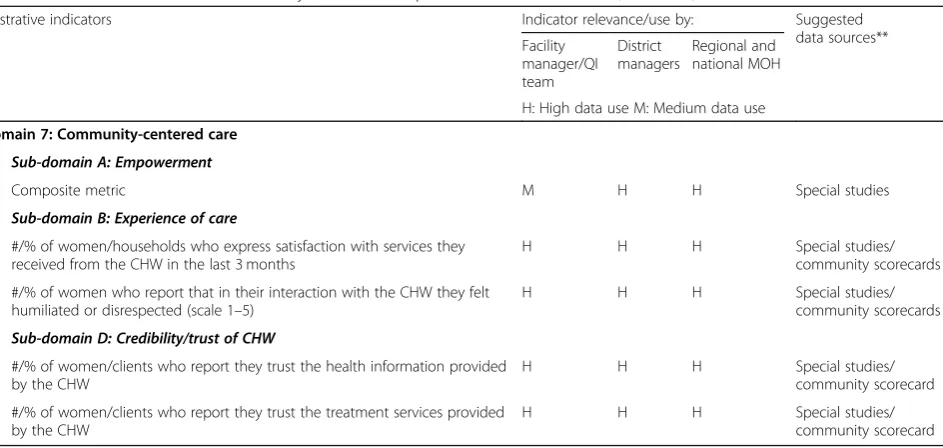
Table 2 identifies indicators for each of the measure-ment sub-domains and classifies them by their utility (high or moderate) for managers at the facility level, dis-trict level, and regional/national level, as well as suggests likely data sources. Inputs at the level of policy, govern-ance, logistics, funding, and information management systems tend to have a large amount of variability in what might be appropriate to measure, given the country
context, the maturity, the diversity of service delivery programs, and the degree of health system integration of the CHW program—therefore, specific indicators at this level should be reflective of what is most appropriate to understand the fidelity of program inputs. Given that CHW programs may focus on a wide range of context-appropriate health interventions, measurement of health outcomes attributable to the CHW program should also align with nationally or internationally recommended standardized coverage and impact health indicators.
Based on feedback from TAG members, the following areas had greater than 75% agreement as the most crit-ical areas of measurement: attrition (100%), quality of services (95%), service delivery (95%), supervision (95%), experience of services (90%), use of services (90%), Table 1Operational definitions of measurement constructs in the Community Health Worker Performance Measurement Framework (Continued)
Indicator Domain Definitions/explanations References
C. Service quality Adherence to standards and procedures (counseling, health promotion, treatment accuracy)
[6]
D. Data reporting Regularity and completeness of CHW reports on the services they provide at the community level
[50]
E. Absenteeism Frequency with which CHWs do not carry out tasks [6]
5. CHW well-being The overall well-being of the CHW may be seen as a measure of effectiveness of the system that supports the CHW program
A. Motivation An individual’s degree of willingness to exert and maintain effort on assigned tasks; a CHW’s confidence, belief in his/her ability to produce a desired result
[5,6]
B. Job satisfaction Degree to which CHWs derive personal satisfaction from serving the community and providing services
[5,6]
C. Attrition/retention The rate at which practicing CHWs resign, retire or abandon their positions
[6,14]
Community health systems
performance outputs—community level
Indicator domain Definition/explanation References
6. Community access Delivery of CH services in a timely manner within the client’s home/community OR clients’physical/social access to CHW service
[5,6,49,51]
A. Use of services Clients are routinely seeking and using promotional, preventive and curative services that CHWs offer
[5,6]
B. Knowledge of service availability Clients’ability to identify the location of CHWs and services they provide
[6]
C. Referral/counter-referral The acceptance and use of services provided at a health facility following referral by a CHW
[5,49]
7. Community-centered care Community involvement, experience, and perceptions of services provided by CHWs
A. Empowerment Both individuals and communities participate actively in community health activities
[49]
B. Experience of care Clients’experience of services delivered by CHWs, including respectful care, and clients’perception of quality of care.
[6]
C. Economic evaluation Comparison of two or more possible courses of action, with respect to the costs, consequences, and/or benefits of each
[52]
D. Credibility/trust of CHW Degree to which clients consider the services provided by CHWs to be credible and reliable
[6]
Table 2Illustrative indicators for community health worker performance measurement
Illustrative indicators Indicator relevance/use by: Suggested
data sources** Facility
manager/QI team
District managers
Regional and national MOH
H: High data use M: Medium data use
Domain 1: Supportive systems
Sub-domain A: Supervision and performance appraisal
1. #/% of supervisors trained in management and supervision of CHWs H H M Training logs
2. Ratio of CHWs to supervisors H H M HRIS
3. #/% of supervisory visits that met the quality criterion H H M Special studies
4. Average # of visits per supervisor to monitor/support CHW activities in the last month
H H M Supervisor report/
special studies
5. #/% of CHWs who received a supervisory visit in the last 1–3 months that includes review of reports and data collected
H H M CHW report
6. Average # of supervisory contacts (in-person visits, phone calls, text messages, etc.) per CHW
H H M CHW report
Sub-domain B: Data use
7. #/% of health workers (CHWs/supervisors/health facility staff) who have access to client data AND who report using the data to make decisions about their provision of services
H H M Special studies (CHW
survey)
8. #/% of national/sub-national/facility/community meetings in which data (from standardized reporting platforms etc.) are discussed/reviewed
H H H Routine meeting
minutes
9. #/% of CHWs who have access to the client data they have collected (for follow-up) in the last 6 months
H H M CHIS/HMIS
Domain 2: CHW development
Sub-domain A: Recruitment
10. #/% of CHWs who have been selected in alignment with selection criteria M H H HMIS/HRIS/training logs
11. # of CHWs who have been selected/recruited H H H HRIS
12. #/% of target communities/populations that have an assigned CHW H H H HRIS
Sub-domain B: Training
13. #/% of CHWs who have received initial training M H H HRIS/training logs
14. #/% of CHWs who have received follow-up training in the last 2 years M H H HRIS/training logs
15. #/% of CHWs who have completed the certification program M H H HRIS/training logs
Sub-domain C: Incentives
16. #/% of CHWs who have received their stipend in the last month M H H CHW report/supervisor report/special survey
17. #/% of CHWs who have received a specific non-financial incentive M H H CHW report/supervisor report/special studies
Domain 3: Support from community-based groups
18. # of planning/review meetings held at the level of the local government to discuss CHW program performance
M H H Meeting minutes/
special studies
Domain 4: CHW competency
Sub-domain A: CHW knowledge
19. #/% of CHWs who have passed knowledge/competency tests (following training)
H H H Training/accreditation
logs
20. #/% of CHWs who express that they feel confidence in their abilities to provide health education
H H H Special studies
21. #/% of CHWs who express confidence in their abilities to deliver basic healthcare services
Table 2Illustrative indicators for community health worker performance measurement(Continued)
Illustrative indicators Indicator relevance/use by: Suggested
data sources** Facility
manager/QI team
District managers
Regional and national MOH
H: High data use M: Medium data use
Sub-domain B: Service delivery
22. Average # of home visits made by CHWs in the last month (indicator to be disaggregated by type of home visit—i.e., sick child visit, antenatal care)
H H M CHW record/
CHW report
Sub-domain C: Service quality
23. #/% of CHWs who correctly identified the case/health problem (as per items in a checklist)
H H H Special studies/
supervisor report
24. #/% of CHWs who correctly addressed (treated) the identified health problem (as per items in a checklist)
H H H Special studies/
supervisor report
25. #/% of CHWs with all the key stock commodities in the last reporting period H H H CHW report
26. Average time from onset of symptom to first contact with CHW H M M Special studies
Sub-domain D: Data reporting
27. #/% of CHWs who submitted reports in the last month H H M CHIS/HMIS/
supervisor report
28. #/% of CHW reports submitted that were complete/did not have missing information
H H M CHIS/HMIS/
supervisor report
Sub-domain E: Absenteeism
29. #/% of CHWs who reported on their activities in the last month H H H CHIS/HMIS
30. # of days CHW has performed at least one CHW responsibility in the last month
H H H Special studies/
supervisor report
Domain 5: CHW well-being
Sub-domain A: Motivation
31. Composite metric H H H Special studies
Sub-domain B: Job satisfaction
32. #/% of CHWs who expressed satisfaction with the community support they receive
H H M Supervisor report/
special studies
33. #/% of CHWs who expressed satisfaction with the support they receive from health facility staff
H H M Supervisor report/
special studies
Sub-Domain C: Attrition/retention
34. In the last 3 months, #/% of CHWs who have reported on their activities H H H CHIS/HMIS
Domain 6: Community access
Sub-domain A: Use of services
35. #/% of households who received at least one visit by a CHW in the last 3 months
H H M Special studies
Sub-domain B: Knowledge of service availability
36. #/% of community members that know the name of the community CHWs H H M Special studies
37. #/% of community members who can name at least 3 services that the CHW provides
H H M Special studies
Sub-domain C: Referral/counter-referral
38. % of individuals referred by CHW to the health facility per 100 clients seen (and subset by reasons for referral)
H H H CHIS/HMIS/
CHW record
39. #/% of clients that completed the referral at the health facility (referral completion)
H H H CHIS/HMIS
40. #/% of referred clients seen at receiving service (health facility) that is seen back at referring service (CHW) with complete counter-referral information (counter-referral)
H H H CHIS/HMIS
41. Average # of referrals made per CHW in the last month H H H CHW report/
referral/counter-referral (85%), CHW absenteeism (80%), incentives (80%), performance appraisal (80%), credibil-ity/trust (75%), data reporting (75%), data use (75%), and costs. While the measurement of costs, cost-benefit, and cost-effectiveness of CHW was unanimously considered vital, no specific indicators were recommended due to the variability in the functions of such programs. Measures around supervision and performance appraisal were com-bined due to the overlap in the associated metrics.
Measurement considerations for core framework constructs
Supportive systems
A. Supervision and Performance Appraisal: Provision of routine support to CHWs is important for problem solving, skills development, motivation, and quality service delivery. An important existing gap is the frequent lack of contact with supervisors or former mentors at training institutions once the CHW graduates and is posted, especially in rural
areas [53]. The measurement of the assignment and provision of supervisory visits is important and associated data might be routinely collected in training logs, CHW, and supervision reports. CHW performance appraisal and feedback from supervisors are key components of quality supervision and require assessment as well, possibly in a non-routine study. Alternately, digital and
mobile job aids with algorithms and behavioral analytics could help operationalize quality assessments and provide remote supervision. The Perceived Supervision Scale (PSS) is a six-item scale that captures regular contact, two-way
communication as well as joint-problem-solving, and has been validated in six countries [54]. We
recommend the use and refinement of this measure across different contexts or, alternately, testing a modi-fied PSS such that it captures elements of perceived value of CHW supervision, and the content and align-ment of the supervisory visit with protocols. Alterna-tively, the quality of supervision may also be assessed
Table 2Illustrative indicators for community health worker performance measurement(Continued)
Illustrative indicators Indicator relevance/use by: Suggested
data sources** Facility
manager/QI team
District managers
Regional and national MOH
H: High data use M: Medium data use
Domain 7: Community-centered care
Sub-domain A: Empowerment
42. Composite metric M H H Special studies
Sub-domain B: Experience of care
43. #/% of women/households who express satisfaction with services they received from the CHW in the last 3 months
H H H Special studies/
community scorecards
44. #/% of women who report that in their interaction with the CHW they felt humiliated or disrespected (scale 1–5)
H H H Special studies/
community scorecards
Sub-domain D: Credibility/trust of CHW
45. #/% of women/clients who report they trust the health information provided by the CHW
H H H Special studies/
community scorecard
46. #/% of women/clients who report they trust the treatment services provided by the CHW
H H H Special studies/
community scorecard
Measurement Consideration 8: Equity, Gender, and Accountability: Each of the above indicators may be disaggregated by one or more of the following characteristics to assess possible equity gaps or disparities: education, ethnicity, family type, health risk-level, immigration/migrant status, language, marital status, occupation, refugee/asylee status, religion, sex, social capital, tribe, village size, wealth
Measurement Consideration 9: Economic Evaluation: While no extant routine or recommended indicators for measuring CHW program performance were identified, metrics for cost-related benefits of institutionalizing CHW programs and engaging communities are important to capture and require further exploration
**Special studies may include cross-sectional, intermittent surveys of a sample of CHWs, supervisors and/or community members. In case of quality of care, a special study might include direct observation of the CHW during a client interaction
HRISHuman Resource Information System: a national/sub-national HRH database or registry, either digital or paper-based (e.g., iHRIS), that manages health workforce information such as number of health workers (e.g., CHWs) recruited, trained, and on payroll
CHIS/HMISCommunity Health Information Systems/Health Management Information Systems CHW record: Routine records or community-based client registries maintained by CHW
CHW report: Summative reports on the number of home visits and types of client seen, typically submitted on a pre-determined schedule by CHWs to their supervisors
Supervisor report: Summative reports on activities of CHWs and other community-based logistics, routine submitted by supervisors to district or regional level administration
through a spot check, where supervisors are accom-panied by their managers on their supervisory visits, and feedback on the quality of supervision is provided after the visit based on observation.
B. Data use: The use of data by health workers at all levels of the health system can help with responsive feedback and quality improvement efforts. If data are being routinely collected and reported, it does not automatically imply that they are being used for decision-making. Assessment of data use may require special cross-sectional and ethnographic studies, to understand whether data are being used for decision-making and assess reasons for data use/disuse behav-iors. Inclusion of this metric in the framework also highlights the need to have management structures in place such that those that are collecting the data, especially client data, also have access to that information [46].
CHW development
A. Recruitment: Several aspects of measurement of CHW recruitment are important, including understanding how many CHWs are recruited, their density per geographic area (e.g., by district, region), and disaggregating recruitment by the representation of CHWs from different types of communities (e.g., diverse ethnicities,
socioeconomic backgrounds, and originating from that community, among others). At the national and sub-national levels, the number of CHWs that have been recruited need to be monitored for fiscal planning and ensuring adequate coverage. From a measurement perspective, it is important to assess the alignment between national CHW selection policies and the actual recruitment and to recognize information systems’capacity to capture workforce turnover data. In some cases, education, language, or other requirements may limit recruitment of CHWs from marginalized communities [47]. In addition to the actual number of CHWs who have been recruited, it is also important to understand coverage, and quality and transparency of the recruitment process. Community participation in the recruitment process can facilitate community ownership and validation of CHWs within the communities where they work.
B. Training: Initial and ongoing knowledge and skills-based training is critical to prepare CHWs for their role in service delivery. Records on the numbers of CHWs trained are typically maintained at the program, or district level at which training occurs, and might be further aggregated at a sub-national level to assess alignment with national targets.
Maintaining training records at the program or district level can be a challenge as these trainings are often led by external NGOs who may be equally challenged by information systems limitations to feasibly transfer or maintain training data. Identifying mechanisms to consolidate the number of CHWs trained and maintaining rosters of the topic areas on which training has been received is important to scaling programs and may require additional district-level oversight of data management. If a national certification program exists for CHWs, tracking the number of existing and new CHWs who have completed certification is important. Finally, ensuring that measurement of training comprises not just the technical content, but also the procedures around data entry and reporting is crucial. While the number of trainings held is somewhat routinely tracked, the actual competencies of CHWs are more complex to assess. Trainings may capture pre- and post-test knowledge scores, but efforts to assess the extent to which CHWs effectively apply their newly acquired skills are less frequently undertaken [50].
C. Incentives: While measurement of financial and non-financial incentives provided to CHWs is important, it is also a difficult area to routinely monitor. Where CHWs receive a pre-determined stipend, salary, or performance-based incentives, the receipt of these stipends might be routinely monitored through monthly/quarterly CHW or supervisor reports. Often, if CHW stipends are provided through supervisors or other personnel in the healthcare system, having routine measurement of whether the stipend was received can aid in curbing corrupt practices or mismanagement of funds. Non-financial incentives may come in many forms—they may be institutionalized by
governments in the form of educational or promotional opportunities, or by communities in the form of social recognition of the CHW [17, 53, 55]. If an institutionalized non-financial incentive exists, it might be feasible to routinely measure it. If not, programs may consider identifying and disaggregating non-financial incentives that exist at the community level and assess them cross-sectionally.
Support from community-based groups
for communities to engage through a feedback mechanism, such as a community scorecard, with which they can assess challenges the community faces that can be used to provide feedback and targeted support to CHWs. Community-based groups such as village health committees, facility management committees, or other contextually appropriate local governance structures, including non-health sector groups, can play a role in identifying solutions to challenges. These community mechanisms are complex to measure routinely or in a binary format, and may be best measured through cross-sectional, intermittent, qualitative assessments.
CHW competency
A. Knowledge on specific technical subject matter underpins quality of service provision.
Measurement of CHW knowledge may be considered at the end of each training cycle, or cross-sectionally, where new knowledge is being imparted and skills developed. In lieu of metrics to capture CHW knowledge, assessment of the actual performance of the CHW is more important, as knowledge does not always translate to practice, known as the“know-do”gap [58]. If the performance of CHWs does not meet required standards, an assessment of knowledge might be relevant if it is suspected that poor knowledge is the cause of poor performance.
B. Service delivery: The delivery of health services refers to the quantity of promotional, preventive, curative, and rehabilitative services CHWs provide to community members. Indicators under this domain pertain to the activity of the CHW, measured at the level of the individual CHW. CHW activities might be consolidated from CHW service delivery registers and routine reports. Indicators to assess CHW service delivery should be tailored to the individual CHW program context and the types of services provided by the CHW. The illustrative indicators in Table 2 may be further broken down by type of services for which the home visit was made. Note that measures of service coverage at the community level typically involve population-based surveys and are listed under “use of services”.
C. Service quality: Measurement of the quality of services provided by the CHW is perhaps one of the most critical measures to assess effectiveness of a CHW program, as historically, these programs have lost financial support when
service quality does not meet required standards or varies substantially [59]. Service quality should be measured both from the technical or clinical perspective and the client’s perspective (captured under “experience of care”). Unless routine quality assessment and control measures are built into supervisory activities, the measurement of service quality may require non-routine studies. When measured routinely, assessment of quality may be done through spot checks by supervisors to ascertain quality of service delivery using a checklist, or by examining client ledgers or registers. Simple checklists implemented by supervisors to observe and assess existing quality of services or community follow-up tools utilized by community members themselves may provide immediate and comprehensive feedback to the CHW.
If conducted as a non-routine study, assessment of quality at the community level poses logistical challenges that are not typically experienced when assessing quality at the facility level, where direct observation of client-provider interaction and exit interviews are the normative methods for quality assessment. CHW services vary widely by content area including routine counseling, linkages to health facilities, provision of certain interventions, and early detection and identification of health
problems. Measures of CHW service quality should be tailored to specific CHW programs developed around a menu of potential service delivery priority areas. One indicator that is a common measure of quality is the timeliness of service receipt (from the first onset of symptoms).
D. Data reporting: Refers to the regularity and completeness, including data validity and verification, of reporting on the services CHWs provide at the community or household level [60]. The level of data reporting can skew our understanding of all other progress
measures—plausibly CHWs who are more active in their communities are also reporting more regularly and accurately. Differences in types of reporting mechanisms could lead to data that is not easily comparable across settings.
CHWs. In cases where CHWs are expected to collect and report digitally, such data could be routinely made available on data dashboards.
CHW well-being
A. Motivation: Refers to intrinsic and extrinsic factors that influence CHWs’interest in and willingness to perform their jobs. The challenge of measuring motivation through specific indicators stems from its latency and multidimensionality as a construct and demands a scale-based approach. Motivation dimensions previously measured in community and primary health care settings include inertia towards one’s job; external financial rewards; self-worth contingencies including recognition from
communities, supervisors, and colleagues; accepting the value of the job; internalizing the job’s value into one’s sense of self; and performing an activity for its own sake [62–64]. Motivation is best ascertained by CHW self-report through special surveys. Further investigation of adapted scales can potentially lead to the development of proxy metrics that could be included in routine community-integrated monitoring mechanisms.
B. Job satisfaction: Refers to a latent construct that captures a CHW’s sense of his or her ability to perform his or her job in a particular work climate [65]. Similar to motivation, job satisfaction is best suited to measurement using a scale-based
approach that aggregates the attributes of a CHW’s job, including the job design and shared/
participatory decision-making, empowerment, timeliness of decision implementation, availability of material supportive aides, support by communities in which they work, adequate feedback, recognition, management by supervisors, and mutual trust and cooperation among peers. While scale development approaches allow for refining measurement of CHW job satisfaction, and it is recognizably best measured through adapted scales in special surveys, two indicators that emerged as potential proxy metrics are presented in Table2.
C. Attrition/retention: In comparison to absenteeism, measurement of attrition aims to capture the proportion of practicing CHWs who resign, retire, or abandon their positions. Given that CHWs may be volunteers, and their“employment”may often not be captured in official rosters, prolonged inactivity may be considered a proxy for attrition, where“prolonged”is a standard length of time determined at the country level, e.g., 1 month, 3 months [47]. The indicators presented in Table2 are limited by the fact that some CHWs may not
report regularly but may continue delivering services and/or intend to continue in their roles. As such, CHWs identified through monitoring this metric should be followed up in person.
Community access
A. Use of services: Community-level use of services is typically measured through population-based surveys. To the extent possible, these indicators should be aligned with extant national surveys that already capture indicators specific to CHW services. For example, the DHS measures the percentage of pregnant/recently delivered women who were visited by a CHW in the last 12 months, as well as several other health-area-specific indicators focused on use of services offered by CHWs. Table3 presents a list of these indicators based on extant surveys. To ensure that programmatic CHW indicators are comparable with globally accepted measures, attention should be paid to alignment with these extant metrics.
B. Knowledge of service availability: Understanding the degree to which the community is aware of the presence and availability of a local health worker and the services they provide is critical to respond to community needs and priorities [5,66]. Measuring this may require a population-based study.
Table 3Standard CHW service delivery metrics that are currently measured at the community level in national surveys
Indicator Source
% women seen by CHW at first check after most recent delivery (following facility-based delivery)
DHS 7 Woman’s Questionnaire
% of women visited by a CHW in the last 12 months DHS 7 Woman’s Questionnaire
% of women who reported talking with a field worker about family planning in the last 12 months
DHS 7 Woman’s Questionnaire
% of women who saw a CHW for antenatal care services for most recent pregnancy
DHS 7 Woman’s Questionnaire
% babies seen by CHW at first check after most recent delivery (Following facility-based delivery)
DHS 7 Woman’s Questionnaire
% women who were seen for PNC services by a CHW after leaving the health facility
DHS 7 Woman’s Questionnaire
% of babies seen by CHW within first 2 months of life DHS 7 Woman’s Questionnaire
% of children under 5 seen by a CHW for diarrhea DHS 7 Woman’s Questionnaire
% of children under 5 seen by a CHW for fever DHS 7 Woman’s Questionnaire
% of women who obtained condoms from CHWs at time of last intercourse
DHS 7 Woman’s Questionnaire
% of men who discussed family planning with CHW DHS 7 Man’s Questionnaire
% of men who obtained condoms from CHWs at time of last intercourse
DHS 7 Man’s Questionnaire
% of circumcised men who were circumcised by a CHW DHS 7 Man’s Questionnaire
% of mothers who received postnatal care within 2 days of childbirth (regardless of place of delivery)
Countdown to 2030
% of mothers and babies who received postpartum care within 2 days of childbirth (regardless of place of delivery)
WHO Core 100 (2015)
# of health workers per 1 000 population (physicians, nurses and midwives, community health workers, etc.)
WHO IPCHS Global
% of mothers and babies who received postpartum care within 2 weeks/2 days of childbirth (regardless of place of delivery)
WHO IPCHS Global
# of CHWs trained and deployed for iCCM per 1 000 children under five in target areas
Integrated Community Case Management
Ratio of CHWs deployed for iCCM to iCCM supervisors Integrated Community Case Management
Proportion of CHWs who received at least one administrative supervisory contact in the prior 3 months during which registers and/or reports were reviewed
Integrated Community Case Management
Proportion of CHWs who received at least one supervisory contact during the prior 3 months during which a sick child visit or scenario was assessed, and coaching was provided
Integrated Community Case Management
Proportion of CHWs who demonstrate correct knowledge of management of sick child case scenarios
Integrated Community Case Management
Proportion of sick children visiting a trained CHW who receive correct case management from that CHW
Integrated Community Case Management
Proportion of CHWs trained in iCCM who are providing iCCM 1 year after initial training
Integrated Community Case Management
Proportion of sick children who were taken to an appropriate provider (appropriate provider and aspects of timeliness defined by country protocols) (reported separately for each iCCM condition)
Integrated Community Case Management
Proportion of children recommended for referral who are received at the referral facility
Integrated Community Case Management
Proportion of CHWs targeted for iCCM who are trained and providing iCCM according to the national plan
Community-centered care
A. Empowerment: Community members’
agency—awareness of and access to—community health services as well as the participation or engagement of communities in shaping and maintaining community health services (including CHW programs) is a critical potential outcome of CHW programs. Given the multidimensional and highly contextual nature of empowerment, it is a difficult concept to capture through a standardized metric [49,69]. Though proxies such as numbers of community meetings held, numbers of community members involved in CHW and facility feedback, and community health system-level contributions emerged in our discussions, these fall short given the varied definitions of empowerment and
community-integrated governance structures across countries. Rather, cross-sectional special surveys alongside qualitative methods that describe the process, content, and relational dynamics (e.g., of community meetings) are required to assess empowerment. Adapting scales of individual, organizational, and community empowerment that have been developed in the context of health promotion can serve as a starting point to develop composite measures of empowerment as related to specific community health system components [70]. B. Experience of care: Understanding and measuring
the experience of care from the client’s perspective is critical, but complex to standardize in the context
of community health systems. This construct often overlaps with service use and technical service quality for a particular health area, though offers the subjective understanding of the interaction between client’s interactions with a CHW. Table2 recommends that experience of care is measured through two indicators: levels of satisfaction with services received by a CHW in the last 3 months and the client perception of respectful care. Experience of care can be captured through self-report and, to some extent, observation by other community members or a trained data collector, close in timeframe to the service delivery (e.g., within 3 months) to avoid recall bias [71]. Composite measures to capture aspects of experience of care should be developed, validated, and incorporated into supervisory visits.
C. Credibility/trust of CHW: The degree to which clients consider the CHWs, and ultimately the services provided by CHWs, to be credible and reliable impacts the use of CHW services. While client trust in health information and services provided by the CHW are presented as proxy metrics in Table2, these are not validated nor reflect the multidimensionality of trust within CHW-client relationships (includes dimensions of honesty, confidentiality, competency, and mutual respect, and partnership in health care decision-making processes) [72]. Quantitative measures of trust in CHWs should be adapted from PHC facility settings, contextualized to health areas and
socio-Table 3Standard CHW service delivery metrics that are currently measured at the community level in national surveys(Continued)
Indicator Source
Proportion of CHWs (or iCCM sites in cases of multiple CHWs/area) treating at least X cases per month (to be defined locally)
Integrated Community Case Management
Proportion of overall treatment coverage of diarrhea and malaria being provided through iCCM by CHWs (reported separately for each iCCM condition)
Integrated Community Case Management
Proportion of CHWs targeted for iCCM who are trained and providing iCCM according to the national plan
Integrated Community Case Management
Proportion of CHWs who correctly count respiratory rate Integrated Community Case Management
Proportion of sick children provided first dose of treatment in the presence of a CHW
Integrated Community Case Management
Proportion of sick child cases recommended for referral by the CHW
Integrated Community Case Management
Proportion of sick children under five in iCCM target are as taken to iCCM-trained CHWs as first source of care
Integrated Community Case Management
Number and proportion of cases followed up according to country protocol after receiving treatment from CHW
Integrated Community Case Management
Proportion of caregivers in target areas who know of the presence and role of their CHW
Integrated Community Case Management
Proportion of CHWs whose registers show completeness and consistency between classification and treatment
cultural contexts through consensus-building methods, and evaluated through special surveys and scale-based approaches that are best suited to capturing latent constructs like trust [72]. Based on these studies, more realistic and relevant proxies can be investigated and recommended.
Measurement considerations for equity, gender, and
accountability (see Table2)
Equity, gender, and accountability are critical aspects to consider across most measurement domains [66, 73, 74] that require various qualitative and quantitative measure-ment methods from an array of stakeholder perspectives. Two primary concepts around equity of community health systems warrant discussion—first, the equitable selection and access to training and growth opportunities for CHWs themselves; second, the activities and inherent biases of the CHW and the health system differentially affect use and quality of services received by different community groups. When feasible, metrics should be disaggregated by place of residence, socioeconomic status—including education and wealth, sex, age distribution, occupation, social capital, lan-guage, religion, ethnicity, tribe, family type, health risk-level, village-size, marital status, immigration/migrant status, and refugee/asylee status (Table2footnotes). Disaggregation by equity-promoting variables requires a substantial commit-ment to advancing equity and utilizing accompanying resources. As a starting point, three levels of disaggregation, in alignment with the DHS might be considered—by wealth quintile, by level of education, and by place of residence (i.e., urban and rural) [75]. For allocation of resources at a national or sub-national level to the districts, performance metrics should be available, disaggregated by district to facilitate appropriate allocation of resources. We note here that equity should not be misunderstood for equality— while equality deals with fairness through equal distribution of resources, equity is concerned with need-based resource allocation even if that means unequal distribution [76].
Gender (in) equity may broadly refer to gender-related barriers to CHW performance, any unique needs and protections expressed by CHWs as a result of their gen-der (e.g., female CHWs may have certain safety concerns in some locations), minority identity in a particular con-text, and power relations facing CHWs within the health system hierarchy or community governance structures [74, 77]. These power relations relate to the attitudes around and interactions between CHWs, their supervi-sors, and other health workers or community workers. Measurement considerations might entail understanding the gender, ethnic, or age profiles of the cadre of CHWs and how that might affect perceptions of safety, inter-action with the community and other health personnel in the health system, and overall motivation to continue working as a CHW. Beyond the need for capturing
disaggregated metrics and needs of CHWs, who occupy lower positions in the health system hierarchy, it is im-portant to consider policy-relevant metrics that support female health workers in particular, such as equitable hiring practices, uncompensated leave, sexual harass-ment, and discriminatory training policies [78]. Given that CHWs are typically responsible for all members of the community and given the expanding scope of their responsibilities (i.e., beyond traditional RMNCH care to include aging and non-communicable disease manage-ment), gender balance of recipients of care from the CHW at the community level is also important to consider.
Accountability in the context of community health systems is multifold, challenging to measure, but highly relevant in understanding how to institutionalize CHW programs and community health systems as agreed on by the TAG and literature [66]. It refers to the dual accountability of the CHW to the community for timely delivery of services and to the health system to perform required tasks, and to the responsiveness of the health system and communities to CHWs, namely by providing a supportive work environment, remuneration for ser-vice, and systematic feedback. Two perspectives might be considered around the measurement of accountabil-ity: as an outcome, which could be captured by policy-level inputs (e.g., funding integration in national and sub-national budgets and protective regulation around CHW scope) and local administrative government status reports, and as a governance and health system process that includes community participation in planning and review of CHW activities. Across the framework, indica-tors capture the types of support, remuneration (incen-tives), and recognition/systematic feedback that a CHW may receive from the government, health systems, and community, as well as the benefits the community receives from the activities of the CHW.
Economic evaluation
Discussion
The recommended domains (Fig.2) and indicators (Table2) are the result of extensive input from community health systems experts and practitioners in the field. The experts ranged from academics to officials from ministries of health across seven countries. A final consultation with practi-tioners in Liverpool, United Kingdom, validated the results; in Liverpool, participants debated the strength and value of indicators but did not identify new, actionable metrics. The experts also agreed that these recommendations strike a balance between a pragmatic minimum set of indicators and a more exhaustive set of metrics that would be costly and impractical to measure with regularity. The proposed list of metrics is not comprehensive; rather, it is presented as a point of reference to assist in standardizing metrics for CHWs.
CHWs work in a wide variety of contexts: from insti-tutionalized, salaried roles well-integrated in the public health sector [13], to informal, volunteer-based work acting as important community educators and linkages between communities and the health system. CHWs may also deliver multiple interrelated and interdepend-ent intervinterdepend-entions simultaneously. Their services may involve activities across different levels of the health sys-tem, including referrals made to the health facilities [54]. This variability in their roles and range of services contributes to the challenge of standardizing metrics to measure the performance of CHW programs and attri-bute their impact on health outcomes [48].
The appropriate selection of indicators depends on the maturity of the community health system, as well as the types of data that are considered most critical to advo-cate for such community-based interventions nationally. The maturity of a CHW program can be observed in the degree to which the community health system is inte-grated with the formal health system (at national, re-gional, district, and facility levels). In some contexts, CHW programs operate as disparate stand-alone, NGO or private sector-led programs that may run in parallel to the public health system. In more mature settings, CHW programs are formally aligned with well-established government policy, with a formal governance structure, funding support, training agenda, job description, appro-priate support from public health facilities, and efforts to integrate care from the community to the health facility. Within the proposed framework, some performance indi-cators will be more relevant to early CHW initiatives, while others will only become useful as the CHW service delivery layer becomes fully integrated into the health system.
The framework in Fig. 2 articulates measurement domains that should be captured by CHW programs, and the illustrative indicators in Table 2 represent a more pragmatic approach reflective of the limitations in
standardized indicators, capacity for data collection and aggregation at the community level, and limited avail-ability of community-based census or “denominator” data. The framework is limited to CHW programs targeted at health outcomes. However, the authors recognize the need for a multisectoral approach at the community level and the potential contributions of CHWs in education, agriculture, and other sectors. Some sub-domains have missing illustrative indicators (e.g., economic evaluation); others have indicators (e.g., referral/counter-referral) where methods of collection are challenging and under-developed resulting in a large amount of variability in the feasibility of measurement; still others have composite metrics (e.g., community empowerment) that are not validated or are multidimensional and highly contextual. Indicators for in-puts (existing governance, policy, funding, and information systems) were not included largely due to their high vari-ability across CHW program contexts. The framework and approach does not provide country-specific guidance for actionable use of particular indicators. Country-level adap-tation and testing of indicators in practice can overcome this limitation.
These limitations highlight opportunities to strengthen the measurement of community health systems. To facilitate standardization, development and validation of comprehensive indicators is important. Advances on this front are ongoing, as in the case of the recently proposed six-item perceived supervision scale that has been vali-dated in seven languages [54]. In practice, a more lim-ited subset of the proposed metrics that have been validated and found most valuable to global and national decision-making should be identified and disseminated. An example of metrics prioritization is seen in Liberia, where a focus on quality has led to continued optimization of a nationally implemented CHW program. It should be noted that in emergency and fragile settings, CHW pro-grams often emerge organically from the needs of the com-munity. The most pertinent areas of measurement for such settings need to be identified and tested. While we engaged a number of national and global stakeholders in the devel-opment of this framework, its ongoing develdevel-opment would benefit from wider perspectives. The framework does not cover the full range of the community health system space, which involves more multisectoral players.
accountability and monitoring health system performance”, and emphasizes investments into appropriate technology to facilitate this [51]. Several parallel investments are already ongoing. For example, the Health Data Collaborative com-munity data sub-group aims to harmonize and endorse standards for CHIS to maximize integration with national health information systems. At the global level, the National Health Workforce Accounts were proposed at the 69th World Health Assembly and present a set of 78 indicators that can be collected nationally to improve the availability, quality, and use of data on human resources for health [29]. The Primary Health Care Performance Initiative supports countries to measure the most critical indicators to advance primary care [52]. As each of these tools and resources mature, intersections across them need to be explored. For example, the proposed framework and indicators herein can potentially support the assessment of the 10 program-matic components proposed by the most recent version of the CHW AIM Program Functionality Matrix [80]. Given the recent reinvigoration of investments in primary health care and community health systems, coordination across different initiatives to leverage existing work and avoid duplication will also be prudent. Efforts to support the standardization and collection of data must be accompan-ied by training and support to develop numeracy and skills to use data for decision-making.
Conclusions
The proposed framework and indicators are a critical first step to addressing a long-acknowledged gap in identifying relevant, pragmatic, and contextually appropriate indicators to monitor the performance of CHW programs. Indicators are presented with practical insights and recommendations for routine and special study methods for data collection as well as reflections on integrating CHW performance indica-tors into routine health information systems. Adoption of the proposed indicators can guide the development of a ro-bust monitoring system for CHW programs, help improve day-to-day programmatic performance, and in the long run have an impact on improved health outcomes. However, the authors emphasize that systems and resources to capture and utilize data at the community level face practical challenges far greater than those experienced in data capture at the level of the facility. We present this framework and indicators to generate a conversa-tion and iteratively develop stronger systems to monitor CHW programs.
Supplementary information
Supplementary informationaccompanies this paper athttps://doi.org/10. 1186/s12960-019-0422-0.
Additional file 1.TAG Survey for Metrics Development: May 2018, 25 respondents.
Abbreviations
CHIS:Community health information system; CHW: Community health worker; CHW AIM: Community Health Worker Assessment and Improvement Matrix; DHS: Demographic and Health Survey; FLH: Frontline Health Project; iCCM: integrated Community Case Management; ICH: Integrating Community Health; MEL: Monitoring, evaluation, and learning; PHC: Primary health care; PHCPI: Primary Health Care Performance Initiative; PSS: Perceived Supervision Scale; SARA: Service Availability and Readiness Assessment; SDI: Service Delivery Indicators; SPA: Service Provision Assessment; TAG: Technical Advisory Group; USAID: United States Agency for International Development
Acknowledgements
The authors wish to acknowledge and thank Bill & Melinda Gates
Foundation, USAID, and UNICEF for their support, collaboration, and ongoing guidance. We wish to thank the members of our Technical Advisory Group and the Integrating Community Health NGO partners for their participation in developing this framework: Jaime Nicolas Bayona Garcia, Ari Johnson, Hafeez Ladha, Ishtiaq Mannan, Alex Rowe, Savitha Subramanian, Miriam Taegtmeyer, and Rajani Ved; Aga Khan Foundation, Humana People to People, Last Mile Health, Liverpool School of Tropical Medicine, Pathfinder International, Save the Children, and Zanmi Lasante.
Disclaimer
The author’s views expressed in this publication do not necessarily reflect the views of the United States Government.
Authors’contributions
SA and KK planned the conceptual framework for the manuscript. SA led the initial draft of the manuscript. PS, CJ, and CW supported the development of certain sections of the manuscript. The conceptual framework and indicators presented in the manuscript underwent several rounds of review and revision by all the authors through a series of face-to-face workshops and online consultations. Each author (1) made substantial contributions to conception and design, (2) assisted in drafting the article and provided important intellectual content, and (3) gave final approval of the version to be published.
Funding
The Frontline Health project, including authors SA, PS, CJ, KK, BB, and CW, is supported by a grant from the Bill & Melinda Gates Foundation from 2017 to 2020. CJ is a fellow of and received financial support from the Global Health Corps.
Availability of data and materials
Data sharing is not applicable to this article as no datasets were generated or analyzed during the current study.
Ethics approval and consent to participate Not applicable.
Consent for publication Not applicable.
Competing interests
The authors have completed the Unified Competing Interest form atwww. icmje.org/coi_disclosure.pdf (available on request from the corresponding author) and declare that they have no competing interests.
Author details
1Population Council, Washington, DC, USA.2Department of International
Health, Johns Hopkins Bloomberg School of Public Health, Baltimore, MD, USA.3Population Council, New York, NY, USA.4Healthcare Information For All
(HIFA), Oxford, UK.5IntraHealth International, Washington, DC, USA.
6Department of International Public Health, Liverpool School of Tropical
Medicine, Liverpool, UK.7Last Mile Health, New York, USA.8Zanmi Lasante,
Croix-des-Bouquets, Haiti.9UNICEF, New York, USA.10HRH2030 Program,
Chemonics International, Washington, DC, USA.11USAID, Washington, DC, USA.12Pathfinder International, Kampala, Uganda.13Nyaya Health Nepal,
Kathmandu, Nepal.14Brigham and Women’s Hospital, Department of